
Adam W. Grasso and Michael B. Rocco
Cardiovascular disease (CVD) is the leading cause of morbidity and mortality in the industrialized world, accounting for approximately one-third of all deaths in the United States. Coronary heart disease (CHD), a subcategory of CVD, kills nearly 1 in every 5 Americans. Each year, 1.5 million people in the United States suffer a first or recurrent myocardial infarction (MI), and nearly 325,000 people experience sudden cardiac death (SCD). Stroke remains the third leading cause of mortality with 800,000 strokes per year in the United States. Despite reductions in mean serum total cholesterol (TC) from 222 mg/dL in 1962 to 199 mg/dL in 2006, nearly half of US adults still have abnormally high levels. Given the enormous burden of CVD, the high prevalence of lipid disorders, and effective evidence-based treatment strategies, recognition of and management of lipid disorders is an essential component of both primary and secondary prevention of CVD. In this chapter, we have sought to provide a clinically relevant discussion of dyslipidemias and their effective treatment to reduce CVD morbidity and mortality. In addition to defining lipoproteins and lipid disorders, the clinical trials and observational studies that form the cornerstone for modern treatment guidelines are reviewed.
LIPIDS AND LIPOPROTEINS
Lipids are molecules with hydrocarbon skeletons, which play crucial roles in the storage, metabolism, and production of energy, the structure and behavior of cell membranes, and the transduction of signals both inside and between cells. Lipids are fat-soluble, or lipophilic, compounds, which are classified as either simple or complex. Simple lipids include free cholesterol (FC) and fatty acids (FAs), and complex lipids, which are combinations of simple lipids, include cholesteryl esters (CEs) and triglycerides (TG). The lipids with greatest pathologic significance appear to be CE, the predominant components of macrophage foam cell inclusions, and TG, which form the core of adipocyte inclusions. Packaged together with phospholipids and proteins known as apolipoproteins, lipids are transported between organs in the form of lipoproteins. Lipoproteins are classified according to their densities and electrophoretic mobilities and include, in decreasing density, high-density lipoproteins (HDL), low-density lipoproteins (LDL), intermediate-density lipo-proteins (IDL), very low-density lipoproteins (VLDL), and chylomicrons.
Lipid processing and transport can be envisioned as a bidirectional process. The first cycle begins with triglyceride-rich lipoproteins (TGRLs), namely, chylomicrons from the gut and VLDL from the liver (Fig. 53.1). These lipoproteins serve as substrates for lipoprotein lipase (LPL) and hepatic lipase (HL), two different enzymes bound to capillary endothelium. Free FAs are released for the use of skeletal muscle, adipose tissue, and other organs and FC and CE are delivered to distant tissues. Chylomicrons, VLDL, and their lipolysis products, such as chylomicron remnants, IDL, and LDL, bear apolipoprotein B (apoB) and apolipoprotein E (apoE) on their surfaces. ApoB has two isoforms: apoB100, which is present on lipoproteins secreted by the liver, and apoB48, which is present on gut-derived lipoproteins. LDL, IDL, and remnant particles can be taken up by hepatocytes via receptors that bind to apoB and apoE. Alternatively, they may migrate across the endothelium, undergo oxidation/modification, induce monocyte recruitment and foam cell formation, and initiate a cycle of inflammation, chemotaxis, and thrombotic activity leading to atherosclerosis and vascular events. IDL is the most atherogenic lipoprotein, but LDL (which carries 70% of plasma cholesterol) is the principle lipoprotein responsible for atherosclerosis. Cholesterol present in apoB-containing lipoproteins may be represented as non–high-density lipoprotein cholesterol (non-HDL-C). Small dense LDL (sdLDL) is defined as LDL with a low LDL-C to LDL-apoB ratio (<1.2) and represents a more atherogenic subclass of LDL.
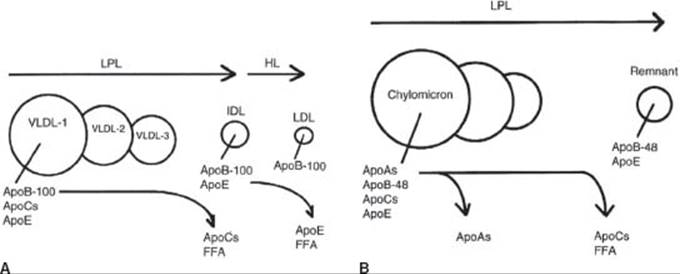
FIGURE 53.1 Remodeling of TGRLs. A: Stepwise lipolysis of VLDL subfractions 1, 2, and 3 by LPL. LPL catalyzes VLDL triglyceride hydrolysis with the concomitant transfer of the apoC proteins to HDL and the release of free fatty acids (FFA). Subsequently, HL catalyzes additional triglyceride hydrolysis that induces the transfer of apoE from IDL to HDL and the release of additional FFA. LDL contains apoB100 as its sole protein. B: Lipolysis of chylomicrons by LPL. Triglyceride hydrolysis is associated with the transfer of the apoC proteins to HDL and the release of FFA. The remnant contains apoB48, which is the major protein of chylomicrons, and apoE, which mediates the binding of remnants to hepatic receptors. (Reprinted from Betteridge DJ, Illingworth DR, Shepherd J. Lipoproteins in Health and Disease. 1st ed. London: Arnold, 1999:4, with permission.)
The other major transport cycle, sometimes termed reverse cholesterol transport (RCT), serves primarily to return cholesterol to the liver (Fig. 53.2). RCT involves HDL, the major structural protein of which is apolipoprotein A (apoA). Starting with a lipid-poor HDL known as pre-β HDL, FC is progressively added from macrophages, and then esterified by the enzyme lecithin cholesterol acyltransferase (LCAT). These mature HDL-cholesterol (HDL-C) particles can return to the liver by direct hepatic uptake of HDL, or CE can be transferred to apoB-containing lipoproteins, which then can be taken up by the liver. One clinically relevant reaction is catalyzed by the cholesteryl ester transfer protein (CETP), which transfers CE from HDL to LDL or VLDL in exchange for TG. Thus, CE and TG are rapidly equilibrated between HDL and the apoB-containing lipoproteins, a major reason why patients with hypertriglyceridemia tend to have low HDL-C. The subsequent action of HL on TG-rich HDL leads to the production of smaller, denser HDL in such individuals. Individuals with diminished or absent levels of serum CETP generally have elevated HDL-C and lower rates of atherosclerosis. Pharmacologic inhibitors of CETP have been shown to significantly elevate HDL-C, but initial studies showed harm, not benefit. However, other CETP drugs “in the pipeline” may yet become important tools for the clinician. In addition to its role in lipid transport, HDL may mediate other antiatherosclerotic effects by inhibiting LDL oxidation, reducing endothelial dysfunction, reducing chemotaxis of inflammatory cells into plaques, and inhibiting thrombosis.
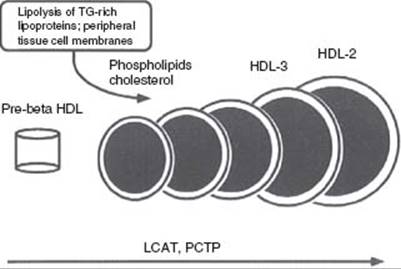
FIGURE 53.2 Remodeling of HDL by LCAT and phosphatidylcholine transfer protein (PCTP, also known as phospholipid transfer protein or PLTP). Small, premigrating HDL composed of apoA-I, cholesterol, and lecithin is a substrate for LCAT, which forms CEs within the core. Additional cholesterol and phospholipids from peripheral tissue cell membranes and lipolysis of TGRLs are added to the HDL. Multiple cycles of lipid transfer to HDL and LCAT activity eventually produce large, mature HDL, which is a major carrier of cholesterol to the liver. (Reprinted from Betteridge DJ, Illingworth DR, Shepherd J, eds. Lipoproteins in Health and Disease. 1st ed. London: Arnold, 1999:4, with permission.)
Lipoprotein (a), or Lp(a), is an LDL-like particle of hepatic origin. Unlike LDL, apoB100 on the surface of Lp(a) is bound to a protein called apolipoprotein (a), or apo(a), which has strong homologies to plasminogen. While apo(a) lacks enzymatic activity, Lp(a) can interfere with the binding of plasminogen to substrates such as fibrin, cell surfaces, and extracellular matrix, potentially promoting a prothrombotic state. Numerous retrospective and prospective studies have shown a clear association between high plasma Lp(a) levels and CHD, and such associations appear to be genetically mediated. At this time, though, we still lack evidence that pharmacologic reduction of Lp(a) levels can lower the incidence of coronary events.
DIAGNOSIS OF DYSLIPIDEMIAS
Clinical interest is focused on dyslipidemias in which a causal or proposed causal relationship exists between abnormal serum lipid levels and atherosclerosis. Appropriate treatment of a particular dyslipidemia requires accurately characterizing a patient’s lipid disorder. In order to classify a patient’s dyslipidemia and exclude secondary causes and determine treatment strategies, the clinical practitioner should investigate the following:
 Personal history: abnormal serum lipid levels; CHD; manifestations of cerebrovascular disease, including transient ischemic attack (TIA) or cerebrovascular accident (CVA); peripheral vascular disease (PVD), including limb claudication, aortic aneurysm, or carotid atherosclerosis; diabetes mellitus (DM); hypothyroidism; chronic renal insufficiency (CRI); nephrotic syndrome; hepatobiliary disease; pancreatitis; or pregnancy
Medication history: especially of thiazide diuretics, β-blockers, oral contraceptives (OCPs), hormone replacement therapy (HRT), isotretinoin, glucocorticoids, or highly active antiretroviral therapy (HAART) for HIV
Family history: dyslipidemias, CHD, TIA/CVA, PVD, sudden death, diabetes, hypertension, or central obesity. Suspicion of familial dyslipidemias should be followed up with lipid testing of family members.
Lifestyle history: past and present tobacco use, excessive alcohol use (>40 g/d), sedentary lifestyle, or diets rich in saturated fats or carbohydrates
Physical exam findings: body mass index (BMI), waist circumference, blood pressure, thyroid characteristics, xanthomas (cholesterol deposits of interdigital, tuberous, planar, or eruptive types), xanthelasmas (xanthomas of the palpebral fissures), arcus corneae, lipemia retinalis (pale-appearing retinal vessels), peripheral pulses, vascular bruits, or hepatosplenomegaly. See Figure 53.3 for representative examples of xanthomas
Laboratory studies: fasting serum lipid panel, fasting glucose, thyroid-stimulating hormone (TSH), creatinine, hepatic function panel, urinalysis, and a screen for microalbuminuria. Additional measurements such as lipoprotein subpopulation analysis, levels of serum Lp(a), apoB, and high-sensitivity CRP (hsCRP) may help refine risk assessment, particularly in an intermediate-risk population or to help tailor intensity of therapies, but would not be recommended as routine tests for all individuals.
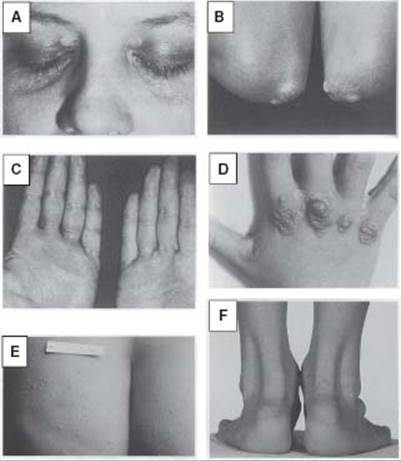
FIGURE 53.3 Representative xanthomas are illustrated: A: Xanthelasmas (xanthomas of the palpebral fissures). B: Tuberous xanthomas of the elbows. C: Palmar xanthomas. D: Interdigital xanthomas. E: Tuberoeruptive xanthomas of the buttocks. F: Tendon xanthomas of the Achilles tendon. (Reprinted from Fuster V, Ross R, Topol EJ, eds. Atherosclerosis and Coronary Artery Disease. 1st ed. Philadelphia: Lippincott-Raven; 1996, with permission.)
CLASSIFICATION OF DYSLIPIDEMIAS
In 1967, Fredrickson et al.1 proposed a system to diagnose and classify lipid disorders based upon the specific lipoprotein or lipoproteins elevated in the patient’s serum. While the Fredrickson classification system was useful shorthand for describing hyperlipidemias, it had two major shortcomings: its phenotypes did not provide or even imply etiology, and HDL was not included. In a more clinically relevant schema, lipid disorders can also be grouped into two broad categories. Primary dyslipidemias result from genetic variability in one or more loci controlling the expression of proteins involved in lipoprotein synthesis, metabolism, or clearance. Secondary dyslipidemias are the consequence of a separate pathologic process.
Primary Dyslipidemias
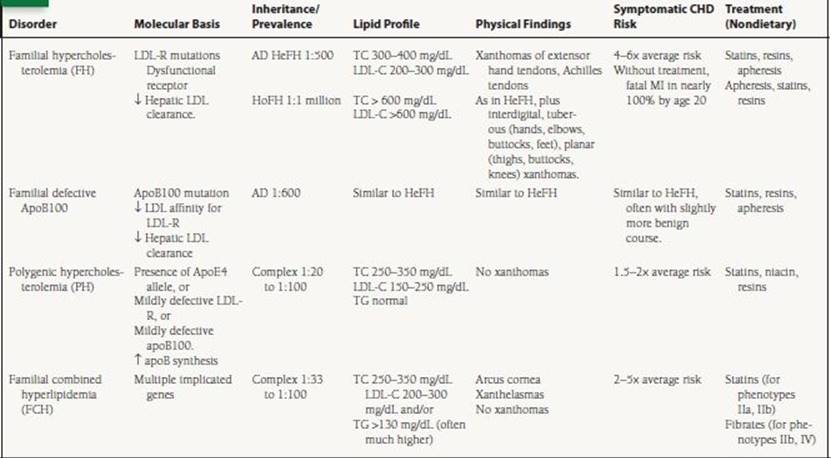
The primary dyslipidemias of non-HDL-C have been summarized in Table 53.1. Familial hypercholesterolemia (FH) is a common autosomal dominant disorder resulting from mutations in the LDL receptor (LDL-R), or apoB receptor, leading to impaired hepatic clearance of LDL from the circulation. Heterozygous FH (HeFH) occurs in 1 in 500 persons and is associated with serum LDL-C two to three times the average and a four- to sixfold increased risk for premature CHD. Without treatment, the average age for development of symptomatic CHD is 45 years in men, and 55 years in women. By age 39, 90% of FH heterozygotes exhibit detectable xanthomas on the extensor tendons of the hands, or on the Achilles tendons (Fig. 53.3). Several diagnostic criteria for FH exist, with that of the 15-year Simon Broome Register Group being the most commonly used.
TABLE
53.1 Primary Dyslipidemias of Non-HDL-C
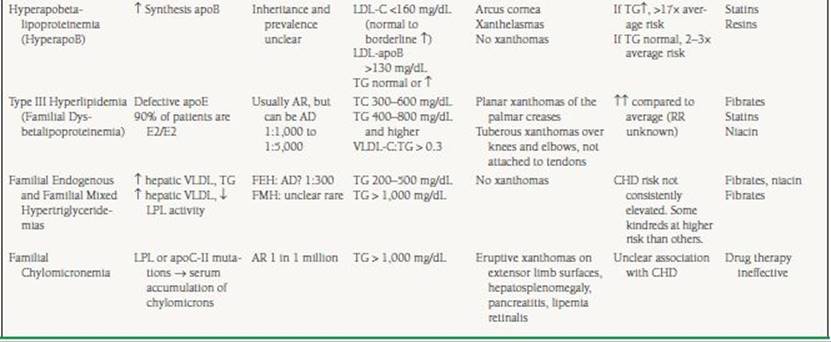
AD, autosomal dominant; AR, autosomal recessive; HeFH, heterozygous FH; HoFH, homozygous FH; RR, relative risk.
Definite FH requires:
(a) TC > 290 mg/dL in adults or TC > 260 mg/dL in children under 16
OR LDL-C > 190 mg/dL in adults or >155 mg/dL in children
PLUS
(b) Tendon xanthomas in the patient, or first- or second-degree relative
(c) OR DNA-based evidence of LDL-R mutation or familial defective apoB100
Possible FH is defined as (a) above plus one of (d) or (e):
(d) MI before age 50 in second-degree relative, or before 60 in first degree
(e) Elevated cholesterol in first-degree relative, or >290 mg/dL in second degree
Homozygous FH (HoFH) occurs in one in one million individuals. Patients with HoFH do not express any functional LDL-Rs, and consequently exhibit a more severe phenotype. TC levels are generally >600 mg/dL, with LDL-C levels six- to eightfold higher than average. Without treatment, death from MI occurs in the first or second decades of life. In addition to the xanthomas observed in heterozygotes, FH homozygotes are commonly affected by interdigital xanthomas, tuberous xanthomas on the hands, elbows, buttocks, and feet, and planar xanthomas on the posterior thighs, buttocks, and knees.
Familial Defective Apolipoprotein B100 is associated with impaired LDL clearance due to reduced affinity of LDL for the LDL-R. The most common cause of this autosomal dominant condition is a single base mutation in the apoB100 gene. Although the prevalence of familial defective apoB100 is unclear, and varies by ethnic background, it may be as common as 1 in 600. The lipoprotein concentrations, clinical features, and treatment are similar to FH heterozygotes.
Polygenic hypercholesterolemia (PH) is the most common cause of an isolated elevation in TC or LDL-C, with prevalence in the United States estimated at between 1 in 20 and 1 in 100. TG levels are generally normal. Alterations in the function or expression of several key proteins involved in LDL metabolism have been associated with PH, including mildly defective LDL-R and apoB100, increased synthesis of apoB, and the presence of the apoE4 allele, which has a higher affinity for the LDL-R than the other apoE isoforms leading to downregulation of LDL-R synthesis and a secondary increase in serum LDL-C. Xanthomas are very rare or absent in patients with PH.
Familial combined hyperlipidemia (FCH) is the most common primary dyslipidemia in which multiple lipoprotein phenotypes exist, with a population prevalence of 1% to 3%. The three observed patterns of elevated VLDL, elevated LDL, or both can be seen within a family or within a single patient over time. Transmission is complex, with multiple genes likely to be involved. It is associated with an estimated two- to fivefold increased risk for CHD, accounting for one-third to one-half of familial CHD, and up to 20% of all premature CHD. Traditionally, diagnostic criteria include:
1. TC and/or TG levels >90th percentile for age- and sex-matched controls. TC of 250 to 350 mg/dL and TG > 130 mg/dL (often higher, especially in diabetics).
2. At least one first-degree relative with elevated VLDL-C, LDL-C, or both
3. Strong family histories of hyperlipidemia and premature CHD
Other major characteristics include elevated apoB (>120 mg/dL), a preponderance of sdLDL, and low HDL-C. FCH is usually diagnosed after age 20, and the patients are often hypertensive, overweight, insulin resistant, or diabetic. Arcus cornea and xanthelasmas are commonly seen, but tendon xanthomas are unusual. Hence, the absence of tendon xanthomas in a hypercholesterolemic patient is a useful feature to differentiate FCH from FH.
Other less common dyslipidemias of apoB metabolism are frequently characterized by elevations in TG, VLDL or in LDL-apoB concentrations. These include hyperapobetalipo-proteinemia (hyperapoB), type III hyperlipidemia (also known as familial dysbetalipoproteinemia or remnant disease), familial endogenous hypertriglyceridemia (FEH), familial mixed hypertriglyceridemia (FMH), and familial chylomicronemia and are outlined in Table 53.1.
There exist a heterogeneous group of rare familial disorders of HDL-C, including Tangier Disease, Familial LCAT Deficiency, and Partial LCAT Deficiency or Fish-Eye Disease which have not been consistently associated with premature CHD and are beyond the scope of this chapter. ApoAIMilano is a rare genetic variant of the apoAI protein resulting in low HDL-C levels. However, individuals bearing the mutation display longevity and an exceptionally low risk of CHD. In a controlled trial of patients with a history of acute coronary syndrome (ACS), infusions of purified ApoAIMilano induced plaque regression, as assessed by intravascular ultrasound (IVUS). At present, such therapy is not available for clinical use but these studies suggest a future role for HDL-C modification to reduce cardiovascular risk.
Secondary Dyslipidemias
Evaluation of a dyslipidemia would not be complete without a thorough search for secondary and contributing causes. A careful history and physical, accompanied by selected laboratory studies, including a fasting lipid panel, will frequently reveal the etiology of a patient’s dyslipidemia. Breakdown by the abnormal lipid may simplify diagnosis of the dyslipidemia’s cause:
Elevated TC and LDL-C: diet rich in saturated fat, drugs (oral contraceptives or OCPs, HRT, HAART), hypothyroidism, nephrotic syndrome, chronic liver disease, and chronic biliary tract disease (classically, primary biliary cirrhosis)
Elevated TG: diet rich in carbohydrates, drugs (β blockers, thiazide diuretics, isotretinoin, glucocorticoids, HAART, OCP, HRT), excessive alcohol consumption, obesity, DM, hypothyroidism, CRI, chronic pancreatitis, and pregnancy
Low HDL-C: very high carbohydrate, very low-fat diet, hypertriglyceridemia, obesity, sedentary lifestyle, smoking, DM
Often, these dyslipidemias can be at least partially controlled by institution of lifestyle changes (including dietary improvement, weight loss, increased exercise, and smoking cessation), withdrawal and replacement on an implicated medication, or recognition and treatment of an underlying disorder. A typical example is the hyperlipidemic patient who is resistant to lipid-lowering therapy, but later found to be hypothyroid. Treatment with levothyroxine then corrects the secondary dyslipidemia.
METABOLIC SYNDROME
Due to the growing recognition of its prevalence and the association of this syndrome with a particular dyslipidemic pattern, the metabolic syndrome (MetS) is reviewed here. During the late 1980s, Reaven observed that several CHD risk factors (namely dyslipidemia, hypertension, and hyperglycemia) frequently cluster together.2 Originally referred to as Syndrome X or the insulin-resistance syndrome, these descriptors have been supplanted by the more general term metabolic syndrome. The National Cholesterol Education Program’s Adult Treatment Panel III report (ATP III, discussed later) identified six components of the MetS which relate to CHD: abdominal obesity, atherogenic dyslipidemia (high TG, low HDL-C, and sdLDL), hypertension (HTN), insulin resistance, a prothrombotic state, and a proinflammatory state.3 Given the ongoing “epidemic of obesity,” MetS is common and becoming more so, with approximately one-third of American adults fulfilling ATP III and global criteria,4 as listed in Table 53.2. Observational data have shown that such persons have a three to fivefold risk of CHD mortality, compared to those without MetS. A major health danger to persons with MetS appears to be a vastly increased risk of developing diabetes. MetS was highly predictive of new-onset DM in both men and women of the Framingham offspring cohort, as nearly half of the population-attributable risk of type 2 diabetes (DM2) could be explained by the presence of ATPIII-defined MetS.5 When overt DM develops, CHD risk increases sharply.
TABLE
53.2 ATP III Clinical Identification of the MetS
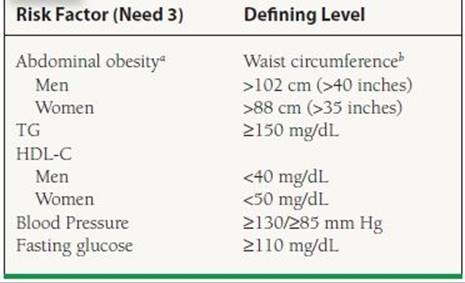
aOverweight and obesity are associated with insulin resistance and the MetS. However, the presence of abdominal obesity is more highly correlated with the metabolic risk factors than is an elevated BMI. Therefore, the simple measure of waist circumference is recommended to identify the body weight component of the MetS.
bSome male patients can develop multiple metabolic risk factors when the waist circumference is only marginally increased, for example, 37 to 39 inches (94 to 102 cm). Such patients may have a strong genetic contribution to insulin resistance. They should benefit from changes in life habits, similar to men with categorical increases in waist circumference. Adapted from the Third Report of the National Cholesterol Education Program (NCEP) Expert Panel on the Detection, Evaluation, and Treatment of High Blood Cholesterol in Adults (ATP III), Final Report, 2002. A publication of the National Heart, Lung, and Blood Institute (NHLBI), a division of the National Institutes of Health (NIH), and the U.S. Department of Health and Human Services.
TREATMENT STRATEGIES FOR DYSLIPIDEMIAS: THERAPEUTIC LIFESTYLE CHANGES
All dyslipidemic patients should be urged to adopt therapeutic lifestyle changes (TLC), consisting of increased physical activity, ideal weight maintenance (often necessitating weight loss), smoking cessation, and the pursuance of a low-saturated fat, low-cholesterol diet rich in fruits, vegetables, grains, and fiber (Table 53.3). In highly motivated individuals, TLC can result in an LDL-C reduction of nearly 30%, and should form the basis of all preventive treatment. Alcohol avoidance, smoking cessation, physical activity, and diet are essential in the management of dyslipidemias characterized by very high TG.
TABLE
53.3 Therapeutic Lifestyle Changes
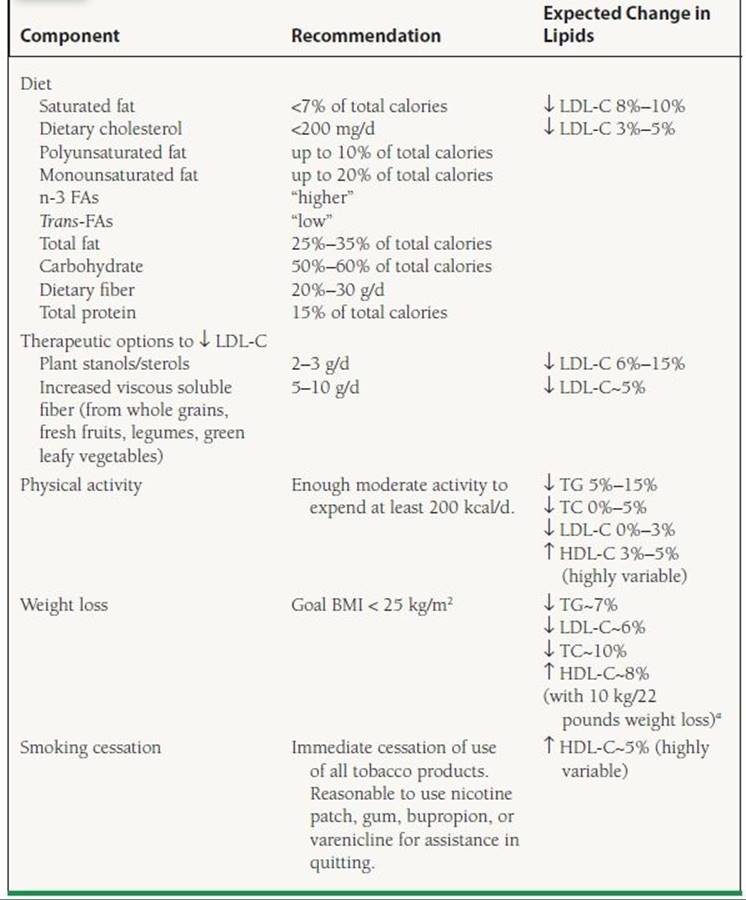
Adapted from the ATP III Final Report (2002).
aDattilo AM, Kris-Etherton PM. Effects of weight reduction on blood lipids and lipoproteins: a meta-analysis. Am J Clin Nutr. 1992;56:320–328.
Most primary dyslipidemias other than HoFH, as well as the dyslipidemia associated with MetS, are very sensitive to changes in diet and adiposity, and thus should always be treated with a TLC diet and weight management, with a goal BMI <25 kg/m2. Lifestyle changes are first-line therapy for the MetS, with obesity the primary target of intervention.6 The most critical goal of such modifications is to decrease the incidence of new-onset DM, which confers a similar risk of CHD events as known CHD. It may be challenging to successfully implement such changes, but every effort should be made to stress the clear health benefits of dietary modification, weight loss, and physical activity.
Whether TLC are sufficient alone, or should be accompanied by drug therapy, is determined by the dyslipidemic patient’s CHD risk status, initial lipid levels, and treatment targets (to be discussed in later sections). Other nonpharmacologic approaches such as dietary intake of plant stanols/sterols (in certain labeled margarines and juices and pill supplements) and increased viscous soluble fiber (in oats, barley, psyllium, pectin-rich fruits, and legumes) may also aid in LDL-C reduction. High-dose omega-3 fish oil supplementation may aid in TG lowering. Consultation of a registered dietician or qualified nutritionist may be useful. In high-risk individuals pharmacologic therapy should be introduced simultaneously with TLC. In others, if goal LDL-C has not been reached after 3 months, pharmacologic therapy should be considered.
TREATMENT STRATEGIES FOR DYSLIPIDEMIAS: PHARMACOLOGIC THERAPY
Pharmacologic therapy should be initiated in patients whose lipids are inadequately lowered with TLC alone, those with lipids too high to be reasonably reduced with TLC alone, or those with CHD risk high enough to mandate drug initiation simultaneously with TLC. There are six major classes of drugs which can be used to regulate a patient’s lipid profile, including (a) HMG-CoA reductase inhibitors, or “statins,” (b) bile acid sequestrants or “resins,” (c) fibric acid derivatives or fibrates, (d) nicotinic acid or niacin, (e) cholesterol absorption inhibitors of which ezetimibe is the only clinically available member, and (f) Omega-3 FAs of which Lovaza is the only available prescription formulation. Table 53.4 includes a description of these agents, their mechanisms of action, therapeutic indications and contraindications, effects on lipid levels, and adverse effects. The choice of a specific drug or combination of drugs is dependent on an understanding of each medication’s mechanism of action, as well as the individual patient’s lipid profile, cardiovascular risk, treatment goals, and contraindications. Medication choice should also be influenced by clinical outcome trials demonstrating reduction of cardiovascular events with specific treatments. Specific treatment guidelines are reviewed in a later section. Fasting lipid levels should be checked 6 weeks after drug initiation. Once the treatment goal has been achieved, fasting lipids should be redrawn every 4 to 6 months. Importantly, TLC should always be used concomitantly with drug therapy of dyslipidemias. Referral to a lipid specialist should be considered for complex combined lipid disorders or nonresponders.
TABLE
53.4 Lipid-Regulating Drugs
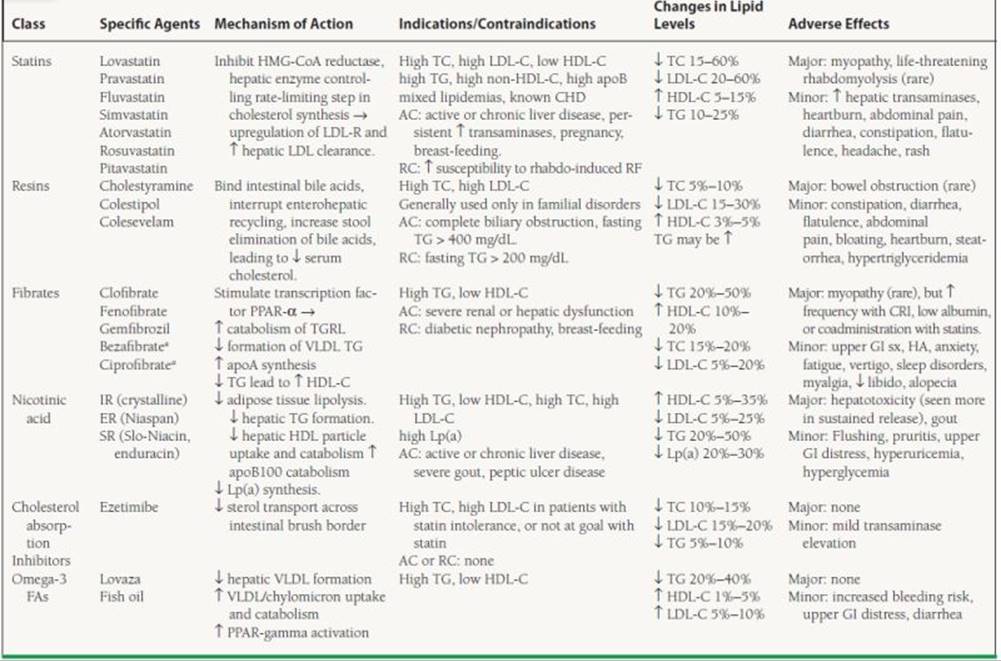
anot available in the U.S.; AC, absolute contraindication; RC, relative contraindication; CRI, chronic renal insufficiency; HA, headache; IR, immediate release; ER, extended release; SR, sustained release
Of the primary dyslipidemias, treatment of HeFH includes dietary approaches and aggressive pharmacologic therapy. Since the hepatocytes of these individuals still express the LDL-R, albeit at a lower concentration than normal, they are able to upregulate its level and thus increase clearance of LDL. Multiple studies involving adults with HeFH have shown high-dose statin therapy to be safe, well tolerated, and effective at reducing LDL-C levels, CHD morbidity/mortality. Children and adolescents with HeFH are also effectively treated with statins. Despite concerns over possible interference with hormonal pathways, the growth parameters and sexual maturation in statin-treated children were similar to those given placebo.7 Often, combination drug therapy of a statin with ezetimibe, resins, and/or niacin is necessary to adequately lower LDL-C levels. As for HoFH, dietary changes are not effective at reducing LDL-C. Given the complete absence of functional LDL-Rs, one would not predict that FH homozygotes could be treated effectively with statins. However, multiple small studies have shown that statins reduce LDL-C by 15% to 35% in such persons, probably via decreased hepatic synthesis of VLDL and LDL.
Drug treatment of persons with other primary dyslipidemias is determined largely by their individual lipid profiles (see Table 53.1). In general, elevated LDL-C should be treated with a statin unless contraindicated or not tolerated. Disorders of elevated TG are usually evaluated with a search for secondary causes, and treated with dietary modification, physical activity, and fibrates, niacin or omega-3 FAs. The dyslipidemia associated with MetS should always be initially treated with lifestyle approaches, especially weight loss. However, failure to achieve full reversal of the MetS characteristics may necessitate pharmacologic therapy. Subgroup analyses of statin trials have shown that statins reduce risk for CVD events in MetS patients. A post hoc analysis of recent fibrate trials strongly suggests that they reduce CVD endpoints in patients with atherogenic dyslipidemia and MetS.
In some cases, drugs from multiple classes used in combination may be required for adequate LDL-C lowering and/or treatment of combined dyslipidemias. Studies have supported acceptable tolerance and improvement of the lipid profile with combination therapy in certain subgroups. Although lipoprotein improvements have been even more dramatic on combined statin–fibrate, statin–niacin, or stain-resin/ezetimibe therapy, no CVD endpoint data from large, controlled trials are available. Smaller trials and those employing surrogate vascular endpoints suggest clinical benefit of combination therapy. It is important to be familiar with the adverse effects of lipid-regulating drugs (Table 53.4). Such adverse effects may occur more frequently with combination therapy, including rhabdomyolysis (more common with statin + fibrate) and hepatic injury (statin + niacin, statin + ezetimibe, statin + fibrate). Obese patients undergoing weight-loss (bariatric) surgery are observed to exhibit a dramatic decline in clinical features of MetS. Their total and LDL-C tend to be significantly lower. Most impressively, a systematic review has also demonstrated that most diabetic patients undergoing such surgery experience total postoperative reversal of their diabetes diagnosis.
APHERESIS THERAPY
The mainstay of therapy for FH homozygotes is extracorporeal, namely LDL apheresis. On average, LDL-C levels immediately after the procedure are decreased 50% to 80%. Since these values rebound fairly quickly, the process is performed every 2 weeks to keep intrapheresis LDL-C ≤120 mg/dL. FDA indications since 1996 include: HoFH; HeFH in the absence of CHD when LDL-C ≥ 300 mg/dL despite maximal pharmacologic and dietary therapy; and HeFH in the presence of CHD when LDL-C ≥ 200 mg/dL despite maximal pharmacologic and dietary therapy. The benefits of apheresis to FH homozygotes, in terms of stabilization or regression of atherosclerotic lesions, and improvement in symptoms, have been clearly demonstrated. As for FH heterozygotes, combined apheresis and statin therapy have been shown to substantially reduce risk of coronary events, and to improve angiographic outcome.
LIPID-REGULATING TRIALS FOR THE PREVENTION OF CHD
The rationale for aggressive management of lipid disorders for the purpose of reducing cardiovascular events is based on a large body of research spanning the past decade. A complete review of the research establishing an association between dyslipidemia and CHD is beyond the scope of this chapter, but it is important to highlight the observations and trials supporting recent cholesterol treatment recommendations. As early as the 1930s, associations were observed between cholesterol levels and atherosclerotic disease. Multiple, large observational and epidemiologic studies helped to form the basis of the cholesterol hypothesis, which posited that elevated serum cholesterol plays a causative role in the development of CHD, and that cholesterol reduction will reduce CHD risk.8 These studies included the Framingham Heart Study, the Seven Country Study, the Münster Heart Study (PROCAM), the Multiple Risk Factor Intervention Trial (MRFIT), and the Lipid Research Clinics (LRC) Prevalence Study. Data from these studies revealed a strong, graded, linear relationship between TC levels and risk of CHD, with an approximate 20% to 30% increase in CHD risk for each 10% increase in serum TC. An inverse correlation was observed for HDL-C, with every 1 mg/dL (0.026 mM) increase in HDL-C correlating with a 2% decrease in CHD risk for men, and a 3% decrease for women.9 Hypertriglyceridemia was long suspected to be an independent CHD risk factor, but this was difficult to prove given the tight inverse correlation between levels of TG and HDL-C. A meta-analysis of 17 population-based studies showed that each 1 mmol/L (88.5 mg/dL) increase in serum TG significantly increased the risk of a CHD event, by 32% in men, and 76% in women. After multivariate analysis, including adjustment for HDL-C levels, a 1 mmol/L increase in TG continued to confer a significantly increased CHD risk, by 14% in men, and 37% in women.
Once these relationships had been identified, clinical trials were designed to test the hypothesis that lipid-lowering therapy would slow or reverse the atherosclerotic process and decrease the incidence of CVD events. Despite the diversity in entry criteria and treatments, initial animal and human intervention studies demonstrated plaque regression or improvements in angiographic outcomes associated with improved lipid profiles. Although some of these trials did demonstrate decreased coronary events, the primary endpoints were typically surrogate outcomes and the trials were not designed or powered to examine clinical outcomes. Subsequent intervention trials targeted “hard” clinical endpoints, including death and nonfatal MI. In primary prevention trials, individuals without known CVD underwent cholesterol reduction, with the goal of preventing a first CHD event. In secondary prevention trials, subjects with known CVD were treated to lower cholesterol, in an effort to prevent repeat events.
EARLY TRIALS FOR PRIMARY AND SECONDARY CHD PREVENTION
A number of CVD endpoint trials, reviewed in detail in Table 53.5, were performed in the prestatin era, utilizing diet, bile acid sequestrants, fibrates or niacin. These trials, in predominantly male populations both with and without CHD, using various treatments or combination of treatments, provided strong support for the cholesterol hypothesis, giving rise to the rule of thumb that a 1% lowering of TC decreases the incidence of CHD events by 2% to 3%. In several of these studies, noncardiovascular death was increased in the group treated with lipid-lowering therapy, raising concern over the safety of such treatment. However, a causal link was never established between lipid-lowering drugs and increased mortality. The early trials set the stage for the large statin trials of the 1990s.
TABLE
53.5 Early Lipid-Regulating Trials
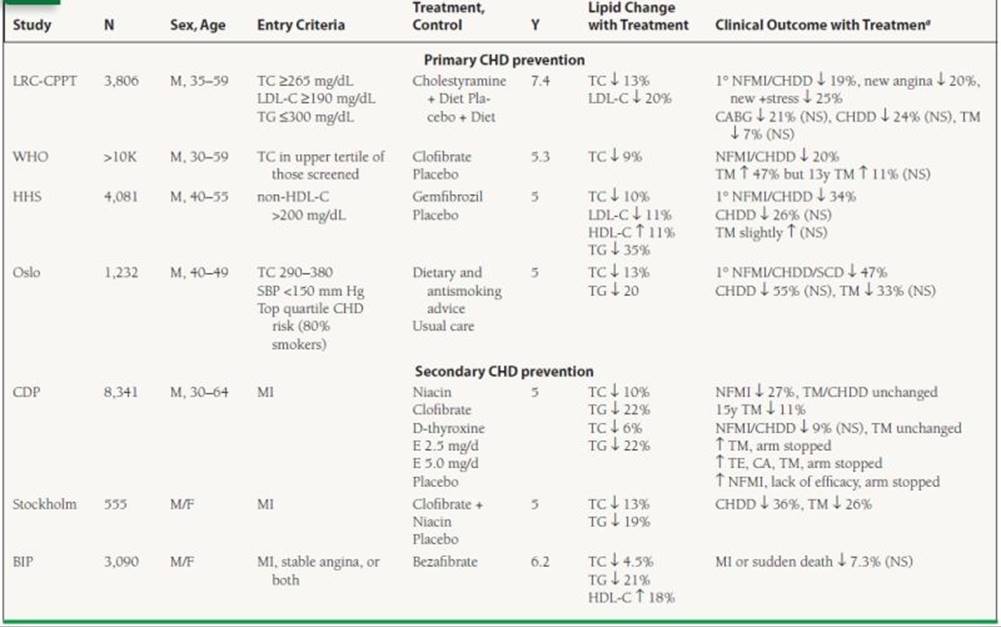
N, number of patients in trial; Y, years of trial duration; aall outcomes significant except as noted; 1°, primary endpoint; NFMI, nonfatal MI; CHDD, CHD death; SCD, sudden cardiac death; +stress, positive stress test; TM, total mortality; E, estrogen; NS, nonsignificant p-value.
These subsequent large, multicenter, randomized controlled trials irrefutably confirmed the cholesterol hypothesis, conclusively demonstrating that lowering LDL-C reduced the risk of coronary events, and in some cases, total mortality. The efficacy of statins was demonstrated in study populations with a wide range of risk factors and LDL-C levels, and in both primary and secondary CHD prevention. These trials also lay to rest concerns about the possible dangers of low cholesterol, the possibility of which had been raised by several of the prestatin trials.
THE LANDMARK STATIN TRIALS: PRIMARY PREVENTION
The major statin trials—all of which were large, multiyear, randomized, double-blinded, placebo-controlled studies— and their findings are summarized in Table 53.6.
TABLE
53.6 Landmark Statin Trials
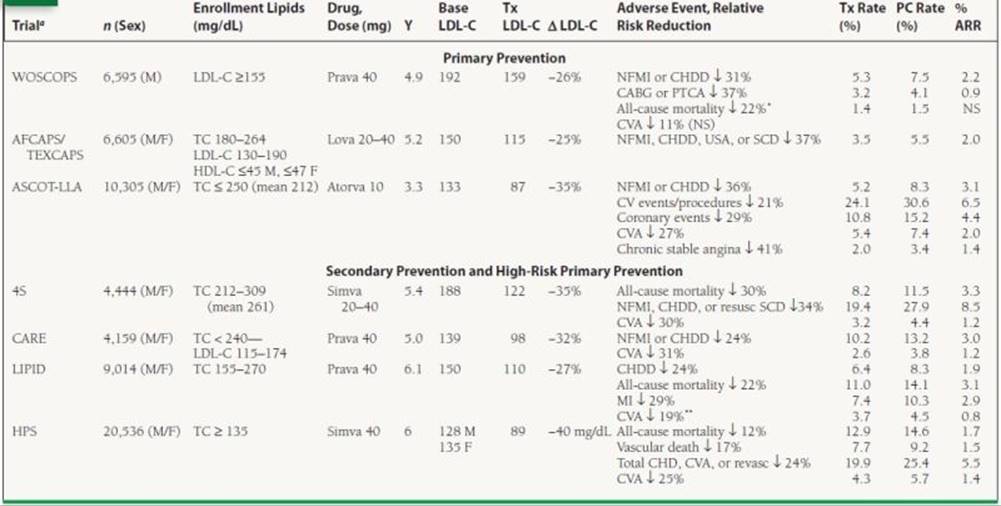
aTrials: WOSCOPS, West of Scotland Coronary Prevention Study; AFCAPS/TexCAPS, Air Force/Texas Coronary Atherosclerosis Prevention Study; ASCOT-LLA, Anglo-Scandinavian Cardiac Outcomes Trial Lipid Lowering Arm; 4S, Scandinavian Simvastatin Survival Study; CARE, Cholesterol And Recurrent Events trial; LIPID, Long-term Intervention with Pravastatin in Ischemic Disease trial; HPS, Medical Research Council/Brit Heart Foundation (MRC/BHF) Heart Protection Study.
Other abbreviations: n, number of subjects in trial; Sex, sex of subjects in trial; Y, years of trial duration; Base LDL-C, average baseline LDL-C; Tx LDL-C, average LDL-C with drug treatment; A LDL-C, change in av age LDL-C with drug treatment compared to placebo, expressed in percent or mg/dL; Tx Rate, adverse event occurrence rate in treatment group during study period; PC Rate, adverse event occurrence rate in place control group during study period; % ARR, percent absolute risk reduction; Prava, pravastatin; Lova, lovastatin; Simva, simvastatin; Atorva, atorvastatin; NFMI, nonfatal MI; CHDD, CHD death; CVA, nonfatal and ] stroke; USA, unstable angina; SCD, sudden cardiac death; revasc, coronary revascularization; resusc, resuscitated; NS, not significant.
*p = 0.051.
**p = 0.048.
Adapted from Gotto AM and Pownall HJ. Manual of Lipid Disorders. 3rd ed. Philadelphia: Lippincott Williams & Wilkins; 2003:171–174.
The West of Scotland Coronary Prevention Study (WOSCOPS)10 was a trial of pravastatin in men with high LDL-C and no previous diagnosis of CAD. WOSCOPS demonstrated that pravastatin was both safe and effective at preventing a first CHD event in hyperlipidemic men. Despite its borderline statistical significance, the result was nonetheless provocative that total mortality was decreased by 22% in the statin arm.
The Air Force/Texas Coronary Atherosclerosis Prevention Study (AFCAPS/TexCAPS)11 was the first primary prevention trial of lipid regulation to include women and subjects >65 years of age, but its most important feature was that it enrolled subjects with only average LDL-C and below-average HDL-C. AFCAPS/TexCAPS expanded the observations of WOSCOPS by demonstrating that statin therapy effectively prevented a first CHD event in both men and women with average LDL-C. Intriguingly, the subpopulation of individuals with the lowest HDL-C levels experienced the greatest reduction in coronary events.
THE LANDMARK STATIN TRIALS: SECONDARY PREVENTION AND HIGH RISK PRIMARY PREVENTION
The Scandinavian Simvastatin Survival Study (4S)12 utilized sim vastatin to treat middle-aged men and women with a history of angina pectoris or MI. 4S provided robust evidence that LDL-C reduction with simvastatin safely reduced CHD events by 34%, stroke by 30%, and total mortality by 30%, in both men and women with known CHD. Nonlipid risk factors did not mitigate these benefits, and coronary event risk reduction was similar in each quartile of baseline TC, LDL-C, or HDL-C. Individuals with impaired fasting glucose and diabetes enjoyed the greatest reduction in CHD events, 38% and 42%, respectively.
The Cholesterol and Recurrent Events (CARE) trial.13 enrolled a wide age-range of post-MI men and postmenopausal women with average LDL-C (mean 139 mg/dL), treating them with pravastatin. CARE demonstrated that both men and women (including the elderly) with a history of MI and only modest elevations in LDL-C levels experience fewer CHD events and strokes when treated with a statin.
The Long-term Intervention with Pravastatin in Ischemic Disease (LIPID) trial14 was designed to be applicable to as many patients with CHD as possible. LIPID enrolled men and women with history of acute MI or hospitalization for unstable angina, with a broad range of serum lipids, as well as “average” LDL-C (mean 150 mg/dL). LIPID showed that a broad population of men and women with known CHD derived significant morbidity and mortality benefit from statin therapy, even in the context of average LDL-C levels and in addition to current non–lipid lowering therapy for CHD.
The Medical Research Council/British Heart Foundation (MRC/BHF) Heart Protection Study (HPS)15 was a “megastudy” of over 20,000 subjects, easily representing the largest trial of lipid-regulating therapy to date. It set out to test the hypothesis that statin therapy would benefit the at-risk individual, regardless of the pretreatment LDL-C level. Eligible patients included men and women between 40 and 80 years of age with fasting TC > 135 mg/dL (>3.5 mM) at high risk for CHD death over the next 5 years. Subjects fell into one of three categories: (1) history of CHD, (2) PVD or cerebrovascular disease, or (3) DM or treated HTN in men ≥65 years. HPS demonstrated that men and women at high risk for a major vascular event (including those with DM, HTN, PVD, or cerebrovascular disease) benefit from statin therapy, regardless of baseline LDL-C. Even those with baseline LDL-C <100 mg/dL experienced a substantial 21% reduction in vascular events. Data from HPS have helped shift our therapeutic paradigm towards the treatment of elevated CHD risk, rather than simply the treatment of elevated LDL-C levels.
LESSONS FROM SUBSEQUENT STATIN TRIALS: EARLIER OR MORE AGGRESSIVE MANAGEMENT OF LDL-C
In the preceding trials, statins were often started months to years after an acute coronary event and at moderate doses. Later studies addressed the safety and effectiveness of early high-dose statin therapy and set the stage for trials which would test the utility of more aggressive and early lipid lowering in the prevention of CHD.
The Myocardial Ischemia Reduction with Aggressive Cholesterol Lowering (MIRACL) trial tested the hypothesis that initiation of statin therapy in the acute post-ACS setting could be safe and provide clinical benefit. After only 16 weeks, the primary endpoint of combined death, nonfatal MI, resuscitated cardiac arrest, or ischemia was reduced by 16% (p = 0.048) in the atorvastatin group. In summary, the MIRACL study showed that early initiation of high-dose atorvastatin was safe and possibly beneficial for immediate post-ACS patients.
The Atorvastatin Versus Revascularization Treatments (AVERT) trial was a small, short-term trial that compared high-dose atorvastatin therapy (80 mg/d) with angioplasty and usual care in patients with stable CHD. LDL-C was reduced on an average of 46% in the atorvastatin group, compared to 18% in the usual care group. The rate of ischemic events was reduced by 36% in the atorvastatin group, compared to usual care/angioplasty, although the statistical significance was borderline (p = 0.048). AVERT contained the provocative result that, for patients with stable CHD, aggressive LDL-C reduction to levels well below 100 mg/dL with a high-dose statin was more effective at reducing coronary events than angioplasty. Since the NCEP ATP III guidelines appeared in 2001, a number of published trials in addition to the HPS have offered a rationale for modifications in these treatment recommendations (Table 53.7). Some have attempted to determine if more aggressive lipid lowering confers clinical benefit beyond moderate lipid lowering in patients after ACS (REVERSAL, PROVE IT/TIMI-22, Phase Z of the A to Z Trial) and in those with stable CHD (TNT). Others have tested the hypothesis that initiation of statin therapy at levels of LDL-C previously not recommended for pharmacologic therapy would reduce CVD events in moderate to high-risk individuals without known CHD (ASCOT-LLA in “primary care” hypertensive, nondyslip idemic patients with multiple risk factors, CARDS in patients with type 2 diabetes without significant elevation in LDL-C, and Justification for the Use of Statins in Primary Prevention: an Intervention Trial Evaluating Rosuvastatin (JUPITER) in individuals with elevated hsCRP regardless of LDL-C level.
The Reversal of Atherosclerosis with Aggressive Lipid Lowering (REVERSAL) trial16 compared the ability of moderate (pravastatin 40 mg/d) and intensive statin (atorvastatin 80 mg/d) treatment to reduce progression of coronary atherosclerosis as assessed by IVUS. REVERSAL showed that in patients with known CHD, there was a reduced rate of atherosclerotic progression associated with more aggressive statin treatment.
The Pravastatin or Atorvastatin Evaluation and Infection Therapy— Thrombolysis in Myocardial Infarction 22 (PROVE-IT/TIMI-22) was a large trial17 which randomized post-ACS patients to pravastatin 40 mg/d (standard therapy) or atorvastatin 80 mg/d (intensive therapy). Prior to this study, moderate-intensity statin treatment to a target LDL-C < 100 mg/dL was felt to be adequate for patients with established CHD. However, PROVE-IT/TIMI-22 demonstrated that intensive statin therapy, with a goal LDL-C < 70 mg/dL, provided greater protection against death or major cardiovascular events post ACS.
The Treating to New Targets (TNT) study18 sought to determine if lowering LDL-C well below 100 mg/dL would provide additional benefit to patients with stable CHD. The trial randomized patients to either 10 or 80 mg of atorvastatin per day, resulting in a 22% relative risk reduction in the primary endpoint of a major cardiovascular event. The TNT study showed that patients with stable CHD benefit from LDL-C reduction to levels considerably below 100 mg/dL.
The Anglo-Scandinavian Cardiac Outcomes Trial—Lipid Lowering Arm (ASCOT-LLA)19 assessed the benefits of statin therapy for “the primary prevention of CHD in hypertensive patients not conventionally deemed dyslipidemic,” defined as men and women with TC ≤250 mg/dL (mean LDL-C 133 mg/dL). Subjects were randomized to either atorvastatin 10 mg/d or placebo. The trial was stopped early (after 3.3 years, instead of the planned 5 years), because of a highly significant 36% reduction (p = 0.0005) in the primary endpoint of nonfatal MI and CHD death in the atorvastatin group. In conclusion, ASCOT-LLA demonstrated that men and women at moderately elevated risk for CHD should be considered for statin therapy, even if their LDL-C levels are only mildly elevated.
The Collaborative Atorvastatin Diabetes Study (CARDS)20 tested the hypothesis that statin treatment could prevent primary CHD events in patients with DM2, serum creatinine ≤1.7 mg/dL, and fasting LDL-C <160 mg/dL (mean 111 mg/dL). Two thousand eight hundred and thirty-eight diabetic patients without known CHD, aged 40 to 75 years, with at least one other high-risk feature (retinopathy, albuminuria, current smoking, or HTN) were randomized to placebo or atorvastatin 10 mg/d. Subjects treated with atorvastatin experienced a highly significant 37% reduction in the first occurrence of an acute CHD event, coronary revascularization, or CVA (p = 0.001). Treatment also conferred a favorable trend toward reduced total mortality (RR reduction of 27%, p = 0.059). Therefore, CARDS demonstrated that atorvastatin 10 mg/d was safe and effective in reducing the risk of a first CVD event for patients with DM2 and average-to-low LDL-C and that diabetic patients may benefit from statins, regardless of baseline LDL-C levels.
Given the inflammatory nature of CVD, the JUPITER trial21 sought to determine if statin therapy would benefit individuals with normal or low LDL-C levels and elevated levels of the inflammatory biomarker hsCRP. “Apparently healthy” men and women with LDL-C <130 mg/dL and hsCRP >2 mg/L were randomized to rosuvastatin 20 mg/d or placebo. Statin therapy reduced LDL-C by 50%, and hsCRP by 37%. In the statin arm, compared to placebo, there was a 47% reduction in CVD events, and a 20% reduction in total mortality. The JUPITER trial supported the expanded use of statins in patients not previously thought likely to benefit from statin treatment.
TABLE
53.7 Subsequent Statin Trials
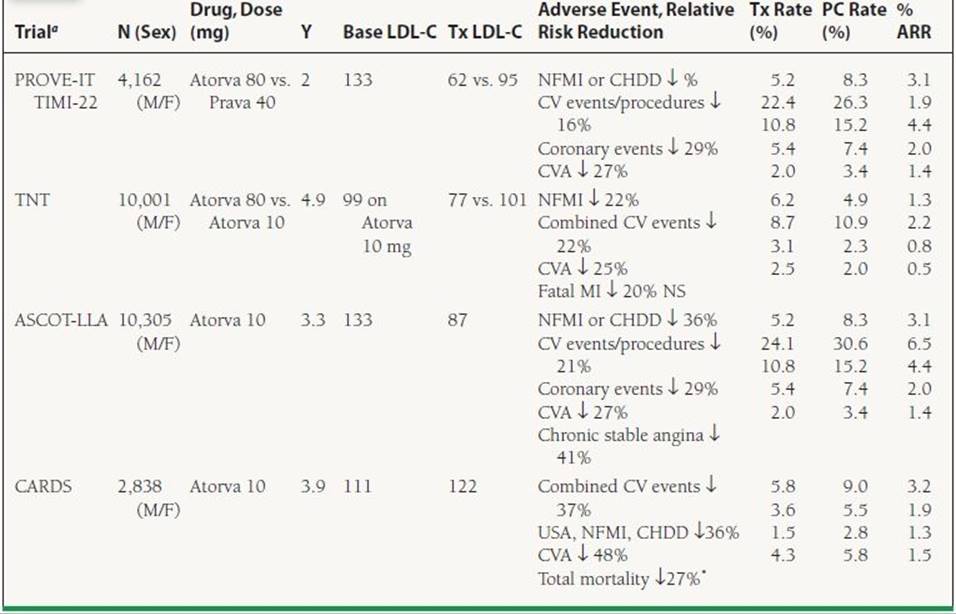
aTrials: PROVE-IT/TIMI-22, Provastain or Atorvastain Evaluation and Infection Therapy-Thrombolysis in Myocardial Infarction 22; TNT, Treating to New Targets; ASCOT-LLA, Anglo-Scandinavian Cardiac Outcomes Trial—Lipid-Lowering Arm; CARDS, Collaborative Atorvastatin Diabetes Study.
*p = 0.059.
Other abbreviations: n, number of subjects in trial; Sex, sex of subjects in trial; Y, years of trial duration; Tx LDL-C, average LDL-C with drug treatment; Tx Rate, adverse event occurrence rate in treatment group during study period; PC Rate, adverse event occurrence rate in placebo control group or comparison group during study period; % ARR, percent absolute risk reduction; Prava, pravastatin; Atorva, atorvastatin; NFMI, nonfatal MI; CHDD, CHD death; CVA, nonfatal and fatal stroke; USA, unstable angina; SCD, sudden cardiac death; revasc, coronary revascularization; resusc, resuscitated; NS, not significant. Adapted in part from Gotto AM and Pownall HJ. Manual of Lipid Disorders. 3rd ed. Philadelphia: Lippincott Williams & Wilkins; 2003:171–174.
TARGETING LIPIDS OTHER THAN LDL-C
As therapeutic target levels of LDL-C drop ever lower and the demographics of patients eligible for statin therapy grow ever wider, we may be soon approaching the limits of beneficial LDL-C treatment. In addition, with the increase in obesity, diabetes, MetS, and DM2, more individuals are presenting with combined hyperlipidemias. Given the knowledge derived from epidemiologic and biochemical studies, it would appear logical that altering concentrations of HDL-C and TG could reduce the incidence of CHD. There are a number of reasons to consider looking beyond LDL-C lowering in the quest to further reduce cardiovascular adverse events:
Cardiovascular events still occur in individuals with low LDL-C and even in treatment groups after LDL lowering with statins.
When patients with diabetes are treated with statins in clinical trials, CVD event rates remain higher than the CVD event rates of those patients without diabetes on placebo.
In IVUS studies, LDL-C lowering to <70 to 80 mg/dL is required to see plaque regression, but the 20% of patients in this group who continue to have progression of plaque often have associated DM, less increase in HDL, less decrease in Apolipoprotein B.
The impact of other atherogenic particles including low or abnormally functioning HDL, VLDL remnants, TG, small dense LDL
The independent risk of low HDL, elevated TG
Non-HDL-C, Apo B, LDL-C particle number, Apo B/Apo A1 ratio are better predictors of risk than LDL-C, particularly on therapy.
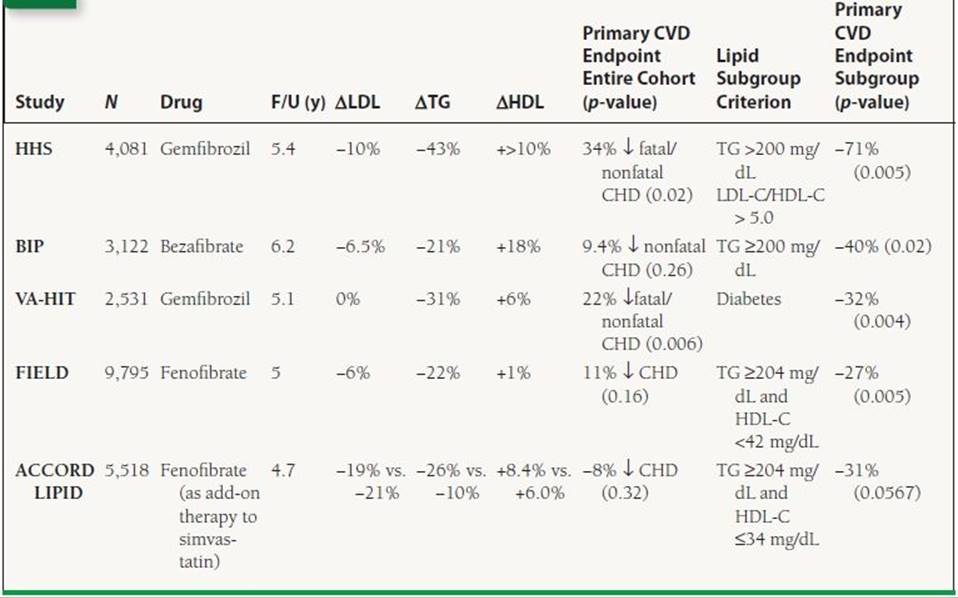
Consequently, after maximal achievable LDL-C lowering interest has focused on other therapies directed toward lowering TG and or raising HDL-C. Fibrates and niacin are the most potent agents available to achieve this end. Unfortunately, dissecting the relative contributions of changes in HDL-C and TG to decreasing CHD risk has been challenging. Earlier trials provided indirect data suggesting a benefit of such changes, but data from prospective studies directly testing this hypothesis have been limited. Monotherapy trials support a role for treatment with fibrates or niacin in select groups. An important clinical question is whether there is added benefit when other medications to modify HDL-C and TG are added to a background of statin therapy. However, long-term outcome trials examining combinations of these agents with statins are few, only recently completed or still forthcoming. See Table 53.8 for a summary of the trials discussed below.
TABLE
53.8 Studies Targeting Lipids Other Than LDL-C
MONOTHERAPY TRIALS WITH FIBRATES
The Helsinki Heart Study (HHS) and the Bezafibrate Infarction Prevention (BIP) trial were primary and secondary prevention studies, respectively, using fibrates. Although both trials showed respectable increases in HDL-C and decreases in TG, nonfatal MI/CHD death was decreased 34% (p < 0.02) compared to placebo in HHS, while no such benefit was observed in BIP. In HHS, the patients most likely to benefit from treatment were further defined as those with an LDL-C:HDL-C ratio >5 and TG > 200 mg/dL. In BIP, although there was no difference in the total cohort, a subgroup with TG > 200 mg/dL did have a 40% reduction in CVD risk.
In the Fenofibrate Intervention and Event Lowering in Diabetes (FIELD) trial of patients with diabetes,22 fenofibrate compared to placebo was not associated with a significant reduction in CVD events in the entire cohort, but there was a significant 27% reduction in a subgroup with TG > 203 mg/dL and HDL-C < 42 mg/dL.
The Veterans Affairs Cooperative Studies Program High-Density Lipoprotein Cholesterol Intervention Trial (VA-HIT)23 assessed the benefit of gemfibrozil therapy for secondary CHD prevention in patients with low HDL-C and without elevated LDL-C. When 2,531 men with mean HDL-C of 32 mg/dL, mean LDL-C of 112 mg/dL, and mean TG of 160 mg/dL were randomized to gemfibrozil 1,200 mg/d or placebo, for an average period of 5.1 years, treatment was associated with 6% higher HDL-C and 31% lower TG and afforded a 22% reduction in nonfatal MI and CHD death over placebo (p = 0.006) and a 24% reduction in the combined primary outcome of nonfatal MI, CHD death, and stroke (p < 0.001). These studies collectively suggest that while monotherapy with fibrates may not benefit all individuals with dyslipidemia, subgroups with a metabolic pattern of elevated TG and low HDL-C may benefit.
MONOTHERAPY TRIALS WITH NIACIN
The Coronary Drug Project (CDP), initiated in the late 1960s, was a large secondary prevention study among men with several treatment arms, one of which utilized 3 g/d of niacin. Compared to placebo, niacin lowered TC by 10% and TG by 26% (LDL-C and HDL-C data not available), and after 6 years, significantly reduced nonfatal MI by 27%. Although all-cause mortality was not significantly different from placebo at the study’s conclusion, a 15-year follow-up analysis (9 years after the interventions had ended) revealed a significant 11% decrease (p < 0.004) in total mortality.
A subanalysis demonstrated equivalent reductions in CVD risk regardless of entry fasting glucose level, change in fasting glucose on therapy, or presence or absence of diabetes.
COMBINATION TRIALS WITH STATINS
Combination outcome trials are limited. The Familial Atherosclerosis Treatment Study (FATS) was an angiographic regression trial comparing treatment with lovastatin/colestipol or niacin/colestipol to conventional therapy.24 After 2.5 years, the two treatment groups demonstrated 32% and 39% of patients with regression compared with 11% in the conventional group. The Cholesterol-Lowering Atherosclerosis Study (CLAS) compared niacin/colestipol combination to placebo and demonstrated significant regression in 16% of patients on combination therapy versus 2.4% in the placebo group.25 The HDL-Atherosclerosis Treatment Study (HATS) demonstrated similar benefits of combined simvastatin/niacin treatment for persons with CHD, low HDL-C, and average LDL-C.26 However, the relevant clinical question since statin therapy is the primary pharmacologic treatment is if there is incremental reduction in CVD risk when niacin or fibrates are added to adequate statin therapy.
The Arterial Biology for the Investigation of the Treatment Effects of Reducing Cholesterol (ARBITER-2)27 study was a small secondary prevention trial of 167 persons (91% men) with known CHD and low HDL-C using the surrogate endpoint of carotid intima-media thickness (CIMT) as the primary outcome. (mean 40 mg/dL). 1,000 mg extended-release niacin or placebo was added to a background of statin treatment with prerandomization LDL-C of 87 mg/dL and HDL-C of 39 mg/dL. AT 1 year, HDL-C increased an average of 21% in the niacin group. Mean CIMT increased significantly in the placebo group, but was not significantly changed in the niacin group. Although the overall difference in CIMT progression between niacin and placebo groups was not statistically significant (p = 0.08), niacin significantly reduced the CIMT progression rate in subjects without insulin resistance (p= 0.026). ARBITER-3, a 1 year open label extension of ARBITER-2 with all subjects on niacin and statin, demonstrated regression as measured by change in mm of CIMT which was even more prominent in subjects with DM or MetS. ARBITER-6-HALTS compared the effects of niacin versus ezetimibe when added to background statin therapy and demonstrated regression in CIMT over 14 months when niacin was added to statins but not when ezetimibe was added. Although these studies were not designed or powered to examine differences in clinical events, niacin treatment when added to statin therapy appeared to slow the rate of atherosclerotic progression in persons with CHD and low HDL-C.
Few large placebo-controlled trials are available addressing the question of combination therapy with statins and the effect on CVD events. In the lipid arm of the ACCORD trial,28 fenofibrate or placebo was added to a background of simvastatin therapy in 5,518 individuals with diabetes. The annual rate of the primary composite CVD outcome was not significantly different (2.2% in fenofibrate group vs. 2.4 in placebo group) and mortality was similar at 1.5% versus 1.6% in the two treatment groups. However, in a prespecified subgroup analysis of subjects with TG ≥ 204 mg/dL and HDL-C ≤ 34 mg/dL, the primary outcome was 12.4% in the fenofibrate group versus 17.3% in the placebo group, a 31% reduction, (p = 0.0567) compared with 10.1% in both groups in the entire cohort.
Two placebo-controlled outcome studies were designed to investigate the effects of adding niacin to a background of aggressive LDL-C treatment with statins. AIM-HIGH trial of 3,414 subjects with nonacute stable CVD was designed to test whether the addition of extended-release niacin after lowering LDL-C with simvastatin (±ezetimibe) to between 40 and 80 mg/dL would result in an additional 25% reduction in CVD events. This NIH-supported study was ended prematurely by the Data Safety Monitoring Board in May of 2011 due to futility or inability to demonstrate a significant difference between the study arms. The published final results of the trial showed no significant difference in events between the statin + placebo group and the statin + niacin group. The AIM-HIGH results suggest that adding niacin to statin therapy in patients with optimally controlled LDL may be of no benefit. However, given the impressive results from earlier studies, niacin use in patients with suboptimally controlled LDL, or in those who are entirely intolerant of statins, may still be justified. The larger ongoing Heart Protection Study (HPS)-THRIVE will be examining whether the addition of niacin (combined with a prostaglandin receptor blocker to reduce flushing) to statin therapy will reduce CVD events in approximately 20,000 subjects.
DIABETES AND LIPID MANAGEMENT
Individuals with diabetes have been known to be at high risk for development of CVD. In 2001 the ATP III panel raised diabetes from a risk factor for CVD to a CHD risk equivalent. Factors supporting this decision include:
Accelerated atherosclerosis is multifactorial and begins years to decades prior to the diagnosis of type 2 diabetes.
>50% individuals with newly diagnosed type 2 diabetes have clinical CHD.
Risk for CVD events is two- to fourfold greater in diabetics than in nondiabetics.
Diabetics with MI or revascularization procedures do worse.
Atherosclerosis accounts for approximately 65% to 75% of all diabetic mortality, 75% of which are due to complications of coronary atherosclerosis.
Diabetes is one of most important risk factors for stroke in women.
A diabetics risk of CV mortality or MI is equivalent to a nondiabetic having had a prior MI: Concept of Diabetes as a CHD risk equivalent.
A diabetic with one of the CVD risk factors of hypertension, hyperlipidemia, or cigarette smoking has a CVD mortality rate as high as or higher than a nondiabetic with all three.
In multivariate models from the UKPDS study, the lipid parameters of LDL-C and HDL-C were more strongly associated with the development of new CHD during follow-up compared with HbA1c, hypertension, and smoking. The STENO-2 trial demonstrated that cardiovascular mortality could be significantly reduced by 53% in diabetic patients when a multifactorial approach designed to more aggressively treat lipids, glucoses, and hypertension was employed. A retrospective analysis determined that lipid management (LDL-C of 83 mg/dL in the treatment group vs. 126 mg/dL in the conventional therapy group) explained 70% of the reduction in risk with HbA1c and blood pressure lowering explaining the other 30%. Therapeutic decisions are further complicated by the typical atherogenic dyslipidemia in patients with DM and MetS that is characterized by elevated levels of TG, LDL particle number and apolipoprotein B, low HDL-C, and small dense LDL particle size. Despite this mixed dyslipidemia, statins remain the primary therapeutic choice for lipid treatment in diabetics as in the general population. Analysis of diabetic subgroups in the large statin trials have clearly demonstrated the benefits of statin therapy.
A recent meta-analysis of 10 trials29 compared 16,000 diabetics with 54,000 nondiabetics in statin trials and demonstrated similar 30% reduction in CHD, 19% reduction in CVA, and 12% reduction in mortality in the two groups. In another meta-analysis of 14 trials, a similar 22% reduction in CHD was noted in diabetics whether or not there was an existing history of CVD disease.
CURRENT TREATMENT GUIDELINES FOR DYSLIPIDEMIAS
The most recent full set of guidelines for the treatment of dyslipidemias is the National Cholesterol Education Program’s Adult Treatment Panel III (NCEP ATP III), a 284-page document initially published in 2001.30 ATP III highlighted early identification of lipid abnormalities, offered new recommendations for screening and detection, modified lipid and lipoprotein classifications, and reemphasized the importance of nonpharmacologic management of lipid disorders. The main objective of ATP III was to promote more aggressive treatment of dyslipidemias in a broader spectrum of patients and over a wider range of cholesterol levels. LDL-C remained the primary target of therapy. This was based on knowledge of the linear relationship between serum cholesterol and coronary events (~1% drop in CHD event risk for each 1% reduction in LDL-C), as well as knowledge gleaned from many of the large, prospective, randomized statin trials unavailable at the time of previous guidelines. For all patients, optimal LDL-C was redefined as <100 mg/dL (a lower threshold of LDL-C levels had not yet been established), threshold for low HDL-C increased from <35 to <40 mg/dL, and TG classification cutpoints were reduced to bring more attention to moderate elevations (Table 53.9). Major CHD risk factors were once again identified (Table 53.10) and utilized as a basis for global risk assessment. Nonpharmacologic interventions such as TLC were intensified (see Table 53.3). One of the most important contributions of the newer guidelines was highlighting the importance of identifying the level of future cardiovascular risk and targeting therapeutic decisions to that risk level. In fact, applying the new risk assessment and treatment goals nearly tripled the number of adults suitable for initiation of simultaneous TLC and drug therapy to over 36 million individuals. In August 2004, the NCEP generated a report31 proposing further modifications to the ATP III LDL-C treatment goals, based upon studies published after its release, including HPS, ASCOT-LLA, and PROVE IT/TIMI-22. These suggested changes consist of optional lower goals for LDL-C targets, initiation of pharmacologic treatment at lower LDL-C cutoffs, and a minimum 30% to 40% reduction in LDL-C from baseline, in high risk and moderately high-risk patients. These modifications in treatment recommendations are further reflected in the ACC/AHA secondary prevention guidelines, women cardiovascular prevention guidelines, and American Diabetes Association lipid treatment recommendations as well as others.
TABLE
53.9 ATP III Classification of LDL, Total, and HDL-Cholesterol, and Triglycerides (mg/dL)
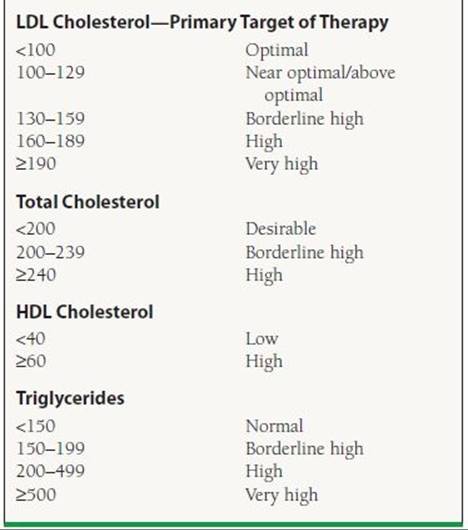
Adapted from Grundy SM, Becker D, Clark LT, et al. Third Report of the National Cholesterol Education Program (NCEP) Expert Panel on Detection, Evaluation, and Treatment of High Blood Cholesterol in Adults (Adult Treatment Panel III): Final Report, NIH Publication No. 02-5215. September 2002.
TABLE
53.10 Major CHD Risk Factors (Exclusive of LDL-C) that Modify LDL-C Goals
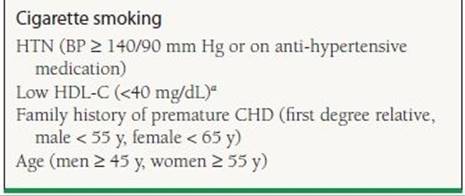
aHDL-C ≥ 60 mg/dL counts as a “negative” risk factor; its presence removes one risk factor from the total count.
Adapted from Grundy SM, Becker D, Clark LT, et al. Third Report of the National Cholesterol Education Program (NCEP) Expert Panel on Detection, Evaluation, and Treatment of High Blood Cholesterol in Adults (Adult Treatment Panel III): Final Report, NIH Publication No. 02-5215. September 2002.
Based on this additional emerging data, appropriate modifications of the 2001 guidelines include:
LDL-C goal <70 mg/dL is therapeutic option for very high-risk patients.
The above goal extends to patients at very high risk with baseline LDL-C <100 mg/dL
Factors favoring the optional goal of <70 mg/dL include CVD associated with multiple major risk factors (especially diabetes), severe and poorly controlled other risk factors (especially smoking), MetS, or ACS.
For moderately high-risk patients, LDL-C goal <100 mg/dL is a therapeutic option (e.g., hypertensive with multiple other risk factors).
Statins are the first-line pharmacologic therapy.
Increase to maximal tolerated doses of a potent statin as needed to achieve LDL-C goals before adding additional therapies
In patients with elevated LDL-C at baseline (≥160 mg/dL) standard statin doses may not be sufficient for optimal LDL-C reduction. Therefore, consider high-dose statins and/or combination therapy (e.g., statins + ezetimibe or resins) to achieve aggressive LDL-C goals.
Addition of fibrate or nicotinic acid should be considered for high-risk patients with high TG or low high-density lipoprotein cholesterol (HDL-C after achieving LDL-C goals).
Although extensive outcome data are not yet available, consider addition of additional therapies to achieve LDL-C and Non–HDL-C goals after optimization of statin therapy.
The most recent cholesterol treatment guidelines and update identify four tiers of CHD risk with therapeutic life style and pharmacologic recommendations for each risk level (Table 53.11). These tiers of risk are largely based upon the known risk of clinically present CVD or diabetes and epidemiologic data from the Framingham Heart Study. Individuals with known CHD, including a history of MI, unstable angina, PCI or CABG, or evidence of clinically significant myocardial ischemia, are at the highest risk for coronary events. Because noncoronary atherosclerotic disease confers a risk for coronary events comparable to that of known CHD, conditions such as symptomatic carotid artery disease, peripheral arterial disease, and abdominal aneurysm are referred to as “CHD risk equivalents.” Starting with ATP III, diabetes also came to be regarded as a CHD risk equivalent based on previously described observations. Patients with known CHD, or CHD risk equivalents, fall into the highrisk group for coronary events, and should thus receive the most aggressive lipid lowering. These are individuals with an estimated yearly risk of MI or death of 2% or greater.
TABLE
53.11 ATP III LDL-C Goals and Cutpoints for TLCs and Drug Therapy in Different Risk Categories land Proposed Modifications Based on Recent Clinical Trial Evidence
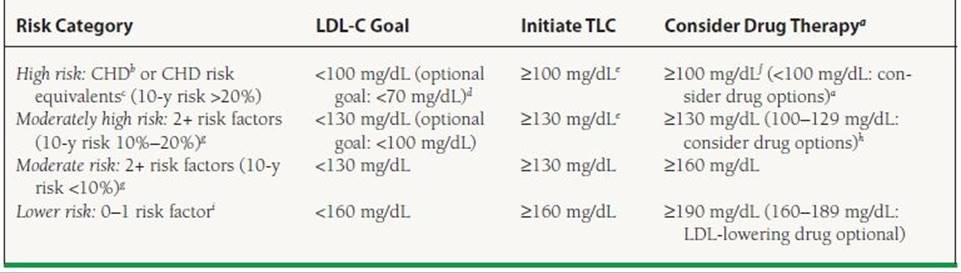
a When LDL-lowering drug therapy is employed, it is advised that intensity of therapy be sufficient to achieve at least a 30% to 40% reduction in LDL-C level
b CHD includes history of MI, unstable angina, PCI or CABG, or evidence of clinically significant myocardial ischemia.
c CHD risk equivalents include clinical manifestations of noncoronary forms of atherosclerotic disease (peripheral arterial disease, abdominal aortic aneurysm, and carotid artery disease [TIA or CVA of carotid origin or >50% obstruction of a carotid artery]), diabetes, and 2+ risk factors with 10-y risk for hard CHD >20%.
d Very high risk favors the optional LDL-C goal of <70 mg/dL, and in patients with high triglycerides, non-HDL-C <100 mg/dL.
e Any person at high risk or moderately high risk who has lifestyle-related risk factors (e.g., obesity, physical inactivity, elevated triglyceride, low HDL-C, or metabolic syndrome) is a candidate for TLC to modify these risk factors regardless of LDL-C level.
f If baseline LDL-C is <100 mg/dL, institution of an LDL-lowering drug is a therapeutic option on the basis of available clinical trial results. If a high-risk person has high TG or low HDL-C, combining a fibrate or nicotinic acid with an LDL-lowering drug can be considered.
g Electronic 10-year risk calculators are available at www.nhlbi.nih.gov/guidelines/cholesterol.
h For moderately high-risk persons, when LDL-C is 100–129 mg/dL, at baseline or on lifestyle therapy, initiation of an LDL-lowering drug to achieve an LDL-C <100 mg/dL is a therapeutic option on the basis of available clinical trial results.
i Almost all people with zero or 1 risk factor have a 10-y risk <10%, and 10-y risk assessment in people with zero or 1 risk factor is thus not necessary. Adapted from Grundy SM, Cleeman JI, Merz CN, et al. Circulation. 2004;110:227–239.
At the other end of the spectrum are those with 0 to 1 risk factors but no known CVD or diabetes. They are considered at lower risk for CHD events, with an estimated yearly MI or death rate of <0.5% to 1%, and require the least aggressive lipid control. Between these two extremes are individuals with 2 or more risk factors, but without known CVD or diabetes, for whom the 10-year risk of having a MI or dying from an MI can be estimated using the Framingham risk calculator. This is a point-based system (available online and in the “ATP III Guidelines At-A-Glance Quick Desk Reference,” NIH Publication No. 01–3305) to assess risk in men and women, based upon data from the Framingham Study, utilizing the parameters of age, TC, smoking status, HDL-C, and systolic BP. Those with 2+ risk factors and a 10-year risk >20% are grouped with the CHD and CHD risk equivalents (high risk), those with a 10-year risk of 10% to 20% are considered to be at moderately high risk, and those with a 10-year risk of <10% are said to be at moderate risk. Despite the utility of this calculator, important risk factors such as family history and obesity are not included, the calculation is heavily age and gender-weighted, and it may not apply equally to all ethnic groups. The guidelines have recommended the use of other novel risk markers (e.g., Lp(a)), measures of inflammation (e.g., hsCRP), and imaging for preclinical vascular disease (e.g., CT coronary calcification score, ankle–brachial index, carotid intima-medial thickness) to guide the intensity of therapy. These additional factors may be particularly useful in making more aggressive treatment decisions for intermediate risk individuals with other compelling risk factors such as a strong family history of premature CHD.
The primary target of treatment is LDL-C. The LDL-C goal for therapy and LDL-C level for initiation of drug therapy are dependent on the individual’s risk category. For example, the 2001 guidelines recommended that individuals falling into the CHD or CHD risk equivalent category have a treatment goal of <100 mg/dL and have drug therapy initiated for an LDL-C of ≥130 mg/dL (between 100 and 129 mg/dL optional). After LDL-C goals have been met, non-HDL cholesterol (TC minus HDL-C) is a secondary target of therapy (Table 53.12). The non-HDL-C target should be 30 mg/dL higher than the LDL-C goal. For example, in the high-risk group, if the LDL-C target is <100 mg/dL, the non-HDL-C target would be <130 mg/dL. This may be achieved by further reductions in LDL-C, lowering of TG, increase in HDL-C, or a combination. Specific recommendations for TG management have been outlined. If TG are borderline elevated at 150 to 199 mg/dL, weight reduction and increased physical activity should be prescribed. If TG are 200 to 499 mg/dL, this can be achieved by intensifying therapy with an LDL-lowering drug (i.e., increasing the statin dose), or by adding niacin or a fibrate to further lower VLDL-C. If TG are ≥500 mg/dL, TG should be lowered first to prevent pancreatitis. Treatment options include a very low-fat diet (<15% of calories from fat), identification and treatment of secondary causes of elevated TG, weight reduction and physical activity, and the addition of niacin or a fibrate. Once TG have been lowered to <500 mg/dL, LDL-C-lowering therapy should be initiated. Treatment of low-HDL-C remains a tertiary goal in lipid management, mainly because of the paucity of large outcome studies involving treatment of low HDL-C and less-effective available medications. No specific target for ideal HDL-C has been proposed. Once LDL-C goal has been achieved, weight reduction and increased physical activity should be employed in an attempt to boost HDL-C. If TG are 200 to 499, the non-HDL-C goal should be achieved. If TG are <200 mg/dL (isolated low HDL-C) in high-risk individuals, one should consider initiating niacin or a fibrate. In the future, as better medications to raise HDL-C become available and more large trials address the utility of treating HDL-C to reduce CHD events, the priority of treating a low HDL-C may increase. Finally, ATP III recognized the MetS as a growing contributor to CHD risk, and stressed the importance of its identification and treatment. The ATP III definition of MetS and its treatment goals have already been discussed (see Table 53.2).
TABLE
53.12 Comparison of LDL-C and Non-HDL-C Goals for Three Risk Categories
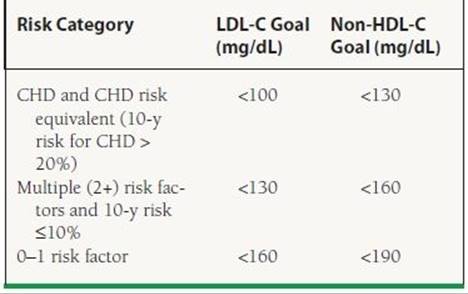
Adapted from Grundy SM, Becker D, Clark LT, et al. Third Report of the National Cholesterol Education Program (NCEP) Expert Panel on Detection, Evaluation, and Treatment of High Blood Cholesterol in Adults (Adult Treatment Panel III): Final Report, NIH Publication No. 02-5215. September 2002.
Recommendations for aggressive lipid management in the diabetic population have been reinforced in ADA/ACC concensus statement and ADA guidelines. The ADA suggests specific targets not only for LDL-C and non-HDL-C as outlined in Table 53.13 but also for TG of <150 mg/dL and HDL-C of <40 mg/dL in men and <50 mg/dL in women. Apolipoprotein B has been added as a secondary target.
TABLE
53.13 Therapeutic Lipid and Lipoprotein Goals in Diabetic Patients
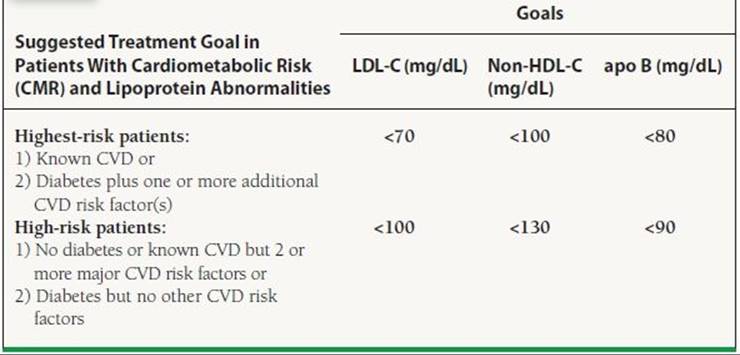
Despite the enormous amount of information and widely disseminated treatment recommendations, a significant number of treatment-eligible patients are not identified or do not receive adequate treatment. ATP III suggests that all adults be screened with a full fasting lipid profile beginning at age 20. ATP III recommends screening the family members of individuals with genetic disorders such as FH, familial defective apolipoprotein B-100, or PH. The guidelines recommend early assessment of response and titration of nonpharmacologic and drug treatment strategies (every 6 weeks) and offer advice to help with patient, physician, and health care provider adherence to the guidelines.
The American Heart Association recommends that children of parents with premature CHD or significantly elevated cholesterol or children whose family history is unknown be screened after 2 years of age. Updated guidelines and recommendations for the treatment of high cholesterol in children 8 years of age and older were issued by the American Academy of Pediatrics in July, 2008. These guidelines recommend pharmacologic treatment if not achieving goals with lifestyle intervention (with statins as first-line therapy) of elevated LDL-C if the value is >190 mg/dL in patients with no risk factors for CVD, >160 mg/dL in those who have a family history of premature onset of CVD or at least one other risk factors including obesity, hypertension, or cigarette smoking, and >130 mg/dL in those who have diabetes.
Clearly we are faced with the challenge of finding better ways to implement cholesterol treatment recommendations. See Tables 53.3 and 53.4 for detailed information on TLC and drug therapy, respectively, and Table 53.9 for an overview of the ATP III/Update treatment recommendations.
FUTURE DIRECTIONS
In the past two decades, we have witnessed remarkable strides in the treatment of lipid disorders and coronary disease. These accomplishments can be largely attributed in large part to the development of statins, and their overwhelming success in multiple large-scale randomized trials of CHD prevention. Over the next two decades, we can expect to see continued progress in lipid and CHD therapies. Basic science findings will continue to further our understanding of atherosclerotic mechanisms. Lipid absorption and metabolism; lipoprotein structure, function, and transport; inflammation, and the complex genetics of dyslipidemias and atherosclerosis are just a few of the fertile research areas which will undergo further exploration. Further understanding of the genetic underpinnings of atherosclerotic vascular disease may assist in specifically tailoring cardiac care to the individual patient. Clinical trials with agents with a capability to raise or modify HDL-C (such as the CETP inhibitors or ApoA1-Milano), long-term assessment of combination therapies along with statins, and better understanding of the role of hsCRP-directed therapy will likely further expand our treatment options for dyslipidemias and enhance our ability to reduce cardiovascular events.
REFERENCES
1. Fredrickson DS, Levy RI, Lees RS. Fat transport in lipoproteins—an integrated approach to mechanisms and disorders. N Engl J Med. 1967;276:34–42, 94–103, 148–156, 215–225, 273–281.
2. Reaven GM. Banting lecture 1988. Role of insulin resistance in human disease. Diabetes. 1988;37:1595–1607.
3. Grundy SM, Becker D, Clark LT, et al. Third report of the National Cholesterol Education Program (NCEP) expert panel on detection, evaluation, and treatment of high blood cholesterol in adults (Adult Treatment Panel III). Final Report. Circulation. 2002;106:3143–3421.
4. Ford ES, Giles WH, Dietz WH. Prevalence of the metabolic syndrome among US adults: findings from the third National Health and Nutrition Examination Survey. JAMA. 2002;287:356–359.
5. Grundy SM, Brewer HB, Cleeman JI, et al. Definition of metabolic syndrome: report of the National Heart, Lung, and Blood Institute/American Heart Association conference on scientific issues related to definition. Circulation. 2004;109:433–438.
6. Grundy SM, Hansen B, Smith SC Jr, et al. Clinical management of metabolic syndrome: report of the American Heart Association/National Heart, Lung, and Blood Institute/American Diabetes Association conference on scientific issues related to management. Circulation. 2004;109:551–556.
7. Wiegman A, Hutten BA, de Groot E, et al. Efficacy and safety of statin therapy in children with familial hypercholesterolemia: a randomized controlled trial. JAMA. 2004;109:551–556.
8. Stamler J. Epidemiology, established major risk factors, and the primary prevention of coronary heart disease. In: Chatterjee K, Cheitlin MP, Karlines J, et al., eds. Cardiology: An Illustrated Text/Reference. Philadelphia: J.B. Lippincott; 1991:1.
9. Gordon DJ, Probstfield JL, Garrison RJ, et al. High-density lipoprotein cholesterol and cardiovascular disease: four prospective American studies. Circulation. 1989;79:8–15.
10. Shepherd J, Cobbe SM, Ford I, et al. Prevention of coronary heart disease in men with hypercholesterolemia. N Engl J Med. 1995;333:1301–1307.
11. Downs JR, Clearfield M, Whitney E, et al. Primary prevention of acute coronary events with lovastatin in men and women with average cholesterol levels. JAMA. 1998;279:1615–1622.
12. Pedersen TR, Kjekshus J, Berg K, et al. The Scandinavian Simvastatin Survival Study Group. Randomised trial of cholesterol lowering in 4444 patients with coronary heart disease: the Scandinavian Simvastatin Survival Study (4S). Lancet. 1994;344:1383–1389.
13. Sacks FM, Pfeffer MA, Moye LA, et al. The effect of pravastatin on coronary events after myocardial infarction in patients with average cholesterol levels. N Engl J Med. 1996;335:1001–1009.
14. Tonkin A, Aylward P, Colquhoun D, et al. The Long-Term Intervention with Pravastatin in Ischaemic Disease (LIPID) Study Group. Prevention of cardiovascular events and death with pravastatin in patients with coronary heart disease and a broad range of initial cholesterol levels. N Engl J Med. 1998;339:1349–1357.
15. Collins R, Armitage J, Parish S et al. MRC/BHF Heart Protection Study of cholesterol lowering with simvastatin in 20,536 high-risk individuals: a randomised placebo-controlled trial. Lancet. 2002;360:7–22.
16. Nissen SE, Tuzcu EM, Schoenhagen P, et al. Effect of intensive compared with moderate lipid-lowering therapy on progression of coronary atherosclerosis: a randomized controlled trial. JAMA. 2004;291:1071–1080.
17. Cannon CP, Braunwald E, McCabe CH, et al. Intensive versus moderate lipid lowering with statins after acute coronary syndromes. N Engl J Med. 2004;350:1495–1504.
18. LaRosa JC, Grundy SM, Waters DD, et al. Intensive lipid lowering with atorvastatin in patients with stable coronary disease. N Engl J Med. 2005;352:1425–1435.
19. Sever PS, Dahlof B, Poulter NR, et al. Prevention of coronary and stroke events with atorvastatin in hypertensive patients who have average or lower-than-average cholesterol concentrations, in the Anglo-Scandinavian Cardiac Outcomes Trial—Lipid Lowering Arm (ASCOT-LLA): a multicentre randomised controlled trial. Lancet. 2003;361:1149–1158.
20. Colhoun HM, Betteridge DJ, Durrington PN, et al. Primary prevention of cardiovascular disease with atorvastatin in type 2 diabetes in the Collaborative Atorvastatin Diabetes Study (CARDS): multicentre randomised placebo-controlled trial. Lancet. 2004;364:685–696.
21. Ridker PM, Danielson E, Fonseca FAH, et al. Rosuvastatin to prevent vascular events in men and women with elevated C-reactive protein. N Engl J Med. 2008;359:2195–2207.
22. FIELD Study Investigators. Effects of long-term fenofibrate therapy on cardiovascular events in 9795 patients with type 2 diabetes mellitus (the FIELD study): randomised controlled trial. Lancet. 2005;366:1849–1861.
23. Rubins HB, Robins SJ, Collins D, et al. Gemfibrozil for the secondary prevention of coronary heart disease in men with low levels of high-density lipoprotein cholesterol. Veterans Affairs High-Density Lipoprotein Cholesterol Intervention Trial Study Group. N Engl J Med. 1999;341:410–418.
24. Brown BG, Albers JJ, Fisher LD, et al. Regression of coronary artery disease as a result of intensive lipid-lowering therapy in men with high levels of apolipoprotein B. N Engl J Med. 1990;323:1289–1298.
25. Blankenhorn DH, Nessim SA, Johnson RL, et al. Beneficial effects of colestipol niacin therapy on coronary atherosclerosis and coronary venous bypass grafts. JAMA. 1987;257: 3233–3240.
26. Brown BG, Zhao XQ, Chait A, et al. Simvastatin and niacin, antioxidant vitamins, or the combination for the prevention of coronary disease. N Engl J Med. 2001;345:1583–1592.
27. Taylor AJ, Sullenberger LE, Lee HJ, et al. Arterial Biology for the Investigation of the Treatment Effects of Reducing Cholesterol (ARBITER) 2: a double-blind, placebo-controlled study of extended-release niacin on atherosclerosis progression in secondary prevention patients treated with statins. Circulation. 2004;110:3512–3517.
28. ACCORD study group. Effects of combination lipid therapy in type 2 diabetes mellitus. N Engl J Med. 2010;362:1563–1574.
29. Brugts JJ, Yetgin T, Hoeks SE, et al. The benefits of statins in people without established cardiovascular disease but with cardiovascular risk factors: meta-analysis of randomised controlled trials. BMJ. 2009;338:b2376.
30. National Cholesterol Education Program Expert Panel on Detection E, and Treatment of High Blood Cholesterol in Adults (Adult Treatment Panel III). Third Report of the National Cholesterol Education Program (NCEP) Expert Panel on Detection, Evaluation, and Treatment of High Blood Cholesterol in Adults (Adult Treatment Panel III): Final Report, NIH Publication No. 02–5215. September 2002.
31. Grundy SM, Becker D, Clark LT, et al. Third Report of the National Cholesterol Education Program (NCEP) Expert Panel on Detection, Evaluation, and Treatment of High Blood Cholesterol in Adults (Adult Treatment Panel III): Final Report, NIH Publication No. 02–5215. September 2002.
QUESTIONS AND ANSWERS
Questions
1. Casey S. is an obese 54-year-old man (BMI = 35) with a history significant for obstructive sleep apnea and multiple joint complaints. A lower extremity arterial duplex study, performed to work up the possibility of claudication, reveals noncritical peripheral arterial disease, with bilateral antel–brachial indices (ABIs) of 0.8. He denies ongoing exertional chest discomfort or dyspnea, but lives a fairly sedentary lifestyle. Physical exam reveals an obese man with normal BP, an unremarkable cardiac exam, and 1+ dorsalis pedis pulses. His fasting lipids are as follows: total cholesterol (TC) 240 mg/dL, triglycerides (TG) 250 mg/dL, highdensity lipoprotein-cholesterol (HDL-C) 35 mg/dL, low-density lipoprotein-cholesterol (LDL-C) (calculated) 155. Initial therapy should include:
a. Therapeutic lifestyle change (TLC) only
b. TLC plus a statin, with the goal of reducing LDL-C to <130 mg/dL
c. TLC plus niacin or a fibrate, with the goals of reducing LDL-C to <100 mg/dL and TG to <150 mg/dL
d. TLC plus a statin, with the goal of reducing LDL-C to <100 mg/dL (<70 mg/dL optional)
e. e. TLC plus statin, as well as niacin or a fibrate, with the goals of reducing LDL-C to <100 mg/dL and TG to <150 mg/dL
2. Donna O. is a 71-year-old retired executive whose father died at age 52 of a “massive MI.” She is very worried about her own risk of a heart attack.
She watches her weight (BMI = 23), does not smoke, and keeps physically fit, walking 3 miles on a treadmill three to four times a week. She denies angina or dyspnea on exertion, claudication, or history of TIA symptoms. Her BP is 120/80. Her fasting lipids are as follows: TC 250 mg/dL, TG 120 mg/dL, HDL-C 42 mg/dL, LDL-C (calculated) 151 mg/dL. Her calculated Framingham 10-year event risk is 5%. Initial therapy should include:
a. Nothing beyond her current lifestyle measures
b. Weight loss to bring BMI to <2 0.
c. TLC plus a statin to reduce LDL-C to <130 mg/dL, or optionally to <100 mg/dL
d. TLC to reduce LDL-C to <130 mg/dL
e. Statin and niacin to reduce LDL-C to <130 mg/dL and increase HDL-C to > 50 mg/dL
3. If the same patient were found instead to have untreated HTN (systolic BP of 160), with all other data the same, what would be the preferred initial treatment, in addition to BP control? Her calculated 10-year Framingham risk score is now 11%.
a. Nothing beyond her current lifestyle measures
b. Weight loss to bring BMI to < 20
c. TLC plus a statin to reduce LDL-C to <130 mg/dL, or optionally to <100 mg/dL
d. TLC to reduce LDL-C to <130 mg/dL
e. Statin and niacin to reduce LDL-C to <130 mg/dL and increase HDL-C to > 50 mg/dL
4. Richard D. is referred to you for lipid management. He denies any first-degree relatives with history of coronary heart disease (CHD) but reports that two uncles and a distant cousin have had heart attacks. He is currently asymptomatic. His BMI is 28. His physical exam reveals arcus cornea and xanthelasmas, but no xanthomas, and a BP of 150/80. His fasting lipid profile is as follows: TC 300 mg/dL, TG 430 mg/dL, HDL-C 50 mg/dL, LDL-C (direct) 200 mg/dL. Which primary dyslipidemia is this patient most likely to have?
a. Polygenic hypercholesterolemia (PH)
b. Heterozygous Familial Hypercholesterolemia (FH)
c. Familial Combined Hyperlipidemia (FCH)
d. Hyperapobetalipoproteinemia
e. Familial endogenous hypertriglyceridemia
5. What should the initial therapy be for this patient?
a. Statin
b. Fibrate
c. Statin and antihypertensive agent
d. Niacin
e. Apheresis
6. Which of the following statements is not correct?
a. Scandinavian Simvastatin Survival Study (4S), CARE, LIPID, and HPS all involved secondary prevention of CHD.
b. Data from HPS, ASCOT-LLA, and PROVE-IT/TIMI-22 were influential in lowering the recommended treatment goals for LDL-C in the 2004 ATP III updates.
c. WOSCOPS and AFCAPS/TexCAPS were both primary CHD prevention studies which showed significant clinical benefits for statin therapy, with similar percentage reductions in LDL-C. The main difference between these trials was that subjects in AFCAPS/TexCAPS had considerably lower baseline LDL-C levels than those in WOSCOPS.
d. Early angiographic trials of lipid lowering showed significant reductions in coronary events, though they were not designed to show this.
e. ASCOT-LLA showed reductions in nonfatal myocardial infarction (MI), CHD death, and all-cause mortality when patients with average lipids and HTN were treated with atorvastatin 10 mg daily for an average of 3.3 years.
7. Gary P. is an obese, nonsmoking, gregarious 44-year-old talk show host with treated HTN and no family history of CHD. He has no personal history of known CHD. He has had elevated LDL-C in the past, and is taking atorvastatin 20 mg/d. His latest lipid panel is: TC 220, HDL-C 40, direct LDL-C 120, and TG 450. His calculated 10-year risk of a CHD event is 5%. After recommending lifestyle modifications, what is your first goal of drug treatment?
a. Increase the HDL-C
b. Lower the LDL-C
c. Lower the non-HDL-C
d. Lower the TG
e. Lower the TG and increase the HDL-C
8. Which of the following would lower non-HDL-C?
a. Increase the dose of atorvastatin
b. Add a fibrate
c. Add niacin
d. Add ezetemibe
e. All of the above
9. If the patient’s TG were 600 mg/dL, what would be your next step in lipid management?
a. Increase the HDL-C
b. Lower the LDL-C
c. Lower the non-HDL-C
d. Lower the TG
e. Lower the TG and increase the HDL-C
10. Which drug would you use?
a. Raise the dose of atorvastatin to 40 mg/d
b. Add a fibrate
c. Add niacin
d. Add ezetemibe
e. Increase the statin dose and add a fibrate Answers
Answers
1. Answer D: Patients with a CHD equivalent (including clinically evident peripheral arterial disease) have an LDL-C goal of <100 mg/dL, with the optional goal of <70 mg/dL.
2. Answer D: The patient has two major risk factors: age (woman ≥55 years), and family history of CHD, with a 10-year CHD event risk of <10%. In such moderaterisk persons, TLC alone should be initiated if LDL-C is ≥130 mg/dL, and TLC plus drug therapy should be started for LDL-C ≥160 mg/dL. Since her LDL-C is ≥130 mg/dL, TLC measures should be initiated.
3. Answer C: Given her HTN, the patient now has three major risk factors and a 10-year risk of between 10% and 20%, placing her in the moderately high-risk category. By ATP III, her goal LDL-C is <130 mg/dL, with an optional goal of <100 mg/dL, per the 2004 updates. Since her LDL-C is ≥130 mg/dL, a statin should be started.
4. Answer C: FCH is a common dyslipidemia (1:33 to 1:100 persons) characterized by complex inheritance. Xanthomas are rarely present (unlike in heterozygous FH), but xanthelasmas and arcus cornea can be seen. Affected individuals generally exhibit a TC of 250 to 350 mg/dL, LDL-C of 200 to 300 mg/dL, and TG > 140 mg/dL (two-thirds of patients with FCH have TG of 200 to 500 mg/dL. Patients with PH have a similar lipid profile, except they do not generally have elevated TG.
5. Answer C: Since this patient’s TG are <500, LDL-C reduction has first priority. A statin should be initiated, as well as an antihypertensive agent.
6. Answer E: While ASCOT-LLA showed reductions in nonfatal MI and CHD death, coronary events or procedures, stroke, and chronic stable angina, it did not show a reduction in total mortality.
7. Answer C: This man is currently at goal for his target LDL-C of <130 mg/dL. Given the fact that his TG are in the 200 to 499 range, the next priority is to lower his non-HDL-C from its current level of 180 to <160 mg/dL.
8. Answer E: Any of the therapeutic interventions would lower the non-HDL-C (TC minus HDL-C). However, risks of combination therapy and lack of long-term clinical trials assessing add-on therapy need to be considered. Emphasis on TLC with an increase in the statin dose would be an appropriate first step.
9. Answer D: When TG are ≥500 mg/dL, the priority is to reduce TG to <500 mg/dL, to avoid pancreatitis.
10. Answer B: This change could be most effectively achieved by adding a fibrate to his regimen.