

Figure 3.158 Malabsorption pattern of injury in the small intestine. This small bowel biopsy shows near-complete atrophy of the villi, associated crypt hyperplasia, and marked intraepithelial lymphocytosis. These three findings may be seen in variable combination in the malabsorption pattern, but note the intact crypt architecture; crypt architectural distortion is not a prominent feature of the malabsorption pattern.
CHECKLIST: Etiologic Considerations for the Malabsorption Pattern
 Medications
Reactive Duodenopathy
Small Intestinal Bacterial Overgrowth
Gluten Sensitive Enteropathy (Celiac Disease) and Refractory Sprue.
Nongluten Protein Sensitivity
Tropical Sprue
Common Variable Immunodeficiency
Autoimmune Enteropathy
Collagenous Duodenitis (Collagenous Sprue)
The malabsorption pattern of injury refers to a combination of intraepithelial lymphocytosis, crypt hyperplasia, and villous blunting (Fig. 3.158). This triad is the histologic hallmark of malabsorption in the small bowel and is frequently accompanied by the clinical symptom of diarrhea. These features can manifest singly or in combination along a wide histologic spectrum.
Intraepithelial Lymphocytosis
Intraepithelial lymphocytosis represents an immunologic process of crosstalk between luminal antigens and mucosal lymphocytes. The number of IELs in the normal small intestine has been reported as 11 to 23 IELs per 100 enterocytes.85–87 Except in the case of gluten sensitive enteropathy (celiac disease), there are currently no specific cut-off points for any the various disease entities. As such, the number of IELs does not need to be assessed in all cases; however if a reliable objective measure is needed, a rapid method of counting IELs can be performed by counting 20 epithelial cells at the distal apex (tip) of each of 5 villi (Fig. 3.159).85,87,88 This number can be expressed as IELs per 100 enterocytes.
Villous Blunting and Crypt Hyperplasia
Crypt hyperplasia is ambiguously defined as the elongation of the crypt compartment and is difficult to quantify. As such, crypt hyperplasia and villous blunting are frequently assessed together and can be expressed as a crypt-to-villous ratio. When the crypt compartment elongates and blunting of the villi occurs, the normal crypt-to-villous ratio (1:3 to 1:5) increases (Fig. 3.160).89

Figure 3.159 Counting IELs. One rapid method of counting IELs can be performed by selecting an enterocyte at one villous tip (center arrow) and counting 10 epithelial cells to either side. This brackets off 20 epithelial cells (lateral arrows). Count the IELs (arrowheads) in this area. When this method is performed across five villous tips, the number of IELs can be quantified per 100 enterocytes.

Figure 3.160 Malabsorption pattern, abnormal crypt to villous ratio. This biopsy from the second portion of the duodenum has a crypt depth to villous height ratio of approximately 1:1 which is the result of both crypt hyperplasia and villous blunting. Normal crypt to villous ratios range from 1:3 to 1:5. Compare this figure to Figure 3.3, which has a normal crypt to villous ratio. Care should be taken not to overcall villous blunting in the bulb, as villi in the bulb are naturally shorter.
The severity of features, whether manifested singly or in combination, can serve as diagnostic clues; however the features are nonspecific, and they may be seen in an ever-increasing list of conditions that require clinical correlation, as discussed below.
SAMPLE NOTE: INTRAEPITHELIAL LYMPHOCYTOSIS IN THE ABSENCE OF VILLOUS ATROPHY
Duodenum, Biopsy:
• Duodenal mucosa with mild intraepithelial lymphocytosis and preserved villous architecture.
Note: The duodenal biopsy shows mild histologic changes including mild intraepithelial lymphocytosis in the setting of preserved crypt and villous architecture. The findings are nonspecific and raise a differential diagnosis including small intestinal bacterial overgrowth (SIBO), medication-induced injury (NSAIDs and olmesartan), peptic injury, celiac disease, and sensitivity to nongluten proteins, among others. Correlation with clinical information is recommended.
A similar approach would be recommended in the case of mild villous atrophy.
SAMPLE NOTE: MALABSORPTION PATTERN OF INJURY, SEVERE
Duodenum, Biopsy:
• Duodenal mucosa with near-total villous atrophy, crypt hyperplasia, and marked intraepithelial lymphocytosis.
Note: Duodenal biopsies show a marked malabsorption pattern of injury including near-total villous atrophy, crypt hyperplasia, marked intraepithelial lymphocytosis, and expansion of the lamina propria by chronic inflammation. The findings are nonspecific, but raise a differential diagnosis including celiac disease, hypersensitivity reaction to nongluten proteins, severe bacterial overgrowth, chronic malnutrition, and immune dysregulation disorders (e.g, common variable immunodeficiency [CVID], and autoimmune enteropathy [AIE]). Of note, the normal expected constituents are present (i.e., plasma cells, goblet cells, Paneth cells, and enteroendocrine cells). Correlation with clinical, serologic and microbiologic information is necessary.
MEDICATION
NSAIDs cause a wide spectrum of histologic changes in the small bowel, some of which are segment specific. The frequency of injury is likely underappreciated, with one study demonstrating 55% to 75% of healthy volunteers showing small bowel damage after 2 weeks of treatment.90 Mechanistically, the prostaglandin reduction from both selective and nonselective COX inhibitors alters mucus and bicarbonate secretions, reduces mucosal blood flow, affects neutrophilic function and alters endothelial function. Selective COX2 inhibitors reduce, but do not completely eliminate side effects. Mild lesions may occur along the length of the small intestine and consist of superficial erosions with nonspecific neutrophilic, eosinophilic and plasmacytic infiltrates. These erosions may be multiple, coalesce forming deep ulcers, and result in hemorrhage. Repeat cycles may result in chronic injury, such as diaphragm disease in the terminal ileum. See also Diaphragm Disease, Crypt Architectural Disturbance Pattern, this chapter; however NSAID injury in the proximal small bowel is typically mild and results in subtle and nonspecific malabsorption-type changes, such as mild villous blunting and intraepithelial lymphocytosis (Figs. 3.161 and 3.162). These cases require correlation with the patient’s medication list to exclude NSAID injury. Note that severe diffuse villous blunting has not been reported in association with NSAIDs. In the absence of a definitive etiology for a mild malabsorption pattern of injury, a descriptive report listing the differential diagnoses should suffice (see sample note above).
The antihypertensive medication olmesartan (Benicar), an angiotensin II receptor inhibitor, is associated with lymphocytic gastritis, collagenous gastritis, and collagenous enteritis.91 These patterns of injury may occur singly or in combination, and have been described as “sprue-like.” Patients often present with clinically significant diarrhea and weight loss and the biopsies can be indistinguishable from those of celiac disease. Interestingly, these patients do not respond to a gluten-free diet (GFD), celiac serologies are typically negative, and the histology and symptomatology reverse upon olmesartan cessation. As such, this pattern of injury is histologically indistinguishable from celiac disease or other non–drug-related conditions, making review of the patient’s medication list an important effort during biopsy review. See also Malabsorption Pattern, Collagenous Enteritis, this chapter.
KEY FEATURES of Medication Injury:
• NSAIDs are the most common culprits.
• Repeat cycles of ulceration and submucosal scarring can result in “diaphragm disease” of the terminal ileum.
• The proximal small bowel can show a nonspecific mild malabsorption pattern of injury.
• Severe diffuse villous blunting is not seen in NSAID-induced injury.
• Correlation with clinical use of NSAIDs is required.

Figure 3.161 Malabsorption pattern, NSAID injury in the proximal small intestine. Duodenal changes are typically mild and demonstrate a malabsorption pattern of injury. This example shows mild villous blunting (crypt to villous ratio of 1:1 to 1:2).
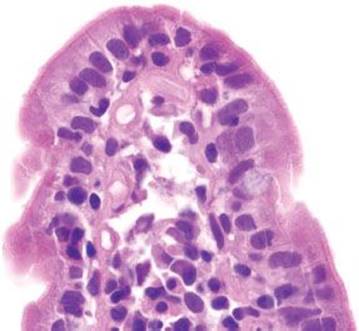
Figure 3.162 Malabsorption pattern, NSAID injury in the proximal small intestine. Villous tips may contain mild or prominent intraepithelial lymphocytosis. Although NSAID injury in the proximal small intestine features a malabsorption pattern, severe atrophic lesions have not been reported.
REACTIVE DUODENOPATHY
Reactive duodenopathy has been ascribed to chronic exposure to acid, such as in cases of gastric antral Helicobacter infection, gastric heterotopia, and Zollinger–Ellison syndrome. Histologic changes are predominantly limited to the bulb, but are sometimes seen as far as the second portion of the duodenum. Historically, reactive duodenopathy has been characterized by three main pathologic features, all of which may vary in severity, and include (Figs. 3.163–3.169):
1. Increased plasma cell infiltration
2. Neutrophils in the lamina propria or epithelium (or in both)
3. Reactive epithelial changes including villous blunting
Although surface gastric foveolar metaplasia and Brunner gland hyperplasia are often prominent findings, and are sometimes used as diagnostic criteria, these are not absolute criteria because they may be missed due to sampling error, and can be found in cases without inflammation. Both the surface gastric foveolar metaplasia and villous blunting are features indicating chronic mucosal injury. When severe, acid injury can cause duodenal ulcers, resulting in a clinical condition termed “peptic ulcer disease.” See also Peptic Ulcer Disease, Acute Duodenitis, this chapter; however while 95% of peptic ulcer disease has been ascribed to Helicobacter infection, the milder changes of reactive duodenopathy do not carry this bacterial association. In fact, some authors argue that there is insufficient evidence to ascribe gastric foveolar metaplasia to a “peptic” disorder, since only 16.4% of patients with metaplasia have detectable Helicobacter infection.92 As a result, there exists some degree of uncertainty regarding diagnostic criteria and terminology. Alternative nomenclature include gastric foveolar metaplasia with chronic inflammation, chronic peptic duodenopathy, active chronic peptic duodenitis (in the presence of acute inflammation), and peptic-type duodenopathy. Although the later terms containing “peptic” are discouraged by some due to the inaccurate implication of a peptic or Helicobacter etiology, these terms are retained by institutional conventions and often used interchangeably. Regardless of terminology, the histologic findings overlap with many of the differential diagnoses found in the malabsorption pattern, and can result in some diagnostic difficulty. In mild cases, nearly normal mucosa may be seen with only a borderline increase in plasma cells, intraepithelial lymphocytosis, and mild villous blunting. When faced with these mild changes, examination of gastric biopsies can help distinguish upstream Helicobacter infection from NSAID-induced injury to the proximal duodenum. In the absence of a definitive etiology for a mild malabsorption pattern of injury, a descriptive report listing the differential diagnoses should suffice (see the preceding Sample Note).

Figure 3.163 Malabsorption pattern, reactive duodenopathy. This low power view shows villous blunting (crypt to villous ratio 1:1) characteristic of malabsorption pattern of injury; however further examination reveals intramucosal Brunner glands, increased chronic inflammation in an expanded lamina propria, surface epithelial damage (arrow), and gastric foveolar metaplasia (arrowhead). The constellation of findings is consistent with reactive duodenopathy.

Figure 3.164 Malabsorption pattern, reactive duodenopathy. High power view of a villous tip shows gastric foveolar metaplasia (arrow) and IELs.

Figure 3.165 Malabsorption pattern, reactive duodenopathy. At first glance, this low power view shows a prominent pattern of villous blunting; however further examination reveals subtle gastric foveolar metaplasia (arrowheads) arising in a background of exuberant intramucosal Brunner glands and an expanded lamina propria.
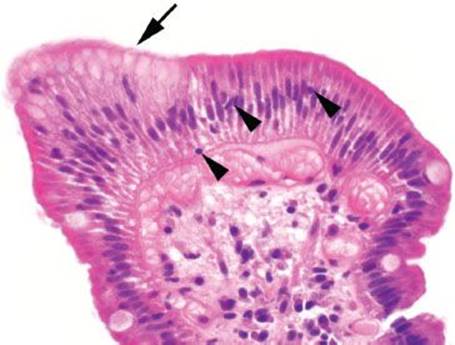
Figure 3.166 Malabsorption pattern, reactive duodenopathy. On higher power, it is easier to appreciate the focal gastric foveolar metaplasia (arrow) and mild intraepithelial lymphocytosis (arrowheads).

Figure 3.167 Malabsorption pattern, reactive duodenopathy. The villi in this example are blunted. Abundant IELs (arrowheads) are readily identifiable, as is focal gastric foveolar metaplasia (arrow).

Figure 3.168 Malabsorption pattern, reactive duodenopathy (PAS/AB). A PAS/AB stain highlights the acidic mucin of the goblet cells (right) blue-purple. The gastric foveolar metaplasia (left) contains neutral mucins which stain eosinophilic.

Figure 3.169 Malabsorption pattern, gastric heterotopia. Reactive duodenopathy is often an isolated finding, but do not forget to systematically check for underlying gastric oxyntic gland heterotopia. The pink and blue mixture of parietal and chief cells may be focal, but these acid-secreting glands can be the underlying cause of peptic-type injury in adjacent mucosa and result in misinterpretation unless specifically identified.
KEY FEATURES of Reactive Duodenopathy:
• Reactive duodenopathy is often attributed to increased acid in the duodenum.
• Causes include increased gastric acid, Helicobacter gastritis, gastric heterotopia, NSAID, and Zollinger–Ellison syndrome.
• Pathologic features include: increased lamina propria plasma cells, neutrophilic infiltration, and reactive epithelial changes.
• Surface gastric foveolar metaplasia and intramucosal Brunner glands may or may not be present.
• Mild changes may cause a nonspecific malabsorption pattern.
• Severe changes, such as ulceration, may be termed peptic ulcer disease, which has been associated with Helicobacter infection far more frequently than the milder peptic duodenitis (95% vs. 16%).
PEARLS & PITFALLS
When available, proximal duodenal or bulb biopsies should be examined for peptic-type changes, particularly when patchy intraepithelial lymphocytosis is found in the distal duodenum. The helpful presence of gastric foveolar metaplasia and peptic-type changes are found more frequently in the proximal duodenal biopsies, while downstream changes are often nonspecific.
SMALL INTESTINAL BACTERIAL OVERGROWTH
Small intestinal bacterial overgrowth (SIBO) is defined as excessive anaerobic enteric bacteria in the small bowel, specifically >100,000 colony forming units per milliliter (CFU/mL) on culture of a duodenal aspirate. The most common causes for bacterial overgrowth are diminished gastric acid secretion and small intestine dysmotility; these lead to disruption of the normal homeostatic mechanisms that control enteric bacterial populations. Disturbances in gut immune function and anatomic abnormalities of the GI tract increase the likelihood of developing SIBO (Table 3.4) and are found in two-thirds of patients.93
TABLE 3.4: Conditions Predisposing to Bacterial Overgrowth

Deconjugation of bile salts and metabolic breakdown of carbohydrates by the bacteria cause clinical symptoms of bloating, abdominal distention, abdominal pain or discomfort, diarrhea, steatorrhea, fatigue, and weakness. Patients may also present with anemia, deficiency of fat soluble vitamins (A, D, E, K), and vitamin B12 or protein deficiency. Local damage and inflammatory changes in the small bowel result in nonspecific histologic features that vary from normal to a profound malabsorption pattern. One study found that more than half of biopsies from SIBO patients were histologically unremarkable, and that villous blunting (crypt to villous ratio of >3:1) was the only feature more common as compared to controls (Figs. 3.170–3.176).93 In the absence of a definitive etiology for a mild malabsorption pattern of injury, a descriptive report listing the differential diagnoses should suffice. Culture of a small bowel aspirate obtained during endoscopy is the gold standard for diagnosis. Antibiotic therapy remains the mainstay of treatment, the goal of which is to reduce or eliminate bacterial overload and reverse the mucosal inflammation associated with malabsorption.94

Figure 3.170 Malabsorption pattern, SIBO. This distal duodenal biopsy shows marked villous blunting (reversed crypt to villous ratio 3:1) which raises the malabsorption pattern differential diagnosis. A duodenal aspirate performed at the time of biopsy grew >100,000 CFU/mL, confirming the presence of SIBO.

Figure 3.171 Malabsorption pattern, SIBO. A high power view of the villous tips from the previous figure reveals abundant IELs (some of which are highlighted by arrowheads).

Figure 3.172 Malabsorption pattern, SIBO. This example of confirmed SIBO shows mild villous blunting and marked expansion of the lamina propria with chronic inflammatory cells.

Figure 3.173 Malabsorption pattern, SIBO. A high power view of the villous tips from the previous figure reveals abundant IELs (some of which are highlighted by arrowheads).

Figure 3.174 Malabsorption pattern, SIBO. Duodenal biopsies frequently arrive at the laboratory stating “rule out celiac disease.” A quick glance at this biopsy shows features compatible with celiac disease, such as villous blunting (crypt to villous ratio 1:1), a lamina propria expanded with chronic inflammatory cells, and intraepithelial lymphocytosis; however culture of a duodenal aspirate grew >100,000 CFU/mL of anaerobic bacteria, confirming SIBO. Additional clinical information revealed negative celiac disease specific antibodies.

Figure 3.175 Malabsorption pattern, SIBO. Higher power examination of the previous figure shows IELs (some of which are highlighted by arrowheads).
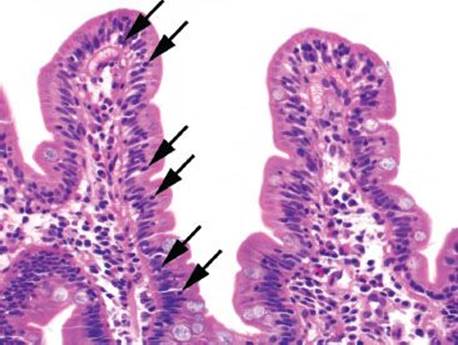
Figure 3.176 Malabsorption pattern, SIBO. These villi show intraepithelial lymphocytes (some of which are highlighted by arrows) that are evenly distributed along the full length of the villi. By comparison, celiac disease may demonstrate a crescendo of IELs toward the tips of the villi.
KEY FEATURES of Small Intestinal Bacterial Overgrowth:
• SBIO is defined as the growth of anaerobic enteric bacteria >100,000 CFU/mL from a duodenal aspirate.
• Causes include: decreased acid secretion or motility, anatomic abnormalities, and altered gut immunity.
• Patients experience bloating, diarrhea, steatorrhea, and fat soluble vitamin deficiency.
• Histology shows a nonspecific malabsorption pattern than can range from very mild intraepithelial lymphocytosis to total villous atrophy.
• Although radiolabeled carbon and hydrogen breath tests are available, the gold standard of diagnosis is culture of duodenal aspirates.
• Antibiotics are the mainstay of treatment.
FAQ: What if a small bowel aspirate was not sent for culture at the time of endoscopy, and a malabsorption pattern is present on biopsy?
Answer: Culture of small bowel fluid is the preferred method, but other laboratory tests such as hydrogen breath test, 14C-xylose breath test, and bile acid breath test are available if an aspirate was not performed.95 It is worthwhile to evaluate for SIBO because it is treatable, and because exclusion of SIBO can narrow the histologic differential diagnosis.
GLUTEN SENSITIVE ENTEROPATHY (CELIAC DISEASE)
Celiac disease is an immune-mediated systemic disorder caused when exposure to gluten (found in wheat, barley, and rye) triggers inflammation in the small intestine in genetically susceptible individuals. Also known as sprue, nontropical sprue, celiac sprue, gluten sensitive enteropathy, and gluten-induced enteropathy, the estimated prevalence of celiac disease approaches 1% in Europe and North America.96,97 Diagnosis requires careful correlation of four main characteristics, including (1) a variable combination of gluten-dependent clinical manifestations, (2) celiac disease specific antibodies, (3) genetic predisposition including HLA-DQ2 or HLA-DQ8 haplotypes, and (4) histologic features of enteropathy.98–101 A pathologist who understands the clinical, serologic, and genetic factors of celiac disease provides the benefit of a more useful and integrated pathology report.
Clinical manifestations are myriad, and most biopsies received in the laboratory state only “rule out celiac disease.” Table 3.5 provides some examples of the clinical manifestations, particularly those in which screening for celiac disease is advantageous. Serologic testing should be performed while a patient is on a gluten-inclusive diet and calls for celiac disease specific antibodies, namely, deamidated antigliadin antibodies (DGP), tissue transglutaminase antibody (TTG-IgA), and antiendomysial antibody (EMA-IgA), each of which are >90% sensitive and specific for CD.102–107 Note that antigliadin antibody (AGA-IgA and AGA-IgG) is no longer recommended due to its comparatively low sensitivity and specificity (as low as 75% to 80%, each).108; however testing for IgA deficiency remains essential since this condition can show false negative serologic results and is found in 2% to 3% of patients with celiac disease.109,110 As an adjunct to serologic testing, genetic testing has evolved over the past decade, and may be useful in cases with equivocal serologic and histologic findings. Haplotypes HLA-DQ2 (encoded by alleles A1*05 and B1*02) or HLA-DQ8 (encoded by alleles A1*03 and B1*0302) are found in 30% to 40% of the population and are inherited in families and geographically.111–113 This genetic information can be exploited since celiac disease develops in a minority of the population, and nearly all celiac patients have the isoform DQ2 (95%) or DQ8 (5%).114,115 Thus, the presence of either one of these haplotypes is permissive for celiac disease, and conversely the absence of both these haplotypes essentially excludes celiac disease (negative predictive value 99%).116
TABLE 3.5: Conditions in which Celiac Disease Occurs More Frequently than in the General Population and/or for Whom a Gluten-Free Diet May Be Beneficial

Despite advances in serologic and genetic testing, adequate small bowel biopsies for histopathology remain critical for diagnosis and should similarly be obtained before instituting a GFD. In one study, when ≥4 duodenal biopsy specimens were submitted from 132,352 patients without known celiac disease, the probability of a new diagnosis of celiac disease was significantly increased (1.8% vs. 0.7%, p<0.0001).117 Furthermore, concurrent duodenal bulb biopsies increase diagnostic yield, since villous atrophy can be found exclusively in the bulb in 9% to 13% of children and adults with positive celiac disease-specific serologies.118–120 Consequently, expert recommendations suggest multiple single-pass biopsies of the duodenum (one or two biopsies of the bulb and at least four biopsies of the distal duodenum) to confirm the diagnosis of celiac disease.101,108,121 At the time of biopsy, endoscopists characteristically find mucosal atrophy, scalloping along the plicae, or fissuring (Fig. 3.177), but while these endoscopic findings are highly typical, they are not specific for celiac disease.122 Similarly, the histologic changes of malabsorption pattern (villous atrophy, crypt hyperplasia, and intraepithelial lymphocytosis) are required for a diagnosis of celiac disease, but they are nonspecific and include the wide differential diagnosis listed within this chapter. Histologic findings can be classified according to the modified Marsh (Oberhuber) or simplified Corazza classifications (Figs. 3.178–3.193) (Table 3.6). Note, however, that these grading systems presuppose a diagnosis of celiac disease and are best used as a method for assessing histologic improvement in sequential biopsies, or for research purposes.

Figure 3.177 Celiac disease, endoscopic image. The small bowel mucosa in the proximal duodenum shows patchy atrophy and fissuring.

Figure 3.178 Malabsorption pattern, celiac disease, modified Marsh 1. Low power magnification shows intact villous and crypt architecture with a crypt to villous ratio within normal limits (1:3 to 1:5); however note the slightly expanded lamina propria and villi, which should prompt further investigation for IELs.

Figure 3.179 Malabsorption pattern, celiac disease, modified Marsh 1. Higher magnification of the previous figure shows markedly increased IELs (some of which are indicated by the arrowheads). In the absence of clinical and serologic information, this malabsorption pattern is nonspecific and elicits a lengthy differential diagnosis.

Figure 3.180 Malabsorption pattern, celiac disease, modified Marsh 3a. Low power magnification shows a decrease in the crypt to villous ratio (about 1:1) that is the result of mild crypt hyperplasia and mild villous blunting. Crypt hyperplasia precedes villous blunting in celiac disease, but the purely hyperplastic lesion (Marsh 2) is rarely seen.
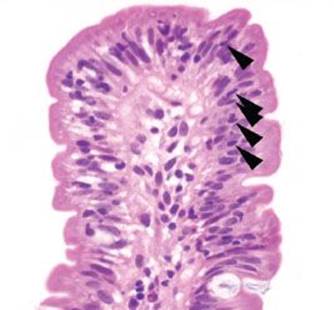
Figure 3.181 Malabsorption pattern, celiac disease, modified Marsh 3a. The villous tips show markedly increase IELs (some of which are indicated by the arrowheads). Even with this degree of intraepithelial lymphocytosis, the differential diagnosis remains broad and correlation with clinical and serologic information is required.

Figure 3.182 Malabsorption pattern, celiac disease, modified Marsh 3b. At low power magnification, both crypt hyperplasia and moderate villous blunting are present (crypt to villous ratio 1:1 to 2:1).

Figure 3.183 Malabsorption pattern, celiac disease, modified Marsh 3b. Another example of crypt hyperplasia and villous blunting that shows reversal of the crypt to villous ratio (3:1). Note the expansion of the lamina propria with mononuclear cells and the broadening of the villi.
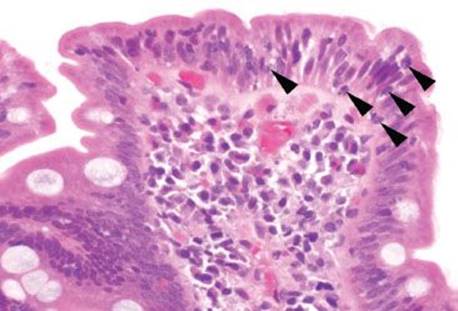
Figure 3.184 Malabsorption pattern, celiac disease, modified Marsh 3b. Higher magnification of the previous figure shows increased IELs (some of which are indicated by arrowheads). Note the lamina propria inflammatory cells are predominantly plasma cells, which is quite characteristic.

Figure 3.185 Malabsorption pattern, celiac disease, modified Marsh 3b. Another high magnification area of the previous figure showing marked intraepithelial lymphocytosis (some IELs are marked by arrowheads).

Figure 3.186 Malabsorption pattern, celiac disease, modified Marsh 3c. At low power magnification, the villi are totally atrophic. There is mild expansion of the lamina propria with mononuclear inflammatory cells. This degree of villous atrophy includes a broad differential diagnosis, but is almost never seen in NSAID-induced injury.

Figure 3.187 Malabsorption pattern, celiac disease, modified Marsh 3c. Higher magnification of the previous figure shows marked intraepithelial lymphocytosis (arrowheads).

Figure 3.188 Malabsorption pattern, confounding features in celiac disease. This biopsy shows crypt hyperplasia and marked villous atrophy in a background of markedly increased lamina propria chronic inflammation. In addition, intramucosal Brunner glands are present at the base of the biopsy, raising the possibility of reactive duodenopathy. The histologic findings are nonspecific, and this biopsy was obtained from a patient with known celiac disease.

Figure 3.189 Malabsorption pattern, celiac disease, modified Marsh 3b. Another example of celiac disease shows a crypt to villous ratio of about 1:1 with hypercellularity at the tips of the villi evident even at low magnification.

Figure 3.190 IELs. Higher magnification of the previous figure shows IELs (some of which are indicated by the arrowheads). Note how the IELs are concentrated at the villous tip, with fewer IELs toward the base.

Figure 3.191 Lymphocytic colitis in a patient with celiac disease. This colon biopsy comes from the same patient as seen in the previous two figures. Lymphocytic colitis has been associated with celiac disease, along with other nonneoplastic diseases of the GI tract.

Figure 3.192 Malabsorption pattern, celiac disease, modified Marsh 3 c. This biopsy shows complete atrophy of the villi with marked crypt hyperplasia. There is increased lamina propria chronic inflammation, but note the preservation of the crypt architecture; there is no evidence of crypt shortfall, distortion, or dropout. Crypt architectural distortion is not a feature of celiac disease.

Figure 3.193 Malabsorption pattern, celiac disease, modified Marsh 3c. Higher magnification of previous figure to demonstrate IELs (arrowheads).
TABLE 3.6: 2013 American College of Gastroenterology Recommendations for when to Test for Celiac Disease101


Figure 3.194 Malabsorption pattern, EATCL. EATCL can be a sequela of long-standing celiac disease, and should always be considered in a patient with refractory sprue. This low power view shows a diffuse, monomorphic infiltrate of lymphocytes.

Figure 3.195 Malabsorption pattern, EATCL. Higher magnification of the previous figure highlights the monomorphic T lymphocytes, some of which are intraepithelial (arrowheads).
The treatment for celiac disease is adherence to a GFD. Long term monitoring of adherence to a GFD can help control symptoms, improve quality of life, and decrease the risk of complications such as: anemia, failure to thrive, osteomalacia, peripheral neuropathy, and small bowel lymphoma. Monitoring is based on a combination of history and serology; repeat upper endoscopy with intestinal biopsies is recommended in cases lacking clinical response or showing relapse of symptoms despite a GFD.101 Patients who fail to respond to a GFD may have nonresponsive celiac disease (NRCD; failure to respond in the first 6 to 12 months) or refractory celiac disease (RCD; failure to respond for more than 12 months). These scenarios require diligent reexamination for alternative diagnoses such as other food intolerances, surreptitious or inadvertent gluten exposure, SIBO, microscopic colitis, pancreatic insufficiency, and irritable bowel syndrome.
Diagnosis of RCD requires repeat small bowel biopsy while the patient adheres to a GFD, and can be further divided into Type I RCD and Type II RCD based on the histologic findings. Type I RCD shows lymphocyte infiltration of the small intestinal mucosa similar to that seen in untreated celiac disease. By comparison, Type II RCD, shows CD3-positive intraepithelial T cells that exhibit an abnormal lack of CD8 expression. These T cell abnormalities in Type II RCD are associated with a significantly less favorable prognosis as compared to Type I RCD.123,124 Transformation to enteropathy-associated T-cell lymphoma (EATCL) is a prominent risk and may require treatment by surgery, chemotherapy, or bone marrow transplantation (Figs. 3.194 and 3.195).125,126
KEY FEATURES of Celiac Disease:
• Celiac disease is an immune-mediated systemic disorder caused by exposure to gluten proteins found in wheat, barley and rye.
• It affects up to 1% of North Americans and Europeans.
• Other names include: sprue, nontropical sprue, celiac sprue, gluten sensitive enteropathy, and gluten-induced enteropathy.
• Diagnosis requires:
1. clinical manifestations,
2. celiac disease–specific antibodies (DGP, TTG-IgA, and EMA-IgA),
3. genetic predisposition (HLA-DQ2 or HLA-DQ8 haplotypes), and
4. histologic features of small bowel enteropathy.
• Presence of either DQ2 or DQ8 is permissive for CD, and absence of both essentially excludes CD with a negative predictive value of 99%.
TABLE 3.7: Histologic Classification and Grading Systems Used for Celiac Disease89,127

• Testing guidelines (Table 3.6) are provided by the American College of Gastroenterology.
• Biopsy recommendations: four single-pass biopsies from the distal duodenum and two from the bulb, preferably submitted separately.
• Histologic features include: intraepithelial lymphocytosis (>25 IELs per 100 enterocytes), crypt hyperplasia, and villous atrophy, but are not diagnostic in isolation.
• A crescendo in the number of IELs from the base of the crypts to the tips of the villi is characteristic.
• Grading mechanisms exist, including the modified Marsh and Corazza systems (Table 3.7).
• The presence of neutrophils does not exclude a diagnosis of CD.
• Immunohistochemistry for IELs is not useful if biopsies are otherwise unremarkable on routine H&E stain.
• Treatment is lifelong adherence to a strict GFD.
• RCD has an increased risk for EATCL.
FAQ: How many IELs are considered “increased” in celiac disease?
Answer: Original Marsh descriptions of celiac disease did not specify a cut-off number for IELs, whereas Oberhuber et al.89 suggested that >40 IELs per 100 enterocytes indicates an ongoing immunologic process. Since that time, the threshold has dropped, with Corazza et al.127 supporting a threshold of 25 IELs per 100 enterocytes. For comparison, the number of IELs in the normal small intestine has been reported as 11 to 23 IELs per 100 enterocytes.86,87,128
FAQ: Are IELs more prominent at the villous tips vs. the crypts in celiac disease?
Answer: Yes.
In normal villi, the IELs tend to be more numerous along the lateral aspects of the villi compared with the tips.129,130 In contrast, the villi from patients with celiac disease show an escalation in the number of IELs as one proceeds from the crypts toward the villous tips.87,128,131 This crescendo of IELs toward the tips in celiac disease reflects immunologic cross-talk between luminal gliadin antigens and the migratory inflammatory cells of the lamina propria (Fig. 3.196).

Figure 3.196 Malabsorption pattern, crescendo pattern of IELs. This villous tip contains numerous IELs (some of which are marked by the arrowheads). Note how the number of IELs drops precipitously as one approaches the base of the villus.
FAQ: How does one count the number of IELs in 100 enterocytes?
Answer: A reliable objective measure is needed in the evaluation of celiac disease, and a rapid method of counting IELs can be performed by counting 20 epithelial cells at the distal apex of each of 5 villi (Fig. 3.197).85,87,88 The number if IELs within this area can be expressed as IELs per 100 enterocytes.

Figure 3.197 Counting IELs in villous tips. Starting at the centermost enterocyte, count 10 epithelial cells toward either side. Within this span of 20 epithelial cells (bracketed by arrows), count the IELs (one example is indicated by an arrowhead); this example contains at least 4. When this process is performed across 5 villous tips, the results can be quantified as IELs per 100 enterocytes.
FAQ: What is the significance of neutrophils in biopsies for CD?
Answer: While the presence of neutrophils in duodenal biopsies can prompt consideration for Crohn disease and peptic injury, significant duodenal neutrophilia is reported in celiac patients (56% of pediatric and 28% of adult) and is associated with more active disease.132 Thus, the findings of duodenal neutrophils in biopsies otherwise consistent with celiac disease should not preclude a diagnosis of celiac disease (Fig. 3.198).

Figure 3.198 Neutrophils in celiac disease (arrowheads). Although neutrophils are not a classic feature of celiac disease, significant duodenal neutrophilia is reported in celiac patients and has been associated with more active disease. The finding of neutrophils does not preclude a diagnosis of celiac disease.
FAQ: Is immunohistochemistry for T-cell markers useful in the diagnosis of celiac disease?
Answer: No.
The IELs found in celiac disease are predominantly CD8+/CD3+ T-cells. Accordingly, some authors and practices advocate the use of CD8 and CD3 immunohistochemical stains to improve detection of IELs; however immunostains for T-cell markers do not improve detection of gluten-sensitive enteropathy when H&E stained sections are unremarkable (Fig. 3.199).133

Figure 3.199 Combined CD3 and CDX2 immunohistochemical stain. This CD3 immunostain (highlights CD3+ T-cells of celiac disease red) has been overlaid on a CDX2 immunostain (highlights enterocytes nuclei brown). This practice is employed by some laboratories, but is unnecessary as studies have shown that immunostains do not improve the detection of celiac disease.
FAQ: How quickly do clinical and histologic features improve after a GFD is instituted?
Answer: In most patients, diarrhea responds within days of instituting a GFD, and mean time to resolution is 4 weeks.99 Within days of starting a GFD, there is evidence of diminished surface epithelial damage and a reduction in the number of IELs; however it may be >3 months before normal histology is appreciated, even with adherence to a strict GFD.
FAQ: What is a gluten challenge, and how quickly do histologic lesions emerge following institution?
Answer: A gluten challenge is the process whereby a patient with suspected but unproven celiac disease on a GFD reverts to a normal gluten-inclusive diet under medical supervision to enable diagnostic testing. This was routine for diagnosis in the past, but is now less frequently used because of the high positive predictive value of specific celiac serology testing. It remains a useful diagnostic test in patients with permissive haplotypes (HLA-DQ2 or DQ8), but with normal serologic and histologic results while on a GFD. A diet containing at least 10 g of gluten per day for 6 to 8 weeks is the normal gluten challenge prior to repeat biopsy134,135; however lower doses of gluten (3 g/day) can produce diagnostic changes in as little as 2 weeks of gluten ingestion.136 This information can be leveraged for patients who develop severe symptoms following gluten ingestion (celiac crisis) and cannot tolerate a full gluten challenge. It may also prove useful for following refractory patients who either surreptitiously or unintentionally ingest gluten.
NONGLUTEN PROTEIN SENSITIVITY
Sensitivity to nongluten proteins occurs most commonly with cow’s milk, but soy, egg, and wheat proteins are also culprits. Other types of food sensitivities, especially among adults, are not well understood. Infants with cow’s milk or soy sensitivity may present at 1 week to 3 months of age with protracted vomiting, diarrhea, protein-losing enteropathy, dehydration, anemia from chronic blood loss in the stool, and failure to thrive.137 Rapid onset reactions can develop within 1 hour of food ingestion, are IgE mediated, and do not result in histologic changes.138 Slow onset reactions may be either IgE- or T cell–mediated immune reactions which can result in macrophage influx and cytokine-mediated mucosal damage.138 Biopsy specimens show a malabsorption pattern similar to celiac disease, with patchy areas of villous atrophy, intraepithelial lymphocytosis, edema, and increased mononuclear cell infiltrate in the lamina propria (Figs. 3.200 and 3.201). Mild to severe mucosal eosinophilia and intraepithelial eosinophils can be seen in nongluten protein sensitivity,139 and can help distinguish these two entities. In addition, IELs have been reported as fewer than seen in celiac disease.139 When offending antigens are removed from the diet, the clinical and histologic abnormalities resolve, and characteristically recur when challenged.
KEY FEATURES of Nongluten Protein Sensitivity:
• Cow’s milk, soy, egg, and wheat proteins can cause hypersensitivity reactions in the small bowel.
• Infants commonly present with vomiting, diarrhea, dehydration, and failure to thrive.
• Histologic features show a patchy malabsorption pattern, similar to celiac disease.
• Mucosal eosinophilia is more common in nongluten protein sensitivity than in celiac disease.
• Treatment is avoidance of offending antigens.

Figure 3.200 Malabsorption pattern, nongluten protein sensitivity. Histologic features of nongluten protein sensitivity are similar to those seen in celiac disease. These include villous atrophy, crypt hyperplasia, and intraepithelial lymphocytosis.

Figure 3.201 Malabsorption pattern, nongluten protein sensitivity. High magnification of an intact villous tip from a patient with soy protein allergy showed marked intraepithelial lymphocytosis.
TROPICAL SPRUE
Tropical sprue is an acquired intestinal malabsorption syndrome of unknown etiology that affects residents, tourists, and expatriates of tropical regions specific to West Africa, Central America, South America, the Caribbean, Puerto Rico, South East Asia, and the Indian subcontinent. The etiology remains elusive, but most evidence suggests an infectious cause, and the term “postinfective tropical malabsorption” is sometimes used.140,141 Symptoms include chronic nonbloody diarrhea, weight loss, bloating, and abdominal cramping. In severe cases, folate and vitamin B12 deficiency can lead to anemia and neurologic symptoms. In the United States, the typical scenario is a patient with chronic diarrhea who has lived in or recently visited a tropical region. Travelers returning to nontropical regions generally recover completely after treatment, which includes antibiotics and restoration of fluids, electrolytes, and vitamins.142 The entire small bowel including the ileum is usually affected in tropical sprue. Thus, biopsies from both the duodenum and the ileum should show similar features of villous blunting, intraepithelial lymphocytosis, and increased lamina propria chronic inflammation (Figs. 3.202–3.207). By contrast, celiac disease primarily affects the proximal small bowel.

Figure 3.202 Malabsorption pattern, duodenum in tropical sprue. This duodenal biopsy shows a combination of crypt hyperplasia and villous blunting (crypt to villous ratio 1:1) with increased lamina propria chronic inflammation. The differential diagnosis based on this photo alone is extensive.

Figure 3.203 Malabsorption pattern, duodenum in tropical sprue. Higher magnification of the previous figure shows increased mononuclear cells in the lamina propria and markedly increased IELs (arrowheads) along the villi.

Figure 3.204 Malabsorption pattern, duodenum in tropical sprue. Higher magnification of the previous figure highlights the intraepithelial lymphocytosis (arrowheads).

Figure 3.205 Malabsorption pattern, terminal ileum in tropical sprue. Terminal ileal biopsies of the same patient show similar findings as seen in the duodenum. There is mild villous blunting and expansion of the lamina propria with chronic inflammatory cells.

Figure 3.206 Malabsorption pattern, terminal ileum in tropical sprue. Higher magnification of the previous figure shows histology analogous to that seen in the duodenum. There are increased lamina propria mononuclear cells and IELs (arrowheads). In the absence of any clinical information, the parallel findings in the duodenum and TI should prompt suspicion for tropical sprue. Further investigation revealed that symptoms coincided with return from a visit to India 3 months prior; infectious etiologies had been extensively excluded.

Figure 3.207 Malabsorption pattern, terminal ileum in tropical sprue. The villous tips of the terminal ileum show marked intraepithelial lymphocytosis (arrowheads) similar to that seen in the duodenum.
KEY FEATURES of Tropical Sprue:
• Tropical sprue is an acquired malabsorptive syndrome.
• Patients usually report an abrupt onset, associated with travel to the tropics.
• Histology includes a malabsorptive pattern throughout the small bowel.
• The terminal ileum shows villous blunting and IELs similar to that seen in the duodenum.
• Exclusion of infectious etiologies and response to treatment are required for diagnosis.
FAQ: How is a diagnosis of tropical sprue established?
Answer: The diagnostic possibilities in patients with diarrhea acquired in the tropics are quite extensive and include a large number of infectious etiologies, including Entamoeba histolytica, Giardia lamblia,Strongyloides stercoralis, Cryptosporidium parvum, Isospora belli, and Cyclospora cayetanensis, among others. Exclusion of these causes by stool and serologic testing is necessary. Upper endoscopy with biopsy shows a nonspecific malabsorption pattern of injury; tandem ileal biopsies showing similar changes are strongly suggestive of tropical sprue; however the diagnosis is ultimately confirmed by a response to treatment.
COMMON VARIABLE IMMUNODEFICIENCY
Common variable immunodeficiency (CVID) is a primary immunodeficiency disorder characterized by impaired B-cell differentiation with defective immunoglobulin production. It is the most prevalent severe antibody deficiency affecting both children and adults. “Variable” refers to the heterogeneous clinical manifestations of this disorder, which include recurrent infections, chronic lung disease, autoimmune disorders, gastrointestinal disease, and susceptibility to lymphoma. CVID is not a single disease, but rather a collection of hypogammaglobulinemia syndromes resulting from many genetic defects. The diagnosis of CVID relies on the presence of all four of the following features:
1. Significantly reduced total serum concentration of IgG
2. Low IgA and/or IgM
3. Poor or absent response to immunization
4. The absence of any other defined immunodeficiency state (i.e., CVID is a diagnosis of exclusion)
Small bowel biopsies from patients with CVID can display a host of nonspecific features including villous atrophy, prominent intraepithelial lymphocytosis, apoptotic activity, acute inflammation and mucosal granulomata. Because of the immunocompromised status of these patients, the histologic changes are likely secondary to opportunistic infections (particularly Giardia), but can raise the differential diagnoses of celiac disease, Crohn disease, and even autoimmune enteritis.143 The absence of plasma cells is a helpful specific feature of CVID and distinguishes it from the aforementioned differential diagnoses (Figs. 3.208–3.210).144 In particular, always consider CVID in patients who appear to have refractory sprue.

Figure 3.208 Malabsorption pattern, CVID. This low power view of the duodenum shows a marked malabsorption pattern of injury with crypt hyperplasia, total atrophy of villi, expansion of the lamina propria with inflammatory cells, and intraepithelial lymphocytosis. At this magnification, the differential diagnosis is broad, but if one is in the habit of examining for the presence of normal cellular constituents, the diagnosis will become apparent.

Figure 3.209 Malabsorption pattern, CVID. Higher magnification of the previous photo highlights the marked intraepithelial lymphocytosis (arrowheads). The lamina propria contains mixed acute and chronic inflammatory infiltrate, but a paucity of plasma cells.

Figure 3.210 Malabsorption pattern, CVID. This higher power view of the lamina propria in previous figure shows a complete lack of plasma cells, consistent with CVID. Routine examination of the lamina propria for plasma cells should be performed in all biopsies.
KEY FEATURES of Common Variable Immunodeficiency:
• CVID is the result of ineffective immunoglobulin production.
• Patients often present with recurrent infections, such as Giardia.
• Histologic changes are likely secondary to opportunistic infections and can mimic other disease entities.
• Patients may show an absence of plasma cells in the lamina propria.
• The presence of plasma cells does not exclude CVID, and can be seen in up to one third of patients.
PEARLS & PITFALLS
Pathologists have great difficulty noting features that have been subtracted from normal tissue, such as lack of plasma cells. To alleviate this blind spot and prevent missed diagnoses, routine identification of plasma cells, goblet cells, Paneth cells, and enteroendocrine cells should be performed for every small bowel biopsy. When biopsies are examined in a systematic and consistent manner, the absence of a normal constituent will not be overlooked.
FAQ: Do all patients with CVID lack plasma cells?
Answer: No.
About one third of patients with CVID have plasma cells present, although hypofunctional. The absence of plasma cells in the small bowel biopsy is a specific but not sensitive marker for CVID.144
AUTOIMMUNE ENTEROPATHY
Autoimmune enteropathy (AIE) is a rare condition characterized by intractable diarrhea, is associated with a predisposition to other autoimmunity and may present with extraintestinal manifestations. Suggested diagnostic criteria for AIE require all of the following145 although we have encountered adult cases with preserved villous architecture:
1. Severe villous atrophy not responding to dietary restriction
2. Circulating gut autoantibodies or associated autoimmune conditions
3. Lack of severe immunodeficiencies
This condition is more common in infants, but AIE is increasingly recognized in adults.146 Patients with AIE may have more systemic forms of autoimmune disease that can be characterized into syndromes, such as immunodysregulation, polyendocrinopathy, enteropathy, X-linked syndrome (IPEX); or autoimmune phenomena, polyendocrinopathy, candidiasis, and extodermal dystrophy (APECED).147 The majority of patients with AIE have an alteration in regulatory T-cell function. A number of gene mutations have been linked to AIE, the most common of which is found on the FOXP3 gene (responsible for T-regulatory cell activity) and is seen in up to two-thirds of patients.148 Biopsies from these patients may demonstrate a malabsorption pattern of injury, but are particularly striking for the marked reduction in numbers of goblet or Paneth cells and display of prominent crypt apoptoses (Figs. 3.211–3.215). If one is in the routine habit of searching for these components in all biopsies, this diagnosis will not be missed.

Figure 3.211 Malabsorption pattern, AIE. Low magnification shows a severe malabsorption pattern of injury with crypt hyperplasia, total villous atrophy, and relatively intact crypt architecture.

Figure 3.212 Malabsorption pattern, AIE. Higher magnification of the previous figure shows intraepithelial lymphocytosis (arrowheads) in the flattened surface epithelium. In the absence of clinical and serologic information, the findings are nonspecific, but if one is in the habit of examining for the presence of normal cellular constituents, the diagnosis will become apparent.

Figure 3.213 Malabsorption pattern, AIE. Higher magnification of the same case shows IELs and apoptotic activity at the crypt bases (arrowheads). Note the complete absence of Paneth cells.

Figure 3.214 Malabsorption pattern, another example of AIE. This low power view shows marked crypt hyperplasia and villous atrophy. There is lamina propria expansion, but the crypt architecture is relatively intact. These features are a nonspecific malabsorption pattern of injury.
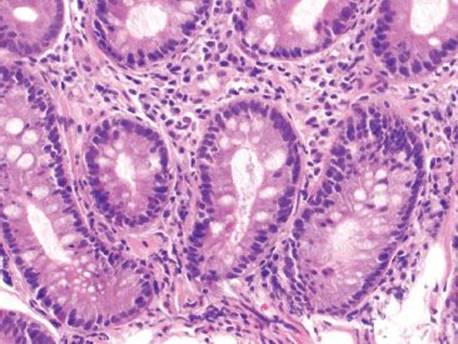
Figure 3.215 Malabsorption pattern, lack of Paneth cells in AIE. Higher power magnification of the previous figure shows a complete absence of Paneth cells in a patient with AIE.
KEY FEATURES of Autoimmune Enteropathy:
• AIE is characterized by intractable diarrhea, not responsive to dietary restriction.
• Although primarily a disease of infants, adult onset cases have been documented.
• AIE is associated with systemic forms of autoimmune disease such as IPEX and APECED.
• Up to two-thirds of patients have a mutation on the FOXP3 gene, which is responsible for regulatory T-cell function.
• Absence or reduction in numbers of goblet and/or Paneth cells and the presence of crypt apoptoses are diagnostic features.
• The presence of antigoblet cell or antienterocyte antibodies is found in the majority of cases.
PEARLS & PITFALLS
Patients carrying a diagnosis of celiac disease who are nonresponsive to a GFD should be evaluated for AIE as an alternative diagnosis. Remember: The malabsorption pattern of injury is nonspecific, and while celiac disease is more common than AIE, neither of these diagnoses can be established on histology alone. Anecdotally, we have seen several cases of “nonresponsive celiac disease” (NRCD) subsequently diagnosed as AIE and respond to AIE based therapies (immunosuppression).
FAQ: How are antigoblet cell and antienterocyte antibodies used in the diagnosis of AIE?
Answer: The presence of antigoblet cell or antienterocyte antibodies is supportive of the diagnosis. Antienterocyte antibodies (AEA) have been detected in 85% to 87% of patients with AIE146,147 but are not specific for AIE as they may be found in other diseases such as IBD, HIV infection, and allergic enteropathy. These antibodies have also been detected in first-degree asymptomatic relatives.145 Thus, the presence of these antibodies may be helpful in challenging cases, but should be interpreted in the proper clinical setting.
COLLAGENOUS ENTERITIS
Collagenous enteritis, also known as collagenous sprue, is poorly defined in the literature due to its infrequency. Best characterized as an easily overlooked subpattern of malabsorption pattern, collagenous enteritis exhibits a prominent subepithelial collagen layer in a background of variable villous blunting and increased lamina propria inflammatory cells (Figs. 3.216 and 3.217). The use of a histochemical stain such as Masson trichrome may be helpful in highlighting the collagen deposition (Figs. 3.218 and 3.219), but careful observation remains the best tool to prevent overlooking this feature (Figs. 3.220 and 3.221). Additional helpful histologic characteristics include surface epithelial detachment and superficial ulceration, similar to that seen in collagenous colitis (Figs. 3.222 and 3.223).149 IELs are variable and may indicate celiac disease as the underlying etiology.149 Other reported associations include collagenous gastritis, collagenous colitis, lymphocytic colitis, lymphocytic gastritis, ulcerative jejunitis, and medication injury (i.e., olmesartan, an angiotensin 2 receptor blocker).91,150 Treatment of known underlying disease, such as adherence to a GFD in celiac disease and discontinuation of offending medications in medication injury, is the mainstay of treatment. Some patients show clinical and histologic response to immunosuppressive therapy.150

Figure 3.216 Malabsorption pattern, collagenous enteritis in the jejunum. Low magnification shows a malabsorption pattern, with crypt hyperplasia, villous atrophy, and mild expansion of the lamina propria. An abnormally thickened collagen band (arrowheads) is present at the basement membrane. This patient was taking olmesartan, a medication that has been implicated in collagenous sprue.

Figure 3.217 Malabsorption pattern, collagenous enteritis in the jejunum. Higher magnification of the previous figure shows entrapped inflammatory cells and small vessels (arrows) in an irregular collagen band.

Figure 3.218 Malabsorption pattern, collagenous enteritis in the jejunum (Masson’s trichrome). A trichrome stain of the previous figure highlights the irregular contour of the collagen band. Note how the collagen percolates downward between the cells of the lamina propria. Entrapped small vessels (arrows) are also present. Compare with the next figure.

Figure 3.219 Normal basement membrane. A trichrome stain of a normal basement membrane features a delicate band of collagen with a relatively crisp contour.
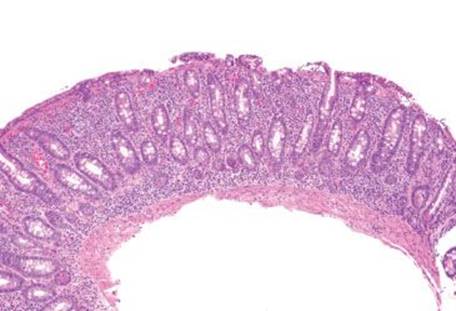
Figure 3.220 Malabsorption pattern, collagenous enteritis in the duodenum. Low magnification shows a severe malabsorption pattern with crypt hyperplasia and villous atrophy. The findings are nonspecific so far, but if one is in the habit of reviewing all layers of the biopsy, important clues (e.g., a patchy collagen abnormality) will not be missed.
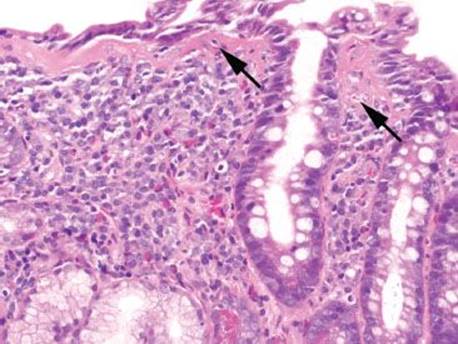
Figure 3.221 Malabsorption pattern, collagenous enteritis in the duodenum. Higher magnification of the previous figure shows focal abnormalities of the collagen layer. Entrapped inflammatory cells and vascular structures (arrows) are present.

Figure 3.222 Malabsorption pattern, collagenous enteritis in the duodenum. Detachment and stripping of epithelial cells above the abnormal collagen layer (arrow) is common in collagenous enteritis, similar to its counterpart in the colon. Note the total lack of villous projections in this biopsy.

Figure 3.223 Malabsorption pattern, collagenous enteritis in the duodenum. The surface epithelial cells have stripped off this biopsy. Note the prominent and irregular collagen layer with entrapped vessels (arrow).
KEY FEATURES of Collagenous Enteritis:
• Collagenous enteritis is also known as collagenous sprue.
• Histologic findings of subepithelial collagen deposition may be overshadowed by the malabsorption pattern of injury.
• A Masson trichrome stain can help highlight the collagen layer.
• Other histologic findings can include variable villous atrophy, increased lamina propria inflammatory cells, intraepithelial lymphocytosis, detachment of strips of epithelial cells, and superficial ulceration.
• Associated diseases include celiac disease, collagenous gastritis, collagenous colitis, lymphocytic colitis, lymphocytic gastritis, ulcerative jejunitis and olmesartan-induced injury.

Figure 3.224 Malabsorption pattern, subepithelial collagen deposition at an ileostomy site. Cycles of acute or chronic mucosal injury can increase the collagen deposition at the basement membrane; an expanded subepithelial collagen table alone does not meet the criteria for collagenous enteritis.
PEARLS & PITFALLS
An altered or thickened collagen table can also occur as a healing mechanism following erosion or ulceration; for example, a thickened basement membrane is frequently observed at ileostomy sites. Remember to consider the clinical context (Fig. 3.224).