
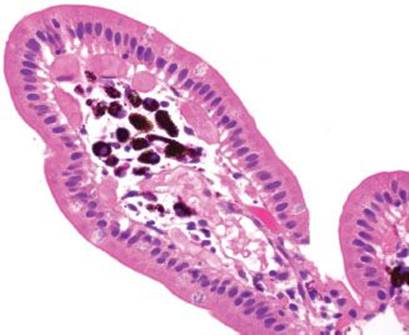
Figure 3.275 Pigment example, pseudomelanosis duodeni. Common etiologies of pigment and pigment-like material in the small bowel include titanium, India ink tattoo, pseudomelanosis duodeni, formalin, melanoma, and 90yttrium-labeled microspheres. In this example, pseudomelanosis duodeni was diagnosed based on the brown-black pigment seen in macrophages located at the villous tips. The patient had a history of renal failure, as is common for patients with this finding.
CHECKLIST: Etiologic Considerations for Pigments and Extras (Fig. 3.275)
 Titanium
Tattoo Pigment
Pseudomelanosis Duodeni
Formalin Pigment
Melanoma
90Yttrium-Labeled Microspheres
TITANIUM (“PEYER PATCH PIGMENT”)
Along the tubular gastrointestinal tract, titanium deposition is unique to the terminal ileum, and can be used to declare the origin of the biopsy site without looking at the accompanying requisition. This pigment is fine in texture, dark-brown to black in color, and confined to the macrophage cytoplasm (Figs. 3.276–3.281). Historical studies using scanning electron microscopy, backscattered electron imaging, and X-ray energy spectroscopy of routine histologic sections determined the pigment represents titanium, aluminum, and silicon179&emdash;although for simplicity’s sake, this pigment is usually referred to as titanium alone. The ingestants originate from food additives in thickening and whitening agents (e.g., toothpaste) and arrive in the lymphoid aggregates of the terminal ileum (Peyer patches) via routine immunosurveillance-related trafficking.
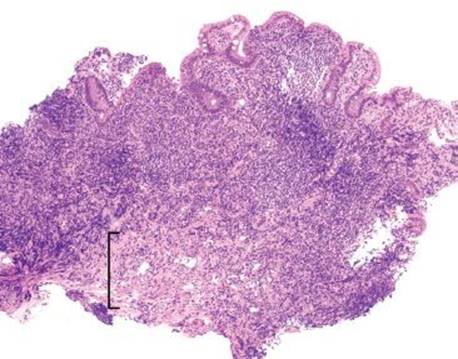
Figure 3.276 Titanium pigment. Without referencing any paperwork, the origin of this tissue is ileum based on the prominent lymphoid aggregates, relatively short villi, and titanium pigment (bracket).
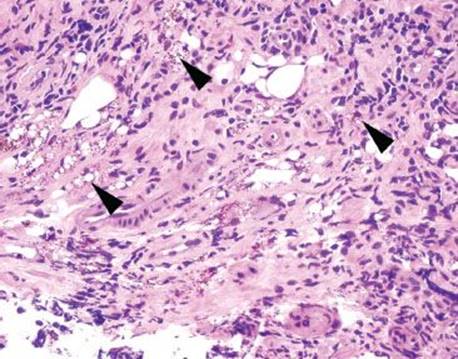
Figure 3.277 Titanium pigment. The pigment (arrowheads) is easier to discern on higher power. The characteristic pigment is fine in texture, dark-brown to black in color, and confined within the macrophage cytoplasm.
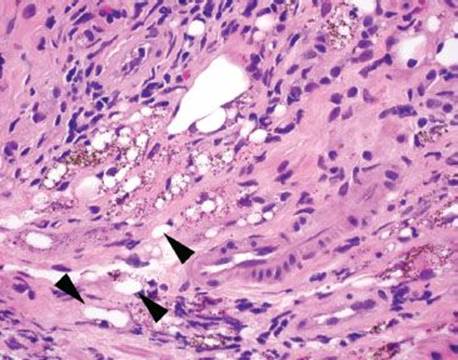
Figure 3.278 Titanium pigment. In addition to titanium pigment, this image also features air artifact that was introduced at time of endoscopy (arrowheads). Air artifact is also known as “pseudolipomatous change” based on its resemblance to mature fat. Although mature fat has cellular detail such as a nucleus, air artifact lacks cellular detail and a nucleus, and it appears as variably-sized empty spaces that gently push the lamina propria constituents aside. Air artifact is frequently found in terminal ileum and colonic mucosal biopsies.
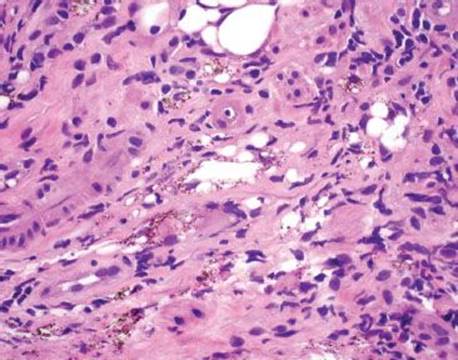
Figure 3.279 Titanium pigment. Historic studies determined this pigment contains variable amounts of titanium, aluminum, and silicon, although today this pigment is simply referred to as “titanium.”
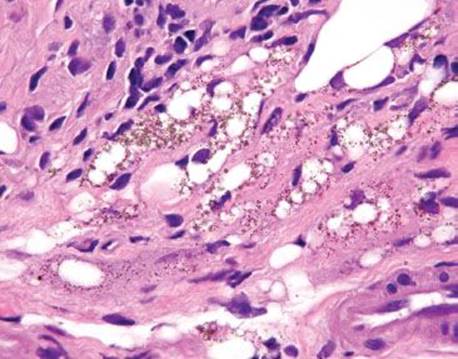
Figure 3.280 Titanium pigment. Titanium pigment originates from ingested thickening and whitening agents found in toothpaste and other consumables. Under oil immersion, note the fine quality of the titanium pigment. Compare this image to the coarse pigment seen in tattoo and melanin pigment (Figs. 3.282–3.287 and 3.300–3.305).
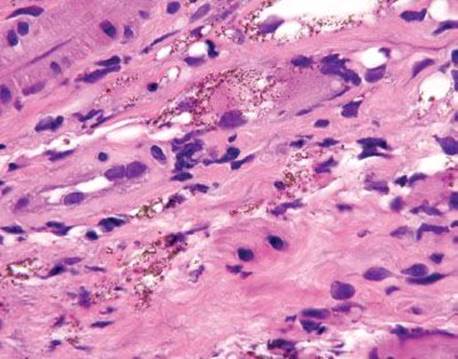
Figure 3.281 Titanium pigment. Note the bland cytologic features of the macrophages: the chromatin is uniform, the nuclear contours are smooth and regular, and neither pleomorphism, necrosis, nor atypical mitoses are seen. This case is unlikely to cause concern for melanoma, based on the bland cytologic features and fine texture of the pigment; however cautious observers may employ an S100 protein immunostain (remember to use a red chromogen for easier visibility), which should be negative in titanium pigment and positive in melanomas.
TATTOO PIGMENT
Preoperative tattooing of luminal lesions was introduced in 1958.180 It is useful for targeted surveillance of endoscopically monitored lesions, localizing the lesion at time of surgery, and improved local lymph node dissections. Although a variety of dyes have been used over the years (e.g., methylene blue, indigo carmine, toluidine blue, lymphazurine, hematoxylin, eosin, and indocyanine green),181 India ink remains the most widely employed agent. This tattoo pigment can be easily mistaken for Titanium since both are dark brown-black and distributed within the cytoplasm of macrophages (Figs. 3.282–3.287). Helpful clues include that tattoo pigment is usually very prominently distributed (since its sole purpose is for gross visibility with the naked eye) and it is not restricted to the terminal ileum, unlike titanium.
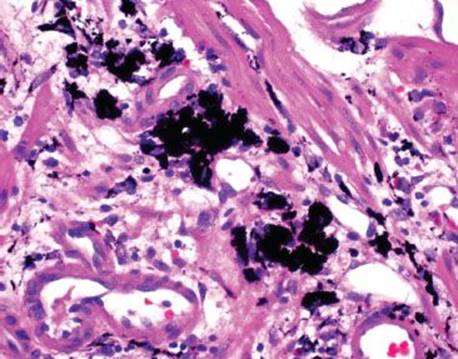
Figure 3.282 Tattoo pigment. Like titanium, India ink tattoo pigment is also dark brown-black and confined within the cytoplasm of macrophages; however tattoo pigment is typically more coarse, clumpy, and conspicuous. Compare with the more fine pigment seen in titanium pigment (Figs. 3.276–3.281).
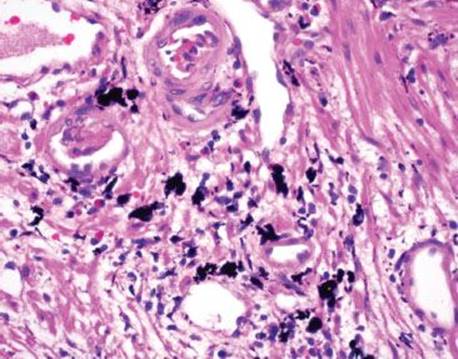
Figure 3.283 Tattoo pigment. Tattoo pigment is applied for targeted surveillance of endoscopically monitored lesions, localizing the lesion at time of surgery, and improved local lymph node dissections. Since tattoo pigment is intended to help localize lesions at the gross level (without any visual aids), tattoo pigment is almost always easier to identify than the finer and sparsely distributed titanium pigment (compare with Figures 3.276–3.281). India ink is the most commonly used tattoo agent to date.
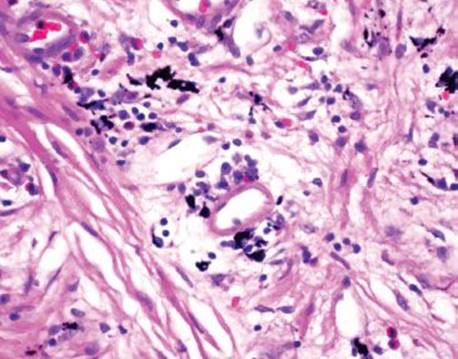
Figure 3.284 Tattoo pigment. This case features more sparsely distributed tattoo pigment. Such findings are common at the periphery of the tattoo site or in remotely applied tattoos (greater than a few months).
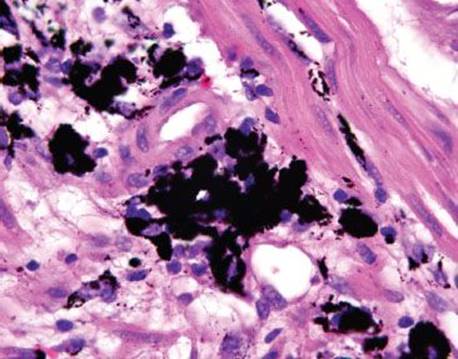
Figure 3.285 Tattoo pigment. Under oil immersion, the dense, clumped tattoo pigment is apparent.
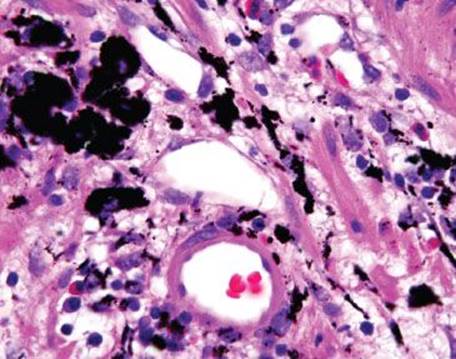
Figure 3.286 Tattoo pigment. In this field, the tattoo pigment density varies from intense (left) to more sparsely distributed (right). Note that the pigment is confined to the macrophage cytoplasm, and the macrophage nuclei are bland and uniform. This case is unlikely to cause concern for melanoma based on the bland cytologic features of the macrophages and the intensely black character of the tattoo pigment; however cautious observers may employ an S100 protein immunostain (remember to use a red chromogen for easier visibility), which should be negative in titanium pigment and positive in melanomas.
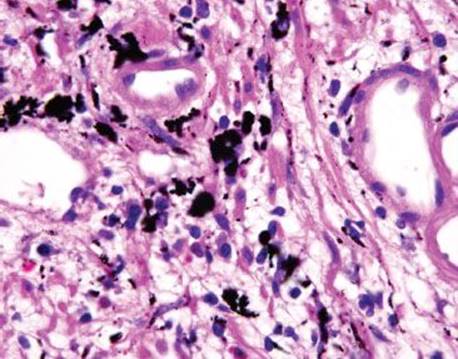
Figure 3.287 Tattoo pigment.
PSEUDOMELANOSIS DUODENI
The first report of pseudomelanosis duodeni emerged in 1976.182 Like the counterpart in the colon (pseudomelanosis coli), the name is an unfortunate misnomer. The pigment is not melanin but instead represents iron with variable amounts of calcium, lipofuscin, magnesium, aluminum, potassium, silica, and sulfur.183–185 The coarse and variably brown-black pigment is identified within the cytoplasm of macrophages, and can usually be highlighted with special stains for iron (83%) and or calcium (24%).186 The indicated macrophages are most commonly seen in the villous tips (Figs. 3.288–3.293). Pseudomelanosis duodeni is associated with hypertension, gastrointestinal bleeding, renal failure, diabetes, and with particular medications, such as iron and antihypertensive medications (hydrocholorthiazide, atenolol, lisinopril/quinapril, and irbesartan).186,187
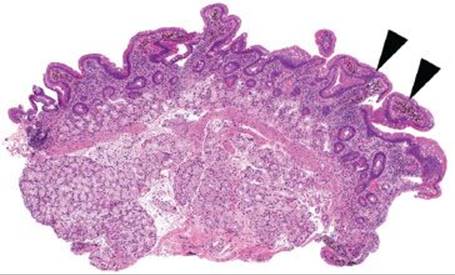
Figure 3.288 Pseudomelanosis duodeni. Small bowel biopsies are among the most time consuming because of the varied diagnoses that can hide in the busy background. As this case illustrates, the patchy lamina propria pigment deposition (arrowheads) can be difficult to discern at low power in the normally busy-appearing small bowel mucosa.
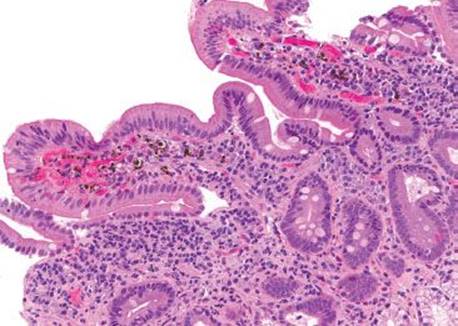
Figure 3.289 Pseudomelanosis duodeni. On higher power, the characteristic brown-black pigment of pseudomelanosis duodeni is better appreciated. Despite the misnomer, the pigment is not melanin but, instead, is iron with variable amounts of calcium, lipofuscin, magnesium, aluminum, potassium, silica, and or sulfur. Although acute inflammation is seen, it is unrelated to the pigment.
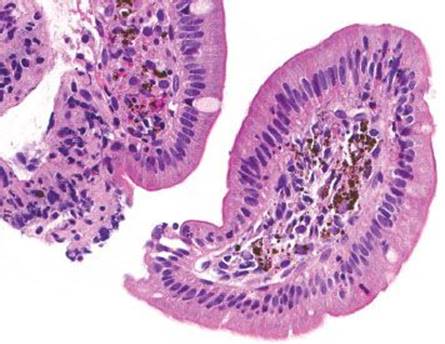
Figure 3.290 Pseudomelanosis duodeni. Pseudomelanosis duodeni is associated with particular clinical features, such as hypertension, gastrointestinal bleeding, renal failure, diabetes, and with particular medications, such as iron and antihypertensive medications.
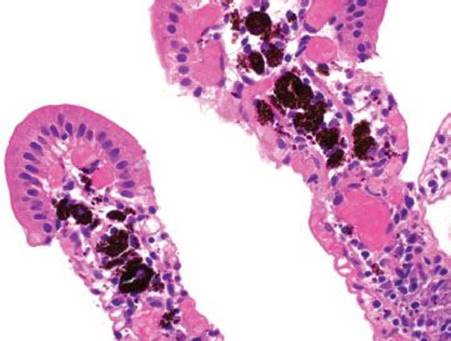
Figure 3.291 Pseudomelanosis duodeni. At higher power, note the coarse nature of this brown-black pigment confined within the macrophage cytoplasm.
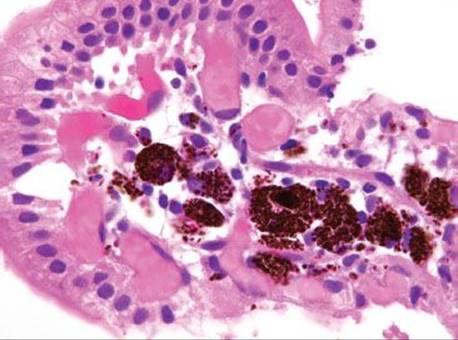
Figure 3.292 Pseudomelanosis duodeni. Under oil immersion, the pigment is composed of uniformly sized and uniformly shaped packets of brown pigment.
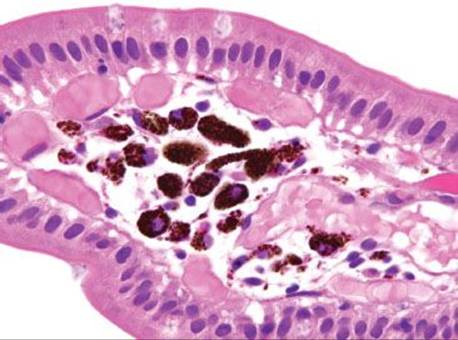
Figure 3.293 Pseudomelanosis duodeni. Note the uniform and bland cytologic features of the macrophages; no atypical features are seen.
PEARLS & PITFALLS
Pseudomelanosis duodeni is recognized endoscopically in only 36% of cases.186 Do not be alarmed if your histologic diagnosis has no endoscopic counterpart.
FORMALIN PIGMENT (ACID FORMALDEHYDE HEMATIN)
Formalin pigment (acid formaldehyde hematin) is a bothersome tissue artifact seen in any tissue that is fixed in a formalin tissue preservative. It carries neither clinical nor pathologic importance. It is a sparsely distributed, finely granular, dark brown-black, birefringent crystal most commonly seen in bloody backgrounds (Figs. 3.294–3.299). Unlike titanium, tattoo, and pseudomelanosis, formalin pigment is not seen in the confines of a macrophage and is often not even on the same plane as the examined tissue, features that can serve as helpful clues to the pigment’s identification. Various experts have noted that formalin pigment collects in tissues especially rich in fats, such as liver and kidney,188,189 and theorize that this fatty microenvironment may promote formalin pigment precipitation through donation of triglycerides.
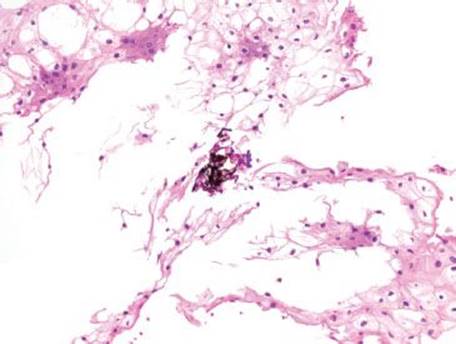
Figure 3.294 Formalin pigment. Although this example of formalin pigment originates from the esophagus, it exemplifies the characteristic features of formalin pigment. On low power, formalin pigment can look insect-like due to the strange shapes created by the condensed pigmentation.
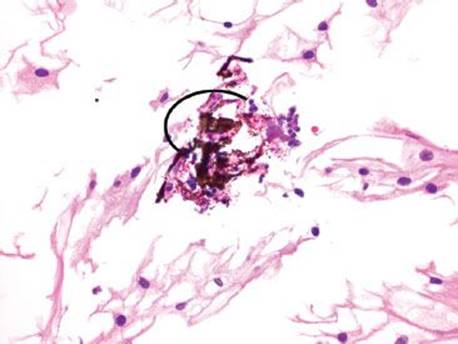
Figure 3.295 Formalin pigment. On higher power, note that a portion of the formalin pigment is out of focus (arc). Formalin pigment is typically not entirely on the same plane as the associated tissue and, consequently, is characteristically partly out of focus, providing a helpful clue to the identification of formalin pigment.
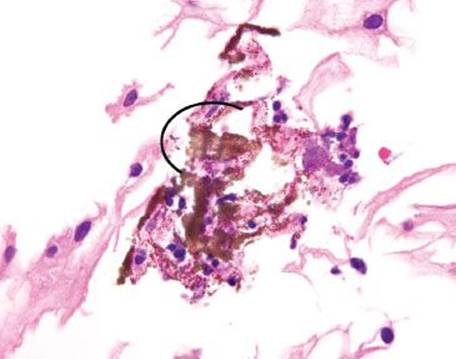
Figure 3.296 Formalin pigment (arc). Under oil immersion, note that the pigment is finely granular and dark brown. Features that distinguish formalin pigment from any other pigment discussed in this section include an extracellular location and its propensity to be only partly in focus. An arc highlights a portion that is not in the same plane, a reliable feature of formalin pigment.
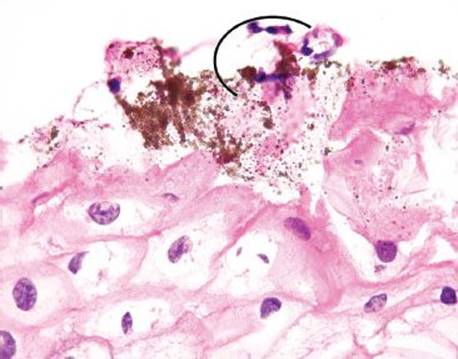
Figure 3.297 Formalin pigment (arc). In this alternate field, the finely granular nature of the pigment and its extracellular location is better appreciated. An arc highlights a portion of the pigment that is out of focus.
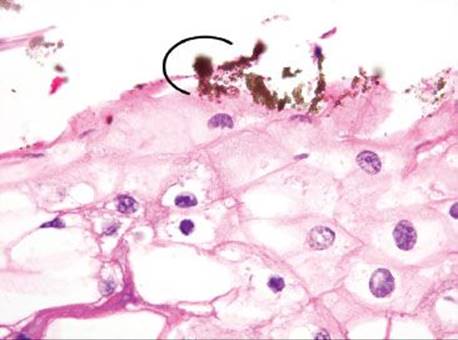
Figure 3.298 Formalin pigment (arc). There is neither clinical nor pathologic importance to identification of formalin pigment. The importance of recognizing this pigment is simply not to confuse it with any of the other pigments discussed in this section. An arc highlights a portion of the pigment that is out of focus.
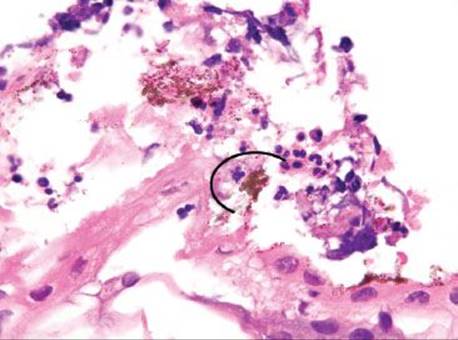
Figure 3.299 Formalin pigment (arc). Formalin pigment is seen entrapped with luminal debris. An arc highlights a portion of the pigment that is out of focus.
MELANOMA
Of all the pigments in this section, melanoma pigment is the one pigment that is NOT TO BE MISSED. Whereas the prior mentioned pigments are found in macrophages with bland nuclear features, melanoma pigment is seen in unequivocally malignant cells with prominent nucleoli, pleomorphism, and hyperchromasia. Atypical mitoses are often easily identified. The pigment itself is coarse, variably sized, and highlighted by the Fontana–Masson special stain (Figs. 3.300–3.305). Additional special stains and immunostains are often reassuring (melanoma is S100 protein reactive, variably reactive for Melan-A and Mart-1, and the pigment is highlighted by the Fontana–Masson special stain).
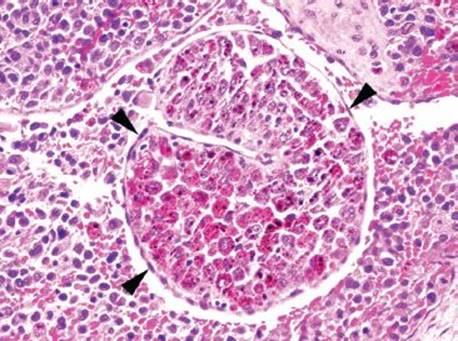
Figure 3.300 Melanoma. From low power, coarse brown pigment is seen within the cytoplasm of overtly malignant cells; benign macrophages would not have such large, pleomorphic nuclei with prominent nucleoli. Moreover, lymphovascular invasion is demonstrated in a dilated lacteal (arrowheads). The patient had a history of cutaneous malignant melanoma and was found to have widely metastatic disease involving the small bowel, liver, and brain.
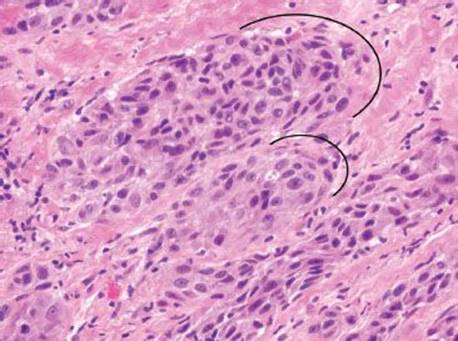
Figure 3.301 Melanoma. Although no melanin pigment is seen in this figure, other characteristic features of melanoma are seen, including a packeted or nested architecture (arcs), prominent nucleoli, and a high nuclear to cytoplasmic ratio. Half of melanomas are amelanotic.
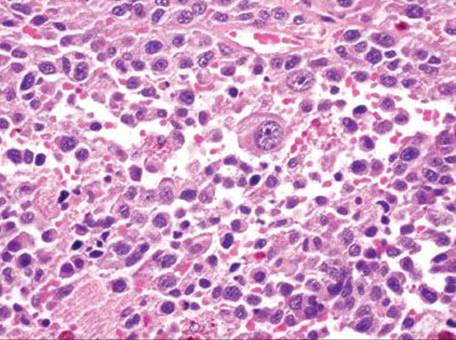
Figure 3.302 Melanoma. At higher power, pleomorphism is evident with nuclear size varying 3 to 4 times among the malignant cells. Necrosis is also seen along with eccentrically placed nuclei, prominent nucleoli, and brown pigment.
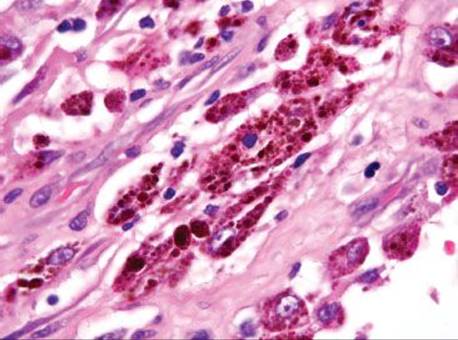
Figure 3.303 Melanoma. Under oil immersion, the coarsely distributed brown pigment is seen in cells bearing large nuclei with prominent nucleoli. On H&E, this pigment can be nothing other than melanin based on the malignant cytologic features. Melanoma immunostains can confirm this impression.
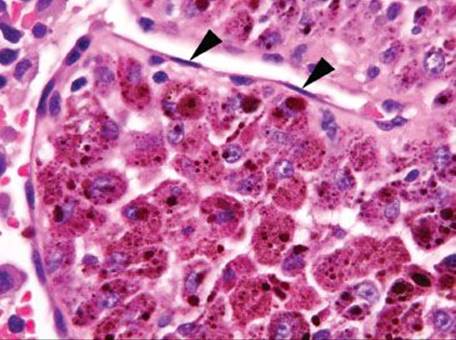
Figure 3.304 Melanoma. Under oil immersion, again note the cytologically malignant features of the lesional cells, including large nuclei, prominent nucleoli, and lymphovascular space invasion (arrowheads highlight the endothelium). Note that the characteristic melanin pigment is coarse, brown, and variably sized.
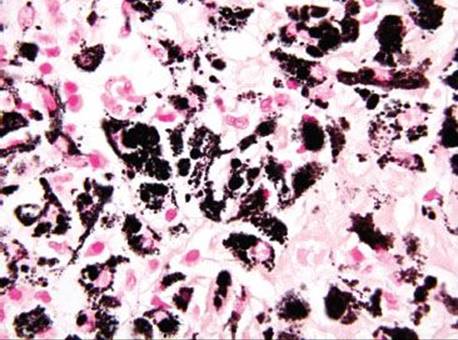
Figure 3.305 Melanoma, Fontana–Masson. The melanoma pigment can be confirmed with a Fontana–Masson special stain, which highlights the melanin pigment black.
90Yttrium-Labeled Microspheres
As mentioned in the Stomach Chapter, Pigments and Extras subsection, 90yttrium-labeled microspheres are used in the targeted treatment of unresectable primary and metastatic hepatic malignancies. Inadvertent delivery to nontarget organs can result in unintentional radiation injury. Affected organs include the esophagus, stomach, small bowel, pancreas, and gallbladder. The background mucosa shows a radiation pattern of injury with lamina propria hyalinization, atypical stromal, endothelial, and epithelial cells, and prominence of ectatic, damaged vessels. The characteristic microspheres are 30 to 40 μm in diameter, uniformly opaque, deep purple and perfectly round, and radioactive emissions occur as far out as 14 days postdelivery (Figs. 3.306–3.311). CMV immunostains are recommended in all cases since such patients are typically immunocompromised. Moreover, radiation atypia can obscure or overlap with CMV viral cytopathic effect.
A comparison summary of the pigments can be found in Figure 3.312.
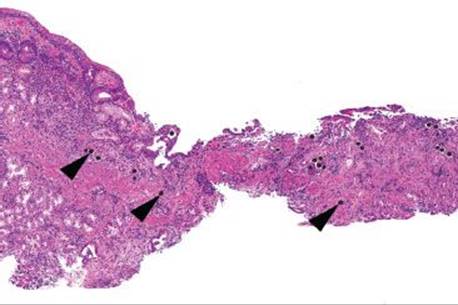
Figure 3.306 90Yttrium-labeled microspheres and radiation injury. This patient had a history of unresectable hepatocellular carcinoma treated with selective internal radiation therapy with 90yttrium-labeled microspheres. He presented with nausea and vomiting, and biopsies of ulcerated small bowel mucosa are shown. Note the focal ulceration with numerous embedded 90yttrium-labeled microspheres (arrowheads). A CMV immunohistochemical stain was negative.
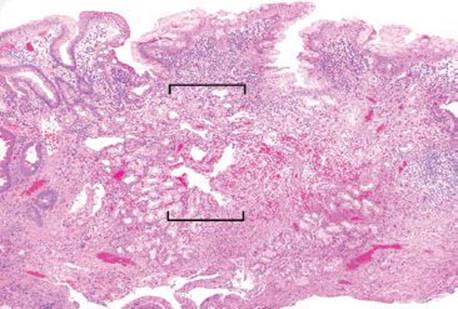
Figure 3.307 90Yttrium-labeled microspheres and radiation injury. Although 90yttrium-labeled microspheres are not seen in this field, this image shows the classic features of a radiation pattern of injury with numerous ectatic, damaged vessels (brackets). Gastric foveolar metaplasia is also seen, a feature of chronic mucosal injury. A CMV immunohistochemical stain was negative.
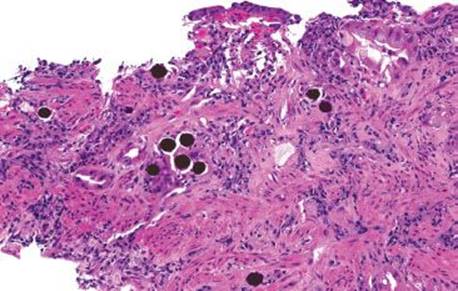
Figure 3.308 90Yttrium-labeled microspheres and radiation injury. Higher power shows the characteristic 90yttrium-labeled microspheres that are 30 to 40 μm in diameter, uniformly opaque, deep purple, and perfectly round. The associated mucosa shows a radiation pattern of injury with lamina propria hyalinization and atypical stromal and epithelial cells.
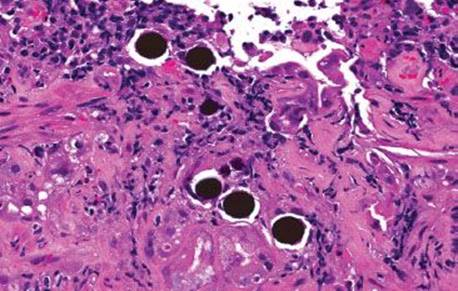
Figure 3.309 90Yttrium-labeled microspheres and radiation injury. Higher power shows the 90yttrium-labeled microspheres embedded in inflammation, stromal hyalinization, and markedly atypical stromal and epithelial cells, features characteristic of radiation injury.
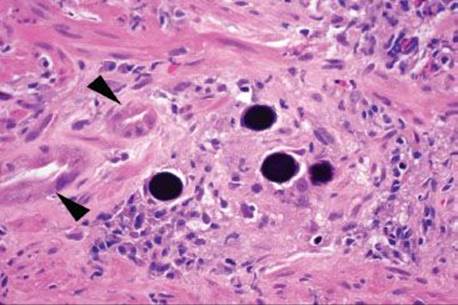
Figure 3.310 90Yttrium-labeled microspheres and radiation injury. Note the associated ectatic vessels (arrowheads) with atypical endothelial cells resulting from radiation damage.
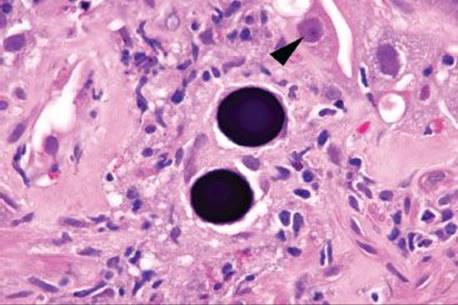
Figure 3.311 90Yttrium-labeled microspheres and radiation injury. Under oil immersion, the uniformly opaque, deep purple, and perfectly round structures characteristic of 90yttrium-labeled microspheres are seen. Also note the background stromal hyalinization and associated epithelial atypia (arrowhead); both features are secondary to radiation injury. A CMV immunohistochemical stain was negative.
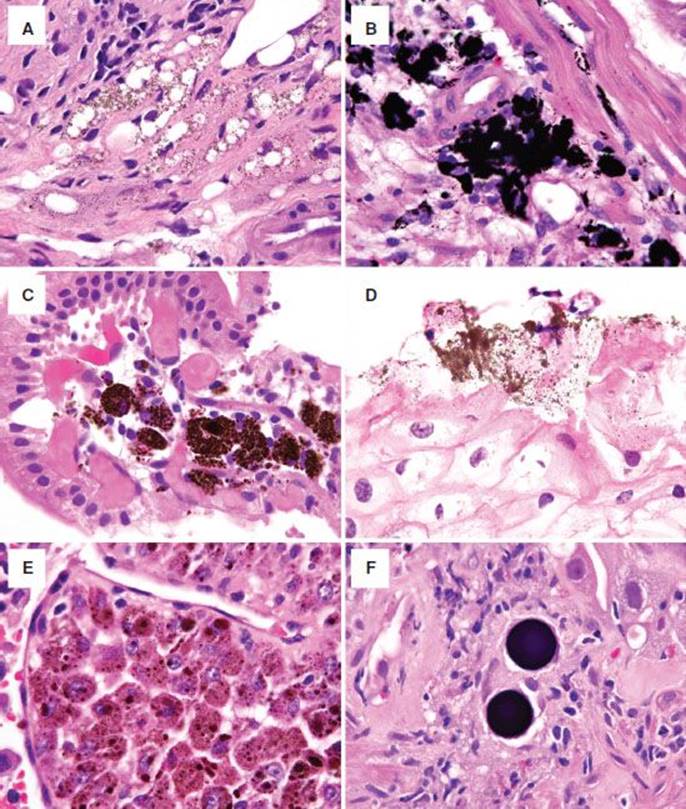
Figure 3.312 Pigment Composite. This composite image contains the above mentioned pigments at 100× to best differentiate the morphologic subtleties. A: Titanium pigment is fine in texture, dark-brown to black in color, and confined within macrophage cytoplasm. B: Tattoo pigment is also dark brown-black and confined within the cytoplasm of macrophages but, unlike titanium, it is more coarse, clumpy, and conspicuous since its sole purpose is to be grossly identifiable. C: Pseudomelanosis pigment consists of coarse brown-black pigment confined within the macrophage cytoplasm. As shown here, pseudomelanosis pigment is composed of uniformly sized and uniformly shaped packets of brown pigment that are most typically seen in macrophages in the villous tips in patients with hypertension, gastrointestinal bleeding, renal failure, diabetes, and in those with iron and antihypertensive medication therapy. D: Formalin pigment is a bothersome pigment with neither clinical nor pathologic importance (except to not mistake it for any of the other pigments discussed here within!). On low it often looks insect-like and on high power it is finely granular, dark brown, exclusively extracellular, and partially out of focus since it is on multiple planes. E: Melanin pigment is variably coarse, brown, and within the cytoplasm of overtly malignant cells. F: 90yttrium-labeled microspheres are 30 to 40 μm in diameter, uniformly opaque, deep purple, perfectly round, and associated with a radiation pattern of injury.
KEY FEATURES: Pigments and Extras
• Titanium deposition is unique to the terminal ileum and is likely introduced through ingested toothpaste.
• Tattoo pigment (usually India ink) is preoperatively applied for lesion localization in future procedures: targeted surveillance of endoscopically monitored lesions, localizing the lesion at time of surgery, and improved local lymph node dissections.
• Pseudomelanosis duodeni consists of iron with variable amounts of calcium, lipofuscin, magnesium, aluminum, potassium, silica, and or sulfur and is associated with hypertension, gastrointestinal bleeding, renal failure, diabetes, and with particular medications.
• Formalin pigment is a tissue artifact with neither clinical nor pathologic importance; it is not seen in the confines of a macrophage and is often not even on the same plane as the examined tissue.
• Melanoma pigment is seen in unequivocally malignant cells and confirmed with the following diagnostic panel (S100 reactive, variably reactive for Melan-A and Mart-1, and the pigment is highlighted by the Fontana–Masson special stain).
• 90Yttrium-labeled microspheres are used in the targeted treatment of unresectable primary and metastatic hepatic malignancies; inadvertent delivery to nontarget organs can result in inadvertent radiation injury; CMV immunostains are recommended in all cases.