
Amer Karam, MD
ANATOMY OF THE FEMALE BREAST
The breasts are secondary reproductive glands of ectodermal origin. They are frequently referred to as modified sweat glands. Each breast lies on the superior aspect of the chest wall. In women, the breasts are the organs of lactation, whereas in men, the breasts are normally functionless and undeveloped.
HISTOLOGY
The adult female breast contains glandular and ductal elements, stroma consisting of fibrous tissue that binds the individual lobes together and adipose tissue within and between the lobes.
Each breast consists of 12–20 conical lobes. The base of each lobe is in close proximity to the ribs. The apex, which contains the major excretory duct of the lobe, is deep to the areola and nipple. In turn, each lobe consists of a group of lobules. The lobules have several lactiferous ducts, which unite to form a major duct that drains the lobes as they course toward the nipple–areolar complex. Each of the major ducts widens to form an ampulla as they travel toward the areola and then narrow at its individual opening in the nipple. The lobules are held in place by a meshwork of loose, fatty areolar tissue. The fatty tissue increases toward the periphery of the lobule and gives the breast its bulk and hemispheric shape.
Approximately 80–85% of the normal breast is adipose tissue. The breast tissues are joined to the overlying skin and subcutaneous tissue by fibrous strands.
In the nonpregnant, nonlactating breast, the alveoli are small and tightly packed. During pregnancy, the alveoli hypertrophy, and their lining cells proliferate in number. During lactation, the alveolar cells secrete proteins and lipids, which comprise breast milk.
The deep surface of the breast lies on the fascia that covers the chest muscles. The fascial stroma, derived from the superficial fascia of the chest wall, is condensed into multiple bands that run from the breast into the subcutaneous tissues and the corium of the skin overlying the breast. These fascial bands—Cooper’s ligaments—support the breast in its upright position on the chest wall. These bands may be distorted by a tumor, resulting in pathologic skin dimpling.
HISTOLOGIC CHANGES IN THE FEMALE BREAST DURING THE LIFE SPAN
In response to multiglandular stimulation during puberty, the female breast starts to enlarge and eventually assumes its conical or spherical shape. Growth is the result of an increase in acinar tissue, ductal size and branching, and deposits of adipose, the main factor in breast enlargement. Also during puberty, the nipple and areola enlarge. Smooth muscle fibers surround the base of the nipple, and the nipple becomes more sensitive to touch.
Once menses is established, the breast undergoes a periodic premenstrual phase during which the acinar cells increase in number and size, the ductal lumens widen, and breast size and turgor increase slightly. Many women have breast tenderness during this phase of the menstrual cycle. Menstrual bleeding is followed by a postmenstrual phase, characterized by a decrease in size and turgor, reduction in the number and size of the breast acini, and a decrease in diameter of the lactiferous ducts. Cyclic hormonal influences to the breast are quite variable.
In response to progesterone during pregnancy, breast size and turgidity increase considerably. These changes are accompanied by deepening pigmentation of the nipple–areolar complex, nipple enlargement, areolar widening, and an increase in the number and size of the lubricating glands in the areola. The breast ductal system branches markedly, and the individual ducts widen. The acini increase in number and size. In late pregnancy, the fatty tissues of the breasts are almost completely replaced by cellular breast parenchyma. After delivery with the rapid drop in progesterone and estrogen levels, the breasts, now fully mature, start to secrete milk. With cessation of nursing or administration of estrogens, which inhibit lactation, the breast rapidly returns to its prepregnancy state, with marked diminution of cellular elements and an increase in adipose deposits.
Following menopause, which typically occurs during the fifth decade of life, the breast undergoes a gradual process of atrophy and involution. There is a decrease in the number and size of acinar and ductal elements, so that the breast tissue regresses to an almost infantile state. Adipose tissue may or may not atrophy, with disappearance of the parenchymal elements.
GROSS ANATOMY (Fig. 5–1)
The adult female breast mound characteristically forms a near hemispheric contour on each side of the chest wall, usually extending from just below the level of the second rib inferiorly to the sixth or seventh rib. The breast mound is usually situated between the lateral sternal border and the anterior axillary fold. The breast tissue extends over a larger anatomic area than the more obvious breast mound. The superior portion of the breast tissue emerges gradually from the chest wall inferior to the clavicle, whereas the lateral and inferior borders are better defined. The major portion of the breast tissue is located superficial to the pectoralis major muscle and projects laterally and ventrally toward the tail of Spence. Smaller portions of breast tissue extend laterally and inferiorly to lie superficial to the serratus anterior and external oblique muscles and as far caudad as the rectus abdominis. The tail of Spence is a triangular tongue-shaped portion of breast tissue that extends superiorly and laterally toward the axilla, perforating the deep axillary fascia, and enters the axilla, where it terminates in close proximity to the axillary lymph nodes and vessels as well as the axillary blood vessels and nerves.
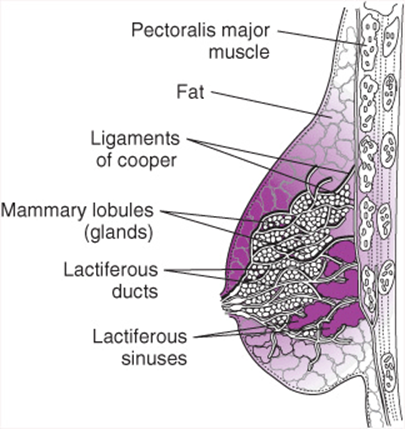
Figure 5–1. Sagittal section of mammary gland.
The Nipple & Areola
The areola is a circular pigmented zone 2–6 cm in diameter at the tip of the breast. Its color varies from pale pink to deep brown depending on age, parity, and skin pigmentation. The skin of the areola contains multiple small, elevated nodules beneath which are located the sebaceous glands of Montgomery. The glands are responsible for lubrication of the nipple and help prevent cracks and fissures in the nipple–areolar complex that occur during breastfeeding. During the third trimester of pregnancy, the sebaceous glands of Montgomery markedly hypertrophy.
A circular smooth muscle band surrounds the base of the nipple. Longitudinal smooth muscle fibers branch out from this ring of circular smooth muscle to encircle the lactiferous ducts as they converge toward the nipple. The many small punctate openings at the superior aspect of the nipple represent the terminals of the major lactiferous ducts. As discussed earlier, the ampullae of the lactiferous ducts are deep to the nipple and the areola.
Blood Vessels, Lymphatics, & Nerves
A. Arteries (Fig. 5–2)
The breast has a rich blood supply with multiple arteries and veins. Perforating branches from the internal thoracic/mammary artery that penetrate the second to the fifth intercostal interspaces supply blood to the medial half of the breast. These arteries perforate the intercostal muscles and the anterior intercostal membrane to supply both the breast and the pectoralis major and minor muscles. During pregnancy, and not infrequently in advanced breast disease, the intercostal perforators may enlarge from engorgement. Small branches from the anterior intercostal arteries also supply the medial aspect of the breast. Laterally, the pectoral branch of the thoracoacromial branch of the axillary artery and the external mammary branch of the lateral thoracic artery, which also is a branch of the second segment of the axillary artery, supply the breast. The external mammary artery passes along the lateral free edge of the pectoralis major muscle to reach the lateral half of the breast. The artery usually is located medial to the long thoracic nerve.
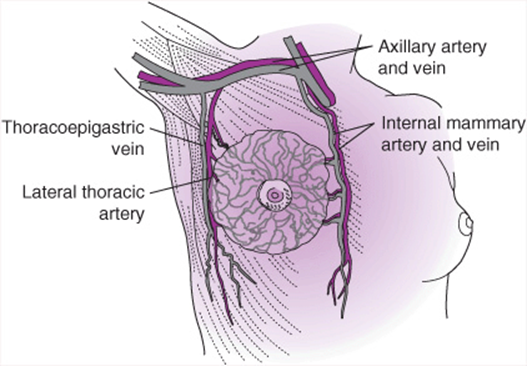
Figure 5–2. Arteries and veins of the breast.
The medial and lateral arteries, as they reach the breast, tend to arborize mainly in the supra-areolar area; consequently, the arterial supply to the upper half of the breast is almost twice that of the lower half.
B. Veins
Venous return from the breast closely follows the routes of the arterial system. Blood returns to the superior vena cava via the axillary and internal thoracic veins. It also returns via the vertebral venous plexuses, which are fed by the intercostal and azygos veins. Through the azygos veins, there is also some minor flow into the portal system. A rich anastomotic plexus of superficial breast veins is located in the subareolar region. In thin-skinned, fair individuals, these veins are normally visible, and they are almost always visible during pregnancy. Their presence makes for marked vascularity of sub- and para-areolar incisions. Venous return flow is greater in the superior quadrants than in the inferior quadrants of the breast.
C. Lymphatics (Fig. 5–3)
A thorough knowledge of the lymphatic drainage of the breast is of critical importance to the clinician. This is true because the lymphatic drainage has significant implications in several disease etiologies, including breast cancer. To a large extent, modern, less invasive surgical management techniques such as sentinel lymph node biopsy are based on a solid understanding of the pattern of lymphatic drainage in the breast.
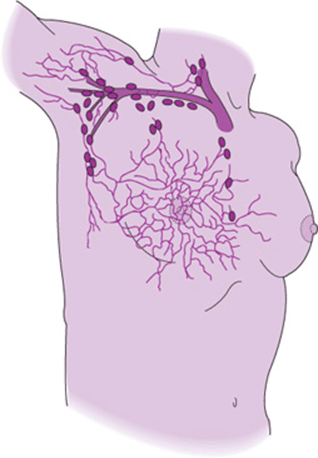
Figure 5–3. Lymphatics of the breast and axilla.
Lymphatic drainage in the breast may be divided into 2 main categories: superficial (including cutaneous) drainage and deep parenchymatous drainage.
1. Superficial drainage—A large lymphatic plexus exists in the subcutaneous tissues of the breast deep to the nipple–areolar complex. This plexus drains the areola and nipple regions, including the cutaneous and subcutaneous tissues adjacent to the nipple–areolar complex. In addition, the superficial plexus drains the deep central parenchymatous region of the breast.
2. Deep parenchymatous drainage—The deep parenchymatous lymph vessels drain the remainder of the breast as well as some portion of the skin and subcutaneous tissues of the nipple–areolar complex not served by the superficial plexus. Small periductal and periacinal lymph vessels collect parenchymal lymph and deliver it to the larger interlobar lymphatics. Lymph from the cutaneous and nipple–areolar regions may drain either directly into the subareolar plexus or deeply into the parenchymatous lymph system. Once in the deep parenchymatous drainage, the lymph is delivered to the subareolar plexus for efferent transport.
The majority of lymphatic drainage from both the retroareolar and the deep interlobar lymphatics of the breast travel to the ipsilateral axillary lymph nodes. The route of drainage to the highest axillary node or nodes is not reproducible from patient to patient. In general, however, the drainage of the breast is to the anterior axillary or subpectoral nodes, which are located deep to the lateral border of the pectoralis major muscle, close to the lateral thoracic artery. From these nodes, lymph travels to nodes in close proximity to the lateral portion of the axillary vein. The lymph then passes superiorly, via the axillary chain of lymph vessels and nodes. Eventually, the drainage reaches the highest nodes of the axilla. Although this is the most regular pattern of lateral and superior breast lymphatic drainage, other paths are common, particularly when the lateral and superiorly directed channels are obstructed, for example, by tumor masses.
Surgeons usually classify the axillary lymph nodes in levels according to their relationship with the pectoralis minor muscle. Thus, lymph nodes located lateral or below the pectoralis minor muscle are classified as level I lymph nodes. Lymph nodes located deep to the pectoralis minor muscle constitute level II lymph nodes. Finally, lymph nodes located medially or superiorly to the upper margin of the pectoralis minor muscle constitute level III lymph nodes.
D. Nerves Encountered During Axillary Dissection
The lateral and anterior cutaneous branches of T4–6 supply the cutaneous tissues covering the breasts. Two major nerves and 2 smaller groups of nerves are in close proximity to the breast area and thus assume importance in breast surgery:
1. The thoracodorsal nerve, a branch of the posterior cord of the brachial plexus (C5–7), runs inferiorly along with the subscapular artery lying close to the posterior axillary wall and the ventral surface of the subscapular muscle. The nerve innervates the superior half of the latissimus dorsi muscle and is usually surrounded by a large venous plexus that drains into the subscapular veins.
2. The long thoracic nerve (nerve of Bell) arises from the anterior primary divisions of C5–7 at the level of the lower half of the anterior scalene muscle. In the neck, the nerve descends dorsal to the trunks of the brachial plexus on the inferior segment of the middle scalene muscle. Further descent places it dorsal to the clavicle and the axillary vessels. On the lateral thoracic wall, it descends on the external surface of the serratus anterior muscle along the anterior axillary line. The long thoracic nerve supplies filaments to each of the digitations of the serratus anterior muscle. Injury to this nerve results in a “winged” scapula.
3. The intercostal brachial nerves are 3 relatively minor cutaneous nerves that supply the skin of the medial surface of the upper arm. They transverse the lateral chest wall to the upper inner surface of the arm, passing across the base of the axilla.
4. The medial and lateral pectoral nerves supply the 2 pectoral muscles and pass from the axilla to the lateral chest wall. The lateral pectoral nerve, which arises from the lateral cord of the plexus, pierces the clavipectoral fascia membrane together with the thoracoacromial artery and supplies the pectoralis major muscle. The medial pectoral nerve, which arises from the medial cord of the brachial plexus but ends up being lateral to the lateral pectoral nerve, pierces the clavipectoral fascia and supplies the pectoralis minor muscle.
DISEASES OF THE BREAST
FIBROCYSTIC BREAST CHANGES
ESSENTIALS OF DIAGNOSIS
 Painful, often multiple, usually bilateral mobile masses in the breast.
Rapid fluctuation in the size of the masses is common.
Frequently, pain occurs or increases, as does size during the premenstrual phase of the cycle.
Most common age is 30–50 years; occurrence is rare in postmenopausal women.
Pathogenesis
Fibrocystic breast changes, formerly known as fibrocystic disease, chronic cystic mastitis, or mammary dysplasia, are the most common cause of cyclic breast pain or mastalgia in reproductive age women. The term is imprecise and encompasses a wide spectrum of pathologic entities. The lesions are always associated with benign changes in the breast epithelium, some of which are found so frequently in normal breasts that they are probably variants of normal breast histology, but have, unfortunately, been termed a “disease.” From a clinical standpoint, this entity is best described as nodular, sensitive breast.
Clinical Findings
Fibrocystic changes are common and affect more than 50% of women of reproductive age. These changes are thought to be the result of a hormonal imbalance that may produce asymptomatic breast lumps that are discovered by palpation. Cyclical breast pain or tenderness is often the presenting symptom and calls attention to the mass. The pain is caused by the proliferation of normal glandular breast tissue with estrogen stimulating the ductal elements and progesterone stimulating the stroma. There may be nonbloody, green or brown discharge from the nipple. In many cases, discomfort occurs or is increased during the premenstrual phase of the cycle. Fluctuations in size and rapid appearance or disappearance of a breast mass are common in cystic changes. In many women, caffeine seems to potentiate these symptoms. However, the role of caffeine as a direct cause of these symptoms has never been proven. Pain, fluctuation in size, and multiplicity of lesions are the features most helpful in differentiation from carcinoma. However, if a dominant mass is present, it should be evaluated by biopsy. Pathologists refer to a variety of histologic findings associated with fibrocystic changes including fibrosis, ductal hyperplasia, and adenosis.
Differential Diagnosis
Pain, fluctuation in size, and multiplicity of lesions help to differentiate these lesions from carcinoma and the benign entity of fibroadenoma. Final diagnosis often rests on biopsy and pathologic determination. Ultrasonography may be helpful in the diagnosis; mammography is usually not indicated for women under the age of 30 as the breast tissue in these young women may be too radiodense to allow a meaningful evaluation. Aspiration and/or sonography may be useful in differentiating a cystic from a solid mass.
Treatment
Once a benign diagnosis or normal findings have been established by biopsy or on clinical or imaging findings, simple reassurance will provide many patients with adequate relief.
For those patients who still seek treatment, symptomatic relief by avoiding trauma and by wearing a bra with adequate support can be very helpful. The role of caffeine consumption in the development and treatment of fibrocystic change has never been proven; however, many patients report relief of symptoms after abstinence from coffee, tea, and chocolate. Similarly, observational studies have suggested that low-fat diets can provide some relief. The data regarding the utility of vitamin E supplementation and evening primrose oil are controversial. Mild analgesics such as acetaminophen and nonsteroidal anti-inflammatory drugs (NSAIDs) can be used to relieve breast pain. For more symptomatic women, danazol and tamoxifen have been found to be effective, although their significant side effects have limited their acceptability and utility.
Prognosis
Exacerbations of pain, tenderness, and cyst formation may occur at any time until menopause, when symptoms subside. Patients should be reassured that single nonproliferative lesions like fibrocystic changes are not associated with an increased risk of breast cancer. On the other hand, the presence of multiple nonproliferative lesions or proliferative lesions (florid hyperplasia, sclerosing adenosis, and intraductal papillomas), particularly those with atypia (atypical lobular or ductal hyperplasia), is associated with an increased risk of subsequent breast cancer.
FIBROADENOMA OF THE BREAST
Pathogenesis
This common, benign neoplasm occurs most frequently in young women, usually within 20 years after puberty. It is somewhat more frequent and tends to occur at an earlier age in black women than in white women. The etiology of fibroadenomas is not known, but a hormonal relationship is likely since they can increase in size during pregnancy or with estrogen therapy and usually regress after menopause. Multiple tumors in 1 or both breasts are found in 10–15% of patients.
Clinical Findings
The typical fibroadenoma is a round, firm, discrete, relatively movable, nontender mass 1–5 cm in diameter. The tumor is usually discovered accidentally. Clinical diagnosis in young patients is generally not difficult. Fibroadenomas typically present as well-defined solid masses with benign imaging features on ultrasound and can be managed with core needle biopsy or short-term (3–6 months) follow-up with a repeat ultrasound and breast examination.
Differential Diagnosis
Definitive diagnosis can only be confirmed with a core biopsy or excision if the patient is symptomatic or wishes the mass to be excised. Cryoablation is an alternative to surgical excision of fibroadenomas, but should only be considered after a core biopsy diagnosis of fibroadenoma has been made.
Rapid growth sometimes raises the suspicion for a phyllodes tumor and can mandate an excision to confirm the diagnosis and rule out a malignancy.
Simple fibroadenomas do not raise the subsequent risk of breast cancer, although the presence of adjacent proliferative changes or a complex fibroadenoma is associated with a slightly increased risk.
Phyllodes tumors of the breast (previously called cystosarcoma phyllodes) are fibroepithelial tumors that tend to grow rapidly and may sometimes be confused with benign fibroadenomas. This tumor may reach a large size and, if inadequately excised, will recur locally. The lesion can be, but rarely is, malignant.
Treatment
Treatment is by local excision of the mass with a margin of surrounding normal breast tissue. The treatment of malignant phyllodes tumors is more controversial but generally involves wide local excision with appropriate margins. The role of radiation and chemotherapy is controversial. Breast conservation even for large tumors may not compromise cancer-specific survival.
NIPPLE DISCHARGE
Pathogenesis
Nipple discharge is usually characterized as normal lactation, galactorrhea or benign physiologic nipple discharge, and pathologic nipple discharge.
The most common causes of pathologic nipple discharge are intraductal papillomas and, less frequently, carcinoma and fibrocystic change with ectasia of the ducts. The discharge is usually unilateral, emanating from a single duct, and can be serous, bloody, or serosanguineous.
Clinical Findings
The important characteristics of the discharge and some other factors to be evaluated by history and physical examination are as follows:
1. Nature of discharge (serous, bloody, or other)
2. Association with or without a mass
3. Unilateral or bilateral
4. Single duct or multiple duct discharge
5 Discharge that is spontaneous, persistent or intermittent, or must be expressed
6. Discharge produced by pressure at a single site or by general pressure on the breast
7. Relation to menses
8. Premenopausal or postmenopausal
9. History of oral contraceptive use or estrogen replacement for postmenopausal symptoms
Differential Diagnosis
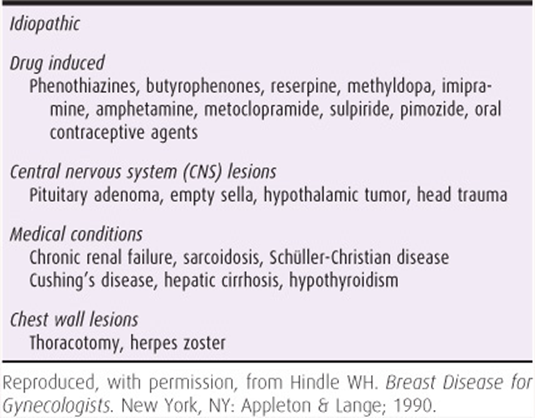
Galactorrhea or physiologic nipple discharge is frequently the result of hyperprolactinemia secondary to medications such as phenothiazines, endocrine tumors such as lactotroph adenomas, or endocrine abnormalities such as hypothyroidism and pituitary or hypothalamic disease (Table 5–1). Galactorrhea usually manifests as bilateral multiductal milky nipple discharge in the nonlactating breast. If the physical examination is otherwise normal, imaging is negative, and the discharge is multiductal and nonbloody, a pregnancy test, prolactin levels, renal and thyroid function tests, and appropriate endocrinologic follow-up may be necessary with appropriate treatment of the underlying cause.
Table 5–1. Causes of galactorrhea.
Pathologic nipple discharge is usually unilateral, spontaneous serous or serosanguineous from a single duct and is usually caused by an intraductal papilloma or, more infrequently, by an intraductal malignancy. In either case, a palpable mass may not be present. The involved duct may be identified by pressure at different sites around the nipple at the margin of the areola. Bloody discharge is more suggestive of cancer but is usually caused by a benign papilloma in the duct. Cytologic examination is rarely helpful because negative findings do not rule out cancer, which is more likely in women older than age 50 years. Imaging modalities such as mammography and/or ultrasonography may reveal underlying abnormalities in the duct. Ductography can be used to delineate an intraductal filling defect, which may be causing the nipple discharge.
Treatment
In any case, surgical excision of the involved duct should be performed once the workup has ruled out additional breast findings that need to be addressed.
Purulent discharge can originate in a subareolar abscess and may require excision of the abscess and related lactiferous sinus.
FAT NECROSIS
Fat necrosis is a benign condition of the breast but is of clinical importance because it produces a mass, often accompanied by skin or nipple retraction, that is clinically indistinguishable from carcinoma. Trauma and surgery are the presumed etiology, although only about half of patients recall a history of injury to the breast. Ecchymosis is occasionally observed in conjunction with the mass. Tenderness may or may not be present. If untreated, the mass associated with fat necrosis gradually disappears. Should the mass not resolve after several weeks, a biopsy should be considered. Once the diagnosis is established, surgical excision is usually not necessary.
BREAST ABSCESS
During lactation and nursing, an area of redness, tenderness, and induration may develop in the breast. In its early stages, the infection can often be resolved while continuing nursing with the affected breast and administering an antibiotic. If the lesion progresses to form a palpable mass with local and systemic signs of infection, an abscess has developed and needs to be drained. Even in this setting breastfeeding or pumping can help in controlling the pain and discomfort associated with the infection as well as shorten the duration of the infection.
Less frequently, a subareolar abscess may develop in young or middle-age women who are not lactating. These infections tend to recur after simple incision and drainage unless the area is explored in a quiescent interval with excision of the involved lactiferous duct or ducts at the base of the nipple. Except for the subareolar type of abscess, infection in the breast is very rare unless the patient is lactating.
If a patient with a suspected breast infection does not respond to treatment, inflammatory breast cancer should be suspected especially when associated with axillary lymphadenopathy.
MALFORMATION OF THE BREAST
Many women consult their physicians for abnormalities in either the size or the symmetry of their breasts. Difference in size between the 2 breasts is common. If extreme, however, these differences may be corrected by cosmetic surgery, although the breast tissue in these individuals is otherwise normal.
Similarly, woman may complain of overly large breasts (macromastia). Studies fail to show any endocrinologic or pathologic abnormalities, and these patients may also be considered candidates for cosmetic surgery such as breast-reduction mammoplasty.
Less common malformations of the breast include amastia, complete absence of 1 or both breasts, or the presence of accessory nipples (polythelia) and breast tissue (polymastia) along the embryologic milk line, which occurs in 1–2% of whites.
PUERPERAL MASTITIS
See Chapter 10.
CARCINOMA OF THE FEMALE BREAST
ESSENTIALS OF DIAGNOSIS
Early findings: Single, nontender, firm to hard mass with ill-defined margins; mammographic abnormalities and no palpable mass.
Later findings: Skin or nipple retraction; axillary lymphadenopathy; breast enlargement, redness, edema, brawny induration, peau d’orange, pain, fixation of mass to skin or chest wall.
Late findings: Ulceration; supraclavicular lymphadenopathy; edema of arm; bone, lung, liver, brain, or other distant metastases.
General Considerations
Cancer of the breast is the most common cancer in women, excluding nonmelanoma skin cancers. After lung cancer, it is the second most common cause of cancer death for women. The American Cancer Society estimates that over 210,000 new cases of cancer of the breast will be diagnosed in 2010, resulting in over 40,000 deaths. These figures include male breast cancer, which accounts for less than 1% of annual breast cancer incidence. The yearly breast cancer incidence has steadily decreased from 1999 to 2006. Similarly, the mortality from breast cancer has been decreasing since 1975, which is attributed to better screening and advances in treatment modalities. On average, the breast cancer death rate decreased by 2.3% per year from 1990 to 2001. The probability of developing the disease increases throughout life. The mean and median age of women with breast cancer is 60–61 years, and breast cancer is the main cause of death for women between the ages of 40 and 59.
At the present rate of incidence, a woman’s risk of developing invasive breast cancer in her lifetime from birth to death is 1 in 8. This figure is from the Surveillance, Epidemiology, and End Results Program (SEER) of the National Cancer Institute (NCI) and is often cited but needs clarification. The data include all age groups in 5-year intervals with an open-ended interval at 85 years and above. When calculating risk, each age interval is weighted to account for the increasing risk of breast cancer with increasing age. A woman’s risk of being diagnosed with invasive breast cancer by age is as follows:
• By age 30: 1 in 2000
• By age 40: 1 in 233
• By age 50: 1 in 53
• By age 60: 1 in 22
• By age 70: 1 in 13
• By age 80: 1 in 9
• In a lifetime: 1 in 8
In the United States, breast cancer is the most common cancer among women of all ethnic groups, although the incidence of the disease is highest among white patients. In general, rates reported from developing countries are lower than those reported from developed countries, with the notable exception of Japan. Some of the variability may be a result of underreporting, but lifestyle, sociodemographic, and environmental factors such as diet, exercise, parity, breastfeeding, and body weight are implicated as possible causes for this observed difference.
Women with a family history of breast cancer are more likely to develop the disease than controls. The risk of being diagnosed with breast cancer for a patient with 1 affected first-degree relative (mother or sister) is increased by almost 2-fold. With 2 affected first-degree relatives, the increased risk is almost 3-fold. The risk is even higher if those relatives were diagnosed at a young age. A family history of breast cancer is, however, only reported by 15–20% of patients with breast cancer. Inherited specific genetic mutations that predispose patients to breast cancer such as, BRCA1 and BRCA2 gene mutations, are rare, accounting for approximately 5% of all breast cancers. BRCA mutations place affected women at a significantly increased lifetime risk, up to a 70%, of being diagnosed with breast cancer.
Nulliparous women and women whose first full-term pregnancy was after age 30 years have a slightly higher incidence of breast cancer than multiparous women. Late menarche and artificial menopause are associated with a lower incidence of breast cancer, whereas early menarche (before age 12 years) and late natural menopause (after age 50 years) are associated with a slight increase in risk of developing breast cancer. The bulk of the currently available evidence supports a causal relationship between the use of postmenopausal combination hormone therapy and breast cancer, predominantly hormone receptor–positive breast cancer. On the other hand, a clear association has not been consistently established between oral contraceptive use and the risk of breast cancer.
Fibrocystic changes of the breast and other nonproliferative breast lesions are not associated with an increased risk of breast cancer. However, the presence of multiple nonproliferative lesions and the presence of proliferative changes, especially those associated with cytologic atypia, are associated with an increased incidence of cancer. Correspondingly, a personal history of breast cancer is the greatest risk factor for subsequent breast cancer events. In addition, a woman who has had cancer in 1 breast is at increased risk of not only a recurrence but also of a second primary in the ipsilateral breast, as well as in the contralateral breast. Women with cancer of the uterine corpus have a breast cancer risk significantly higher than that of the general population, and women with breast cancer have a comparably increased risk of endometrial cancer.
Women who are at greater-than-normal risk of developing breast cancer should be identified by their physicians and followed carefully. Screening programs involve periodic physical examination and screening mammography; screening magnetic resonance imaging of the breasts for those asymptomatic patients at highest risk may increase the detection rate of breast cancer and may improve the survival rate, although this has not yet been demonstrated. Unfortunately, more than 50% of women who develop breast cancer do not have significant identifiable risk factors.
Staging
The physical examination of the breast and additional pre-operative studies are used to determine the clinical stage of a breast cancer. Clinical staging is based on the TNM (tumor, node, metastasis) system of the International Union Against Cancer. This classification considers tumor size, clinical assessment of axillary nodes, and the presence or absence of distant metastases. The assessment of the clinical stage is important in planning therapy. Histologic (or pathologic) staging is determined following surgery and along with clinical staging helps determine prognosis.
Clinical Findings
The majority of patients with breast cancer are diagnosed as a result of an abnormal mammogram and less often because of a palpable mass. The initial evaluation should include assessment of the local lesion, including a bilateral mammogram, if not previously performed, and breast ultrasound as indicated. The initial workup should include laboratory tests such as a complete blood count, liver function tests, and alkaline phosphatase. The search for distant spread should only be reserved for locally advanced breast cancers or if signs/symptoms of distant spread are present.
A. Symptoms
When the history is taken, special note should be made of the onset and duration of menarche, pregnancies, parity, artificial or natural menopause, date of last menstrual period, previous breast lesions and/or biopsies, hormonal supplementation, radiation exposure, and a family history of breast cancer. Back or other bone pain may be the result of osseous metastases. Systemic complaints or weight loss should raise the question of metastases, which may involve any organ but most frequently involve the bones, liver, and lungs. The more advanced the cancer in terms of aggressive histologic features, size of primary lesion, local invasion, and extent of regional node involvement, the higher is the incidence of metastatic spread to distant sites. Lymph node involvement is the single most significant prognostic feature and increases with increasing tumor size and aggressive histologic features such as pathologic grade.
Most patients with palpable breast cancers present with painless masses in the breast, most of which are discovered by the patient herself. Less frequent symptoms are breast pain; nipple discharge; erosion, retraction, enlargement, or itching of the nipple; and redness, generalized hardness, enlargement, or shrinking of the breast. Rarely, an axillary mass, swelling of the arm, or bone pain (from metastases) may be the first symptoms. Because of organized screening programs, fewer than 10% of breast cancers are detected solely on physical examination, and more than 90% are detected as a result of an abnormal mammogram
B. Signs
Inspection of the breast is the first step in physical examination and should be carried out with the patient sitting, arms at sides and then overhead. Abnormal variations in breast size and contour, minimal nipple retraction, and slight edema, redness, or retraction of the skin can be identified. Asymmetry of the breasts and retraction or dimpling of the skin can often be accentuated by having the patient raise her arms overhead or press her hands on her hips in order to contract the pectoralis muscles. Axillary and supraclavicular areas should be thoroughly palpated for enlarged nodes with the patient sitting (Fig. 5–4). Palpation of the breast for masses or other changes should be performed with the patient both seated and supine with the arm abducted (Fig. 5–5).
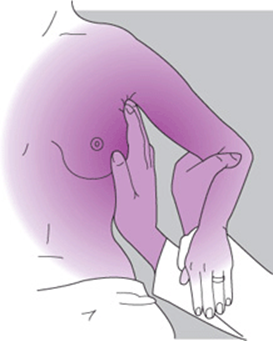
Figure 5–4. Palpation of axillary region for enlarged lymph nodes.
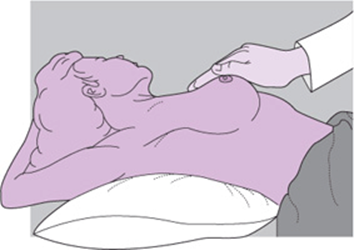
Figure 5–5. Palpation of breasts. Palpation is performed with the patient supine and the arm abducted.
Breast cancer usually consists of a nontender, firm or hard lump with poorly delineated margins generally caused by local infiltration. Slight skin or nipple retraction is an important sign as it may affect staging. Minimal asymmetry of the breast may be noted. Very small (1–2-mm) erosions of the nipple epithelium may be the only manifestation of Paget’s carcinoma. Watery, serous, or bloody discharge from the nipple is an occasional early sign but is more often associated with benign disease, as discussed earlier.
A lesion smaller than 1 cm in diameter may be difficult or impossible for a clinical examiner to feel and yet may be discovered by the patient’s self-examination. During the premenstrual phase of the cycle, increased innocuous nodularity may suggest neoplasm or may obscure an underlying lesion. If there is any question regarding the nature of an abnormality under these circumstances, the patient should be asked to return after her period.
The following are characteristic of advanced carcinoma: edema, redness, nodularity, or ulceration of the skin; the presence of a large primary tumor (>5 cm); fixation to the chest wall; enlargement, shrinkage, or retraction of the breast; marked axillary lymphadenopathy; edema of the ipsilateral arm; supraclavicular lymphadenopathy; and distant metastases.
Most frequently, metastases initially tend to involve regional lymph nodes first, which may be clinically palpable, before spreading to distant sites. The axillary lymph nodes receive more than 85% of the lymphatic drainage from the breast. One or 2 movable, nontender, not particularly firm axillary lymph nodes 5 mm or less in diameter are frequently present and are generally of no clinical significance. Any firm or hard nodes larger than 5 mm in diameter are highly suspicious for nodal metastases. Axillary nodes that are matted or fixed to skin or deep structures indicate locally advanced disease (at least stage III). Histologic studies show that microscopic metastases are present in approximately 40% of patients with clinically negative nodes. Conversely, if the examiner believes that the axillary nodes are involved, this is confirmed in approximately 85% of cases on pathologic examination. The incidence of positive axillary nodes increases with the size of the primary tumor, the degree of local invasiveness of the neoplasm, and certain aggressive histologic features such as tumor grade.
Usually no nodes are palpable in the supraclavicular fossa. Firm or hard nodes of any size in this location or just beneath the clavicle (infraclavicular nodes) are indicative of locally advanced disease and suggest the strong possibility of distant metastatic sites of cancer. Biopsy or fine-needle aspiration to confirm nodal involvement in these areas is paramount. Ipsilateral supraclavicular nodes containing cancer indicate that the patient is in an advanced stage of the disease (stage IIIC). Edema of the ipsilateral arm, commonly caused by metastatic infiltration of regional lymphatics, is also a sign of advanced cancer.
C. Special Clinical Forms of Breast Carcinoma
1. Paget’s disease of the breast—Paget’s disease of the breast refers to the eczematoid eruption and ulceration that arises from the nipple, can spread to the areola, and is associated with an underlying carcinoma. An underlying mass is palpable in about 50% of patients with Paget’s disease. Of these masses, 95% are found to be an invasive cancer, mostly infiltrating ductal. For patients with Paget’s disease and no underlying palpable mass, a noninvasive breast cancer or ductal carcinoma in situ is found in 75% of cases. Pain, itching, and/or burning are often the presenting symptoms, along with a superficial erosion or ulceration. Less frequently, a bloody discharge and nipple retraction are observed. The diagnosis is established most often by full-thickness biopsy of the lesion, which reveals the pathognomonic intraepithelial adenocarcinoma cells or Paget cells within the epidermis of the nipple. In 12–15% of patients with Paget’s disease of the breast, no associated underlying intraparenchymal breast cancer is found.
Paget’s disease is uncommon, accounting for approximately 1% of all breast cancers. It is frequently misdiagnosed and treated as dermatitis or bacterial infection, leading to an unfortunate delay in detection. Mastectomy has traditionally been the mainstay of therapy, although breast conservation followed by whole breast radiation can be attempted if nipple, areola, and wide local excision of the palpable mass or area of mammographic abnormality can be performed with an acceptable cosmetic result and negative margins. As for other forms of breast cancer, patients with only in situ disease need not have axillary evaluation, which is reserved for patients with an underlying palpable mass/invasive carcinoma or if a mastectomy is planned.
2. Inflammatory carcinoma—Inflammatory carcinoma is an aggressive form of breast cancer that is characterized by diffuse, brawny edema of the skin of the breast with an erysipeloid border, usually without an underlying palpable mass. Generally, this is a clinical diagnosis with pathologic confirmation of tumor embolization in the dermal lymphatics by biopsy of the overlying skin and should not be confused with noninflammatory locally advanced breast cancer. Inflammatory breast cancer is an aggressive but rare form of breast cancer representing less than 5% of cases. At presentation, nearly 35% of patients with inflammatory breast cancer have evidence of metastases. The inflammatory component, often mistaken for an infectious process, is caused by the blockage of dermal lymphatics by tumor emboli, which results in lymphedema and hyperemia. If a suspected skin infection does not rapidly respond (1–2 weeks) to a course of antibiotics, biopsy must be performed. Treatment usually consists of several cycles of neoadjuvant chemotherapy followed by surgery and/or radiotherapy depending on tumor response. A modified radical mastectomy is usually recommended for locoregional control as long as a complete resection of the tumor can be accomplished.
3. Occurrence during pregnancy or lactation—Pregnancy-associated breast cancer is defined as breast cancer that is diagnosed during pregnancy, in the first postpartum year, or anytime during lactation. The frequency of breast cancer during pregnancy or lactation ranges between 1:3000 and 1:10,000. The association of pregnancy and breast cancer presents a diagnostic and therapeutic dilemma for the patient and the physician. Women with breast cancer diagnosed during pregnancy or lactation tend to present at a later stage due in part to diagnostic delays. In the past, pregnancy-associated breast cancer was thought to lead to a worse outcome for the patient. More recent studies, however, have reported similar outcomes for women with breast cancer diagnosed during pregnancy and lactation when compared with nonpregnant breast cancer patients after controlling for stage, age, and other prognostic factors. Termination of the pregnancy, formerly performed routinely in the first two trimesters, has not been demonstrated to improve outcome. In most instances, modified radical mastectomy in pregnancy is the minimal treatment of choice, with the possible exception of the latter part of the third trimester, wherein breast-conservation therapy followed by postpartum radiotherapy may be considered. Most women with breast cancer diagnosed during pregnancy or lactation will be candidates for systemic chemotherapy. In general, the risk of fetal teratogenicity is highest during the first trimester and period of organogenesis. In the second or third trimester, chemotherapy is associated with a much lower risk or fetal toxicity but has been significantly linked to an increased risk of prematurity and growth retardation. In general, antimetabolites such as methotrexate, targeted antibodies such as trastuzumab, taxanes, and endocrine therapy should be avoided during pregnancy. Delivery of the infant should be delayed for a few weeks after the last dose of chemotherapy in order to minimize the risk of neutropenia in the fetus and infectious complication. The use of radiotherapy during pregnancy is contraindicated because of the potential for fetal damage. The decision to proceed with pregnancy termination should be individualized and based on the willingness of the patient to accept the potential teratogenic risk incurred by her breast cancer therapy.
4. Bilateral breast cancer—Clinically evident simultaneous bilateral breast cancer occurs in less than 1% of cases, but there is a 5–8% incidence of later occurrence of cancer in the second breast. Bilaterality occurs more often in women younger than age 50 years and is more frequently associated with a lobular carcinoma and in patients with hereditary breast cancer syndromes such as Li-Fraumeni syndrome. The incidence of second breast cancers increases directly with the length of time the patient is alive after her first cancer and is approximately 1.0% per year and is significantly higher in patients with hereditary breast cancer syndromes.
In patients with breast cancer, careful screening of the contralateral breast at the time of initial diagnosis and at regular intervals thereafter is warranted. Routine biopsy of the opposite breast is usually not indicated.
D. Mammography
Mammography is the breast imaging modality of choice and the only screening method that has been consistently found to decrease mortality of breast cancer. Some breast cancers can be identified by mammography as early as 2 years before reaching a size detectable by palpation.
Although false-positive and false-negative results are occasionally obtained with mammography, the experienced radiologist can interpret mammograms correctly in approximately 90% of cases. Ultrasound and magnetic resonance imaging (MRI) are not recommended for screening the general population, and their primary role is as adjuncts to an abnormal mammogram. For women at high risk for developing breast cancer, the addition of MRI and ultrasound to screening mammograms may be contemplated.
Because up to 15% of cancers that are detected on clinical exams are not seen on mammograms, a negative mammogram should preclude further intervention in patients with a dominant or suspicious mass. The use of a targeted ultrasound can help decrease the false-negative rate of mammograms and evaluate the mammographically occult palpable breast mass.
E. Cytology
Cytologic examination of nipple discharge or cyst fluid may be helpful on rare occasions. As a rule, mammography and breast biopsy are required when nipple discharge or cyst fluid is bloody or cytologically equivocal.
F. Biopsy
The diagnosis of breast cancer depends ultimately on examination of tissue removed by biopsy. Treatment should never be undertaken without an unequivocal histologic diagnosis of cancer. The safest course is biopsy examination of all suspicious masses found on physical examination and, in the absence of a mass, of suspicious lesions demonstrated by mammography. Approximately 30% of lesions thought to be definitely cancer prove on biopsy to be benign, and approximately 15% of lesions believed to be benign are found to be malignant. These findings demonstrate the fallibility of clinical judgment and the necessity for biopsy.
The simplest method is by fine-needle aspiration (FNA). This method is, however, limited by its inability to distinguish invasive from noninvasive breast cancers and the relatively high rate of nondiagnostic studies, especially for nonpalpable abnormalities and with less experienced practitioners.
In many centers, core needle biopsies, most often with image guidance, have replaced open surgical biopsies. Core needle biopsies offer the advantage of a more definitive histologic diagnosis, minimize the risk of inadequate samples, and allow the distinction between invasive and noninvasive breast cancers. Open surgical biopsies, often with wire localization, should be reserved for those lesions that are technically unattainable with core needle biopsies or in the event of core needle biopsy results that do not correlate with the imaging findings (discordant results).
In general, outpatient biopsy followed by definitive surgery at a later date gives patients time to adjust to the diagnosis of cancer, meet with members of the multidisciplinary team involved with managing breast cancer, and consider a second opinion as well as alternative forms of treatment. Studies show no adverse effects from the short (1–2 weeks) delay of the 2-step procedure, and this is the current recommendation of the NCI.
At the time of the initial biopsy of breast cancer, the specimen can also be analyzed with immunohistochemical staining for hormone and growth factor (eg, HER-2-Neu) receptors. Tumor analysis using reverse transcriptase polymerase chain reaction (RT-PCR) technology from pathologic specimens to assess the tumor recurrence risk is now available. Such tests can aid the patient and physician in the decision for further adjuvant therapy or not. At the time of pathologic confirmation of a breast cancer diagnosis, patients on hormone replacement therapy (HRT) should be instructed to stop hormone use until counseled by an oncologist.
G. Laboratory Findings
A complete blood cell count (CBC), chemistry panel including liver function tests (LFTs), and a β-human chorionic gonadotropin (β-hCG) in premenopausal patients should be obtained as part of the initial evaluation. An elevation in alkaline phosphatase or liver function may be an indication of distant metastatic disease and warrants further investigation. Hypercalcemia may be seen in advanced cases of metastatic cancer.
H. Imaging Studies
Most systematic reviews have concluded that the routine radiologic evaluation for metastatic disease is unnecessary in the majority of patients since the overall yield is low. In general, the prevalence of metastatic disease increases with the clinical stage of the disease. The Cancer Care Ontario Practice Guidelines Initiative recommends against routine staging for clinical stage I disease, whereas they recommend routine staging in patients with stage III disease and radio-nuclide bone scanning in patients with stage II disease. In general, imaging studies should be limited to patients with higher pretest probability of distant metastases, such as those with signs, symptoms, or laboratory abnormalities suggestive of distant metastases and those with locally advanced breast cancer.
The imaging modality of choice has not been standardized, although computed tomography (CT) scanning of chest, abdomen, and pelvis offers a more sensitive and attractive 1-visit option at the price of a higher risk of false-positive results, cost, and radiation exposure. In addition, evaluation for skeletal metastases with radionuclide bone scans would still be required.
The combination of positron emission tomography (PET) and CT scans is a promising tool in the staging and metastatic evaluation of breast cancer because it allows for the evaluation of visceral and bony metastases. However, data regarding its routine use in the metastatic workup of patients with breast cancer are lacking.
The American Society of Clinical Oncology has found that there is insufficient evidence to support the routine use of tumor markers such as CA 15-3, CA 27.29, and carcinoembryonic antigen (CEA). In general, assessment of myocardial function should be reserved for patients at high risk of cardiotoxicity (age >65 years or underlying heart disease) prior to initiating treatment with anthracyclines and in all patients scheduled to receive trastuzumab.
Early Detection
A. Screening Programs
Mammography remains the single best screening procedure for the early detection of breast cancer. The majority of breast cancers in the United States are detected as a result of an abnormal screening study. In general, depending on a woman’s age and the density of her breasts, the sensitivity of mammography is 70–90%, and its specificity is greater than 90%. Yearly mammogram screening among women continues to increase, so that in 1997, roughly 85% of women had had a mammogram at least once previously. This was an increase of 15% from 1990 and of 47% from 1987. In 2008, the proportion of US women age 50–74 years who reported that they had a screening mammogram in the preceding 2 years was 81.1%. Lack of insurance coverage and lower socioeconomic status were associated with significantly lower prevalence of up-to-date mammography.
Despite a consensus on the importance of mammographic screening, mammography has still not been demonstrated unequivocally to decrease breast cancer mortality across all age groups. In women between 50 and 69 years of age, there is reasonable evidence, based largely on 8 randomized controlled trials, that screening mammography is beneficial. In elderly patients over the age of 70 years, however, the optimal frequency of screening is still unknown because they have not generally been included in most large cooperative screening trials and because of their limited life expectancy, which can affect gains in breast mortality. For younger women, the evidence is also not entirely clear. For women age 40–49 years, there appears to be a small benefit, which comes at the price of a higher number of patients in that age group who need to be screened. These results may be due to the lower prevalence of the disease and decreased sensitivity of mammograms in this age group as well as the possibility that younger women have faster growing tumors, which may be more readily missed at one screening and become clinically apparent before the subsequent screening. Nevertheless, in the Health Insurance Plan of Greater New York screening study from the United States, which with 18 years has the longest follow-up of any randomized mammography screening study, there was a 30% reduction in mortality in women older than 50 years of age. Despite academic debate and challenges and controversy in the news media, the consensus that screening mammography saves lives has been upheld.
Current screening recommendations from the American College of Radiology, the American Cancer Society, and the American Medical Association call for annual mammograms starting at age 40 years. The American College of Obstetricians and Gynecologists calls for screening mammography every 1–2 years for women age 40–49 and annually thereafter. There is no recommendation for a “baseline” examination prior to age 40 years, nor is there any evidence to support this practice in women younger than this age. Women with a genetic predisposition to breast cancer should be screened using a combination of screening mammography and MRI beginning at age 25 or based on the age of earliest onset breast cancer in the family. For women with a family history of breast cancer but without a genetic mutation, some authorities have suggested initiating screening with mammography before age 40, although data from randomized controlled trials on the efficacy of this approach is lacking.
B. Breast Examination
Even though several randomized controlled trials included clinical breast examination with mammography, the utility of clinical breast exams remains debatable. From these studies, it appears that mammography detected approximately 90% of breast cancers and clinical breast exams detected approximately 50% with significant but not total overlap. A recent review of the literature concluded that the effectiveness of clinical breast examination has yet to be proven. It also appears that sensitivity of clinical breast examination in the community setting is lower than that reported in the randomized trials due to a lack of standardization and procedural and examiner variability. Clinical breast examination remains an attractive and useful option in developing countries where screening mammography programs are prohibitively expensive, in the event of mammographically occult breast cancer, and in older women who are no longer being screened regularly.
The few randomized controlled trials that have examined breast self-examination have similarly failed to show a benefit in the rates of breast cancer diagnosis and mortality, suggesting that breast self-examination only be offered as an adjunct to regular screening and patients be educated about its limitations.
C. Genetic Testing
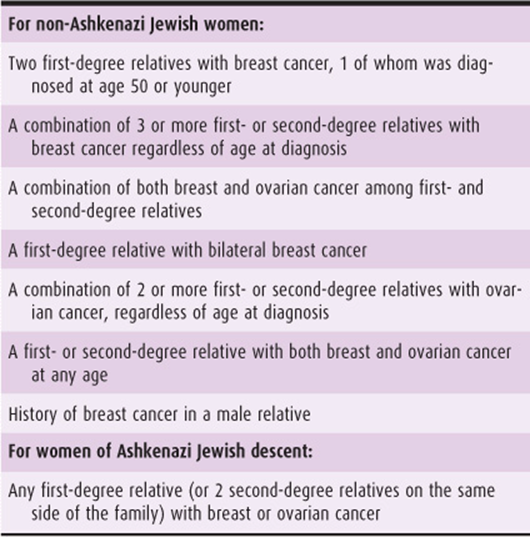
A positive family history of breast cancer is recognized as a risk factor for the subsequent development of breast cancer. With the discovery of 2 major breast cancer predisposition genes, BRCA1 (17q21) and BRCA2 (13q12-13), there has been increasing interest in genetic testing. Mutations in these 2 genes are associated with an elevated risk for breast cancer, as well as ovarian, colon, prostate, and pancreatic cancers. Of all women with breast cancer, approximately 5–10% may have mutations in BRCA1 or BRCA2. The estimated risk of a patient developing cancer with a BRCA1 or BRCA2 mutation is believed to be between 40% and 85%. Particular mutations may be more common in specific ethnic groups like the Ashkenazi Jewish population. Genetic testing is available and may be considered for members of high-risk families. The US Preventive Task Force, Kaiser Permanente, and the National Cancer Center Network have developed BRCA testing guidelines (Table 5–2). Because of the complexities of genetic testing, genetic counseling before and after testing is necessary.
Table 5–2. Recommendations from the US Preventive Services Task Force on who should be offered genetic testing for BRCA mutations.
Pathologic Types
Numerous pathologic subtypes of breast cancer can be identified histologically (Table 5–3). More than 95% of breast malignancies arise from the epithelial elements of the breast. These pathologic types are distinguished by the histologic appearance and growth pattern of the tumor. In general, breast cancer arises either from the epithelial lining of the large or intermediate-sized ducts (ductal) or from the epithelium of the terminal ducts of the lobules (lobular). The cancer may be invasive or in situ. Most breast cancers arise from the intermediate ducts and are invasive (invasive ductal or infiltrating ductal), and most histologic types are merely subtypes of invasive ductal cancer with unusual growth patterns (colloid, medullary, tubular, etc).
Table 5–3. Histologic types of breast cancer.
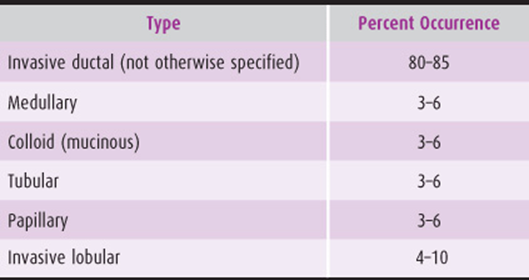
The histologic subtypes have only slight bearing on prognosis when outcomes are compared after accurate staging. Colloid (mucinous), medullary, papillary, adenoid cystic, and tubular histologies are generally believed to have a more favorable prognosis. Other histologic criteria have been studied in an attempt to substratify patients based on features such as tumor differentiation, lymphovascular space invasion, and tumor necrosis. Although these characteristics are important, stage is predominant and paramount in predicting outcome.
The noninvasive cancers by definition lack the ability to spread. However, in patients whose biopsies show noninvasive intraductal cancer, associated invasive ductal cancers are present in 1–3% of cases. Lobular carcinoma in situ is considered by some to be a premalignant lesion that by itself is not a true cancer. It lacks the ability to spread but is associated with the subsequent development of invasive ductal cancer in 25–30% of cases within 15 years.
Hormone Receptor Sites
The presence or absence of estrogen and/or progesterone receptors in the nucleus of tumor cells is of critical importance in managing patients with initial, recurrent, and metastatic disease. Both estrogen receptors (ERs) and progesterone receptors (PRs) are nuclear hormone receptors. After binding their respective hormones in the cytoplasm of the target cell, the DNA-binding sites on the receptor are unmasked, and the activated complex migrates into the nucleus in order to bind to their respective hormone-responsive DNA elements. The responsiveness of breast cancer to hormonal therapy is best predicted by tumor expression of the ER and/or PR, and ER/PR-negative tumors are unlikely to benefit from endocrine therapy and would be better treated with systemic chemotherapy. Conversely, the magnitude of benefit from adjuvant endocrine therapy is directly related to the amount of ER.
ERs may be of prognostic significance, but current evidence is still unclear. For small node-negative tumors, the presence of ER is associated with lower likelihood of recurrence at 5 years when compared to ER-poor tumors. With longer follow-up, however, this initial advantage disappears primarily due to late recurrences. ER positivity is associated with a number of prognostic indicators, such as tumor grade and ploidy, but not with nodal metastases, and ER-positive tumors are more likely to metastasize to bone, soft tissue, and genital organs than are ER-negative tumors, which are more likely to spread to the liver, lung, and brain.
The Oxford Overview conducted by the Early Breast Cancer Trialists’ Collaborative Group analyzed the data on each woman randomized to all trials of the treatment of operable breast cancer. In their last round of analysis published in 2005, the group showed that treatment with 5 years of tamoxifen when compared to no adjuvant endocrine therapy was associated with a 41% reduction in the annual risk of relapse and a 34% reduction in the annual death rate for women with ER-positive breast cancer.
It is advisable to obtain an ER assay for every breast cancer at the time of initial diagnosis. Receptor status may change after hormonal therapy, radiotherapy, or chemotherapy. The specimen requires special handling, and the laboratory should be prepared to process the specimen correctly.
HER2 & Response to Therapy
The HER2 gene encodes for a transmembrane glycoprotein that belongs to the epidermal growth factor receptor (EGFR) family of receptors, which play a key role in signal transduction controlling growth, differentiation, and possibly angiogenesis. Overexpression of the glycoprotein and/or amplification of its encoding gene is noted in 18–20% of breast cancer patients. HER2 overexpression/amplification is associated with an increased risk of recurrence and breast cancer death in the absence of systemic/targeted therapy and is also associated with resistance to endocrine therapy. However, HER2 overexpression/overamplification helps identify patients who benefit from the addition of agents that target the protein such as trastuzumab, a humanized monoclonal mouse antibody that binds the HER2 protein, and lapatinib, an oral tyrosine kinase inhibitor that blocks HER2. At least 4 large randomized controlled trials have shown that the addition of 1 year of trastuzumab to adjuvant therapy in patients with HER2-positive breast cancer significantly improves their disease-free and overall survival.
Curative Treatment
All oncologic treatment may be classified as curative or palliative. Curative treatment intent is advised for early-stage and locally advanced disease (clinical stages I to IIIC disease). Treatment intent is palliative for patients with stage IV disease and for previously treated patients who develop distant metastases or unresectable local recurrence.
A. Therapeutic Options
1. Radical mastectomy—Historically, Halsted is credited with performing the first modern radical mastectomy in 1882 in the United States. This surgical procedure was the en bloc removal of the breast, pectoral muscles, and axillary lymph nodes. It was the standard surgical procedure performed for breast cancer in the United States from the turn of the 20th century until the 1950s. During the 1950s, emerging information about lymph node drainage patterns prompted surgeons to undertake the extended radical mastectomy, which is a radical mastectomy and the removal of the internal mammary lymph nodes. It was postulated that a more extensive dissection of the draining lymphatics would improve control rates and translate into improved survival. A randomized trial, however, proved no benefit to the extended radical mastectomy versus the radical mastectomy, and the former was abandoned. Moreover, the failure of the extended radical mastectomy underscored the complications and morbidity of breast cancer surgery. This morbidity coupled with inadequate disease control led surgeons to explore less invasive and disfiguring techniques. Currently, radical mastectomy is rarely indicated or performed. Even in settings where radical resection may be entertained, such as invasion of the pectoralis muscles or large tumors, less invasive surgery coupled with neoadjuvant chemotherapy is preferred.
2. Modified radical mastectomy—Replacing radical mastectomy, the modified radical mastectomy (MRM) is the removal of the breast and underlying pectoralis major fascia, but not the muscle, and evaluation of selected axillary lymph nodes. Variations of this procedure include sacrificing the pectoralis minor muscle or not, and retracting, splitting, or transecting the pectoralis major to access the apex of the axilla for dissection. Because it is less invasive and less disfiguring, MRM provides a better cosmetic and functional result than radical mastectomy. Two prospective randomized trials, single-institution data, and several retrospective studies all demonstrate no difference in disease-free or overall survival rates between radical mastectomy and MRM for early-stage breast cancer. Until the early 1980s and the emergence of breast-conservation therapy (BCT), MRM was the standard treatment available to women for early-stage cancer. For locally advanced breast cancer and when the patient is not a candidate for BCT, or if the patient is not motivated for breast conservation, MRM remains a valid treatment option. A total mastectomy (simple mastectomy) is the removal of the whole breast, like an MRM, without the axillary dissection.
3. Breast-conservation therapy—BCT involves a surgical procedure such as a lumpectomy—an excision of the tumor mass with a negative surgical margin—an axillary evaluation, and postoperative irradiation. Several other operations, more limited in the scope of surgical dissection than MRM, such as segmental mastectomy, partial mastectomy, and quadrantectomy, are also used in conjunction with radiation and are part of the surgical component of BCT. As a result of 6 prospective randomized trials that showed no significant difference in local relapse, distant metastases, or overall survival between conservative surgery with radiation and mastectomy, BCT has gained increasing acceptance as a treatment option for stage I and II and selected stage III breast cancers.
B. Choice of Local Therapy
Breast cancer is a multidisciplinary disease in which surgeons, medical and radiation oncologists, radiologists, pathologists, nurses, and psychosocial support staff all play fundamental roles. Working with the patient, this team recommends the most appropriate treatment strategy. Clinical and pathologic stage, as well as biologic aggressiveness, are the principal determinants guiding local therapy, treatment strategy, and, ultimately, outcome. For early-stage breast cancer, including node-positive cases, much of the decision for initial local therapy rests with the patient. MRM is always a valid choice for addressing the local treatment of breast cancer. A patient’s decision to undergo MRM does not necessarily obviate the role of radiation in the further management of breast cancer, and postmastectomy irradiation may still be recommended in approximately 20–25% of cases. To be a candidate for BCT, the patient must not be pregnant and cannot have multicentric breast cancer (evidence of cancer in >1 quadrant of the breast), locally advanced disease, diffuse microcalcifications on mammogram, or a prior history of ipsilateral breast irradiation. Relative contraindications are collagen-vascular disorders that could lead to a poor cosmetic outcome with irradiation and breast implants or psychiatric issues that would make close follow-up and surveillance difficult. These restrictions are only a portion of the decision-making process that must be completed before embarking on BCT.
Perhaps most importantly, the patient must be motivated and desire to maintain her breast in the face of a cancer diagnosis. This may entail some degree of physical, emotional, and psychological distress. For example, a patient may have to endure multiple re-excisions to obtain a negative surgical margin on the lumpectomy specimen. A patient may also experience resistance to BCT in areas where it is not commonly offered and where a multidisciplinary approach to breast cancer is not practiced. It has been shown that the surgical management of breast cancer differs considerably based on geographic location in the United States, independent of patient and tumor characteristics. Nevertheless, both physicians and patients pursue BCT because it allows the patient to preserve her breast without any decrement to survival, and the vast majority of women are pleased with the cosmetic result.
Because the treatment options for locally advanced and inflammatory breast cancers are in some ways less flexible than those for early-stage breast cancer, it is even more critical to engage the patient in the decision-making process for the choice of initial therapy. Many different strategies, which include mastectomy and less invasive surgeries, with or without neoadjuvant chemotherapy and adjuvant chemotherapy, radiation, and further maintenance interventions, are commonly used. In many settings, protocol therapy may be the most desirable treatment option.
Mastectomy
For about three-quarters of a century, radical mastectomy was considered standard therapy for breast cancer. The procedure was designed to remove the primary lesion, the breast in which it arose, the underlying muscle, and, by dissection in continuity, the axillary lymph nodes, which are most often the first site of regional spread beyond the breast. When radical mastectomy was introduced by Halsted, the average patient presented for treatment with locally advanced disease, and a relatively extensive procedure was often necessary just to remove all gross cancer. This is no longer the case. Patients now present with much smaller, less locally advanced lesions. Most of the patients in Halsted’s original series would now be considered incurable by surgery alone, because they had extensive involvement of the chest wall, skin, and supraclavicular regions. Since the 1960s, MRM has supplanted the radical mastectomy because of its comparable disease control and a substantial decrease in morbidity and disfiguration.
In many cases, adjuvant therapy after MRM (eg, radiation) can even further reduce the incidence of local recurrence in certain patients with unfavorable tumor characteristics. In addition, 3 recent randomized trials of postmastectomy radiation, which confirmed a local control advantage, demonstrated an overall survival benefit in certain subsets of both pre- and postmenopausal women. For patients with ≥4 positive lymph nodes or large tumors ≥5 cm in diameter, postmastectomy radiation is strongly recommended. The role of postmastectomy radiation in patients with 1–3 positive nodes is more controversial. However, with increasing duration of follow-up, there is emerging evidence in favor of postmastectomy radiation for patients with 1–3 positive lymph nodes. Therefore, when deciding on initial local therapy, a patient must keep in mind that choosing MRM does not necessarily exclude a recommendation for adjuvant radiation.
Breast-Conservation Therapy
Because studies comparing radical mastectomy and MRM demonstrated no decrement in local control or survival, radical mastectomy has given way to MRM. In the 1980s, 6 prospective randomized trials were conducted worldwide that showed no significant difference in locoregional relapse or overall survival between breast-conserving surgery and radiation versus MRM for early-stage invasive breast cancer. In addition, an overview analysis showed equivalent survival with BCT as compared to mastectomy. Two of these studies included patients with node-positive breast cancer. With the addition of radiation to breast-conserving surgery techniques such as lumpectomy with an axillary evaluation, local failure is reduced to rates comparable to MRM with no compromise to overall survival.
There are a few absolute contraindications to BCT, which are mainly related to increased rates of in-breast recurrences or preclusion of use of radiation. These include persistently positive surgical margins, multicentric disease present in more than 1 quadrant of the breast, diffuse malignant-appearing calcifications throughout the breast precluding adequate resection, history of prior radiation therapy to the breast, and pregnancy. Other relative contraindications include a history of scleroderma due to an increased risk of skin toxicity associated with radiation and the large size of the tumor relative to the size of the breast, resulting in an unacceptable cosmetic outcome. Factors that are not contraindications to breast conservation include nodal metastases, tumor location, tumor subtype, and a family history of breast cancer.
Unfortunately, no subgroup of patient with breast cancer undergoing breast conservation has a low enough risk of recurrence to justify the elimination of adjuvant therapy. Some investigators are currently examining alternative strategies of delivering radiotherapy such partial breast irradiation and shortened courses of whole breast radiation in select patients with node-negative disease.
Axillary Evaluation
It is important to recognize that axillary evaluation is valuable both in planning therapy and in staging of the cancer. Axillary lymph node dissection has long been the mainstay for axillary staging in the treatment of patients with breast cancer. Although the removal of even occult cancer in axillary lymph nodes generally does not translate into an improvement in overall survival rates, regional failures will be lower. Axillary lymph node dissection is generally safe but may result in nerve damage and lymphedema, especially in patients receiving postoperative radiotherapy. Because of the potential for major morbidity associated with the procedure and questions regarding any survival advantage it would offer, some investigators examined the use of sentinel lymph node biopsy (SLNB) as an alternative to formal axillary dissection for the pathologic assessment of the clinically negative axilla. This procedure uses a tracer material that is injected into the tumor bed to map the tumor drainage to the primary or “sentinel” axillary lymph node(s). The sentinel lymph node is excised and pathologically examined. If the sentinel lymph node is found to harbor metastatic disease, a subsequent formal dissection is done. Conversely, if the sentinel lymph node is negative, no further surgical evaluation need be performed. Although this procedure relies heavily on the surgeon’s expertise with a new technique and has some inherent limitations, when performed by an experienced team, a negative result carries a negative predictive value of 94–96%. Potential side effects and complications are minimized, and recovery is quick without sacrificing diagnostic or therapeutic results. A practical example of the benefits of SLNB is that, when used in conjunction with BCT, reported rates of lymphedema are lower than with axillary dissection.
Adjuvant Systemic Therapy
A. Hormonal Therapy
Adjuvant hormonal therapy or manipulation is recommended for all women whose breast cancer expresses hormone receptors. Even if the tumor does not express estrogen hormone receptor protein but only progesterone, hormonal therapy may be beneficial. This recommendation is made regardless of age, menopausal status, involvement or number of positive lymph nodes, or tumor size. The benefit of adjuvant hormonal therapy is seen across all subgroups of breast cancer patients, with both invasive and in situ lesions. Although the absolute decrease in recurrence, second primary breast cancer, and death may vary from group to group, there is a firmly established role for adjuvant hormonal intervention.
Until recently, 5 years of tamoxifen was considered to be the adjuvant hormonal therapy regimen of choice and remains a valuable option for both premenopausal and post-menopausal women with ER-positive tumors. Randomized trials support the 5-year duration, which is superior to shorter courses and does not expose the patient to the increased risk of adverse effects associated with longer use. Furthermore, use longer than 5 years does not appear to enhance the long-term benefit seen with just 5 years of use. Although tamoxifen carries an increased risk of endometrial cancer and venous thromboembolism, the benefits outweigh the risks for the vast number of patients. Surveillance screening procedures such as transvaginal ultrasound and endometrial biopsy are not necessary in asymptomatic patients on tamoxifen.
More recently, aromatase inhibitors (AI) such as anastrozole have been shown to be as effective if not more effective than tamoxifen in postmenopausal women with early-stage, invasive breast cancer. In fact, in at least 2 large trials, anastrozole and letrozole were found to be superior to tamoxifen in terms of disease-free survival, time to recurrence, and the incidence of contralateral breast cancer, although no significant difference in overall survival was seen. The toxicity profile of AIs is also different, making them useful for women who would like to avoid the tamoxifen-related side effects. Compared to tamoxifen, the use of AIs confers a smaller risk of endometrial cancer, venous thromboembolic events, and hot flashes. However, AIs are associated with a higher risk of musculoskeletal disorders, osteoporosis, and cardiac events when compared to tamoxifen. AIs are not typically used in premenopausal patients because the reduced estrogen feedback on the hypothalamus results in an increase in gonadotropin release, which paradoxically stimulates the ovary to produce more aromatase and androgen substrate.
B. Chemotherapy
Cytotoxic chemotherapy is commonly offered to women as adjuvant treatment for both early-stage and locally advanced breast cancer. The goal of adjuvant chemotherapy is to eliminate occult microscopic metastases that are often responsible for late recurrences. Cytotoxic chemotherapy offers benefits to the many early and the majority of locally advanced breast cancer patients, although the magnitude of benefit is more pronounced in premenopausal and node-positive patients. Cytotoxic chemotherapy is also considered by many to be the standard of care for patients with ER-negative tumors who are candidates for adjuvant systemic therapy because of adverse prognostic indicators such as tumor size >1 cm, positive lymph nodes, and high-grade disease.
The benefit of adding chemotherapy to endocrine therapy for patients with ER-positive tumors is more controversial, especially for patients with negative lymph nodes. The Oncotype DX 21-gene recurrence score assay is a potentially useful tool that could help predict patients with node-negative ER-positive tumors who have the lowest risk of distant recurrence, enough to justify elimination of chemotherapy.
Polychemotherapy (≥2 agents) is superior to single-agent chemotherapy. Duration for 3–6 months or 4–6 cycles appears to offer optimal benefit without subjecting the patient to undue toxicity associated with more prolonged treatment, which adds little benefit in terms of overall outcome. Cytotoxic chemotherapy with an anthracycline-based (doxorubicin or epirubicin) regimen is favored, because a small but statistically significant improvement in survival has been demonstrated compared with nonanthracycline-containing regimens. The cardiac toxicity caused by anthracyclines is not considered detrimental in women without significant cardiac disease but does occur in 1% of cases or less. Several trials have also demonstrated a survival advantage for regimens that include a taxane in addition to an anthracycline, particularly in node-positive tumors and other higher risk tumors. Alterations in dose schedule (eg, “dose-dense” regimens) also offer advantages over other combinations and administrations of chemotherapy for well-defined patient populations. As previously mentioned, several trials have shown that the addition of trastuzumab offers an overall and recurrence-free survival advantage in all but the most favorable HER2-positive tumors at the price of a small but significant increase in cardiac events, particularly for patients receiving an anthracycline-containing regimen. However, emerging data suggest the equivalence of taxane-based combinations with trastuzumab and those combinations containing anthracyclines with less cardiac toxicity. The choice of adjuvant chemotherapy is complex. The medical oncologist must consider multiple tumor and patient features and individualize treatment for breast cancer patients.
Several areas concerning chemotherapy have generated considerable interest but lack conclusive evidence. For instance, high-dose chemotherapy with bone marrow or stem cell rescue is not recommended. There is no evidence that high-dose regimens are superior to standard-dose polychemotherapy. Stem cell support or bone marrow transplant should be offered only on protocol. Further investigation is also needed to clarify the role of other biologic agents and dosing schedules. Trials need to enroll more patients older than age 70 years to assess the benefits and toxicities of adjuvant chemotherapy in this population. Finally, studies designed to measure quality of life need to be done to place the benefits versus toxicity question of adjuvant therapies into context.
The use of systemic therapy prior to surgery has become the mainstay of therapy for patients with locally advanced or inflammatory breast cancer but is increasingly being offered to patients with early-stage breast cancer to facilitate BCT instead of mastectomy.
Follow-Up Care
After primary treatment, breast cancer patients should be followed for life because of the long, insidious natural history of breast cancer. The goals of close breast cancer follow-up are to detect recurrences and second primaries after treatment in the ipsilateral breast and to detect new cancers in the contralateral breast. The risk of a second primary in the contralateral breast of a patient with a history of breast cancer is believed to be roughly 0.5–1% per year. Although there are no universally accepted guidelines, several consensus conferences have met to establish recommendations. After the completion of treatment, it is recommended that the patient undergo a physical examination every 4 months for the first 2 years, then every 6 months until year 5, and annually thereafter. A mammogram should be obtained annually for all patients and no less than 6 months after the completion of radiation therapy. For patients who received irradiation, a chest radiograph is also obtained yearly. Routine laboratory tests including CBC, chemistry profile, and LFTs can be ordered yearly, especially if the patient received chemotherapy, or else as needed. There is no role for routine bone scans or additional imaging unless the patient is symptomatic or there is clinical suspicion of an abnormality. Patients taking tamoxifen should have annual pelvic examinations and be counseled to report any irregular vaginal bleeding. Patients on AIs need periodic bone density studies and lipid panels to assess their cardiovascular risk factors.
A. Local Recurrence
The development of local recurrence correlates with stage and thus tumor size as well as the presence and number of positive axillary lymph nodes, margin status, nuclear grade, and histologic type. The median time to recurrence is roughly 4 years, with a 1–2% risk per year for the first 5 years and a 1% risk per year thereafter. Late failures occurring 15–20 years or more after treatment, however, do occur. The risk of local recurrence after BCT or MRM is generally <15%, 20 years after treatment. Positive axillary lymph nodes are prognostic for local failure at the chest wall after MRM, but they are not prognostic for a local failure after BCT.
The treatment of local recurrences depends on the initial local therapy. In the breast, failures after BCT can be treated with salvage mastectomy with salvage rates of approximately 50%. In general, there is no difference in overall survival for an isolated breast recurrence successfully treated with salvage mastectomy. Node failures are more ominous. Axillary failures have roughly a 50% 3- to 5-year disease-free survival, and supraclavicular failures have a 0–20% 3-year disease-free survival. All chest wall abnormalities should be biopsied to rule out recurrence and resected with a wide local excision if possible. Adjuvant salvage therapies such as radiation, cytotoxic chemotherapy, and hormonal therapy may also be instituted.
Local recurrence may signal the presence of widespread disease and is an indication for bone and liver scans, posteroanterior and lateral chest x-rays, and other examinations as needed to search for evidence of distant metastases. When there is no evidence of metastases beyond the chest wall and regional nodes, radical irradiation for cure and complete local excision can be attempted. Many patients with locally recurrent tumors will develop distant metastases within 2 years. For this reason, most physicians use systemic therapy for treatment of patients with local recurrence.
B. Edema of the Arm
Lymphedema of the arm is a significant and often dreaded complication of breast cancer treatment. Lymphedema occurs as a result of lymphatic disruption and insult caused primarily by local treatment modalities like surgery and radiation. Although each of these modalities carries its own risk with respect to arm edema, a combined-modality approach further increases this risk. With a typical level I/II axillary lymph node dissection and radiation, the risk of lymphedema is roughly <10%. This risk approached 30% when a more aggressive level III dissection was more commonly performed in the past. The rates of clinically significant lymphedema—that is, edema that affects function and is not merely detectable with sophisticated measurement tools—are generally considered to be much lower. With the advent of SLNB, lymphedema rates are expected to continue to improve.
Late or secondary edema of the arm may develop years after MRM, as a result of axillary recurrence or of infection in the hand or arm, with obliteration of lymphatic channels. Interestingly, there is frequently no obvious initiating event causing late arm swelling in a patient with a history of breast cancer treatment.
C. Breast Reconstruction
Breast reconstruction, with the implantation of a prosthesis or autologous tissue such as transverse rectus abdominis myocutaneous flap (TRAM), is now commonly offered following mastectomy and can be very frequently performed immediately after surgery. Therefore, reconstruction should be discussed with patients prior to mastectomy and is not an obstacle to the diagnosis of recurrent cancer.
Prognosis
The stage of breast cancer is the single most reliable indicator of prognosis. Patients with disease localized to the breast and no evidence of regional spread after microscopic examination of the lymph nodes have by far the most favorable prognosis. ERs and PRs appear to be an important prognostic variable because patients with hormone receptor–negative tumors and no evidence of metastases to the axillary lymph nodes have a much higher recurrence rate than do patients with hormone receptor-positive tumors and no regional metastases. The histologic subtype of breast cancer (eg, medullary, lobular, comedo) seems to have little significance in prognosis once these tumors are truly invasive.
Many patients who develop breast cancer will ultimately die of breast cancer. The mortality rate of breast cancer patients exceeds that of age-matched normal controls for nearly 20 years. Thereafter, the mortality rates are equal, although deaths that occur among the breast cancer patients are often directly the result of tumor. Five-year statistics do not accurately reflect the final outcome of therapy.
When cancer is localized to the breast, with no evidence of regional spread after pathologic examination, the clinical cure rate with most accepted methods of therapy is 75–80%. Exceptions to this may be related to the hormonal receptor content of the tumor, tumor size, host resistance, or associated illness. Patients with small ER- and PR-positive tumors and no evidence of axillary spread probably have a 5-year survival rate of nearly 90%. When the axillary lymph nodes are involved with the tumor, the survival rate drops to 50–60% at 5 years, and probably to less than 25% at 10 years. In general, breast cancer appears to be somewhat more aggressive in younger than in older women, which may be related to the fact that relatively fewer younger women have ER-positive tumors.
PALLIATIVE TREATMENT OF RECURRENT AND METASTATIC BREAST CANCER
This section discusses palliative therapy of disseminated disease incurable by surgery (stage IV).
Local Therapy
Patients with metastatic breast cancer are unlikely to be cured of their disease, and for many, the goals of care shift from cure to palliation, symptom control, and improved quality of life. In general, local therapy, such as palliative radiotherapy or surgery when technically feasible, should be reserved for patients in order to control their symptoms and minimize the risk of complications. As part of multimodality treatment, surgery for patients with metastatic breast cancer should be reserved for patients with a good performance status, minimal organ involvement, prolonged disease-free interval, or indolent disease growth when the likelihood of achieving complete resection of the tumor or metastasis is reasonable. A subset of these patients may achieve long-term survival as a result of surgery, although confirmatory data are still lacking. Palliative irradiation is also of value in the treatment of certain bone or soft tissue metastases to control pain or avoid pathologic fracture. Radiotherapy is especially useful in the treatment of the isolated bony metastasis and chest wall recurrences.
Hormonal Therapy
Disseminated disease may respond to prolonged endocrine therapy such as ovarian ablation or administration of drugs that block hormone receptor sites or that block hormone synthesis or production. Hormonal manipulation is usually more successful in postmenopausal women. A favorable response to hormonal manipulation occurs in about one-third of patients with metastatic breast cancer. In patients whose tumors contain ERs, the response is approximately 60%, and perhaps as high as 80% for patients whose tumors contain PRs as well. Tumors negative for both ERs and PRs have response rates to hormonal therapy that are 10% or less.
Because the quality of life during a remission induced by endocrine manipulation is usually superior to a remission after cytotoxic chemotherapy, it may be best to try endocrine manipulation as a first-line systemic treatment for tumor recurrence or palliation. However, it is better to forgo endocrine therapy in patients with rapidly growing visceral metastases in whom a period of ineffective therapy may lead to a significant decline in organ function and performance status. Thus, salvage endocrine therapy is best reserved for patients with minimal symptoms, no visceral involvement, and slow-growing tumors.
As a general rule, only 1 type of systemic therapy should be given at a time. The systemic modality may be given in combination with a local or regional treatment if symptomatic lesions develop. For instance, it may be necessary to irradiate a destructive lesion of weight-bearing bone while the patient is taking a hormonal agent or chemotherapy. The palliative systemic regimen should be changed only if the disease is clearly progressing but not if disease appears stable. This is especially important for patients with destructive bone metastases, because minor changes in the status of these lesions are difficult to determine radiographically. A plan of therapy that would simultaneously minimize toxicity and maximize benefits is often best achieved by hormonal manipulation.
The choice of endocrine therapy depends on the menopausal status of the patient. Women within 1 year of their last menstrual period are considered to be premenopausal, whereas women whose menstruation ceased more than 1 year ago are usually classified as postmenopausal. In the past, ovarian ablation, usually by bilateral surgical oophorectomy, or radiation was the standard method of hormone manipulation used in premenopausal women with advanced breast cancer. However, it has subsequently become clear that tamoxifen is equally effective and has none of the attendant risks of surgical ablation of the ovaries. Tamoxifen is recommended as the treatment of choice for hormonal therapy in the premenopausal woman with advanced breast cancer. For postmenopausal patients, AIs and tamoxifen are the initial therapy of choice for metastatic breast cancer amenable to endocrine manipulation, and a favorable response to initial hormonal therapy with tamoxifen is predictive of future responses to hormonal maneuvers.
The use of AIs, which work by blocking the conversion of testosterone to estradiol and androstenedione to estrogen both in the adrenal cortex and in peripheral tissue, including breast cancers themselves, is effective in postmenopausal patients.
Other hormonal agents have been found to be effective in premenopausal patients. Gonadotropin-releasing hormone (GnRH) agonists that act on the pituitary to eventually suppress follicle-stimulating hormone (FSH) and luteinizing hormone (LH) and the pituitary–ovarian axis, thereby decreasing estrogen production, have been used since the 1980s. They are an alternative to oophorectomy if used alone or can be combined with tamoxifen or AIs.
Progestins, megestrol acetate, and medroxyprogesterone acetate are alternative agents reserved mainly for cases resistant to tamoxifen and AIs.
Chemotherapy
Cytotoxic drugs should be considered for the treatment of metastatic breast cancer in the following instances: (1) if visceral metastases are present (especially brain or lymphangitic pulmonary spread), (2) if hormonal treatment is unsuccessful or the disease has progressed after an initial response to hormonal manipulation, or (3) if the tumor is ER and PR negative. With response rates of 35–55% in many series, the taxanes are quickly eclipsing the anthracyclines as the single most useful agents in the treatment of hormone-refractory metastatic breast cancer. Where once doxorubicin could achieve response rates of 40–50%, in some trials, the taxanes seem to offer a small overall survival advantage. In addition, they are generally well tolerated with an acceptable side effect profile. Questions about dosing, schedule of administration, and use with other agents, however, still have to be thoroughly answered.
Combination chemotherapy using multiple agents is appealing because, theoretically, the risk of drug resistance and cumulative toxicity is decreased. When compared to single-agent doxorubicin therapy, combination chemotherapy provides higher response rates and longer intervals until first progression. Nevertheless, the use of combination chemotherapy has never been shown to decrease drug resistance or toxicity in breast cancer. When combination chemotherapy has been compared to single-agent taxane therapy, although response rates were slightly lower, quality-of-life measurements were higher for the single agent. Thus, either a single-agent taxane or an anthracycline-containing combination regimen is frequently used as a first-line treatment. The use of cytotoxic chemotherapy or any other treatment modality should always be highly individualized, especially in the palliative setting.
Bisphosphonate Therapy
Bone is the most common site of metastatic disease at initial presentation and at the time of breast cancer recurrence. Bone metastases are often detected with a bone scan obtained in the staging of locally advanced cases or obtained because of clinical suspicion in the previously treated patient. Confirmation with plain radiographs, MRI, and/or CT is frequently needed because nearly 10% of lytic lesions may not be detected with a nuclear medicine scan. These other radiographic studies also help to delineate the extent of the metastatic disease. After bone metastases are confirmed, bisphosphonate therapy has been shown to diminish pain and decrease the rate of skeletal events and complications related to the bone metastases.
Bisphosphonate therapy should be administered with other palliative systemic treatments such as hormonal manipulation or chemotherapy. It is typically given intravenously every 3–4 weeks and continued indefinitely even though long-term studies are lacking. Regular dental exams, laboratory monitoring, and creatinine and renal function, as well as evaluation of calcium and vitamin D levels, are also recommended due to the risk of osteonecrosis of the jaw, renal insufficiency, and hypocalcemia associated with prolonged therapy.
Anderson GL, Limacher M, Assaf AR, et al. Effects of conjugated equine estrogen in postmenopausal women with hysterectomy: the Women’s Health Initiative randomized controlled trial. JAMA2004;291:1701–1712. PMID: 15082697.
Arisio R, Sapino A, Cassoni P, et al. What modifies the relation between tumour size and lymph node metastases in T1 breast carcinomas? J Clin Pathol 2000;53:846–850. PMID: 11127267.
Baum M, Buzdar A, Cuzick J, et al. Anastrozole alone or in combination with tamoxifen versus tamoxifen alone for adjuvant treatment of postmenopausal women with early-stage breast cancer: results of the ATAC (Arimidex, Tamoxifen Alone or in Combination) trial efficacy and safety update analyses. Cancer. 2003;98:1802–1810. PMID: 14584060.
Baxter N. Preventive health care, 2001 update: should women be routinely taught breast self-examination to screen for breast cancer? CMAJ 2001;164:1837–1846. PMID: 11450279.
Berry DA, Cronin KA, Plevritis SK, et al. Effect of screening and adjuvant therapy on mortality from breast cancer. N Engl J Med 2005;353:1784–1792. PMID: 16251534.
Bijker N, Rutgers EJ, Duchateau L, Peterse JL, Julien JP, Cataliotti L. Breast-conserving therapy for Paget disease of the nipple: a prospective European Organization for Research and Treatment of Cancer study of 61 patients. Cancer 2001;91: 472–477. PMID: 11169928.
Bristol IJ, Buchholz TA. Inflammatory breast cancer: current concepts in local management. Breast Dis 2005;22:75–83. PMID: 16761358.
Cardonick E, Iacobucci A. Use of chemotherapy during human pregnancy. Lancet Oncol 2004;5:283–291. PMID: 15120665.
Chen CY, Sun LM, Anderson BO. Paget disease of the breast: changing patterns of incidence, clinical presentation, and treatment in the U.S. Cancer 2006;107:1448–1458. PMID: 16933329.
Chu KC, Anderson WF, Fritz A, Ries LA, Brawley OW. Frequency distributions of breast cancer characteristics classified by estrogen receptor and progesterone receptor status for eight racial/ethnic groups. Cancer2001;92(1):37–45. PMID: 11443607.
Citron ML, Berry DA, Cirrincione C, et al. Randomized trial of dose-dense versus conventionally scheduled and sequential versus concurrent combination chemotherapy as postoperative adjuvant treatment of node-positive primary breast cancer: first report of Intergroup Trial C9741/Cancer and Leukemia Group B Trial 9741. J Clin Oncol 2003;21:1431–1439. PMID: 12668651.
Clarke M, Coates AS, Darby SC, et al. Adjuvant chemotherapy in oestrogen-receptor-poor breast cancer: patient-level meta-analysis of randomised trials. Lancet 2008;371:29–40. PMID: 18177773.
Clarke M, Collins R, Darby S, et al. Effects of radiotherapy and of differences in the extent of surgery for early breast cancer on local recurrence and 15-year survival: an overview of the randomised trials. Lancet2005;366:2087–2106. PMID: 16360786.
Colditz GA, Rosner B. Cumulative risk of breast cancer to age 70 years according to risk factor status: data from the Nurses’ Health Study. Am J Epidemiol 2000;152:950–964. PMID: 11092437.
Collaborative Group on Hormonal Factors in Breast Cancer. Breast cancer and breastfeeding: collaborative reanalysis of individual data from 47 epidemiological studies in 30 countries, including 50302 women with breast cancer and 96973 women without the disease. Lancet 2002;360:187–195. PMID: 12133652.
Dunstan CR, Felsenberg D, Seibel MJ. Therapy insight: the risks and benefits of bisphosphonates for the treatment of tumor-induced bone disease. Nat Clin Pract Oncol 2007;4:42–55. PMID: 17183355.
Early Breast Cancer Trialists’ Collaborative Group. Effects of chemotherapy and hormonal therapy for early breast cancer on recurrence and 15-year survival: an overview of the randomised trials. Lancet2005;365:1687–1717. PMID: 15894097.
Elmore JG, Armstrong K, Lehman CD, Fletcher SW. Screening for breast cancer. JAMA 2005;293:1245–1256. PMID: 15755947.
Elmore JG, Reisch LM, Barton MB, et al. Efficacy of breast cancer screening in the community according to risk level. J Natl Cancer Inst 2005;97:1035–1043. PMID: 16030301.
Erickson VS, Pearson ML, Ganz PA, Adams J, Kahn KL. Arm edema in breast cancer patients. J Natl Cancer Inst 2001;93: 96–111. PMID: 11208879.
Eubank WB, Mankoff DA. Evolving role of positron emission tomography in breast cancer imaging. Semin Nucl Med 2005;35(2):84–99. PMID: 15765372.
Familial breast cancer: collaborative reanalysis of individual data from 52 epidemiological studies including 58,209 women with breast cancer and 101,986 women without the disease. Lancet2001;358:1389–1399. PMID: 11705483.
Fisher B, Anderson S, Bryant J, et al. Twenty-year follow-up of a randomized trial comparing total mastectomy, lumpectomy, and lumpectomy plus irradiation for the treatment of invasive breast cancer. N Engl J Med. 2002;347:1233–1241. PMID: 12393820.
Fisher B, Dignam J, Bryant J, Wolmark N. Five versus more than five years of tamoxifen for lymph node-negative breast cancer: updated findings from the National Surgical Adjuvant Breast and Bowel Project B-14 randomized trial. J Natl Cancer Inst 2001;93:684–690. PMID: 11333290.
Fisher ER, Anderson S, Tan-Chiu E, Fisher B, Eaton L, Wolmark N. Fifteen-year prognostic discriminants for invasive breast carcinoma: National Surgical Adjuvant Breast and Bowel Project Protocol-06. Cancer2001;91(8 Suppl):1679–1687. PMID: 11309768.
Freedman DA, Petitti DB, Robins JM. On the efficacy of screening for breast cancer. Int J Epidemiol 2004;33:43–55. PMID: 15075144.
Freedman GM, Fowble BL. Local recurrence after mastectomy or breast-conserving surgery and radiation. Oncology (Williston Park) 2000;14:1561–1581. PMID: 11125941.
Fyles AW, McCready DR, Manchul LA, et al. Tamoxifen with or without breast irradiation in women 50 years of age or older with early breast cancer. N Engl J Med 2004;351:963–970. PMID: 15342804.
Garber JE, Offit K. Hereditary cancer predisposition syndromes. J Clin Oncol 2005;23:276–292. PMID: 15637391.
Goldhirsch A, Ingle JN, Gelber RD, Coates AS, Thurlimann B, Senn HJ. Thresholds for therapies: highlights of the St Gallen International Expert Consensus on the primary therapy of early breast cancer 2009. Ann Oncol2009;20:1319–1329. PMID: 19535820.
Guray M, Sahin AA. Benign breast diseases: classification, diagnosis, and management. Oncologist 2006;11:435–449. PMID: 16720843.
Harris L, Fritsche H, Mennel R, et al. American Society of Clinical Oncology 2007 update of recommendations for the use of tumor markers in breast cancer. J Clin Oncol 2007;25: 5287–5312. PMID: 17954709.
Hughes KS, Schnaper LA, Berry D, et al. Lumpectomy plus tamoxifen with or without irradiation in women 70 years of age or older with early breast cancer. N Engl J Med 2004;351:971–977. PMID: 15342805.
Humphrey LL, Helfand M, Chan BK, Woolf SH. Breast cancer screening: a summary of the evidence for the U.S. Preventive Services Task Force. Ann Intern Med 2002;137:347–360. PMID: 12204020.
Jahanfar S, Ng CJ, Teng CL. Antibiotics for mastitis in breastfeeding women. Cochrane Database Syst Rev 2009;1:CD005458. PMID: 19160225.
Jemal A, Siegel R, Xu J, Ward E. Cancer statistics, 2010. CA Cancer J Clin 2010;60:277–300. PMID: 20610543.
Khan QJ, O’Dea AP, Dusing R, et al. Integrated FDG-PET/CT for initial staging of breast cancer. J Clin Oncol 2007;25(18S):558. [Abstract]
Klauber-DeMore N, Tan LK, Liberman L, et al. Sentinel lymph node biopsy: is it indicated in patients with high-risk ductal carcinoma-in-situ and ductal carcinoma-in-situ with microinvasion? Ann Surg Oncol 2000;7:636–642. PMID: 11034239.
Kooistra BW, Wauters C, van de Ven S, Strobbe L. The diagnostic value of nipple discharge cytology in 618 consecutive patients. Eur J Surg Oncol 2009;35:573–577. PMID: 18986790.
Macdonald OK, Lee CM, Tward JD, Chappel CD, Gaffney DK. Malignant phyllodes tumor of the female breast: association of primary therapy with cause-specific survival from the Surveillance, Epidemiology, and End Results (SEER) program. Cancer 2006;107:2127–2133. PMID: 16998937.
Mansel RE, Fallowfield L, Kissin M, et al. Randomized multicenter trial of sentinel node biopsy versus standard axillary treatment in operable breast cancer: the ALMANAC Trial. J Natl Cancer Inst2006;98:599–609. PMID: 16670385.
Morrogh M, Morris EA, Liberman L, Borgen PI, King TA. The predictive value of ductography and magnetic resonance imaging in the management of nipple discharge. Ann Surg Oncol 2007;14:3369–3377. PMID: 17896158.
Myers RE, Johnston M, Pritchard K, Levine M, Oliver T. Baseline staging tests in primary breast cancer: a practice guideline. CMAJ 2001;164:1439–1444. PMID: 11387916.
Nelson HD, Huffman LH, Fu R, Harris EL. Genetic risk assessment and BRCA mutation testing for breast and ovarian cancer susceptibility: systematic evidence review for the U.S. Preventive Services Task Force. Ann Intern Med 2005;143: 362–379. PMID: 16144895.
Nelson HD, Tyne K, Naik A, Bougatsos C, Chan BK, Humphrey L. Screening for breast cancer: an update for the U.S. Preventive Services Task Force. Ann Intern Med 2009;151:727–737, W237–742. PMID: 19920273.
Paik S, Shak S, Tang G, et al. A multigene assay to predict recurrence of tamoxifen-treated, node-negative breast cancer. N Engl J Med 2004;351:2817–2826. PMID: 15591335.
Parkin DM, Bray F, Ferlay J, Pisani P. Global cancer statistics, 2002. CA Cancer J Clin 2005;55:74–108. PMID: 15761078.
Pendas S, Dauway E, Giuliano R, Ku N, Cox CE, Reintgen DS. Sentinel node biopsy in ductal carcinoma in situ patients. Ann Surg Oncol 2000;7:15–20. PMID: 10674443.
Perazella MA, Markowitz GS. Bisphosphonate nephrotoxicity. Kidney Int 2008;74:1385–1393. PMID: 18685574.
Petrek JA, Pressman PI, Smith RA. Lymphedema: current issues in research and management. CA Cancer J Clin 2000;50:292–307. PMID: 11075239.
Piccart-Gebhart MJ, Procter M, Leyland-Jones B, et al. Trastuzumab after adjuvant chemotherapy in HER2-positive breast cancer. N Engl J Med 2005;353:1659–1672. PMID: 16236737.
Ragaz J, Olivotto IA, Spinelli JJ, et al. Locoregional radiation therapy in patients with high-risk breast cancer receiving adjuvant chemotherapy: 20-year results of the British Columbia randomized trial. J Natl Cancer Inst2005;97:116–126. PMID: 15657341.
Randolph WM, Goodwin JS, Mahnken JD, Freeman JL. Regular mammography use is associated with elimination of age-related disparities in size and stage of breast cancer at diagnosis. Ann Intern Med2002;137:783–790. PMID: 12435214.
Rastogi P, Anderson SJ, Bear HD, et al. Preoperative chemotherapy: updates of National Surgical Adjuvant Breast and Bowel Project Protocols B-18 and B-27. J Clin Oncol 2008;26:778–785. PMID: 18258986.
Romond EH, Perez EA, Bryant J, et al. Trastuzumab plus adjuvant chemotherapy for operable HER2-positive breast cancer. N Engl J Med. 2005;353:1673–1684. PMID: 16236738.
Sakorafas GH, Tsiotou AG. Selection criteria for breast conservation in breast cancer. Eur J Surg 2000;166:835–846. PMID: 11097148.
Saslow D, Boetes C, Burke W, et al. American Cancer Society guidelines for breast screening with MRI as an adjunct to mammography. CA Cancer J Clin 2007;57:75–89. PMID: 17392385.
Schnitt SJ. Benign breast disease and breast cancer risk: morphology and beyond. Am J Surg Pathol 2003;27:836–841. PMID: 12766590.
Schrenk P, Rieger R, Shamiyeh A, Wayand W. Morbidity following sentinel lymph node biopsy versus axillary lymph node dissection for patients with breast carcinoma. Cancer 2000;88:608–614. PMID: 10649254.
Singletary SE, Walsh G, Vauthey JN, et al. A role for curative surgery in the treatment of selected patients with metastatic breast cancer. Oncologist 2003;8:241–251. PMID: 12773746.
Smith I, Procter M, Gelber RD, et al. 2-year follow-up of trastuzumab after adjuvant chemotherapy in HER2-positive breast cancer: a randomised controlled trial. Lancet 2007;369:29–36. PMID: 17208639.
Srivastava A, Mansel RE, Arvind N, Prasad K, Dhar A, Chabra A. Evidence-based management of mastalgia: a meta-analysis of randomised trials. Breast 2007;16:503–512. PMID: 17509880.
Tatsumi M, Cohade C, Mourtzikos KA, Fishman EK, Wahl RL. Initial experience with FDG-PET/CT in the evaluation of breast cancer. Eur J Nucl Med Mol Imaging 2006;33:254–262. PMID: 16258765.
Thurlimann B, Keshaviah A, Coates AS, et al. A comparison of letrozole and tamoxifen in postmenopausal women with early breast cancer. N Engl J Med 2005;353:2747–2757. PMID: 16382061.
Velicer CM, Heckbert SR, Lampe JW, Potter JD, Robertson CA, Taplin SH. Antibiotic use in relation to the risk of breast cancer. JAMA 2004;291:827–835. PMID: 14970061.
Verkooijen HM. Diagnostic accuracy of stereotactic large-core needle biopsy for nonpalpable breast disease: results of a multicenter prospective study with 95% surgical confirmation. Int J Cancer2002;99:853–859. PMID: 12115488.
Walter C, Al-Nawas B, du Bois A, Buch L, Harter P, Grotz KA. Incidence of bisphosphonate-associated osteonecrosis of the jaws in breast cancer patients. Cancer 2009;115:1631–1637. PMID: 19156913.