
Ariel Revel, MD
ESSENTIALS OF DIAGNOSIS
 Excess coarse body hair in sex hormone–dependent areas
Only in women and children
Ferriman–Gallwey score ≥8 (Fig. 55–1)

Figure 55–1. Ferriman–Gallwey hirsutism scoring system. Each of the 9 body areas most sensitive to androgen is assigned a score from 0 (no hair) to 4 (frankly virile), and these separate scores are summed to provide a hormonal hirsutism score. (Reproduced, with permission, from Hatch R, et al. Am J Obstet Gynecol 1981; 140:850–830. [Fig. 5]. © Elsevier.)
Adult male distribution pattern
Testing for elevated androgens is not recommended in mild cases.
Main causes are polycystic ovary syndrome, idiopathic, congenital adrenal hyperplasia, androgen-secreting tumors, Cushing syndrome, acromegaly, drugs.
Topical and/or systemic treatments control hirsutism in most cases.
Allow 4–6 months for any treatment to be effective.
Hirsutism, unwanted hair growth, is a common and distressing condition that, although often thought to be a cosmetic problem, significantly affects psychologic well-being. In Western society, excessive facial or body hair in women is unacceptable. Women who do not conform to a prevailing feminine ideal of physical appearance because of hirsutism may feel unattractive and suffer from low self-esteem, and such women may find social interactions difficult. Hirsutism is however, more than a cosmetic problem because it usually represents a hormonal imbalance, resulting from a subtle excess of androgens that may be of ovarian origin, adrenal origin, or both. The underlying cause of hirsutism is usually polycystic ovary syndrome (PCOS). It is important to differentiate idiopathic hirsutism from other causes. Physicians should be familiar with therapies for these conditions.
Pathogenesis
A. Hair Growth Cycle
The hair growth cycle comprises 3 phases: anagen (growth phase), catagen (involution phase), and telogen (rest phase). Hormonal regulation plays an important role in the hair growth cycle in a site-specific pattern. Androgens increase hair follicle size, hair fiber diameter, and the proportion of time terminal hairs spent in the anagen phase. Androgen excess in women leads to increased hair growth in most androgen sensitive sites, but will manifest with loss of hair in the scalp region, in part by reducing the time scalp hairs spends in the anagen phase.
B. The Sebaceous Glands
The sebaceous glands are microscopic glands in the skin that secrete an oily/waxy matter, called sebum, to lubricate the skin and hair. They are found in greatest abundance on the face and scalp, though they are distributed throughout all skin sites except the palms and soles.
C. Types of Hair
Hair can be categorized as either vellus (fine, soft, and not pigmented) or terminal (long, coarse, and pigmented). Follicle size and type of hair can change in response to numerous factors, particularly androgens. Nonetheless, the number of hair follicles does not change over an individual’s lifetime.
D. The Role of Androgens
Androgens are necessary for terminal hair and sebaceous gland development and mediate differentiation of pilosebaceous units into either a terminal hair follicle or a sebaceous gland. In the former case, androgens transform the vellus hair into a terminal hair; in the latter, the sebaceous component proliferates and the hair remains vellus.
D. Male-Pattern Hair Growth
Male-pattern hair growth occurs in sites where relatively high levels of androgen are necessary for pilosebaceous unit differentiation. Although androgen underlies most cases of hirsutism, there is only a modest correlation between the quantity of hair growth and androgen levels. This is thought to result from the fact that stimulation of hair growth from the follicle does not depend solely on circulating androgen concentrations, but also depends on local factors and variability in end-organ sensitivity to circulating androgens
E. Physiology of Androgens
Androgens are steroids that stimulate the development of male secondary sex characteristics and consequently promote the growth of sexual hair. The major androgens are testosterone, dihydrotestosterone, androstenedione, dehydroepiandrosterone (DHEA), and dehydroepiandrosterone sulfate adrenocorticotropic hormone (DHEAS). In order to comprehend the role played by elevated levels of androgens in the development of hirsutism, one must understand the sources of androgens, their metabolic pathways and sites of action, and their interrelationship with other steroid hormones such as estrogens and corticosteroids.
1. Production—All steroid hormone production begins with the 2-stage rate-limiting step of cholesterol conversion to pregnenolone, which is regulated by trophic hormones. In the nonpregnant woman, androgens are produced by both the ovaries and the adrenals, as well as by peripheral conversion. The rate-limiting step in androgen formation is the regulation of P450c17 gene expression, which is dependent on the concentrations of luteinizing hormone (LH) in the ovary and adrenocorticotropic hormone (ACTH) in the adrenal cortex.
2. Ovarian production of androgens—Androgens are produced by the normal ovary as precursors in the synthesis of estrogens. When gonadotropin-releasing hormone (GnRH) is secreted in a pulsatile fashion, thecal cells are stimulated to secrete and bind LH. In response to ligand binding, the theca cells of the preantral follicle produce androstenedione, DHEA, and testosterone. In the normal female, follicle-stimulating hormone (FSH) secreted from granulosa cells stimulates the granulosa cells to aromatize these androgens to the estrogens, estrone and estradiol. This relationship produces a system of androgen anabolism and catabolism balanced and coordinated to meet the needs of the follicular cycle.
3. Adrenal production of androgens—Stimulation of the adrenal gland by ACTH results in androgen production in the zona reticularis and zona fasciculata of the adrenal cortex. The main androgen manufactured is DHEAS, with smaller amounts of DHEA and androstenedione. A phenomenon called adrenarche occurs and is usually chronologically timed before menarche in females. During this period, the adrenal cortex has a significant increase in adrenal hormone production, as a result of increased responsiveness of androgens and their precursors to the circulating levels of ACTH. This results in adrenocortical secretion of DHEAS at a level similar to that of cortisol secretion. Controversy remains regarding the causative factors.
4. Circulation
A. TESTOSTERONE—Testosterone, by virtue of its plasma concentration and its potency, is one of the major androgens. It is the second most potent androgen after dihydrotestosterone, and circulating levels are 20–80 ng/dL in adult women. The ovary and the adrenals contribute equally to testosterone production, with each supplying approximately 25% of the total circulating level. The other 50% of circulating testosterone is derived from peripheral conversion of androstenedione, although the ovarian contribution to testosterone levels may increase during the periovulatory portion of the menstrual cycle. Peripheral levels of testosterone display a slight diurnal variation that parallels that of cortisol. In normal women, 99% of testosterone is protein-bound, of which 80% is bound to sex hormone-binding globulin (SHBG) and 19% is loosely bound to albumin. The remaining 1% is free and unbound. The free and albumin-bound testosterone are the biologically active forms of circulating testosterone.
B. DIHYDROTESTOSTERONE—Circulating levels of dihydrotestosterone, the most potent androgen, are 2–8 ng/dL or one-tenth those of testosterone. Although both the ovary and the adrenal gland secrete it, most dihydrotestosterone is produced by peripheral conversion of testosterone by 5α-reductase.
C. ANDROSTENEDIONE—Androstenedione, one of the 17-ketosteroids, is not very potent, with only 20% of the effectiveness of testosterone. Synthesis and secretion occur mostly in the ovaries and adrenals in equal amounts, with the remaining 10% being produced peripherally. Androstenedione levels display a diurnal variation paralleling that of cortisol and may simultaneously increase by as much as 50% when cortisol levels rise. Moreover, periovulatory increases in androstenedione levels can also be observed. In contrast to testosterone, androstenedione is bound mainly to albumin and secondarily to SHBG.
D. DHEA AND DHEAS—DHEA and DHEAS, both weak androgens, have approximately 3% of the effectiveness of testosterone and are the other major precursors of 17-ketosteroids. DHEA is primarily produced by the adrenals (60–70%), with ovarian production and hydrolysis of DHEAS accounting for the remainder. DHEA has a large diurnal variation similar to that of cortisol. Conversely, DHEAS is derived almost entirely from the adrenal, has only slight diurnal variation, and circulates in high concentrations. The DHEAS level may provide a good clinical assessment of adrenal function.
5. Action—The skin and hair follicles are androgen-responsive and thus have the capacity to metabolize androgens. DHEA, androstenedione, and testosterone enter the target cell and are reduced to dihydrotestosterone by 5α-reductase. Dihydrotestosterone is then bound to a cytoplasmic receptor protein that transports the androgen into the cell nucleus, where it is bound to chromatin and initiates transcription of stored genetic information. In the hair follicle, this promotes hair growth, leading to increased hair growth and initiating the conversion of vellus to terminal hair.
In females a certain amount of androgenic stimulation is expected, with the greatest levels noted at puberty, when these increased levels result in the clinical appearance of pubic hair and axillary hair. Similarly, androgens stimulate the facial pilosebaceous glands, resulting in the pubertal development of acne.
Metabolic conversion of androgens to dihydrotestosterone may be accelerated. This results in irreversible conversion of vellus hair to terminal hair in areas of androgen-sensitive skin. Thus, in excess androgens are pathologic, and the clinical signs and symptoms of hirsutism and virilization result.
Hirsutism results from an interaction between the plasma androgens and the apparent sensitivity of the hair follicle to androgen. The sensitivity of the hair follicle is determined in part by the local metabolism of androgens, particularly by conversion of testosterone to dihydrotestosterone by 5α-reductase, and subsequent binding of these molecules to the androgen receptor. Some women have hirsutism without hyperandrogenemia (idiopathic hirsutism). Most women with a 2-fold or greater elevation of androgen levels have some degree of hirsutism or an alternative pilosebaceous response, such as acne vulgaris, seborrhea, or pattern alopecia.
F. Definition of Hirsutism & Hypertrichosis
Hirsutism is defined as the development of androgen-dependent terminal body hair in a woman in places in which terminal hair is normally not found.
Hirsutism usually represents androgen overproduction or enhanced androgen metabolism in the skin. This is most often manifested as increased “midline hair” on the upper lip, chin, ears, cheeks, lower abdomen, back, chest, and proximal limbs. Most women with a two-fold or greater elevation of androgen levels have some degree of hirsutism or an alternative pilosebaceous response, such as acne vulgaris, seborrhea, or pattern alopecia. Nevertheless, some women have hirsutism without hyperandrogenemia (“idiopathic hirsutism”).
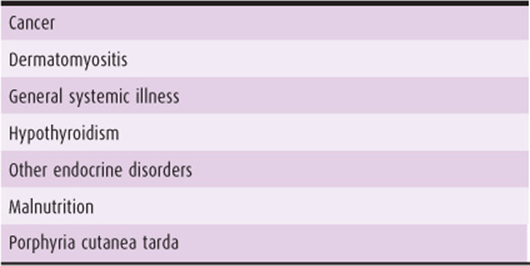
Hypertrichosis is a generalized excessive hair overgrowth occurring on the trunk and hands and not localized to the androgen-dependent areas of the skin. Although the mechanisms of hypertrichosis are poorly defined, it is not thought to be an androgen-dependent process. There are 2 distinct types of hypertrichosis: generalized hypertrichosis, which occurs over the entire body, and localized hyper-trichosis, which is restricted to a certain locations, such as on the extremities, the head, and the back. Hypertrichosis may also be either congenital or, more commonly, acquired later in life. Congenital forms of hypertrichosis are X-linked dominant traits. Causes of acquired hypertrichosis include cancer metabolic disorders, anorexia, thyroid disorders, and most commonly drugs or chemicals such as oral phenytoin, diazoxide, minoxidil, and cyclosporine. Acquired generalized hypertrichosis can be obtained through cancer. The hair that grows due to this condition is known as malignant down.
G. Etiology
The goal of working up selected hirsute women is to attempt to determine the specific etiology and to provide a baseline in case it becomes necessary to reassess the patient because of progression of the disorder. Table 55–1 details the ovarian, adrenal, and iatrogenic causes of hirsutism, whereas Table 55–2 details the etiology of hypertrichosis.
Table 55–1. Differential diagnosis of hirsutism.
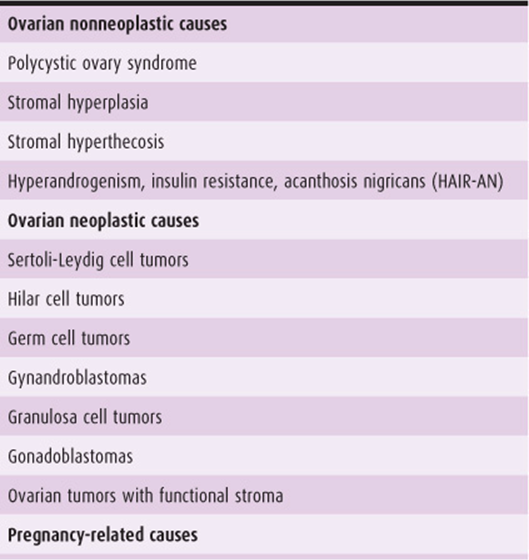
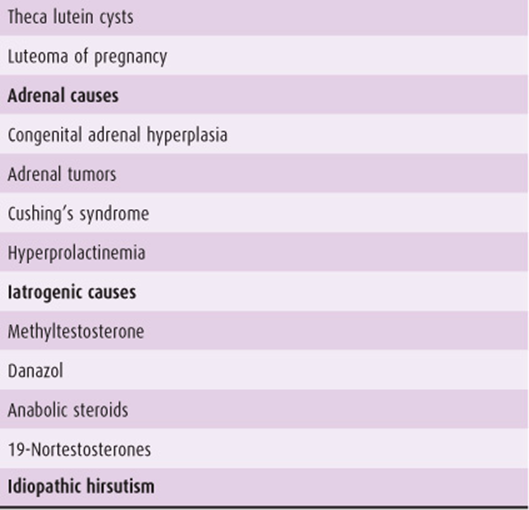
Table 55–2. Etiology of hypertrichosis.
Prevention
Hirsutism is generally not a preventable condition; thus most causes of hirsutism are beyond a woman’s control. Patients should be advised to avoid unnecessary medicines known to cause hirsutism, control obesity, and prevent insulin resistance.
Clinical Findings & Diagnosis
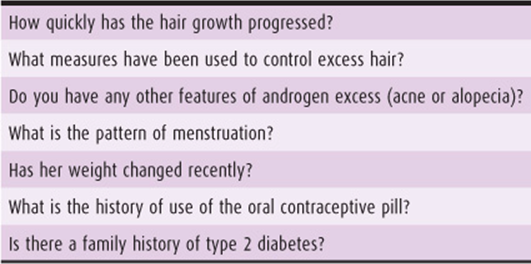
It is important to define the age of onset and to correlate it to puberty. Important aspects of history of hirsute patients are detailed in Table 55–3.
Table 55–3. Important aspects of the patient history.
A. Symptoms & Signs
Examination should assess the distribution of excess hair. Weight and height are measured to calculate body mass index (BMI). Physical examination should search for acanthosis nigricans, representing insulin resistance. Signs of virilization, such as clitoromegaly, male pattern balding, deepening voice, or decreased breast size, should be assessed. The Ferriman–Gallwey grading system (Fig. 55–1) system provides a subjective determination of severity of hirsutism. It is especially useful to determine treatment effectiveness and for research purposes. Hair growth is rated from 0 (no growth of terminal hair) to 4 (complete and heavy cover) in 9 locations, giving a maximum score of 36. The 9 locations measured are the upper lip, chin, chest, upper back, lower back, upper abdomen, lower abdomen, the upper arms, and the thighs. In white women, a score of 8 or higher is regarded as indicative of androgen excess. With other ethnic groups, the amount of hair expected for that race should be considered.
This rating scale has since been modified by the American Association of Clinical Endocrinologists to include a total of 19 locations, with the 10 extra locations being sideburns, neck, buttocks, inguinal area, perianal area, forearm, leg, foot, toes, and fingers. Each area has its own specified definition of the 4-point scale.
B. Psychologic Dysfunction
Cystic acne, hirsutism, and alopecia can have a devastating psychosocial effect in young girls and women of reproductive age. These manifestations may be associated with severe anxiety and depression. The occurrence of obesity in conjunction with hyperandrogenism can have a further negative effect on self-esteem and self-image. The fear of social rejection can make some women reclusive and may retard development of their social skills and confidence. Correction of the underlying pathophysiologic condition can help ameliorate the psychologic dysfunction.
C. Laboratory Findings
Measurement of serum testosterone concentrations helps identify the occasional case of severe androgen excess that needs further investigation, but it is not essential in women with a clearly benign presentation, especially as testosterone assays perform poorly in the female range. According to current guidelines, testosterone measurement is needed only for women with moderate to severe hirsutism, when other symptoms of polycystic ovary syndrome (PCOS) are present, or when there is rapid progression of hirsutism or other signs of virilization. Obese women with PCOS, particularly those with a family history of type 2 diabetes, should be assessed for metabolic syndrome with an oral glucose tolerance test and cholesterol profile. The value of laboratory tests for mild to moderate hirsutism is not proven. The investigation of severe cases should include free and total testosterone levels, prolactin, LH, and FSH. Obese patients with PCOS could benefit from glucose tolerance tests and cholesterol levels.
D. Imaging Studies
Sonographic scan of the ovaries is important in the evaluation of PCOS. Computerized tomography (CT) of the adrenal glands should be performed only when a high index of suspicion of tumor exists, especially when hair growth is sudden and heavy.
Differential Diagnosis of Excessive Hair Growth
Because some excess hair results from medical disorders, it is important to distinguish excess hair that is the result of an underlying medical problem from hair growth that is simply a cosmetic concern. Underlying medical problems of hirsutism and hypertrichosis are detailed in Tables 55–1 and 55–2, respectively.
Excessive growth of sexual hair may be due to excessive androgen production, increased sensitivity of the hair follicle to androgens, or increased conversion of weak androgens to potent androgens. Potential sources of increased androgens include the ovaries, the adrenal glands, exogenous hormones, and other medications.
Figure 55–2 provides an approach to the workup for hyperandrogenism that depends on both assessing the degree of hirsutism and elucidating risk factors for PCOS, virilizing disorders, androgenic medications, and other endocrinopathies.
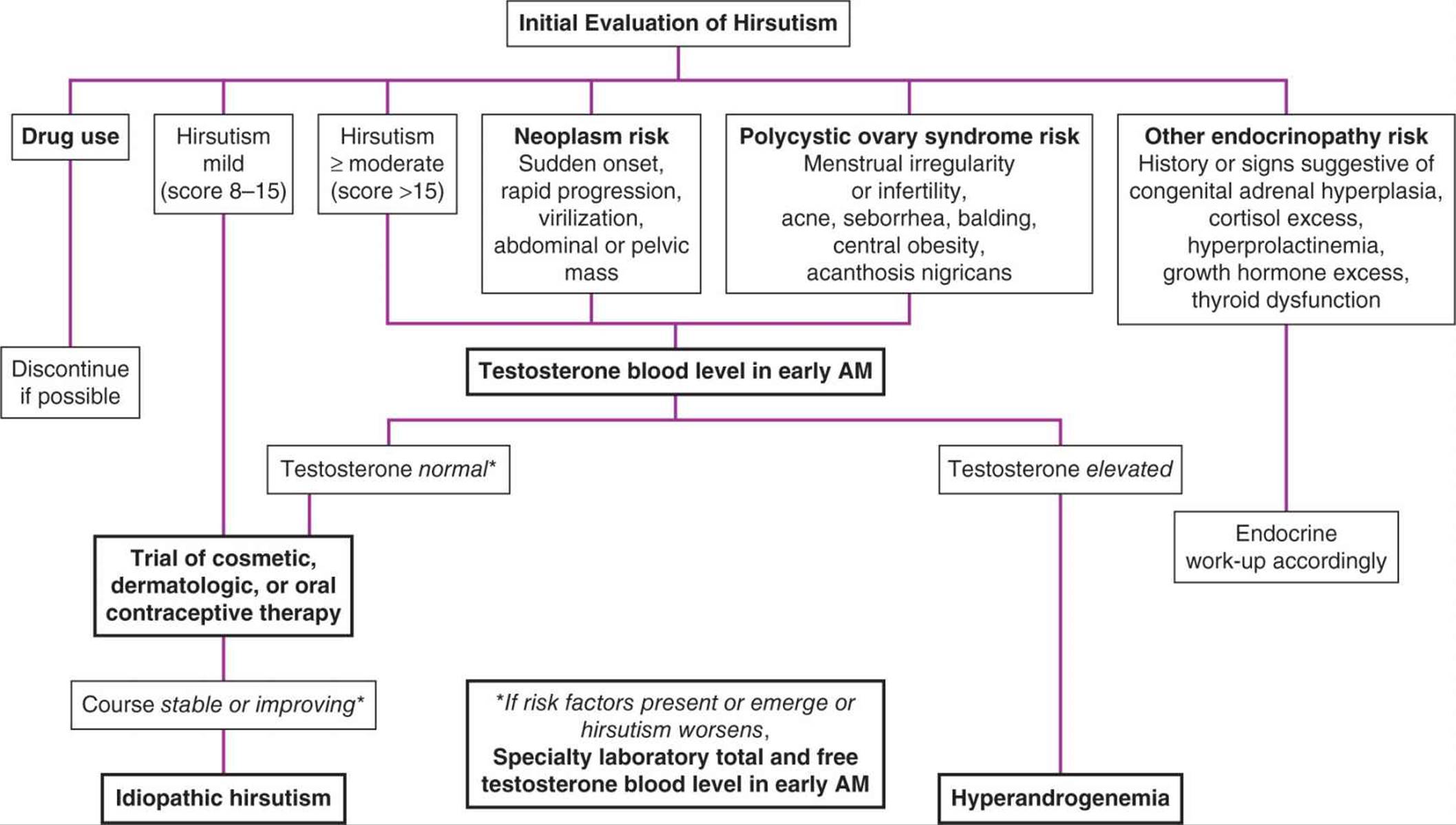
Figure 55–2. Suggested algorithm for the initial evaluation of hirsute women for hyperandrogenism. Risk assessment includes more than the degree of hirsutism. Medications that cause hirsutism include anabolic or androgenic steroids (consider in athletes and patients with endometriosis or sexual disfunction) and valproic acid (consider in neurologic disorders). If hirsutism is moderate or severe or if mild hirsutism is accompanied by features that suggest an underlying disorder, elevated androgen levels should be ruled out. Disorders to be considered, as shown, include neoplasm and various endocrinopathies, of which polycystic ovarian syndrome (PCOS) is the most common. Plasma testosterone should be rechecked in the early morning on day 4–10 of the menstrual cycle in regularly cycling women, the time for which norms are standardized. Plasma total testosterone should be rechecked along with free testosterone in a reliable laboratory if the plasma total testosterone is normal in the presence of risk factors or progression of hirsutism on therapy. Simultaneous assay of 17-hydroxyprogesterone may be indicated in subjects at high risk for congenital adrenal hyperplasia. A small minority of women initially diagnosed with idiopathic hirsutism by this algorithm will later be found to have otherwise asymptomatic idiopathic hyperandrogenism or previously unsuspected infertility as their only noncutaneous manifestation of PCOS. (Data from Rosenfeld RL. N Engl J Med 2005; 353:2578–2588.)
A. Ovarian Neoplastic Disorders Causing Hirsutism
Androgen-secreting ovarian neoplasms usually present with rapidly developing hirsutism, amenorrhea, and virilization and are rare causes of hirsutism. The most common androgen secreted by these tumors is testosterone, with serum testosterone levels usually in excess of 200 ng/dL. Most hormone-secreting neoplasms are palpable on pelvic examination and are unilateral.
1. Sertoli-leydig cell tumors and hilar (leydig) cell tumors—These are ovarian neoplasms typically associated with hirsutism and virilization. Sertoli-Leydig cell tumors constitute <0.5% of all ovarian tumors and occur mainly in young, menstruating females. Hilar cell tumors are rare neoplasms and are usually encountered in older women. Their presentation is often more indolent and less dramatic than that of Sertoli-Leydig cell tumors. Other ovarian neoplasms that may be associated with hirsutism are the gynandroblastomas, germ cell tumors, granulosa cell tumors, and gonadoblastomas. The latter occur mainly in male patients, with gonadal dysgenesis and resultant female phenotypes.
2. Ovarian tumors with functional stroma—Ovarian tumors with functional stroma are categorized as germ cell tumors containing syncytiotrophoblast cells and idiopathic and pregnancy-related tumors. In these tumors, the neoplastic cells do not secrete steroid hormones directly, but stimulate secretion by the ovarian stroma either within or immediately adjacent to the tumor. These tumors have been described in essentially all tumors that occur in the ovary, whether benign or malignant, metastatic or primary.
B. Ovarian Nonneoplastic Disorders Causing Hirsutism
PCOS, the most common cause of hirsutism, is typically associated with menstrual irregularities, infertility, and obesity. Histologic changes seen in PCOS include a thickened ovarian capsule and numerous follicular cysts surrounded by a hyperplastic, luteinized theca interna. The pathophysiology of this disease is not fully understood; proposed causes include ovarian dysregulation, a disturbance of the hypothalamic–pituitary axis, adrenal androgen excess, and increased insulin resistance. Regardless of the underlying defect, the degree of hyperandrogenism and the individual’s sensitivity to androgens may result in the complaint of hirsutism in 80% of these patients.
Other nonneoplastic ovarian disorders associated with hirsutism include stromal hyperplasia and stromal hyper-thecosis. Stromal hyperplasia results in the hypersecretion of androgens from hypertrophic ovaries. It has a peak incidence between 60 and 70 years of age and is usually associated with uniform enlargement of both ovaries. Stromal hyperthecosis is a proliferation of stroma with foci of luteinized thecal cells and also results in bilateral ovarian involvement. It frequently results in the clinical manifestations of virilism, obesity, hypertension, and disturbances of glucose metabolism, with most patients showing histologic evidence of concurrent stromal hyperplasia. A syndrome known as hyperandrogenism, insulin resistance, acanthosis nigricans (HAIR-AN) has also been described; however, this is thought to most likely represent a variation of one of the nonneoplastic disorders, rather than denoting a separate disease entity.
C. Pregnancy-Related Disorders
During pregnancy, elevated androgen levels that lead to severe hirsutism and virilization may be due to any of the previously mentioned conditions; however, pregnancy-specific disorders also exist.
1. Theca lutein cysts (Hyperreactio Luteinalis)—These are benign neoplasms that can cause bilateral ovarian enlargement, hirsutism, and, infrequently, virilization. These cysts occur almost exclusively in pregnancy and have an increased incidence in pregnancies complicated by gestational trophoblastic disease. Ovarian biopsy reveals cysts lined mostly with luteinized theca cells, but luteinized granulosa cells may also be present. Typically, resolution of the cysts occurs after pregnancy.
2. Luteoma of pregnancy—Is a benign human chorionic gonadotropin (hCG)–dependent ovarian tumor that may develop during pregnancy. High levels of testosterone and androstenedione are present, and virilization may occur in up to 25% of affected mothers and 65% of female fetuses. In most patients, spontaneous regression of the neoplasm and return of androgen levels to normal occur in the postpartum period.
D. Adrenal Disorders Causing Hirsutism
1. Enzyme deficiencies—Enzyme deficiencies affecting adrenal and ovarian steroidogenesis represent the second most common cause of hyperandrogenism in postmenarchal females, and congenital adrenal hyperplasia (CAH) represents the most common disorder in this group. CAH is inherited as an autosomal recessive trait, and is present in 1–5% of women who complain of hirsutism. It results from mutations in enzymes required for adrenal steroidogenesis. The most common form of CAH is characterized by a deficiency of 21-hydroxylase, with case reports of similar occurrences in patients with 3β-hydroxysteroid dehydrogenase and 11β-hydroxylase deficiencies. These defects prohibit cortisol synthesis from its precursor 17β-hydroxyprogesterone. The expectant decrease in serum cortisol stimulates pituitary secretion of ACTH in an effort to normalize cortisol levels. Higher levels of ACTH stimulate adrenal production of intermediates in the biosynthetic pathway of cortisol. Consequently, these intermediates cannot be used for cortisol production because of enzyme defects and are instead shunted into the biosynthetic pathways for androgens, with resultant increases in testosterone and androstenedione. Classical CAH is usually diagnosed in females during the neonatal period because of androgen-induced ambiguous genitalia (pseudohermaphroditism); however, a minor enzyme deficiency termed acquired, adult-onset CAH may go unrecognized until puberty, when hirsutism, amenorrhea, and virilization may occur. CAH causes severe hirsutism if adherence to glucocorticoids is poor. Late-onset CAH is important to exclude in hirsute women wishing to conceive. Glucocorticoids are the treatment of first choice during periconception.
2. Adrenal neoplastic disorders—Adrenal tumors are a rare cause of hirsutism, although when present, symptoms may be acute and quite severe. The main androgen produced by adrenal neoplasms is DHEAS, with serum levels usually >700–800 μg/dL. Rarely, adrenal neoplasms may secrete testosterone; when this occurs, testosterone values are usually higher than 200 ng/dL.
3. Cushing’s syndrome—Cushing’s syndrome and the associated overproduction of cortisol may increase androgen levels and cause hirsutism. The syndrome has 3 known etiologies: (1) adrenal tumor, (2) ectopic production of ACTH by a nonpituitary tumor, or (3) excess production of ACTH by the pituitary (Cushing’s disease). Because androgens are formed from intermediates in the synthesis of cortisol, increased serum and tissue levels of cortisol and its intermediates may result in hyperandrogenism and clinically present as hirsutism, regardless of the underlying cause of this syndrome.
4. Other causes—Hyperprolactinemia has been shown to produce mild hirsutism. Several investigators have reported increased DHEAS levels with hyperprolactinemia. This likely results from adrenal stimulation after prolactin binds to its numerous receptors on the adrenal gland. Despite increased androgen secretion, clinical manifestations are mild or absent, due to the inhibitory effects of prolactin on the conversion of testosterone to dihydrotestosterone (DHT) and its metabolites.
The adrenal gland may be the source of excess androgen production in the absence of an identifiable cause. The cause of this adrenal hyperactivity is not clear, but mild enzyme deficiencies, stress, and hyper-functioning of the entire adrenal gland have been postulated as probable causes.
E. Iatrogenic Mechanisms Causing Hirsutism
Exogenous sources of androgens should also be considered as possible causes of hirsutism. Methyltestosterone, danazol, and anabolic steroids such as oxandrolone may lead to excessive hair growth. The 19-nortestosterones in low-dose oral contraceptives rarely cause hirsutism or acne.
1. Idiopathic hirsutism—Hirsutism that occurs without adrenal or ovarian dysfunction, in patients with normal menstrual cycles and in the absence of any exogenous source of steroid hormones is termed idiopathic hirsutism. The term idiopathic hirsutism is thought to be a misnomer, since a likely cause has been elucidated. When normal levels of testosterone, unbound testosterone, DHEAS, dihydrotestosterone, and androstenedione are present, increased 5α-reductase enzyme activity appears to be the major mechanism of action. This enzyme converts testosterone to the more potent dihydrotestosterone in the hair follicle. Many patients with idiopathic hirsutism have an elevated level of plasma 3α-androstanediol glucuronide, a metabolite of dihydrotestosterone, thought to reflect the increased peripheral androgen metabolism, which is responsible for the clinical manifestation of hirsutism.
In summary, hirsutism may result from an ovarian disorder, an adrenal disease, an iatrogenic cause, or an increase in peripheral androgen metabolism. Rarely, other endocrinologic disturbances such as hypothyroidism or acromegaly may be associated with excessive hair growth. An important clinical correlation is that hirsutism may be accompanied by infertility as a result of the underlying abnormality. Because infertility may be the inciting factor triggering a patient to seek medical care, questions regarding a history of hirsutism should be a part of any infertility workup.
Treatment
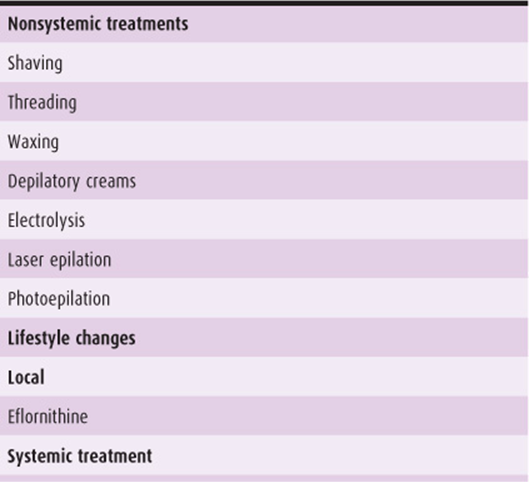
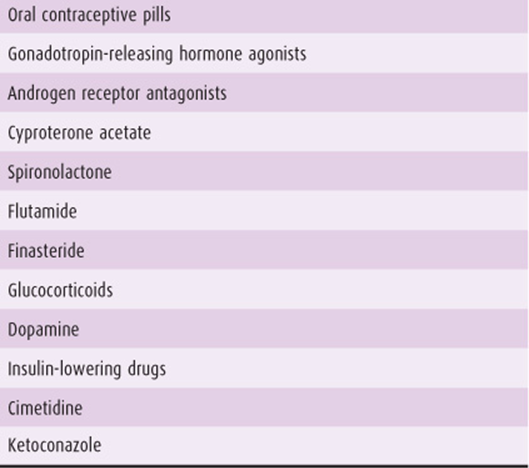
The overall quality of primary evidence of the relative efficacy of treatments for hirsutism is weak and is based on small studies of short duration that lack quality-of-life outcomes. Recently, however, systematic reviews have amalgamated this evidence, and new guidelines are now available (Table 55–4). It should be explained that hair grows in cycles. Thus it can take months for an individual hair follicle to proceed through catagen, anagen, and telogen phases.
Table 55–4. Treatment of hirsutism.
A. Lifestyle Changes
Lifestyle changes that promote weight loss through diet and physical exercise are useful in obese patients. Obesity is present in 60% of patients with PCOS, the most common form of hirsutism and hyperandrogenism. Weight loss in patients with hyperandrogenism, with or without the clinical presence of PCOS, should be the first therapeutic option because it decreases androgen levels, increases SHBG, and may restore ovulation. As little as a 7% reduction in body weight can restore fertility, decrease hirsutism, and improve the response to induction of ovulation. Lifestyle measures that promote weight loss through diet and exercise are of paramount importance because obesity has an adverse effect on the outcome of all systemic treatments.
B. Medical
1. Local—Eflornithine, a topical agent, is an irreversible inhibitor of ornithine decarboxylase, an enzyme that catalyzes the rate-limiting step for follicular polyamine synthesis, which is necessary for hair growth. Eflornithine hydrochloride cream 13.9% (Vaniqa) is approved in many countries for the treatment of unwanted facial hair in women. Eflornithine does not remove hair but acts to reduce the rate of hair growth.
A large sponsored randomized trial showed a 26% reduction in facial hair after 24 weeks of treatment, with most of the benefit achieved in 8 weeks. Nevertheless, Endocrine Society Clinical Practice Guideline recommends against the use of topical antiandrogen therapy.
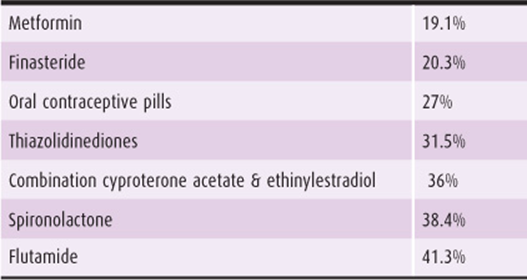
2. Systemic treatment—Systemic treatment reduces stimulation of the anagen growth phase by testosterone. Thus enough follicles have to pass through anagen before a clinical effect is observed. The goal of treatment is to find the lowest effective dose of treatment that maintains the benefit gained in the first phase of treatment. For all pharmacologic therapies for hirsutism a trial of at least 6 months should be conducted before making changes in dose, changing medication, or adding medication. Medical suppression of hirsutism is detailed in Table 55–5.
Table 55–5. Suppression of hirsutism over baseline over 6 months compared with placebo.
3. Oral contraceptive pills—The primary driver of ovarian androgen secretion is LH, which can be suppressed using a combined oral contraceptive pill. The effectiveness of oral contraceptives in suppressing hirsutism will depend on the content of ethinylestradiol (20–35 μg) and on the nature of the progestogen. Pills containing progestogens with antiandrogenic properties, such as cyproterone acetate and drospirenone found in Diana and Yasmin, respectively, are effective in hirsutism. Pills containing levonorgestrel and norethisterone are more androgenic and could potentially exacerbate hirsutism. Third-generation progestogens such as desogestrel or gestodene have relatively neutral androgenic effects, and oral contraceptives containing these compounds can usefully be combined with an antiandrogen such as spironolactone. Only 1 small randomized controlled trial has compared different oral contraceptive pills, and current guidelines do not recommend one specific pill for treating hirsutism.
4. Gonadotropin-releasing hormone agonists—Severe hirsutism of ovarian origin can sometimes be treated by gonadotropin-releasing hormone (GnRH) analogues. GnRH analogs inhibit the secretion of gonadotropins from the pituitary gland, thereby inhibiting the secretion of androgens and estrogens from the ovary. Although GnRH agonists acutely stimulate ovarian production of androgens and estrogens, continued therapy causes a sustained decrease in ovarian steroid production compared with pretreatment levels. This suppression continues for the duration of GnRH agonist therapy. Significant decreases in serum levels of estradiol, testosterone, and androstenedione occur during treatment, although adrenal androgens are usually unaffected.
As a result of the hypoestrogenism associated with ongoing GnRH therapy, a potential risk of osteoporosis and menopausal symptoms exists with long-term therapy. However, concomitant use of estrogen and progesterone replacement therapy may counteract the adverse effects. Newer studies suggest that spironolactone may also simulate this effect.
Most studies have shown greater improvement of hirsutism with the use of GnRH agonists alone or in combination with oral contraceptives as compared with combination oral contraceptives alone; however, some studies show comparable efficacy. Endocrine society guidelines suggest against using GnRH agonists except in women with severe forms of hyperandrogenemia, such as ovarian hyperthecosis, who have a suboptimal response to oral contraceptive pills and antiandrogens.
5. Androgen receptor antagonists—In a proportion of women, ovarian suppression alone may not be sufficient, and antiandrogens will need to be added. Patient-important hirsutism that remains despite ≥6 months of monotherapy with an oral contraceptive justify combination therapy by adding an antiandrogen.
Antiandrogens are efficacious for treating hirsutism. There are 4 androgen receptor antagonists currently being used for the treatment of hirsutism. Despite proven efficacy in numerous clinical trials, none of these drugs has been approved by the US Food and Drug Administration for this indication. Additionally, similar reported efficacy has been reported with all of these medications. Hence the agent of choice should be dictated by the individual’s response, reported side effects, and known contraindications. All antiandrogens, and particularly finasteride, are potentially teratogenic, so some clinicians prescribe them only to women using reliable contraception.
A. CYPROTERONE ACETATE—This potent agent was the first androgen receptor antagonist used to treat hirsutism and is widely prescribed in Europe to treat hirsutism. Antiandrogenic effects result from competitive displacement of dihydrotestosterone from its receptor and reduction of 5α-reductase activity in the skin. Progestational activity results in gonadotropin suppression with subsequent suppression of ovarian testosterone secretion. Cyclical administration of 50–100 mg on days 1–10 of the menstrual cycle combined with oral estrogen on days 1–21 produces therapeutic levels. More prolonged use tends to induce amenorrhoea because of its progestogenic properties. This method counters hypoestrogenism and irregular bleeding and prevents pregnancy and the potential teratogenic complications that may result. Although effective in 50–75% of hirsute women, significant side effects include decreased libido, mental depression, and hepatotoxicity, which is rarely seen when cyclic administration is performed. Clinical studies have shown efficacy equivalent to that of spironolactone, with the latter showing fewer side effects (see next section). Currently, cyproterone acetate is not available in the United States.
B. SPIRONOLACTONE—Spironolactone, an aldosterone antagonist traditionally used as a diuretic in the treatment of hypertension, is also used to treat hirsutism. Cochrane review showed that spironolactone can effectively suppress hirsutism. It possesses antiandrogenic properties and exerts its peripheral antiandrogenic effects in the hair follicle by competing for androgenic receptors and displacing dihydrotestosterone at both nuclear and cytosol receptors. It also lowers testosterone levels by inhibiting the cytochrome P450 monooxygenases that are required for biosynthesis of androgens in gonadal and adrenal steroid-producing cells. Serum levels of SHBG, DHEAS, and DHEA are unaltered by treatment with spironolactone. The dosage used for treatment of hirsutism is between 50 and 200 mg/d. Serum androgen levels will drop within a few days of the start of treatment, and a clinical response can usually be seen within 2–5 months. Side effects include fatigue, transient diuresis, polydipsia, menorrhagia or unscheduled menstrual bleeding, gastro-intestinal bleeding and breast tenderness, but no long-term problems have been encountered. Its anti-mineralocorticoid and diuretic properties are rarely prominent in young women. Because spironolactone is a potent antiandrogen, all women using it should use effective contraception. Nevertheless, women taking spironolactone should be sent for periodic screening of potassium level to identify hyperkalemia.
C. FLUTAMIDE—Flutamide is a potent, highly specific, nonsteroidal antiandrogen with no intrinsic hormonal or antigonadotropin activity. Although the exact mechanism of action is unknown, it competitively inhibits target tissue androgen receptor sites. Recent studies suggest that 250 mg 1–3 times daily is a highly effective treatment for moderate to severe hirsutism. Side effects include decreased appetite, amenorrhea, decreased libido, or dry skin. A rare but serious reported side effect is hepatotoxicity. Consequently, flutamide is usually reserved for resistant cases of hirsutism, and liver enzymes should be checked regularly in patients who are taking the drug. Additionally, because of possible teratogenic effects, contraception must be used with this therapy. Endocrine Society Clinical Practice Guideline recommends against flutamide for the treatment of hirsutism.
D. FINASTERIDE—If additional treatment is needed, then finasteride would be a sensible option because it has a different mode of action. Finasteride is the newest antiandrogenic agent used for hirsutism. It is a selective type 2 5α-reductase inhibitor that blocks the conversion of testosterone to dihydrotestosterone. It has proven efficacy in up to 86% of patients with a subjective improvement rate of 21–45% when 5 mg is administered orally over 3 months to 1 year. Side effects at this dosage are usually mild or absent and include headaches, transient gastrointestinal upset, and an unexplained increase in total testosterone.
6. Glucocorticoids—Dexamethasone is used mainly to treat hirsutism in patients with hyperandrogenism of adrenal origin. Chronic low-dose dexamethasone, 0.5–1 mg orally taken at bedtime, will provide adequate adrenal androgen suppression. Diminution of hair growth is reported in 16–70% of patients. Glucocorticoid therapy has fallen out of favor due to frequent side effects, potential for adrenal suppression, and evidence that these agents are less effective than antiandrogens, even when there is a clear adrenal cause of hyperandrogenism. However, their use may be justified in some patients, as recent data suggest that concomitant use of glucocorticoids with GnRH agonists may prolong the disease-free interval when therapy is discontinued. Moreover, glucocorticoids are the treatment of choice to decrease ACTH levels and thereby decrease formation of androgenic precursors of cortisol for patients with CAH.
7. Dopamine—Dopamine is a centrally acting inhibitor of prolactin secretion and is frequently used in the treatment of hyperprolactinemia. Recently, hirsutism scores were shown to decrease significantly during dopamine treatment of hyperandrogenic women with hyperprolactinemia.
8. Insulin-Lowering Drugs—Insulin, which acts as a co-gonadotrophin and amplifies LH-induced testosterone production, is a secondary driver of ovarian androgen secretion. Troglitazone, an insulin-sensitizing agent of the thiazolidinedione class, results in a decrease in androgen level in patients with polycystic ovarian syndrome. Additionally, it has been shown that the administration of 600 mg/d results in improvement of hirsutism in this population. Endocrine Society Clinical Practice Guideline recommends against the use of insulin-lowering drugs for the treatment of hirsutism.
Conveniently, women for whom suppression of LH is not possible (eg, obese women who should not take the oral contraceptive pill because of the risk of thrombosis) are often the very women for whom suppression of insulin is most effective. Nevertheless, insulin sensitizers are of limited use as sole treatment for hirsutism.
9. Cimetidine—Cimetidine, an H2-receptor antagonist, has weak antiandrogenic properties. Recent studies show minimal or no beneficial effect in hirsutism.
10. Ketoconazole—Ketoconazole is a synthetic imidazole derivative that blocks adrenal and gonadal steroidogenesis; it has been advocated by some as a treatment for hirsutism. However, serious side effects result in poor compliance and preclude long-term use. Its use should be avoided because safer therapeutic regimens exist.
C. Mechanical Therapy
The goal of mechanical therapy is to limit new hair growth without affecting existing hair. For this reason, mechanical depilators such as lasers, electrolysis devices, creams, and waxes are often used as supplemental therapy (Table 55–4). Recent technology has made this procedure faster, easier, less painful, and generally free of any serious adverse effects. Many women will be familiar with routine methods of hair removal such as shaving, threading, waxing, and using depilatory creams and can be reassured that these methods do not exacerbate hair growth. Electrolysis and laser epilation or photoepilation are also widely available. A review of 11 trials of laser and light-assisted hair removal in 444 patients showed a 50% reduction in hair over 6 months but noted that the long-term efficacy of these treatments is not well established. Laser treatment is less effective in darker skin because a contrast is needed between skin and hair pigments, but some types of photoepilation can be of benefit patients with for darker skin.
D. Surgical Treatment
In the minority of hirsute patients in whom a specific cause can be identified, therapy should be directed toward the underlying disorder. For example, ovarian and adrenal tumors should be surgically excised. Additionally, women with Cushing’s disease are treated with transsphenoidal pituitary microsurgery. Alternatively, when Cushing’s syndrome is caused by an adrenal tumor, simple adrenalectomy is sufficient. Finally, acromegaly can be treated by transsphenoidal hypophysectomy. For persistent disease, bilateral adrenalectomy or pituitary irradiation is appropriate.
Similarly, a minority of older women may fail to respond to medical management for hyperthecosis despite good compliance. For these women, bilateral oophorectomy may be justified as definitive therapy.
Although wedge resection of the ovary has been successfully used to induce ovulation, it is not recommended for the treatment of hirsutism. This surgical procedure exposes patients to the risks of both anesthesia and possible formation of adhesions. More importantly, this procedure results in only a transient decrease in androgen levels and has successfully reduced the rate of hair growth in only 16% of patients. Wedge resection should not be used as a treatment for hirsutism.
Prognosis
Prognosis for women with hirsutism, hypertrichosis, and precocious sexual hair development depends on the underlying conditions leading to these physical findings, early appropriate evaluation, and appropriate treatment.
A. Follow-up
The success of treatment is usually based on subjective assessment, and clinicians should not contribute to unrealistic expectations of effectiveness. Patient expectations should be discussed, as even compliant patients should expect no more than 25% reduction in hair growth using systemic treatment. Some patients see no benefit, and some are resistant to any systemic treatment.
Women with mild hirsutism may not notice much benefit, and some women will prove resistant to all treatments. Psychologic interventions may be useful for women with unsatisfactory outcomes, but no trials have assessed the effectiveness of such interventions specifically for hirsutism. Testosterone measurements can be misleading because oral contraceptives cause a rise in SHBG, which results in an increase in the total blood testosterone concentration. No specific guidelines exist for monitoring long-term treatments, but it seems logical to measure liver function in users of cyproterone acetate; plasma potassium, liver function, and renal function in users of spironolactone; and vitamin B12 concentrations in users of metformin (which is associated with low concentrations of this vitamin).
In conclusion, hirsutism is a common problem, the effect of which is often underestimated. Various treatment options are available, which—when used in logical combinations and tailored to the individual’s clinical profile—can achieve good results in most cases.
Azziz R, Carmina E, Sawaya ME. Idiopathic hirsutism. Endocr Rev 2000;21:347–362. PMID: 10950156.
Paus R, Cotsarelis G. The biology of hair follicles. N Engl J Med 1999;341:491–497. PMID: 10441606.
Deplewski D, Rosenfield RL. Role of hormones in pilosebaceous unit development. Endocr Rev 2000;21:363–392. PMID: 10950157.
Ferriman DM, Gallwey JD. Clinical assessment of body hair growth in women. J Clin Endocrinol 1961:21:1440–1447.
Goodman N, Bledsoe M, Cobin R, et al. American Association of Clinical Endocrinologists medical guidelines for the clinical practice for the diagnosis and treatment of hyperandrogenic disorders. Endocrine Pract2001;7:120–134. PMID: 12940239
Koulouri O, Conway GS. A systematic review of commonly used medical treatments for hirsutism in women. Clin Endocrinol 2008;68:800–805. PMID: 17980017.
Martin KA. Evaluation and treatment of hirsutism in premenopausal women: an endocrine society clinical practice guideline. J Clin Endocrinol Metab 2008;93:1105–1120. PMID: 18252793.
Yildiz BO. Assessment, diagnosis and treatment of a patient with hirsutism. Nat Clin Pract Endocrinol Metab 2008; 4:294–300. PMID: 18332896.