David A. Caro
Stephen Bush
Introduction
Pretreatment refers to the administration of drugs 3 minutes before the paralysis step of rapid sequence intubation (RSI) in order to diminish adverse effects of laryngoscopy and intubation for certain patients. This concept is based on analysis of the effects of airway manipulation on intracranial pressure (ICP), circulating catecholamines, and bronchial reactivity, among others. The timing of pretreatment agents and a brief overview of their use are provided in Chapter 3. This chapter discusses the effects and mitigation of the various pathophysiological effects of intubation.
During intubation, laryngoscopy and tracheal intubation stimulate sympathetic and parasympathetic nerves innervating the hypopharynx, larynx, and trachea, resulting in a number of predictable physiological responses. In adults, systemic catecholamines are released, causing an increase in mean heart rate (approximately 30/minute), an increase in the mean arterial blood pressure (approximately 20–25 mm Hg), and resultant increases in arterial wall shear stress. Bradycardia, particularly in younger (<1 year old) children, can occur as a manifestation of monosynaptic, parasympathetic reflexes. Laryngoscopy and endotracheal intubation can also cause a rise in ICP, believed to be due to increased oxygen demand resulting from a stimulation or arousal response of the cerebral cortex. Respiratory responses include upper airway reflexes leading to coughing or laryngospasm and lower airway bronchospasm leading to an increase in mean airway pressure.
The mechanisms behind these responses are believed to include 9th and 10th cranial nerves, with stimulation of the brainstem and spinal cord resulting in either sympathetic or parasympathetic stimulation. Sympathetic activation releases norepinephrine from adrenergic nerve terminals and epinephrine from the adrenal glands. The subsequent elevation in blood pressure may be exacerbated by activation of the renin-angiotensin system. Parasympathetic activation can result in bronchoconstriction and airway protective reflexes (cough). The impact on patient outcomes is not clear, but these reactions could worsen the various pathophysiological conditions that mandate the intubation or are present as complicating comorbidities.
A wide variety of pharmacological agents have been studied in an attempt to identify agents that can blunt these reflexes in both elective and emergency airway management. Those most commonly discussed in the emergent setting include lidocaine (lignocaine, Xylocaine), ultra–short-acting opioids such as fentanyl (Sublimaze) and its derivatives, atropine, and defasciculating doses of neuromuscular blocking agents. Of these, lidocaine and the ultra–short-acting opioids have had the most evaluation. Although these drugs may be helpful when given prior to intubation in both elective and emergency airway management, data collection in the setting of emergency RSI is difficult, and so few formal studies have examined the ability of the drugs to mitigate responses or improve outcome in the context of emergency RSI. In previous editions of this manual, we recommended the LOAD mnemonic for pretreatment of emergency patients undergoing RSI. This mnemonic was intended to cue the use of lidocaine, opioid (fentanyl), atropine, and defasciculation in appropriate patients. Based on systematic analysis of prior and new evidence, and direct observation of physicians and other providers applying this mnemonic in thousands of simulated adult and pediatric cases as part of The Difficult Airway Course: Emergency and The Difficult Airway Course: Anesthesia, we have substantially updated our recommendations for pretreatment agents for emergency RSI, the agents to be used, and the patient populations to which they apply (Table 17-1).
Lidocaine blunts reflexive rises in ICP during intubation, and mitigates reactive increases in small and medium-size airways resistance in patients with reactive airways disease who are undergoing intubation. Fentanyl and other ultra–short-acting opioids have been reported to blunt reflexive sympathetic stimulation to laryngoscopy in a dose-related fashion. Control of this sympathetic response reduces the magnitude of the rise in ICP, which can occur as a result of blood pressure increases during laryngoscopy and intubation. Similarly, patients at risk from the adverse effects of a sudden rise in blood pressure, myocardial oxygen demand, or cardiac force of contraction may benefit from reduction of this sympathetic discharge. For example, patients with coronary artery disease; neurovascular events, such as intracranial hemorrhage; or major vascular disease, such as aortic dissection, ideally should not be exposed to the effects of a sudden and significant release of catecholamines.
|
Table 17.1 Pretreatment Agent Summary |
|||||||||||||||||||||
|
We no longer advocate the routine use of atropine, which was formerly recommended to prevent bradycardia in children 10 years of age or younger receiving succinylcholine. Our current recommendation in this regard is to administer atropine only if necessary to treat bradycardia when it occurs (after excluding hypoxia as a possible cause). Empiric administration of atropine to children under 1 year old who will be receiving succinylcholine is considered a reasonable (optional) practice (see Chapter 20). Similarly, we formerly recommended defasciculation with a small dose of a competitive neuromuscular blocking agent before succinylcholine was given to patients with suspected elevated ICP. Our current recommendation is that defasciculation not be considered a routine part of emergency RSI. In summary, with respect to atropine and defasciculating drugs, we do not believe that there is sufficient evidence to support a continued recommendation for the routine use of either of these agents.
Lidocaine
Lidocaine functions by blocking fast sodium channels in neurons, stopping their ability to depolarize and carry signals. It is an amide anesthetic that is metabolized in the liver and excreted in the urine. A single intravenous (IV) dose does not require adjusting in renal failure patients.
IV lidocaine is absolutely contraindicated in patients with amide anesthetic allergy and in patients with severe heart block or bradycardia unless a pacemaker has been placed. Lidocaine can worsen hypovolemic and cardiogenic shock, and is also relatively contraindicated in Wolff-Parkinson-White syndrome. Box 17-1 shows the drugs for which severe drug interactions have been reported with lidocaine.
BOX 17-1 Severe Drug–Drug Interactions for Lidocaine
Dofetilide (class III antiarrhythmic)—can cause arrhythmias
Monoamine oxidase inhibitors—can cause hypotension
Amiodarone—can cause bradycardia (other antiarrhythmics may also cause additive effects)
Adverse effects include rare central nervous system (CNS) toxicity (seizures, coma) and cardiac conduction abnormalities (severe bradycardia, arrhythmias), and cardiogenic shock when used at high doses. There are good quality data to show that IV lidocaine at a dose of 1.5 mg/kg IV can effectively suppress the cough reflex in humans (see Evidence section). This mechanism may be important in patients in whom coughing might be detrimental, including patients with elevated ICP or possibly those with suspected cervical spine injury who are undergoing intubation without neuromuscular blockade. Lidocaine has also been used and recommended widely for its potential to mitigate the ICP response to upper airway manipulation, laryngoscopy, and intubation. This recommendation was based predominantly on the results of older studies of patients with elevated ICP undergoing various airway procedures, including tracheal suctioning and laryngoscopy. The data supporting the use of lidocaine to prevent the ICP rise in response to airway manipulation are conflicting. No studies have directly addressed its use in emergency RSI, and none have used patient outcome as a primary end point (see Evidence section). However, we continue to recommend the use of lidocaine for patients with elevated ICP, based on the cough suppression effect, the potential to reduce the ICP response during laryngoscopy and intubation, and the fact that the drug and dosing are safe and commonly used, and therefore unlikely to cause patient harm or lead to medication error. Lidocaine also appears to diminish the reflex bronchospasm that may occur with intubation of patients with reactive airways disease. We believe that the evidence is sufficient to continue to recommend the use of lidocaine as a pretreatment agent in patients with reactive airways disease who are undergoing intubation. The new recommendations for the use of lidocaine as a pretreatment agent for emergency RSI are shown in Box 17-2.
Fentanyl and Other Ultra–Short-Acting Opioids
Given in sufficiently high doses, most sedative/hypnotic agents will attenuate the reflex sympathetic response to laryngoscopy. However, the drug dose required to produce this degree of CNS depression will usually produce significant hypotension.
Fentanyl (Sublimaze) is an opioid receptor agonist that selectively activates the mu-receptor. It is metabolized in the liver and has first-phase redistribution within 5 minutes, but has an elimination half-life of 7 hours. Fentanyl has a time to onset of 2 to 3 minutes and duration of action of approximately 30 to 60 minutes. It is a class C drug in pregnancy. Major side effects include dose-related respiratory depression and hypotension in patients dependent on sympathetic tone.
BOX 17-2 Recommendations for Lidocaine as a Pretreatment Agent for RSI
· Patients with reactive airways disease
· Patients with elevated intracranial pressure (ICP)
Fentanyl attenuates the sympathetic response to laryngoscopy with minimal side effects other than dose-related respiratory depression, which is rarely an issue in the doses used for RSI pretreatment. Fentanyl does not release histamine and has no direct effect on the pulmonary response to laryngoscopy. Fentanyl has been shown to have a partial attenuating effect on the reflex sympathetic response to laryngoscopy at doses as low as 2 mcg/kg IV. Relatively more attenuation is seen at 6 mcg/kg IV, and almost complete attenuation is seen at 11 to 15 mcg/kg IV, a rather large dose usually reserved for patients undergoing general anesthesia for cardiac surgery.
For emergency intubation, fentanyl is recommended in a dose of 3 mcg/kg IV 3 minutes before the induction and paralytic agents for patients who might be adversely affected by a systemic release of catecholamines with the resulting transient, but significant, increase in heart rate, blood pressure, and cardiac force of contraction. Patients with increased ICP are presumed to have lost autoregulation, and, consequently, increases in blood pressure may exacerbate the ICP elevation. Patients with intracranial hemorrhage, ischemic heart disease, known or suspected cerebral or aortic aneurysm, or dissection or rupture of a great vessel are similarly at risk from an acute hypertensive response.
Fentanyl should be given as the last of the pretreatment drugs, over a period of 30 to 60 seconds, to minimize the likelihood of significant respiratory depression. Whenever fentanyl is given, the patient should be closely watched for signs of hypoventilation prior to administration of the sedative and paralytic agents. Because fentanyl is being given precisely to reduce sympathetic tone, caution must be used in the hemodynamically compromised patient who is dependent on sympathetic tone to maintain hemodynamic stability (e.g., compensated or decompensated shock). Fentanyl is not recommended in pediatric RSI because the administration would further complicate the resuscitation, and the benefit for children has not been demonstrated.
Muscle wall rigidity is a unique and idiosyncratic response to opioids and is probably related to the dose and speed of opioid administration, the concomitant use of nitrous oxide, and the presence or absence of muscle relaxants. It is not reversible with naloxone (Narcan). It is usually seen with fentanyl doses well in excess of 500 mcg (0.5 mg) and primarily affects the chest and abdominal wall musculature. The rigidity has rarely been reported in conscious patients. It tends to occur very quickly after the patient begins to lose consciousness. Rigidity has not been reported with the use of fentanyl in the emergency department (ED). Rigidity is abolished by the administration of paralyzing doses of succinylcholine once the abnormality is recognized. Fentanyl is used in low doses for emergency RSI, and it is exceedingly unlikely that any muscle rigidity will occur.
Recommendations for the use of fentanyl as a pretreatment agent for emergency RSI are given in Box 17-3. Three important caveats apply to the use of fentanyl as a pretreatment agent during RSI:
1. Avoid fentanyl pretreatment if the patient is in compensated or decompensated shock, or minimally hemodynamically stable and dependent on sympathetic drive.
2. Be prepared for dose-related respiratory depression.
3. Give fentanyl as the final pretreatment agent and administer over 30 to 60 seconds.
BOX 17-3 Recommendations for Fentanyl as a Pretreatment Agent for RSI
· Patients with elevated intracranial pressure (at risk from increasing blood pressure)
· Patients with cardiovascular disease at risk from increased blood pressure and cardiac force of contraction (ischemic coronary disease, aneurysmal disease, great vessel rupture or dissection, intracranial hemorrhage)
Other Pretreatment Agents
A number of other agents have been studied and suggested for pretreatment of a patient undergoing intubation, including atropine, beta-blockers, calcium channel blockers, beta-2 adrenergic agonists, “defasciculating” doses of nondepolarizing neuromuscular blockers prior to succinylcholine, and others. We no longer recommend the routine use of any of these agents for pretreatment for emergency RSI. The beta-2 agonist, albuterol, can mitigate the bronchospastic response to airway manipulation, and is used for this purpose for elective anesthesia in the operating room and for elective bronchoscopy. We do not classify it as a pretreatment agent for emergency RSI because it is universally given to patients with severe asthma, regardless of whether the patient is ultimately intubated. We previously recommended both atropine and a defasciculating dose of a competitive NMBA for selected patients in this manual and as part of The Difficult Airway Course: Emergency and The Difficult Airway Course: Anesthesia. Atropine is an anticholinergic agent that has been recommended and used to prevent reflexive bradycardia in pediatric patients. Our former recommendation was that atropine be given to children 10 years of age or younger who were to undergo intubation using succinylcholine. Recent studies show conflicting results (see Evidence section). Proponents of the routine use of atropine argue that pretreatment with atropine outweighs any potential risk because young children can tolerate heart rates of 180 to 200 with little effect. Opponents point out that pediatric resuscitation is difficult and stressful for providers, and that variations in patient size and weight combine with the infrequency of pediatric resuscitation to make decision making and equipment and drug dose selection complex. They argue in favor of eliminating any steps without clear proof of benefit with the goal of keeping the procedure as streamlined and simple as possible to limit the likelihood for error. Atropine has itself been linked to some dysrhythmias in case reports, although the links are admittedly tenuous. On the basis of available evidence and in consideration of the goal of eliminating medical error, we no longer recommend the routine use of atropine during the pretreatment phase of pediatric RSI. It is considered optional as a pretreatment agent for children less than 1 year old who will be receiving succinylcholine (see Chapter 20).
Bradycardia has also been reported in adults receiving a second dose of succinylcholine, and is believed to be due to stimulation of cardiac muscarinic receptors. Whether this uncommonly observed bradycardia is caused directly by succinylcholine, by manipulation of the airway, or by the patient's underlying condition or comorbidity is unknown, but profound bradycardia and cardiac arrest can occur during intubation of critically ill patients. Atropine should be immediately available as a rescue agent when intubation is undertaken.
Pretreatment using a defasciculating dose of a nondepolarizing (competitive) neuromuscular blocking agent 3 minutes before succinylcholine has been recommended (including in previous editions of this manual) for patients with elevated ICP on the basis that this practice reduces the ICP response to succinylcholine. However, there are no high-quality data to support this practice in the emergency setting. Whether succinylcholine truly causes a rise in ICP has been disputed, and the magnitude of the ICP rise, if any, appears small. In addition, there are no hard data to support the contention that a small dose (one tenth of the paralyzing dose) of a competitive NMBA, such as vecuronium or rocuronium, will have any effect on any possible ICP rise from succinylcholine, particularly in the setting of emergency RSI. Therefore, we no longer support the use of a defasciculating agent for this purpose. Debate continues in elective anesthesia regarding the effect of defasciculation on muscle pain and other adverse effects of succinylcholine, but this has no role in decision making related to emergency intubation.
Beta-blockers (e.g., esmolol [Brevibloc]) have been shown to be beneficial in attenuating the sympathetic response to laryngoscopy. They are not effective in attenuating any rise in ICP, except that caused by elevations in blood pressure. Beta-blockers may increase airways resistance, especially in patients with reactive airways disease, and they are negative inotropes, and so are contraindicated in clinical situations in which maximum cardiac output is mandatory. Thus, although these agents are capable of blunting the sympathetic response to laryngoscopy, we do not recommend them for use as routine pretreatment agents for emergency RSI. On balance, fentanyl is a more appropriate agent for this purpose. An update on the recommendations that formerly were represented by the mnemonic LOAD is shown in Box 17-4.
BOX 17-4 Current Status of the LOAD Recommendations for Pretreatment
Lidocaine: no change. Recommended for reactive airways disease, elevated intracranial pressure (ICP)
Opioid (fentanyl): no change. Recommended for elevated ICP, cardiovascular disease
Atropine: no longer recommended (optional in children under 1 year old)
Defasciculation: no longer recommended
Summary and New Recommendations
1. Pretreatment agents are used to attenuate the adverse physiological responses to laryngoscopy and intubation.
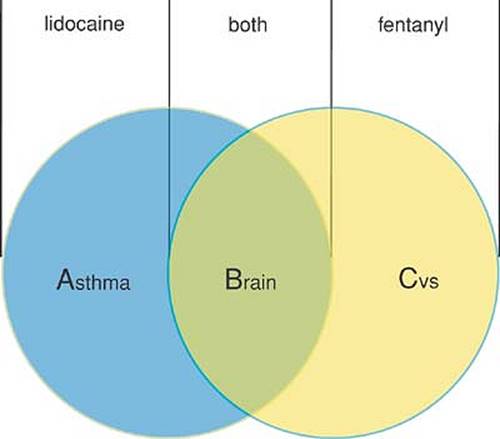
2. As is discussed in Chapter 3, there are three classes of patients for whom pretreatment is indicated, and the mnemonic ABC can be used: Asthma (representing reactive airways disease), brain (representing elevated ICP), and cardiovascular (representing those at risk from RSRL [i.e., patients with ischemic heart disease, vascular disease (especially cerebrovascular disease), hypertension, and vascular events, such as rupture or dissection of a great vessel]). The two drugs, lidocaine and fentanyl, and their relationship to the ABC conditions, are shown in Figure 17-1.
|
|
|
Figure 17-1 • The ABC Approach to Pretreatment. |
3. Ideally, any pretreatment agent should be administered 3 minutes before the sedative agent to match peak drug effect with airway manipulation. Even if time is short, there may be some benefit to giving lidocaine pretreatment. Fentanyl, if indicated, can be given after intubation, was not sufficient time to give it as a pretreatment agent.
Evidence
1. Can lidocaine suppress coughing related to intubation? Good evidence (multiple randomized, placebo-controlled, double-blinded studies) demonstrates that lidocaine, at a dose of 1.5 mg/kg IV, can suppress cough reflexes when administered 1 to 3 minutes prior to intubation (1,2,3,4,5,6,7,8,9,10).
2. Does lidocaine attenuate the rise in ICP seen with airway manipulation? Data on the effect of lidocaine on the increase in ICP with intubation is conflicting. A best evidence review of the use of lidocaine in head injury patients undergoing RSI found that there were no studies that directly addressed this precise setting with outcome as the primary end point (11). Another in 2002 found three relevant articles on the subject but concluded that high-quality evidence is lacking (12). Another third systematic review found no strong evidence for lidocaine in either endotracheal suctioning or as a pretreatment for RSI (13). Three randomized, controlled trials show no benefit to lidocaine in blunting ICP rise, the first with 124 subjects, the second with 30, and the third with 9 (14,15,16). Four randomized, controlled trials report benefits with lidocaine pretreatment; their sizes range from an N of 10 to 30 (17,18,19,20). These studies demonstrated lidocaine to be as effective as thiopental at controlling ICP rise due to pain or endotracheal suctioning, without a corresponding drop in mean arterial pressure. There are conflicting data on the topic, with some authors downgrading studies if the airway was suctioned instead of intubated, or if intubation was by standard sequence, rather than rapid sequence, or if the patients had medical causes of elevated ICP, rather than head trauma. On balance, there is suggestive evidence that lidocaine may mitigate the ICP response to airway manipulation, and the drug is commonly used and safe in the doses recommended. We recommend lidocaine for use in patients with elevated ICP until further evidence clarifies this issue.
3. Does lidocaine attenuate the bronchospastic response to intubation? This is discussed in the evidence section of Chapter 29. In the absence of a sufficiently sized, properly designed, randomized, double-blind study of the effect of lidocaine in preventing postintubation bronchospasm during RSI, we believe there is sufficient evidence to recommend the routine use of lidocaine pretreatment for patients with reactive airways disease who are undergoing RSI, whether the reactive airways disease is the reason for the intubation, or is present as a comorbidity.
4. What evidence is there that an opioid may reduce adverse hemodynamic effects associated with RSI? Hypertension and tachycardia associated with RSI increase the risk of poor outcome in critically ill patients (21,22). 5 µg/kg Fentanyl is effective at reducing changes in blood pressure and heart rate during RSI (23,24,25) and is more effective than 2 µg/kg fentanyl or 2 mg/kg esmolol (23,26).
5 µg/kg Fentanyl is as effective as 10 µg/kg fentanyl in reducing changes in hemodynamic variables in patients undergoing cardiac revascularization (27). On balance, weighing the effectiveness of the drug against the likelihood of inducing hypoventilation in the preintubation period, we recommend 3 µg/kg IV of fentanyl, when fentanyl pretreatment is indicated.
5. What evidence is there that an opioid may reduce any adverse effects RSI may have on the injured brain? Little data exist, or are likely to be produced, regarding the effects of RSI on the ICP of E patients with head injuries. In intubated patients with severe head injury, a combination of neuromuscular blocking agent and opioid was more effective in reducing ICP elevation seen with endotracheal suctioning than either drug alone (28). Fentanyl itself has been associated with a rise in ICP in head injured patients in some studies (29,30) but not in others (31).
6. What evidence is there that an opioid may cause other unwanted effects when used as a pretreatment drug? High-dose fentanyl (100 µg/kg, or approximately 30 times the dose used in emergency RSI) caused 8% of patients undergoing cardiac surgery to develop extreme thoracic and abdominal rigidity (32).
There is a single case report of rigidity in a patient who received fentanyl (approximately 2 µg/kg) while taking venlafaxine (33). Fentanyl has been widely used for procedural sedation in doses similar to those used for RSI, and reports of muscle rigidity are absent, even from large series (34,35).
7. What is the evidence for the use of atropine to prevent bradycardia in pediatric patients undergoing RSI? No relevant, systematic reviews were identified. Five prospective, randomized, double-blinded studies; one prospective, randomized, nonblinded study; five prospective, randomized case series; and one retrospective review were identified. The five highest-quality studies are all small (N= 20–90). Three studies focus only on neonatal intubations. Of the neonatal studies, only one demonstrated no incidences of bradycardia with atropine alone or with succinylcholine (36), but this study had only 20 subjects. Three others showed drops in heart rate even with atropine (37,38,39). Two studies (N = 90 and 36) in older children found no episodes of bradycardia but did report minor arrhythmias such as bigeminy, premature atrial contractions, and sinus tachycardia with atropine (40,41). One study (N = 41) in older children reported one episode of bradycardia in a child pretreated with atropine (42). A good quality retrospective review of 143 pediatric intubations with RSI demonstrated 6 episodes of bradycardia, 3 of whom received atropine pretreatment (43). The data continue to be difficult to interpret. Although there exists a potential for bradycardia during intubation of pediatric patients, either with or without succinylcholine, atropine has not been shown to prevent this, and there are no grounds to support the routine use of atropine for pediatric intubation with succinylcholine.
8. What is the evidence for the use of atropine to prevent bradycardia in patients receiving a second dose of succinylcholine for RSI? A number of case series in the 1980s reported bradycardic responses to second doses of succinylcholine, presumably due to an acetylcholine “priming” mechanism (44,45). A search for relevant, systematic, evidence-based reviews was unsuccessful. A PubMed search revealed more than 450 articles, of which 10 were relevant. Two studies had subjects who became bradycardic after a second dose of succinylcholine even though they were pretreated with atropine (46,47). Four studies reported no episodes of bradycardia but multiple episodes of tachyarrhythmias, including ventricular tachycardia, with atropine pretreatment (48,49,50,51). Only one study (N = 80) demonstrated no bradycardia and no arrhythmias with atropine pretreatment in this setting (52). On balance, the evidence supports the use of atropine to treat symptomatic bradycardia after succinylcholine use, particularly when a second dose of succinylcholine has been given, but does not support the routine dose of atropine in preventative fashion when a second dose of succinylcholine is contemplated.
9. What evidence is there that RSI with succinylcholine causes a rise in ICP in head injured patients? No good systematic review was identified. Multiple animal studies demonstrate elevations in ICP when succinylcholine is given (53,54,55,56,57). One well-designed study demonstrates a rise in human ICP with succinylcholine administration (58); others show minimal (59) or no change (60,61,62) in neurosurgical patients with direct ICP measurements. The increase in ICP from succinylcholine appears to be sufficiently small, and sufficiently variable, as to preclude recommending any particular steps to mitigate it.
10. What evidence is there that a defasciculating dose of a nondepolarizing muscle relaxant reduces the rise in ICP associated with RSI in head injured patients? One good, systematic review demonstrated no good study that addresses this issue directly (63). Various nondepolarizing agents and succinylcholine itself have been demonstrated to have some effect with blunting fasciculations, but any link between this and improved outcome from elevated ICP is lacking. Routine defasciculation is not recommended, even in the presence of elevated ICP (64,65).
Acknowledgment
The authors want to thank Robert E. Schneider, MD, for his significant contribution to prior editions of this chapter.
References
1. Vacanti CA, Silbert BS, Vacanti FX. The effects of thiopental sodium on fentanyl-induced muscle rigidity in a human model. J Clin Anesth 1991;3(5):395–398.
2. Aouad MT, Sayyid SS, Zalaket MI, et al. Intravenous lidocaine as adjuvant to sevoflurane anesthesia for endotracheal intubation in children. Anesth Analg 2003;96(5):1325–1327.
3. Davidson JA, Gillespie JA. Tracheal intubation after induction of anaesthesia with propofol, alfentanil and i.v. lignocaine. Br J Anaesth 1993;70(2):163–166.
4. Jakobsen CJ, Ahlburg P, Holdgard HO, et al. Comparison of intravenous and topical lidocaine as a suppressant of coughing after bronchoscopy during general anesthesia. Acta Anaesthesiol Scand 1991;35(3):238–241.
5. Lin CS, Sun WZ, Chan WH, et al. Intravenous lidocaine and ephedrine, but not propofol, suppress fentanyl-induced cough. Can J Anaesth 2004;51(7):654–659.
6. Nishino T, Hiraga K, Sugimori K. Effects of i.v. lignocaine on airway reflexes elicited by irritation of the tracheal mucosa in humans anaesthetized with enflurane. Br J Anaesth 1990;64(6):682–687.
7. Pandey CK, Raza M, Ranjan R, et al. Intravenous lidocaine suppresses fentanyl-induced coughing: a double-blind, prospective, randomized placebo-controlled study. Anesth Analg 2004;99(6):1696–1698.
8. Pandey CK, Raza M, Ranjan R, et al. Intravenous lidocaine 0.5 mg.kg-1 effectively suppresses fentanyl-induced cough. Can J Anaesth 2005;52(2):172–175.
9. Warner LO, Balch DR, Davidson PJ. Is intravenous lidocaine an effective adjuvant for endotracheal intubation in children undergoing induction of anesthesia with halothane-nitrous oxide? J Clin Anesth 1997;9(4):270–274.
10. Yukioka H, Hayashi M, Terai T, et al. Intravenous lidocaine as a suppressant of coughing during tracheal intubation in elderly patients. Anesth Analg 1993;77(2):309–312.
11. Robinson N, Clancy M. In patients with head injury undergoing rapid sequence intubation, does pretreatment with intravenous lignocaine/lidocaine lead to an improved neurological outcome? A review of the literature. Emerg Med J 2001;18(6):453–457.
12. Butler J, Jackson R. Towards evidence based emergency medicine: best BETs from Manchester Royal Infirmary. Lignocaine premedication before rapid sequence induction in head injuries. Emerg Med J 2002;19(6):554.
13. Brooks D, Anderson CM, Carter MA, et al. Clinical practice guidelines for suctioning the airway of the intubated and nonintubated patient. Can Respir J 2001;8(3):163–181.
14. Bachofen M. [Suppression of blood pressure increases during intubation: lidocaine or fentanyl?] Der Anaesthesist 1988;37(3):156–161.
15. Samaha T, Ravussin P, Claquin C, et al. [Prevention of increase of blood pressure and intracranial pressure during endotracheal intubation in neurosurgery: esmolol versus lidocaine.] Ann Fr Anesth Reanim 1996;15(1):36–40.
16. Yano M, Nishiyama H, Yokota H, et al. Effect of lidocaine on ICP response to endotracheal suctioning. Anesthesiology 1986;64(5):651–653.
17. Bedford RF, Persing JA, Pobereskin L, et al. Lidocaine or thiopental for rapid control of intracranial hypertension? Anesth Analg 1980;59(6):435–437.
18. Donegan MF, Bedford RF. Intravenously administered lidocaine prevents intracranial hypertension during endotracheal suctioning. Anesthesiology 1980;52(6):516–518.
19. Grover VK, Reddy GM, Kak VK, et al. Intracranial pressure changes with different doses of lignocaine under general anaesthesia. Neurol India 1999;47(2):118–121.
20. White PF, Schlobohm RM, Pitts LH, et al. A randomized study of drugs for preventing increases in intracranial pressure during endotracheal suctioning. Anesthesiology 1982;57(3): 242–244.
21. Horak J, Weiss S. Emergent management of the airway. New pharmacology and the control of comorbidities in cardiac disease, ischemia, and valvular heart disease. Crit Care Clin 2000;16(3):411–427.
22. Reynolds SF, Heffner J. Airway management of the critically ill patient: rapid-sequence intubation. Chest 2005;127(4):1397–1412.
23. Chung KS, Sinatra RS, Halevy JD, et al. A comparison of fentanyl, esmolol, and their combination for blunting the haemodynamic responses during rapid-sequence induction. Can J Anaesth 1992;39(8):774–779.
24. Cork RC, Weiss JL, Hameroff SR, et al. Fentanyl preloading for rapid-sequence induction of anesthesia. Anesth Analg 1984;63(1):60–64.
25. Dahlgren N, Messeter K. Treatment of stress response to laryngoscopy and intubation with fentanyl. Anaesthesia 1981;36(11):1022–1026.
26. Hussain A, Sultan S. Efficacy of fentanyl and esmolol in the prevention of haemodynamic response to laryngoscopy and endotracheal intubation. J Coll Physicians Surg Pak 2005;15(8): 454–457.
27. Weiss-Bloom L, Reich D. Haemodynamic responses to tracheal intubation following etomidate and fentanyl for anaesthetic induction. Can J Anaesth 1992;39:780–785.
28. Kerr M, Sereika S, Orndoff P, et al. Effect of neuromuscular blockers and opiates on the cerebrovascular response. Am J Crit Care 1998;7(3):205–217.
29. DeNadal M, Susina A, Sahuquillo J, et al. Effects on intracranial pressure of fentanyl in severe head injured patients. Acta Neurochirugica Suppl 1998;71:10–12.
30. Sperry R, Bailey P, Reichman M, et al. Fentanyl and sufentanil increase intracranial pressure in head trauma patients. Anesthesiology 1992;77(3):416–420.
31. Weinstabl C, Mayer J, Tichling B, et al. Effect of sufentanil on intracranial pressure in neurosurgical patients. Anaesthesia 1991;46(10):837–840.
32. Caspi J, Klausner J, Safadi T, et al. Delayed respiratory depression following fentanyl anesthesia for cardiac surgery. Crit Care Med 1988;16:238–240.
33. Roy S, Fortier L. Fentanyl-induced rigidity during emergence from general anesthesia potentiated by venlafaxine. Can J Anaesth 2003;50:32–35.
34. Roback MG, Wathen JE, Bajaj L, et al. Adverse events associated with procedural sedation and analgesia in a pediatric emergency department: a comparison of common parenteral drugs. Acad Emerg Med 2005;12(6):508–513.
35. Sacchetti A, Senula G, Strickland J, et al. Procedural sedation in the community emergency department: initial results of the ProSCED registry. Acad Emerg Med 2007;14(1):41–46.
36. Barrington KJ, Finer NN, Etches PC. Succinylcholine and atropine for premedication of the newborn infant before nasotracheal intubation: a randomized, controlled trial. Crit Care Med 1989;17(12):1293–1296.
37. Kelly MA, Finer NN. Nasotracheal intubation in the neonate: physiologic responses and effects of atropine and pancuronium. J Pediatr 1984;105(2):303–309.
38. Oei J, Hari R, Butha T, et al. Facilitation of neonatal nasotracheal intubation with premedication: a randomized controlled trial. J Paediatr Child Health 2002;38(2):146–150.
39. Roberts KD, Leone TA, Edwards WH, et al. Premedication for nonemergent neonatal intubations: a randomized, controlled trial comparing atropine and fentanyl to atropine, fentanyl, and mivacurium. Pediatrics 2006;118(4):1583–1591.
40. Desalu I, Kushimo OT, Bode CO. A comparative study of the haemodynamic effects of atropine and glycopyrrolate at induction of anaesthesia in children. West Afr J Med 2005;24(2): 115–159.
41. Shorten GD, Bissonnette B, Hartley E, et al. It is not necessary to administer more than 10 micrograms.kg-1 of atropine to older children before succinylcholine. Can J Anaesth 1995; 42(1):8–11.
42. McAuliffe G, Bissonnette B, Boutin C. Should the routine use of atropine before succinylcholine in children be reconsidered? Can J Anaesth 1995;42(8):724–729.
43. Fastle RK, Roback MG. Pediatric rapid sequence intubation: incidence of reflex bradycardia and effects of pretreatment with atropine. Pediatr Emerg Care 2004;20(10):651–655.
44. McCauley CS, Boller LR. Bradycardic responses to endotracheal suctioning. Crit Care Med 1988;16(11):1165–1166.
45. Sorensen M, Engbaek J, Viby-Mogensen J, et al. Bradycardia and cardiac asystole following a single injection of suxamethonium. Acta Anaesthesiol Scand 1984;28(2):232–235.
46. Cozanitis DA, Dundee JW, Khan MM. Comparative study of atropine and glycopyrrolate on suxamethonium-induced changes in cardiac rate and rhythm. Br J Anaesth 1980;52(3): 291–293.
47. Magee DA, Sweet PT, Holland AJ. Effect of atropine on bradydysrhythmia induced by succinylcholine following pretreatment with D-tubocurarine. Can Anaesth Soc J 1982;29(6): 573–576.
48. Brandt MR, Viby-Mogensen J. Halothane anaesthesia and suxamethonium III. Atropine 30 s before a second dose of suxamethonium during inhalation anaesthesia: effects and side-effects. Acta Anaesthesiol Scand Suppl 1978;67:76–83.
49. Greenan J, Dewar M, Jones CJ. Intravenous glycopyrrolate and atropine at induction of anaesthesia: a comparison. J R Soc Med 1983;76(5):369–371.
50. Latorre F, Ellmauer S, Dick W. [Atropine in the premedication of patients at risk. Its effect on hemodynamics and salivation during intubation anesthesia using succinylcholine.] Anaesthesist 1992;41(2):76–82.
51. Shipton EA, Roelofse JA, Luus HG. Effect of intramuscular atropine and glycopyrrolate on the cardiovascular response to tracheal intubation. S Afr Med J 1984;66(14):528–530.
52. Viby-Mogensen J, Wisborg K, Sorensen O. Cardiac effects of atropine and gallamine in patients receiving suxamethonium. Br J Anaesth 1980;52(11):1137–1142.
53. Bozeman WP, Idris AH. Intracranial pressure changes during rapid sequence intubation: a swine model. J Trauma 2005;58(2):278–283.
54. Lanier WL, Iaizzo PA, Milde JH. Cerebral function and muscle afferent activity following intravenous succinylcholine in dogs anesthetized with halothane: the effects of pretreatment with a defasciculating dose of pancuronium. Anesthesiology 1989;71(1):87–95.
55. Ducey JP, Deppe SA, Foley KT. A comparison of the effects of suxamethonium, atracurium and vecuronium on intracranial haemodynamics in swine. Anaesth Intensive Care 1989;17(4): 448–455.
56. Thiagarajah S, Sophie S, Lear E, et al. Effect of suxamethonium on the ICP of cats with and without thiopentone pretreatment. Br J Anaesth 1988;60(2):157–160.
57. Cottrell JE, Hartung J, Giffin JP, et al. Intracranial and hemodynamic changes after succinylcholine administration in cats. Anesth Analg 1983;62(11):1006–1009.
58. Stirt JA, Grosslight KR, Bedford RF, et al. “Defasciculation” with metocurine prevents succinylcholine-induced increases in intracranial pressure. Anesthesiology 1987;67(1):50–53.
59. Minton MD, Grosslight K, Stirt JA, et al. Increases in intracranial pressure from succinylcholine: prevention by prior nondepolarizing blockade. Anesthesiology 1986;65(2):165–169.
60. Brown MM, Parr MJ, Manara AR. The effect of suxamethonium on intracranial pressure and cerebral perfusion pressure in patients with severe head injuries following blunt trauma. Eur J Anaesthesiol 1996;13(5):474–477.
61. Kovarik WD, Mayberg TS, Lam AM, et al. Succinylcholine does not change intracranial pressure, cerebral blood flow velocity, or the electroencephalogram in patients with neurologic injury. Anesth Analg 1994;78(3):469–473.
62. McLesky C, Cullen B, Kennedy R, et al. Control of cerebral perfusion pressure during induction of anaesthesia in high risk neurosurgical patients. Anesth Analg 1974;53:985–992.
63. Clancy M, Halford S, Walls R, et al. In patients with head injuries who undergo rapid sequence intubation using succinylcholine, does pretreatment with a competitive neuromuscular blocking agent improve outcome? A literature review. Emerg Med J 2001;18(5):373–375.
64. Martin R, Carrier J, Pirlet M, et al. Rocuronium is the best non-depolarizing relaxant to prevent succinylcholine fasciculations and myalgia. Can J Anaesth 1998;45:521–525.
65. Eisenkraft J, Mingus M, Herlich A, et al. A defasciculating dose of d-tubocurarine causes resistance to succinylcholine. Can J Anaesth 1990;37(5):538–542.