
Aaron Barksdale
ACQUIRED PLATELET DEFECTS
PATHOPHYSIOLOGY
 Acquired platelet abnormalities include qualitative (dysfunctional) and quantitative (thrombocytopenia) defects.
Thrombocytopenia may be a result of decreased platelet production, increased platelet destruction, increased platelet loss, and splenic sequestration.
CLINICAL FEATURES
Bleeding due to thrombocytopenia commonly presents as petechiae and mucosal bleeding (gingival, epistaxis).
Additional findings may include purpura, hemoptysis, menorrhagia, hematuria, or hematochezia.
Deep tissue bleeding is uncommon.
DIAGNOSIS AND DIFFERENTIAL
Causes of decreased platelet production include marrow infiltration, aplastic anemia, drugs, viral infections, and chronic alcohol use.
Causes of increased platelet destruction include idiopathic thrombocytopenic purpura (ITP), throm-botic thrombocytopenic purpura (TTP), hemolytic uremic syndrome (HUS), disseminated intravascular coagulation (DIC), and viral infection, drugs, and HELLP syndrome.
Thrombocytopenia may also be the result of acute hemorrhage, hemodialysis, and splenic sequestration.
Qualitative platelet disorders include uremia, liver disease, drugs (aspirin, NSAIDs, clopidogrel), antiplate -let antibodies, DIC, and myeloproliferative disorders.
EMERGENCY DEPARTMENT CARE AND DISPOSITION
Initial laboratory testing should include a CBC with peripheral smear.
Consider consultation with hematologist. Some conditions may worsen with platelet transfusion (DIC and TTP).
Consider platelet transfusion when platelet count <10,000/mm3 or when active bleeding and platelets <50,000/mm3.
Patient’s with ITP and platelets >50,000/mm3 do not require treatment.
Patients with ITP and platelet count <20,000 to 30,000/mm3 or active bleeding and platelets <50,000 typically require treatment.
The initial treatment of ITP is usually corticosteroids, prednisone 60 to 100 milligrams PO daily.
Severe cases of ITP may require IV immunoglobu-lin, 1 gram/kg/d.
BLEEDING IN LIVER DISEASE
PATHOPHYSIOLOGY
Liver disease increases the risk of bleeding for multiple reasons, including decreased synthesis of vitamin K-dependent coagulation factors (II, VII, IX, and X), thrombocytopenia, and increased fibrinolysis.
EMERGENCY DEPARTMENT CARE AND DISPOSITION
Patients with liver disease and active bleeding should receive vitamin K, 10 milligrams PO or IV.
Patients with severe bleeding or prior to invasive procedure should receive fresh frozen plasma 15 millilit-ers/kg IV to temporarily replace coagulation factors.
Patients with active bleeding and fibrinogen levels <100 milligrams/dL, administer cryoprecipitate, 1 unit/5 kg IV.
Platelet transfusion may be indicated when severe bleeding and associated thrombocytopenia.
Desmopressin 0.3 microgram/kg SC or IV may shorten bleeding times in some patients.
BLEEDING IN RENAL DISEASE
PATHOPHYSIOLOGY
Bleeding in renal disease is the result of a variety of hemostatic abnormalities including platelet dysfunction due to uremic toxins, deficiency of coagulation factors, and thrombocytopenia.
EMERGENCY DEPARTMENT CARE AND DISPOSITION
Treat acute bleeding with the transfusion of packed red blood cells when indicated.
Hemodialysis improves platelet function transiently for 1 to 2 days.
Desmopressin 0.3 microgram/kg SC or IV shortens bleeding time in most patients.
Conjugated estrogen 0.6 milligram/kg IV improves the bleeding time and active bleeding in the majority of uremic patients.
Platelet transfusions and cryoprecipitate are indicated for life-threatening bleeding only, and are to be used in conjunction with the previously listed therapies.
DISSEMINATED INTRAVASCULAR COAGULATION
PATHOPHYSIOLOGY
DIC is an acquired syndrome that results from the activation of both the coagulation and fibrinolytic systems.
CLINICAL FEATURES
The complications of DIC are related to both bleeding and thrombosis, although one usually predominates.
The clinical features include bleeding from venipunc-ture sites and the GI or GU tract, petechiae and ecchy-mosis, thrombosis, purpura fulminans, and multiple organ failure.
Patients may also display mental status changes, focal ischemia of the extremities, oliguria, renal cortical necrosis, and adult respiratory distress syndrome (ARDS).
DIAGNOSIS AND DIFFERENTIAL
The diagnosis is based on the history, clinical presentation, and associated laboratory abnormalities.
The common conditions associated with DIC are listed in Table 136-1.
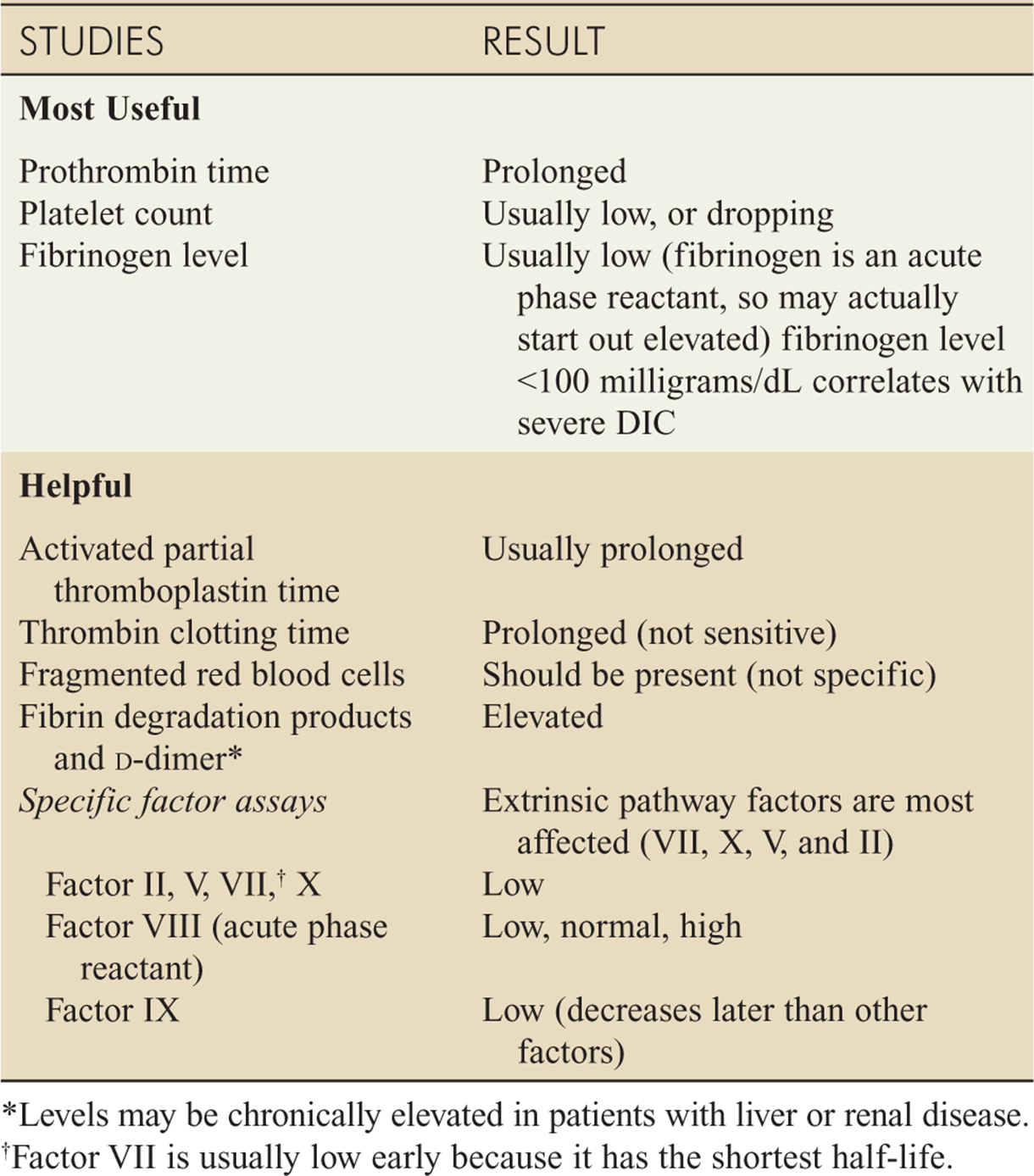
Refer to Table 136-2 for the laboratory abnormalities associated with DIC.
TABLE 136-1 Common Conditions Associated with Disseminated Intravascular Coagulation (DIC)
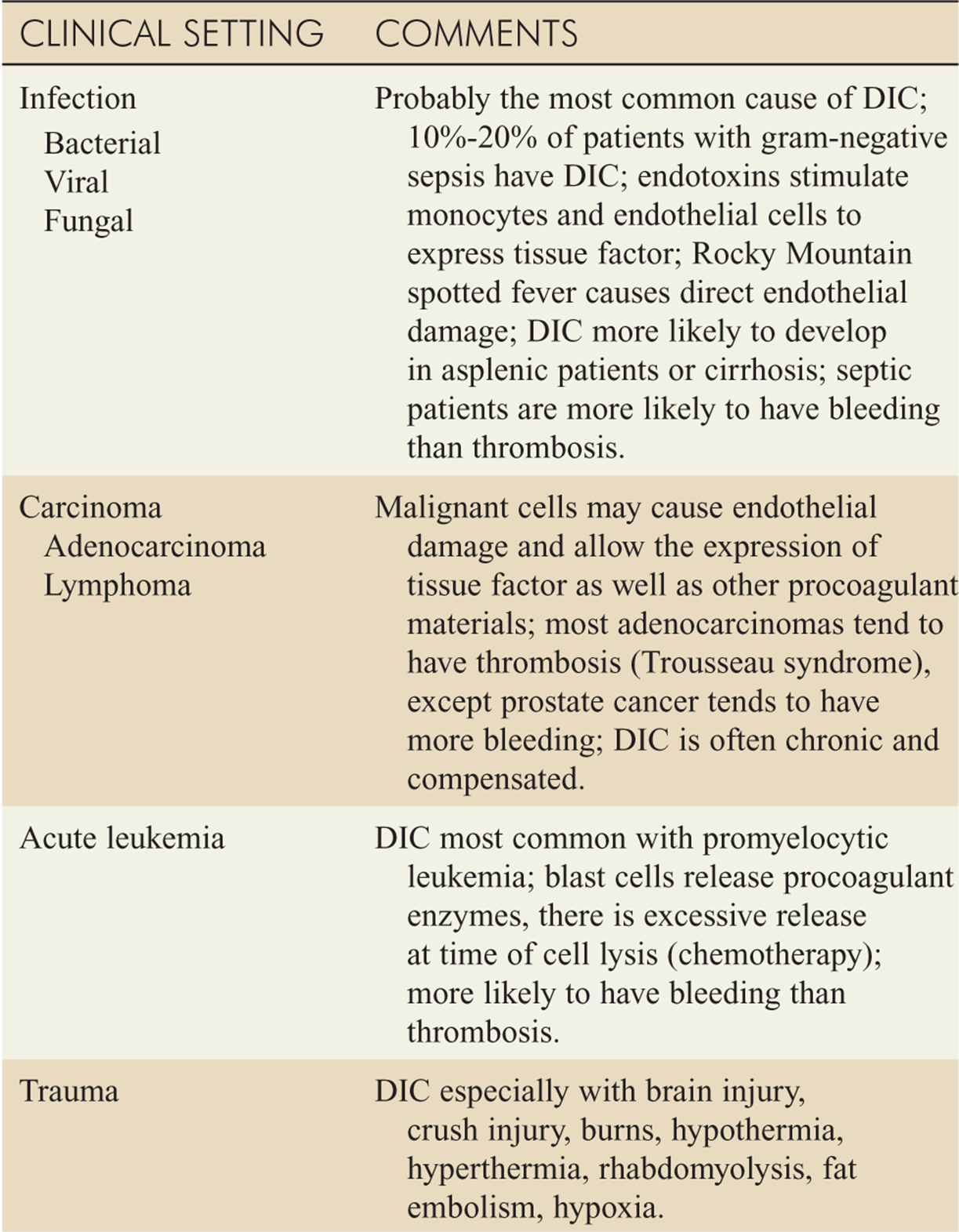
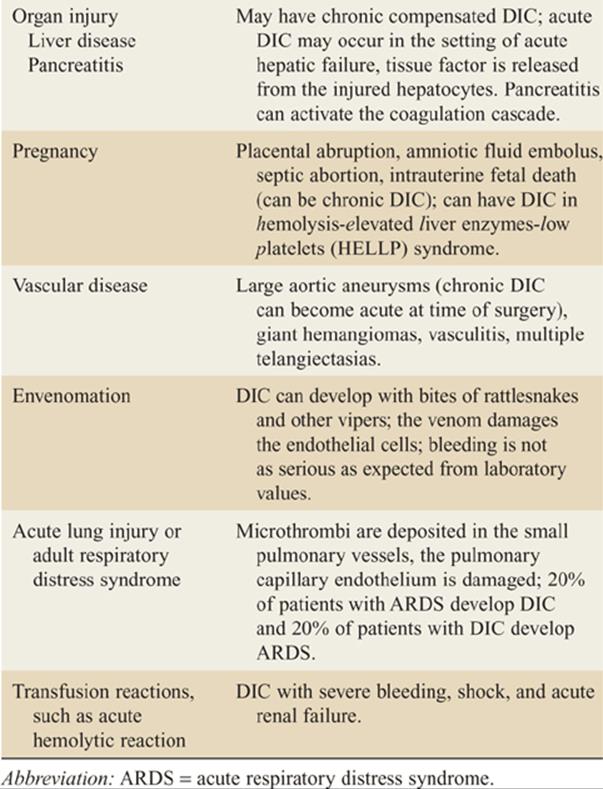
TABLE 136-2 Laboratory Abnormalities Characteristic of Disseminated Intravascular Coagulation (DIC)
EMERGENCY DEPARTMENT CARE AND DISPOSITION
Treatment should focus on the underlying illness and hemodynamic support (IV fluid resuscitation, transfusion of red bloods cells, and vasopressors and inotropic agents).
Administer cryoprecipitate 1 unit/5 kg IV to patients with active bleeding until fibrinogen levels are between 100 and 150 milligrams/dL.
Transfuse platelets if counts are <20,000/mm3 or <50,000/mm3 with active bleeding.
Transfuse fresh frozen plasma 15 mL/kg IV if active bleeding.
Patients with active bleeding, administer vitamin K 10 milligrams IV/PO and folate 1 milligram IV
The role of heparin remains unclear.
CIRCULATING INHIBITORS OF COAGULATION
EPIDEMIOLOGY
Acquired inhibitors of coagulation are very rare. There are 1.4 cases per 1 million persons per year.
Most cases of acquired hemophilia occur in the elderly.
PATHOPHYSIOLOGY
Circulating anticoagulants are antibodies directed against one or more of the coagulation factors.
The two most common circulating anticoagulants are factor VIII inhibitor (a specific inhibitor directed only against factor VIII) and antiphospholipid antibodies, including lupus anticoagulant and anticardiolipin antibody (nonspecific inhibitors directed against several coagulation factors).
CLINICAL FEATURES
Patients with factor VIII inhibitor may present with massive spontaneous bruises, ecchymosis, and hematomas.
Patients with lupus anticoagulant and anticardiolipin antibodies typically develop symptoms associated with thrombosis.
DIAGNOSIS AND DIFFERENTIAL
Coagulation studies in patients with factor VIII inhibitor will display a normal PT, normal thrombin clot time, and a prolonged PTT that does not correct with mixing studies.
A factor VIII–specific assay will show low or absent factor VIII activity.
EMERGENCY DEPARTMENT CARE AND DISPOSITION
Patients with factor VIII inhibitor and acute bleeding should be managed in conjunction with a hematologist.
Treatment options include factor VIII, factor IX complex, recombinant factor VIIa, desmopressin acetate, prothrombin complex, and plasmapheresis.
CLOTTING DISORDERS
PATHOPHYSIOLOGY
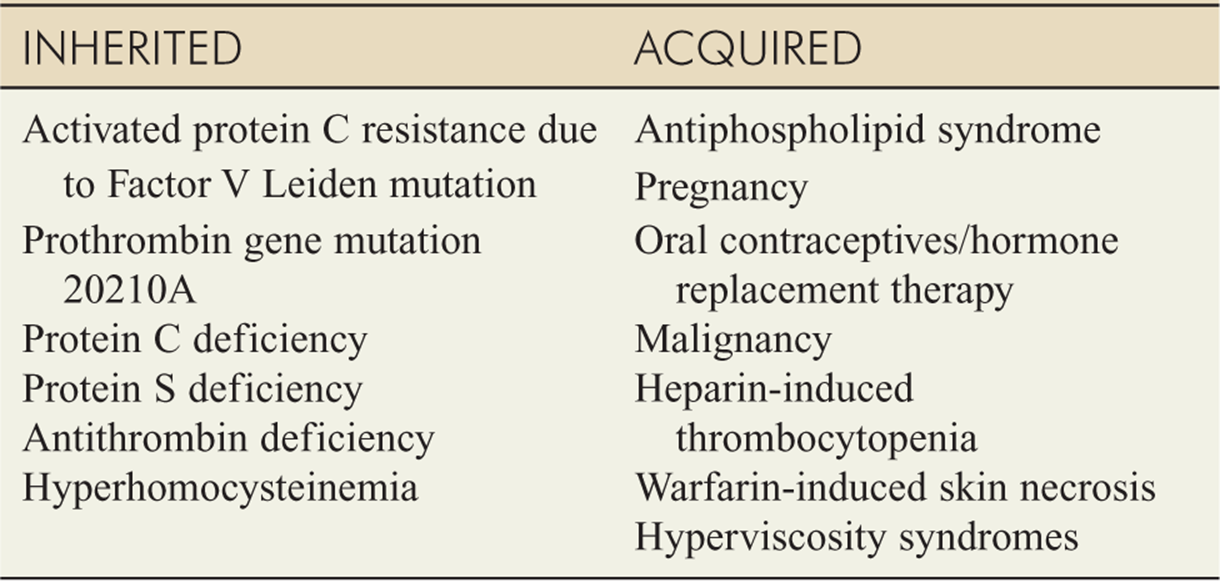
Hypercoagulable states may be inherited or acquired (see Table 136-3).
TABLE 136-3 Hypercoagulable States
Thrombosis formation may occur in the venous and/or arterial circulation systems.
“Virchow’s triad” increases the risk of venous thrombus formation and includes hypercoagulability, venous stasis, and endothelial injury.
CLINICAL FEATURES
Features suggestive of a clotting disorder include early thrombosis (<45 years old), recurrent thrombotic events, family history of thrombosis, recurrent fetal loss, and thrombosis in unusual locations (mesenteric, cerebral, axillary, or portal veins).
Patients may present with signs of a deep venous thrombosis (unilateral swollen and potentially painful extremity).
Patients may present with signs of a pulmonary embolus (dyspnea, tachycardia, hemoptysis, hypoxia, dizziness, and in severe cases hypotension).
Other potential presenting symptoms include abdominal pain (mesenteric thrombus and/or ischemia), portal hypertension (portal vein thrombosis), or neurologic symptoms (cerebral vein thrombosis or acute CVA).
DIAGNOSIS AND DIFFERENTIAL
Laboratory tests for hypercoagulable conditions are time consuming, highly specialized, and it is unlikely to acquire results in the acute ED setting.
A CBC with complete differential and coagulation studies should be ordered.
Consider heparin-induced thrombocytopenia (HIT) in patients with a drop in platelet count >50% after 5 to 15 days of initiating heparin therapy.
See Table 136-3 for the differential diagnosis of hypercoagulable states.
EMERGENCY DEPARTMENT CARE AND DISPOSITION
Patients with new or worsening thrombosis should be started on low molecular weight or unfractionated heparin therapy, and hospital admission.
In patients with HIT, heparin must be stopped. Another anticoagulant (lepirudin, argatroban, danaparoid) should be initiated in consultation with a hematologist.
For further reading in Tintinalli’s Emergency Medicine: A Comprehensive Study Guide, 7th ed., see Chapter 228, “Acquired Bleeding Disorders,” by Sally A. Santen and Rubin R. Hemphill, and Chapter 229, “Clotting Disorders, “by Jessie G. Nelson and Robin R. Hemphill.