
Denise Chow1, Shlomo Raz2, 3 and Forrest Jellison1
(1)
Division of Pelvic Medicine and Reconstructive Surgery, Department of Urology, University of California, Los Angeles, CA, USA
(2)
Division of Pelvic Medicine and Reconstructive Surgery, UCLA School of Medicine, Los Angeles, CA, USA
(3)
Department of Urology, UCLA School of Medicine, 200 UCLA Medical Plaza, Suite 140, Los Angeles, CA, USA
Shlomo Raz
Email: sraz@mednet.ucla.edu
Abstract
A thorough conversation between the patient and physician should take place before embarking on POP surgery. Specifically, if mesh use is planned to augment a repair, the surgeon should provide full disclosure regarding the potential adverse effects related to mesh. Evaluation of a patient after a mesh complication requires a complete workup. Experienced, trained pelvic surgeons may be able to recognize and treat these conditions with fewer complications. With the patient’s best outcome as the primary goal, all steps should be taken to prevent any complications.
Pelvic organ prolapse (POP) is a condition affecting approximately 30 % of the population. Eleven to 19 % of the population will undergo surgery for symptomatic cure [1, 2]. Nearly 166,000 patients per year undergo surgical procedures for the treatment of POP [3]. With an expected increase in life expectancy, there will be an increasing number of patients who present with POP. It is forecasted that the total number of women who will undergo surgery for POP will increase from 166,000 in 2010 to 245,970 in 2050 based on rates of inpatient and outpatient surgeries and the growing US census data [3]. Predisposing factors contributing to the development of POP include age, parity, obesity, menopause, number of vaginal deliveries, chronic strain, genetics, and connective tissue disorders [4, 5]. There has been a higher reported predominance of POP amongst Caucasian women than in African American and Hispanic women [6]. Despite its prevalence, POP is a condition that many women are not aware of until they become symptomatic and seek medical attention. One population-based observational study revealed that 68–73 % of women greater than age 60 had stage 2 or greater prolapse [7]. Of those, 30 % had stage 3 POP. In women between the ages of 60 and 69, 68 % of women had POP-Q stage 2 or greater. In women greater than 70 years old, over 73 % had POP-Q stage 2 or greater. There are many women who have stage 2 or greater prolapse that are asymptomatic and do not seek surgical treatment. Therefore, a small number of those patients who become symptomatic will eventually seek treatment. Despite over half of patients having had POP, a significantly smaller number, approximately 11 %, will eventually undergo surgery for symptomatic prolapse. Adequate counseling regarding the expectations and inherent risks for POP surgery is necessary, as reoperation carries a high risk of up to 30 % [3].
General Complications
Patients must be informed of the potential risks associated with undergoing an elective procedure. All patients undergo informed consent prior to POP surgery. General risks including bleeding; pain; infection; injury to proximate organs such as the bladder, bowels, rectum, ureter, and urethra; injury to blood vessels; and injury to nearby nerves are discussed with the patient. In addition, further counseling including risks for prolapse recurrence and for urinary incontinence are discussed with the patient. It is important to address the potential risks beforehand to ensure that patient’s expectations are met postoperatively. A patient who experiences deviation from what she expects may perceive the surgery as a failure even though her prolapse is repaired. Therefore, it is important to set expectations early.
Evaluation of Patient After Complication
Patients who present with complications after a prolapse procedure require a comprehensive history and physical examination. If the patient is able to obtain operative notes, it is extremely helpful in the patient’s management, as key components of the procedure, which may have been technically complex, can help with understanding the patient’s condition. After a complication from prolapse surgery, the patient’s primary complaint should be first and foremost addressed. There may be multiple presenting complaints (Table 21.1). The surgeon should focus the examination and diagnostic evaluation based on the patient’s primary complaint. A complete history should be obtained including the specific onset and timing of symptoms relative to the surgery. Aggravating and alleviating factors should be elicited. A complete physical examination and focused genitourinary exam should be performed. If the patient complains of pain, the specific area needs to be completely evaluated. If it is pain or weakness in the leg, assessment of the leg and basic neurologic evaluation should be performed. Each vaginal compartment needs to be closely examined. Evaluation of tissue quality and evidence of mesh-related issues should be noted.
Table 21.1
Classifying complications
|
Vagina |
Lower urinary tract |
Bowel or rectal |
Skin/musculoskeletal/neurological |
|
Vaginal bleeding |
Urinary obstruction |
Fistula |
Skin infection |
|
(a) Urethral |
(a) Rectovaginal |
(a) Cutaneous sinus tract |
|
|
(b) Ureteric |
(b) Enterovaginal |
(b) Abscess |
|
|
(c) Labial or suprapubic cellulitis |
|||
|
Vaginal discharge |
Urethral incontinence |
Mesh erosion |
Pain |
|
(a) Stress |
(a) Rectum |
(a) Suprapubic |
|
|
(b) Positional |
(b) Small bowel |
(b) Hip/pelvic/sacrum |
|
|
(c) Lower extremity |
|||
|
Vaginal infection |
Bladder incontinence |
Defecatory dysfunction |
Subcutaneous |
|
(a) De novo OAB |
(a) Diarrhea |
(a) Hematoma |
|
|
(b) Worsening OAB |
(b) Obstructive |
(b) Seroma |
|
|
(c) Overflow |
(c) Defecation |
||
|
(d) Constipation |
|||
|
(e) Stool urgency |
|||
|
(f) Stool incontinence |
|||
|
Recurrent prolapse |
Fistula |
Bowel obstruction |
Neurological: with or without neurological deficit |
|
(a) Urethral |
(a) Sciatic pain |
||
|
(b) Vesicovaginal |
(b) Pudendal |
||
|
(c) Ureteral |
(c) Ilioinguinal |
||
|
(d) Femoro-cutaneous |
|||
|
Dyspareunia/vaginal pain |
Urethral mesh erosion |
Perineal abscess |
|
|
Bladder mesh erosion |
|||
|
Vaginal stenosis/shortening |
Recurrent urinary tract infections |
||
|
Mesh exposure/extrusion/intraepithelial infiltration |
Stones |
In addition to a physical and genital examination, additional diagnostic evaluation may be available. Some centers have employed the use of the translabial ultrasound (TLUS) for the evaluation of mesh-related complications. As mesh is not visible on CT scan or MRI, utilization of TLUS allows the characteristics of the mesh to be visualized in 2D and 3D. Characteristics such as residual segments, fragmentation, folding, proximity to the bladder neck, and depth of placement can be visualized. We have found this modality especially useful for patients who have undergone prior excisional attempts and who have residual fragments of mesh in place; this modality can also be useful where we suspect the proximity of the mesh may penetrate into bladder or urethra and consequently require reconstruction. TLUS is particularly helpful in visualizing remnant pieces of mesh and helps preoperative surgical planning and patient counseling regarding the potential risks and outcome. It can also be used to rule out any evidence of mesh if the patient does not have an operative note or does not recall if mesh was placed. Other anatomic findings visible on TLUS are urethral mobility and anterior compartment prolapse.
In this chapter, we will discuss transvaginal, transabdominal, and mesh-augmented POP-related complications. We will seek to (1) define the complications of prolapse surgery in general and by compartment, (2) define complications by mesh, and (3) offer ways to treat complication from POP surgery.
General Complications
Lower Urinary Tract Complications
Lower urinary tract (LUT) injuries during benign gynecologic surgeries are rare. During prolapse surgery for the anterior and apical compartments, the LUT is in close proximity and thus at risk for injury. If these injuries are not recognized intraoperatively, patients may develop symptoms of unexplained postoperative pain, fever, malaise, peritonitis, or ileus. They may be associated with loss of renal function, prolonged catheter drainage, urinary tract infections (UTIs), ureterovaginal or vesicovaginal fistulas, and a consequent return to the operating room may be warranted. A systematic review was performed [8] from 1966 to 1998 to examine the frequency of LUT injuries after major benign gynecologic surgery. The overall frequency of bladder injury was 2.6–10.4 per 1,000; overall frequency of ureteral injury was 1.6–6.2 per 1,000. In cases where routine cystoscopy was performed, there was a higher rate of recognition, and 90 % of unsuspected ureteral injuries and 85 % of unsuspected bladder injuries were identified and managed successfully intraoperatively. About 70 % of recognized ureteral injuries were repaired by the release of a suture. However, when injuries are not recognized intraoperatively, patients may return with findings of a urinary fistula and need for operation.
Bladder Injury
Bladder perforations are rare during benign gynecologic procedures. One study [9] reported a 0.5 % rate of bladder perforation in patients with anterior colporrhaphy versus 3.5 % in mesh-augmented repairs. In benign gynecology evaluating hysterectomies, another study [10] reported that the incidence of bladder injury was highest in patients undergoing laparoscopic-assisted hysterectomy (LAH) and vaginal hysterectomy (VH), 13.8 per 1,000 and 13.1 per 1,000, respectively. Total abdominal hysterectomy, subtotal hysterectomy, and radical hysterectomy had a lower risk of bladder injury. An unrecognized intraoperative bladder injury may lead to a vesicovaginal fistula. In mesh-augmented repairs, bladder erosion due to unrecognized penetration may be present and will be further discussed later in this chapter. Performing intraoperative cystoscopy is essential during cystocele repair. Recognized bladder injuries may be closed in two layers with absorbable suture. Injection of indigo carmine or methylene blue may be used to test for leakage and to ensure water-tight closure. A Martius flap is not required unless there is a concern for a high risk of vesicovaginal fistula, for instance in a patient who has had radiation to the pelvis. We do not advocate the use of mesh in the anterior compartment after recognition of a bladder injury. The Foley catheter should be left in place for 7–10 days and some may consider performing a cystogram prior to removal of the Foley catheter.
Ureteral Injury
Patients who undergo anterior and apical repairs should undergo evaluation for ureteral patency, as there is a risk for ureteral injury. Ureteral injury during hysterectomy was higher during LAH [11] and less likely recognized [10] versus open hysterectomy. The incidence of ureteral injury was much lower during VH at 0.7 per 1,000, and routine cystoscopy is not recommended unless there is a high index of suspicion. Cystoscopy with the use of indigo carmine may be administered, and the ureteral orifices may be examined for efflux to ensure ureteral patency, ruling out ureteral obstruction. If injury is suspected a guide wire or 5-French open-ended ureteral catheter may be passed. If it passes smoothly and subsequent efflux is visualized, no injury is present. If fluoroscopy is available, retrograde instillation of contrast may be placed up the ureteral orifice to assess the ureter. If live fluoroscopy is not available, a one-shot intravenous pyelogram can be performed by injecting intravenous contrast at 1 mL per pound of body weight up to a maximum of 150 mL and performing an X-ray 10 min after administration.
If ureteral obstruction is found from an anterior or apical repair, sutures will need to be released in order to alleviate the obstruction. Intraoperatively, the cystocele or apical sutures may be released, and patency of the ureter can be evaluated. A retrograde pyelogram may be performed, and the ureter may be evaluated if unable to pass a catheter or stent. If there is no extravasation but the ureteral appears deviated, a suture can be released and a stent inserted. If extravasation is noted, a ureteroureterostomy may be attempted. A ureteral reimplant may be done if necessary and all other measures have been exhausted. Postoperatively, however, if a patient presents with flank pain and/or diminished renal function, evaluation to rule out hydronephrosis is required. A renal ultrasound or CT urogram (with delay of the collecting system imperative) may be performed to evaluate the upper tract. The passage of a ureteral stent can be attempted if signs of obstruction are observed postoperatively. If this fails, then a percutaneous nephrostomy tube may be placed, and an antegrade stent may also be attempted. Depending on the location and length of ureteric injury, a ureteral reimplant with or without a psoas hitch may be needed, and in rare instances a Boari flap may be necessary.
Ureteral transection is a possible, albeit rare, occurrence during POP surgery. There is a higher risk of ureteral transection during any transabdominal surgery for prolapse. During abdominal sacral colpopexy, for instance, the ureter is in close proximity to the fixation point of sacral promontory. If concern exists intraoperatively for a ureteral transection, the evaluation is similar to that discussed previously. In addition, the ureter may be directly examined intraoperatively. If injury is observed, depending on the location of injury, a ureteral reimplantation, psoas hitch, or Boari flap may be necessary.
Urinary Incontinence
A good history is key to the discussion of new onset postoperative urinary incontinence. Patients need to be queried regarding the specific onset of symptoms and their duration. Discussion with the patient regarding the timing of events is essential. Was the patient dry prior to surgery? Had she ever had episodes of urinary incontinence prior to surgery? When does the incontinence occur—is it constant, or does it occur with stress or urgency? A careful history is essential in identifying the factors contributing to the patient’s complaint. It is imperative that the physician rule out a urinary fistula. If suspicion is high for a fistula, investigation for a urethrovaginal, vesicovaginal, or ureterovaginal fistula must be performed. This can be done with a pyridium-indigo carmine dye test, retrograde pyelogram, or CT cystogram. When asking a patient to perform the pyridium test, a tampon should be placed in the vagina. At the time of removal of the tampon, the patient should note the location of the site of orange discoloration, if any. The patient may save the stained tampon or may take a photo to show the region of stain. This will help facilitate localizing the fistula. If obtaining a VCUG, it is essential to obtain static lateral films, voiding phase images at 30° lateral, and a post-void film to rule out the presence of a urethrovaginal or vesicovaginal fistula. Patients who present with incontinence after prolapse surgery need to be evaluated with urodynamics. The addition of fluoroscopy may also be helpful.
De Novo Stress Urinary Incontinence
Preoperative counseling in high grade anterior wall and apical prolapse should include the discussion of de novo stress urinary incontinence (SUI). Management of the urethra at the time of POP surgery has been largely dependent on surgeon preference and patient counseling. During high grade anterior vaginal wall prolapse, urethral kinking may mask occult SUI. Preoperatively, patients may have their prolapse reduced via vaginal pack, half speculum, pessary, or rectal swabs during physical examination or urodynamics study to check for occult SUI. However, methods of prolapse reduction measures in unmasking SUI have been inconsistent, ranging from 6 to 30 % [12]. There are advocates of performing an anti-incontinence procedure at the time of high grade prolapse repair versus selective management of the urethra. Advocates of performing a prophylactic sling at the time of prolapse repair believe that creating the anatomic support is essential in high grade prolapse repair. The recent OPUS trial has also reinforced that performing a prophylactic transvaginal tape (TVT) during vaginal POP surgery demonstrated superior continence rates at 12 months [13].
In contrast, those in favor of selective management believe that there may be risks in performing a prophylactic sling that may outweigh the benefits. One study reported that the risk of intervention with a second surgery due to postoperative urinary obstruction from a sling versus the risk of having to place a sling in the future in patients without demonstrable preoperative SUI was 8.5 % and 8.3 %, respectively [14]. Thus, the risk of placing a sling that causes obstruction is nearly equivalent to the risk of intervention due to SUI. Therefore, patients may require a second surgery for a procedure that may not have been necessary. If, however, the patients reported clinical SUI, which was unable to be demonstrated by urodynamics or prolapse reduction, those patients had a 30 % risk of postoperative SUI. One can expect that risk would be higher for those with clinical SUI. Therefore, an informed discussion with the patient is of utmost importance when undergoing POP surgery involving the choice of whether an anti-incontinence procedure should be performed at that time.
Urge Incontinence
Patients may have symptoms of overactive bladder (OAB) and urge urinary incontinence preoperatively or may develop it de novo postoperatively. When evaluating a postoperative patient, urinary obstruction must be ruled out as a cause of her presenting symptoms of OAB. Preoperatively, patients must be counseled that their symptoms of OAB may not resolve after POP surgery and that they may need to continue taking medication or seek other therapies for OAB. de Boer et al. reported that patients who did not have OAB preoperatively would likely not experience it postoperatively. Furthermore, in symptomatic patients with OAB, 69 % of women had improvement after POP surgery [15]. Thus, 30 % of symptomatic OAB patients may continue to have symptoms. A retrospective review of women who underwent primary POP surgery and who did not have OAB preoperatively developed de novo OAB in ~20 % of patients. Of those patients, 75 % of them had a TVT procedure. The study showed that older age, BMI, and history of a TVT procedure were risk factors for de novo OAB [16]. It is important to counsel patients that there is a risk of developing symptoms of OAB postoperatively.
Fistula
Vesicovaginal, urethrovaginal, and ureterovaginal fistula may occur during hysterectomy or any pelvic reconstructive surgery. Predisposing factors include unrecognized intraoperative perforation of the ureter, urethra or bladder, pelvic radiation, prior uterine surgery [17], fibroids or pelvic mass, endometriosis, or steroid use. Urethrovaginal fistulas may occur after sling placement. Rectovaginal fistula can form rarely after rectocele repair however, factors that may increase risk are inflammatory bowel conditions, malignancy, and pelvic radiation. Evaluation for vesicovaginal fistula may include the indigo carmine dye test or other diagnostic imaging as discussed earlier in this chapter. A urethrovaginal fistula may be diagnosed with a VCUG with lateral static and voiding images. A rectovaginal fistula may be diagnosed on physical examination or diagnostically by obtaining a rectogram or gastrograffin enema. Once diagnosis is confirmed, discussion with the patient for surgical intervention will need to be undertaken.
Nerve Injury
Nerve injury may result from the surgical procedure or from patient positioning prior to surgery. Positioning in the dorsal lithotomy position for vaginal surgery may result in injury of the common peroneal nerve from direct compression against the stirrup, which results in foot drop. A retractor placed around the inguinal area during open surgery may compress the femoral or femoro-cutaneous nerves resulting in pain in the inguinal region, difficulty with hip flexion, knee extension, or numbness in the anteromedial thigh. Over-flexion of the hip may cause stretching of the sciatic or femoral nerves and can be prevented by limiting abduction and outward rotation of the hip. As a result of over-flexion, patients may perceive weakness in hip flexion or decreased sensation of the ipsilateral thigh. Most of these positional cases of nerve injury will resolve over time. Physical therapy consultation may be helpful. Direct nerve injury to the ilioinginual, anterior, lateral, and posterior cutaneous, pudendal, and sciatic nerve all may occur during surgery.
Recurrence and Definition of Failure
Due to a high failure rate of POP surgery there have been efforts to develop new technologies to improve outcomes. Not only does the technology need to have equivalent or better anatomical outcomes, but important factors include patient satisfaction and low rates of complications. The definition of failure no longer is restricted to the anatomic outcome, as quality of life and symptoms are also factored. If the patient has a stage 2 POP-Q, but is asymptomatic, that should not be considered a failure. Previously, mesh- and graft-augmented repairs were noted to give an anatomic success defined as POP-Q stage 1 or 0. However, with the proliferation of mesh and the ensuing complications associated with it, many have further probed the definition of success after prolapse repair. Is it the anatomy or the symptomatic improvement that defines a successful repair? Native tissue repair has had variable success rates with high failure rate leading to the use of mesh-augmented repairs. Anatomic improvement with mesh-augmented repairs has demonstrated to be superior to that of native tissue repairs. However, mesh-induced complications, including mesh extrusion, erosion, vaginal pain, dyspareunia, leg and groin pain, difficulty ambulating, and neuropathy, have led pelvic floor surgeons to reexamine the pros and cons of mesh-augmented repairs.
Transvaginal Pelvic Organ Prolapse Repairs and Their Complications
POP complications resulting from a transvaginal approach will be addressed according to compartments. Intraoperative risks during transvaginal POP surgery include hemorrhage requiring transfusion; however, they are rare. Postoperative complications for transvaginal POP surgery include urinary or bowel fistula, urinary incontinence or obstruction, and recurrent prolapse. Each compartment will be discussed individually for its respective, unique complications.
The Anterior Compartment
Cystoceles are the most prevalent prolapsed compartment [18]. The determining factor to intervention for prolapse is the symptomatic bother to the patient. Traditional anterior colporrhaphy is described as reapproximation/plication of the pubocervical fascia [19]. Failure rates have been wide ranging dependent on the measurement of failure being symptomatic versus anatomic success with reports of failures in the range from 40 [20] to 70 % [21].
Recurrence
After anterior colporrhaphy, anatomic success has been noted as low as 30 % [21]. In order to repair a recurrent cystocele, one has to assess tissue quality and other compartmental defects. If there is apical descent, a vault suspension procedure will need to be performed, as failure to correct the vault results in a high incidence of recurrent prolapse. Not surprisingly though, the recurrence rate after recurrent cystocele repair is less than primary repair. One study [22] reported a success rate at 2 years of 42 % versus 71 % for recurrent and primary anterior colporrhaphy, respectively. Because of high recurrence rates, augmented procedures were introduced. These procedures have shown improvement in anatomic outcomes but not necessarily functional outcomes with higher complication rates. Mesh-augmented repairs will be discussed later in this chapter.
Urinary Obstruction
A patient may present with urinary retention and obstructive voiding symptoms after a cystocele repair and/or sling procedure. A recurrent or de novo cystocele may lead to urethral kinking and obstruction. However, if a sling procedure was performed, the patient may require urethrolysis and/or sling excision in additional to anatomic correction of the cystocele. If a patient presents with new onset urinary obstruction after a cystocele repair, a complete workup including urodynamics and cystoscopy is needed to determine the etiology. Obstruction after a sling may be due to excessive tensioning, position of the sling (too distal or too proximal), deep insertion (penetration of periurethral fascia reaching the submucosa), urethral fibrosis due to scarring, or the effect of a primary or secondary cystocele (primary was present at the time of surgery and not corrected or secondary due to later development). Some patients may present with a history of recurrent UTIs due to urinary obstruction and incomplete voiding. In patients that fail sling incision or excision, primary urethrolysis may be required. In recurrent obstruction, urethrolysis with placement of a retropubic Martius fat pad may be performed to prevent scarring and fixation of the urethra. If a bladder neck suspension was performed initially, some advocate for a suprameatal urethrolysis. These techniques are dependent on surgeon experience and comfort level in performing these procedures. In very selective cases with failed urethrolysis, where bladder neck obstruction is found secondary to urethral fibrosis or fixation, an incision of the bladder neck may be performed.
The Vaginal Apex
Vaginal apical support plays a significant role in POP surgery. The ideal procedure provides a durable suspension that does not affect sexual or visceral function and is associated with minimal complications. Transvaginal procedures that provide restoration to vaginal apical support include uterosacral ligament suspension (USLS), SSL fixation (SSLF), and iliococcygeus fascial fixation (ICFF). The abdominal sacrocolpopexy (ASC), which is a transabdominal procedure, is also effective for vaginal vault suspension and considered by some experts as one of the most durable repairs for apical prolapse. Indications for ASC over a vaginal approach would be a young patient, preoperative vaginal shortening, and failed prior repairs. The vaginal approaches, however, provide patients with a faster recovery, shorter hospital stay, and avoidance of an intra-abdominal procedure. In addition, all compartments may be addressed transvaginally. The approach to POP surgery greatly depends on surgeon’s experience, as the best operation is the one that works best in that particular surgeon hands.
Transvaginal Vault Suspensions
Transvaginal vault suspensions include USLS, SSLF, and iliococcygeus suspension. These suspension and fixation procedures involve suturing of the apex to each respective ligament or muscle and fascia.
Uterosacral Ligament Suspension Procedure
USLS has been described as suturing the apex of the vagina to the origin of the uterosacral ligament. This procedure may be performed transvaginally or abdominally. Delayed absorbable or permanent suture may be used for the suspension. Transvaginal USLS has had reported successful apical outcomes in 98 % of patients with a median follow-up of 25 months [23].
Intraoperative complications from USLS most commonly occur at the urinary tract where ureteral injury and kinking have been reported as low as 1.8 % [24] and as high as 11 % in patients where cystoscopy was utilized [25]. If the injury is recognized immediately, the suture may be removed and resolution of the occlusion may be noted. However, if recognition of the injury is delayed, a ureteral reimplantation may be required. Ureteral injury may be avoided by placing the suspension sutures at the level of the ischial spine, which has been shown to be the furthest position, approximately 4.9 cm from the ureter and vascular structures [26]. Avoiding ureteric injury depends on the direction or axis of the sutures placement. Our method involves a posterior insertion in the groove between the rectum and levator, which will avoid the ureter.
Most common postoperative complications from a USLS include nerve or musculoskeletal complications. The pain in the buttock or posterior thigh may be due to the incorporation of sutures into the levator and obturator muscles without definitive nerve injury. A retrospective review of 278 women who underwent transvaginal USLS was performed, identifying 19 (6.8 %) women who had sensory neuropathy. Most commonly, buttock pain (73.7 %) and posterior thigh pain (57.9 %) were present. Some women underwent suture removal approximately 2 months after surgery and most of the women had full symptomatic improvement, while partial improvement was noted in the remaining patients [27]. Neural complications have been studied in cadaver specimens, the sacral nerve roots being the most vulnerable neural structures involved during USLS [28]. Bowel complications are rare with 0.5 % injury and only 3 reported cases of bowel obstruction [29, 30]. Hemorrhage requiring transfusion for apical vault suspension procedures is rare.
Sacrospinous Ligament (SSL) Fixation Procedure
The SSLF has been shown to be effective in correcting apical prolapse. Long-term success rates have been reported as high as 84–99 % [31]. The ligament may be palpated and a suture is placed one to two fingerbreadths medial from the spine to avoid damage to the pudendal nerve and vessels. Sutures may be placed unilaterally or bilaterally directly or with a suture carrying device. In recent years, vaginal vault procedures have been substituted by the use of mesh in different anchoring system to the SSL. With the recent FDA warnings, a decline of mesh use is expected.
Intraoperative complications of SSLF include injury to the bladder, rectum, or ureter, which are rare. Intraoperative bleeding requiring blood transfusion has been reported as 0.5–2.5 % [31]. The inferior gluteal artery has been cited as the most common vessel injured during SSLF [32]. Nearby vessels including superior gluteal, internal pudendal, vertebral, middle sacral, lateral sacral and external iliac, and other anastomosing vessels posterior to the SSL can also be injured and hemorrhage during SSLF. Intraoperatively, diffuse venous bleeding may be controlled using pressure and packing. Prohemostatic agents such as surgical Nuknit or Surgicel may also be used if necessary. During suture placement, sutures are placed 1–2 cm medial to the ischial spine to prevent vascular and nerve injuries.
Some postoperative complications include reports of fever, abscess, and hemorrhage requiring transfusion [24]. Pain symptoms include gluteal pain, buttock pain, or posterior thigh pain, which has been cited to resolve in as little as weeks to 6 months. De novo dyspareunia has been reported in approximately 1–7 % of cases [33–36]. One factor which may contribute to dyspareunia is narrowing of the introitus during perineorraphy. Release of the SSLF sutures may lead to resolution of dyspareunia [33].
The development of anterior compartment prolapse after SSLF has been described as the most common site of failure [37]. This failure has been cited due to retroversion of the vagina, displacing the vaginal apex posteriorly and allowing anterior descensus. Patients need to be thoroughly counseled prior to procedures of the risks of recurrence and potential risks of other compartmental defects.
Iliococcygeus Suspension Procedure
Iliococcygeus suspension entails attachment of the vaginal vault to the fascia of the iliococcygeus muscle and has been reported to have long-term anatomic success [38]. Iliococcygeus suspension involves bilateral fixation of the vaginal apex. The point of fixation is located 1–2 cm caudad and posterior to the ischial spine. This is an alternative choice to the SSLF, as the proposed advantage is the decreased risk of neurovascular injury and decreased risk of future cystocele.
Intraoperative complications are similar to those of SSLF including risks of bladder and rectal injury and hemorrhage requiring transfusion; however, they are rare. Postoperative complications include vaginal cuff abscess, fever, transient neuropathy, and buttock pain; however, these complications are uncommon. In a study comparing SSLF and iliococcygeus fixation, the most frequent postoperative complaint in both groups was buttock pain and sciatica and all cases resolved in 2–3 months [39]. In addition, there was no statistically significant difference between patients who underwent SSLF or iliococcygeus fixation in regard to postoperative cystocele formation or dyspareunia.
Transabdominal Open Versus Lap/Robotic
Transabdominal procedures share risks of complications including vascular, bowel, and urinary tract injuries. Other complications include ileus, venous thrombosis, and urinary and wound infections. Paraiso et al. reported on laparoscopic and open ASC and did not find significant differences in cystotomy, enterotomy, rate of blood transfusions, deep venous thrombosis, wound infection, or ventral hernia [40]. Patients presenting with either febrile illness, bowel distension, and abdominal pain, or any signs of peritonitis require work up for bowel and urinary injuries. A CT scan with oral and IV contrast with delayed ureteral images should be obtained to adequately assess the patient. Overall, there is a low rate of less than 1% in gynecologic laparoscopic related surgeries [41].
Presence of the Uterus
If the uterus is present, discussion with the patient regarding options of uterine-sparing procedures must be undertaken. The presence of uterine or cervical pathology may also factor into consideration when discussing uterine preservation. If the patient is premenopausal, future fertility will need to be discussed. Should future pregnancies be desired, a hysteropexy may be discussed. There is evidence that hysterectomy performed for uterine prolapse carries a lower risk of apical recurrent prolapse [42]. Therefore, a detailed discussion regarding pros and cons of uterine preservation needs to be carried out with the patient.
Uterine Suspension
Preservation of the uterus via uterine suspension may be performed transvaginally and abdominally. The most common complications resulting from vaginal sacrospinous hysteropexy have been reported to be buttock pain and recurrent prolapse [43]. Most cases of buttock pain resolve, it resolved spontaneously. Some patients may require surgical intervention to release sutures related to pain. Complications are similar to that of vault suspension procedures, including risk of ureteral injury and nerve-related entrapment and pain. Women undergoing vaginal hysterectomy versus sacrospinous hysteropexy have been compared showing similar objective and subjective results for prolapse recurrence [44]. Few women did become pregnant with uterine preservation. Proponents for preservation of the uterus and cervix believe that it may have a role in libido and orgasm [45]. Some patients who underwent colposacropexy and hysterosacrocolpopexy found no difference in female sexual dysfunction [46]. Another study also did not reveal any difference in sexual function between patients who underwent transvaginal hysterectomy (TVH) versus SSLF [47].
Laparoscopic hysteropexy has been described and has shown feasibility for correcting uterine prolapse [48]. With any minimally invasive technique, there is a possibility of conversion to open surgery; however, this is rare. Robotic and laparoscopic hysteropexy carries the risks inherent to transabdominal surgery including risks of injury to bowels, bladder, ureter, and nearby blood vessels. As with other prolapse procedure, there is also risk of infection and recurrence of prolapse. In addition, dyspareunia and mesh-related complications are present.
Hysterectomy: Transvaginal and Transabdominal Complications
If patient is postmenopausal with a high grade apical prolapse, a hysterectomy may be performed prior to one of the above suspension procedures. Advocates for hysterectomy propose that there is a decrease in failure rate with removal of the uterus. There have not been any high quality randomized trials with or without hysterectomy versus in situ uterine prolapse repair and would likely be difficult to perform. Therefore, there are mostly retrospective or non-randomized studies evaluating the success of uterine prolapse and recurrence of vault or recurrent uterine prolapse. There is no standard guideline regarding uterine prolapse with treatment of hysterectomy or uterine preservation. Thus, a detailed discussion must be carried out with the patient.
Transvaginal Hysterectomy
In the short term, patients who underwent a vaginal hysterectomy for uterine prolapse versus an ASC with uterine preservation had improved postoperative pain, QOL, and better mobility at 6 weeks postoperatively [49]. A retrospective study of 66 women with stage 2–4 uterine descent was randomized to vaginal hysterectomy or sacrospinous hysteropexy [42]. The risk of recurrent prolapse stage 2 or more of the apical compartment at 1-year follow-up was 17 % in favor of the vaginal hysterectomy.
Complications related to TVH are similar to previously discussed transvaginal procedures. Intraoperative risks of TVH include injury to the bladder, bowels and rectum, ureters, and hemorrhage. TVH should be performed with a vault suspension procedure and the risks were described earlier in this chapter. Postoperative complications include dyspareunia, vaginal shortening, and complications related to previously described vault suspension procedures. Unrecognized injuries may lead to fistula formation.
Transabdominal Hysterectomy: Open, Laparoscopic
A hysterectomy may be performed with a concomitant vault suspension procedure. As the ureters are in close proximity to the cervix, uterine vessels, and infundibulo-pelvic-ligament, care must be taken to identify and preserve the ureters. Dissection between the cervix and the bladder poses a risk for cystotomy. Intraoperative injuries should be identified and repaired. Unrecognized injuries or ischemic injuries which present later in the postoperative period will give rise to vesicoureteral or vesicovaginal fistulas. Care must be taken to ensure adequate hemostasis, as a cuff hematoma may arise and infection may occur. A prospective cohort study in Finland investigated complications of hysterectomy for benign diseases and found that major complication rates were highest in laparoscopic hysterectomy (4.3 %), followed by abdominal hysterectomy (4.0 %), and vaginal hysterectomy (2.6 %), but logistic regression did not show major differences between approaches for any organ injury or major complication [50]. A wide range of complications were investigated. There was not a statistically significant difference in bladder, ureter, and bowel injuries between the three surgical approaches. Most were recognized and repaired intraoperatively. Pelvic infection was found to be higher in laparoscopic and vaginal hysterectomy than open abdominal hysterectomy by fivefold. Wound infection was higher in the open abdominal hysterectomy group by 1.6-fold.
Abdominal Sacral Colpopexy
A MEDLINE search by Beer et al. found that ASC and SSLF were the most commonly used vault procedures [51]. A review of the literature indicated that the ASC was associated with a lower rate of recurrent vault prolapse, less dyspareunia, longer operating time, longer recover period, and higher expense compared to vaginal sacrospinous colpopexy [52]. A recent Cochrane review evaluated the literature examining abdominal sacrohysteropexy for uterine preservation versus vaginal hysterectomy and repair. The trial with an 8-year follow-up revealed 87 % in the vaginal group versus 68 % in the abdominal group which reported that they had symptomatic prolapse improvement, providing some evidence that the hysterectomy group did better postoperatively. Unless there is a strong indication and desire to preserve the uterus, a hysterectomy may be performed concomitantly at the time of ASC.
Complications of Abdominal Sacral Colpopexy
In a Medline review of 1,571 procedures, common complications of ASC include bleeding (2 %), infections from cystitis (6 %), fever, secondary healing, dehiscence or abscess (6 %), and mesh-related problems. Organ perforation of the bladder, rectum, or intestines occurred in 1.6 % of cases. Urologic complications ranging from ureteral kinking, voiding disorders, urinary incontinence, and urgency were rare, occurring in only 1.9 % of cases. Mesh complications occurred in 2 % of cases. Total risk of reoperation for ileus, incisional hernia, or vesicovaginal fistula was at a rate of 2.9 %. One study reported graft erosion in 15 of its 273 patients [53].
A literature review of 2,178 patients who underwent ASC [54] revealed intraoperative complications, including hemorrhage in 4.4 %, cystotomy in 3.1 %, enterotomy in 1.6 %, and ureteral injury in 1.0 % of cases. Postoperative complications included UTIs in 10.9 %, wound infections in 4.6 %, ileus in 36 %, deep venous thrombosis or pulmonary embolus in 3.3 %, and small bowel obstruction requiring surgery in 1.1 % of cases. Some recommend reperitonalization of the mesh to prevent bowel obstruction. Mesh erosion was noted at 3.4 % of cases. Reoperation for prolapse and stress incontinence in series that reported these outcomes had rates of 4.4 % (range 0–18.2 %) and 4.9 % (range 1.2–30.9 %), respectively [54]. Potential complications include prolapse of other vaginal compartments, bleeding, sciatic nerve injury, and rectal laceration. Injuries to the presacral and perirectal vessels have been reported with life-threatening hemorrhage.
Paraiso et al. compared laparoscopic and open abdominal sacral colpopexies and there did not appear to be a significant difference in the encountered complications [40]. Noted complications included cystotomy or sutures noted within the bladder at the time of cystoscopy. Sutures which were detected at the time of surgery were removed and cystotomies were closed primarily. Intraoperative enterotomy was primarily closed. Postoperative enterotomy required washout and bowel diversion.
Risk of Mesh Erosion with Concomitant Hysterectomy
If a hysterectomy is performed at the time of ASC, a supracervical hysterectomy is recommended in order to avoid increased risk of mesh erosion through the vaginal apex. Patients who had a concomitant vaginal hysterectomy with ASC were found to have a mesh erosion rate of 23 % [55]. However, those who underwent supracervical hysterectomy were found to have the same expected rate of mesh erosion as that of patients who had undergone a prior hysterectomy.
With reports of higher rates of erosion at the vaginal cuff after concomitant hysterectomy, some recommend preservation of the cervical stump to prevent mesh erosion. However, a retrospective review comparing patients who underwent ASC and supracervical hysterectomy versus patients who had undergone prior hysterectomy, revealed that both were associated with a low incidence of mesh erosion ranging from 0.5 to 2.4 % at 7–8 months, which was not statistically significant [56]. Cundiff et al. [57] reported that risks factors contributing to mesh erosion into the vagina after abdominal sacral colpopexy include smoking (OR 5.2), use of gore-tex mesh (OR 4.2), and concurrent hysterectomy (OR 4.9).
Posterior Vaginal Repair Complications
Posterior vaginal wall prolapse repair, also called rectocele repair, is a common procedure performed concomitantly with other POP procedures. Rectocele repairs alone or combined with other compartmental procedures account for nearly 50 % of the surgical repairs for POP [1]. Surgical repair is indicated for symptomatic rectoceles with a less defined role of surgical repair for the management of asymptomatic rectoceles. It is known that the physical exam findings do not correlate with symptoms; therefore, careful questioning is important during patient evaluation. The symptoms associated with posterior vaginal wall prolapse can be categorized into three categories of bother involving vaginal prolapse, bowel issues, and sexual dysfunction. Patients’ symptoms may include vaginal pressure, bulge, discomfort, and pulling. Defecatory dysfunction can range from constipation, incomplete emptying of rectum, manual splinting, and/or fecal incontinence. Sexual function may be compromised with lack of vaginal sensation or dyspareunia.
Posterior Vaginal Repair: Complications to the Transanal Approach
The goal of surgical repair is to restore the anatomical defect and to improve sexual, bowel, and prolapse symptoms while limiting the associated complications. Historically, posterior vaginal wall prolapse was repaired by the transanal approach, although this has largely been replaced by the transvaginal approach. Two randomized trials report that the transanal approach results in a higher recurrence rate of posterior prolapse compared to vaginal repair [58, 59]. Transanal repair is associated with significant complications of fecal incontinence with rates reported as high as 38 % [60] and the symptomatic outcome is better with the transvaginal approach. The transvaginal approach involves two main techniques, which are the midline fascial plication and the site-specific repair.
Intraoperative Complications
All transvaginal posterior approaches are associated with minimal operative complications such as bleeding requiring transfusion (2 %), infection (7 %), and isolated reports of rectovaginal fistula and rectal injury [61]. Identification of rectal injury by an intraoperative rectal exam is recommended by some pelvic surgeons. Narrowing of the vagina can occur with posterior repairs and should be prevented so that the introitus width should accommodate 2–3 fingerbreadths.
Postoperative complications resulting from posterior vaginal repair center on dyspareunia, recurrence, and defecatory dysfunction. A randomized trial compared anatomic success of the midline plication, site-specific, and porcine graft repairs at 1 year (86 %, 78 %, 54 %). They showed that the midline plication had the statically lowest recurrence rates [62]. There was no significant difference in complications or functional failures for each technique.
Dyspareunia
Dyspareunia rates were high at 36 % postoperatively, but this may be explained by the preoperative dyspareunia rate of 51 %, which was based on validated questionnaires. Although the dyspareunia rates were higher than other reports, the majority of patients reported they were better, and 93 % would choose the same treatment. De novo rates of dyspareunia range from 0 to 19 % [63, 64]. Dyspareunia rates in other studies have a wide range of 5–46 % depending on how they were reported [65, 66]. Dyspareunia is thought to be preventable and results from narrowing of the vagina by plication of the levator ani.
Recurrence
Recurrence rates are lower for the midline plication compared to the site-specific and porcine graft-augmented repair based on a randomized control trial. The midline plication technique has similar success compared to mesh-augmented repair based on two randomized trials [20, 67]. In studies where mesh-augmented repairs were performed for rectocele repair, there was a high rate of complications including dyspareunia and pain. Based on the evidence, the United States Food and Drug Administration (FDA) made the recommendation that vaginal mesh was not indicated in the posterior compartment, as there was no evidence for improved outcomes and because of the unique complications that are related to mesh [68]. Specific complications related to mesh are addressed later in the chapter.
Defecatory Dysfunction
Defecatory dysfunction includes constipation, incomplete emptying, fecal and/or flatal incontinence, and the need to perform perineal or vaginal splinting. Most series support improvement of constipation, incomplete emptying, and the need to splint. Regardless of the surgical approach (midline fascial plication, site-specific, or mesh repair), the majority of studies report improvement in defecation (Tables 21.2and 21.3). Fecal incontinence is not changed unless the anal sphincter is addressed.
Table 21.2
Midline fascial plication improvement of defecation
|
Midline fascial plication |
Improvement of defecation |
|
Singh et al. [64] |
65 % |
|
Milani et al. [63] |
63 % |
|
Maher et al. [65] |
87 % |
|
Paraiso et al. [62] |
68 % |
|
Abramov et al. [89] |
66 % |
Table 21.3
Site-specific repair and improvement of defecation
|
Site-specific repair |
Improvement of defecation |
|
Cundiff et al. [90] |
63 % |
|
Porter et al. [66] |
44 % |
|
Kenton et al. [91] |
54 % |
|
Glavind et al. [92] |
85 % |
|
Abramov et al. [89] |
63 % |
Complications of Obliterative Procedures
Partial and complete colpocleisis are obliterative procedures that are minimally invasive and associated with low morbidity and low complication rate. This procedure addresses prolapse in all vaginal compartments, although avoids many of the complications with apical repair and has similar complications as anterior and posterior vaginal repair. Obliterative procedures are generally offered to elderly women that are no longer sexually active and do not wish to preserve coital function. Many elderly women are not sexually active, with a prevalence of 17 % within the age range of 75–85 years [69]. Some also propose this option for elderly patients who have comorbid conditions, who may not tolerate a more extensive procedure. As the population of the elderly is projected to grow, this procedure may be more utilized.
A complete colpocleisis is removal of the vaginal epithelium from the bladder neck to the vaginal cuff anteriorly and posteriorly. A partial or LeFort colpocleisis is similar except the vaginal epithelium on both sides is left intact to create bilateral tunnels that can drain vaginal secretions. These procedures can be performed with or without a concomitant hysterectomy. There are studies that suggest that a concomitant hysterectomy does not improve success and increases bleeding and operative time [70, 71].
The success rate for colpocleisis is 90 % or more in case series and prospective cohorts with overall low morbidity [72]. In a prospective cohort study at 1 year, 94 % of women reported that they were satisfied or very satisfied with the surgery. Although this is a minimally invasive surgery, there are associated complications. Body image may be compromised, with up to 13 % of patients having regret about loss of sexual function of the vagina [73]. Even amongst those who did express regret about the loss of sexual function, half of them still would have the procedure again [73].
Intraoperative Complications
Only about 5 % of cases involved major perioperative complications, such as blood transfusions as well as cardiac, cerebrovascular, thromboembolic, and pulmonary events [74]. The morality rate, 1 in 400, is acceptable, as many patients have preexisting comorbidities [74]. Just as in anterior and posterior vaginal compartment repairs, there are risks for bladder and bowel injuries with colpocleisis. Urinary or fecal fistulas secondary to colpocleisis are rare. Ureteric obstruction has also been reported [75].
Postoperative Complications
About 15 % of cases involve minor complications, such as fever, UTI, vaginal hematoma, and bleeding. UTI is the most common perioperative complication in one series [73]. Anatomical recurrence rates are low at 7 % with 94 % of women satisfied or very satisfied with their surgery at 1 year [73]. As with any vaginal surgery there are rare, but reported, complications that can occur and vary from bladder injury to rectal bleeding [70]. Bowel and bladder symptoms overall improve with colpocleisis, and development of de novo symptoms is uncommon [76]. Patients that have preoperative urinary retention achieve resolution in 90 % of cases [77]. Preoperative urge incontinence improves from 41 to 15 % postoperatively, and postoperative de novo SUI rates occur at approximately 15 % [73].
Colpocleisis is a reasonable alternative to elderly women with prolapse who either may have multiple comorbidities or do not wish to preserve coital function. The procedure is deemed safe and efficacious [78] and has high patient satisfaction with a minimal associated complication. A detailed discussion with the patient is imperative prior to surgery.
Mesh Kits on the Market: Mesh-Related Complications
Pelvic surgeons began implementing the use of mesh into the abdominal repair of POP surgery in the 1970s, as it had demonstrated good anatomic success for abdominal hernias since the 1950s. As this had successful outcomes for abdominal POP surgery, this was then adapted for surgery for SUI and transvaginal POP in the 1990s. Early on, mesh was fashioned for site-specific vaginal repairs. The FDA then approved mesh for the use of transvaginal SUI surgery in 1996 and for POP in 2002. Following that, there was an explosive growth of transvaginal mesh “kits” that were designed with the intention of providing the surgeon with a minimally invasive, safe, easily reproducible, and effective method to correct POP. Mesh kits received FDA approval through the 510(k) process, as mesh had demonstrated efficacy in the general surgery realm in abdominal hernia repairs. Therefore, companies were not required to perform clinical trials, as they had already undergone the FDA approval process.
The proliferation of mesh kits into the market was expansive, as more than a hundred mesh kits were introduced by various companies. Clinical studies that were performed on mesh kits were mostly retrospective with short follow-up. Over time, the Manufacturer and User Facility Device Manager (MAUDE) database demonstrated an increasing number of patients presenting with mesh-related complications. Though the mesh kits provide an “easy” way to perform the procedure, many providers were not prepared to treat the postoperative complications associated with blind trocar placement and mesh-associated issues with erosion and extrusion.
Mesh kits used for anterior, apical, and posterior repair have different routes of trocar passage and fixation points. Earlier generation anterior repair kits involved transobturator passage of mesh arms. These included the American Medical Systems (AMS) Perigee, Gynecare Prolift, and Bard Avaulta, to name a few. The posterior repair kits, including the AMS Apogee, Gynecare Prolift posterior, and Bard Avaulta utilized trocar passage through the ischiorectal fossa. The difference between the devices was the apical support fixation points. The AMS Apogee kit is anchored at the iliococcygeus muscle, the Prolift is anchored at the SSL, and the Bard Avaulta requires a separate vault procedure. The Elevate system is a trocar-less procedure that utilizes self-fixating tips. This was an attempt to lessen complication rates by using a trocar-less procedure. Further, the Prosima kit offered a sutureless placement of mesh with placement of a vaginal support device, much like that of a pessary which remained intact in the patient’s vagina for a period of 3 weeks postoperatively. Despite the evolution of mesh kits, mesh complications have continued.
Due to the increase in reported complications encountered with mesh, the FDA updated their public health notifications (PHN) in July 2011. The FDA reported that surgical placement of mesh for POP may expose patients to greater risks than other surgical options, and that the greater risk did not show greater clinical benefit such as improved quality of life. Serious risks were not rare as previously reported. They recommend a proactive approach by patients in discussing the use of mesh with their surgeons. In addition, they are exploring regulatory solutions to evaluate the safety and efficacy in mesh use. Soon after the PHN was released, some kits including the Prolift and Avaulta were removed from the market. If performing a mesh-augmented repair, informed consent detailing the potential risks and outcomes needs to be discussed with the patient.
Exposure
Mesh exposure is one of the most common mesh complications. According to the MAUDE database, mesh exposure and erosion account for 35 % of the complications of vaginal mesh [79]. Smoking, total vaginal mesh, surgeon experience, young age, and sexual activity, parity, somatic inflammatory disease have been cited as risk factors for mesh exposure [81, 82].
Patients presenting complaints vary widely in this population. Patients may present with the complaint of vaginal bleeding, recurrent UTIs, vaginal pain, dyspareunia, and urinary symptoms. Sexual partners have also stated that they may feel a “scratching” sensation or pain described as “hispareunia.” Early presentation may include vaginal induration or intraepithelial infiltration as the mesh is extruding out of the vaginal wall. This requires further evaluation with a vaginal examination and cystoscopy to ensure there is no urethral or bladder perforation. Various factors contribute to vaginal mesh exposure. Bleeding and separation of the suture line may cause vaginal mesh exposure. In addition, wound infection at the time of surgery or later may occur with resulting mesh exposure with chronic drainage. Placement of the mesh too superficially on the vaginal epithelium is another causative factor. A woman’s vagina may become more atrophic with time, and the thinning, fragile vaginal epithelium may put the existing mesh at risk for exposure. Exposures have been reported as late as 10 years postoperatively.
Mesh exposure may be managed conservatively if asymptomatic with observation and estrogen cream. If the exposure is small, some physicians perform in-office excisions of the mesh. Often, these excisional attempts will fail, as more mesh will erode through the vaginal epithelium. Surgical excision in the operating room with multiple removal attempts may be required. Total mesh removal may be recommended in cases of multiple areas of exposure, pain, vaginal scarring, and stenosis. When the area of mesh is large and infiltrating a significant proportion of the vaginal wall, coverage of the vaginal wall with a rotational flap may be required.
Mesh Pain
Pain due to mesh is a complex disorder and dependent upon what type of procedure was performed. Due to the trocar devices designed to traverse the obturator foramen, muscles, tendons, and nerves may be injured during the passage. As a result, patients’ presentation may be wide ranging varying from vaginal pain, dyspareunia, suprapubic pain, chronic pelvic or bladder pain, leg and groin pain, hip pain, and inability to walk. These symptoms may present immediately after surgery or may present as a delayed complication.
Evaluation of chronic mesh pain requires a detailed history and physical examination. History including the type of mesh and operative reports are necessary. It is helpful to query regarding pain complications by following the standard questions involving QRST: quality, radiation, site, and timing. In addition, localizing the pain and eliciting any aggravating or alleviating factors is imperative. For instance, when the patient is supine and still, is the pain present or aggravated? Is the pain aggravated with sitting or with movement? These are important questions to distinguish the etiology of the pain. A neurologic examination including motor and sensory responses is of utmost importance. This will help localize the nerve distribution of the pain and narrow the etiology of the pain. On physical examination, the examiner many times may feel the mesh as an indurated, cord-like structure. The mesh may also be exposed and palpation of this region may exacerbate the pain symptoms. Vaginal tissue quality, vaginal depth, and caliber are important to note. There are some patients where the pain has become centralized and does not follow any anatomic distribution of pain. Often times, these patients have failed pelvic floor physical therapy, vaginal injections, and are on narcotics.
Pain Due to Nerve Damage
Nerve damage can occur during mesh placement. This can occur when trocars are used for passage of the mesh. Injury may occur when trocars are used to traverse the obturator foramen or at the level of the SSL and iliococcygeus muscle. During transobturator trocar passage, there is risk of injury to the ilioinguinal nerve (L1), which provides sensation to the anterior labia majora and mons pubis. In addition, the anterior, lateral, and posterior femoral cutaneous nerves (L2–S3) are at risk of injury and provide sensation to the thigh and lateral perineum [83]. Around the SSL, the pudendal nerve, which passes posterior to the ischial spine, the sciatic nerve, or lumbosacral plexus may be injured. Presenting complaints may include buttock pain, posterior leg pain, or loss of sensory or motor function in those regions. Pudendal and sciatic nerve pain may also result from mesh placement into the ischiorectal fossa during posterior repair (Fig. 21.1).
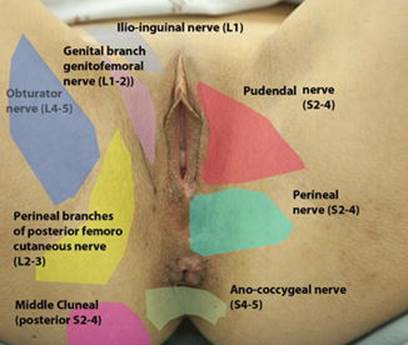
Fig. 21.1
Pudendal and sciatic nerve pain may result from mesh placement into the ischiorectal fossa during posterior repair
Pain Due to Bone
Patients may present with pain that is constant and/or exacerbated with palpation. Depending on mesh placement, bony structures at risk for injury include the inferior pubic ramus during transobturator trocar passage or sacral promontory due to ASC. The periosteum may be damaged, irritated, or infected during these procedures and may cause an inflammatory reaction and pain. As a result, osteitis or osteomyelitis may develop.
Pain Due to Muscle
Muscular pain due to mesh placement during prolapse surgery results from trocar passage or suspension sutures through muscular structures. Muscular pain can be direct due to restriction of movement by the mesh, fascial irritation, or secondary to the sensitized nociceptors of the vagina producing secondary activation giving rise to muscle spasm and pain. Muscles may be at risk for injury depending on the procedure performed. When performing anterior repairs involving transobturator passage, the hip adductors are at risk for injury. The fascia may also become inflamed contributing to pain symptoms. In addition, direct muscular penetration of the adductor longus, adductor brevis, adductor magnus, gracilis, and obturator externus, which all originate along the inferior pubic ramus and ischial rami, may produce pain. These muscles are involved in hip flexion, thigh adduction, and medial and lateral leg rotation. The pain may be exacerbated with movement of these muscles and alleviated with rest. The levator ani muscles may also be penetrated and may cause pelvic pain, dyspareunia, or pain with prolonged standing or activity [83]. During apical repairs, muscles that are at risk for injury depend upon the procedure performed. The piriformis muscle, which has its origin along the anterior sacrum, may be affected thereby inhibiting lateral thigh rotation. During vaginal vault suspension, the obturator internus, near the ischial spine, is at risk for injury. The obturator internus provides lateral thigh rotation during flexion. Mesh placement into the posterior compartment may injure the levator muscles, and pain may be exacerbated with sitting.
Pain Due to Viscera
Patients may experience diffuse pain within the abdominopelvic region. Important considerations include the presence of urinary or bowel issues, including hematuria, dysuria, obstruction, recurrent infections, constipation, and diarrhea. Mesh may be present in the bladder or urethra and cause symptoms of suprapubic pain, bladder spasms, dysuria, hematuria, OAB, and/or recurrent UTIs. During apical repairs, mesh may penetrate intra-abdominal and pelvic organs including the uterus, cervix, bladder, or bowel. Patients may present with complaints of vaginal/uterine bleeding and urinary or bowel obstruction. Posterior placement of mesh perforating the bowel may cause rectal pain, urgency, and possible bleeding and obstructive symptoms. We believe that the fundamental concept of treatment for mesh-related complications is mesh removal. The patient’s presentation will guide the type of treatment and mesh removal.
Mesh Removal
Mesh Removal for Organ Erosion
For patients found to have penetration of mesh into the bladder, a transvesical or vaginal approach may be performed depending on the comfort level of the surgeon. The mesh must be removed from the hollow organ; otherwise, there will be future risks of stone formation and recurrent UTIs. Mesh perforation into the urethra will require additional coverage using a Martius flap to prevent future urethrovesical fistula formation. If suspicion for bowel or rectal perforation exists, patients should be evaluated by a gastroenterologist, and a colonoscopy should be performed. Mesh present in the rectum may be approached transvaginally depending on surgeon preference. An adequate amount of perirectal fascia is used for layered coverage, and an interpositional flap may be placed.
Mesh Removal for Pain
For armed polypropylene mesh placement causing vaginal pain, dyspareunia, or pain with ambulating requiring mesh excision, palpable, painful cords of contracted mesh can be removed to alleviate pain. For patients who have had mesh placed in a transobturator fashion who present with leg and groin pain, the mesh arms may be removed; however, there is no guarantee in pain relief. Mesh removal requires expertise, as it can be difficult to identify and completely remove mesh components.
Mesh Removal by Compartment
Mesh placed in a transobturator fashion may cause leg and groin pain. An attempt at removal may be performed, but as previously stated, may not be curative of pain. Generally, these arms are left in situ during mesh excision procedures unless causing intractable pain, as the risks may outweigh the benefits of removal.
Removal of mesh from ASC procedures of vaginal vault suspension requires expertise in pelvic anatomy. Indications for mesh removal for ASC procedures include vaginal bleeding, draining sinus tract, exposed mesh, and chronic abdominal pain. Mesh from the sacral promontory should be removed through a transabdominal approach. Many times the scarring that has resulted from the mesh placement may be enough to suspend the vault. However, if an additional vault procedure is needed at the time of mesh removal, a piece of autologous rectus fascia may be harvested to place from the vaginal apex to the sacral promontory. For vault suspension procedures, buttock and gluteal pain may be alleviated by releasing and removing the mesh from the point of attachment to the SSL or iliococcygeus fascia.
Placement of mesh for rectocele repairs involves either apical attachment or trocar placement through the ischiorectal fossa. Patients may complain of gluteal and buttock pain since this passage traverses the gluteal muscles and may be reproducible by palpation. The area of pain should be marked prior to the patient undergoing anesthesia to clearly define the region of pain. The levators are also at risk for injury during ischiorectal fossa trocar passage. Removal of posterior vaginal wall mesh is a delicate procedure that should avoid perforation into the rectum. If rectal perforation does occur, it may be repaired in two layers with overlying perirectal tissue. If there is not adequate perirectal fascia, an interpositional flap may be required to prevent formation of a rectovaginal fistula.
Mesh Contraction, Vaginal Stenosis, Mesh Folding
Vaginal pain and dyspareunia may be caused by several factors secondary to mesh. Mesh may contract up to 30 % based on ultrasound evidence and cause vaginal shrinkage, although there is divergent evidence for this issue [84, 85]. Vaginal mesh exposure may cause vaginal discomfort and/or pain, and may cause the sexual partner to feel discomfort, termed by some as “hispareunia.” Folding is a complication by which the mesh is inserted flat but postoperatively becomes folded, creating areas of induration and “bumps” of irregularly elevated vaginal wall. A case series of women who underwent surgical intervention for symptomatic vaginal mesh contraction was evaluated where post-surgery a significant number of patients had improvement in vaginal pain and dyspareunia [86]. Their symptoms consisted of vaginal pain aggravated by movement, dyspareunia, and focal tenderness of the mesh. Many patients were also found to have mesh erosion, vaginal tightness, and vaginal shortening. Patients who suffer from vaginal stenosis and shrinkage may require a vaginoplasty to enlarge the vaginal caliber. Our preferred method is usage of a pudendal-based gluteal flap. We have found success in the gluteal flap to alleviate vaginal stenosis and dyspareunia associated with it.
Definition of Complications
The International Urogynecological Association (IUGA) and International Continence Society (ICS) jointly published a terminology and classification system for complications related to the insertion of mesh and grafts in pelvic floor surgery [87]. The classification is based on the category (C), time (T), and site (S). The CTS classification addresses all insertion and healing issues. The seven categories range from no epithelial separation but mesh prominence or contraction (category 1) to patient compromise including hematoma or systemic compromise (category 7). The categories are further classified by letter based on the presence of pain and/or infection. Time references the time when the complication was clinically diagnosed relative to the date of the procedure. The site defines the location of the mesh complication. The classification system was devised to more accurately report and standardize the reporting of mesh-related complications. However one study has shown the classification system to be highly complex, lacking clarity, and presenting poor inter-rater reliability [88].
Summary
A thorough conversation with the patient and physician should take place before embarking on POP surgery. Specifically, if mesh use is planned to augment a repair, the surgeon should provide full disclosure regarding the potential adverse effects related to mesh. Evaluation of a patient after a mesh complication requires a complete evaluation. Experienced, trained pelvic surgeons may be able to recognize and treat these conditions with fewer complications. With the patient’s best outcome as the primary goal, all steps should be taken to prevent any complications.
References
1.
Olsen AL, Smith VJ, Bergstrom JO, et al. Epidemiology of surgically managed pelvic organ prolapse and urinary incontinence. Obstet Gynecol. 1997;89:501.PubMedCrossRef
2.
Smith FJ, Holman CD, Moorin RE, et al. Lifetime risk of undergoing surgery for pelvic organ prolapse. Obstet Gynecol. 2010;116:1096.PubMedCrossRef
3.
Wu JM, Kawasaki A, Hundley AF, et al. Predicting the number of women who will undergo incontinence and prolapse surgery, 2010 to 2050. Am J Obstet Gynecol. 2011;205:230.e1.
4.
Memon H, Handa VL. Pelvic floor disorders following vaginal or cesarean delivery. Curr Opin Obstet Gynecol. 2012;24:349.PubMedCrossRef
5.
Lavy Y, Sand PK, Kaniel CI, et al. Can pelvic floor injury secondary to delivery be prevented? Int Urogynecol J. 2012;23:165.PubMedCrossRef
6.
Kudish BI, Iglesia CB, Gutman RE, et al. Risk factors for prolapse development in white, black, and Hispanic women. Female Pelvic Med Reconstr Surg. 2011;17:80.PubMedCrossRef
7.
Swift SE. The distribution of pelvic organ support in a population of female subjects seen for routine gynecologic health care. Am J Obstet Gynecol. 2000;183:277.PubMedCrossRef
8.
Gilmour DT, Dwyer PL, Carey MP. Lower urinary tract injury during gynecologic surgery and its detection by intraoperative cystoscopy. Obstet Gynecol. 1999;94:883.PubMedCrossRef
9.
Altman D, Vayrynen T, Engh ME, et al. Anterior colporrhaphy versus transvaginal mesh for pelvic-organ prolapse. N Engl J Med. 2013;364:1826.CrossRef
10.
Frankman EA, Wang L, Bunker CH, et al. Lower urinary tract injury in women in the United States, 1979–2006. Am J Obstet Gynecol. 2010;202:495.e1.
11.
Harkki-Siren P, Sjoberg J, Tiitinen A. Urinary tract injuries after hysterectomy. Obstet Gynecol. 1998;92:113.PubMedCrossRef
12.
Visco AG, Brubaker L, Nygaard I, et al. The role of preoperative urodynamic testing in stress-continent women undergoing sacrocolpopexy: the Colpopexy and Urinary Reduction Efforts (CARE) randomized surgical trial. Int Urogynecol J Pelvic Floor Dysfunct. 2008;19:607.PubMedCrossRef
13.
Wei J. A mid urethral sling prevents incontinence among women undergoing vaginal prolapse repair—the OPUS trial. Glasgow, Scotland: International Continence Society; 2011.
14.
Ballert KN, Biggs GY, Isenalumhe Jr A, et al. Managing the urethra at transvaginal pelvic organ prolapse repair: a urodynamic approach. J Urol. 2009;181:679.PubMedCrossRef
15.
de Boer TA, Vierhout ME. Predictors for overactive bladder symptoms after pelvic organ prolapse surgery. Curr Opin Obstet Gynecol. 2011;23:366.PubMed
16.
Diez-Itza I, Aizpitarte I, Becerro A, et al. Incidence of overactive bladder after vaginal hysterectomy and associated repairs for pelvic organ prolapse. Gynecol Obstet Invest. 2009;68:65.PubMedCrossRef
17.
Eilber KS, Kavaler E, Rodriguez LV, et al. Ten-year experience with transvaginal vesicovaginal fistula repair using tissue interposition. J Urol. 2003;169:1033.PubMedCrossRef
18.
Hendrix SL, Clark A, Nygaard I, et al. Pelvic organ prolapse in the Women’s Health Initiative: gravity and gravidity. Am J Obstet Gynecol. 2002;186:1160.PubMedCrossRef
19.
Lentz G. Comprehensive gynecology. Philadelphia, PA: Elsevier; 2012. p. 462.
20.
Sand PK, Koduri S, Lobel RW, et al. Prospective randomized trial of polyglactin 910 mesh to prevent recurrence of cystoceles and rectoceles. Am J Obstet Gynecol. 2001;184:1357.PubMedCrossRef
21.
Weber AM, Walters MD, Piedmonte MR, et al. Anterior colporrhaphy: a randomized trial of three surgical techniques. Am J Obstet Gynecol. 2001;185:1299.PubMedCrossRef
22.
Peterson TV, Karp DR, Aguilar VC, et al. Primary versus recurrent prolapse surgery: differences in outcomes. Int Urogynecol J. 2010;21:483.PubMedCrossRef
23.
Margulies RU, Rogers MA, Morgan DM. Outcomes of transvaginal uterosacral ligament suspension: systematic review and metaanalysis. Am J Obstet Gynecol. 2010;202:124.PubMedCrossRef
24.
Morgan DM, Larson K. Uterosacral and sacrospinous ligament suspension for restoration of apical vaginal support. Clin Obstet Gynecol. 2010;53:72.PubMedCrossRef
25.
Barber MD, Visco AG, Weidner AC, et al. Bilateral uterosacral ligament vaginal vault suspension with site-specific endopelvic fascia defect repair for treatment of pelvic organ prolapse. Am J Obstet Gynecol. 2000;183:1402.PubMedCrossRef
26.
Buller JL, Thompson JR, Cundiff GW, et al. Uterosacral ligament: description of anatomic relationships to optimize surgical safety. Obstet Gynecol. 2001;97:873.PubMedCrossRef
27.
Montoya TI, Luebbehusen HI, Schaffer JI, et al. Sensory neuropathy following suspension of the vaginal apex to the proximal uterosacral ligaments. Int Urogynecol J. 2012;23(12):1735–40.PubMedCrossRef
28.
Siddiqui NY, Mitchell TR, Bentley RC, et al. Neural entrapment during uterosacral ligament suspension: an anatomic study of female cadavers. Obstet Gynecol. 2010;116:708.PubMedCrossRef
29.
Karram M, Goldwasser S, Kleeman S, et al. High uterosacral vaginal vault suspension with fascial reconstruction for vaginal repair of enterocele and vaginal vault prolapse. Am J Obstet Gynecol. 2001;185:1339.PubMedCrossRef
30.
Ridgeway B, Barber MD, Walters MD, et al. Small bowel obstruction after vaginal vault suspension: a series of three cases. Int Urogynecol J Pelvic Floor Dysfunct. 2007;18:1237.PubMedCrossRef
31.
Petri E, Ashok K. Sacrospinous vaginal fixation–current status. Acta Obstet Gynecol Scand. 2011;90:429.PubMedCrossRef
32.
Barksdale PA, Elkins TE, Sanders CK, et al. An anatomic approach to pelvic hemorrhage during sacrospinous ligament fixation of the vaginal vault. Obstet Gynecol. 1998;91:715.PubMedCrossRef
33.
Baumann M, Salvisberg C, Mueller M, et al. Sexual function after sacrospinous fixation for vaginal vault prolapse: bad or mad? Surg Endosc. 2009;23:1013.PubMedCrossRef
34.
Hefni MA, El-Toukhy TA. Long-term outcome of vaginal sacrospinous colpopexy for marked uterovaginal and vault prolapse. Eur J Obstet Gynecol Reprod Biol. 2006;127:257.PubMedCrossRef
35.
Aigmueller T, Riss P, Dungl A, et al. Long-term follow-up after vaginal sacrospinous fixation: patient satisfaction, anatomical results and quality of life. Int Urogynecol J Pelvic Floor Dysfunct. 2008;19:965.PubMedCrossRef
36.
Maher CF, Qatawneh AM, Dwyer PL, et al. Abdominal sacral colpopexy or vaginal sacrospinous colpopexy for vaginal vault prolapse: a prospective randomized study. Am J Obstet Gynecol. 2004;190:20.PubMedCrossRef
37.
Morgan DM, Rogers MA, Huebner M, et al. Heterogeneity in anatomic outcome of sacrospinous ligament fixation for prolapse: a systematic review. Obstet Gynecol. 2007;109:1424.PubMedCrossRef
38.
Shull BL, Capen CV, Riggs MW, et al. Bilateral attachment of the vaginal cuff to iliococcygeus fascia: an effective method of cuff suspension. Am J Obstet Gynecol. 1993;168:1669.PubMedCrossRef
39.
Maher CF, Murray CJ, Carey MP, et al. Iliococcygeus or sacrospinous fixation for vaginal vault prolapse. Obstet Gynecol. 2001;98:40.PubMedCrossRef
40.
Paraiso MF, Walters MD, Rackley RR, et al. Laparoscopic and abdominal sacral colpopexies: a comparative cohort study. Am J Obstet Gynecol. 2005;192:1752.PubMedCrossRef
41.
Miranda CS, Carvajal AR. Complications of operative gynecological laparoscopy. JSLS. 2003;7:53.PubMed
42.
Dietz V, van der Vaart CH, van der Graaf Y, et al. One-year follow-up after sacrospinous hysteropexy and vaginal hysterectomy for uterine descent: a randomized study. Int Urogynecol J. 2010;21:209.PubMedCrossRef
43.
Dietz V, de Jong J, Huisman M, et al. The effectiveness of the sacrospinous hysteropexy for the primary treatment of uterovaginal prolapse. Int Urogynecol J Pelvic Floor Dysfunct. 2007;18:1271.PubMedCrossRef
44.
Maher CF, Cary MP, Slack MC, et al. Uterine preservation or hysterectomy at sacrospinous colpopexy for uterovaginal prolapse? Int Urogynecol J Pelvic Floor Dysfunct. 2001;12:381.PubMedCrossRef
45.
Kilkku P, Gronroos M, Hirvonen T, et al. Supravaginal uterine amputation vs. hysterectomy. Effects on libido and orgasm. Acta Obstet Gynecol Scand. 1983;62:147.PubMedCrossRef
46.
Zucchi A, Costantini E, Mearini L, et al. Female sexual dysfunction in urogenital prolapse surgery: colposacropexy vs. hysterocolposacropexy. J Sex Med. 2008;5:139.PubMed
47.
Jeng CJ, Yang YC, Tzeng CR, et al. Sexual functioning after vaginal hysterectomy or transvaginal sacrospinous uterine suspension for uterine prolapse: a comparison. J Reprod Med. 2005;50:669.PubMed
48.
Price N, Slack A, Jackson SR. Laparoscopic hysteropexy: the initial results of a uterine suspension procedure for uterovaginal prolapse. BJOG. 2010;117:62.PubMedCrossRef
49.
Roovers JP, van der Vaart CH, van der Bom JG, et al. A randomised controlled trial comparing abdominal and vaginal prolapse surgery: effects on urogenital function. BJOG. 2004;111:50.PubMedCrossRef
50.
Brummer TH, Jalkanen J, Fraser J, et al. FINHYST, a prospective study of 5279 hysterectomies: complications and their risk factors. Hum Reprod. 2011;26:1741.PubMedCrossRef
51.
Beer M, Kuhn A. Surgical techniques for vault prolapse: a review of the literature. Eur J Obstet Gynecol Reprod Biol. 2005;119:144.PubMedCrossRef
52.
Maher CM, Feiner B, Baessler K, et al. Surgical management of pelvic organ prolapse in women: the updated summary version Cochrane review. Int Urogynecol J. 2011;22:1445.PubMedCrossRef
53.
Visco AG, Weidner AC, Barber MD, et al. Vaginal mesh erosion after abdominal sacral colpopexy. Am J Obstet Gynecol. 2001;184:297.PubMedCrossRef
54.
Nygaard IE, McCreery R, Brubaker L, et al. Abdominal sacrocolpopexy: a comprehensive review. Obstet Gynecol. 2004;104:805.PubMedCrossRef
55.
Tan-Kim J, Menefee SA, Luber KM, et al. Prevalence and risk factors for mesh erosion after laparoscopic-assisted sacrocolpopexy. Int Urogynecol J. 2011;22:205.PubMedCrossRef
56.
Ginath S, Garely AD, Condrea A, et al. Mesh erosion following abdominal sacral colpopexy in the absence and presence of the cervical stump. Int Urogynecol J. 2013;24(1):113–8.PubMedCrossRef
57.
Cundiff GW, Varner E, Visco AG, et al. Risk factors for mesh/suture erosion following sacral colpopexy. Am J Obstet Gynecol. 2008;199:688.e1.
58.
Nieminen K, Hiltunen KM, Laitinen J, et al. Transanal or vaginal approach to rectocele repair: a prospective, randomized pilot study. Dis Colon Rectum. 2004;47:1636.PubMedCrossRef
59.
Kahn MA, Stanton SL, Kumar D. Posterior colporrhaphy is superior to the transanal repair for treatment of posterior vaginal wall prolapse. Neurourol Urodyn. 1999;18:70.
60.
Arnold MW, Stewart WR, Aguilar PS. Rectocele repair. Four years’ experience. Dis Colon Rectum. 1990;33:684.PubMedCrossRef
61.
Mathevet P, Valencia P, Cousin C, et al. Operative injuries during vaginal hysterectomy. Eur J Obstet Gynecol Reprod Biol. 2001;97:71.PubMedCrossRef
62.
Paraiso MF, Barber MD, Muir TW, et al. Rectocele repair: a randomized trial of three surgical techniques including graft augmentation. Am J Obstet Gynecol. 2006;195:1762.PubMedCrossRef
63.
Milani AL, Withagen MI, Schweitzer KJ, et al. Midline fascial plication under continuous digital transrectal control: which factors determine anatomic outcome? Int Urogynecol J. 2010;21:623.PubMedCrossRef
64.
Singh K, Cortes E, Reid WM. Evaluation of the fascial technique for surgical repair of isolated posterior vaginal wall prolapse. Obstet Gynecol. 2003;101:320.PubMedCrossRef
65.
Maher CF, Qatawneh AM, Baessler K, et al. Midline rectovaginal fascial plication for repair of rectocele and obstructed defecation. Obstet Gynecol. 2004;104:685.PubMedCrossRef
66.
Porter WE, Steele A, Walsh P, et al. The anatomic and functional outcomes of defect-specific rectocele repairs. Am J Obstet Gynecol. 1999;181:1353.PubMedCrossRef
67.
Carey M, Higgs P, Goh J, et al. Vaginal repair with mesh versus colporrhaphy for prolapse: a randomised controlled trial. BJOG. 2009;116:1380.PubMedCrossRef
68.
FDA. FDA safety communication: UPDATE on serious complications associated with transvaginal placement of surgical mesh for pelvic organ prolapse; 2011. http://www.fda.gov/medicaldevices/safety/alertsandnotices/ucm262435.htm
69.
Lindau ST, Schumm LP, Laumann EO, et al. A study of sexuality and health among older adults in the United States. N Engl J Med. 2007;357:762.PubMedCrossRef
70.
Harmanli OH, Dandolu V, Chatwani AJ, et al. Total colpocleisis for severe pelvic organ prolapse. J Reprod Med. 2003;48:703.PubMed
71.
Hoffman MS, Cardosi RJ, Lockhart J, et al. Vaginectomy with pelvic herniorrhaphy for prolapse. Am J Obstet Gynecol. 2003;189:364.PubMedCrossRef
72.
Abbasy S, Kenton K. Obliterative procedures for pelvic organ prolapse. Clin Obstet Gynecol. 2010;53:86.PubMedCrossRef
73.
Fitzgerald MP, Richter HE, Bradley CS, et al. Pelvic support, pelvic symptoms, and patient satisfaction after colpocleisis. Int Urogynecol J Pelvic Floor Dysfunct. 2008;19:1603.PubMedCrossRef
74.
FitzGerald MP, Richter HE, Siddique S, et al. Colpocleisis: a review. Int Urogynecol J Pelvic Floor Dysfunct. 2006;17:261.PubMedCrossRef
75.
von Pechmann WS, Mutone M, Fyffe J, et al. Total colpocleisis with high levator plication for the treatment of advanced pelvic organ prolapse. Am J Obstet Gynecol. 2003;189:121.CrossRef
76.
Gutman RE, Bradley CS, Ye W, et al. Effects of colpocleisis on bowel symptoms among women with severe pelvic organ prolapse. Int Urogynecol J. 2010;21:461.PubMedCrossRef
77.
Fitzgerald MP, Kulkarni N, Fenner D. Postoperative resolution of urinary retention in patients with advanced pelvic organ prolapse. Am J Obstet Gynecol. 2000;183:1361.PubMedCrossRef
78.
Koski ME, Chow D, Bedestani A, et al. Colpocleisis for advanced pelvic organ prolapse. Urology. 2012;80:542.PubMedCrossRef
79.
FDA. Surgical mesh for treatment of women with pelvic organ prolapse and stress urinary incontinence FDA executive summary; 2011. http://www.fda.gov/downloads/AdvisoryCommittees/CommitteesMeetingMaterials/MedicalDevices/MedicalDevicesAdvisoryCommittee/ObstetricsandGynecologyDevices/UCM270402.pdf
80.
Elmer C, Falconer C, Hallin A, et al. Risk factors for mesh complications after trocar guided transvaginal mesh kit repair of anterior vaginal wall prolapse. Neurourol Urodyn. 2012;31(7):1165–9.PubMedCrossRef
81.
Withagen MI, Vierhout ME, Hendriks JC, et al. Risk factors for exposure, pain, and dyspareunia after tension-free vaginal mesh procedure. Obstet Gynecol. 2011;118:629.PubMedCrossRef
82.
Kaufman Y, Singh SS, Alturki H, et al. Age and sexual activity are risk factors for mesh exposure following transvaginal mesh repair. Int Urogynecol J. 2011;22:307.PubMedCrossRef
83.
Rogo-Gupta L, Raz S. Complications of female incontinence and pelvic reconstructive surgery. New York: Humana Press; 2013. p. 87.CrossRef
84.
Dietz HP. Pelvic floor ultrasound: a review. Am J Obstet Gynecol. 2011;202:321.CrossRef
85.
Svabik K, Martan A, Masata J, et al. Ultrasound appearances after mesh implantation–evidence of mesh contraction or folding? Int Urogynecol J. 2011;22:529.PubMedCrossRef
86.
Feiner B, Maher C. Vaginal mesh contraction: definition, clinical presentation, and management. Obstet Gynecol. 2010;115:325.PubMedCrossRef
87.
Haylen BT, Freeman RM, et al. An International Urogynecological Association (IUGA)/International Continence Society (ICS) joint terminology and classification of the complications related directly to the insertion of prostheses (meshes, implants, tapes) and grafts in female pelvic floor surgery. Neurourol Urodyn. 2011;30(1):2–12. doi: 10.1002/nau.21036.
88.
Tunitsky E, Abbott S, Barber MD. Interrater reliability of the International Continence Society and International Urogynecological Association (ICS/IUGA) classification system for mesh-related complications. Am J Obstet Gynecol. 2012;206:442.e1.
89.
Abramov Y, Gandhi S, Goldberg RP, et al. Site-specific rectocele repair compared with standard posterior colporrhaphy. Obstet Gynecol. 2005;105:314.PubMedCrossRef
90.
Cundiff GW, Weidner AC, Visco AG, et al. Am J Obstet Gynecol. 1998;179:1451.
91.
Kenton K, Shott S, Brubaker L. Outcome after rectovaginal fascia reattachment for rectocele repair. Am J Obstet Gynecol. 1999;181:1360.PubMedCrossRef
92.
Glavind K, Madsen H. A prospective study of the discrete fascial defect rectocele repair. Acta Obstet Gynecol Scand. 2000;79:145.PubMedCrossRef