
Eric S. Rovner1 and Alienor S. Gilchrist1
(1)
Department of Urology, Medical University of South Carolina, 96 Jonathan Lucas Street, CSB 644, Charleston, SC 29407, USA
Eric S. Rovner
Email: rovnere@musc.edu
Abstract
Purpose of discussion: As newer materials and less invasive techniques emerge, surgical treatment of stress urinary incontinence (SUI) has increased over time. This shift has implications for the types of complications seen in contemporary practice compared to those even a few years ago. This chapter details prevention, diagnosis, evaluation, and treatment of complications of surgery for SUI.
Recent findings: Proper diagnosis and evaluation of SUI remains paramount in preventing surgical complications. Intraoperative complications, primarily bleeding and urinary tract injury vary depending on surgeon experience, operative technique, and approach as well as prompt recognition of the injury. Postoperative complications include, but are not limited to voiding dysfunction, urinary retention, vaginal extrusion, and urinary tract erosion of slings, thigh pain, and sexual dysfunction. Treatment relies on appropriate identification of the complication and may involve conservative and/or eventual surgical measures.
Summary: As surgical treatment of stress incontinence evolves, a thorough understanding of stress incontinence surgery and its attendant complications remain critical for the practicing physician.
Stress urinary incontinence (SUI) affects upwards of 40 % of American women [1]. Over the past several years, surgical treatment of SUI has evolved from mainly transvaginal needle suspensions, anterior vaginal wall plications, and retropubic suspensions to various types of slings, most commonly midurethral polypropylene slings. Sling surgeries for SUI can be classified by composition (autologous fascia, biologic or synthetic nonabsorbable materials), location of the sling (midurethral or beneath the bladder neck), and approach of placement (retropubic or transobturator). A full discussion of all the types of slings and sling complications is beyond the scope of this article but specific operations will be discussed where appropriate. The majority of the following discussion concerns midurethral slings via transobturator or retropubic approaches. Surgical treatment of SUI comprises some of the most commonly performed operations in the United States. Thus, it is important to understand how to avoid and, when necessary, diagnose and treat complications related to these surgeries.
Prevention of Complications
Although most complications are treatable and reversible, the optimal scenario is to prevent or minimize potential for adverse outcomes. This process begins in the preoperative period, initiated during the diagnostic evaluation and work-up. When determining the optimal surgical therapy for patients with urinary incontinence, many factors should be considered, including etiology and type of urinary incontinence and/or prolapse, bladder capacity, renal function, sexual function, medical comorbidities, or concurrent abdominal or pelvic pathology requiring surgical correction, prior abdominal and pelvic surgery, and finally, a patient’s suitability for and willingness to accept the risks of surgery.
Standard preoperative evaluation of an individual with stress incontinence should include a focused history and physical, objective demonstration of SUI, an assessment of post-void residual urine volume and urinalysis and culture if warranted [2]. It is recommended that the incontinence be characterized and symptom impact and patient expectations be assessed. Additional studies may be indicated to evaluate the lower urinary tract, including pad tests and voiding diary, cystoscopy, and imaging. Furthermore, voiding function should be characterized, with noninvasive flow and post-void residual measurements, with invasive urodynamics reserved for patients with abnormal findings, mixed incontinence or history of neurologic abnormalities or dysfunctional voiding [2].
Reversible factors should be addressed. For those with postmenopausal, hypoestrogenic vaginal atrophy, topical estrogen replacement may reduce the incidence of postoperative vaginal wound dehiscence or extrusion of sling material. Urinary tract infection and genital tract infection (e.g., candidiasis) should likewise be treated prior to surgical intervention. Nutritional disorders should be assessed and corrected preoperatively prior to pursuing elective surgery, such as SUI surgery. Finally, any medical comorbidities that can be optimized (i.e., diabetic control, hypertension) should be pursued. For obese individuals, recent data suggests weight loss may be associated with improvement or resolution of SUI. In a recent large randomized trial, 52 % women with weight loss experienced 70 % improvement in frequency of stress incontinent episodes and 29 % of women had resolution of their SUI [3]. Weight loss may avoid surgery in this high risk group.
Choice of operative technique should be tailored to unique scenarios. For example, synthetic slings should be avoided in stress incontinent patients with the presence of intraoperative urethral injury, urethrovaginal fistula, or urethral diverticulum [2]. In the setting of concurrent prolapse, slings should be tensioned after prolapse repair is completed [2]. Cystoscopy should be performed intraoperatively in all patients undergoing sling surgery.
Complications occur for a variety of reasons. Petri et al. [4] looked at a series of 328 reinterventions following midurethral slings at four tertiary urogynecology centers in Europe. The indications for reoperation were varied and included obstruction, dysuria, and a host of others. The most common reason cited for failure of the previous operation was poor surgical technique, however, with the next most common reason being the wrong surgical indication. Both of these factors certainly can be addressed and minimized preoperatively. Operative experience with a given procedure has also been cited as an important factor contributing to the risk of operative complications. Kuuva and Nilsson [5] reviewed a nationwide database on midurethral slings and noted that operative complications varied inversely with surgical experience. As surgeons did more procedures, the incidence of complications declined dramatically. This supports the notion that surgeons who are relative novices at a given procedure are at risk for having more complications than their experienced colleagues.
Complications Related To SUI Surgery
Intraoperative Complications
Bleeding
Multiple blood vessels traverse the deep pelvis including large venous channels in the retropubic space. Named vessels in the obturator fossa along the pelvic sidewall including the iliac vessels and within the vascular pedicle of the bladder are at risk for injury especially during vaginal incontinence surgery due to lack of direct visualization of these structures during passage of trocars or needles. Major vascular injury can quickly lead to life-threatening hemorrhage if not recognized intraoperatively and may result in large retropubic hematomas postoperatively [6, 7]. In a series of over 5,000 midurethral slings, bleeding problems were seen in 2.7 % of cases [8]. Only 0.8 % of patients required intervention for bleeding; the vast majority of cases were managed conservatively without operative intervention. Less than 1 % of patients required transfusions. There were no deaths reported in this series as a result of bleeding. In a multicenter randomized controlled trial of 597 women undergoing retropubic versus transobturator sling for stress incontinence, the incidence of bleeding requiring blood transfusion was 6 % vs. 2.3 %, respectively [9].
The risk of bleeding during surgery can be minimized but not entirely eliminated by good operative technique. Bleeding during an open retropubic dissection, such as during Burch colposuspension, is usually easily visualized and controlled with a combination of cautery, suture ligature, and direct compression, if necessary. In contrast to bleeding during retropubic surgery, bleeding during transvaginal surgery can be more problematic at times and more difficult to control. The initial dissection of the vaginal wall from the underlying fascia should be associated with minimal bleeding. Bleeding encountered during this early dissection may indicate an excessively deep and incorrect surgical plane within the wall of the bladder or urethra. In this circumstance, immediate recognition and reevaluation is necessary to avoid inadvertent entry into the urinary tract and to minimize bleeding. Following identification of this situation, dissection should proceed in the proper surgical plane; in reoperative surgery, however, this plane may be difficult to identify.
Another common site of bleeding during transvaginal anti-incontinence surgery occurs when traversing the endopelvic fascia from the vaginal side as during a retropubic urethrolysis. Entry into the retropubic space from the transvaginal side or placement of the suprapubic needles or trocars from the abdominal side may be associated with copious bleeding as the endopelvic fascia is perforated. If the bleeding is brisk, the vagina can be packed. It can be very helpful to manually elevate the anterior vaginal wall and compress it anteriorly directly against the posterior symphysis pubis for several minutes using the surgeon’s hand, sponge stick, or a retractor. These maneuvers will effectively tamponade bleeding in the retropubic space. Packing and compression will result in adequate control in the majority of cases; if not, the surgeon should expeditiously complete the procedure, close the incisions, and pack the vagina [10]. Occasionally, in addition to vaginal packing, a Foley catheter placed per urethra with the balloon overinflated and then placed on traction will add additional security. Brisk bleeding that does not respond to manual compression for an extended period of time may suggest a major vessel injury and mandates further evaluation.
Urinary Tract Injury
During surgery, the urethra, bladder, or much more rarely the ureters may be injured. Although rare, major complications from slings remain under-reported in the literature [11]. The key to the management of each of these injuries is immediate recognition and repair. Long-term sequelae resulting from unrecognized urinary tract injury can be devastating to the patient, with potentially substantial medicolegal implications for the physician.
Urethra
From the transvaginal side, injury to the urethra may occur during initial dissection of the vaginal wall off the underlying fascia. Excessively deep dissection, especially in reoperative surgery, risks urethral injury. This is usually although not invariably heralded by an unexpected amount of bleeding. Placement of a urethral catheter prior to incision will help to identify the urethra intraoperatively, and in the case of urethral injury will allow immediate recognition as the catheter may become visible in the operative field. If a urethral injury is suspected, urethroscopy may be performed. The urethra should be repaired immediately and primarily in two layers using absorbable sutures in a watertight fashion. The urethra can be repaired over a 14F or larger catheter. It is not necessary to leave a drain other than the urethral catheter. Failure to recognize the injury or failure to repair it properly risks urethrovaginal fistula, erosion of sling material into the urethral lumen postoperatively (especially synthetic sling material), infection, and a multitude of other potential problems [12]. The urethra may also be perforated with trocar passage during midurethral sling procedures. This is reported in less than 1 % patients [12]. Countertraction during the initial dissection, maintaining good exposure, and a working knowledge of the anatomy are helpful in avoiding urethral injury.
In the event of a planned synthetic sling in the setting of a concomitant urethral injury, it is advisable to repair the urethra and abort the sling procedure until the urethra is completely healed [2]. An autologous sling may be considered a safer alternative than a synthetic sling at the time of a urethral injury as an anti-incontinence procedure, but insufficient data supports this notion [2]. The urethra is rarely injured during retropubic surgery as the middle and distal thirds are protected by the symphysis pubis.
Bladder
Intraoperative bladder injury may occur during transabdominal as well as transvaginal surgery. The potential for urinary tract injury varies considerably with the experience of the surgeon as well as operative approach [13]. Two recent large multicenter randomized controlled trials comparing retropubic versus transobturator midurethral slings demonstrated higher rates of bladder injury in the retropubic approach [9, 14]. In the Urinary Incontinence Treatment Network (UITN) trial of midurethral slings, Richter et al. reported a 5 % bladder perforation rate in the retropubic cohort but no perforations in the transobturator cohort [9]. Similarly, Barber et al. reported an 8 % rate of intraoperative bladder perforation in the retropubic midurethral sling approach, compared with 0 % in the transobturator approach [14]. The Cochrane review of midurethral slings analyzed 18 trials comparing retropubic versus transobturator approaches and found bladder perforation occurred significantly less frequently via the transobturator approach, 0.3 % vs. 5.5 % (RR 0.14, 95 % CI 0.07 to 0.26) [15].
Although the type of approach (transobturator vs. retropubic) seems to impact the risk of bladder injury [16], several recent papers have suggested that surgical inexperience is a risk factor for such injury as well [13, 17]. Upon reviewing 1,136 consecutive women who underwent a midurethral sling procedure (retropubic in 874 and transobturator in 262), Stav et al. reported 32 bladder perforations, with 94 % of these perforations occurring at the hands of inexperienced surgeons (defined as having performed fewer than 50 sling surgeries) [13]. Multivariate analysis revealed other significant independent risk factors for bladder perforation included the presence of rectocele (OR 6.2), local anesthesia (OR 5.9), body mass index less than 30 kg/m2 (OR 5.6), previous Cesarean section (OR 3.7), and previous colposuspension (OR 3.2) [13]. McLennan et al. [17] reported that the risk of bladder perforation in a resident training program varied inversely with the number of cases done by the trainee. Redo surgery is almost certainly associated with a higher risk of urinary tract injury in patients undergoing midurethral sling surgery. Jeffry et al. [16] reported a bladder perforation rate during TVT of 71.4 % vs. 7.6 % in patients with prior surgery vs. those without. Likewise, in patients undergoing SPARC, Deval et al. [18] reported a 36.6 % vs. 7.5 % urinary tract injury rate in those with a history of prior surgery versus those without it.
Injury to the bladder during midurethral sling procedures is diagnosed intraoperatively by careful endoscopic examination of the bladder and bladder neck with a 70° lens following passage of the trocars. The bladder should be distended and then examined to ensure that a small injury does not go unrecognized in a fold of the bladder wall. To avoid injury during trocar needle passage, the urethra should be clearly palpated, the bladder drained prior to trocar passage, and the pelvic anatomy well delineated. If a bladder injury is noted intraoperatively, the trocar should be removed and reinserted. Bladder injury from a trocar usually does not require primary closure. Postoperative drainage of the bladder with a Foley catheter, however, is desirable to avoid urinoma, fistula formation, and pelvic abscess, though the optimal duration of catheter drainage in this setting is not well defined.
Ureter
In the era of midurethral slings, ureteric injury should be extraordinarily rare. Virtually all ureteric injuries can be identified by intraoperative cystoscopy. The administration of intravenous dyes such as indigo carmine permits obvious visualization of ureteral efflux confirming ureteral patency. Suspected ureteral injuries are confirmed by retrograde pyeloureterography. Ureteral obstruction from suture placement may be treated by removal of the offending suture and placement of a temporary indwelling ureteral stent. Ureteral transection requires ureteroneocystostomy.
Vagina
Perforation of the vaginal epithelium can occur during vaginal wall dissection or trocar passage for midurethral slings. Perforations from trocar passage, when unrecognized intraoperatively, will result in sling exposure in the vaginal cavity. This complication is often misclassified postoperatively as extrusion of the synthetic sling.
In the UITN trial of midurethral slings (TOMUS), Richter et al. reported a 4.3 % rate of vaginal epithelial perforations in the transobturator group compared with 2.0 % rate in the retropubic sling group [9]. Perforation from the trocar is identified intraoperatively by thorough visual inspection and palpation of the lateral fornices of the vagina following trocar passage. If perforation occurs, the trocar should be removed and repassed. The perforation may be oversewn with absorbable suture and does not preclude placement of a synthetic sling.
Bowel Injury
There exist multiple reports of bowel injury during urinary incontinence surgery [19–21]. Fortunately, this is a rare complication. Bowel injury may occur during entry into the retropubic space during an autologous pubovaginal sling or urethrolysis, or during passage of needle passers or trocars during midurethral slings. These can be devastating complications leading to sepsis, abscess, and even death [19]. Unfortunately, most of these injuries are not recognized until the postoperative period leading to considerable morbidity. Initial signs and symptoms heralding a bowel injury may be subtle including low-grade fever, abdominal pain, and ileus. If suspected, a diagnostic evaluation including plain and upright abdominal radiographs evaluating for the presence of intra-abdominal free air and cross-sectional imaging should be pursued expeditiously. Laparotomy, repair of the bowel injury, and possibly bowel resection are necessary for definitive treatment. In some cases, temporary proximal bowel diversion may be necessary.
Postoperative Complications
Voiding Dysfunction and Urinary Retention
Bladder outlet obstruction (BOO) following SUI may present as prolonged complete urinary retention, persistently elevated post-void residual urine volume, recurrent urinary tract infections, or as variably bothersome and poorly categorized lower urinary tract symptoms including combinations of obstructive symptoms and urinary urgency or urge incontinence. These last two groups are difficult to identify and are often not recognized as BOO by many authors. Unfortunately, development of postoperative voiding dysfunction can be unpredictable. Lemack et al. demonstrated that preoperative urodynamic parameters were unable to predict development of postoperative voiding dysfunction or risk for surgical revision in women undergoing pubovaginal sling [22].
The incidence of postoperative voiding difficulties across different sling approaches is variable and is difficult to compare. De novo urge incontinence rates at 12–23 months following autologous fascial sling is 6–13 % compared with 3–10 % with midurethral slings [2]. Historically, the incidence of postoperative retention lasting longer than 4 weeks or requiring intervention occurs in 2–8 % of patients undergoing autologous fascial slings, 5–15 % of patients undergoing synthetic slings at the bladder neck, and 2–4 % of those following midurethral slings [2]. The incidence of voiding dysfunction, including urinary retention and de novo urgency and urge incontinence, following midurethral slings ranges from approximately 3 to 21 % [9, 23–28]. Surgical intervention for voiding dysfunction and urinary retention has been reported in 0 to 4 % of patients undergoing midurethral slings [9, 24–27]. Short-term voiding difficulties and postoperative urgency following autologous pubovaginal sling appear more likely than following Burch [29]. The minimally invasive midurethral sling procedures are mechanistically tension-free and as such it is not surprising that they likely result in an overall lower incidence of postoperative voiding dysfunction than other types of open SUI procedures. When comparing the incidence of postoperative voiding dysfunction by midurethral sling approach, specifically transobturator vs. retropubic, the Cochrane review meta-analysis found no difference across 24 trials [15]. In 197 patients who underwent midurethral sling revision for voiding dysfunction, preexisting obstructive voiding symptoms, retropubic sling type, and concurrent surgery at the time of sling placement were found to be risk factors for sling revision [30].
In many individuals with lower urinary tract symptoms postoperatively who are not in frank urinary retention, the diagnosis of BOO is extremely difficult. Urodynamics, especially videourodynamics are often pursued diagnostically but may not be helpful in many cases as the classic “high pressure-low flow” pattern may not be present. Furthermore, there are no pressure-flow urodynamic criteria that accurately predict for successful voiding following urethrolysis. Various nomograms [31–33] have been developed for the diagnosis of female BOO but none are absolutely accepted as the gold standard. For patients not in frank urinary retention, the diagnosis of BOO is strongly suggested by postoperative onset of irritative voiding symptoms, recurrent urinary tract infections, and a poor urinary stream. Physical examination may be completely normal or suggest an oversuspended midvaginal segment or the lack of mobility of the urethra following insertion of a metal sound. A swan neck deformity may be seen during valsalva maneuver in some individuals. De novo prolapse should be excluded as a cause of postoperative BOO.
The timing of intervention associated with iatrogenic BOO is controversial. Indeed, most patients with transient postoperative urinary retention resume normal voiding following midurethral slings within 1–2 days of the procedure. Some patients may be delayed for 1–2 weeks, however, and those with a history of prior SUI surgery or those undergoing concomitant prolapse repair may be further delayed [34]. Some authors have recommended conservative therapy for postoperative voiding dysfunction for up to 3 months prior to attempting surgical revision [35]. However, a prolonged time to intervention for BOO may be associated with long-term, potentially irreversible bladder dysfunction, even following successful urethrolysis [36]. Compared with obstructive symptoms such as hesitancy, straining, and poor force of stream, overactive bladder symptoms caused by iatrogenically induced BOO following anti-incontinence surgery are less likely to improve despite a technically successful operation. In one series, voiding symptoms resolved in 82 % of obstructed patients following urethrolysis while OAB (storage) symptoms resolved in only 35 % [37]. In this series, increased time to intervention was not correlated with persistent detrusor dysfunction.
Once the diagnosis of BOO is considered or established, options include long-term intermittent urethral catheterization with or without antimuscarinic medication to reduce irritative symptoms, alpha-blocker pharmacotherapy (for which there is little or no evidence of efficacy in the setting of iatrogenic female BOO), and transvaginal incision of the sling. Anecdotal reports and small case series have suggested that urethral over dilation or re-exploration and “stretching” of the midurethral sling may have benefit for selected patients. Nevertheless, there is reasonable evidence that transvaginal incision of autologous pubovaginal slings as well midurethral slings is often highly successful in improving voiding dynamics [38–40]. This can be performed as short as one week from surgery, although there exists considerable variability among authors with respect to optimal timing of intervention. South et al. describe greater improvement in lower urinary tract symptoms when midline sling lysis is performed within one year after pubovaginal or midurethral sling [41]. The incision can be done under local anesthesia in some cases. Following isolation and division of the sling (Fig. 7.1), the edges of the cut sling often separate by 1–2 cm, indicating a satisfactory result. Iatrogenic obstruction due to autologous fascial slings is often treated in this manner as well [39].
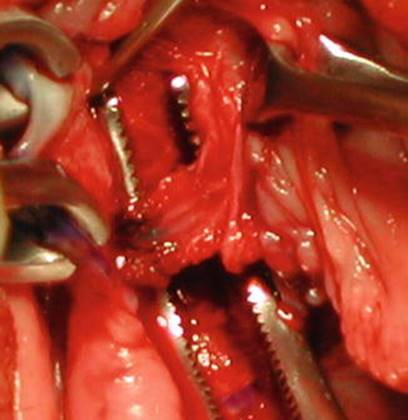
Fig. 7.1
Intraoperative isolation of obstructing midurethral sling
For patients who fail transvaginal incision, a urethrolysis may be performed [42, 43]. Via a transvaginal or retropubic approach [42, 44, 45], the retropubic space is entered and the urethra is sharply dissected off the posterior surface of the symphysis pubis and freed from the surrounding scar. The limbs of the sling or other retropubic attachments are isolated and divided in the retropubic space. Lateral attachments to the pelvic sidewall are incised as needed. A transvaginal, suprameatal approach to urethrolysis has also been described and may be particularly applicable when the anterior urethral surface is fixed to the symphysis, such as that following an MMK procedure. Recurrence of SUI symptoms following urethrolysis or sling incision may occur in 9–20 % of patients [39, 41]. Patients should be counseled regarding this possibility preoperatively as some may wish to continue on intermittent catheterization or other conservative therapy rather than risk recurrent SUI.
Vaginal Extrusion and Urinary Tract Erosion
Vaginal extrusion refers to finding exposed sling material in the vaginal canal postoperatively; erosion, however, suggests finding material within the lumen of the urinary tract at some time interval postoperatively that was clearly documented as not being within the urinary tract at the time of surgery. Reported rates of mesh extrusion and erosion range from 0 to 2 % [46].
Extrusion of material may be related to surgical technique, infection, or the physical properties of the implanted material. The extruded material may be located in the midline at the incision line or at the anterolateral vaginal wall. Midline extrusions imply wound dehiscence. Lateral extrusions may be caused by an unrecognized vaginal wall perforation or injury at time of sling placement.
Usually symptomatic, patient complaints suggesting an extrusion include a malodorous vaginal discharge, vaginal spotting, vaginal pain, and dyspareunia. Patients may present several days to months postoperatively. On physical examination the extruded material is often visible (Fig. 7.2), but physical findings may also be quite subtle [47]. Granulation tissue suggests the presence of an extrusion. Extruded synthetic mesh is often palpable within the vagina, although patient discomfort may preclude a complete examination.
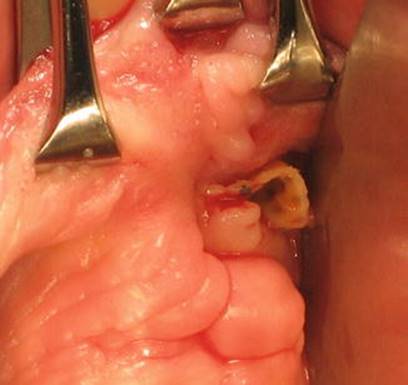
Fig. 7.2
Extruded multifilament sling
Factors responsible for extrusion include the physical nature of the implanted material, quality of the vaginal tissues of the host, sling tension, wound healing, and infection [48]. It appears that multifilament materials are at greater risk for extrusion than monofilaments [49]. In addition, the pore size of the implanted sling material that is large enough to permit fibroblast and macrophage infiltration and subsequent tissue ingrowth is an important factor in preventing extrusion [50]. Some risk factors are not well defined and are specific to the material leading to some products being removed from the market [51, 52]. It is notable that synthetic material placed years prior may eventually become infected and create a draining sinus, or become a nidus for pelvic infection or recurrent UTIs [53]. These will require exploration and explantation.
Small extrusions may heal with conservative management including the application of topical estrogen creams. Larger extrusions can be managed with copious irrigation and secondary closure in the operating room. Some patients with large extrusions may benefit from excision and removal of the extruded segment of the sling.
Urinary tract erosion may occur with synthetic, biologic, or autologous materials [54]. This is a devastating complication that, unlike extrusion, is almost always managed operatively. Whether urinary tract erosion occurs as a result of a “missed” urinary viscus perforation at the time of surgery, or occurs as a result of migration of the material into the urinary tract sometime following surgery, is unclear. Patients may complain of irritative lower urinary tract symptoms, recurrent UTIs, hematuria, and dysuria, as well as pelvic pain. The definitive diagnosis is usually made endoscopically. For intravesical erosions, endoscopic scissor or laser transection of the intravesical portion of the eroded sling may permit the remaining sling material to retract outside the urinary tract [55]. If this fails or is technically not feasible, then open operative exploration, removal of the eroded material, closure of the urinary tract, and postoperative drainage will be necessary.
Nerve Injury
Several nerves traverse through the deep pelvis as well as superficially within the lower abdominal soft tissues. These nerves are at risk for injury during female incontinence surgery. Stretch or compression injury to the femoral nerve can occur as a result of positioning. Femoral nerve compression may occur at the level of the inguinal ligament caused by flexion of the hip joint, resulting in sensory changes to the anterior thigh or in more severe cases weakness of hip flexion [56]. Severe abduction and external rotation of the thigh should be minimized during positioning to avoid this complication.
The peroneal nerve can be injured by direct compression while in the lithotomy position. Lateral direct pressure on the peroneal nerve between the stirrup at the lateral aspect of the knee joint and the fibular head for a prolonged period of time may result in a peroneal nerve palsy and foot drop [56]. This injury may also occur with compression of the fibular head against the stirrup holder, especially candy-cane stirrups as the leg rotates externally after placement in the holders. The pudendal, ilioinguinal, and iliohypogastric nerves may be injured by suprapubic trocar placement or dissection resulting in pain in the suprapubic region [57, 58].
Bone Anchor-Related Complications
With the advent of minimally invasive midurethral slings, the use of bone anchors (BA) has declined; however, there are numerous reports of bone anchor-related complications, including osteitis pubis and osteomyelitis of the symphysis pubis [59–64]. Once diagnosed, osteomyelitis related to BAs requires operative exploration and removal of the bone anchor. BAs are often seated below the cortical bone, which mandates partial resection of the overlying bone, usually with fluoroscopic guidance, to locate and remove the BA.
Sexual Dysfunction
Historically, female sexual dysfunction following surgery for SUI has only infrequently been reported. Whether this is due to a generalized lack of understanding of the condition, lack of interest in reporting or investigating its occurrence, or whether it is due to an actual low incidence is unclear. Only recently has there been a trend to query female patients regarding sexual dysfunction and to date only a few instruments exist [65].
Female sexual dysfunction is a complex and poorly understood phenomenon [66–68]. A full discussion is beyond the scope of this paper. Coital incontinence can be improved following successful sling surgery and sexual function score is likewise improved [69]; however, new onset sexual dysfunction following surgery unrelated to vaginal sling erosion has been reported in up to 20 % of individuals in some series [70, 71]. Shah et al. [72] reported no difference in female sexual function following distal urethral sling surgery. Brubaker et al. found that 2 years after pubovaginal sling surgery for SUI, patients reported improved sexual function with fewer incontinence episodes, less restriction of sexual activity as a result of fear of incontinence and no changes in rates of dyspareunia from baseline [69].
Dyspareunia is only one form of sexual dysfunction but it may occur following anti-incontinence surgery as vaginal anatomy is altered by these types of surgery. The vaginal axis can be shifted changing the angulation of the vaginal canal and narrowing of the vagina may occur as a result of aberrant scarring. Dissection along the anterior vaginal wall may result in nerve injury and neuroma formation. Band-like formation from the sling can also occur and may be palpable by the patient or partner. Ross et al. found that 52 of 85 women had a palpable sling on exam one year after TOT midurethral sling compared with only 15 out of 90 in the TVT group; however, only 11 and 9 subjects experienced tenderness with palpation, respectively [24]. De novo dyspareunia secondary to anterior vaginal wall banding in the paraurethral folds immediately adjacent to the midurethral sling was reported in 16 % of patients undergoing TOT but was absent in patients undergoing a retropubic midurethral sling approach [73].
Other poorly defined and poorly understood factors contributing to postoperative sexual dysfunction may exist. For example, in some series 4–5 % of patients following TVT or intravaginal slingplasty procedure experienced decreased libido [49, 70]. The reason for this decreased libido is unclear.
Postoperative dyspareunia should be assessed by a thorough physical examination. When vaginal scarring, banding, or narrowing, and especially sling extrusion have been excluded, other causes for new onset sexual dysfunction should be explored and treated [74].
Other Postoperative Complications
Refractory thigh or groin pain has been described following midurethral slings and may ultimately require surgical excision of the sling [75] (Fig. 7.3). Significantly higher rates of groin pain have been reported in the transobturator approach (12 %) compared with the retropubic approach (1.7 %) (RR 6, 95 % CI 3–11) in a recent Cochrane meta-analysis [15]. A recent study showing high initial incidence of postoperative thigh pain following transobturator tapes demonstrated almost complete resolution of pain after 6 months [76]. In a series of 32 patients undergoing sling removal for chronic pelvic and perineal pain, TVTs were removed via laparoscopic approach and TOTs with a combination of transvaginal and upper thigh incision, with 68 % of patients reporting improvement in pain and 22 % developing recurrent incontinence [77].
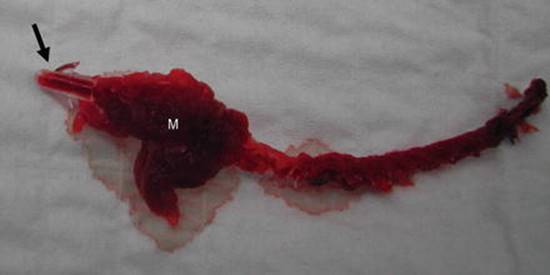
Fig. 7.3
Single incision sling removed from obturator muscle for obstruction and refractory groin pain (arrow indicates tissue anchor, M indicates obturator muscle)
Rates of postoperative surgical site infection have generally remained low, between 1 and 15 % [9, 14] since monofilament mesh has largely supplanted multifilament mesh. However, thigh and pelvic abscesses have been reported with midurethral slings and require excision of the infected mesh in addition to debridement [14, 78].
Incisional hernia at the rectus fascia harvest site has been described in a patient undergoing autologous fascial sling [79]. Care must be taken during the harvest to avoid neurovascular injuries and prevent postoperative hernia formation during fascial closure.
Urinary fistula following anti-incontinence surgery is quite rare [80] yet an unrecognized and unrepaired intraoperative injury to the ureter, bladder, or urethra may result in ureterovaginal, vesicovaginal, or urethrovaginal fistula. Intraoperative recognition of the injury is critical to prevent fistula formation and thus the importance of a careful intraoperative endoscopic examination and confirmation of urinary tract patency cannot be overemphasized. Synthetic slings should be excised at the time of fistula repair and avoided when treating concomitant SUI, with options including autologous fascia slings and biological slings [2].
Conclusions
Surgery for SUI can be associated with numerous complications. Prevention of complications is paramount. SUI surgery repair is almost always elective and therefore careful attention to optimizing the patient preoperatively is paramount. Proper preoperative diagnosis and assessment will permit operative intervention only when indicated and appropriate. The spectrum of complications is changing as different approaches and newer synthetic materials are integrated into surgical repair. Rapid recognition, evaluation, and intervention are necessary to assure satisfactory resolution.
References
1.
Norton P, Brubaker L. Urinary incontinence in women. Lancet. 2006;367(9504):57–67.PubMedCrossRef
2.
Dmochowski RR, Blaivas JM, Gormley EA, et al. Update of AUA guideline on the surgical management of female stress urinary incontinence. J Urol. 2010;183(5):1906–14.PubMedCrossRef
3.
Subak LL, Wing R, West DS, et al. Weight loss to treat urinary incontinence in overweight and obese women. N Engl J Med. 2009;360(5):481–90.PubMedCentralPubMedCrossRef
4.
Petri E, Niemeyer R, Martan A, Tunn R, Naumann G, Koelbl H. Reasons for and treatment of surgical complications with alloplastic slings. Int Urogynecol J. 2006;17(1):3–13.CrossRef
5.
Kuuva N, Nilsson CG. A nationwide analysis of complications associated with the tension-free vaginal tape (TVT) procedure. Acta Obstet Gynecol Scand. 2002;81(1):72–7.PubMedCrossRef
6.
Rajan S, Kohli N. Retropubic hematoma after transobturator sling procedure. Obstet Gynecol. 2005;106(5 Pt 2):1199–202.PubMedCrossRef
7.
Walters MD, Tulikangas PK, LaSala C, Muir TW. Vascular injury during tension-free vaginal tape procedure for stress urinary incontinence. Obstet Gynecol. 2001;98(5 Pt 2):957–9.PubMedCrossRef
8.
Kolle D, Tamussino K, Hanzal E, et al. Bleeding complications with the tension-free vaginal tape operation. Am J Obstet Gynecol. 2005;193(6):2045–9.PubMedCrossRef
9.
Richter HE, Albo ME, Zyczynski HM, et al. Retropubic versus transobturator midurethral slings for stress incontinence. N Engl J Med. 2010;362(22):2066–76.PubMedCentralPubMedCrossRef
10.
Ficazzola M, Nitti VW. Complications of incontinence procedures in women. In: Taneja S, Smith RB, Ehrlich RM, editors. Complications of urologic surgery. Philadelphia: Saunders; 2003. p. 482–98.
11.
Deng DY, Rutman M, Raz S, Rodriguez LV. Presentation and management of major complications of midurethral slings: Are complications under-reported? Neurourol Urodyn. 2007;26(1):46–52.PubMedCrossRef
12.
Morton HC, Hilton P. Urethral injury associated with minimally invasive mid-urethral sling procedures for the treatment of stress urinary incontinence: a case series and systematic literature search. BJOG. 2009;116(8):1120–6.PubMedCrossRef
13.
Stav K, Dwyer PL, Rosamilia A, Schierlitz L, Lim YN, Lee J. Risk factors for trocar injury to the bladder during mid urethral sling procedures. J Urol. 2009;182(1):174–9.PubMedCrossRef
14.
Barber MD, Kleeman S, Karram MM, et al. Transobturator tape compared with tension-free vaginal tape for the treatment of stress urinary incontinence: a randomized controlled trial. Obstet Gynecol. 2008;111(3):611–21.PubMedCrossRef
15.
Ogah J, Cody JD, Rogerson L. Minimally invasive synthetic suburethral sling operations for stress urinary incontinence in women. Cochrane Database Syst Rev. 2009;4, CD006375.PubMed
16.
Jeffry L, Deval B, Birsan A, Soriano D, Darai E. Objective and subjective cure rates after tension-free vaginal tape for treatment of urinary incontinence. Urology. 2001;58(5):702–6.PubMedCrossRef
17.
McLennan MT, Melick CF. Bladder perforation during tension-free vaginal tape procedures: analysis of learning curve and risk factors. Obstet Gynecol. 2005;106(5 Pt 1):1000–4.PubMedCrossRef
18.
Deval B, Levardon M, Samain E, et al. A French multicenter clinical trial of SPARC for stress urinary incontinence. Eur Urol. 2003;44(2):254–8. discussion 258-259.PubMedCrossRef
19.
US Food and Drug Adminsitration: Manufacturer and User Facility Device Experience (MAUDE) Database. http://www.fda.gov/cdrh/maude.html. Accessed Jan 2011
20.
Kobashi KC, Govier FE. Perioperative complications: the first 140 polypropylene pubovaginal slings. J Urol. 2003;170:1918–21.PubMedCrossRef
21.
Rooney KE, Cholhan HJ. Bowel perforation during retropubic sling procedure. Obstet Gynecol. 2010;115(2 Pt 2):429–31.PubMedCrossRef
22.
Lemack GE, Krauss S, Litman H, et al. Normal preoperative urodynamic testing does not predict voiding dysfunction after Burch colposuspension versus pubovaginal sling. J Urol. 2008;180(5):2076–80.PubMedCrossRef
23.
Rechberger T, Futyma K, Jankiewicz K, Adamiak A, Skorupski P. The clinical effectiveness of retropubic (IVS-02) and transobturator (IVS-04) midurethral slings: randomized trial. Eur Urol. 2009;56(1):24–30.PubMedCrossRef
24.
Ross S, Robert M, Swaby C, et al. Transobturator tape compared with tension-free vaginal tape for stress incontinence: a randomized controlled trial. Obstet Gynecol. 2009;114(6):1287–94.PubMedCrossRef
25.
Song PH, Kim YD, Kim HT, et al. The 7-year outcome of the tension-free vaginal tape procedure for treating female stress urinary incontinence. BJU Int. 2009;104(8):1113–7.PubMedCrossRef
26.
Ward KL, Hilton P, UK and Ireland TVT Trial Group. Tension-free vaginal tape versus colposuspension for primary urodynamic stress incontinence: 5-year follow up. BJOG. 2008;115(2):226–33.PubMedCrossRef
27.
Nazemi TM, Yamada B, Govier FE, Kuznetsov DD, Kodama K, Kobashi KC. Minimum 24-month followup of the sling for the treatment of stress urinary incontinence. J Urol. 2008;179(2):596–9.PubMedCrossRef
28.
Olsson I, Abrahamsson AK, Kroon UB. Long-term efficacy of the tension-free vaginal tape procedure for the treatment of urinary incontinence: a retrospective follow-up 11.5 years post-operatively. Int Urogynecol J. 2010;21(6):679–83.PubMedCrossRef
29.
Albo ME, Richter HE, Brubaker L, et al. Burch colposuspension versus fascial sling to reduce urinary stress incontinence. N Engl J Med. 2007;356(21):2143–55.PubMedCrossRef
30.
Molden S, Patterson D, Tarr M, et al. Risk factors leading to midurethral sling revision: a multicenter case-control study. Int Urogynecol J. 2010;21(10):1253–9.PubMedCrossRef
31.
Chassagne S, Bernier PA, Haab F, Roehrborn CG, Reisch JS, Zimmern PE. Proposed cutoff values to define bladder outlet obstruction in women. Urology. 1998;51(3):408–11.PubMedCrossRef
32.
Blaivas JG, Groutz A. Bladder outlet obstruction nomogram for women with lower urinary tract symptomatology. Neurourol Urodyn. 2000;19(5):553–64.PubMedCrossRef
33.
Defreitas GA, Zimmern PE, Lemack GE, Shariat SF. Refining diagnosis of anatomic female bladder outlet obstruction: comparison of pressure-flow study parameters in clinically obstructed women with those of normal controls. Urology. 2004;64(4):675–9. discussion 679-681.PubMedCrossRef
34.
Mutone N, Brizendine E, Hale D. Factors that influence voiding function after the tension-free vaginal tape procedure for stress urinary incontinence. Am J Obstet Gynecol. 2003;188(6):1477–81. discussion 1481-1473.PubMedCrossRef
35.
Mishra VC, Mishra N, Karim OM, Motiwala HG. Voiding dysfunction after tension-free vaginal tape: a conservative approach is often successful. Int Urogynecol J. 2005;16(3):210–4. discussion 214.CrossRef
36.
Leng WW, Davies BJ, Tarin T, Sweeney DD, Chancellor MB. Delayed treatment of bladder outlet obstruction after sling surgery: association with irreversible bladder dysfunction. J Urol. 2004;172(4 Pt 1):1379–81.PubMedCrossRef
37.
Starkman JS, Duffy 3rd JW, Wolter CE, Kaufman MR, Scarpero HM, Dmochowski RR. The evolution of obstruction induced overactive bladder symptoms following urethrolysis for female bladder outlet obstruction. J Urol. 2008;179(3):1018–23.PubMedCrossRef
38.
Goldman H. Simple sling incision for the treatment of iatrogenic urethral obstruction. Urology. 2003;62:714–8.PubMedCrossRef
39.
Nitti VW, Carlson KV, Blaivas JG, Dmochowski RR. Early results of pubovaginal sling lysis by midline sling incision. Urology. 2002;59(1):47–51. discussion 51-42.PubMedCrossRef
40.
Klutke C, Siegel S, Carlin B, Paszkiewicz E, Kirkemo A, Klutke J. Urinary retention after tension-free vaginal tape procedure: incidence and treatment. Urology. 2001;58(5):697–701.PubMedCrossRef
41.
South MM, Wu JM, Webster GD, Weidner AC, Roelands JJ, Amundsen CL. Early vs late midline sling lysis results in greater improvement in lower urinary tract symptoms. Am J Obstet Gynecol. 2009;200(5):564.e561–5.
42.
Carr LK, Webster GD. Voiding dysfunction following incontinence surgery: diagnosis and treatment with retropubic or vaginal urethrolysis. J Urol. 1997;157(3):821–3.PubMedCrossRef
43.
Romanzi LJ, Blaivas JG. Protracted urinary retention necessitating urethrolysis following tension-free vaginal tape surgery. J Urol. 2000;164(6):2022–3.PubMedCrossRef
44.
Anger JT, Amundsen CL, Webster GD. Obstruction after Burch colposuspension: a return to retropubic urethrolysis. Int Urogynecol J. 2006;17(5):455–9.CrossRef
45.
Petrou SP, Brown JA, Blaivas JG. Suprameatal transvaginal urethrolysis. J Urol. 1999;161(4):1268–71.PubMedCrossRef
46.
Daneshgari F, Kong W, Swartz M. Complications of mid urethral slings: important outcomes for future clinical trials. J Urol. 2008;180(5):1890–7.PubMedCrossRef
47.
Sweat SD, Itano NB, Clemens JQ, et al. Polypropylene mesh tape for stress urinary incontinence: complications of urethral erosion and outlet obstruction. J Urol. 2002;168(1):144–6.PubMedCrossRef
48.
Deval B, Haab F. Management of the complications of the synthetic slings. Curr Opin Urol. 2006;16(4):240–3.PubMedCrossRef
49.
Glavind K, Sander P. Erosion, defective healing and extrusion after tension-free urethropexy for the treatment of stress urinary incontinence. Int Urogynecol J. 2004;15(3):179–82.CrossRef
50.
Amrute KV, Badlani GH. Female incontinence: a review of biomaterials and minimally invasive techniques. Curr Opin Urol. 2006;16(2):54–9.PubMedCrossRef
51.
Siegel A. Vaginal mesh extrusion associated with use of Mentor transobturator sling. Urology. 2005;66:995–9.PubMedCrossRef
52.
Yamada BS, Govier FE, Stefanovic KB, Kobashi KC. High rate of vaginal erosions associated with the mentor ObTape. J Urol. 2006;176(2):651–4. discussion 654.PubMedCrossRef
53.
Smith A, Rovner E. Long-term chronic complications from Stamey endoscopic bladder neck suspension: a case series. Int Urogynecol J. 2006;17(3):290–4.CrossRef
54.
Amundsen CL, Flynn BJ, Webster GD. Urethral erosion after synthetic and nonsynthetic pubovaginal slings: differences in management and continence outcome. J Urol. 2003;170(1):134–7. discussion 137.PubMedCrossRef
55.
Frenkl TL, Rackley RR, Vasavada SP, Goldman HB. Management of iatrogenic foreign bodies of the bladder and urethra following pelvic floor surgery. Neurourol Urodyn. 2008;27(6):491–5.PubMedCrossRef
56.
Schaffer B. Pearls and perils of patient positioning. AUA Update Series. 1995;14(178–183).
57.
Fisher H, Lotze, PM. Nerve injury locations during retropubic sling procedures. Int Urogynecol J Pelvic Floor Dysfunction. 2011;22(4):439–441.
58.
Boyles SH, Edwards R, Gregory W, Clark A. Complications associated with transobturator sling procedures. Int Urogynecol J. 2007;18(1):19–22.CrossRef
59.
FitzGerald MP, Gitelis S, Brubaker L. Pubic osteomyelitis and granuloma after bone anchor placement. Int Urogynecol J. 1999;10(5):346–8.CrossRef
60.
Franks ME, Lavelle JP, Yokoyama T, Chuang YC, Chancellor MB. Metastatic osteomyelitis after pubovaginal sling using bone anchors. Urology. 2000;56(2):330–1.PubMedCrossRef
61.
Rackley RR, Abdelmalak JB, Madjar S, Yanilmaz A, Appell RA, Tchetgen MB. Bone anchor infections in female pelvic reconstructive procedures: a literature review of series and case reports. J Urol. 2001;165(6 Pt 1):1975–8.PubMed
62.
Enzler M, Agins HJ, Kogan M, et al. Osteomyelitis of the pubis following suspension of the neck of the bladder with use of bone anchors. A report of four cases. J Bone Joint Surg. 1999;81(12):1736–40.PubMed
63.
Graham CW, Dmochowski RR, Faerber GJ, Clemens JQ, Westney OL. Pubic osteomyelitis following bladder neck surgery using bone anchors: a report of 9 cases. J Urol. 2002;168(5):2055–7; discussion 2057-2058.PubMedCrossRef
64.
Stember DS, Scarpero HM, Nitti VW. Vaginal granulation tissue secondary to bone anchors: experience in two patients. J Urol. 2003;169(6):2300–1.PubMedCrossRef
65.
Jones LR. The use of validated questionnaires to assess female sexual dysfunction. World J Urol. 2002;20(2):89–92.PubMedCrossRef
66.
Bancroft J. The medicalization of female sexual dysfunction: the need for caution. Arch Sex Behav. 2002;31(5):451–5.PubMedCrossRef
67.
Berman JR, Goldstein I. Female sexual dysfunction. Urol Clin North Am. 2001;28(2):405–16.PubMedCrossRef
68.
Moynihan R. The making of a disease: female sexual dysfunction. BMJ. 2003;326(7379):45–7.PubMedCentralPubMedCrossRef
69.
Brubaker L, Chiang S, Zyczynski H, et al. The impact of stress incontinence surgery on female sexual function. Am J Obstet Gynecol. 2009;200(5):562.e561–7.
70.
Lemack GE, Zimmern PE. Sexual function after vaginal surgery for stress incontinence: results of a mailed questionnaire. Urology. 2000;56(2):223–7.PubMedCrossRef
71.
Mazouni C, Karsenty G, Bretelle F, Bladou F, Gamerre M, Serment G. Urinary complications and sexual function after the tension-free vaginal tape procedure. Acta Obstet Gynecol Scand. 2004;83(10):955–61.PubMedCrossRef
72.
Shah SM, Bukkapatnam R, Rodriguez LV. Impact of vaginal surgery for stress urinary incontinence on female sexual function: is the use of polypropylene mesh detrimental? Urology. 2005;65(2):270–4.PubMedCrossRef
73.
Cholhan HJ, Hutchings TB, Rooney KE. Dyspareunia associated with paraurethral banding in the transobturator sling. Am J Obstet Gynecol. 2010;202(5):481.e481–5.
74.
Berman JR, Adhikari SP, Goldstein I. Anatomy and physiology of female sexual function and dysfunction: classification, evaluation and treatment options. Eur Urol. 2000;38(1):20–9.PubMedCrossRef
75.
Wolter CE, Starkman JS, Scarpero HM, Dmochowski RR. Removal of transobturator midurethral sling for refractory thigh pain. Urology. 2008;72(2):461.e461–3.CrossRef
76.
Teo R, Moran P, Mayne C, Tincello D. Randomized trial of tension-free vaginal tape and tension-free vaginal tape-obturator for urodynamic stress incontinence in women. J Urol. 2011;185(4):1350–5.PubMedCrossRef
77.
Rigaud J, Pothin P, Labat JJ, et al. Functional results after tape removal for chronic pelvic pain following tension-free vaginal tape or transobturator tape. J Urol. 2010;184(2):610–5.PubMedCrossRef
78.
Lee SYKJ, Park SJ, Kwon YW, Nguyen HB, Chang IH, Kim TH, Kim YS. Bilateral recurrent thigh abscesses for five years after a transobturator tape implantation for stress urinary incontinence. Korean J Urol. 2010;51(9):657–9.PubMedCentralPubMedCrossRef
79.
Gomelsky A, Dmochowski RR. Incisional bladder hernia after rectus fascial sling. J Urol. 2003;169(6):2299.PubMedCrossRef
80.
Estevez JP, Cosson M, Boukerrou M. An uncommon case of urethrovaginal fistula resulting from tension-free vaginal tape. Int Urogynecol J. 2010;21(7):889–91.PubMedCrossRef