
Smoothies are just plain delicious. These drinks provide an enjoyable way to get both your nutrients and your probiotics. You can use yogurt, kefir, water kefir, kombucha, rejuvelac, or cider as a probiotic base for smoothies, blending this base with your favorite fruit for a tasty beverage. Smoothies are a great probiotic option for anyone who does not like the taste of other fermented foods. If you have kids and are looking for a great way to slip them something healthy (such as green juice powder, vegetable juice, or vitamin powder), then try disguising it in a probiotic drink that everyone will love!
This section also includes recipes for a parfait, frozen yogurt, and a frozen drink. In fact, you can make a parfait or a slushy frozen drink from nearly any one of the smoothie recipes. Just go easy on the liquid ingredients and aim to make the blended ingredients into more of a purée than a liquid. Most people eat parfaits with a spoon rather than drinking them. Pour the blended purée into a parfait glass, tumbler, wine glass, or whatever vessel you want to use, and then sprinkle on any “topping” ingredients you wish to add, such as granola, chopped nuts, shredded coconut, or dried fruit.
If you would like different layers in your parfait, then wash the blender between uses and simply make some different short-on-liquid smoothies. This book’s parfait recipe lists several different fruits that help create a rainbow of colors. And of course, you can blend some chocolate syrup, chocolate chips, or cocoa powder for a choco layer, peanut butter for a peanut layer, garlic for a … okay, I’ll stop there. Alternate with dry topping ingredients to create additional layers.
To make a frozen drink, you can freeze the fruit that is called for in the smoothie recipe. Alternatively, you can add a handful or two of ice. Some people blend up all the other ingredients first and then add the ice last, pulsing it in the blender until the ice or frozen fruit is small enough for you. The best blenders can make a good frozen drink, but it is difficult to get them quite as slushy as the commercial blenders. There even is one “instant” frozen yogurt recipe that is just as simple as a smoothie: it uses frozen fruit to get the ice crystals, so there is no waiting time at all between making and eating.
If you have made your own smoothies before, then you know how simple smoothie making can be. You may even have your own recipes already, which can be modified easily to incorporate more probiotics. If you have never made a smoothie before, then you can start with one of my recipes in this chapter. From there, please feel free to make modifications based on your own preferences and what local fruit you have available. Experiment a little and you may improve on my recipes, creating your own smoothie masterpieces.
To make a smoothie, all you need is a blender, some fruit (fresh or frozen), some probiotic yogurt or fermented drink, possibly some fruit or veggie juice, and any other ingredients you wish to add. Additional ingredients can include leafy green vegetables, green juice powder, protein powder, nuts, frozen yogurt, honey, jam, or ice. Hey, you can even throw in some garlic and anchovies if you want—it’s your drink!
The word smoothie was part of my vocabulary at an early age. When I was a kid, my parents used to make one with bananas and milk. Once I was old enough to operate a blender, I started making my own smoothies, usually with a few more ingredients. I rarely use recipes to make smoothies, and rarely make the exact same smoothie twice. This is not because I am some culinary genius; it’s just that smoothies are very forgiving. You can make them a different way each time and still come out all right. There is plenty of room for error, and room for experimentation.
Each of the recipes in this chapter provides a starting point for smoothie making. The proportions of ingredients are the most important aspect, but even these can vary. Some people like a thick smoothie that goes down like a glass of milk, while others prefer a thick concoction you can stand a spoon in. My recipes will produce drinks that are a bit on the thick side, but generally drinkable through a straw (assuming you have a good blender that can reduce the fruit to tiny chunks).
Once you have the basic proportions figured out, then feel free to substitute ingredients and innovate. For example, if you see a recipe for a pineapple smoothie, when your local plums are in season, then go ahead and use plums instead. Fresh, ripe, seasonal, local fruit is always best.
If the fruit you use is quite different from the one in the recipe, then you can make adjustments. For example, pineapple has more fiber and is drier than a juicy, ripe plum. Pineapple is also quite acidic, while most plums probably are sweeter than all but the ripest pineapples. So if you use plums, you could cut down on any other sweet ingredient the recipe calls for (such as honey or apple juice) and you might not need as much liquid. However, if your plums are purely sweet without much background flavor, your smoothie may end up tasting rather insipid (sweet, but lacking in flavor). Plums are one of my favorite fruits, but most of them do not make a good smoothie on their own. Consider adding extra yogurt or kefir, a little orange or cranberry juice, or even a twist of lemon or lime to create more of a tangy taste.
Frozen fruit works just as well in smoothies and frozen desserts as fresh fruit. If you want a cold smoothie or instant frozen yogurt, frozen fruit is perfect. I sometimes freeze fresh fruit just so I can put it in smoothies. Besides, good quality fruit is scarce in the winter and early spring. My family drinks fewer smoothies during the cooler months than at any other time of the year, simply because good fruit is harder to get or more expensive at these times. A smoothie is a great way to enjoy good fruit that was frozen in its prime.
Frozen raw fruit still contains most of its nutritional goodness (including enzymes) as well as the same fresh fruit flavor. During the summer, when the cherry, blueberry, strawberry, blackberry, and peach crops peak, we either pick our own or buy boxes of the best quality fruit at a discount. Then we wash, trim/pit, chop, and freeze these fruits in double zipper bags or freezer containers. I have tried this with other fruits as well, but these ones are the winners with our kids.
Here is my rundown on various fruits and what they add to a smoothie or frozen dessert.
Apples are one of my favorite fruits, but they do not blend very well. You may be comfortable cooking them first (think of apple butter), while I prefer my ingredients raw. Raw apples create a smoothie with crunchy texture, which may make them a better fit for a parfait or frozen yogurt. Another option is to juice them first, because apple juice is a terrific sweetening ingredient in smoothies and blended foods.
Bananas provide an unbeatable thick texture as well as a great background sweetness. Though I am not what you would call a banana person (I rarely eat them), I think they are nearly essential to a good smoothie. Fortunately, they are available in most regions at most times of the year. Put a banana or two in your smoothie and it’s hard to go wrong.
Blueberries, Cranberries, Blackberries, and Raspberries can add terrific flavor and healthy antioxidants to smoothies. There is nothing like that wild blackberry taste, and in many places, you can harvest bucket loads of blackberries for free in the countryside. High quality, ripe raspberries can make a great smoothie addition also. However, both raspberries and blackberries are very seedy, and if the fruit is not of premium quality, then they will add a mostly sour taste without much aroma. I will only use these at their peak of flavor and ripeness. If you find these berries make too seedy of a smoothie, then feel free to strain out the seeds. As far as blueberries and cranberries go, it is hard to go wrong with using them in smoothies. They are also very easy to freeze during their peak season, which allows you to use blueberries or cranberries year-round at times when they are expensive or absent from stores. Cranberries, of course, are pretty sour, so use them in moderation and add some sweetener.
Cherries add a beautiful color, a good range of nutrients, and plenty of antioxidants to smoothies. I have a guillotine-style fruit stoner, and even with that contraption it becomes a pain in the neck to pit all those cherries. But when winter comes, the pitting is worth every minute, because we can enjoy ripe cherries year-round in smoothies and frozen desserts. We wait until the peak of the season when they are on sale, buy several pounds’ worth of dark, ripe cherries at a discount, then wash, pit, and freeze them. If you use sour cherries, you will need extra sweetener, such as honey.
Dates are a great sweetening option in smoothies. Though they are very high in antioxidants, you can only use a few dates in a smoothie because of the amount of sugar. Dried dates blend fairly well unless they are really dried out.
Figs are really seedy. I love eating them, but I don’t put them in smoothies. Well, maybe one or two really ripe ones!
Grapes, in general, are rather disappointing in smoothies, though some people like them in a chunky frozen yogurt. Aromatic grapes like Concords can make a great juice that tastes fabulous in smoothies. But as far as blending them in? The skins get in the way, as do any seeds. I suggest just using the juice if you want a grape flavor, unless you do not mind eating or straining out bits of skin and possibly seeds. Of course, if you have some seedless, thin-skinned table grapes around and want to throw in a handful or two, they make a nice sweet addition to any blended confection.
Guavas are good in smoothies as well, adding a terrific flavor and a slightly grainy pear texture (unless you just use the juice). They require varying amounts of sweetener, since some guavas are quite sweet on their own, while others are almost as sour as lemons.
Kiwis should not be combined with dairy because they contain a powerful enzyme that creates a bitter taste. If you make a smoothie based on yogurt or kefir, then leave out the kiwis, but they are good in a vegan smoothie that is milk-free or uses an alternative such as almond or soy milk. Ripe kiwis have it all: sweetness, tartness, and a wonderful smoothie texture after being puréed in a blender.
Lemons and Limes are slightly less useful than their sweeter citrus cousins. You can use a little lemon or lime juice in a smoothie, but only a little before it gets quite sour. I particularly love the taste of limes and Meyer lemons, so I often use them to provide a tangy, flavorful twist. But if you use much more than a few drops, then you are making one sour smoothie (unless you add some sugary ingredient and go the lemonade route). Fermented base ingredients, like yogurt, already are pretty sour. By the way, use some zest from the peel in any food or drink if you want to incorporate the taste or lemons and limes without the sourness.
Mangoes are one of the best possible fruits to add to a smoothie. They have a great flavor and plenty of sweetness. Best of all, puréed mango makes a custardy texture that thickens up a smoothie. This is one of the few fruits that can both replace a banana and flavor a smoothie all by itself. Mangoes are related to poison ivy and many people (including me) have an allergic reaction to them. If you cut off the skin and the few millimeters or so on the outside of the fruit’s flesh (those closest to the peel), then this removes most of the offending substance. I can tolerate mangoes in small doses and my body seems to tolerate them when they are combined with a thick yogurt or kefir; most other people can enjoy them in larger quantities. One other plus with mangoes is that sometimes the grocery stores in the United States (and probably elsewhere) have a good crop of them for sale in the springtime when local temperate fruits are not ready yet. Mangoes provide a welcome source of fresh fruit flavor and are a very dense source of nutrition.
Melons are mostly water. Even the sweetest and most flavorful are turned to juice in a blender. This is fine if you treat melons as juice. Like pears, most melons will not thicken your smoothie very much, unless they are less than ripe (in which case they add crunchy chunks). The recipe for instant frozen yogurt recommends using melons, and it actually tastes great when they still are a little bit chunky.
Oranges, Grapefruits, and Mandarins/Tangerines provide an important acidic tang to smoothies as well as some sweetness. Oftentimes, I taste a smoothie that I’ve just blended and conclude that it’s missing something. After squeezing in a ¼ cup or so of fresh orange juice, I taste it again and decide it is perfect. If you like the taste of grapefruit, as I do, then feel free to use as much fresh grapefruit juice as you like. I use mandarins and tangerines just like oranges for their juice. The bonus with mandarins and tangerines is their terrific flavor and aroma.
Peaches/Plums/Nectarines/Apricots/Hybrid Stone Fruits can be great in smoothies, especially when they are at their peak of ripeness, sweetness, and aroma. At less than their peak, they can add more tartness than flavor, so even if you compensate by sweetening things up with some honey or apple juice, your smoothie can be a little on the acidic side. Also, make sure they are fully ripe so that they actually purée, unless you do not mind chunks.
Pears are sweet additions to smoothies when fully ripe. Grainy pears will add a slightly earthy texture to your smoothie, while the creamiest ones seem to disappear into juice. Even the ripest and softest pears, though, will not create body the way that a banana does. Think of pears as more juicy ingredients, and of course they need to be fully ripe to purée well. Asian pears have a texture more like apples, which makes them more difficult to blend well than the soft European and American varieties.
Pineapples and Papayas are two tropical fruits that taste great in smoothies. Like kiwis, both have powerful enzymes that can begin curdling milk right away. So again, I would go with a nonmilk smoothie, though yogurt seems okay. Both of these fruits are delicious in smoothies, papayas having a custardy texture and pineapples being a bit more fibrous (but quite blendable).
Strawberries are an excellent smoothie fruit. Fully ripe strawberries make a very fine purée, which not only flavors but thickens a smoothie. In my area, we have access to fresh strawberries for much of the year, and they are quite cheap at their peak. As a result, we either have fresh or frozen berries year-round, and they end up as either a starring or supporting ingredient in nearly every smoothie we make. Strawberries are not as seedy as raspberries and blackberries, but you can strain out the seeds with a fine mesh strainer if you want.
With other fruits I have not covered, from mangosteens to cherimoyas to pawpaws to sapotes to currants to gooseberries, I just don’t have a lot of experience with these in my area. Feel free to experiment!
Strawberry Banana Shake
Makes 5–6 cups
Where I live in Northern California, we can get fresh, local strawberries several times per year. The rest of the time, we keep frozen berries for use in smoothies. And of course, bananas always seem to be available in stores. So this is our classic smoothie recipe. Often, we vary it by adding or substituting other fruit that is in season or in the freezer. Use two bananas if you like it thicker and sweeter. Since strawberries can vary in sweetness/sourness, feel free to adjust the honey or sugar as needed.
• 1 cup milk or CRASH alternative
• 1 cup yogurt
• 3 cups ripe strawberries
• 1–2 large, ripe bananas
• ¼ cup orange juice or apple juice
• Honey or sugar to taste
Place all ingredients in a blender. Blend, taste, adjust with additional honey or sugar, and serve.

Mango Lassi
Makes 3–4 cups
If you like mangoes, this drink is a tropical dream. If you have ever had a mango lassi at an Indian restaurant, this is a close homemade rendition. Many restaurant versions use canned mango juice, which has an intense sweet taste and added sugar. Of course, you can buy a can of this at an Asian grocery store and use it instead of mangoes. But using ripe mangoes will create a fresher taste with plenty of sweetness (and I mean really ripe ones, since anything less is sour and remains chunky after blending). This recipe tastes great with coconut milk as well—it’s kind of a mango-colada!
• ½ cup yogurt or cottage cheese
• ¾ cup milk or CRASH alternative
• 2 large ripe mangoes, peeled and cut
• Optional: 1 teaspoon honey (or more if your mangoes are a bit sour)
• Optional: Dash of ground cardamom or nutmeg
Place all ingredients in a blender. Blend, taste, adjust with additional honey or sugar, and serve.
Blackberry Smoothie
Makes 4–6 cups
This smoothie, with its vibrant purple-blue color, is my pick for the most beautiful drink in this book. It also tastes great, particularly if you use ripe berries. You can use blueberries or raspberries if you prefer. There are a lot of seeds, so if you don’t like this aspect, then run it through a strainer after blending.

• 2 cups blackberries
• 1 cup yogurt or kefir
• 1 banana
• 1 cup cider or apple juice
• 2–4 tablespoons honey (less if you use apple juice)
Place all ingredients in a blender. Blend, taste, adjust with additional honey or sugar, and serve.
Cherry Kombucha Smoothie
Makes 3–4 cups
Feel free to substitute blueberries, blackberries, or raspberries for the cherries. Adding yogurt makes this tarter, while a banana sweetens it. Use a little honey or sugar if your fruit is too tart.
• 1 cup kombucha
• ½ cup yogurt and/or 1 ripe banana
• 1½ cups frozen, pitted sweet cherries
Place all ingredients in a blender. Blend, taste, adjust with additional honey or sugar, and serve.
Peanut Butter and Jelly Smoothie
Makes about 4 cups
If you love eating a PB&J sandwich, try drinking one! You can use almond butter, cashew butter, or a nut-flax butter for this if you prefer. Raw foodies can use raw nut butter. Whatever your favorite nut butter, I recommend creamy and unsalted (if you can find it) versus the chunky and salted varieties.
• 2 ripe bananas
• ½ cup blackberries, blueberries, or pitted cherries
• ½ cup milk or CRASH alternative
• ½ cup yogurt or kefir
• ¼–½ cup peanut butter
Place all ingredients in a blender. Blend, taste, adjust with additional honey or sugar, and serve.
Pina Colada
Makes 3–4 cups
• 1 cup coconut milk or coconut kefir
• 1 cup yogurt or cottage cheese
• ½ teaspoon coconut extract
• 2 cups pineapple, chopped, fresh or frozen
• Optional: Honey or sugar to taste (particularly if pineapple is sour)
Place all ingredients in a blender. Blend, taste, adjust with additional honey or sugar, and serve.
Krautberry Smoothie
Makes about 4 cups
Here’s one for kraut diehards. The addition of sauerkraut gives this smoothie a tangy, salty kick. Omit the banana if you prefer a savory smoothie. Add your favorite cliché here: This will put hair on your chest … it will separate the men/women from the boys/girls … it’s an acquired taste … you won’t know what you’re missing unless you try it.
• ¼–½ cup sauerkraut
• 1 banana
• 1 cup yogurt or kefir
• 1 cup strawberries, blackberries, raspberries, or blueberries (or use other fruit, fresh or frozen)
• 1 cup apple juice, cider, kombucha, or water kefir
Place all ingredients in a blender. Blend, taste, adjust with additional honey or sugar, and serve.
Mint Mojito Smoothie
Makes 3–4 cups
Ah, the refreshing Cuban-Caribbean combination of mint and fresh lime. If you find it a bit too sour, go easy on the lime juice.

• 1 cup kombucha, water kefir, or rejuvelac
• 15–20 leaves of fresh mint, removed from stems
• 1 cup yogurt
• 1 banana
• 1 avocado, peeled and pitted
• 2 tablespoons lime juice
• Optional: Additional lime juice if you like it really sour. To add additional lime flavor without the acidic kick, you can add the zest of 1 lime instead.
Place all ingredients in a blender. Blend, taste, adjust with additional honey or sugar, and serve.
Red, White, and Blue (or Rainbow) Fruit Parfait
Makes about 4–5 cups
Try this healthy and festive-looking dish for a holiday or anytime. The parfait is layered with different colored fruit purées, most of them blended with honey-vanilla yogurt. So the only challenge is washing your blender in between colors. This recipe goes for the red, white, and blue look, but you can use other colors for a rainbow effect: orange from mangoes or peaches, yellow from pineapple, green from kiwis, and purple from dark plums, blackberries, or cherries. Just remember (in case you did not know) that kiwis, papayas, and pineapples have very powerful enzymes of their own that can curdle dairy products and make them bitter, so if you use these fruits, a layer of 100 percent fruit purée (no yogurt) may be best. Use frozen fruit for a more refreshing treat or fresh fruit for a healthy breakfast treat. To make this more of a meal, feel free to add additional layers with solid ingredients, such as granola, nuts, or your favorite breakfast cereal.

White layer and base:
• 3 cups yogurt
• 2 tablespoons honey
• ¼ teaspoon vanilla extract
Blend all ingredients. Then remove 2 cups of the yogurt mixture and reserve this. Use the remaining yogurt mixture in the blender to make your blue layer.
Blue layer:
• 1 cup blueberries
• 1 cup yogurt mixture (see above)
Add blueberries to the rest of the yogurt mixture that remains in the blender. Blend thoroughly. Remove blue mixture and set aside. Wash out blender.
Red layer:
• 1 cup strawberries or ½ cup strawberries + ½ cup watermelon
• 1 teaspoon honey or sugar (if the berries are sour)
• 1 cup yogurt mixture
Blend thoroughly. Then assemble parfait in a tall glass, wine glass, tumbler, or parfait glass. First, spoon or pour blue layer into bottom third of glass. Sprinkle any solid topping (such as granola) over this if you wish. Then cover it with the white layer, up to two-thirds of the height of the glass. Again, sprinkle in any solid layer you wish to add. Top with the red layer and garnish with extra berries.
Frozen Chocolate Mocha Latte
Makes about 5–6 cups
To make this recipe, you will need a good blender that can really crush the ice. Or else you can convert it to an iced coffee by just adding the ice cubes after you blend up the rest of the drink (it will be more intense this way, so feel free to dilute it with additional water or milk). Begin by making some strong coffee. You can use a coffee maker or brew it by hand. Use 2½ cups water and at least ½ cup of ground coffee to brew some strong stuff. Any variety of coffee works. Optionally, you can add some sliced almonds or almond butter for an almond mocha flavor (with or without the chocolate ingredients).
• 2½ cups strong coffee, freshly brewed
• 1 cup yogurt
• 1 cup ice cubes
• ¼ cup whipped cream (or substitute milk for lower-fat version)
• 1 tablespoon chocolate syrup
• 1 teaspoon chocolate chips
• ¼ teaspoon vanilla extract
• Sugar or honey to taste
• Optional: 1 tablespoon almond butter or sliced almonds, plus replace the vanilla with almond extract
Put all ingredients (except ice) in a blender and blend them on a high setting until puréed. Taste to see whether additional sugar or honey is needed. Then add ice and blend on a pulse setting until the ice has reached your desired size. Some people like a crushed ice drink with fairly large ice cubes in it that are semi-incorporated, while others prefer to get the ice crystals as small as possible without them dissolving. Few home blenders are capable of rendering the slushy ice drinks that commercial blenders can create, but this will be close to the real thing!

Please see additional smoothie recipes in the next chapter, where they are classified as green drinks.
Blueberry Frozen Yogurt
Mmmm, it’s good. Makes about 6 cups.
• 3 cups blueberries
• 2 cups yogurt
• ½ cup sugar
• 1 cup milk
• 1 tablespoon lemon juice
In a saucepan, bring berries, lemon juice, and sugar to a boil, then turn to medium heat and simmer for 10 minutes, adding a little water if needed to keep the mixture from drying out. Combine yogurt and milk in a blender or food processor, add berries, and mix (on a quick-pulse setting if you want to maintain any chunkiness). Then follow directions in the Peach Ice Cream (page 131) recipe for freezing.
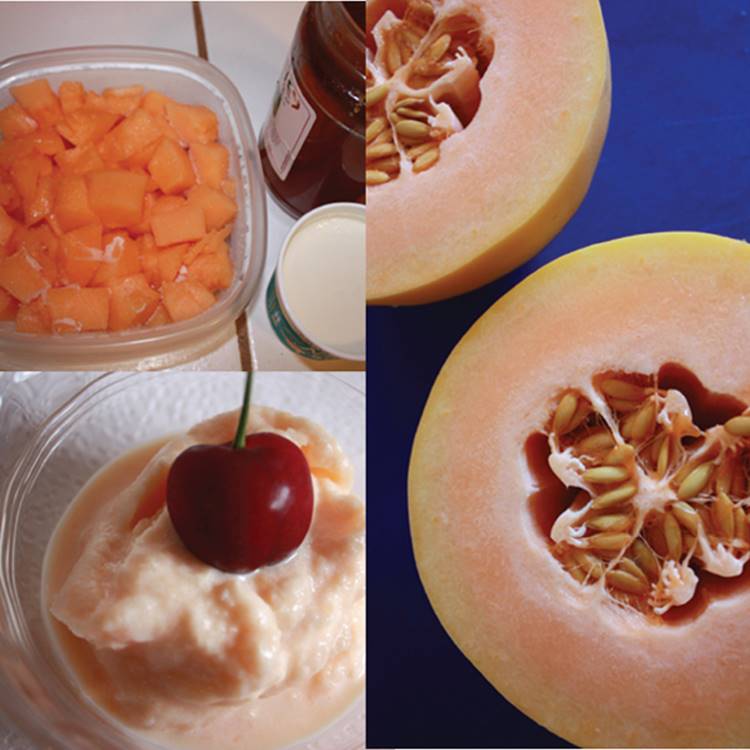
Instant Frozen Yogurt (Melon or Strawberry)
Makes about 3–5 cups
This recipe uses frozen fruit, which is blended with yogurt to achieve something close to soft-serve frozen yogurt. It works best with frozen chunks of ripe melon, almost as well with frozen strawberries, and reasonably well with slices of juicy peaches or plums. Most other fruits do not have the proper ratio of juice or the flavor to carry this dish. I sometimes freeze a small handful of banana slices and add this if the melon is not intensely flavored.
• 2–3 cups frozen fruit (start with two and add more if needed)
• ½ cup yogurt
• ½ cup sugar or substitute
• 1 tablespoon lemon juice
Do not thaw frozen fruit. Put all ingredients in blender and blend them together on a high setting. Scrape edges of the blender to make sure everything gets incorporated. If the frozen yogurt is too liquidy, then add a little more frozen fruit.
Chocolate-Chocolate Chip Frozen Yogurt
Makes about 3–4 cups
• 2 cups yogurt
• ½ cup cocoa powder (unsweetened)
• ½ cup sugar or substitute
• ½ teaspoon vanilla extract
• Handful or two of chocolate chips, milk or dark
• Optional: Replace ¼–½ cup of the yogurt with milk or cream to make it creamier and cut the sourness a bit
Put all ingredients, except for the chocolate chips, in a blender or food processor. Once they are well blended, add chocolate chips. If you like them whole, then stop blending. If you prefer them to be in smaller pieces and more incorporated, then blend on a pulse setting until they are the right size for you. Then follow directions in the Peach Ice Cream recipe (page 131) for freezing.

