
Jonathan S. Berek
Gestational trophoblastic neoplasia (GTN) represents a unique spectrum of diseases that includes benign hydatidiform mole; invasive mole (chorioadenoma destruens), which can metastasize; and the frankly malignant variety, choriocarcinoma. Most molar pregnancies are sporadic, but a familial syndrome of recurrent hydatidiform mole has been described. Future research should lead to identification of the genetic defect responsible for this uncommon syndrome.
Most patients (80% to 90%) with GTN follow a benign course, with their disease remitting spontaneously. Most patients with metastatic disease can be effectively cured with chemotherapy. This diverse group of diseases has a sensitive tumor marker, human chorionic gonadotropin (hCG), which is secreted by all these tumors and allows accurate follow-up and assessment of the disease.
 Epidemiology and Etiology
The incidence of molar pregnancy is about 1 in every 1500 to 2000 pregnancies among whites in the United States. There is a much higher incidence among Asian women in the United States (1 in 800) and an even higher incidence among women in Asia, for example, Taiwan (1 in every 125 to 200 pregnancies). The risk for the development of a second molar pregnancy is 1% to 3%, or as much as 40 times greater than the risk for developing the first molar pregnancy.
Although the cause of GTN is unknown, it is known to occur more frequently in women younger than 20 years and in those older than 40 years. It appears that GTN may result from defective fertilization, a process that is more common in both younger and older individuals. Diet may play a causative role. The incidence of molar pregnancy has been noted to be higher in geographic areas where people consume less β-carotene (a retinoid) and folic acid.
Genetics of Gestational Trophoblastic Disease
The cytogenetic analysis of tissue obtained from molar pregnancies offers some clue to the genesis of these lesions. Figure 42-1 illustrates the genetic composition of molar pregnancies.
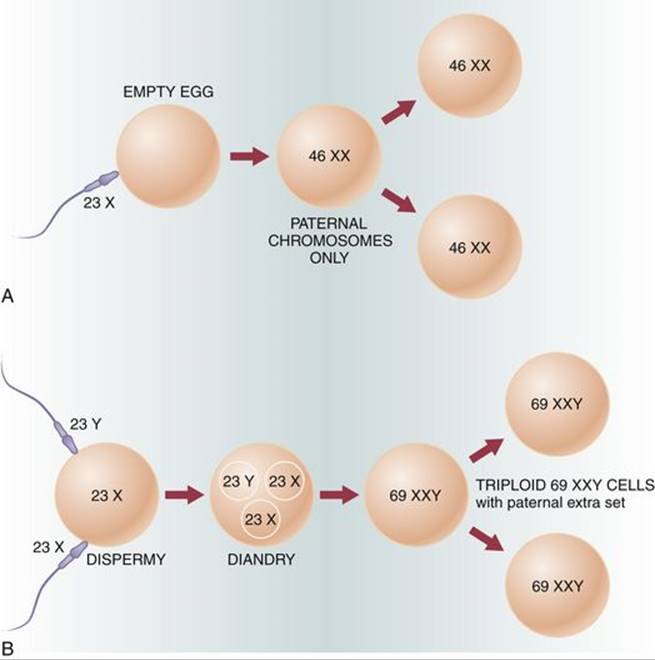
FIGURE 42-1 Cytogenetic makeup of hydatidiform mole. A: Chromosomal origin of a complete mole. A single sperm fertilizes an “empty egg.” Reduplication of its 23 X set gives a completely homozygous diploid genome of 46 XX. A similar result follows fertilization of an empty egg by two sperms with two independently drawn sets of 23 X or 23 Y; note that both karyotypes, 46 XX and 46 XY, can ensue. B: Chromosomal origin of the triploid, partial mole. A normal egg with a 23 X haploid set is fertilized by two sperms that can carry either sex chromosome to give a total of 69 chromosomes with a sex chromosome configuration of XXY, XXX, or XYY. A similar result can be obtained by fertilization with a sperm carrying the unreduced paternal genome 46 XY (resulting sex complement, XXY only).
(Adapted from Szulman AE: Syndromes of hydatidiform moles: Partial vs. complete. J Reprod Med 29:789-790, 1984.)
COMPLETE MOLE
Most hydatidiform moles are “complete” moles and have a 46 XX karyotype. Specialized studies indicate that both of the X chromosomes are paternally derived. This androgenic origin probably results from fertilization of an “empty egg” (i.e., an egg without chromosomes) by a haploid sperm (23 X), which then duplicates to restore the diploid chromosomal complement (46 XX). Only a small percentage of lesions are 46 XY. Complete molar pregnancy is only rarely associated with a fetus, and this may represent a form of twinning.
PARTIAL MOLE
In the “incomplete” or partial mole, the karyotype is usually a triploid, often 69 XXY (80%). Most of the remaining lesions are 69 XXX or 69 XYY. Occasionally mosaic patterns occur. These lesions, unlike complete moles, often present with a coexistent fetus. The fetus usually has a triploid karyotype and is defective.
CHORIOCARCINOMA
Genetic analysis of choriocarcinomas usually reveals aneuploidy or polyploidy, typical for anaplastic carcinomas.
Classification
The term gestational trophoblastic neoplasia is of clinical value because often the diagnosis is made and therapy instituted without definitive knowledge of the precise histologic pattern. GTN may be benign or malignant and nonmetastatic or metastatic (Box 42-1).

BOX 42-1 Classification of Gestational Trophoblastic Neoplasia
Benign
Hydatidiform mole
• Complete mole
• Incomplete (“partial”) mole
Malignant
Invasive mole (“chorioadenoma destruens”)
Choriocarcinoma
Malignant gestational trophoblastic disease may be:
• Nonmetastatic
• Metastatic
Good prognosis
Poor prognosis
The benign form of GTN is called hydatidiform mole. Although this entity is usually confined to the uterine cavity, trophoblastic tissue can occasionally embolize to the lungs. The malignant forms of GTN are invasive mole and choriocarcinoma. Invasive mole is usually a locally invasive lesion, although it can be associated with metastases. This lesion accounts for most patients who have persistent hCG titers following molar evacuation. Choriocarcinoma is the frankly malignant form of GTN.
Metastatic GTN can be subdivided into good prognosis and poor prognosis groups, depending on the sites of metastases and other clinical variables (Box 42-2).
BOX 42-2 Clinical Features of Metastatic Gestational Neoplasia with a Poor Prognosis
hCG, human chorionic gonadotropin.
• Urinary hCG level > 100,000 IU/24 hr, or serum hCG level > 40,000 IU
• Disease presents more than 4 mo from the antecedent pregnancy
• Metastasis to the brain or liver (regardless of hCG titer or duration of disease)
• Prior failure to respond to single-agent chemotherapy
• Choriocarcinoma after a full-term delivery
Pathologic Features
Grossly, a hydatidiform mole appears as multiple vesicles that have been classically described as a “bunch of grapes” (Figure 42-2). The characteristic histopathologic findings associated with a complete molar pregnancy are (1) hydropic villi, (2) absence of fetal blood vessels, and (3) hyperplasia of trophoblastic tissue (Figure 42-3). Invasive mole differs from hydatidiform mole only in its propensity to invade locally and to metastasize.

FIGURE 42-2 Complete hydatidiform mole. Multiple hydropic villi (vesicles), resembling a bunch of grapes, are admixed with areas of necrosis (white areas) and hemorrhage. Note the absence of a fetus.
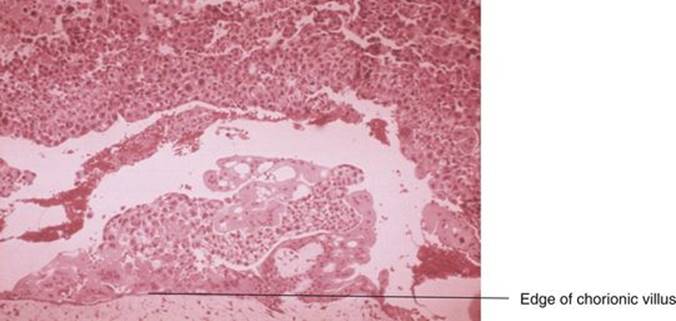
FIGURE 42-3 Histologic appearance of a complete hydatidiform mole. Note the marked trophoblastic proliferation.
A partial mole has some hydropic villi, whereas other villi are essentially normal. Fetal vessels are seen in a partial mole, and the trophoblastic tissue exhibits less striking hyperplasia.
Choriocarcinoma in the uterus appears grossly as a vascular-appearing, irregular, and “beefy” tumor, often growing through the uterine wall. Metastatic lesions appear hemorrhagic and have the consistency of currant jelly. Histologically, choriocarcinoma consists of sheets of malignant cytotrophoblast and syncytiotrophoblast with no identifiable villi.
Hydatidiform Mole
SYMPTOMS
Most patients with hydatidiform mole present with irregular or heavy vaginal bleeding during the first or early second trimester of pregnancy (Box 42-3). The bleeding is usually painless, although it can be associated with uterine contractions. In addition, the patient may expel molar “vesicles” from the vagina and occasionally may have excessive nausea, even hyperemesis gravidarum. Irritability, dizziness, and photophobia may occur because some patients experience preeclampsia. Patients may occasionally exhibit symptoms relating to hyperthyroidism, such as nervousness, anorexia, and tremors.
BOX 42-3 Diagnosis of Hydatidiform Mole
Clinical Data
• Bleeding in the first half of pregnancy
• Lower abdominal pain
• Toxemia before 24 weeks’ gestation
• Hyperemesis gravidarum
• Uterus “large for dates” (only 50% of cases)
• Absent fetal heart tones and fetal parts
• Expulsion of vesicles
Diagnostic Studies
• Ultrasonography
• Chest film
• Serum β-human chorionic gonadotropin higher than normal pregnancy values
SIGNS
The patient’s vital signs may reveal tachycardia, tachypnea, and hypertension, reflecting the presence of preeclampsia or clinical hyperthyroidism. Funduscopic examination may show arteriolar spasm. In the rare case of trophoblastic emboli to the pulmonary system, wheezing and rhonchi may be noted on chest examination. Abdominal examination may reveal an enlarged uterus. Auscultation of the uterus is typically remarkable for the absence of fetal heart sounds.
On pelvic examination, the grape-like vesicles of the mole may be detected in the vagina. Blood clots may be present. About half of patients with molar pregnancy present with a uterus that is bigger than expected based on their last menstrual period, whereas about one fourth have a size compatible with or smaller than gestational age. Ovarian enlargement by theca-lutein cysts occurs in about one third of women with molar pregnancies.This may be difficult to detect until the uterus has been evacuated.
DIAGNOSIS
The β-hCG titers can be high for early pregnancy. This should alert the physician that the patient might have GTN or a multiple gestation. The condition must also be distinguished from a threatened spontaneous abortion or an ectopic pregnancy.
Definitive diagnosis of hydatidiform mole can usually be made ultrasonographically. Ultrasonography is noninvasive and reveals a “snowstorm” pattern that is diagnostic.
CLINICAL INVESTIGATIONS
Patients who have the presumptive or definitive diagnosis of hydatidiform mole should have a complete blood count obtained to exclude anemia, which might require a transfusion. They require an assessment of the platelet count, prothrombin time, partial thromboplastin time, and a fibrinogen level because an occasional patient may experience disseminated intravascular coagulation. Liver and renal function tests should be performed. Blood should be typed and crossmatched in the event that excessive bleeding is encountered at the time of evacuation of the mole. A chest film should be obtained, as should an electrocardiogram if tachycardia is present or if the patient is older than 40 years.
STAGING
The International Federation of Gynecology and Obstetrics (FIGO) staging system for gestational trophoblastic tumors is shown in Table 42-1.
Stage I: Patients with persistently elevated hCG levels and tumor confined to the uterine corpus
Stage II: Patients with metastases to the vagina, pelvis, or both
Stage III: Patients with pulmonary metastases with or without uterine, vaginal, or pelvic involvement. The diagnosis is based on a rising hCG level in the presence of pulmonary lesions on chest film.
Stage IV: Patients with advanced disease and involvement of the brain (Figure 42-4), liver, kidneys, or gastrointestinal tract. These patients are in the highest risk category because their disease is most likely to be resistant to chemotherapy. The histologic pattern of choriocarcinoma is usually present, and disease commonly follows a nonmolar pregnancy.
TABLE 42-1 INTERNATIONAL FEDERATION OF GYNECOLOGY AND OBSTETRICS (FIGO) STAGING OF GESTATIONAL TROPHOBLASTIC NEOPLASIA
|
Stage I |
Disease confined to uterus |
|
Stage Ia |
Disease confined to uterus with no risk factors |
|
Stage Ib |
Disease confined to uterus with one risk factor |
|
Stage Ic |
Disease confined to uterus with two risk factors |
|
Stage II |
Gestational trophoblastic tumor extending outside uterus but limited to genital structures (adnexa, vagina, broad ligament) |
|
Stage IIa |
Gestational trophoblastic tumor involving genital structures without risk factors |
|
Stage IIb |
Gestational trophoblastic tumor extending outside uterus but limited to genital structures with one risk factor |
|
Stage IIc |
Gestational trophoblastic tumor extending outside uterus but limited to genital structures with two risk factors |
|
Stage III |
Gestational trophoblastic disease extending to lungs with or without known genital tract involvement |
|
Stage IIIa |
Gestational trophoblastic tumor extending to lungs with or without genital tract involvement and with no risk factors |
|
Stage IIIb |
Gestational trophoblastic tumor extending to lungs with or without genital tract involvement and with one risk factor |
|
Stage IIIc |
Gestational trophoblastic tumor extending to lungs with or without genital tract involvement and with two risk factors |
|
Stage IV |
All other metastatic sites |
|
Stage IVa |
All other metastatic sites without risk factors |
|
Stage IVb |
All other metastatic sites with one risk factor |
|
Stage IVc |
All other metastatic sites with two risk factors |
Risk factors affecting staging include the following: (1) human chorionic gonadotropin greater than 100,000 IU/mL and (2) duration of disease longer than 6 months from termination of antecedent pregnancy. The following factors should be considered and noted in reporting: (1) prior chemotherapy has been given for known gestational trophoblastic tumor, (2) placental-site tumors should be reported separately, (3) histologic verification of disease is not required.
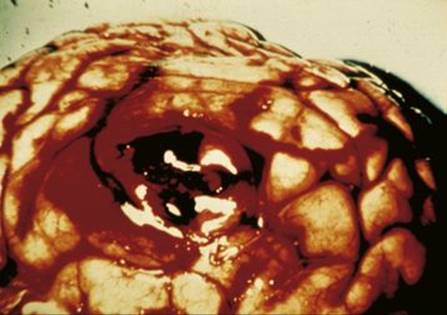
FIGURE 42-4 Autopsy specimen showing a cerebral metastasis from choriocarcinoma. Brain metastases carry a high mortality.
TREATMENT
Evacuation
The standard therapy for hydatidiform mole is suction evacuation followed by sharp curettage of the uterine cavity, regardless of the duration of pregnancy. This should be performed in the operating room with general or regional anesthesia. Intravenous oxytocin is given simultaneously to help stimulate uterine contractions and reduce blood loss. This technique is associated with a low incidence of uterine perforation and trophoblastic embolization.
Most patients have an uncomplicated course in the immediate postoperative period. Some require transfusion, however, because of excessive blood loss. Abnormal clotting parameters should be treated with fresh frozen plasma and platelet transfusions, as indicated. Rarely, a patient can experience acute respiratory distress from trophoblastic embolization or fluid overload. Such patients may require respiratory support through a ventilator and careful cardiopulmonary monitoring.
Monitoring Levels of the β Subunit of Human Chorionic Gonadotropin
After the evacuation of a hydatidiform mole, the patient must be monitored with weekly serum assays of β-hCG. Because the titers drop to a low level, a nonspecific pregnancy test cannot be used because of the possibility of cross-reactivity with luteinizing hormone. The radioimmunoassay, sensitive to levels of 1 to 5 mIU/mL, should be used. There are currently several reference standards used to measure hCG in serum, each with its own scale. It is very important, therefore, either to use the same standard each time for measurement or to accurately adjust for any differences between reference standards before making any comparisons between test results. Following the evacuation, the β-hCG levels should steadily decline to undetectable levels, usually within 12 to 16 weeks. A normal regression curve for β-hCG levels following evacuation of a molar pregnancy is shown in Figure 42-5.
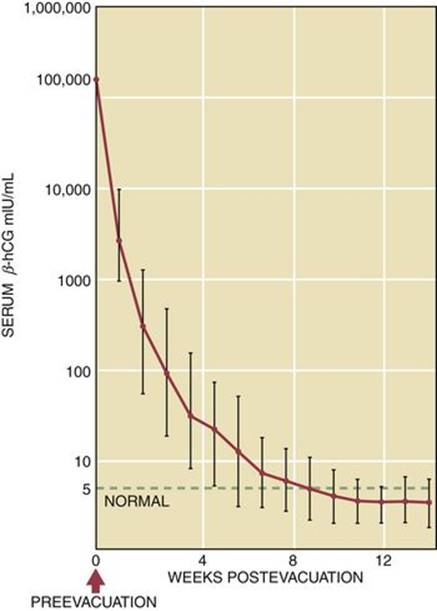
FIGURE 42-5 Normal regression curve of β-human chorionic gonadotropin after molar evacuation.
(Adapted from Morrow CP, Nakamura R, Schaerth J, et al: Clinical and laboratory correlates of molar pregnancy and trophoblastic disease. Am J Obstet Gynecol 128:428, 1977.)
Chemotherapy
Prophylactic chemotherapy is not indicated in patients with molar pregnancy because 90% of these individuals have spontaneous remissions. If the β-hCG levels plateau or rise at any time, chemotherapy should be initiated. This is discussed later in this chapter.
Partial Mole
The incomplete or partial mole is usually associated with a developing fetus. Patients with a partial mole display most of the pathologic and clinical features of patients with a complete mole, although usually in a less severe form. Partial moles are usually diagnosed later than are complete moles and generally present as a spontaneous or missed abortion.
It is unusual for a partial mole to be detected before the spontaneous termination of a pregnancy. Ultrasonography performed for other indications may indicate possible molar degeneration of the placenta associated with the developing fetus. Under these circumstances, an amniocentesis should be performed to determine whether the karyotype of the coexisting fetus is normal.
Uterine enlargement is much less common; most patients with partial moles are actually “small for dates.” When preeclampsia occurs with a partial mole, it may be severe, but the condition usually occurs between 17 and 22 weeks, about 1 month later than with a complete mole. The most striking difference between partial and complete moles is related to the malignant potential of the two lesions. Partial moles rarely metastasize, and only rarely is there the need for chemotherapy because of β-hCG levels that have plateaued or risen.
Invasive Mole
Invasive mole is usually a locally invasive tumor. It constitutes about 5% to 10% of all molar pregnancies, representing most of those with persistent β-hCG levels after molar evacuation. The lesion may penetrate the entire myometrium, rupture through the uterus, and result in hemorrhage into the broad ligament or peritoneal cavity. Rarely, invasive mole is associated with metastases, particularly to the vagina or lungs, although brain metastases have been documented.
Histologic confirmation of invasive mole is almost always made at the time of hysterectomy. The latter is usually performed in patients with persistent β-hCG levels following evacuation of a molar pregnancy or in patients with persistent titers despite chemotherapy who have no evidence of metastatic disease. The hysterectomy is usually curative.
PLACENTAL-SITE TROPHOBLASTIC TUMOR
Placental-site trophoblastic tumor is an uncommon but important variant of GTN that consists predominantly of intermediate trophoblast and a few syncytial elements. These tumors produce small amounts of hCG and human placental lactogen relative to their mass, tend to remain confined to the uterus, and metastasize late in their course. In contrast to other trophoblastic tumors, placental-site tumors are relatively insensitive to chemotherapy, so surgical resection of disease is important.
Choriocarcinoma
The frankly malignant form of GTN is choriocarcinoma. About one half of patients with gestational choriocarcinoma have had a preceding molar pregnancy. In the remaining patients, the disease is preceded by a spontaneous or induced abortion, ectopic pregnancy, or normal pregnancy. Trophoblastic disease following a normal pregnancy is always choriocarcinoma. The tumor has a tendency to disseminate hematogenously, particularly to the lungs, vagina, brain, liver, kidneys, and gastrointestinal tract.
SYMPTOMS
Most patients with choriocarcinoma present with symptoms of metastatic disease. Vaginal bleeding is a common symptom of uterine choriocarcinoma or vaginal metastasis. Because of the gonadotropin excretion, amenorrhea may develop, simulating early pregnancy. Hemoptysis, cough, or dyspnea may occur as a result of lung metastasis. In the presence of central nervous system metastases, the patient may complain of headaches, dizzy spells, “blacking out,” or other symptoms referable to a space-occupying lesion in the brain. Rectal bleeding or dark stools could represent disease that has metastasized to the gastrointestinal tract.
SIGNS
The signs, like the symptoms, are common to many pathologic entities.
Uterine enlargement may be present, with blood coming through the os, as seen on examination with a speculum. A tumor metastatic to the vagina may present with a firm, discolored mass. Occasionally, the patient presents with an acute abdomen because of rupture of the uterus, liver, or theca-lutein cyst. Neurologic signs, such as partial weakness or paralysis, dysphasia, aphasia, or unreactive pupils, indicate probable central nervous system involvement.
DIAGNOSIS
Choriocarcinoma is a great imitator of other diseases, so unless it follows a molar pregnancy, it may not be suspected. In females of reproductive age, a β-hCG measurement to screen for choriocarcinoma should be performed when any unusual symptoms or signs develop.
INVESTIGATIONS
If the β-hCG level is elevated, the workup of a patient with choriocarcinoma is the same as that for patients with hydatidiform mole, but it should also include computed tomography (CT) scans of the abdomen, pelvis, and head. In addition, a lumbar puncture should be performed if the CT scan of the brain is normal because simultaneous evaluation of the β-hCG level in the cerebrospinal fluid and serum may allow detection of early cerebral metastases. Because the β subunit does not readily cross the blood-brain barrier, a ratio of serum to cerebrospinal fluid β-hCG levels of less than 40:1 suggests central nervous system involvement, with secretion of the β-hCG directly into the cerebrospinal fluid.
Treatment of Gestational Trophoblastic Neoplasia
An approach to treatment of GTN with nonmetastatic disease (good prognosis) and metastatic disease (poor prognosis) follows.
NONMETASTATIC AND METASTATIC GESTATIONAL TROPHOBLASTIC NEOPLASIA WITH A GOOD PROGNOSIS
The chemotherapy most often employed is either methotrexate or actinomycin D (Box 42-4). Methotrexate is usually given as a daily dose for 5 consecutive days or every other day for 8 days, alternating with folinic acid (leucovorin). This folinic acid “rescue” regimen is associated with significantly less bone marrow, gastrointestinal, and liver toxicity. Actinomycin D is given for 5 consecutive days intravenously or every other week as a single dose.
BOX 42-4 Single-Agent Chemotherapy for Molar Pregnancy
CBC, complete blood count; IM, intramuscularly; IV, intravenously; SGOT, serum glutamic oxaloacetic transaminase.
Actinomycin D Treatment
Five-Day Actinomycin D
Actinomycin D, 12 μg/kg IV daily for 5 days
CBC, platelet count, SGOT determination daily
With response, re-treat at the same dose
Without response, add 2 μg/kg to the initial dose or switch to methotrexate protocol
Pulse Actinomycin D
Actinomycin D, 1.25 mg/m2 every 2 wk
Methotrexate Treatment
5-Day Methotrexate
Methotrexate, 0.4 mg/kg IV or IM daily for 5 days
CBC, platelet count daily
With response, re-treat at the same dose
Without response, increase dose to 0.6 mg/kg or switch to actinomycin D protocol
Pulse Methotrexate
Methotrexate 40 mg/m2 IM weekly
Protocol for Methotrexate with Folinic Acid “Rescue”
Methotrexate, 1 mg/kg/day IM or IV on days 1, 3, 5, 7 followed 24 hr later by 0.1 mg/kg/day of folinic acid “rescue” on days 2, 4, 6, and 8
In appropriately selected patients, hysterectomy may be the primary therapy for hydatidiform mole. Women older than 40 years have an increased incidence of choriocarcinoma after molar pregnancy. These patients may decrease their risk for malignant sequelae by undergoing hysterectomy.
METASTATIC GESTATIONAL TROPHOBLASTIC NEOPLASIA WITH A POOR PROGNOSIS
For patients with disease having a poor prognosis, combination chemotherapy is always used. Regimens that have been successfully employed include methotrexate, actinomycin D, and cyclophosphamide (MAC), or the modified Bagshawe regimen (EMA-CO), which is a six-drug chemotherapy regimen. The drugs used include etoposide (VP-16), actinomycin D, vincristine, cyclophosphamide, methotrexate, and folinic acid. For patients whose disease fails to improve with these agents, combinations of cisplatin and etoposide or vinblastine, with or without bleomycin, have been used.
In patients with disease metastatic to the brain or liver, radiation is often employed to these areas in conjunction with chemotherapy. The whole brain tolerates an initial dose of 2000 to 3000 cGy, with fractions of about 200 cGy per day. Together with systemic chemotherapy, a 50% cure rate can be expected. Liver metastases are usually treated with about 2000 cGy.
Surgery plays a role in selected cases, especially hysterectomy and pulmonary resection for chemotherapy-resistant disease.
FOLLOW-UP STUDIES
Following three normal β-hCG levels, patients with a good prognosis should be followed with monthly levels for 1 year. Patients with a poor prognosis should have monthly titer determinations for 2 years or more. Thereafter, levels should be checked every 3 months until 5 years have elapsed. Patients should be advised to not become pregnant again within the first 9 to 12 months after molar evacuation and should be given a reliable contraceptive. If a patient’s levels become normal and later are found to be rising, a second metastatic workup must be undertaken before the initiation of secondary therapy.
PROGNOSIS
About 95% to 100% of patients with GTN having a good prognosis are cured of their disease. Patients with poor prognostic features can be expected to be cured in only 50% to 70% of cases. Most patients who die have brain or liver metastases.
SUGGESTED READING
El-Helw L.M., Hancock B.W. Treatment of gestational trophoblastic neoplasia (Review). Lancet Oncol. 2007;8:715-724.
Garner E.I., Goldstein D.P., Feltmate C.M., Berkowitz R.S. Gestational trophoblastic disease. Clin Obstet Gynecol. 2007;50:112-122.
Lurian J.R., Singh D.K., Schink J.C. Role of surgery in the management of high-risk gestational trophoblastic neoplasia. J Reprod Med. 2006;51:773-776.
Ngan S., Seckl M.J. Gestational trophoblastic neoplasia management: An update (Review). Curr Opin Oncol. 2007;19:486-491.
Soper J.T., Spillman M., Sampson J.H., et al. High-risk gestational neoplasia with brain metastases: Individualized multidisciplinary therapy in the management of four patients. Gynecol Oncol.