
Paula C. Brady1
(1)
Department of Obstetrics, Gynecology and Reproductive Biology, Brigham and Women’s Hospital, Boston, MA, USA
Paula C. Brady
Email: Pbrady2@partners.org
Keywords
VulvovaginitisVulvar hematomaStraddle injuryForeign bodyLichen sclerosisSexual abuse
Differential Diagnosis
Vaginal Bleeding or Bloody Vaginal Discharge
· Trauma
· Foreign body
· Shigella species
· Yersinia species
· Neonatal withdrawal bleeding
· Menses:
o Menarche
o Precocious puberty
o Hypothyroidism
· Hemangioma
· Malignancy
Infectious Vulvovaginitis
· Streptococcus pyogenes (Group A streptococcus)
· Haemophilus influenzae
· Streptococcus pneumoniae
· Staphylococcus aureus
· Shigella species
· Yersinia species
· Neisseria gonorrhoeae
· Chlamydia trachomatis
· Trichomonas vaginalis
· Herpes simplex virus (HSV)
· Herpes zoster
· Syphilis
· Chancroid
· Granuloma inguinale, also called donovanosis
· Lymphogranuloma venereum (LGV)
· Molluscum contagiosum
· Condyloma acuminata
· Pinworm
· Scabies
· Candida species
· Tinea cruris
· Post viral or idiopathic genital ulcers
· Human immunodeficiency virus (HIV)
· Tuberculosis
Noninfectious Vulvovaginitis
· Inflammatory and/or immune-mediated:
o Allergic or irritant contact dermatitis
o Atopic dermatitis
o Foreign body
· Inflammatory and/or immune-mediated continued:
o Lichen sclerosis
o Behçet syndrome
o Inflammatory bowel disease
o Pyoderma gangrenosum
o Stevens-Johnson syndrome (SJS)
o Toxic epidermal necrolysis (TEN)
o Erythema multiforme
o Bullous pemphigoid
o Mucous membrane pemphigoid
o Pemphigus vulgaris
o Linear immunoglobulin A (IgA) dermatosis
o Paraneoplastic pemphigus
o Hidradenitis suppurativa
o Psoriasis
o Periodic fever, aphthous stomatitis, pharyngitis, and cervical adenitis (PFAPA)
· Hormonal
o Labial adhesions
· Urologic
o Urethral prolapse
o Ectopic ureter
· Other
o Zinc deficiency
o Hemangioma
o Hematologic malignancy
o Vaginal malignancy
o Langerhans cell histiocytosis
Vesicles/Ulcers
· Herpes simplex virus
· Herpes zoster, caused by varicella-zoster virus
· Molluscum contagiosum
· Post viral or idiopathic genital ulcers
· Allergic or irritant contact dermatitis
· Ulcerated hemangiomaImpetigo
· Syphilis
· Chancroid
· Granuloma inguinale, also called donovanosis
· Lymphogranuloma venereum (LGV)
· Periodic fever, aphthous stomatitis, pharyngitis, and cervical adenitis (PFAPA)
· Behçet syndrome
· Langerhans cell histiocytosis
· Pyoderma gangrenosum
· Stevens-Johnson syndrome (SJS)
· Toxic epidermal necrolysis (TEN)
· Erythema multiforme
· Bullous pemphigoid
· Mucous membrane pemphigoid
· Pemphigus vulgaris
· Linear IgA dermatosis
· Paraneoplastic pemphigus
· Hidradenitis suppurativa
· Hematologic malignancy
· Human immunodeficiency virus (HIV)
· Tuberculosis
Please refer to Chap. 7 , Vulvovaginal Dermatoses, Lesions and Masses
Vulvovaginal masses
· Acrochordons (skin tags)
· Vaginal polyp
· Redundant hymeneal tissue (often mistaken for polyp)
· Epidermoid inclusion cyst (sebaceous cyst)Urethral prolapse
· Hemangioma
· Condyloma acuminata
· Bartholin’s gland cyst/abscess
· Uncommon cases: Vaginal malignancy, lipomas, neurofibromas
Please refer to Chap. 7 , Vulvovaginal Dermatoses, Lesions and Masses for full list
When You Get the Call
Ask for a full set of vital signs. Ensure the patient is in a private room to allow for an exam.
When You Arrive
Review the patient’s vital signs, making note of signs of symptomatic anemia (tachycardia, hypotension) in a patient with bleeding or evidence of infection (fever, tachycardia); of note, pediatric vital sign ranges differ from adult ranges. Determine who is accompanying the patient (parent, legal guardian) for purposes of consent and reviewing the patient’s history.
History
The patient history should be tailored to the chief complaint. Obtain a complete history of the present illness including onset, duration, and severity of bleeding, associated symptoms of vulvovaginitis including discharge or itching, and any vulvovaginal trauma. A review of systems can include dysuria, pain with defecation and fevers.
Obtain a full medical history including any recent infections in the patient or family members—including respiratory and gastrointestinal infections, scabies, pinworm—known hematologic or autoimmune disorders, or a history of epistaxis, bleeding gums or petechiae. If the complaint is vaginal discharge or bleeding, ask whether she has had prior presentations for retained foreign bodies. When caring for an adolescent patient, review whether she has reached menarche and whether menses are regular. Inquire whether she is sexually active and using contraception.
Review recent antibiotic use, exogenous estrogen exposure (either through oral contraceptive use in adolescents, inappropriate access to hormonal medications in children, or use of herbal medications), or use of any new soaps, detergents, lotions, or other possible contact irritants. Consider, based on the patient’s prior presentations, medical history, social history, and current presentation—and an account of her current presentation in her own words—whether the patient is vulnerable to sexual or physical abuse. Symptoms such as headaches, abdominal pain, or nightmares may indicate abuse [1].
Physical Examination
Note secondary sexual characteristics, including breast development and pubic and axillary hair development. As indicated, check for oral ulcers and plaques, scales, or bullae on extensor or flexor surfaces. Check for abscesses or scars in the axilla (suggestive of hidradenitis suppurativa). Assess for any other skin findings including café-au-lait spots and hemangiomas. Make note of bruises and abrasions elsewhere on the patient’s body, which may lend insight into the mechanism of injury or may indicate physical or sexual abuse.
Perform an abdominal exam, specifically looking for pelvic masses. A pelvic mass may be most easily palpated by rectal exam. In order to perform vulvar exams in children, the knee-chest (Fig. 11.1) or frog-leg position (Fig. 11.2) is recommended. An anxious child can be accompanied onto the exam table by a parent, and the patient can be positioned in the frog-leg position while sitting between the parent’s legs in the same position. During the examination, ensuring the patient’s comfort and sense of control is a priority.

Fig. 11.1
Knee-chest position for pediatric gynecologic examination

Fig. 11.2
Frog-leg position for pediatric gynecologic examination
Depending on the patient’s age, anxiety, and level of discomfort, conscious sedation may be required with the aid of anesthesiologists or emergency physicians. Exam under general anesthesia is indicated for vaginal hemorrhage, rapidly expanding vulvar hematoma , complex injuries, any injury not adequately visualized at the bedside, or if the patient is unable to tolerate the exam [2]. With or without sedation, in patients with perineal trauma or possible foreign bodies in the vagina, the perineum should be irrigated with warm saline to optimize visualization. Topical application of 2 % lidocaine jelly to the vulva may improve patient comfort and visualization [1].
In patients with perineal trauma, if the traumatic injury is clearly external, internal exams are not commonly required in female children and adolescents. Assess for vaginal bleeding occurring separately from any visible perineal injury, which may indicate injury in the proximal vagina, likely necessitating anesthesia (conscious sedation or general anesthesia) to allow for complete examination and possible vaginoscopy using a hysteroscope or cystoscope [2]. In patients with blunt perineal injuries due to mechanisms other than straddle injuries, or penetrating injuries, cystoscopy and proctoscopy may also be required [3]. Observe for a vulvar hematoma.
Rarely, patients may be noted to have perineal burns, which warrant consultation by a burn specialist [4]. Of note, uniform and well-demarcated burns are concerning for inflicted injuries (i.e., abuse); purposeful chemical burns can involve batteries or other chemicals such as trichloroacetic acid. Accidental burns tend to be irregular and more superficial.
In patients complaining of discharge or itching, make note of erythema and/or excoriations, which may indicate the presence of contact irritant or infectious vulvovaginitis, and labial adhesions that may be obstructing urine outflow, leading to vaginitis. Note signs of Candida—thick white vaginal discharge or white or erythematous plaques.
Enterobius vermicularis (pinworm) may be suspected if the patient has itching, particularly at night, and perianal excoriations. Pinworm eggs may be detected by the “scotch tape test ,” by applying scotch tape to the perianal skin then briefly to a slide.
The physical exam may reveal stigmata of lichen sclerosis , including white, atrophic skin over the vulva and loss of vulvar architecture (labia minora), associated with itching [5]. Assess for vulvovaginal skin lesions, including condyloma, café-au-lait spots, or hemangiomas. Vaginal masses or tumors may also be found, including urethral polyps, vulvovaginal polyps, or very rare vaginal malignancies. Upon retraction of the labia minora, the urethral prolapse will appear as a red ring of tissue protruding from the urethral orifice.
Diagnosis
The physical exam of a child with vaginal bleeding or vulvovaginitis will often suggest the diagnosis.
For vulvovaginitis or vaginal discharge, consider obtaining bacterial and/or fungal cultures. A swab of vaginal discharge can also be collected for a wet prep (microscopic examination of vaginal discharge prepared with normal saline and potassium hydroxide, separately) for detection of T. vaginalis, bacterial vaginosis, Candida, or dermatophytes, which cause tinea cruris. As indicated by the patient’s presentation, consider sending nucleic acid amplification testing (NAAT) for N. gonorrhoeae, C. trachomatis and T. vaginalis from a vaginal swab (preferred) or urine sample (see “Bacterial and Protozoan Infections” below).
Of note, the diagnosis of chlamydia, gonorrhea, trichomoniasis, syphilis and HIV in children beyond the neonatal period is highly concerning for sexual abuse. Anogenital warts and genital HSV may also (though not always) be associated with abuse. Patients diagnosed with one sexually transmitted infection should be fully screened for others, and assessed for abuse with a multidisciplinary team.If a foreign body in the vagina is suspected, pelvic radiograph or transabdominal or transperineal ultrasound may be helpful in establishing the diagnosis. If imaging and physical exam are nondiagnostic or poorly tolerated by the patient, exam under anesthesia may be required.
For ulcerations, viral culture and polymerase chain reaction (PCR) performed on swabs of the ulcer base are preferred for the diagnosis of HSV in patients with active lesions. Serum testing for syphilis and Epstein-Barr virus may also be helpful.
Identifying the etiology of vaginal bleeding is largely dependent on the physical exam; vulvar or vaginal lesions, polyps, lacerations or masses, or the presence of a foreign body should be visible at that time. If suspicion, based on the history or initial physical exam, is for pelvic trauma, vaginal masses, or retained foreign bodies, the patient may require an exam under anesthesia and vaginoscopy.
In patients with complaints of abnormal vaginal bleeding who are postmenarchal, check a pregnancy test. Please see Chapter 2, Vaginal Hemorrhage, for more information on the assessment of abnormal vaginal bleeding in reproductive age women.
Management
Management of each condition is detailed below. Any patients with vulvovaginitis should be counseled regarding vulvar hygiene, namely, wiping after voiding or defecating from the vagina in the direction of the anus, avoiding possible contact irritants such as bubble baths or scented soaps, avoiding excessively washing or scrubbing the vagina or vulva, wearing loose-fitting clothes, and sleeping without underwear [6, 7].
Perineal Trauma
If the perineal trauma is a mild abrasion with slow oozing, consider applying ice packs. If this is insufficient, consider hemostatic agents such as gelatin foams [1]. If the perineal laceration is not hemostatic or appears deep, suturing may be required. Depending on the patient’s age, anxiety, and pain, conscious sedation may be required before suturing; general anesthesia may be required for extensive or intravaginal lacerations. Local anesthesia should be administered, followed by interrupted sutures using a small diameter Chromic or Vicryl suture [1]. A Foley catheter should be placed prior to repairing a periurethral laceration.
Vulvar hematomas may form, associated with edema, fluctuance and/or ecchymosis. If a vulvar hematoma is forming, apply ice packs (Fig. 11.3). Consider placing a Foley catheter in the bladder if the hematoma is distorting perineal anatomy, potentially leading to urinary retention. Surgical intervention is generally avoided for vulvar hematomas as most are self-limited; drainage may also introduce infection. Large or expanding hematomas should be incised to limit expansion and prevent skin necrosis; clot should be evacuated and any visible sources of bleeding should be controlled. Translabial ultrasound can be useful in differentiating edema (which should not be incised) from a hematoma if drainage is being considered. Insertion of a Word catheter has been described to prevent vulvar hematoma reaccumulation [8]. During the resolution of a vulvar hematoma, ecchymosis may be visible for weeks [9]. Patients should observe restricted activity during healing, for comfort and to avoid further trauma.
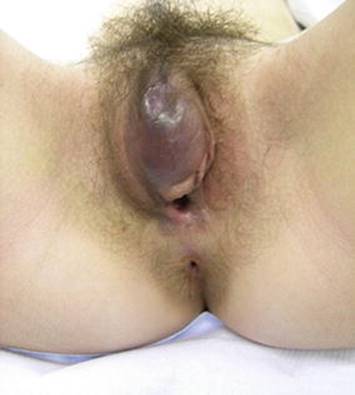
Fig. 11.3
Right labial hematoma (Reprinted from Mok-Lin and Laufer [8], with permission from Elsevier)
Burns beyond the most limited, shallow burns should be managed in conjunction with a burn specialist. Chemical burns should be extensively irrigated to prevent further injury. Any burns to the vaginal epithelium should be treated with estrogen to prevent scarring. Silver sulfadiazine 1 % may be applied to vulvar burns during the healing process, followed by an occlusive dressing [4].
Noninfectious Vulvovaginitis
Foreign Body
Among girls presenting with vulvovaginal complaints, 4 % have foreign bodies in the vagina, including toilet paper, tissue paper or paper towel, cloth, parts of toys, crayons, coins, and batteries [10]. Intravaginal batteries may result in alkaline burns [11]. Dermatitis may result from inflammation related to the foreign body (Fig. 11.4). Compared to girls with infectious or nonspecific vaginitis, those with foreign bodies are more likely to present with vaginal bleeding than vaginal discharge. Malodorous discharge is not routinely present with an intravaginal foreign body.

Fig. 11.4
Vaginal foreign body producing chronic irritation discharge (Reprinted from Fischer [15], with permission from John Wiley & Sons, Inc)
In order to extract a foreign body from the vagina, consider numbing the perineum with a topical analgesic, such as 2 % lidocaine jelly. The vagina should be irrigated with warm water to remove the foreign body. Consider conscious sedation depending on the patient’s age, anxiety, and pain and for objects that cannot be removed with simple irrigation.
The possibility of sexual abuse should be considered, particularly if the patient cannot provide a history of the object.
Nonspecific Vulvovaginitis
Vulvovaginitis is the most common cause of vaginal bleeding in prepubertal girls. Most vulvovaginitis is noninfectious, often due to hygiene issues. The absence of labial fat pads and pubic hair exposes thin, hypoestrogenized vulvovaginal skin to irritants and trauma. Other causes of vulvovaginitis, including sexually transmitted infections, must be excluded before initiating the treatments below.
Patients and their caregivers should be counseled regarding vulvar hygiene. Sitz baths—sitting in warm water for 5–10 min, two to three times per day—followed by gently patting the vulva dry are usually helpful as well.
Patients with persistent vaginal discharge following lifestyle changes and a negative assessment may be treated with a limited course of antibiotics such as amoxicillin or a cephalosporin [1]. If a patient has recurrent infections, a two-week course of vaginal estrogen cream, such as Premarin® (Wyeth Pharmaceuticals, Philadelphia, PA) or Estrace® (Actavis, Parsippany, NJ), may be initiated to reduce susceptibility to infection.Conversely, persistent vaginal pruritus or irritation that does not resolve following lifestyle changes and sitz baths may be managed with a two-week course of daily or twice daily hydrocortisone 1 % cream. Lidocaine jelly or an antihistamine such as hydroxyzine (50 milligrams (mg) per day PO in children under 6 years and 50–100 mg/day PO in patients over 6 years, divided into 4 doses), or diphenhydramine (5 mg/kg per day PO divided into 4 doses, maximum 300 mg/day), may also be helpful [23]. The antihistamines may be sedating.
Please see “Allergic or irritant contact dermatitis” in Chap. 7, Vulvovaginal Dermatoses, Lesions and Masses.
Atopic Dermatitis
Atopic dermatitis, also called eczema, is often associated with a strong family history of eczema and a personal history of atopy, which describes a collection of conditions including asthma and seasonal allergies [6]. On physical exam, vulvar atopic dermatitis can appear similar to allergic or irritant contact dermatitis. The vulvar skin is erythematous, potentially lichenified (thickened), sometimes with a peripheral scale (Fig. 11.5).

Fig. 11.5
Atopic vulvitis (Reprinted from Simpson and Murphy [6], with permission from Elsevier)
Atopic dermatitis is managed with behavioral changes as detailed under “Management.” Sitz baths may be helpful. Patients can also be treated with a short course of hydrocortisone 1 % cream or ointment twice per day for up to 2 weeks, in addition to emollients such as plain petrolatum.
Lichen Sclerosis
Lichen sclerosis is a chronic inflammation of the perineal and perianal skin; approximately 7–15 % of all cases occur in prepubertal females [12]. Patients report pruritis, pain, dysuria, and/or bleeding. On exam, the vulvar skin is thin, white, and/or atrophic with ulcerations; over time, vulvar architecture will be lost, with scarring of the labia minora, posterior fourchette, and clitoral hood (Fig. 11.6) [1]. The associated risk of malignancy, chiefly squamous cell carcinoma, in postmenopausal women is not observed in children.
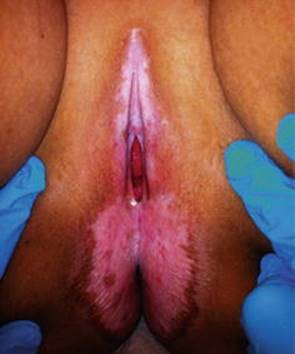
Fig. 11.6
Lichen sclerosis (Reprinted from Bercaw-Pratt et al. [5], with permission from Elsevier and the North American Society for Pediatric and Adolescent Gynecology)
In pediatric patients, treatment can usually be initiated without biopsy, as the risk of underlying malignancy is lower than in adults. Biopsy may be indicated for persistent disease despite corticosteroid treatment [5].
In pediatric patients, treatment of lichen sclerosis usually requires high-potency steroid ointment or cream, including clobetasol propionate 0.05 % daily or twice per day for 2 weeks, which is then tapered in frequency or potency if adequate response is noted [5]. The high potency steroid can be spaced to daily, then to every other day, then replaced with a taper of hydrocortisone 2.5 %, followed by the 1 % preparation [1]. Topical steroids may need to be restarted for flares. Other options include mometasone, or immunomodulators such as calcineurin inhibitors [13, 14].
For symptoms of itching, patients may take sedating antihistamines, including hydroxyzine (50 mg/day in children under 6 years and 50–100 mg/day in patients over 6 years, divided into 4 doses) or diphenhydramine (5 mg/kg/day PO divided into 4 doses, maximum 300 mg/day, and consider lower doses in children under 12 years). Further irritation can be managed with topical emollients such as plain petrolatum jelly or A + D® ointment (Bayer, Leverkusen, Germany) [5].
Zinc Deficiency
Zinc deficiency may result from inadequate dietary intake, chronic malabsorptive disease, or acrodermatitis enteropathica (a rare congenital defect of zinc absorption) [15]. Zinc deficiency may present as well-demarcated erosions on the vulva (Fig. 11.7). It usually presents at birth or at weaning in infants with acrodermatitis enteropathica, or after 6–9 months of exclusive breastfeeding, from mothers with low zinc content in their breast milk [15]. Treatment is zinc supplementation.
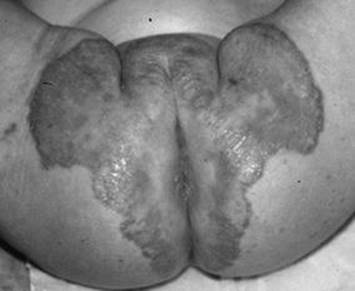
Fig. 11.7
Zinc deficiency (Reprinted from Fischer [15], with permission from John Wiley & Sons, Inc)
Psoriasis
Psoriasis is an inflammatory disease with a strong genetic predisposition; the most common form is chronic plaque psoriasis, in which patients have red or silver scaly plaques on extensor surfaces of the extremities, scalp, and genital regions, sometimes with nail changes, ocular complaints, or arthritis. Vulvar presentations are more common in children and may be misdiagnosed as eczema or fungal infections initially [15, 16]. Vulvar lesions are pruritic, erythematous, and well demarcated, though not often scaly like other psoriatic skin plaques (Fig. 11.8). The vagina is spared, though the inguinal regions and gluteal clefts may be involved; satellite lesions may also be present [6].
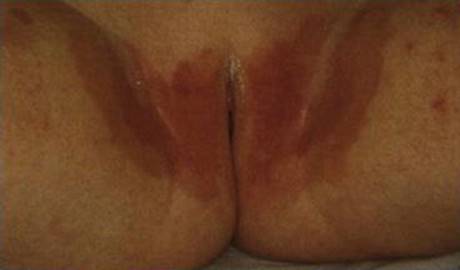
Fig. 11.8
Vulvar psoriasis (Reprinted from Simpson and Murphy [6], with permission from Elsevier)
Treatment of psoriasis in children and adults is similar. Vulvar psoriasis is often first managed with topical corticosteroids, as other topical treatments (vitamin D analogues, tazarotene, calcineurin inhibitors) may cause irritation [17]. Mild-strength corticosteroids, such as 1 % hydrocortisone, or moderate-strength corticosteroids should be applied once or twice daily for a maximum of 2 weeks; high-potency steroids should be avoided as these regions are susceptible to steroid atrophy [6, 18]. Patients with severe, systemic disease require management by a multidisciplinary team and may require treatment with systemic immunomodulators like infliximab [19].
Infectious Vulvovaginitis or Ulcers
Treatment for common pathogens is shown in Table 11.1.
Table 11.1
Common pathogens
|
Pathogen |
Treatment in adolescents, children over 45 kg |
Children weighing less than 45 kg |
|
Neisseria gonorrhoeae |
Ceftriaxone: 250 mg IM once |
Ceftriaxone: 25–50 mg/kg IV or IM once (up to 125 mg IM) |
|
Chlamydia trachomatis |
Azithromycin: 1 g PO once Alternative for children over 8 years: Doxycycline 100 mg PO every 12 h for 7 days |
Erythromycin base or ethylsuccinate: 50 mg/kg/day PO in four divided doses, maximum 2 g/day, for 14 days |
|
Trichomonas vaginalis |
Metronidazole: 2 g PO in a single dose |
Metronidazole: 15 mg/kg/day PO, maximum 2 g/day, in three divided doses for 7 days |
|
Initial outbreak of genital HSV ulcers |
(1) Acyclovir: 400 mg PO every 8 h for 7–10 days (2) Acyclovir: 200 mg PO five times per day for 7–10 days (3) Famciclovir: 250 mg PO every 8 h for 7–10 days (4) Valacyclovir: 1 g PO every 12 h for 7–10 days |
Acyclovir: 80 mg/kg per day PO, maximum 1.2 g per day, divided into 3–4 doses See text for management of neonatal HSV |
|
Pinworm |
(1) Albendazole: 400 mg (in children 20 kg or more) or 200 mg (in children < 20 kg) PO one time, repeated in 2 weeks |
|
|
(2) Pyrantel pamoate: 11 mg/kg PO, maximum 1 g, one time, repeated in 2 weeks |
||
|
Tinea |
Econazole, naftifine, oxiconazole, sulconazole 1 % preparations once per day, or clotrimazole, miconazole (not in children under 2 years) or tolnaftate 1 % preparations twice per day for 4–6 weeks |
|
|
Children over 12 years can also receive terbinafine 1 % cream twice per day or butenafine or ketoconazole 1 % cream once per day |
||
|
Candida |
Clotrimazole, econazole, miconazole (not for children under 2 years) 1 % preparations applied to the vulva twice per day for 10–14 days |
|
|
Adolescent patients with significant intravaginal involvement can use these over-the-counter formulations: |
||
|
(1) Miconazole 2 % cream 5 g intravaginally daily for 7 days |
||
|
(2) Miconazole, 100 mg vaginal suppository daily for 7 days |
||
|
(3) Miconazole, 200 mg vaginal suppository daily for 3 days |
||
|
(4) Clotrimazole 2 % cream, 5 g intravaginally daily for 3 days |
||
From Committee on Infectious Diseases [20]; Centers for Disease Control and Prevention [21]
Bacterial and Protozoan Infections
Respiratory, gastrointestinal, or sexually transmitted infections may lead to pediatric vulvovaginitis. Streptococcus pyogenes (Group A streptococcus) is the most common respiratory pathogen leading to vaginitis; it is isolated in up to 20 % of girls with vulvovaginitis [1]. A history of recent streptococcal pharyngitis may raise suspicion for streptococcal vaginitis. Vulvovaginitis resulting from S. pyogenes is characterized by vaginal discharge and perineal skin erythema and edema [22]. Treatment of S. pyogenes in children consists of amoxicillin (40 mg/kg PO divided into 3 doses daily for 10 days) [23]. Less commonly occurring respiratory pathogens implicated in vaginitis include Haemophilus influenzae, Streptococcus pneumoniae, and Staphylococcus aureus [23].
Shigella most commonly causes diarrhea illness but has also been associated with mucopurulent sanguineous vaginal discharge in girls. Diarrheal illness may only be reported in one-quarter of patients with Shigella-related vaginitis, most cases of which are caused by S. flexneri [24, 25]. Azithromycin is generally successful in treatment of Shigella infections in patients under 18 years of age; fluoroquinolones, commonly used in adults, are not administered to children given concerns for adverse musculoskeletal effects [26]. Though resistance has been reported, trimethoprim-sulfamethoxazole can also be used if a vaginal culture confirms susceptibility. The potential utility of cefixime has also been reported [24]. Yersinia is another enteric pathogen associated with vaginitis.
Sexually transmitted bacterial infections that may cause vulvovaginitis in pediatric and adolescent patients include Neisseria gonorrhoeae and Chlamydia trachomatis. N. gonorrhoeae infection in a prepubertal child is highly concerning for sexual abuse, and a multidisciplinary approach is needed; admission to the hospital should be considered, in order to coordinate resources [27]. Treatment is shown in Table 11.1. Co-treatment of chlamydia is recommended in all age groups. Chlamydia may be contracted either at birth or by sexual contact. If patients did acquire chlamydia at birth, however, persistence is thought to be unlikely past age 2–3 years given exposures to antibiotics for other reasons [1]. Sexual abuse should be considered in children who test positive for chlamydia; the index of suspicion is highest for children over 2 years [28]. Recommended treatment is shown in Table 11.1.
Trichomonas vaginalis, a flagellated protozoan, is also a sexually transmitted infection; it is rare in children whose poorly estrogenized vaginal epithelium is inherently less susceptible to trichomoniasis. Like chlamydia, it can be vertically transmitted from mother to infant at the time of vaginal birth, or by sexual contact [29]. As the effects of maternal estrogen wane and the vaginal pH of an infant changes, it has been theorized that a T. vaginalis infection may resolve. Treatment is indicated in a symptomatic child, and is shown in Table 11.1. When trichomoniasis occurs in postpubertal adolescents, it has most often been contracted through sexual contact.
For other sexually transmitted infections, namely, lymphogranuloma venereum (LGV), syphilis, chancroid, and granuloma inguinale, please see Chap. 7, Vulvovaginal Dermatoses, Lesions and Masses.
Herpes Simplex Virus
Herpes simplex virus (HSV) is a chronic viral infection that can be managed with antiviral medications. Two serotypes are most clinically relevant: HSV-1 classically causes oral lesions, while HSV-2 is associated with anogenital lesions. Increasingly, HSV-1 is also associated with anogenital lesions and may be the cause of up to 50 % of herpes-related genital ulcers [20].
Neonates can be exposed to HSV during delivery. Symptoms manifest between birth and 6 weeks of life, in three iterations: (1) skin, eye, and mouth lesions, (2) central nervous system infection resulting in seizures and hypotonia, and (3) disseminated disease affecting several organ systems including the liver and lungs [20]. The incidence is estimated at 1 in 3,000–20,000 live births. Care of patients with suspected neonatal HSV requires consultation with pediatric infectious disease specialists. The recommended regimen for treatment of known or suspected neonatal herpes is acyclovir, at a dose of 60 mg/kg IV divided into 3 doses for 14 days for disease limited to the skin and mucous membranes, while treatment is continued for 21 days for disease that is disseminated or involving the central nervous system, followed by oral suppressive therapy for 6 months [21].
HSV presenting after the neonatal period is more likely to present with either oral or genital ulcers. Analysis of data from the National Health and Nutrition Examination Surveys (NHANES) from 1999 to 2002 reported a seroprevalence of HSV-1 of 31.9 % among girls aged 6–13 years [30]. From 2005 to 2010, the seroprevalence of HSV-1 among adolescents aged 14–19 years was 30.1 % [31]. From 2007 to 2010, the reported prevalence of HSV-2 among women aged 14–19 years was 1.5 % [32]. About 50 % of genital HSV diagnosed in children is related to sexual contact, more common over age 5 [33]. Other methods of transmission include nonsexual contact with children’s genitalia by adults during child care or autoinoculation from an oral lesion.
Please see Chap. 7, Vulvovaginal Dermatoses, Lesions and Masses, for diagnostic modalities.
Treatment of an initial outbreak of HSV genital ulcers is discussed in Table 11.1. Parenteral therapy may be indicated in patients with immunosuppression, severe multisystem disease or encephalitis.
Chronic suppressive therapy is indicated in immunocompetent pediatric patients over 12 years of age experiencing six or more recurrences per year. Acyclovir is recommended for chronic suppressive therapy (800 mg/day PO in two divided doses) for up to 12 months [20].
For Zoster please see “Vulvovaginal Dermatoses, Lesions and Masses”
Molluscum Contagiosum
Molluscum contagiosum is viral infection of the skin and mucous membranes causing painless flesh-colored umbilicated lesions, ranging from 1 mm to 1 cm in diameter, appearing on the vulva, thighs, and buttocks, which may become inflamed; lesions are rarely isolated to the vulva in children, as they may be in adults [15]. Molluscum is a common infection in children, though it may also occur in immunocompromised adults. Presentation with bleeding is not common, unless the patient has been scratching the lesions. Biopsy is not necessary for diagnosis, which is usually made based on clinical exam. Adults with molluscum contagiosum should be tested for other sexually transmitted infections and HIV; children presenting with molluscum are most often healthy [34].
As treatment can be uncomfortable, expectant management is acceptable in healthy pediatric patients with few lesions; spontaneous resolution is expected [15, 35]. Other options include, but are not limited to, application of topical anesthetic followed by curettage, which may result in scarring, application of liquid nitrogen, which is painful, and imiquimod 5 % cream applied overnight for three to five nights per week for up to 16 weeks, though imiquimod is not approved by the Food and Drug Administration for this purpose [15].
Condyloma Acuminata
Between 10 and 20 % of children will have warts, most commonly on the extremities, body, and face, with the peak incidence occurring between 12 and 16 years [36]. Spontaneous resolution is common among all warts; for anogenital warts, spontaneous resolution occurs in up to 20 % of patients within 4 months and up to 75 % within 5 years [37].
Warts are caused by the human papillomavirus. Ninety percent of anogenital warts are caused by HPV strains 6 and 11 [38]. Anogenital warts are multiple, flesh-colored papules, which may form large exophytic masses. These may be asymptomatic or present with pain, itching, or bleeding [36].
A provider should consider sexual abuse in pediatric patients with anogenital warts; however, the mode of transmission of anogenital warts can also be nonsexual, such as on a caregiver’s hands, or vertical, at the time of delivery [36]. If the patient’s history or physical exam raises concern for sexual abuse, consider checking for sexually transmitted infections, including gonorrhea, chlamydia, HIV, hepatitis B and C, and syphilis [39].
Data regarding treatment of anogenital warts in children are limited, and treatment is often limited by children’s pain tolerance. Expectant management initially is acceptable. For symptomatic patients, imiquimod 5 % cream, applied 3 nights per week for up to 16 weeks, or podophyllotoxin 0.5 % solution, applied 3 nights per week for up to 4 weeks, are acceptable [40]. For large or persistent lesions, surgical excision and laser therapy are options [36].
Pinworm
Enterobius vermicularis (pinworm) is most common in children in preschool or grade school and their families or caregivers. It should be suspected in patients with exposure to pinworm and/or who report perianal itching that is worse at night. Transmission is by the fecal-to-oral route, directly or via fomites [20]. Serology is not helpful; diagnosis is made by applying scotch tape to the perineum, then to a slide for identification of eggs. Treatment is indicated in a symptomatic child, and is shown in Table 11.1. The rate of reinfection is high.
For scabies, please see Chap. 7, Vulvovaginal Dermatoses, Lesions and Masses.
Candida
Candidiasis is a less common cause of vulvovaginitis in children, unless a patient has recent exposure to antibiotics or is immunosuppressed or diabetic [6]. Candidiasis may also occur in younger children wearing diapers. Newborn infants may have been inoculated during a vaginal delivery.
Candida vulvovaginitis may appear as well-demarcated erythematous plaques, sometimes accompanied by satellite lesions. Erythema, edema and excoriations may be visible. Diagnosis can be made clinically or using a vaginal fungal culture and/or microscopic examination of a vaginal swab or vulvar scraping prepared on a slide with 10 % potassium hydroxide, revealing buds and hyphae.
Treatment is primarily in the form of topical azoles, discussed in Table 11.1. Creams may address vulvar symptoms more completely than vaginal suppositories. For patients with an extensive Candida rash over the perineum and buttocks, antifungal creams can be used over these areas as well. Oral fluconazole is an option but interacts with several other medications including but not limited to phenytoin, tacrolimus, warfarin, cyclosporin A, and protease inhibitors.
Tinea
Tinea cruris is an uncommon cause of pediatric genital eruptions. Tinea infections produce erythematous and scaly plaques in the groin, sometimes extending onto the mons [15]. Lesions are extremely pruritic. Diagnosis is made by scraping the lesion onto a slide and preparing with a potassium hydroxide solution to visualize segmented hyphae and arthrospores. The lesions should also appear red when illuminated with a Wood’s lamp [20].
Treatment is with topical antifungal creams. for 4–6 weeks, shown in Table 11.1. Oral griseofulvin can be used in refractory cases.
Post Viral or Idiopathic Genital Ulcers
Genital ulcerations have been diagnosed in the setting of systemic cytomegalovirus, influenza A, and Epstein-Barr virus (EBV) infections [41, 42]. EBV is most commonly associated with genital ulcerations; patients commonly report prodromal constitutional symptoms such as fever, sore throat, and myalgias. Cases in which no cause is discovered are called “Lipschutz” ulcers, also called ulcus vulvae acutum or reactive nonsexually related acute genital ulcers [43, 44]. The lesions vary in size and color, from white/gray to red or black and are often present on opposing labia, called “kissing ulcers” (Fig. 11.9) [41].
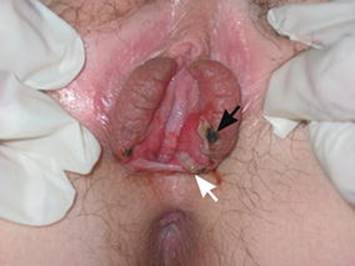
Fig. 11.9
Lipschutz ulcers . Pseudomembrane designated by white arrow; eschar designated by black arrow (Reprinted from Rosman et al. [44], with permission from John Wiley & Sons, Inc)
In general, biopsies are unhelpful. Serum testing for EBV infection may be highest yield. Influenza testing can be sent as deemed appropriate, and lesions can easily be swabbed for HSV.
Lidocaine jelly 2 % can be used for topical analgesia, and urine may need to be diverted with a Foley catheter in patients with very painful ulcers. The utility of topical steroids is unclear, though some recommend clobetasol 0.05 % cream or ointment twice per day for 7–10 days [45, 46]. Thirty percent of vulvar lesions are superinfected; any evidence of purulence, erythema, or other signs of infection should be treated with broad-spectrum antibiotics, such as cephalosporins or sulfonamides [45].
Hormonal Causes of Vulvovaginal Complaints
Labial Adhesions
Labial adhesions are the fusion of the labia minora over the midline, attributed to the hypoestrogenic state of prepubertal girls. Usually, these will resolve spontaneously at puberty, when systemic estrogen rises [47]. When patients are symptomatic, usually this is because the flow of urine has been obstructed, resulting in an irritant dermatitis [48]. Topical estrogen cream, such as Premarin® (Wyeth Pharmaceuticals, Philadelphia, PA) or Estrace® (Actavis, Parsippany, NJ), administered twice daily for 10–14 days, is the primary therapy [49]. In most patients, topical estrogen treatment is sufficient to resolve adhesions. Second-line or adjunctive treatment with topical betamethasone 0.05% twice daily for 4-6 weeks may be required [48]. Long-standing or scarred labial adhesions may be more difficult to resolve; after failed or incomplete treatment with topical estrogen and steroids, persistent adhesions may rarely need to be separated after application of topical analgesics. Patients with significant adhesions may require sedation and separation in the operating room [47]. After separation, applications of topical estrogen cream should continue for two weeks; sitz baths and topical emollients such as plain petrolatum jelly or A + D® ointment are also helpful [1].
Neonatal Withdrawal Bleeding
In response to waning effects of maternal estrogen postnatally, neonates may have blood-tinged vaginal discharge or light vaginal bleeding in the first few weeks of life, which requires no further workup [50].
Precocious Puberty
Precocious puberty has commonly been defined as the onset of secondary sexual development before the age of 8 years in girls and 9 years in boys. More recently, this definition has been revised, and precocious puberty can be considered in the setting of development of breasts or pubic hair before age 7 years in Caucasian girls and age 6 years in African American girls [51]. The incidence of precocious puberty among children in the United States is estimated at 0.01–0.05 % per year; it is more common in girls and African Americans [52]. Causes of precocious puberty are either central, meaning the premature activation of the hypothalamic-pituitary-ovarian axis, or peripheral, due to excess hormone production, such as by estrogen-secreting ovarian cysts [23, 52].
Menarche generally occurs 2–3 years after the first sign of puberty, which is usually breast development and can be detected by physical examination [51]. Isolated premature menarche, defined as menarche in the absence of the secondary sexual characteristics, is very rare, and the cause is unknown. In a series of 17 patients with isolated premature menarche, most had a few menstrual cycles followed by amenorrhea until puberty, with no reported detrimental effects on final adult height or fertility [53].
The diagnosis of precocious puberty or isolated menarche does not constitute an emergency. These patients should be referred to pediatric or reproductive endocrinologists for further assessment and management, which is dictated by the underlying etiology.
Menarche
Patients may present with hemorrhage during their first menses, as certain hematologic disorders may be revealed at menarche, including thrombocytopenia and bleeding disorders such as von Willebrand disease [54]. Please see Chap. 2, Vaginal Hemorrhage, for information on the diagnosis and management of vaginal hemorrhage and bleeding diathesis. Of note, adolescents’ menses may also be irregular for the first 3 years post-menarche due to anovulation [55].
Hypothyroidism
Hypothyroidism can produce premature menstruation, in a syndrome of premature thelarche, growth delay, galactorrhea, and ovarian cysts—which can be massive—in varying combinations, called Van Wyk-Grumbach syndrome [56, 57]. Hypothyroidism can also cause menorrhagia [54]. Premature menstruation and thelarche will regress with thyroid replacement therapy.
Urologic Causes of Vulvovaginal Complaints
Urethral Prolapse
Urethral prolapse, which is the protrusion of the distal urethra, may be mistaken for a vaginal mass (Fig. 11.10). Urethral prolapse is most common in African American girls, presenting most often around 4 years of age [58]. Urethral prolapse is often nontender, though patients many complain of dysuria; hematuria is rare.
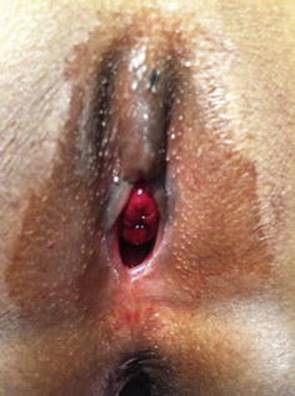
Fig. 11.10
Urethral prolapse in a prepubertal female (Reprinted from Kondamudi et al. [57], with permission from Elsevier and the American Academy of Emergency Medicine)
Urethral prolapse should be managed with sitz baths (sitting in warm water for 5–10 min) twice per day until symptoms improve and topical estrogen therapy, such as Premarin® cream (Wyeth Pharmaceuticals, Philadelphia, PA) or Estrace® cream (Actavis, Parsippany, NJ), applied daily with a fingertip or cotton-tipped applicator, for at least 2 weeks. In patients with suspected urethral prolapse, the differential diagnosis includes paraurethral cysts, prolapsed urethroceles, or urethral polyps [1].
Ectopic Ureter
An ectopic ureter draining into the gynecologic organs or directly onto the perineum may constitute a significant contact irritant. Ultrasonography or computed tomography and voiding urethrocystography can be used to diagnose an ectopic ureter; cysto-vaginoscopy may also be required [59]. Given case reports of vaginal clear cell cancers in patients whose ectopic ureter drained into the vagina, experts suggest vaginal exams in alternating years, with Pap smears at those exams in children, and annual Pap smears in adolescents [1].
Less Common Vulvovaginal Pathology
Several rare etiologies of vulvar ulcerations or masses are described in Chap. 7, Vulvovaginal Dermatoses, Lesions and Masses. These include hematologic malignancy, Behçet’s syndrome, inflammatory bowel disease, pyoderma gangrenosum, Stevens-Johnson syndrome (SJS), toxic epidermal necrolysis (TEN), erythema multiforme, bullous pemphigoid, mucous membrane pemphigoid, pemphigus vulgaris, linear IgA dermatosis, paraneoplastic pemphigus, and hidradenitis suppurativa.
Hemangiomas
Hemangiomas are benign blood vessel proliferations occurring in 2 % of all newborns. Twenty percent of these children will have multiple hemangiomas [60]. Most hemangiomas will involute spontaneously, though skin changes may persist. In the genital region, hemangiomas are most often complicated by ulceration [61]. Occasionally, ulceration may precede the diagnosis of hemangioma, and biopsies may be nonspecific. An ulcerated hemangioma should be kept clean with bathing and dressed with a topical antibiotic, such as mupirocin 2 % ointment, or silver sulfadiazine cream. Lesions can be treated with pulsed dye laser, which leads to more rapid resolution [62].
Lobular capillary hemangiomas, also called pyogenic granulomas, have been reported in the vagina, though they are more often found on the oral mucosal membranes and the skin; these hemangiomas can bleed heavily and repeatedly [63, 64]. Cauterization with silver nitrate is first-line therapy; lesions that bleed recurrently may require excision.
Malignancy of the Lower Genital Tract
Vaginal and pelvic malignancies are very rare causes of vaginal bleeding in children but can present with bleeding due to friability of the mass or abnormal hormone production.
Endodermal sinus tumors and rhabdomyosarcomas are rare malignancies in children that can present with vaginal bleeding or bloody discharge. These are usually diagnosed by age 3 years [48, 65]. In children under 3 years with rhabdomyosarcoma of the genital tract, the mass is usually in the lower vagina, while in children over 10 years, the mass is more likely to be situated in the upper vagina or cervix [66]. The tumor may appear protruding from the vagina as a grapelike, vascular mass. Early stage treatment can involve chemotherapy, conservative surgery, and radiation therapy for some, with an overall 5-year survival of 87 % [67]. Similar to rhabdomyosarcomas, endodermal sinus tumors present with bloody discharge or a mass protruding from the vagina. These tumors secrete alpha fetoprotein (AFP), which can be detected in the serum.
Langerhans Cell Histiocytosis
Langerhans cell histiocytosis is a rare syndrome of abnormal proliferation of immune cells, with peak incidence at 1 year of age [61]. This condition can involve multiple organ systems, including bone and the central nervous system. Patients commonly present with yellow-brown papules at the hairline, over the trunk, and in the axilla or groin. Vesicles, pustules, ulcerations or eczematous rashes can also be present [68]. Perianal petechiae and purpura may be identified. If Langerhans cell histiocytosis is suspected, lesions should be biopsied.
References
1.
Emans SJ. Chapter 4. Vulvovaginal problems in the prepubertal child. In: Emans SJ, Laufer MR, editors. Pediatric and adolescent gynecology. 6th ed. Philadelphia: Lippincott Williams & Wilkins; 2012.
2.
Jones JG, Worthington T. Genital and anal injuries requiring surgical repair in females less than 21 years of age. J Pediatr Adolesc Gynecol. 2008;21:207–11.CrossRefPubMed
3.
Iqbal CW, Jrebi NY, Zielinski MD, Benavente-Chenhalls LA, Cullinane DC, Zietlow SP, et al. Patterns of accidental genital trauma in young girls and indications for operative management. J Pediatr Surg. 2010;45:930–3.CrossRefPubMed
4.
Klaassen Z, Go PH, Mansour EH, Marano MA, Petrone SJ, Houng AP, et al. Pediatric genital burns: a 15-year retrospective analysis of outcomes at a level 1 burn center. J Pediatr Surg. 2011;46:1532–8.CrossRefPubMed
5.
Bercaw-Pratt JL, Boardman LA, Simms-Cendan JS, North American Society for Pediatric and Adolescent Gynecology. Clinical recommendation: pediatric lichen sclerosus. J Pediatr Adolesc Gynecol. 2014;27:111–6.CrossRefPubMed
6.
Simpson RC, Murphy R. Paediatric vulvar disease. Best Pract Res Clin Obstet Gynaecol. 2014;28:1028–41.CrossRefPubMed
7.
Rome ES. Vulvovaginitis and other common vulvar disorders in children. Endocr Dev. 2012;22:72–83.CrossRefPubMed
8.
Mok-Lin EY, Laufer MR. Management of vulvar hematomas: use of a word catheter. J Pediatr Adolesc Gynecol. 2009;22:e156–8.CrossRefPubMed
9.
McCann J, Miyamoto S, Boyle C, Rogers K. Healing of nonhymenal genital injuries in prepubertal and adolescent girls: a descriptive study. Pediatrics. 2007;120:1000–11.CrossRefPubMed
10.
Stricker T, Navratil F, Sennhauser FH. Vaginal foreign bodies. J Paediatr Child Health. 2004;40:205–7.CrossRefPubMed
11.
Huppert J, Griffeth S, Breech L, Hillard P. Vaginal burn injury due to alkaline batteries. J Pediatr Adolesc Gynecol. 2009;22:e133–6.CrossRefPubMed
12.
Sahn EE, Bluestein EL, Oliva S. Familial lichen sclerosus et atrophicus in childhood. Pediatr Dermatol. 1994;11:160–3.CrossRefPubMed
13.
Smith YR, Quint EH. Clobetasol propionate in the treatment of premenarchal vulvar lichen sclerosus. Obstet Gynecol. 2001;98:588.PubMed
14.
Chi CC, Kirtschig G, Baldo M, Brackenbury F, Lewis F, Wojnarowska F. Topical interventions for genital lichen sclerosus. Cochrane Database Syst Rev. 2011;CD008240.
15.
Fischer GO. Vulvar disease in pre-pubertal girls. Australas J Dermatol. 2001;42:225–36.CrossRefPubMed
16.
Lysell J, Tessma M, Nikamo P, Wahlgren CF, Ståhle M. Clinical characterisation at onset of childhood psoriasis – a cross sectional study in sweden. Acta Derm Venereol. 2015;95:457–61.CrossRefPubMed
17.
Gudjonsson JE, Elder JT. Chapter 18. Psoriasis. In: Goldsmith LA, Katz SI, Gilchrest BA, Paller AS, Leffell DJ, Wolff K, editors. Fitzpatrick’s dermatology in general medicine. 8th ed. New York: McGraw-Hill; 2012. http://accessmedicine.mhmedical.com.ezp-prod1.hul.harvard.edu/content.aspx?bookid=392&Sectionid=41138713. Accessed 25 May 2015.
18.
Samarasekera E, Sawyer L, Parnham J, Smith CH, Guideline Development Group. Assessment and management of psoriasis: summary of NICE guidance. BMJ. 2012;345:e6712.CrossRefPubMed
19.
Hoffman BL, Schorge JO, Schaffer JI, Halvorson LM, Bradshaw KD, Cunningham F, et al. Chapter 4. Benign disorders of the lower reproductive tract. In: Hoffman BL, Schorge JO, Schaffer JI, Halvorson LM, Bradshaw KD, Cunningham F, Calver LE, editors. Williams gynecology. 2nd ed. New York: McGraw-Hill; 2012. http://accessmedicine.mhmedical.com.ezp-prod1.hul.harvard.edu/content.aspx?bookid=399&Sectionid=41722292. Accessed 25 May 2015.
20.
Committee on Infectious Diseases, American Academy of Pediatrics. Larry K. Pickering, MD, FAAP, ed. 2012. Red Book®: 2012 Report of the Committee on Infectious Diseases – 29th Ed. Printed in the United States of America. American Academy of Pediatrics. ISBN-10: 1-58110-703-X, ISBN-13: 978-1-58110-703-6. ISSN: 1080–0131. STAT!Ref Online Electronic Medical Library. http://online.statref.com.ezp-prod1.hul.harvard.edu/Document.aspx?fxId=76&docId=167. Accessed 21 June 2015.
21.
2015 STD Treatment Guidelines. Centers for Disease Control and Prevention website. http://www.cbc.gov/std/tg2015/default.htm. Updated October 21, 2015. Accessed February 12, 2016.
22.
Straumanis JP, Bocchini Jr JA. Group A beta-hemolytic streptococcal vulvovaginitis in prepubertal girls: a case report and review of the past twenty years. Pediatr Infect Dis J. 1990;9:845–850.CrossRefPubMed
23.
Hoffman BL, Schorge JO, Schaffer JI, Halvorson LM, Bradshaw KD, Cunningham F, et al. Chapter 14. Pediatric gynecology. In: Hoffman BL, Schorge JO, Schaffer JI, Halvorson LM, Bradshaw KD, Cunningham F, Calver LE, editors. Williams gynecology. 2nd ed. New York: McGraw-Hill; 2012. http://accessmedicine.mhmedical.com.ezp-prod1.hul.harvard.edu/content.aspx?bookid=399&Sectionid=41722302. Accessed 24 May 2015.
24.
Murphy TV, Nelson JD. Shigella vaginitis: report in 38 patients and review of literature. Pediatrics. 1979;63:511–6.PubMed
25.
Jasper JM, Ward MA. Shigella vulvovaginitis in a prepubertal child. Pediatr Emerg Care. 2006;22:585–6.CrossRefPubMed
26.
Khan WA, Seas C, Dhar U, Salam MA, Bennish ML. Treatment of shigellosis: V. Comparison of azithromycin and ciprofloxacin. A double-blind, randomized, controlled trial. Ann Intern Med. 1997;126:697–703.CrossRefPubMed
27.
Farrell MK, Billmire ME, Shamroy JA, Hammond JG. Prepubertal gonorrhea: a multidisciplinary approach. Pediatrics. 1981;67:151–3.PubMed
28.
Ingram DL, Everett VD, Lyna PR, White ST, Rockwell LA. Epidemiology of adult sexually transmitted disease agents in children being evaluated for sexual abuse. Pediatr Infect Dis J. 1992;11:945–50.CrossRefPubMed
29.
Muzny CA, Schwebke JR. The clinical spectrum of Trichomonas vaginalis infection and challenges to management. Sex Transm Infect. 2013;89:423–5.CrossRefPubMed
30.
Xu F, Lee FK, Morrow RA, Sternberg MR, Luther KE, Dubin G, et al. Seroprevalence of herpes simplex virus type 1 in children in the United States. J Pediatr. 2007;151:374–7.CrossRefPubMed
31.
Bradley H, Markowitz LE, Gibson T, McQuillan GM. Seroprevalence of herpes simplex virus types 1 and 2–United States, 1999–2010. J Infect Dis. 2014;209:325–33.CrossRefPubMed
32.
Fanfair RN, Zaidi A, Taylor LD, Xu F, Gottlieb S, Markowitz L. Trends in seroprevalence of herpes simplex virus type 2 among non-Hispanic blacks and non-Hispanic whites aged 14 to 49 years–United States, 1988 to 2010. Sex Transm Dis. 2013;40:860–4.CrossRefPubMed
33.
Reading R, Rannan-Eliya Y. Evidence for sexual transmission of genital herpes in children. Arch Dis Child. 2007;92:608–13.CrossRefPubMedPubMedCentral
34.
Dohil MA, Lin P, Lee J, Lucky AW, Paller AS, Eichenfield LF. The epidemiology of molluscum contagiosum in children. J Am Acad Dermatol. 2006;54:47–54.CrossRefPubMed
35.
Chen X, Anstey AV, Bugert JJ. Molluscum contagiosum virus infection. Lancet Infect Dis. 2013;13(10):877–88.CrossRefPubMed
36.
Herman BE, Corneli HM. A practical approach to warts in the emergency department. Pediatr Emerg Care. 2008;24:246–51.CrossRefPubMed
37.
Allen AL, Siegfried EC. The natural history of condyloma in children. J Am Acad Dermatol. 1998;39:951–5.CrossRefPubMed
38.
Jansen KU, Shaw AR. Human papillomavirus vaccines and prevention of cervical cancer. Annu Rev Med. 2004;55:319–31.CrossRefPubMed
39.
Kellogg N, American Academy of Pediatrics Committee on Child Abuse and Neglect. The evaluation of sexual abuse in children. Pediatrics. 2005;116:506–12.CrossRefPubMed
40.
Moresi JM, Herbert CR, Cohen BA. Treatment of anogenital warts in children with topical 0.05% podofilox gel and 5% imiquimod cream. Pediatr Dermatol. 2001;18:448–50.CrossRefPubMed
41.
Huppert JS, Gerber MA, Deitch HR, Mortensen JE, Staat MA, Adams Hillard PJ. Vulvar ulcers in young females: a manifestation of aphthosis. J Pediatr Adolesc Gynecol. 2006;19:195–204.CrossRefPubMed
42.
Farhi D, Wendling J, Molinari E, Raynal J, Carcelain G, Morand P, et al. Non-sexually related acute genital ulcers in 13 pubertal girls: a clinical and microbiological study. Arch Dermatol. 2009;145:38–45.CrossRefPubMed
43.
Sehgal VN, Pandhi D, Khurana A. Nonspecific genital ulcers. Clin Dermatol. 2014;32:259–74.CrossRefPubMed
44.
Rosman IS, Berk DR, Bayliss SJ, White AJ, Merritt DF. Acute genital ulcers in nonsexually active young girls: case series, review of the literature, and evaluation and management recommendations. Pediatr Dermatol. 2012;29:147–53.CrossRefPubMed
45.
Huppert JS. Lipschutz ulcers: evaluation and management of acute genital ulcers in women. Dermatol Ther. 2010;23:533–40.CrossRefPubMed
46.
Leu S, Sun PK, Collyer J, Smidt A, Stika CS, Schlosser B, et al. Clinical spectrum of vulva metastatic Crohn’s disease. Dig Dis Sci. 2009;54:1565–71.CrossRefPubMed
47.
Granada C, Sokkary N, Sangi-Haghpeykar H, Dietrich JE. Labial adhesions and outcomes of office management. J Pediatr Adolesc Gynecol. 2015;28:109–13.CrossRefPubMed
48.
Mroueh J, Muram D. Common problems in pediatric gynecology: new developments. Curr Opin Obstet Gynecol. 1999;11:463–6.
49.
Muram D. Treatment of prepubertal girls with labial adhesions. J Pediatr Adolesc Gynecol. 1999;12:67–70.CrossRefPubMed
50.
Heller DS. Lower genital tract disease in children and adolescents--a review. J Pediatr Adolesc Gynecol. 2005;18:75–83.CrossRefPubMed
51.
Kaplowitz PB, Oberfield SE. Reexamination of the age limit for the age limit for defining when puberty is precocious in girls in the United States: implications for evaluation and treatment. Drug and Therapeutics and Execute Committees of the Lawson Wilkins Pediatric Endocrine Society. Pediatrics. 1999;104:936–41.CrossRefPubMed
52.
Muir A. Precocious puberty. Pediatr Rev. 2006;27:373–81.CrossRefPubMed
53.
Ejaz S, Lane A, Wilson T. Outcome of isolated premature menarche: a retrospective and follow-up study. Horm Res Paediatr. 2015;84:217–22.CrossRefPubMed
54.
Gray SH, Emans SJ. Abnormal vaginal bleeding in adolescents. Pediatr Rev. 2007;28:175–82.CrossRefPubMed
55.
Deligeoroglou E, Tsimaris P. Menstrual disturbances in puberty. Best Pract Res Clin Obstet Gynaecol. 2010;24:157–71.CrossRefPubMed
56.
Durbin KL, Diaz-Montes T, Loveless MB. Van wyk and grumbach syndrome: an unusual case and review of the literature. J Pediatr Adolesc Gynecol. 2011;24:e93–6.CrossRefPubMed
57.
Gordon CM, Austin DJ, Radovick S, Laufer MR. Primary hypothyroidism presenting as severe vaginal bleeding in a prepubertal girl. J Pediatr Adolesc Gynecol. 1997;10:35–8.CrossRefPubMed
58.
Kondamudi NP, Gupta A, Watkins A, Bertolotti A. Prepubertal girl with vaginal bleeding. J Emerg Med. 2014;46:769–71.CrossRefPubMed
59.
Cezarino BN, Lopes RI, Oliveira LM, Dénes FT, Srougi M. Diagnostic work-up and laparoscopic correction of an ectopic ureter. J Pediatr Urol. 2015;11:285–6.CrossRefPubMed
60.
Drolet BA, Esterly NB, Frieden IJ. Hemangiomas in children. N Engl J Med. 1999;341:173–81.CrossRefPubMed
61.
Halbert AR, Chan JJ. Anogenital and buttock ulceration in infancy. Australas J Dermatol. 2002;43:1–6.CrossRefPubMed
62.
Morelli JG, Tan OT, Yohn JJ, Weston WL. Treatment of ulcerated hemangiomas in infancy. Arch Pediatr Adolesc Med. 1994;148:1104–5.CrossRefPubMed
63.
Lee J, Sinno H, Tahiri Y, Gilardino MS. Treatment options for cutaneous pyogenic granulomas: a review. J Plast Reconstr Aesthet Surg. 2011;64:1216–20.CrossRefPubMed
64.
Barasoain-Millán A, Rodriguez-Contreras FJ, Guerrero-Fernandez J, Merino MB, Gonzalez-Casado I. Pyogenic granuloma, an unusual presentation of peripubertal vaginal bleeding. Case report and review of the literature. J Pediatr Endocrinol Metab. 2015;28:443–7.PubMed
65.
Arora M, Shrivastav RK, Jaiprakash MP. A rare germ-cell tumor site: vaginal endodermal sinus tumor. Pediatr Surg Int. 2002;18:521–3.CrossRefPubMed
66.
Hilgers RD, Malkasian GD Jr, Soule EH. Embryonal rhabdomyosarcoma (botryoid type) of the vagina. A clinicopathologic review. Am J Obstet Gynecol. 1970;107:484–502.
67.
Arndt CA, Donaldson SS, Anderson JR, Andrassy RJ, Laurie F, Link MP et al. What constitutes optimal therapy for patients with rhabdomyosarcoma of the female genital tract? Cancer. 2001;91:2454–68.
68.
Gelmetti C. Chapter 147. Cutaneous Langerhans cell histiocytosis. In: Goldsmith LA, Katz SI, Gilchrest BA, Paller AS, Leffell DJ, Wolff K, editors. Fitzpatrick’s dermatology in general medicine. 8th ed. New York: McGraw-Hill; 2012. http://accessmedicine.mhmedical.com.ezp-prod1.hul.harvard.edu/content.aspx?bookid=392&Sectionid=41138869. Accessed 23 May 2015.