Roger B. Newman
Multiple gestations have become one of the most common high-risk conditions encountered by the practicing obstetrician/gynecologist. In 1998, there were 118,295 multiples born in the United States, the highest number ever recorded. Since 1980, the number of twins delivered in the United States has risen 62% and twins now represent approximately one out of every 40 deliveries. Triplets and higher order births, formerly statistical improbabilities according to the Hellin hypothesis, have increased 470% over the same time period and triplets now occur with a frequency approaching one in every 500 deliveries.
Although multiples account for only a small percentage of all live births, they are responsible for a disproportionate share of all the perinatal morbidity and mortality suffered in the United States. Multiples result in 13% of all preterm births less than 37 weeks; 15% of all preterm births less than 32 weeks; 21% of all low–birth-weight (LBW) (<2,500 g); and 25% of all very low–birth-weight (VLBW) (<1,500 g) infants. As a consequence of these high rates of both prematurity and LBW, twins are at an approximate five-fold greater risk of dying before their first birthday compared to singletons, while triplets are at an almost 14-fold greater risk. Multiples account for 16% of all neonatal deaths in the United States.
Among survivors, there is an increased risk of long-term mental and physical handicaps. Twin pregnancies result in a child with cerebral palsy 12 times more often than do singleton births. One-fifth of all triplet pregnancies and one-half of all quadruplet pregnancies result in at least one child with a major long-term disability. While many cases of cerebral palsy are related to extreme prematurity, not all are the result of premature birth. Even when matched for gestational age, multiples have a nearly three-fold greater risk of developing cerebral palsy than do singletons.
Multiples also experience a significantly increased risk of growth restriction, which can compound the problems associated with prematurity. Growth-retarded, premature infants, regardless of plurality, experience greater morbidity and mortality than do appropriately grown infants of the same gestational age. Twins and triplets with intrauterine growth restriction have been shown to experience an excess of neurodevelopmental abnormalities compared to appropriately grown, gestational age-matched multiples. Multiples are at risk for numerous other complications that contribute to adverse outcomes. These complications include higher rates of congenital anomaly, twin-to-twin transfusion, monoamnionicity, cord prolapse, placental abruption, placenta previa, intrapartum asphyxia, and birth trauma.
Not unexpectedly, multiples are also associated with significantly higher health care costs. Neonatal intensive care unit (NICU) admission is required by one-fourth of twins, three-fourths of triplets, and virtually all quadruplets with average NICU stays of 18 days, 30 days, and 58 days, respectively. Women pregnant with multiples are almost six times more likely to be hospitalized with antepartum complications—most frequently preterm labor, preterm premature rupture of the membranes (PPROM), and preeclampsia. In addition to higher rates of antepartum admission, hospital costs for the birth admission average 40% higher than for gestational age-matched singletons due to longer lengths of stay and increased intrapartum complications with multiples.
ETIOLOGY AND EPIDEMIOLOGY
Monozygotic twins are those gestations where both fetuses arise from single fertilized ova and are genetically identical. Monozygotic twinning is considered to be a random event, independent of modifying influences such as age, race, parity, or heredity. The incidence of monozygotic twinning is 3 to 4 per 1,000 live births in virtually all populations. One of the few known influences on the rate of monozygotic twinning is the use of assisted reproductive technologies such as in vitro fertilization. The increased frequency of monozygotic twinning with infertility treatment has been attributed to a defective zona pellucida, which allows premature and partial hatching of the blastomeres.
The incidence of dizygotic twinning, on the other hand, is extremely variable and accounts for most of the increase in multiple births seen over the past few decades. Dizygotic, or fraternal twins, result from multiple ovulation with fertilization by separate sperm. Multiple factors are known to affect the incidence of dizygotic twinning including personal or family history. If a woman has already had one set of dizygotic twins, her chance of having a second set is increased two-fold and a first-degree relative with twins will increase a woman's risk as well. The father's side of the family contributes little or no hereditary risk.
It is estimated that approximately one-fourth of the increase in the number of multiple births is due to delayed childbearing and the fact that dizygotic twinning occurs more frequently among older women. The trend toward delayed childbirth has been a dramatic sociologic phenomenon of the past quarter century. Since 1975, the proportion of first births among women 30 years and older has increased from 5.3% to 22.8% and the proportion of all births to women ≥30 years of age rose from 16.5% to 35.5%. In women younger than 20 years, the multiple birth rate is only 1.5% compared to 4.1% among women between the ages of 30 to 39 years and up to 17.8% for women 45 years or older.
The majority of the increase in dizygotic twinning has been a result of ovulation induction therapy and newly developed assisted reproductive technologies (ART). An annual summary of ART programs in the United States reported on 14,702 deliveries of 21,196 neonates. Of these ART cycles resulting in clinical pregnancies, 39% of in vitro fertilization, 34% of gamete intrafallopian transfers, and 36% of zygote intrafallopian transfers resulted in multiples. Approximately 40% of all triplets and more than 90% of all quadruplet pregnancies in the United States are secondary to either ovulation induction or ART. Women contemplating assisted reproduction should receive preconceptional advisories regarding the risk of multiple birth and the risks associated with those births. Among pregnancies resulting from ART, approximately 25% to 30% will be twins, 5% will be triplets, and 0.5% to 1% will be higher order multiples. Efforts are being made to reduce the number of oocytes, zygotes, or embryos that are being transferred back in order to minimize the risk of multiple pregnancy. However, three or more oocytes, zygotes, or embryos are still being transferred in many cases, especially among older women where the rate of successful implantation is reduced.
Maternal race also affects the frequency of dizygotic twinning. Dizygotic twinning occurs approximately 7 to 10 times per 1,000 live births among Caucasians, 10 to 40 times per 1,000 live births for persons of African descent, and only 3 times per 1,000 live births among Asians. Interestingly, white women are more than twice as likely as black women and three times as likely as Hispanic women to have a triplet or higher order multiple, which almost certainly reflects a greater use of ART in the white population. Increased maternal parity, higher body mass index (BMI), and recent discontinuation of hormonal birth control agents have also been associated with higher rates of dizygotic twinning.
PLACENTATION
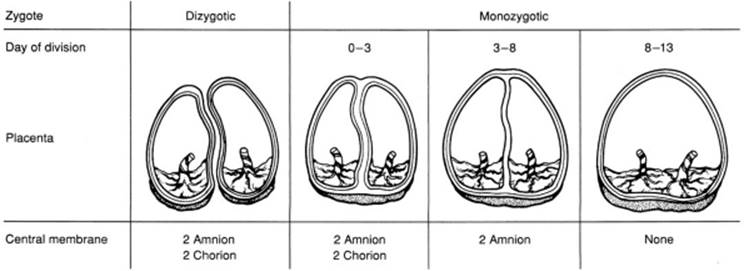
The placentation of dizygotic twins will always be diamniotic, dichorionic. Two complete placental units are produced, each composed of an amnion and a chorion. As a result, the membrane separating dizygotic twins will consist of four layers; an amnion and a chorion from each fetus. The placentas themselves may be separate or fused in dizygotic twins but the central membrane will always consist of four layers. In monozygotic twins, the placentation depends on the time at which twin division occurs. If division of the zygote occurs in the first three days, two complete placental units will be formed and the central membrane will contain two amnion and two chorion layers, just as with dizygotic twins. The syncytiotrophoblast cells, which will give rise to the chorion, begin to differentiate about day 3 from the periphery of the blastocyst. If division occurs between days 3 and 8, the placental unit will consist of a single chorion which has already differentiated and two amnions which have not yet begun to form. As a result, the central membrane will be thin and wispy because it consists of only two opposed amniotic membranes without the intervening chorionic layers. This placentation is referred to as diamniotic, monochorionic. The amnion begins to differentiate by about day 8 and if embryonic division occurs between days 8 and 13, the twins will share a single amnion and chorion; a monoamnionicity, monochorionic placentation. This situation, with no central membrane separating the fetuses, allows for potentially lethal entanglement of the umbilical cords. Different types of placental development in dizygotic and monozygotic twins are illustrated in Figure 14.1. Division, which occurs after day 13, results in a physical attachment producing conjoined twins.
|
|
|
FIG. 14.1. Types of placentation in monozygotic and dizygotic twinning. |
Examination of the placenta(s) and a detailed description of its central membrane are critical for determining zygosity of the infants. The microscopic appearance of the central membrane consisting of either two or four layers is seen in Figure 14.2. Diamniotic, dichorionic twins are dizygotic if the twins are of opposite sex. If the central membrane contains only amnionic layers and a monochorionic placenta, the infants are monozygotic. If the central membrane has two amnion and two chorion layers (i.e., diamniotic, dichorionic) and the infants are the same sex, the twins may be either dizygotic or monozygotic. Despite this limitation, the obstetrician can still accurately determine zygosity in the delivery room in over 50% of cases by simply observing the fetal sex and grossly inspecting the placenta. In those cases that remain uncertain, a more specific diagnosis can be made by blood or HLA antigen typing or more sophisticated DNA analyses.
|
|
|
FIG. 14.2. In monozygotic twinning, the central membrane contains (A) four layers or (B) two layers (A, amnion; C, chorion). |
MATERNAL COMPLICATIONS
Women pregnant with multiples are more likely to be hospitalized antenatally for both an increased frequency and severity of pregnancy-related complications. Some of these increased risks are associated with maternal characteristics that predate the pregnancy such as older maternal age, nulliparity, increased pregravid BMI, and conception by ART. However, the majority of these complications are directly related to higher plurality and the more extreme maternal adaptation required.
Cardiovascular Risks
One of the major physiologic changes occurring with a multiple pregnancy is significant expansion of the plasma volume and cardiac output above that seen in singleton pregnancies. This increased plasma volume has obvious adaptational value as the maternal host tries to meet the demands of a multiple conception. Increased cardiac demand is reasonably well tolerated in the absence of underlying cardiac disease such as undiagnosed mitral valve stenosis. However, the common use of tocolytic therapy, the not uncommon iatrogenic fluid overload, and the occasional infection will all generate significant additional cardiovascular stress. Although infrequent, tocolytic therapy (especially β-adrenergic agonists) has been associated with pulmonary edema, myocardial ischemia, and potentially lethal maternal tachyarrhythmias in multiples. An increased risk of postpartum cardiomyopathy has also been reported, especially among older gravidas with higher order multiples. A case-controlled study of pregnant women found that multiple pregnancy was an independent and significant risk factor (odds ratio [OR] = 2.3; confidence interval [CI] 95% = 1.2–4.5) for admission to an intensive care unit.
Hematologic Abnormalities
Increased red blood cell volume expansion is unable to keep pace with plasma volume expansion in either singleton or multiple gestations. This results in a physiologic hemodilution. The average hemoglobin concentration for women pregnant with twins is 10 g per dL at 20 weeks gestation. Hemoglobin and hematocrit values decline beginning in the first trimester, reaching a nadir in the second trimester before gradually rising again in the third trimester. Hemoglobin levels below 11 g per dL in either the first or third trimester accompanied by a serum ferritin less than 12 µg per dL represents iron deficiency anemia, which complicates some 21% to 36% of multiple gestations. This rate is two- to three-fold higher than in singletons. Multiples generate a great demand for elemental iron, which might not be available in the average diet. This need should be addressed through the consumption of heme-rich animal protein and supplementation with 60 mg per day of elemental iron and 1 mg per day of folic acid when the woman has low or absent stores of these nutrients.
Metabolic Disorders
Women pregnant with multiples have lower fasting and postprandial glucose levels, exaggerated insulin responses to eating, and higher levels of β-hydroxybutyrate than women pregnant with singletons. These differences suggest more rapid depletion of glycogen stores and resultant metabolism of fat between meals and during an overnight fast.
Gestational diabetes represents a disorder of relative insulin deficiency exposed as a consequence of the antiinsulin effects of several placental hormones, most notably human placental lactogen. Multiple gestations are at increased risk for gestational diabetes due to the elevated levels of these placental hormones associated with the increased placental mass. Gestational diabetes appears to be increased two- to three-fold among multiples (7% among twins, 9% among triplets, and 11% among quadruplets) compared to the 3% to 4% incidence among singletons. Given the high rate of premature labor among multiples, it should be remembered that both β-adrenergic agents and corticosteroids can induce both insulin resistance and hyperglycemia.
Premature Birth
The risk of preterm birth increases with the number of fetuses in utero and is the single greatest threat to the health of the newborns. Premature labor and PPROM are responsible for more than 70% of these premature deliveries. The incidence of preterm birth less than 37 weeks gestation in the United States is between 30% to 55% for twins, between 66% to 80% for triplets, and is virtually 100% for quadruplets. The mean gestational age at delivery is inversely proportional to fetal number: 39 weeks for singletons, 35 to 36 weeks for twins, and 32 to 33 weeks for triplets. Of all infants born in Australia and New Zealand prior to 32 weeks gestation in 1995, more than one-fourth were the products of a multiple gestation.
Pregnancy-Induced Hypertension/Preeclampsia
Pregnancy-induced hypertension or preeclampsia is frequently encountered in multiple gestations. Reported frequencies increase from approximately 7% in singletons to 14% for twins, 21% for triplets, and 40% for quadruplets. A population-based study of singleton and twin births in the state of Washington found twins to have a four-fold higher risk of preeclampsia and a 14-fold higher risk if the woman is primigravid. Pregnancy-induced hypertension or preeclampsia frequently occurs earlier, is more severe, and is more often atypical in multifetal gestations. Hypertension is not always the presenting sign, nor is proteinuria universally present, especially in higher order multiples. Only 3 of 16 triplets and quadruplets reported in one study met the traditional criteria for preeclampsia. The most common presentation among these higher order multiples was maternal symptoms typical of severe preeclampsia associated with laboratory abnormalities consistent with the HELLP (hemolysis, elevated liver enzymes, low platelet count) syndrome.
Placental Abruption
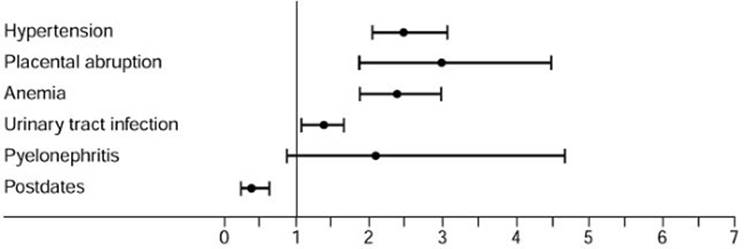
Antepartum maternal hemorrhage is also increased in multiple gestations. Twin pregnancies have an approximately three-fold increased frequency of abruption, even when controlling for maternal hypertension. Abruption occurs most frequently in the third trimester, and is also a significant risk immediately after vaginal delivery of the first infant. Conformational changes in the uterine shape that occur between deliveries can predispose to sheering off of the attached placenta.
Hydramnios
Hydramnios occurs in 2% to 5% of twin gestations, and twins account for approximately 8% to 10% of all cases of hydramnios. Polyhydramnios may develop as a consequence of twin-to-twin transfusion syndrome with the co-twin experiencing both growth restriction and oligohydramnios. The development of idiopathic acute hydramnios with respiratory embarrassment has also been reported in multiples.
Urinary Tract Infection
Women with multiples have a 1.4-fold increased risk of developing urinary tract infection during pregnancy. These infections usually involve only the lower urinary tract because the incidence of pyelonephritis is not significantly increased. This complication is thought to be a consequence of increased urinary stasis due to the gravid uterus.
Postpartum Hemorrhage
Overdistention of the uterus in a multifetal gestation predisposes to postpartum hemorrhage caused by uterine atony. In addition, women carrying multiples are at increased risk for retention of placental tissue, surgical or mechanical trauma to the genital tract, pharmacologic effects of medications such as magnesium sulfate which is frequently used to manage both preeclampsia and preterm labor, as well as other maternal characteristics such as advanced age, obesity, or higher parity. In a British population-based study of postpartum hemorrhage, multiple pregnancy was associated with a significantly increased risk ratio (RR = 4.46; 99% CI = 3.01–6.61). In the British study, the risk of postpartum hemorrhage among singletons was 1.2% compared to 6% for twins, 12% for triplets, and 21% for quadruplets. Compared to the twins, the risk of postpartum hemorrhage was two-fold higher for triplets and four-fold higher for quadruplets.
While the above scenarios represent several of the more significant maternal complications associated with multiples (Fig. 14.3), others are encountered with increasing frequency. These include cholestatic jaundice, pruritic urticarial plaques and papules of pregnancy (PUPP), hyperemesis, and deep venous thrombosis. Women with multiple gestations also experience an increased number of somatic complaints such as shortness of breath, loss of balance, varicose veins, significant dependant edema, constipation, and hemorrhoids. Thankfully, multiples are less often asked to carry their pregnancy postdates.
|
|
|
FIG. 14.3. Odds ratio table for maternal antepartum complications among 1,253 twin and 5,119 singleton pregnancies between 1982 and 1987. (Adapted from Spellacy WN, et al. A case-controlled study of 1,253 twin pregnancies from a 1982–1987 perinatal database. Obstet Gynecol 1990;75:168–171.) |
COMPLICATIONS UNIQUE TO MULTIPLES
Vanishing Twin Syndrome
The loss of one or more fetuses can complicate a multiple gestation at any point during pregnancy but is most common in the first trimester. Between 20% to 50% of multiple gestations identified by ultrasound in early pregnancy are lost either as a spontaneous abortion of all fetuses or by the spontaneous loss and reabsorption of at least one of the multiples. This latter occurrence is referred to as the “vanishing twin phenomenon” and its exact frequency is difficult to ascertain for obvious reasons.
The published experience of the Norfolk in vitro fertilization program allows an estimation of the frequency of this occurrence. Spontaneous loss of all fetuses with previously documented cardiac activity occurred in 17 of 165 twin (10.3%), 2 of 26 triplet (7.7%), and 1 of 5 quadruplet (20%) pregnancies. In addition, 33 twins spontaneously reduced to a singleton and nine triplets spontaneously reduced to twins. Considering both the spontaneous abortion rate and the “vanishing twin phenomenon”, the overall first trimester pregnancy loss rate was 50 of 165 twins (30.3%), 11 of 26 triplets (42.3%), and 1 of 5 quadruplets (20%). Although these data are limited by the fact that all pregnancies were the result of in vitro fertilization, similar loss rates have been reported in spontaneously conceived multiples.
When a “vanishing twin phenomenon” does occur, it is usually silently reabsorbed. However, in some cases, the reabsorption may be associated with a modest amount of vaginal bleeding. Some have estimated that up to 5% of all patients with first trimester bleeding may be experiencing a vanishing twin. Maternal reassurance should be offered as the prognosis for the surviving twin is excellent when silent reabsorption occurs in the first trimester. Following delivery, the placenta will frequently show a whitish plaque on the membranes representing the remnant of the other gestational sac.
While the “vanishing twin phenomenon” occurs with a greater frequency than previously appreciated, it is important not to overdiagnose this event. The diagnosis of a vanishing twin should be preceded by identification of specific embryonic parts in each sac as opposed to an anembryonic cavity. Numerous sonographic findings can mimic a second anembryonic cavity including subchorionic blood clots, chorioamnionic separations, a decidual pseudosac in the contralateral horn of a bicornuate or didelphic uterus, a cystic uterine fibroid, or even excessive transducer pressure on a thin woman. The emotional impact of a vanishing twin should not be underestimated. Parents will perceive the situation as the loss of a child and perinatal grief counseling may even be appropriate in some situations.
Fetal Death in Utero (Acute Intertwin Transfusion Syndrome)
After the first trimester, single fetal demise occurs in 2% to 5% of twin gestations and 10% to 15% of triplet gestations. The risk of a single fetal death in utero is increased three- to four-fold by monochorionicity. When death of one fetus occurs in a dichorionic gestation, the risk to the surviving co-twin is minimal although higher rates of preterm labor or PPROM have been reported. Virtually all the adverse sequelae for the surviving co-twin occur in monochorionic gestations. Antenatal demise of a monochorionic co-twin is associated with an approximate 25% mortality rate and a similar high rate of morbidity for the second fetus.
Injury to the surviving co-twin was previously thought to be a result of intervascular coagulation and embolism of tissue thromboplastins through ubiquitous placental anastomoses from the fetal demise. The passage of these tissue thromboplastins result in embolic ischemic organ injury or development of disseminated intervascular coagulopathy in the survivor. A more recent theory suggests that following fetal demise, there is an acute transfusion into the dead fetus through the shared placenta. This hemorrhage into the dead fetus may cause severe fetal hypotension, hypoxic end-organ injury, and potentially lethal fetal exsanguination. This is often referred to as acute intertwin transfusion syndrome. In prospective studies, 5% to 25% of surviving monochorionic twins have ischemic end-organ injury, most notably neurologic. Neurologic abnormalities reported among surviving twins include necrosis and cavitation of the cerebral white matter, cerebellar necrosis, multicystic encephalomalacia, hydranencephaly, hydrocephalus, porencephaly, microcephaly, and hemorrhagic infarction. In addition to neurologic injuries, other abnormalities seen among surviving co-twins include ischemic bowel lesions, intestinal atresia, renal cortical necrosis, and cystic renal dysplasia.
Most reported cases of demise or neurologic injury occurring in a monochorionic co-twin following death of its sibling have occurred in the third trimester. However, neurologic deficit has been reported in a surviving monochorionic twin following loss of its co-twin as early as 18 weeks gestation.
Following a fetal demise in utero, continuing pregnancy management will depend upon gestational age, chorionicity, and maternal and fetal status. If the pregnancy is known to be dichorionic, then no intervention is required unless a term gestation has already been achieved or there is a specific maternal or fetal indication for delivery. A single fetal demise in a monochorionic gestation is an indication for immediate delivery if fetal maturity can be inferred based on gestational age or documented by amniocentesis. Decisions regarding delivery at earlier gestations should be based on an assessment of the neonatal complications likely to result from delivery as opposed to the potential risk of remaining in utero. Since it is possible, if not probable, that hypoxic/ischemic end-organ injury occurs almost immediately after demise of the monochorionic co-twin, it is unclear if these injuries can be prevented by prompt delivery. With expectant management, increased fetal surveillance of the surviving twin should be performed and any evidence of fetal compromise would also necessitate immediate delivery.
Monoamniotic Twins
Monoamniotic twins are rare, complicating fewer than 1% of monozygotic gestations. Their importance is that they carry a fetal mortality rate that approaches 40%, primarily as a consequence of cord entanglement and subsequent occlusion. Cord entanglement is present in virtually every case of monoamniotic twins. Monoamniotic twins are also at greater risk for other complications such as congenital anomaly and twin-to-twin transfusion syndrome.
Some reviews have suggested that spontaneous intrauterine fetal demise due to cord entanglement is unlikely after 32 weeks gestation as intrauterine crowding limits the ability of the fetuses to make major moves in relationship to each other. However, a review of over 200 non-conjoined, monoamniotic twins demonstrated that fetal deaths occur throughout pregnancy, with a large percentage occurring after 32 weeks. In this large review, those monoamniotic twins that were prenatally diagnosed and subjected to intensive antepartum surveillance enjoyed a much higher perinatal survival rate than has been historically reported. Prenatal diagnosis allows for institution of an aggressive management protocol designed to identify fetal compromise, enhance fetal lung maturity, and electively deliver once neonatal survival can be anticipated (Table 14.1).
|
|
|
TABLE 14.1. Management recommendations for monoamniotic/monochorionic twin gestations |
Cesarean delivery is usually recommended due to concerns over intrapartum fetal distress related to tightening of the umbilical cord entanglement. If vaginal delivery is planned, continuous fetal monitoring is essential along with capability for immediate cesarean birth.
Discordant Twin Growth
In addition to the concordant intrauterine growth restriction (IUGR), ultrasound is useful for the detection of significantly discordant fetal growth, which is unique to multiple gestations. In terms of actual birth weight, a large review found that twin birth weight differed by 500 to 999 g in 18% of sets and the difference was greater than 1,000 g in 3%. Some 15% to 30% of twins exhibit birth weight differences of 20%. Discordance between the largest and smallest triplet is 20% in more than 40% of triplet gestations with 7% being as much as 40%.
Evidence suggests that the smaller infant may be at risk for both increased perinatal morbidity and mortality when birth-weight discordance is excessive. Another concern is that significant diversions in twin growth may predispose the smaller twin to disadvantages in long-term physical and intellectual development.
Much of the discordance in birth weight will be due to constitutional factors such as the genetic dissimilarity of dizygotic twins. The more severe the discordancy, the more likely the possibility that pathologic conditions exist such as twin-to-twin transfusion syndrome, an anomalous fetus with a normal co-twin, congenital infection, or growth restriction affecting a single fetus due to local placental implantation factors. Percent discordance is calculated by dividing the actual or estimated weight difference by the actual or estimated weight of the larger twin.
It is also important to appreciate that birth-weight discordance and intrauterine growth restriction are interrelated. When birth-weight discordance of 20% is present, one of the fetuses will be IUGR in more than 50% of the cases. When discordant fetuses are both appropriately grown for gestational age, differences in perinatal outcome have not been identified. Both prematurity and intrauterine growth restriction are much greater threats to the fetus than is the degree of discordancy.
Evaluation of discordant growth should be undertaken simultaneously with consideration of gestational age, individual fetal growth, and fetal well-being. In the absence of fetal anomalies or intrauterine growth restriction, and in the presence of reassuring fetal testing, birth-weight discordance among preterm twins should be managed expectantly in anticipation of achieving more advanced gestation or enhanced fetal maturity. Some caution is appropriate given that the ultrasound diagnosis of both intrauterine growth restriction and in utero growth discordance is limited. The sensitivity of ultrasonography for substantial intertwin discordance is, at best, only 60%. Alternatively, ultrasound evidence suggesting 20% to 25% growth discordance or intrauterine growth restriction of either twin at 35 weeks gestation would be appropriate indications for delivery.
Twin-to-Twin Transfusion Syndrome: Chronic Intertwin Transfusion
Twin-to-twin transfusion is a serious complication affecting multiple pregnancies and is sometimes referred to as chronic intertwin transfusion syndrome. Chronic intertwin transfusion syndrome is a complication of monozygotic/monochorionic twins in which intraplacental arterial venous shunts are uncompensated and preferential blood flow exists. Vascular communications are present in virtually all monochorionic placentas and approximately one third will demonstrate at least some clinical evidence of the syndrome. Severely affected pregnancies are much less common, occurring in fewer than 5% of monochorionic gestations. Contrary to what might be expected, severe twin-to-twin transfusion syndrome is associated with fewer, or even a single arterial venous malformation within the placenta rather than multiple vascular anastomoses. Multiple anastomoses function to restore a balance of bi-directional flow within the monochorionic placenta while a limited number predispose to preferential flow. Severe chronic intertwin transfusion syndrome identified in the second trimester is associated with loss rates approaching 100% if untreated. Chronic intertwin transfusion syndrome accounts for 15% to 17% of all perinatal mortality in twin gestations.
In chronic intertwin transfusion, the arterial donor twin may be growth retarded, anemic, hypotensive, and oligohydramniotic. If there is little or no amniotic fluid surrounding the smaller fetus, the amniotic membrane may lay in close apposition to the smaller fetus restricting it to the uterine wall. This is referred to as the “stuck twin”. The “stuck twin” can sometimes be misidentified as monoamniotic. The arterial donor twin may also experience ischemic organ damage involving the brain, kidneys, or bowel. The venous recipient twin can be hypervolemic, hyperviscous, hypertensive, and polyhydramniotic due to increased renal blood flow. Either twin may be hydropic due to volume overload in the recipient or high output failure in the donor. Polyhydramnios, which is common in the venous recipient, also contributes to a high incidence of premature labor or PPROM.
The diagnosis of chronic intertwin transfusion syndrome has become controversial. Older diagnostic criteria, focused primarily on neonatal measures (i.e., cord blood hemoglobin differences of 5 g per dL or birth-weight differences of 20%). These parameters have generally been discarded since they did not efficiently identify those gestations thought to be affected by this disorder. Chronic intertwin transfusion syndrome is now diagnosed using ultrasonographic criteria including:
· marked size disparity in fetuses of the same sex
· disparity in size between the two amniotic sacs
· disparity in size of the umbilical cords
· a single placenta
· evidence of hydrops in either fetus
· findings of congestive heart failure in the recipient.
Doppler ultrasound has also been proposed as a tool that may help improve diagnostic accuracy and assess fetal well-being. The normal placenta in chronic intertwin transfusion syndrome results in normal, non-discordant systolic/diastolic (S/D) ratios. Abnormal SD ratios are more likely to reflect placental abnormalities associated with fetal growth restriction. The absence of underlying placental vascular lesions in chronic intertwin transfusion syndrome results in concordant uterine artery waveforms helping differentiate chronic intertwin transfusion syndrome from fetal growth restriction.
Management of chronic intertwin transfusion syndrome will be individualized depending on the stage of pregnancy at which it is encountered. The option of delivery will depend on fetal maturity and the potential morbidity to be encountered. At earlier gestational ages, serial decompression amniocentesis and tocolytic therapy have been successful in prolonging pregnancy. With the development of fetoscopy, direct laser occlusion of the placental vascular anomaly has become an option. For those patients not delivered, fetal health should be frequently evaluated with biophysical profile scoring or fetal heart rate monitoring. Of all available management options, large volume-reduction amniocentesis is an efficacious and minimally invasive therapy that is probably the treatment of choice after attainment of viability. For the previable patient, the prognosis is extremely poor and consideration might be given to intrauterine laser ablation of placental surface vascular anastomoses, fetoscopic cord clamping, or termination.
FETAL AND NEWBORN COMPLICATIONS
Prematurity
The contribution of multiple gestations to national rates of both perinatal morbidity and mortality has been delineated earlier in this chapter. Multiples contribute disproportionately to virtually every measure of perinatal health as well as longer-term measures of infant mortality and long-term mental and physical handicap. Infants of multiple gestations account for approximately 20% of all NICU admissions. An admission to an NICU can be expected in approximately 25% of all twins, 75% of all triplets, and in more than 90% of quadruplets. Respiratory distress syndrome, one particularly costly measure of neonatal morbidity, occurs in approximately 14% of twins, more than 40% of triplets, and more than 60% of quadruplets. The average length of NICU stay is 18 days for twins, approximately 1 month for triplets, and almost 2 months for quadruplets. Birth weight and gestational age account for the vast majority of increased use of NICU services among multiple gestations.
While the consequences of prematurity are easily calculable in terms of fetal and neonatal adversity, it must not be forgotten that prematurity also contributes significantly to the long-term health and well-being of these infants. Compared to singletons, the risk of dying before the first birthday is 5 times greater for twins and 14 times greater for triplets. Among survivors, the relative risk of severe handicap, controlling for both birth weight and gestational age is 1.7 (95% CI = 1.6–2.0) for twins and 2.9 (95% CI = 1.5–5.5) for triplets compared to singleton gestations.
Intrauterine Growth Restriction
Although intrauterine growth restriction is not unique to multiple gestations, it is certainly more common. During the third trimester, the average growth of multiples begins to diverge from average singleton rates. Healthy twin gestations demonstrate growth velocities similar to that of singletons until approximately 30 to 32 weeks gestation while triplet and quadruplet growth velocity begins to slow at 27 to 28 and 25 to 26 weeks, respectively. The mean estimated fetal weight for twins falls below the singleton 50th percentile at about 32 weeks but typically remains between the 10th and 50th percentile until approximately 36 weeks. Beyond 36 weeks, twins frequently fall below the 10th percentile compared to singleton norms. Between 36 to 38 weeks gestation, approximately one-third of all twins will demonstrate intrauterine growth restriction. In comparison, approximately 12% of triplets will have a birth weight less than the 10th percentile based on singleton standards by 32 to 34 weeks, and the rate of IUGR increases to more than 60% by 35 to 36 weeks. Evaluation of the individual parameters of fetal biometry suggests that the reduced growth velocity seen in multiples is most consistent with an asymmetric intrauterine growth restriction. Relative placental insufficiency magnified by the inherent competition for nutrients presented by the multiple fetuses is the most likely cause of this constrained pattern of growth. Other potential contributors to the intrauterine growth restriction identified in multiples include a higher incidence of abnormal placental implantation, umbilical cord abnormalities including a two-vessel cord, velamentous or marginal insertions, chromosomal or structural abnormalities, and intertwin transfusion syndrome.
Intrauterine growth restriction in multiples is best predicted using an estimated fetal weight calculated from multiple biometric parameters including the abdominal circumference. The detection of IUGR is also aided by early diagnosis and accurate dating of the pregnancy. Beyond 20 weeks gestation, fetal growth in multiple gestations should be periodically evaluated by detailed ultrasonographic studies. In general, these scans can be performed on a monthly basis although little data exist that define the optimal interval. That interval can likely be extended if results of the previous scan were reassuring, especially in a dichorionic gestation. Shorter intervals of every 2 to 3 weeks may be required once IUGR has been identified or is suspected. The diagnosis of IUGR in one or both twins should lead to the institution of antenatal fetal surveillance, nonstress testing, assessment of amniotic fluid volume, umbilical artery Doppler velocimetry, and consideration given to the safety of early delivery just as it would be in a singleton gestation. If amniocentesis is used to assess fetal lung maturity, results obtained from the amniotic fluid of either twin will usually reflect the lung maturity status of both making only a single puncture necessary. If intrauterine growth restriction is suspected in only one of the twins, it is likely that the smaller twin will have accelerated lung maturity and therefore the amniotic fluid of the larger twin should be sampled.
Congenital Anomalies
Congenital malformations occur approximately twice as often in multiples as compared to singletons. The majority of malformations occur in monozygotic twins. However, twins are concordant for fetal anomaly in only a minority of cases. Even higher rates of congenital malformation have been reported in triplet gestations.
Identification of congenital malformations represents a major use of ultrasonography in multiples. Transabdominal evaluation of fetal anatomy is best performed between 18 to 22 weeks. However, transvaginal sonography may allow an opportunity to detect certain malformations even earlier. In a single center series of 245 consecutive twin gestations (490 infants), the use of antepartum ultrasound for the detection of congenital anomalies (4.4% anomaly rate) was excellent with a sensitivity of 88% (21 of 24 anomalous fetuses detected), a specificity of 100%, a positive predictive value of 100%, and a negative predictive value of 99%. An accurate diagnosis of congenital anomaly is an obvious prerequisite for antepartum or intrapartum interventions. These interventions may include increased fetal surveillance, a change in the timing, location or mode of delivery, consultation with various neonatal and pediatric subspecialists, and in some cases, interventions such as fetal therapy, selective reduction, or pregnancy termination.
ANTEPARTUM CARE
Beneficial Interventions
Maternal Nutrition
Alterations in fetal growth described in multiple gestations have been attributed, in part, to the intensified fetal competition for maternal nutrients. This inherent competition results in a drain on maternal resources and an accelerated depletion of maternal reserves. Placental transfer of an adequate nutrient supply is diminished after a combined fetal weight of 3,000 g is exceeded. Unfortunately, most of the investigations that have evaluated the impact of nutrition on perinatal outcome have involved singleton gestations, overlooking the prenatal care of multiples. This is unfortunate because there is accumulating evidence that nutrition is an important and modifiable variable which can improve intrauterine fetal growth and potentially lengthen gestation.
The constrained pattern of fetal growth experienced by multiples makes environmental factors, such as nutrition, a greater influence on ultimate fetal growth than in singleton gestations. This allows a proportionately greater opportunity to positively influence birth weight and pregnancy outcome in multiple gestations by modifying maternal nutrition and monitoring the rate of maternal weight gain.
Studies have identified maternal weight gains of 24 lbs by 24 weeks and overall weight gains of 40 to 45 lbs as being associated with optimal pregnancy outcomes defined as an average twin birth weight of 2,500 g. A 35- to 45-lb weight gain has been recommended in normal weight women with twins. Investigators have noted the importance of adequate early weight gain (<24 weeks gestation). A ripple effect of maternal weight gain on fetal growth has been demonstrated with gains before 20 weeks and between 20 to 28 weeks influencing subsequent twin growth from 20 to 28 weeks and 28 weeks to delivery, respectively. Poor weight gain prior to 24 weeks (<0.85 lbs per week), regardless of the rate of gain after 24 weeks, has been associated with both reduced intrauterine growth and higher perinatal morbidity. Studies among large cohorts of multiples have demonstrated that maternal weight gain prior to 20 weeks and between 20 to 28 weeks had a greater effect on birth weight in both twin and triplet pregnancies than did weight gain in the third trimester. These findings were particularly notable among underweight women. Patterns of higher maternal weight gain throughout pregnancy results in a favorable combined twin birth-weight difference of more than 1 lb at term compared to low patterns of maternal weight gain.
Almost certainly, weight gain recommendations for twins need to be modified based on the maternal body mass index just as they are for singletons. Analyzing patterns of both intrauterine fetal growth and twin birth weights, Luke and colleagues have proposed BMI-specific weight gain guidelines for twin pregnancies. These guidelines were modeled using multiple regression analysis for the gestational periods of 0 to 20 weeks (early), 20 to 28 weeks (middle), and 28 weeks to delivery (late). As might be expected, excellent twin growth was achieved with lesser maternal weight gains among overweight and obese women compared to underweight or normal weight women. Optimal rates of fetal growth and optimal birth weights were associated with BMI-specific rates of maternal weight gain (lb per wk) as described in Table 14.2.
|
|
|
TABLE 14.2. Body mass index: specific weight gain recommendations for women pregnant with twins |
In an analysis of over 1,000 triplet pregnancies, Elster and colleagues identified male gender, older maternal age, increased parity, maternal height, pregravid weight, and maternal weight gain as factors associated with improved intrauterine fetal growth. They noted that a longer length of gestation was associated with higher maternal age, parity, and weight gain. Maternal weight gain was also associated with higher birth weight, improved birth weight for gestational age, and a longer length of gestation in a study of 144 triplets reported by Luke. Regression analyses again indicated that periods of maternal weight gain with the greatest impact on triplet birth weight were from conception to 20 weeks and between 20 and 28 weeks gestation.
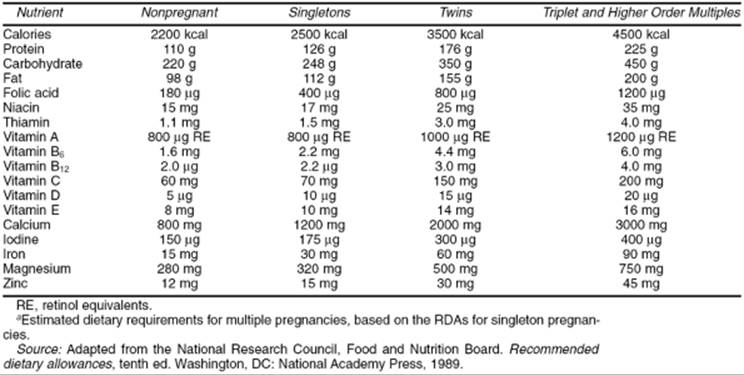
Maternal nutrient requirements are all increased in multiples. Due to the greater expansion of blood volume, increases in maternal tissues (body fat, muscle, breast, uterine) and fetal mass, caloric requirements are estimated to increase by about 40% in twins and by 80% in triplets. Although there are no national guidelines, an estimate of individual nutrient needs in multiples is provided in Table 14.3 based on the recommended daily allowances for nonpregnant and singleton pregnancies published by the National Research Council, Food and Nutrition Board, and extrapolations for twin and triplet pregnancies published by Luke.
|
|
|
TABLE 14.3. Recommended dietary allowances (RDAs) for nonpregnant women and women pregnant with singletons and estimated dietary requirements for women with twins, triplets, and higher order multiplesa |
Maternal anemia, both the iron and folate deficiency types, are common in multiples. Many have recommended supplementation of the standard prenatal vitamin with iron (60 mg per day) and folic acid (1 mg per day) when a multiple pregnancy is diagnosed. The frequency of maternal anemia is related to the overall nutritional status of the woman, which reemphasizes the need for adequate nutrition with a focus on heme-rich protein intake and an emphasis on folate-containing green leafy vegetables. Other nutrients often lacking in women's diets include calcium, magnesium, and zinc, and their specific supplementation has been recommended by some to both prevent their depletion and to reduce pregnancy complications.
There is good evidence that intensive patient education, aggressive nutritional counseling, and an emphasis on early and appropriate maternal weight gain can all contribute to improved intrauterine growth and perinatal outcomes in multiple gestations.
Ultrasound
Ultrasound plays numerous critical roles in the antepartum care of multiples. These include their diagnosis, determination of amnionicity and chorionicity, identification of fetal or placental anomalies, evaluation of fetal growth and amniotic fluid volume, evaluation of fetal biophysical parameters, and determination of presentation. Accurate determination of chorionicity and amnionicity is important in antepartum management. Monochorionic pregnancies are at substantially higher risk for intrauterine growth restriction, growth discordance, congenital anomalies, and intrauterine fetal death. Although rare, monoamniotic placentation represents an extreme risk with high rates of twin-to-twin transfusion, cord entanglement, and fetal demise. Dichorionic twins are at lower risk as this placentation does not carry the potential for vascular communication and is associated with a lower risk of congenital anomaly. The value of antepartum ultrasound for the identification of fetal congenital malformations has already been described.
If two separate placentas are identified or if the fetuses are of different sex, the placentation is dichorionic. A thin, wispy membrane along with a single placenta and same sex fetuses suggest monochorionicity. There are several membrane characteristics that can help differentiate a monochorionic placenta from a fused dichorionic placenta. A “thick” dividing membrane composed of four layers suggests dichorionicity. Another helpful characteristic is the “twin peak” or “lambda sign”. The “twin peak” represents a wedge-shaped projection of placental tissue extending above the fused chorionic surface and separating the diamniotic/dichorionic intertwin membrane. Using these criteria, chorionicity can be predicted accurately in more than 80% to 90% of twin gestations. Determination of chorionicity is most accurate in the first trimester; as pregnancy progresses, the dividing membrane progressively thins and the likelihood of placental fusion increases.
Few studies have specifically addressed either the value of serial ultrasound assessment of fetal growth or the appropriate interval for screening. It can be easily inferred, however, that ultrasound has an important role. Intrauterine growth restriction is three times more common among twins compared to singletons and ultrasound is the only modality capable of assessing individual fetal growth. In twin gestations, asymmetric growth restriction becomes increasingly more common as gestational age advances. The presumption is that ultrasound will allow identification of multiples with growth restriction resulting in antenatal surveillance or delivery which may improve perinatal outcome.
Evidence of improved outcomes in multiples through the use of ultrasound is limited. In the routine antenatal diagnostic imaging with ultrasound (RADIUS) trial, twins were diagnosed both more consistently and at earlier gestational ages than in the control group receiving selective ultrasound. More than a one third of the triplets in the control group were not diagnosed until after 26 weeks gestation and approximately 10% were not diagnosed until the onset of labor. The RADIUS trial demonstrated a 50% reduction in the incidence of composite adverse perinatal outcomes among the multiple gestations in the routinely screened group. While this reduction was dramatic, it was not statistically significant since the trial was not powered to identify differences in the multiple gestation subgroup. A 10-year study of routine ultrasonography in Europe involving over 22,000 women and 249 multiple gestations also revealed improved perinatal outcomes associated with routine earlier detection by ultrasound.
Ultrasound is critical to the management of both twin and triplet gestations. In the second half of gestation, fetal growth should be assessed periodically by serial ultrasound examinations. Most clinicians repeat these ultrasounds on a monthly basis although the appropriate interval between scans has not been determined. This interval can likely be extended if previous examinations suggest appropriate fetal growth, especially in dichorionic gestations.
Selective Multifetal Pregnancy Reduction
Gestational age and birth weight at delivery are the two most important factors determining perinatal morbidity and mortality and both are inversely proportional to the number of fetuses present. According to the U.S. Vital Statistics, the average birth weight and gestational age for singletons is 3,358 g at 39.3 weeks, compared to 2,500 g at 36.2 weeks for twins and 1,698 g at 32.2 weeks for triplets. Data from smaller reviews suggest that the average birth weight and gestational age is about 1,455 g at 30.5 weeks for quadruplets and 980 g at 29 weeks for quintuplets. These higher order multiples are at significant risk of delivery prior to viability and for those who reach viability, an appreciable risk of serious long-term morbidity. Expectantly managed triplets and quadruplets have a 20% to 30% risk of delivery prior to 24 weeks and an 8% to 12% risk of delivery between 24 to 28 weeks. Multifetal pregnancy reduction has emerged as a procedure meant to improve the chances of survival and health in higher order multiple gestations.
The overall pregnancy loss rate prior to 24 weeks gestation following multifetal pregnancy reduction has dropped from initially reported rates of 15% to 20% to approximately 5% to 8% as experience with the procedure has increased. The risks of pregnancy loss and early preterm birth following multifetal pregnancy reduction have also been described based on the accumulated experience of a consortium of national and international centers. The loss rate prior to 24 weeks is related to both the starting and finishing number of fetuses. A higher starting number is associated with a greater pregnancy loss rate. The loss rate under 24 weeks gestation fell from 15.4% to 11.4%, 7.3%, 4.5%, and 6.2% with six or more, five, four, three, and two fetuses present, respectively, at the start of the procedure. The optimal finishing number of fetuses appears to be twins with loss rates at ≤24 weeks of 10.9%, compared with 13.7% and 18.0%, respectively, for singletons and triplets. The preferred technique is the transabdominal, ultrasound-guided, fetal intracardiac injection of potassium chloride.
It was initially believed that women with quadruplets or more would be ideal candidates for multifetal pregnancy reduction. A meta-analysis of the effect of multifetal pregnancy reduction on pregnancy outcome demonstrated that reduction to twins is associated with longer gestations, higher birth weights, and lower NICU admission rates. The incidence of maternal antenatal hospitalization, preterm labor, and cesarean birth are also reduced although incidences of preeclampsia, gestational diabetes, and other pregnancy complications are not.
Somewhat more controversial has been the value of multifetal pregnancy reduction in triplets. Smaller series have not identified an improvement in perinatal mortality in reduced versus nonreduced triplets. Several investigators have reported a significant reduction in early preterm births (24–32 weeks) among triplets reduced to twins compared to nonreduced triplets. Because early preterm birth is a known risk factor for disability, reduction of triplets to twins may reduce the rate of serious morbidity and improve the quality of life for those remaining. Two relatively large databases that have specifically addressed the issue of reduction of triplets to twins have identified better outcomes for the reduced triplets including decreased fetal loss prior to 24 weeks, decreased severe prematurity, increased gestational age at delivery, increased birth weights, decreased perinatal mortality, decreased neonatal respiratory morbidity, and decreased interventricular hemorrhage.
It is also important to be aware of the psychological implications for mothers undergoing multifetal pregnancy reduction. Follow-up studies of the emotional responses of women undergoing this procedure revealed that 70% mourned for the reduced fetus(es), but most of the depressive symptoms were mild and lasted only 1 month. For a few however, moderately severe sadness and guilt continued for a longer period. Ultimately, over 90% of the women concluded they would make the same decision again.
In addition to multifetal pregnancy reduction, selective fetal termination can sometimes be offered in order to allow a pregnancy to continue following identification of a serious or life-threatening malformation in one twin. The most common indications for selective fetal termination include dizygotic twins discordant for fetal chromosome abnormality, serious fetal structural malformation, or one twin affected by a single gene disorder.
Multifetal pregnancy reduction of triplet and higher order multiple gestations is associated with longer gestations, higher birth weights, and lower rates of perinatal morbidity. Multifetal pregnancy reduction of quadruplets or quintuplets would also be associated with significant reductions in perinatal mortality. Multifetal pregnancy reduction should be included in the counseling of all women with triplets and higher order multiples.
Serial Digital Cervical Examination
The value of antepartum digital cervical examination lies in its ability to provide ongoing risk assessment. One cervical score is calculated as follows: cervical length (cm) minus cervical dilation at the internal os (cm). A cervix that is 2 cm long with a closed internal os gives a score at +2. A cervix that is 1 cm long, dilated 1 cm at the internal os gives a score of zero. A cervix that is 1 cm long with an internal os dilated 3 cm gives a score of -2. A cervical score ≤0 on any single examination predicted preterm labor within 14 days in 69% of those women. When only multiparous women were considered, the predictive value rose to 80%.
Newman and Ellings performed weekly digital cervical examinations on 86 twin and 7 triplet gestations as part of routine antepartum surveillance. There was a progressive fall in cervical score throughout the latter half of gestation, most notable after 30 weeks gestation. A cervical score ≤0 on or before 34 weeks gestation had a positive predictive value of 75% and a four-fold increase relative risk of delivery ≤37 weeks. The earlier in gestation that a cervical score ≤0 is detected, the greater the positive predictive value ascribed to it. Only two (2.6%) women experienced spontaneous preterm labor or PPROM within 1 week of having a cervical score greater than 0.
A cervical score ≤0 is a marker of abnormal cervical status and increased preterm delivery risk. Conversely, women who maintain a cervical score greater than 0 are good candidates for continued observation without obstetric intervention. Ideally, these examinations should be done by a consistent examiner on an every 1- to 2-week basis between 24 to 36 weeks gestation. There are no prospective studies or cohort series that demonstrate that antepartum digital cervical examination is associated with obstetric complications or adverse perinatal outcomes.
Corticosteroid Administration
Corticosteroids should be administered to women with multiples experiencing preterm labor prior to 34 weeks gestation. The National Institutes of Health also recommends corticosteroid therapy for women with PPROM at less than 30 to 32 weeks gestation. Corticosteroids have been shown to induce fetal lung maturity and reduce perinatal complications in twin gestations as well as singletons. Evaluation of the clinical characteristics and outcomes of twin gestations complicated by PPROM reveals that the nonpresenting twin was more likely to develop hyaline membrane disease, respiratory complications, and require more oxygen therapy than the presenting infant. As a consequence, the nonpresenting twin was at greater risk for infant mortality.
Fetal Surveillance
Although no prospective trials exist, all retrospective reviews indicate that the nonstress test has equivalent efficacy in multiples to that seen in singletons. Both the nonstress test and the biophysical profile have been shown to be effective in identifying the growth-retarded multiple, the multiple at risk for hypoxic/asphyxic injury, and the multiple at risk for perinatal mortality. One retrospective cohort study compared 230 twins who received third trimester nonstress tests to 435 twins who did not. Although the differences did not achieve statistical significance, there was only a single intrauterine fetal demise in the nonstress test group compared to nine in the control group. Similar findings have been reported in smaller retrospective studies involving triplet and higher order gestations.
While the routine use of antepartum fetal surveillance in uncomplicated multiples has not been shown to be of benefit, surveillance is certainly indicated in those gestations identified as being at higher risk. These would include those with intrauterine growth restriction, abnormal fluid volumes, growth discordance, pregnancy induced hypertension, fetal anomalies, monoamnionicity, or any other pregnancy complications placing one or more of the fetuses at increased risk.
Other recommended methods of fetal surveillance include fetal kick counting, although some patients may find it difficult to distinguish the movements of one fetus from those of another. Umbilical cord Doppler velocimetry may be of help in evaluating growth-retarded fetuses. Ultrasonography obviously contributes to both the risk assessment and surveillance of multiple gestations. The limitations of ultrasound for both the diagnosis of intrauterine fetal growth restriction as well as for fetal growth discordance would be the major indication for some clinicians to recommend routine surveillance of all multiples.
At present, antepartum fetal surveillance in multiples is recommended in all situations for which one would perform similar surveillance in a singleton pregnancy. Further studies are needed to determine if routine antepartum fetal surveillance provides objective benefit in either twin or triplet gestations.
Controversial Interventions
Reduced Activities/Rest
Activity restriction and increased rest at home is commonly recommended for women with multiples although there are no prospective randomized data evaluating this intervention. Existing data are both dated and limited by study design. Studies evaluating the role of prescribed rest in both twin and triplet gestations compared to similar pluralities with unrestricted activities typically date from time periods when the unrestricted multiples were in reality undiagnosed. Maternal rest has been associated with reduced baseline uterine contraction frequency, and restricted activity has been generally accepted as a reasonable approach to the prolongation of pregnancy. Other studies have suggested that the birth weights of both twins or triplets may be increased if reduced activity and home bed rest is introduced in the mid-trimester. Further research is needed to define the impact of restricted activity and rest on both the duration of pregnancy, fetal growth, and the risk of pregnancy-induced hypertension.
Home Uterine Activity Monitoring
Few issues are as controversial as home uterine activity monitoring (HUAM). HUAM has been advocated for multiples due to their increased risk of premature labor combined with observations that multiples may be less accurate in the self-detection of their own prelabor uterine activity compared to women with singleton gestations. Prospective randomized trials evaluating the efficacy of HUAM in multiples have provided conflicting results.
Dyson and colleagues performed a prospective randomized trial of high-risk pregnancies allocated to one of three interventions. The first group received standard care including instruction in the signs and symptoms of preterm labor. The second group was in the education/palpation group who performed daily HUAM but transmitted the data so that it could not be analyzed. The education/palpation group was contacted at least 5 days per week by a study nurse to elicit their signs and symptoms of preterm labor and record the number of contractions detected by palpation. The third group received the same education/palpation instruction and also underwent daily HUAM, which was interpreted by a study nurse. Of the entire study group, 189 were twin gestations that were analyzed separately.
The incidence of preterm birth less than 36 weeks was significantly decreased in the education/palpation group (29.8%; P < .05) and markedly decreased in the HUAM group (23.1%; P < .01) compared to the standard care group (46.3%). The infants in the HUAM group had the best neonatal outcomes with significant improvements in all measures compared to standard care. The HUAM infants were also significantly less likely to be of very low birth weight, to be admitted to the NICU, and had shorter hospital stays compared to the infants in the education/palpation group.
Following their initial publication, Dyson and colleagues embarked on a second prospective, randomized, multicentered trial of HUAM involving 2,422 pregnant women including 844 twins who all received preterm birth prevention education. This educational program was then combined by a random assignment to three subsequent levels of surveillance:
1. Weekly contact by a perinatal nurse.
2. Daily contact by a perinatal nurse.
3. Daily contact with a perinatal nurse and daily HUAM.
Among the twins, there were no differences in the frequency of preterm birth less than 35 weeks gestation between those women receiving weekly contact (22%), daily contact (24%), or HUAM (24%). At the time that preterm labor was diagnosed, 75% of the weekly contact patients, 76% of the daily contact patients, and 80% of the HUAM patients were ≤2 cm with no differences in the mean cervical dilation. There was also no difference in the frequency of low–birth-weight or very low–birth-weight (VLBW) deliveries, mean number of days gained with tocolysis, or number of unscheduled visits.
HUAM in twins has been associated with improved outcomes in two prospective, randomized trials that included a standard care control group. No benefit could be ascribed to HUAM when the comparison group received intensive education and was provided with frequent perinatal nursing contact. At present, the benefits of HUAM in twins remain controversial and its use should be highly individualized. There are no prospective data addressing the use of HUAM in triplets.
Endovaginal Ultrasound Cervical Length Measurements
Endovaginal sonography to measure cervical length has been studied to determine its predictive value for spontaneous preterm delivery in twin gestations. In a large, multicentered study sponsored by the NICHD (National Institute of Child Health and Human Development), predictors of preterm delivery were evaluated in both singleton and twin gestations. A cervical length of ≤25 mm was significantly more common in twin gestations compared to singletons at both 24 and 28 weeks. Of all the potential predictors of preterm delivery, a cervical length ≤25 mm at 24 weeks gestation was the best predictor of preterm labor before 32, 35, or 37 weeks gestation in twin pregnancies.
Shortened cervical length measurements by endovaginal sonography correlate with preterm delivery risk in twin gestations. Alternatively, normal mid-trimester cervical length measurements are associated with low rates of early preterm delivery. Again, there is no evidence that endovaginal sonography improves outcome, nor have there been any successful intervention trials based on endovaginal cervical length measurements. Currently there is insufficient evidence to recommend cerclage placement for an abnormally short cervix, although this is clearly an area for future investigation.
Cervical/Vaginal Fetal Fibronectin
Fetal fibronectin is a high–molecular-weight, extracellular matrix glycoprotein that is normally found in amniotic fluid, fetal membranes, and placental tissues. Observational trials involving singleton gestations have demonstrated that cervical/vaginal fetal fibronectin at concentrations over 50 ng per mL between 21 to 37 weeks gestation is predictive of impending preterm delivery. Several observational trials have specifically investigated the predictive capability of cervical/vaginal fetal fibronectin in multiple gestations.
In the NICHD Preterm Prediction Study, 147 twins underwent serial assessment for cervical/vaginal fetal fibronectin in addition to endovaginal ultrasound cervical length measurements. Positive fetal fibronectin results at 28 and 30 weeks gestation were associated with an increased risk of delivery prior to 32 weeks. However, the association of fetal fibronectin with preterm delivery was no longer significant after controlling for cervical length with logistic regression analysis.
In one study of asymptomatic women with twins, fetal fibronectin in at least one sample was associated with a relative risk of 2.0 for birth prior to 35 weeks, and a relative risk of 18.0 for birth prior to 35 weeks if all samples were positive. A positive fetal fibronectin test at 24 weeks gestation had a sensitivity of 37%, a specificity of 91%, a positive predictive value of 54%, and a negative predictive value of 84% for delivery less than 35 weeks.
Fetal fibronectin in cervical/vaginal secretions in the late second and early third trimester is associated with an increased risk of preterm birth in multiples. Data are conflicting as to whether fetal fibronectin has predictive value in addition to endovaginal cervical length measurements. Alterations in clinical management based on fetal fibronectin results have not yet been evaluated, and improved pregnancy outcomes have not yet been demonstrated.
Tocolytic Therapy
Tocolytic therapy has generally been found to be of limited benefit in terms of prolonging pregnancy. In most investigations, singleton or multiple, tocolytic therapy can only be relied on to provide a short-term prolongation of pregnancy. Even a short-term prolongation, however, may be beneficial in terms of allowing tertiary care transport, administration of corticosteroids for enhancement of fetal lung maturity, and in some cases, a modest extension of gestation.
Tocolytic use in multiples must be accompanied by very careful monitoring of both maternal and fetal condition. Women pregnant with multiples are at higher risk for a number of tocolytic-related complications, most notably pulmonary edema. Contributing to this risk is a proportionately increased maternal blood volume, lower colloid oncotic pressure, and anemia in many cases. Tocolytic factors that increase the risk of pulmonary edema include the use of β-adrenergic agents and prolonging tocolytic therapy for more than 24 hours. Both myocardial ischemia and cardiac arrhythmias have also been reported as a rare consequence of tocolytic therapy. Beta-adrenergic agents are also known to increase maternal glucose levels, aggravating either overt or gestational diabetes of pregnancy.
Nonbeneficial Interventions
Prophylactic Cerclage
Two prospective randomized trials have assessed the value of prophylactic cervical cerclage in twin pregnancies and neither revealed any improvement in preterm birth rate or perinatal mortality. Unfortunately both studies lack substantial power due to small sample sizes. The two studies also suggest that cerclage imparts some risk, specifically an increased risk of maternal infection and PPROM. These findings are also supported by several retrospective studies, none of which reveal any improvement in mean gestational age at delivery or the proportion of preterm deliveries. In triplet pregnancies, the literature consists of small retrospective studies. One study reported a benefit, whereas two others found none.
Sufficient evidence is lacking to support the elective placement of cervical cerclage in either twin or triplet pregnancies. Cerclage should be reserved for patients with a significant clinical suspicion of cervical incompetence. While a shortened endovaginal cervical length measurement correlates with preterm delivery risk in twins, there is insufficient evidence at present to conclude that cerclage placement for an abnormally short cervix will improve outcome, although this is clearly an area for future investigation.
Prophylactic Tocolysis
Prescribing prophylactic oral β-mimetics in twins to reduce the risk of preterm birth has been evaluated in seven prospective randomized trials. Evaluation of these trials is difficult due to their heterogenicity. While all studies used oral β-mimetic agents, a variety of different drugs were used as well as various dosages and gestational ages at which the medications were started. Despite this heterogeneity, a meta-analysis of these trials failed to show any consistent effect on the risk of preterm birth, birth weight, or neonatal mortality. Other tocolytic agents, such as prostaglandin synthetase inhibitors, calcium channel blockers, and oral magnesium sulfate have not been studied in multiples. The potential risks of prolonged fetal exposure to β-mimetic agents or other tocolytics are not completely known.
Little evidence of efficacy of prophylactic tocolysis in triplets exists, although these data are obtained solely from retrospective review. The lack of efficacy in these retrospective studies may be biased if prophylactic tocolysis was used more often in triplets perceived to be at greater risk. The prophylactic use of oral tocolytic agents has not been associated with improved outcome or meaningful prolongation of pregnancy in either twin or triplet gestations.
Routine Hospitalization
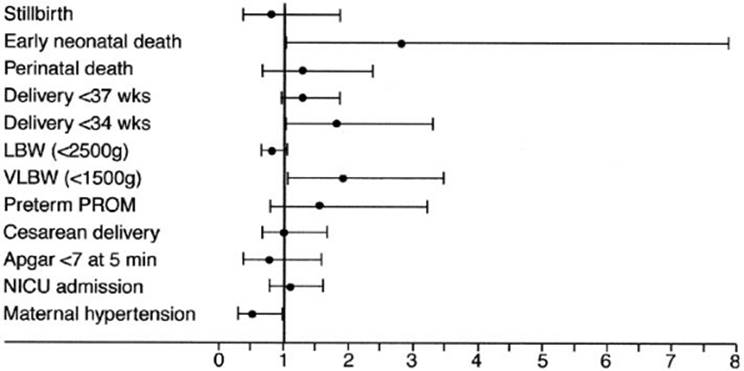
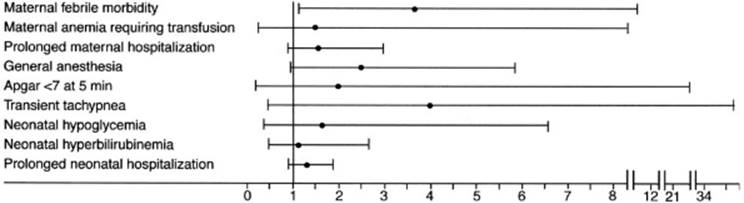
Four prospective randomized trials of hospitalized bed rest for women with an uncomplicated twin pregnancy have been conducted. The Cochrane Database of Systematic Reviews of these trials showed that neither stillbirth, neonatal death, or preterm birth were reduced by elective hospitalized bed rest (Fig. 14.4). In fact, significantly more women delivered VLBW infants and infants prior to 34 weeks gestation in the hospitalized cohort. This was also associated with an increased risk of early neonatal demise among the women routinely hospitalized with uncomplicated twins. Those patients at hospitalized bed rest did experience a lower frequency of maternal hypertension. One further study evaluated elective hospitalization using a prospective sequential study design. A policy of elective hospitalization until 34 weeks was used between 1983 and 1985 encompassing 134 twin deliveries, followed by a policy of outpatient management between 1985 and 1987 encompassing 177 twin deliveries. There were no differences in prematurity or perinatal morbidity between the two groups. There was a higher mortality rate and significantly higher costs associated with elective hospitalization. A final study by Crowther in 1989 prospectively randomized 139 women with twins whose pregnancies were complicated by preterm cervical dilation (cervical score -2 at or before 34 weeks gestation). Despite the higher risk nature of this cohort, there were no differences seen in the risk of preterm birth, perinatal mortality, fetal growth, or other neonatal outcomes.
|
|
|
FIG. 14.4. Odds ratio table of the effect of routine hospitalization for bed rest on obstetric outcomes among women with uncomplicated twin pregnancies. (Adapted from Crowther CA. Hospitalization for bedrest in multiple pregnancy. In Neilson JP, Crowther CA, Hodnett ED, et al (eds). Pregnancy and childbirth module. Cochrane Database of Systematic Reviews [updated 03 June 1997] 1997:3.) |
In triplets, there is a single small prospective trial involving 19 women randomized at 29 weeks gestation. The hospitalized group had a longer duration of pregnancy, fewer VLBW infants, and decreased neonatal morbidity. However due to the small sample size, the observed differences were compatible with chance variation. A retrospective sequential cohort study of 34 triplets managed by elective hospitalization at 24 weeks between 1985 and 1993 were compared to 32 triplets managed by bed rest at home between 1993 and 1996. Routine hospitalization increased gestational age at delivery by one week although this difference was not statistically significant.
There is no obvious benefit of routine hospitalization in twin gestations. In triplet gestations, there is a single prospective randomized trial, which suggested improved outcome with routine hospitalization but included too few patients to draw definitive conclusions. Definitive benefits will be necessary to outweigh the social and financial costs associated with routine hospitalization.
INTRAPARTUM MANAGEMENT
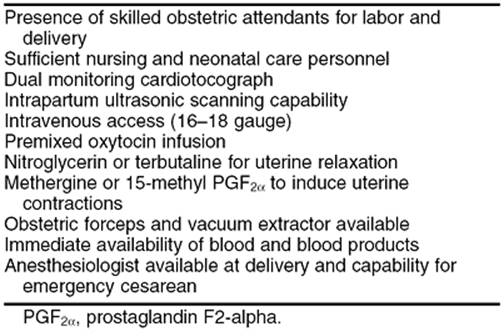
Safe and successful intrapartum management of multiples requires attention to several important principles necessary to their care (Table 14.4). Most important is the presence of experienced and skilled obstetric, pediatric, anesthesia, and nursing personnel. Intrapartum management plans for twin gestations will depend to a great degree on their relative presentations. During labor, both fetuses should be continuously monitored as multiple gestations are at increased risk for several intrapartum complications which may manifest as abnormal fetal heart rate tracings. Ultrasonography should be available to ascertain presentation, estimate relative fetal weights, and to assist with fetal assessment during the interval between deliveries. When vaginal delivery is attempted, the delivery room should be doubly set up for a possible emergency cesarean section including immediate availability of anesthetic and neonatal services. Due to the relatively frequent need for emergency operative or manipulative obstetric procedures, continuous epidural anesthesia is preferred. Familiarity on the part of the obstetric attendants with the use of both obstetric forceps (Piper forceps if breech delivery is planned) and vacuum extractor is recommended. A variety of medications should also be available in the delivery suite including a premixed oxytocin infusion for stimulation of labor since uterine inertia is frequently encountered following delivery of the first twin. Tocolytic agents such as subcutaneous terbutaline and intravenous nitroglycerine should be available for uterine relaxation. Women with multiple gestations also experience an increased mean blood loss with delivery, an increased cesarean section rate, and are at increased risk of postpartum uterine atony. As a consequence, uterotonic agents such as methylergonovine maleate or 15-methyl prostaglandin F2 should be immediately accessible and the availability of blood products should be insured.
|
|
|
TABLE 14.4. Principles of intrapartum care for the multiple gestation |
Timing of Delivery
The ideal time for delivery of uncomplicated multiple gestations is uncertain but an important issue in terms of optimizing perinatal outcome. A retrospective population-based analysis of all live births and fetal deaths in the United States from 1983 to 1988 revealed that the lowest fetal death rate per 1,000 conceptions for singletons was 0.9 at 3,700 to 4,000 g between 40 to 41 weeks. The lowest fetal death rate for twins was 3.3 per 1,000 conceptions at 2,500 to 2,800 g at 36 to 37 weeks gestation. The lowest fetal mortality rate for triplets was 5.2 per 1,000 conceptions at 1,900 to 2,200 g at 34 to 35 weeks gestation. A large retrospective, population-based study of almost 89,000 multifetal pregnancies and over 6 million singleton pregnancies delivered between 1989 and 1993 in Japan revealed similar findings. The incidence of stillbirth and early neonatal death gradually declined until 37 to 38 weeks gestation for multiples and increased thereafter. In singletons, the same parameters declined until 39 weeks before increasing. The lowest incidence of perinatal death (stillbirth plus early neonatal death) for multiples occurred at 38 weeks gestation. Most of the excess fetal mortality in twins was confined to infants with birth weights less than the 10th percentile. By 38 weeks gestation, overt asymmetric growth restriction encompasses nearly half of twin pregnancies and an even larger percentage of triplets. Obviously, these population-based analyses should be supplemented by clinical studies determining the neonatal and post-neonatal risks of prematurity-related morbidity among multiples born during these presumed optimal birth-weight and gestational age windows (i.e., 2,500 to 2,800 g at 36 to 38 weeks for twins and 1,900 to 2,200 g at 34 to 36 weeks for triplets).
Available data do not support the prolongation of a twin or triplet pregnancy beyond 38 or 36 weeks, respectively, in hopes of improving outcome. Beyond these points, multiples begin to experience increased combined fetal and neonatal morbidity and mortality primarily related to growth restriction. To safely prolong pregnancy requires reliable ultrasonographic evidence of adequate fetal growth, normal amniotic fluid volumes, and reassuring fetal testing, as well as a stable maternal condition. The identification of intrauterine growth restriction, significant discordance, oligohydramnios, maternal preeclampsia, or any other significant maternal–fetal complication at these gestational age limits should be a specific indication for delivery, which, in turn, will improve perinatal outcome. Unfortunately, this presumption has not been subjected to prospective randomized analysis. In the absence of any of these maternal or fetal complications and with reassuring fetal testing, there is no contraindication to continued observation beyond 38 weeks for twins or beyond 36 weeks for triplets while awaiting spontaneous labor or a more favorable cervix. Most agree that there are little data to suggest any value to prolonging a multiple gestation beyond 40 weeks.
Route of Delivery
The preferred route of delivery for multiples is controversial, particularly for the vertex/nonvertex presenting twins. The preferred route of delivery is usually determined based on presentation, which for twins is generally categorized into three large groups:
1. Twin A vertex, twin B vertex
2. Twin A vertex, twin B nonvertex
3. Twin A nonvertex.
Twin A Vertex/Twin B Vertex
Approximately 40% of twin gestations will present with both in a vertex presentation. Vaginal delivery should be anticipated for this group of twins with high likelihood of success anticipated. More than 80% of vertex/vertex presenting twin gestations are successfully delivered vaginally. The presentation of the second twin should be reconfirmed following delivery of the first as a change in the presentation may occur in as many as 20% of cases.
Twin A Vertex/Twin B Nonvertex
Opinions diverge regarding the optimal mode of delivery for vertex/nonvertex presenting twins, which represent another 40% of twins in labor. Reports of depressed Apgar scores and increased perinatal mortality during the 1970s and 1980s led to cesarean delivery being advocated by some whenever the second twin was in a nonvertex presentation. Since the early 1980s, however, there has been a significant accumulation of primarily observational, nonrandomized clinical experiences which have not found an increased risk of adverse neonatal outcome when the nonvertex second twin is delivered vaginally. Only one prospective randomized trial (by Rabinovici and colleagues) has been conducted. Sixty women in labor with twins at 35 to 41 weeks in which the first twin was vertex and the second a nonvertex were enrolled. Of the 33 women assigned to vaginal delivery, two underwent cesarean deliveries, four aftercoming twins spontaneously converted to vertex, 14 had assisted breech extraction, and 13 had total breech extractions. There were no differences between the groups in Apgar scores or neonatal morbidity and there was no birth trauma, stillbirth, or early neonatal death in either group. Women assigned to cesarean delivery had a significantly higher incidence of febrile morbidity and a trend toward greater receipt of general anesthesia (Fig. 14.5).
|
|
|
FIG. 14.5. Relative risk of selected obstetrical outcomes and the effect of cesarean delivery for the second twin. (Adapted from Rabinovici J, et al. Randomized management of the second nonvertex twin: vaginal delivery or cesarean section. Am J Obstet Gynecol 1987;156:52–56.) |
Supporting the Rabinovici trial, there have been at least ten observational studies that have looked at the outcomes for the nonvertex second twin. Although each study is limited by its lack of prospective randomization, and in some cases by size, none have found that the nonvertex second twin was disadvantaged by vaginal delivery, especially if the birth weight was greater than 1,500 g. Maternal morbidity is routinely higher and length of stay longer for the groups undergoing cesarean delivery. Although not specifically studied, most clinicians would not recommend attempted breech extraction if the second twin was anticipated to be significantly larger (>500 g) than the presenting twin.
Vaginal delivery of the nonvertex second twin by breech extraction or assisted breech delivery appears to be the best approach for infants over 1,500 g. There is no evidence that the increased maternal morbidity associated with routine cesarean delivery is offset by improved neonatal outcome. A policy of routine cesarean whenever the second twin is not presenting as a vertex can be expected to increase maternal morbidity and increase the need for general anesthesia without beneficial effects in terms of maternal or infant outcome.
Recommendations for route of delivery for a nonvertex twin B whose birth weight is estimated to be less than 1,500 g is not so clear. A population-based study in Sweden encompassing 10 years of recorded deliveries allowed an assessment of 862 infants weighing less than 1,500 g delivered from 539 twin pairs. There was no significant difference in intrapartum or neonatal mortality related to the mode of delivery nor was there a difference of the subset of nonvertex second twins. Zhang and colleagues used a similar methodology in the United States but found somewhat different results. After controlling for maternal characteristics with multiple logistic regression, cesarean delivery was associated with a reduction in neonatal and infant death rates among all infants with a birth weight less than 1,000 g. The benefit of cesarean delivery was found primarily among second twins, whether vertex or nonvertex. Decisions on cesarean birth versus vaginal delivery for nonvertex second twins less than 1,500 g should be based on the specific clinical situation and the experience of the staff involved. In the absence of an experienced operator, cesarean delivery should be primarily performed.
External cephalic version for the nonvertex second twin after delivery of the first has been described. This approach has been popular among physicians less comfortable with breech extraction. Although no prospective trials have been performed comparing the efficacy and safety of second twin version versus breech extraction, several retrospective studies have addressed this issue. Chauhan and co-workers reviewed this literature assembling 118 cases of external cephalic version of the nonvertex second twin. They found that despite a high rate of successful version, the rate of successful vaginal delivery of the second twin was highly variable between reports (46% to 80%) with an overall success rate of 58%. There was a combined complication rate of 10% including six cord prolapses, four episodes of fetal distress, one abruption, and one compound presentation. By way of comparison, the authors reviewed 683 second twin breech extractions in 11 published reports and reported a successful vaginal delivery rate of 98% with an overall complication rate of only 1%, which translated into three fractured humeri, two episodes of fetal distress, and two cord prolapses.
Twin A Nonvertex
In approximately 20% of cases twin A presents as a nonvertex. Vaginal delivery of twins with a nonvertex presentation of twin A is problematic as little data exist evaluating its safety. Older retrospective reviews suggest an increased risk of perinatal loss when twin A delivers as a breech although other relatively small retrospective reviews have found no significance difference in perinatal outcome between breech/vertex twins delivered vaginally and similar groups delivered abdominally. For twins presenting breech/vertex, the possibility of interlocking exists. While this complication is extremely rare, it is typically catastrophic. While not so dramatic, fetal collision may also lead to cesarean delivery due to failure of the presenting breech to descend. When the first twin is presenting breech, the most commonly employed mode of delivery is cesarean. Vaginal delivery may be an option based on the experience of the staff and the capability for emergency cesarean delivery.
Triplets and Higher Order Multiples
Cesarean is the most commonly recommended mode of delivery for triplets. A nationwide review of triplet births between 1985 and 1988 revealed that 94% of the deliveries were by cesarean, 4.5% were vaginal, and 1.5% were a combined vaginal/abdominal approach. Triplets and higher order multiples are at significant risk for prematurity, growth retardation, and malpresentation, and as a result, most clinicians prefer to deliver these pregnancies by cesarean section rather than attempt a vaginal delivery, which may require complex manipulation of preterm infants. Successful vaginal delivery of triplets has been reported in several small series without any apparent compromise of neonatal outcome. If a vaginal delivery is planned, it is imperative that an experienced obstetric team be available, malpresentation anticipated, and preparations made for emergency cesarean delivery if necessary. It would seem that optimal cases would be those with triplets estimated to weigh more than 1,500 g each and with at least the first two triplets in a vertex presentation.
Interval Between Deliveries
Previous data have suggested that time intervals between twin deliveries of more than 30 minutes would be associated with compromised outcomes. With the development of continuous electronic fetal monitoring and the intrapartum use of real-time ultrasonography, this no longer appears to be the case. Much of the data suggesting higher perinatal morbidity and mortality associated with long delays between deliveries are from an era when the presence of the second twin was frequently not apparent until after delivery of the first. Delays of more than one hour have not been associated with adverse outcomes for the second twin as long as continuous fetal heart rate monitoring is employed.
In some cases, there will be deterioration of the fetal condition following delivery of twin A. Both premature placental separation and prolapse of the umbilical cord are complications known to occur with increased frequency following the delivery of the first twin. Distress of the second twin should usually be managed by immediate cesarean or operative vaginal delivery. Internal podalic version and breech extraction should only be considered when emergency delivery is mandated and cesarean delivery is not immediately available. There are no current series documenting the safety of internal podalic version in cases of fetal distress. Due to the ever-present possibility of intrapartum fetal distress, the capability of immediate cesarean delivery should be considered the standard of care for multiples.
In the absence of any of the aforementioned complications, labor management for the second twin can be fairly aggressive. There is often a period of hypocontractility following delivery of the first twin. If labor has not resumed within a short period of time following delivery of twin A, a previously prepared oxytocin infusion can be started and the dosage escalated in relatively rapid fashion until adequate uterine contractions are achieved. Once effective uterine contractions are reestablished, the woman is encouraged to bear down in order to achieve further descent. Once the vertex is in the pelvic inlet, amniotomy can be performed during a contraction with moderate fundal pressure to help fix the vertex within the pelvis. The amniotic sac can be ruptured grossly if the fetal head is well applied to the cervix or leaked with a spinal needle if the vertex is not well applied.
Delayed Interval Delivery
Due to an increased risk of both extremely preterm if not previable delivery, multiple gestations occasionally present the opportunity for delayed interval delivery. The optimal situation occurs in a diamniotic/dichorionic twin gestation where the loss of the presenting fetus is the consequence of extrusion following either PPROM or true cervical incompetence. Other reported cases in which delayed interval delivery has been successfully employed have been with separate implantations associated with müllerian anomalies, such as didelphic uterus. Less favorable circumstances would include those deliveries complicated by advanced preterm labor or vaginal bleeding suggestive of placental abruption. Contraindications to delayed interval delivery include significant hemorrhage, hemodynamic instability, intraamniotic infection, and monochorionic placentation. Although life-saving prolongation of pregnancy has been reported in case reports and small series, the patient should be informed of a relatively high failure rate associated with the procedure and risks including intrauterine infection, maternal sepsis, hemorrhage, and prolonged hospitalization.
Successful delayed interval delivery has been achieved without the use of a rescue cerclage. However, based on available case reports, adjunctive rescue cerclage appears to offer a better chance of greatly prolonging the interval between deliveries. Most protocols make use of aggressive perioperative tocolysis and broad-spectrum antibiotic coverage, although there are no data to establish either the necessity or efficacy of either of these interventions in this circumstance. Specific pathogens such as gonorrhea, chlamydia, and group B streptococci should be identified and treated. Following delivery of the first fetus, the umbilical cord is tied, cut short, and allowed to retract back into the uterus. At that point, most clinicians place a 5-mm Merseline band using the McDonald technique as a rescue cerclage procedure. Tocolytic therapy, antibiotic coverage, and hospitalized observation are continued for variable periods of time along with intensive maternal and fetal surveillance. At its most successful, delayed interval delivery has allowed prolongation of pregnancy from a previable stage of maturation to well within the third trimester, if not term.
POSTPARTUM MANAGEMENT
Because of the potential risk of uterine atony and postpartum hemorrhage, the mother should be closely monitored during the initial hours after delivery. Adequate oxytocin should be administered and the uterine fundus should be regularly assessed to ensure that appropriate uterine tone is maintained. Lactation consultation may be useful to assist the mother in initiating breast-feeding of her twins or triplets. The maternal task of caring for multiple infants is often overwhelming. Follow-up and support for the mother in the early weeks after delivery are important, especially if the neonates require intensive care unit admission. Postpartum depression is likely more common in women delivering multiples and surveillance for this important complication should be ongoing.
SUMMARY POINTS
· Although multiples account for only a small percentage of all live births, they are responsible for a disproportionate share of all perinatal morbidity and mortality suffered in the United States.
· The dramatic increase in the frequency of dizygotic twinning in the United States is due, in part, to a national trend toward delayed childbearing but the majority is a consequence of ovulation induction therapy and recently developed assisted reproductive technologies.
· Women pregnant with multiples are more likely to be hospitalized antenatally for both an increased frequency and severity of pregnancy-related complications including preterm labor, PPROM, maternal anemia, placental abruption, preeclampsia, and urinary tract infections.
· The factors strongly correlated with both length of gestation and birth weight in multiples are maternal height, pregravid body mass index, maternal fat deposition, and weight gain, especially early weight gain in underweight women.
· Data do not support prolongation of a twin or triplet pregnancy beyond 38 or 36 weeks, respectively, due to the increased combined fetal and neonatal morbidity and mortality associated primarily with high rates of intrauterine growth restriction.
· There is no evidence that the increased maternal morbidity associated with routine cesarean delivery is offset by improved neonatal outcomes for the nonvertex second twin over 1,500 g; therefore, vaginal delivery by breech extraction or assisted breech delivery is the preferred method of delivery in these cases.
SUGGESTED READINGS
1. Bajoria R, Wigglesworth J, Fisk NM. Angioarchitecture of monochorionic placentas in relation to the twin-twin transfusion syndrome. Am J Obstet Gynecol1995;172:856–863.
2. Bouvier Colle MH, Varnoux N, et al. Case-control study of risk factors for obstetric patients' admission to intensive care units. Eur J Obstet Gynecol Reprod Biol 1997;79:173–177.
3. Chauhan SP, Roberts WE, McLaren RA, et al. Delivery of the non-vertex second twin; breech extraction versus external cephalic version. Am J Obstet Gynecol 1995;173:1015–1020.
4. Cochrane Pregnancy and Childbirth Database [revised 24 March 1993]. Cochrane Collaboration, Issue 2. Oxford: Update Software available from BMJ Publishing Group, London 1995.
5. Crowther CA. Hospitalization for bedrest in multiple pregnancy. In Neilson JP, Crowther CA, Hodnett ED, et al (eds). Pregnancy and childbirth module. Cochrane Database of Systematic Reviews [updated 03 June 1997] 1997; issue 3.
6. Dubois S, Doughtery C, Duquette MP, et al. Twin pregnancy: the impact of the Higgins Nutritional Intervention Program on maternal and neonatal outcomes. Am J Clin Nutr 1991;53:1397–1403.
7. Dyson DC, Danbe KH, Bamber JA, et al. Monitoring women at risk for preterm labor. N Engl J Med 1998;338:15–19.
8. Edwards MS, Ellings JM, Newman RB, et al. Predictive value of antepartum ultrasound examination for anomalies in twin gestations. Ultrasound Obstet Gynecol 1995;6:43–49.
9. Elster AD, Bleyl JL, Craven TE. Birth weight standards for triplets under modern obstetric care in the United States, 1984–1989. Obstet Gynecol1991;77:387–393.
10. Grether JK, Nelson KB, Cummins SK. Twinning and cerebral palsy: experience in four northern California counties, birth 1983–1985. Pediatrics1993;92:854–858.
11. Keirse MJNC. Prophylactic oral betamimetics in twin pregnancies. In Keirse MJNC, Renfrew MJ, Neilson JP, et al (eds). Pregnancy and childbirth module. Cochrane Database of Systematic Reviews [updated 03 June 1997] 1997:3.
12. Kogan MD, Alexander GR, Kotelchuck M, et al. Trends in twin birth outcomes and prenatal care utilization in the United States, 1981–1997. JAMA2000;284:335–341.
13. Luke B, Keith LG. The contribution of singletons, twins, and triplets to low birth weight, infant mortality, and handicap in the United States. J Reprod Med 1992;37:661–666.
14. Luke B, Minogue J, Witter FR, et al. The ideal twin pregnancy: patterns of weight gain, discordancy, and length of gestation. Am J Obstet Gynecol1993;169:588–597.
15. Luke B, Min SJ, Gillespie B, et al. The importance of early weight gain on the intrauterine growth and birth weight of twins. Am J Obstet Gynecol1998;179:1155–1161.
16. Luke B, Min L, Newman RB, et al. BMI-specific weight gain guidelines for twin pregnancies. Am J Obstet Gynecol 2000;182:S141(abst).
17. Luke B. Reducing fetal deaths in multiple births: optimal birth weights and gestational ages for infants of twin and triplet births. Acta Genet Med Gemellol 1996;45:333–348.
18. Minakami H, Sato I. Re-estimating date of delivery in multifetal pregnancies. JAMA 1996;275:1432–1434.
19. Newman RB, Ellings JM. Antepartum management of the multiple gestation: the case for specialized care. Semin Perinatol 1995;19:387–403.
20. Powers WF, Kiely JL. The risk confronting twins: a national perspective. Am J Obstet Gynecol 1994;170:456–461.
21. Rabinovici J, Barkai G, Reichman B, et al. Randomized management of the second nonvertex twin: vaginal delivery or cesarean section. Am J Obstet Gynecol 1987;156:52–56.
22. Rodis JF, McIlveen PF, Egan JFX, et al. Monoamniotic twins: improved perinatal survival with accurate prenatal diagnosis and antenatal fetal surveillance. Am J Obstet Gynecol 1997;177:1046–1049.
23. SART/ASRM. Assisted reproductive technology in the United States: 1996 results generated from the American Society of Reproductive Medicine/Society for Assisted Reproductive Technology registry. Fertil Steril 1999;71:798–807.
24. Seoud M A-F, Toner JP, Kruithoff C, et al. Outcome of twin, triplet, and quadruplet in vitro fertilization pregnancies: the Norfolk experience. Fertil Steril1992;57:825–34.
25. Spellacy WN, Handler A, Ferre CD. A case-controlled study of 1,253 twin pregnancies from a 1982–1987 perinatal database. Obstet Gynecol1990;75:168–171.
26. Zhang J, Bowes WA, Grey TW, McMahon MJ. Twin delivery and neonatal infant mortality: a population-based study. Obstet Gynecol 1996;88:593–598.