
Emotional health is the sense that what is happening, is happening now. It is experiencing the world as first-hand, immediate, rather than only knowing what was experienced when you reflect upon it later. You are, as the sports commentators put it, ‘in the zone’.
You feel real rather than false. You are comfortable in your skin: you do not wish you could be someone else, nor do you look down on others for not being like you. You know what you are thinking and feeling, even if sometimes that only means knowing that you don’t know.
You have your own consistent ethical code which enables you to distinguish right from wrong. You are stoical in the face of adversity, realistic in your ideas and often seem to be wise in your judgements. You have the capacity for insight into your own actions. You can sometimes spot in advance when you are about to make a mistake and avoid it, or can see when you are reacting irrationally to a situation and correct yourself – so having crashed the car, you do not do it again; you can notice that the lights have changed or a wall is approaching, and turn the steering wheel. This gives you that nectar of the soul, the capacity for choice, and therefore, for change. Such self-awareness is what sets us apart from other animals.
In your moment-to-moment dealings with other people, you are a good judge of what they are feeling and thinking. You are able to live in the place where self and others meet, without tyranny. You do not get either ‘jammed on transmit’ or ‘jammed on receive’. You live without flooding or dominating others, nor are you flooded or dominated.
You are adaptable, but without losing yourself. When in social or professional situations which demand a measure of falsehood, you can put on a face to meet the faces that you meet without losing your sense of authenticity. Your real self is as close as possible to the one you are presenting to others, depending on what is feasible. For if a lie is necessary, you lie.
Your vivacity is striking, there is a liveliness you bring to any situation, but it is not frenetic and does not smack of ‘keeping busy’ to distract from bad feelings. You are spontaneous and always searching for the playful way to handle things, retaining a child-like sparkle, a conviction that life is to be enjoyed, not endured. You are not bogged down in needy, childish, greedy, game-playing manipulation.
You may suffer depressions, rages, phobias, all manner of problems, from time to time. You make mistakes. But because of your emotional health, you are able to live in the present and find the value in your existence, whatever is going on, and this makes you resilient.
When people leave your presence, they often feel better able to function, more vivacious and playful. Your emotional wellness rubs off on them. You are no martyr but you are widely regarded as a valuable contributor to your social and professional circles.
Have you ever met anyone like this? No, nor have I.
But this is what I mean by emotional health. None of us are emotionally healthy at all times, in all these ways. Most of us achieve it only in some of the respects outlined above, and only some of the time; very few manage this kind of emotional health in many of those respects and most of the time – perhaps 5 or 10 per cent of us. Helping you to edge closer to emotional health is the object of this book.
Who has emotional health?
Possessing emotional health has nothing to do with how intelligent or attractive or ambitious or rich you are. In fact, it is possible that high achievers are the least likely to be emotionally healthy, of any group. Many emotionally healthy people have relatively low-paid, low-status jobs and focus more on their home than their work lives.
Most of us are born emotionally healthy. A baby knows exactly who he or she is. Most toddlers know who they are and, when they feel safe, are spontaneously joyful. The play of small children offers a model to all adults. It is usually when children go to school, especially from ages seven to nine, that the challenges to emotional health arise most visibly. As the pressure to fit in and compare themselves with others builds, it becomes increasingly normal not to be emotionally healthy. Not until late middle age or old age, after a long period of being largely defeated by the challenges, does emotional health begin to return, if at all. As Oscar Wilde put it, ‘To live is the rarest thing in the world. Most people exist, that is all.’
One way to look at it is as a kind of seven ages of emotional health, akin to Shakespeare’s Seven Ages of Man, in which we start off healthy and only become that way again towards the end. This may be borne out by three massive surveys of mental illness in the British population, according to which the group most likely to suffer from mental illness are those aged sixteen to twenty-four, with a steady decline in mental illness from then on, reaching the lowest levels in old age. Once you have passed early adulthood, your likelihood of being mentally healthy improves with each year.
What emotional health is not
But it is important to remember that emotional health is not defined by either mood or sanity. It is a different matter from mental health. An emotionally healthy person could be depressed or deluded, although this is probably rare.
Emotional health is defined by the positives described above, whereas mental health is largely defined negatively, by the absence of mental illnesses like anxiety, or more extreme problems like the mood swings of bipolar disorder. Nonetheless, it is interesting that when rare attempts are made to measure mental health (rather than mental illness) positively, it is found to be almost as rare as the emotional variety. An American psychologist called Robert Keyes did a thorough study of 3,000 people. Only 17 per cent of them were ‘completely mentally healthy’, defined as flourishing and without any signs of mental illness.
It is very abnormal for an adult in any developed nation to be completely emotionally healthy. Indeed, it may be rare in all urbanized, industrialized settings. At the risk of invoking idealized Noble Savages, it may only be the norm in pre-industrial settings – small villages or hunter-gatherer (itinerant) societies with no settled agriculture; it is certainly not so in our modern society.

Happiness is a fleeting state, the feeling of pleasure you gain from sex or a cigarette.
Nor should emotional health be conflated with ideas like ‘life satisfaction’ or ‘well-being’, nor with happiness. This latter is usually a fleeting state, the feeling of pleasure you gain from sex or a cigarette, or the satisfaction on hearing of a successful exam result. Beware of authors bearing gifts of happiness. It is psychological snake oil. In this author’s opinion, we were not put on this earth to be happy, but it is plausible to suppose that we can be more emotionally healthy.
Nature versus nurture
A question may be forming in your mind: why do you and your siblings, or your offspring, vary in terms of emotional health? It is one of modern science’s best-kept secrets that the answer is almost certainly little or nothing to do with genes.
For twelve years now, the Human Genome Project has been taking large groups of people who all share a specific problem, like depression or hyperactivity, and comparing their genes with an equivalent group without the problem. Very little genetic difference has been found. At most, so far, it explains only 5 to 10 per cent of almost all illnesses that have been studied. This even goes for rare and extreme problems, like schizophrenia (with symptoms like delusions or hallucinations). Scientists have been able to look at over a million genetic locations in each individual. Yet 90 to 95 per cent of the differences between different groups – schizophrenic versus non-schizophrenic, for instance – is not genetic. Since all the most plausible genetic loci have been scanned, it now seems very likely that this will be the final conclusion of the Human Genome Project. The implications are huge. The role of genes in emotional health is probably negligible, even nonexistent in many cases – just 5 to 10 per cent. It looks as if genes have been largely removed from the great Free Will versus Determinism debate. As you will see, a world of possibilities opens up.
In developed nations, emotional health is clearly linked to our life experience, and there are four main experiences that, individually or combined, lead to emotional health in adulthood. The first is being loved in the early years, and wisely nurtured subsequently. The second is receiving the right kind of supportive, loving assistance in the wake of childhood adversity, such as the loss of a parent, so that the person is able to convert the lead of such adversity into emotional gold. The third is to be prompted by a radical, severe shock in adulthood to undertake a complete rethink of life, resulting in a sudden appreciation of the gift of life itself. The last cause is profound spiritual or therapeutic experience.
If you have not had these experiences, despair ye not. By no means do I pretend that, simply by reading this book, you will ascend to a permanent and transcendent state of emotional health – in fact, as I have said, truly emotionally healthy people are very rare. However, with the right knowledge, everyone can become emotionally healthier; I can hold out that promise.
In this book I have summarized the key elements of emotional health under five headings:
1. Insightfulness: the ability to understand, by looking to the past, why you might think, feel and act a certain way.
2. Living in the present: the ability to have a strong sense of self, to own your own identity and live in the present instead of living ‘as if’ you are you, playing a role.
3. Fluid, two-way relationships: the ability to interact freely and comfortably, with a good sense of tact and an assertive manner, neither dominating nor passive.
4. Authenticity: the ability to live by values you identify with and believe in, rather than values you take on unthinkingly by default, often manifesting itself in your attitude to work and career.
5. Playfulness and vivacity: the ability to approach life with liveliness and joy.
With the help of case studies throughout, I shall show you how to achieve each of these elements, so that you can edge closer to emotional health; at the same time I will reveal some of the challenges represented by your infant and childhood experience that might be holding you back. If you meet these challenges, emotional health could happen to you.
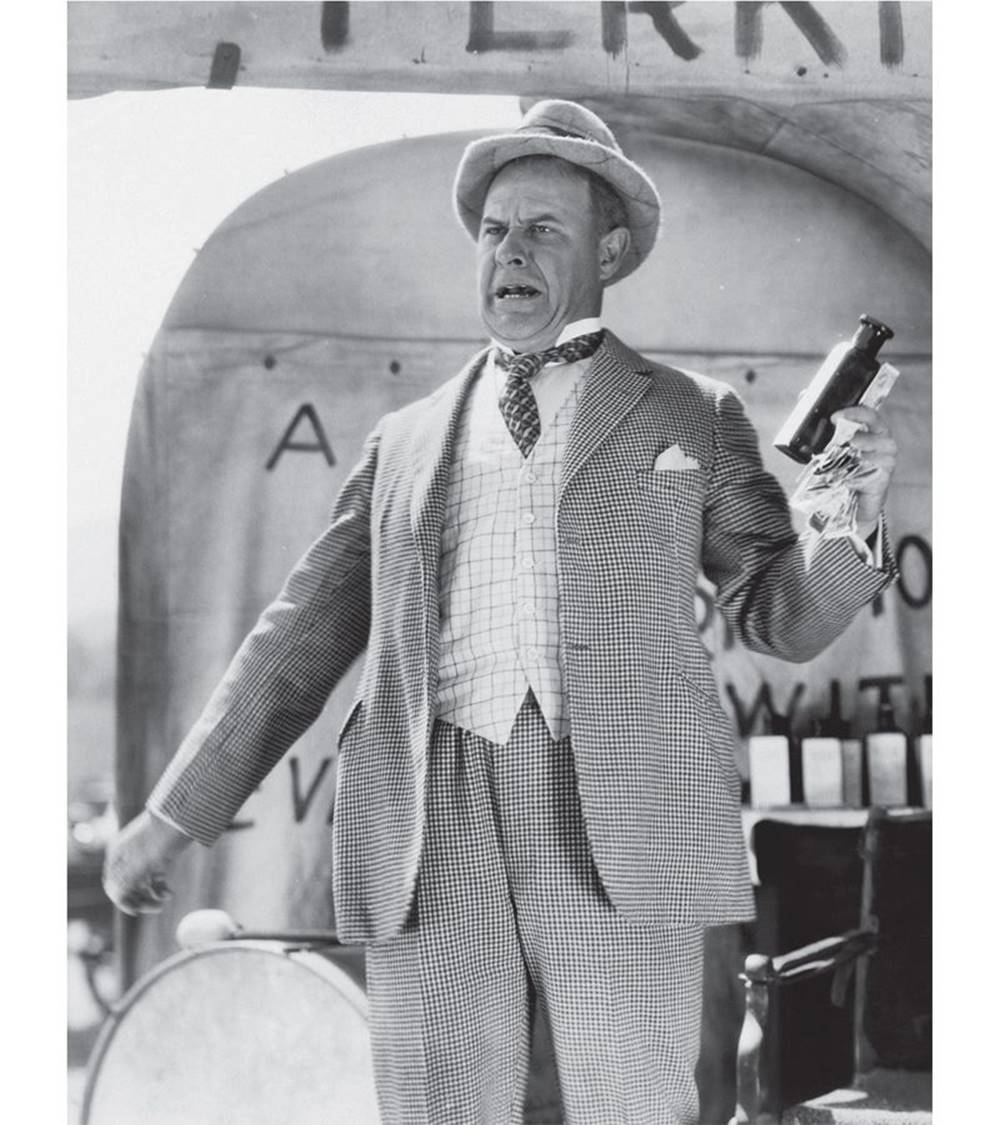
Beware of authors bearing gifts of happiness. It is psychological snake oil.