
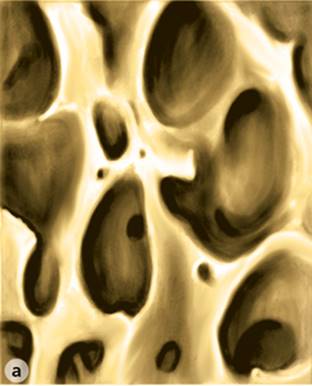
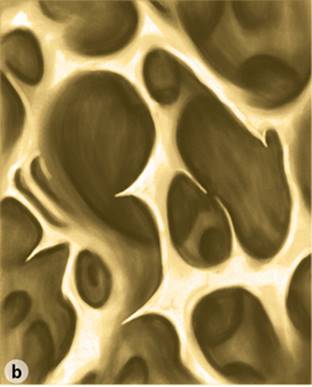
Imagine the internal structure of bone as being like the wood foundation of a house. The process of osteoporosis is similar to what happens during a termite infestation in a home’s foundation. At some point, so much wood is consumed that the strength of the foundation is compromised and it begins to fail. This is not unlike the progression of osteoporosis; over time, the internal architecture of bone is eroded as a result of a number of factors that eventually increase your risk for fracture. The term osteopenia, or low bone mass, refers to a condition of reduced bone density that has not yet progressed to osteoporosis. Those diagnosed with this condition should still be monitored to ensure that the condition does not get worse. Figure 16.1 shows a comparison of healthy bone and bone affected by osteoporosis.
Figure 16.1 Normal (a) and osteoporotic bone (b).
Osteoporosis is the most common disease affecting the skeleton and is one of the most important public health issues facing America. More than 50 percent of women and 25 percent of men over the age of 50 will suffer an osteoporotic fracture at some time in their lives (12). Sadly, one in six women will experience a hip fracture, the most devastating type of osteoporotic fracture (3). This risk is equal to a woman’s chance of developing breast, uterine, and ovarian cancer combined (17). Newest estimates of hip fracture show that while the number of hip fractures among women will decrease slightly over the next 20 years, the number of hip fractures among men will rise more than 50 percent (21). While education, new medications, and improvement in healthy behaviors may explain the reduction of fractures in women, the fact that men are now living longer explains the staggering projections for osteoporosis and subsequent fracture.
Fracturing a bone is a serious complication of osteoporosis. Fractures can cause severe pain, affect posture and appearance, and even be deadly. Fractures of the spine can cause a person to lose height and become permanently hunched over. An estimated 20 percent of people who fracture a hip die within one year due to complications of the broken bone or the surgery to repair it. Most who survive a hip fracture never regain their previous level of independence. Although an osteoporotic fracture can be devastating, the good news is that because osteoporosis progresses slowly, you can take a number of steps throughout your life to reduce your risk of developing it.
Causes of Osteoporosis
During growth and young adulthood, the skeleton is busy changing in size, shape, and density to ultimately support the physical needs of an adult. In adulthood, the skeleton remains relatively stable but is still constantly undergoing a process called bone remodeling, in which bone repairs and replaces itself in roughly the same amount. Many processes, however, can “uncouple” bone balance. With normal aging, bone breakdown outpaces replacement, causing up to 1 percent of bone to be lost per year after around age 30. Certain conditions—such as estrogen loss from menopause or reduced testosterone in men, an overactive thyroid gland, diabetes, certain autoimmune diseases and cancers, and gastrointestinal disorders like celiac disease or irritable bowel syndrome—may increase bone breakdown and slow down bone replacement, causing further overall loss of bone. On the other hand, pharmaceutical agents that stop the breakdown of bone, as well as physical activity, which causes bone to be built, can cause a net bone gain.
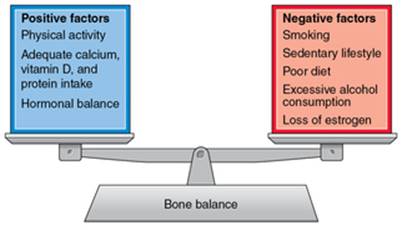
Because bone is a dynamic tissue throughout life, strategies to slow bone breakdown and to build new, stronger bone are useful at any life stage. Some of the factors you can control, and others you cannot (see Risk Factors for Osteoporosis). Take a look at figure 16.2. On the left side of the scale are factors that have a positive influence on bone; the right side of the scale includes factors that have a negative influence. Positive factors may contribute to bone gain while negative factors may cause bone loss. If you’re interested in learning more about your risk for osteoporosis, the World Health Organization has adopted a scientifically validated tool that predicts 10-year probability of sustaining an osteoporosis-related fracture called the WHO Fracture Risk Assessment Tool, or FRAX. This tool enhances patient assessment by integrating clinical risk factors alone or in combination with your bone mineral density (if you know it): www.shef.ac.uk/FRAX/.
Figure 16.2 Factors that influence bone balance.
Risk Factors for Osteoporosis
Your risk of osteoporosis is influenced by many factors, some of which you can control or modify, and others that are outside of your control.
Risk Factors You Cannot Control
· Being female
· Having a thin or small frame
· Being of advanced age
· Having a family history of osteoporosis
· Being postmenopausal, including early or surgically induced menopause
· Being male with low testosterone levels
· Being Caucasian or Asian (although African Americans and Hispanic Americans can be at risk as well)
Risk Factors You Can Control
· Having a diet low in calcium, vitamin D, and protein
· Being inactive
· Smoking, including exposure to secondhand smoke
· Excessive use of alcohol (more than three drinks per day)
Risk Factors You May Be Able to Control
· Loss of menstrual periods not related to menopause (amenorrhea)
· Anorexia nervosa (eating disorder characterized by low body weight) or bulimia nervosa (purging food, which reduces absorption of vital nutrients)
· Prolonged use of certain medications, such as corticosteroids and anticonvulsants
· The presence of other chronic diseases such as heart disease, high blood pressure, or high cholesterol related to poor lifestyle choices or obesity.
Smoking and alcohol consumption are two lifestyle factors you can manage. Avoid smoking, being in contact with secondhand smoke, and excessive alcohol consumption, as these influence the absorption of key nutrients. Other controllable factors that affect the health of your bones include reproductive hormone levels, dietary adequacy (namely, of calcium and vitamin D), and physical activity. Near or at the onset of menopause, typically around age 50, women’s bodies produce less estrogen. This loss of estrogen can cause bone to be lost two to five times more quickly than bone loss as a result of age alone. Although estrogen and hormone therapy have been shown to effectively stop menopause-related bone loss (2), many women choose not to take hormones because of a history of breast cancer or other concerns, such as a potential increased risk of heart attack or stroke (6). For men, age-related reductions in testosterone and estrogen may also contribute to fracture risk. Although some men with osteoporosis also have low testosterone levels, low testosterone does not inevitably lead to osteoporosis.
Most of the options for maintaining normal hormone levels are drug related and are discussed later in this chapter, but some behaviors can also influence hormone levels. In particular, you should avoid excessive exercise training coupled with strict dieting. Women who exercise excessively and restrict their eating are prone to disturbances in their menstrual cycle as a result of low estrogen levels caused by low energy availability. In other words, you must consume enough calories each day to support the amount of exercise you do. The amount and type of exercise recommended in this book would not put someone at risk for such a problem. This chapter explains which types of exercise are best for your bones to keep them healthy while helping you better understand all the factors that influence your risk of osteoporosis so you can make the best choices.
Assessment and Diagnosis of Osteoporosis
The gold standard technique for osteoporosis evaluation is called dual-energy X-ray absorptiometry, or DXA, also called a bone density test. Dual-energy X-ray absorptiometry measures the density of the mineral in your bones using a low-dose digital X-ray. Bone density is a very accurate index of bone strength and risk for fracture. Bone density is typically measured at the bones that are most often fractured—the hip, spine, and forearm. The test is very simple: You lie on a large, flat table while the measurement device passes over your body and takes the necessary readings.
Your risk of fracture is evaluated through the comparison of your bone density values to that of a young adult (20 to 29 years old). If your bone density is significantly less, then you are diagnosed with osteoporosis.
You may be asking yourself whether you should have a DXA test. The National Osteoporosis Foundation (17) suggests that people in the following categories be tested for bone density:
· Women age 65 and older
· Men age 70 and older
· Anyone who breaks a bone after 50 years of age
· Younger postmenopausal women with risk factors
· Postmenopausal women under age 65 with risk factors
· Men age 50 to 69 with risk factors
· Estrogen-deficient women at clinical risk for osteoporosis
· Individuals with vertebral abnormalities
· Individuals receiving, or planning to receive, long-term glucocorticoid (steroid) therapy
· Individuals with primary hyperparathyroidism
· Individuals being monitored to assess the response or efficacy of an approved osteoporosis drug therapy
As with all medical procedures, discuss your situation with your health care provider to determine whether an assessment would be beneficial.
Healthy Approaches to Managing Osteoporosis
Although many factors can influence bone health, this chapter focuses on the impact of diet and physical activity. These two lifestyle factors are under your control and can have a major impact on the strength of your bones.
Focusing on Nutrition
The quality of your diet can influence the health of your bones. A healthy, well-balanced diet as outlined in chapter 3 should provide the necessary building blocks for healthy bones. Even with the best efforts, however, your diet may fall short of meeting recommended levels. In this case, dietary supplements may help you meet the recommended dietary intake. In particular, calcium and vitamin D are two nutrients of importance for healthy bones, as is adequate protein, which supports muscle and improves absorption of calcium from the diet.
Calcium
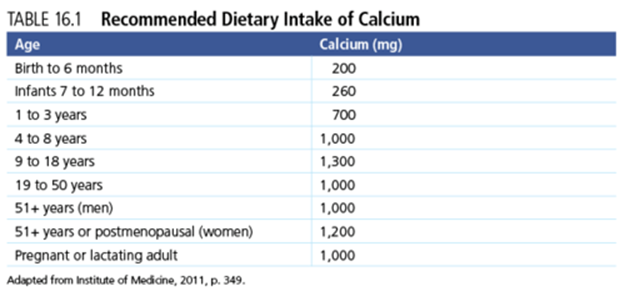
Calcium is a critical mineral for bone health, and the body strongly defends its blood levels of calcium. Humans are not very good at moving calcium from the food eaten into the bloodstream, and this gets worse with age. Therefore, dietary calcium recommendations also increase with age (see table 16.1 for age-related calcium intake recommendations) (10).
It is vital that growing children get as much calcium in their diets as they can because it may make a large difference in their bone health when they are adults. For adults, studies show that calcium intake at or above recommended levels cannot increase bone density but is very important in preventing bone loss over time. Excessive calcium intake, on the other hand, could contribute to kidney stone formation in certain people, and taking more than 2,500 milligrams per day should be avoided.
Q&A
What are common food and beverage sources of calcium?
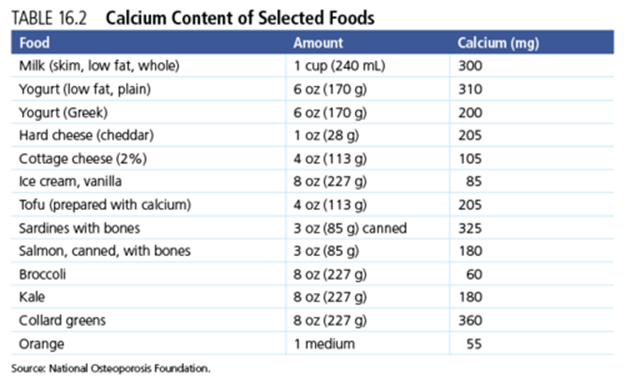
As with all nutrients, calcium is most usable by the body when it is ingested in the form of food. Dairy products such as milk, yogurt, and cheese are high in calcium; other foods such as nuts, fish, beans, and some vegetables are less calcium dense but can help you achieve your calcium requirement (see table 16.2 for examples of calcium-rich foods) (17). Many nondairy foods are now fortified with calcium, such as orange juice, bread, and cereals, but be sure to read the label because some foods contain more fortification than others.
When you cannot consume sufficient calcium in your diet, supplements in the form of calcium phosphate, calcium carbonate, and calcium citrate may be warranted. Supplements should be evaluated on the basis of their elemental calcium content (usually between 200 and 600 mg per tablet or chew), and not on the overall milligrams of calcium compounds. Because the stomach can absorb only about 500 milligrams of calcium at a time, it is best to spread supplements throughout the day.
Some supplements made from bone meal, dolomite, or unrefined oyster shells may contain substances such as lead or other toxic metals and should be avoided. One way to help ensure that the supplement you are taking is safe and effective is to look for products that have a USP symbol on the label, which stands for United States Pharmacopeia. This is a nongovernmental, official public standards-setting authority. Unfortunately, testing of supplements is voluntary, so not all suitable products have this notation.
Vitamin D
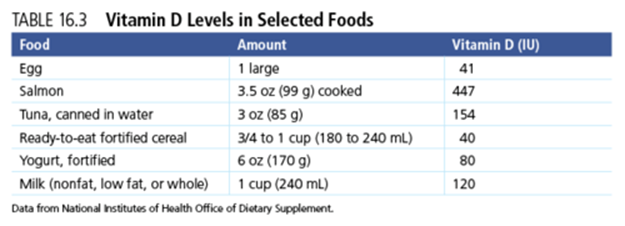
Vitamin D is another nutrient important to bone health because it helps the body absorb and store calcium. Low vitamin D levels are related to low bone density and increased risk of fractures (23). The recommended daily intake of vitamin D is 600 international units (IU) for adults and pregnant and lactating women (800 IU for those over the age of 70), which can be obtained from food and sunlight. Vitamin D–rich foods include eggs, fatty fish, and cereal and milk fortified with vitamin D (see table 16.3 for examples of foods rich in vitamin D) (17). Based on recent research studies linking vitamin D supplementation to reduced risk of fractures and some chronic diseases, the Institute of Medicine is considering increasing the recommended intakes. Studies suggest that intakes in the range of 800 to 1,000 IU per day of vitamin D are associated with better health outcomes (1, 17) and are well below the 2,000 IU daily limit that would avoid any harmful effects of excess vitamin D.
Vitamin D is sometimes referred to as the sunshine vitamin because when UV rays from the sun make contact with the skin, vitamin D is formed. Minimal sun exposure (to feet, hands, and face) of about 15 to 20 minutes per day is usually enough to get most of the needed daily vitamin D, although this ability does decline with age. Sunscreen can reduce vitamin D synthesis by the skin, and deficiencies may also occur in those who are housebound, reside in extreme northern latitudes, do not consume vitamin D–fortified foods, or have kidney or liver disorders that interfere with normal vitamin D metabolism.
Protein
Protein makes up about half of the volume of the bone and about one-third of its mass. Though it may seem confusing, research has shown both pros and cons about protein in the diet and the impact on bone health—but really, it’s the amount of protein that matters. Protein helps balance hormones and improves absorption of calcium from food. Very high protein diets can cause too much calcium to be lost in the urine, but very low protein diets hamper the body’s ability to grow and repair bone. Most older adults do not consume enough protein and should increase their intake to recommended levels in order to support muscle and bone health. Research has shown that increasing protein along with fruits and vegetables in the diet is the best approach for keeping calcium loss at a minimum (9).
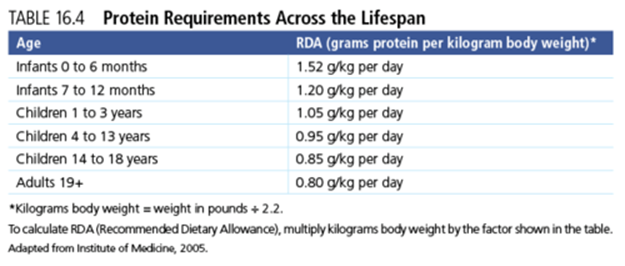
Protein intake requirements are based on a person’s body weight because of the wide variation in lean mass based on body size. Table 16.4 lists protein requirements based on nitrogen balance studies across the lifespan (11).
Focusing on Physical Activity
Exercise can improve bone health by increasing bone mass or by slowing or preventing age-related bone loss. Researchers continue to examine what type and how much exercise is necessary for bone health. Though leisurely levels of physical activity are a good starting point for beginning an exercise program, more moderate to vigorous levels of activity are necessary to challenge the skeleton. Exercise is also important for fall prevention, and certain types of exercise have been shown to lower fall risk. To realize the potential benefits of exercise, some precautions should be considered.
Precautions Before Exercise for Those With Osteopenia or Osteoporosis
Specific exercise recommendations tend to be difficult for those diagnosed with osteopenia or osteoporosis because of the limited number of research studies. If you have been diagnosed with osteoporosis, even if you have not yet experienced a fracture, you should avoid activities that put high stresses on the bone, such as jumping or deep forward-trunk flexion exercises (e.g., rowing, toe touches, and full sit-ups). A regular brisk walking program with hills as tolerated, combined with resistance training to improve balance and muscle strength, may reduce your fall risk. Exercise options may be limited for those with osteoporosis who are restricted by severe pain. It may be a good idea to begin exercise with a warm pool–based program, which, although not weight bearing, can improve flexibility and provide some muscle strengthening.
Exercise training after hip fracture and surgery has been found to significantly increase strength, functional ability, and balance as well as to reduce fall-related behavioral and emotional problems in elderly people (8). Recommendations for specific exercises should come from a physical therapist because the activity program needs to be individualized. Generally, these programs begin with safe range of motion activities and muscle-strengthening exercises for the muscles surrounding the hips, trunk, pelvis, and lower body. Typically, exercise recommendations include avoiding high-impact activities such as basketball, volleyball, soccer, jogging, and tennis. These activities can damage the new hip or loosen its parts. Resistance exercises that cause hip abduction or adduction (swinging the leg from side to side) should generally be avoided initially to prevent dislocation of the new hip. Recommended exercises often include walking, stationary bicycling, and swimming.
Rehabilitation after vertebral fracture should include exercises to maintain proper posture while moving and exercises specifically aimed at strengthening the back extensor muscles (the muscles that help you stand up straight). Gentle yoga and tai chi are excellent activities to increase postural awareness and muscle strength and to improve balance. The goals of this type of program should be to reduce pain, improve mobility, and contribute to a better quality of life.
Physical Activity Recommendations
You have probably heard that exercise must be weight bearing to benefit your bones. Some of the first evidence that weight bearing was important to the skeleton came from observations of bone loss in astronauts while in space, when the invisible force of gravity on the skeleton is removed. Examples of this include immobilization (as when a limb is in a cast), long periods of bed rest (from prolonged illness), or being physically inactive. Unfortunately, the body quickly adapts to the reduced loads placed on it. Similarly, non–weight-bearing exercise, such as swimming and cycling, may not be an ideal exercise for bones because the body weight is supported by the water or the bike.
Q&A
Is walking enough?
Walking is often advocated as a weight-bearing exercise that is good for bones. True, walking is weight bearing, but unfortunately, most research studies of inactive women who begin a moderate walking program fail to find any effect of walking on bone mass. Survey studies show that women who walk fracture less often than women who are inactive. However, it is possible that walkers also engage in other healthy behaviors that could lower their fracture risk, such as better calcium intake or less smoking.
Only two walking studies out of many showed a positive effect of walking on spine bone mass (but not the hip). In these studies, however, women walked at a very fast race-walking pace of around 5 to 6 miles per hour (8 to 9.6 km/h), which is much faster than the usual 2 to 3 miles per hour (3.2 to 4.8 km/h) pace of most women. Because walking confers so many other benefits to the body, if you love walking, don’t stop! Increasing the intensity of your walking program to include bursts of very fast walking or walking briskly up hills, however, will burn some extra calories and keep your heart healthy as well as help your bones.
Studies of athletes have provided the basis for the design and testing of exercise interventions aimed to improve bone health. These interventions can better answer the question of what type and how much exercise strengthens bones. The Position Stand on Physical Activity and Bone Health from ACSM (13) and the U.S. Surgeon General’s National Report on Bone Health (22) recommend important lifestyle modifications, including exercise, to improve bone health. This information forms the basis for the exercise recommendations and sample programs outlined in this chapter.
The best program is one that incorporates multiple types of activity and applies the principles of training with bone health in mind. Table 16.5 outlines the basic guidelines for exercise to promote bone health and overall fitness, and each exercise type is covered in more detail in the following sections. With respect to bone, exercise is site specific. In other words, a particular bone must be directly stressed to receive benefits. A multimodal program can provide multiple benefits for musculoskeletal, cardiorespiratory, and metabolic health plus reduce the risk of injury.

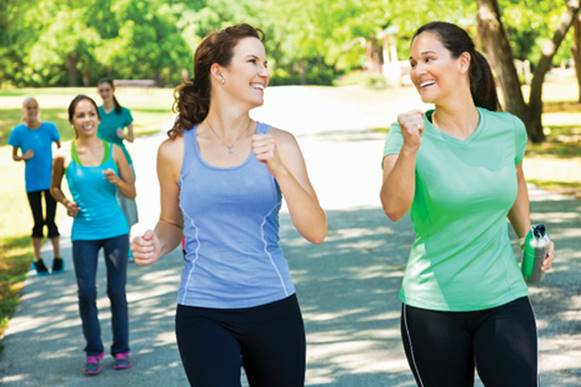
Weight-bearing aerobic activities can benefit your bones.
Aerobic Exercise
Moderate to vigorous aerobic exercise can improve or maintain bone mass of the hip and spine and has additional benefits to the cardiovascular, muscular, and nervous systems. To challenge the skeleton, the aerobic exercise should be weight bearing, although rowing may have particular benefit to the spine. Examples of weight-bearing aerobic exercises that have been shown to build or preserve bone density when done at moderate to vigorous intensity include aerobic dance, fast walking (5 miles per hour or faster, or 8 km/h), jogging (may begin with walking and intermittent jogging), stair climbing or bench stepping, tennis, and rowing.
The general recommendation for aerobic exercise aimed to improve bone health is to reach a minimum target of 30 minutes of continuous moderate-intensity exercise five days each week for a total of 150 minutes. Another option is 75 minutes of vigorous-intensity exercise per week (about 20 to 25 minutes three days each week), similar to the general public health recommendations for physical activity described in chapter 2.
To see more improvement, you can increase the amount of exercise by increasing the intensity, duration, or frequency. Generally, the upper range for effective aerobic exercise is 60 minutes of vigorous-intensity exercise five to seven days per week. Any more than this and your risk of injury or burnout increases.
If you already have been diagnosed with osteopenia or mild osteoporosis, a low- to moderate-intensity exercise program is recommended to improve bone mass or prevent or slow further bone loss. If you have advanced osteoporosis or have had a recent fracture, this type of program may be too rigorous. Consult your health care provider to determine the level of activity suitable for your circumstances.
Exercise With Impact: Jumping!
Impact exercise, such as jumping, has been used for years by athletes to improve their muscular strength and power. Jump training may offer a quick and simple means to specifically improve bone mass at the hip, an area where fractures are especially debilitating. Jumping exercise works because it transmits forces up the skeleton and challenges bones in a way that they do not experience during normal daily activities. The skeleton responds by laying down more bone to make it stronger.
In general, studies have shown that women who perform jumping exercise, either alone or added to a program of other exercise such as walking or resistance training, maintain or improve their hip and spine bone mass (14). In one study, middle-age and older women who regularly engaged in resistance exercise plus 50 to 100 jumps, three times per week, were able to increase or maintain hip bone mass; this even included women with low bone density (20, 24). Unfortunately, jumping exercise alone does not appear to improve the bone health of the spine because the forces generated from landing are quite small by the time they reach the spine. Remember, to improve a bone, you must challenge it.
Jump training has not been studied extensively. In most studies, women have performed a variety of jumping routines, including simply jumping straight up and down (see figure 16.3). When the height of the jump (jumping on and off small steps) or the weight of the person jumping is increased (jumping while wearing a weighted vest), the jump produces more force on the lower body. In general, doing 50 to 100 jumps in place three to five days per week in sets of 10 is recommended based on current research. Also keep in mind that bone responds slowly and is lost when you stop exercising (24), so a lifelong commitment is required for the best results.
Figure 16.3 Jump training.
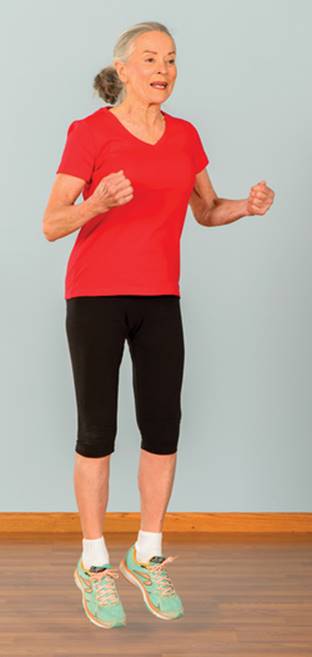
People who have been diagnosed with orthopedic and joint limitations or are significantly overweight should discuss jump exercise with their health care provider before starting a program and may wish to consider other types of exercise first.
Resistance Training
Resistance or strength training can have a positive effect on bone because the strong muscle contractions required to lift, push, or pull a heavy weight place stress on the bones. Resistance exercises can be done using weight machines, free weights such as dumbbells and barbells, weighted vests, elastic tubing, or elastic bands. In general, strength training using any means of applying sufficient resistance will maintain or slightly improve hip and spine bone mass (14, 15, 16).
Resistance training has an added benefit of strengthening muscles that are important for fall prevention and to perform strength-based tasks such as lifting groceries, rising from a chair, and climbing stairs. Strong leg muscles can also contribute to better balance and locomotion, which reduces the risk of falls. In addition, resistance exercise can help to lower blood pressure, improve cholesterol and triglyceride levels, and aid in weight reduction. There are many good reasons to include resistance training in your exercise plan.
Resistance exercise, like aerobic exercise, must be slightly rigorous to affect bone. Low-intensity resistance training like sculpting or toning exercises performed with light weights and for many repetitions generally does not help because this type of training doesn’t place enough force on the bones. See the sample exercise program for a beginning progression. This level gives you an opportunity to become familiar with resistance training and start to build a base of strength. Try to do most of your resistance training exercises while standing, which engages smaller muscles and is much more functional.
Resistance exercise is recommended for everyone, especially older adults who may have had some bone and muscle loss from age. Following proper guidelines, even 90-year-olds have safely performed resistance exercise. For complete details on resistance training, including specific exercises, see chapter 6. Resistance exercise may be new for you, but it could make a real difference in your life, so give it a try.
Flexibility and Neuromotor Training
Stretching at least two to three days per week should be part of your exercise program to maintain or improve your flexibility and joint mobility (see chapter 7 for details). In addition, neuromotor exercises are also valuable. People with weak legs, poor balance, and gait problems are much more likely to fall than those who are strong, are stable, and move easily. Because falls are a leading cause of fracture, along with weak bones, focusing on fall prevention is key. For a list of proactive steps you can take to prevent falls, see “What strategies can be used at home to avoid falls?”
Q&A
What strategies can be used at home to avoid falls?
Use these simple strategies to avoid a fall in the first place.
· Wear supportive, low-heeled shoes rather than walking in socks or slippers.
· Ensure that rooms are well lit.
· Use a rubber mat in the shower or bathtub.
· Use the handrails when going up and down stairs.
· Avoid the use of area rugs, but if you do have them, use skid-proof backing and secure corners to the floor or carpet underneath.
· Keep floors and walkways clutter free.
· Keep phone and electrical cords out of the way.
· If needed, keep glasses handy rather than moving about with impaired vision.
· Realize the potential influence of medications on balance, and talk with your health care provider about any medications you are taking.
· Consider the fact that some hip fractures occur as a result of tripping over small pets.
For specific suggestions on functional (neuromotor) exercises, see chapter 8. Some nontraditional forms of exercise (such as tai chi) have also been shown to reduce the risk of falls, suggesting that both muscle strength and the ability to transfer weight while in motion can maintain stability. Many research studies underscore how important strong muscles are for fall prevention.
Sample Exercise Program for Bone Health
A sample program of bone health exercise that incorporates multiple types of activity is shown in figure 16.4. Note that rest is included to allow bone to be responsive to the next loading bout. This program would be appropriate for a beginner exerciser who is otherwise healthy and has no known orthopedic problems. If you have any concerns about your readiness to begin exercise, consult with your health care provider.
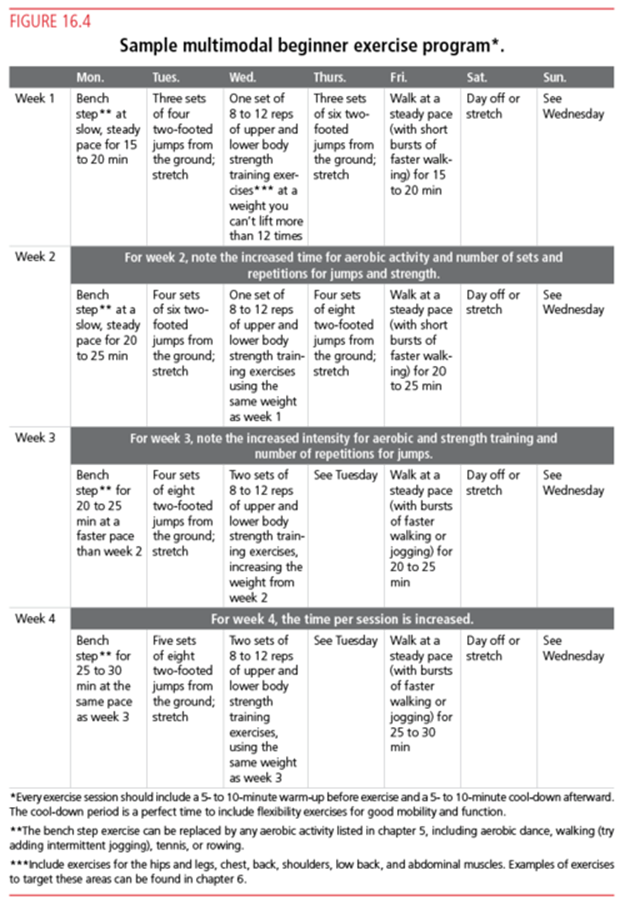
As you can see, the sample program includes activities focused on aerobic and muscular fitness as well as flexibility. In addition, balance training is another consideration for fall prevention for anyone with osteoporosis. Each of these components is important to include in your exercise plan.
Influence of Medications
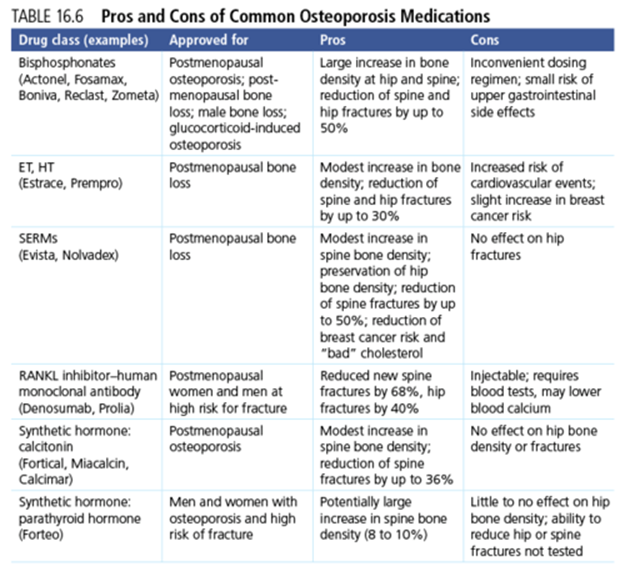
If you have known osteoporosis, medical treatment that reduces your risk of fracture is important. New drugs continue to be developed, and new formulations of current drugs are being made to improve effectiveness while reducing side effects. It is important to remember, however, that although many of these drugs can effectively reduce fracture rates by up to 50 percent, none are 100 percent effective. Thus, it is important to consider all of the factors that contribute to fracture risk (e.g., exercise, nutrition, falling) to ensure that you follow a comprehensive program that may include drug management.
Most of the drugs currently approved by the U.S. Food and Drug Administration (FDA) for the management of postmenopausal osteoporosis are called antiresorptives. They increase bone density by rendering the cells that break down bone inactive while leaving alone those cells that form bone. Drugs in this category include estrogens, calcitonin, bisphosphonates, denosumab, and selective estrogen receptor modulators. Two drugs have been shown to reduce fracture by actually stimulating bone-forming cells: parathyroid hormone (brand name, Forteo) and strontium ranelate (brand name, Protelos). The latter, however, has recently been restricted to use in those with severe osteoporosis due to an increased risk for heart attack.
The class of drugs called bisphosphonates is currently the most widely used to reduce osteoporotic fractures. Several forms of bisphosphonates are currently available: alendronate (brand name, Fosamax or Fosamax Plus D), risedronate (brand names, Actonel, Atelvia), ibandronate (brand name, Boniva), zoledronic acid (brand names, Reclast and Zometa), and calcitonin (brand names, Fortical and Miacalcin), just to name a few. On average, these drugs increase bone density by 4 to 8 percent at the spine and 1 to 3 percent at the hip over the first three to four years of treatment (2, 5). This small increase can actually reduce the risk of vertebral fractures by 40 to 50 percent and nonvertebral fractures (including hip fractures) by as much as 20 to 40 percent (7, 18).
Despite the impressive potential of bisphosphonates to reduce fractures, new studies are questioning their long-term safety. These drugs remain in the skeleton for decades, and bone turnover can be affected for up to five years after the drugs are discontinued. Recall that bone remodeling is a natural process that allows the body to repair microdamage due to everyday wear and tear. If bisphosphonates prevent breakdown and bone renewal, the concern is that bone could become brittle. Furthermore, the rare but serious disorder called osteonecrosis of the jaw (a condition characterized by pain, swelling, infection, and exposure of bone) has been associated with bisphosphonate use, mainly in patients receiving high doses in combination with cancer treatment. While experts have not come to a concrete consensus on how long bisphosphonate therapy should be continued, preliminary clinical recommendations state that 3 to 5 years of treatment is probably sufficient for someone with mild risk of fracture, 5 to 10 years of treatment for those with moderate risk of fracture followed by a drug “holiday” of 3 to 5 years, and 10 years of treatment for those with high risk of fracture followed by a 1- to 2-year drug holiday and reevaluation (4).
Hormone therapy (HT, combination of estrogen and progesterone) and estrogen therapy (ET) offset the estrogen-related bone loss associated with menopause and even cause a slight increase in hip and spine bone density that plateaus after three years of use. Studies show that HT and ET reduce the incidence of fractures of the hip and spine by 30 to 50 percent. Hormone therapies are currently approved to reduce postmenopausal bone loss as a means to prevent osteoporosis but are ineffective at preventing bone loss in men. To be most effective at preventing bone loss, therapy should begin close to, if not a few years before, the menopausal transition. After the publication of the Women’s Health Initiative study in 2002, the role of long-term postmenopausal HT and ET for the prevention and management of osteoporosis became controversial because of a suspected increased risk of cardiovascular events.
You may be wondering whether HT or ET is appropriate for you. Consulting with your health care provider, who has an understanding of your complete health picture, is best. The FDA currently recommends that HT not be taken to prevent heart disease; and although it is effective for the prevention of osteoporosis, it should be used only by women with a significant risk of fracture who cannot take antiresorptive medication. For other women at risk for osteoporosis, the FDA favors the use of antiresorptive agents and only short-term use of HT around menopause in women with menopausal symptoms or those at risk for fracture (19).
Selective estrogen receptor modulators (SERMs) represent a class of agents that, although similar in structure to estrogen, exert their effects only on target tissues. The most widely studied is raloxifene (brand name, Evista). Its overall effect is more modest than that of bisphosphonates, and its effect on hip fractures has not been marked. For this reason, it is recommended for women with milder osteoporosis or for those with osteoporosis primarily in the spine.
Because each person’s health history is unique, your choice of medication should be made with your health care provider in light of your total health situation. Table 16.6 lists the pros and cons of common osteoporosis medications.
Osteoporosis is a progressive weakening of the skeleton that makes bones more susceptible to a fracture. Osteoporosis is referred to as the silent disease because bone loss is not painful and produces no noticeable symptoms, but a bone density test can easily diagnose osteoporosis and also determine the risk of osteoporosis before it develops. Depending on the diagnosis, medication may be recommended. Many factors contribute to the health of the skeleton, and many of these are under your control, such as diet and physical activity. A bone-healthy diet includes sufficient calcium, vitamin D, and protein from dietary sources, brought up to recommended levels with supplements if necessary. Everyone should engage in bone-healthy exercise, but especially women and men who are concerned about their risk of fracture. Because the bone benefits from exercise are lost when you stop training, your commitment to exercise that targets the bones must be lifelong.