
WE NOW KNOW A LOT ABOUT the treatment of heart disease, high blood pressure, and stroke and have many ways to prevent and treat these life-threatening diseases. We can save lives and keep people out of hospitals. People with heart disease and even those who have had strokes can look forward to long, healthy, and enjoyable lives.
There are many forms of heart disease. The arteries that supply the heart muscle can be blocked, as in atherosclerosis. When a person has heart failure, the heart muscle is damaged and unable to push blood effectively to the lungs and the rest of the body. If the valves inside the heart are damaged, the result is valvular heart disease. Again, blood may not reach the rest of the body. The electrical system that controls the beating of the heart can also be disrupted. This causes the heart to beat too fast, too slow, or irregularly (this is called arrhythmia). We will talk about all of these as well as other problems with the circulatory system, including strokes and high blood pressure.
Coronary Artery Disease
Coronary artery disease, the most common form of heart disease, causes most heart attacks and heart failure. Coronary arteries are blood vessel “pipelines” that wrap around the heart. The coronary arteries deliver the oxygen and nutrients the heart needs to perform its job. Healthy arteries are elastic, flexible, and strong. The inside lining of a healthy artery is smooth, so blood flows easily. Arteries narrow as they become clogged with cholesterol and other substances. This is called atherosclerosis, also known as coronary artery disease (CAD). The blocked or narrowed area is called a stenosis.
Atherosclerosis is a gradual process that occurs over many years. The first step is damage to the wall of the artery. This damage can be caused by high cholesterol, high triglycerides, diabetes, smoking, or high blood pressure. This damage allows the low-density lipoprotein cholesterol (LDL cholesterol, the “bad” cholesterol) to enter the artery wall and cause inflammation. Some people have this damage as early as their teens.
Over time, more cholesterol is deposited and the fatty areas grow larger and larger. These fatty areas are called plaques. They can completely block off blood flow in an artery. Plaques can also crack open, causing a blood clot to form at the injured site. In both cases, blood flow to the heart is blocked, and the person may experience angina (temporary chest pain) or a heart attack. A heart attack is also known as a myocardial infarction (MI) and, if not treated immediately, can cause permanent damage to the heart muscle. When a part of the heart muscle has been damaged, that part can no longer help the heart pump blood.
The pain of angina or a heart attack may be on the left side of the chest over the heart but may also radiate to the shoulders, arms, neck, and jaw. Some people with angina or a heart attack may also experience nausea, sweating, shortness of breath, and fatigue.
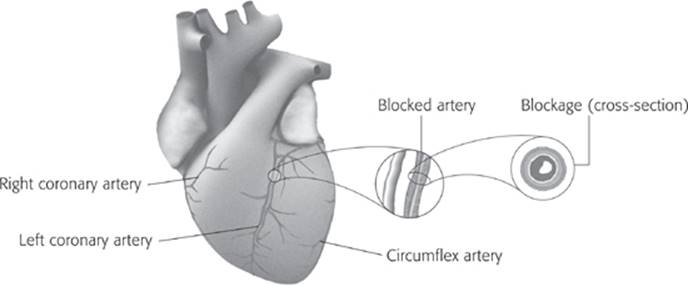
Figure 16.1 The Arteries of the Heart
Symptoms of heart disease in women may be different from those just described, which are typical for men. Women may be unusually tired and experience sleep disturbances, shortness of breath, nausea, cold sweats, dizziness, and anxiety. These symptoms are more subtle than the crushing chest pain often associated with heart attacks. This may be because women tend to have blockages not only in their main arteries but also in the smaller arteries that supply blood to the heart—a condition called small vessel heart disease. Many women show up in emergency rooms after heart damage has already occurred. This is because their symptoms are not the ones that most people think of as symptoms of a heart attack. (See “Seek Emergency Care Immediately” on page 259.)
Arrhythmias
People with heart disease may notice irregular heartbeats (palpitations). This is caused by irregularities in the conduction system or electrical wiring of the heart. Damage to this system can result in irregular heartbeats, skipped beats, or racing beats. Physicians refer to these as arrhythmias or dysrhythmias.
Most irregular heartbeats are minor and not dangerous. However, some types of arrhythmias can cause problems. Dangerous arrhythmias are sometimes accompanied by episodes of fainting, dizziness, shortness of breath, or irregular heartbeats lasting minutes. Such arrhythmias may be more dangerous for people with severely weakened hearts and those with heart failure.
Sometimes the heart can beat irregularly and you may not notice the difference. If you notice irregular heartbeats, take note of how frequently they occur, how long they last, how fast your heart is beating (check your pulse), and how you feel during the episode. This information will help your doctor decide whether or not your arrhythmias are dangerous. Remember that infrequent, short bouts of irregular beats are common for people both with and without heart disease. They are generally not cause for concern and should not require any change in activity or treatment.
Peripheral Vascular Disease
Peripheral vascular disease (PVD), also called peripheral arterial disease (PAD) or peripheral artery occlusive disease (PAOD), occurs when the arteries in the legs harden, form plaque deposits, and narrow (atherosclerosis). Atherosclerosis in the legs is usually the result of the same disease process that happens with atherosclerosis in heart disease.
The main symptom of PVD is leg pain when walking (claudication). Some people may experience leg sores that don’t heal or heal slowly. Some of the treatments and medication are similar to those for heart disease: stopping smoking (most important), exercise, medications, and sometimes surgery to help restore blood flow to the legs.
Heart Failure
“Heart failure” does not mean that your heart has stopped working or is going to stop. It means that your heart’s pumping ability is weaker than normal; your heart still beats, but with less force. This condition is sometimes called congestive heart failure because fluid tends to collect in the lungs and legs.
Heart failure can be treated and its symptoms managed, even when the heart cannot be returned to normal. What are the signs and symptoms of heart failure?
 Excessive tiredness, fatigue, and weakness. When your heart is not pumping with enough force, your muscles do not get enough oxygen. You may be more tired than usual and not have enough energy for normal activities.
Shortness of breath. Sometimes breathing becomes more difficult due to excess fluid in your lungs. You may have trouble catching your breath, a frequent or hacking cough, difficulty breathing when lying flat, or wake up at night due to difficulty breathing. If you need to prop yourself up with many pillows or sleep in a recliner, this may be a sign of heart failure.
Weight gain and swelling. These are common signs of heart failure. The weight gain is due to fluid retention. When your body is holding on to extra fluid, your weight will go up. Sometimes weight gain happens rapidly (in days), and sometimes it happens more slowly. You may have swelling (edema) in your feet and ankles, your shoes and socks may be too tight, rings on your fingers may become too tight, your stomach may feel bloated, and there may be a tightness at your waistline.
Changes in how often you urinate. When you urinate (pass water), your kidneys are helping your body get rid of extra fluid. At night more blood is pumped to your kidneys because your brain and muscles are resting and need less blood. This allows your kidneys to “catch up.” You may have more frequent urination at night or at all times.
Although heart failure is a serious condition, keeping daily track of your weight and eating a low-sodium diet can relieve symptoms and prevent unnecessary trips to the hospital.
Track Your Weight
It is important that you weigh yourself properly and frequently if you are to catch trends that may be indicative of health problems. Here’s how to do it:
Seek Emergency Care Immediately
If you are having symptoms that might mean a heart attack or stroke, you must seek medical care immediately. New treatments are available that can dissolve blood clots in the blood vessels of the heart and brain. These restore blood flow and prevent heart or brain damage. However, these treatments must be given within hours of the heart attack or stroke—the sooner, the better. In the United States, call 911 or emergency services if you have any of the following symptoms: Do not wait!
Heart Attack Warning Signs
Severe, crushing, or squeezing chest pain
Pain or discomfort in one or both arms, the back, neck, jaw, or stomach
Chest pain lasting longer than 5 minutes when there is no apparent cause and is not relieved by rest or heart medications (nitroglycerin)
Chest pain occurring with any of the following: rapid or irregular heartbeat, sweating, nausea or vomiting, shortness of breath, light-headedness or passing out, or unusual weakness. For women, chest pain may not be present with these symptoms.
If you think you are having a heart attack:
1. Stop what you are doing
2. Sit down.
3. Call 911. (Do not try to drive yourself.)
4. If you are not allergic to aspirin, take one adult (325 mg) or four baby (81 mg) aspirin tablets.
Stroke Warning Signs
Sudden numbness or weakness of the face, arm, or leg, especially on one side of the body
Sudden confusion, trouble speaking, or trouble understanding
Sudden trouble seeing in one or both eyes that does not clear with blinking
Sudden trouble walking, dizziness, loss of balance or coordination
Sudden severe headache with no known cause
Minutes matter! Fast action can save lives—maybe your own. Don’t wait more than 5 minutes to call 911 (in the United States) or your local emergency response number.
Weigh yourself at about the same time every day. We suggest weighing every morning, just after waking up (after urinating and before eating).
Weigh yourself with the same amount of clothing on or without clothing.
Use the same scale. Check to be sure the scale is set to zero before weighing yourself. Make sure the scale is on a hard surface.
Write your weight on a daily weight log or other record (a calendar works well).
Repeat weighing if you have doubts about the scale or your weight.
Bring your daily weight log to all your medical appointments.
Call your health care professional if you have a weight gain of 2 to 3 pounds (or more) in a day, a gain of 5 pounds (or more) in 5 days, shortness of breath, or increased swelling of feet or ankles.
Eat Healthy, Low-Sodium Foods
Sodium is an important mineral that helps regulate fluid levels in your body. Too much sodium makes your body hold on to too much fluid. People with heart failure need to eat less sodium to avoid retaining excess fluid that can back up in their lungs and cause shortness of breath. To learn more about healthy eating and how to keep you sodium low, see page 182.
Stroke
Strokes happen when a blood vessel in the brain is blocked or bursts. Without blood and the oxygen it carries, part of the brain starts to die. The part of the body controlled by the damaged area of the brain can’t work properly.
There are two types of stroke:
An ischemic stroke (the most common stroke) happens when a blood clot blocks a blood vessel in the brain. The clot may form in the blood vessel or travel from somewhere else in the blood system, such as the heart valves or arteries in the neck.
A hemorrhagic stroke happens when an artery in the brain leaks or bursts. This causes bleeding inside the brain.
The symptoms of a stroke depend on the area of the brain that is damaged. You may experience any of the following:
Sudden numbness, tingling, weakness, or paralysis in your face, arm, or leg, especially on only one side of your body
Sudden vision changes (like a curtain coming down)
Sudden trouble speaking
Sudden confusion or trouble understanding simple statements
Sudden problems with walking or balance
Brain damage from a stroke can begin within minutes. It is important to know the symptoms of stroke and act fast (see “Seek Emergency Care Immediately” on page 259). Quick treatment (within 90 minutes) can help limit damage to the brain and increase the chance of a full recovery. If you are with someone who has these symptoms, call 911 even if the person says no. You may prevent brain damage and save a life.
Sometimes the symptoms of a stroke develop and then go away within minutes. This is called a transient ischemic attack (TIA) or ministroke. Do not ignore these symptoms. They may be a warning sign that a stroke may soon happen. See your doctor if you have symptoms that seem like a stroke, even if they go away quickly. Getting early treatment for a TIA can help prevent a stroke.
If you have had a stroke, you may notice improvements for several months. Stroke rehabilitation (“rehab”) programs can be especially helpful in recovery as well as in preventing future strokes. They are most helpful if started as soon after a stroke as your doctor says is safe. This is usually days, not weeks, later. Not smoking; getting regular exercise; keeping your blood pressure, cholesterol, and diabetes under control; and taking certain medications can also improve recovery and help prevent future strokes.
High Blood Pressure
High blood pressure (hypertension) increases the risk of heart disease, stroke, and kidney and eye damage. Blood pressure is a measurement of the amount of pressure in an artery, expressed as two numbers. The systolicpressure (the higher first number) is the pressure in the artery when the heart contracts and pushes out a wave of blood. The diastolic pressure (the lower second number) is the pressure when the heart relaxes between contractions.
The two pressures are recorded in millimeters of mercury (mm Hg). So a blood pressure of 120/80 (“120 over 80”) means that the systolic pressure is 120 mmHg and the diastolic pressure is 80 mm Hg. Both numbers are important because a high reading for either type of pressure can cause damage.
High blood pressure is often called the silent disease because most people who have it have no symptoms and cannot really tell if their blood pressure is high. The only way to find out is to measure it. But because people whose blood pressure is high feel perfectly well, they find it hard to believe that anything is wrong and so may not want treatment. However, the silent disease may not stay silent. Over years, untreated high blood pressure can damage blood vessels throughout the body. In some people this damage to blood vessels can cause strokes, heart attacks, heart failure, or damage to the eyes or kidneys. The reason for treating high blood pressure is to prevent these serious complications. That’s why it is extremely important to control your blood pressure even if you feel perfectly well.
Why do you have hypertension? Over 90% of hypertension is called “primary” or “essential,” which really means that the cause is not known.
What is normal blood pressure? A healthy blood pressure is below 120 systolic and 80 diastolic (120/80). “Prehypertension” is below 140/90. Hypertension is considered 140/90 or higher. For most people, lower blood pressure usually means less risk of complications. And for some people—for example, those with diabetes or chronic kidney disease—it may be important to keep their blood pressure in a lower range.
Your blood pressure varies, however, from minute to minute. Hypertension is diagnosed when blood pressure measurements are high at two or more separate times. Except in severe cases, the diagnosis is never based on a single measurement. That’s one reason it is important to have repeated measurements of your blood pressure.
Some people’s blood pressure tends to go up only in the doctor’s office. This is a stress reaction called “white-coat hypertension.” So it is very helpful to have additional measurements for both diagnosing hypertension and monitoring blood pressure treatment. There are many ways to get your blood pressure checked. Ask at the pharmacy, fire station, or senior center. You can even get a machine and take your blood pressure at home. Collect three or four blood pressure readings, and see how these change, depending on what you are doing. Take these with you to the doctor.
Blood pressure can often be lowered by a combination of a low-sodium diet, exercise, maintaining a healthy weight, limiting alcohol, and using prescribed medications. While some people are reluctant to use these medications due to fear of side effects, the surprising news is that many people with high blood pressure actually feel better (less fatigue, fewer headaches, and so on) when they take the medications.
Diagnosing Heart Disease
Sometimes the symptoms of heart disease are clear and “classic,” such as chest pain with physical activity. Fortunately, there are now many tests available to determine if heart disease is present and how severe it is. The following are the most common tests and treatments.
Blood tests. Blood tests to measure fat-like substances (cholesterol and triglycerides) estimate your risk of heart disease. They are also used to monitor the effects of cholesterol-lowering medications. If you are having chest pains, your physician may order tests of cardiac enzymes such as troponin to confirm the diagnosis of a heart attack. With heart failure, blood levels of a hormone called BNP may rise.
Electrocardiogram. An electrocardiogram (EKG or ECG) measures your heart’s electrical activity. It can show a lack of oxygen to the heart, a heart attack, heart enlargement, and irregular heart rhythm. It is a “snapshot” of your heart’s activity. Sometimes EKGs need to be repeated to see if a heart attack is occurring. An EKG cannot predict your risk for a future heart attack. Sometimes a portable Holter monitor is worn for several hours or days to detect abnormal heart rhythms that come and go.
Echocardiogram. Painless ultrasound waves are bounced off the heart. This produces detailed images of the heart. A computer converts echoes and displays them on a TV screen. The pictures are recorded and can show heart size, heart motion, valve function, and certain types of heart damage. This test may also be done with exercise (stress testing) to see how the heart responds to stress.
Stress test. Sometimes problems appear only when the heart is under increased stress. (In this case stress refers to something that makes the heart work harder, not emotional stress.) This test is done while exercising on a treadmill or stationary bicycle or after the injection of a chemical to stimulate the heart without exercising. An EKG is attached to the chest. The EKG, blood pressure, and symptoms are monitored during the test and for a few minutes after the test. A stress test is done for the following reasons:
To evaluate symptoms associated with exercise or exertion
To confirm suspicion of heart disease
To evaluate treatment
To assess progress after a heart attack
To determine irregularities in heart rhythm
A positive test result suggests the presence of coronary artery disease.
Nuclear scan. A weak radioactive substance such as thallium is injected into a vein. A scanner or special camera is used to take two sets of pictures, with and without stress (induced by exercise or medication), which are compared. This test shows blood distribution to the heart muscle and how well the heart is pumping.
Cardiac catheterization and coronary angiography. A long plastic tube called a catheter is inserted through a major blood vessel (usually in the groin) and gently guided into the heart. A dye is then injected into the catheter. This allows the coronary arteries to show up on X-rays. This test helps your physician decide the best treatment if the arteries are clogged. It can also give information about the function of the heart muscle and the valves.
Prevention and Treatment of Heart Disease, High Blood Pressure, and Stroke
There are three general approaches to help prevent and treat heart disease: lifestyle changes, medications, and procedures and surgery. Most people will benefit from one or more of these.
Lifestyle Changes and Nondrug Treatments
Heart attacks, strokes, and high blood pressure can often be prevented or controlled by taking the following actions:
Not smoking. Smoking damages the inner lining of the blood vessels and raises blood pressure. Quitting is the best thing you can do for your health. Fortunately, there are now a variety of support programs (from telephone counseling to online and group programs) and medications (from nicotine gum and patches to calming medications) that can help you quit and stay quit.
Exercising. Exercise strengthens your heart. It can also lower your cholesterol and blood pressure and help you control your weight. Inactive people double their risk for heart disease. Even small amounts of daily physical activity can lower your risk of heart disease and help you feel better and have more energy (see Chapters 6, 7, and 8).
Healthy eating. Cholesterol is a fatlike substance in the blood. It can cause fatty deposits called plaque to build up and narrow your blood vessels. The higher your cholesterol level, the greater your risk for heart disease. See page xxx for ways to lower cholesterol. Unfortunately, not all cholesterol can be controlled by what you eat. The body also makes cholesterol, and medications may be necessary. No matter how it is done, through lifestyle changes or medications (or both), lowering cholesterol considerably reduces the risk of heart attacks and strokes.
Maintaining a healthy weight. Being overweight makes your heart work harder and can raise your LDL (“bad”) cholesterol and blood pressure and increase your chances of developing diabetes. The highest risk is excess weight around the midsection. Regular exercise and healthy eating are the most important steps to help prevent weight gain, maintain weight, or lose weight. See Chapters 11–12.
Managing emotional stress. Stress increases your blood pressure and heart rate, which can damage the lining of the blood vessels. This can lead to heart disease. (See Chapter 5.)
Limiting alcohol. Whereas drinking a little (one drink per day for women, two drinks per day for men) may reduce the risk of heart disease, drinking more or binge drinking (more than five drinks at one time) can increasethe risk of both heart disease and high blood pressure. So if you do use alcohol, limit the use.
Controlling diabetes. If you have diabetes, your risk for heart disease more than doubles because high blood sugar damages the blood vessels. By controlling your blood sugar and taking certain heart-protective medications, you can greatly lower the risk of heart attack and stroke. See page 285.
Controlling high blood pressure. See Chapter 11 for ways to recognize foods high in cholesterol.
Medications for a Healthy Heart
A variety of medications are available to treat heart disease and high blood pressure. Some of these are also very useful in preventing future heart attacks, stroke, and kidney damage. We used to think that medication should only be used if lifestyle changes such as healthy eating and exercise failed. Newer research suggests that the way to get the greatest benefit is to combine certain medications with lifestyle changes.
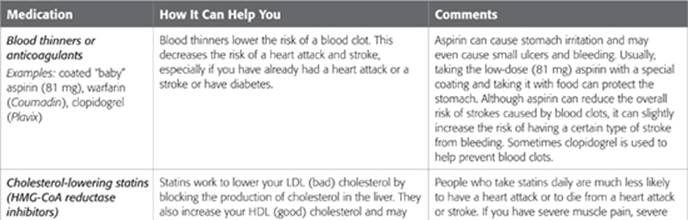
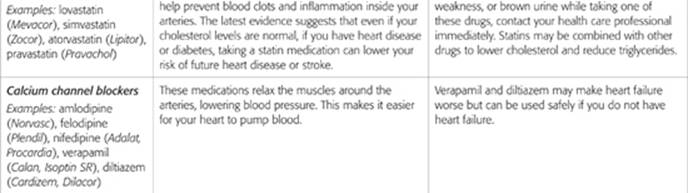
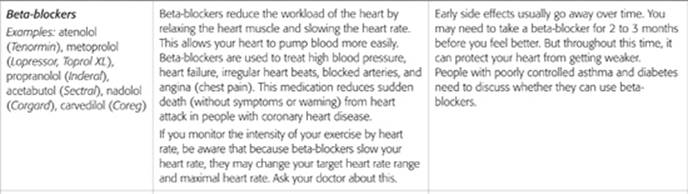
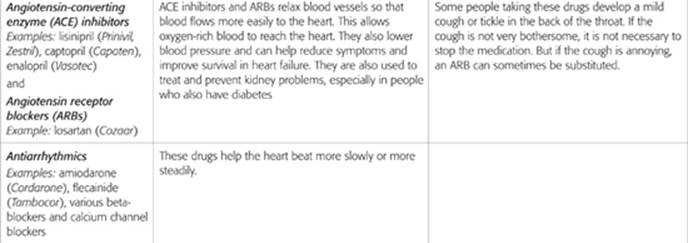
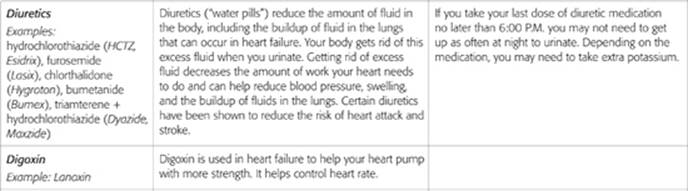
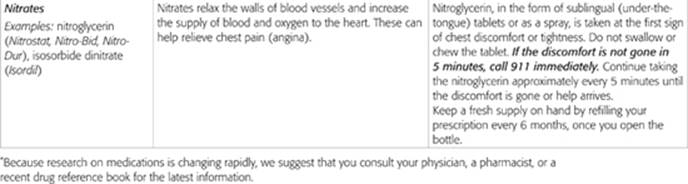
In Table 16.1 we briefly discuss some of the most common and most effective medications. If you have heart disease, diabetes, stroke, peripheral arterial disease, chronic kidney disease, or an abdominal aortic aneurysm, be sure to consult your doctor to find out if some or all of these heart-protective medications are right for you. If one medication is not working for you or is causing side effects, discuss this with your doctor. Usually an alternative medication can be found that will work. Most heart medications are taken for a lifetime and continue to work to reduce the risk of heart disease, heart failure, and stroke. These are not addicting and usually can be used safely over many years. Do not start or stop these medications without discussing with your doctors.
Heart Procedures and Surgery
With certain heart problems or when using medications alone is not sufficient, several types of heart procedures and surgery may be helpful.
Coronary or “balloon” angioplasty. Coronary angioplasty relieves the symptoms of coronary artery disease by improving blood flow to the heart by opening the blockages. A catheter (long narrow tube) with a balloon at the tip is inserted into the artery to widen a narrow passage in the vessel. Your physician may choose to insert a tiny mesh tube called a stent to help keep the narrowed vessel open. Many stents (“drug-eluting stents”) contain medications that may help prevent the artery from clogging up again.
Coronary artery bypass surgery. Bypass surgery creates a new route for blood flow to your heart. A blood vessel from your leg or chest wall is used to create a detour around the blockage in the coronary artery. One or more blocked arteries may be bypassed. The surgery usually requires several days in the hospital, and the recovery time can be weeks to months.
Valve replacement. Sometimes it may be necessary to have heart surgery to repair or replace a damaged heart valve.
Surgery and devices for rhythm problems. The nerves of the heart can be interrupted by surgery to control or prevent certain types of irregular rhythms. Also, devices such as pacemakers and implantable defibrillators may be permanently attached to the heart to treat abnormal heart rhythms.
Exercising with Heart Disease
Exercise can be both safe and helpful for many people with heart disease, with and without surgery. To make the most of your exercise, work closely with your health providers to find the best exercise program for your needs. Remember that regular, well-chosen exercise is an important part of treatment and rehabilitation. Exercise can lower your risk for future problems, reduce the need for hospitalization, and improve your quality of life.
When Not to Exercise
Some heart conditions limit the kinds and amount of exercise you do. You should follow your doctor’s advice about exercise and exertion if you have poor circulation to the heart (ischemia), if you experience irregular heartbeats (arrhythmia), or if your heart is unable to pump enough blood to the rest of your body. If your heart disease is severe, your doctor may want to change your treatment before giving you clearance to exercise. For example, if you have an arrhythmia, your doctor may want to treat you with a medicine that controls your heartbeat. If you have poor circulation to the heart muscle, the physician may recommend medications, bypass surgery, or “balloon” angioplasty to improve blood flow to the heart muscle before clearing you for conditioning activities.
Table 16.1 Medications Useful for Managing Heart Disease, High Blood Pressure, and Stroke
Tips for Safe Exercise
If you do not have any restricting conditions or a doctor’s advisory, it is safe for you to begin the conditioning program outlined in this book. The following are exercise considerations for people with different kinds of heart disease.
Strengthening activities, such as isometrics, weightlifting, or rowing, can increase blood pressure and stress your heart needlessly. This can be dangerous if you have high blood pressure or your heart has trouble pumping. If you and your doctor think strengthening is important for you, you will need to pay special attention to not holding your breath while you exercise. Remember to breathe out as you exert. One way to be sure to breathe is to count out loud or breathe out through pursed lips.
If you have not exercised since your heart disease began, you and your doctor may decide that supervision by experienced professionals is a good way to start. Most communities have cardiac rehabilitation programs or professionally staffed gyms at a local hospital or community center.
Once you are cleared for activity by your physician, keep the intensity well below the level that causes symptoms such as chest pain or severe shortness of breath. For example, if you get chest pain during an exercise treadmill test when your heart is beating at 130 beats per minute, you should not let your heart get above 115 beats per minute when you exercise. If you cannot easily judge your intensity to stay below your “symptom zone,” you can wear a pulse rate monitor (available at medical supply and sporting good stores) and check your heart rate at any time. Other ways to monitor the intensity of your exercise are the talk test and your perceived exertion (see page 126).
If your heart has decreased pumping strength, avoid activities that cause you to strain. Try safer and more helpful conditioning activities such as light calisthenics, walking, swimming, and stationary bicycling.
Exercise while lying down—as when you swim or pedal a special “recumbent” stationary bicycle—can help improve the efficiency of the heart’s pumping action and is less tiring than exercise while standing up.
Always remember that if you develop new or different symptoms, such as chest pain, shortness of breath, dizziness, or rapid or irregular heartbeat while at rest or while exercising, you should stop what you are doing and contact your physician.
Exercising with Stroke
If you have had a stroke that affected your arm or leg, you may have had physical and occupational therapy. You may recognize many of the exercises in this book as the ones you did in therapy. If you are still seeing a therapist or doing a home exercise program, talk with the therapist about adding new activities. If you are making your own exercise decisions now, you can use the exercises in this book to continue to improve flexibility, strength, and endurance. If you have weakness in your arm or leg or have trouble with balance, it is important that you think of safety when you choose which exercises to do. Having another person with you, sitting instead of standing, and using a counter, sturdy chair, or wall rail for support are some ideas for adapting exercises to meet your needs. You can also think of ways for your stronger side to help your weaker side exercise. A stationary bicycle with toe clips on the pedals will let your stronger leg help both legs exercise. Doing arm exercise holding a cane, walking stick, or towel in both hands will let both arms move. Remember, even if the arm and leg weakness is permanent, you can still increase your physical activity and general health with exercise.
Exercising with Peripheral Vascular Disease (Claudication)
Exercise for people with leg claudication is generally limited by the leg pain that develops during exercise. The good news is that conditioning exercises can help improve endurance and reduce leg pain for most people. Start with short walks or bicycling, and continue to the point when you start to have leg pain. Stop and rest or slow down until the discomfort eases and then start again. At the beginning, repeat this cycle for 5 to 10 minutes, increasing gradually as you get more comfortable. Many people find that they can gradually increase the length of time they can walk comfortably or exercise with this method. A good goal is to be able to keep going for 30 to 60 minutes, which is long enough to get noticeable fitness benefits too. If leg pain continues to keep you from being physically active, talk to your doctor about your options. Remember, arm exercises won’t usually cause leg pain, so be sure to include them as an important part of your overall conditioning program.
The Outlook
We can do a lot to prevent heart disease and stroke and to help people with these conditions live long, full lives. The combination of healthy lifestyle, selective use of medications, and cardiac procedures when needed has dramatically lowered the risk of heart attack, stroke, and early death. You also have an important job to do. It is up to you to eat well and exercise, manage stress, and take your medications as prescribed. If you do not do your part, your health care team will be much less effective. Part of good care and self-management for people with serious heart conditions involves planning for the future and making their wishes known regarding end-of-life issues and medical care (see Chapter 19).
Suggested Further Reading
American Heart Association. To Your Health: A Guide to Heart-Smart Living. New York: Clarkson Potter, 2001.
American Medical Association. Guide to Preventing and Treating Heart Disease: Essential Information You and Your Family Need to Know about Having a Healthy Heart. Hoboken, N.J.: Wiley, 2008.
Casey, Aggie, Herbert Benson, and Ann MacDonald. Mind Your Heart: A Mind/Body Approach to Stress Management, Exercise, and Nutrition for Heart Health. New York: Free Press, 2004.
Casey, Aggie, Herbert Benson, and Brian O’Neill. Harvard Medical School Guide to Lowering Your Blood Pressure. New York: McGraw-Hill, 2005.
Granato, Jerome. Living with Coronary Heart Disease: A Guide for Patients and Families. Baltimore: Johns Hopkins University Press, 2008.
Heller, Maria. The DASH Diet Action Plan: Proven to Lower Blood Pressure and Cholesterol Without Medication. New York: Grand Central Life & Style, 2011.
Ornish, Dean. Eat More, Weigh Less: Dr. Dean Ornish’s Advantage Ten Program for Losing Weight Safely While Eating Abundantly. New York: Quill, 2001.
Ornish, Dean. The Spectrum: A Scientifically Proven Program to Feel Better, Live Longer, Lose Weight, and Gain Health. New York: Ballantine, 2008.
Rippe, James M. Heart Disease for Dummies. Hoboken, N.J.: Wiley, 2004.
Taylor, Jill Bolte. My Stroke of Insight: A Brain Scientist’s Personal Journey. New York: Viking, 2009.
Other Resources
 American Heart Association (AHA), (800) 242-8721: http://www.americanheart.org/
American Stroke Association, (888) 478-7653: http://www.strokeassociation.org/
HeartHub: http://www.hearthub.org/
National Heart, Lung, and Blood Institute (NHLBI), (301) 592-8573: http://www.nhlbi.nih.gov/
National Institute of Neurological Disorders and Stroke, (800) 352-9424: http://www.ninds.nih.gov/
National Institutes of Health: http://health.nih.gov/
National Stroke Association, (800) STROKES (787-6537): http://www.stroke.org/
National Women’s Health Information Center: http://www.womenshealth.gov/
The DASH Diet, http://www.nhlbi.nih.gov/hbp/prevent/h_eating/h_eating.htm
WomenHeart: The National Coalition for Women with Heart Disease, (202) 728-7199: http://www.womenheart.org/