
Italian Chicken Salad
Asian Pork and Plum Salad
Spicy Black Bean Salad
Thai Beef Salad
Swordfish Salad with Salsa Dressing
Garlicky Tomato Salad
Spinach Salad with Hot Bacon Dressing
Roasted Pepper Salad
Garden Salad with Balsamic Vinaigrette
Basic Creamy Dressing
The Principles of Salad Making
Small side salads are a nice addition to any meal, but I’m talking about making salad a major event. Before you rummage through your refrigerator, tempted to empty all the contents in your produce drawer into a wooden bowl, let me guide you through several basic principles that will make you a master salad maker.
Pick a Theme
As tempting as it is to just throw all sorts of ingredients together, resist the urge. A good salad needs cohesion, a central theme that brings all the ingredients together. The first five recipes are developed around a specific flavor profile. For example, the Italian Chicken Salad recipe uses flavors that are complementary in Mediterranean cooking. As much as I love tofu, it would be odd to put it in this salad. The Asian Pork and Plum Salad and Thai Beef Salad are two more examples of this thematic approach; it would be strange for me to add Parmesan cheese to these.
Choose Greens
In the summer, sometimes I’ll just slice up cucumbers and tomatoes and call it a salad. However, a substantial salad calls for a bed of fluffy fresh greens. I think practically every green variety works in a salad. I recommend combining mild-tasting greens like butter leaf or romaine with sharper, peppery ones, such as spinach or arugula for a balanced taste. For a really nice contrast and to promote deep rich flavor, add whole-leaf herbs and treat them just like greens. Basil and mint leaves are my two favorites. I leave them uncut; just trim the stems and toss them in with the greens. Always wash your greens, even if you buy packaged greens that state the greens have been cleaned. Here are the five steps to ensure that your greens have been cleaned properly:
1. Remove any fasteners or rubber bands that have held the lettuce together. Break off the root ends.
2. Add the leaves to a large bowl or basin filled with cold water and a little salt. The salt will help any tiny insects still clinging to the leaves to become dislodged.
3. Place the leaves in a salad spinner—the best piece of kitchen equipment you’ll ever invest in. Spin the leaves until they are dry.
4. Wrap the leaves in several layers of paper towels and press out any remaining moisture. This is key! Any excess moisture in the leaves will only cause a soggy salad.
5. Tear the greens by hand (never cut with a knife) and prepare the salad, or keep the leaves whole, wrapped in the towels, and place in a large plastic bag stored in the refrigerator crisper until you are ready to prepare the salad.
Protein
The addition of protein turns a side salad into a substantial meal. In this chapter, chicken, lean pork, lean beef, fish, and beans provide the protein. The beauty of adding protein is that it’s so easy to do. When you have leftover pieces of protein from another meal, toss it right into the greens. In these recipes, the animal proteins are either poached or grilled. Fish and poultry work well with poaching, and heavier meats such as beef and pork benefit from grilling. In both methods, ever-so-subtle flavors are added to the protein; you actually want the proteins to be as much a blank canvas as possible. The salad dressing and other ingredients added to the salad will be the workhorse for adding flavor.
Perfectly Poached
Poaching is submerging food into boiled liquid and letting it cook through, but poaching requires a little finesse! Done right, chicken and thick filets of fish turn out deliciously moist. Done poorly, you end up with hockey pucks. Here’s my step-by-step plan to poach fish and chicken to ready them for salads.
1. Always start with a flavorful liquid mixture, don’t poach in plain water. You want very subtle flavors to permeate the protein. The result will be a much tastier salad overall. Use a reduced-sodium broth or water, but be sure to add at least one aromatic, such as peppercorns, citrus slices, or onion. For example, if you want to prepare an Asian flavored salad, poach the chicken with the addition of scallion slices and maybe some chopped fresh lemongrass.
2. Add the liquid to a large skillet with high sides and a tight fitting lid. Make sure that lid fits very snugly in the pan. In order for the protein to properly cook through, you need to create lots of gentle steam within the pan that cannot escape.
3. Bring the liquid and the aromatics to a gentle boil, around 160–165°F. No need to have the poaching liquid at a furious boil.
4. Add your poultry or fish and let it poach, uncovered, for 3–4 minutes, well before the liquid ever has a chance to come back to a boil. After 3–4 minutes, cover and remove from the heat source (just slide it to an unused burner). Let the food remain in the poaching liquid for 12–14 minutes.
5. Remove the food with a slotted spoon, discard the poaching liquid. Then let cool enough to handle. Slice, cube, shred or flake the protein as desired and add to your salad.
Perfectly Grilled
Pork and lean cuts of beef can easily dry out. That’s because the pork and beef raised today is much leaner than many years ago. Still, with a few tips, your pork and beef can be juicy and succulent.
1. Purchase bone-in pork chops when you can. There is nothing wrong with boneless chops, except that a more watchful eye is needed to make sure you don’t overcook them. Purchase the very best pork you can find. It’s worth it to buy organically raised meat as it is more tender and flavorful. For beef, the bone isn’t as crucial, as beef usually contains more fat than pork and that extra bit of fat helps keep the meat juicy even without a bone.
2. Use a little bit of salt and pepper on the surface as you grill. It helps create a flavorful crust and will brown the meat to a beautiful color. This will make your final salad even more appealing.
3. Bring the pork and beef to room temperature for 30 minutes prior to cooking. Cold meat will cause the outside to cook too quickly.
4. Start with a hot pan to get the surface of pork and beef crusty and golden brown. Then switch to a medium heat to continue the cooking. The meat will be juicier this way.
5. Cook the pork to an internal temperature of 135°F. Remove the pork from the heat source and let it rest. As it rests, the internal temperature will rise to 145°F, ensuring a perfectly cooked piece of pork. For steaks, the finger test is a good one. When it feels soft, it’s still rare; when it feels firm, it’s well done. Somewhere in between should be the amount of “done” you will like.
Texture
It’s the crunch, coupled with a few creamy counterpoint ingredients, that makes a great salad. The single most important factor in warding off salad boredom is to combine hard, raw vegetables with soft greens, and rough textured topping, such as nuts, with a smooth dressing. Here are a few things to keep in mind:
1. Keep all salad ingredients bite-sized. Nothing is more disconcerting than trying to maneuver a large chunk of tomato on a fork, let alone trying to fit it in your mouth! You want to get as many vegetables on your fork, so that you have a variety of flavors that work together for one great taste.
2. Consider adding a small amount of crunchy toppings such as nuts and seeds. If your food plan will allow it, a small amount of smooth, sharp cheese, such as blue cheese, or a slice of fresh avocado really make the salad shine.
3. Find the right balance of crunchy vegetables. Add too many raw vegetables and your salad will take forever to eat. Too few vegetables and you risk sacrificing good nutrition, plus the texture will quickly become plain and boring.
Salad Dressing
I cannot recall the last time I used a bottled salad dressing, as I always make my own. It’s easy and inexpensive. Here is my 3-step formula to creating a perfect salad dressing:
1. Choose your oil: Sure you could forgo the oil in a dressing, but it’s the oil that will help the dressing adhere to the greens rather than ending up in the bottom of the bowl. For calorie and fat gram savings, just use enough oil to coat the greens very lightly. Stick with the most flavorful oils to get the most bang for your buck. Olive, grapeseed, walnut, peanut, avocado, and sesame oils are the ones I recommend most. These spoil faster than plain vegetable oil, so buy in small quantities. If necessary, keep them in the refrigerator to prolong their shelf life.
2. Choose your acid: Vinegars and citrus juices are your choices. Although you can never go wrong with red wine vinegar or lemon juice, consider champagne vinegar and lime or orange juices for a change. The purpose of including acids is to “wake-up” the greens and bring out their garden-fresh flavor. But don’t overdo it — too much acid throws the balance of the dressing off and makes a salad literally hard to swallow!
3. Flavor enhancers: You could simply whisk together oil and vinegar, add dashes of salt and pepper and you would have a good dressing. A great dressing takes advantage of adding the third component to a salad dressing—the flavor enhancers. The amount of enhancers you add is entirely your choice, so go ahead and experiment. Mustard, honey, chopped fresh herbs, minced garlic, chopped shallots, and low-sodium soy sauce can all be added to a basic oil-vinegar base in varying degrees. Your flavor enhancer can tie the salad theme together. For example, in the Thai Beef Salad, peanut oil and lime juice are enhanced with fish sauce and chili purée. These ingredients make perfect sense given the Asian theme of the salad.
Feel free to make up any of the salad dressings in this chapter in quantity and store in an airtight container in the refrigerator for up to one week.
The last five recipes in this chapter are created as side salads; however, add any protein and you’ll have five more main-dish salads. The Roasted Pepper Salad is a great springboard for other recipes. Once you learn how to prepare homemade roasted peppers, you can add them to egg dishes, homemade sandwiches, and pizzas, slice them into main dish soups and stews, or chop them and add them to a salad dressing. The Spinach Salad with Hot Bacon Dressing is a perfect example of how to add interest to a salad. Cool greens and warm dressing make for a delicious contrast. The Garden Salad is an all-purpose salad that you can serve every day, just switch up the greens and change around the dressing ingredients for added interest. These five last salad recipes are perfect blueprints—with a few simple switches, so you can have an entirely new salad to enjoy.
Italian Chicken Salad
Serves: 6 | Serving size: 1 cup | Prep time: 10 minutes | Cook time: 22 minutes
I remember the first time I ate a chicken salad without mayonnaise. Honestly, it took a while to get used to. Gradually, I switched over completely to chicken salads made with olive oil and vinegar. To change this salad up, substitute pine nuts for the walnuts, use chopped fresh oregano and basil instead of dried, use a roasted red pepper instead of a fresh one, or add sliced rehydrated sun-dried tomatoes to the mix.
1 quart reduced sodium, low-fat chicken broth or water
4 peppercorns
3 slices fresh lemon or orange
1/2 small onion, cut into wedges
1 pound boneless, skinless chicken breasts
1 tablespoon olive oil
1/2 cup chopped walnuts
1 red pepper, diced
1 teaspoon dried oregano
1/2 teaspoon dried basil
1 (15-ounce) can artichoke hearts, drained and halved
10 pitted Kalamata olives, sliced
2 tablespoons minced fresh parsley
Dressing
3 tablespoons olive oil
1 tablespoon fresh lemon juice
1 tablespoon red wine vinegar
1 garlic clove, minced
1/2 teaspoon sugar
1/2 teaspoon salt
1/4 teaspoon black pepper
6 cups mixed greens
1. Bring the broth or water to a simmer in a large skillet with tight-fitting lid. Add the peppercorns, lemons, and onions and simmer for 10 minutes. Add the chicken and cook for 4 minutes, uncovered. Cover, remove from the heat and let the chicken stand in the water for 12–14 minutes. Remove the chicken from the skillet with a slotted spoon and place on a plate and refrigerate until cool enough to handle. Discard poaching liquid.
2. Heat the oil in a skillet over medium heat. Add the walnuts and sauté for 2 minutes. Add the red pepper, oregano, and basil and sauté for 3 minutes. Remove from the heat and let cool.
3. Meanwhile, in a salad bowl, combine the artichoke hearts, olives, and parsley.
4. Combine all dressing ingredients. Add the walnut mixture to the salad. Cut the chicken into 1-inch cubes and add to the salad. Pour over the dressing. Toss well and serve over mixed greens.
Exchanges / Choices: 2 Nonstarchy Vegetable; 2 Protein, lean; 3 Fat
Calories 290; Calories from Fat 170; Total Fat 19.0 g; Saturated Fat 2.5 g; Trans Fat 0.0 g; Cholesterol 45 mg; Sodium 450 mg; Potassium 430 mg; Total Carbohydrate 10 g; Dietary Fiber 4 g; Sugars 2 g; Protein 20 g; Phosphorus 175 mg
Sides
Peaches
Serves: 1 | Serving size: 1/2 cup
1/2 cup peaches
1. Serve peaches alongside salad and crackers.
Exchanges / Choices: 1/2 Fruit
Calories 30; Calories from Fat 0; Total Fat 0.0 g; Saturated Fat 0.0 g; Trans Fat 0.0 g; Cholesterol 0 mg; Sodium 0 mg; Potassium 150 mg; Total Carbohydrate 7 g; Dietary Fiber 1 g; Sugars 6 g; Protein 1 g; Phosphorus 15 mg
Crackers
Serves: 1 | Serving size: 1 ounce
1 ounce baked crackers, such as Wheat Thins or Triscuits
1. Serve crackers alongside salad and peaches.
Exchanges / Choices: 1 Starch; 1 Fat
Calories 130; Calories from Fat 40; Total Fat 4.5 g; Saturated Fat 0.8 g; Trans Fat 0.1 g; Cholesterol 0 mg; Sodium 180 mg; Potassium 105 mg; Total Carbohydrate 20 g; Dietary Fiber 3 g; Sugars 2 g; Protein 3 g; Phosphorus 95 mg
Asian Pork and Plum Salad
Serves: 8 | Serving size: 1 cup | Prep time: 10 minutes | Cook time: 10 minutes
Combining fruit and lean proteins together was something my mother always used to do in her cooking. She’d often add fruit to a soup or stew; she even added fruit on top of homemade pizza! By having her fruit with her meal rather than eating fruit all by itself, she was better able to control her blood sugar levels.
Nonstick cooking spray
1 1/2 pounds lean boneless pork loin chops, trimmed, brought to room temperature
1/2 teaspoon kosher salt
1/2 teaspoon freshly ground black pepper
Salad
1 (11-ounce) can mandarin oranges (in its own juice), drained
2 small red plums, pitted and sliced
4 scallions, thinly sliced
1/2 cup sliced canned water chestnuts, drained
1 pound romaine lettuce, washed, dried, cored, and chopped
Dressing
1/3 cup low-fat mayonnaise
3 tablespoons creamy peanut butter
1 tablespoon water
2 teaspoons reduced-sodium soy sauce
1 garlic clove, minced
1 teaspoon minced fresh ginger or 1/2 teaspoon ground ginger
2 tablespoons chopped unsalted, roasted cashews
1. Coat a nonstick ridged grill pan with nonstick cooking spray and set over high heat until hot, about 2 minutes. Sprinkle the pork chops with salt and pepper. Add the pork chops to grill pan and cook on each side, about 2 minutes per side. Lower the temperature to medium and cook for an additional 3–4 minutes per side or until an internal temperature of 135°F is reached. Remove from the pan and set aside. The internal temperature will reach 145°F as the pork rests.
2. Meanwhile, combine all ingredients for the salad. Whisk together the dressing ingredients.
3. Slice the pork into thin strips (discard bone if using bone-in chops). Toss into the salad. Add the dressing to the salad and toss. Top the salad with cashews.
Exchanges / Choices: 1 Carbohydrate; 3 Protein, lean
Calories 200; Calories from Fat 70; Total Fat 8.0 g; Saturated Fat 1.8 g; Trans Fat 0.0 g; Cholesterol 40 mg; Sodium 330 mg; Potassium 520 mg; Total Carbohydrate 11 g; Dietary Fiber 3 g; Sugars 5 g; Protein 22 g; Phosphorus 240 mg
Sides
Whole Wheat Crackers
Serves: 1 | Serving size: 1 ounce
1 ounce baked crackers such as Triscuits or Wheat Thins
1. Serve crackers alongside salad and Greek yogurt.
Exchanges / Choices: 1 Starch ; 1 Fat
Calories 130; Calories from Fat 40; Total Fat 4.5 g; Saturated Fat 0.8 g; Trans Fat 0.1 g; Cholesterol 0 mg; Sodium 180 mg; Potassium 105 mg; Total Carbohydrate 20 g; Dietary Fiber 3 g; Sugars 2 g; Protein 3 g; Phosphorus 95 mg
Greek Yogurt
Serves: 1 | Serving size: 4 ounces
4 ounces fat-free plain and raspberry jam Greek yogurt
1. Serve yogurt alongside salad and crackers.
Exchanges / Choices: 1/2 Milk, fat-free
Calories 70; Calories from Fat 0; Total Fat 0.0 g; Saturated Fat 0.0 g; Trans Fat 0.0 g; Cholesterol 0 mg; Sodium 45 mg; Potassium 160 mg; Total Carbohydrate 5 g; Dietary Fiber 1 g; Sugars 5 g; Protein 11 g; Phosphorus 155 mg
Spicy Black Bean Salad
Serves: 8 | Serving size: 1 cup | Prep time: 15 minutes
This no-cook salad stands up well; it will last about 3–4 days in the refrigerator. You can also use this salad as a salsa. I’ve also filled up endive spears with this salad and served it as an appetizer for dinner parties.
3 (15-ounce) cans black beans, or 3 cups cooked dried black beans
1 red onion, minced
1 cup corn (fresh, cut from the cob, or frozen, thawed)
3 large ripe tomatoes, seeded and chopped
1 medium red pepper, diced
1 medium yellow pepper, diced
1 cup peeled, diced jicama
1/2 cup chopped fresh cilantro
2 small jalapeño peppers, seeded and minced
3 garlic cloves, minced
2 tablespoons lemon or lime juice
1 1/2 teaspoons ground cumin
1 tablespoon red wine vinegar
1/3 cup olive oil
1/2 teaspoon kosher salt
1/4 teaspoon freshly ground black pepper
1. Place the canned beans in a large colander and rinse well under cold running water. Drain thoroughly.
2. In a large mixing bowl, combine the beans with remaining ingredients and toss gently until mixed. Cover and refrigerate for 1 hour prior to serving.
Exchanges / Choices: 1 1/2 Starch; 2 Nonstarchy Vegetable; 1 Protein, lean; 1 Fat
Calories 260; Calories from Fat 90; Total Fat 10.0 g; Saturated Fat 1.4 g; Trans Fat 0.0 g; Cholesterol 0 mg; Sodium 240 mg; Potassium 700 mg; Total Carbohydrate 35 g; Dietary Fiber 11 g; Sugars 7 g; Protein 10 g; Phosphorus 180 mg
Side
Fresh Spinach Salad
Serves: 1 | Serving size: 1 1/2 cups
1 cup fresh spinach leaves
5 cherry tomatoes halved
1/4 cup sliced red onion
1/4 teaspoon olive oil
1/2 teaspoon lemon juice
1. Combine spinach, tomatoes, and red onion in a small bowl. Drizzle olive oil over salad and top with lemon juice.
Exchanges / Choices: 1 Nonstarchy Vegetable
Calories 20; Calories from Fat 0; Total Fat 0.0 g; Saturated Fat 0.0 g; Trans Fat 0.0 g; Cholesterol 0 mg; Sodium 15 mg; Potassium 200 mg; Total Carbohydrate 4 g; Dietary Fiber 2 g; Sugars 1 g; Protein 2 g; Phosphorus 50 mg
Thai Beef Salad
Serves: 6 | Serving size: 3/4 cup | Prep time: 10 minutes | Cook time: 12 minutes + 10 minutes for standing
This recipe is courtesy of the chefs at the Peninsula Hotel in Bangkok. Sitting at the terrace restaurant of a grand hotel, I ordered the beef salad. After one bite, I asked our waiter to summon the chef so I could know what all these fabulous exotic tastes were. When I explained what I did for a living, the chef was more than happy to introduce me to the world of chiles, fish sauce, and more.
4 ounces udon noodles
1 pound flank steak, trimmed of excess fat, brought to room temperature
1/4 teaspoon kosher salt
1/4 teaspoon freshly ground black pepper
Dressing
3 tablespoons peanut oil
3 tablespoons lime juice
1/2 tablespoon fish sauce
1 tablespoon brown sugar
1/4 teaspoon chili puree with garlic
Vegetables
1 cup sliced red onion
1 cup thinly sliced red pepper
1 cup thinly sliced cucumber
1/3 cup chopped scallions
4 cups romaine torn lettuce leaves
1/4 cup chopped unsalted peanuts
1. Cook the noodles according to package directions. Drain and set aside.
2. Sprinkle both sides of the beef with salt and pepper. Coat an outdoor grill rack with cooking spray and set the rack 6 inches above the heat source. Set the grill to medium high. Alternatively, coat an indoor grill pan with cooking spray and set it on medium-high heat. Place the beef on the rack and grill for about 6–7 minutes per side. Remove the beef to plate, cover loosely, and let stand for 10 minutes. Cut the beef diagonally across the grain into thin slices.
3. Combine all the dressing ingredients. Add the beef, red onion, red pepper, cucumbers, scallions, and udon noodles. Add the dressing and toss well. Serve on lettuce and top with peanuts.
Exchanges / Choices: 1 Starch; 1 Nonstarchy Vegetable; 2 Protein, lean; 2 Fat
Calories 300; Calories from Fat 140; Total Fat 15.0 g; Saturated Fat 3.3 g; Trans Fat 0.0 g; Cholesterol 40 mg; Sodium 450 mg; Potassium 480 mg; Total Carbohydrate 21 g; Dietary Fiber 3 g; Sugars 7 g; Protein 20 g; Phosphorus 220 mg
Sides
Snow Peas
Serves: 1 | Serving size: 1/2 cup
1/2 cup snow peas
1. Steam snow peas and serve alongside salad and orange.
Exchanges / Choices: 1 Nonstarchy Vegetable
Calories 35; Calories from Fat 0; Total Fat 0.0 g; Saturated Fat 0.0 g; Trans Fat 0.0 g; Cholesterol 0 mg; Sodium 0 mg; Potassium 190 mg; Total Carbohydrate 6 g; Dietary Fiber 2 g; Sugars 3 g; Protein 3 g; Phosphorus 45 mg
Orange
Serves: 1 | Serving size: 1 orange
1 small orange
1. Serve orange alongside salad and snow peas.
Exchanges / Choices: 1 Fruit
Calories 45; Calories from Fat 0; Total Fat 0.0 g; Saturated Fat 0.0 g; Trans Fat 0.0 g; Cholesterol 0 mg; Sodium 0 mg; Potassium 170 mg; Total Carbohydrate 11 g; Dietary Fiber 2 g; Sugars 9 g; Protein 1 g; Phosphorus 15 mg
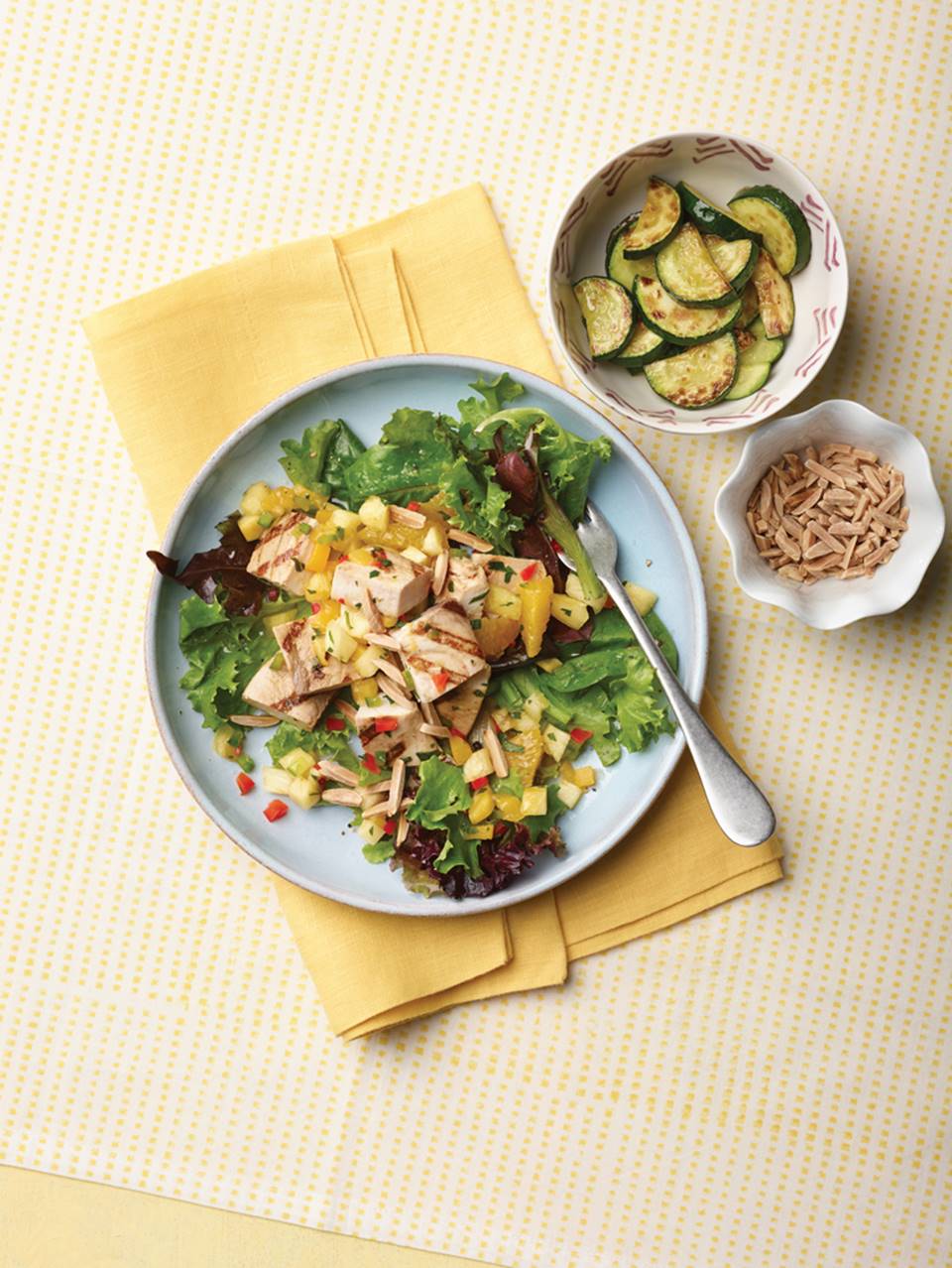
Swordfish Salad with Salsa Dressing
Serves: 4 | Serving size: 1 cup | Prep time: 10 minutes | Cook time: 12 minutes
On my first date with my husband, he ordered swordfish. All these years later, he still requests this salad once a month. If swordfish is not a favorite of yours, use salmon, halibut, haddock, or sea bass, all of which work wonderfully well in this dish.
1 pound swordfish steaks
1/2 cup fresh orange juice
2 tablespoons olive oil
1 tablespoon fresh lemon juice
1/4 teaspoon cayenne pepper
Salsa
1 medium orange, peeled, sectioned, and chopped into 1-inch pieces
1 cup diced fresh or canned (in its own juice) pineapple chunks
1/2 cup peeled, diced mango
1 jalapeño pepper, seeded and minced
3 tablespoons orange juice
1 tablespoon diced red pepper
1 tablespoon minced cilantro
1 1/2 tablespoons olive oil
2 tablespoons red wine vinegar
1 teaspoon sugar
4 cups salad greens
2 tablespoons toasted slivered almonds
1. In a nonreactive pan, place the swordfish with the orange juice, olive oil, lemon juice, and cayenne pepper and marinate for 15 minutes.
2. Coat an outdoor grill with cooking spray and set the rack 6 inches from the heat source. Set the heat to medium-high. Alternatively, coat an indoor grill pan with cooking spray and place it on medium-high heat.
3. Grill the swordfish on each side for about 12–15 minutes, until opaque in the center. Remove the swordfish from the grill and allow to cool. Cut into 1-inch pieces.
4. Combine all ingredients for the salsa. Toss the swordfish with the salsa.
5. Combine the olive oil, red wine vinegar, and sugar. Whisk together well. Toss the greens with the dressing. Pile the swordfish salad on top of the lettuce. Top with almonds.
Exchanges / Choices: 1 Fruit; 1 Nonstarchy Vegetable; 3 Protein, lean; 1 1/2 Fat
Calories 310; Calories from Fat 130; Total Fat 14.0 g; Saturated Fat 2.5 g; Trans Fat 0.0 g; Cholesterol 45 mg; Sodium 115 mg; Potassium 700 mg; Total Carbohydrate 20 g; Dietary Fiber 3 g; Sugars 15 g; Protein 25 g; Phosphorus 350 mg
Sides
Zucchini
Serves: 1 | Serving size: 1/2 cup
1/2 cup zucchini
1. Steam zucchini and serve alongside salad and Greek yogurt.
Exchanges / Choices: Free food
Calories 15; Calories from Fat 5; Total Fat 0.5 g; Saturated Fat 0.1 g; Trans Fat 0.0 g; Cholesterol 0 mg; Sodium 0 mg; Potassium 240 mg; Total Carbohydrate 2 g; Dietary Fiber 1 g; Sugars 2 g; Protein 1 g; Phosphorus 35 mg
Greek Yogurt
Serves: 1 | Serving size: 1/2 cup
1/2 cup Greek yogurt
1. Serve alongside salad and zucchini.
Exchanges / Choices: 1/2 Milk, fat-free
Calories 60; Calories from Fat 5; Total Fat 0.5 g; Saturated Fat 0.1 g; Trans Fat 0.0 g; Cholesterol 10 mg; Sodium 40 mg; Potassium 105 mg; Total Carbohydrate 7 g; Dietary Fiber 0 g; Sugars 5 g; Protein 9 g; Phosphorus 115 mg

Garlicky Tomato Salad
Serves: 10 | Serving size: 1 cup | Prep time: 10 minutes
Plum and cherry tomatoes taste good year-round, so you can enjoy this salad anytime. In the summer, feel free to substitute yellow or heirloom tomatoes. Grilled shrimp is superb in this salad, so add it if you want to turn this into a main dish. Try this with sliced mint leaves in place of the basil or use half mint and half basil.
1 large head butter lettuce, large leaves torn into smaller pieces
2 large or 4 small ripe plum tomatoes, sliced
20 cherry tomatoes, halved
Garlic vinaigrette
1 large garlic clove, very finely chopped
2 teaspoons red wine vinegar
1/2 teaspoon Dijon mustard
2 tablespoons olive oil
1/4 teaspoon kosher salt
1/4 teaspoon freshly ground black pepper
16 fresh basil leaves, thinly sliced
1 tablespoon toasted pumpkin seeds
1 tablespoon sunflower seeds
1. Place a layer of lettuce leaves on a serving platter or on four plates and arrange the sliced tomatoes. Place the cherry tomatoes on top.
2. Whisk together the ingredients for the dressing and pour over the tomatoes.
3. Scatter the basil leaves and the pumpkin and sunflower seeds over the tomatoes and serve at once.
Exchanges / Choices: 1 Nonstarchy Vegetable; 2 Fat
Calories 120; Calories from Fat 80; Total Fat 9.0 g; Saturated Fat 1.3 g; Trans Fat 0.0 g; Cholesterol 0 mg; Sodium 140 mg; Potassium 520 mg; Total Carbohydrate 8 g; Dietary Fiber 3 g; Sugars 4 g; Protein 3 g; Phosphorus 105 mg
Sides
Seasoned Sautéed Shrimp
Serves: 4 | Serving size: 4 ounces
2 teaspoons chipotle chili powder
1/2 teaspoon dried oregano leaves
1/2 teaspoon sweet paprika
1/4 teaspoon ground cumin
1/4 teaspoon freshly ground black pepper
1/4 teaspoon salt
1 pound peeled and deveined large shrimp
1 tablespoon olive oil
1. In a large bowl, combine the chili powder, oregano, paprika, cumin, black pepper, and salt. Add in the shrimp and toss well.
2. Heat the olive oil on medium heat in a large skillet. Add the shrimp and sauté for 5–7 minutes or until shrimp is cooked through.
Exchanges / Choices: 3 Protein, lean
Calories 130; Calories from Fat 35; Total Fat 4.0 g; Saturated Fat 0.6 g; Trans Fat 0.0 g; Cholesterol 190 mg; Sodium 270 mg; Potassium 300 mg; Total Carbohydrate 1 g; Dietary Fiber 1 g; Sugars 0 g; Protein 24 g; Phosphorus 245 mg
Spinach
Serves: 1 | Serving size: 1/2 cup
1/2 cup spinach
1. Steam spinach and serve alongside salad and shrimp.
Exchanges / Choices: 1 Nonstarchy Vegetable
Calories 20; Calories from Fat 0; Total Fat 0.0 g; Saturated Fat 0.0 g; Trans Fat 0.0 g; Cholesterol 0 mg; Sodium 65 mg; Potassium 420 mg; Total Carbohydrate 3 g; Dietary Fiber 2 g; Sugars 0 g; Protein 3 g; Phosphorus 50 mg
Spinach Salad with Hot Bacon Dressing
Serves: 11 | Serving size: 1 1/2 cups | Prep time: 15 minutes | Cook time: 6 minutes
I learned very early on, for a great dressing such as this, make sure you cook the bacon in a heavy, perfectly flat-bottomed skillet for best results. The crispy pieces of bacon are crucial to making this salad a winner. The addition of romaine lettuce with the spinach cuts down on an overly peppery flavor coming from the spinach and will make the flavors more balanced.
7 cups fresh baby spinach leaves
1 small head romaine lettuce, washed, dried, and broken into bite-sized pieces
10 large white mushrooms, cleaned, peeled, if necessary, stemmed, and sliced
Dressing
4 slices lean bacon (40% or more less fat), chopped
1 small onion, finely chopped
2 cloves garlic, minced
1/2 cup cider vinegar
1 tablespoon sugar
2 tablespoons tomato paste
1. Toss together the spinach, lettuce, and mushrooms.
2. Cook the bacon in a large heavy skillet over medium heat until crisp. Add the onion and sauté for 2 minutes. Add the garlic, vinegar, sugar, and tomato paste. Stir to blend. Toss salad with dressing and serve.
Exchanges / Choices: 1 Nonstarchy Vegetable
Calories 40; Calories from Fat 10; Total Fat 1.0 g; Saturated Fat 0.3 g; Trans Fat 0.0 g; Cholesterol 0 mg; Sodium 80 mg; Potassium 300 mg; Total Carbohydrate 5 g; Dietary Fiber 1 g; Sugars 3 g; Protein 3 g; Phosphorus 50 mg
Sides
Master Chicken Sear
Serves: 4 | Serving size: 1/2 breast or thigh
2 boneless, skinless chicken breasts or 2 boneless, skinless chicken thighs
1/8 teaspoon kosher salt
1/4 teaspoon ground black pepper
1 1/2 tablespoons olive or canola oil
1. Season chicken breasts or chicken thighs with salt and black pepper.
2. In a 12–14-inch heavy skillet, preferably cast iron or stainless (NOT nonstick), heat oil over medium-high heat.
3. Add the chicken and sear until well browned on both sides, about 3–4 minutes per side for the breasts, or 2–3 minutes for the thighs.
4. Transfer the chicken to a plate and tent with foil.
5. Return the chicken and accumulated juices to the skillet and simmer gently until cooked through, about 4–5 minutes.
TO TEST: Chicken should feel firm to the touch. Using closed tongs, press on the center of the chicken. It should feel firm. Alternately, you may make a very small incision in the center of the meat and check to be sure the meat is cooked through with no traces of pink.
Exchanges / Choices: 3 Protein, lean; 1 Fat
Calories 180; Calories from Fat 90; Total Fat 10.0 g; Saturated Fat 2.0 g; Trans Fat 0.0 g; Cholesterol 85 mg; Sodium 120 mg; Potassium 200 mg; Total Carbohydrate 0 g; Dietary Fiber 0 g; Sugars 0 g; Protein 21 g; Phosphorus 170 mg
Baked Potato with Nonfat Greek Yogurt
Serves: 1 | Serving size: 1 potato
1 small (6-ounce) baked potato
1 tablespoon nonfat Greek yogurt
1. Bake potato in a 400°F oven for 45–55 minutes or until the internal temperature reaches 210°F. Top baked potato with Greek yogurt.
Exchanges / Choices: 2 Starch
Calories 140; Calories from Fat 0; Total Fat 0.0 g; Saturated Fat 0.0 g; Trans Fat 0.0 g; Cholesterol 0 mg; Sodium 20 mg; Potassium 760 mg; Total Carbohydrate 30 g; Dietary Fiber 3 g; Sugars 2 g; Protein 5 g; Phosphorus 115 mg
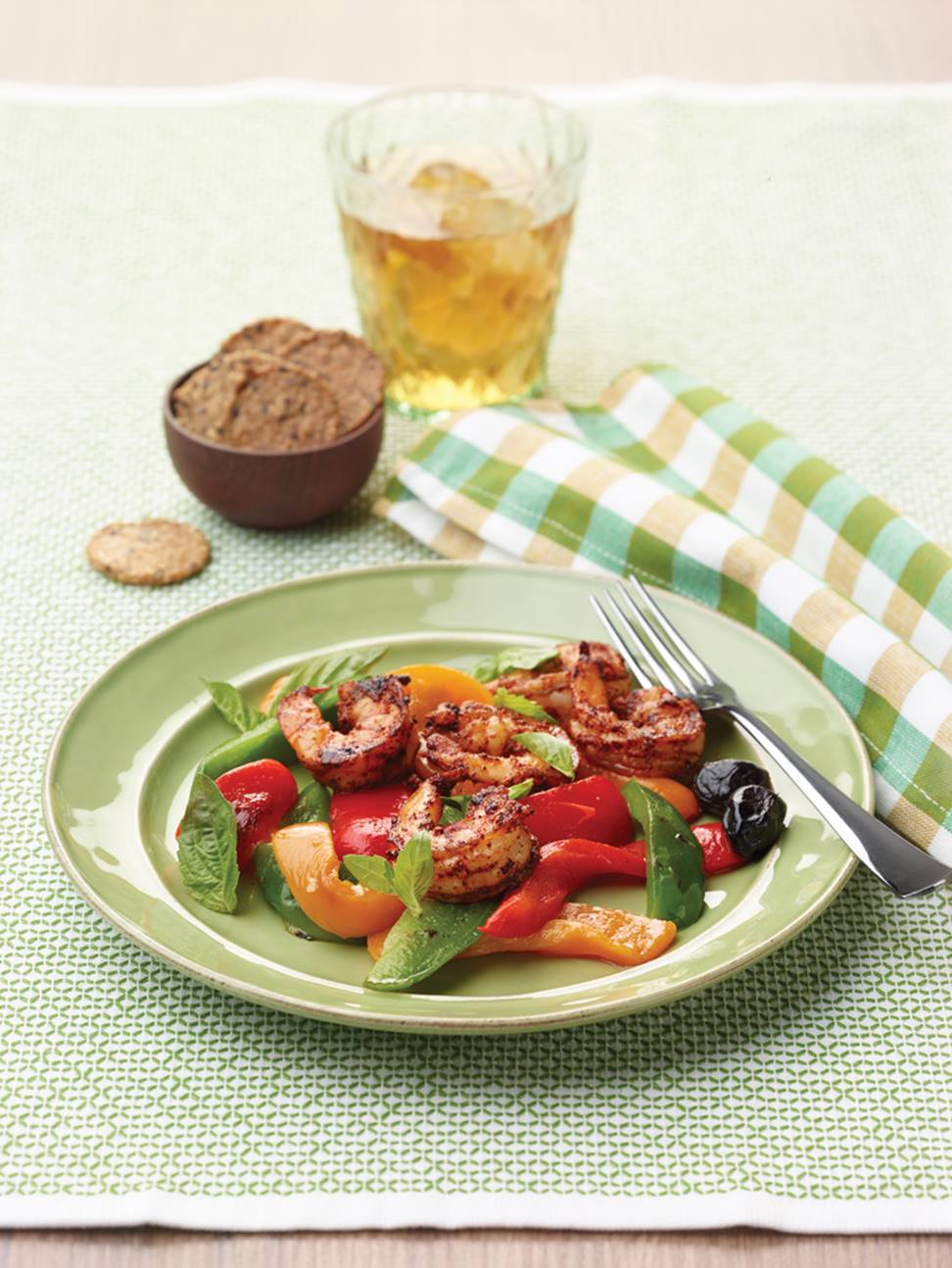
Roasted Pepper Salad
Serves: 6 | Serving size: 1 cup | Prep time: 30 minutes | Cook time: 35 minutes
Bell peppers are so tasty when they are raw, so why ever mess with them by roasting them? It’s because fire does something incredibly magical to a pepper—it transforms its flavor and texture into something juicier, sweeter, and more versatile than before it stepped into the flames. Roasted peppers jazz up pasta, eggs, soups, stews, homemade pizza, and many more everyday foods.
2 large red peppers
2 large yellow or orange peppers
2 large green peppers
2 tablespoons extra virgin olive oil, divided use
2 teaspoons balsamic vinegar
1 small garlic clove, very finely chopped or crushed
12 black olives, pitted
Handful of small fresh basil leaves
1. Preheat the oven to 400°F. Brush the peppers with 1 tablespoon of the olive oil and arrange them in a shallow roasting pan. Roast for about 35 minutes or until the pepper skins are evenly darkened, turning them 3 or 4 times. Place the peppers in a bowl, cover with plastic wrap, and leave until they are cool enough to handle.
2. Working over a bowl to catch the juice, peel the peppers. Cut them in half and discard the cores and seeds (strain out any seeds that fall into the juice), then cut into thick slices.
3. Measure 1 1/2 tbsp. of the pepper juice into a small bowl (discard the remainder). Add the vinegar and garlic and whisk in the remaining 1 tablespoon of olive oil.
4. Arrange the peppers on a serving platter or on individual salad plates. Drizzle with dressing and garnish with the olives and basil.
Exchanges / Choices: 2 Nonstarchy Vegetable; 1 Fat
Calories 100; Calories from Fat 50; Total Fat 6.0 g; Saturated Fat 0.8 g; Trans Fat 0.0 g; Cholesterol 0 mg; Sodium 85 mg; Potassium 380 mg; Total Carbohydrate 12 g; Dietary Fiber 3 g; Sugars 6 g; Protein 2 g; Phosphorus 45 mg
Sides
Seasoned Sautéed Shrimp
Serves: 4 | Serving size: 4 ounces
2 teaspoons chipotle chili powder
1/2 teaspoon dried oregano leaves
1/2 teaspoon sweet paprika
1/4 teaspoon ground cumin
1/4 teaspoon freshly ground black pepper
1/4 teaspoon salt
1 pound peeled and deveined large shrimp
1 tablespoon olive oil
1. In a large bowl, combine the chili powder, oregano, paprika, cumin, black pepper, and salt. Add in the shrimp and toss well.
2. Heat the olive oil on medium heat in a large skillet. Add the shrimp and sauté for 5–7 minutes or until shrimp is cooked through.
Exchanges / Choices: 3 Protein, lean
Calories 130; Calories from Fat 35; Total Fat 4.0 g; Saturated Fat 0.6 g; Trans Fat 0.0 g; Cholesterol 190 mg; Sodium 270 mg; Potassium 300 mg; Total Carbohydrate 1 g; Dietary Fiber 1 g; Sugars 0 g; Protein 24 g; Phosphorus 245 mg
Crackers
Serves: 1 | Serving size: 1 ounce
1 ounce whole-wheat crackers (such as Triscuits or Wheat Thins)
1. Serve crackers alongside salad and shrimp.
Exchanges / Choices: 1 Starch; 1 Fat
Calories 130; Calories from Fat 45; Total Fat 5.0 g; Saturated Fat 1.0 g; Trans Fat 0.0 g; Cholesterol 0 mg; Sodium 50 mg; Potassium 85 mg; Total Carbohydrate 19 g; Dietary Fiber 3 g; Sugars 0 g; Protein 3 g; Phosphorus 85 mg
Garden Salad with Balsamic Vinaigrette
Serves: 8 | Serving size: 1 cup | Prep time: 7 minutes | Cook time: 4 minutes
Ever have a really good garden salad in a restaurant? All you need is a zesty dressing, a few vegetables, and a crunchy topping. This basic recipe gives you everything you need to know—so go ahead and enjoy a healthy and delicious salad every day.
Nuts
3/4 cup walnuts
2 tablespoons sugar
Dressing
1/4 cup balsamic vinegar
1 garlic clove, minced
1 teaspoon coarse Dijon mustard
1 teaspoon honey or sugar
3 tablespoons olive oil
1/4 teaspoon sea salt
1/4 teaspoon freshly ground black pepper
Salad
5 cups mixed greens
1 cup halved cherry tomatoes
2 large carrots, peeled and grated
1/2 medium red onion, thinly sliced
1. To make the walnuts, in a small sauté pan or skillet over medium-high heat, toss the walnuts with the sugar for 3 to 4 minutes or until the sugar melts and caramelizes. Watch that the nuts do not burn. Remove the nuts from the pan and let cool.
2. In a large bowl, combine dressing ingredients and whisk well.
3. Add the salad ingredients to the dressing and quickly toss together. Serve in individual plates, top with the nuts.
Exchanges / Choices: 1/2 Carbohydrate; 1 Nonstarchy Vegetable; 2 1/2 Fat
Calories 160; Calories from Fat 120; Total Fat 13.0 g; Saturated Fat 1.4 g; Trans Fat 0.0 g; Cholesterol 0 mg; Sodium 105 mg; Potassium 250 mg; Total Carbohydrate 11 g; Dietary Fiber 2 g; Sugars 7 g; Protein 3 g; Phosphorus 65 mg
Sides
Seared Chicken Breasts
Serves: 4 | Serving size: 3 ounces
1 pound boneless, skinless chicken breasts, remove any tenderloins so chicken lays flat
1/2 teaspoon kosher salt
1/4 teaspoon freshly ground black pepper
1 1/2 tablespoons olive or vegetable oil
1. Pound the chicken breasts if necessary so they are even in thickness. Season the chicken with salt and pepper.
2. Heat the oil in a heavy cast iron skillet over medium-high heat. Add the chicken breasts and sear on both sides for about 5 minutes per side. Be sure to let one side of the chicken thoroughly sear before turning over to the other side. This will ensure even cooking and will prevent sticking.
3. Cover the skillet, lower the heat to low, and cook for about 5–6 minutes until the chicken is cooked through.
Exchanges / Choices: 3 Protein, lean; 1/2 Fat
Calories 170; Calories from Fat 70; Total Fat 8.0 g; Saturated Fat 1.5 g; Trans Fat 0.0 g; Cholesterol 65 mg; Sodium 290 mg; Potassium 200 mg; Total Carbohydrate 0 g; Dietary Fiber 0 g; Sugars 0 g; Protein 24 g; Phosphorus 175 mg
Raspberries
Serves: 1 | Serving size: 1/2 cup
1/2 cup raspberries
1. Serve raspberries alongside salad and chicken.
Exchanges / Choices: 1/2 Fruit
Calories 30; Calories from Fat 5; Total Fat 0.5 g; Saturated Fat 0.0 g; Trans Fat 0.0 g; Cholesterol 0 mg; Sodium 0 mg; Potassium 95 mg; Total Carbohydrate 7 g; Dietary Fiber 4 g; Sugars 3 g; Protein 1 g; Phosphorus 20 mg
Basic Creamy Dressing
Serves: 16 | Serving size: 1 tablespoon | Prep time: 5 minutes
I’ve given you the basic formula for a great vinaigrette, but you might be in the mood for something creamier. Here is a master recipe for creating a creamy dressing. Toss aside the bottled ranch dressing in favor of your own.
1/2 cup low-fat buttermilk
2 tablespoons nonfat mayonnaise
2 tablespoons plain nonfat Greek yogurt
1 tablespoon fresh lemon juice
2 teaspoons grated Parmesan cheese
1/2 teaspoon lite soy sauce
1 garlic clove, finely minced
1/4 teaspoon freshly ground black pepper
1/8 teaspoon cayenne pepper
1. In a blender, purée all the ingredients until smooth. Add to an airtight container and store in the refrigerator for up to 4 days.
2. For a little variation, try adding 1/4 fresh avocado or 2 tablespoons unsweetened, unflavored almond milk in place of the yogurt.
Exchanges / Choices: Free food
Calories 5; Calories from Fat 0; Total Fat 0.0 g; Saturated Fat 0.1 g; Trans Fat 0.0 g; Cholesterol 0 mg; Sodium 35 mg; Potassium 20 mg; Total Carbohydrate 1 g; Dietary Fiber 0 g; Sugars 1 g; Protein 1 g; Phosphorus 10 mg