
. . . I have felt
A presence that disturbs me with the joy
Of elevated thoughts; a sense sublime
Of something far more deeply interfused,
Whose dwelling place is the light of setting suns,
And the round ocean and the living air,
And the blue sky, and in the mind of man:
A motion and spirit that impels
All thinking things, all objects of all thought,
And rolls through all things . . .
—William Wordsworth1
I’D LIKE TO CONTINUE THIS DISCUSSION—your consultation—by asking you to tune into the greatest teacher we have: nature. Here, the questions are going to focus on the world around us, and how we interact with those things we see and otherwise experience every day but rarely connect to our own processes. In our highly mechanized and structured age, we’ve become dangerously disconnected from this world, and from the cycles of life of which we should feel a “natural” part if we expect to experience extraordinary health. I want to remind you what your intuition already knows about the idea of these cycles and their relationship to health. I want to show you how to get yourself more in alignment with the natural world and the way things are supposed to work. Once we really look into the fundamental rhythms and cycles of human life, such as sleeping and waking; working and resting; conceiving and dying—life and death—we start to appreciate a deeper resonance with nature that’s foundational to a new and true definition of extraordinary health.
HEALTHY BY NATURE
I’m not proposing that we all get naked and dance in the mud—although, apart from the potential for trichinosis, that’s arguably not at all bad for your health. I’m suggesting that you think about the natural environment and its observable cycles and rhythms, but also its largely hidden yet powerful flow of energy. Aligning with these forces is an instant remedy for what chronically ails us.
My slow medicine prescription includes that remedy, which most doctors simply ignore. It represents good medical science synthesized with many wise traditions, among them Taoist, Vedic, Native American, and ancient Greek, all of which share the core understanding that there are not one, but two fundamental aspects to the human condition: the physical body, which consists of our bones, organs, glands, blood, and so on, and, as significantly, an energy source that actually animates the physical body and the rest of the living and nonliving things in the universe. I understand that it can be challenging to marry the traditional and nontraditional approaches to health and healing, but I have learned that this is required for wholly integrated health.
Think about it this way: You’re floating down a river and you have only half a paddle. Or maybe you have a whole paddle, but you’re trying to paddle upstream. Either way, you’re wasting valuable energy, and the extra effort produces heat and inflammation in your body and prevents you from achieving the health you desire—that ideal state, where purpose and harmony coexist. While recent advances in technology and scientific knowledge have helped us gain a measure of “dominance” over nature and the physical body, to the point where we can actually alter our appearance, gender, and even our genetic makeup, it’s precisely the promise that we can change nature that has led us to neglect some primary facts about our human condition and our potential. In other words, these scientific achievements have come at a price. Today, many, if not most, of us have lost sight of our very nature, and as such, are suffering more pain and disillusionment and purposelessness.
I have spent decades trying to better understand our connection to the whole of nature as I work on becoming the best healer I can be. Here’s one of the things I learned in my quest to become a skillful gardener: if we carefully observe how nature works, we realize that many things that at first appear “broken” or “imperfect” are not. And for those things that do need repair, we come to understand that the “fixes” don’t necessarily come from an outside source. In fact, the capacity for healing resides in all of us. Take forest fires, such as the ones that are devastating the Colorado mountains as I write this chapter. From the point of view of a tourist hoping to see a verdant, lush forest, such fires seem destructive. But both ancient wisdom and modern ecology teach us that regular cleansing fires are essential to the long-term health of any forest. While the destruction of homes is tragic, terrible infernos are, in fact, completely necessary for a place like Yellowstone to become as beautiful as it is in the first place. Only after the fires there in the 1980s did experts understand that it took some 450 degrees Fahrenheit for the seeds of the great lodgepole pines, the emblem of the Yellowstone landscape, to germinate. Our ideas about “perfect” and “imperfect” are often affected by whether or not we take a look at things from a higher vantage point than we’re used to, from a more holistic perspective. That includes trying to see things over longer courses of time—the antithesis of the instant-gratification/quick-fix mentality we’ve been trained in. If we see the fire as emergent and calamitous, and we respond by putting it out, we put the long-term, natural future of the forest in peril. Our egos and our technology have gotten in the way of a natural process.
We do this with our bodies as well. Let’s look at fevers, for example. When our child has a fever, our first reaction is to make it go away at whatever cost (some doctors call this “fever phobia”). We make three critical mistakes in this kind of thinking:
1.First, we don’t usually question the source of the fever. A fever is just a symptom of a systemic body problem. What’s going on in the child’s life that might need attending to? What have they come into contact with? Could they have some inflammation, such as an abscess? An infectious disease like the flu? A metabolic disorder like diabetes? An immunological disorder like juvenile rheumatoid arthritis? The vast majority of fevers are relatively benign, so I’m not suggesting parents should “catastrophize”2 them and assume the worst. But before thinking about making the fever go away, it’s a good idea to wonder why it’s there in the first place, how it might be the body’s right and natural response to a problem. If all we do is try to get rid of the fever, we might miss its value.
2.Second, we act against nature. When it comes to one of the most common causes of fever, infection, the body’s autonomic nervous system, seated in a clever gland called the hypothalamus, has developed an elegant healing mechanism: it raises the body’s temperature to kill many kinds of pathogens and to allow infection-fighting white blood cells to move around more freely in search of the invading organisms. With the exception of very high fevers (105 degrees and up), which can cause serious damage to the body and therefore require immediate treatment, fevers, like many forest fires, should run their own course. Using unnatural aids to reduce fever (aspirin, acetaminophen, and ibuprofen) typically prolongs illness rather than shortening it, even while ignoring the cause.
3.The third problem we run into is that we train the child in the quick-fix mentality that has gotten us in our present medical mess, and we reinforce it in ourselves. We “put out the fire” and alleviate some discomfort (really, we just mask it), but neglect the long-term health of the human “forest.” We need to cultivate patience and an appreciation for the growth opportunities inherent in certain states of discomfort.
Yes, a fever can be unpleasant. But lots of water, ice pops, and a fan can ease the unpleasantness while the child’s body naturally heals itself. During that process, perhaps the child can benefit from the brief sabbatical from his or her busy and stressful life. Gone are the days of chicken soup and a hug as the underpinning of treatment—even though those treatments really do serve the child’s health. Sadly, we live in a world where our pharmacist’s prescription has become more important than our mother’s love. How’s that working out for us?
Don’t get me wrong—our interest in minimizing acute pain and suffering is understandable and valid, as is our initial desire to put out the fire in the forest. But a skillful study of nature reveals that the solutions we need will not always come from applying technology, but are often best guided by inner wisdom; in particular, the pursuit of learning, growth, and meaning we go through in investigating a challenge, even when we realize up front that a “cure” is not available. In this regard, there’s often something good that can come from the “forest fire.” In fact, the capacity for healing (the ability to find meaning that leads to “wholeness,” a process akin to evolution, in any situation) resides in all of us.
Again, the slow medicine approach here is to develop the skills, asking and answering the right questions, to make the best use of all our tools and deploy them in ways appropriate to the circumstances. The typical Western mind-set, by contrast, tends to favor the physical cure, while placing the inner learning process on a second tier or discounting it entirely. I’m suggesting that we try to transcend those limited models. Ideally, we learn to use both. After all, in our very nature, we possess both sets of tools.
16. Do You Think of and Treat Your Body as a Series of Unrelated Parts or a Whole and Unified System?
THE BODY IN SYSTEMS THEORY
In my town, it’s all about horseback riding, but when I go out for a walk, I often see the diehard cyclists tackling the Westchester hills. One day, I stopped to talk with a competitive cyclist whose teammates had left him on the side of the road because of some problem with his bike. This machine cost more than my car, but it was hobbled by a tiny problem—some cable somewhere had snapped. This got me thinking about the “health” of a machine, and how the whole system’s function depends on the interrelation of its parts.
A bicycle is an organized system of constituent parts, such as a chain, handlebars, a frame, pedals, and all those cables going back and forth. Now let’s dismantle it. Let’s grease every piece, and polish them until they shine, then lay them out on the side of the road. We can argue that we no longer have a bicycle per se in front of us, but merely a collection of parts that has the potential to be a bicycle. You see, it’s only when the bike is assembled properly—when all the parts work together, playing their “part” in the whole operation—that it functions as a bike. In fact, if we look only at the individual parts, we often fail to view the potential system they create once we put them together. If we saw any heap of parts on the side of a road or a shop floor, we might miss their intended purpose altogether.
Now, you know where I’m going with this. The same principle is true of the human body, of course. But it’s also true of the greater system of life within which the body is situated. Whether or not you believe in God, evolution, “intelligent design,” or random, lucky happenstance, it’s hard not to concede that we live in a world—and we live in bodies—engineered to work as complex systems constructed of organized and interrelated parts. Understanding the relationships between the components both within the body and between the body and the surrounding systems is critical to truly mastering ourselves, to truly making us function optimally—to our health.
Thinking otherwise about our health strikes me as the height of reductionist and unscientific thinking. The functional quality of your whole system is the most important measure of your health. In other words, if your pedals are working but your tires are flat, you’re not the best bike you could be.
It turns out there’s some very sophisticated science out there that studies this principle. It’s called systems theory, and it tells us that in any system, the interaction of component parts is as important as the parts themselves. You don’t have to tell that to the cyclist who had to ditch his bike, nor any physician worth his salt.
However, since the age of seventeenth-century philosopher René Descartes, modern medicine has clung tightly to the limited and limiting belief that “matter” is separate from “spirit.” This is like saying the bike and its purposeare separate. Indeed, four hundred years later, this way of approaching the body has led to great advancements in medicine. However, when Descartes separated matter from spirit, the body became seen as a mere machine. This is a powerful metaphor, because it suggests that the body can be objectively known through science, and therefore technically fixed by a skilled mechanic. A physician fixing a body, in this context, is akin to a bicycle mechanic repairing a broken chain. While well-intentioned, this Cartesian view about health seems to assume that eventually advances in technology will be able to fix anything and everything that might get broken in the body, to save us from any disease or faulty engineering we might encounter. Well, despite that promise, this view of life and health has great limitations. Something seems to have been lost. For one thing, we’ve lost sight of the body’s delicate interrelatedness with the natural world in which we exist, with the greater living system in which we are embedded.
This way of thinking, which reduces something to its smallest parts, is known as reductionism for a reason. This myopic view of health leads to the expectation, among patients in particular, that every affliction has a definitive cause, awaiting discovery by medical research or diagnosis and cure by a physician. These ideas form the subconscious cultural context out of which much thinking about health arises, at least in the West. But can you really optimize a bicycle chain without understanding how the gears and the wheels and the pedals work with it? And what happens when the chain and the pedals and the cables all work—but the bike just doesn’t function as well as it could? What do you “fix” then?
If you think about it, an organized system can function perfectly well (though perhaps not optimally) if certain parts are on the blink. The cyclist could have gone on with his ride if a few spokes of his wheel had bent, or even if he’d lost the seat or part of one pedal. Yes, a system functions best when all its parts are working well, but when the whole system is functioning well, it can often stand a few rusty, busted, or missing parts. The same is true of the body. Just look at all those champion athletes with fewer than the optimal four limbs. Would you describe a para-athlete as “unhealthy”? This is an important distinction: you can experience Olympic health with a missing leg, but not a missing heart. Conventional medicine often disregards this distinction, and so do we as patients. Embracing slow medicine and working the 77 Skillful Questions will help you understand both how to eventually integrate all the aspects of great health and how to triage the few critical aspects you must get a handle on as soon as possible, lest you wind up in the ditch.
Real health will come only when you recognize that symptoms often reflect systemic challenges, which might or might not even be directly related to the part where they seem to reside. Imagine going to your bike mechanic saying there’s a problem with your wheels not turning. Sure, there might be something stuck in a spoke. But, even more likely, there might be a problem with the gears or the chain or the pedals (or the rider!). In the slow medicine paradigm, all the parts are connected in a whole system and play a role in its function. Moreover, what’s on the mind of the rider? What are you doing and where are going with your machine?
17. Are You Conscious of the Causes of Your Physical Conditions and Aware They Might Lie Outside the Body?
BODY, MIND, AND SPIRIT SCIENCE
Now, let’s take this one step further. In the same way all the parts of the human body are interconnected and interdependent, so, too, is the physical system of the body connected with its other systems, such as the emotional and spiritual. There’s a lot of narrow-minded thinking out there about health care. To some in the über-conservative camp, it might seem preposterous to have patients consider factors such as their relationships with their children and parents when diagnosing and treating a health problem like migraines. Some would say that’s not good science. Influenced by my traditional medical school training, I, too, might have fallen victim to this insular and reductionist way of thinking. But, faced with the assertion that going beyond the physical is too out there to be considered real science, I applied rationality, as I assume you will, too. Ask yourself: Do I care about what uninformed, limited thinkers believe about holistic philosophy and methodology—or do I care about achieving health? How do I feel after applying these principles? Isn’t that the basis on which you grade your health and your health care, from F to A? Of course it is. And what grade are we getting right now? You remember.
Irrespective of limited thinking, when you report that you feel better, then you are better. You experience a better quality of life. You can do the things you want to do without restriction. You feel more hope and more freedom. You feel more of a sense of purpose. You certainly feel more in control of your health. When, along the way, your symptoms abate or disappear completely, then that sure seems like health. I don’t care whether critics call that science or magic or voodoo.
Don’t get me wrong. In no way do I believe in the kind of medical shams and scams that promise complete cures for serious diseases from such and such a supplement, magnetic patch, crystal, or “balancing” bracelet. Nor can I brook the kind of manipulation that puts desperate, vulnerable people into a state of denial or fantasy that ignores basic realities of their physical bodies. Your intuition should tell you that this faith-healing tactic is usually more about filling the donation basket than fulfilling parishioners’ or patients’ health.
We’re not talking about that kind of stuff here. Here, we’re talking about the fact that there is more to our health conditions than mere physical symptoms. I’m going to say that a lot in this book, in several different ways. Repetition leads to automation. The mind-body connection is self-evident, in addition to being proven, scientifically, time and again.
So the next consideration for achieving extraordinary health is to ask yourself whether you already know intuitively what might be causing or contributing to your symptoms. When it comes to most acute health problems, there’s often an identifiable physical cause. A gunshot wound to the thigh will hurt in the thigh, and a plan that removes the bullet, treats the wound, and fights infection will often suffice to heal the physical condition. But it’s pretty rare to have a chronic health problem with such a singular and obvious physical cause. More often than not, we have to go beyond the physical to find all the contributing factors and develop an optimal treatment.
It’s amazing how often and how well my patients are able to use their intuition and their other senses to diagnose the causes of their health problems, and to recognize that many sources of symptoms are situated outside the physical body (with no magic bullet to remove from the thigh to ease the pain). You’ve done this yourself, I’m sure. Sometimes it’s as simple as recognizing that stress lies behind tension headaches or exhaustion leads to colds and flu. But just as often, it’s more complicated and unique to each individual. Starting a new job, going through a divorce, dealing with financial problems, excessive travel, even moving houses can all contribute substantively to knocking the body’s natural systems out of balance. The resultant health problems, though they arise out of systemic stresses originating on the nonphysical planes, might manifest themselves in any number of specific parts of the body, causing pain, inflammation, weakening, or other symptoms, some of which can debilitate you. It’s worth noting that the parts of the body where the symptoms settle can indeed be relevant in diagnosis and treatment, and many cultures’ traditional medical philosophies have studied these connections in detail.
But no amount of treatment targeted at your frozen shoulder will properly heal you if you don’t unfreeze those other aspects of your life situation that might lie behind that specific body part’s immobility. Are you feeling stuck at work? Are you trying unsuccessfully to move away from a relationship? Are your feelings about a given painful situation at a standstill? (Note that the roots of the words “motion” and “emotion” are identical.)
18. Do You Take Walks, Garden, or Have Other Regular Contact with Nature?
NATURAL ENERGY
As you can see, the basic premise of my idea of health is rooted in the idea of interdependence. You’ve seen how our body parts fit together to form a unified whole. And you’ve gotten a glimpse of how our physical body and our mental/emotional state are related. Now, let’s go beyond. I know as both a doctor and an avid gardener that good health requires us to experience a powerful recognition that we humans exist within the entirety of life here on our planet. Very often, when we feel “unhealthy,” it’s because we’re unbalanced, unconnected with (or resistant to) the natural order—an understandable but regrettable by-product of our modern age. Ironically, it’s our age that made the kinds of advances that prove we’re literally made of starstuff. When we remember that—when we live in alignment with the rhythms and cycles of the natural world—we discover balance, fulfillment, and growth, a wholeness that we can define as extraordinary health.
Therefore, the next phase in healing is to try to bring yourself more into alignment with natural rhythms, cycles, and processes. This is easier than it might seem at first blush. The first step is as easy as an actual step: I suggest you step outside.
Is your intuitive answer to this question about feeling empowered by nature something like “Are you kidding me? I spend fourteen hours a day in the office”? Then you already know intuitively that there’s something out of whack. You know that despite scores of years and billions of dollars spent on ergonomic workplace designs, we humans were simply not built for fluorescent lights, desk chairs, computer monitors, and fourteen-hour days of reconciling balance sheets.
19. Do You Feel Energized or Empowered by Nature?
TAKE TWO SQUIRRELS AND CALL ME IN THE MORNING?
My prescription for nature is simple. Go out and enjoy it on a regular basis. Most of us are so unskillful in this area that we probably need to retrain ourselves to enjoy nature as we did when we were children.
Why do so many of us fail to find contentment in the simple act of walking in a sunny park, looking at birds, squirrels, and trees? In fact, instead of absorbing the wonder of the natural world, many of us are likely to covet the things we encounter while we wander through the park. We’re shopping with our eyes. We see a new bicycle, a sleek pair of sneakers, a jogger’s iPod. We direct our focus and attention toward objects, which will never provide true contentment and certainly have nothing to do with extraordinary or even ordinary health. This is part of the cultural pathos in the West, which began a few thousand years ago with the simplest of technologies that eventually led to the domestication of animals, master manipulation of crops, and superprocessing of foods. These developments were wonderful in some ways, allowing us all kinds of modern conveniences.
It’s quite nice to not have to slaughter a bison yourself for dinner. But in many ways, these advancements have regressed our health. Earlier cultures could not store grain for months on end and needed to hunt and gather every day, which helped foster a cycle in their daily life that was very much in alignment with nature. Our modern society has moved far away from this rhythm for the sake of convenience and freedom. The irony is that we’re actually more constrained now—and certainly less healthy in some critical ways. In fact, most modern chronic diseases are diseases of overdevelopment, overprocessing, overabundance, overindulgence. In short, we’re not dying of starvation anymore. It’s just the opposite. Look around for empirical proof.
I’m not suggesting that you abandon all modern conveniences and luxuries, even though living a simpler existence might move you closer to nature’s rhythms. I’m just talking about reconnecting to those things that are more inherently fulfilling—such as loved ones and the bounty of nature—rather than fleeting material possessions like your Lexus and your Jet Ski. This can move you into a more balanced and healthy state. By reprioritizing and letting go of the accumulation mind-set, which keeps many of us stuck in habitual patterns of unskillful behavior, we start moving to the rhythm of our world, which we must do to rest comfortably in our authentic nature. Think of the connection between the words “heal” and “whole.”
A great place to begin this healing is in the great outdoors. A park. A lake. The woods. Even your own backyard. Like many children who were raised in suburban America, I have fond memories of climbing trees, playing in leaf piles, wading through shallow brooks, and spending leisurely afternoons fishing with my father and grandfather. But as New York Times journalist and child advocate Richard Louv writes, an entire generation of children is at risk now of growing up without such memories. Today’s child, says Louv, is more adroit at identifying SpongeBob than any native species of plant or animal, and overwhelmingly prefers computers and video games to a sandbox or tree in the backyard. Louv calls the physical, emotional, and cognitive disconnect from the natural world “nature-deficit disorder.”3 This disconnect from nature, he asserts, is evident in the recent increases in childhood obesity, attention deficit disorder, and depression. On top of this, children are learning from parents, teachers, and the media to literally fear nature: The sun causes cancer. If you lie on the grass you might get bitten by a tick. Jellyfish sting! All this fear and avoidance exacerbates the dearth of unstructured, healthy, natural activity in the life of today’s child. You don’t have to be a doctor to know it’s not healthy. My prescription: Go out and play!
Both children and adults who either feel or really are disconnected from a vital source such as nature, family, or the divine are ripe for various sorts of overindulgence, in a vain effort to fill that void. It could be food. Drugs. Sex. Material goods—doing “retail therapy.” Such excess inevitably leads to a never-ending cycle of fear and emptiness, of agonizing longing. Anyone caught in this paradigm will eventually spiral out of control. Falling out of balance leads to poor health and dis-ease.
On the other hand, those who are connected to a vital source and create a vital existence through contact with each other, with nature, with the planet and its resources, are likely to lead a more fulfilling, stable, and healthy existence.
Sounds potentially complicated, but it’s as simple as turning off the TV, getting up from the desk, getting out of the easy chair, getting out of the car—and getting outside into nature! There are many critical benefits of a regular engagement with nature. You don’t have to tackle K2 or swim the English Channel to get these benefits. You just have to take walks, or garden (my preferred method), or build snowmen on a regular basis. Here are just three of the huge benefits of getting out in nature:
1.Increasing your physical activity can and will have benefits on your overall health: it reduces inflammation, lowers blood pressure and blood sugar, increases endorphins, and helps you lose weight, just to name a few.
2.Regular, limited exposure to the sun is good for you: it increases your energy for the day and will even help you fall asleep more easily. Physiologically, it will convert vitamin D to its active form, helping your bones stay strong and your immune system fight cancer and other diseases.
3.Outdoor activities, whether alone or in groups, calm the nerves and ease stress: they create a perfect opportunity for peaceful reflection and meditation.
20. Do You Engage in Regular Physical Activity, and Are You as Physically Strong as You’d Like to Be, with Good Endurance and Aerobic Capacity?
MOVING RIGHT ALONG
There’s no escaping it: Good health won’t fall on you while you’re sitting on your sofa. You have to move—literally—toward a healthy life. The idea that physical activity, even the moderate kind, is a key to achieving good health is so well understood that it hardly warrants an explanation. Except for one thing: you’re probably not doing it. At the least, you’re not doing enough of it. It’s a strange paradox. Your intuition—not to mention the collective wisdom of thousands of years of study and observation—makes it clear that if all you do is get moving, you’re likely to improve your health, perhaps vastly. Yet all the “modern” conveniences of our world keep your butt more and more firmly planted in your car, your desk chair, or your couch. You’re looking for advice on improving how you feel? Browsing Web sites and buying books? When all the while you know you’re not burning enough calories, getting your joints limber, and pushing sugar out of your blood and into your cells where it belongs, simply by moving around a bit, preferably outside? What’s stopping you?
There are a few things. For one, the myth that you have to go whole hog to get any results. Sure, a strong and consistent regimen of hard work over the long haul will likely cause massive improvements in your health. But chances are you’re not up to that. Perhaps you are somewhat—or even very—out of shape. So does that mean it’s too late? Your exercise should consist of vending-machine-button pushing and chip dipping? Every fiber of you knows that’s not going to cut it. So how about something in between Rocky’s training to fight Apollo Creed and the average American’s quest for Couch Potato Champ? Even Ralph Kramden bowled and danced a little now and then!
What I’m suggesting is small bouts of physical movement, on a regular basis. Although it’s wise to maintain somewhat physically challenging goals, you can work up to those, so you don’t injure yourself early on or decide to give up because the “pain” is more obvious than the “gain.” Here are some ideas. Perhaps some will look familiar. If so, I’d suggest you find one that pushes you to the next level.
•Park the car in the farthest spot from the store and walk.
•Take the stairs and not the elevator.
•Walk the dog instead of just letting him out. Or offer to walk an elderly neighbor’s dog.
•Play catch or go sledding with your kids or grandkids.
•Go bowling, dancing, swimming, or mall walking with friends.
•Mow your lawn.
•Garden, rake leaves, or plant trees.
•Go for a hike—there are plenty of flat trails to get you started. Then, start walking up some hills.
•Pick up the pace when you do housework.
•Take a bike trip to a favorite picnic spot (pack some seasonal fruit from a local farmer’s market).
•Clean up an overgrown lot in your neighborhood.
•Take an evening stroll to look at people’s holiday decorations.
•Volunteer to paint a playground wall.
Of course, I strongly favor the kind of physical activity you can do outdoors, whenever possible. But the key here is movement first, for a sustained period. If you need a number, start with twenty minutes. But if you can’t do that right away, do what you can, then see whether you can incrementally build up to twenty minutes. The second key is regularity. While fly-fishing once a year is better than never, it’s not enough to get appreciable results (and short bursts of intense activity after long periods of sloth can lead to injuries). Can you do twice a month, though? How about every weekend? The third key is to mix it up. You’ll get bored, even by your favorite physical activity, if you do only one thing, over and over. So how about walking the dog at least once a day, playing golf on Sundays, and hiking with friends the first Saturday of every month? Then you can fill in other activities as they come up.
An interesting facet of physical activity is that it’s self-motivating. Getting the juices flowing—as long as you don’t push it and exhaust yourself—makes you more likely to want to go again. It could be those famous endorphins—molecules released by the brain when you exert your muscles. It could be the sun. It could be the self-confidence you gain by regular movement. It could be your chronic conditions abating, or some combination of all these things. In any case, when you move, you move toward health. Just about every major and minor health challenge will improve with regular movement. Most notably, movement will decrease inflammation, the condition at the root of the Big 8 health challenges.
You don’t necessarily need to train for something specific. You can just enjoy the movement. But many experts suggest that specific short-, medium-, and long-term goals can help motivate you. So maybe you want to take a bunch of short hikes in preparation for a longer weekend of hiking at a local mountain you’ve never been to. Maybe you want to take increasingly longer walks with your dog to get ready for a dog-walking charity event in a few months.
When you’re ready, you can step it up. If you’re moving long enough and actively enough to sweat a few times a week, you’re going to see faster and more noticeable results. All this conservative talk about taking it easy doesn’t mean you can’t aim big. My seventy-five-year-old father still keeps himself in shape—among other reasons, so we can take exotic fishing trips, such as the one we just took to the far reaches of Chile.
SUNNY DAY
How much time have you spent in the sun recently? I bet it’s not a whole lot. In our endless pursuit of obeying what “they” say is good for us and bad for us, we’ve fallen out of balance with the natural order. You know, the much-maligned sun seems to have served us pretty well for a few million years of human existence. But all of a sudden, in the past thirty years, we’ve come to think of our local star as Mortal Enemy Number One. Many a respected medical professional has warned us sternly about the dangers of that yellow monster in the sky.
Yes, there is such a thing as skin cancer—and it can be deadly. This kind of cancer can occur as a result of excessive and repeated exposure to direct sunlight. In my medical opinion, however, I think it’s wiser to get outdoors more, without worrying too much about the risk of skin cancer. I know this might sound counterintuitive or contradictory to prevailing medical wisdom—you might even think I’m crazy. But there is no such thing as life on Earth without the sun. You need the sun: it’s the only way to convert vitamin D to an active form the body can use. Humans require vitamin D for a healthy skeletal structure and immune system, among other things. So I’m not suggesting you strip and scald yourself all summer, year after year, with no protection, as they did during the golden age of sun worship. But neither do you have to retreat into lotion-slathered, shady fear. Soaking up a few rays of sun after lunch, the way cold-blooded animals do, is a good and healthful activity, in accordance with natural law. It’s a good idea to get some sun on your skin and to expose your eyes to a little sun during the early part of the day (take off your UV blockers): this will help you release more melatonin at night and fall asleep without supplements or sleep aids.
21. Do You Fall Asleep Easily and Soundly, and Do You Wake Up Feeling Rested?
HITTING THE PILLOW FOR HEALTH
Over the past several centuries, our society has drifted away from a way of living that’s supported by nature’s rhythms. We eat when we should be digesting, we speed up when we should be slowing down, and we “spend” when we should be “saving.” And perhaps the most noticeable and potentially egregious flouting of natural cycles is our ignorance of the circadian rhythm. In short, we are too often awake when we should be sleeping. And when we do sleep, it’s irregularly, restlessly, not enough, or too much.
Adults in the United States average just 6.7 hours of sleep a night, and 43 percent of adults use a sleep aid several times per week, according to the National Sleep Foundation.4 Up to sixty million Americans cope with sleep disorders such as sleep apnea or chronic loss of sleep.5 Perhaps only one-third of American adults get enough sleep every night.6 I bet it’s even fewer. A new report by the Centers for Disease Control and Prevention shows that more than forty million workers in the United States get less than the minimum six hours of sleep per night that doctors recommend.7 This causes thousands of on-the-job mishaps per year, not to mention about 20 percent of all car accidents.8
As you can imagine, it’s very big business between your sheets. The sleep market is worth $23.7 billion, and it’s growing nearly 9 percent a year. Companies that market major anti-insomnia drugs such as Ambien, Lunesta, and Rozerem spend $619 million on advertising and produce $2.7 billion in sales every year.9 They’re gently assuring you with luna moths and dream-beavers that there’s a solution to this common ailment: pop a pill and fluff your pillow.
Sure, we need better sleep, but not with drugs. How do we do it? The first step is to fall more into line with the daily cycle of nature. The circadian rhythms are tied to the day/night cycle of Earth, sun, and moon that determines the eating and sleeping patterns of most animals (including, up until recently, us). Brain-wave activity, hormone production, bone growth, cell regeneration, overall healing—and even weight loss, to some degree—are all tied to this daily rhythm, and totally reliant on us regularly shutting down shop, preferably at night. Our bodies have their own circadian rhythms, too, which work on the same schedule, more or less, as the day/night rhythms of nature (in other words, a twenty-four-hour clock) in order to regulate other body systems. It seems we’re hardwired this way, and for a reason.
The circadian system relies on regular, rhythmic periods of light and dark to keep everything in sync. Contrasting light/dark is the most important cue for your internal rhythm, essential for the adequate production of critical hormones like melatonin, cortisol, testosterone, and even growth hormones, all of which work to keep your complex body systems regulated and in balance. What happens when it’s not in balance? Think about jet lag. If you travel far out of your time zone, your body will respond with confusion. You might experience fatigue, loss of appetite, or disturbance in bowel movements. Basically, you’re out of rhythm, off cycle, lagging.
But as a culture, we’re experiencing a mass jet lag, occasioned by short-circuiting nature. In the old days, you had to go to bed when the sun went down, because you couldn’t see enough to work at night. You got up with the sun to get back to the farm or the hunt or the family. Sleeping and waking with the sun and the roosters might not be totally practical in the modern world for anyone but farmers (though the resident peacocks at my home, SunRaven, daily try to persuade me otherwise)—but the closer you can get to achieving this rhythm, the better for your health.
Nowadays, however, our society has completely discounted the normal rhythms of day and night that the brain needs in order to properly trigger the coordinated torrent of hormonal and neurochemical reactions that are necessary to the processes of building tissues and muscle and in repairing organs and DNA, and in the regulation of weight and mood chemicals. We do this with all-night TV, Internet, and video games; shift working and workaholism; caffeine, alcohol, and other stimulants; and regular, excessive sleeping in when we should be awake and enjoying the sun, nature, and our daytime lives.
But perhaps the biggest challenge to circadian rhythms is the advent of constant artificial light throughout the evening and night. This disrupts the body’s natural circadian rhythms, often with dire consequences in the long term. It’s a terrible but typical paradox that perhaps the most important invention in modern human history is also one of the most destructive to our health. In particular, artificial light, especially at night, wreaks havoc with melatonin, the hormone that helps make sure you have a good night’s sleep. Melatonin is produced in your pineal gland, a tiny, highly evolved, pinecone-shaped gland in the center of your brain. When your eyes sense the bright light of a sunny day outside, they transmit a “lights are on” message to the brain, which in turn shuts off the formation of melatonin. As it begins to get darker outside, the eyes send this update to the brain, which instructs the pineal gland to kick up the melatonin production again. Here’s the most interesting part: the pineal gland uses as its building block for melatonin a neurotransmitter called serotonin—the molecule that’s produced in the body by exposure to natural light during the day. This is why you tend to sleep better at night after you’ve been outside and exposed to a lot of sunlight, such as after a long day at the beach. Your serotonin levels are soaring, and as the day turns into darkness, your melatonin levels will soar, too. It’s good night, Irene. To help this process, you can eat a diet rich in tryptophan, as that’s the basic building block of serotonin. That’s why you feel sleepy after a heavy meal of tryptophan-laden Thanksgiving turkey.
A sidebar on serotonin: Do you know what the most common class of prescribed drugs is? If you said “SSRIs,” you’re right. What does SSRI stand for? Selective serotonin reuptake inhibitor. Depression and serotonin are related. The serotonin your body makes today expires every night, so you need to expose yourself to outdoor light every day.10
No surprise then, people who don’t get enough sleep tend to be depressed more often,11, 12 which can have devastating consequences on overall health and can lead to other conditions of equal danger. Good sleep can even reduce chronic diseases:
Good sleep also helps ease the diabetes process. Dr. (Karine) Spiegel of the University of Chicago found that healthy young men had 40 percent lower blood sugar uptake by their tissues (meaning their blood sugar was higher) when they got only four hours of sleep for six consecutive nights than when they had six nights of adequate rest (contrasted to the six nights before, during which they got enough rest). Further, insulin released from the pancreas was 30 percent lower after sleep deprivation than after nearly a week of adequate rest. And the ability of blood sugar to enter body cells without help from insulin dropped 30 percent, to a level usually seen in type 2 diabetes. In short, sleep deprivation left healthy young men with an ability to handle blood sugar comparable to that of an elderly person with a mild form of diabetes. One explanation is that loss of sleep appears to raise stress hormone levels, which in turn may increase the body’s resistance to insulin, leading to more difficulty bringing blood sugar into tissues.13
Studies have even shown an association between a disruption of circadian rhythms and an increased risk of cancer. Studies conducted by the Agency for Research on Cancer showed that healthy circadian rhythms played a critical role in cell cycles, DNA damage response, and tumor suppression.14 Besides contributing to depression, diabetes, and cancer, circadian rhythm disruption can also increase the risk of obesity, cardiovascular disease, and other serious, chronic conditions.15 So hit the pillows.
Try turning down the lights and going to bed early. Avoid caffeine and any activities that energize you in the evening. For example, if you’re easily roused, it might not be best to watch a scary movie, the news, or any kind of high-energy TV late at night. Even a normally healthy practice like yoga might not be ideal too late in the day if the asanas (postures) you’re performing stimulate the adrenal and pineal glands, both of which are related to light and the waking state. Instead, consider more relaxing postures after sundown. Finally, if you’re still staring at the ceiling and counting far too many sheep, make sure your bedroom is totally dark and keep your room cool. The contrasting warmth under the blanket will actually make it more conducive to the sleep you desire.
When I studied under Dr. Andrew Weil, he talked a lot about the importance of good sleep for healing the body and lowering susceptibility to illness. Dr. Weil identified the overactive mind as one roadblock to good sleep, and suggested a “relaxed breath” technique akin to meditation or self-hypnosis.16 Find your own techniques for quieting the mind and body at night. As you progress through the 77 Skillful Questions and begin to come to terms with your larger life issues, I believe you’ll find it easier to fall asleep more quickly, stay asleep more soundly, and wake more refreshed. It’s a huge foundation for extraordinary health.
PHASES OF NATURE
We understand and can easily accept that cycles exist everywhere in nature, including its history. At one time or another, our Earth has been boiling, frozen, stormy, volcanic, pacific, desiccated, moist, and everything in between. It’s been teeming with life and utterly desolate. The ground where my home sits in Westchester County, New York, was once a vast ocean swarming with exotic fauna. People often lament global climate change and the other environmental catastrophes taking place on this planet. Those concerns are certainly serious, especially as the generations living today have actually been witness to some rapid and alarming changes. Yet, in the grand sweep of time (give or take 4.5 billion years), the planet has seen far greater catastrophes, and will see far worse in time to come.
I don’t want to dismiss the potential problems associated with global climate change, particularly as they might be caused by our abuse of the planet. But to label these events as purely “bad” is to deny the essence of our existence. All these disasters and upheavals reflect normal cycles, which actually have brought us to this place and to this moment in time. Looking at it from an evolutionary perspective, if a meteor had not slammed into the Yucatan 65 million years ago, wiping out nearly 90 percent of all living species, then perhaps our proto-human ancestors wouldn’t have found the wherewithal to emerge into the former stomping grounds of the dinosaurs. Perhaps you and I might never have existed.
If glaciers hadn’t scraped across our continents and lava not bubbled up, had mega-quakes not rent the landscape, we wouldn’t have had this amazingly beautiful and bounteous world we live in.
More recently, looking at the human toll, the epic tragedies of Hurricane Katrina, the Indonesian tsunami, and earthquakes in Haiti and Japan were truly awful. Huge numbers of people lost their lives, their families, their homes, their livelihoods, the very core of who they are. The emotional toll was quite significant to countless others. As a doctor, all my instincts to help kick into gear when stuff like this happens. The desire to ease pain tops my list. However, from the point of view of all nature and the history of life on this planet, it’s worth asking—after we’ve tended to hurting humans—whether all these events are really objective “tragedies.” Are they all necessarily negative, in the larger picture? We are so invested in survival that we view every extinction, flood, tornado, eruption, and hurricane as a calamity.
But nature itself is indifferent to the processes it sustains. The great wall of water that refills Africa’s Zambezi River after the long dry season also floods crops, drowns unsuspecting animals, and destroys nearly everything in its path. Who among us would not watch in horror as a pack of hyenas snatched a newborn gazelle from its mother’s watchful gaze? Are these hyenas killing for sport or pleasure? Or just to feed their own offspring? Nature’s moral relativism is hard for Westerners, in particular, to comprehend. Because so many of the processes that sustain one life also take life away from another being or species, it’s impossible to determine whether something in nature is purely good or purely bad. I recognize that many of us don’t do well with this level of ambiguity. And I understand that if it had been my home destroyed by Superstorm Sandy, or my children, God forbid, killed, I would certainly see this as bad.
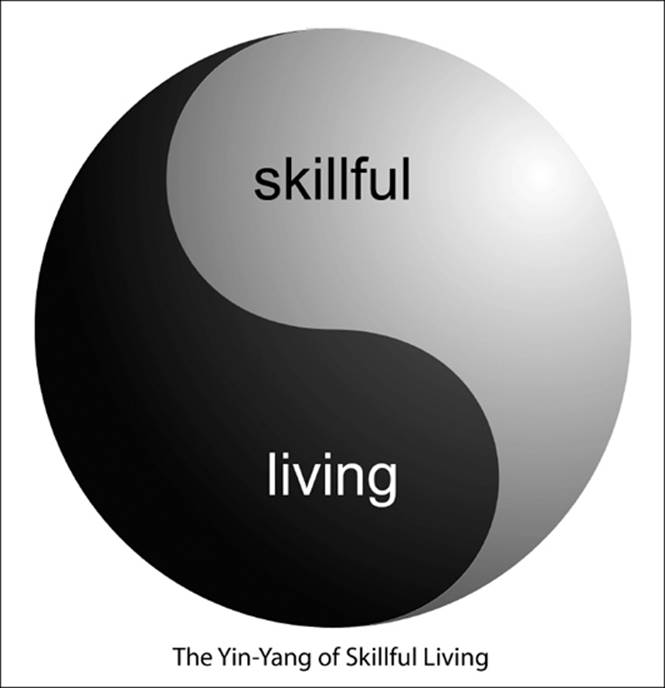
But I also see that the strict good/bad dualism of the Western mind-set puts us at a disadvantage. In fact, it distances us from nature. Our ubiquitous Judeo-Christian model polarizes us: good/evil, moral/immoral, heaven/hell, and so on. By contrast, the Taoist yin/yang diagram, the Vedic mandala, and the Greek Ouroboros (the snake that eats its own tail) acknowledge distinct entities, but each emphasizes interconnectedness, interdependence, and flow. The yin/yang symbol doesn’t resemble one of those black-and-white cookies you get at an old-fashioned New York bakery, split perfectly down the middle. Instead, you see each side rounded, bulging into the other, and there’s always a little piece of one side in the other.
Perhaps the great sages of these ancient traditions were saying that life’s opposites are merely expressions of a deeper underlying unity; a cycle that connects and defines life in all its forms and processes. Instead of choosing black or white “sides,” perhaps it’s more skillful to investigate how ostensible opposites actually merge into one another, as in the forest fire scenario. This is the true definition of the word “reconciliation,” which means to restore the circle or whole. Restoring the circle or cycle allows for the integration of opposites, “in blunting the sharpness and untangling the knot,” as the ancient Chinese philosopher Lao Tzu writes.17 Nature effortlessly moves toward this homeostasis, or balanced state. This is why nature is the archetypal model for Skillful Living.
You can see that we’ve abandoned our ancient appreciation for nature’s cycles. We spend our energy craving and cultivating wealth, power, and privilege when we should be craving and cultivating enlightenment and peace. Making more money to buy even more things to acquire “contentment” is a cherished way of life in the West. Industries produce and sell goods and services for enjoyment without relation to need or the quality of life. More goods and services generate more demand for more things; advertisements fuel the demand for things we do not come close to needing. And the more things we feel we need, the more we need to work. This vicious, man-made cycle is at odds with natural rhythms both in our world and within ourselves. When we get caught in that trap, we take away from others, we deny our true purpose, we sacrifice real health and happiness—and we strip the planet of its resources, polluting our air and water, to boot. That’s what’s known as an unsustainable system. We must reconnect with the rhythms of nature for our bodies, minds, and spirits to work well within the natural order. I can absolutely guarantee you that without ever directly addressing your knee pain or your TMJ, if you work this treatment, you will feel better.
FERTILITY: HOW FAR OUT OF RHYTHM HAVE WE GOTTEN?
To exemplify how out of sync with nature we’ve become, let’s look at fertility for a moment. How big a problem is infertility? According to the National Center for Health Statistics of the Centers for Disease Control and Prevention, about 12 percent of women between the ages of fifteen and forty-four (7.3 million) in the United States have difficulty getting pregnant or carrying a baby to term.18 These numbers mark a profound increase from when I was born in 1960. Why has there been such an increase in the numbers of women—and men—requiring extraneous intervention to conceive a child? Have we rapidly evolved somehow? Not quite. But our bodies have certainly adapted to the new way we’re living, largely contrary to natural cycles.
Infertility is one of the more common medical mysteries plaguing modern society. I’ve often wondered about the origins of this growing trend, considering that life, as we know it, would come to an end without conception. A closer examination reveals distinct patterns to the infertility we’ve been witnessing. For one, there’s a lot more stress in our ambient environment. There’s a lot of talk surrounding stress-related fertility suppression, which is based on the observation that many couples achieve pregnancy after adopting a child, stopping fertility treatments, or making significant lifestyle changes. There’s a valuable clue! But many medical experts are likely to dismiss such incidences as anecdotal, and because they can’t easily be quantified, they’re generally not studied or looked at seriously by researchers. However, it’s commonly accepted in environmental and population biology that fertility is suppressed during times of great stress such as famine, drought, or disease. Could you imagine a gazelle trying to conceive during a drought, or a zebra becoming pregnant while running for her life from a pack of hungry lions? As we are animals who are just as much a part of nature as zebras, it seems unlikely that our ability to reproduce would not be affected by corresponding environmental and psychological stress as well. What are the hungry lions in our lives?
Moreover, because more than one-third of all infertility cases are idiopathic (having no known obvious physical cause), it’s possible that even many of the medically identifiable causes of infertility such as hormonal imbalance, pathology, and low sperm count are stress related or otherwise psychogenic (not originating in the body, but arising out of mental states).
The world is moving at a very fast pace—a fact reflected in the day-to-day lives of many people. We travel, dine out, work, and socialize outside of the home far more often than people of my parents’ and grandparents’ generations. Like the zebra, we always seem to be “running,” not from lions but from the Lions Club, to golf with the boss, to the PTA meeting, to do all the errands necessary to keep up a modern existence on the grid. In other words, we devote a great deal of time to nondomestic activities. Interestingly, the word “domestic” comes from the Latin domesticus, which means “belonging to the house.” Is there any bird that lays its eggs before it’s built a nest? Would a polar bear give birth before she’s dug a den? How many of us in today’s hectic world feel really settled at the point when we wish to bring a baby into our “nest”?
JANE’S STORY: THE VALUE OF SETTLING DOWN
I have a patient, Jane, who, like many modern American women, was having troubling conceiving. At first glance, it seemed odd that she would have trouble at all. She was trying to get pregnant at the biologically appropriate and vital age of twenty-nine; she had a successful and fulfilling career as a high school basketball coach and physical education teacher; and she was in a loving, stable, and happy marriage to Owen, a businessman with a flourishing career in international finance. She appeared healthy on every level.
However, some clues to her problem came to light as we spoke further. For one, Jane’s job, while fulfilling and enjoyable, required her to do a great deal of traveling, taking her away from home a lot more often than she and Owen would have preferred. Similarly, Owen’s job also necessitated frequent trips, and he was often away for long stretches. On those rare occasions when they were together, Jane and Owen seldom spent any time at home. They ate out often, and always socialized with friends in restaurants and other people’s houses, when they weren’t taking care of their various chores and duties.
Moreover, the place they called home was not really a home at all, but a temporary residence where they’d essentially parked their stuff and themselves while waiting to settle down “later.” See, neither Jane nor Owen was certain they would or even wanted to stay in their current house. What was the point of settling in when they both knew that at any time they might have to pack up and move to accommodate the requirements of Owen’s career? As a result of this uncertainty, they didn’t consider themselves part of any neighborhood or community. They didn’t really get to know any of their neighbors and didn’t feel that they could count on anyone nearby as friends.
Furthermore, even if she did conceive, Jane worried about how she would fit a child into her busy schedule of work and socializing and other obligations. In this respect, she was similar to many professional women I meet in my practice.
As Jane relayed her story, I was struck by how similar it was to that of our ancestors who might have worried about bringing a child into the world after a particularly arduous winter when food was in short supply. Although their lives were very different, their physiological responses were identical. If worry is the prevailing thought and energy coursing through a woman’s body—if she feels both physiologically and psychologically unsettled—then it makes sense that some natural mechanism could hamper fertility. Starvation-induced stress was the prevailing factor thousands of years ago. Things are no different today; it is just a different kind of stress, and another form of starvation.
Despite these concerns, Jane and Owen really wanted to have a baby, so they decided to undergo many months of invasive, painful, and costly fertility treatments—a whole panoply of new stresses. Even the most up-to-date, cutting-edge techniques involve high doses of hormones and/or manipulations of the body. Hormonal hyperstimulation of a woman’s ovaries and procedures such as transvaginal egg retrieval carry significant risks. In vitro fertilization procedures increase the likelihood of multiple births (30 percent of IVF pregnancies result in multiple births) and possibly even birth defects, because the scientific procedure largely supplants the process of natural selection—in fact, that’s the whole idea. The potent steroid hormones used to promote ovulation and/or ripen the egg in the uterus are given at much larger doses than are produced naturally. Although most IVF-conceived children don’t suffer any long-term effects, no one really knows the potential long-term consequences of these treatments on either the woman, the child, society, or evolution. But we do know that the emotional toll on the couple undergoing IVF is near universal, and often immeasurable.
It was amid all these stresses that Jane first came to see me. We discussed her goals and aspirations, along with where she was in her life at that moment. I challenged her and her husband to consider the questions “Are you in a good place to get pregnant?” and “Is the time right?” While they seemed prepared on several levels—and while it might be true there never really is a perfect time to get pregnant—there seemed to be something else that might be getting in their way. Was Jane really ambivalent about pregnancy, given the pressures of her and Owen’s demanding careers? Was she concerned about their lack of a permanent home?
I mentioned to Jane that while she and Owen had a place to live, they weren’t “grounded,” a helpful state for conception. I reiterated the point: “Isn’t it reasonable to assume that a person who doesn’t ‘nest’ is going to struggle with fertility issues, too?” As we delved further, I spoke to Jane about acknowledging certain other rhythms and cycles.
Like many modern women, Jane didn’t eat ideally, in a peaceful state of mind and at a table, nor did she rest enough or exercise regularly. She was disconnected from nature, work having surrounded her in environments like offices, gymnasiums, cramped train cars, and overcrowded restaurants. She was a smart woman. She had a tangential awareness of the basic cycles of sleeping and eating but certainly hadn’t tried to fit them into her busy life. She even had trouble incorporating her menstrual cycle into her life, always seeing it as a mere inconvenience rather than a natural, life-affirming cycle.
In particular, I encouraged her to honor the day/night cycle and her circadian rhythm. We spoke about going to sleep no later than eleven o’clock; avoiding food after a certain hour, which would be helped by turning in earlier; waking up at sunrise and not sleeping late; and getting adequate sun exposure by going outside more regularly. All this seemed logical, simple, and “natural,” so Jane didn’t balk.
Then we talked about her work schedule. Jane was intuitively ready to make changes, to make room for a new life. Many women put off conception indefinitely because they claim to have no time, or can’t imagine a way to fit children into their hectic schedules. Others give birth, only to run back to work a few short weeks later, leaving their infant in the care of a nanny or a relative. The prevalence of this mind-set and its effect even on women who choose the more traditional path is suggestive of a society that has become unhinged from the natural way. Imagine advising the average woman of childbearing age to “settle down, forget about your career and other extraneous pursuits. Enjoy this time in your life.” How many women would take this suggestion seriously? Frankly, many would consider it chauvinistic. That’s a shame. I don’t mean to say a woman should be kept “barefoot and pregnant.” I mean to say that ifyou’re a woman who would like to have a child, then the best, most skillful, most healthful way to do that is to reconnect with a natural rhythm conducive to conception.
After eighteen months of frustration, Jane was willing to give it a chance. Once she was on a more natural sleep and eating routine, we discussed her beginning to respect a seven-day cycle, including the important day of rest so common in many traditions. The idea of a Sabbath, a departure from regular activities to embrace peace, family, and self-reflection, was a particular challenge for Jane and Owen—as it would be for most professional couples. But I persisted.
I suggested Jane start off her “Sabbath” day with a meal of specially prepared foods, candles, and a fresh bouquet of flowers. These accoutrements make the day feel special and set up a celebratory ritual. I also recommended that on this one day a week, they turn off most electronic devices, including the phone, television, and radio. I asked Jane to consider taking a walk, nothing too physically strenuous, but something that would allow husband and wife to enjoy and connect with nature as well as with each other. This Sabbath day could also include participation in some sort of special activity, such as a casual dinner or afternoon tea with friends.
Once they had embraced the day of rest, I pointed out to Jane the close correlation between the number of days in the lunar and menstrual cycles, highlighting the role of the moon in fertility. I believe that we have devalued this connection, grossly affecting the normal menstrual cycle and thus fertility (as well as another common gynecological “problem,” menopause). So I encouraged Jane to set aside time to honor the moon in some way. She could say a special prayer of her own, recite a poem, or simply go outside and feel its presence on a regular basis. But let me be clear. This was not some hippie baying-at-the-moon ritual. In fact, technically, it had nothing to do with the moon per se. The idea here was intended to give Jane a palpable evening reminder of her connection with nature, and to offer the opportunity for peace and meditation. I also wanted to remind her that the great and sacred cycles of menstruation and fertility are fundamental realities of physical life. Understanding and honoring the ways these personal cycles interplay with the greater cycles of our vast and complex universe is part of our glory, and at the root of our health. And yet many women have treated the essential cycles of fertility and menstruation disdainfully and with callous disregard. As Dr. Christiane Northrup has observed, “Nothing in our society, with the exception of violence and fear, has been more effective in keeping women in their place than the degradation of the menstrual cycle.”19 I understand Northrup’s use of the word “degradation” to imply the reduction in status of women in modern society (i.e., a lowering of their grade/rank/value). I think she selected that word carefully to impart a negative tone, going so far as to suggest a general hostility and disdain toward women and their natural cycles. The literal translation—“reducing grade”—clarifies the “second-class citizenship” that women have suffered, which has caused us all, men and women, to suffer degraded relationships and roles in families and in society as a whole. So, just to make it perfectly clear, this trend does not bode well for men either.
Jane’s journey back into rhythm started out with simple gratitude for the permission I gave her to indulge in a short, peaceful time alone, away from her iPhone and the evening news. But looking nightly at the waxing and waning moon from the window of her home, Jane eventually began to appreciate how she and her own cycles fit into the beautiful rhythms of the universe. She began to feel more “open” to getting pregnant. That’s the best way she was able to describe it, and I understood.
Finally, we discussed seasonal cycles. Was Jane engaging in activities and habits that were seasonally appropriate? Do you? Do you rest in the winter? Do you revivify outside during the spring? Do you take time to reflect in the fall? I also wanted to know if she was following seasonally appropriate eating habits, another good question to ask yourself. Does your diet consist of oranges in July and blueberries in January, or are you in line with nature’s offerings?
As we can all occasionally benefit from a little outside intervention, I suggested to Jane that she might also try some energy work or visit a specialist in Chinese medicine, who could offer the balancing effects of acupuncture and might complement all this attention with a fertility-enhancing remedy or herb that would help her connect to Mother Earth. Finally, for Jane, I specifically recommended Maya abdominal massage, which has been known and practiced for thousands of years by indigenous peoples throughout the world. Maya massage is a noninvasive external massage technique that focuses on the abdomen and pelvis, and is intended to help guide the internal reproductive organs into their proper position while simultaneously relieving tension. Adherents believe that Maya massage improves organ function by releasing physical and emotional congestion and restoring health in the pelvic region. From my experience, the approach is reminiscent of the nurturing quality of a grandmother’s touch, and I thought it might be the final piece in helping bring Jane into a more aligned and balanced state.
On some level, eager as she was, I expected Jane to be skeptical of some of my suggested lifestyle changes. Like many of you, she probably thought some were overly simple, New Age-y, or at least unscientific. But she was willing, and she adopted them.
Three months after first visiting my office, Jane was pregnant. Certainly, I don’t want to dismiss the contributions of Jane’s other doctors, who continued with her regular fertility treatments. But Jane was certain that the key to her conceiving was in realigning herself with nature. Of course, I’m inclined to agree.
22. Do You Observe a Day of Rest Completely Away from Work, Dedicated to Nurturing Yourself and Your Family?
PRACTICAL PRESCRIPTION 3: CELEBRATING A SABBATH
Connecting to a vital source can be as simple as sitting down to a regular weekly meal. In many parts of Europe, the classic Sunday dining experience includes church services in the morning, followed by a leisurely afternoon meal with family and friends that often extends into early evening. Observant Jews all over the world do this on Saturday, the Shabbos. People look forward to this Sabbath day; there’s no work, no distractions. Children play and adults socialize, read, pray, reflect, or just hang out. It’s only natural that after a period of work, we need a period of balanced rest. Long ago, we discovered that a field must lie fallow once every seven years in order to produce the most abundant fruit. We allow our best academic minds a year off—a sabbatical—to study and reflect every seven years, too. In many religious traditions, including the Judeo-Christian, our creator worked tirelessly to make the world—then rested, and requested that we follow suit.
But you needn’t necessarily add a religious overtone to a classic day of rest. Instead you could think of it as a day to yourself and your thoughts, to mark the culmination of the weekly cycle, in every sense of the word. A Sabbath day is an opportunity to renew and reconstitute, to reconnect with each other, with nature, with the life force, and to help you prepare for the coming week’s challenges. I urge you to try it. I think it’s a very healthy tradition.
QUESTIONS FOR FURTHER REFLECTION
23. Do You Feel a Strong Connection to and Appreciation for Your Home and Your Environment?
24. Do You Take Time to Relax with Activities That Require Abandon or Absorption or Play?
25. Do You Maintain Physically Challenging Goals?
Think back to your childhood. Would any one of these questions even cross your mind? Of course not. When you’re a child, you simply live your life in the moment. You find yourself connected to nature without a care, absorbed in play and pushing your limits, physically and in every other way. Indeed, you’re quite alive as a child, and therefore quite healthy. So what happened between then and now? That’s a complicated question, but it doesn’t really matter. What matters is whether you can find your way back, rekindling the fire of freedom you experienced then, so you can reclaim much of your vitality in the now. Not sure you have the tools to do it? Just look at a photo of yourself when you were three.