
Vaccinium myrtillus & V. vitis-idaea
Bilberry & cowberry
Once highly regarded medicinal herbs, bilberry and cowberry plants are near relatives of bearberry (Arctostaphylos uva-ursi), an important urinary antiseptic, and their leaves have been used in very similar ways in folk medicine. Elizabethan apothecaries made a syrup of the berries with honey, called rob, which was used as a remedy for diarrhea. In recent trials the juice of another near relative, cranberry (V. oxycoccos) has proved effective in treating cystitis.
Character: Sour, astringent, cold, and drying.
Constituents: Tannins, sugars, fruit acids, glucoquinone, glycosides. Some species (not bilberries) contain arbutin.
Action: Astringent, hypoglycemic, tonic, antiseptic, antiemetic. Some species also diuretic.
PARTS USED
FRUIT
V. myrtillus
Bilberries are mainly used for diarrhea; they contain a pigment believed to kill or inhibit the growth of bacteria cells, so are especially useful in dysentery. Large quantities of fresh fruit, however, have a laxative effect. Harvest in late summer and autumn.
LEAVES
V. myrtillus
Bilberry leaves are hypoglycemic so reduce blood sugar levels in late-onset diabetes. Modern research suggests that they increase insulin production in some way. Harvest before the berries ripen.
V. vitis-idaea
These contain up to 7% arbutin, which is an effective urinary antiseptic, and are used for conditions such as cystitis. Like bilberry leaves, they also appear to stimulate insulin production and can be used for late-onset diabetes. Harvest in summer.

V. myrtillus
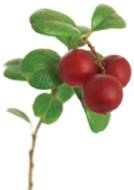
V. vitis-idaea
APPLICATIONS
Fruit
V. myrtillus
Juice: The unsweetened juice is most effective for diarrhea – use 10 ml doses. The diluted juice can also be used as a mouthwash for ulcers and inflammations. Diluted with witch hazel, it makes a cooling lotion for sunburn and other skin inflammations.
Powder: This is useful for babies and infants, mix 150 mg per 1 kg bodyweight into the baby’s feed: best used heated or slightly cooked.
Fresh raw berries: Eat a large bowl of the whole fresh berries with sugar and milk or cream for constipation.
Decoction: Use one glass of a standard decoction daily for chronic diarrhea.
Leaves
V. myrtillus
Infusion: Use in standard doses as an adjunct to dietary controls in late-onset, non-insulin dependent diabetes mellitus. Combines well with goat’s rue and may be flavored with peppermint in long-term use.
Mouthwash: Use a standard infusion as a mouthwash or gargle for ulcers and throat inflammations.
V. vitis-idaea
Infusion: Use a strong infusion (40 g to 500 ml of water) in standard doses for cystitis and other urinary tract infections. The leaves can also be used instead of bilberry leaves with goat’s rue and peppermint in diabetic therapy.
CAUTIONS:
• Insulin dependent diabetics should not use hypoglycemic teas without professional guidance.
Valeriana officinalis
Valerian
Sometimes described as nature’s tranquilizer, valerian calms the nerves without the side effects of comparable orthodox drugs. It has a distinctive, rather unpleasant smell and was aptly called phu by Galen. In recent years, it has been well-researched, and chemicals called valepotriates, which develop in valerian extracts, have been identified. These seem to have a depressant effect on the nervous system, while the fresh plant is more sedating.
Character: Pungent, slightly bitter, cool, and dry.
Constituents: Volatile oil (inc. isovalerianic acid, borneol), valepotriates, alkaloids, iridoids.
Actions: Tranquilizer, antispasmodic, expectorant, diuretic, hypotensive, carminative, mild anodyne.
PARTS USED
ROOTS
Good for all types of nervous tension, especially anxiety and insomnia, the roots are also strengthening for the heart and can sometimes be help to reduce high blood pressure. Valerian is a healing herb for wounds and ulcers and can be effective, topically, for muscle cramps. It is an expectorant, and coupled with its sedating action, can help tickling, nervous coughs. Harvest in autumn.
LEAVES
Although no longer used, these were once recommended as a poultice for headaches and an infusion was recommended for mouth ulcers and sore gums.

APPLICATIONS
Roots
Maceration: Soak two teaspoons of the chopped, preferably, fresh root for 8–10 hours in a cup of cold water. Used as a sedating brew for anxiety and insomnia. Add 2–3 drops of peppermint water to disguise the flavor.
Tincture: Dosage can vary considerably with individuals – up to 5 ml may be required but in some people this can cause headaches so start with low doses. Use as a sedative or for insomnia. The tincture can be combined with licorice and other expectorants for coughs.
Wash: Use the infusion or maceration for chronic ulcers, wounds or for drawing splinters.
Compress: A pad soaked in the tincture can ease muscle cramps.
CAUTIONS:
• Easily confused with the popular garden plant red “American” valerian (Centranthus ruber).
• Do not use for more than two or three weeks without a break as continual use or high doses may lead to headaches and palpitations.
• Enhances the action of sleep-inducing drugs so avoid if taking this type of medication.
Verbascum thapsus
Mullein
The tall stems of mullein covered in fine down were once burned as tapers in funeral processions. Dioscorides used it for scorpion stings, eye diseases, tooth-ache, tonsillitis, and coughs. It was also traditionally used in wasting diseases such as tuberculosis. An infused oil made from the flowers was a household standby in many parts of Europe for ailments as diverse as piles, frost bite, and ear infections.
Character: Slightly sweet, cool, and moist.
Constituents: Mucilage, saponins, volatile oil, bitter, flavonoids, glycosides (inc. aucubin).
Action: Expectorant, demulcent, mild diuretic, sedative, wound herb, astringent, anti-inflammatory.
PARTS USED
FLOWERS
A relaxing expectorant for dry, chronic, hard coughs such as in whooping cough, tuberculosis, asthma, and bronchitis. The flowers are also effective for throat inflammations including tracheitis, laryngitis and tonsillitis and they can be helpful for relieving hay fever symptoms. The infused oil can be used to soothe inflammations and wounds as well as in its traditional role for earache. Harvest flowers individually when in bloom.
LEAVES
Used for respiratory disorders, the leaves were once made into herbal “tobacco” and smoked for asthma and tuberculosis. The plant is also generally antiseptic and loaves and fruits were traditionally wrapped in the large leaves to help preserve them. Harvest before flowering in the second year. In commercial supply the flowers and leaves are not often separated and in such mixes the leaves predominate.

APPLICATIONS
Flowers
Syrup: Use a standard syrup in 5–10 ml doses for chronic, hard coughs. Combine with elecampane or hyssop if desired.
Gargle: Use a standard infusion of the flowers as a gargle for tracheitis, tonsillitis, or laryngitis.
Tincture: Use up to 20 ml daily for all sorts of chronic, dry chest conditions. Also for throat inflammations. Combine with eyebright for hay fever.
Infused oil: Make the oil using the cold infusion technique and use drops for the pain of ear infections. The same oil can be used as a salve on wounds, hemorrhoids, eczema, swollen glands, or in conditions like blepharitis.
Leaf
Infusion: Use a strong infusion of dried herb (50 g to 500 ml water) for chronic coughs and throat inflammations. This also has a diaphoretic effect so can be useful for feverish chills with hard coughs.
Tincture: Use standard doses for chronic respiratory disorders – combine with elecampane, white horehound, mulberry bark, or hyssop.
Cigarettes: Crushed dried leaves can be rolled in cigarette papers and smoked for asthma and bronchitis; alternatively, they can be smoked in a pipe. Can be combined with coltsfoot leaf.
CAUTIONS:
• Do not use as eardrops if the ear drum is perforated.
Verbena officinalis
Vervain
Vervain was one of the Druids’ most sacred herbs, vervain was called it hiera botane (sacred plant) by the Romans who used it to purify homes and spread it on Jove’s temple. Its association with magic and ritual persisted well into the seventeenth century, and Gerard warns against using it for “witchcraft and sorceries.” The herb was traditionally used for dropsy, and cardioactive glycosides have now been identified in the plant to support this use.
Character: Pungent, bitter, and cool.
Constituents: Volatile oil (inc. citral), glycosides, bitter, tannins.
Actions: Relaxant tonic, galactagogue, diaphoretic, nervine, sedative, antispasmodic, hepatic restorative, laxative, uterine stimulant, bile stimulant.
PARTS USED
AERIAL PARTS
An effective nerve tonic, liver stimulant, urinary cleanser, and fever remedy, vervain also encourages milk flow and can be taken during labor to stimulate contractions. It has a number of topical uses for sores, wounds and gum disorders. In China, the plant is known as ma bian cao and is used mainly as fever herb for malaria and flu. Traditional Chinese medicine holds that it stimulates the circulation, and the herb is used for scanty and painful menstruation as well as for urinary disorders. Traditionally harvested in July and August when the dog star can be seen in the heavens.
BACH FLOWER REMEDY
Vervain is one of Dr. Bach’s original twelve remedies. It is used for mental stress and overexertion with related insomnia and inability to relax.

APPLICATION
Aerial parts
Tincture: For nervous exhaustion and depression – combines well with oats; as a liver stimulant for sluggish digestion, toxic conditions, or jaundice; and with other urinary herbs for stones and conditions related to excess uric acid, such as gout.
Infusion: Can be sipped during labor or to simulate milk flow in nursing mothers. Also for insomnia and nervous tension or to encourage sweating and stimulate the immune system in feverish conditions.
Mouthwash: Use the infusion for mouth ulcers and soft, spongy gums.
Ointment: Use on eczema, wounds, and running sores. Also for painful neuralgia.
Poultices: Use on insect bites, sprains, and bruises.
CAUTIONS:
• Uterine stimulant; avoid in pregnancy.
• May cause vomiting in excessive doses.
Viburnum spp.
Guelder Rose & Black Haw
An alternative name for guelder rose (V. opulus) is cramp bark which neatly sums up its main medicinal action as a muscle relaxant. The plant was known in the fourteenth century as Chaucer suggests eating the berries. It was also used by Native Americans for mumps and other swellings. A close relative, black haw (V. prunifolium) is an important American variety known for its significant relaxing action on the womb was soon recognised. Black haw was a favorite with the Eclectics of nineteenth century America.
Character: Astringent and bitter, cool, and dry.
Constituents: Bitter (viburnin), valerianic acid, tannins, saponins. V. prunifolium also contains scopoletin (a coumarin) which is a uterine relaxant.
Action: Antispasmodic, sedative, astringent, muscle relaxant, cardiac tonic, uterine relaxant, sedative. anti-inflammatory.
PARTS USED
ROOT BARK
V. prunifolium
A potent relaxant for both smooth and skeletal muscle, black haw has a very specific action on the womb and is one of the best remedies for menstrual pains. It can be helpful for pain after childbirth and is also used in remedies for post-partum haemorrhage as well as in cases of heavy menstrual bleeding associated with menopausal syndrome. It is used to treat vaginal discharges, morning sickness, and threatened miscarriage. It may also be a component of high blood pressure remedies and is used for cramping pains. Harvest in the autumn.
BARK
V. opulus
Guelder rose bark is used to relax both smooth and skeletal muscle. It also has a sedating action on the nervous system and is useful when physical and emotional tensions combine: sufferers typically suffer from tense raised shoulders or tight breathing. It helps to relax the cardiovascular system in high blood pressure, lowering the diastolic reading, and also soothe the gut in irritable bowel syndrome and constipation associated with tension. Used externally, it can quickly ease muscle cramps. Strip bark from stems in spring before flowering.

APPLICATIONS
Root bark
V. prunifolium
Tincture: Use as a simple for menstrual pain either in 20–30 drop doses taken frequently or as a single 20 ml dose taken at the first hint of muscle cramps. Both approaches are effective but one or other may be more effective for a particular individual. Take a similar approach for post-partum pain. Use in standard doses for other menstrual irregularities and menopausal syndrome. Can also be added to hypertensive remedies.
Decoction: Less effective than the tincture. Drink a cup of string decoction for menstrual pains.
Bark
V. opulus
Tincture: Use in standard doses as a relaxant for nervous or muscular tension. Useful for colicky conditions of the intestines, gallbladder, or urinary system. Combine with skullcap or valerian for nervous tension. Add to digestive remedies for irritable bowel or with butternut or rhubarb root for constipation associated with tense personalities who do not “let go.” May be helpful with chamomile for asthmatic spasms and with cinnamon twigs for vasospasm associated with poor peripheral circulation.
Cream: Mix the tincture with a standard base (such as emulsifying ointment) to make a cream and apply for muscle cramps, as in the legs, or for shoulder tension. Add 10 drops of lobelia tincture per 50 ml of cream if required.
Viola spp.
Sweet violet & heartsease
Sweet violet (V. odorata) and heartsease (wild pansy, V. tricolor) have been used medicinally since ancient times. Homer related that the Athenians used violets to “moderate anger,” while Pliny recommended wearing a violet garland on the head to dispel wine fumes and prevent headaches and dizziness. Heartsease takes its name from its early use in love potions it was also once used for heart disorders. The Chinese use a related species (V. yedoensis) in very similar ways.
Character: Moist, pungent, cold, and slightly bitter.
Constituents: Saponins, salicylates, alkaloids, flavonoids (inc. rutin), volatile oil.
Actions
V. odorata: anti-inflammatory, stimulating expectorant, diuretic, antitumor remedy.
V. tricolor: expectorant, anti-inflammatory, diuretic, antirheumatic, laxative, stabilizes capillary membranes.
V. yedoensis: antimicrobial, anti-inflammatory.
PARTS USED
AERIAL PARTS
V. tricolor
Used for a wide range of skin disorders (from diaper rash to varicose ulcers) while the saponin content also makes it a good expectorant for coughs. The herb also acts on the blood vessels, tonifying and strengthening them thanks to the flavonoids it contains. Harvest while flowering.
V. odorata
Mainly used for coughs, bronchitis and catarrh although like heartsease they also have a role in treating skin disorders. In the 1930s they were widely used in treating breast and lung cancer. Harvest in spring.
FLOWERS
V. odorata
Once popularly made into a syrup used for insomnia, epilepsy, pleurisy, jaundice, sore throats, sore eyes, and headaches. Today the flowers are more likely to be crystallized for cake decorations.
WHOLE PLANT
V. yedoensis
Called zi hua di ding in China, the plant is mainly used for infectious skin conditions including boils and erysipelas as well as for snake bites. It is also used for breast abscesses and lymphatic inflammations.
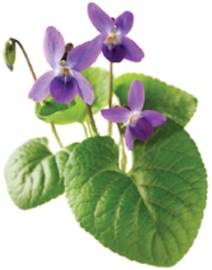
Viola odorata
APPLICATIONS
Aerial parts
V. tricolor
Infusion: Use a standard infusion as a cleansing remedy toxic conditions and as a gentle stimulant for the circulation and immune system; useful in such conditions as for rheumatic disorders, chronic skin problems, and chronic infections.
Wash: Use the standard, well-strained infusion, for conditions such as diaper rash, cradle cap, weeping sores, varicose ulcers, and oozing insect bites.
Powdered herb: This can be used as a paste on skin sores and ulcers.
Tincture: Add to remedies for capillary fragility, urinary disorders, digestive upsets, and lung problems. Useful for complex syndromes affecting many body systems.
Cream: Make a standard cream for skin rashes and irritant eczema.
V. odorata
Infusion: Use a standard infusion for catarrh and chesty coughs.
Mouthwash: Use a standard infusion for mouth and throat infections.
Syrup: Sweeten a standard infusion with honey or sugar (500 ml infusion to 500 g honey) for coughs. Can combine with coltsfoot flowers.
Tincture: Use 10–15 ml of a standard tincture three times day after surgery for cancer of the breast, lungs or digestive tract. Can be used in standard doses with other expectorant herbs for bronchitis and coughs.
Whole plant
V. yedoensis
Decoction: The herb is used in combinations for skin diseases and abscesses. Often combined with chi shao yao, fang feng, mu dan pi, sheng di huang, and similar cooling, cleansing herbs in eczema treatments.
CAUTIONS:
• High doses of saponin-containing herbs can lead to nausea and vomiting.