
In many parts of the world herbs are the only option for all types of health problems. While professional herbalists in the West may use herbs for severe health problems, there is also a wide range of gentler remedies suitable for home treatment of common ailments. This section includes instructions on preparing remedies and an ailment-by-ailment guide. The focus is on herbs that can be safely used at home as an alternative to over-the-counter drugs. Other herbs that are commonly prescribed are included where appropriate.
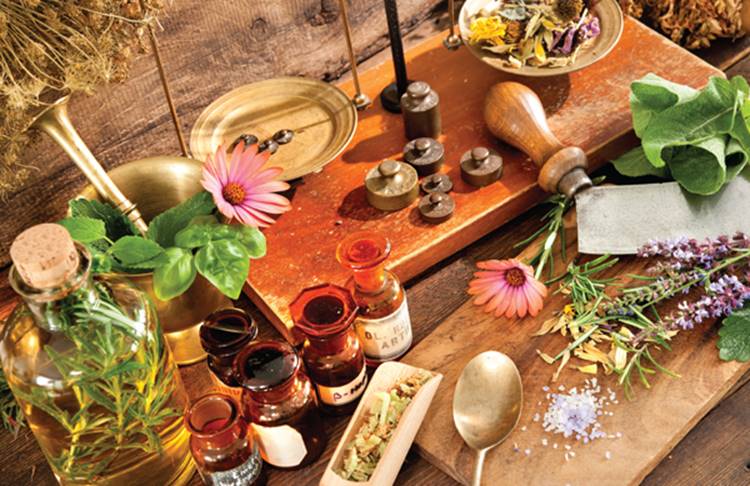
HARVESTING & DRYING HERBS
When and where herbs are gathered can significantly affect the constituent chemicals and thus the therapeutic properties. In the past complex rituals where followed so that herbs were gathered at their most potent: at a particular phase of the moon, when the Dog Star could be seen, or during particular signs of the zodiac.
These traditions survive most obviously today in Tibetan medicine where herbs are often collected at times that are astrologically significant for the patient. The main considerations for most herb gatherers, however, are to collect the herbs on a dry day, when the plant is at the peak of maturity and the concentration of active ingredients is highest.
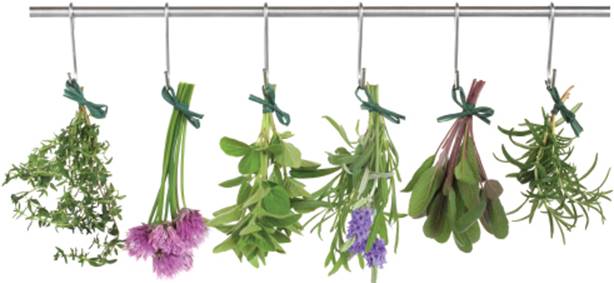
Herbs need to be dried as quickly as possible and away from bright sunlight to preserve the aromatic ingredients and prevent oxidation of other chemicals. A good circulation of air is also needed, so tie in small bunches and ensure a good circulation of air. Using an airing cupboard with the door left open, spare room, or a dry garden shed with a low-powered fan running can be effective. Avoid drying herbs in garages as they become contaminated with gasoline fumes. It is possible to dry herbs completely within a few days; the longer the plant takes to dry, the more likely it is to discolor and lose its flavor. Ideally the temperature in the drying room should be between 20–32°C/70–90°F and should never go above 38°C/100°F.
When the herbs are dry, store in clean, dry, dark glass or pottery jars with an airtight lid away from direct sunlight. If the herbs are stored when still slightly damp, they will go moldy. Label dried herbs with the variety, source, and date. Most should keep for 12–18 months without significant deterioration if they are dried and stored correctly.
FLOWERS
Harvest when fully open and the morning dew has evaporated. Handle carefully as they are easily damaged. Large flowers should be cut from their stems. Small flowers (such as lavender) can be dried on their stems although if the stem is fleshy, as with mullein, the flowers must be removed and dried individually.
Remove obvious dirt, grit, or insects and spread the flower heads on newspaper or trays and place in the airing cupboard or in a warm sunny spare bedroom to dry. When dry, store in dark glass or pottery containers, or in cupboards, as sunlight causes rapid deterioration of flower petals. Small flowers can be left intact but marigold petals are best pulled from the flower heads when dried and the central part of the flower discarded. Lavender flowers are best treated like seeds and dried in a paper bag or over a tray.
AERIAL PARTS AND LEAVES
Large leaves (such as burdock) can be gathered and dried individually but smaller ones (like lemon balm) are best collected with the stem. Generally, leaves of deciduous herbs should be harvested just before flowering while evergreen ones such rosemary can be gathered throughout the year. Coltsfoot leaves appear after the flowers so should be gathered then. If using all the aerial parts then the best time to collect is in the midst of flowering giving a mixture of leaves, stem, flowers, and seed heads.
Tie in small bunches of about 6–10 stems, depending on size, and hang upside down. When the leaves are brittle, but not so dry that they turn to powder when touched, the herb is ready. Rub from the stem onto paper or into a basin and discard any large pieces of stem. If all aerial parts of a plant are being used, then just crumble together. Pour or spoon the dried herbs into an airtight opaque container.
SEEDS
Harvest when ripe, or with large seed heads like fennel, when around two-thirds of the seeds on a particular head are ripe and before too many have been dispersed by birds or the wind. Large seed heads should be collected with about 15–25 cm of stem so that they can be dried in small bunches.
Either hang the bunch over paper or cover with a paper bag tied loosely to the bunch. The seeds will fall off when ripe and can be collected in the bag over the following couple of weeks. Store in an airtight, opaque container.
ROOT
Roots are generally harvested in the autumn when the aerial parts of the plant have died down and before the ground becomes hard enough to make digging difficult. An exception is dandelion, whose roots should be gathered in spring. Wash roots thoroughly to remove soil and dirt. Large roots should be chopped into small pieces when still fresh, as they can be difficult to cut when dry. Spread the pieces on trays and dry for 2–3 hours in a very cool oven (repeat this process two or three times for large roots but check regularly to avoid carbonizing the pieces), then transfer to an airing cupboard or quiet sunny room to complete drying undisturbed. Roots need to be stored in dry, airtight containers away from sunlight. Once dried, some tend to reabsorb moisture from the air and should be discarded if they become soft.
SAPS AND RESIN
These can be collected from trees by making a deep incision in the bark in autumn when the sap is falling and collecting the sap in a cup attached to the tree. A large bucket may be needed; copious amounts of birch sap, for example, can be collected overnight at certain times of year. Many saps can be corrosive so protective gloves should be worn. Sap from plants like lettuce and greater celandine can be collected by squeezing the leaf stems over a bowl, although usually the small amounts needed can simply be squeezed directly from the plant as required. Aloe sap can be collected by splitting open a leaf and scraping the gel it contains into a bowl using a palette knife or spatula.
FRUIT
Berries and other fruits should be gathered when just ripe and before they become too soft or pulpy to dry effectively. Spread on trays in an airing cupboard or warm place to dry. Fleshy fruits should be turned regularly to ensure even drying and any with signs of mold discarded.
BARK
Bark is generally best collected in the autumn when the sap is falling to minimize damage to the plant. Never remove all the bark – or a band of bark completely surrounding a tree – unless you want to sacrifice the plant to herbal medicine. Dust or wipe bark to remove moss or insects but avoid soaking in water. Break into manageable pieces (2–5 cm sq) and spread on trays in an airing cupboard or warm, dry, airy room and leave to dry.
BULBS AND CORMS
Harvest after the aerial parts have died down. Collect garlic corms quickly as they tend to move downwards once the leaves have wilted and can be difficult to find.
MAKING HERBAL REMEDIES
The instructions given here use standard quantities of herbs. Throughout the book, all quantities and doses are standard unless otherwise specified. In general, when using a combination of herbs the total quantity should be no more than the standard quantities suggested here. For example, an infusion for colds and flu could contain 10 g each of yarrow and elderflowers and 5 g of peppermint to give the usual proportion of 25 g to 500 ml of water. Doses for children and the elderly should be reduced depending on age and weight.
MEASURING REMEDIES
You can use standard spoons, droppers, or measuring cups for doses. The quantities given here for infusions and decoctions should be divided into three equal doses.
1 ml = 20 drops
5 ml = 1 teaspoon
20 ml = 1 tablespoon
1 sherry glass = approx. 65 ml
1 tea cup or wine glass = approx. 150 ml
INFUSION
This is a very simple way of using herbs and can be made in much the same way as tea. The water should be just off the boil, rather than vigorously boiling, as otherwise valuable volatile oils would be lost in steam. This method can be used for flowers and the leafy parts of plants. The standard quantity should be made fresh each day and is sufficient for three doses; this can be strained and kept in a cool place for use later in the day. It may be drunk hot or cold.
Standard quantities
25 g dried herb or 75 g fresh herb to 500 ml water
Standard dose
One cup or wine glass three times a day
Equipment
Tea pot or tisane cup with lid
Kettle
Nylon sieve or strainer
Covered jug for storage

1. Put the required amount of fresh or dried herb into a lidded jug. Pour in 500 ml of boiling water and cover with the lid.
2. Infuse for 10 minutes, strain, and then drink the infusion in three wineglass doses during the day.
DECOCTION
Roots, barks, some berries, and twiggy parts of plants need more cooking to extract their active ingredients, and this is done by heating the herb in cold water and then simmering for up to 1 hour. As with infusions, the standard quantity should be made fresh each day and is sufficient for three doses; this can be strained and kept in a cool place for later use in the day. It may be drunk hot or cold.
Standard quantities
25 g of dried herb or 50 g of fresh to 750 ml of water, reduced to around 500 ml with heating. Chinese decoctions can use as much as 100 g of herb.
Standard dose
One cup or wine glass three times a day.
Equipment
Saucepan (preferably earthenware or enamel)
Nylon sieve or strainer
Covered jug for storage.

1. Put the required amount of herb into a saucepan and cover with 750 ml of cold water.
2. Bring to a boil and simmer until the volume has been reduced by one-third, usually about 20 minutes. Chinese decoctions are usually simmered for up to an hour to produce a very concentrated brew.
3. Strain into a jug with a lid, cover, and allow to cool slightly before taking in three wineglass doses during the day.
TINCTURE
This is made by steeping the herb in a mixture of alcohol or water: as well as extracting the active ingredients, the alcohol acts as a preservative and many tinctures will keep for up to two years. Single herbs are always used and then the prepared tinctured combined as required. Commercial tinctures use ethyl alcohol but for home use diluted spirits are suitable. Vodka is ideal as it contains fewer flavorings or herbal ingredients although rum can be useful for disguising the flavor of the less palatable herbs.
A 25% alcohol/water mixture is usually suitable with most based on a 1:5 ratio of herb to liquid (i.e. 100 g of herb to 500 ml of the alcohol/water mix). Commercially some tinctures are made with 45% or even 95% alcohol but such concentrations cannot easily be achieved for home production. Tinctures will general last for two years or more without deterioration, although Ayurvedic medicine argues that the tinctures increase in potency as they age.
Standard quantities
200 g of dried herb or 600 g of fresh herb to 1 liter of a 25% alcohol/water mixture (i.e. dilute a 75 cl bottle of 37.5% vodka with 37.5 cl of water)
Standard dose
5 ml, three times a day
Equipment
Large screw-top jar
Wine press or jelly bag
Large jug
Dark glass bottle for storage
Caution
Do not use industrial alcohol, methylated spirits (methyl alcohol), or rubbing alcohol (isopropyl alcohol) in tincture making – all are extremely toxic.

1. Put the herb into a large jar then cover with the alcohol/water mixture.
2. Store in a cool place for two weeks.
3. Press the mixture through a wine press and store the resulting liquid in clean, dark glass containers. (The herbal residue is an ideal addition to the compost heap.)
SYRUP
Honey or unrefined sugar can be used to preserve infusions and decoctions by making syrups, which are ideal for coughs; honey can be especially soothing. The added sweetness also disguises the flavor of more unpleasant tasting herbs, such as motherwort. Syrups can be used to flavor medicines for children.
Standard quantities
500 ml infusion or decoction
500 g honey or unrefined sugar
Standard dose
For coughs: 5–10 ml every 2–3 hours
Equipment
Saucepan
Wooden spoon
Dark glass bottles with cork stoppers for storage
Funnel (optional)

1. Heat 500 ml of a standard strained decoction or infusion with 500 g of honey or sugar.
2. Stir constantly until the sugar has dissolved. Bring to a boil and allow to boil gently for 1–2 minutes to sterilize the brew.
3. Cool and pour into dark glass bottles. Use cork stoppers on large containers, as syrups can ferment and cause screw-top bottles to explode. If making a small quantity for immediate use a screw-top bottle is acceptable.
INFUSED OILS
Active plant ingredients can also be extracted with oil for external use. The mixture will generally keep for about a year if kept cool and away from direct sunlight, although smaller quantities made fresh are more potent. The oils can also be used in ointments or creams. There are two techniques: hot infusion and cold infusion. The hot method is suitable for comfrey, chickweed (dried), rosemary or lavender. The cold method is suitable for flowers such as marigold, nettles or St. John’s wort, and soft fresh leaves, such as chickweed or basil. Because the oil will not be heated in this second method, good quality, cold pressed, or unrefined seed oils rich in essential fatty acids, such as gamma-linolenic or cis-linoleic, which have significant therapeutic properties, can be used. If possible, “double infuse” oils made by the cold method by re-infusing the oil with a fresh batch of herb. Infused oils will generally last for at least a year, often longer.

HOT INFUSION
Standard quantities
Approx. 50 g of dried herb or up to 150 g of fresh to 500 ml of sunflower (or similar) oil
Equipment
Double saucepan
Wine press or muslin jelly bag
Large jug
Muslin or jelly bag for straining
Airtight storage bottle.
1. Put the required amount of herb into the top half of the double saucepan and cover with oil. If using bulky fresh herb additional oil may be needed to cover the material. Fill the lower half of the pan with water, bring to the boil and simmer for up to three hours.
2. Press out the oil through a muslin jelly bag or use a wine press.
3. Store in clean, airtight bottles.
COLD INFUSION
Standard quantities
Use enough fresh herb to tightly pack a storage jar.
Approx. 1 liter of sunflower or walnut oil depending on size of jar.
Equipment
Large jar
Jug
Muslin or jelly bag for straining
Airtight storage bottle
1. Fill a large jar with dried herb and completely cover with the oil. Put on the lid and leave on a sunny windowsill or in the greenhouse for two to three weeks.
2. Strain the oil through a jelly bag or wine press into a jug and if possible repeat the whole process using fresh herb and the once-infused oil leaving in a sunny place for an additional two or three weeks.
3. Finally, strain and store in clean, airtight bottles.
CREAM
A cream is a mixture of water with fats or oils and is “miscible” to soften or blend into the skin. It can easily be made using emulsifying ointment (available from most pharmacies), which is a mixture of oils and waxes that will blend with a given amount of water to make a cream. Homemade preparations like this will generally keep for several months, but the shelf life can be prolonged by storing in a cool larder or refrigerator. A few drops of benzoin can also be added to the mixture as a preservative. Creams made from organic oils and fats will deteriorate more quickly. The method described below is suitable for marigold petals, comfrey, chickweed, cleavers, lemon balm, chamomile flowers, elderflowers, and wood sage.
Standard quantities
150 g emulsifying ointment
70 ml glycerol
80 ml water
30 g dried herb
Equipment
Double saucepan
Wooden spoon
Wine press and jelly bag
Bowl
Palette knife
Glass jars with lids
1. Melt the emulsifying ointment in a double saucepan or a basin heated over a saucepan of boiling water.
2. Add the glycerin and water and then the dried herb, stirring to ensure the herb is covered by the liquid.
3. Continue heating for 2–3 hours, then pour the mixture into a wine press lined with muslin or a jelly bag and collect the melted cream mixture in a basin.
4. Stir the mixture until it sets, then use a palette knife to fill the jars. Start by filling around the edges and work towards the center to avoid trapping air bubbles in the jar.
OINTMENT
An ointment contains only oils or fats, not water, and unlike cream it will not soften or blend with the skin but forms a separate layer over it. Ointments are suitable where the skin is already weak or soft, or where some protection is needed from additional moisture, as in diaper rash. Traditionally ointments were made using animal fats such as lard, but soft paraffin wax (also called petroleum jelly) is also suitable.
Standard quantities
500 g soft paraffin wax
60 g dried herb
Equipment
Double saucepan
Wooden spoon
Fine sieve or jelly bag
Jug
Palette knife
Glass jars with lids
1. Melt the wax in the double saucepan or in a basin over a pan of boiling water.
2. Add the herb and stir to ensure it is covered by the melted wax.
3. Heat for about two hours or until the herb seems crisp, and then strain through a fine sieve or squeeze in a jelly bag into a jug.
4. Immediately pour the liquid into clean ointment pots and allow to set before closing the lids.
POWDERS AND CAPSULES
Herbs can also be taken as powders stirred into a little water or sprinkled on food or made into capsules: this can be ideal for the more unpalatable plants but is also convenient when traveling or at work. It is best to use commercially prepared powders which are available from specialist suppliers. Grinding herbs in a coffee grinder is possible, but usually generates heat, which can cause chemical changes within the plant, while hard roots can also damage the grinder. Two-part gelatin capsule cases are available from pharmacists and specialist suppliers.
Standard quantities
Use size 00 capsules, which generally take 200–250 mg of powder.
Standard dose
Generally 2–3 capsules three times daily; ½-1 level teaspoon of powder in a little water, three times daily.
1. To fill capsules, simply put some of the herb powder on a saucer, open the gelatin capsule, and bring the two halves together again, scooping up powder as you do so.
2. Store in a cool place; gelatin capsules do not respond well to heat and sunlight.
COMPRESS
Compresses are often used to accelerate healing, as with wounds or muscle injuries. They are basically cloth pads soaked in herbal extracts and usually applied when hot to painful limbs, swellings, strains, etc.
Standard application
Use a standard infusion, decoction or 5–20 ml of tincture in 500 ml of hot water (depending on herb).
1. Soak a clean piece of cotton, cotton wool, linen, or surgical gauze soaked in a hot, strained infusion, decoction, or tincture (diluted with hot water).
2. Apply to the affected area. When the compress cools or dries, repeat using hot mixture. Occasionally a cold compress may be used, as with some types of headaches when a cool pad soaked in lavender infusion may be suitable.
POULTICE
Poultices have a very similar action to compresses but involve applying the whole herb to an affected area directly rather than using a liquid extract. Poultices are usually applied hot for swellings, sprains, or to draw pus, but cold pastes/poultices can be useful, as with comfrey root applied to varicose ulcers. As with hot compresses, renew the hot poultice as it cools.
Standard application
Use sufficient herb to cover the affected area. Replace the poultice every 2–4 hours or earlier as needed.
Equipment
Saucepan
Bowl
Gauze/cotton strips
Hot water bottle
Fresh herbs
1. Bruise fresh herbs, mix in a food processor for a few seconds or sweat them in a pan.
2. spread the mixture onto gauze and apply to the affected area.
Dried herbs
1. Mix dried herbs with a little hot water to make a paste, squeeze out any surplus liquid, and then spread the residue on gauze or apply directly to the area affected.
2. Place a hot water bottle on top to keep the poultice hot.
OTHER HERBAL REMEDIES
MASSAGE OILS
As most essential oils will irritate the skin, they should be diluted before using for massage. Almond or wheatgerm oils are usually used as the “carrier” but sunflower or basic vegetable cooking oil can be substituted. Infused oil – such as comfrey or St. John’s wort – can also be used. Once diluted in this way essential oils soon deteriorate so prepare mixtures as required. Generally a 5% solution of the essential oil in the base is adequate (e.g. 5 drops to 5 ml of carrier oil). Good massage needs skill and practice, but the oils can be suitable in home use for localized problems such as aching joints or chesty coughs. Pour about 2–5 ml of oil onto your hand and rub this gently into the affected area. Infused comfrey oil makes a good base for sprains, St. John’s wort oil for inflammations, and bladderwrack for arthritic conditions.
CREAMS AND OINTMENTS FROM INFUSED OILS
Both hot and cold infused oils can be thickened with various fats and waxes, such as beeswax, cocoa butter, shea butter, and anhydrous lanolin to make ointments or creams.
Ointment: Use 100 ml of infused oil, 15 g beeswax, 20 g cocoa butter. Melt the wax and fat in a double saucepan and add the infused oil. Pour into clean glass jars while still warm and allow to cool.
Cream: Use 100 ml infused oil, 20 g beeswax, 20 g anhydrous lanolin and 50 ml herbal tincture. Melt the wax and fat in a double saucepan, add the infused oil and stir to ensure all is melted and remove from the heat. Warm the tincture to a similar temperature and then very slowly add the tincture to the melted mixture, stirring all the time. One can make various combination creams using different oil and herb/tincture combinations: comfrey and rosemary for arthritic pain, for example, or chamomile and St. John’s wort for inflammations.
A NATURAL ALTERNATIVE TO EMULSIFYING OINTMENT
Instead of using emulsifying ointment for making cream, a combination of organic oils and waxes can be used. Follow the instructions given on p. 146, but melt 25 g of white beeswax and 25 g of anhydrous lanolin instead of the emulsifying ointment and then add 100 g sunflower oil, 25 ml glycerol, 75 ml water, and 50 g dried herb. Heat and strain as before, but stir 5 drops of benzoin into the cooling mixture as a preservative.
STEAM INHALANTS
These are ideal for catarrh, asthma, sinusitis, hay fever, or other forms of nasal congestion.
• Place the herb (usually 1 tablespoon of dried herb is sufficient) in a mixing bowl.
• Pour boiling water over the herb and mix well.
• Cover your head and the bowl with a towel and inhale for as long as you can bear the heat or until the mixture cools.
• Avoid going into a cold atmosphere for at least 30 minutes after the inhalation.
REDUCED ALCOHOL TINCTURES
In some cases a tincture based on ethyl alcohol may be unsuitable, such as for children, in pregnancy, in gastric or liver inflammation, or when treating reformed alcoholics. Adding a small amount (25–50 ml) of almost boiling water to the tincture dose (usually 5 ml) in a cup and allowing it to cool will effectively evaporate off most of the alcohol. Alternatively, it is possible to make tinctures using glycerol, wine, or cider vinegar. These are made in the same way as alcohol-based tinctures given on p. 143. A disadvantage of glycerol is that it is not a particularly effective solvent for oily or resinous herbs that may be incompletely extracted. Vinegar-based tinctures (known as acetracts) can taste extremely unpleasant and were traditionally sweetened with honey to make an oxymel. Vinegar itself is an expectorant and acetracts can sometimes be suitable as cough remedies. However, as vinegar also reacts chemically with some plant constituents, and may have additional side-effects, prolonged use or large doses of acetracts are not advisable.
FLUID EXTRACTS
These are made commercially and require special equipment that is not available for home use. They are more concentrated than tinctures – 1:1 weight:volume – so can be used in smaller quantities.
TONIC WINES
This is a delightful way to take your medicine and is especially suitable for roots, such as he shou wu, dang gui, or ginseng. Put 500 g of herb into a vat or large jug and add 2 liters of good quality wine (preferably red) so the herb is completely covered, otherwise it will go moldy. Cover the vat and leave for at least two weeks. Take one sherry-glass size dose daily.
MACERATIONS
Some herbs, such as marshmallow and valerian roots, are best macerated rather than infused or decocted, with the maceration then being used in the same way. Pour 500 ml of water onto 30 g of dried root and simply leave the mixture in a cool place overnight. Strain before use.
CHINESE DECOCTIONS
In China, herbs are mainly given in decoctions or soups (teng). Much larger quantities are used than in the West with up to 150 g of dried herb in 1 liter of water reduced down to 300–400 ml for three doses. The resulting mixture is very concentrated and may need to be diluted with water to suit Western palates.
LOTIONS
A lotion is a water-based mixture that is applied to the skin as a cooling or soothing remedy to relieve irritation or inflammation. It can also be used as a wash. Alcohol-based mixtures, such as tinctures, can be added to the lotion to increase the cooling effect. Typically, a lotion to relive skin irritation, for example, might include 40 ml rosewater, 20 ml borage juice, 20 ml distilled witch hazel and 20 ml chickweed tincture. A little of the lotion should be applied on cotton wool or absorbent gauze two or three times a day. If a small local area is being treated, then it can be useful to cover the area with a bandage afterward.
WASHES
Infusions or diluted tincture can be used to bathe wounds, sores, skin rashes, ulcers, etc. Use cotton wool to apply the wash bathing from the center of the wound or sore outwards. A plastic atomizer can be useful to spray rashes or varicose ulcers with the mixture.
PESSARIES AND SUPPOSITORIES
Special molds are available which will hold up to 24 pessaries or suppositories of various sizes. Homemade molds can be shaped from cooking foil – you need a small sausage shape, about 1 cm in diameter and 2 cm long, or shape your foil over a thimble. First lubricate the molds by filling them with a little lubricant (made from a mixture of 20 ml soft soap, 100 ml glycerin and 80 ml of industrial alcohol or methylated spirits). After a few minutes pour off the lubricant, drain well, and then fill with the pessary mixture. This is made by melting 20 g cocoa butter in a double saucepan, then stir in 10–20 drops (0.5–1 ml) essential oil. The unused pessary lubricant can be stored in a clean glass bottle for future use. Alternatively, melt 15 gm of gelatin with 20 gm of glycerin and 30 ml of herb infusions or tinctures diluted in water.
When set (about 2 hours) open the mold and remove the pessaries, which should be stored in a cool place.
JUICES
Herb juices can be prepared by using a domestic juicer or food processor to pulp the plant. Squeeze the mixture through a jelly bag to obtain the juice. Large quantities of herb are needed (a 2-gallon bucket full of fresh herb may yield only 100 ml or less of juice).
HERBAL FIRST AID
In a domestic emergency, we are more inclined to reach for the standard over-the-counter remedies that fill the average first aid box than turn to herbal medicines. Yet herbs can provide effective alternatives to many pharmacy offerings and may be available when the standard first aid kit is not, such as using yarrow to stop a sudden nosebleed while in the depths of the countryside. For home use a selection of proprietary herbal preparations can be used to supplement fresh alternatives.
REMEDIES TO BUY
Herbal remedies are available in a variety of different formats such as creams, essential oils, flower remedies, and capsules. Shown here are some of the most useful herbal remedies to keep at home in the first aid box.
ARNICA TABLETS (6X)
Essential for any domestic shocks or accidents. The tablets can be taken at 30-minute intervals until the patient feels more settled.
RESCUE REMEDY
The Bach Flower Remedies have a potent effect on the emotions. Rescue Remedy (also available as a cream) is good for shocks and nervous upsets.
ARNICA CREAM
Ideal for bruises and sprains but do not use on broken skin as it can be irritant. An alternative is to use a compress soaked in arnica tincture – 1 teaspoon to 500 ml of water.
COMFREY OINTMENT
This speeds healing by encouraging cell growth. Use only on clean cuts as otherwise the rapid healing may trap dirt in the wound.

MARIGOLD CREAM
Often sold as Calendula. This is antiseptic and antifungal so is useful for athlete’s foot or thrush as well as cuts, grazes, and patches of dry skin or eczema.
CHICKWEED CREAM
Generally used for eczema, but also a valuable first aid remedy for burns, scalds, and as a drawing ointment for removing toxins from boils and abscesses, insect stings, and stubborn splinters.
TEA TREE OIL
This is highly antiseptic and antifungal for cuts, grazes, and other skin infections. A cream is available for vaginal thrush. A few drops of the oil can be used neat on warts and cold sores.

LAVENDER OIL
Add 2–3 drops to a teaspoon of vegetable oil and massage into the nape of the neck and temples at the first hint of an approaching headache or migraine. Use the same mix to soothe minor burns, scalds, sunburn, and cold sores.
THYME OIL
Also an effective antiseptic: use 2–3 drops in a teaspoon of vegetable oil as a chest rub for coughs and chesty colds.

EVENING PRIMROSE CAPSULES
These can be used as a hangover cure. A large dose (2–3 g) on “the morning after” brings rapid relief.
DISTILLED WITCH HAZEL
This can be used for minor burns and sunburn while a swab soaked in distilled witch-hazel staunches the flow of blood from wounds, eases varicose veins, and soothes insect bites. For bruises and sprains a useful option is to keep an ice cube tray of distilled witch-hazel in the freezer – ensuring, of course, that they are clearly labeled!
SYRUP
Numerous patent herbal cough syrups are available – look for thyme and licorice, horehound and aniseed, or blends containing mousear, hyssop, elecampane, or Iceland moss.
HOMEMADE REMEDIES
Raw ingredients in the kitchen cupboard, such as garlic, ginger, and herbal teas, provide some of the most useful first aid remedies. In addition, infused oils can be made when the plants are in season and used throughout the year.

INFUSED OILS
Use St. John’s wort oil for burns and sunburn; marigold oil for fungal infections (like athlete’s foot), dry skin and grazes; comfrey oil for bruises, sprains, or arthritic joints; rosemary oil for rheumatic aches, and pains and lemon balm oil for insect bites and as an insect deterrent.
GARLIC
Use the highly antiseptic cloves rubbed on acne pustules and other infected spots or use crushed garlic to draw corns.

HONEY
Use runny honey for drying-up wounds or drawing pus from infected cuts.

DRIED HERBS
Keep an assortment of dried herbs or herbal tea-bags handy: use chamomile flowers as a steam inhalation (1 tablespoon of flowers in a large basin of boiling water) for catarrh, hay fever, or mild asthma attacks, or drink as an infusion for shock and nervous upsets. Use a strong infusion of sage as a mouthwash for mouth ulcers and gargle for sore throats. Drink fennel or peppermint for indigestion, elderflower for colds and catarrh, lavender for headaches.

ALOE
To soothe minor burns, scalds or sunburn break off a leaf from an Aloe vera plant, split it open and apply the thick sap to the affected area immediately.
GINGER
Make a decoction of fresh root with a pinch of powdered cinnamon for chills or chew crystallised ginger or ginger cookies to prevent travel sickness.

ONIONS
Use fresh slices on insect stings. Home made cough syrup can be made by layering slices of onion with brown sugar or honey, leave overnight, collect the thick brown syrup and take 5–10 ml three or four times daily as required.
IN THE FIELD
In a countryside emergency look for yarrow for wounds and nosebleeds; crushed daisies for bruises and sprains; shepherd’s purse, self-heal, woundwort, wild geranium, or herb Robert to stop bleeding; fresh plantain or lemon balm for insect bites, and dock leaves for nettle stings.