
PART 2. THE HERBS
BURDOCK
ARCTIUM LAPPA

If you’ve had Japanese takeout recently, chances are you’ve had burdock root. Not only does it taste fantastic, it’s also loaded with anti-inflammatory, antioxidant, anticancer, antibacterial, and other healing attributes. New studies have even shown that it may be a prebiotic, which supports the growth of beneficial bacteria in your intestines and keeps you healthy, even in cold and flu season. If you make it as a side dish at home, gourmets and herbalists will tell you two things: Leave on the skin—it’s got massive nutrients, and soak the roots for 15 to 20 minutes prior to broiling, boiling, or sautéing to lose its bitter, muddy notes. Don’t worry, it’s tastier than it sounds.
Did You Know?
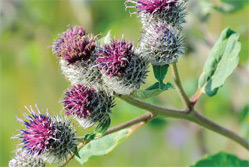
Most recently, burdock had its 15 minutes of fame in the ‘90s with the explosion of Velcro. Its inventor, George de Mestral, created the fabric fastening device in 1948 after going on a hiking trip with his dog and finding burdock burrs stuck on his clothing and his best friend’s fur.
Herbal Power
MEDICINAL: Treats a variety of skin issues from psoriasis and eczema to acne and rashes; supports the liver, heart, and related conditions like hypertension, poor digestion, heart disease, and gas.
COSMETIC: Treats dry, irritated scalps.
Application Methods
•Apply as a poultice, compress, or tincture
•Drink as a tea
•Eat in food
Precautions
No toxicity levels reported. Herbalists consider this among the safest plants to grow and use.
Other Names
Beggar’s Buttons
Burr Seed
Cocklebur
Fox’s Clote
Niu Bang Zi
Personata
Thorny Burr
Locating & Growing
Burdock is one of those aggressive, impossible-to-destroy weeds that you’ve probably tried to destroy if you’ve got a garden. That is, before you learned about its incredible healing potential. A true survivor, this herb grows on just about any soil from dry to rocky to moist, survives freezes and droughts, and doesn’t have a preference about sunlight.