
PART 2. THE HERBS
GINGER
ZINGIBER OFFICINALE

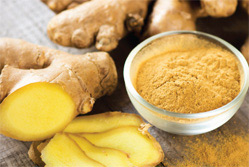
As an all-around cure-all and immunity booster (thanks to healing ketones like gingerol), ginger rivals its culinary counterpart, garlic, in effectiveness in treating a variety of conditions. You’ve likely already been enjoying its medicinal benefits if you’re a fan of Thai, Indian, or Chinese cooking. Like garlic, you can get enormous healing benefits by incorporating the herb into your culinary routine more regularly.
Did You Know?
No matter how you cut it (pickle it, crystallize it, or put it in a tea bag), ginger’s medicinal properties made it one of the most coveted and prized plants throughout the world and over the rise and fall of many empires. In the thirteenth and fourteenth centuries, it’s believed that a pound of ginger would set you back the price of one sheep. Despite its well-documented use, no one is sure of the plant’s origins.
Herbal Power
MEDICINAL: Treats inflammation, swollen joints, damaged cartilage, arthritis pain, muscle pain, PMS symptoms, high cholesterol, colds, flu, poor circulation, nausea, congestion, sore throat, motion sickness, and chemotherapy side effects; supports reproductive issues with men.
COSMETIC: Combats aging; improves skin tone, calms irritation; smooths skin surface; adds warmth and spicy fragrance to skincare products.
Application Methods
•Drink as a tea
•Use in oils
•Eat in foods
•Use as a poultice, compress, mask, scrub, body and face cream, serum
Precautions
Ginger is considered safe and nontoxic.
Other Names
African Ginger
Ginger Root
Indian Ginger
Jamaica Ginger
Jiang
Shen Jiang
Locating & Growing
Ginger thrives in conditions similar to its native Asia: hot, sunny, humid, moist soil. If you care for ginger indoors, it will likely go dormant during the winter months.