
PART 2. THE HERBS
MULLEIN
VERBASCUM THAPSUS

An expectorant and antispasmodic, this incredible plant does wonders for lung health both as a preventive and as a treatment. While some researchers have questioned its effectiveness as an antibacterial, others at Clemson University found mullein to successfully fight bacteria like Staphylococcus aureus, Staphylococcus epidermis, E. coli, and pneumonia.
Did You Know?
Another European plant originally thought to ward off evil spirits, this particular herb was considered one of the 23 most powerful healers in medieval Jewish medicine. Its leaves have since been used to start fires while the smoke is inhaled to treat lung issues like congestion, asthma, and cough.
Herbal Power
MEDICINAL: Treats bronchial and respiratory conditions like cough, colds, chest colds, sore throats, allergies; relieves pain; fights infections; heals skin conditions and ear infections.
COSMETIC: Detoxifies skin.
Application Methods
•Apply as a salve, poultice, compress, or oil
•Drink as a tea or tonic
•Use in a bath
Precautions
It’s known to be safe and nontoxic. Some people are sensitive to the leaf’s tiny hairs when applied topically.
Other Names
American Mullein
Beggar’s Blanket
Blanket Herb
Candleflower
Lungwort
Torch Weed
Velvet Plant
Wild Ice Leaf
Woolly Mullein
Locating & Growing
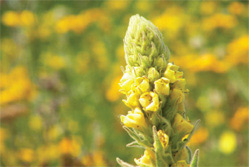
Mullein, a biennial, makes a great addition to any garden—it’s attractive and lures in both birds and bees. While it thrives in Zones 3 to 8, it’s pretty happy anywhere you plant it. If you’re into nature walks or outdoor exploration, you’ve probably seen it growing in the wild in fields, by streams, in woods, or next to highways. (It’s easy to spot, given its skinny, stalk-like stem and seven-foot stature.)