
PART 2. THE HERBS
SELF-HEAL
PRUNELLA

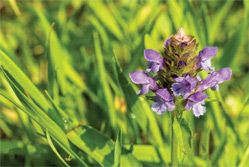
A favorite in skincare lines because of its high vitamin C, vitamin K, thiamine, and tannins content, self-heal is known for its astringent, antiseptic, and anti-inflammatory benefits. It has roots in gourmet circles as well: Self-heal’s leaves and stems (fresh or dried) can be the secret ingredient in your next farm-to-table salad or gourmet soup. Its fabulous purple flowers brighten up any bowl of greens without your guests having to know their first course is ultra-healing.
Did You Know?
Its name “self-heal” comes from the fact that at one time this super herb was considered a panacea. Its ingredient profile contains cancer preventative, STD (sexually transmitted disease) treatments, and antioxidants known to prevent and treat heart disease and boost immunity. From a psychological perspective, it’s taken to boost mood, raise energy levels, balance hormones, and awaken self-confidence and life force. In fact, it’s one of the only herbal essences made into a skin cream designed to bolster self-health and self-sustenance.
Herbal Power
MEDICINAL: Treats Crohn’s disease, diarrhea, colic, gastroenteritis, throat issues, sore throat, fever, headache, liver disease, muscle spasms, STDs, and vaginal conditions.
COSMETIC: Fights inflammation and irritation; tightens pores.
Application Methods
•Apply as a splash, salve, ointment, or an oil
•Use in a soap, mouthwash, eyewash
Precautions
While no toxicity has been reported, herbalists suggest avoiding self-heal if you’re pregnant or breastfeeding.
Other Names
All-Heal
Blue Curls
Brownwort
Carpenter’s Herb
Heal-All
Hock-Heal
Sicklewort
Woundwort
Xia Ku Cao
Locating & Growing
Like many herbs with weed-like sensibilities, self-heal can grow just about anywhere, but it thrives in woods, meadows, and forest environments. Partial sun and mild temperatures are its sweet spot. If you’re in a space with wet conditions, this herb spreads like wildfire.