
Time Recommended to Complete: 1 day
P. Daniel Lew and Frederick S. Southwick
GUIDING QUESTIONS
1. Which two bacteria are responsible for the majority of skin infections?
2. Which skin and soft tissue infections require surgical intervention?
3. What are the clinical clues that help to differentiate cellulitis from necrotizing fasciitis?
4. What are the conditions that predispose to necrotizing fasciitis?
5. Which two organisms most commonly cause myonecrosis?
6. Which organisms cause indolent soft tissue infections that fail to respond to conventional antibiotic treatment?
7. Should prophylactic antibiotics be given for bites by humans and animals?
8. When should tetanus toxoid vaccine and human tetanus immunoglobulin be given?
SKIN AND SOFT TISSUE INFECTIONS
POTENTIAL SEVERITY
Can progress rapidly to shock and death. For deeper soft tissue infections, immediate antibiotic therapy is required, often accompanied by surgical debridement.
CLASSIFICATION OF SKIN AND SOFT TISSUE INFECTIONS
Skin and soft tissue infections are common presentations in acutely ill patients arriving in the emergency room. Cellulitis, a superficial, spreading infection involving subcutaneous tissue, is the most common skin infection leading to hospitalization. Two microorganisms are responsible for most cutaneous infections in immunocompetent patients:
1. Beta-hemolytic streptococcus (groups A, B, C, G, and F). Group G is the most common group in Finland.
2. Staphylococcus aureus, including community-acquired methicillin-resistant S. aureus (CA-MRSA)
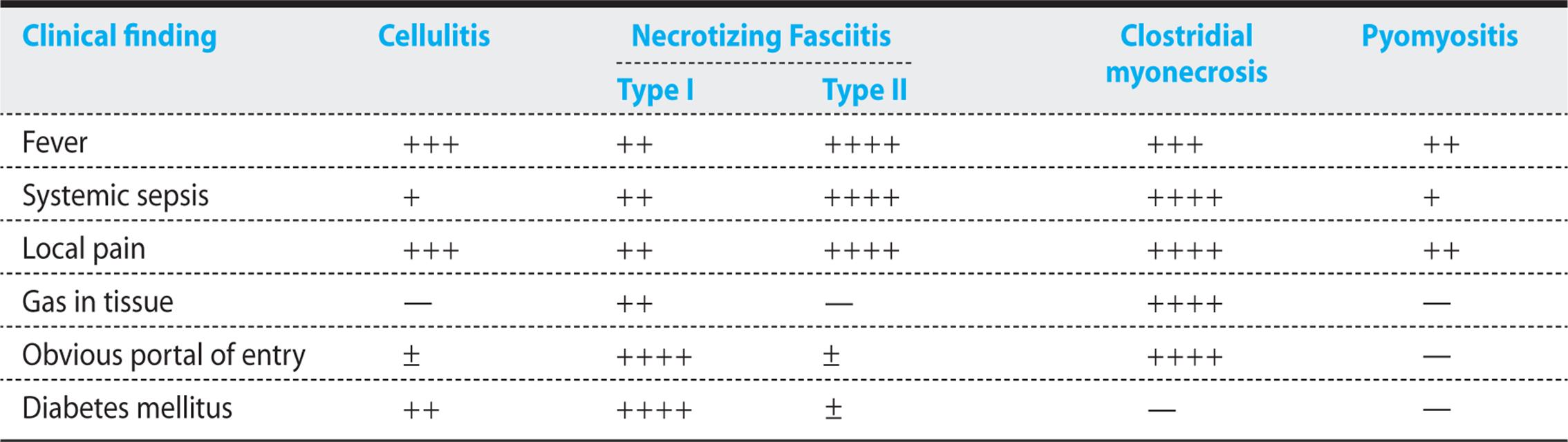
The anatomic locations of skin and soft tissue infection are described in the next few paragraphs and illustrated in Figure 10.1. The symptoms and signs for these infections overlap; however, each infection has distinct clinical features (see Table 10.1).
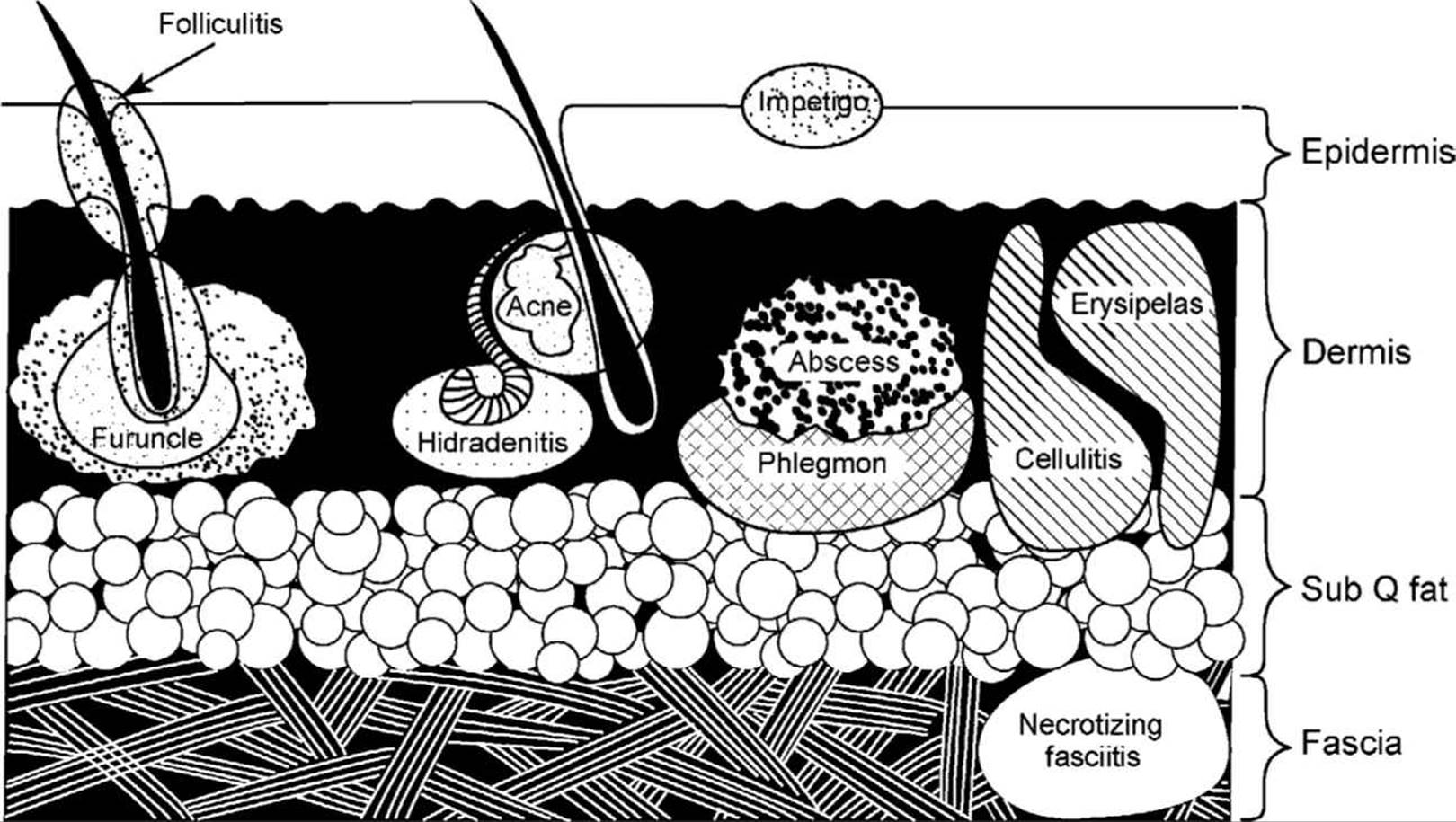
Figure 10.1. Schematic of the Anatomic Sites of Soft Tissue Infection. Adapted with permission from Saurat JH, Grosshans E, Laugier P, Lachapelle JM, eds. Dermatologie et vénéréologie. 2nd ed. Paris, France: Editions Masson; 1990:109.
Table 10.1. Clinical Differentiation of Serious Soft Tissue Infections
The more superficial infections include impetigo, erysipelas, and folliculitis. As these infections penetrate deeper, they may become furunculosis (associated with hair follicles), hidradenitis (associated with sweat glands), and skin abscesses. Most of superficial localized infections (impetigo, folliculitis, furuncles) are caused by S. aureus or beta-hemolytic streptococci. These infections rarely require hospitalization and often respond to local measures. Recurrence may be prevented by reducing specific microbial carriage. However, once these infections spread through subcutaneous tissues—as in the case of cellulitis—they may become fulminant and, if not treated emergently with parenteral antibiotics, may prove fatal. Delay in therapy, or the presence of certain predisposing conditions, can result in deeper extension of infection, vascular thrombosis, and tissue necrosis. In addition to antibiotic therapy, these deeper infections require emergency surgical debridement.
KEY POINTS
About the Classification of Skin and Soft Tissue Infections
1. Superficial infections can usually be handled with outpatient treatment.
a) Most superficial: impetigo, erysipelas, and folliculitis
b) Deeper localized: furunculosis, hidradenitis, and skin abscesses
2. Deeper infections require hospitalization, parenteral antibiotics, and possibly surgical debridement.
a) Cellulitis is the most superficial, can be treated with systemic antibiotics alone.
b) Necrotizing fasciitis involves the fascia and requires emergent surgery.
c) Myonecrosis also requires rapid surgical debridement; it is often fatal.
The very severe form of deep tissue infection called necrotizing fasciitis is often caused by group A streptococcus (GAS). This infection is associated with thrombosis of vessels in the fascia and requires fasciotomy. Severe streptococcal infection may also involve muscles and, in this case, is defined as myonecrosis (“necrotizing myositis”). Necrotizing fasciitis and myonecrosis can lead to sepsis and irreversible septic shock. As a consequence of these severe forms of infection, GAS is often popularized in the media as the “flesh-eating bacteria.”
SEVERE SKIN AND SOFT TISSUE INFECTIONS
Cellulitis
Cellulitis is one of the more common infectious diseases and is managed by clinicians practicing in a wide variety of specialties. Cellulitis is an inflammatory process involving the skin and supporting tissues, with some extension into the subcutaneous tissues. The most common location is the extremities. Not only is the infection common, some patients develop frequent recurrences of cellulitis.
PREDISPOSING FACTORS
Several predisposing factors increase the likelihood of cellulitis:
• Venous or lymphatic compromise secondary to surgery, previous thrombophlebitis, previous trauma, or right-sided congestive heart failure. These conditions represent the most common underlying cause leading to cellulitis.
• Diabetes mellitus results in progressive peripheral neuropathy and small vessel occlusion. These conditions lead to inadvertent trauma, poor wound healing, and tissue necrosis.
• Chronic alcoholism predisposes to cellulitis probably as a consequence of trauma to the skin and poor hygiene.
• Penetrating wounds of the skin allow bacteria on the skin’s surface to penetrate into the subcutaneous tissue.
• Inflammation of the skin associated with eczema or other skin conditions also damages the epidermis’s integrity allowing surface bacteria to invade.
Not all patients with cellulitis have definable risk factors for the development of infection—about 50% of patients present without predisposing disease.
CAUSES AND CLINICAL MANIFESTATIONS
CASE 10.1
A 50-year-old man arrived in the emergency room complaining of progressive warm erythema of his right leg. Three days earlier he had accidentally hit his right shin on a tree stump. Approximately 24 hours later, he noted increasing pain and erythema at the site of a small break in his skin. Erythema spread from his shin to his entire lower leg. He also noted fever and chills.
On physical examination, this patient appeared moderately ill. His right lower leg was diffusely red and edematous, except for a small region of his posterior calf. The margins of erythema were indistinct. His right inguinal nodes were enlarged and tender. There was no crepitation and no purulence; however, the leg was very tender. A small skin break was noted on the right anterior shin.
Laboratory abnormalities included an elevated peripheral white blood cell (WBC) count of 15,500/mm3, with 75% polymorphonuclear leukocytes (PMNs) and 15% band forms. Two sets of blood cultures were positive for group A β-hemolytic streptococci.
As observed in case 10.1, cellulitis results in swelling of the involved area and macular erythema that is largely confluent (see Table 10.1). Warmth and tenderness of the involved skin are also usually found. Careful examination also often reveals lymphangitis and tender regional lymphadenopathy.
The presence of purulence is helpful in differentiating S. aureus from streptococci. An exuberant PMN response often accompanies staphylococcal infections while beta-hemolytic streptococcal infection may be associated with vesicles and bullae that lack PMN. Pathogenic streptococci produce the exotoxin Streptolysin O that accelerates PMN death accounting for the lack of purulence.
The presence of accompanying tinea pedis or other dermatologic abnormalities such as psoriasis or eczema should be searched for, because these are preventable sites of bacterial entry. Treatment of these dermatologic disorders may reduce the frequency of recurrent cellulitis.
In patients presenting in the emergency room, systemic findings must be sought. Systemic sepsis (including fever, chills, and myalgias) is seen in patients presenting with severe cellulitis.
In most patients (70%), cellulitis is caused by β-hemolytic streptococci. The rapid onset of symptoms in case 10.1 strongly suggested streptococcal infection, because this organism often spreads quickly once it gains entry through a break in the skin. S. aureus is the second most common cause of cellulitis, but tends to progress more slowly. In children, H. influenzae can produce facial cellulitis or erysipelas.
SPECIAL FORMS OF CELLULITIS
Erysipelas. Erysipelas is a distinct form of superficial cellulitis. It is associated with marked swelling of the integument, with sharp demarcation between involved and normal tissues, and often with prominent lymphatic involvement. Erysipelas is almost always caused by GAS (occasionally by group C, G, or B). It is more common in young children and older adults.
Lesions present chiefly in the lower extremities, but a significant proportion of cases present with lesions in the face. Erysipelas lesions are painful, with a bright red edematous indurated appearance, particularly at the peripheral margins. The progression of this infection is similar to a forest fire, being most active and red at the leading edge.
Clostridial cellulitis. Clostridial cellulitis is a superficial infection most often caused by Clostridium perfringens. It is usually preceded by local trauma or recent surgery. Gas is invariably found in the skin, but the fascia and deep muscle are spared. This entity differs from clostridial myonecrosis, but thorough surgical exploration and debridement are required to distinguish between the two. Magnetic resonance imaging (MRI) or computed tomography (CT) scan and measurement of the patient’s serum creatine phosphokinase concentration can also help to determine if muscle tissue is involved. However, imaging studies should not delay critical surgical therapy when crepitation is noted on examination or when clinical evidence shows progressive soft tissue infection.
KEY POINTS
About Cellulitis
1. An infection of the skin, with some extension to the subcutaneous tissues.
2. Predisposing factors include venous or lymphatic insufficiency, diabetes mellitus, alcoholism, penetrating wounds, and eczema or other inflammatory skin diseases
3. Characteristics include erythema, edema, diffuse tenderness, indistinct border, and lymphadenopathy.
4. Caused by streptococci (nonpurulent) and Staphylococcus aureus (purulent). Haemophilus influenzae is a possible cause in children.
5. Subclasses of cellulitis include
a) erysipelas (more superficial; very sharp, raised border),
b) clostridia cellulitis (associated with crepitation, no muscle involvement), and
c) anaerobic cellulitis (foul smelling, more common in patients with diabetes).
6. Treat with penicillinase-resistant penicillin (oxacillin, nafcillin) or a first-generation cephalosporin (cefazolin). Use vancomycin for the penicillin-allergic patient or methicillin-resistant S. aureus.
Nonclostridial anaerobic cellulitis. Nonclostridial anaerobic cellulitis is the result of infection with mixed anaerobic and aerobic organisms that produce gas in tissues. Unlike clostridial cellulitis, this type of infection is usually associated with diabetes mellitus and often produces a foul odor. It must be distinguished from myonecrosis and necrotizing fasciitis by surgical exploration.
DIFFERENTIAL DIAGNOSIS OF CELLULITIS
The diagnosis of cellulitis is usually not difficult to make. Deep venous thrombosis can cause some of the same findings that characterize cellulitis, including fever, and it is the primary illness to consider when confronted with a patient with lower extremity changes suggestive of cellulitis. Radiation therapy can cause erythema and swelling of the skin and associated structures and can be difficult to differentiate from cellulitis in some patients.
THERAPY AND NATURAL HISTORY OF CELLULITIS
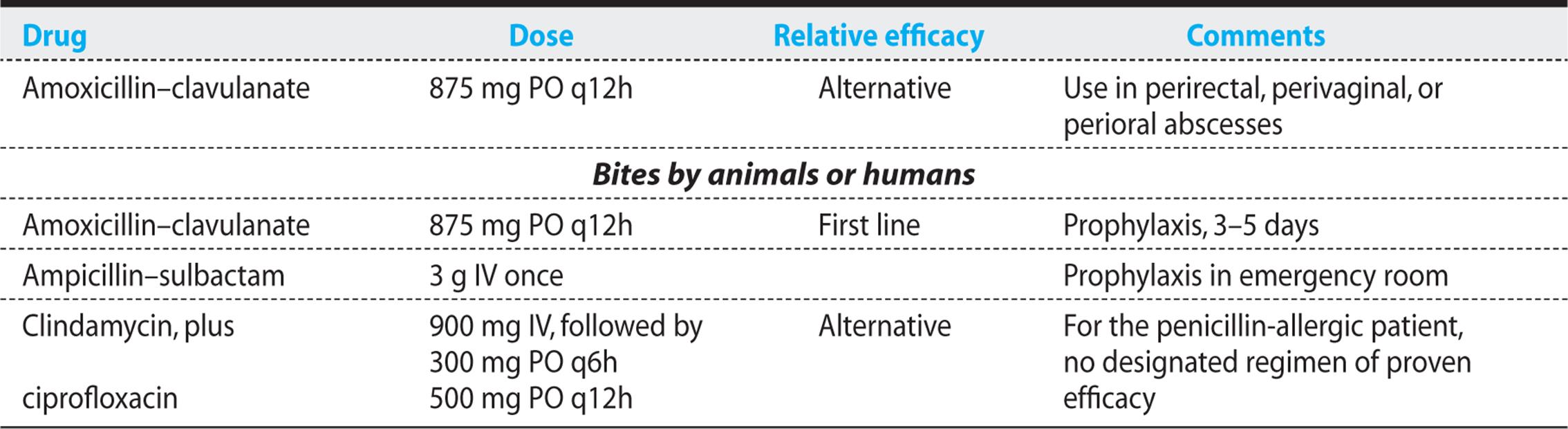
A mild early cellulitis may be treated with low doses of penicillin. However, if purulence is observed suggesting a staphylococcal infection, a penicillinase-resistant penicillin (nafcillin or, for milder cases, dicloxacillin; for doses, see Table 10.2). A first-generation cephalosporin (cefazolin) also effectively covers GAS and methicillin-sensitive S. aureus (MSSA). Intravenous vancomycin (1 g twice daily) is an alternative for highly penicillin-allergic patients. In patients with risk factors for MRSA, vancomycin is also the antibiotic of choice. Other antibiotics that can be used for MRSA soft tissue infection include ceftaroline, linezolid, and daptomycin. A number of risk factors increase the likelihood of MRSA infection: recent hospitalization or a past prolonged hospitalization, residence in a long-term care facility, IV drug abuse, HIV infection, men who have sex with men, hemodialysis, incarceration, military service, sharing of razors or other sharp objects, sharing of sports equipment, and having diabetes.
Table 10.2. Antibiotic Treatment of Skin and Soft tissue Infections
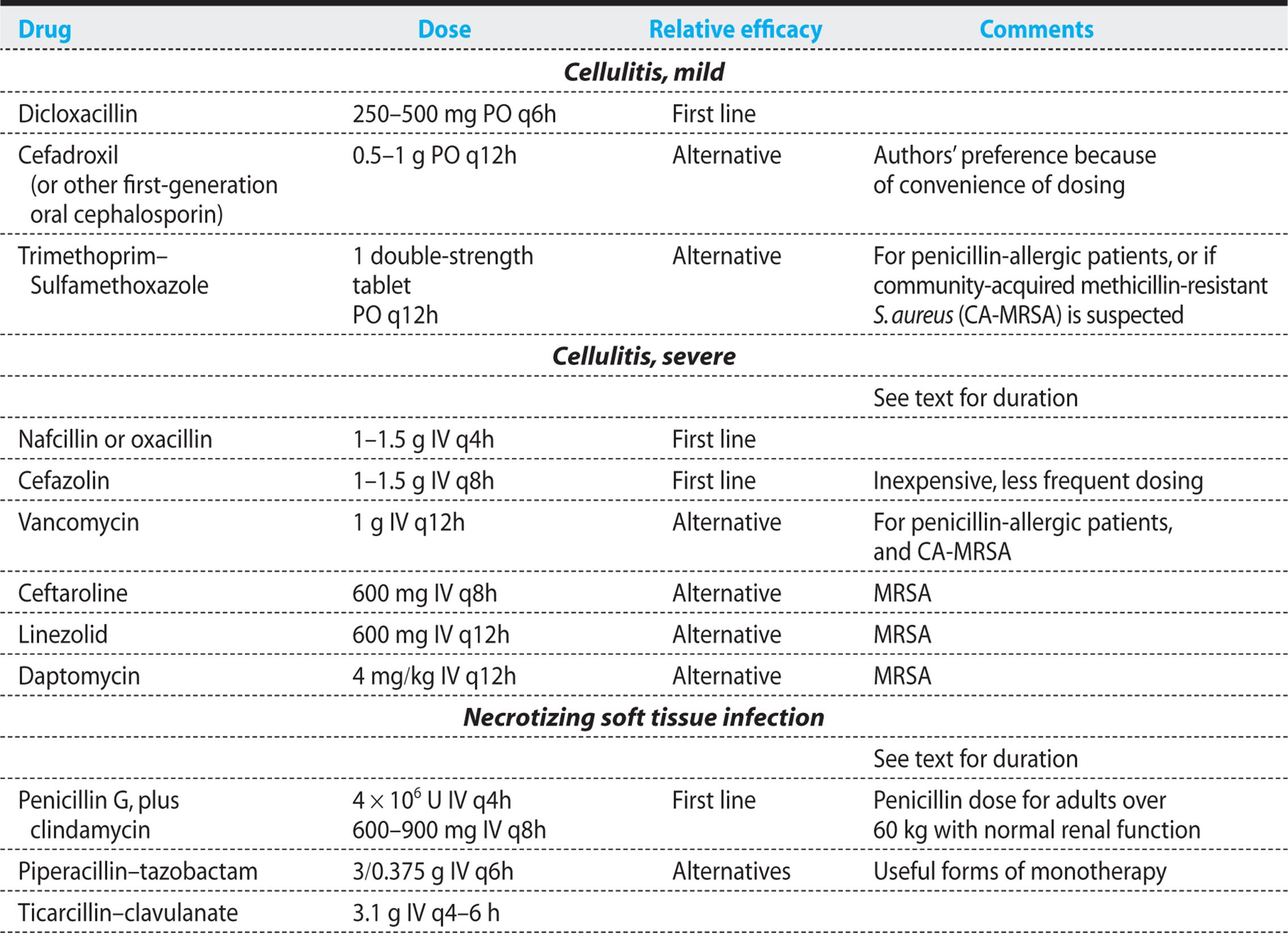
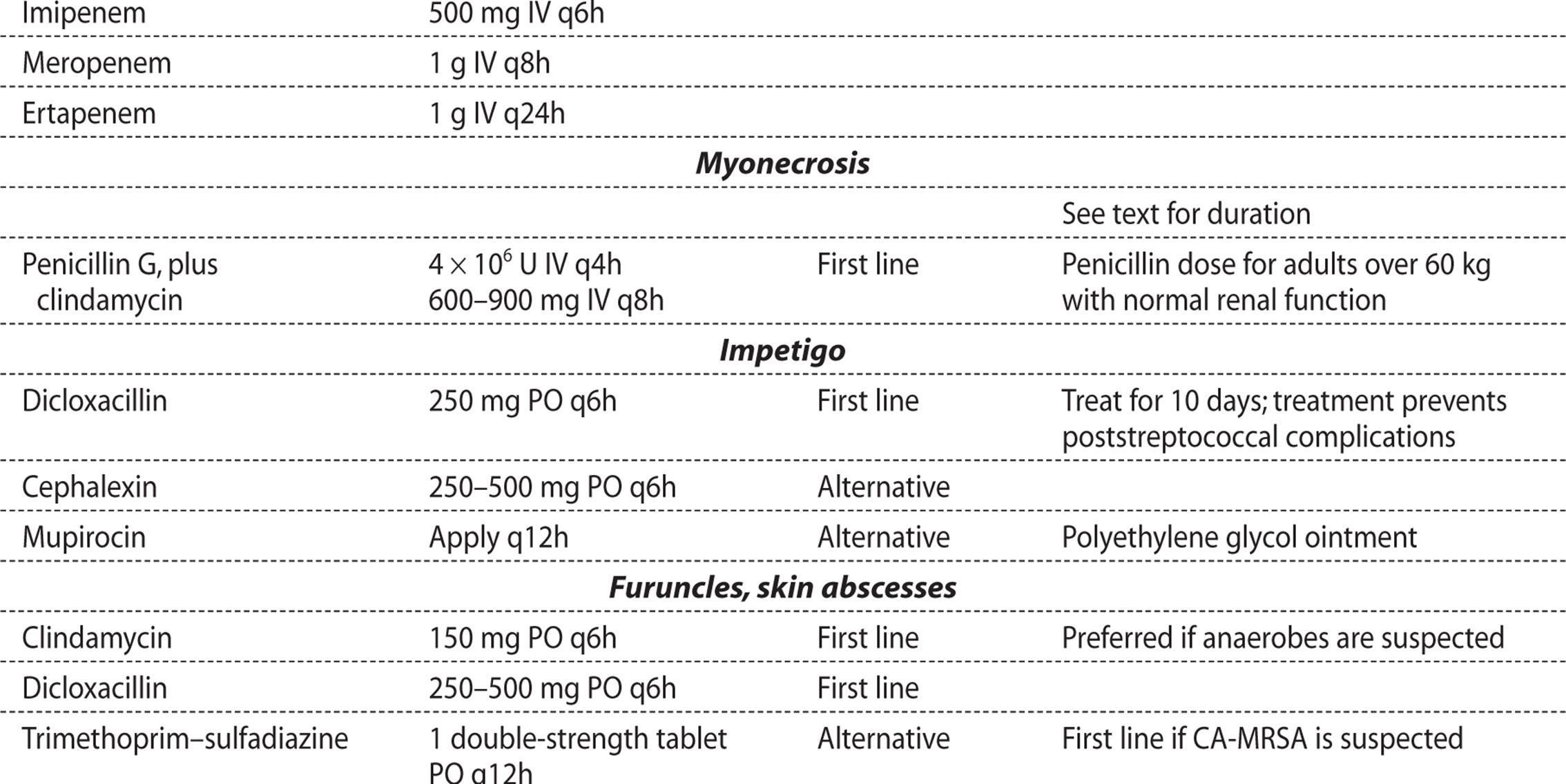
Initial local care of cellulitis includes immobilization and elevation of the involved limb to reduce swelling, and a cool, sterile saline dressing to remove purulent exudate and reduce local pain. Resolution of local findings with treatment is typically slow and can require 1-2 weeks of therapy. Local desquamation of the involved area can be seen during the early convalescence.
Necrotizing Soft Tissue Infections
Necrotizing soft tissue infection is a rare (500-1500 cases per year in the United States), and often fatal, soft tissue infection that involves the dermis, subcutaneous tissue, superficial fascia, deep fascia, or muscle layers of the extremities, abdomen, or perineum. This infection has also been called necrotizing fasciitis in recognition of the fact that this infection usually results in progressive destruction of fascia. The incidence of this infection has been increasing in New Zealand (from 0.18 to 1.69 cases per 100,000 per year); however, most practitioners are likely to encounter only one case during their career. A clear understanding of the disease and an aggressive surgical approach are critical for reducing mortality.
PREDISPOSING FACTORS AND CAUSES
Necrotizing soft tissue infection typically begins with trauma; however, the inciting event may be as seemingly innocuous as a simple contusion, minor burn, or insect bite. It can also result from bacterial superinfection in varicella infection. An association between the use of nonsteroidal anti-inflammatory drugs and the progression or development of GAS-necrotizing infection has also been suggested.
Necrotizing soft tissue infections have been classified into two groups based on bacteriology and clinical manifestations (see Table 10.1). Type I is a polymicrobial infection with a variety of gram-positive and gram-negative aerobic and anaerobic bacteria; four to five pathogenic bacteria are usually isolated. Infecting organisms can include S. aureus, GAS, Escherichia coli, Peptostreptococcus, Clostridium, Prevotella, Porphyromonas, and Bacteroidesspecies. This infection is most frequently associated with diabetes mellitus. Type II is caused by a single organism, classically GAS (Streptococcus pyogenes).Necrotizing fasciitis caused by GAS was previously called “streptococcal gangrene” or “streptococcal toxic shock syndrome.” In recent years, invasive infections caused by GAS, such as necrotizing fasciitis, have been increasing dramatically in number. Most cases are community-acquired, but a significant proportion may be nosocomial or acquired in a nursing home. Increasingly, CA-MRSA is also being reported as a cause of this infection. And in communities in which CA-MRSA is known to be prevalent, empiric antibiotic treatment should cover for this pathogen pending culture results.
The bacteria associated with necrotizing soft tissue infection depend on the underlying conditions leading to infection. Three important clinical conditions are associated with type I necrotizing soft tissue infection:
1. Diabetes mellitus. Necrotizing soft tissue infection with mixed flora occurs more often in patients with diabetes. These infections usually occur on the feet, with rapid extension along the fascia into the leg. Necrotizing fasciitis should be considered in diabetic patients with cellulitis who also have systemic signs of infection, such as, tachycardia, leukocytosis, marked hyperglycemia, or acidosis. Diabetic patients can also develop necrotizing fasciitis in other body areas, including the head-and-neck region and the perineum.
2. Cervical necrotizing soft tissue infection. This infection can result from a breach of the integrity of the mucous membranes after surgery or instrumentation, or from an odontogenic infection. In the head-and-neck region, bacterial penetration into the fascial compartments can result in a syndrome known as Ludwig’s angina (a rapidly expanding inflammation in the submandibular and sublingual spaces).
3. Fournier’s gangrene. In the perineal area, penetration of the gastrointestinal or urethral mucosa can cause Fournier’s gangrene, an aggressive infection. These infections begin abruptly with severe pain and may spread rapidly onto the anterior abdominal wall, into the gluteal muscles, and, in males, onto the scrotum and penis.
CLINICAL MANIFESTATIONS AND EARLY DIAGNOSIS
CASE 10.2
A 63-year-old man presented to the emergency room with a 1-day history of mild swelling of his right foot and ankle that was extremely tender to palpation. He had a long history of alcohol abuse and a history of cirrhosis. He was afebrile at the time of presentation and was sent home with oral Keflex. Two days later, he returned complaining of fever and increased swelling. He was admitted to the hospital and intravenous clindamycin and gentamicin were started.
Despite the new therapy, his leg swelling and erythema failed to improve. On physical examination during the third hospital day, he appeared severely ill and septic. His temperature was 39.6°C, pulse was 120 beats per minute, and blood pressure was 90/70 mmHg. Marked erythema was observed, along with edema of the right ankle that extended up the front and lateral regions of the leg, half way to the knee. A new 1x1-cm patch of dark reddish-purple skin was noted that was exquisitely tender to touch. No lymphadenopathy was observed.
Laboratory studies revealed a WBC count of 25,000, with 90% PMNs. An emergency surgical exploration revealed an area of necrotic fascia consistent with necrotizing fasciitis. Intraoperative cultures grew Escherichia coli and Bacteroides fragilis.
Early diagnosis of necrotizing fasciitis is critical because, as was observed in case 10.2, progression from a barely recognizable process to a process associated with extensive destruction of tissue may be remarkably rapid. Differentiating necrotizing infections from common soft tissue infections such as cellulitis and impetigo is both challenging and critically important (see Table 10.1). A high degree of suspicion may be the most important aid in early diagnosis. Prompt diagnosis is imperative, because necrotizing infections typically spread rapidly and can result in multiorgan failure, adult respiratory distress syndrome, and death.
As noted in case 10.2, unexplained pain that increases rapidly over time may be the first manifestation of a necrotizing soft tissue infection. However, in some patients, signs and symptoms of infection are not initially apparent. Erythema may be present diffusely or locally. However, excruciating pain in the absence of any cutaneous findings may be the only clue for infection in some patients. Within 24 to 48 hours, erythema may develop or darken to a reddish-purple color (as observed in case 10.2), frequently with associated blisters and bullae. Bullae can also develop in normal-appearing skin. The bullous stage is associated with extensive deep soft tissue destruction that may result in necrotizing fasciitis or myonecrosis; such patients usually exhibit fever and systemic toxicity. In addition to pain and skin findings, fever, malaise, myalgias, diarrhea, and anorexia may also be present during the first 24 hours. Hypotension may be present initially or may develop over time.
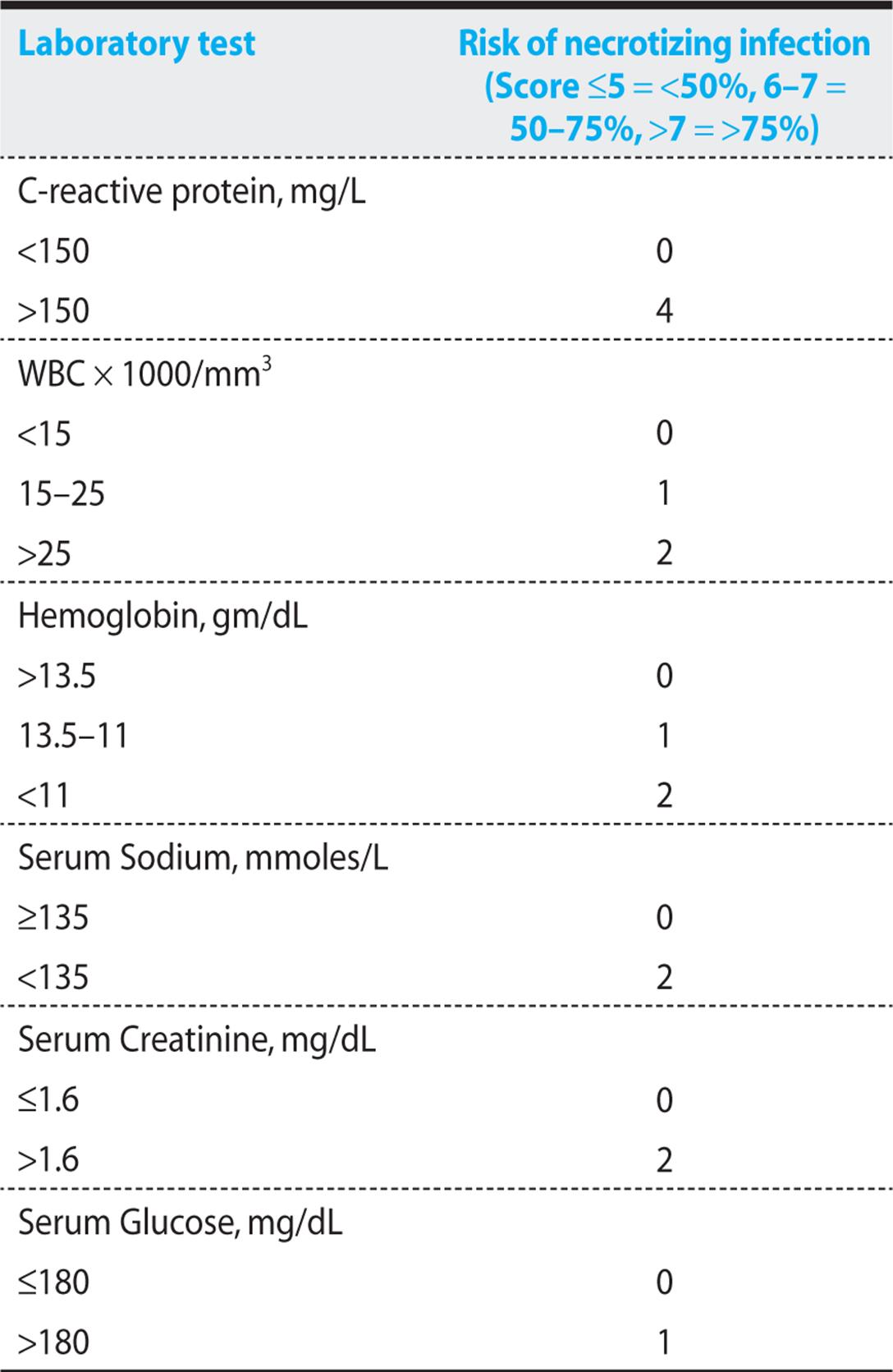
Laboratory findings are helpful in raising the possibility of a necrotizing soft tissue infection, and six laboratory values can used to create a risk score (C reactive protein, peripheral WBC, Hgb, serum sodium, creatinine, and glucose, see Table 10.3). Values of greater than 6 indicate a 50% or greater likelihood of a necrotizing soft tissue infection.
Table 10.3. Laboratory Risk Indicator Scores for Necrotizing Soft Tissue Infection
Necrotizing fasciitis must be distinguished from gas gangrene, pyomyositis, and myositis. Frozen biopsy of the skin and subcutaneous tissue has proven useful for the early diagnosis of necrotic fascia but is often inconvenient and time consuming. Therefore, in most cases, any of the abnormalities described above should be of sufficient concern to prompt surgical exploration. It is critical to proceed with surgery rather than to delay in order to obtain an imaging study or biopsies. Necrotizing soft tissue infection is most effectively diagnosed and treated by surgeons in the operating room. Imaging studies such as soft tissue X-ray, CT scan, and MRI are most helpful if gas is present in the tissue. However, in the absence of gas, these imaging techniques cannot differentiate cellulitis from fasciitis, and MRI tends to overestimate the extent of deep tissue involvement.
TREATMENT
Intensive-care physicians and orthopedic surgeons are often the first health care professional to evaluate patients with such infections, and they therefore need to be familiar with this potentially devastating disease and its management. Prompt diagnosis, immediate administration of appropriate antibiotics, and emergent, aggressive surgical debridement of all compromised tissues are critical to reduce morbidity and mortality.
Surgery. The primary indications for surgical intervention are severe pain, sepsis, fever, a high-risk score based on laboratory findings (Table 10.3), and an elevated serum creatine phosphokinase, with or without radiographic findings. If necrotizing soft tissue infection is a possibility, the only definitive method of diagnosis is surgical exploration. After initial debridement, infection can continue to progress if all necrotic tissues have not been removed. Surgical reexploration is therefore often required and should be performed as often as is necessary. Patients with type II disease are at risk for multiple noncontiguous abscesses, and a postoperative MRI should be considered if the patients laboratory values and/or clinical condition fails to improve.
Antibiotics. Several studies have suggested that clindamycin is superior to penicillin in the treatment of experimental necrotizing fasciitis or myonecrosis caused by GAS.
Clindamycin may be more effective because this antibiotic is not affected by bacterial inoculum size or stage of growth. It suppresses toxin production, facilitates phagocytosis of S. pyogenes, and has a long postantibiotic effect. Most experts currently recommend administration of combined therapy with penicillin G and clindamycin when beta-hemolytic streptococci is identified (see Table 10.2). In communities in which CA-MRSA is prevalent, empiric therapy with vancomycin should be added pending culture results.
In patients with diabetes or Fournier’s gangrene, antibiotic treatment should be based on results of Gram stain, culture, and sensitivity. However, early empiric treatment is necessary: ampicillin—sulbactam (combined with clindamycin or metronidazole) is a reasonable regimen. Broader gram-negative coverage may be necessary if the patient was recently hospitalized or has recently received antibiotic treatment. Ticarcillin–clavulanate, piperacillin-tazobactam, or a carbapenem (meropenem, imipenem, ertapenem) as monotherapy provide the appropriate empiric coverage.
Additional measures. Because of intractable hypotension and diffuse capillary leak in patients with shock, massive amounts of intravenous fluids (10-20 L daily), plus vasopressors such as dopamine or epinephrine, are often necessary to maintain tissue perfusion.
Several recent case reports and a case series suggest a beneficial effect for intravenous administration of high-dose immunoglobulins to neutralize circulating streptococcal toxins. It is the authors’ opinion that in cases of severe infection, this form of therapy is warranted. Unfortunately, even with optimal therapy, necrotizing fasciitis is associated with high (20-60%) mortality.
KEY POINTS
About Necrotizing Soft Tissue infection
1. This deep subcutaneous infection causes necrosis of the fascia and subcutaneous fat.
2. Causes include group A streptococci, community-acquired methicillin-resistant Staphylococcus aureus (CA-MRSA), or mixed infection with gram-positive and gram-negative aerobes and anaerobes.
3. Severe pain is often the earliest symptom; septic appearance and tachycardia are also suggestive.
4. Laboratory data: C-reactive protein, WBC, Hgb, serum Na, creatinine, and glucose can be used to create a risk score; >6 has a 92% chance of having a necrotizing soft tissue infection.
5. Surgical exploration (preferred) or punch biopsy are required for diagnosis.
6. Treatment must include the following.
a) Aggressive and often repeated surgical debridement; beware if multiple sites of infection (follow-up imaging may be required)
b) Systemic antibiotics (group A strep: penicillin and clindamycin; mixed infection: ticarcillin–clavulanate, piperacillin–tazobactam, or a carbapenem; CA-MRSA: vancomycin); and
c) Volume replacement and vasopressors.
d) For seriously ill patients, intravenous administration of immunoglobulins should be considered.
Myonecrosis
Myonecrosis (also called necrotizing myositis) is an uncommon infection of muscle that develops rapidly and is life-threatening. Early recognition and aggressive treatment are essential. Infections resulting in necrosis of muscle are almost entirely the result of infection by Clostridium species (gas gangrene). Spontaneous gangrenous myositis is another invasive infection caused by GAS, which often has features that overlap with those of necrotizing fasciitis. These infections typically evolve after contiguous spread from an area of trauma or surgery, or spontaneous spread from hematogenous seeding of muscle.
PREDISPOSING FACTORS AND CAUSES
Clostridial gas gangrene attributable to C. perfringens occurs after trauma involving deep, penetrating injury—for example, knife or gunshot wound, or crush injury (classically occurring in war wounds). Other conditions associated with traumatic gas gangrene include bowel surgery and postabortion with retained placenta. Clostridial gas gangrene may also be spontaneous and nontraumatic and is often associated with C. septicum (see case 10.3, later in this chapter). Many of the spontaneous cases occur in patients with gastrointestinal portals of entry such as adenocarcinoma.
Several other clinical entities may be associated with muscular injury and should be considered in patients presenting with myositis:
1. Tropical myositis or pyomyositis. S. aureus, and sometimes other organisms, can cause a primary muscle abscess (pyomyositis) in the absence of an apparent site of infection. Pyomyositis is more common in tropical areas.
2. Necrotizing infections caused by Vibrio vulnificus. Vibrio infections can involve the skin, fascia, and muscle and are most common among patients with cirrhosis, consumers of raw seafood, or inhabitants of coastal regions.
PATHOPHYSIOLOGY OF CLOSTRIDIAL INFECTIONS
The initiating trauma introduces organisms (either vegetative or spore forms) directly into deep tissue. At the same time, through tissue damage, it produces an anaerobic environment with low oxidation-reduction potential and acid pH, which is optimal for growth of clostridial organisms. Infection usually progresses within 24-36 hours of the traumatic injury.
The rapid tissue destruction associated with clostridial infection is explained by the bacterium’s ability to produce toxins. Its α-toxin has both phospholipase C and sphingomyelinase activity. This toxin induces platelet and PMN aggregation, resulting in blood vessel occlusion and rapid tissue necrosis, enhancing the anaerobic environment for clostridial growth. In addition, the α-toxin directly suppresses cardiac contractility. The theta-toxin is a cholesterol-dependent cytolysin and, in combination with the phospholipase activity of α-toxin, may cause lysis of red blood cells, WBCs, vascular endothelial cells, and myocytes. In addition, theta-toxin stimulates the production of multiple inflammatory cytokines that lead to blood vessel dilatation and hypotension.
Clostridia can also gain entry to the body by routes other than trauma. C. septicum most commonly spreads to soft tissue hematogenously. Infection with this pathogen usually accompanies a bowel lesion, particularly cecal carcinoma (see case 10.3). C. sordellii can be found in the vaginal flora and may become invasive after manual or pharmacologic abortion (RU486). Infection with C. sordellii is often accompanied by a unique constellation of findings: absence of fever, hemoconcentration because of increased vascular permeability, and a very high WBC count (leukemoid reaction), followed by shock. C. septicum, C. sordellii, and several other clostridia species have all caused severe infections following surgical placement of contaminated tissue allografts. Routine sterilization of tissue allografts may not remove Clostridium spores, explaining this potentially fatal complication.
CLINICAL MANIFESTATIONS AND DIAGNOSIS
CASE 10.3
A 54-year-old male truck driver presented to the emergency room with the sudden onset of severe left shoulder pain. On physical examination, severe tenderness of the left shoulder was elicited, and the patient was given a pain medication for presumed bursitis. Four hours later, the man returned to emergency room. He appeared septic and confused. His pulse was 125 beats per minute, and blood pressure was 80/50 mmHg. A large blister was noted over the left deltoid, and the skin now had a bronze appearance. Aspiration revealed brownish fluid, and Gram stain demonstrated gram-positive rods and no PMNs (Figure 10.2).
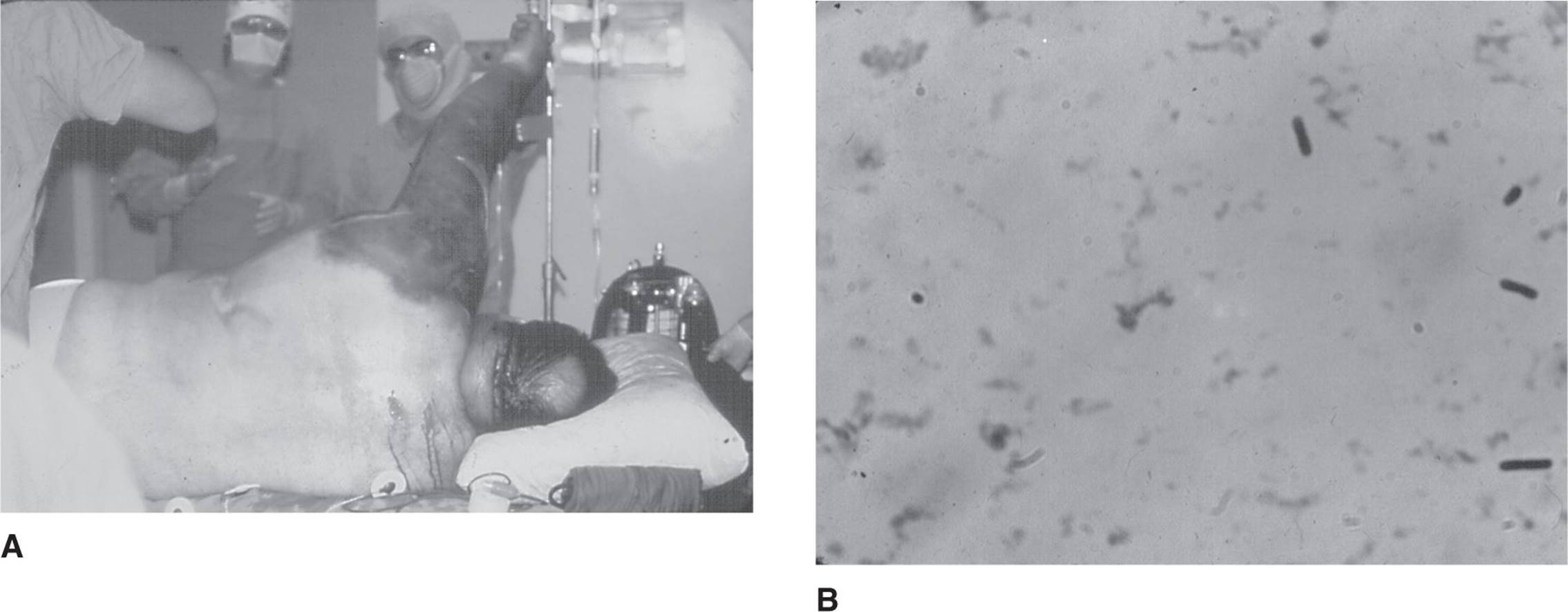
Figure 10.2. Clostridia myonecrosis. A. Patient from case 10.3 undergoing surgical debridement. The skin over the left arm and shoulder had a brownish-red appearance. B. Gram stain of brown fluid obtained from the large blister on the patient’s arm. Note the large gram-positive rods and the absence of inflammatory cells. See color image on color plate 2
Intravenous penicillin was initiated, but despite antibiotic therapy, edema and erythema marched down his arm. Within 1 hour, they had spread to the elbow. The patient’s hematocrit dropped from 45% to 23% over the same period. Crepitus was readily palpated, and subcutaneous air in the arm and left chest wall was noted on X-ray. In the operating room, the arm was amputated, and the left chest wall debrided. In many areas, muscle was necrotic and had the appearance of cooked meat, failing to contract with electrical stimulation. Despite aggressive debridement, multiple blood transfusions, and respiratory support, the patient developed irreversible shock and died 18 hours after admission. Blood cultures and tissue cultures were positive for Clostridium septicum. Autopsy revealed an early carcinoma of the cecum.
As illustrated in case 10.3, the first symptom in traumatic or bacteremic gas gangrene is usually the sudden onset of severe pain at the site of infection. The mean incubation period may be less than 24 hours, but ranges from 6 hours to several days, probably depending on the size of the bacterial inoculum and the extent of vascular compromise. The skin over the infected area may initially appear pale, but it quickly changes to bronze, and then to purplish-red. It becomes tense and exquisitely tender, with overlying bullae (Figure 10.2). An important local sign is the presence of crepitus. As observed in case 10.3, signs of systemic sepsis quickly develop. These include tachycardia and low-grade fever, followed by shock and multiorgan failure. When clostridial bacteremia occurs, it may be associated with extensive hemolysis. Gas within the soft tissue can be detected by physical examination, radiography, CT scan, or MRI. The presence of large gram-positive rods at the site of injury help to make a definitive diagnosis.
TREATMENT
Penicillin, clindamycin, metronidazole, and a number of cephalosporins have excellent activity in vitro against C. perfringens and other clostridia. As described earlier for streptococcal gangrene, the combination of penicillin and clindamycin is recommended. This combination would be expected both to reduce toxin production and to kill the organism (see Table 10.2)
Aggressive surgical debridement must be performed emergently, if there is to be any hope of improving survival and preserving tissue. It is critical that all necrotic tissue be resected and that the margins of resection contain bleeding healthy tissue. An extremity is clearly easier to debride than is the trunk. In case 10.3, the infection extended to the chest wall, making full debridement impossible. If anaerobic gas gangrene is diagnosed, and if hyperbaric oxygen facilities are available, that therapeutic modality should be considered. The fulminant nature of clostridia myonecrosis and the extensive associated toxin production make this infection particularly lethal. If early aggressive debridement of all infected tissue is not accomplished, a fatal outcome is to be expected.
KEY POINTS
About Myonecrosis
1. Primarily caused by Clostridium perfringens and C. Septicum (the latter associated with bowel cancer).
2. The clostridial α- and theta-toxin depress myocardial contractility, lyse white and red blood cells, and cause tissue necrosis and vasodilatation.
3. Skin becomes bronze-colored; bullae follow. Crepitus and extreme tenderness are noted on palpation. Sepsis, tachycardia, and hypotension are common.
4. Radiographs reveal subcutaneous gas.
5. Treatment must be rapid:
a) Removal of all necrotic tissue and amputation of the infected limb
b) Intravenous penicillin and clindamycin
c) Hyperbaric oxygen where available
6. Despite treatment, outcome is often fatal.
BURN INFECTIONS
Pathology of Burns
All burn wounds become colonized with microorganisms. Burn eschar is composed of dead and denatured dermis in which a wide variety of microbes can flourish. The quantity of the organisms, their intrinsic virulence, and the degree to which they invade host tissues determine their significance.
Although microbial colonization should be expected, invasion of surrounding tissue is a dangerous sign. The organisms associated with invasive infection vary from institution to institution and also over time. Common pathogens include Enterobacter cloacae, S. aureus, S. epidermidis, Enterococcus faecalis, E. coli, Pseudomonas aeruginosa, Klebsiella pneumoniae, and Acinetobacter baumannii. In patients who were exposed to fresh water Aeromonas hydrophila should be considered. Other multiresistant gram-negative bacteria that can be associated with burn patients include Stenotrophomonas maltophilia, Vibriospp., Chryseobacterium spp., Alcaligenes xylosoxidans, and Cedecia lapigei. Local and systemic fungal infections are becoming increasingly common. Mucormycosis (Zygomycetes), Fusarium, and Candidaare among the more common fungi encountered. Aggressive wound care and extreme vigilance are required to control the concentration of organisms in the burn wound in an effort to protect patients from invasive burn wound sepsis.
Burn wound infections are generally classified as invasive or noninvasive based on tissue biopsy. If a burn wound is allowed to remain in situ and is treated with adequate debridement and topical antibiotics, after 2 weeks, the naturally occurring microorganisms that colonize the wound will promote separation of the eschar by producing bacterial collagenases. A layer of granulation tissue forms where the eschar separates, and the improved blood supply and wound hypermetabolism help to limit the proliferation of microbes.
When burn wound infections become invasive, the concentration of microorganisms rises to more than 1 million per gram of tissue, and invading organisms are readily seen in biopsy specimens. Developing granulation tissue becomes edematous and pale, with subsequent occlusion and thrombosis of new blood vessels. Lack of bleeding is evident on surgical exploration of the wound. As the infection advances, the surface becomes frankly necrotic, and the infection spreads rapidly.
A very low threshold of suspicion should be applied to invasive burn wound sepsis. Attempts at early detection should be aggressive, and containment through extremely vigorous therapy is important. Fortunately, the advent of aggressive surgical removal of the burn wound has made burn wound sepsis a rare event.
Clinical Features
The presence of microorganisms in the wound and ongoing tissue necrosis in the burn eschar result in continuous elaboration of endogenous pyrogens. As a consequence, persistent fever almost always accompanies burns. Fever is therefore not usually a helpful sign for determining whether a burn patient has an invasive infection. Systemic antibiotics play little role in the prophylaxis of infections confined to the burn wound, because the avascular wound prevents adequate delivery of antibiotics to the bacteria. Fortunately, early burn excision has greatly diminished—although not eliminated—this problem. Topical antibacterial preparations have also reduced the extent of colonization.
When infections at all sites (lung, wound, and other) are combined, systemic infection is the most common cause of death in the burn patient. The high fatality rate associated with infection is explained by a combination of immune suppression, lung parenchymal damage from smoke inhalation, and the impossibility of immediately covering the wound to provide an effective barrier to infection, even though massive burns can be excised.
Because of ongoing inflammation and release of cytokines, the concept of SIRS as an early warning sign of sepsis is not helpful in burn patients. However, burn patients do manifest the same signs of sepsis as other critically ill patients, with the exception that burn patients’ “normal” hyperdynamic state mimics some of the typical signs of sepsis. Triggers that suggest sepsis in burn patients are defined differently than for other septic patients. When an adult burn patient has any three of the following triggers, sepsis should be strongly considered and therapy initiated.
1. Fever of over 39°C
2. Tachycardia of >110 beats per minute
3. Respiratory rate of >25 breaths per minute (off a ventilator)
4. Platelet count of <100,000/mm3 after the first 3 days of resuscitation
5. Serum glucose of >200 mg/dL in the absence of diabetes, or insulin resistance (requiring >7 units per hour of IV insulin)
6. Difficulty with enteral feeds for >24 hours: abdominal distension, increased residual enteral feed, or uncontrollable diarrhea (>2500 cc/day)
Changes in status, rather than the presence or absence of specific abnormalities, are also helpful in deciding whether a burn patient has developed an invasive infection. Proof of infection requires a positive culture, positive histopathology, or a response to antibiotics.
Treatment
Successful treatment of burn wound infections is extremely difficult. Antibiotics should be tailored to the prior wound cultures and take into account the antibiotic resistant patterns of the burn ward. Appropriate systemic antibiotics may ameliorate some systemic manifestations, but they do little to treat the primary infection in the burn wound. Emergent excision of infected burn eschar is the primary treatment modality. Excision removes the source of infection, but it may lead to severe bacteremia during the operation. Specific antibiotic coverage is therefore necessary. Moreover, operations performed in patients with a deteriorating cardiovascular status and pulmonary function are extremely hazardous.
KEY POINTS
About Burn Infections
1. Burned skin provides a fertile environment for bacterial growth.
2. Organisms associated with invasive infection include
a) gram-positive aerobic bacteria (Staphylococcus aureus and S.epidermidis, enterococci), and
b) gram-negative aerobic bacteria (Enterobacter, Escherichia coli, Klebsiella, Pseudomonas, and Acinetobacter).
3. Burn patients are often febrile and have sinus tachycardia; a sudden worsening often indicates sepsis.
4. Triggers for sepsis are defined differently for burn patients (fever 39°C, P > 110, RR > 25, platelets < 100 K, glucose > 200, problems with enteral feeding).
5. Debridement and topical antimicrobial therapy are the mainstays of therapy.
6. Broad-spectrum antibiotics are given when sepsis is suspected.
LESS SEVERE, MORE COMMON, AND LOCALIZED SKIN INFECTIONS
Impetigo
Impetigo is a very superficial vesiculopustular skin infection that occurs primarily on exposed areas of the face and extremities. The infection is more frequent in warm, humid conditions and is common in children. Poverty, crowding, and poor personal hygiene promote impetigo, which is easily spread within families. Carriage of GAS and S. aureus predisposes to subsequent impetigo.
Impetigo resulting from infection with GAS, S. aureus, or both, cannot be distinguished clinically. In the typical case, vesiculopustules form that subsequently rupture and become crusted. Affected patients usually develop multiple red and tender lesions in exposed areas at sites of minor skin trauma such as insect bites or abrasions. Impetigo results in little or no systemic sepsis, but it may be accompanied by local lymphadenopathy. Post-streptococcal glomerulonephritis is a rare complication that can be prevented by early antibiotic treatment.
Impetigo may be treated topically (see Table 10.2), but when multiple lesions are present, systemic oral therapy is appropriate. Although penicillin was the treatment of choice for impetigo in the past, this antibiotic is no longer recommended, because S. aureus almost universally produce β-lactamase that inactivates penicillin. Amoxicillin–clavulanate, cephalexin, dicloxacillin, and topical mupirocin ointment are effective and should therefore be used, provided that local strains of staphylococci do not harbor resistance to the selected agent. MRSA is an uncommon cause of impetigo.
Folliculitis
Folliculitis is a pyoderma localized to hair follicles. Several factors predispose to the development of folliculitis. Individuals with nasal carriage of S. aureus have a higher incidence of folliculitis. Exposure to whirlpools, swimming pools, and hot tubs contaminated with P. aeruginosa because of inadequate chlorination can cause “whirlpool” folliculitis. Antibiotic administration and corticosteroid therapy predispose to Candida folliculitis.
The lesions of folliculitis are often small and multiple. They are erythematous and may have a central pustule at the peak of the raised lesion. Folliculitis does not cause systemic sepsis. Lesions may spontaneously drain or resolve without scarring.
Systemic antibiotics do not appear to be helpful in treating folliculitis. Topical therapies such as warm saline compresses and topical antibacterial or antifungal agents are usually sufficient. The monthly use of mupirocin ointment applied to the anterior nares bilaterally twice daily for 5 days each month reduces both the incidence of nasal colonization with S. aureus and the recurrence of either folliculitis or furunculosis in immunocompetent patients. Nasal mupirocin can be combined with chlorhexidine gluconate (4% solution) baths, and this combination can eliminate S. aureus carriage in a significant percentage of patients.
KEY POINTS
About Impetigo and Folliculitis
1. Impetigo causes superficial vesicular lesions that crust over.
a) Caused by group A streptococci and Staphylococcus aureus.
b) Treat with amoxicillin-clavulanate, dicloxacillin, or cephalexin. For localized disease may use topical mupirocin.
2. Folliculitis is infection localized to the hair follicles.
a) S. aureus is the most common cause (often associated with nasal carriage)
b) Pseudomonas aeruginosa is associated with “whirlpool” folliculitis.
c) Candida usually follows the use of broad-spectrum antibiotics.
d) The infection is usually treated with topical antibiotics or antifungals; systemic antibiotics are not recommended.
The primary complication of concern is recurrent folliculitis, but progressive infection attributable to P. aeruginosa can occur in immunocompromised hosts, and folliculitis is occasionally complicated by furunculosis.
Furunculosis and Carbuncles
Furunculosis is an inflammatory nodule that surrounds a hair follicle. It usually follows an episode of folliculitis. A carbuncle is a series of abscesses in the subcutaneous tissue that drain via hair follicles. S. aureus is the most common cause of both lesions.
Furuncles and carbuncles arise when areas of skin containing hair follicles are exposed to friction and perspiration. The back of the neck, face, axillae, and buttocks are commonly involved. Factors predisposing to the development of these lesions include obesity and corticosteroid therapy. Although defective neutrophil function has been sought in this condition, it is rarely found.
Furunculosis is a painful nodular lesion that usually drains pus spontaneously. Infections with CA-MRSA tend to be more rapid in onset and are often misinterpreted as spider bites. Systemic symptoms are uncommon, and the onset of a fever suggests a more deeply seeded infection.
Most patients with furuncles can be treated with warm compresses to promote spontaneous drainage. For carbuncles or furuncles in a patient with fever and/or surrounding cellulitis, antimicrobial therapy should be directed against S. aureus. Dicloxacillin is a reasonable first choice (see Table 10.2). Cephalexin or clindamycin can be used in penicillin-allergic patients. When CA-MRSA is suspected, oral trimethoprim–sulfamethoxazole is usually effective; however, continued progression of infection may warrant hospitalization and administration of intravenous vancomycin, ceftaroline, daptomycin, or linezolid. Surgical drainage may be required in cases in which spontaneous drainage does not occur and antibiotic treatment does not achieve resolution of the lesion or lesions.
In the presence of recurrent or continuous furunculosis, chlorhexidine solution for bathing, attention to personal hygiene, appropriate laundering of garments, bedding, and towels, and careful wound dressing procedures are recommended. Elimination of nasal carriage of S. aureus should be attempted in patients with recurrent episodes of furuncles or carbuncles who have documented nasal carriage of the organism. Mupirocin nasal ointment or oral antibiotic regimens of rifampin (600 mg daily) plus dicloxacillin (500 mg every 6 hours) or ciprofloxacin (500 mg twice daily) for 10 days can be added to mupirocin nasal therapy, if an initial course of mupirocin is not effective. Low-dose clindamycin therapy is an alternative suppressive regimen.
KEY POINTS
About Furuncles and Carbuncles
1. Furuncles are nodular lesions that result from progression of folliculitis.
2. Carbuncles are larger subcutaneous abscesses that represent a progression from furuncles.
3. Both infections are caused by Staphylococcus aureus, including community-acquired methicillin-resistant strains (CA-MRSA).
4. Treatment may include
a) hot compresses to promote spontaneous drainage,
b) oral antibiotics if fever develops (dicloxacillin, cephalexin, clindamycin, or trimethoprim–sulfamethoxazole for CA-MRSA), and
c) surgical drainage if spontaneous drainage fails to occur.
5. For prevention, chlorhexidine solutions for personal hygiene, mupirocin to prevent nasal carriage, and prophylactic antibiotics are useful.
6. These infections can be dangerous:
a) On the face, they can lead to cavernous sinus infection.
b) Bacteremia can occur if the lesions are manipulated.
Carbuncles are the most important complication of furunculosis, and surgical intervention may be necessary for debridement of affected tissues. Furuncles involving the nose and perioral area can be complicated by cavernous sinus infection attributable to venous drainage patterns. Bacteremia with development of distant secondary sites of infection can occur (particularly if the furuncle is manipulated) and can result in considerable morbidity and mortality.
SKIN ABSCESSES
Skin abscess is a common infection that is usually managed in the ambulatory setting. The infection is characterized by a localized accumulation of PMNs, with tissue necrosis involving the dermis and subcutaneous tissue. Large numbers of microorganisms are typically present in the purulent material.
Skin abscesses and carbuncles are similar histologically, but like furuncles, carbuncles arise from infection of the hair follicles. Skin abscesses can arise from infection tracking in from the skin surface, but abscesses are usually located deeper than carbuncles (Figure 10.1). In contrast to carbuncles, abscesses can also be seen as a complication of bacteremia. Relatively minor local trauma, such as injection of a drug, can also be a risk factor. Skin abscess is the most common skin infection in intravenous drug abusers. Nasal or skin carriage of S. aureus further predisposes to the formation of skin abscess. Skin abscesses can be attributed to a variety of microorganisms and may be polymicrobial; however, the most common single organism is S. aureus.
The most common findings with a skin abscess are local pain, swelling, erythema, and regional adenopathy. Spontaneous drainage of purulent material also frequently occurs. Fever, chills, and systemic sepsis are unusual, except in patients with concomitant cellulitis. Patients may have single or multiple skin abscesses, and cellulitis around the skin abscess can occasionally occur. Skin abscess commonly involves the upper extremities in intravenous drug abusers but can be located at any anatomic site. Patients with recurrent episodes of skin abscess often suffer anxiety because of the discomfort and cosmetic effects of the infections.
Initial antibiotic therapy should always include coverage for S. aureus regardless of the anatomic area of involvement. Results of microbiologic studies, including Gram stain and routine culture should direct subsequent treatment. The initial antibiotic therapy is identical to that for furuncles and carbuncles, except for skin abscess in the oral, rectal, and vulvovaginal areas. Infections in these sites require broader-spectrum therapy, amoxicillin–clavulanate being a suitable option for oral therapy (see Table 10.2). At other sites, clindamycin can be considered for initial therapy if anaerobes are a possible cause. Surgical incision and drainage can be performed if the abscess feels fluctuant or has “pointed”; spontaneous drainage can obviate the need for surgery.
Although the results of testing will usually be negative, metabolic and immunologic screening should be performed in patients with recurrent furunculosis, carbuncles, or skin abscesses in the absence of another predisposing factor. These tests should include determination of fasting blood glucose and, if values from the former test are high-normal or elevated, a hemoglobin A1c should be ordered. Neutrophil number and function, plus immunoglobulin levels also should be evaluated. Elevated levels of immunoglobulin E (IgE) in association with eczema defines a Job’s (hyper-IgE) syndrome, a disease that is characterized by recurrent staphylococcal skin infections.
KEY POINTS
About Skin Abscesses
1. Skin abscesses are localized infection of the dermis and subcutaneous tissue, usually deeper than carbuncles.
2. Can arise from local trauma, intravenous drug abuse, and bacteremic seeding.
3. Staphylococcus aureus is the most common cause.
4. Therapy is identical to that for furuncles and carbuncles, with these additions:
a) Oral clindamycin may be considered if anaerobes are possibly involved.
b) For concomitant cellulitis, use intravenous clindamycin, nafcillin, oxacillin, cefazolin, or vancomycin (the latter for community-acquired methicillin-resistant S. aureus).
c) For infections in the perirectal, oral, or vulvovaginal areas amoxicillin–clavulanate is preferred.
5. Preventive measures:
a) With recurrent furunculosis, carbuncles, or abscesses, exclude diabetes mellitus, neutrophil dysfunction, and hyper-immunoglobulin E syndrome.
b) For patients at high risk for endocarditis, provide prophylactic antibiotics before incision and drainage of lesions.
Most patients with skin abscess respond to therapy and do not develop serious complications. However, bacteremia can occur, and metastatic sites of infection, including endocarditis and osteomyelitis, can develop. Individuals at high or moderate risk for endocarditis should be given antimicrobial prophylaxis before potentially infected tissue is incised and drained. Parenteral administration of an antistaphylococcal antibiotic (either oxacillin or cefazolin) is recommended as prophylactic therapy in this setting. Vancomycin should be given if the patient has previously been colonized or infected with MRSA (see Table 10.2).
RARER CAUSES OF INDOLENT SOFT TISSUE INFECTIONS
Chronic skin infections that are unresponsive to conventional antibiotics should stimulate a careful epidemiologic history. Commercial and sports fisherman may cut a finger on a fish spine, and that injury can result in an Erysipelothrix infection. This pleomorphic gram-positive rod causes painful erythematous lesions primarily of the hands and other exposed areas. Cultures and biopsies are often negative, because the pathogen remains deep in the dermis. Penicillin is preferred for treatment, although in the penicillin-allergic patient, clindamycin or ciprofloxacin have been found to be effective.
Mycobacterium marinum is another waterborne infection. This atypical mycobacterium is found in fresh and salt water, including aquariums. Individuals with cuts on the skin are susceptible to invasion by this organism. Infections usually begin as small papules, but gradually expand and fail to respond to conventional antibiotics. Surgical debridement in the absence of appropriate antibiotic treatment can result in worsening of the infection. Modified acid-fast organisms may be seen on biopsy. The organism can be grown at low temperature (28-30°C) using specific Middlebrook agar or BACTEC broth. The microbiology laboratory should always be notified when atypical mycobacteria are suspected. Oral doxycycline or minocycline (100 mg twice daily), or oral clarithromycin (500 mg twice daily) for a minimum of 3 months is the treatment of choice.
KEY POINTS
About the Causes of Indolent Soft Tissue Infections
1. Waterborne pathogens and their treatments:
a) Erysipelothrix (penicillin)
b) Mycobacterium marinum (minocycline or clarithromycin)
2. Plant- and soil-borne pathogens and their treatments:
a) Sporotrichosis (itraconazole)
b) Nocardiosis (trimethoprim–sulfamethoxazole)
Other atypical mycobacteria found throughout the environment can also cause indolent soft tissue infections including M. fortuitum, M. chelonae, M. abscessus, and M. ulcerans (Australia and tropical countries).
Gardeners who are cut by rosebush thorns are at risk for Sporothrix schenckii infection. This dimorphic fungus causes skin erythema, swelling, and lymphadenitis. In addition to rose thorns. soil contamination of any cut, and exposure to infected animals can result in sporotrichosis. Oral itraconazole (100-200 mg daily) for 3-6 months is the treatment of choice.
Inoculation of soil into the skin as a consequence of trauma can also result in a Nocardia soft tissue infection that mimics sporotrichosis. Prolonged oral therapy with trimethoprim–sulfamethoxazole (5 mg/kg daily of the trimethoprim component, divided into two daily doses) or minocycline (100 mg twice daily) is usually curative.
Tetanus
Immunization policies have made tetanus an uncommon problem in the United States. Approximately 70 cases are reported annually, with most cases occurring in individuals over 60 years of age whose immunity is waning. The incidence is much higher in developing countries, resulting in 1 million cases associated with 300,000-500,000 deaths.
In developed countries, most cases of tetanus are the sequelae of punctures or lacerations. C. tetani spores can contaminate these wounds and germinate in the anaerobic conditions created by a closed wound. The growing bacterium produces an exotoxin called tetanospasmin. This metalloprotease degrades a protein required for the docking of neurotransmitter vesicles that normally inhibit firing of the motor neurons. As a consequence, muscle spasms develop, and patients experience masseter muscle trismus (“lock jaw”) and generalized muscle spasm, including arching of the back (opisthotonus), flexion of the arms, and extension of the legs. Spasms may be triggered by any sensory stimulus and are very painful. Spasm of the diaphragm and throat can lead to respiratory arrest and sudden death. Autonomic dysfunction can lead to hypertension or hypotension, and bradycardia or tachycardia. This symptom is the leading cause of death. Neonatal tetanus develops following infection of the umbilical stump and is most commonly reported in developing countries. Neonates present with generalized weakness, followed by increased rigidity. Mortality exceeds 90%.
Patients should receive intramuscular injections of human tetanus immunoglobulin 500 IU. Diphtheria-pertussis-tetanus vaccine (DPT, 0.5 mL) should also be administered intramuscularly. Intravenous metronidazole (500 mg every 6 hours) should be given for 7-10 days to eradicate C. tetani from the wound. Intravenous diazepam is recommended to control the muscle spasms, and tracheostomy should be performed after endotracheal intubation, in anticipation of prolonged respiratory compromise. Sympathetic hyperactivity should be controlled with short-acting β-blockers, and hypotension should be treated with saline infusion combined with dopamine or norepinephrine. Intravenous magnesium sulfate (4-6 g over 15-20 minutes, followed by 2 g hourly) has also been shown to stabilize sympathetic hyperactivity. Severe muscle spasms can be controlled with benzodiazepines or pancuronium; however, use of these agents necessitates mechanical ventilation. Another alternative is intrathecal administration of the gamma-aminobutyric acid B receptor agonist baclofen (40-200 μg bolus, followed by 20 μg hourly, not to exceed 2 mg daily). This regimen may block muscle spasm without significant interference with respiratory function, but it is associated with an increased risk of developing bacterial meningitis as a consequence of prolonged placement of an intrathecal catheter. Two additional doses of DPT vaccine are recommended, one dose at the time of discharge and a third dose 4 weeks later. Mortality ranges from 6% in milder cases to 60% in severe disease.
KEY POINTS
About Tetanus
1. The disease is rare in the United States but common in developing countries.
2. Clostridium tetani produces tetanospasmin and blocks normal inhibition of motor neurons.
3. Associated with severe muscle spasm, jaw trismus, opisthotonus, and respiratory failure.
4. Treatment includes administration of
a) human tetanus immunoglobulin;
b) tetanus toxoid vaccine;
c) intravenous metronidazole;
d) benzodiazepines and pancuronium, or intrathecal baclofen to control muscle spasm; and
e) short-acting β-blockers, intravenous magnesium sulfate, and vasopressors for sympathetic instability.
f) Intubation and tracheostomy are often required.
5. Prevention
a) Vaccination with tetanus toxoid every 10 years.
b) Booster vaccination in cases of potentially contaminated wounds received 5 or more years after regular vaccination.
c) Patient with high-risk wounds, or those who are immunocompromised, should also receive human tetanus immunoglobulin.
The devastating consequences of this disease emphasize the importance of prevention. Tetanus toxoid vaccination provides complete immunity for at least 5 years. Routine boosters are recommended every 10 years. Tetanus spores can be inoculated into any wound; however, certain wounds are at higher risk. The high-risk group includes wounds contaminated with dirt, saliva, or feces; puncture wounds and unsterile injections; frostbite; bullet or shrapnel wounds; crush injuries; and compound fractures. If a patient with one of these wounds has not received immunization in the past 5 years or is immunocompromised, passive immunization with human tetanus immunoglobulin and active immunization with a tetanus toxoid booster should be given.
Bites by Animals and Humans
ANIMAL BITES
Animal bites caused by pet dogs and cats are a common problem representing approximately 1% of visits to the emergency room. The incidence tends to be higher among children. Dog bites most frequently occur in young boys; cat bites more commonly occur in young girls and women. Dog and cat bites can result in soft tissue and bone infections, particularly on the hands. The teeth of cats are very sharp and commonly penetrate the skin and puncture the underlying bone, increasing the risk of osteomyelitis.
The organism most commonly associated with pet animal bites is Pasteurella, which is found in 50% of dog bites and 70% of cat bites. P. canis is most common in dog bites, and P. multocida is most common in cat bites. S. aureus, streptococci, Capnocytophaga canimorsus, and anaerobic bacteria are also frequently cultured from animal bite wounds. The resulting infections are usually polymicrobial. Animal bites can lead to sepsis particularly with Capnocytophaga canimorsus in patients with splenectomy or underlying liver disease.
Because of the high likelihood of infection, cat and dog bite wounds should not initially be closed. Antibiotic prophylaxis is usually recommended, consisting of a single parenteral dose of ampicillin–sulbactam (3 g), followed by oral amoxicillin–clavulanate (875 mg twice daily for 3-5 days). Alternative regimens in patients with penicillin allergy include clindamycin (900 mg intravenously, followed by 300 mg orally every 6 hours), plus ciprofloxacin (400 mg intravenously, followed by 500 mg orally twice daily). In children, clindamycin combined with trimethoprim–sulfamethoxazole is recommended.
KEY POINTS
About Animal Bites
1. Bites by pet animals are a leading cause of visits to the emergency room.
2. Animal bites are more common in children than in adults; dog bites are more common in boys than in girls; and cat bites are more common in girls and women than in boys and men.
3. Pasteurella species are important pathogens in dog and cat bites.
4. Recommended prophylaxis
a) Intravenous ampicillin–sulbactam followed by amoxicillin–clavulanate for 3-5 days.
b) Intravenous clindamycin, followed by oral clindamycin, plus ciprofloxacin in penicillin-allergic patients.
5. Treatment includes
a) the same antibiotic regimens as for prophylaxis, but more prolonged—10–days;
b) rabies prophylaxis; and
c) tetanus prophylaxis.
The duration of intravenous and oral antibiotic treatment depends on the rate of response of the infection, the degree of tissue damage, and the likelihood of bone or joint involvement. Patients with defects in lymphatic or venous drainage and those who are immunocompromised or receiving corticosteroids are at higher risk of developing sepsis. These patients need to be followed closely. First-generation cephalosporins, dicloxacillin, and erythromycin should be avoided in these patients, because a number of bacteria that cause animal bite infections, including P. multocida, are resistant to these antibiotics. If the animal bite was unprovoked, rabies vaccination or quarantined observation of the animal are the standard of care. Prophylaxis for tetanus must also be provided (see the earlier subsection specific to tetanus).
HUMAN BITES
Human bites most commonly arise as a consequence of closed-fist injuries during a fight. Human mouth flora can also be inoculated into the skin as result of nail-biting or thumb-sucking. Love nips and actual bites in association with altercations are also encountered. Alcohol, other drugs, or medical conditions leading to confusion are often associated with human bite injuries.
KEY POINTS
About Human Bites
1. Bites by humans are often associated with alcohol or other drugs; closed-fist injuries are most common.
2. Infections are usually polymicrobial, and often include Eikenella corrodens.
3. For prophylaxis and treatment, use ampicillin–sulbactam, ticarcillin–clavulanate, and cefoxitin.
4. Avoid oxacillin, nafcillin, clindamycin, metronidazole, and many cephalosporins.
5. Duration of treatment depends on response rate, tissue damage, and bony involvement.
Multiple aerobes and anaerobes can be cultured from the human mouth, and infections associated with human bites are usually polymicrobial. Aerobic organisms include S. viridans and S. aureus. Important anaerobes include Eikenella corrodens, Bacteroides species, Fusobacterium species, and Peptostreptococcus. Eikenella corrodens is a particular concern, because this organism is resistant to oxacillin, nafcillin, clindamycin, and metronidazole, and variably resistant to cephalosporins.
Prophylaxis with amoxicillin–clavulanate is recommended. Treatment with intravenous ampicillin–sulbactam, ticarcillin–clavulanate, or cefoxitin is usually effective. As noted for animal bites, the duration of therapy depends on the rate of improvement, the degree of soft tissue damage, and the likelihood of bone involvement. In closed-fist injuries, bone and tendon involvement is common and usually warrants more prolonged antibiotic therapy for presumed osteomyelitis.
FURTHER READING
Afshar M, Raju M, Ansell D, Bleck TP. Narrative review: tetanus-a health threat after natural disasters in developing countries. Ann Intern Med. 2011;154(5):329-335.
Alsbjorn B, Gilbert P, Hartmann B, et al. Guidelines for the management of partial-thickness burns in a general hospital or community setting—recommendations of a European working party. Burns. 2007;33:155-160.
Anaya DA, Dellinger EP. Necrotizing soft-tissue infection: diagnosis and management. Clin Infect Dis. 2007;44:705-771.
Aronoff DM, Bloch KC. Assessing the relationship between the use of nonsteroidal antiinflammatory drugs and necrotizing fasciitis caused by group A streptococcus. Medicine (Baltimore). 2003;82:225-235.
Atiyeh BS, Costagliola M, Hayek SN, Dibo SA. Effect of silver on burn wound infection control and healing: review of the literature. Burns. 2007;33:139-148.
Azzopardi EA, Azzopardi SM, Boyce DE, Dickson WA. Emerging gram-negative infections in burn wounds. J Burn Care Res. 2011;32(5):570-576.
Broder J, Jerrard D, Olshaker J, Witting M. Low risk of infection in selected human bites treated without antibiotics. Am J Emerg Med. 2004;22:10-13.
Campbell JI, Lam TM, Huynh TL, et al. Microbiologic characterization and antimicrobial susceptibility of Clostridium tetani isolated from wounds of patients with clinically diagnosed tetanus. Am J Trop Med Hyg. 2009;80:827-883.
Das DK, Baker MG, Venugopal K. Increasing incidence of necrotizing fasciitis in New Zealand: a nationwide study over the period 1990 to 2006. J Infect. 2011;63:429-433.
El-Khani U, Nehme J, Darwish A, et al. Multifocal necrotising fasciitis: an overlooked entity? J Plast Reconstr Aesthet Surg. 2012;65:501-512.
Fischer M, Bhatnagar J, Guarner J, et al. Fatal toxic shock syndrome associated with Clostridium sordellii after medical abortion. N Engl J Med. 2005;353:2352-2360.
Greenhalgh DG, Saffle JR, Holmes JHT, et al. American Burn Association consensus conference to define sepsis and infection in burns. J Burn Care Res. 2007;28:776-790.
Jeschke MG, Gauglitz GG, Kulp GA, et al. Long-term persistence of the pathophysiologic response to severe burn injury. PLoS One. 2011;6(7):e21245.
Kainer MA, Linden JV, Whaley DN, et al. Clostridium infections associated with musculoskeletal-tissue allografts. N Engl J Med. 2004;350:2564-2571.
Liu C, Bayer A, Cosgrove SE, et al. Clinical practice guidelines by the infectious diseases society of America for the treatment of methicillin-resistant Staphylococcus aureus infections in adults and children. Clin Infect Dis. 2011;52:e18-e55.
McNamara DR, Tleyjeh IM, Berbari EF, et al. A predictive model of recurrent lower extremity cellulitis in a population-based cohort. Arch Intern Med. 2007;167:709-715.
Norrby-Teglund A, Muller MP, McGeer A, et al. Successful management of severe group A streptococcal soft tissue infections using an aggressive medical regimen including intravenous polyspecific immunoglobulin together with a conservative surgical approach. Scand J Infect Dis. 2005;37:166-172.
Oehler RL, Velez AP, Mizrachi M, Lamarche J, Gompf S. Bite-related and septic syndromes caused by cats and dogs. Lancet Infect Dis. 2009;9:439-447.
Siljander T, Karppelin M, Vahakuopus S, et al. Acute bacterial, non-necrotizing cellulitis in Finland: microbiological findings. Clin Infect Dis. 2008;46(6):855-861.
Stamenkovic I, Lew PD. Early recognition of potentially fatal necrotizing fasciitis. The use of frozen-section biopsy. N Engl J Med. 1984;310:1689-1693.
Stevens DL, Bisno AL, Chambers HF, et al. Practice guidelines for the diagnosis and management of skin and soft-tissue infections. Clin Infect Dis. 2005;41:1373-1406.
Wong CH, Chang HC, Pasupathy S, Khin LW, Tan JL, Low CO. Necrotizing fasciitis: clinical presentation, microbiology, and determinants of mortality. J Bone Joint Surg Am. 2003;85-A:1454-1460.