
Divisions of the Abdominopelvic Cavity
Fig. 12.1 Organ layers and quadrants
Anterior view. The organs of the abdomen and pelvis can be classified by layer, by quadrant (using the umbilicus at L4), by level (upper and lower abdomen, and pelvis), or with respect to the presence of a mesentery (Table 12.1).
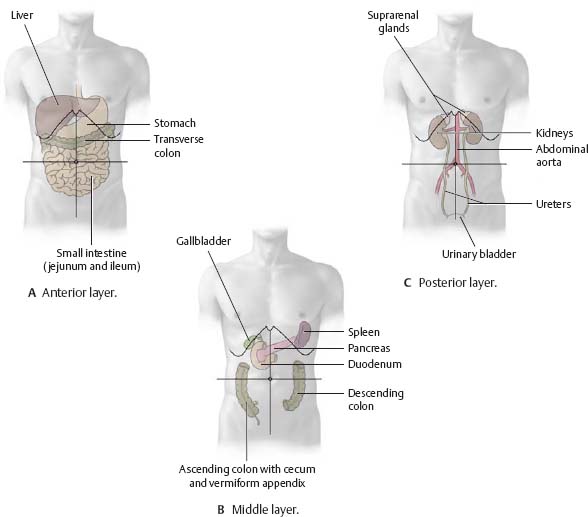
Fig. 12.2 Peritoneum and mesentery
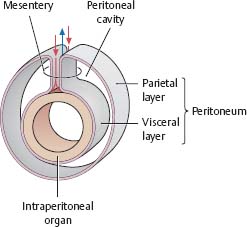
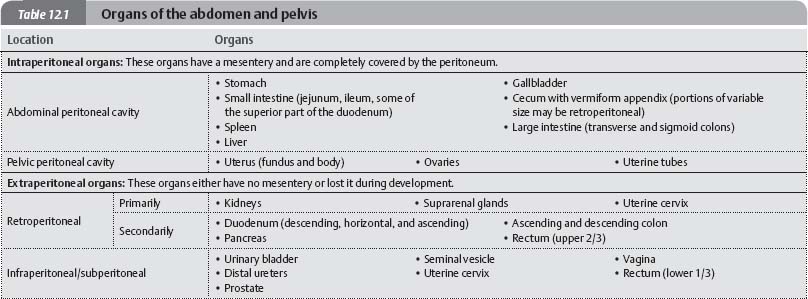
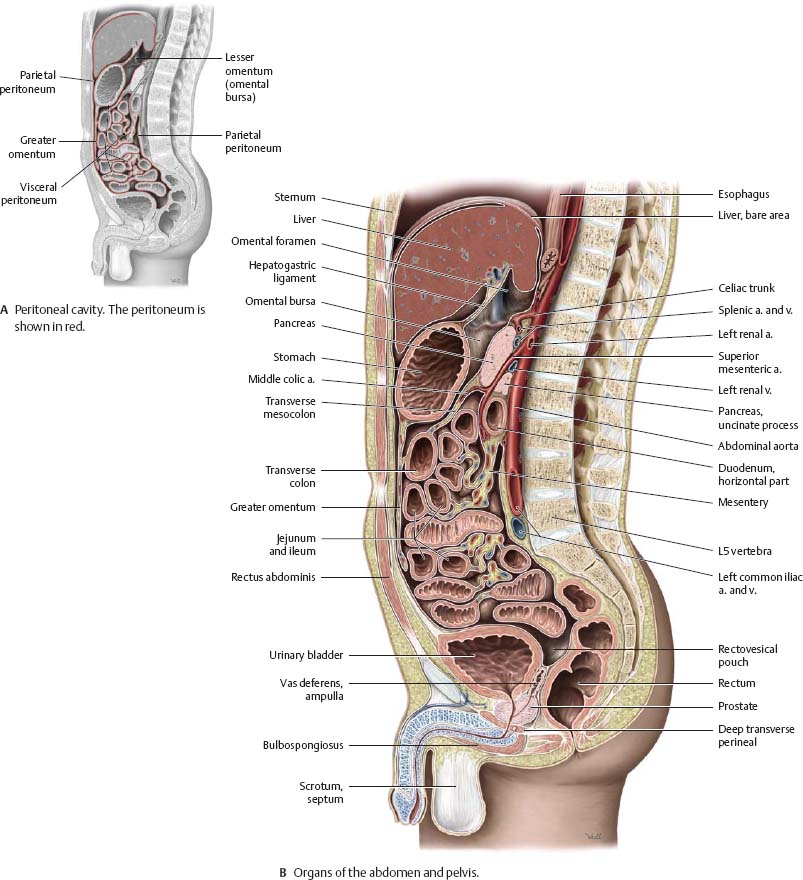
Fig. 12.3 Peritoneal relationships
Midsagittal section through male pelvis, viewed from the left side.
 Clinical
Acute abdominal pain
Acute abdominal pain (“acute abdomen”) may be so severe that the abdominal wall becomes extremely sensitive to touch (“guarding”) and the intestines stop functioning. Causes include organ inflammation such as appendicitis, perforation due to a gastric ulcer (see p. 159), or organ blockage by a stone, tumor, etc. In women, gynecological processes or ectopic pregnancies may produce severe abdominal pain.
Peritoneal Cavity & Greater Sac
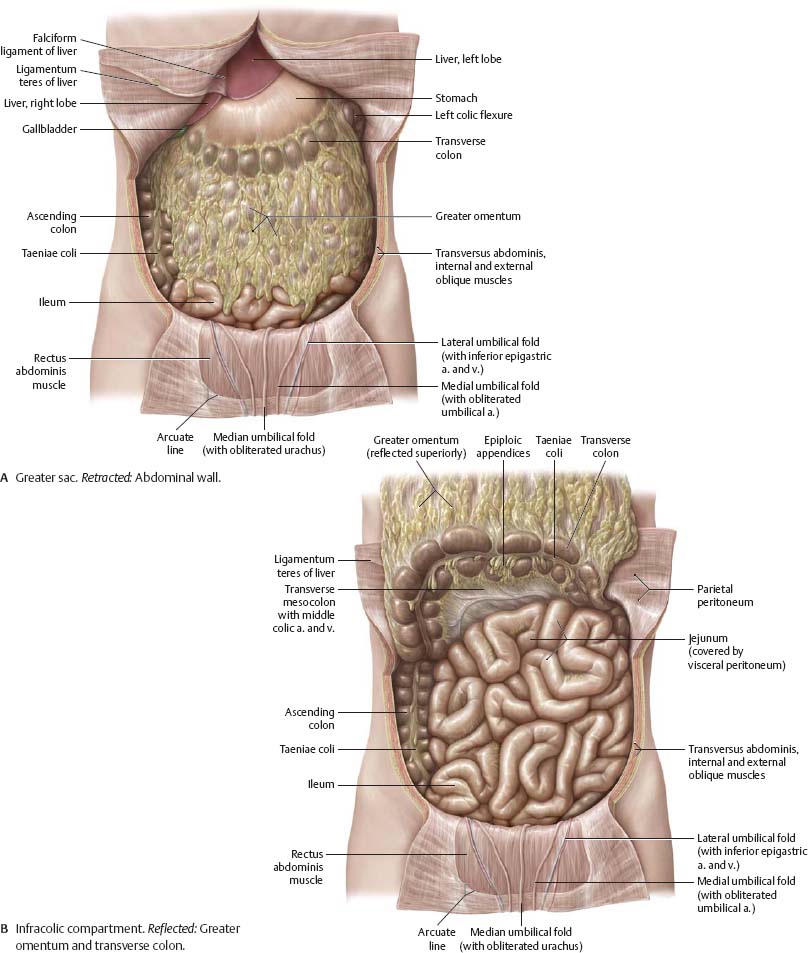
 The largest part of the peritoneal cavity is the greater sac. The greater omentum is an apron-like fold of peri toneum suspended from the greater curvature of the stomach and covering the anterior surface of the transverse colon. The transverse colon divides the peritoneal cavity into a supracolic compartment (liver, gallbladder, and stomach) and an infracolic compartment (intestines).
Fig. 12.4 Dissection of the peritoneal cavity
Anterior view.
Lesser Sac
Fig. 12.5 Lesser sac (Omental bursa)
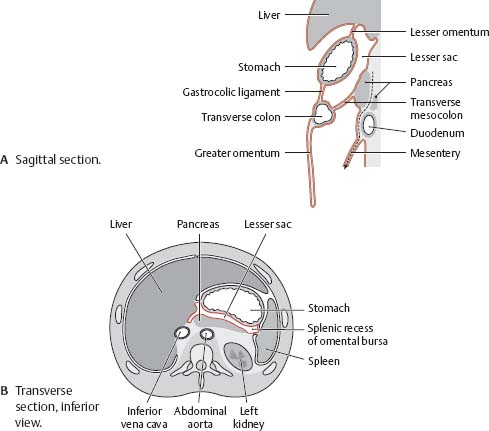
Anterior view. The lesser sac (omental bursa) is the portion of the peritoneal cavity located behind the lesser omentum and stomach.

Fig. 12.6 Location of the lesser sac
|
Table 12.2 Boundaries of the lesser sac (omental bursa) |
||
|
Direction |
Boundary |
Recess |
|
Anterior |
Lesser omentum, gastrocolic ligament |
– |
|
Inferior |
Transverse mesocolon |
Inferior recess |
|
Superior |
Liver (with caudate lobe) |
Superior recess |
|
Posterior |
Pancreas, aorta (abdominal part), celiac trunk, splenic a. and v., gastrosplenic fold, left suprarenal gland, left kidney (superior pole) |
– |
|
Right |
Liver, duodenal bulb |
– |
|
Left |
Spleen, gastrosplenic ligament |
Splenic recess |
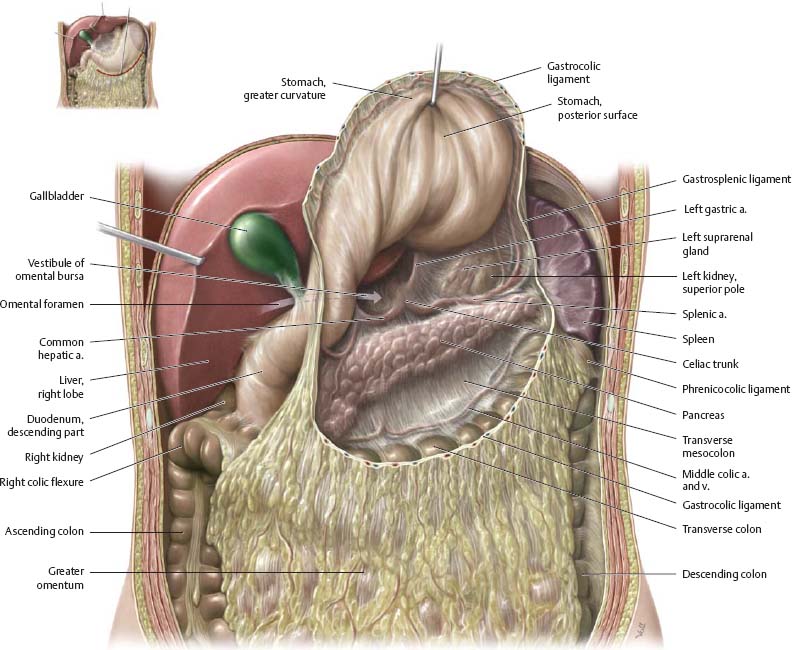
Fig. 12.7 Omental bursa in situ
Anterior view. Divided: Gastrocolic ligament. Retracted: Liver. Reflected: Stomach.
|
Table 12.3 Boundaries of the omental foramen |
|
|
The communication between the greater and lesser sacs is the omental (epiploic) foramen (see arrow in Fig. 12.7). |
|
|
Direction |
Boundary |
|
Anterior |
Hepatoduodenal ligament with the portal v., proper hepatic a., and bile duct |
|
Inferior |
Duodenum (superior part) |
|
Posterior |
Inferior vena cava, diaphragm (right crus) |
|
Superior |
Liver (caudate lobe) |
Mesenteries & Posterior Wall
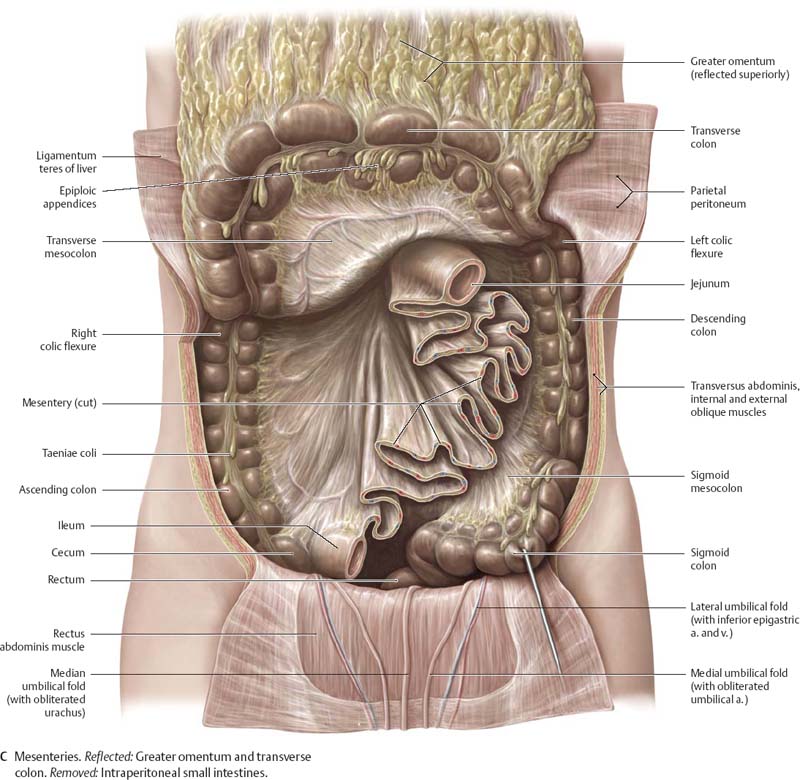
Fig. 12.8 Mesenteries and organs of the peritoneal cavity
Anterior view. Removed: Stomach, jejunum, and ileum. Reflected: Liver.
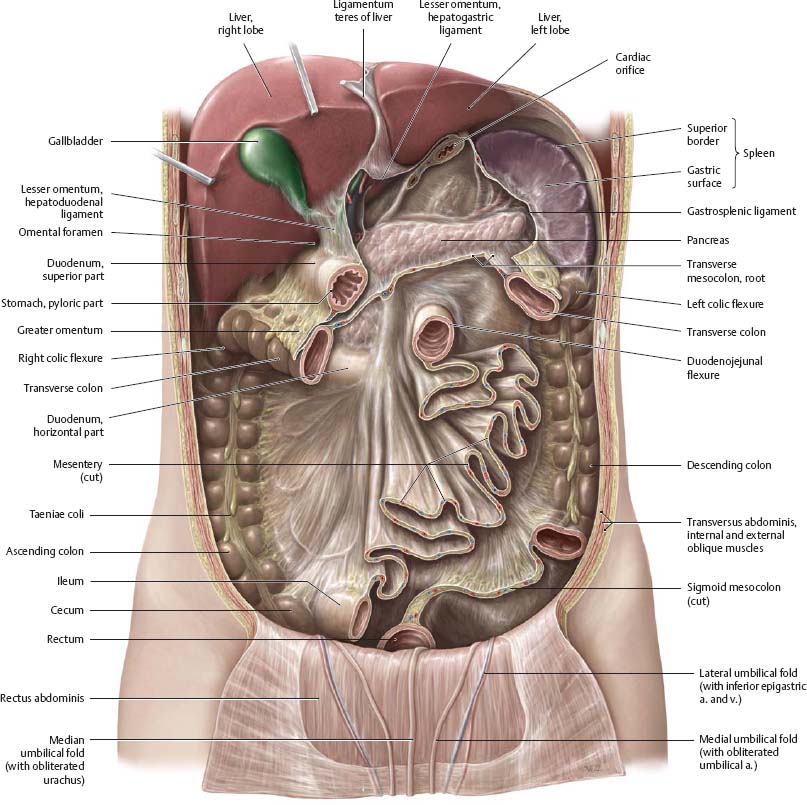
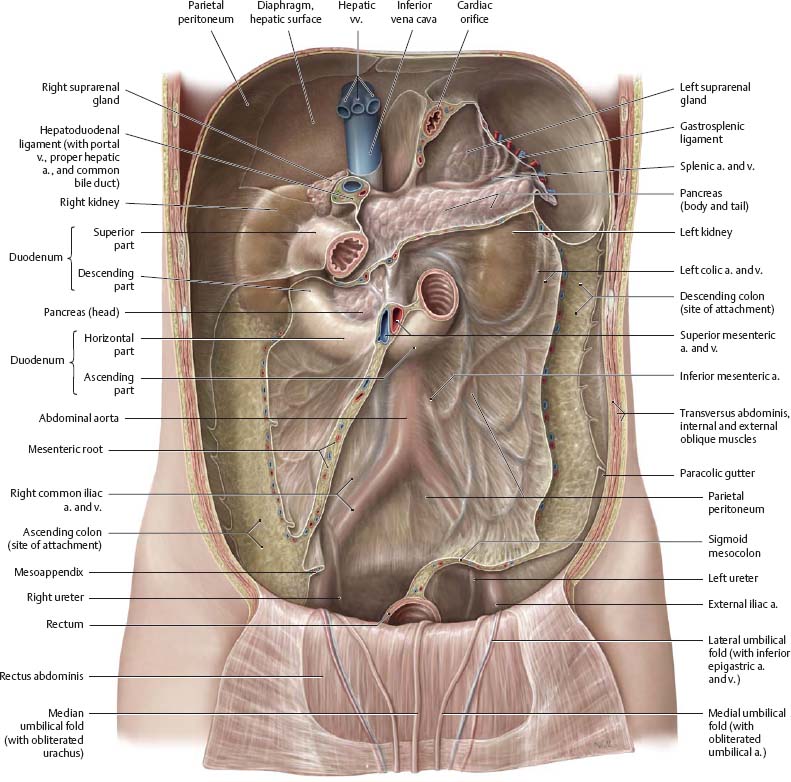
Fig. 12.9 Posterior wall of the peritoneal cavity
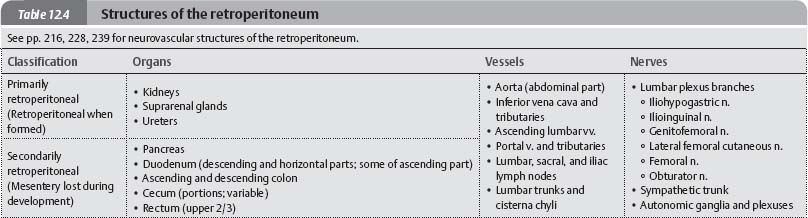
Anterior view. Removed: All intraperitoneal organs. Revealed: Structures of the retroperitoneum (see Table 12.4 and p. 180).
Contents of the Pelvis
Fig. 12.10 Male pelvis
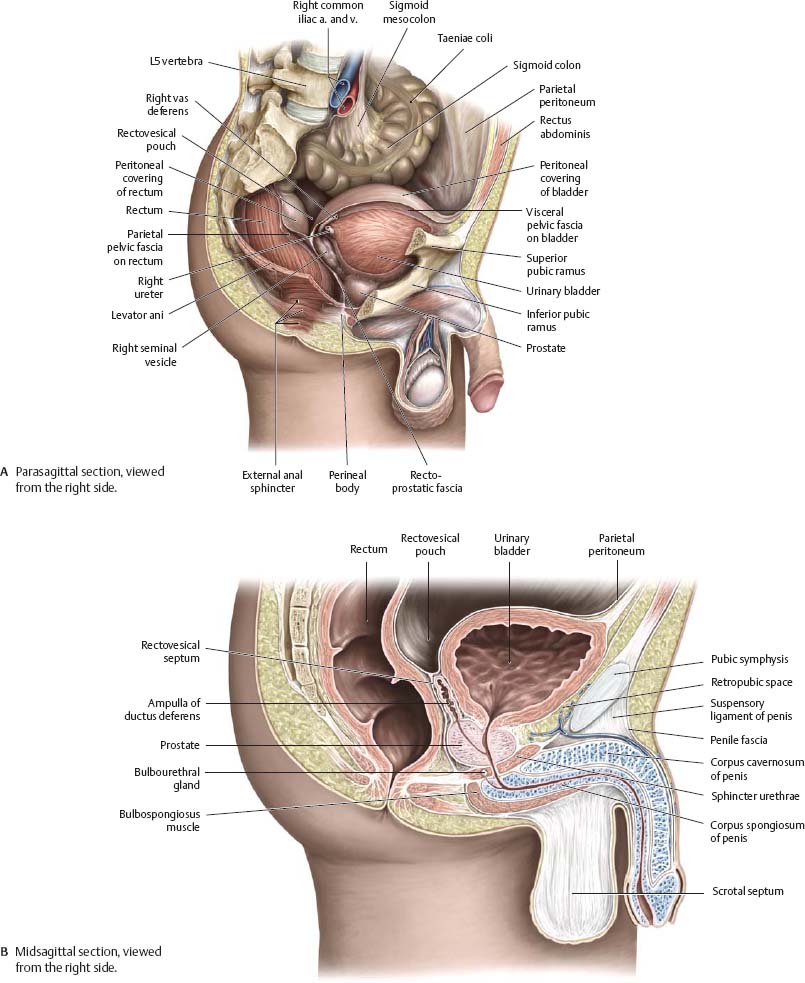
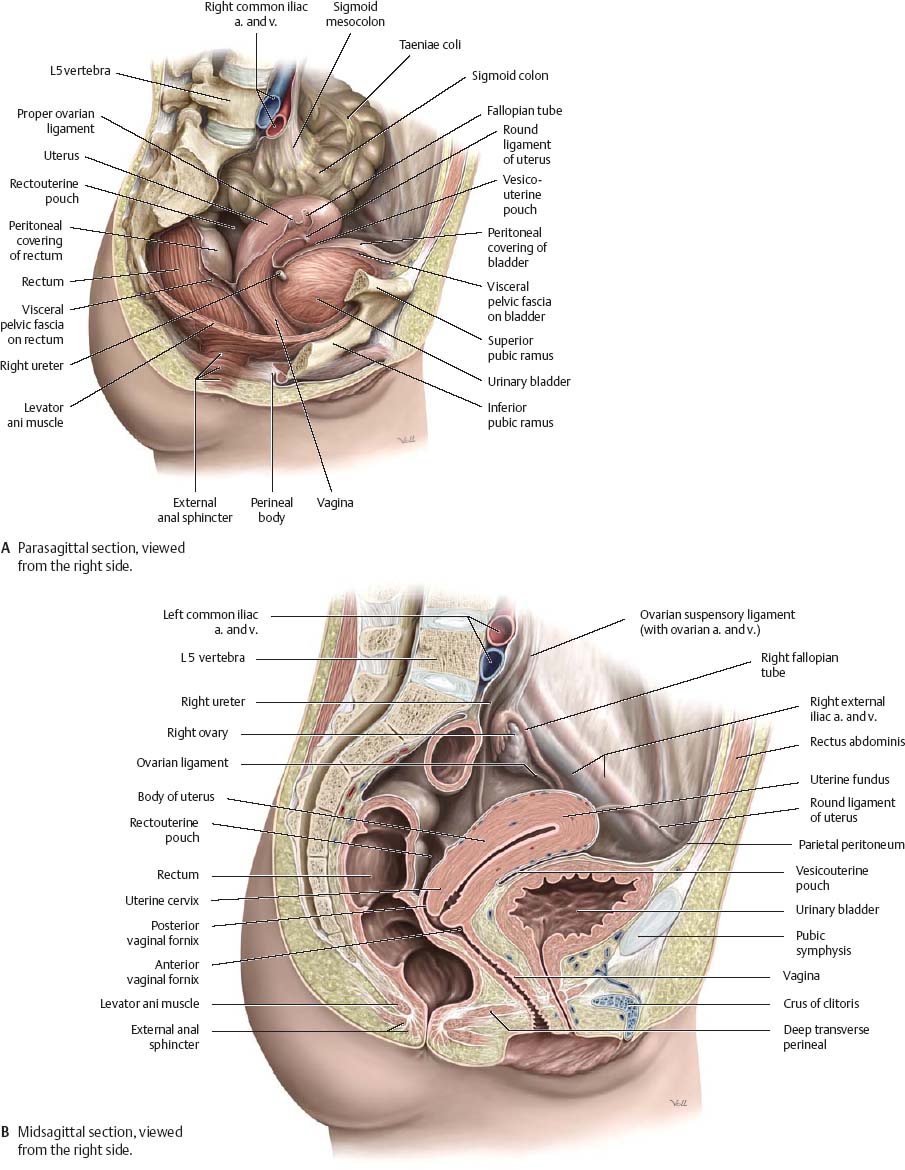
Fig. 12.11 Female pelvis
Peritoneal Relationships
Fig. 12.12 Peritoneal relationships in the pelvis: Female
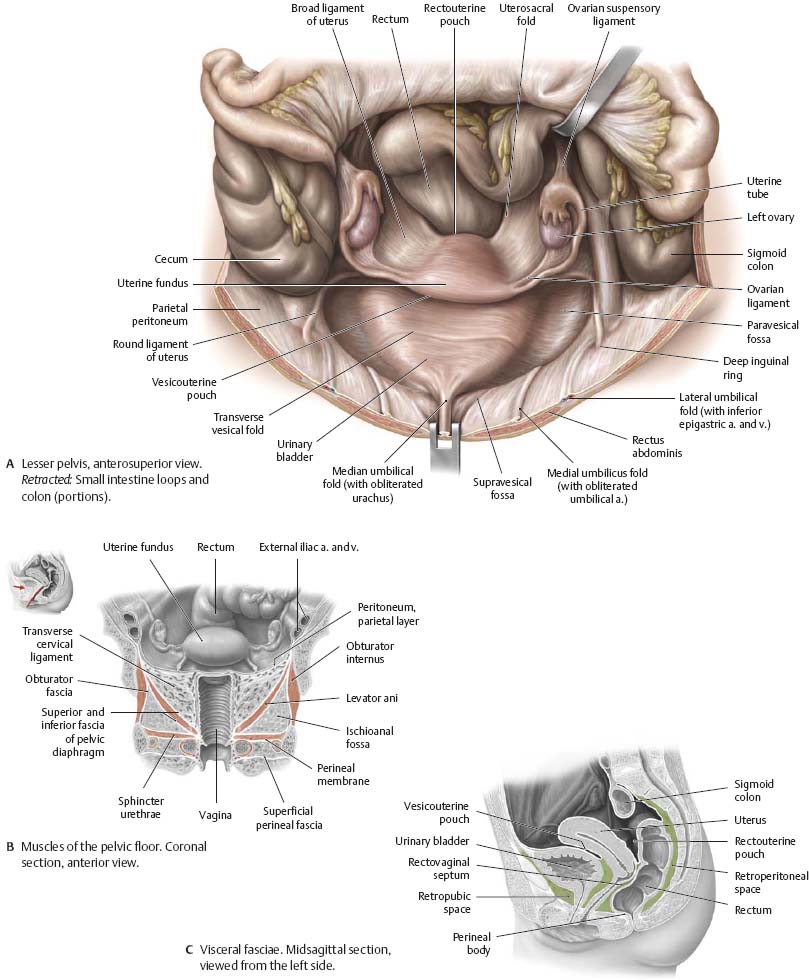
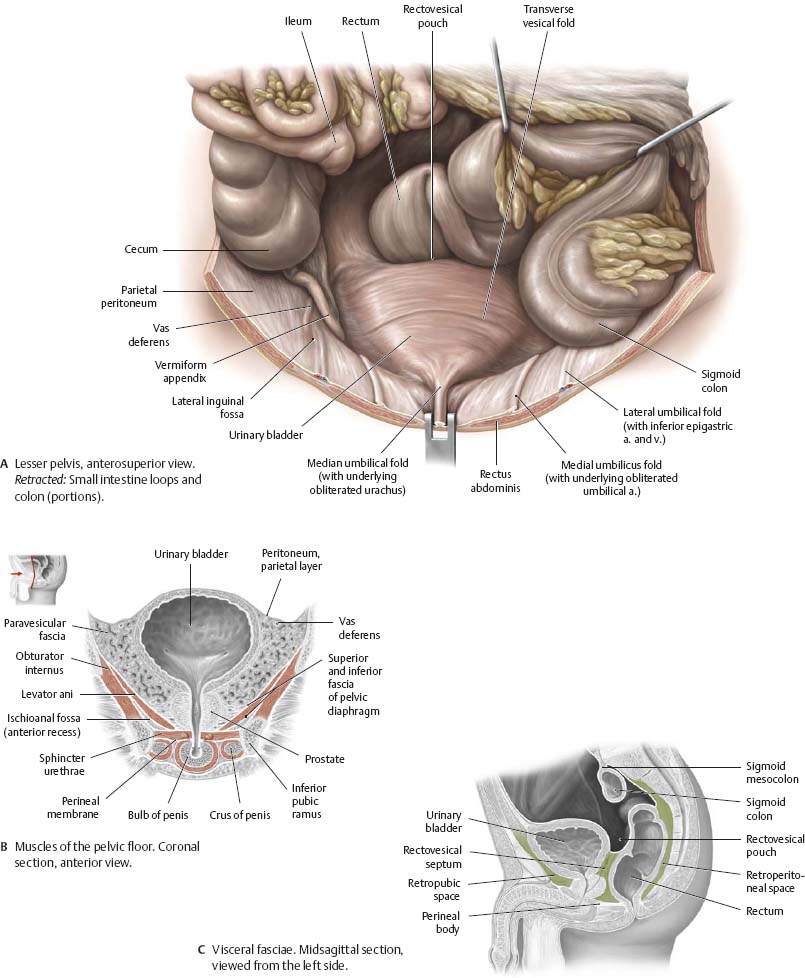
Fig. 12.13 Peritoneal relationships in the pelvis: Male
Pelvis & Perineum
Fig. 12.14 Pelvis and urogenital triangle
Coronal section, anterior view.
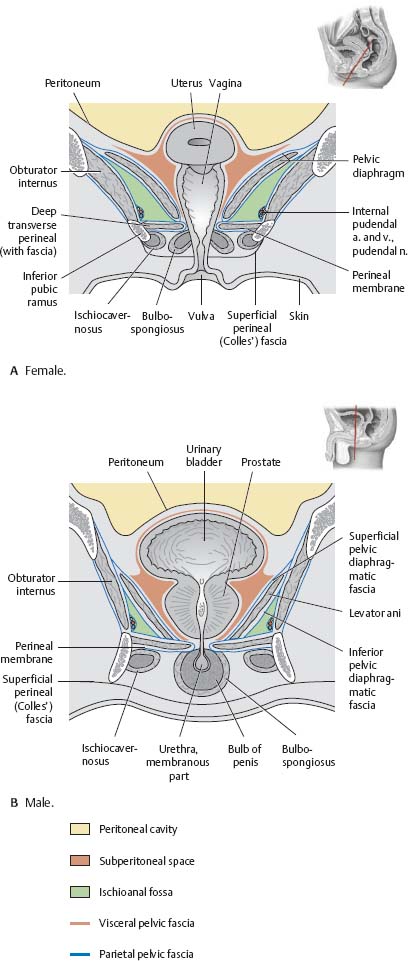
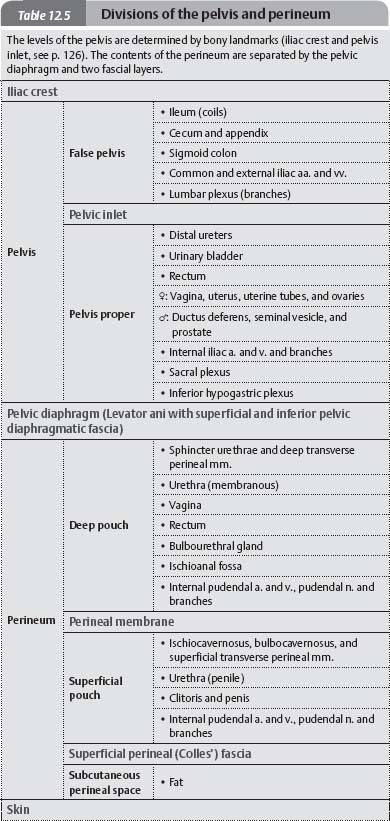
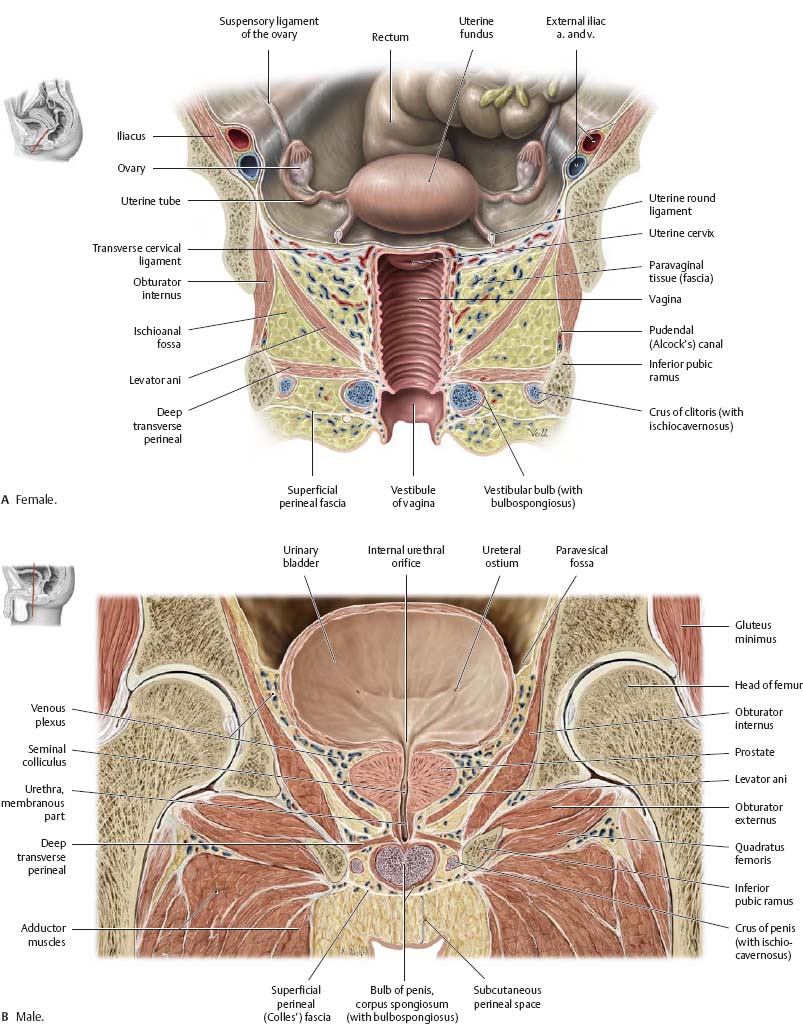
Fig. 12.15 Pelvis: Coronal section Anterior view.
Transverse Sections
Fig. 12.16 Abdomen: Transverse section
Inferior view.
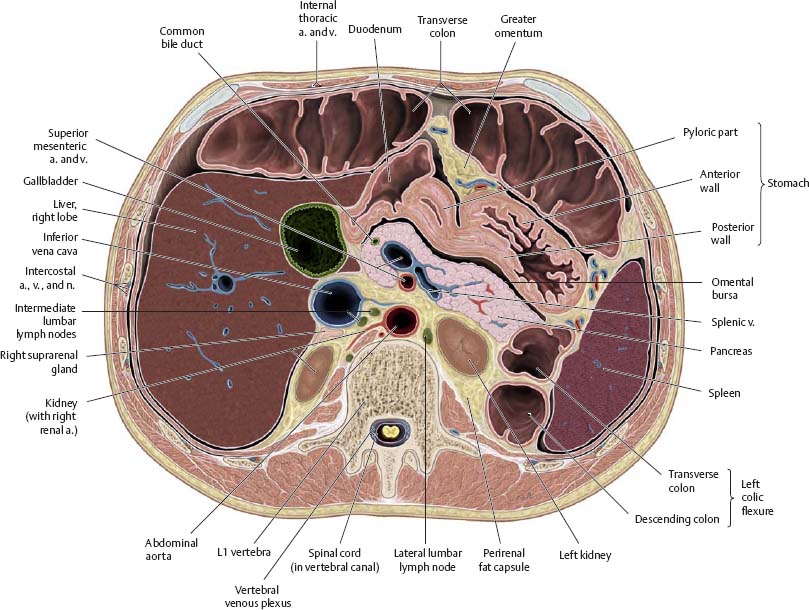
Fig. 12.17 Pelvis: Transverse section
Inferior view.
