Bones of the Lower Limb
Fig. 24.1 Bones of the lower limb
Right limb. The skeleton of the lower limb consists of a limb girdle and an attached free limb. The free limb is divided into the thigh (femur), leg (tibia and fibula), and foot. It is connected to the pelvic girdle by the hip joint.

Fig. 24.2 Line of gravity
Right lateral view. The line of gravity runs vertically from the whole-body center of gravity to the ground with characteristic points of intersection.
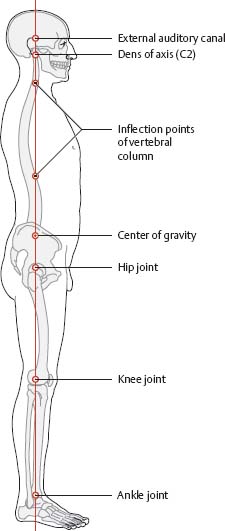
Fig. 24.3 Palpable bony prominences in the lower limb
Most skeletal elements of the lower limb have bony prominences, margins, or surfaces (e.g., medial or tibial surfaces) that can be palpated through the skin and soft tissues.

Pelvic Girdle & Hip Bone
Fig. 24.4 Pelvic girdle
Anterior view. Pelvic ring in red.

 Each pelvic girdle consists of a hip bone (coxal bone, innominate bone), which articulates with the head of a femur. Unlike the shoulder girdle, the pelvic girdle is firmly integrated into the axial skeleton: the paired hip bones are connected to each other at the cartilaginous pubic symphysis and to the sacrum via the sacroiliac joints. These attachments create the bony pelvic ring (red), permitting very little motion. This stability is an important prerequisite for the transfer of trunk loads to the lower limb (necessary for normal gait).
Fig. 24.5 Right hip bone

Fig. 24.6 Components of the hip bone
Right hip bone. The three bony elements of the hip bone (ilium, ischium, and pubis) come together at the acetabulum. Definitive fusion of the Y-shaped growth plate (triradiate cartilage) occurs between the 14th and 16th years of life.

Femur
Fig. 24.7 Right femur


 Clinical
Fractures of the femur
Femoral fractures caused by falls in patients with osteoporosis are most frequently located in the neck of the femur. Femoral shaft fractures are less frequent and are usually caused by strong trauma (e.g., a car accident).
Fig. 24.8 Head of femur in the hip joint
Right hip joint, superior view.
Hip Joint: Overview
Fig. 24.9 Right hip joint
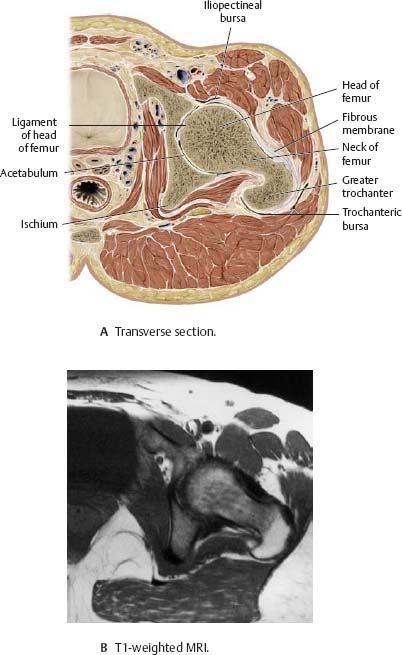
The head of the femur articulates with the acetabulum of the pelvis at the hip joint, a special type of spheroidal (ball-and-socket) joint. The roughly spherical femoral head (with an average radius of curvature of approximately 2.5 cm) is largely contained within the acetabulum.

Fig. 24.10 Hip joint: Coronal section
Right hip joint, anterior view.

Clinical
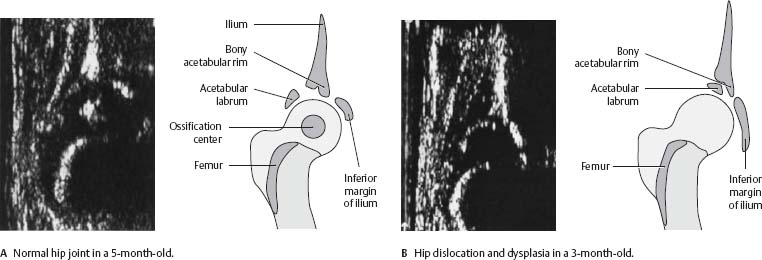
Diagnosing hip dysplasia and dislocation
Ultrasonography, the most important imaging method for screening the infant hip, is used to identify morphological changes such as hip dysplasia and dislocation. Clinically, hip dislocation presents itself with instability and limited abduction of the hip joint, and leg shortening with asymmetry of the gluteal folds.
Hip Joint: Ligaments & Capsule
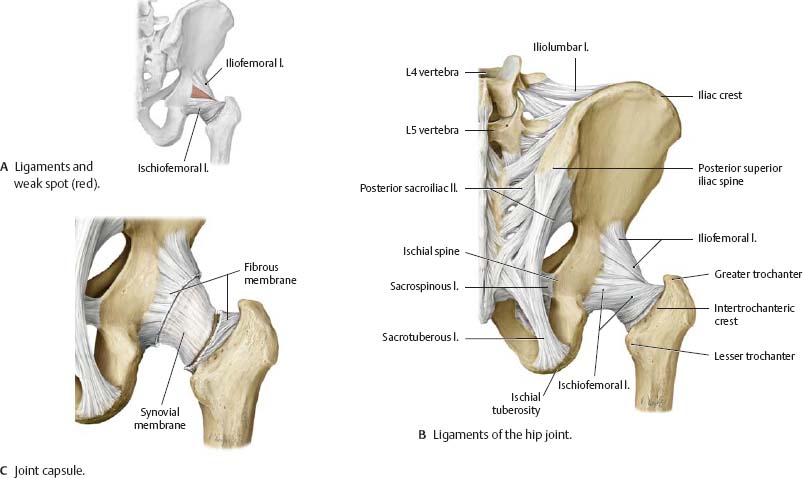
The hip joint has three major ligaments: iliofemoral, pubofemoral, and ischiofemoral. The zona orbicularis (annular ligament) is not visible externally and encircles the femoral neck like a buttonhole.
Fig. 24.11 Hip joint: Lateral view

Fig. 24.12 Hip joint: Anterior view
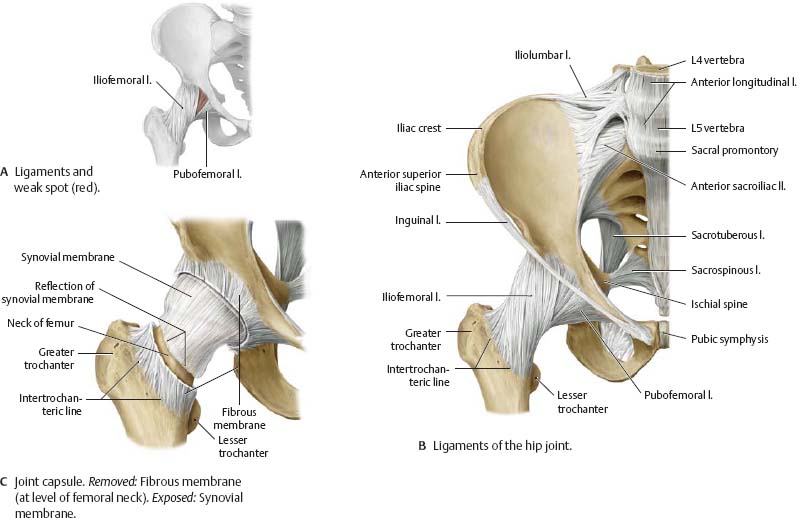
Fig. 24.13 Hip Joint: Posterior view
Anterior Muscles of the Thigh, Hip & Gluteal Region (I)
Fig. 24.14 Muscles of the hip and thigh: Anterior view (I)
Right limb. Muscle origins (O) are shown in red, insertions (I) in blue.
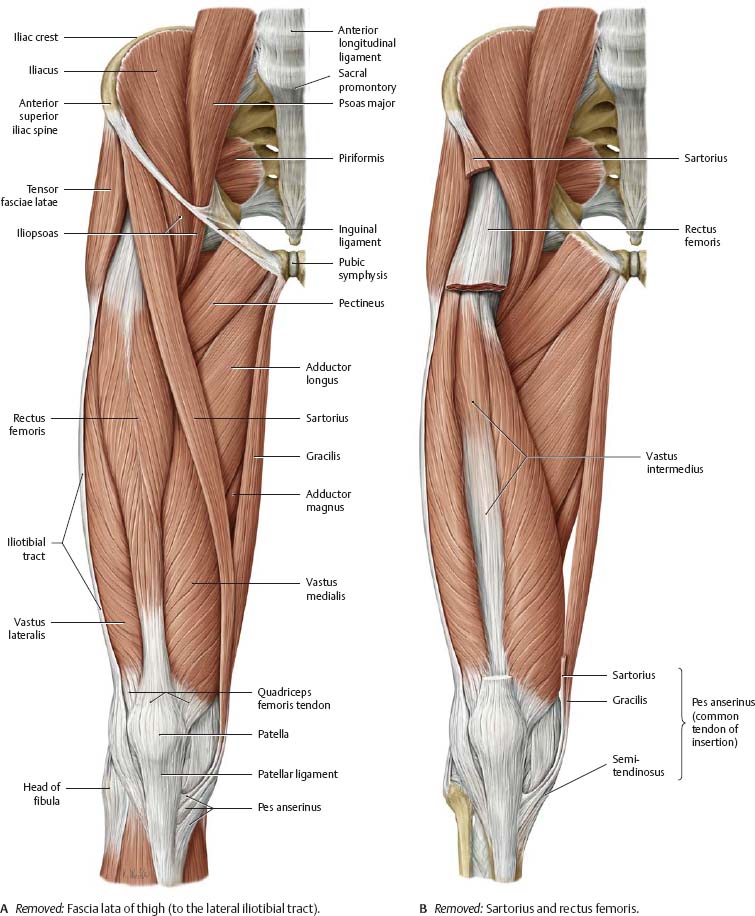

Anterior Muscles of the Thigh, Hip & Gluteal Region (II)
Fig. 24.15 Muscles of the hip and thigh: Anterior view (II)
Right limb. Muscle origins (O) are shown in red, insertions (I) in blue.
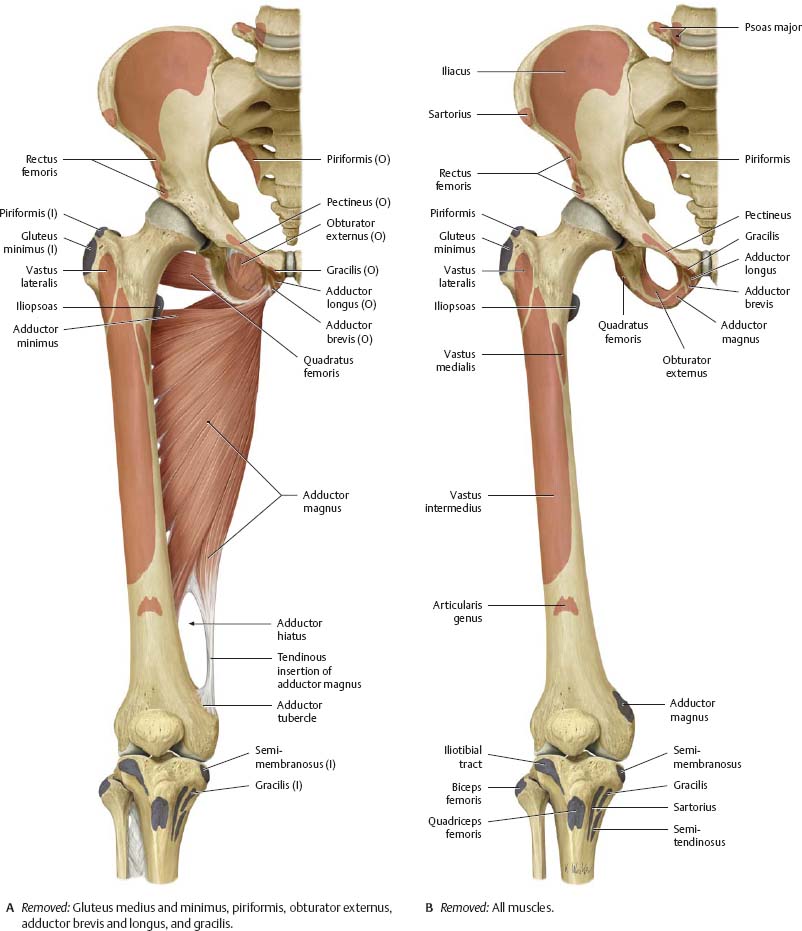
Fig. 24.16 Muscles of the hip, thigh, and gluteal region: Medial view
Midsagittal section.

Posterior Muscles of the Thigh, Hip & Gluteal Region (I)
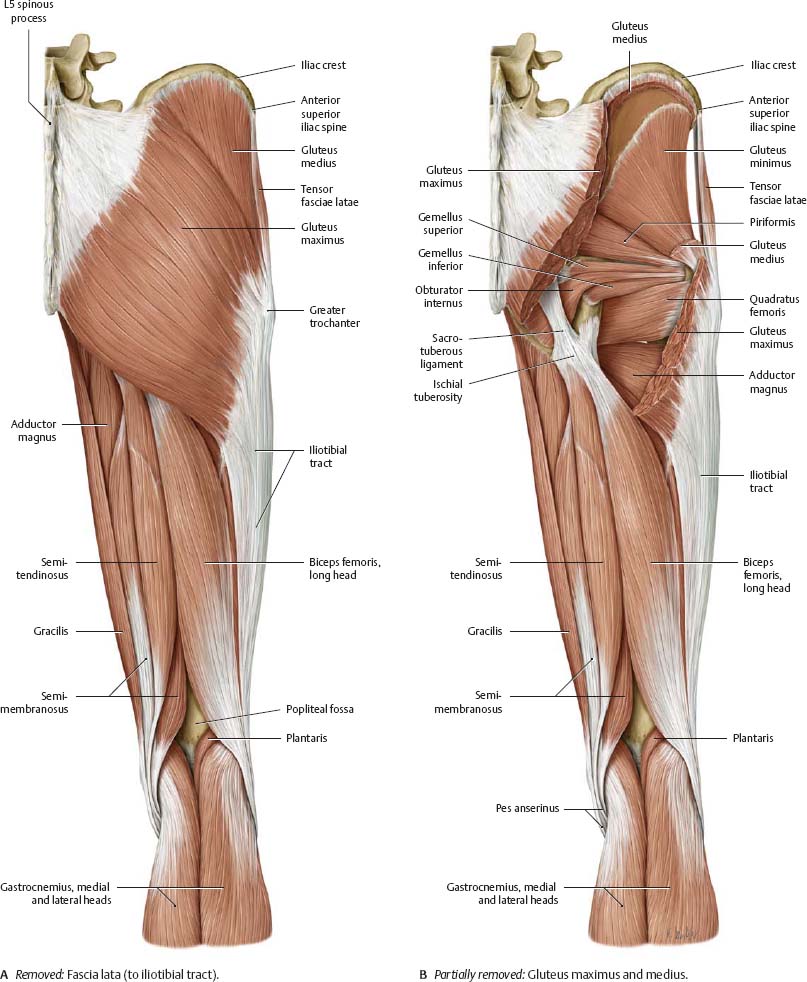
Fig. 24.17 Muscles of the hip, thigh, and gluteal region: Posterior view (I)
Right limb. Muscle origins (O) are shown in red, insertions (I) in blue.
Posterior Muscles of the Thigh, Hip & Gluteal Region (II)
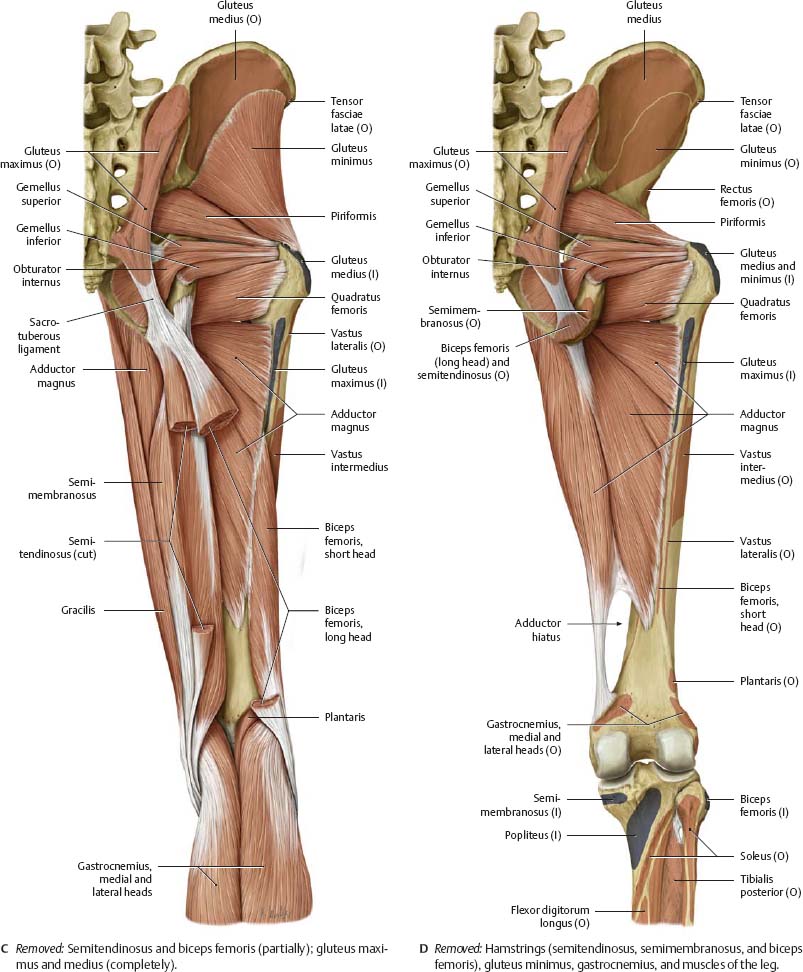
Fig. 24.18 Muscles of the hip, thigh, and gluteal region: Posterior view (II)
Right limb. Muscle origins (O) are shown in red, insertions (I) in blue.

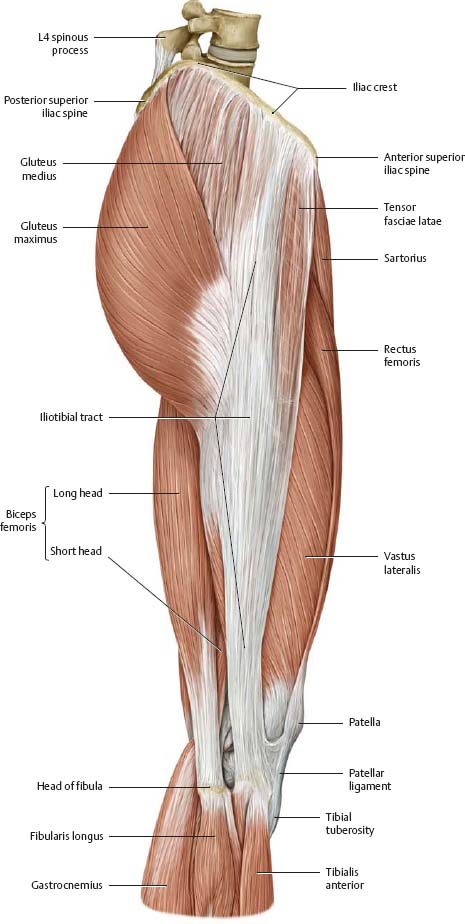
Fig. 24.19 Muscles of the hip, thigh, and gluteal region: Lateral view
Note: The iliotibial tract (the thickened band of fascia lata) functions as a tension band to reduce the bending loads on the proximal femur.
Muscle Facts (I)
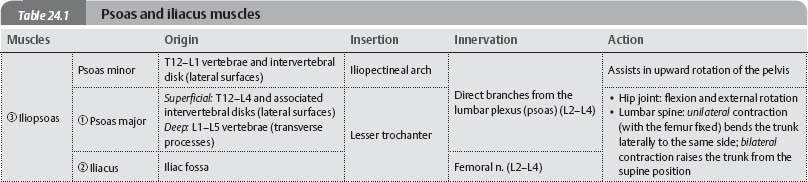
Fig. 24.20 Muscles of the hip
Right side.
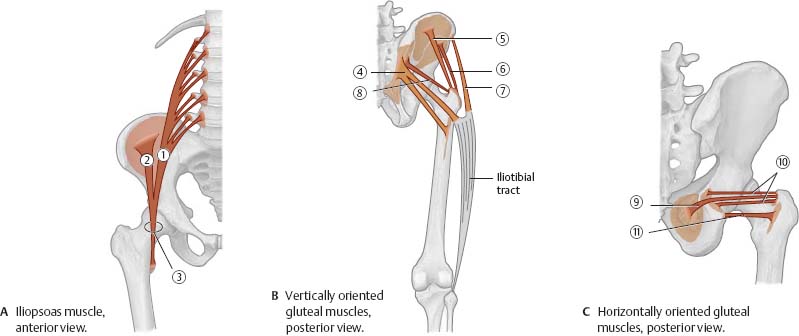
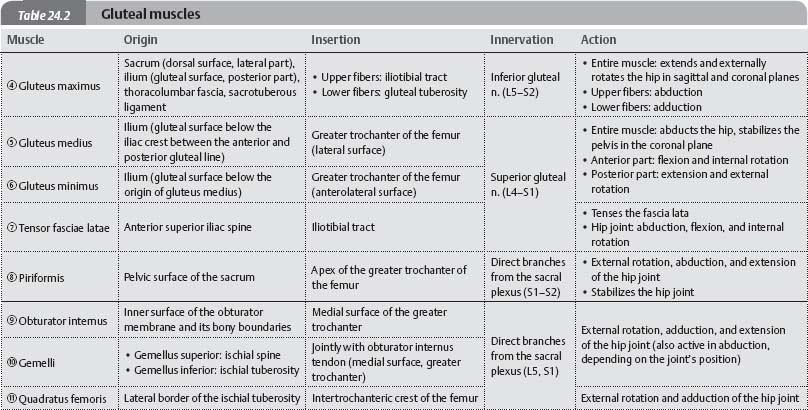
Fig. 24.21 Psoas and iliacus muscles
Right side, anterior view.
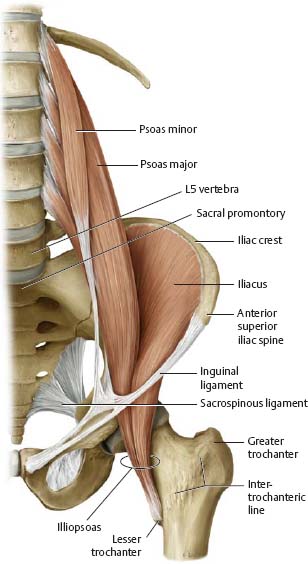
Fig. 24.22 Superficial muscles of the gluteal region
Right side, posterior view.

Fig. 24.23 Deep muscles of the gluteal region

Muscle Facts (II)
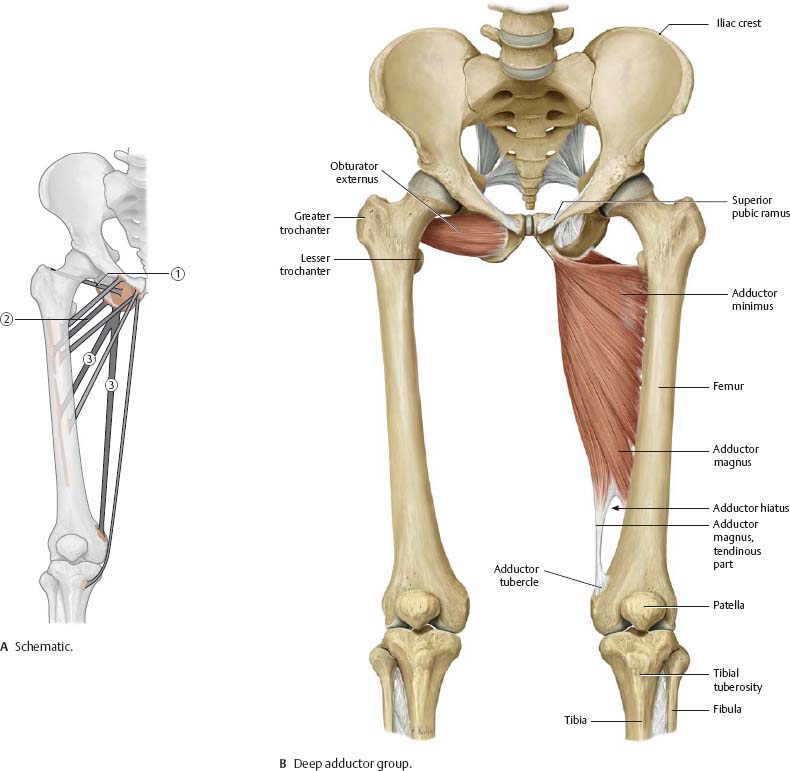
Functionally, the medial thigh muscles are considered the adductors of the hip.
Fig. 24.24 Medial group: Superficial layer
Right side, anterior view.
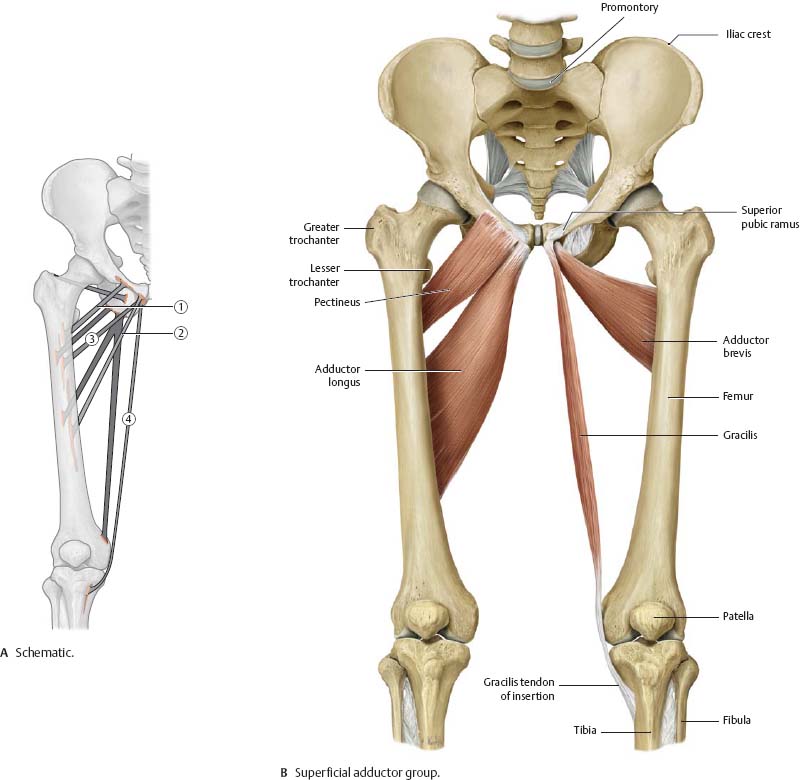
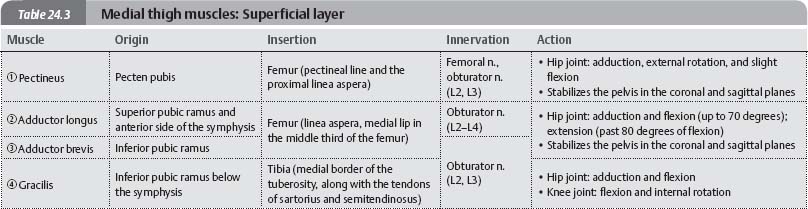
Fig. 24.25 Medial group: Deep layer
Right side, anterior view.

Muscle Facts (III)
Fig. 24.26 Anterior thigh muscles
Right side, anterior view.
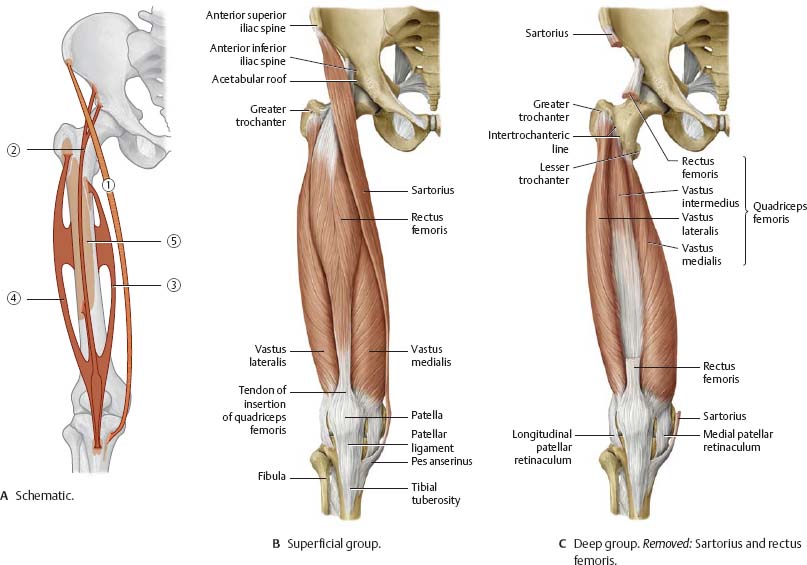
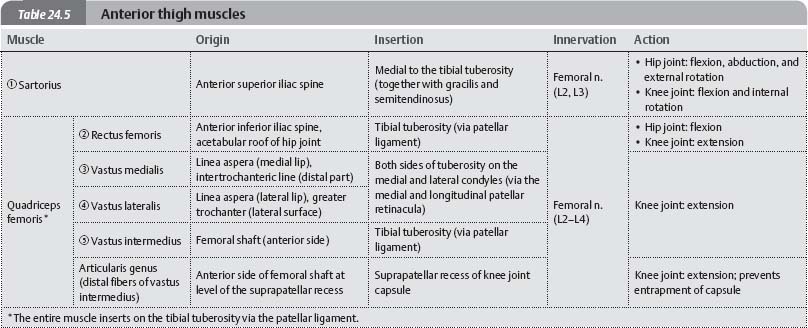
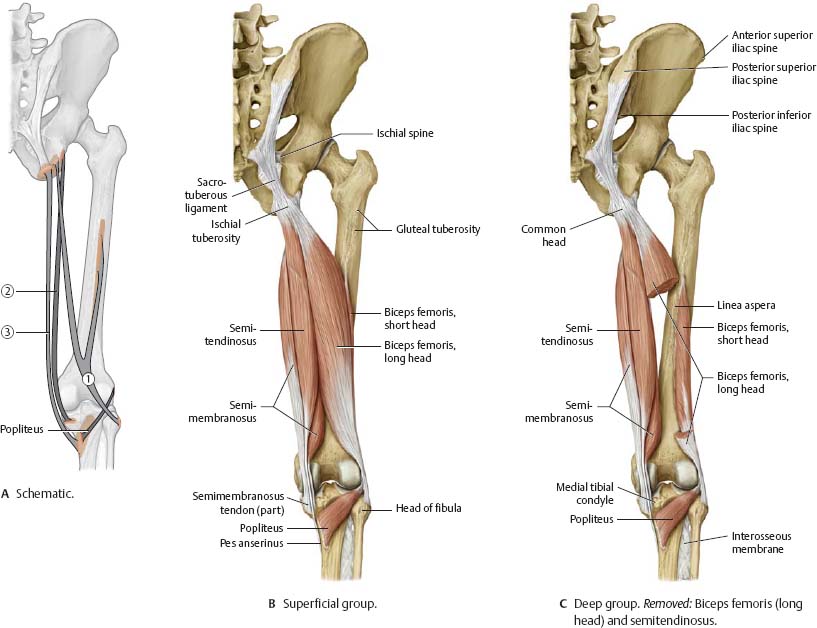
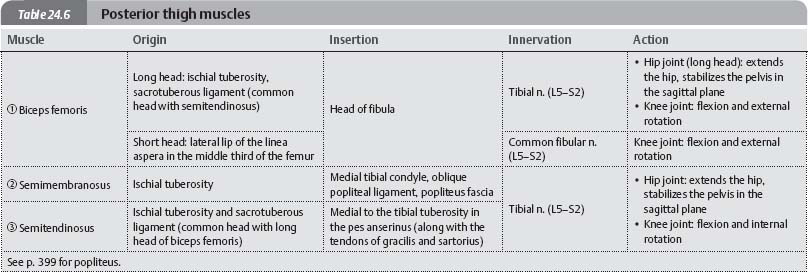
Fig. 24.27 Posterior thigh muscles
Right side, posterior view.