Anterior & Lateral Skull
Fig. 29.1 Lateral skull
Left lateral view.

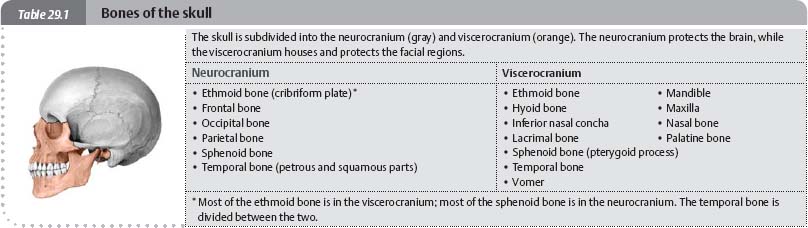
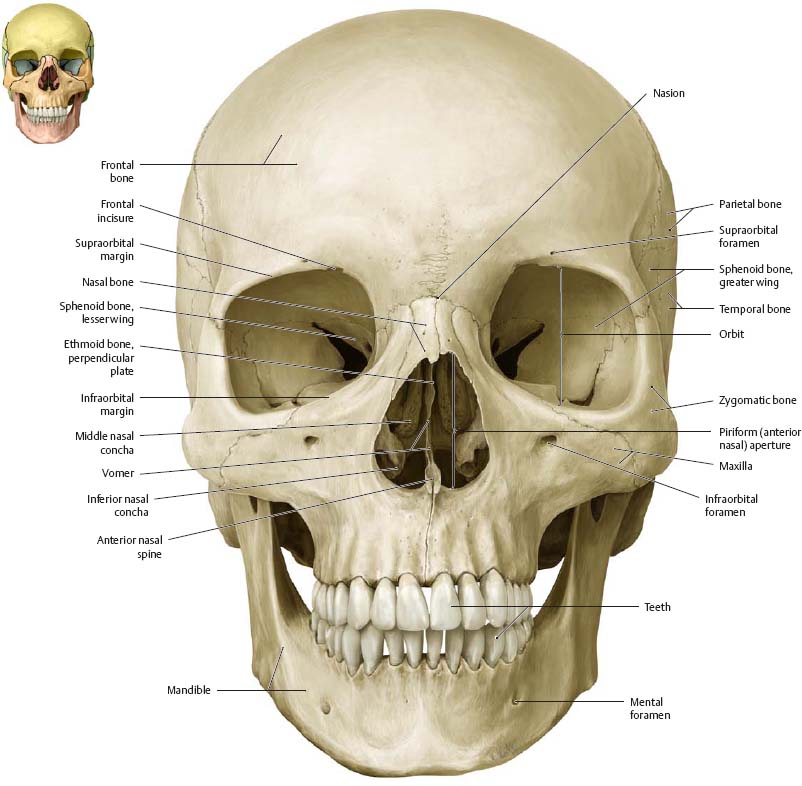
Fig. 29.2 Anterior skull
Anterior view.
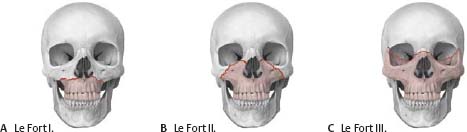
 Clinical
Fractures of the face
The framelike construction of the facial skeleton leads to characteristic patterns for fracture lines (classified as Le Fort I, II, and III fractures).
Posterior Skull & Calvaria
Fig. 29.3 Posterior skull
Posterior view.

Fig. 29.4 Calvaria
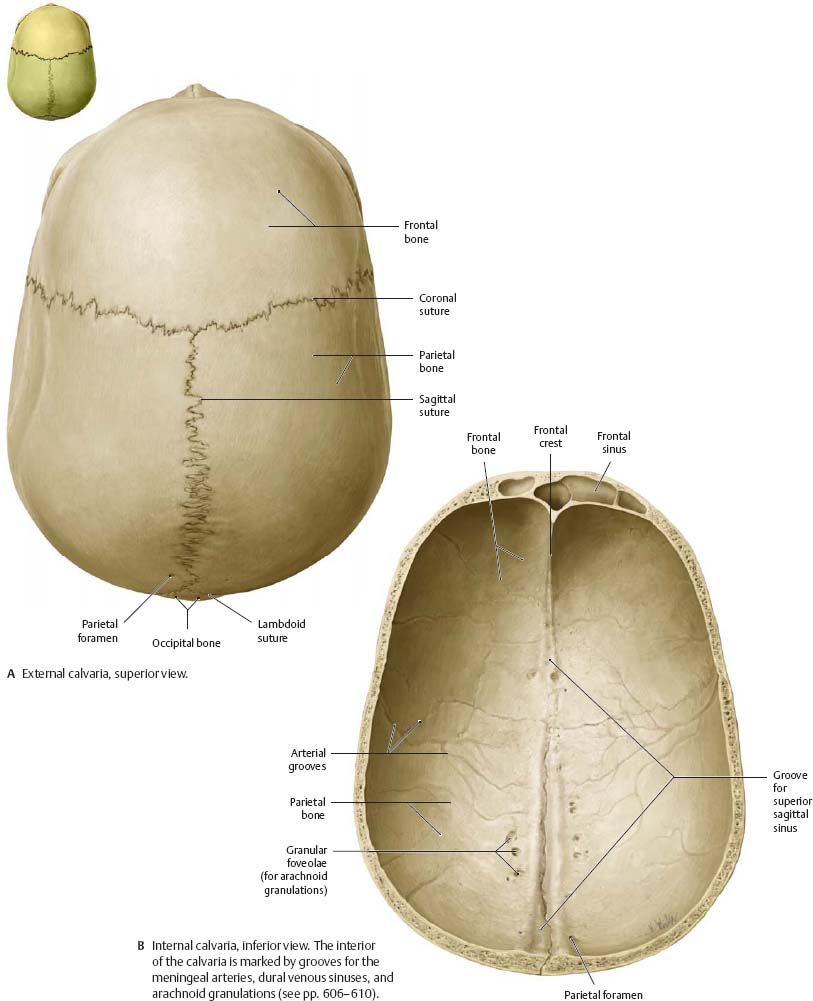
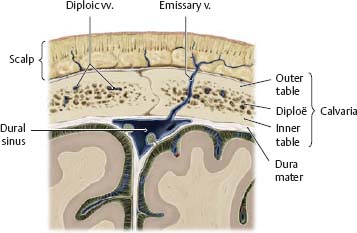
Fig. 29.5 Structure of the calvaria
Cross section.
Base of the Skull
Fig. 29.6 Base of the skull: Exterior
Inferior view. Revealed: Foramina and canals for blood vessels (see p. 490) and cranial nerves. Note: This view allows visual access into the posterior region of the nasal cavity.
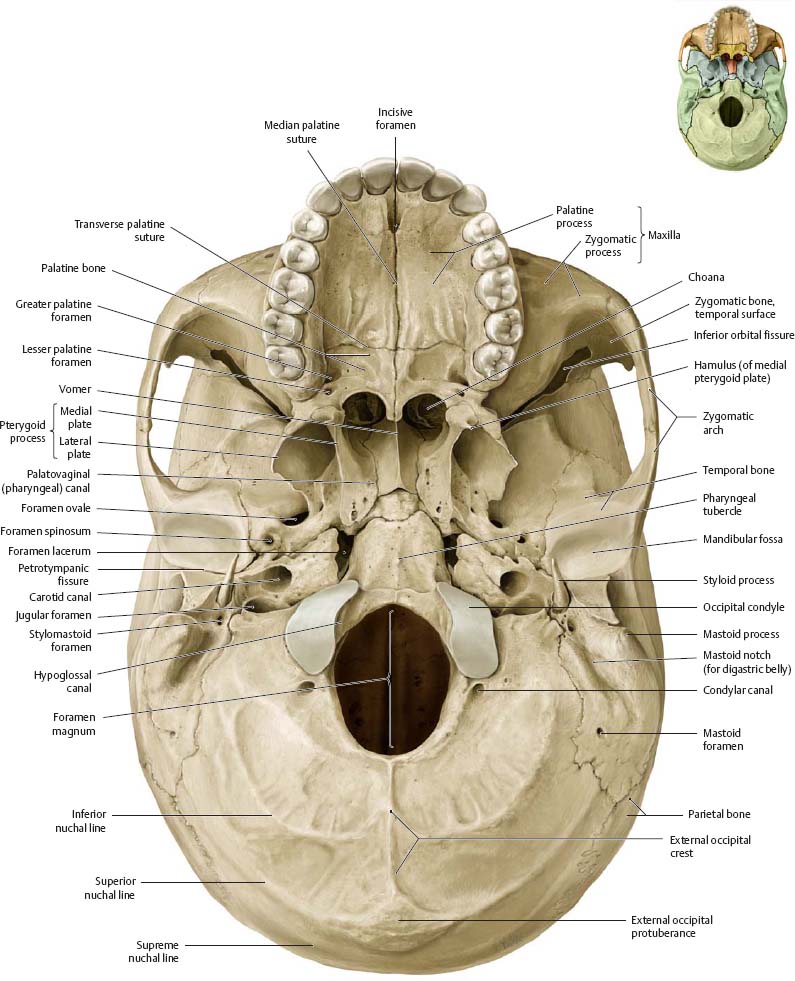
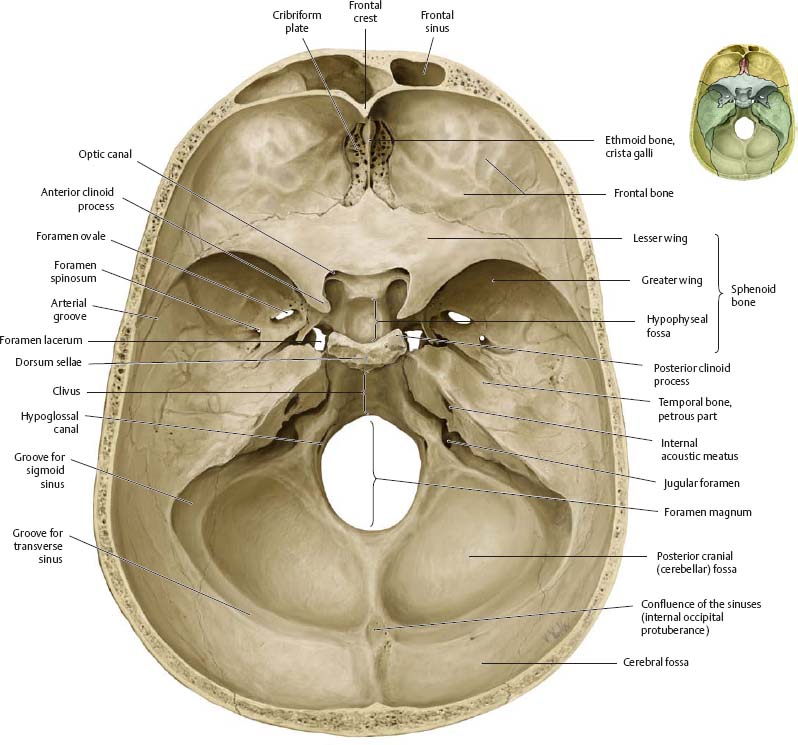
Fig. 29.7 Cranial fossae
The interior of the skull base consists of three successive fossae that become progressively deeper in the frontal-to-occipital direction.
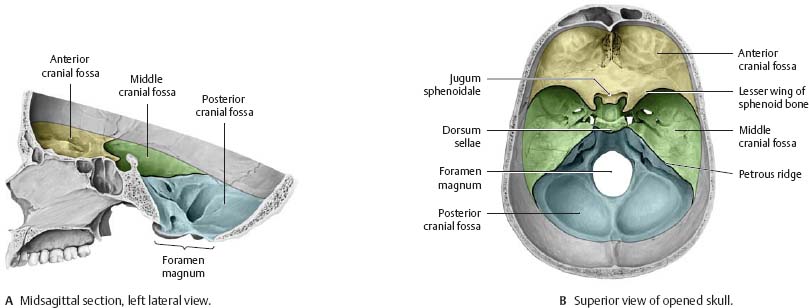
Fig. 29.8 Base of the skull: Interior
Superior view.
Ethmoid & Sphenoid Bones
 The structurally complex ethmoid and sphenoid bones are shown here in isolation. The other bones of the skull are shown in their respective regions: orbit (see pp. 506–507), nasal cavity (see pp.520–521), oral cavity (see pp. 538–539), and ear (see pp. 526–527).
Fig. 29.9 Ethmoid bone
The ethmoid bone is the central bone of the nose and paranasal air sinuses (see pp. 520–523).
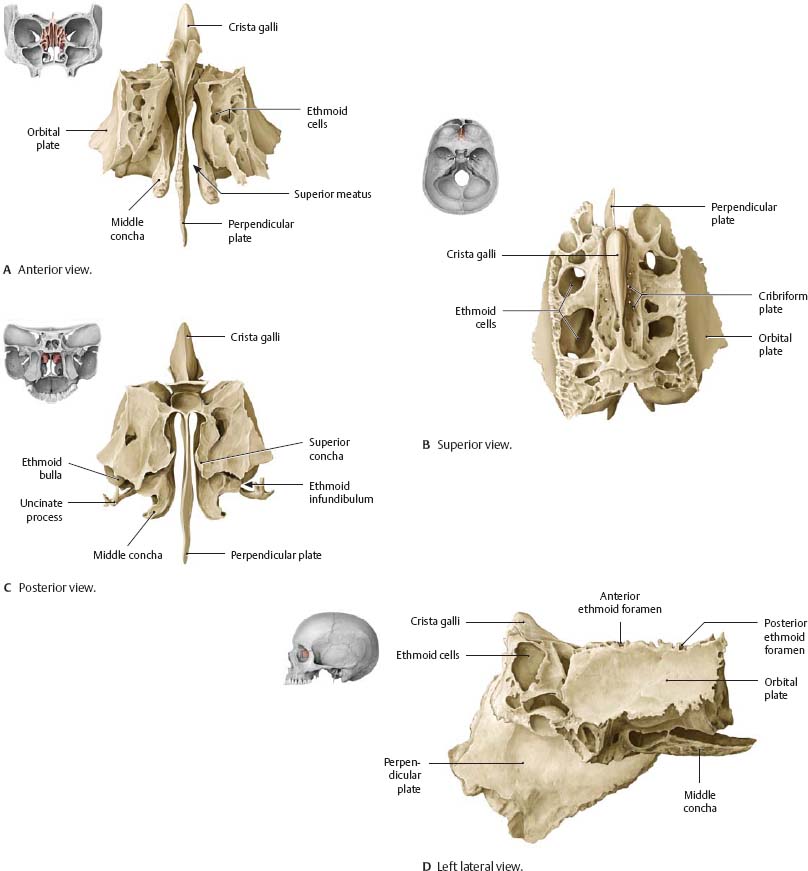
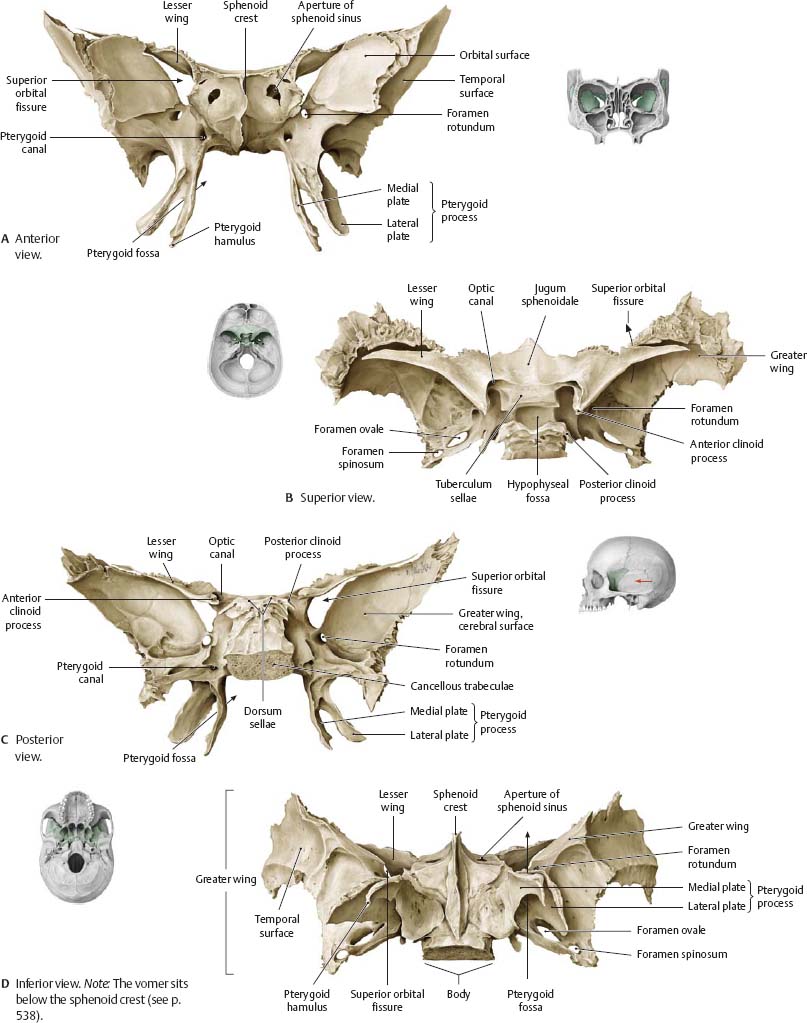
Fig. 29.10 Sphenoid bone
The sphenoid bone is the most structurally complex bone in the human body.