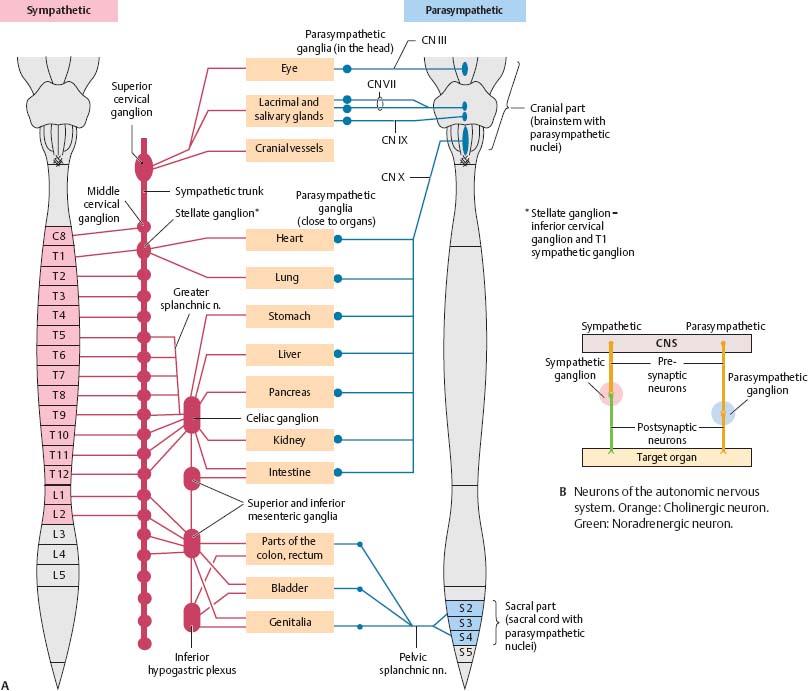
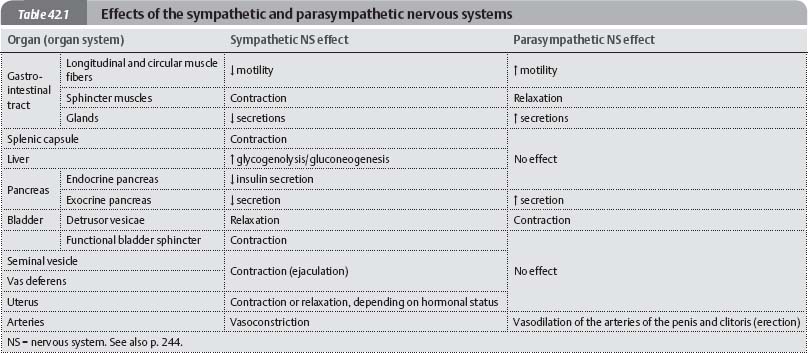
Autonomic Nervous System
Fig. 42.1 Autonomic nervous system circuitry
The autonomic nervous system innervates smooth muscle, cardiac muscle, and glands. It is divided into the sympathetic (red) and parasympathetic (blue) nervous systems, which often act in antagonistic ways to regulate blood flow, secretions, and organ function. Green: Afferent. Purple: Efferent.
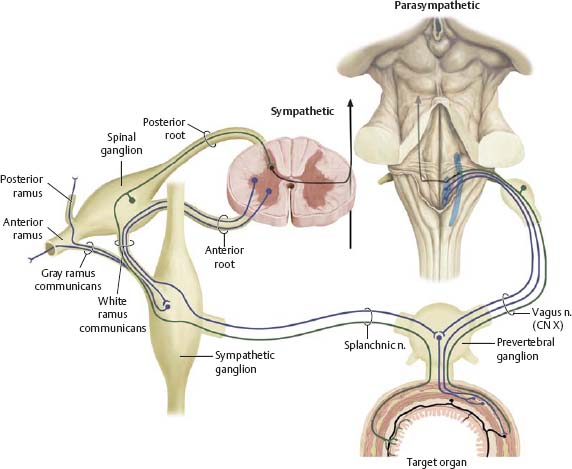
Fig. 42.2 Autonomic tracts in the spinal cord
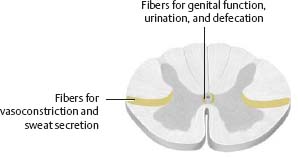
Fig. 42.3 Regulatory effects of the autonomic neurotransmitters
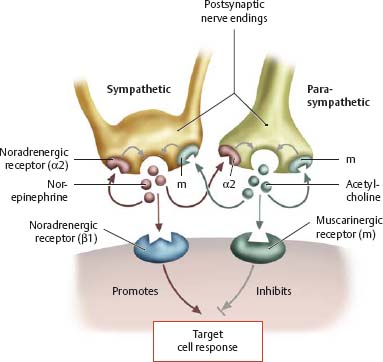
Fig. 42.4 Blood pressure regulation
Sympathetic fibers may release norepinephrine, inducing the α1 receptor to mediate contraction of the vascular smooth muscle (thus increasing blood pressure). Circulating epinephrine acts on the β2 receptors to induce vasodilation (decreasing blood pressure). Note: Parasympathetic fibers do not terminate on blood vessels.
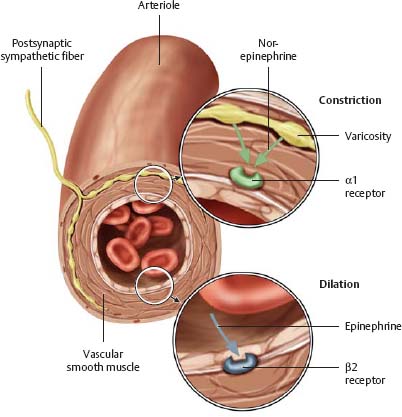
Fig. 42.5 Autonomic nervous syste