
The trouble with the world is not that people know too little, it’s that they know so many things that just aren’t so.
—MARK TWAIN
On February 28, 1998, Andrew Wakefield, a surgeon working at London’s Royal Free Hospital, held a press conference. He believed he had found the cause of autism. His findings would be published later that day in the Lancet, Britain’s oldest and most prestigious medical journal.
Wakefield was an intriguing character. Tall, square-jawed, and soft-spoken, with intense blue eyes and the physique of a rugby player, he had once been a golden boy in the medical world. The son of two doctors—his mother a general practitioner, his father a neurologist—Wakefield had trained in Toronto before returning to the Royal Free, one of London’s most prestigious hospitals.
Before turning his attention to autism, Wakefield had studied Crohn’s disease, a chronic inflammatory disorder of the gastrointestinal tract, and found that it was caused by decreased blood flow to the intestine. Researchers had spent decades trying to find the cause of Crohn’s. Now, Andrew Wakefield, only thirty-two years old and just starting a career in academic medicine, had figured it out. Richard Horton, who would later be named the editor-in-chief of the Lancet, was at the Royal Free Hospital when Wakefield made his discovery. “I was in a different department to Wakefield,” recalled Horton, “but close enough to see the sensation the work caused. Research in the Royal Free’s Academic Department of Medicine was largely moribund at the time I was there. [But] Wakefield brought a sudden sense of excitement. He was a committed, engaging, and charismatic clinician and scientist. The department felt alive again. He asked big questions about diseases and his ambition often brought quick and impressive results.”
Wakefield knew that to help Crohn’s victims, he had to find what was blocking the tiny blood vessels leading to their intestines. In 1993, he believed he had found it. In a paper titled “Evidence of Persistent Measles Virus in Crohn’s Disease,” Wakefield described fifteen patients with Crohn’s in whom he had found measles virus in biopsies of their intestines. Natural measles virus, reasoned Wakefield, was causing Crohn’s. Then he took his research one step further. In a paper titled “Is Measles Vaccination a Risk Factor for Inflammatory Bowel Disease?” Wakefield claimed that measles virus wasn’t the only cause of Crohn’s; measles vaccine also caused the disease. His findings shocked the medical world. Researchers in England, Denmark, Japan, Scotland, Germany, and the United States tried to duplicate Wakefield’s findings but couldn’t. Study after study showed that measles infections weren’t more common in people with Crohn’s disease; that measles virus wasn’t contained in their intestines; and that vaccinated people weren’t at greater risk. In 1998, in a paper titled “Measles Virus RNA Is Not Detected in Inflammatory Bowel Disease,” Wakefield admitted he had been wrong. Although his findings had unnecessarily scared the public about measles vaccine, Wakefield staked a higher ground. “Hypothesis testing and presentation of the outcome—either positive or negative—is a fundamental part of the scientific process,” he said. “Accordingly, we have published studies that both do and do not support a role for measles in chronic intestinal inflammation: this is called integrity.”
But Andrew Wakefield wasn’t finished with the measles vaccine.

WAKEFIELD’S MISSTEP WITH CROHN’S DISEASE DIDN’T DAMPEN his enthusiasm for medical research. When he called a press conference in February 1998 to announce a possible cause of autism, journalists were impressed by his position at the Royal Free Hospital, home to an excellent medical school, and by the fact that his findings would be published in the Lancet. In a room packed with reporters, Wakefield announced that his team had inserted fiber-optic scopes into eight autistic children and looked at the linings of their large intestines. What they found surprised them: the intestines were studded with lymphatic nodules, similar to those found in tonsils and adenoids. Apparently, children with autism, like people with Crohn’s disease, had inflamed intestines. Then Wakefield told reporters what he believed might be causing the inflammation: the MMR vaccine. All eight autistic children with intestinal inflammation had recently received MMR.
Wakefield explained how he had first made the connection between MMR and autism. “In 1995, I was approached by parents—articulate, well-educated, and concerned—who told me the stories of their children’s deterioration into autism,” he said. “Their children had developed normally for the first fifteen to eighteen months of life when they received the MMR vaccination. But after a variable period the children regressed, losing speech, language, social skills, and imaginative play, descending into autism.” Parents of autistic children appreciated Wakefield’s attention and concern. Finally, here was a doctor who cared. “He was the first doctor who really listened to us,” said Isabella Thomas. “This man was my savior. He wanted to help me where others just saw me as a mother of a damaged child, an ‘inconvenience.’ ”
During his press conference, Wakefield explained why he believed MMR might cause autism. He proposed that after MMR vaccine was injected into the arm, the measles vaccine virus trav-eled to the intestine and caused infection and inflammation. Harmful proteins, now able to pass through a damaged intestine, entered the bloodstream and eventually the brain, causing autism. Wakefield hadn’t identified the proteins that had caused harm, but he was confident that it was only a matter of time until he did.
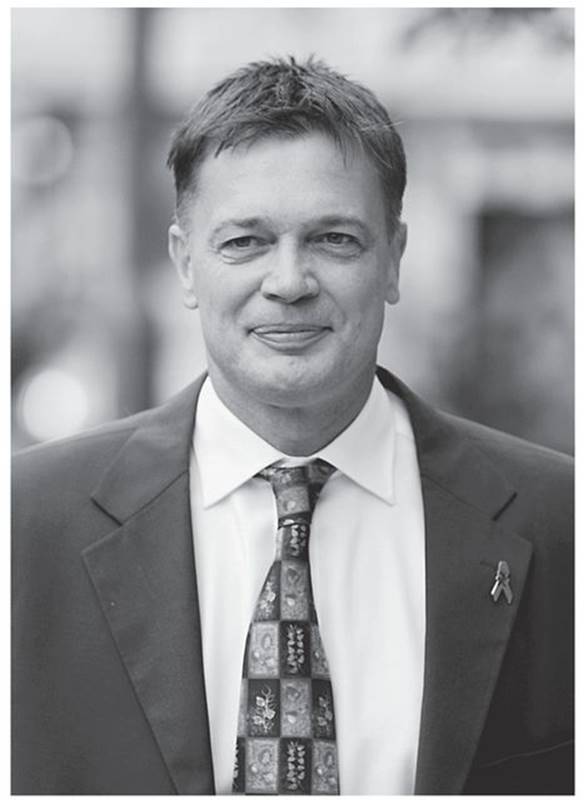
Andrew Wakefield, a British surgeon, proposed that the measles-mumps-rubella (MMR) vaccine caused autism (courtesy of Getty Images).
Wakefield also had a solution. If parents wanted to avoid autism, they should separate MMR into three vaccines. “There is sufficient concern in my own mind for a case to be made for vaccines to be given individually at not less than one-year intervals,” he said. “One more case of [autism] is too many. It’s a moral issue for me and I can’t support the continued use of these three vaccines given in combination until this issue has been resolved.” Unfortunately, because the pharmaceutical companies that made MMR vaccine for British children didn’t offer the vaccines separately, Wakefield was effectively recommending that children not be vaccinated.
Simon Murch, the second author on the Lancet paper and a well-respected pediatric gastroenterologist, was, like Wakefield, excited by the finding of intestinal disease in children with autism. But Murch knew that Wakefield hadn’t proven his claim against MMR; he had only raised the possibility. “This link is unproven and measles is a killing infection,” said Murch. “If this precipitates a scare and immunization rates go down, as sure as night follows day, measles will return and children will die.” Arie Zuckerman, the dean of the Royal Free Medical School, was also surprised by the forcefulness and surety of Wakefield’s statement. “Measles vaccines are among the safest and most effective vaccines ever developed,” he said, pleading with the press “not [to] dent the public confidence in immunization.”
But it was too late.

ON MARCH 1, 1998—THE DAY AFTER WAKEFIELD’S PRESS conference—the British media exploded. Headlines in The Guardian and the Daily Mail read, “Alert over Child Jabs” and “Ban Three-in-One Jab, Urge Doctors.” Ironically, only several years earlier public health officials had heartily supported the “Catch-Up Campaign,” a program designed to immunize as many British schoolchildren with MMR as possible. Now, a respected British scientist was claiming that instead of helping children, this immunization campaign had hurt them. In response, thousands of British parents refused the vaccine.
During the next few years, journalists wrote more than 1,500 articles about Andrew Wakefield, the MMR vaccine, and autism. So great was the fascination with Wakefield that on December 15, 2003, a ninety-minute docudrama about his brilliance and courage, Hear the Silence, appeared on British television. The show featured the television actor Hugh Bonneville as Wakefield and Juliet Stevenson—who one year earlier had starred in the movie Bend It Like Beckham—as Christine Shields, the mother of an autistic son. David Aaronovitch reviewed the film for the London newspaper The Observer: “Hear the Silence [is about] the quest of a fictional mum to discover the truth about what made her son develop autism. As she quests, she hits the usual obstacles: a husband who thinks she’s mad, an unsympathetic boss; and, of course, the derision of blinkered and calloused so-called experts.” After the tenth doctor has refused to believe Christine’s claim, she explodes. “Something happened to him,” she screams. “Look at these photos. Look at how he was. Look at how he is now.” Behind graphic images of the invading virus attacking the brain—shown in dramatic colors and accompanied by eerie music—Andrew Wakefield explains to Christine what has happened to her son. “It was an interior Jaws,” said Aaronovitch. “The MMR vaccine is coming to get our kids.” In Hear the Silence, an evil public health official plots Wakefield’s demise. “The best course of action,” she says, “is to discredit the work that [Wakefield’s] done so we can dismiss the conclusions. I am advised that the research is flawed.” “Is it?” asks a skeptical colleague. “It is [my] opinion,” she replies, “and one that we should disseminate.” In the movie, Wakefield is forced to withstand tremendous pressures: his files are stolen, his phone is tapped, and he hears heavy breathing on the line. Viewers learn later who is behind the intimidation: drug companies. “It’s a million-pound industry,” says the mother of another autistic child. “So they’ll fight dirty.” But Wakefield refuses to be intimidated. Turning to his wife, he says, “I wouldn’t let anything happen to you or the kids. If we let them know we’re scared, then they win.”
Hear the Silence had an immediate impact. More British parents stopped vaccinating their children. One, Debbie Bruce, said: “It must be really frightening to be in that position when no one is listening. I’m not sure what I’m going to do about [my daughter’s] next lot of injections. We’re all in the dark about what is really going on.” For some, frustration turned to anger. “I was overwhelmed with rage,” said Leslie Mitchell, the mother of an autistic son. “I felt it building within me and it was like nothing I’d experienced before. I knew very clearly at that moment that I had crossed over to the other side, that I was convinced my son was a cash cow for an industry that tested its products in production rather than the lab, motivated by $2 billion per year in profits, no different in its potential for corruption than any other industry.” Autism now had its villains: the MMR vaccine, the companies that made it, the government officials who promoted it, and the doctors who gave it. And it had its hero: Andrew Wakefield.
In the months following Wakefield’s warning, the proportion of children receiving MMR vaccine dropped from nearly 90 percent to 70 percent and, in some areas of London, to 50 percent. As a consequence, small outbreaks of measles first appeared in upper-middle-class elementary schools in London. Other outbreaks followed, first in underimmunized areas of London then in Scotland and Ireland. By 2002, hundreds of children in Ireland had fallen ill with the disease. One small hospital in Dublin admitted 100 children with pneumonia and brain swelling caused by measles, three of whom died. One child, Naomi, died when the measles virus infected her brain. “By the time we got up to the ward she was dead,” recalled her mother. “They were taking all the tubes out of her. When she first got sick the nurse said it was only the measles. Only?”
In 2003, the journal Science published an article titled “Measles Outbreaks in a Population with Declining Vaccine Uptake.” Using statistical modeling, researchers showed that immunization rates in England had dropped below the level required to prevent measles from once again becoming a common childhood infection. “If the current low level of MMR vaccine uptake persists in the UK population,” they wrote, “the increasing number of unvaccinated individuals will lead to a reestablishment of endemic measles and accompanying mortality.” In 2006, a thirteen-year-old boy became the first person in England to die from measles in more than a decade.

WAKEFIELD WASN’T ALONE IN HIS BELIEF THAT MMR MIGHT CAUSE autism. Following his press conference in 1998, several scientists and physicians stepped forward to support him.
John O’Leary, a professor of pathology at Coombe Women’s Hospital in Dublin, examined intestinal biopsies provided by Wakefield using polymerase chain reaction (PCR), a sensitive technique to detect small fragments of measles virus genes. The results were striking. O’Leary found measles virus in the intestines of 82 percent of autistic children but in only 7 percent of nonautistic children. He concluded, “The data confirm an association between the presence of measles virus and gut pathology in children with developmental disorder.”
Hisashi Kawashima, a virologist at Tokyo Medical University in Japan, found measles virus in white blood cells taken from autistic children but not from other children.
Vijendra Singh, a biologist at Utah State University in Logan, found that not only did autistic children have higher levels of measles virus antibodies in blood and spinal fluid than normal children, but they also had antibodies directed against their own brains. He believed that the MMR vaccine had caused an immune response against the sheath that lines nerve cells. Singh had extended Wakefield’s hypothesis: autoimmunity, he claimed, was at the heart of the disorder.
Kenneth Aitken, a clinical psychologist at the Royal Hospital for Sick Children in Edinburgh, Scotland, and a well-known expert in the field, reviewed the cases of more than 300 children with autism and found that at least one-third of them had regressed from normal behavior before MMR vaccination to autism after it. He concluded that autism was caused by a “new environmental factor [that] could indeed prove to be MMR vaccine.”
Walter Spitzer, an emeritus professor of epidemiology at McGill University in Montreal, came to the MMR controversy with an international reputation for his work showing that oral contraceptives caused blood clots. Spitzer examined Kenneth Aitken’s data and agreed MMR was causing autism. But, unlike Wakefield, Spitzer believed that autism could occur up to one year after MMR, and worried it could be even longer.
John March, a veterinarian at the Moredun Research Institute in Scotland, also came on board. March noted that measles vaccine didn’t work well in animals when combined with other vaccines. He lamented that veterinarians had apparently tested animal vaccines more thoroughly than doctors had tested MMR.
Physicians from the United States also weighed in. Marcel Kinsbourne and John Menkes, pediatric neurologists from California, reviewed Wakefield’s Lancet paper and were convinced that at least three and possibly four of the children might have been harmed by MMR. Arthur Krigsman, a gastroenterologist from the New York University School of Medicine, looked at the guts of more than forty children with autism and found—like Wakefield—that they were inflamed. Krigsman described one thirteen-year-old boy as having “the worst case of inflammation of the colon I have ever seen through a fiber-optic scope.”
Andrew Wakefield had turned the British vaccination program upside down. Thousands of parents were choosing not to vaccinate their children. But Wakefield’s efforts didn’t end in the United Kingdom. Next, he took his case to the United States, immediately finding a powerful ally: Dan Burton, a Republican congressman from Indiana. With Andrew Wakefield as his star witness, Burton used his position as the head of the powerful Committee on Government Reform to investigate the case against MMR.

DAN BURTON WAS A FIXTURE IN CONGRESS, FIRST ELECTED IN 1982 and reelected to his thirteenth term in 2006. Staunchly conservative and a born-again Christian, Burton is a self-made man and no stranger to public health issues. Twenty years earlier, in 1977, Burton had stood proudly on the steps of the state capitol in Indianapolis to announce he had won the right of Indiana citizens to use Laetrile, a drug made from apricot seeds, to treat cancer. At the time, the nation’s leading spokesperson for federal legalization of Laetrile was Jason Vale, a national arm-wrestling champion who claimed apricot seeds had cured his cancer. Subsequent studies of hundreds of patients showed that Laetrile didn’t treat cancer, and worse, had side effects similar to those of cyanide poisoning. Burton and other Laetrile advocates argued these studies had been supported by a pharmaceutical industry bent on discrediting a cheap cure for cancer. (Actually they had been funded by the National Cancer Institute and the National Institutes of Health.) Laetrile never worked, was harmful, and is now completely discredited; but to many cancer victims at the time, Dan Burton was a hero. (Jason Vale was later convicted of fraud and sentenced to five years in prison for selling apricot seeds as a cure for cancer.)
Dan Burton’s interest in drug regulation didn’t end with Laetrile. When FDA commissioner David Kessler pushed to ban the use of the over-the-counter stimulant and weight-loss product Ephedra, Burton fought back. Although Ephedra clearly curbed appetites, it also constricted blood vessels and raised blood pressure. When Kessler moved to ban Ephedra, it had already caused at least fifteen deaths and hundreds of cases of psychosis, hallucinations, paranoia, depression, irregular heartbeats, strokes, and heart attacks. Problems with Ephedra were well known to the press. The British Medical Journal reported the case of a thirty-four-year-old man who, after taking Ephedra for ten days, had jumped out of a second-story window to escape imagined attackers. And Baltimore Orioles pitcher Steve Bechler died of a heart attack less than twenty-four hours after taking Ephedra. But in 1998, Burton accused the FDA of “harboring a culture of intimidation and sometimes harassment against alternative cures.” In April 2004, despite Burton’s vigorous objections, the FDA banned Ephedra from the marketplace.
Burton also joined the debate about the AIDS epidemic. After the AIDS virus entered the United States in the late 1970s, Burton became obsessed with the disease. He refused to eat soup at restaurants, brought his own scissors to the barbershop, and tried to introduce legislation requiring AIDS testing for everyone in the country—legislation that, not surprisingly, failed.

HAVING TAKEN ON LAETRILE, EPHEDRA, AND AIDS, BURTON turned his attention to Andrew Wakefield and the MMR vaccine. On April 6, 2000, Burton and his Committee on Government Reform commanded the center of a large dais in the Rayburn House Office Building. Eight congressmen sat at his side, fifteen congressional staffers sat behind him, and hundreds of parents sat in the audience. Burton began the hearing with a statement. “I’m very proud of that picture,” he said, pointing to a photograph of his granddaughter Alexandra and his grandson Christian, projected onto a large screen at the front of the room. “The one on the left is my granddaughter. My grandson—who you see there with his head on her shoulder—after receiving nine shots on one day, quit speaking, ran around banging his head against the wall, screaming and hollering and waving his hands, and became totally a different child. And we found out that he was autistic. He was born healthy. He was beautiful and tall. He was outgoing and talkative. He enjoyed company and going places. Then he had those shots and our lives changed and his life changed.” Burton stopped, trying to compose himself. “I don’t want to read all of the things that happened to Christian,” he said, “because I don’t believe that I could make it through it. But I can’t believe that this is just a coincidence. And when people tell me that that’s just a genetic problem I’m telling you that they’re just nuts. That’s not the way it was.” Later, Burton described the importance of the hearing: “If we want to find a cure, we must first look to the cause. We must do this now, before our health and education systems are bankrupted, and before more of our nation’s children are locked inside themselves with this disease.” Dennis Kucinich, a congressman from Ohio and soon-to-be presidential candidate, agreed with Burton. “The problem,” he said, “is what we are giving our children.” Later, Burton’s daughter, Danielle Burton-Sarkine, would be one of the first Americans to file a lawsuit against drug companies, claiming that vaccines had caused her son’s autism.
After Burton was finished, it was the parents’ turn to testify. Sitting at a long table at the foot of the dais, several parents—like Burton, angry that MMR had damaged their children—told their stories. Shelley Reynolds said: “Right after [we] were married, Hurricane Andrew, one of the most destructive hurricanes to ever hit the United States, slammed through Baton Rouge. We promised each other we would never again be unprepared for such a disaster. But six years later hurricane-force winds blew into our home again. This time the disaster was the diagnosis of autism for our first-born son, Liam. What had happened to our beautiful baby boy? [I] have no doubt that he developed autism as a direct result of [a] vaccine. The pain of knowing that I inadvertently caused him harm due to blind trust in the medical community is nearly unbearable.” Reynolds then pointed a finger at the real villain: drug companies. “They obviously have a forced market,” she said. “They manufacture products that are required for every child in this country. While seeking greater profits, [they] have lost sight of the medical community’s original goal—to protect children from harm.”
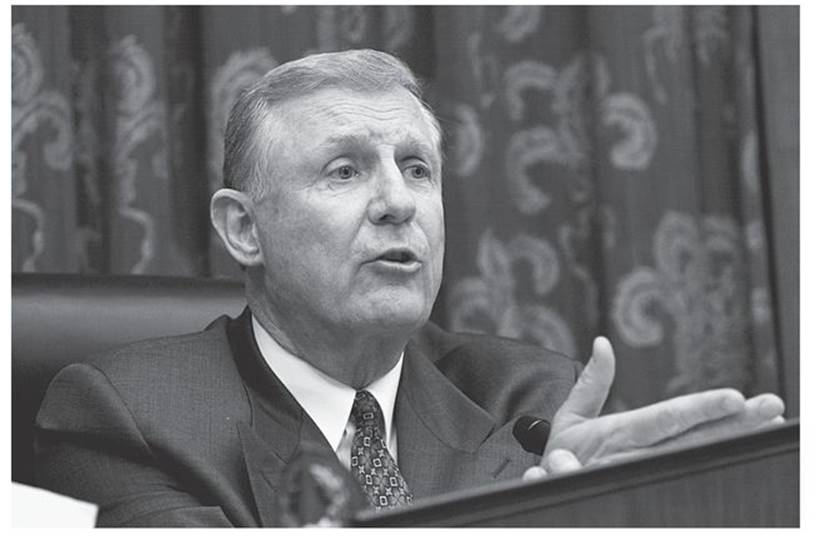
Dan Burton, a Republican congressman from Indiana, used his position as chairman of the Committee on Government Reform to investigate the relationship between vaccines and autism (courtesy of Getty Images).
Jeanna Smith, from Denham Springs, Louisiana, said: “At sixteen months of age, Jacob received his MMR vaccine; immediately following that, [he] began exhibiting strange behaviors. I cannot bear the thought that after being so careful, I was so easily persuaded to immunize Jacob without knowing all that I should know. Jacob’s countenance left when he was sixteen months old. The light behind his eyes was replaced with a blank, lost, bewildered stare.”
Scott Bono, from Durham, North Carolina, was also convinced that MMR had caused his son’s autism. “On August 9, 1990, Jackson [began] his journey into silence,” said Bono. “That was the day he received his MMR immunization. He would not sleep that night. In the days to follow he would develop unexplained rashes and horrible constipation and diarrhea. His normally very healthy body was being ravaged by an invader. Over the next weeks he would slip away, unable to listen or speak. What was the reason for the change? It is my sincerest belief that it was that shot.”
At the end of the session, the parents who had testified slowly stood up and filed out of the meeting room, each looking back at Burton, hopeful they would soon get the answers they needed. Next up were scientists who studied autism—scientists who, like the parents who had just testified, believed vaccines were the cause.

ANDREW WAKEFIELD, NOW WELL KNOWN TO AMERICAN PARENTS and the press, was the first to testify. Burton treated him like a celebrity. Unfortunately, Wakefield presented his evidence as if he were speaking to scientists, not congressmen and parents. He showed pictures of intestines of autistic children viewed from the end of a fiber-optic scope, intestinal cells containing small fragments of measles vaccine virus, and plastic gels containing measles virus proteins. He talked about follicular dendritic cells, ileocolonic lymphoid nodular hyperplasia, crypt abscesses, common recall antigens, molecular amplification technology, and hepatic encephalopathy, concluding, “We have a biologically plausible hypothesis, that undegraded chemicals from the gut may be getting through and impacting the rapidly developing brain during the first few years of life [causing] autism.” Then he surprised the committee. He presented findings not only from the eight autistic children in his Lancet paper, but also from 150 children in whom he claimed MMR had caused autism in “all but four.”
John O’Leary, the Irish pathologist who had identified measles virus in the intestines of Wakefield’s autistic patients, was next. He too presented as if he were speaking to a group of molecular biologists. O’Leary talked about TaqMan real-time quantitative PCRs, RNA inhibition assays, low-copy viral gene detections, fusion proteins, neuraminidases, hemagglutinins, subacute sclerosing panencephalitis, nucleocapsid genes, and black signals, concluding, “I am here to say that Wakefield’s hypothesis is correct.”
Other scientists at Burton’s hearing were quick to support Wakefield’s notion that MMR caused autism, each seeing an opportunity to proffer their own therapies. Mary Megson, a pediatrician from the Medical College of Virginia, said, “The MMR vaccine depletes the body of all its stores of vitamin A. When I give [autistic children] vitamin A in the form of cod liver oil, they get well. In a few days a lot of these children look at me, focus, regain eye contact, and talk about their box of vision growing. One child’s IQ score went up 105 points.” Michael Goldberg, a pediatrician from Los Angeles, said, “I am here before you today to share my frontline, everyday experience with these children; experience that has overwhelmingly convinced me and my colleagues that this is a disease that can be treated.” Goldberg claimed dramatic results with minerals, anti-virals, anti-fungals, anti-inflammatories, and immune-modifying agents. Vijendra Singh, the Utah State University biologist who had found unusual levels of antibodies in the blood and spinal fluids of autistic children, suggested using steroids, intravenous gamma globulin, and an occasionally dangerous technique called plasmapheresis, during which blood is removed and replaced with blood free from harmful antibodies. Finally, John Upledger, an osteopath and head of the Upledger Clinic in Palm Beach Garden, Florida, explained that vaccines had caused an abnormal flow of spinal fluid. “It looked like autistic children were trying to knock something loose from their heads,” he said, “something that was jammed together. The cranial rhythm or the movement inside the head was not giving the amplitude that we were looking for.” But Upledger had a solution. “We started decompressing heads,” he said, “forehead forward, back of the head backward. We would just sit there and hold it, a small force over a long period of time, and ultimately the head would begin to expand. The thumb-sucking stopped, the head-banging stopped, and the wrist-chewing stopped. When we were finished, they were very liable to turn around and kiss you and give you a hug. And after that they became sociable. There was close to a 100 percent response.” Upledger later explained that autism was different in Europe. “When I went to Brussels,” he said, “it was an entirely different thing. The feel of the head, the energy patterns of the head, everything was different.” Burton, who had struggled with the scientific presentations of Wakefield and O’Leary, understood and appreciated Upledger’s. Clearly excited, he said, “That was a really good lecture. I enjoyed that and we will have some questions about whether or not any of our health agencies have picked up on your procedures.”
Although Burton was the chairman, he wasn’t the only member of the committee to determine who would testify. Henry Waxman, a congressman from California and the ranking member on the committee, also had a say. Although Waxman had made a career badgering pharmaceutical companies about the price and availability of their products, he had always supported good science and the mission of the National Institutes of Health (NIH). Waxman chose Brent Taylor, a professor of community medicine and child health, who, like Wakefield, worked at the Royal Free Hospital in London.
Taylor started his testimony with a bombshell. “Mr. Wakefield’s and Professor O’Leary’s testimony notwithstanding, the belief that MMR is the cause of autism is a false hope,” said Taylor. “There is no evidence that immunizations are involved.” Taylor showed his data. He found that autism rates in the United Kingdom had clearly been rising before MMR was first introduced in 1988 and that children who had received the vaccine weren’t at greater risk. Burton was angry. This wasn’t how he had wanted the hearing to go. But he was prepared, having been provided a rebuttal by the Canadian epidemiologist Walter Spitzer. Spitzer had told Burton that Taylor had knowingly excluded some children from his study. “In your Lancet paper, you omitted to mention the vaccination of children over one year of age when the vaccination was introduced,” said Burton. “Do you think that is a correct analysis?” “Basically, that statement is not true, Mr. Chairman,” said Taylor. “We did include [those] children in our analysis as we clearly stated.” (Taylor had already made this point during his presentation but Burton hadn’t heard him.) “To suggest otherwise,” said Taylor, “and I suspect the suggestion comes from Mr. Wakefield, is malicious.” “[Were the data] omitted from the original paper that you submitted?” Burton persisted. “No,” said Taylor. “All cases were included who received MMR vaccine.” Burton was stuck. He’d probably never read Taylor’s paper or, for that matter, Wakefield’s, Singh’s, or O’Leary’s. It wasn’t that he wasn’t interested in their studies; he was. It was just that he didn’t have the scientific background necessary to fully understand them. Burton sat quietly, glaring at Taylor.
Waxman was upset by the heated exchange between Burton and Taylor. “Mr. Chairman,” he said, “because I believe autism is such a serious problem, I am troubled by this hearing. This hearing was called and structured to establish a point of view, and it is the point of view of the chairman [Burton]—that is the connection between autism and vaccinations. Dr. Wakefield came out with a report in England, and the first group that examined his claims was the Medical Research Council, and they found no evidence to indicate a link between the MMR vaccine and bowel disease and autism. Then the World Health Organization looked at his study and they came up with the following statement: ‘Given our view, the claims made by Dr. Wakefield and his colleagues lack scientific credibility; and this present study does not meet the requirements of establishing a causal relationship [between MMR and autism].’ Now, Dr. Wakefield has testified that he has some new information. Fine. Let us get the new information out there. Let us let the epidemiologists evaluate it. Let us let the scientists explore where the real truth may be.”
Waxman felt that scientific questions like “Does the MMR vaccine cause autism?” were best determined by scientists, not congressmen. “I cannot tell you what is true or not,” said Waxman, “but I do not think that our chairman can tell you either.” Waxman knew that much was at stake. Referring to previous Burton hearings on the Whitewater scandal involving Bill and Hillary Clinton, Waxman said, “I feel that when we had the hearings on campaign abuses by Democrats, a lot of people’s reputations were ruined and I thought the hearings were unfair. But those were political. The consequences of an unfair hearing on autism connected to vaccinations can cause people to die.”
The American media loved Dan Burton’s hearing. The New York Times, CNN, USA Today, the Washington Post, and almost every major newspaper, magazine, and radio and television station in the United States reported that the MMR vaccine—used in the United States for almost thirty years—might cause autism. On November 12, 2000, seven months after Burton’s autism hearing, 60 Minutes produced a program titled “The MMR Vaccine.” The segment began with correspondent Ed Bradley interviewing Dave and Mary Wildman, the parents of an autistic son, from Evans City, Pennsylvania. The boy, Bradley said, “appeared perfectly normal until just after his first birthday, when he received the MMR vaccine. Within a few weeks, according to his parents, things began to change.” “He started to not look at me anymore when I would call his name,” said Mary. “And do you know why?” asked Bradley. “Because of the MMR vaccine,” she said, tears streaming down her face. “I should never have had him have that vaccine.” Bradley also interviewed Andrew Wakefield. “My concern comes initially from the story the parents tell,” said Wakefield. “They have a normally developing child who upon receipt of the MMR vaccine develops a complex syndrome of behavioral and developmental regression, loss of speech, loss of language, loss of acquired skills, [and] loss of socialization with siblings or peers.” “Do you have children?” asked Bradley. “I have four children,” Wakefield replied. “Knowing what you know now,” said Bradley, “would you give them the MMR vaccine?” Wakefield leaned toward the camera, calm and certain. “No, I wouldn’t,” he said. “I would most certainly vaccinate them. I would give them [separate shots of] measles, mumps, and rubella vaccines.”
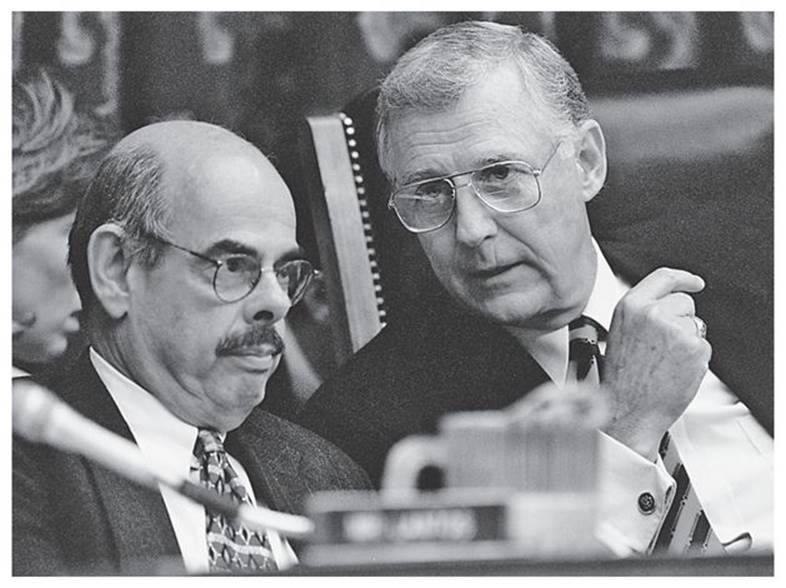
Henry Waxman (left), a Democratic congressman from California, frequently sparred with Dan Burton during the Committee on Government Reform’s investigation of vaccines (courtesy of Getty Images).
Wakefield’s claims were picked up by news agencies across the world. As a consequence, the Ministry of Health in Japan suspended its recommendation to use MMR and more than 100,000 American parents decided not to give it to their children. Michael Fitzpatrick, the British physician whose son is autistic, commented on Wakefield’s impact: “Dr. Wakefield’s paper appears to be a dramatic example of the butterfly effect celebrated in chaos theory, in which the flutter of tiny wings on one continent is amplified around the planet to produce a tidal wave on some distant shore.”

ANDREW WAKEFIELD HAD TAKEN HIS CASE TO THE BRITISH AND American public with dramatic results. Several well-respected scientists and clinicians had now lined up behind him. Hundreds of thousands of parents had chosen not to give MMR vaccine to their children. Even actors and sports celebrities were stepping forward to convince the public and the press that vaccines were unsafe. Wakefield and his MMR-autism theory were riding high. But in 2004, an investigative journalist in London found that Andrew Wakefield wasn’t exactly what he appeared to be. In a blink, his science, his theories, and his career all came crashing down.