
Is the nation’s spiraling rate of autism caused by mercury in vaccines? With over four thousand cases pending, a trillion dollars at stake, and public trust on the line, a firestorm is sweeping from the halls of science to the boardrooms of Big Pharma to the steps of the Capitol.
—SARAH BRIDGES
Lyn Redwood is a nurse practitioner who lives in Atlanta, Georgia. By the time her third child, Will, was born, she had been a medical professional for twenty years. “My son Will weighed in at close to nine pounds at birth,” she said. “He was a happy baby who ate and slept well, smiled, cooed, walked, and talked all by one year of age.” But after his first birthday, Will began to change. “He lost speech, eye contact, and suffered intermittent bouts of diarrhea, [then he was] diagnosed with pervasive developmental delay, a form of autism.” When the AAP issued its press release in July 1999 urging the immediate removal of thimerosal from vaccines, Redwood called her doctor’s office. “I reviewed [Will’s] vaccine record and my worst fears were confirmed,” she said. “All of his early vaccines that could have possibly contained thimerosal, had.” Redwood believed she had found the cause of her son’s autism.
Unlike Lyn Redwood, Sallie Bernard didn’t have a background in health care. She’s a businesswoman, owning and operating a market research company. Based in Cranford, New Jersey, the company manages focus groups and evaluates questionnaires. In September 1987, Bernard prematurely gave birth to triplets. One, Bill, weighed only three pounds and remained in the hospital for weeks, his development lagging far behind that of his brothers. It was Sallie Bernard’s father-in-law who first noticed a problem. “I must tell you,” he said, “I think something might be wrong with Bill. He’s a little different than the other boys. He doesn’t play with the same intensity they do.” Bernard took her son to the doctor and was told he had dysphasia. That night, she looked the word up in the dictionary: Dysphasia : “an impairment or loss of speech or ability to understand language, caused by brain disease or injury.” When Bernard saw the word injury, she wondered what could have injured her son. Later, she reached the same conclusion as Redwood. “Anyone familiar with the signs of mercury toxicity in children will recognize language difficulties [as a] common feature,” she said.
Redwood and Bernard soon found each other. On July 3, 2000—almost one year to the day after public health officials had issued their warning about thimerosal—they submitted a paper to the journal Medical Hypotheses linking autism to mercury poisoning. Redwood and Bernard had scoured the medical literature looking for descriptions of children with autism or mercury poisoning; they wanted to see whether the two disorders were similar. Evaluating symptoms such as movement, speech, language, thinking, unusual behaviors, and psychiatric disturbances, Redwood and Bernard couldn’t find anything that distinguished autism from mercury poisoning—the symptoms were exactly the same. They concluded that thimerosal “should be considered a probable source” of autism. Then they offered hope for a cure. If mercury caused autism, they reasoned, perhaps removing it from autistic children could help. “With one in one hundred and fifty children now diagnosed with autistic spectrum disorder,” they wrote, “development of mercury-related treatments, such as chelation, could prove beneficial for this large and seemingly growing population.” Chelation therapy for autistic children—the administration of chemicals designed to bind to mercury and to eliminate it from the body—was born. (The word chelation is derived from the Latin chelos, claw.)
The same year that Redwood and Bernard submitted their paper claiming mercury caused autism, they founded a parent advocacy group called Safe Minds, an acronym for Sensible Action for Ending Mercury-Induced Neurological Disorders. Their mission was to “end the health and personal devastations caused by the needless use of mercury in medicines.” Redwood was angry that children had been and were continuing to be exposed to mercury, and she was angrier that the government hadn’t seen her Medical Hypotheses paper as proof that mercury-containing vaccines were the problem. “We are in the midst of an autism epidemic and children diagnosed with learning disabilities continue to increase daily,” she said. “The statement [by public health officials] that there is no evidence of harm does not equate with no harm having occurred.” The phrase no evidence of harm would become an ironic manifesto for her cause. “The truth is that we have not adequately looked or we just refuse to see,” challenged Redwood. “A recent national news article reported that some say we don’t have a smoking gun. But the truth is the bullets are all over the floor.”

THE NEW ENGLAND JOURNAL OF MEDICINE, ONE OF THE MOST influential medical journals in the world, is read by more than 200,000 doctors and health professionals. On the other hand, Medical Hypotheses, where Redwood and Bernard had published their paper, has a circulation of about 200. No one in the medical community or the press pays much attention to publications in Medical Hypotheses. And although the media had followed Congressman Dan Burton’s hearings on vaccines and autism, they didn’t value his expertise, casting him as a lightweight with a personal agenda. If the thimerosal-causes-autism hypothesis was going to capture the attention of the American public, it needed a boost. On November 10, 2002, a journalist named Arthur Allen provided it. Allen wrote an article for the New York Times Magazine titled “The Not-So-Crackpot-Autism Theory.” Allen had worked for the Associated Press as a foreign correspondent in El Salvador, Mexico, France, and Germany, tackling controversial issues unflinchingly. Later, he wrote a highly acclaimed book titled Vaccine: The Controversial Story of Medicine’s Greatest Lifesaver. Although initially skeptical, Allen had been swayed by his interview with Neal Halsey. “Neal was a respected figure, and he knew what he was talking about,” recalled Allen. “He said to me, ‘You know, I’ve looked at a lot of things, and this is different.’ That impressed me.” The day after Allen’s article appeared, National Public Radio (NPR) picked up the story.
Then the floodgates opened.

THE FIRST TO OFFER DATA TO SUPPORT REDWOOD’S AND BERNARD’S theories was a father-and-son team from suburban Washington, D.C., Mark and David Geier. Mark Geier had received his medical degree, and later a PhD in genetics, from George Washington University. For the next ten years he trained at NIH in Bethesda, Maryland, before becoming an assistant professor of obstetrics and gynecology at Johns Hopkins School of Medicine. His son, David, graduated from the University of Maryland, majoring in biology. In August 2002, two years after Redwood and Bernard submitted their paper to Medical Hypotheses , the Geiers submitted one to Experimental Medicine and Biology. In it, the Geiers wrote they “were initially highly skeptical that differences in the concentration of thimerosal in vaccines would have any effect on the incidence of neurodevelopmental disorders.” But their skepticism turned to certainty. The Geiers examined data collected by the Vaccine Adverse Events Reporting System (VAERS), a federal program codirected by the FDA and CDC. Patients, doctors, nurses, or parents who feared a vaccine might have caused a dangerous side effect would fill out a one-page form and send it to VAERS; forms were then collected and analyzed. The Geiers studied reports of children after they had received DPT vaccines that did or didn’t contain thimerosal. They reasoned that if the VAERS system received more reports of problems following thimerosal-containing DPT, then thimerosal must be the cause of the problems. The Geiers wrote, “An analysis of the VAERS database showed statistical increases in the incidence of autism, mental retardation, and speech disorders after thimerosal-containing [vaccines] in comparison with thimerosal-free vaccines.” Where Lyn Redwood and Sallie Bernard had raised the hypothesis that thimerosal caused autism, Mark and David Geier had performed the first study that appeared to prove it.
In the spring of 2003, less than one year after they had published their VAERS study, the Geiers published another in the Journal of American Physicians and Surgeons. Again, using the VAERS database, the Geiers found the more mercury children received in vaccines, the more likely they were to develop autism and speech disorders; worse, they were also more likely to have heart attacks and epilepsy.
Evidence against thimerosal continued to mount.
In the summer of 2003, only a few months after they had found that thimerosal in vaccines caused heart attacks, the Geiers published another study in the Journal of American Physicians and Surgeons. To see whether mercury had caused autism, the Geiers fed dimercaptosuccinic acid (DMSA)—a chelating agent that binds to mercury—to 200 autistic children. The study also included eighteen children who didn’t have autism. After administering the ninth dose, the Geiers collected urine and analyzed it. If mercury caused autism, the Geiers reasoned, autistic children should excrete more mercury in their urine after DMSA than nonautistic children. Their fears confirmed, the Geiers found “a strong, statistically significant association between greatly increased urinary mercury concentrations and the presence of autistic spectrum disorders in vaccinated children.” (By “statistically significant,” the Geiers meant that children weren’t benefiting from their treatments randomly. Rather, the odds favored the Geiers’ contention that improvement in symptoms was caused by chelation.) They concluded, “Data from this study increases the likelihood that mercury is one of the main factors leading to the large increase in the rate of autism.”

ALTHOUGH THE GEIERS HAD BEEN AMONG THE FIRST TO SUGGEST chelation therapy as a treatment for autism, it was a wealthy financier from northern California named J. B. Handley who made it a national movement.
In 2002, Handley’s wife, Lisa, gave birth to a son, Jamie. For his first eighteen months Jamie was happy, playful, and engaging. Then he began a frightening descent into autism. He stopped making eye contact, stopped responding to his name, and spent days spinning around in circles. “We could have left the house and gone on a vacation to Hawaii and he would not have noticed,” said Handley. “I cried six hours a day for a month. The reason we were devastated is because we believed what we were told about the prospects.” But the Handleys refused to give up. Every day—at a cost of $5,000 a year—they rubbed a chelation chemical on Jamie’s legs and forearms. The results were dramatic. “There’s a light in his eyes now,” said Lisa. “He laughs. It had been five months since we had seen this smile. He’s a lot more cuddly and affectionate. He’s seeking us out now. His emotions are back. He’s happy.” “Getting the mercury out is giving us our son back,” said Handley.
By their estimation, the Handleys had witnessed a miracle. On May 24, 2005, J. B. Handley launched an organization called Generation Rescue. Its mission was simple: “Generation Rescue is a non-profit organization founded by parents of mercury-poisoned children dedicated to providing other parents with the truth about the cause of their children’s neurological condition. We have united out of the shared bond, anguish, and outrage at discovering that our children have been mercury poisoned. Right now, thousands of parents armed with the truth are successfully healing their children.” Handley reserved his highest praise for Mark and David Geier. “Motivated by truth,” said Handley, “the Geiers have [published] numerous works proving the strong correlation between thimerosal and autism.” Generation Rescue recruited more than 100 Rescue Angels—parents of autistic children who spread the word about the apparent miracle of chelation.
By advocating the use of mercury chelation for autistic children, Mark and David Geier were among the first to put Lyn Redwood’s and Sallie Bernard’s theory into practice. But they didn’t stop with chelation. Based on the work of a well-known British researcher, the Geiers became the first to advocate a different, far more controversial therapy.

SIMON BARON-COHEN IS A PROFESSOR OF DEVELOPMENTAL PSYCHOLOGY at Trinity College and the director of the Autism Research Center at the University of Cambridge. (He is also the first cousin of Sacha Baron Cohen, the English comedian and actor best known for his roles in Borat and Da Ali G Show.) In the late 1990s, Baron-Cohen published “Sex Differences in the Brain: Implications for Explaining Autism.” Baron-Cohen knew that boys were far more likely to develop autism than girls. In his paper, he offered a possible explanation. He noted that boys and girls differed in the way that they responded to their environment: boys were more likely to be “systemizers” and girls “empathizers.” Systemizers see their environment as a set of rules; to control it, they have to master the rules. Empathizers, on the other hand, see their environment as governed by other people’s mental states; to control it, they have to respond with appropriate emotions. Baron-Cohen reasoned that boys had poorer social skills than girls because “other people’s emotional states and behavior cannot easily be predicted and responded to using systemizing strategies.” In support of his theory, he offered many studies showing that boys were more likely to play with mechanical toys as children and, as adults, scored higher on physics and engineering problems. In contrast, girls scored higher on tests of emotional recognition, social sensitivity, and verbal fluency; girls also began to talk earlier than boys and were more likely to play with dolls. Such differences are present almost immediately after birth; when one-day-old babies are shown a live face or a mechanical mobile, boys prefer the mechanical object whereas girls prefer the face. Interestingly, Baron-Cohen noted these differences also extended to animals. Young male monkeys prefer to play with trucks, whereas young female monkeys prefer to play with dolls. Baron-Cohen reasoned autism represented an “extreme male brain.” Autism was, in essence, extreme boyish-ness.
Baron-Cohen also showed why boys approached their surroundings differently than girls, even at a very early age. During development in the womb, boys produced more of the hormone testosterone than girls. Testosterone leads to changes in the structure of the male and female brain and ultimately to differences in behavior. Mark and David Geier seized on this finding to proffer their next treatment. If boys were more likely to become autistic than girls, then perhaps autism could be treated by making them less boy-like. The Geiers proposed Lupron, a medicine that shuts down testosterone synthesis.
In 2006, the Geiers wrote a paper that married the hypothesis of Lyn Redwood and Sallie Bernard with that of Simon Baron-Cohen. They argued that because testosterone bound to mercury, if children could be rid of testosterone, they could also be rid of mercury. After injecting Lupron into more than 100 autistic children twice a day for weeks, the Geiers concluded that it caused “a significant clinical amelioration in hyperactivity /impulsivity, aggression, self-injury, severe sexual behaviors, and irritability behaviors that frequently accompany autistic spectrum disorders.” Mark and David Geier believed they had found yet another cure for autism.
Excited about his new therapy, Mark Geier took to the airwaves. On June 23, 2006, he appeared on Radio Liberty. “If you look at [autistic] children,” he said, “they have high testosterone, they masturbate at age six, they have mustaches, they’re aggressive, and you can treat them by lowering their testosterone and removing the mercury.” Geier believed he had discovered something about children with autism that had never been appreciated before: they were developing too quickly. He believed if he could slow sexual development, he could treat autism. Geier spoke rapidly and excitedly about his new therapy. “We’ve had unbelievable success,” he said. “Virtually every one of the sixty or more children we’ve treated has improved in a very, very big way. And when you hear that kind of story you say, ‘Well, there must be something wrong; it’s too good to be true.’”

MARK GEIER WASN’T THE ONLY SCIENTIST TO SUPPORT THE NOTION that mercury caused autism. Boyd Haley, a professor and chairman of the department of chemistry at the University of Kentucky, was a superb researcher who had published several papers in the Proceedings of the National Academy of Sciences—a publication of the National Academy of Sciences and a highly respected scientific journal internationally. Haley proposed that tubulin, a protein in cells necessary for their movement, was damaged by thimerosal. “Inhibit tubulin function with thimerosal injections,” he said, “and you inhibit the immune response [causing autism].” Lyn Redwood was happy to have Boyd Haley on her side. “He understands the levels of exposure that our infants received,” she said. “That’s why Dr. Haley is such a wonderful advocate for us. He reads the science and understands it.”
Soon Boyd Haley was joined by another biochemist: Richard Deth, a professor of biochemistry at Northeastern University in Boston. In 2004, Deth had written a paper published in Molecular Psychiatry that weighed in on the thimerosal debate. Using nerve cells grown in laboratory flasks, Deth had found that thimerosal inhibited an important metabolic pathway. He reasoned that some children were probably better able to use this pathway to excrete mercury, and to avoid its toxic effects, than others. And, like the Geiers, Deth believed he had found a cure. Testifying before Dan Burton’s Committee on Government Reform, Deth said, “The good news that goes along with this [knowledge] is that metabolic interventions are proving to be effective for autism. These treatments include [vitamin] B12 itself, which can produce dramatic improvements in some kids. Giving B12 turns out to be an antidote for [mercury].” Richard Deth believed he had found a cause (alteration in cellular metabolism) and a treatment (vitamin B12) for autism.
Later, Haley and Deth were joined by Mady Hornig, a researcher at the Mailman School of Public Health at Columbia University. Hornig had been influenced by the studies of Vijendra Singh, the Utah State University scientist who had proposed that autism was the result of autoimmunity. (Although Singh had testified before Dan Burton’s committee that autoimmunity was caused by the MMR vaccine, not thimerosal.) Hornig chose to study inbred mice that had a very high rate of autoimmune diseases. She found that thimerosal stunted their growth, decreased their movement, and lessened their interest in exploring their environment. Using thimerosal, Mady Hornig believed she had made mice autistic.
Hornig’s study was hailed by the press. On June 18, 2004, Sharyl Attkisson interviewed her on the CBS Evening News with Dan Rather. For several minutes Hornig explained how mice damaged by thimerosal provided a biological basis for understanding autism. The Internet site WebMD published a lengthy article titled “Mercury Linked to Autism Damage in Mice.” And WNYW-TV in New York also featured the story of autistic mice. “[Mice] had changes in their brains that were reminiscent of some of the features that have been described as autism,” said Hornig.
The case against thimerosal continued to build.

WHEN NEAL HALSEY HELD THE SERIES OF TELECONFERENCES ON thimerosal in June 1999, Walter Orenstein (head of the CDC’s National Immunization Program) was away. When he returned and saw the uncertainty and confusion that had been created by changing immunization policy, Orenstein asked for a scientific study to examine the effects of thimerosal on children. He thought the study should be done using data from a surveillance program called the Vaccine Safety DataLink (VSD). Like Halsey, Orenstein didn’t think that mercury in vaccines caused autism, but he wanted to make sure that it didn’t cause other, more subtle neurological problems like speech or language delay, hyperactivity, attention deficit disorder, or tics.
Orenstein had chosen the VSD because of its unique properties. The VSD, which tracks patients belonging to several health maintenance organizations primarily in the west and southwest, contains a vast network of computerized patient information. Orenstein reasoned that CDC researchers could systematically check the VSD database and compare the amount of mercury children received in vaccines with their risk of various neurological problems. The idea made a lot of sense.
The researcher assigned the task of examining the records from the VSD was Thomas Verstraeten, an Epidemic Intelligence Service officer at the CDC. Using medical information from more than 100,000 children, Verstraeten mined the VSD database in an effort to determine whether mercury in vaccines had caused harm. After his first pass through the data, he concluded that it had. With the exception of autism, children who had received mercury in vaccines were more likely to have a variety of neurological problems. Verstraeten later presented his findings to Orenstein and others at the CDC. Concerned, Orenstein gathered fifty experts in the fields of autism, pediatrics, toxicology, neonatology, epidemiology, psychology, infectious diseases, and vaccines for a two-day meeting at Simpsonwood, a Methodist retreat in Norcross, Georgia. “Simpsonwood” would soon become a rallying cry for those who felt the government knew mercury had harmed children and done everything in its power to cover it up.
On June 7, 2000, Walter Orenstein called the meeting to order. “I want to thank all of you for coming here and taking time out of your busy schedules to spend the next day and a half with us,” he said. Then he charged the group with its mission. “[For] those who don’t know, initial concerns were raised last summer that mercury in vaccines might exceed safe levels. Analyses to date raise some concerns of a possible [relationship between] increasing levels of [mercury] in vaccines and certain neurological diseases.”
Tom Verstraeten presented his data. He started with autism, concluding that the relationship between the amount of mercury in vaccines and the risk of developing the disorder was “not statistically significant.” Then he talked about other neurological problems. He showed that children who had received mercury in vaccines were more likely to have tics, attention deficit disorder, and speech and language delays. The group knew what was at stake. If Verstraeten’s preliminary data were right, vaccine makers, public health officials, and doctors had inadvertently poisoned a generation of children.
Paul Stehr-Green, an associate professor of epidemiology at the University of Washington School of Medicine and Public Health, was the first to see a flaw in Verstraeten’s study. Stehr-Green reasoned that children who weren’t getting vaccinated (and were therefore exposed to less mercury) might also be less likely to visit their doctor. “I think [this] impacts on [Verstraeten’s] conclusions tremendously,” he said. Stehr-Green was concerned that children who got more vaccines were more likely to be diagnosed with neurological problems not because they were actually at greater risk, but because they were more likely to come to the doctor. If this were true, then vaccinated children would also be more likely to be diagnosed with problems unrelated to mercury poisoning, like club feet. Stehr-Green postulated that if vaccinated and unvaccinated children visited their doctors with the same frequency, they might have the same risk of neurological problems. He asked Verstraeten to go back to the VSD database to determine if his hypothesis was correct.
Robert Davis, an associate professor of pediatrics and epidemiology at the University of Washington, was the next to show weaknesses in Verstraeten’s study. Davis had been one of Verstraeten’s coinvestigators. He knew the study was valid only if the computer records matched the medical records. (The VSD contains diagnoses listed by codes, not direct information from medical charts.) So he carefully compared the medical charts and computer records of 1,000 children. Davis was disappointed by what he found. “When we look at speech delay in particular,” he said, “we find that, believe it or not, sometimes it is not even mentioned in the [medical] chart.” Davis meant that administrators occasionally entered speech delay into the computer record when a child didn’t have speech delay. Children with attention deficit disorder were also often coded incorrectly. “If attention deficit disorder is coded,” said Davis, “you only have a 31 percent chance of finding a confirmed diagnosis of [it] in the medical record.” Davis showed that Verstraeten had based his findings on inaccurate data; he realized investigators would now have to go back to every single medical record and make sure that it had been accurately recorded in the computer. This meant a lot more work and a lot more time to complete the study.
Tom Verstraeten and his coworkers took three years to address the problems that had been raised by the conferees at Simpsonwood. In November 2003, they published their findings in Pediatrics. Verstraeten had gone back to the medical records to verify the computer diagnoses; he had also addressed Paul Stehr-Green’s question about possible differences between vaccinated and unvaccinated children in visits to the doctor. When he removed these confounding problems, Verstraeten found that his preliminary data had been misleading: mercury in vaccines did not cause harm. He concluded, “No consistent significant associations were found between thimerosal-containing vaccines and neurodevelopmental outcomes.”
Orenstein had hoped that the VSD study would calm the fears of concerned parents. But some parents of autistic children were quick to see Simpsonwood as a cover-up: a secret meeting held out of sight of the press and the public so that the government could get its story straight. These parents had been convinced by Lyn Redwood and Sallie Bernard’s mercury-causes-autism hypothesis, as well as by the studies of Mark and David Geier showing that vaccinated children were more likely to be autistic. They needed someone to counter Tom Verstraeten’s new study, someone powerful enough to oppose the government’s contention that vaccines didn’t cause autism. They found him in one of America’s most celebrated families.

ROBERT F. KENNEDY JR., THE THIRD SON OF FORMER ATTORNEY general Robert F. Kennedy, worked for the Hudson RiverKeepers, a group dedicated to keeping the river free of dangerous pollutants. There, he developed an interest in mercury poisoning. In June 2005, Kennedy published an article in Rolling Stone magazine titled “Deadly Immunity.” It began ominously. “In June 2000, a group of top government scientists and health officials gathered at a meeting at the isolated Simpsonwood conference center in Norcross, Georgia. Convened by the Centers for Disease Control and Prevention, the meeting was held to ensure complete secrecy. The agency had issued no public announcement of the session—only private invitations to fifty-two attendees. All of the scientific data under discussion, CDC officials repeatedly reminded the participants, was strictly embargoed.” Unfortunately, Kennedy’s article contained many errors. This was one of them. Verstraeten presented his findings at a public meeting at the CDC a few weeks after Simpsonwood.
Kennedy’s article contained other inaccuracies. Kennedy wrote: (1) “[The CDC] withheld Verstraeten’s findings, even though they had been slated for immediate publication, and told other scientists that his original data had been ‘lost’ and could not be replicated.” Verstraeten published his study only after the problems with the preliminary data had been addressed. (2) “To thwart the Freedom of Information Act, [the CDC] handed over its giant database of vaccine records to a private company, declaring it off limits to researchers.” Parents whose children’s records were in the VSD had participated with the clear understanding that their medical information would remain confidential. (3) “Thimerosal appeared to be responsible for the dramatic increase in autism.” During his preliminary investigation, Verstraeten had found that thimerosal might be responsible for a variety of neurological problems. Autism wasn’t among them. (4) “By the time Verstraeten published his study in 2003, he had gone to work for GlaxoSmithKline, and reworked his data to bury the link between thimerosal and autism.” Representatives from GlaxoSmithKline didn’t influence Verstraeten’s reanalysis; the fifty researchers at Simpsonwood did. (5) “In 1930, [Eli Lilly] tested thimerosal by administering it to twenty-two patients with terminal meningitis, all of whom died within weeks of being injected—a fact Lilly didn’t bother to report in its study declaring thimerosal safe.” Patients died from meningitis, not from mercury poisoning. (6) “By the age of six months [children] were being injected with levels of mercury one hundred eighty-seven times greater than the EPA’s limit for daily exposure.” Levels actually exceeded the EPA limit twofold, and that was for methylmercury, not thimerosal. (7) “Many of those on the CDC advisory committee who backed the additional vaccines [containing thimerosal] had close ties to the industry. Dr. Sam Katz, a paid consultant for most of the vaccine makers, shares a patent on a measles vaccine with Merck.” Although Sam Katz was part of the team at Harvard that developed the first measles vaccine, he never patented it. (8) “Four of the eight CDC advisors who approved guidelines for a rotavirus vaccine laced with thimerosal had financial ties to the pharmaceutical companies developing different versions of the vaccine.” No rotavirus vaccine has ever contained thimerosal.
Kennedy concluded his article with incendiary quotes, hoping to energize parents who felt the government had, in concert with pharmaceutical-company-contaminated scientists, pushed vaccines on an unsuspecting and now horribly damaged public. He quoted Boyd Haley: “You couldn’t even construct a study that shows thimerosal is safe,” said Haley. “It’s just too darn toxic. If you inject thimerosal into an animal, its brain will sicken and swell. If you apply it to living tissue, the cells die. If you put it in a Petri dish, the culture dies. Knowing these things, it would be shocking if one could inject it into an infant without causing damage.” At the end of Kennedy’s article, Mark Blaxill, vice-president of Safe Minds, opened the curtain on the class-action lawsuits that lay ahead: “The damage caused by vaccine exposure is massive,” he said. “It’s bigger than asbestos, bigger than tobacco, bigger than anything you’ve ever seen.”

Robert F. Kennedy Jr. was a passionate supporter of the notion that thimerosal, a mercury-containing preservative once used in several vaccines, caused autism (courtesy of Getty Images).
Flooded with letters and e-mails correcting Kennedy’s many mistakes, Rolling Stone issued a series of retractions on June 17, 22, and 24; but, given the number of national interviews that followed, few in the media took notice. On June 20, 2005, Don Imus interviewed Kennedy on Imus in the Morning, a radio show that reached into the homes of millions of Americans. Imus came to the mercury debate through his wife, Deirdre, who, like Kennedy, is an environmental activist. “You see what autism does to people’s lives,” Kennedy told Imus. “It shatters the entire family. It destroys them. These kids [are] perfectly healthy, wonderful children, and they’re brought into these pediatricians’ offices, the wonderful family doctor who they trust. And they’re given the shot because they’re told its going to save your life. And they come out of that pediatrician’s office and by late afternoon they are having seizures. Their parents bring them to the hospital and then the kids just disappear. This child who was a complete human being just disappears. He stops talking. He starts banging his head against the wall. He starts biting himself. He stops interacting with his siblings. And these people know this and they are continuing to inject children with this horrible, horrible toxin.” The next day, Joe Scarborough interviewed Kennedy on MSNBC. “As it turns out,” said Kennedy, “we are injecting our children with four hundred times the amount of mercury that the FDA or EPA considers safe.” In his Rolling Stone article, Kennedy had overestimated the amount of mercury in childhood vaccines by ninetyfold; now he was off by two hundredfold.

KENNEDY’S ROLLING STONE ARTICLE AND CONSEQUENT MEDIA tour helped galvanize parents; no longer would they have to stand alone in their fight against public health agencies.
More help was on the way.
In 2005, the same year Kennedy published his article in Rolling Stone, a journalist named David Kirby wrote Evidence of Harm: Mercury in Vaccines and the Autism Epidemic: A Medical Controversy. Kirby’s book sounded many of the themes that had been raised by Kennedy, touting the research of Boyd Haley, Richard Deth, Mady Hornig, and Mark and David Geier; trumpeting the apparent wonders of chelation; and disparaging the epidemiologic study done by Tom Verstraeten and the CDC. “The CDC has been unable to definitively prove or disprove the theory that thimerosal causes autism,” wrote Kirby. Picking up on the phrase used by Lyn Redwood in an earlier statement to the press, Kirby wrote, “But ‘no evidence of harm’ is not the same as proof of safety. No evidence of harm is not a definitive answer. And this is a story that cries out for answers.” Kirby, like Kennedy, believed public health officials had ignored the public’s health. “A small group of parents, aided by a handful of scientists, physicians, politicians, and legal activists,” wrote Kirby, “has spent the past five years searching for answers. Despite heavy resistance from the powerful health lobby, these parents never abandoned their ambition to prove that mercury in vaccines is what pushed their children, most of them boys, into the hellish, lost world of autism.” Kirby, like Kennedy, also believed the CDC was involved in a conspiracy to hurt children, critically altering data presented by Verstraeten at Simpsonwood and refusing to talk to him about it. “Many of the public health officials who discount the thimerosal theory were unwilling to be interviewed for the book,” he wrote.
Kirby’s book was an instant success. Don Imus interviewed him several times on Imus in the Morning, calling Evidence of Harm a “wonderfully researched book that looks at both sides of the issue,” and he bemoaned powerful lobbies working against the health of American children. “These big huge chemical companies,” said Imus, “they pay too much money to all these politicians, and their huge lobbying groups, with the pharmaceutical and chemical companies, [and] they’re not interested in knowing the root cause.” Kirby also lamented the conspiracy: “The CDC wouldn’t talk to me,” he said to Imus. Joe Scarborough interviewed Kirby on MSNBC. “We’re pumping babies full of mercury in these vaccines,” said Scarborough. “We are,” Kirby agreed. Tim Russert interviewed Kirby on Meet the Press, and Montel Williams interviewed him on The Montel Williams Show. Kirby was thrilled with the media attention. To readers on an Internet bulletin board, he wrote, “We are now getting about five media requests a day, mostly from people we never even pitched to. It’s amazing. Other columnists are mentioning the book in their pieces. Today, the NPR show To the Point called and tentatively booked me for Friday. Local radio and smaller city papers are all over this, believe me. And from the media not ONE NEGATIVE WORD so far. Not one. Only from the Quackwatch bloggers, the pediatricians, the National Network for Immunization Information, the CDC, and for some reason, the State of Minnesota. AND, drum roll, please, Evidence of Harm will be mentioned in the New York Times three times before the month ends.”
Robert F. Kennedy Jr. and David Kirby had taken the debate about whether mercury caused autism and made it personal. They likened the CDC to the fox guarding the henhouse, recommending vaccines while at the same time evaluating their safety. And when Tom Verstraeten left the CDC for GlaxoSmithKline, they accused him of having fronted for the pharmaceutical industry all along. Rather than guarding the public’s health, the CDC was simply watching out for its own health. Many picked up on the conspiracy theme proposed by Kennedy and Kirby. Sallie Bernard said that scientists who claimed that vaccines were safe had “an interest in not finding a connection.” Dan Burton said: “I’m so ticked off about my grandson. And to think that the public-health people have been circling the wagons to cover up the facts! Why, it just makes me want to vomit!” “This is the biggest cover-up in medical history,” said Mark Geier. “It’s bigger than 9/11 and AIDS and no one knows about it.”

POLITICIANS ALSO JOINED THE FRAY.
On May 31, 2005, Joe Lieberman, a senator from Connecticut, appeared on Imus’s radio show. “If you look at the statistics about the incredible increase in autism during the ’90s,” said Lieberman, “it increased 4,000 percent. And at the same time we changed the requirements for the normal vaccine dosage, including a lot of the vaccines that had thimerosal in them. You’ve got to ask yourself, isn’t there a connection between these two things?” Like Kennedy, Kirby, and Imus, Lieberman was unwilling to accept reassurances from the CDC. “I don’t care how many respected institutions are on the other side,” he said.
On June 22, 2005, Christopher Dodd, another senator from Connecticut and soon-to-be presidential candidate, also appeared on Imus’s show. “I read the Bobby Kennedy piece [in Rolling Stone], which is pretty good,” he said. Dodd was upset that U.S. manufacturers were shipping autism-causing vaccines to other countries. “We have stockpiles of this stuff,” said Dodd, “[and] we just ship it to the rest of the world, have them use it. It’s bad enough there. God forbid you’re living in some third-world country and your child ends up with this problem.”
On March 20, 2006, John Kerry, a senator from Massachusetts and the Democratic candidate for president of the United States in 2004, added his support to the growing list of politicians who believed vaccines caused autism. “Let me tell you an amazing story,” he began when he too appeared on Imus’s show. “During the early days of Katrina, UPS [and] FedEx put together a couple of planes to fly stuff down [to New Orleans]. And the UPS driver I rode with just started to talk. He tells me he’s got twins and one of the twins got sick. The doctor says [to him], ‘Well, we’ve got to give him a vaccination.’ They give him the vaccination while the kid is still sick, and within days this kid starts changing and showing symptoms. And that child who was vaccinated has autism today. And this family is struggling with it. And they believe as deeply as they can, it’s the thimerosal that caused this reaction. You and Deirdre have been terrific on this issue. And yet, we still have mercury in vaccinations around the country. It’s absurd. I don’t get it. We ought to stop.”
Perhaps the most influential champion of parents who believed mercury had damaged their children was Dave Weldon, a physician and congressman from Florida. Weldon vigorously defended Mark and David Geier in their quest to take a closer look at the data generated by Tom Verstraeten, and he chastised the Institute of Medicine for its failure to support and encourage researchers like Richard Deth and Mady Hornig. “I am very disturbed,” said Weldon, “by the continuing number of reports I receive from researchers regarding their experiences. It is past time that individuals are persecuted for asking questions about vaccine safety.” Weldon claimed that scientists who had found vaccines were unsafe had lost grants and had had difficulty getting their findings published. “Others,” said Weldon, “report overt discouragement, intimidation, and threats, and have abandoned the field of research. Some have had their clinical privileges revoked and others have been hounded out of their institutions.” Weldon drew an analogy between mercury researchers and Andrew Wakefield: “When researchers find things that are unpopular, that goes against the party line, they are punished for it.”
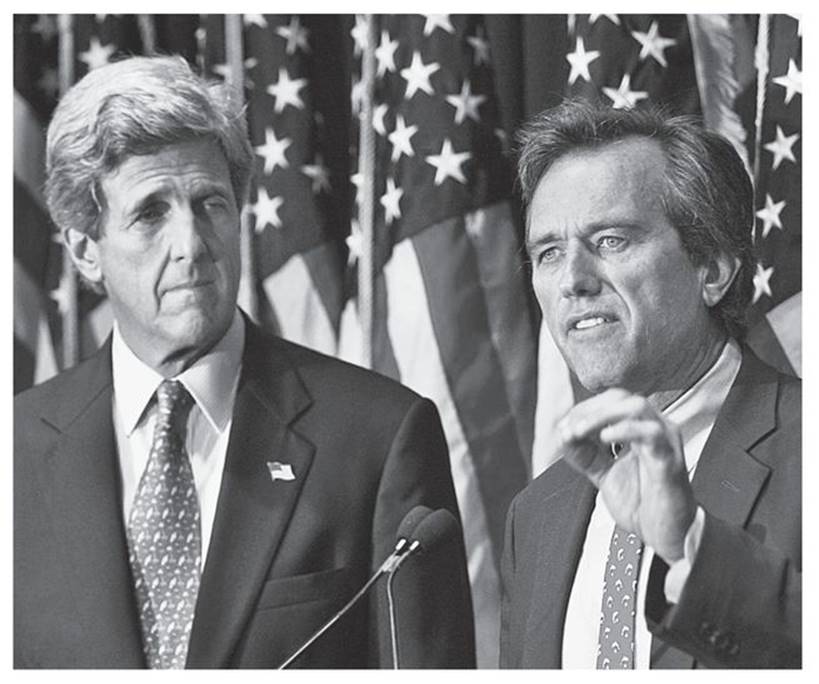
John Kerry (left), like Robert F. Kennedy Jr., also used his public stature to trumpet the notion that vaccines caused autism (courtesy of Getty Images).
Weldon wanted autism research to be directed by Safe Minds, the advocacy group founded by Lyn Redwood and Sallie Bernard. In May 2004, he told Julie Gerberding, the director of the CDC, to stop focusing on epidemiological studies like the one done by Tom Verstraeten (which showed that mercury in vaccines didn’t cause autism) and to start focusing on laboratory studies, like the ones done by Richard Deth and Mady Hornig (which showed it did). “Fine,” said Gerberding. “Can your office put together something? Can you get me a wish list of all the kinds of protocols that you would like to see funded?” Weldon’s chief of staff, Stuart Burns, called Lyn Redwood. “Hey Lyn,” he said, “do you think Safe Minds could put together a list of research projects on autism and vaccines you would like to see the federal government pursue?” No longer would research be determined solely by the NIH, the CDC, and physicians in academic institutions with an expertise in autism; rather, it would be directed by a parents’ advocacy group.
On August 26, 2004, Arnold Schwarzenegger, governor of California, trumped his fellow politicians by banning mercury-containing influenza vaccines from his state. (In 2004, only multidose influenza vaccines contained thimerosal as a preservative.) By April 2006, six states had followed his lead; in 2007, another seventeen states were considering similar bans. Because only limited supplies of thimerosal-free influenza vaccines are available, public health officials worried that banning thimerosal was equivalent to banning influenza vaccines for some children, putting them at risk of severe and occasionally fatal disease.

AFTER DAVID KIRBY WROTE EVIDENCE OF HARM, HE MADE A PREDICTION: “If the number of three- to five-year-olds [with autism] in the California [health care] system has not declined by 2007,” he said, “that would deal a severe blow to the autism-thimerosal hypothesis.” Kirby knew that thimerosal had been removed from vaccines routinely given to young infants in the spring of 2001. And he knew that six years would be plenty of time to figure out whether thimerosal had caused autism. Kirby wasn’t the only person who recognized the importance of the natural experiment that was about to unfold. On July 8, 2000, Sharon Humiston, the mother of an autistic child and a physician in Rochester, New York, appeared before Dan Burton’s committee. “Please don’t miss the opportunity to study the results of removing thimerosal from vaccines,” said Humiston. “As the manufacturers change to mercury-free formulations, I hope someone is doing a definitive study to see if autism rates plummet.” “The final verdict,” said Boyd Haley, “will come with observing the rate of autism now that thimerosal has been removed from the infant vaccine program. The truth will come out.” Mark and David Geier were more certain of the outcome. “The first step in the process is the immediate removal of thimerosal from all vaccines,” they said, “which we predict will result in the end of the autism epidemic.”
In April 2004, only three years after thimerosal had been removed from vaccines routinely given to young infants, public health officials in California reported a small drop in the rates of autism. It was the first such drop in twenty years. Lyn Redwood was cautiously optimistic. “This information does give us hope,” she said, “but we will monitor future data to be sure this is in fact a real trend downward versus a one-time anomaly. Since it would take five years [from the removal of thimerosal from vaccines] to see results, this new data is right on track with our expectations.” David Kirby was also excited by the drop in rates: “Is it too early to tell if this is a permanent and meaningful trend? Of course. Could there be other explanations for the drop, such as a budget-crunching reduction in services? Perhaps. But this very decline, at this very moment, has long been predicted by supporters of the thimerosal-autism theory. At the very least, the quivers of their detractors have been emptied of one arrow.”
In the spring of 2006, Mark and David Geier published the results of their own investigation of autism rates, now that thimerosal had been removed, in the Journal of American Physicians and Surgeons. “We predicted the rates of autism would begin to decrease,” wrote the Geiers. “Thimerosal started to be removed in July 1999. What we are seeing is decreasing trends.” Richard Deth, the biochemistry professor who had shown that thimerosal damaged laboratory cells, said, “This study is exactly the kind of thing people have been waiting for.”

THE THIMEROSAL-CAUSES-AUTISM STORY WAS SO COMPELLING that Hollywood decided to make a movie about it. In 2006, Participant Productions, having previously made Syriana, North Country, An Inconvenient Truth, Fast Food Nation, Murder-ball , and Good Night and Good Luck, optioned the rights to David Kirby’s Evidence of Harm, immediately promoting the film on its Web site: “When their children descend into the frightening world of autism a group of parents discover a disturbing link between thimerosal, a mercury-based preservative found in vaccines, and the steady rise in autism. One tenacious mother, Lyn Redwood, risks her family to battle the FDA, CDC, and the American government, despite efforts from pharmaceutical companies and government officials to suppress evidence and prevent parents from gaining restitution for their children’s conditions.” Kirby was thrilled that his book was going to be made into a movie. “I thought we might want to put politics aside for a moment to say ‘Hooray for Hollywood’,” Kirby declared on his Web site. “I spoke last night with Evidence of Harmproducer Ross Bell, who produced Fight Club, by the way. [Bell] told me that the first draft of the screenplay is beginning to take shape. Once that is finished, the script will go to Participant Productions for notes and review, and I will get to see a copy as well!! Once the director is hired, and I have a few personal favorites I am rooting for, then the whole project ‘goes public.’ Bottom line, look for a MAJOR announcement in the media sometime before the winter is over. Even just the ANNOUNCEMENT of this movie should make some waves. I am so grateful to Participant Productions. I know that they have been contacted by people who are ‘extremely concerned’ that this movie is being made. I bet they are!” Kirby had his choice for the part of Lyn Redwood. “How about Toni Collette for the female lead?” he wrote. “She does ‘frantic mom’ pretty damn well.”

LYN REDWOOD AND SALLIE BERNARD HAD PROPOSED THAT MERCURY in vaccines caused autism. Mark and David Geier had performed studies apparently showing that autistic children could be treated successfully with mercury-binding therapies. Richard Deth and Mady Hornig, using laboratory cells and experimental mice, believed they had shown why mercury caused autism. And now, with mercury out of vaccines, the rates of autism appeared to be declining. So dramatic was the evidence against vaccines that a major, well-respected production company was going to make a movie about it. Everything was coming together. Everything made sense.
But the next few years would reveal that it was all a mirage.