
The greatest defeat of all would be to live without courage, for that would hardly be living at all.
—GERALD R. FORD JR.
Kathleen Seidel lives on the edge of a cow pasture in rural New Hampshire, in a small, yellow raised ranch house stuffed with books and music. Her ready kindness, joyous laugh, and instinctive warmth belie a relentless, unsympathetic determination to expose the doctors, scientists, journalists, and politicians who have promoted the notion that vaccines cause autism. “I have a big fraud button,” she says. “And it gets pushed every now and then.”
Seidel was raised in Anaheim, California. Her father was a chemical engineer, her mother a music and special education teacher who worked with severely impaired children. In 1973, after graduating from high school, Seidel attended the University of California at Santa Cruz, majoring in English and Russian literature and Book Arts and later venturing to New York City, where she earned a master’s degree in Library Science from Columbia University. After three years as a children’s librarian in Asheville, North Carolina, Seidel returned to New York City where she met her future husband, a guitar player. She worked for Project Orbis, a flying ophthalmologic surgical teaching hospital, and the Taconic Foundation, where she was the assistant to the director. “It was a great job,” she recalled. “These people were wealthy and privileged, but they were doing philanthropic work in housing and youth employment in consonance with their conscience and principles. They were good people. I learned that nobody needs to apologize for living on Park Avenue.”
In 1995, Seidel and her husband moved to New Hampshire to raise their family. Five years later, her life changed. “We got our diagnosis [of autism] in the family in 2000,” she recalled. “The first thing that really woke us up was Oliver Sacks’s article, “An Anthropologist on Mars.” (Sacks had recounted the story of an autistic woman named Temple Grandin, who, as a professor at Colorado State University, had become a world-renowned designer of humane livestock facilities. The title of the essay describes how Grandin felt in social situations.) Initially, Seidel had trouble connecting with other parents of autistic children online, getting more out of talking to them in local support groups: “I joined one or two mailing lists, [but] I ended up not participating too much because it just wasn’t the kind of support I needed. You say ‘autism,’ but there are many different levels of impairment. I just didn’t connect with a lot of the conversations, especially with the preoccupation with vaccines. I didn’t feel the need to find an external cause because by that time I’d realized the apple doesn’t fall far from the tree.”
Seidel decided to start a Web site and blog, calling it neurodiversity. com, the domain name coming from a family brainstorming session in 2001. “My first vision of it was as a library to organize some of the chaos of information that I had encountered out there,” she recalled. “Now it’s up to about three hundred different subject categories. Over time it’s kind of bifurcated into half library and half soapbox.” Seidel became increasingly concerned by some parents’ obsession with vaccines. “In the spring of 2004, I was really blown away by how more and more people were talking about vaccines,” she recalled. “In addition to the newfound ferocity of the rhetoric surrounding the whole vaccine thing, I was really turned off by some of the catastrophic language that people used to talk about autism because that just increases parents’ stress when they’re looking for information.”
In late 2004, Seidel’s Web site changed course. “I got an e-mail from a friend of mine saying, ‘Get a load of this,’” she recalled. “[My friend] linked me to a report of a talk given by Boyd Haley at a meeting of a group called Doctors for Disaster Preparedness. He was talking about mercury. [Haley, a professor of chemistry at the University of Kentucky, had been the first to publicly propose a mechanism for how thimerosal might cause autism.] At one point in his talk he said, ‘So one cow drops dead from mad cow disease and the government spends millions of dollars trying to figure out what’s going on. Well, here we’ve got this epidemic of mad child disease and they’re not doing a thing.’ So I thought, you’ve got to be kidding me. How dare you make up a phrase like that to talk about my kid? Would you like your kid to be likened to an animal, to a mad animal? Within twenty-four hours I had a petition up on my Web site. And I got about three hundred signatures in the first few days. Then I thought that if [Haley] had any confidence in [his] science, he wouldn’t feel the need to stoop so low to make [his] point. That really got me. I’d never heard of Boyd Haley before that day. I learned very soon that he was looked upon as quite a hero by a lot of people. That was what really drew my attention to this [group of scientists]; it was the mad child thing.”
Seidel wasn’t the only one to question Haley’s expertise. When Haley appeared as an expert witness against vaccine makers, one judge refused to admit his testimony: “The court finds that Dr. Haley’s report does not state an expert opinion that thimerosal causes autism,” he wrote, “rather just that he has a theory about how such a thing could happen. At best, he expressed [his] ‘strong belief.’” In January 2008, Haley’s testimony was thrown out of court again, the judge ruling that “his lack of expertise in genetics, epidemiology, and child neurology make it impossible for him to supply the necessary factual basis to support his testimony.” During that trial, Haley further damaged his credibility when, according to the judge, he “accused the Institute of Medicine committee of dishonesty and asserted that the CDC bureaucrats should be charged with criminal activity.”
Undeterred by these failures in court, Haley designed his own brand of mercury chelators. During an online interview, a New Jersey physician who treated autistic children in a hyperbaric oxygen chamber in his office asked Haley, “Rumor has it you are developing a new chelator. Could you briefly fill us in?” “I have several,” said Haley. “They’re done. They’re working great. We’re doing biological testing now, making sure it’s safe in animals. Then we’ll put it into clinical trials. We’re very excited about it.” In 2001, Haley, convinced he had found a cause and a cure for autism, presented his work to an advisory panel of the Institute of Medicine (IOM) chaired by Marie McCormick. “In general, we did not find his work to be persuasive,” she said. When asked about McCormick’s assessment, Haley said, “I think there’s a special place in hell for her.”
Haley’s entrance into the world of autism wasn’t the first time he’d participated in a medical controversy. In the 1980s, a group of dentists claimed most facial pains were caused by cavities deep in the jaw bone; the disease was called neuralgia-induced cavitational osteonecrosis (NICO). NICO’s principal promoter, a dentist named J. E. Bouquot, claimed that NICO caused all kinds of pains, even those located far from the mouth. Bouquot proposed that NICO could be treated by drilling into the jaw, scraping the bone, and rinsing the wound with antibiotics or, if that didn’t work, with colloidal silver and vitamin C. With his new disease in hand, Bouquot founded Head and Neck Diagnostics of America in Morgantown, West Virginia—a lucrative mail-in biopsy service. NICO was an elusive diagnosis. Cavitations couldn’t be found on traditional X-rays, so the diagnosis could be made only by biopsy. And the only biopsies found to be abnormal were those evaluated by Dr. Bouquot; other pathologists reviewing the same specimens couldn’t find a problem. NICO provided a financial windfall for the dentists who promoted it. Boyd Haley also participated, offering an “oral toxicity” test to detect NICO, a disease that didn’t exist.

NEXT, SEIDEL TURNED HER ATTENTION TO THE GEIERS.
Mark and David Geier had been among the first to publish papers claiming that thimerosal caused autism and that chelation therapy and Lupron helped. They testified in state legislatures and in state courts, and they spoke at autism rallies, marches, and conferences. They were the very centerpiece of the movement, portrayed by the media as courageous men willing to take on rich and powerful pharmaceutical companies, public health agencies, and their own medical profession. But Mark and David Geier—like Andrew Wakefield before them—were not exactly what they appeared to be.
In 1983, after joining the faculty at Johns Hopkins, Mark Geier launched Genetic Consultants, one of the first private companies licensed to perform in vitro fertilization. Geier aimed to please, saying not only that he could provide a baby, but also, depending on the parents’ wishes, that he could provide a boy or a girl. He was much better at making girls. “Out of twenty-five pregnancies, twenty-four have been girls,” said Geier. “[Now] I only do girls. I used to do boys, too, but the success rate on them was only seventy-five to eighty percent.” But selective breeding didn’t sit well with the American public, so Geier moved into the expert witness business on behalf of plaintiffs suing vaccine makers. His new career began in December 1987, when he testified against Connaught Laboratories, a pharmaceutical company based in Toronto and the maker of the diphtheria-pertussis-tetanus (DPT) vaccine. Geier testified that the pertussis (or whooping cough) part of the DPT vaccine “is one of the most feared poisons in the medical sphere; [it] certainly can cause brain damage, death, and many other things.” Geier also believed that vaccines caused a variety of chronic diseases; with his son David—president of MedCon, a medical consulting company for lawyers and plaintiffs interested in suing pharmaceutical companies—he later founded the Institute for Chronic Illnesses.
To investigate vaccines, Mark Geier converted the basement of his home in suburban Maryland into a personal scientific laboratory. While working on an article for the New York Times, reporters Gardiner Harris and Anahad O’Connor paid him a visit, later describing what they had seen: “Past the kitchen and down the stairs is a room with cast-off, unplugged laboratory equipment, wall-to-wall carpeting and faux wood paneling that Dr. Geier calls ‘a world class laboratory—every bit as good as anything at NIH.’ ”
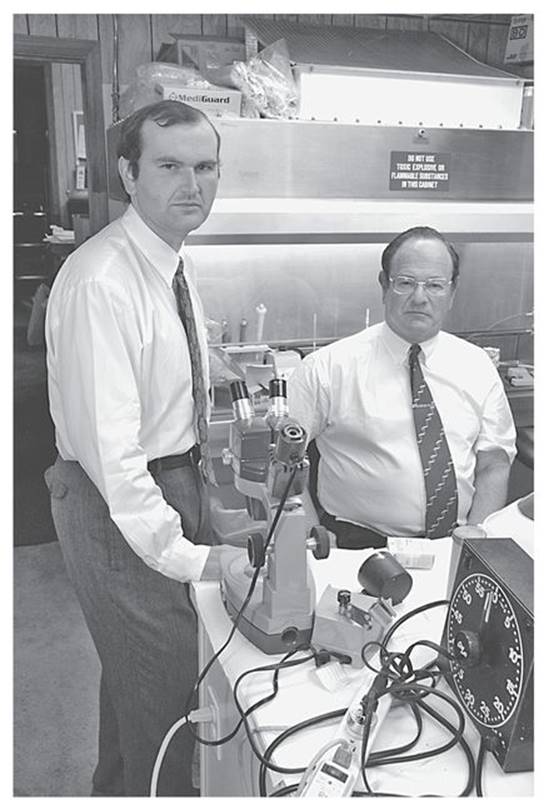
Mark (right) and David Geier in their basement laboratory (courtesy of Marty Katz).
By 2005, Mark Geier had testified in more than ninety trials against vaccine makers, but some judges considered him no more of an expert than Boyd Haley. In 1991, one judge stated, “Counsel and petitioners are forewarned of the court’s position on Dr. Geier, or other doctors with little relevant experience, as an expert witness. In addition, the court admonishes Dr. Geier to reconsider his role, from an ethical and moral standpoint, as a witness. Several petitioners have lost cases solely on the little weight given to Dr. Geier’s opinion.” In 1992, a federal judge ruled, “I cannot give his opinion any credence.” In 1993, a judge found that Mark Geier’s testimony bordered on fraud: “[His] affidavit was seriously intellectually dishonest.” Later that same year, yet another judge stated, “Dr. Geier’s testimony is not reliable or grounded in scientific methodology and procedure. His testimony is merely subjective belief and unsupported speculation.” And in 2003, a judge referred to Mark Geier as “a professional witness in areas for which he has no training, expertise, and experience.”
While serving as a plaintiffs’ witness in cases against the whooping cough vaccine, Mark Geier had seen an opportunity with autism. Richard Barr, the British personal-injury lawyer who had pursued the case against the MMR vaccine in England, paid Geier $14,000 to testify against vaccine makers. In 2003, a few years after he had received money from Barr, Geier published a paper claiming that the MMR vaccine caused autism. Geier said autism could be prevented if people used a different version of the vaccine, one that wasn’t available: “In order to alleviate many of the difficulties encountered with the MMR vaccine, we suggest that a killed MMR vaccine should be made available as it may reduce the number and severity of adverse reactions following MMR vaccine.” Geier failed to mention that a killed measles vaccine, sold in the United States between 1963 and 1967, had been withdrawn because it was found to be unsafe.
As study after study showed MMR didn’t cause autism, Mark and David Geier went with the flow, now claiming that thimerosal was the problem. (The MMR vaccine never contained thimerosal.) The study that brought them immediate attention from the autism community was titled “Thimerosal in Childhood Vaccines, Neurodevelopmental Disorders, and Heart Disease in the United States.” The Geiers had reviewed data from the Vaccine Adverse Events Reporting System (VAERS) and claimed that thimerosal in vaccines had caused autism, speech disorders, and heart attacks. But, as noted by the American Academy of Pediatrics (AAP), methodological flaws rendered the study worthless. First, the Geiers referred to VAERS as a mandatory reporting system for problems following vaccines. But VAERS is a passive system; people who believe that a vaccine might have caused a problem are encouraged, not mandated, to fill out a form. Because reporting is at best haphazard, most researchers (other than the Geiers) don’t use VAERS to prove a vaccine has caused harm. Second, the Geiers claimed that thimerosal in vaccines put children at increased risk for heart attacks. But heart attacks are extremely rare in young children and the term heart arrest, although often used on death certificates, is usually unrelated to the disease responsible for the death. (Heart arrests are part of all deaths. When people die, their heart stops beating.) Third, the Geiers hadn’t described any of the statistical methods they had used, a requirement for any legitimate medical or scientific paper. Finally, the Geiers claimed children were receiving more thimerosal in vaccines than ever before, when in fact thimerosal had been taken out of most childhood vaccines two years earlier.
The AAP didn’t stand alone in its criticisms. The Geiers’ article was criticized by the IOM, the CDC, and several academic institutions. Later, in a study published in Pediatrics, public health officials were disappointed to learn that reports of autism to VAERS weren’t coming from parents, doctors, nurses, or nurse practitioners; they were coming from personal-injury lawyers. Mark Geier had used VAERS data to “prove” that thimerosal caused autism, and personal-injury lawyers pointed to those data as evidence that their clients had been harmed. For the lawyers, VAERS reports hadn’t been a self-fulfilling prophecy; they’d been a self-generated prophecy. “Lawyers are manipulating this system to show increases that are based on litigation, not health research,” said Michael Goodman, the Pediatrics study’s lead author.
The medical journal that had published many of the Geiers’ papers, the Journal of American Physicians and Surgeons, and the group behind it, the Association of American Physicians and Surgeons, were also illusory. Directed by Jane Orient, the association is run out of a small office in a strip mall in Tucson, Arizona. On October 14, 1999, Orient, appearing on ABC’s Nightline with Ted Koppel, likened vaccines to scientific experiments in Nazi Germany.
No one discredited the Geiers more than a group of researchers headed by Sarah Parker and Jim Todd, from the Children’s Hospital in Denver, and Ben Schwartz and Larry Pickering, from the CDC. In 2004, in a paper published in Pediatrics, these investigators graded the four epidemiological studies that had exonerated thimerosal as a cause of autism (written by Thomas Verstraeten, Anders Hviid, Jon Heron, and Nick Andrews) and the three studies that had claimed thimerosal caused autism (all written by Mark and David Geier). “We outlined eight epidemiological criteria that should be fulfilled,” recalled Larry Pickering, the study’s senior author. The Andrews study was considered to have adequately addressed seven of the eight criteria; the Heron paper, five of eight; the Hviid and Verstraeten papers, six of eight; and the three Geiers’ papers, zero of eight. The authors concluded that the Geiers’ papers were “of poor quality and cannot be interpreted.” “None of the studies were perfect,” recalled Pickering. “None of [them] fulfilled all eight of the epidemiological criteria, which is not surprising. But the Geiers’ studies fulfilled none of them. They were very low quality studies.”
A few months after publishing their paper, Sarah Parker, Ben Schwartz, Jim Todd, and Larry Pickering each received a certified letter in the mail. “We were being sued,” recalled Pickering. Even though several judges had already thrown Mark Geier’s testimony out of court, the lawsuit claimed the authors had defamed him, describing the Geiers as men who “dedicated substantial time and resources to serving as expert witnesses [and were] dependent upon the compensation they receive as a significant source of income.” The Geiers were seeking more than $1 million in damages. Pickering remembered what happened next: “We had to deal with lawyers from the CDC and the University of Colorado and the American Academy of Pediatrics, which took a lot of time and effort and money.” Eventually, the lawsuit was dropped. “[Our paper] was just considered part of the normal scientific discourse,” recalled Parker. Pickering was angry that the Geiers wanted to participate in the scientific process only to the point of being criticized. “It was upsetting not so much for the lawsuit, because I knew it was frivolous,” said Pickering. “But in medicine and science we have a process. If you don’t like the results of a study you write a letter to the editor, [which] is then answered. It’s interesting to me that the Geiers wanted to have it both ways. They wanted to publish their articles in what they considered to be scientific journals, [but] when they were questioned or criticized, they abandoned the scientific process and called their lawyers.”
In 2004, the Geiers began to promote Lupron as a drug to treat autism. Lupron is approved by the FDA to treat prostate cancer, endometriosis (a disease that causes pain and abnormal menstruation), and precocious puberty (when children enter puberty much earlier than normal). The following exchange took place in a Washington, D.C. court on November 12, 2004, months after Mark Geier had already treated several children with Lupron. Geier, who was serving as an expert witness in a case against a vaccine maker, was being questioned by a defense attorney:
Q: Have you ever been involved in the diagnosis of autistic children?
A: No, not directly.
Q: Have you ever been involved in the care and treatment of autistic children?
A: Not before this week.
Q: Do you have any formal training in the field of toxicology?
A: No.
Q: Have you ever been involved in the care or treatment of victims of mercury poisoning?
A: Not until recently.
Q: And what is the recent episode you’re alluding to?
A: We presented a new idea on how to treat autism and how to treat mercury poisoning, because these kids aren’t autistic, they’re mercury poisoned. Although I’m not happy with trying it on children without further research, these people are desperate and there have been some remarkable responses.
At the time, eight states also used Lupron to chemically castrate sex offenders, reasoning that a decrease in testosterone production would decrease sexual drive. (The Texas Council on Sex Offender Treatment recommends Lupron for only the most predatory and violent offenders.) But Lupron isn’t licensed by the FDA to treat autism. By using Lupron on autistic children without sufficient training in pediatrics, endocrinology, or pharmacology, Mark Geier had crossed an important line.
In a thirteen-part series on her Web site, Kathleen Seidel took a closer look at the Geiers and their claims. She described a scene at a conference in 2005 sponsored by the parent advocacy group Autism One, in which David Geier pointed to a slide showing how testosterone could bind to mercury. “We discovered that testosterone and mercury complexed in the body,” said Geier. “You’re looking at your testosterone here—that’s these folded sheety things. They form long strands, like little threads. And [mercury] binds one string of testosterone to another.” David Geier explained that it was hard to rid mercury from the body using chelation therapy alone because some of the mercury was embedded in testosterone. The only way to effectively get rid of mercury was to use chelation and Lupron simultaneously. Mark and David Geier were correct that previous research had shown that testosterone could bind to mercury. But they neglected to mention that binding occurred only in a test tube at very high temperatures and with the use of benzene, a toxic chemical not found in the body. The Geiers’ Lupron therapy was based on a condition that doesn’t happen in nature.
Seidel uncovered other unsubstantiated claims by the Geiers. Although Lupron is recommended by the FDA for treatment of precocious puberty, there is no evidence supporting the Geiers’ claim that autistic children have abnormally high levels of testosterone or suffer precocious puberty more than other children. Seidel reasoned that using a drug to treat autistic children who didn’t have precocious puberty was probably unethical and possibly dangerous. But the Geiers were reassuring. Speaking to parents at an autism conference, they said, “The first thing people think is, well, the side effect of the drug we use, which is called Lupron, is really bad. And it turns out it isn’t.” But Lupron can cause hives, difficulty breathing or swallowing, numbness, tingling, weakness, painful or difficult urination, blood in the urine, bone pain, testicular pain, and osteoporosis. This last problem isn’t trivial; osteoporosis is also worsened by drugs that alter mineral metabolism, like chelation, and by diets free of dairy products. Further, the company that makes Lupron has warned: “No clinical studies have been completed to assess the full reversibility of fertility suppression.” This meant that Lupron, in addition to slowing normal sexual development, might cause autistic children to become sterile permanently. The company warned that Lupron should not be given to boys older than twelve years of age—a warning the Geiers didn’t heed.
Seidel dug further. She wanted to find exactly who was supervising the Geiers’ Lupron trials and how such a study could be permitted by a federally mandated Investigational Review Board (IRB). “In the abstract [of one of the Geiers’ papers] it said that the Investigational Review Board for the Institute for Chronic Illnesses approved the present study,” recalled Seidel. “And I thought who the hell would ever give ethical approval to [this] research? How can anyone conceivably give informed consent if they’ve been [told] that testosterone bonds with mercury in the body and that you can help an autistic person by [getting] the mercury out? These were disabled children, no less. And what the hell is the Institute for Chronic Illnesses? I wanted to find out who was on the board. So I filed an FOIA [Freedom of Information Act] request with the Office of Human Research Protections. I remember when I went down to the mailbox and there it was. I picked it up and my heart was pounding.”
What Seidel found out about the IRB wasn’t very reassuring. First, she discovered that it wasn’t officially formed until fifteen months after the Geiers’ study had started. Then she found the identities of the seven board members. The first two listed were Mark and David Geier, who clearly shouldn’t have been judging the ethics of their own study. The third member, Lisa Sykes, was a Methodist minister and anti-thimerosal activist who had touted the wonders of Lupron at autism conferences and had volunteered her son to receive it. Sykes was in the midst of a $20 million lawsuit against GlaxoSmithKline, Wyeth, and Bayer Pharmaceuticals. The fourth member was Kelly Kerns, a dental hygienist, anti-thimerosal activist, and mother of three autistic children. Kerns had already sued the government for damages. The fifth member was John Young, an obstetrician and gynecologist. Young was Mark Geier’s business partner in Genetic Consultants of Maryland and Genetic Consultants of Virginia. The sixth member was Anne Geier, Mark Geier’s wife and David Geier’s mother. The seventh member was Clifford Shoemaker, a vaccine-injury lawyer who had often used Mark Geier as an expert witness. Shoemaker had posted the Geiers’ first publication on his Web site, praising their dramatic new therapy: “Unlike those in the government who want to bury their heads in the sand with comments like, ‘We don’t know what caused the autism epidemic, but we’re sure it wasn’t the mercury in vaccines,’ Dr. Geier is spending his time trying to find ways to treat children with autism. Here is his hypothesis, and so far it’s batting a thousand percent. Watch for more exciting developments.”
This, concluded Seidel, was not an independent review board.
Seidel found something else strange about the Geiers’ papers. She wondered why they referred to their revolutionary new therapy by its trade name (Lupron) rather than its generic name (leuprolide). Typically, because medications are often made by more than one company, researchers use generic names in their publications. Leuprolide, for example, is made by three companies: Sanofi Aventis, which calls it Eligard; Bayer Pharmaceuticals, which calls it Viadur; and TAP Pharmaceuticals, which calls it Lupron. Puzzled, Seidel wrote a letter to the medical journal that was about to publish one of the Geiers’ Lupron papers. “Dr. and Mr. Geier identify leuprolide as LUPRON®—all capital letters, registered trademark on prominent display—no fewer than fourteen times in their paper, and use the generic name only twice,” wrote Seidel. “Review of a half-dozen academic journal articles on leuprolide yields no instances in which a brand name is displayed so frequently and unnecessarily, contrary to conventions for the use of trade versus generic names.” Then Seidel discovered why the Geiers might have chosen to specifically promote Lupron. She found two patents on Lupron as a treatment for autism submitted by the Geiers; one had been filed in September 2004, the other in September 2005. “I read these patent applications and they’re deadly boring, incredibly boring,” recalled Seidel. “The first one was obviously prepared by the Geiers themselves. The second one they had the help of a patent attorney in Chicago. I didn’t recognize the significance of Chicago until later on, when I found that that was the IP [intellectual property] firm for TAP Pharmaceuticals. TAP’s lawyers had obviously prepared the application. They were not a co-applicant on the U.S. patent application but later had published an international patent application that had TAP’s name on it.”
The Geiers, who had entered into a licensing partnership with TAP, hoped that Lupron would eventually be approved by the FDA for the treatment of autistic children; if it were, it could bring millions of dollars in royalties. Seidel wrote a letter to TAP Pharmaceuticals explaining how its product, which was licensed by the FDA for the treatment of precocious puberty and prostate cancer, was instead being offered by the Geiers as a treatment for autism. TAP’s staff attorney and director of marketing told Seidel that the company had no control over the off-label use of their drug.
TAP Pharmaceuticals—which stands for Takeda Abbott Pharmaceuticals, a joint venture between Takeda Chemical Company in Osaka, Japan, and Abbott Laboratories in Abbott Park, Illinois—wasn’t a stranger to controversy. Several years before, to compete with the rival drug Zoladex, a product of Astra Zeneca, TAP had given free samples of Lupron—a drug that cost about $20,000 per treatment course—and offered grants of $25,000 to any physician who agreed to stop using Zoladex. The Department of Justice saw this marketing practice for what it was: fraud. It charged fifteen employees and five physicians for fraudulently promoting Lupron. On October 3, 2001, TAP agreed to pay almost $900 million to settle the government’s criminal complaints. It was the largest settlement for health care fraud in U.S. history.
Determined to expose the Geiers, Seidel wrote to medical professional societies, ethics boards, members of the National Immunization Program at the CDC, and the vice-president of marketing at TAP Pharmaceuticals—all to no avail. Later, she lamented a culture that permits autistic children to be harmed by people like Mark and David Geier. “It is difficult to comprehend how a doctor with no advanced training in autism, toxicology, pharmacology, or endocrinology, assisted by a young man with no higher professional credential than a B.A. in biology, could persuade loving parents to subject their growing autistic children to the powerful hormonal inhibitor, Lupron,” she wrote. “It is less difficult to conceive, however, when one considers the ‘autism-biomed’ subculture in which the Geiers and their associates have conducted their publicity and recruitment efforts. The subculture consists of parents who attribute their children’s autism to vaccine injury; doctors and manufacturers who market products and services to these families; lawyers and political activists who encourage parents to seek legal redress for their children’s disabilities; and an insular, mutually enforcing, minority of academics, many of whom have received substantial research funding from organizations advocating for plaintiffs’ interests, and some of whom are serving as expert witnesses.”

SEIDEL WAS ALSO APPALLED BY THE GEIERS’ AND J. B. HANDLEY’S constant promotion of chelation therapy as a cure for autism. In 2000, only a handful of children were chelated; by 2005, the number had purportedly climbed to more than 10,000 a year. Although many scientists and clinicians were concerned about the harmful effects of chelation, Handley was unbowed. He firmly believed that his Rescue Angels, who preached that chelation could rescue children from autism, were serving a valuable and noble cause. Indeed, when he learned that one of his Angels, a teacher, had posted some data on the increasing rates of illness, obtained from school medical records, and that the post was anonymously sent to the administrators at her workplace with a demand that they question the Angel’s professional and personal judgment, Handley posted the following message, addressed to the “neurodiverse crowd”: “I have no respect for your movement,” he wrote. “You are now spending your time actively hassling our Rescue Angels. We are spending our time constructively engaging doctors to help our babies. If you don’t like what we have to say, stop listening. We will bring the full resources of myself and Generation Rescue to stop this. We will sue you for libel and we will go after your homes and assets. My lawyers live to investigate and sue people like you. This will be your only warning.”
When Lyn Redwood and Sallie Bernard proposed that mercury in vaccines caused autism, no evidence existed to support or refute their claim; it was just speculation. But during the next seven years, scientists on several continents took this hypothesis seriously enough to examine it and found it was wrong. More important, the notion that chelation therapy can heal the brains of children who had actually suffered mercury poisoning is false. Once a brain cell has been damaged by a heavy metal like mercury, it is permanently damaged. The IOM, during its review of thimerosal, stated: “Chelation therapy has not been established to improve [kidney] or [brain] symptoms of chronic mercury toxicity and has had no effect on cognitive function when used for excretion of another heavy metal, lead. Because [chelation therapy] is unlikely to remove mercury from the brain, it is useful only immediately after exposure, before damage has occurred. Moreover, chelation therapy is not without risks; some chelation therapies might cause the release of mercury from [other parts of the body], thus leading to increased exposure of the [brain] to mercury.” So, it’s not only that chelation therapy hasn’t been shown to work; it’s also that it didn’t make sense that it would work. J. B. Handley had founded an organization dedicated to proselytizing the wonders of chelation therapy, recruiting scores of Rescue Angels to spread the word. And many parents swear by the wonders of chelating autistic children, claiming dramatic improvement within days. But because a cell damaged by heavy metal doesn’t recover—much less within a few days—this is simply not possible.
Then the unthinkable happened. On the morning of August 23, 2005, Marwa Nadama brought her five-year-old autistic son, Tariq, to the Advanced Integrative Medicine Center in Portersville, Pennsylvania, about thirty-five miles northwest of Pittsburgh. Marwa, who was born in Nigeria but had moved to London in 1995, had been frustrated by the unwillingness of British doctors to chelate her son. So she called a DAN doctor who recommended that Marwa take her son to Dr. Roy Kerry, a sixty-eight-year-old ear, nose, and throat specialist. At around ten o’clock, Theresa Bicker, a medical assistant working with Dr. Kerry, gently took Tariq’s arm, rolled up his sleeve, cleaned an area of skin with alcohol, inserted a needle attached to a syringe, and injected ethylenediaminetetraacetic acid (EDTA), a chelating medicine, into his bloodstream. Because Tariq had struggled during the procedure, Theresa had requested that another doctor working in Dr. Kerry’s office restrain him. During the procedure Marwa noticed that something was wrong with her son. She called out to the doctor, who took Tariq’s blood pressure. After Tariq went limp, Bicker immediately called 9-1-1. The ambulance arrived minutes later and rushed Tariq to Butler Memorial Hospital, where he was pronounced dead of a heart attack. The chief of forensic pathology later ruled that Tariq had died from dangerously low levels of calcium in the bloodstream due to administration of EDTA. EDTA doesn’t bind only to mercury; it also binds to calcium, which is important in conducting electrical impulses within the heart. When Tariq’s calcium level dropped precipitously, his heart stopped beating. Tariq Nadama was the third person to die from EDTA therapy since 2003. But J. B. Handley’s Rescue Angels weren’t about to quit. “We’re not stopping,” said one of them, Marla Green.
In September 2006, the Department of State, which licenses physicians in Pennsylvania, filed six disciplinary charges against Roy Kerry for his role in the death of Tariq Nadama. One year later, on August 22, 2007, the district attorney’s office charged Kerry with involuntary manslaughter and reckless endangerment; he was told to turn himself in immediately or risk arrest. The lawyer for the Nadamas, John Gismondi, noted the unusual nature of the charges: “Most medical situations don’t involve criminal charges. But [in this case] I think criminal charges are warranted.” The case against Roy Kerry was later dropped.

IN ADDITION TO BOYD HALEY AND MARK AND DAVID GEIER, two other scientists had stepped forward to support the notion that mercury caused autism: Richard Deth and Mady Hornig.
Richard Deth was the biochemist at Northeastern University who had proposed that the response of laboratory cells to thimerosal provided a biological basis for autism. Deth knew autism was a problem with nerve cells from the brain, not nerve cells found in muscles or organs. He also knew that autism wasn’t associated with cancer of the brain. And he knew that autism affected cells that had the normal number of chromosomes (strands of genetic material that contain the blueprint for cells to function and reproduce). Nonetheless, Deth chose to study cancerous nerve cells from outside the brain that had an abnormal number of chromosomes. Deth treated these cells with alcohol, lead, thimerosal, and aluminum. He found that all of these substances affected an important metabolic pathway. But when he published a paper on his findings, Deth chose the title “Activation of Methionine Synthase by Insulin-Like Growth Factor-1 and Dopamine: A Target for Neurodevelopmental Toxins and Thimerosal.” Given that almost everything he tested affected the metabolic pathway he was studying, why did Deth choose to single out thimerosal in the title? Why didn’t he acknowledge that thimerosal, alcohol, aluminum, and lead caused the same reaction? His choice might have been influenced by his source of funding. On July 9, 2003, Richard Deth received $60,000 from Safe Minds, some of whose members were in the midst of lawsuits against the federal government and pharmaceutical companies claiming that vaccines had caused harm. Not only had Deth been paid by Safe Minds, but also he, like Mark and David Geier and Boyd Haley, had been retained as an expert witness. If Deth could implicate thimerosal as a cause of autism, he could help those who were paying for his research as well as his testimony.
Mady Hornig followed the path of Richard Deth. In 2003, she also published a paper showing that a particular breed of mice, highly susceptible to autoimmune diseases, developed autistic symptoms after they were injected with thimerosal. Hornig’s choice to use mice with severe abnormalities of the immune systems was a poor one. Children with autism have never been shown to have brain abnormalities consistent with an autoimmune disease (as is seen, for example, in multiple sclerosis). Hornig presented her data to researchers at the IOM, who later stated the obvious: “The relevance of rodent models is difficult to assess because the rodent ‘clinical’ endpoints may not reflect the human ones [and] may bear no relationship to pathogenesis of human disease.” Two years later, researchers at the University of California at Davis and the NIH, using the same strain of mice, failed to find what Hornig had found. On November 24, 2003, Mady Hornig received $35,000 from Safe Minds to determine whether thimerosal was a cause of autism.

LENDING THE CREDENCE AND POPULARITY OF HIS FAMILY’S NAME, Robert F. Kennedy Jr. had also been a zealous advocate for parents convinced that vaccines had poisoned their children. When Kennedy had appeared on Imus in the Morning in June 2005, he had explained: “I got into this because I’m an attorney for the Natural Resource Defense Council and I’m president of the Water-keeper Alliance. I’ve been an environmental advocate for twenty-one years. In the course of that, I got approached by these autism mothers, who made the point to me that the levels of environmental mercury were dwarfed by [that which] children were getting from vaccines.” In his explanation to Imus, Kennedy had omitted a few facts about how he had become an activist.
In 1983, following a conviction for possession of illegal drugs, Kennedy was sentenced to two years’ probation, periodic drug testing, mandatory supervision by Narcotics Anonymous, and 800 hours of community service. He satisfied his community service by working for the Hudson River Foundation, now called the Hudson Riverkeepers. Later, Kennedy became its chief prosecuting attorney.
Walter Olson has followed the career of Robert F. Kennedy Jr. Olson is the author of The Rule of Lawyers and The Litigation Explosion. Called “an intellectual guru of tort reform” by the Washington Post, Olson has helped to shape the debate on tort reform, and his publications have been cited in Supreme Court opinions. “[Kennedy] is a number of different things,” said Olson. “He is a professor at Pace University Law School. He is the chief prosecuting attorney for the Hudson Riverkeepers. And he is also an attorney with one of the largest and best mass tort law firms in the country.” It is this last association that has most intrigued Olson.
In 2000, Kennedy joined a group of trial lawyers to sue pork producers in the South and Midwest. During the litigation, the Associated Press ran an article that quoted Kennedy as well as a lawyer named Mike Papantonio. Although Kennedy and Papantonio were described as representing two different organizations, their appearance in the same article wasn’t a coincidence. “Michael Papantonio is a flamboyant, very well known personal-injury lawyer who has been involved in a lot of mass tort cases,” says Olson. “He is the second named partner in the law firm of Levin Papantonio, one of the best known mass tort firms. They were involved in tobacco litigation. They were involved in asbestos. They have eighteen different product-liability areas that are important enough for them to list [on their Web site]. They are a very rich, very successful firm. And they’re not a firm that incidentally does plaintiffs’ work. They are very close to the glowing heart of the product-liability industry. A firm of that sort, even if it doesn’t list vaccine litigation as one of its major activities, is well aware of the large amounts that could be made if it cracks open. The firm doesn’t list what Kennedy’s financial arrangements are, but that there are financial arrangements is certainly implied by the fact that he is ‘of counsel’ to the firm.”
Olson noticed that Kennedy’s association with the Levin Papantonio law firm wasn’t mentioned during the thimerosal-autism debate. “It seems to me that editors at places like Rolling Stone, if they were doing their jobs, would probably want to inform readers that Kennedy was a participant in a law firm that regularly sued drug companies and could potentially open up a new lucrative area of law,” he said. “I think that it’s much more likely that they think, ‘Gee, we get to print an article by Robert F. Kennedy Jr. Let’s take whatever byline he gives us to explain his current status in society.’ ”
Kennedy still lends his celebrity to the mercury-autism controversy, occasionally writing articles for the Huffington Post, and he continues to host a radio show on Air America called Ring of Fire. His co-host is Michael Papantonio.

IN 2003, WHILE WORKING ON EVIDENCE OF HARM, THE BOOK THAT became the centerpiece of the anti-thimerosal crusade, David Kirby went to the CDC to interview public health officials. First, he had to gain permission from Curtis Allen, a senior press officer at the CDC. Allen denied Kirby access. In the introduction to Evidence of Harm, Kirby was bitter about the experience: “Many of the public health officials who discount the thimerosal theory were unwilling to be interviewed for this book, or prohibited from speaking by their superiors,” he wrote. Although Kirby later used Curtis Allen’s prohibition as evidence of a conspiracy of silence, Allen stands by his decision. “[Kirby] called me and said that he was a reporter for the New York Times,” recalled Allen. “And he said that he wanted to interview Walt Orenstein and a couple of others. I had never heard of this reporter. I had never talked with him. Then he said something that I thought a legitimate reporter would never say. He made such a big deal out of being a Times reporter. ‘I’m with the New York Times. I’m with the New York Times’ he kept saying. You only have to say it once. I’ve got ears. I can hear. But he kept pounding the point home. So I called the New York Times and asked a couple of reporters that I know whether they had ever heard of David Kirby. And they said ‘No.’ So we did a Google and LexisNexis search, and the only articles that we could find showed that he was a freelancer [and occasional contributor to the Times] and not on the staff at any newspaper. [Kirby, who owned and directed a public relations firm in New York City, had written several freelance articles about art, bars, and aircraft.] When Kirby called back, I said that the interviews were off because it appeared he had misrepresented himself. He immediately started threatening me, saying that he’d call the editorial board at the New York Times, and what did I think about that? I told him, ‘Tell them to give me a call; they have my number.’”
Kirby had other shortcomings as a journalist. Although Evidence of Harm was embraced as a manifesto for those who believed thimerosal caused autism, David Kirby didn’t portray himself as a flag-waver for their cause. “I am a journalist, not a politician,” he said. “I don’t want to take a position one way or another.” Arthur Allen, the journalist who had written “The Not-So-Crackpot Autism Theory” for the New York Times, recounted how he had first learned that Kirby was writing his book. “I remember talking to Lyn Redwood when the Times piece came out,” said Allen. “And she told me she was working on a book about thimerosal. [Months later], I asked her how her book was coming, and she said she had found a writer to do it.” That writer was David Kirby.
When Arthur Allen met David Kirby in 2004, several epidemiological studies had already been published showing that thimerosal didn’t cause autism. Allen, convinced by the data, no longer believed the theory he had first posited in the New York Times in 2002. He was surprised that David Kirby, whose book wasn’t published until April 2005, still did. “In 2004 I met Kirby at an Institute of Medicine meeting,” recalled Allen. “And I asked him ‘What’s the book? How are you going to write a book about this?’ Because my view by then was there was quite a bit of evidence that shot [the thimerosal-causes-autism theory] down. And he said, ‘I’m reporting the controversy.’ I was just really skeptical about that. As a journalist, I have very little respect for him. He saw an opportunity and he took it. In my opinion, that’s the lowest form of journalism.” Allen doubts Kirby believes it. “I spent a certain amount of time with him when we were doing the debate,” recalled Allen, who had debated Kirby in San Diego. “He kept saying that the data coming in from California [were] really strengthening [my] argument. As I understand it, most of Kirby’s work has been in public relations. I feel that what he’s doing is public relations—flacking for a really irresponsible cause.”
Kirby’s advocacy led him to speak at rallies, conferences, and marches on behalf of Safe Minds. In his book, Kirby had been circumspect about his decision to tell one side of the story. “Perhaps this story will be told one day from the opposing view,” he wrote, “that of the doctors, bureaucrats, and drug company representatives who claim nothing more than the laudable desire to save kids from the ravages of childhood diseases.” But after his book was promoted by Safe Minds and other parent groups whose members were in the midst of litigation, Kirby became a standard-bearer and, like the groups for whom he fronted, a conspiracy theorist. In 2005, both Al Franken’s Air America and NPR refused to interview him. “NPR and the Public Broadcasting System get a lot of money from drug companies,” said Kirby. “And they need whatever money they can get. So they are not going to offend any advertiser—ever; whereas the major commercial networks have a little more leeway and play. They take more risks. The conservative press is anti-government, whereas the liberal press is so pro-public health—it is like the Centers for Disease Control can do no wrong. Doctors can do no wrong.” Kirby was angry at the snub by NPR: “The national NPR has ignored this book, hung up on me, written me back and told me to take them off my mailing list,” he said. “Never in fifteen years as a journalist have I ever been treated like this by anybody, except for the CDC.”
In April 2007, after Don Imus was fired from MSNBC for a disparaging remark about the Rutgers women’s basketball team, David Kirby came to his defense, seeing more evidence for conspiracy. “Imus is gone, but not everyone is cheering,” wrote Kirby. “Thousands of parents of autistic children around the country are reeling at the loss of the one true friend they had in the mainstream media. For them, the silencing of Imus could not have come at a worse time. And, of course, if anyone is happy to see Don’s downfall, they are also in the fine company of Eli Lilly, Merck, GlaxoSmithKline, and other big Pharma firms who loathed Don Imus for suggesting that mercury in vaccines might be contributing to the growing crisis of childhood autism in the United States. Maybe mercury is linked to autism and maybe it is not. But until we find out, go ahead and buy that Lilly stock you’ve had your eye on. With Imus out of the picture, your investment is safer.”
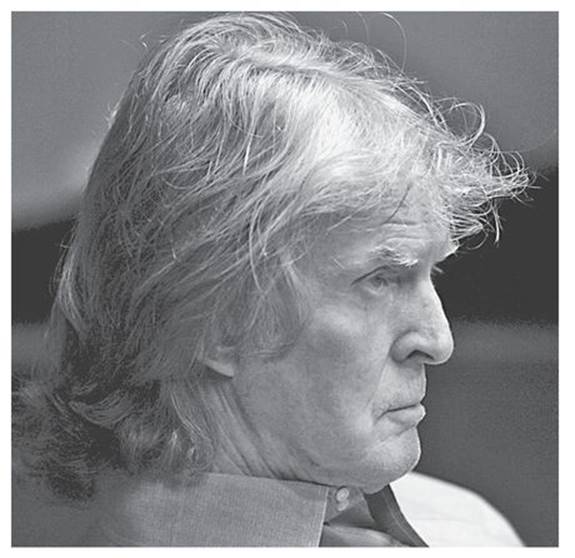
Don Imus during an appearance on Al Sharpton’s radio show to apologize for derogatory remarks against the Rutgers women’s basketball team, April 9, 2007 (courtesy of Getty Images).

DURING THE CONGRESSIONAL HEARINGS IN APRIL 2000, CONGRESSMAN Henry Waxman, in response to Dan Burton’s contention that the MMR vaccine caused autism, had said: “Let us let the scientists explore where the real truth may be.” Waxman believed that the question of whether vaccines caused autism was a scientific one, best answered in a scientific venue. But many people don’t believe that. They believe that any issue should have its day in court—that judges and juries should be the final arbiters of scientific truths. In 2001, Lyn and William Redwood, on behalf of their son Will, filed a lawsuit under the Court of Federal Claims in Atlanta, Georgia; they wanted the federal government and vaccine makers to pay for their son’s care. It was just the beginning. Soon parents of thousands of autistic children followed the Redwoods’ lead. During his hearing on September 8, 2004, Dan Burton warned pharmaceutical companies of the growing litigation: “When, and I’m not saying if, but when it’s proven that the mercury in vaccines has been a major contributing factor to those damaged kids, then there’s going to be a tremendous amount of liability exposure for these pharmaceutical companies and then they’re going to be out there all by themselves.”
On April 4, 2005, David Kirby, also aware of the lawsuits, made a plea on Imus in the Morning. Because neither parents nor states could afford the therapies, reasoned Kirby, pharmaceutical companies should pay for them: “We need to figure out how we’re going to compensate these families; how we’re going to take care of these children; how we’re going to remove the burden from states, because right now they’re footing the bill for everything. I don’t want to see the drug companies go out of business. I don’t think anyone wants that. [But] we are looking at trillions and trillions of dollars of care for these people.” One trial lawyer likened pending lawsuits against vaccines to tobacco litigation. “If you think that cigarette companies were hit hard,” he said, “wait ’till these vaccine cases go to the juries. The jurors who awarded millions of dollars to the plaintiffs had limited sympathy for them, since the risks of emphysema and lung cancer were well known. But children didn’t choose to be vaccinated—and their lives and their family’s lives have been ruined.”
David Kirby, Dan Burton, Robert F. Kennedy Jr.,personal-injury lawyers, and parents were angry and frustrated. They wanted someone to pay for the vitamin injections, blood tests, anti-fungals, anti-virals, mineral supplements, cranial manipulation, special diets, sonar depuration, hyperbaric oxygen, Lupron, and chelation. So they turned to the two groups that had those resources: pharmaceutical companies and the federal government. It was time for them to pay for the damage they had caused.
On June 11, 2007, the vaccine-autism theory had its first big day in court.