
Scott R. Votey and Anne L. Peters
The clinical syndrome of hypoglycemia is defined as a low plasma glucose value (usually <55 mg/dL) accompanied by signs and symptoms of adrenergic excess (sweating, nervousness, tachycardia, shakiness) or alterations in mental status (or both) that are relieved by the administration of carbohydrate. The more recent realization that asymptomatic plasma glucose levels of 65 to 70 mg/dL impair defenses against subsequent more severe hypoglycemia in patients with diabetes mellitus has resulted in the broadening of the definition of hypoglycemia to a glucose level of <70 mg/dL (1). This definition, which includes both symptomatic and asymptomatic patients, is intended to include everyone for whom there is potential harm from the low glucose level. The glucose concentration at which clinicalhypoglycemia occurs varies. Completely healthy women may have glucose levels <45 mg/dL during a fast without symptoms of hypoglycemia. Conversely, adrenergic symptoms of “hypoglycemia” may occur in patients without low blood glucose levels. Therefore, though the diagnosis of the clinical syndrome of hypoglycemia must be based on the presence of both biochemical hypoglycemia and concomitant hypoglycemic symptoms, physicians should be aware that glucose values of 55 to 70 mg/dL have important implications for patients with diabetes.
A balance between glucose utilization and production maintains normal blood glucose levels. In healthy individuals, preprandial blood glucose levels are usually 70 to 100 mg/dL, with a small postprandial rise peaking 1 hour after eating and returning to baseline within 4 hours. The major glucose-requiring tissues are the brain and red blood cells. Muscle, fat, and a variety of other tissues take up glucose but are also capable of utilizing other fuels. The brain, with its absolute requirement for glucose, is what drives the need to maintain adequate blood levels of glucose. During fasting, glucose production occurs through hepatic glycogenolysis (breakdown of glycogen) and gluconeogenesis (biosynthesis of glucose from nonglucose substrates). Insulin levels are high in the postprandial period and fall with fasting.
Glucoreceptors in the hypothalamus sense low blood glucose levels and cause the secretion of counterregulatory hormones. Glucagon is the primary counterregulatory hormone in nondiabetic patients. Patients with established type 1 diabetes (T1DM) or advanced type 2 diabetes (T2DM) lose their glucagon response to hypoglycemia (2).
The onset of action of glucagon is rapid, and it acts by enhancing glycogenolysis and gluconeogenesis. If glucagon is not present, epinephrine serves as the major counterregulatory hormone. Epinephrine also has a rapid onset of action and acts by inhibiting glucose utilization by muscle, increasing gluconeogenesis, and inciting carbohydrate ingestion (2). Cortisol and growth hormone are secreted as part of normal hypoglycemic counterregulation, but their release is delayed, and they do not contribute to the acute recovery from hypoglycemia.
Although there are many causes of hypoglycemia, the vast majority of episodes encountered in the emergency department (ED) occur as complications of the treatment of diabetes with insulin, sulfonylureas, or meglitinides. Hypoglycemia is an important and growing concern for the approximately 26 million individuals with diabetes in the United States. The Diabetes Treatment and Control Trial (3) in 1993 and the United Kingdom Prospective Diabetes Study (4) in 1998 found that tight control of blood glucose delays the development and progression of microvascular complications in patients with both type 1 and type 2 diabetes, and 7- to 10-year follow-up from these studies has shown a reduction in cardiovascular events as well. From these and subsequent studies came a greater emphasis on maintaining tight glycemic control.
Unfortunately, tight glycemic control also increases the frequency of hypoglycemia, especially in patients treated with insulin (5,6). More recent data suggest that hypoglycemia increases the risk of cardiovascular death, potentially negating the benefits of tight control. The Action to Control Cardiovascular Risk in Diabetes (ACCORD) trial published in 2008 demonstrated an increased risk of death from any cause and cardiovascular events in the intensively treated patients (7). The higher rate of death in the tight control group was possibly due to the increased use of insulin, very low HbA1c target (<6.0%), and higher rates of hypoglycemia. On the basis of these data and subsequent trials, it is reasonable to conclude that patients at highest risk for cardiovascular death (e.g., older, longer duration of diabetes, existing cardiovascular disease [CVD], or high risk for CVD) may not benefit from intensive therapy, and treatment should be individualized (8).
Goals for emergency physicians in the diagnosis and management of hypoglycemia are:
1. Recognition of each episode of hypoglycemia
2. Prompt and adequate treatment
3. Identification of the cause of the episode
4. Identification of the need for hospital admission to prevent recurrent episodes
5. Establishment of a plan to prevent future episodes for patients being discharged from the ED
CLINICAL PRESENTATION
The signs and symptoms of hypoglycemia fall into two categories: Adrenergic (those caused by increased activity of the sympathetic autonomic nervous system) and neuroglycopenic (those caused by depressed activity of the central nervous system [CNS]; Table 206.1). Although there is much individual variation, the adrenergic symptoms of hypoglycemia typically start as the blood glucose falls below 70 mg/dL, and evidence of neuroglycopenia occurs as the blood glucose falls below 55 mg/dL. Symptoms vary from person to person but, within an individual, remain fairly constant from episode to episode.
TABLE 206.1
Signs and Symptoms of Hypoglycemia

Patients may not experience the adrenergic symptoms of hypoglycemia (2). Patients who are recurrently hypoglycemic, particularly patients with tightly controlled T1DM or advanced T2DM, may not have symptoms until the blood glucose is <50 mg/dL and neuroglycopenic symptoms develop. This phenomenon, termed hypoglycemia-associated autonomic failure (HAAF), is the combined result of a downregulation of the adrenomedullary and sympathetic neural responses to hypoglycemia, owing to intensive insulin therapy or recent hypoglycemia (2,9). HAAF can develop in patients without symptomatic hypoglycemia as a result of glucose levels of 55 to 70 mg/dL. Patients who lack adrenergic symptoms often fail to recognize impending hypoglycemia and are at increased risk for severe neuroglycopenia. In many patients with HAAF, the epinephrine response to hypoglycemia can be restored by the careful avoidance of hypoglycemia for as little as 2 to 3 weeks (9). Because the CNS is almost entirely glucose-dependent for function, hypoglycemia manifests neurologically within minutes. Measurable cognitive deficits commonly begin at blood glucose levels <55 mg/dL, but some patients remain awake and alert at much lower levels (10). Patients may fail to perceive their cognitive dysfunction and deny having any CNS symptoms. The blood glucose at which seizures occur varies, but a seizure at a glucose of >40 mg/dL should prompt investigation for an alternative cause. Focal neurologic deficits, including hemiparesis, are the presenting symptoms in a small percentage of patients (11).
Mild episodes of hypoglycemia (defined as episodes recognized and treated by the patient) consisting only of adrenergic symptoms should not dissuade patients from adequately treating their diabetes. On the other hand, recurrent severe episodes (involving altered mentation and requiring assistance to treat), particularly those resulting in loss of consciousness or seizures, may be associated with cumulative cognitive impairment in children (12) and adults (13).
Time to recovery and completeness of recovery depend on the severity and duration of hypoglycemia. Young children, the elderly, and patients with a history of prior brain injury, such as a stroke, appear to be at higher risk for a prolonged or incomplete recovery. Although not every episode of severe hypoglycemia will result in measurable cognitive decline, the potential for permanent injury mandates prompt diagnosis and treatment.
DIFFERENTIAL DIAGNOSIS
Although chronic treatment of diabetes with insulin, a sulfonylurea agent, or both is the root cause of the vast majority of hypoglycemic episodes encountered in the ED, there is invariably an acute precipitant perturbing the patient’s usual glucose homeostasis. The key to preventing future hypoglycemic episodes is the identification of the precipitant of the current episode. A good history is the principal tool in achieving this goal and will identify the precipitant in approximately 50% of cases. Common precipitants can be grouped according to their physiologic mechanisms (Table 206.2). Inadequate glucose availability is the most commonly identified cause of hypoglycemia, followed by increased caloric utilization, medication error, and diminished excretion of a glucose lowering medication. Recurrent asymptomatic or minimally symptomatic hypoglycemia and the resultant HAAF are important risk factors for severe hypoglycemia (1,2,9).
TABLE 206.2
Precipitants of Hypoglycemia in Patients with Diabetes

Patients who take oral sulfonylurea agents can have prolonged periods of hypoglycemia (sometimes lasting up to a week) because of the long elimination half-life of many of these agents; this phenomenon occurs particularly in elderly patients and those with kidney disease or heart failure (14). The possibility of declining renal function should be assessed in any patient who develops recurrent or unexplained episodes of hypoglycemia while taking these agents. These individuals often require admission to the hospital. In addition, ingestions of even small doses of sulfonylurea agents may produce severe hypoglycemia in young nondiabetic children, and any sulfonylurea ingestion in these patients should be taken seriously (15).
The remaining antidiabetic agents vary in their propensity to cause hypoglycemia. The meglitinides repaglinide and nateglinide are short-acting insulin secretagogues that increase insulin secretion and may cause hypoglycemia. The hypoglycemia associated with these agents is of shorter duration than the hypoglycemia associated with the sulfonylurea agents; nevertheless, repaglinide and nateglinide can cause severe symptoms (e.g., seizure) if given after, instead of before, a meal (16).
Pramlintide, a synthetic analog of the human hormone amylin, suppresses postprandial glucagon secretion, slows gastric emptying, and promotes satiety. Used in combination with insulin in type 1 and type 2 diabetes, it increases the risk of severe hypoglycemia if the premeal insulin dose is not appropriately reduced. Therefore, in all patients starting pramlintide, the instructions in the packet insert should be followed and premeal insulin doses reduced by 50%.
Conversely, metformin; the α-glucosidase inhibitors (acarbose and miglitol), the thiazolidinediones (rosiglitazone and pioglitazone); and the dipeptidyl peptidase IV (DPP-4) inhibitors (sitagliptin, saxagliptin, linagliptin, and alogliptin) rarely cause hypoglycemia when used alone. In combination with insulin or a sulfonylurea, however, these drugs may exacerbate an episode of hypoglycemia. Glucagon-like peptide (GLP-1) receptor agonists (short- and long-acting exenatide and liraglutide) are used solely as an adjunct to other antidiabetic medications. GLP-1 receptor agonists increase the risk of hypoglycemia when used with a sulfonylurea agent or insulin, but only rarely in conjunction with metformin.
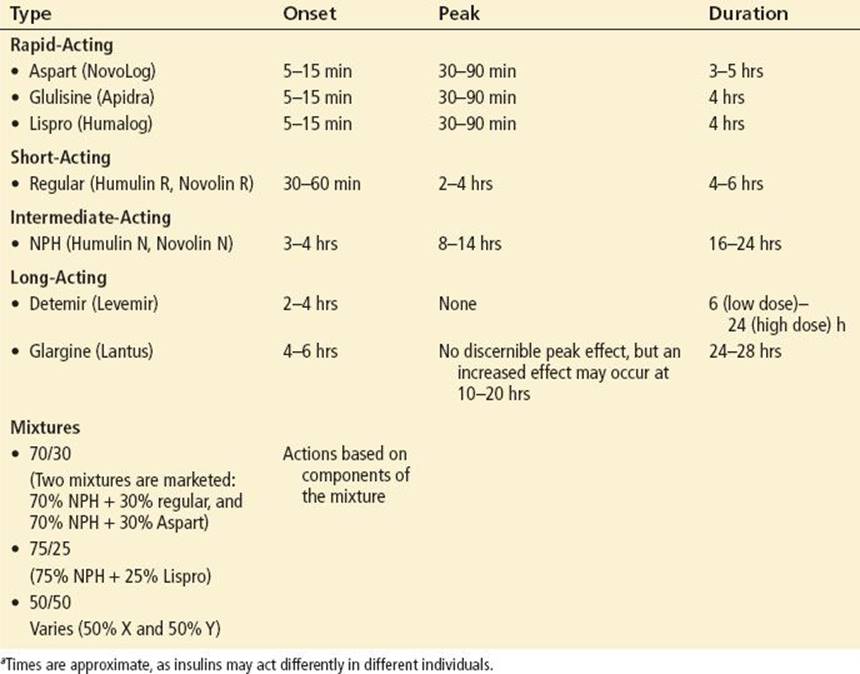
Owing to frequent miscommunication among patients, pharmacists, and medical care providers about the currently available types of insulin, it is necessary to be familiar with these products (Table 206.3). Patients often confuse the type of insulin with the brand name, referring to their insulin as “Humulin,” for instance, when they mean the “Lilly brand of human Neural Protamine Hagedorn (NPH) insulin.” If patients have their insulin vials with them, it helps to look at them. If not, and they cannot name the insulins they take, it is helpful to remember that all the rapid- and short-acting insulins are clear, as are insulin detemir (Levemir) and insulin glargine (Lantus). NPH insulin and mixtures that contain NPH insulin are cloudy.
TABLE 206.3
Time Course of Action of Insulinsa
Some patients, particularly the elderly, are not aware that they are being treated for diabetes. Therefore, it is helpful to review all medications the patient is currently taking when investigating the cause of an unexplained episode of hypoglycemia. Surreptitious use of medication is a consideration in healthy-appearing patients with unexplained hypoglycemia, especially if it is severe or recurrent.
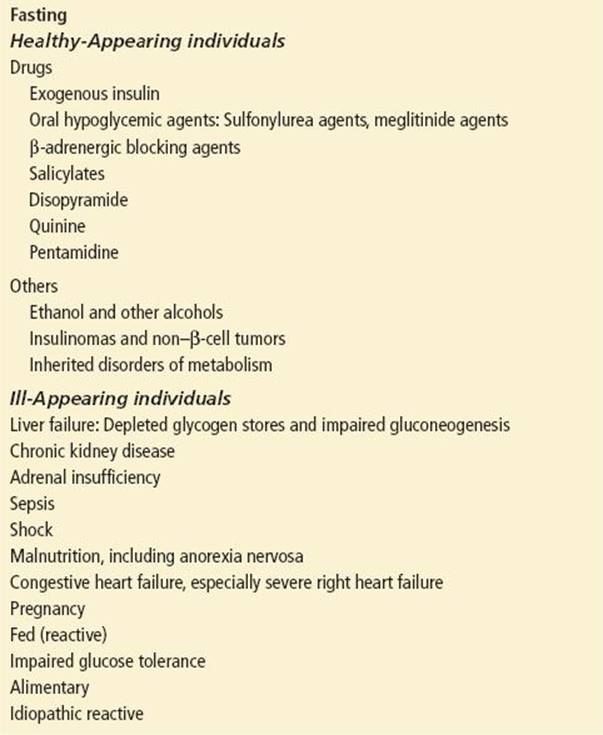
Aside from insulin and sulfonylurea agents, a number of other drugs can precipitate hypoglycemia, either at therapeutic doses or in overdose (Table 206.4). Patients taking β-blockers are at increased risk for severe hypoglycemia owing both to a blunted counterregulatory response and to diminished adrenergic symptoms when hypoglycemia does develop. Salicylate overdoses occasionally precipitate hypoglycemia, particularly in children.
TABLE 206.4
Selected Causes of Hypoglycemia
Many serious illnesses may result in hypoglycemia in nondiabetic patients; the most common are sepsis, chronic kidney disease, liver failure, pneumonia, and congestive heart failure (16). Malnutrition, including anorexia nervosa and cancer-associated cachexia is another cause. The etiology is often multifactorial. Adrenal insufficiency itself rarely causes symptomatic hypoglycemia, but it may be a contributing factor during times of physiologic stress. Cortisol is necessary for gluconeogenesis and, without it glucose levels (especially fasting levels) fall (see Chapter 209).
Ethanol ingestion can precipitate hypoglycemia in patients with or without diabetes by suppressing gluconeogenesis, usually in association with inadequate intake of food. This phenomenon occurs most commonly in children, malnourished chronic alcoholics, binge drinkers, and diabetics who neglect to eat adequately when consuming alcohol.
Insulinomas are a rare cause of hypoglycemia. Patients with these tumors have recurrent episodes of hypoglycemia, typically presenting with neuroglycopenic rather than adrenergic symptoms. Insulinomas often go undiagnosed for years. Weight gain from eating large amounts of food to self-treat the hypoglycemia is common. Non–β-cell tumors, including mesenchymal tumors, hepatocellular carcinomas, adrenal carcinomas, and others, can also produce hypoglycemia.
Newborns, especially premature infants, are at risk for hypoglycemia during times of physiologic stress owing to small glycogen stores and limited hepatic gluconeogenesis. In addition, several inborn errors of metabolism can cause hypoglycemia in children. These include glucose-6-phosphatase deficiency, galactosemia, hereditary fructose intolerance, and carnitine deficiency. Inborn errors of metabolism usually present in the first year of life. Infants experiencing unexplained hypoglycemia should be hospitalized and evaluated for these disorders.
Although hypoglycemia occurs most commonly in the fasting state, there are several causes of fed, or postprandial reactive hypoglycemia (18). Alimentary hypoglycemia occurs in patients who have undergone gastrointestinal surgery, most commonly gastrectomy and gastric bypass bariatric surgery (19). Patients have symptoms of hypoglycemia 30 to 120 minutes after eating. The hypoglycemia is thought to occur because of a more rapid emptying of food into the duodenum, leading to both an accelerated absorption of glucose and an exaggerated insulin response.
Some patients with “mild” diabetes, including patients treated with diet alone and those with risk factors for type 2 diabetes but who have not yet been diagnosed as having diabetes, experience postprandial hypoglycemia. The insulin response to food is initially delayed; the enhanced insulin secretion that follows produces postprandial hypoglycemia.
Idiopathic reactive hypoglycemia is a rare disorder that is substantially over-diagnosed, particularly in young women. In general, patients with this diagnosis have adrenergic symptoms on fasting or postprandially but are rarely documented to have a glucose <50 mg/dL.
ED EVALUATION
In the ED, the biochemical diagnosis of hypoglycemia is usually made by using a bedside glucose meter. A blood glucose level should be checked immediately on any patient presenting with adrenergic or neuroglycopenic symptoms, including behavioral abnormalities, decreased level of consciousness, and acute focal deficits. An immediate check should be done on patients with syncope and trauma patients in whom hypoglycemia as a precipitant may be overlooked.
Most glucose meters are now calibrated to give results that are consistent with plasma glucose levels, but plasma glucose levels measured in the laboratory are still considered the most accurate determination of the blood glucose level, particularly in critical care settings (20). In addition, arterial blood has a glucose level 5% to 10% higher than that of venous blood. Test strips and meters are highly sensitive for the diagnosis of hypoglycemia but may give falsely high readings in the setting of severe anemia and hypotension.
A number of substances interfere with glucose measurement. The severity of interference varies with the specific meter (20,21). For example, in the setting of high levels of acetaminophen glucose measurements using meters which rely on the glucose oxidase method may be falsely low, whereas meters which utilize the glucose dehydrogenase method may be falsely elevated (20).
Test strip accuracy also deteriorates with prolonged storage, so strips should not be used beyond their printed expiration date.
Despite all of these potential confounders, meters are sufficiently accurate so that the laboratory confirmation of hypoglycemia diagnosed by bedside testing is usually not necessary, when the results are consistent with the clinical picture.
After the patient has recovered adequately, a focused history should be taken, investigating the cause of the episode, including the timing and doses of medications, food eaten, and activity. For diabetic patients, the history should include an assessment of diabetic control, whether home glucose monitoring is performed, usual values, and the frequency and severity of hypoglycemic episodes. The presence of comorbidities, including kidney disease, liver disease and heart failure, should be ascertained.
Additional laboratory testing, including measurements of the serum creatinine or hepatic transaminases, is necessary only if the history fails to reveal the cause of the episode and contributory comorbidities are suspected.
Hypoglycemia has been associated with silent and symptomatic myocardial ischemia and infarction in diabetic patients both with and without known coronary artery disease (22). The possibility that an episode of hypoglycemia has induced myocardial ischemia should be considered in all diabetic patients at risk for coronary artery disease.
Nondiabetic patients who are suspected of having hypoglycemia, but for whom the diagnosis was not established in the ED can be referred for an outpatient diagnostic workup.
KEY TESTING
• Bedside glucose
ED MANAGEMENT
Hypoglycemia should be considered in every patient with an altered sensorium or any acute neurologic deficit. Ideally, a fingerstick blood glucose level should be obtained to confirm the diagnosis before treatment with glucose is initiated, but glucose should be given empirically if the level cannot be obtained immediately. Although animal studies and retrospective human studies have found a correlation between hyperglycemia and poor neurologic outcome among patients with stroke and severe brain injury, there is no evidence that the doses of glucose given to correct hypoglycemia are harmful. Only 20 g of carbohydrate is generally required to restore euglycemia, although, occasionally, more is required. Glucose can be administered orally or intravenously, depending on the patient’s level of consciousness.
The initial treatment for a confused or comatose adult with hypoglycemia is a 50-mL bolus of 50% glucose intravenously. Less concentrated glucose solutions are recommended for children (25%) and neonates (10%) owing to concerns about hyperosmolality. The mean increase in the serum glucose level after this bolus is 150 mg/dL, but it varies greatly and is not predictable (23). The bolus should be followed by the continuous infusion of 5% or 10% glucose at a rate sufficient to keep the glucose level over 100 mg/dL until the patient is capable of eating. If there is any reason to suspect thiamine deficiency, thiamine 100 mg intravenously should be given concomitantly with glucose to avoid precipitating Wernicke–Korsakoff syndrome.
Patients who are alert enough to eat may be treated with glucose tablets or gel, orange juice, hard candy, or any form of concentrated sugar. If a patient is taking an α-glucosidase inhibitor (acarbose or miglitol), absorption of oral carbohydrate may be inhibited. These patients must be treated with dextrose (which is in glucose tablets) as opposed to sucrose (which is in table sugar). They can also be effectively treated with milk, because the drug does not inhibit lactase.
Adults with hypoglycemia who are unable to eat and in whom intravenous access cannot be secured can be given glucagon 1 mg intramuscularly. Children should receive 0.5 mg. Available data have shown glucagon to be safe and effective in restoring euglycemia (24), with neurologic recovery occurring generally within 10 minutes.
Adrenergic symptoms respond to glucose therapy within minutes. The time to recovery of neuroglycopenic symptoms is more variable, ranging from minutes to (in rare cases) days (10). A patient failing to show clear signs of neurologic recovery within 10 minutes should have the glucose level rechecked to verify that euglycemia has been restored, because an additional bolus of glucose is occasionally needed. Alternative etiologies should be considered if there are no signs of neurologic recovery within 30 minutes.
To prevent recurrence, a meal or snack should be given after treatment. The simple carbohydrate given to raise the blood glucose level quickly does not produce a sustained elevation of blood glucose (50 mL of D50 and an 8-oz glass of orange juice contain only about 100 calories each), so a more complete meal, containing protein, fat, and complex carbohydrate, should be given to produce a more sustained rise in blood glucose levels. If hypoglycemia is due to administration of a long-acting insulin or a sulfonylurea agent, low glucose levels will typically last for an extended time. It is important to continue treatment and close observation to prevent relapse.
Octreotide, a synthetic peptide analog of somatostain, is a useful supplement to dextrose for the treatment of sulfonylurea-induced hypoglycemia in patients who are experiencing refractory or recurrent hypoglycemia despite routine management (25). Octreotide has no established role in the management of hypoglycemia caused by insulin overdose.
Long-term therapy depends on the cause of the hypoglycemia. If the hypoglycemia is secondary to a disorder such as hepatic failure or adrenal insufficiency, treatment of the underlying disorder is necessary to prevent recurrent hypoglycemia.
Dietary therapy is the treatment of choice for reactive and alimentary hypoglycemia. Patients should avoid sugars and eat frequent small snacks that contain a mixture of carbohydrate, fat, and protein. Restricting carbohydrate intake to 40% of total calories also may help.
In insulin-treated patients who become hypoglycemic, whether the usual insulin dose should be adjusted depends on the severity of the reaction. If the reaction is minor (easily detected and treated by the patient) and there is an explanation for the reaction (e.g., a missed meal or increased exercise), no insulin dose adjustment is indicated. However, if the reaction is more severe or is unexplained or if there is a pattern of hypoglycemia occurring at the same time each day, the insulin dose should be decreased. Close monitoring of blood glucose levels is necessary to prevent hypoglycemia or hyperglycemia when the insulin dose has been changed.
Because recurrent hypoglycemia acutely downregulates the adrenergic response to additional episodes of hypoglycemia, a moderately severe episode of hypoglycemia will induce hypoglycemia unawareness on subsequent days, resulting in a more severe episode. Therefore, on the day after a moderate-to-severe hypoglycemic episode, the insulin dose should be reduced by 25%. Patients should be instructed to contact their primary care provider as soon as possible regarding subsequent insulin dosing.
CRITICAL INTERVENTIONS
• Administer glucose based on patients’ symptoms rather than waiting for laboratory confirmation of hypoglycemia.
• Feed patients in the ED after a response to intravenous glucose.
• Administer glucagon to any hypoglycemic patient with neuroglycopenic symptoms who is unable to take oral glucose and in whom intravenous access has failed.
• Admit patients with hypoglycemia secondary to sulfonylurea agents or long-acting insulin preparations.
DISPOSITION
Most patients seen in the ED for hypoglycemia meet discharge criteria (Table 206.5). Hospital admission is indicated for patients failing to meet these criteria. Hypoglycemic patients with type 2 diabetes require hospitalization more frequently owing to the need for monitoring in patients with sulfonylurea-induced hypoglycemia, poor general condition, and a higher rate of concomitant disease requiring treatment (14).
TABLE 206.5
Discharge Criteria After a Symptomatic Hypoglycemic Episode

Patients who are discharged should receive specific instructions on how best to avoid recurrent episodes (most commonly by increasing caloric intake or decreasing the insulin dose), should be instructed to perform self-monitoring of blood glucose, and should carry some form of oral glucose at all times. Family members of patients who have experienced a severe episode requiring assistance should be instructed in how to recognize and treat hypoglycemia, including use of a glucagon emergency kit. All patients with diabetes who take medications that predispose to hypoglycemia should be encouraged to wear a medical alert bracelet.
Common Pitfalls
• Failure to consider hypoglycemia in all patients with acute neurologic or psychiatric symptoms, including stroke-like symptoms, regardless of any history of diabetes.
• Failure to consider hypoglycemia in any physiologically stressed infant.
• Failure to follow a bolus of intravenous glucose with a continuous glucose infusion in patients who remain unable to eat.
• Prematurely discharging a patient whose episode of hypoglycemia is due to a long-acting insulin or a sulfonylurea agent.
• Failure to consider intentional overdose as the cause of hypoglycemia.
• Failure to consider that hypoglycemia may have induced clinically significant myocardial ischemia.
• Failure to reinforce the need for self-monitoring of blood glucose and, in particular, failure to discuss the need for monitoring blood glucose levels before driving.
REFERENCES
1. Workgroup on Hypoglycemia, American Diabetes Association. Defining and reporting hypoglycemia in diabetes: A report from the american diabetes association workgroup on hypoglycemia. Diabetes Care. 2005;28:1245–1249.
2. Cryer PE. Mechanisms of hypoglycemia-associated autonomic failure in diabetes. N Engl J Med. 2013;369(4):362–372.
3. Diabetes Control and Complications Trial Research Group. The effect of intensive treatment of diabetes on the development and progression of long-term complications in insulin-dependent diabetes mellitus. N Engl J Med.1993;329:977–986.
4. UK prospective Diabetes Study Group. Intensive blood-glucose control with sulphonylureas or insulin compared with conventional treatment and risk of complications in patients with type 2 diabetes (UKPDS 33). Lancet.1998;352:837–853.
5. The Diabetes Control and Complications Trial Research Group. Hypoglycemia in the diabetes control and complications trial. Diabetes. 1997;46:271–286.
6. Leese GP, Wang J, Broomhall J, et al. Frequency of severe hypoglycemia requiring emergency treatment in type 1 and type 2 diabetes: A population-based study of health service resource use. Diabetes Care. 2003;26:1176–1180.
7. Action to Control Cardiovascular Risk in Diabetes Study Group, Gerstein HC, Miller ME, Byington RP, et al. Effects of intensive glucose lowering in type 2 diabetes. N Engl J Med. 2008;358(24):2545–2559.
8. Inzucchi SE, Bergental RM, Buse JB, et al. Management of hyperglycemia in type 2 Diabetes: A Patient-centered approach. Position statement of the american diabetes association (ADA) and the European Association for the Study of Diabetes (EASD). Diabetes Care. 2012;35:1364–1379.
9. Bakatselos SO. Hypoglycemia unawareness. Diabetes Res Clin Pract. 2011;93(suppl 1):S92–S96.
10. Malouf R, Brust JC. Hypoglycemia: Causes, neurologic manifestations, and outcome. Ann Neurol. 1985;17:421–430.
11. Yoshino T, Meguro S, Soeda Y, et al. A case of hypoglycemic hemiparesis and literature review. Ups J Med Sci. 2012;117(3):347–351.
12. Bjørgaas MR. Cerebral effects of severe hypoglycemia in young people with type 1 diabetes. Pediatr Diabetes. 2012;13(1):100–107.
13. Feinkohl I, Aung PP, Keller M, et al. Severe hypoglycemia and cognitive decline in older people with type 2 diabetes: The edinburgh type 2 diabetes study. Diabetes Care. 2014;37:507–515.
14. Quilliam BJ, Simeone JC, Ozbay AB. Risk factors for hypoglycemia-related hospitalization in patients with type 2 diabetes: A nested case-control study. Clin Ther. 2011;33(11):1781–1791.
15. Lung DD, Olson KR. Hypoglycemia in pediatric sulfonylurea poisoning: An 8-year poison center retrospective study. Pediatrics. 2011;127(6):e1558–e1564.
16. Flood TM. Serious hypoglycemia associated with misuse of repaglinide. Endocr Pract. 1999;5:137–138.
17. Nirantharakumar K, Marshall T, Hodson J, et al. Hypoglycemia in non-diabetic in-patients: Clinical or criminal? PLoS One. 2012;7(7):e40384.
18. Galati SJ, Rayfield EJ. Approach to the patient with postprandial hypoglycemia. Endocr Pract. 2014;20(4):331–340.
19. Foster-Schubert KE. Hypoglycemia complicating bariatric surgery: Incidence and mechanisms. Curr Opin Endocrinol Diabetes Obes. 2011;18(2):129–133.
20. Hellman R. Glucose meter inaccuracy and the impact on the care of patients. Diabetes Metab Res Rev. 2012;28(3):207–209.
21. Vanavanan S, Santanirand P, Chaichanajarernkul U, et al. Performance of a new interference-resistant glucose meter. Clin Biochem. 2010;43(1–2):186–192.
22. Frier BM, Schernthaner G, Heller SR. Hypoglycemia and cardiovascular risks. Diabetes Care. 2011;34(suppl 2):S132–S137.
23. Adler PM. Serum glucose changes after administration of 50% dextrose solution: Pre- and in-hospital calculations. Am J Emerg Med. 1986;4:504–506.
24. Kedia N. Treatment of severe diabetic hypoglycemia with glucagon: An underutilized therapeutic approach. Diabetes Metab Syndr Obes. 2011;4:337–346.
25. Glatstein M, Scolnik D, Bentur Y. Octreotide for the treatment of sulfonylurea poisoning. Clin Toxicol (Phila). 2012;50(9):795–804.