
Suzanne M. Shepherd, Thomas Grosheider, and William H. Shoff
Malaria is one of the most important infectious diseases worldwide. Approximately 200 to 500 million new cases, and as many as 0.6 to 2.7 million deaths, occur each year in the 3 billion exposed. Malaria was eradicated in the United States (1947 to 1951), but 1,500 new cases annually, including 10% of cases of severe malaria with an increased risk of death, reported to the Centers for Disease Control (CDC) are associated with returning travelers and immigrants (see Chapter 193, “ Parasitic Disease”).
A higher risk of adverse drug reactions is tolerated in the treatment of malaria, with its high mortality if not expeditiously managed (1), and so the therapeutic ratios of some antimalarials are narrow and toxicity is likely when recommended dosing is exceeded. Patients at increased risk of developing severe adverse events are those at the extremes of age, HIV-positive, and G6PD deficient (2). Table 315.1summarizes current common malaria chemoprophylaxis and treatment options in the United States.
TABLE 315.1
Common Chemoprophylaxis and Treatment of Malaria in the United States
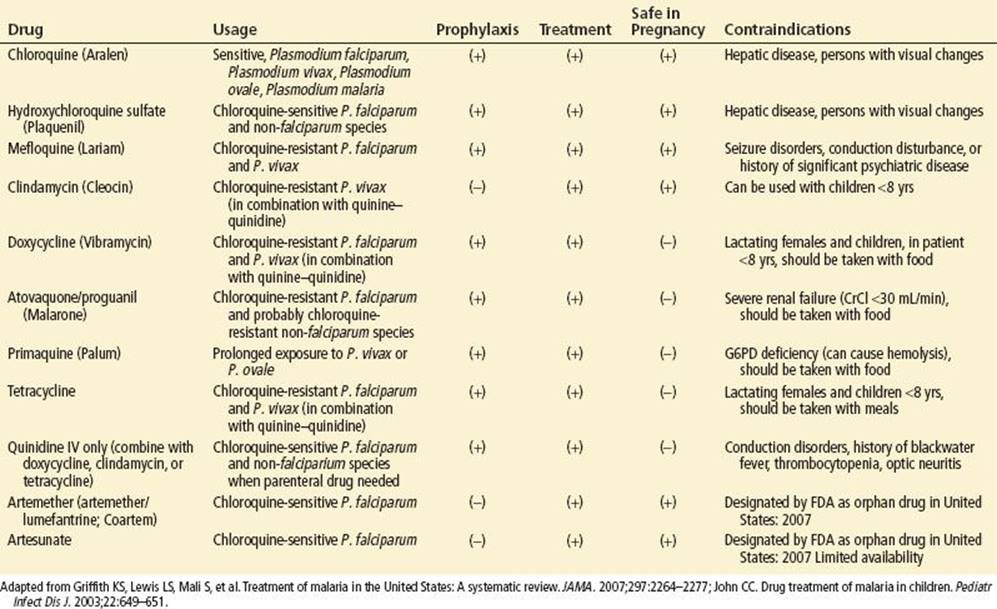
Drug resistance has forced the use of new and fixed combinations of drug therapy. Older antimalarials are being used less frequently with less accidental or purposeful overdosing. Data on many of the newer drugs are less available, particularly in combination overdoses (3). Antimalarial agents currently in use in the United States include quinoline derivatives, dihydrofolate reductase inhibitors, antibacterials, artemisinin derivatives, and ubiquinone analogs (Table 315.2). Most antimalarial poisonings are the result of accidental childhood exposures or intentional adolescent and adult suicide attempts.
TABLE 315.2
Classification of Antimalarials

Chloroquine, quinine, quinidine, amodiaquine, halofantrine, hydroxychloroquine, mefloquine, and primaquine are quinoline derivatives that cause severe toxicity in overdoses (1,4). The antimalarial quinine is an alkaloid derived from the bark of the Cinchona tree. Quinine has a black box warning in the United States due to hematologic toxicity. Quinoline derivatives carry an undeserved reputation as abortifacients (1). Both quinine and quinidine have been associated with immune thrombocytopenia caused by antibodies that bind only when the drug is present (5).
Chloroquine is usually well tolerated in prophylaxis and treatment doses. Mild side effects, including nausea and headache, may occur. Certain populations infected with malaria, such as Africans with G6PD and certain hemoglobin genotypes, may experience generalized pruritis via a nonallergic interaction. Chloroquine may worsen psoriasis and is rarely associated with psychosis and seizures. Acute chloroquine toxicity is usually seen when higher parenteral doses are administered too rapidly. Acute adverse reactions may include central nervous system (CNS) and cardiovascular toxicity. Due to these side effects, chloroquine is contraindicated in those with a seizure disorder or generalized psoriasis.
Quinine is associated with (1) cinchonism, (2) hypotension, and (3) hypoglycemia. It has local anesthetic and irritant effects, some skeletal muscle-blocking action, vasodilatory effect due to its α-blocking activity, and acts centrally to cause emesis. Chloroquine and hydroxychloroquine share these effects and also act as respiratory depressants. Quinoline derivatives share several cardiac effects, causing negative cardiac inotropism, slowing depolarization and conduction, increasing action potential duration, and in overdose, lengthening the effective refractory period (widening QRS and QTc intervals) (1,3). Chloroquine in supratherapeutic levels causes direct arterial vasodilation. Nitric oxide and histamine release may mediate hypotension and postural hypotension. Case reports link both chloroquine and quinine to fatal cardiomyopathies (6). Chloroquine and hydroxychloroquine use may cause hypokalemia.
Oral quinine and chloroquine are rapidly absorbed in the small intestine, with 80% to 90% bioavailability and peak levels occurring 1 to 3 hours after ingestion. The apparent volume of distribution (VD) is 1.6 to 1.8 L/kg for quinine and 116 to 285 L/kg for chloroquine, with plasma protein binding of 89% and 55%, respectively. Due to high chloroquine tissue binding, brain concentration may be four times that of plasma, and may precipitate seizures (7). The VD for hydroxychloroquine is about 63 L/kg (8). Dose-related gastrointestinal (GI), CNS, and cardiovascular toxicity may result from excessive intravenous (IV) infusion or from accumulation following oral administration. Severe hypotension may develop if the drug is injected too rapidly. The toxic effects of quinoline derivatives are caused by their cardiac, cytotoxic, and irritant properties.
Ocular toxicity develops in 17% to 42% of patients with quinine poisoning and appears to be caused by a direct toxic effect on the photoreceptor and ganglion cell layers of the retina and can lead to blindness (9). The central 10% of the visual field is the initial site of toxicity. Cumulative dosing >800 g, age >70, and plasma concentration of quinine >15 mg/L during overdose appear to be major risk factors for ocular toxicity. The risk of ocular toxicity is higher in dosing of quinolone derivatives used to treat rheumatologic disorders.
Chloroquine has a narrow margin of safety, with toxicity occurring at doses as low as 1.0 to 1.5 g, or 20 mg/kg. Doses >2 g in adults are almost always associated with toxic effects, and doses >5 g are usually lethal. Toxicity correlates with plasma quinine and chloroquine concentrations, and blood chloroquine levels >3 μg/mL are usually toxic. Death is likely if the level is >8 μg/mL. Chloroquine and hydroxychloroquine poisonings are associated with high fatality rates but are rare in the United States.
The toxic dose of quinine in adults ranges from 1.8 to 4.0 g. A single dose of quinine >3 g can cause serious and potentially fatal toxicity in adults, including CNS signs and seizures. Much smaller doses may be lethal in children. The therapeutic range of quinine is 5 to 15 μg/mL. Quinine levels as low as 2 μg/mL are associated with mild, reversible hearing loss. More toxic effects are seen with levels of 6 to 15 μg/mL. Cardiac arrhythmias, irreversible blindness, and death are reported with levels >15 μg/mL. Survival has occurred with levels as high as 23.5 μg/mL, but concentrations >13 μg/mL at 5 hours and 6 μg/mL at 20 hours predict severe toxicity.
Even therapeutic doses of primaquine can cause hemolytic anemia, including fatal hemolysis, in individual who are G6PD deficient. Methemoglobinemia can occur in those receiving therapeutic dosing, and can be severe in individuals with a congenital deficiency of NAD methemoglobin reductase. Rarely, usually with primaquine overdose, agranulocytosis or granulocytopenia, arrhythmia, hypertension, and CNS toxicity may occur. Hydroxychloroquine plasma concentration from 0.6 to 9.9 μg/mL is associated with severe toxicity. Amodiaquine has a similar mechanism of action as chloroquine and can cause hepatitis and agranulocytosis.
Mefloquine, also commonly used as chemoprophylaxis, may have cardiac depressant activity, and marked GI or CNS adverse effects, such as severe nausea, psychosis, odd vivid dreams, and seizures. Severe neuropsychiatric reactions requiring hospitalization, including hallucinations and seizures, is reported in 1:15,000 to 20,000 of those taking mefloquine for chemoprophylaxis with more adverse reactions at higher treatment doses (1). Oral absorption is rapid, and half-life of 9 to 13 days follows hepatic biotransformation.
Pyrimethamine alone rarely causes toxicity, except for decreased hematopoiesis or skin rash. Excessive doses or overdose can cause megaloblastic anemia, similar to folate deficiency, hepatitis, serum sickness reactions, and severe to fatal skin reactions, such as erythema multiforme, Stevens–Johnson syndrome, and toxic epidermal necrolysis.
Atovaquone’s, (a unique napthoquinone), most common reactions are maculopapular rash, fever, headache, apthous ulceration, and GI side effects including vomiting, abdominal pain, and diarrhea. Elevated transaminases and rare cases of hepatitis have been reported with the use of atovaquone–proguanil. Hepatic metabolism is the major path of elimination of proguanil, with 40% of the drug eliminated renally. The half-life of proguanil is 12 to 21 hours.
Artemisinin and its antimalarial derivatives artesunate and artemether are well-tolerated in both adults and children. IV artemether has been available in the United States since 2007 via an investigational new drug protocol through the CDC. Coartem, a fixed combination of artemether and lumefantrine, was FDA approved in 2009. Sesquiterpene alkaloids have been associated with allergic dermatoses and liver toxicity. Adverse effects of artemether and artemisinin derivatives include bradycardia, dizziness, rash, and fever. In combination with lumefantrine (Coartem), side effects also include abdominal pain, anorexia, nausea, vomiting, diarrhea, and headache. Human poisonings are rare, with the potential for GI, liver, cardiac, and CNS toxicity (10). Dizziness and GI disturbances are seen when the drugs are used orally. Toxicity occurs with long-term exposure rather than short-term peak concentrations (11).
CLINICAL PRESENTATION
Cinchonism is the most common early feature of quinine overdose, usually occurring within 4 hours of ingestion but as early as 2 hours and as late as 8 to 12 hours. Cinchonism can be seen with acute or chronic poisoning and is noted in about 75% of patients. Mild cinchonism, including tinnitus, visual disturbances, high-tone deafness, headache, dysphoria, postural hypotension, nausea and vomiting, occurs frequently and resolves soon after the drug is stopped (1,6).
Cardiac toxicity after quinine is typically mild and dose related, producing sinus tachycardia and minor electrocardiographic (ECG) changes. However, ventricular arrhythmias, including torsades de pointes, significant conduction disturbances, and complete atrioventricular dissociation have been reported (1). ECG abnormalities include prolonged PR and QT intervals, ST- and T-wave changes, U waves, bundle-branch blocks, and QRS interval widening. Mefloquine has no effect on the QT interval. QT interval prolongation following artemether–lumafantrine use is similar or less than that with chloroquine, mefloquine, or combined artesunate and mefloquine, and significantly less than with quinine or quinidine (1). With massive exposures, convulsions, coma, respiratory depression, adult respiratory distress syndrome, and cardiac arrest may occur.
The incidence of early retinopathy in patients not monitored regularly is 10% for chloroquine, 3% to 4% for hydroxychloroquine, and 0.5% for advanced retinopathy (1,9). Visual disturbances can be delayed for 6 to 24 hours after ingestion and may present with progressive blurring of vision or sudden blindness. Dilated pupils that become fixed before vision loss occurs have been reported. Peripheral visual-field defects, color misperceptions, diplopia, and poor dark adaptation can precede the development of total blindness or can be transient. The fundus is usually normal at the onset of visual defects, but retinal arteriole constriction, macular edema, and a cherry-red macular spot can develop within hours, evolving into optic atrophy (1,9). Laboratory findings include hypoglycemia, hypokalemia, slight elevation of muscle enzymes, and thrombocytopenia. Hypoglycemia is quite common, and may occur as a result of quinine-induced insulin secretion. Quinine seldom induces abortion but is associated with fetal abnormalities and maternal deaths. Hydroxychloroquine should be used very carefully during pregnant individuals with malaria (12).
In contrast, chloroquine toxicity presents differently with a rapid onset of symptoms, severe cardiovascular effects, greater respiratory depression, marked hypokalemia, and milder and transient ocular and auditory toxicity. Cardiovascular collapse is common within 2 hours in serious overdoses and is a result of marked myocardial depression and ventricular dysrhythmias. Toxicity can be predicted by a prolonged QRS interval and hypokalemia, probably from intracellular shifts. Toxic effects are usually short-lived, despite persistently high plasma levels of the drug. Seizures may occur within a few hours after overdose, or be delayed to several weeks.
Other quinoline derivatives, such as primaquine, do not have severe cardiovascular toxicities but are associated with GI distress, hemolytic anemia, and methemoglobinemia.
Mefloquine overdoses produce neuropsychiatric manifestations including headache, dizziness, vertigo, seizures, affective disorder, paranoia, hallucinations, anxiety, sleep disturbances, suicidal ideation, and hearing loss. Nausea, vomiting, diarrhea, abdominal pain, and transient elevations in transaminase levels may be seen in a posthepatic syndrome caused by mefloquine-induced liver damage, coupled in some with thyroid inhibition. Because of the prolonged half-life, these adverse events can persist for weeks.
Myopathy is rare, but reported with the use of higher doses of quinolone antimalarials. Risk is increased with advanced age, underlying renal disease, diabetes, hypothyroidism, and liver disease. Patients may complain of painful or painless muscle weakness. Deep tendon reflexes and sensation may also be decreased. Creatine kinase (CK), aldolase, myoglobin, lactate dehydrogenase, aspartate aminotransferase, as well as phosphorus and potassium may be elevated, with CK the most sensitive but not specific (1).
Of the dihydrofolate reductase inhibitors, pyrimethamine is the most toxic and may cause ataxia, seizures, coma, blindness, and deafness and folate deficiency with megaloblastic anemia. Proguanil, another dihydrofolate reductase inhibitor, is one of the safest antimalarial drugs. GI distress with vomiting, diarrhea, and abdominal pain coupled with headaches, nausea, and hematuria has been reported with ingestions of 1 g or more. Therapeutic doses of proguanil are associated with mouth ulcerations, GI distress, rash, and anemia.
Dapsone, another dihydrofolate reductase inhibitor, may cause acute methemoglobinemia and hemolytic anemia. A series of five HIV-positive patients developed methemoglobinemia while on primaquine and dapsone.
Massive doxycycline overdoses have resulted in precipitation of calcium and hypocalcemic death in animals. In humans, precipitation of calcium can lead to staining of teeth in children younger than 8 years. Doxycycline has been associated with Sweet syndrome, which is characterized by nonpruritic, painful, reddish nodules on the head, neck, chest, or upper limbs usually with fever, general malaise, and leukocytosis. Photosensitization is common. Benign intracranial hypertension, transient liver injury with transaminase elevation, GI upset, and esophageal ulcerations have also been reported with doxycycline.
Atovaquone, a novel hydroxynaphthoquinone, has produced minimal effects with overdoses up to 31.5 g. Methemoglobinemia has also been reported in a co-ingestion of atovaquone and dapsone.
DIFFERENTIAL DIAGNOSIS
Overdose with chloroquine and quinine can be confused with cerebral malaria. Quinoline derivative toxicity may resemble other agents that cause visual, auditory, or cardiac effects. Methanol, ergot derivatives, and heavy metals (e.g., lead and mercury) are in the differential diagnosis of visual disturbances. Unlike the quinolones, methanol is usually associated with a marked anion-gap acidosis and osmolal gap. Manifestations of cinchonism are similar to those of salicylate toxicity, but the latter also causes an elevated anion gap, and acid–base imbalances. Visual blurring may be seen with acute salicylate toxicity, but not visual loss. Quinidine, an isomer of quinine, causes similar cardiac effects but no visual deficits. Many drugs, such as the cyclic antidepressants, can cause similar cardiovascular and ECG effects, but these are not linked to auditory or visual changes. In patients with unexplained thrombocytopenia, drug-induced (e.g., quinine, quinidine) immune-mediated causes should be considered.
ED EVALUATION
In the overdose or toxic patient who presents with visual, auditory, neuropsychiatric, and CV symptoms of unknown cause, a history of recent travel or the use or availability of antimalarial agents is suggestive. Attempted abortion by quinine should be suspected in a pregnant patient with these complaints. Physical examination and evaluation of the vital signs, cardiac rhythm and inotropy, auditory and visual acuity, pupillary size and reactivity, funduscopic findings, visual-field testing, and a neurologic examination, including cerebellar status, are important. An ECG should be obtained. Laboratory studies include rapid serum glucose assessment and monitoring, and blood levels of quinine, quinidine, salicylate, electrolytes, lactate, liver transaminases, blood urea nitrogen, CK, and a complete blood count. Myoglobin may be helpful in those with muscle weakness. Methemoglobin levels and hemolysis evaluation may be warranted for some agents. If available, electroretinograms and visual-evoked response testing may detect signs of retinal damage in quinine overdose.
KEY TESTING
• Rapid fingerstick serum glucose
• Basic metabolic and liver panel
• ECG and continuous cardiac monitoring
• Chromatography of drug levels if available
ED MANAGEMENT
A suspected ingestion of antimalarials requires immediate attention to the vital signs, cardiac monitoring, and potentially activated charcoal administration, depending on the time from ingestion. Prevention of absorption is most effective in the first hour and, if done early, may reduce peak plasma levels. The half-life in healthy volunteers taking a therapeutic dose of quinine was reduced by 50% and, in overdoses, was shortened from more than 24 hours to 8 hours by repeated doses of activated charcoal. However, clinical outcome improvement has not been documented. Activated charcoal administration may be problematic because of the rapid onset of hypoglycemia, CNS depression, and seizures, particularly with chloroquine or quinine overdose.
Hypotension usually responds to IV fluids but may require a vasopressor (e.g., epinephrine, dopamine, or norepinephrine) and inotropes (e.g., dobutamine) (1). Hypotension, ventricular dysrhythmias, and cardiac conduction abnormalities often respond to serum alkalization to a pH of 7.5 with sodium bicarbonate administration, hyperventilation, or a combination of these. Lidocaine has been used, but may potentiate dysrhythmias and seizures. Class 1A and 1C antidysrhythmics, such as procainamide, disopyramide, and flecainide, should be avoided as they will potentiate quinine cardiotoxicity. Torsade de pointes is treated with IV magnesium, isoproterenol, or overdrive pacing. Serum potassium should be monitored, however overcorrection must be avoided as it will exacerbate the cardiac effects of chloroquine.
Benzodiazepines, combined with mechanical ventilation, and epinephrine have been helpful in the chloroquine-overdosed patient. High doses of diazepam (0.5 to 3 mg/kg IV) may counteract the hemodynamic and ECG changes associated with chloroquine toxicity. Other sedating and anticonvulsant agents, such as barbiturates, have been suggested but may risk exacerbation of the hypotension seen in severe chloroquine toxicity. Because the cardiac toxicity is similar to that seen with hyperkalemia, potassium replacement is not advised unless hypokalemia is severe.
Despite its theoretical potential for enhanced quinoline derivative elimination, acidification of the urine is unproven and may increase toxicity. Resin and charcoal hemoperfusion, hemodialysis, peritoneal dialysis, plasmapheresis, and exchange transfusion are ineffective because of protein binding and high volumes of distribution. Methylene blue should be given for methemoglobinemia (see Chapter 335).
Attempts at reversal of retinal arteriolar vasospasm by stellate ganglion block, anterior chamber paracentesis, retrobulbar injections, and systemic nitrate vasodilators are not effective and can produce significant complications. Hyperbaric oxygen (HBO) therapy has been promoted on the premise that retinal hypoxia secondary to arteriolar vasoconstriction contributes to visual loss. However, the reported benefit may represent natural recovery.
Recovery from quinoline overdose is usually gradual and complete, but visual defects from quinine may not completely resolve.
CRITICAL INTERVENTIONS
• Establish IV access, cardiac monitoring, and obtain an ECG and fingerstick glucose level.
• Protect the airway and assist ventilation in patients with seizures or CNS depression.
• Administer IV benzodiazepines and sodium bicarbonate as warranted to patients with severe chloroquine toxicity.
• Administer IV pressor to patients unresponsive to IV fluids.
DISPOSITION
Patients suspected of ingesting a toxic amount of a quinoline derivative should be observed for 6 to 8 hours. Symptomatic patients and any with cardiac conduction abnormalities should be admitted to an intensive care unit. An ophthalmologist should be consulted in patients with visual symptoms. Those with hearing deficit may need referral for audiology testing.
Common Pitfalls
• Failure to obtain a history of travel to a malarial area and/or antimalarial use or access, in patients with auditory, visual, cardiac, and neuropsychiatric abnormalities of unknown cause.
• Failure to appreciate that hypoglycemia and rapid neurologic and CV deterioration can occur after chloroquine overdose.
• Failure to appreciate that benzodiazepines can prevent dysrhythmias and seizures in patients with chloroquine overdose.
• Failure to consider multiple-dose activated charcoal therapy.
• Failure to appreciate that potassium replacement can exacerbate chloroquine-induced cardiac toxicity.
ACKNOWLEDGMENTS
Special thanks to Timothy E. Albertson, Kathy A. Marquardt, and Judith A. Alsop, who contributed to this chapter in previous editions.
REFERENCES
1. Alkadi HO. Antimalarial drug toxicity: A review. Chemotherapy. 2007;53(6):
385–391.
2. Winstanley P, Ward S, Snow R, et al. Therapy of falciparum malaria in Sub-Saharan Africa: From molecule to policy. Clin Microbiol Rev. 2004;17:612–637.
3. Taylor WR, White NJ. Antimalarial drug toxicity: A review. Drug Saf. 2004;27:
25–61.
4. Marquardt K, Albertson TE. Treatment of hydroxychloroquine overdose. Am J Emerg Med. 2001;19:420–424.
5. Bougie DW, Wilker PR, Aster RH. Patients with quinine-induced immune thrombocytopenia have both “drug-dependent” and “drug-specific” antibodies. Blood. 2006;108:922–927.
6. Azimian M, Gultekin H, Hata JL, et al. Fatal antimalarial-induced cardiomyopathy. J Clin Rheumatol. 2012;18(7):363–366.
7. Amabeoku G. Involvement of GABAergic mechanisms in chloroquine-induced seizures in mice. Gen Pharmacol. 1992;23:225–229.
8. Colby C, McAfee SL, Sackstein R, et al. A prospective randomized trial comparing the toxicity and safety of atovaquone with trimethoprim-sulfamethoxazole following autologous peripheral blood stem cell transplantation. Bone Marrow Transplant. 1999;24:897–902.
9. Neubauer AS, Samari-Kermani K, Schaller U, et al. Detecting chloroquine retinopathy: Electro-oculogram versus color vision. Br J Ophthalmol. 2003;87:
902–908.
10. Campos S, de la Cerda P, Rivera A. Fatal artesunate toxicity in a child. J Pediatric Infect Dis. 2008;3:69–75.
11. Efferth T, Kaina B. Toxicity of the antimalarial artemisinin and its derivatives. Crit Rev Toxicol. 2010;40:405–421.
12. Sperber K, Hom C, Chao CP, et al. Systematic review of hydroxychloroquine use in pregnancy with autoimmune diseases. Pediatr Rheumatol Online J. 2009:7:9.