
Alicia B. Minns
There are nearly 50,000 calls to American poison centers every year regarding plant exposures (1). This represents about 2% of all calls. The majority of these exposures are accidental ingestions in children younger than 5 years of age. In the majority of calls, the type of plant is unknown. There are very few fatalities reported each year (1). The most serious poisonings typically involve adults who intentionally ingest the raw plant or tea made from the plant for perceived medicinal or hallucinogenic properties, or those who have mistaken the plant as edible. Plant identification can be very challenging. Plant chemistry is complex and most plants contain multiple chemicals and chemical classes that work independently or additively. Additionally, members of the same family of plants can have different toxic effects. A single plant may contain several different toxins. With exception of plants containing cardiac glycosides and anticholinergic plants, the treatment of plant toxicity is mainly supportive.
When evaluating a patient who presents to the emergency department (ED) with a possible plant exposure, identification of the plant should be attempted if possible. Communication with a poison center, medical toxicologist, or botanist is recommended, especially in a symptomatic patient. The most clinically important categories of plant toxicity are discussed below. For a more comprehensive list of plant toxicity, see Table 355.1.
TABLE 355.1
Toxic Principles
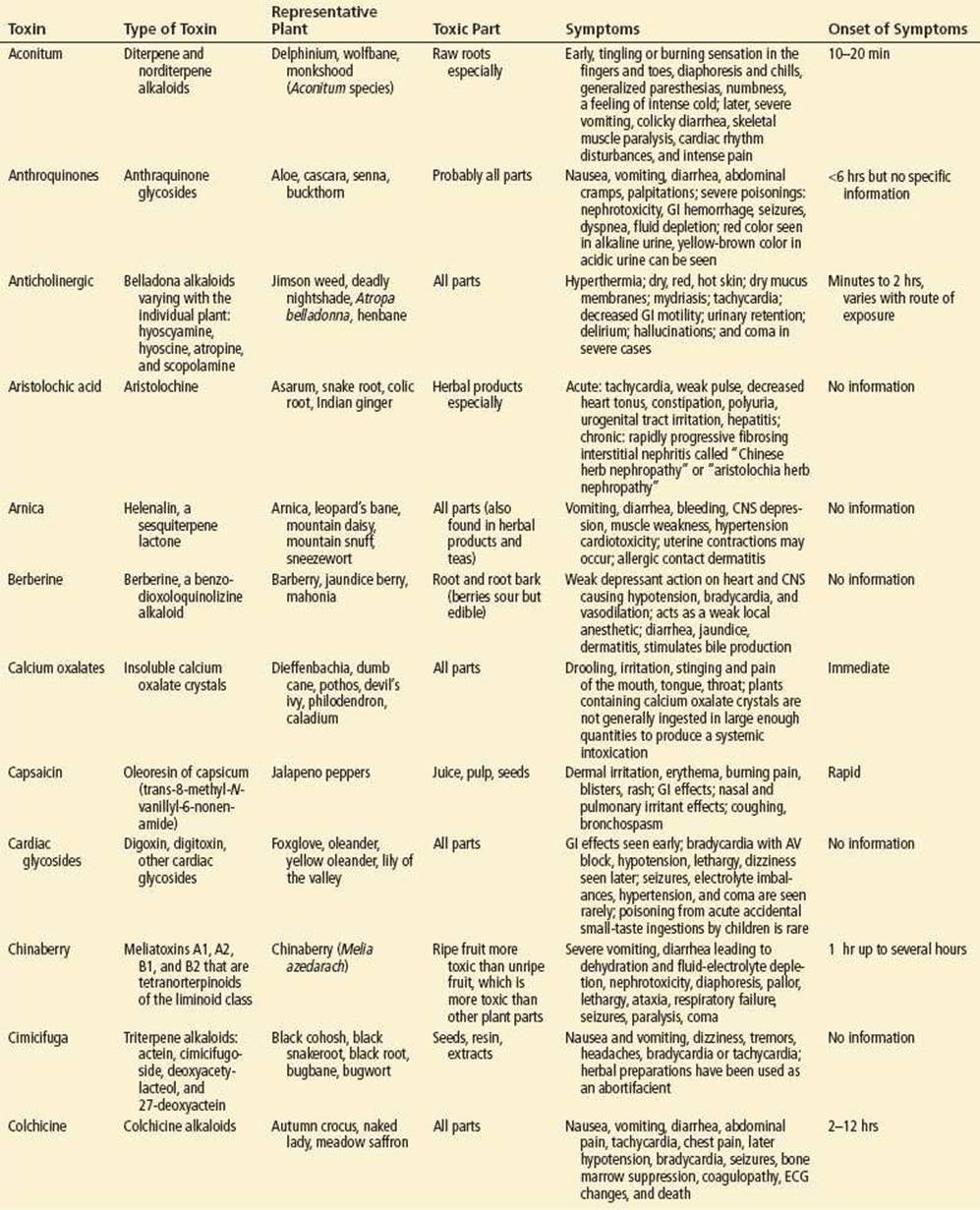

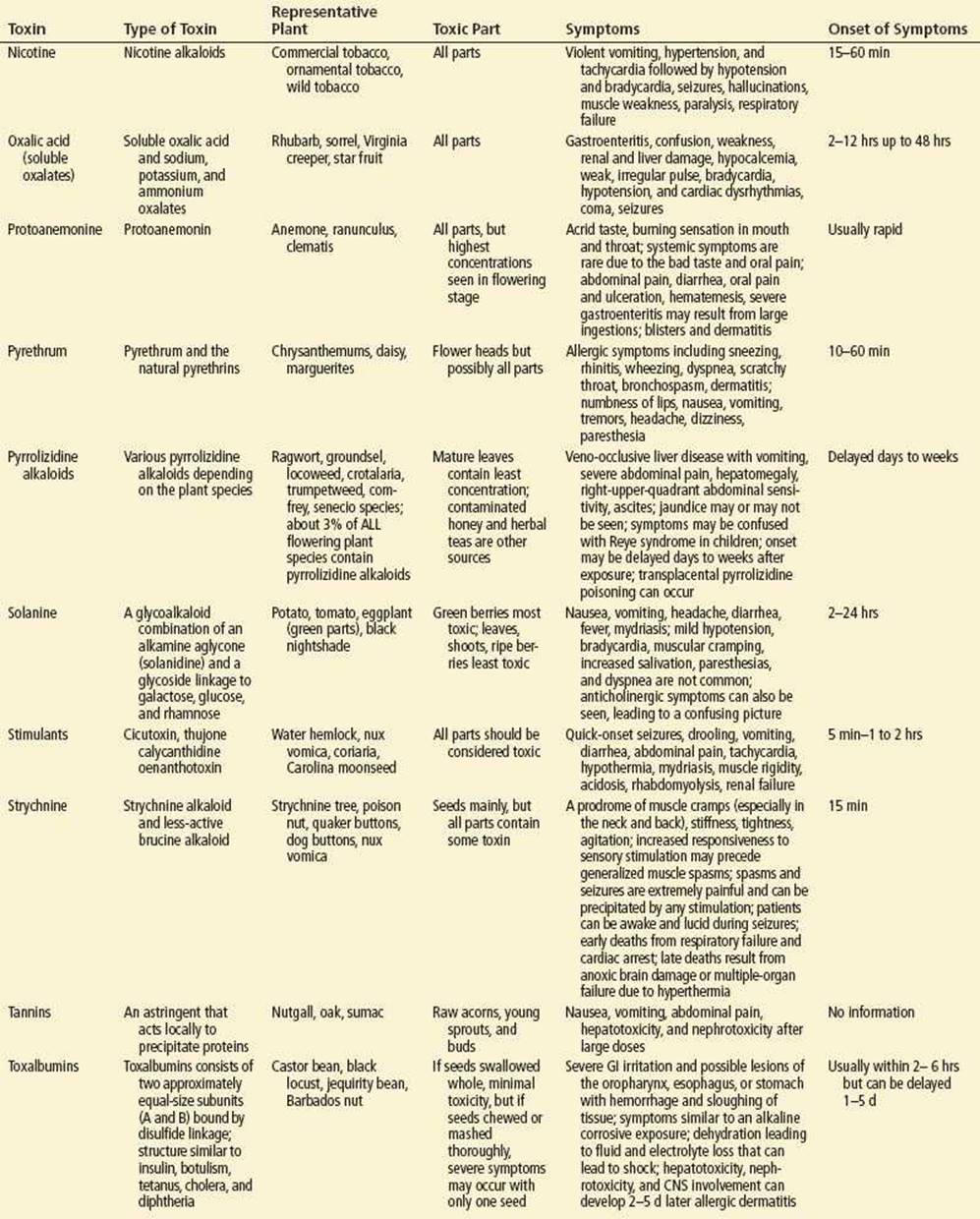

CARDIAC GLYCOSIDES
Plants containing cardiac glycosides have been used medicinally for centuries as an emetic, abortifacient, antimalarial, in the treatment of heart disease, and in suicide (2). More than 200 naturally occurring cardiac glycosides have been identified to date, with Nerium oleander (common oleander) being responsible for the greatest number of toxic exposures each year. Other cardiac glycoside–containing plants include Digitalis purpurea, Digitalis lanata(foxglove), Strophanthus gratus (oubain), Thevetia puruviana (yellow oleander), Convallaria majalis (lily of the valley), and Urginea indica (squill). The seeds and the roots contain the highest percentage of cardiac glycosides, although all parts of the plant contain the toxin. Deliberate self-harm via ingestion of T. peruviana is a major problem in South Asia, where thousands of cases are reported each year with a case fatality rate between 4% and 10% (3).
Cardiac glycosides bind to and inactivate the Na+/K+ ATPase pump on the cytoplasmic membrane of the cardiac cell resulting in increased concentration of intracellular Na+, and increased concentration of extracellular K+ (3). The increased intracellular Na+ concentration affects the Na+/Ca2+ exchange, resulting in an increase in intracellular Ca2+, ultimately leading to increased cardiac contractility and automaticity.
CLINICAL PRESENTATION
The toxic dose of a particular plant is difficult to determine and depends on factors such as the plant part ingested, the toxin concentration in the plant, age and heath of the patient, and the amount of toxin absorbed from the gut. Patients will usually develop symptoms within a few hours of ingestion, however time to clinical symptoms depends on how the plant was prepared. For example, a more rapid onset of poisoning occurs if the seeds are crushed compared to if the seeds are ingested whole.
After an acute ingestion, nearly all patients will have nausea and vomiting. The vomiting may be self-protective and limit the amount of toxin absorbed. Abdominal pain and diarrhea are also common. The main life-threatening clinical manifestation is cardiac toxicity. A wide range of cardiac conduction abnormalities and ECG abnormalities have been described such as sinus bradycardia, atrioventricular (AV) block, depressed ST segment, inverted T waves, and ventricular dysrhythmias such as bidirectional ventricular tachycardia. Refractory ventricular fibrillation and cardiogenic shock can occur in severely poisoned patients. Hyperkalemia is a marker of severe toxicity. Patients may have neurologic symptoms as well, such as tremor, drowsiness, ataxia, visual disturbances (yellow vision), and weakness (2–4).
Poisoning by natural occurring cardiac glycosides such as oleander is clinically indistinguishable from digoxin poisoning, however the toxicity from plant ingestion may last longer than the clinical effects seen with digoxin poisoning.
ED EVALUATION
An initial ECG to detect any rhythm disturbance, followed by continuous cardiac monitoring should be performed. Cross-reactivity of cardiac glycoside plants on digoxin immunoassay has been described but the digoxin level does not correlate with toxicity, so the test best serves as confirmation of the presence of cardiac glycosides. Serum chemistries should be checked and in an acute ingestion, hyperkalemia is a marker of more severe toxicity and associated with a worse outcome (4).
ED MANAGEMENT
Intravenous fluids should be given to treat the volume depletion that can occur from the gastrointestinal (GI) effects, as well as antiemetics to treat vomiting. The use of activated charcoal (AC) as a form of GI decontamination is controversial. The presence of nausea and vomiting in cardiac glycoside toxicity usually precludes the use of AC, however it can be considered in a patient with normal mental status who presents within 1 hour of ingestion without vomiting (adults: 50 to 100 g; pediatrics: 1 mg/kg). Use of digoxin-specific Fab antibody fragments, atropine, insulin/dextrose, sodium bicarbonate calcium, and pacing have been used successfully and are discussed in Chapter 325How long a patient should be monitored depends on the patient’s clinical status and some recommend cardiac monitoring for a minimum of 24 hours to monitor for delayed cardiac effects (4).
ANTICHOLINERGICS
Most plants with anticholinergic properties are from the family Solanaceae, and can be identified from their characteristic flowers. The Solanaceae family is extensively utilized by humans for food and medicine but is often rich in alkaloids that can cause life-threatening toxicity in humans. Plants that have anticholinergic properties include Atropa belladonna (deadly nightshade), Mandragora officinarum(mandrake), Hyoscyamus niger (henbane), Datura, and Brugmansia (2). A. belladonna contains berries that are particularly dangerous for children because they can be sweet. The alkaloids are generally distributed throughout the plant, so all ingested parts are toxic. Because the alkaloid concentrations vary with each plant and among parts of the plant, users are unaware of the amount of chemicals they are ingesting. Alkaloids in anticholinergic plants are also called tropane alkaloids and include atropine, hyoscyamine, and hyoscine (scopolamine). Tropane alkaloids are found in about 25 genera and 2,000 species of plants.
The tropane alkaloids competitively inhibit postsynaptic muscarinic receptors producing the classic anticholinergic syndrome (2). Since nicotinic cholinergic receptors are not affected, a more accurate characterization would be antimuscarinic toxicity, but conventional literature most often uses the term “anticholinergic.” Some of the more commonly ingested plants are Datura species, known as Jimsonweed (Datura stramonium) and moonflowers (Datura inoxia), and Brugmansia species, generally known as Angel’s Trumpet. Jimsonweed seeds contain the highest concentration of tropane alkaloids, the equivalent of 0.1 mg of atropine per seed. The lethal dose of atropine is thought to be in the range of 10 mg. D. inoxia has the largest amount of scopolamine of any plant, with its leaves containing 3.85 mg/g. Scopolamine’s effects are similar to atropine and because it is also a tertiary amine, it can easily penetrate the central nervous system. In therapeutic doses, scopolamine antagonizes acetylcholine at muscarinic receptors; however, at high doses, it can also antagonize nicotinic receptors leading to flaccid paralysis. The lethal dose of scopolamine has been reported to be 2 to 4 mg (5). In previous case reports of patients who ingested either D. inoxia or D. stramonium, there were not significant differences in the clinical manifestations because both plants contain atropine, scopolamine, or both (5).
CLINICAL PRESENTATION
Various species contain different concentrations of tropane alkaloids; however, the clinical manifestations are usually similar. The onset of symptoms usually occurs within 1 to 4 hours of ingestion. If the plant is smoked or consumed as a tea, symptoms may occur more rapidly. The duration of effect may last from hours to weeks. Anticholinergic findings suggesting poisoning include hyperthermia, tachycardia, blurred vision, flushed dry skin, absent bowel sounds, urinary retention, agitation, hallucinations, lethargy, mumbling speech, undressing behavior (generally due to hyperthermia), and repetitive picking behavior. Blurred vision and photophobia may be due to mydriasis. Seizures and coma are reported in severe cases, but seizures may be a manifestation of hyperthermia. Anticholinergic effects delay gastric emptying, resulting in a prolonged duration of action. Patients may be amnestic to the events (2,5).
ED EVALUATION
Diagnosis is usually based on a history of exposure and the presence of typical features such as dilated pupils, flushed skin, and a rapid heartbeat. Positive identification of the plant should be attempted whenever possible, but identification of the plant is often difficult and common names often refer to more than one plant. Serum toxin levels are not available for most plant toxins but an ECG can detect plant-induced dysrhythmias.
ED MANAGEMENT
Treatment of anticholinergic plant exposure consists primarily of decontamination and supportive care. Mild cases of anticholinergic intoxication may be treated by discontinuing the offending agent alone. However, more serious cases may need to be hospitalized for more prolonged monitoring and observation. Activated charcoal is commonly administered despite the limited evidence of its efficacy. Supportive care is necessary to primarily maintain hydration and treat hyperthermia if present. Foley catheterization may be needed if bladder distension develops. Benzodiazepines can be used for agitation. Physostigmine is a carbamate that inhibits the enzyme cholinesterase and can be used for diagnosis and to treat symptoms (5). Management is discussed further in Chapter 344.
OXALATES
There are many plants that contain oxalates including common household plants such as Dieffenbachia spp (dumbcane), Philodendron spp (philodendron), Spathiphyllium spp (peace lily), and Rheum rhabarbarum (rhubarb). Plants containing oxalates are the most frequent class of toxic plants reported to poison centers (1). These plants contain calcium oxalate crystals (raphides) within specialized cells called idioblasts, which are released in response to mechanical pressure, such as chewing, leading to the clinical effects (6).
CLINICAL PRESENTATION
Upon ingestion of oxalate-containing plants, the needle-like oxalate crystals cause immediate pain, burning, and irritation to the lips, mouth, and throat. Swelling in the mouth and salivation may be observed (7). Irritation in the GI tract manifests by nausea, vomiting, diarrhea, abdominal pain, and occasionally hematemesis (6). Most pediatric accidental exposures produce vomiting and diarrhea that resolve within a few hours. Although most exposures result in only minor symptoms, severe toxicity including airway compromise and renal failure from deposition of oxalate crystals has been reported (7). There are multiple other causes of oxalosis including primary oxalosis caused by genetic disorders, and secondary oxalosis from endogenous production, increased dietary intake, or increased absorption. Hyperoxaluria can also result from ethylene glycol ingestion, ingestion of high doses of vitamin C, or vitamin B6 deficiency (8).
ED EVALUATION
Symptomatic patients should receive a complete blood count, serum electrolytes including serum calcium and creatinine. A urinalysis to look for oxalate crystals may be obtained, although the presence of crystals is not specific to this ingestion. In a severe ingestion, oxalate-induced hypocalcaemia may occur and an ECG should be obtained. Patients should be monitored for facial and oral swelling that could lead to airway compromise.
ED MANAGEMENT
Decontamination is generally not needed following ingestion of oxalate-containing plants as most patients present with GI symptoms. Symptomatic treatment for oral irritation includes antihistamines, such as diphenhydramine. Intravenous fluids and antiemetics should be considered for patients with vomiting and diarrhea. Mild ingestions in patients who demonstrate clinical improvement in the ED may be discharged home. Any concern for airway compromise and/or renal dysfunction should prompt a longer observation period or admission to the hospital.
CICUTOXIN
The species of plants traditionally called water hemlock include Cicuta spp and Oenanthe spp. Water hemlock is also known as beaver poison, children’s bane, death-of-man, poison parsnip, and false parsley. Water hemlock plants are commonly mistaken for edible plants. They grow in swampy wet habitats and have roots that have been mistaken for wild carrots. Water hemlock plants are considered to be among the most toxic plants in North America and the United Kingdom (9). Similar to other poisonous plants, all components of the plant are toxic, however the tubers or roots are the most toxic portions of the plant. It smells like fresh turnips and tastes sweet. Case reports suggest that any amount ingested can lead to significant toxicity (9).
The main toxin in water hemlock, cicutoxin, is thought to be a noncompetitive gamma-aminobutyric acid (GABA) antagonist in the central nervous system. Blockade of the chloride channel on the GABA receptor allows for unopposed cellular depolarization that clinically causes seizures (9).
Water hemlock needs to be differentiated from poison hemlock, Conium maculatum, which was the poison Socrates was condemned to drink. C. maculatum resembles water hemlock and can also be found on banks of streams and rivers, however it has a purple-spotted stem and single tap root, and water hemlock has branched roots without purple spots (9). C. maculatum contains multiple different piperidine alkaloids including coniine and γ-coniceine, which act in a similar manner to nicotine. Their primary action is activation, then blockade, of nicotinic acetylcholine receptors, which are located throughout the body including brain, autonomic nervous system (sympathetic and parasympathetic), and neuromuscular junction. A variety of clinical effects can be observed including salivation, lacrimation, emesis, abdominal cramping, miosis, bradycardia or tachycardia, bronchospasm, and fasciculations. Severe poisoning results in weakness, seizures, coma, and paralysis. Coniine can cause rhabdomyolysis either by a direct effect on skeletal muscle or from producing convulsions. Although many symptoms of water hemlock and poison hemlock overlap, water hemlock causes seizures and potentially status epilepticus, and poison hemlock primarily causes respiratory paralysis (9).
CLINICAL PRESENTATION
The hallmark of water hemlock poisoning is recurrent, and occasionally refractory seizures. Mild toxicity results in nausea, vomiting, and abdominal pain within 15 to 90 minutes. In severe toxicity, salivation, diaphoresis, increased bronchial secretions, and respiratory distress develop soon after ingestion. Seizures and death resulting from status epilepticus soon follow (10). Seizures are typically grand-mal seizures which can lead to multisystem organ dysfunction including hyperthermia, rhabdomyolysis, lactic acidosis, acute kidney injury, and cerebral edema (10). Symptoms can persist for 24 to 96 hours after ingestion and many patients are amnestic to the events after ingestion. Death, if it were to ensue, usually occurs from respiratory failure secondary to seizures within 8 hours postingestion.
ED EVALUATION
The diagnosis of water hemlock poisoning is based on history and the presence of seizures. There is no routine test to confirm the presence of cicutoxin. Identification of the plant by a botanist or poison specialist is very helpful.
ED MANAGEMENT
There is limited utility for activated charcoal in this poisoning as vomiting and seizures are common clinical manifestations and put the patient at risk for aspiration. Treatment is mainly supportive with emphasis on stabilizing the airway and seizure control. Seizures should be treated aggressively with a benzodiazepine initially (e.g., in an adult lorazepam 4 to 8 mg, or diazepam 10 to 20 mg IV), and phenobarbital, 15 to 20 mg/kg IV loading dose, if seizures continue. Dosing should be titrated to effect. Phenytoin is most often ineffective in seizure control. Continuous EEG monitoring should be considered especially in patients who are intubated.
OTHER PLANTS
There are other plants which have a variety of other toxins and can cause symptoms, most often nausea and vomiting. These usually resolve spontaneously, or occasionally with minimal supportive care. Despite the number of ingestions, primarily by children, the case fatality rate is extremely low. Table 355.1 describes many of those toxins and plants.
CRITICAL INTERVENTIONS
• Obtain complete vital signs, including temperature, on all patients with suspected plant ingestions.
• Obtain an accurate name of the plant, including the common and scientific name.
• Evaluate patients with plant ingestions for possible upper airway obstruction.
• Provide supportive care as clinically necessary.
Common Pitfalls
• Failure to appreciate that plant poisoning can affect virtually any organ system.
• Failure to inquire about plant exposure and herbal use in patients with unexplained complaints, particularly GI and CNS symptoms and rashes.
• Failure to appreciate that different plants may have the same common name, which may include both toxic and nontoxic plant species.
• Failure to appreciate that some edible plants also have toxic components.
• Failure to appreciate that specific antidotes are available for the treatment of anticholinergic, cardiac glycoside, and cyanogenic glycoside plant poisoning.
REFERENCES
1. Bronstein AC, Spyker DA, Cantilena LR, et al. 2011 annual report of the American Association of Poison Control Centers’ National Poison Data System (NPDS): 29th annual report. Clin Toxicol (Phila).2012;50:911–1164.
2. Froberg B, Ibrahim D, Furbee RB. Plant poisoning. Emerg Med Clin North Am. 2007;25:375–433.
3. Bandara V, Weinstein SA, White J, et al. A review of the natural history, toxinology, diagnosis and clinical management of Nerium oleander (common oleander) and Thevetia peruviana (yellow oleander) poisoning. Toxicon.2010;56:273–281.
4. Rajapakse S. Management of yellow oleander poisoning. Clin Toxicol (Phila). 2009;47:206–212.
5. DeFrates LJ, Hoehns JD, Sakornbut EL, et al. Antimuscarinic intoxication resulting from the ingestion of moonflower seeds. Ann Pharmacother. 2005;39:173–176.
6. Watson JT, Jones RC, Siston AM, et al. Outbreak of food-borne illness associated with plant material containing raphides. Clin Toxicol (Phila). 2005;1:17–21.
7. Ryoo M, Sohn CH, Oh BJ, et al. Oropharyngeal airway obstruction after the accidental ingestion of Arisaema amurense. J Emerg Med. 2013;45:1–3.
8. Albersmeyer M, Hilge R, Schröttle A, et al. Acute kidney injury after ingestion of rhubarb: Secondary oxalate nephropathy in a patient with type 1 diabetes. BMC Nephrol. 2012;13:141.
9. Schep LJ, Slaughter RJ, Becket G, et al. Poisoning due to water hemlock. Clin Toxicol (Phila). 2009;47:270–278.
10. Centers for Disease Control and Prevention (CDC). Water hemlock poisoning – Maine, 1992. MMWR Morb Mortal Wkly Rep. 1994;43(13):229–231.