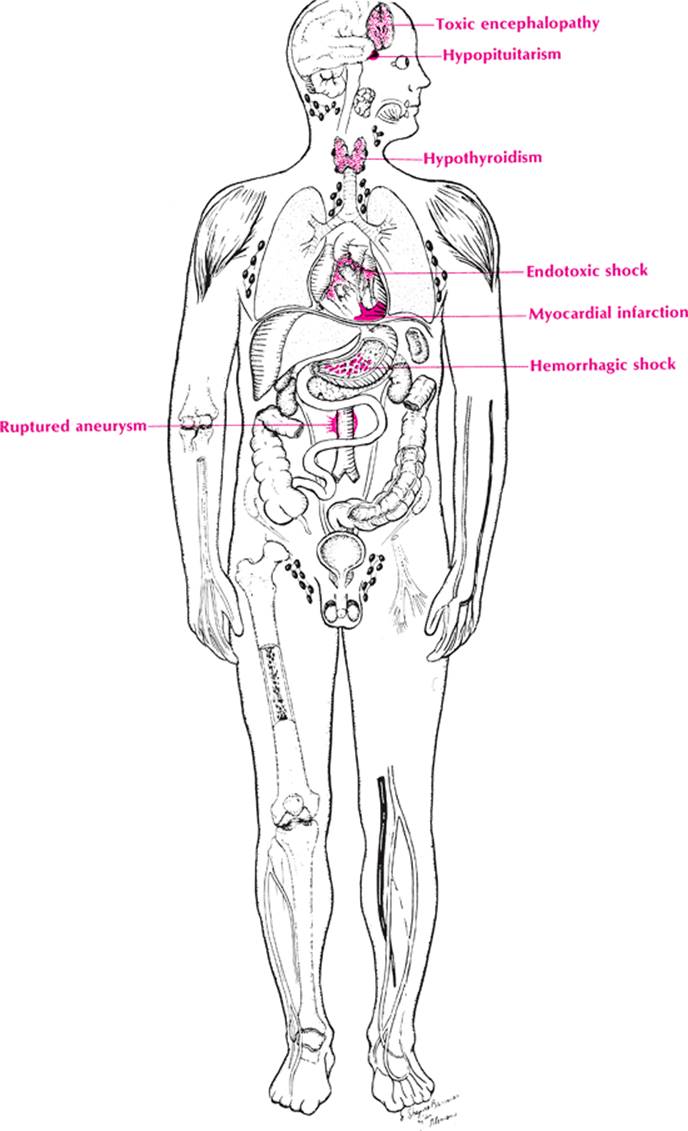
Subnormal temperature is not usually a presenting finding, but when it is found in cases of coma, hypothyroidism (myxedema coma) is the first thing to rule out. Understanding the cause of this sign is best approached from a physiologic standpoint. There are three basic reasons why a temperature drops: absolute decrease in metabolic rate, decreased circulation to the area where the temperature is being recorded, and disorders of the thermoregulatory center in the brain.
1. Decreased metabolic rate. Hypothyroidism and hypopituitarism are the principal conditions that fall into this category. Senility, starvation, and chronic inanition may cause hypothermia due to a decreased metabolic rate. Diabetes mellitus may cause hypothermia because of poor cellular absorption of glucose.
2. Poor circulation. Shock from any cause (hypovolemia, cardiogenic, or neurogenic) falls into this category. Hemorrhagic shock, dehydration, CHF, and adrenal insufficiency are all probably based on this mechanism. With poor circulation, there is tissue anoxia and a reduced metabolism in the skin and mucosa where the temperature is taken.
3. Disorders of the thermoregulatory center. Cerebral thrombosis and hemorrhage, certain pituitary tumors, and toxic suppression of this center by barbiturates, alcohol, opiates, and general anesthesia all fit into this category. Any case of prolonged coma may cause hypothermia on this basis.
Approach to the Diagnosis
Establishing a definitive diagnosis of hypothermia depends heavily on the interpretation of other symptoms and signs. A good history is invaluable as well as laboratory studies including fasting blood sugar (FBS), thyroid functions, electrolytes, BUN, and drug screens; in selected cases, a spinal tap may be useful.
|
|
|
Hypothermia |
Other Useful Tests
1. CBC (anemia)
2. Chemistry panel (uremia, liver disease)
3. ECG (myocardial infarction, electrolyte disorder)
4. Serum cortisol (Addison disease)
5. CT scan of the brain (tumor, cerebral infarction)
6. Serum FSH, LH, and growth hormone levels (pituitary insufficiency)