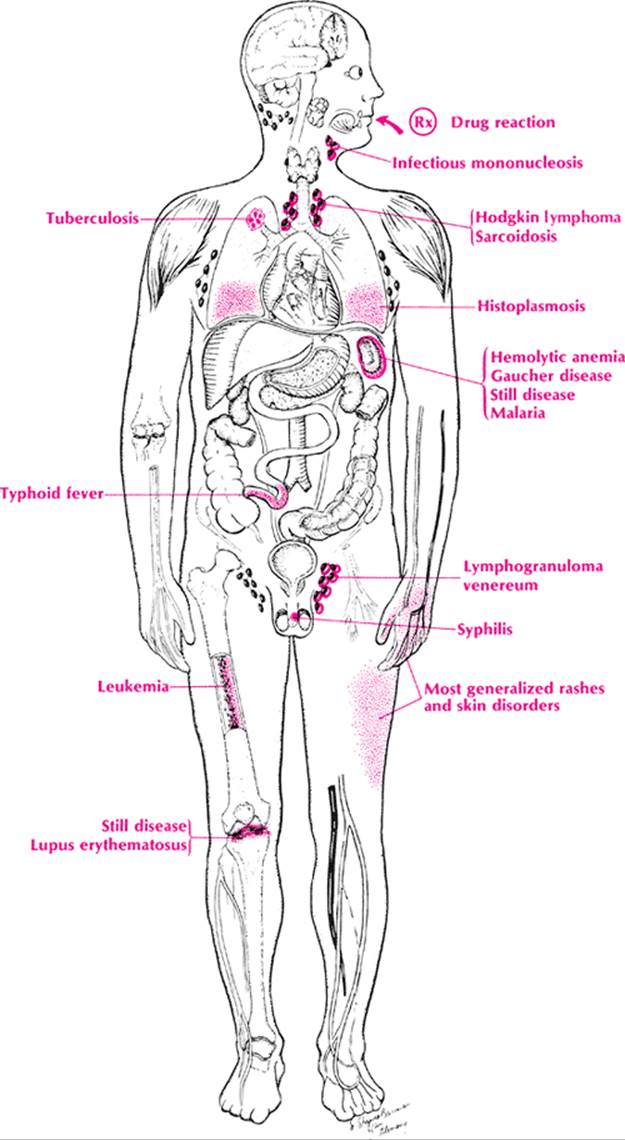
Many of the conditions that cause splenomegaly also cause generalized lymphadenopathy. They are best recalled with the use of the mnemonic MINT.
· M—Malformations include sickle cell anemia and other congenital hemolytic anemias, the reticuloendothelioses (Niemann–Pick disease, Hand–Schüller–Christian disease, and Gaucher disease), and lymphangiomas.
· I—Inflammatory disorders constitute the largest group of lymphadenopathies. Breaking them down into subgroups according to the size of the organism further assists the recall.
|
|
|
Lymphadenopathy, generalized |
1. Viral illnesses include infectious mononucleosis, lymphogranuloma venereum, German measles, chickenpox, and viral upper respiratory illnesses. There are many other conditions in this category.
2. Rickettsial diseases include typhus and Rocky Mountain spotted fever.
3. Bacterial diseases include typhoid, plague, tuberculosis, skin infections, tularemia, meningococcemia, and brucellosis.
4. Spirochetes include syphilis and Borrelia vincentii.
5. Parasites include malaria, filariasis, and trypanosomiasis.
6. Fungi include histoplasmosis, disseminated coccidioidomycosis, and blastomycosis.
· N—Neoplasms Dissemination of almost every malignancy may cause generalized lymphadenopathy. The most likely ones to present with generalized lymphadenopathy, however, are lymphatic leukemia, monocytic leukemia, Hodgkin lymphoma, and lymphosarcoma. Myelophthisic anemia must be considered too.
· T—Toxic disorders that cause generalized lymphadenopathy are numerous. Dilantin toxicity may mimic Hodgkin lymphoma. Drug allergies from sulfonamides, hydralazine, and iodides are just a few of the others.
In addition to the conditions listed above, systemic diseases that may cause lymphadenopathy include the autoimmune disorders such as lupus erythematosus (50% of the cases with lupus erythematosus are associated with lymphadenopathy), dermatomyositis, sarcoidosis, and Still disease.
Approach to the Diagnosis
Obviously, it is tempting simply to do a lymph node biopsy, but certain other procedures should be done first. If the patient is febrile, febrile agglutinins, monospot test, blood cultures, and cultures of any other suspicious body fluid should be made. A fluorescent treponemal antibody absorption test (FTA-ABS) test should be done as well as a chest x-ray and tuberculin test to rule out tuberculosis. A blood count usually shows leukemia, but a bone marrow biopsy may be necessary to diagnose leukemia, Hodgkin lymphoma, and the reticuloendothelioses. Other x-rays, skin tests, and special diagnostic procedures may be necessary.
Other Useful Tests
1. CBC (infection, leukemia)
2. Sedimentation rate (inflammation)
3. Chemistry panel (liver disease, kidney disease)
4. Brucellin antibody titer (brucellosis)
5. X-ray of the long bones (metastatic neoplasm)
6. Kveim test (sarcoidosis)
7. Brucellergen skin test (brucellosis)
8. Lyme disease antibody titer
9. Lymphangiogram (lymphosarcoma)
10. CT scan of the abdomen and pelvis (Hodgkin lymphoma, lymphoma)
11. CT scan of the mediastinum (lymphoma, metastatic neoplasm)
12. ANA analysis (collagen disease)
13. Skin tests for fungi (histoplasmosis, e.g.)
Case Presentation #64
A 38-year-old black woman was admitted with a 6-week history of mild generalized abdominal pain and low grade fever. Physical examination revealed generalized lymphadenopathy, abdominal distention with diffuse tenderness, and rebound throughout. A fluid level could be found on percussion.
Question #1. Utilizing your knowledge of anatomy and bacteriology, what are the most likely causes of this woman's problem?
A peritoneal tap revealed numerous lymphocytes in the fluid.
Question #2. What is your diagnosis now?