|
|
|
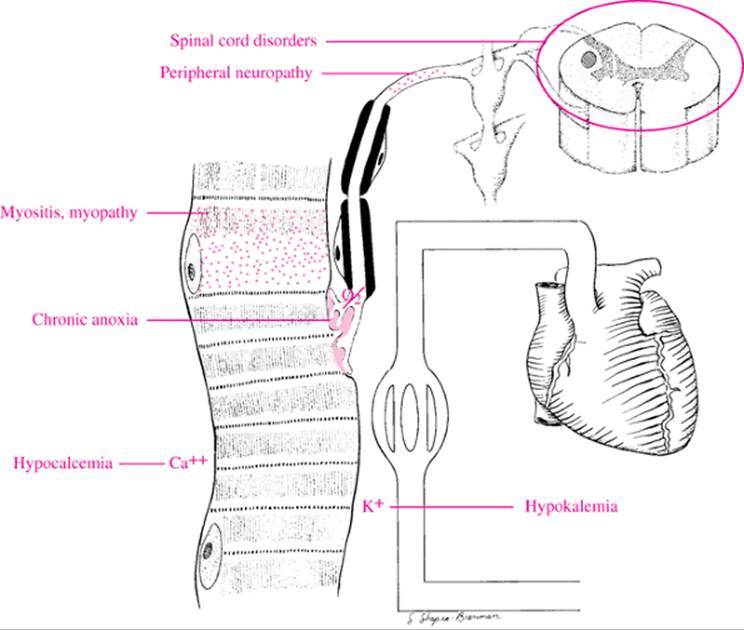
Musculoskeletal pain, generalized |
The mnemonic VINDICATE is extremely useful in developing a list of possible causes of musculoskeletal pain.
· V—Vascular disorders include periarteritis nodosa, subacute bacterial endocarditis, and polymyalgia rheumatica, which also could be classified under collagen disorders.
· I—Infectious diseases include brucellosis, poliomyelitis, influenza, leptospirosis, measles, dengue fever, epidemic myalgia, trichinosis, cysticercosis, malaria, and toxoplasmosis. Almost any febrile illness may begin with generalized myalgia.
· N—Neoplastic diseases that may cause generalized myalgia are those that are associated with fever such as Hodgkin lymphoma and leukemia.
· D—Deficiency disorders associated with myalgia are rickets and osteomalacia.
· I—Intoxication with lead, alcohol, lithium, and drugs such as vincristine, amphotericin B, cimetidine, and amphetamines may cause generalized myalgia.
· C—Congenital disorders such as McArdle syndrome (type V glycogen storage disease), porphyria, and myoglobinuria may cause generalized myalgia.
· A—Autoimmune disorders include periarteritis nodosa, lupus erythematosus, rheumatic fever, Guillain–Barré syndrome, and dermatomyositis.
· T—Trauma causing muscular hemorrhages or injury is usually associated with focal myalgia and cramps, but after prolonged exercise there may be generalized myalgia. Prolonged anxiety and tension may cause myalgia by the same mechanism. However, it is unlikely that the entity fibromyalgia is a disease.
· E—Endocrine and electrolyte disorders bring to mind hypothyroidism, hypoparathyroidism, prolonged corticosteroid therapy, hyperaldosteronism, hyponatremia, hypokalemia, and hypocalcemia (see page 252).
Approach to the Diagnosis
On history and physical examination, one may find the history of the use of alcohol and/or drugs, signs of fever, paralysis, or psychiatric symptomatology. Collagen disease will show certain telltale symptoms and signs. The laboratory workup includes a CBC, urinalysis, sedimentation rate, ANA test, chemistry panel, and electrolytes. Febrile agglutinins, ASO titers, Trichinella antibody titer, and protein electrophoresis may be indicated. It may be wise to consult a neurologist, endocrinologist, or infectious disease specialist.
|
|
|
Musculoskeletal pain, generalized |
Other Useful Tests
1. NCV (neuropathy, radiculopathy)
2. EMG (myopathy, radiculopathy)
3. Muscle biopsy (collagen disease, myopathy)
4. Spinal tap (Guillain–Barré syndrome, neurosyphilis, multiple sclerosis)
5. RA test
6. 24-hour urine calcium, sodium, or potassium level (endocrine disorder, electrolyte disorder)
7. Urine aldosterone (primary aldosteronism)
8. Serum PTH assay (hypoparathyroidism)
9. Urine porphyrin and porphobilinogen levels (porphyria)
Case Presentation #68
A 70-year-old white woman complained of early morning pain and stiffness in the shoulders, hips, and proximal extremities for the past month. She has lost 15 lb and was fatigued all the time.
Question #1. Utilizing the mnemonic VINDICATE, what would be your differential diagnosis?
Physical examination revealed diffuse tenderness of the proximal muscles and joints but no focal neurologic signs. The sedimentation rate was 70 mm. Other laboratory tests were unremarkable.
Question #2. What is your diagnosis now?