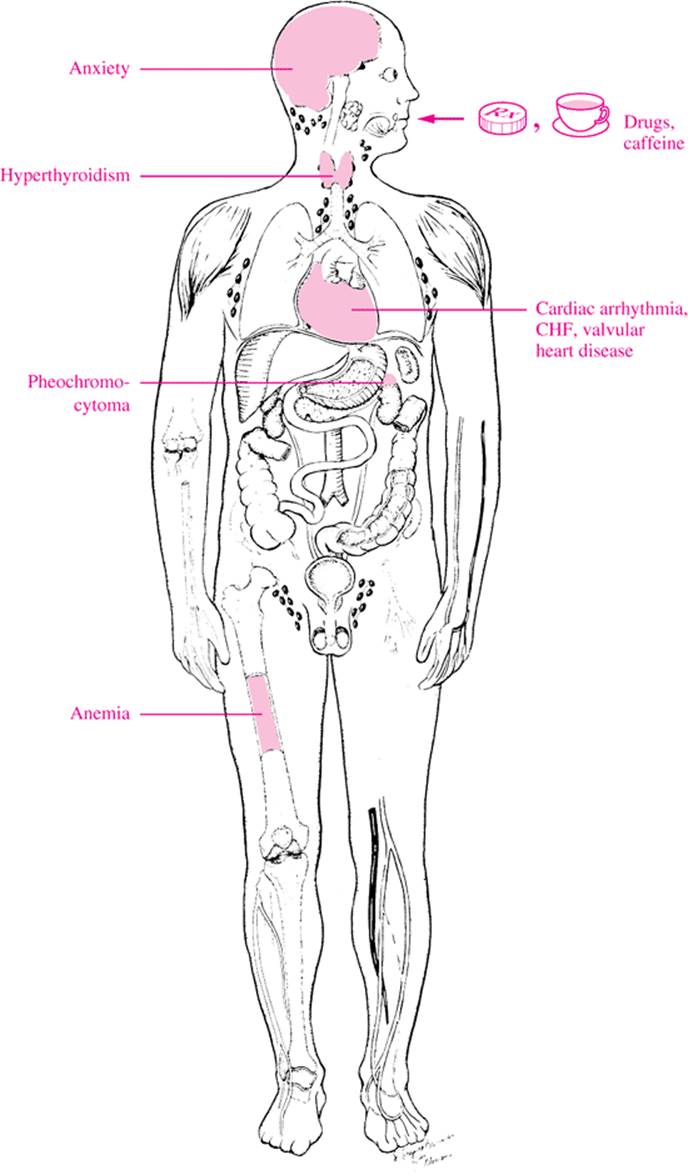
Because anxiety is the common cause of palpitations, there is a tremendous temptation to jump to this conclusion as the cause in an otherwise healthy-looking individual. If we use the mnemonic VINDICATE, we may avoid a misdiagnosis in many cases.
· V—Vascular causes help to recall aortic aneurysms, arterio venous fistulas, anemia, postural hypotension, migraine, and cardiac disorders such as aortic regurgitation, aortic stenosis, tricuspid insufficiency, CHF, and various arrhythmias (see page 77).
· I—Inflammation reminds us of fever, pericarditis, subacute bacterial endocarditis (SBE), and rheumatic fever.
· N—Neoplasms are not usually associated with palpitations.
· D—Deficiency of thiamine can lead to beriberi heart disease resulting in palpitations.
· I—Intoxication prompts us to recall that alcohol, tobacco, coffee, soft drinks, and tea can cause palpitations. It should also remind us that palpitations are common side effects of many drugs, including digitalis, aminophylline, sympathomimetics, ganglionic blocking agents, nitrates, and other drugs.
· C—Congenital disorders that may cause palpitations include patent ductus, ventricular septal defect, and hiatal hernia.
· A—Anxiety is a common cause of palpitations.
· T—Trauma causes palpitations by inducing the release of epinephrine, but there is no diagnostic dilemma in these cases.
· E—Endocrine disorders that cause palpitations include thyrotoxicosis, pheochromocytoma, menopausal syndrome, and hypoglycemia.
|
|
|
Pallor of the face, nails, or conjunctiva |
Approach to the Diagnosis
Valvular heart disease, anemia, and febrile disorders will usually be revealed on physical examination. It is important to inquire about drug, alcohol, and tobacco use. Caffeine is a frequent offender. It is helpful to eliminate any suspicious medications if possible. A drug screen may be useful in many cases. The initial diagnostic workup should include a CBC, chemistry profile, thyroid profile, sedimentation rate, anti-streptolysin O (ASO) titer, ECG, and chest x-ray. If these have normal findings, 24-hour Holter monitoring or continuous loop event recording of the ECG should be undertaken.
|
|
|
Palpitation |
Other Useful Tests
1. 24-hour urine catecholamine or vanillylmandelic acid (VMA) (pheochromocytoma)
2. Arm-to-tongue circulation time (CHF)
3. Echocardiography (CHF, valvular heart disease)
4. Exercise tolerance test (coronary insufficiency)
5. Upper GI series and esophagram (hiatal hernia)
6. 24-hour blood pressure monitoring (pheochromocytoma)
7. Psychometric testing (hysteria)
Case Presentation #71
A 62-year-old physician complained of frequently awakening at night with palpitations. It would take him at least an hour to go back to sleep. He also had to urinate at least twice at night but denied daytime frequency of urination. He denied the use of alcohol, tobacco, or drugs but usually has a cup of coffee in the morning and a coke at lunch.
Question #1. Utilizing your knowledge of physiology and the mnemonic VINDICATE, what is your differential diagnosis?
Physical examination was unremarkable. His blood pressure was 110/70 mm Hg, and his pulse was 66 bpm. Results of laboratory studies and an exercise tolerance test were normal.
Question #2. What is your diagnosis now?