
ETIOLOGY AND PREVALENCE
Diabetes mellitus (DM) comprises a group of metabolic disorders that share the common phenotype of hyperglycemia. DM is currently classified on the basis of the pathogenic process that leads to hyperglycemia. Type 1 DM is characterized by insulin deficiency and a tendency to develop ketosis, whereas type 2 DM is a heterogeneous group of disorders characterized by variable degrees of insulin resistance, impaired insulin secretion, and excessive hepatic glucose production. Other specific types include DM caused by genetic defects [maturity-onset diabetes of the young (MODY) and other rare monogenic disorders], diseases of the exocrine pancreas (chronic pancreatitis, cystic fibrosis, hemochromatosis), endocrinopathies (acromegaly, Cushing’s syndrome, glucagonoma, pheochromocytoma, hyperthyroidism), drugs (nicotinic acid, glucocorticoids, thiazides, protease inhibitors), and pregnancy (gestational DM). The phenotype of these monogenetic and secondary types of DM typically resembles type 2 DM; its severity depends on the degree of beta cell dysfunction and prevailing insulin resistance. Type 1 DM usually results from autoimmune destruction of pancreatic beta cells; it is also known as juvenile-onset diabetes because its peak incidence is in children and adolescents.
The prevalence of DM is increasing rapidly; type 2 DM frequency in particular is rising in parallel with the epidemic of obesity (Chap. 183). Between 1985 and 2010, the worldwide prevalence of DM has risen almost 10-fold, from 30 million to 285 million cases. In the United States, DM prevalence in 2010 is estimated at 26 million, or 8.4% of the population. A significant portion of persons with DM are undiagnosed.
DM is attended by serious morbidity and significant mortality; it is the fifth leading cause of death worldwide.
DIAGNOSIS
Criteria for the diagnosis of DM include one of the following:
• Fasting plasma glucose ≥7.0 mmol/L (≥126 mg/dL)
• Symptoms of diabetes plus a random blood glucose concentration ≥11.1 mmol/L (≥200 mg/dL)
• 2-h plasma glucose ≥11.1 mmol/L (≥200 mg/dL) during a 75-g oral glucose tolerance test.
• Hemoglobin A1c >6.5%
These criteria should be confirmed by repeat testing on a different day, unless unequivocal hyperglycemia is present.
Two intermediate categories also have been designated:
• Impaired fasting glucose (IFG) for a fasting plasma glucose level of 5.6–6.9 mmol/L (100–125 mg/dL)
• Impaired glucose tolerance (IGT) for plasma glucose levels of 7.8–11.1 mmol/L (140–199 mg/dL) 2 h after a 75-g oral glucose load
Individuals with IFG or IGT do not have DM but are at substantial risk for developing type 2 DM and cardiovascular disease in the future.
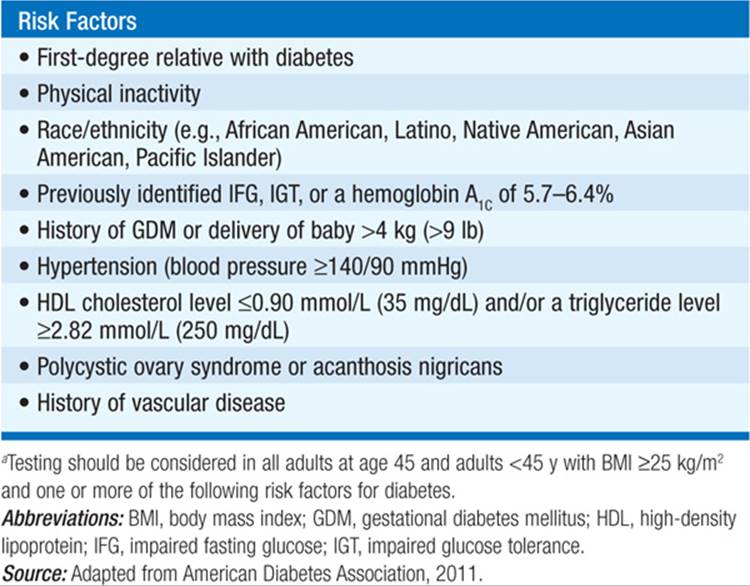
Screening with a fasting plasma glucose level is recommended every 3 years for individuals over the age of 45, as well as for younger individuals who are overweight (body mass index ≥25 kg/m2) and have one or more additional risk factors (Table 184-1).
TABLE 184-1 CRITERIA FOR TESTING FOR PRE-DIABETES AND DIABETES IN ASYMPTOMATIC INDIVIDUALSa
The metabolic syndrome (also known as insulin resistance syndrome or syndrome X) is a term used to describe a commonly found constellation of metabolic derangements that includes insulin resistance (with or without diabetes), hypertension, dyslipidemia, central or visceral obesity, and endothelial dysfunction and is associated with accelerated cardiovascular disease (Chap. 127).
CLINICAL FEATURES
Common presenting symptoms of DM include polyuria, polydipsia, weight loss, fatigue, weakness, blurred vision, frequent superficial infections, and poor wound healing. In early type 2 DM, symptoms may be more subtle and consist of fatigue, poor wound healing, and paresthesias. The lack of symptoms is the main reason for the delayed diagnosis of type 2 DM. A complete medical history should be obtained with special emphasis on weight, exercise, smoking, ethanol use, family history of DM, and risk factors for cardiovascular disease. In a pt with established DM, assessment of prior diabetes care, HbA1c levels, self-monitoring blood glucose results, frequency of hypoglycemia, and pt’s knowledge about DM should be obtained. Special attention should be given on physical exam to retinal exam, orthostatic bp, foot exam (including vibratory sensation and monofilament testing), peripheral pulses, and insulin injection sites. Acute complications of DM that may be seen on presentation include diabetic ketoacidosis (DKA) (type 1 DM) and hyperglycemic hyperosmolar state (type 2 DM) (Chap. 24).
The chronic complications of DM are listed below:
• Ophthalmologic: nonproliferative or proliferative diabetic retinopathy, macular edema, rubeosis of iris, glaucoma, cataracts
• Renal: proteinuria, end-stage renal disease (ESRD), type IV renal tubular acidosis
• Neurologic: distal symmetric polyneuropathy, polyradiculopathy, mononeuropathy, autonomic neuropathy
• Gastrointestinal: gastroparesis, diarrhea, constipation
• Genitourinary: cystopathy, erectile dysfunction, female sexual dysfunction, vaginal candidiasis
• Cardiovascular: coronary artery disease, congestive heart failure, peripheral vascular disease, stroke
• Lower extremity: foot deformity (hammer toe, claw toe, Charcot foot), ulceration, amputation
• Dermatologic: Infections (folliculitis, furunculosis, cellulitis), necrobiosis, poor healing, ulcers, gangrene
• Dental: Periodontal disease
TREATMENT Diabetes Mellitus
Optimal treatment of DM requires more than plasma glucose management. Comprehensive diabetes care should also detect and manage DM-specific complications and modify risk factors for DM-associated diseases. The pt with type 1 or type 2 DM should receive education about nutrition, exercise, care of diabetes during illness, and medications to lower the plasma glucose. In general, the target HbA1c level should be <7.0%, although individual considerations (age, ability to implement a complex treatment regimen, and presence of other medical conditions) should also be taken into account. Intensive therapy reduces long-term complications but is associated with more frequent and more severe hypoglycemic episodes. Goal preprandial capillary plasma glucose levels should be 3.9–7.2 mmol/L (70–130 mg/dL) and postprandial levels should be <10.0 mmol/L (<180 mg/dL) 1–2 h after a meal.
In general, pts with type 1 DM require 0.5–1.0 U/kg per day of insulin divided into multiple doses. Combinations of insulin preparations with different times of onset and duration of action should be used (Table 184-2). Preferred regimens include injection of glargine at bedtime with preprandial lispro, glulisine, or insulin aspart or continuous SC insulin using an infusion device. Pramlintide, an injectable amylin analogue, can be used as adjunct therapy to control postprandial glucose excursions.
TABLE 184-2 PROPERTIES OF INSULIN PREPARATIONS
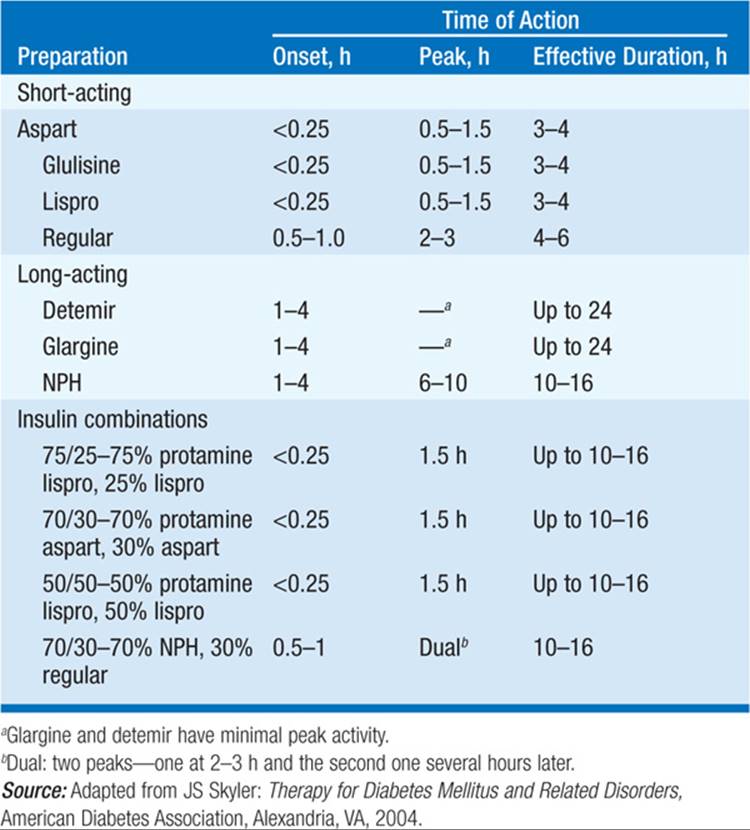
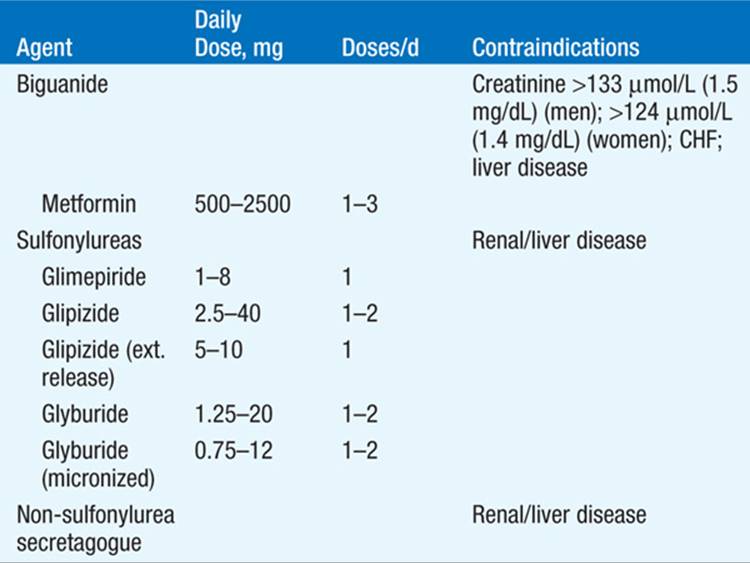
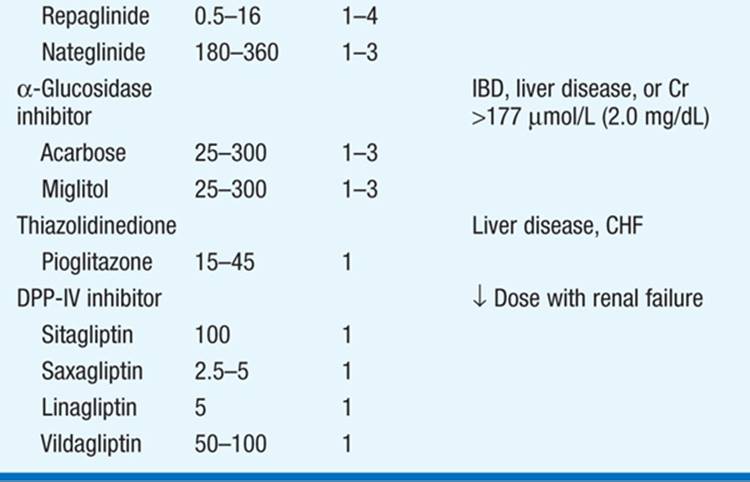
Pts with type 2 DM may be managed with diet and exercise alone or in conjunction with oral glucose-lowering agents, insulin, or a combination of oral agents and insulin. The classes of oral glucose-lowering agents and dosing regimens are listed in Table 184-3. In addition, exenatide and liraglutide are injectable glucagon-like peptide 1 (GLP-1, an incretin) analogues that may be used in combination with metformin or sulfonylureas. A reasonable treatment algorithm for initial therapy proposes metformin as initial therapy because of its efficacy (1–2% decrease in HbA1c), known side-effect profile, and relatively low cost (Fig. 184-1). Metformin has the advantage that it promotes mild weight loss, lowers insulin levels, improves the lipid profile slightly, lowers cancer risk, and does not cause hypoglycemia when used as monotherapy, although it is contraindicated in renal insufficiency, congestive heart failure, any form of acidosis, liver disease, or severe hypoxia, and should be temporarily discontinued in pts who are seriously ill or receiving radiographic contrast material. Metformin therapy can be followed by addition of a second oral agent (insulin secretagogue, DPP-IV inhibitor, thiazolidinedione, or α-glucosidase inhibitor). Combinations of two oral agents may be used with additive effects, with stepwise addition of bedtime insulin or a third oral agent if adequate control is not achieved. As endogenous insulin production falls, multiple injections of long-acting and short-acting insulin may be required, as in type 1 DM. Individuals who require >1 U/kg per day of long-acting insulin should be considered for combination therapy with an insulin-sensitizing agent such as metformin or a thiazolidinedione. Insulin-requiring type 2 DM pts may also benefit from addition of pramlintide.
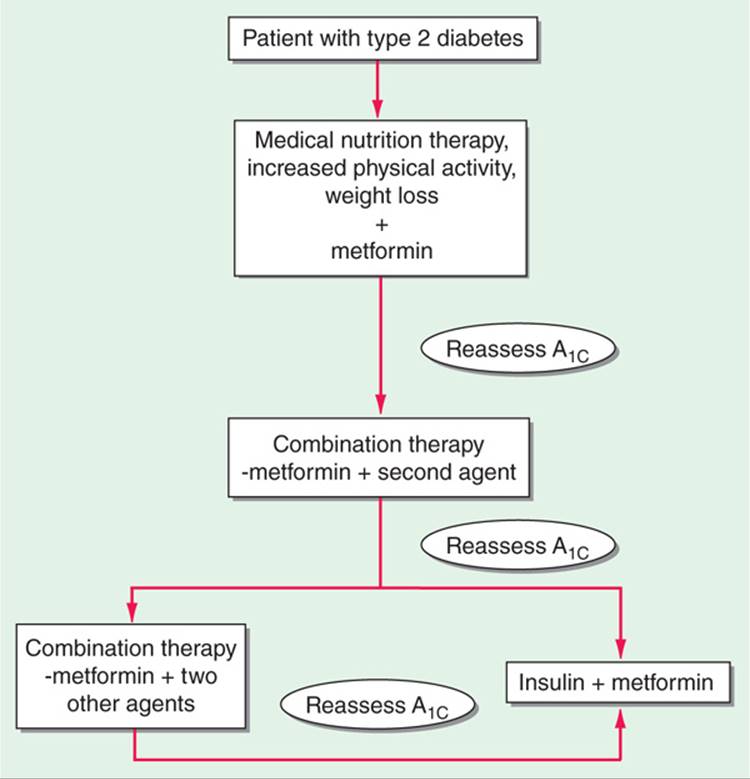
FIGURE 184-1 Glycemic management of type 2 diabetes. Agents that can be combined with metformin include insulin secretagogues, thiazolidinediones, α-glucosidase inhibitors, DPP-IV inhibitors, and GLP-1 receptor agonists. A1c, hemoglobin A1c.
TABLE 184-3 ORAL GLUCOSE-LOWERING AGENTS
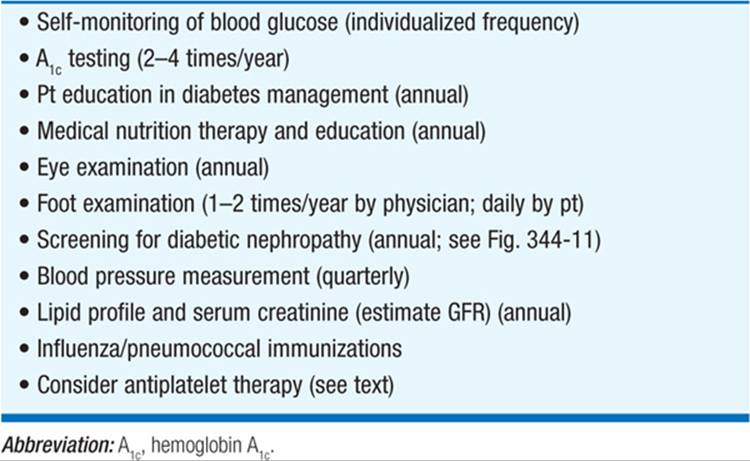
The morbidity and mortality of DM-related complications can be greatly reduced by timely and consistent surveillance procedures (Table 184-4). A routine urinalysis may be performed as an initial screen for diabetic nephropathy. If it is positive for protein, quantification of protein on a 24-h urine collection should be performed. If the urinalysis is negative for protein, a spot collection for microalbuminuria should be performed (present if 30–300 μg/mg creatinine on two of three tests within a 3- to 6-month period). A resting ECG should be performed in adults, with more extensive cardiac testing for high-risk pts. Therapeutic goals to prevent complications of DM include management of protein-uria with ACE inhibitor or angiotensin receptor blocker therapy, bp control (<130/80 mmHg if no proteinuria, <125/75 if proteinuria), and dyslipidemia management [LDL <2.6 mmol/L (<100 mg/dL),  mmol/L (>40 mg/dL) in men and >1.38 mmol/L (50 mg/dL) in women, triglycerides <1.7 mmol/L (<150 mg/dL)]. In addition, any diabetic pt >40 years should take a statin, regardless of the LDL cholesterol, and in those with existing cardiovascular disease, the LDL target should be <1.8 mmol/L (70 mg/dL).
TABLE 184-4 GUIDELINES FOR ONGOING MEDICAL CARE FOR PATIENTS WITH DIABETES
MANAGEMENT OF THE HOSPITALIZED PATIENT
The goals of diabetes management during hospitalization are near-normal glycemic control, avoidance of hypoglycemia, and transition back to the outpatient diabetes treatment regimen. Pts with type 1 DM undergoing general anesthesia and surgery, or with serious illness, should receive continuous insulin, either through an IV insulin infusion or by SC administration of a reduced dose of long-acting insulin. Short-acting insulin alone is insufficient to prevent the onset of diabetic ketoacidosis. Oral hypoglycemic agents should be discontinued in pts with type 2 DM at the time of hospitalization. Either regular insulin infusion (0.05–0.15 U/kg per hour) or a reduced dose (by 30–50%) of long-acting insulin and short-acting insulin (held, or reduced by 30–50%), with infusion of a solution of 5% dextrose, should be administered when pts are NPO for a procedure. A regimen of long-and short-acting SC insulin should be used in type 2 pts who are eating. The glycemic goal for hospitalized pts with DM should be a preprandial glucose of <7.8 mmol/L (<140 mg/dL) and <10 mmol/L (<180 mg/dL) at post-meal times. For critically ill pts, glucose levels of 7.8–10.0 mmol/L (140–180 mg/dL) are recommended. Those with DM undergoing radiographic procedures with contrast dye should be well hydrated before and after dye exposure, and the serum creatinine should be monitored after the procedure.

For a more detailed discussion, see Powers AC: Diabetes Mellitus, Chap. 344, p. 2968, in HPIM-18.