
BEES, SPIDERS, SCORPIONS, AND OTHER SMALL BITERS
Bees, Wasps, Hornets, and Ants
This group of insects includes honeybees, bumblebees, wasps, hornets, and yellow jackets; each possesses a stinger, which is used to introduce venom into the victim. Most stings occur on the head, neck, arms, and legs.
“Killer bees” are an Africanized race of honeybees created by interbreeding of the African honeybee Apis mellifera scutellata (brought for experiments into Brazil) with common European honeybees. The hazard from these bees is that they tend to be more irritable, sense threat at a distance greater than their European counterparts, swarm more readily, defend their nests more aggressively and stay agitated around the nest for days, and impose mass attacks on humans. The venom of an Africanized bee is not of greater volume or potency than that of a European honeybee. However, the personality of the Africanized bees is such that they may pursue a victim for up to ⅔ mile (1 km), and may recruit other attacking bees by the hundreds or thousands. A victim may be stung from 50 to more than 1,000 times; it is estimated that 500 stings achieves the lethal threshold. The bees are established in Arizona, New Mexico, and California, and unfortunately appear to be increasing their habitat as they adapt to colder temperatures.
The sting mechanism for a honeybee is composed of a doubly barbed stinger attached to a venom sac that pumps venom into the victim. When the bee attempts to escape after a sting, the stinger and sac remain in the victim (this kills the bee) and continue to inject venom. Thus, the honeybee can sting only once, whereas a wasp, with a smooth stinger that does not become entrapped, can sting multiple times, as can yellow jackets, hornets, and bumblebees.
Pain from a bee, wasp, or hornet sting is immediate, with rapid swelling, redness, warmth, and itching at the site of the sting. Blisters may occur. Sometimes the victim will become nauseated, vomit, and/or suffer abdominal cramping and diarrhea. If the person is allergic to the insect venom, a dangerous reaction may follow rapidly (within minutes, but occasionally delayed by up to 2 hours). This consists of hives, shortness of breath, difficulty breathing, swelling of the tongue, weakness, vomiting, low blood pressure, and collapse. People have swallowed bees (undetected in beverage bottles) and sustained stings of the esophagus, which are enormously painful.
A severe allergic reaction may follow the sting(s) of a fire (red) ant Solenopsis invicta, because it marches along the victim and leaves a trail of small, painful blisters. The fire ant hangs onto the victim’s skin with pincers, and then uses a posterior stinger to deliver up to 8 stings while it pivots around. The bites and stings cause itching and swelling. A day or two after the ant bite, the fluid in the blister turns cloudy or white, and a small sterile pustule develops. This may continue to be painful and itch for a week or more. Harvester ants generally produce less severe reactions.
Treatment for Insect Sting
1. Be prepared to deal with a severe allergic reaction (see page 66). If the victim develops hives, shortness of breath, and profound weakness, and appears to be deteriorating, immediately administer epinephrine. This is injected subcutaneously (see page 474) in a dose of 0.3 to 0.5 mL for adults and 0.01 mL/kg (2.2 lb) of body weight for children, not to exceed 0.3 mL. Epinephrine is available in allergy kits with instructions for use. Anyone known to have insect allergies who travels in the wilderness should carry epinephrine. Take particular care to handle preloaded syringes carefully, to avoid inadvertent injection into a finger. When administering an injection, never share needles between people.
The drug is available in preloaded syringes in certain allergy kits, which include the EpiPen autoinjector and EpiPen Jr. autoinjector (Dey), the Twinject autoinjector (Verus: 0.3 mg or 0.15 mg doses; 2 doses per unit), and the Ana-Kit. Instructions for use accompany the kits. The EpiPen and Twinject epinephrine products are generally easier for laypeople to use, because they require less dexterity to accomplish injection with them. The Twinject autoinjector and Ana-Kit syringe are configured with enough epinephrine for a second (repeat) dose, which is sometimes necessary. The Twinject is a true autoinjector for the first dose; the second dose is delivered as a routine injection from a concealed syringe and needle.
For dosing purposes, the EpiPen and Twinject 0.3 mg autoinjector should be used for adults and children over 66 lb (30 kg) in weight. Children 66 lb and under should be injected with the EpiPen Jr. or Twinject 0.15 mg autoinjector.
2. Administer diphenhydramine (Benadryl) by mouth, 50 to 100 mg for an adult and 1 mg/kg (2.2 lb) of body weight for a child. This antihistamine drug may by used by itself for a milder allergic reaction. Topical antihistamine lotions or creams may be beneficial.
3. Stingers or pieces of stingers left in the skin should be removed as quickly as possible (Figure 203). It used to be taught that pulling the stinger out with fingers or forceps squeezed more venom into the victim, but this is currently not believed to be true. So, it is better to flick or pull a stinger and venom sac out of the skin of the victim using tweezers or your fingers than to waste precious time searching for a straight-edged object, such as a knife or credit card, to scrape away the stinger. Furthermore, crude scraping runs the risk of breaking off the stinger and leaving it embedded in the skin. An alternative is to try to pull out the stinger, then apply the Extractor device (Figure 204), if you are carrying one and it is available immediately after the sting has occurred.
4. Apply ice packs to the site of the sting.
5. Home topical remedies, such as aspirin, a 20% aluminum salt-containing preparation (including many household antiperspirants), or paste of baking soda or papain-containing meat tenderizer (such as Adolph’s unseasoned meat tenderizer) and water directly to the wound (for no more than 15 minutes), are of unproven value. Do not apply mud. The commercial product After Bite (Tender Corporation), a mixture of ammonium hydroxide and mink oil, is moderately effective for relief of pain and itching following insect bites, but will not abort an allergic reaction. StingEze liquid (Wisconsin Pharmacal) is a mixture of camphor, phenol, benzocaine, and diphenhydramine. This is a good agent to control itching and mild pain following any insect bite. Lidocaine 4% applied topically may help diminish discomfort.
6. If a person suffers an extensive skin and soft tissue reaction (swelling, itching, blisters), he may benefit from the administration of a corticosteroid, such as prednisone (60 mg by mouth day one, tapered by 10 mg per day over the next 5 days) or methylprednisolone (24 mg by mouth day one, tapered over the next 5 days).
7. If a person stung by an insect develops more than a mild to moderate local reaction, transport him to a hospital.
8. A bee sting in general does not pose a large risk for tetanus infection. Although deep punctures of other varieties deposit bacteria into the wound(s), where C. tetani can thrive in the absence of oxygen, a bee sting puncture isn’t that deep. The stinger might transfer bacteria from the skin surface, wherein lies the greatest risk. If a person has been immunized within the past 5 years, it is unnecessary to get a Td (or Tdap) booster immunization. If it has been more than 5 years but less than 10 years since the last tetanus shot, a Td (or Tdap) booster is indicated. If it has been more than 10 years since the last tetanus shot, both a Td (or Tdap) booster and tetanus immune globulin are indicated, if you go by the book.

Figure 203 Honeybee sting. Because the venom sac is still attached to the stinger, both should be scraped or pulled free from the skin as soon as possible.

Figure 204 Application of the Extractor to a bee sting.
Avoidance of Stinging Insects
1. Store garbage, particularly fruit, at a distance from the campsite.
2. Remove (carefully) beehives and wasp nests from children’s play areas.
3. Wear light-colored clothing. Dark-colored clothing is attractive to insects and may evoke a defensive (sting or bite) response. Keep shirt sleeves closed and tuck pants into boots. Wear light-colored socks.
4. Avoid wearing sweet fragrances that make you smell like a flower.
5. Do not anger bees or wasps. If confronted by a swarm, cover your face (eyes, nose, and mouth) and move rapidly from the area. If necessary, throw a blanket or towel over your head. Run if you must. Run through bushes or weeds to confuse the bees. Don’t jump into a pool—the bees may wait for you and a severe allergic reaction from a sting while in the water may be extremely dangerous. Do not poke sticks or throw rocks into bee holes.
6. Avoid rapid or jerky movements near bees. Do not swat at them.
SPIDERS
Although more than 20,000 different species of spiders live in the United States, only a few pose any real hazard to humans. The troublemakers are those that bite and introduce venom from venom glands into the wound. The nature of the reaction depends on the type and quantity of venom.
Black Widow Spider
In the United States, the female black widow spider (Latrodectus mactans) is about ⅝ in (15 mm) in body length, black or brown, and with a characteristic red (or orange or yellow) hourglass marking on the underside of the abdomen (Figure 205). The top side of the spider is shiny and features a fat abdomen that resembles a large black grape. The longest legs are directed toward the front. This species and other Latrodectus species are found scattered in rural regions, in barns, within harvested crops, and around outdoor stone walls. Some are arboreal.

Figure 205 Female black widow spider with typical hourglass marking on the underside of the abdomen.
The bite of the black widow spider is rarely very painful (usually more like a pinprick) and often causes little swelling or redness, although there can be a warm and reddened area around the bite. If much venom has been deposited, the victim develops a typical reaction well within an hour. Symptoms include muscle cramps, particularly of the abdomen and back; muscle pain; muscle twitching; numbness and tingling of the palms of the hands and bottoms of the feet; headache; droopy eyelids; facial swelling; drooling; sweating; restlessness and anxiety; vomiting; chest muscle spasms, causing difficulty in breathing; fever; and high blood pressure. A man may develop a persistent penile erection (priapism). A small child may cry persistently. A pregnant woman may develop uterine contractions and premature labor.
Untreated, most people recover without help over the course of 8 hours to 2 days. However, very small children and elderly victims may suffer greatly, with possible death. There is an antivenom available to medical practitioners for treating the bite of the black widow spider. It is used for severe, sometimes life-threatening, symptoms.
Treatment for a Black Widow Spider Bite
1. Apply ice packs to the bite.
2. Immediately transport the victim to a medical facility.
3. Once the victim is in the hospital, the doctor will have a number of therapies to use, which include intravenous calcium solutions and muscle relaxant medicines for muscle spasm; antihypertensive drugs for elevated blood pressure; pain medicine; and, in very severe cases, antivenom to the venom of the black widow spider.
4. If you will be unable to reach a hospital within a few hours and the victim is suffering severe muscle spasms, you may administer an oral dose of diazepam (Valium), if you happen to be carrying it. The starting dose for an adult who does not regularly take the drug is 5 mg, which can be augmented in 2.5 mg increments every 30 minutes up to a total dose of 10 mg, so long as the victim remains alert and is capable of normal, purposeful swallowing. The starting dose for a child age 2 to 5 years is 0.5 mg; for a child age 6 to 12 years the starting dose is 2 mg. Total dose for a child should not exceed 5 mg; neverleave a sedated child unattended.
Brown Recluse Spider
At least five species of recluse spiders are found in the United States. The brown recluse spider (Loxosceles reclusa) is the best known and found most commonly in the South and southern Midwest. However, interstate commerce has created habitats in many other parts of the country for the brown recluse and related species. The spider is brown, with an average body length of just under ½ in (10 mm). A characteristic dark violin-shaped marking (“fiddleback”) is found on the top of the upper section of the body (Figure 206). The brown recluse spider is found in dark, sheltered areas, such as under porches, in woodpiles, and in crates of fruit. It is most active at night. It commonly bites when it is trapped, but is not otherwise aggressive toward humans.

Figure 206 Brown recluse spider with typical violin-shaped marking on the top side of the cephalothorax.
The bite of the brown recluse spider may cause very little pain at first, or a sharp sting may be felt. The stinging subsides over 6 to 8 hours, and is replaced by aching and itching. Within 1 to 5 hours, a painful red or purplish blister sometimes appears, surrounded by a bull’s-eye of whitish-blue (pale) discoloration, with occasional slight swelling. The red margin may spread into an irregular fried-egg pattern, with gravitational influence, such that the original blister remains near the uppermost part of the lesion. The victim may develop chills, fever, weakness, and a generalized red skin rash. Severe allergic reactions within 30 minutes of the bite occur infrequently. Over 5 to 7 days, the venom causes a violet discoloration and breakdown of the surrounding tissue, leading to an open ulcer that may take months to heal. If the reaction has been severe, the tissue in the center of the wound becomes destroyed, blackens, and dies.
A rare reaction is “systemic loxoscelism,” in which the venom binds to red blood cells and induces severe symptoms within 24 to 72 hours. These include a flu-like presentation with fever, chills, headache, fatigue, weakness, nausea, vomiting, muscle and joint aches, blood in the urine, yellow skin discoloration (jaundice), kidney failure, and even shock, seizures, and coma. This is more common in children and requires intensive medical therapy.
Treatment for a Brown Recluse Spider Bite
Because the bite of the brown recluse spider typically causes severe tissue destruction, the victim should see a physician, who will prescribe medicine or another therapy as soon as possible. In the meantime, apply cold packs to the wound for as long as is practical and administer an antibiotic (erythromycin, azithromycin, or cephalexin). Do not apply a heating pad or hot packs. Depending on the severity of the reaction, the doctor will either advise medicines or surgical excision of the bite. Dapsone, a drug used to inhibit certain cells that are part of the inflammatory response, has been used effectively. Hyperbaric oxygen therapy is recommended by some clinicians.
Until you receive other advice, treat the wound with a thin layer of mupirocin or bacitracin ointment, or mupirocin cream, underneath daily dressing changes. Do not apply topical steroids. Some persons have touted application of topical nitroglycerin, but there is not yet sufficient scientific evidence to routinely support this therapy.
Other Spiders
Other spiders that may produce painful bites and a small amount of local tissue breakdown include the tarantula, wolf spider, jumping spider, yellow sac spider, orb weaver, and hobo spider (Tegenaria agrestis). The bites should be treated with ice packs, pain medicine, and standard wound care.
Some tarantulas (Figure 207) carry hairs that can irritate the skin, eyes, and mucous membranes of humans. When the spider is threatened, it rubs its hind legs over its abdomen and flicks thousands of hairs at its foe. These hairs can penetrate human skin and cause swollen bumps, which can itch for weeks. If any hairs or hair fragments remain in the skin, they can removed with repeated applications and peelings of sticky tape. After that, treatment is with an oral antihistamine and topical medication such as StingEze liquid. A topical antihistamine or corticosteroid preparation may provide some relief.

Figure 207 Tarantula.
The hobo spider may cause a reaction similar to, but less severe than, a brown recluse spider. The bite wound should be treated accordingly (see page 380).
SCORPIONS
Scorpions are found in deserts and warm tropical climates, hidden under stones, fences, and garbage. In the United States, the most dangerous species is the nocturnal bark scorpion Centruroides exilicauda,which is found almost exclusively in the southwestern states and can be up to 2 in (5 cm) long. This yellowish-brown (straw-colored), solid or striped species is distinguished from other scorpions by its slender body and a small tubercle (telson) at the base of its stinger (Figure 208). The sting is inflicted with the last segment of the tail, and it is immediately exquisitely painful; the pain is made much worse by tapping on the site of the injury. Other symptoms include excitement, increased salivation, sweating, numbness and tingling around the mouth, nausea, double vision, nervousness, muscle twitching and spasms, rapid breathing, shortness of breath, high blood pressure, seizures, paralysis, and collapse. A child under age 2 years is at particular risk for a severe reaction. Stings by nonlethal scorpion species are similar to bee stings.

Figure 208 Scorpion.
If someone is stung by a scorpion, immediately apply an ice pack to the wound and immobilize the affected body part. Seek immediate care, particularly for stings of C. exilicauda.
To prevent scorpion stings, be careful when handling deadwood and working in piles of leaves. Clothing, shoes, bedrolls, and sleeping bags should be shaken out and inspected before use. C. exilicauda is fluorescent under an ultraviolet light (Wood’s lamp or “black light”) and can be spotted glowing green at night in this manner.
MOSQUITOES
Female mosquitoes bite humans in quest of a blood meal, to lay eggs. Because they breed in water, they are most frequently found in marshy, wetland, or wooded areas. Although many tend to swarm at dusk, different species feed at different times. The insects are attracted to host odors (long-range), exhaled carbon dioxide (midrange), and heat and moisture (short-range). During a bite, mosquito saliva is injected into the victim. This liquid contains the substances that cause the classic reaction—a small white or red bump that itches, and then disappears. Those who have been sensitized because of previous bites can have delayed (12 to 48 hours) reactions, which include intense swelling and itching. In addition, mosquitoes transmit diseases such as malaria (see page 146) and various types of encephalitis.
Therapy for mosquito bites is limited to cool compresses and skin hygiene to prevent infections. If someone is bitten intensely and suffers a severe delayed allergic reaction, he may benefit from a course of prednisone similar to that used to treat poison oak (see page 234). Oral antihistamines, such as cetirizine hydrochloride, given before mosquito exposure, may lessen the reaction to mosquito bites in highly sensitized persons.
Insect repellents are discussed on page 390.
BITING FLIES
A midge (also called a gnat or no-see-um) is a small biting fly that creates a painful red bump that seems out of proportion to the insect’s size. After your immune system has become sensitized to these bites, your reactions seem to become worse with repeated assaults, and you may develop blisters or small sores.
Blackflies, buffalo gnats, turkey gnats, and green-headed flies create larger punctures that may bleed. The immediate pain, swelling (welt), and redness are usually intense and persistent. The sores may last for weeks, and be accompanied by weakness and fever when there are multiple bites. Swollen lymph glands may occur, particularly in children. Horsefly, deerfly, mango fly, breeze fly, and sand fly bites are generally less noxious, but may on occasion be severe. In addition, they may transmit diseases, such as with sand flies and leishmaniasis.
Treatment is symptomatic and similar to that applied under step 5 for the local reaction to an insect sting (see page 376).
FLEAS
Fleas are parasitic on mammals and birds. The wingless body enables the critters to run and jump with ease. They live on blood. They are more active in warmer climates, and are commonly associated with domestic animals. A flea bite usually is a small dark red or purplish dot surrounded by a circular area of lighter redness and swelling. Itching is common. Those who have been sensitized may develop blisters or ulcers. Flea bites may appear in unpatterned clusters, most commonly on the legs, ankles, and feet.
Treatment is symptomatic and similar to that applied under step 5 for the local reaction to an insect sting (see page 376).
The female Tunga penetrans flea (burrowing flea, chigo, sand flea, jigger) causes tungiasis in Central and South America and in Africa. The impregnated female flea burrows into a human’s skin until only the flea’s posterior end remains external. The insect sucks blood, becomes larger, and appears as a firm, itchy nodule the size of a small pea, which has a dark spot in the center (the hind end of the flea). The most common sites of infestation are the feet, buttocks, or perineum of humans who don’t wear shoes or who squat into dusty soil. The burrowed flea can be killed with topical ether; it must then be surgically removed, or severe infection can develop.
CHIGGERS
Chiggers (red bugs, harvest mites) are an enormous nuisance, particularly in the southeastern United States. The adult mites lay their eggs on vegetation (such as grass). The newly hatched larvae attach themselves to a human and inflict the bites; each is terribly itchy, and marked initially with a small red dot that becomes a red welt over the next 24 hours. Bites may number in the hundreds. Blisters, weeping, and severe swelling may appear. The feet and ankles are most commonly affected. The lesions resolve over 2 weeks, but not without flare-ups of intense itching and discomfort.
Treatment is symptomatic and similar to that applied under step 5 for the local reaction to an insect sting (see page 376). One percent phenol in calamine may be helpful. Home remedies for chigger bites are common, and include application of dabs of clear nail polish or meat tenderizer. None are of proven benefit. If a person is bitten intensely and suffers a severe reaction, he may benefit from a course of prednisone similar to that used to treat poison oak (see page 234), or application of superpotent topical corticosteroid cream or ointment, such as 0.05% clobetasol applied thinly several times daily, but for only a few days’ duration. Prevention is key; pretreatment of clothing with permethrin, similar to the approach taken to repel ticks, is beneficial.
CENTIPEDES AND MILLIPEDES
Centipedes bite their victims with their fangs, not with their feet or rear-end appendages. Scolopendra species bites have been reported to cause burning pain, swelling, redness, and swollen lymph glands. More severe reactions are rare. Treatment is symptomatic and similar to that applied under step 5 for the local reaction to an insect sting (see page 376), with the exception that the application of meat tenderizer has never been suggested to be of benefit for a centipede bite.
Millipedes do not bite their human victims; instead, they eject secretions that can cause skin irritation. In tropical regions, this has been reported to begin with brown skin staining, followed by a burning sensation with blisters. Millipede secretions that enter the eye may cause severe irritation similar to a corneal abrasion (see page 180). There is no specific treatment, other than to irrigate the affected area (particularly the eyes) promptly and thoroughly with disinfected water or saline solution, and then treat as a burn (see page 108) or, if the eye is injured, as a corneal abrasion (see page 180).
TICKS
Ticks (Figure 209) are ubiquitous in wooded regions and fields, and readily attach to the skin of victims, most commonly on the legs, lower abdomen, genitals, back, and buttocks. They may also attach to the scalp, armpits, groin, and other cozy (for a tick) areas. They like shade and moist skin, and may wander for a while in search of a comfortable spot. Up to 20% of tick attachments are in locations that cannot be visualized by the victim. Once in place, ticks hang on with their mouthparts and feed on the victim’s blood. The tick is the intermediate host for the vectors of many diseases, such as Rocky Mountain spotted fever (see page 155), Colorado tick fever (see page 156), relapsing fever (see page 153), ehrlichiosis (see page 159), babesiosis (see page 159), and Lyme disease (see page 157). In fact, ticks are the most common insect vectors of disease in the United States.

Figure 209 Tick.
A tick bite can cause a local reaction that ranges from the common small, itchy nodule to an extensive ulcer. It is common to see redness, swelling, and itching at the site of a tick bite. Some tick mouthparts are barbed, and there may also be a cement secreted by the tick to anchor it into the victim. With large or multiple bites, the victim may suffer fever, chills, and fatigue in the absence of infection. Normally, the bite wounds resolve over a week or two. A persistent lump may be a collection of reactive (to tick saliva) tissue that requires surgical excision.
Tick Paralysis
If a person (particularly a young child with long hair) is traveling in or has just returned from tick country and begins to complain of fatigue and weakness, you may have discovered a case of tick paralysis.
The disorder is most common in spring and summer when ticks are feeding. Certain female ticks (North American wood tick, common dog tick, and Australian marsupial tick) attach to the skin and slowly (over several days) release a neurotoxin that causes profound lethargy and muscle weakness in the victim. The disorder usually begins 5 to 7 days after tick attachment. At first the victim may be irritable and restless, and complain of numbness and tingling in his hands and feet. Over the next day or two (but occasionally as quickly as within a few hours), the victim becomes weak, with an ascending (beginning in the feet and advancing toward the head) paralysis, which can become total. Just a portion of the face can be paralyzed if a tick is lodged behind the ear.
Search the skin (particularly the hair-covered areas) thoroughly for ticks and remove them properly (see below). Improvement is usually noted within hours, and complete recovery occurs in 24 to 48 hours after removal of the tick. However, if the tick isn’t removed, the victim can die.
Tick Avoidance
When traveling in forests and fields, it is a good idea to inspect the body thoroughly (particularly the hairline, groin, underarms, navel, scalp, and other hair-covered areas) for ticks each day. Don’t forget to brush ticks out of the fur of all dogs and pack animals.
Wear proper clothing to prevent tick attachment. Ticks have a more difficult time attaching to smooth, tightly woven fabrics. Keep shirts tucked into pants and trouser cuffs tucked into socks. Light-colored clothing displays ticks. If clothing is worn loosely fitting, it will not be pulled close to the skin, and it will be more difficult for a tick or insect to bite through and reach the skin. If mesh clothing or a head net is deployed, the mesh size should be less than 0.3 mm. Wear a light-colored, broad-brimmed hat to protect the head and neck. If ticks are seen on clothing, they may be removed by trapping them on a piece of cellophane tape or using a sticky tape lint roller device. Unless a hot cycle in a clothing dryer is employed, washing clothing may not remove tick nymphs. The deer tick, which transmits the infectious agent of Lyme disease, is extremely small, particularly in juvenile stages. The best repellent is permethrin (Permanone) applied to clothing, not to skin (see page 390), but DEET is also effective.
Tick Removal
The proper way to remove a tick is to grasp it close to its mouthparts with tweezers or with the fingernails and pull it straight out with a slow and steady motion (Figure 210). Another excellent way to remove a tick is with a grooved or V-shaped device designed to slide between the tick and the skin to trap the tick and allow it to be pulled from the skin. Do not twist the tick. If you must remove it with your fingers, use tissue paper or cloth to prevent skin contact with infectious tick fluids. Do not touch the tick with a hot object (such as an extinguished match head) or cover it with mineral oil, alcohol, kerosene, camp stove fuel, or Vaseline; these remedies might cause the tick to struggle and regurgitate infectious fluid into the bite site. Viscous lidocaine 2% applied to a tick for 5 minutes will cause it to detach its grip, but it is not known if the tick regurgitates. If a tick head is buried in the skin, you can apply permethrin (Permanone insect repellent), using a cotton swab, to the upper and lower body surfaces of the tick. After 10 to 15 minutes, the tick will relax and you will be able to pull it free. After the tick is removed, carefully inspect the skin for remaining head parts, and gently scrape them away. Wash the bite site with soap and water or with an antiseptic, and also wash your hands.

Figure 210 Removing a tick with tweezers.
CATERPILLARS
The puss caterpillar, Megalopyge opercularis (Figure 211), is found in the southern United States. The gypsy moth caterpillar, Lymantria dispar (Figure 212), and the flannel moth caterpillar, M. cirpata, are found in the northeastern United States. The numerous bristles that cover the bodies of these species cause skin irritation when the caterpillar is directly touched, or when there is contact with detached bristles deposited on outdoor bedding or hung clothes. Shortly after exposure, the victim suffers a rash with redness, itching, burning discomfort, and hives. Blisters are rare. If a large area of skin is involved, the victim can become nauseated and weak, and can suffer from high fever. If the small bristle hairs are inhaled, shortness of breath or asthma-like (see page 45) symptoms may follow. If the eyes come into contact with these hairs, symptoms include redness, itching, tearing, and swollen eyelids. Handling particularly venomous species can cause intense pain, headache, fever, vomiting, and swollen lymph glands.

Figure 211 Puss caterpillar.

Figure 212 Gypsy moth caterpillar.
Treatment of the skin consists of applying adhesive tape (duct tape is best) to attempt removal of the bristles, followed by an application of calamine lotion. A good alternative is to apply a commercial facial peel or thin layer of rubber cement, allow it to dry, and then peel it off; the bristles will be carried with it. Management of an allergic reaction similar to that from poison oak is described on page 234. If the redness and swelling are prominent, the victim may be treated with an oral antihistamine, such as fexofenadine (60 mg twice a day) and a nonsteroidal antiinflammatory drug for 5 days. If the pain is severe, administer a potent pain medicine.
BEETLES
Beetles are the largest group of insects. Fortunately, no beetle has a bite or sting that can envenom a human, although some types produce toxic secretions that can be deposited on the skin.
Blister beetles of the Epicauta species (Figure 213) are found throughout the eastern and southern United States. These insects are usually about ½ in (1.3 cm) long and extremely agile. When they make contact with the skin, they release a chemical substance (cantharidin) that is very irritating. Initial contact is painless. Within a few hours, blisters appear, which are not particularly painful unless they are large and broken. If a blister beetle is squashed on the skin, an enormous blister follows.
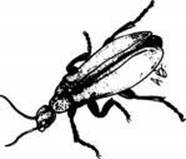
Figure 213 Blister beetle.
The treatment is the same as for a second-degree burn (see page 108). If “beetle juice” enters the eye, the eye should be irrigated copiously and the injury managed as you would snowblindness (see page 187). In general, it is a good idea to wash the skin with soap and water after any insect contact.
SUCKING BUGS
These insects have sucking mouthparts, and are typified by the assassin bugs and their subset of triatomids (“kissing bugs,” “wheel bugs,” and Mexican bedbugs). Aquatic sucking bugs include the giant water bugs and “water scorpions.”
Triatomids (Figure 214) usually bite humans during the night on exposed body parts, and feed for up to 30 minutes. The initial bite is painless, without any immediate reaction. However, the wheel bug, black corsair, or masked bedbug hunter bite may cause pain similar to a hornet sting.

Figure 214 Triatomid “kissing bug.”
A triatomid may continue to bite until there is a cluster or line of red, itchy bumps that may last for up to a week. If the reaction is more severe, there are large hives, swollen lymph glands, fever, and blisters. Bedbug bites often create an itchy bump with a central red spot.
Treatment is symptomatic and similar to that applied under step 5 for the local reaction to an insect sting (see page 376).
SKIN INFESTATION BY FLY LARVAE
Skin infestation by fly larvae is called myiasis, and is most commonly noted in Mexico and Central and South America, the latter two with the botfly Dermatobia hominis. The fly egg, which may actually be carried by another species of insect (such as the mosquito), is deposited onto human skin, where it hatches, allowing the emerging larva to burrow into the skin through the insect bite or another opening (such as a hair follicle or small scratch or nick).
The larva then develops within a dome-shaped cavity (swelling) that enlarges over 4 to 7 weeks. A central breathing pore drains clear or slightly bloody fluid. Drainage may begin within the first 2 weeks after penetration. There is often redness and itching. Movement may be felt under the skin as the larva wiggles. This may also feel like a crawling sensation or brief flash of sharp pain, because the larva has many parallel rows of bristly spines.
The mature larva will attempt to exit the skin through the breathing pore, and is noticed as a small white object “peeking” through the hole. To test to see if a larva is present, place a small amount of the victim’s saliva over the hole—if it bubbles, the larva is likely there and breathing. You can force it to exit through the hole by suffocating it: Cover the breathing pore with bacon or pork fat, a strip of meat, chewing gum, wax, fingernail polish, paraffin, or a plug of grease. Usually, 12 hours of occlusion will cause the larva to exit the hole or die from asphyxiation. Moistened tobacco leaves or nicotine drops will paralyze the larva. It is unwise to make a rough incision to remove the larva, because if the creature is ruptured, it will leak substances into the wound that cause inflammation and promote infection. It is sometimes possible to simply squeeze the lesion and force extrusion of the larva, but care must be taken not to rupture the larva. If nothing is done to force the larva to leave the skin, it will do so on its own in a few weeks, but this is generally not recommended because of the pain and potential for abscess (see page 241) formation.
Other fly larvae that can invade humans and cause myiasis may “migrate,” or travel under the skin, usually settling over the head or shoulders. They may emerge from the lesions or die where they are, in which case they don’t need to be removed.
Wound myiasis describes the situation in which flies (including the green- or bluebottle fly, housefly, black blowfly, and flesh fly) have deposited eggs into a wound, where the larvae feed on the decaying tissue. This is seen most commonly in elderly victims with underlying chronic diseases. The “maggots” are unsightly, but do not harm the victim. Screwworms, on the other hand, which originate from outbreaks among livestock, may invade humans and cause destructive ulcers, particularly if they enter through the nose.
For wound myiasis confined to the skin, a mixture of 5% chloroform in olive oil kills the larvae, so that they can be removed manually. In the absence of this mixture, simple irrigation and mechanical removal of the larvae will suffice.
INSECT REPELLENTS
In insect-laden areas, where contact is inevitable, the traveler must wear proper clothing. Cover the head and neck with a full-brimmed hat (with or without netting) and scarf (temperature permitting). Shield the ankles and wrists. Tuck pant cuffs into socks. Light-colored clothing is less attractive than dark clothing to biting insects, and also makes it easier to spot any mosquitoes, ticks, and flies that have landed.
Nylon (particularly double layered) and sailcloth are more difficult for insects to hang on to or penetrate and are generally preferred over cotton or cloth with a loose weave. Loose-fitting clothing made with tightly woven fabric, along with a T-shirt underlayer, makes for reasonable upper-body protection. Where clothing can be pulled tight against the skin, a mosquito can bite through.
Clothing needs to be checked regularly and brushed free of insects; this is best done with the sticky side of adhesive tape.
Portable insect screens and bed nets should be deployed when necessary. The use of artificial lights, which draw insects, should be avoided.
Insect repellents applied to clothing are extremely effective and avoid skin irritation. It is a good idea to test the repellent on a small area of clothing before general application, to be certain that it will not blemish the fabric.
Chemical insect repellents are mandatory whenever you travel through mosquito, sand fly, or tick territory. Different repellents work by different mechanisms and therefore their effectiveness varies for different types of insects, but I can make some general recommendations that will be applicable in most situations.
Effective repellents contain the chemicals DEET (N, N-diethyl-3-methylbenzamide), Indalone (butyl 3,4-dihydro-2,2-dimethyl-4-oxo-2H-pyran-6-carboxylate), Rutgers 612 (2-ethyl-1,3-hexanediol), and DMP (dimethyl phthalate). Picaridin (also known as KBR 3023; brand name Bayrepel) is a newer repellent that is odorless and nongreasy, and should be present in a concentration of 15%. Early anecdotal reports from users suggests that it is not as effective as DEET. Oil of lemon eucalyptus (p-menthane-3,8-diol; Repel Lemon Eucalyptus Repellent) is another increasingly popular repellent that is thought to be as effective as 7.5% DEET. It is actually not from eucalyptus, but is a product from the lemon-scented gum tree Corymbia citriodora. The product is water-distilled from the leaves, and the repellent is found in the spent fraction as para-menthane-3,8-diol (PMD). Of particular note, true eucalyptus oil does not work as an insect repellent. It may be used on children ages 3 years and older. Along with isopulegol and citronellal, eucalyptus is contained in the product Mosiguard Natural.
Di-n-propyl isocinchomeronate (R-326) has been promoted as useful against biting flies. IR3535 (ethyl butylacetylaminopropionate)–containing repellent is far less useful (1 hour maximum protection) than DEET. Mosbar soap is a product sold abroad that contains 20% DEET and 0.5% permethrin. N-octyl bicycloheptene dicarboximide synergist combined with DEET (Sawyer Products’ Gold; S. C. Johnson’s Ticks OFF or Deep Woods OFF) is a tick repellent, also effective against biting flies and gnats, that can be applied directly to the skin. Neem (Azadirachta indica), used in India for millennia, reputedly has both insecticide and repellent properties. Soybean oil, sometimes used in combination with other repellent substances, may in and of itself have repellent properties.
Citronella and Avon Skin-So-Soft bath oil or skin stick are far less effective (15 minutes of protection versus 6 hours with 25% DEET). Other relatively ineffective (protection from a few minutes to [rarely] 2 hours) repellents include essential oils of cedar, peppermint, lemongrass, and geranium. Bite Blocker contains soybean, geranium, and coconut oils and has been claimed effective for up to 3.5 hours against mosquitoes. Bite Blocker for Kids (soybean oil, 2%) provides approximately 90 minutes of protection. Ingesting vitamin B1 has not been proven to deter biting insects. It may decrease the skin irritation that follows an insect bite, but this would not diminish the transmission of infectious disease(s) via the bite. Ingesting garlic is not effective.
To be effective, a repellent should be applied to the skin (liquid) and clothing (spray). After you swim, bathe, or perspire excessively, reapply it. If you are being bitten by insects, reapply the repellent. In windy conditions, repellents evaporate quickly and may need to be reapplied. Children under 2 years of age should not have insect repellent applied to the skin more than once in 24 hours (it is more effective to apply it to the clothing, anyhow). If you—re applying both a sunscreen and an insect repellent, apply the sunscreen first, so that it can be absorbed; wait 30 minutes, and then apply the insect repellent. There are also sunscreen–insect repellent combinations, such as Coppertone Bug & Sun. Bug Guard contains Skin-So-Soft (mostly mineral oil) in combination with citronella, enhanced by a sunscreen.
With regard to DEET-containing products, do not use repeated applications or concentrations greater than 15% in children under age 6 (Skedaddle, Skintastic, and other preparations intended for use on children contain approximately 6.5% to 10% DEET). In adults, skin irritation and/or rare severe side effects may be seen following the use of concentrated (75% to 100%) products. Most authorities recommend avoidance of concentrated products, noting the effectiveness of a 50% concentration in jungle settings. A concentration not to exceed 30% to 50% for routine adult use seems reasonable. One recommended product is Ultrathon Insect Repellent (35% DEET). A product that may significantly decrease absorption of DEET is Sawyer Controlled Release Deet Formula, which uses a protein that encapsulates the DEET and allows slow (sustained) release of its 20% concentration. It should be applied to skin, not clothing. Care should be taken to avoid contact of DEET with plastics, rayon, spandex, leather, or painted and varnished surfaces, because the DEET may cause damage to these.
The following recommendations are offered to avoid toxicity:
1. Apply repellent sparingly, and only to exposed skin or clothing. Keep it out of the eyes. Do not apply repellent underneath clothing.
2. Avoid high-concentration products on the skin, particularly with children.
3. Do not apply repellent to cuts, wounds, or irritated skin. Apply to face by dispensing into the palms of your hands, and then using these to apply a thin layer to the face. Afterward, wash your hands.
4. Do not inhale or ingest repellents. Do not spray aerosol or pump products directly on your face. Spray your hands and then use them to rub the repellent on the face, avoiding the eyes and mouth. Do not spray around food.
5. Use long-sleeved clothing and apply repellent to fabric rather than to skin.
6. Don’t use repellent on children’s hands, which may be rubbed in the eyes or placed in the mouth.
7. Repellent applied to a wristband is not sufficient protection—you must apply the repellent directly to all the skin areas to be protected.
8. Do not reapply repellent in normal weather conditions (unless it is a non-DEET repellent).
9. Wash repellent off the skin after the insect bite risk has ended.
Permethrin, a synthetic pyrethroid based on the naturally occurring pyrethroids that are extracted from the East African pyrethrum flower (a chrysanthemum), is actually an insecticide; that is, permethrin-containing products kill insects and ticks. Because permethrin carries some potential toxicity to humans it should be used only on clothing (or on shoes, certain camping gear, bed nets, etc.), not on skin. For instance, permethrin is known to cause eye irritation if the chemical comes in contact with a person’s eyes. Although permethrin in a 5% lotion or cream is sometimes prescribed by physicians for application to skin for treatment of mite (e.g., scabies) infestation, these medical dermatologic preparations are not recommended for use as insect repellents. In the past, combination DEET-permethrin (the latter in very low concentration) soaps have been field tested for use as an insect repellent. While they have been acceptable to the persons who used them, a commercial product based on this concept has not yet come to market.
There is ongoing discussion about the toxicities possibly associated with permethrin. These include potential cancer-causing potential, and perhaps abnormalities of the immune system. Properly used (e.g., applied to clothing and not directly to skin), permethrin has not yet been directly linked with serious adverse effects on humans, so it remains an effective barrier against insect-borne infections, such as Lyme disease and West Nile virus. It is best used in combination in its application to clothing with an approved insect repellent (such as picaridin or DEET), when the latter is applied to skin.
There are many permethrin wash-in products for clothing on the market. An example is Sawyer Permethrin Wash-In Clothing Treatment. Another is BUZZ OFF Insect Shield apparel, which is claimed to provide effective and convenient protection against mosquitoes, ticks, ants, flies, chiggers, and midges. It is important to closely follow the label instructions. Clothing that is sold pretreated with permethrin is often advertised to be effective (as a repellent) for up to 25 washings. If you are going to be in a high-risk (for an insect or arthropod bite capable of transmitting a disease) situation, to play it safe, the effectiveness should be assumed to begin to decrease after half the advertised allowable number of washings. Also, it should not be assumed to protect skin adjacent to the clothing, only to keep insects from biting through the clothing.
If you decide to apply permethrin spray to clothing, be certain to do the following:
1. Follow the manufacturer’s instructions closely. Do not exceed recommended spraying times.
2. Treat clothing only. Do not apply to skin.
3. Apply the permethrin in a well-ventilated outdoor area, protected from the wind.
4. Only spray the permethrin on the outer surface of clothing and shoes.
5. In a concentration of 0.5%, it can be sprayed on both sides of clothing to lightly moisten the outer surface of the clothing item; it is not necessary to have the clothing soaked through (saturated).
6. Be certain to apply completely over socks, trouser cuffs, and shirt cuffs, where insects may attempt to crawl or fly through openings to your skin.
7. Hang treated clothing outdoors and allow to dry for at least 2 to 4 hours in nonhumid conditions and for at least 4 hours in humid conditions.
8. Treat clothing no more often than every 2 weeks.
9. Launder treated clothing separately from other clothing at least once before retreating.
10. Assume that your treated clothing is effective for repellency for 2 weeks or more. Wear it only when you need to repel insects and arthropods. Store it in a separate impermeable (to permethrin) bag when not in use.
Permethrin (Permanone tick repellent; Duranon tick repellent) may be applied to clothing, netting, and footwear. A single application is usually good for 1 to 2 weeks, or 20 washings. To apply permethrin to clothing or netting, add 2 ounces of permethrin to a quart of water in a plastic bag. The solution will turn milky white. Put the garment or netting in the bag, seal the bag, and let the item soak for 10 minutes. After the soak, allow the clothing or netting to effectively dry (in the sun or hung) for a few hours. Permethrin is effective against ticks and mosquitoes.
PermaKill 4 Week Tick Killer is a 13.3% permethrin liquid concentrate that is diluted (⅓ oz, or 10 mL, in 16 oz, or 473 mL, of water) to be sprayed from a pump bottle. It can also be diluted 2 oz (59 mL) in 1½ (355 mL) cups of water to soak a bed net, shirt, and pants, which are then air-dried.
Fleas, horseflies, blackflies, sand flies, deerflies, chiggers, gnats, and other assorted nuisances may not be driven away by insect repellents. Protective netting and a lot of swatting may be your only defenses. A head net may be invaluable during times of high mosquito infestation. If you use a bed net, be certain that it is free of holes and has its edges tucked in. The net needs to be woven to a tightness of 18 threads per inch (6 to 7 per cm). Tighter mesh may hinder ventilation and create an uncomfortable environment. A net that has been dipped in an insecticide, usually permethrin, is more effective.
Electric-light traps with electrocution grids, ultrasound devices, and audible sound devices have not been shown scientifically to repel insects or to decrease the concentration of biting insects in their vicinity. Mosquito traps, such as The MegaCatch Premier Mosquito Trap or the Mosquito Magnet are advertised to be effective. They emit combinations of chemical attractants, carbon dioxide, heat, and moisture to draw mosquitoes and certain other biting insects close enough to a suction intake to be captured.
To date, plant products, with the potential future exception of an extract of eucalyptus oil, do not appear to repel insects as well as DEET. Although allspice, bay, camphor, cedar, cinnamon, citronella, geranium, lavender, nutmeg, pennyroyal, peppermint, pine, thyme, and verbena may have repellent properties, they are limited in effectiveness in comparison to DEET.
LEECHES
Leeches are parasitic annelid worms that live on land or in water. They attach to human skin with a painless bite to extract blood through the skin. Some of them release a substance called hirudin, which is an anticoagulant (causes increased tendency to bleed). Aquatic leeches are found in fresh water, and are considered more dangerous than those on land, because they can attach inside the mouth, throat, lungs, vagina, urethra, and other internal sites.
To remove a leech, don’t pull it off—the residual sore may be larger. Instead, apply lemon juice, salt, vinegar, tobacco juice, or insect repellent. Using a lighted or recently extinguished match or glowing ember may cause a skin burn. If the detached leech sticks to your fingers, roll it between them. If a leech is attached to someone’s eye, shine a flashlight close to it; it may move toward the light and away from the eye. The medical considerations for a leech bite are itching and secondary infection. Insect repellents (see page 390), particularly DEET applied to clothing and skin, will discourage leech attachment. Slippery grease (such as petroleum jelly) applied to exposed skin may also help. Wear waterproof boots when wading in leech-infested water, and tuck in pant legs.