
The Arts of Acupuncture and Moxibustion
Wholeness = Dietary Guidelines + Herbs + Acupuncture + Qi Gong
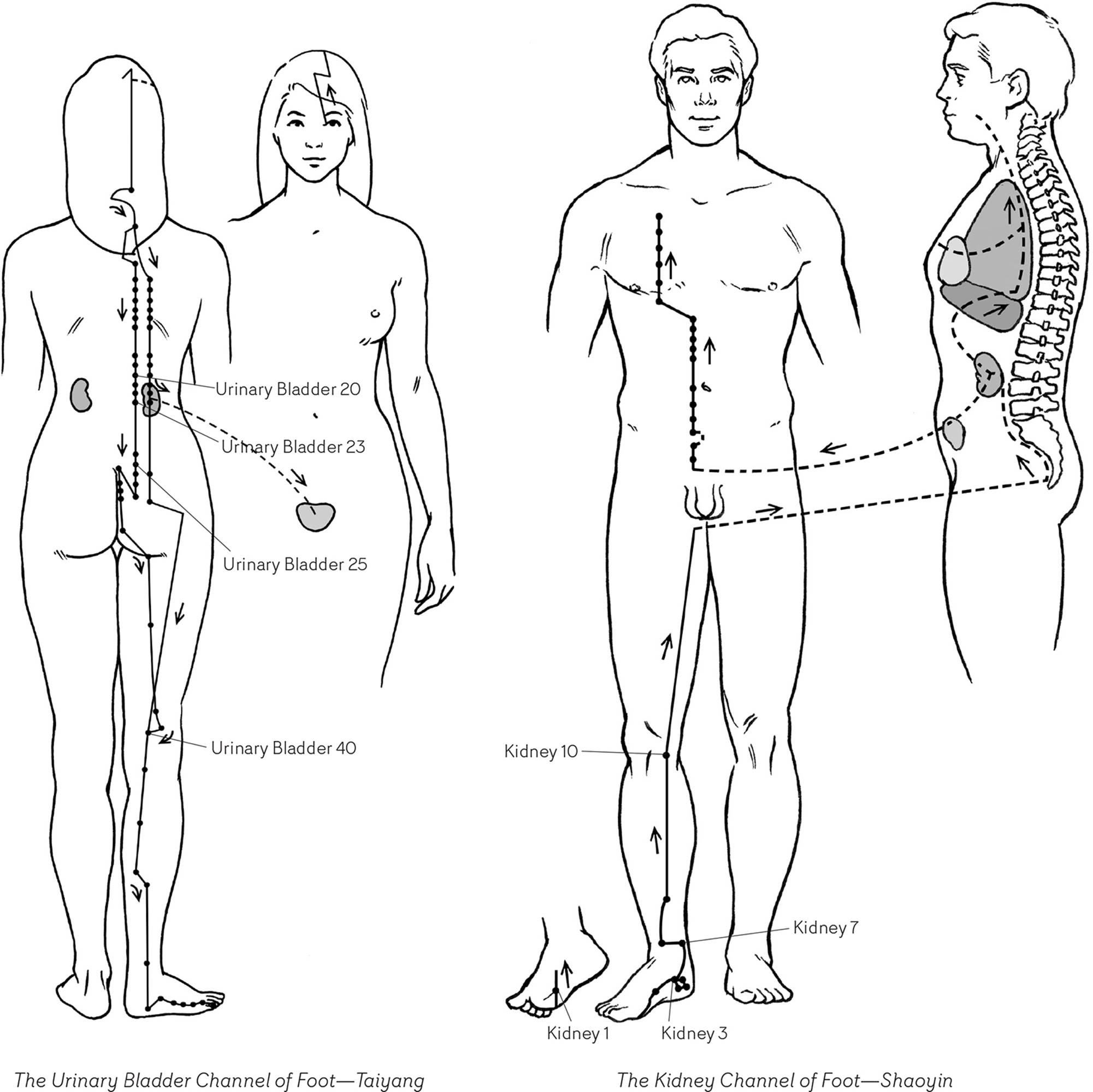
Acupuncture, as described traditionally, is the art and science of manipulating the flow of Qi and Xue through the body’s Twelve Channels—the invisible aqueduct system that transports the Essential Substances to the Organ Systems, tissues, and bones. Manipulation of the Qi and Xue is accomplished by the stimulation of specific acupuncture points along the Channels where the Essential Substances flow close to the skin’s surface.
Present-day practitioners use many different methods for stimulating acupuncture points, including electrostimulation and lasers as well as the traditional fine metal needles. Whatever the technique, acupuncture is relatively painless. It is often accompanied by feelings of heaviness or warmth and sensations of movement. These sensations occur because acupuncture points are like gates in an aqueduct system. When the points are stimulated, they may open a gate, so that Excess or Stagnant Qi or Xue can disperse. Or if Qi and Xue are Deficient, stimulation of certain acupuncture points may close a gate, so the Essential Substances can collect as needed. When this is done, the distribution of Essential Substances throughout the whole system of Channels becomes more evenly balanced, allowing for a smoother flow into all areas of the body.
This adjustment of the body’s Qi and Xue can be used to maintain or restore balance between Yin and Yang, alleviate emotional disorders, protect the Organ Systems, moisten tendons, and keep the joints healthy. Acupuncture works on a spiritual level and on a physical, energetic level.
GEORGE’S STORY
In 1987, George came to me for treatment for alcoholism.
“Once I had the acupuncture treatments, I stopped, and I never drank again,” George said. “I had no craving whatsoever.”
But George’s medical problems were not over. Two years later, he had to go on dialysis. By 1994, he had suffered two serious episodes of high blood pressure.
“I almost had a stroke and was taking Procardia—a high blood pressure medicine—when I went for more acupuncture treatments. It was amazing. After two or three visits, my pressure was normal, and I had to stop the medicine. Now I go [for acupuncture] once every two weeks, and my pressure has stayed normal for several months.”
You may experience the same beneficial effects of acupuncture, but never stop taking high blood pressure or other medication without consulting both your Western and your Chinese medicine doctors—and, if possible, having them talk with each other directly.
TYPES OF ACUPUNCTURE
When it comes time to select an acupuncturist, you may be surprised to find out that there are many different types of practitioners. Some are Traditional Chinese Medicine acupuncturists—as I primarily practice. Other systems include Japanese, Classical Chinese Medicine, Korean Constitutional, Five Phases, Worsley, Richard Tan, Van Nghi, and other style practitioners. Each approach has a tradition and a practice that has been refined and shaped so that it provides effective therapy. There is no one way that is correct.
As Charles Chace, a noted Chinese medicine scholar, pointed out in an article on the diversity of Chinese medicine, “While specific people throughout history may have believed they had a lock on the truth, the Chinese as a people never took this very seriously and never really strove toward a single truth. Chinese society as a whole never cared about a single truth. They just cared about what is useful, about what makes logical sense.… A concept of absolute knowledge is not Chinese, and also the concept of either/or is not Chinese. Chinese medicine has historically allowed opposing points of view to exist simultaneously.”1
In the following sections, I will briefly review four of these systems: Traditional Chinese Medicine Acupuncture, Japanese Acupuncture, Traditional Acupuncture, and Korean Acupuncture. (For more information on how to find practitioners, see the appendix on page 332.)
Traditional Chinese Medicine Acupuncture
After the Chinese Revolution, Traditional Chinese Medicine (TCM) was consolidated to unify diverse ancient practices into one coherent theoretical framework. My practice is based on TCM, and I predominately use the style of acupuncture that corresponds to that system of thought. It is based on the Eight Fundamental Patterns, Seven Emotions, Essential Substances, Organ Systems, and Channels.
In TCM, there are 365 basic acupuncture points located along Twelve Primary Channels, Eight Extraordinary Channels, and Fifteen Collaterals. (Over the centuries, more than 2,500 points have been identified, but the average practitioner uses about 150.)
Japanese Acupuncture
Japanese acupuncture focuses on clinical symptoms, and it is pragmatic. To Miki Shima, O.M.D., L.Ac., one of the leading proponents, Japanese acupuncture is a “healing art, based on the direct, nonconceptual, and intuitive observations of the patient.”
This system uses meridian (Channel) therapy based on a diagnostic process that includes looking, listening, questioning, pulse diagnosis, palpation of meridians, and most importantly, abdominal diagnosis. Although there are several schools of abdominal diagnosis, they all focus on the belly as the area of the body where toxins become stagnant and as the source of illness. Organs and meridians are associated with sections of the abdomen, and the texture, density, tenderness, appearance, and responses to touch of each section indicate specific disharmonies.
Other diagnostic techniques used by some Japanese acupuncturists include Akabane and the O-ring test. Akabane is the practice of using a lit incense stick to test reaction to heat at the acupuncture points on the fingertips. The length of time it takes for a person to react to the heat indicates the nature of disharmony in the meridians. The O-ring test, designed by Yoshiaka Omura, M.D., a teacher of acupuncture, is a subtle system of testing muscle strength that is used in conjunction with herbal therapy and acupuncture.
When the practitioner uses acupuncture, he or she determines which acupuncture points to needle by palpation of the meridians. The Japanese school believes that the points are not found at fixed anatomical sites, but rather that they move along the meridians, depending on the disharmony that’s present.
In addition to the Japanese practitioner’s own system of acupuncture, they use an herbal system called Kampo, which is based on the original Chinese herbal text, The Shang Han Lun. Herbal formulas are prescribed based on symptoms without discussion of herbal properties. They rarely modify or add to formulas.
Traditional Acupuncture
This school of thought was developed in England and the United States by professor J. R. Worsley, founder of the College of Traditional Acupuncture in the United Kingdom. This system is also known as Five Element Worsley Acupuncture. This school uses the Five Phases—Metal, Fire, Water, Earth, and Wood—and the Channels associated with them for diagnosis and treatment. Traditional Acupuncture’s main emphasis is on the emotional and spiritual basis of disharmony.
Traditional Acupuncture emphasizes observation of facial color, interpretation of a person’s vocal quality, and reading pulses, using distinctly different pulse patterns than those used in TCM.
Korean Acupuncture
Korean, or Constitutional, acupuncture is based on system of identifying Qi imbalances through pulse diagnosis (modified from the Chinese) and determining which one of eight constitutional types a person falls into. Each constitutional type is linked with one Organ System that is overactive and another Organ System that is depleted. For example, if your constitution is identified as Hespera, that could mean you have Large Intestine Excess with Small Intestine Deficiency.
Identification of constitutional type is then combined with the Five Phases understanding of the Organ Systems. Wood is linked with Gallbladder and Liver, Fire with Heart and Small Intestine, Earth with Spleen and Stomach, Metal with Lung and Large Intestine, and Water with Kidney and Urinary Bladder. This directs the practitioner to which of the Five Phases Channel points to tonify or sedate.
FUNCTIONS OF ACUPUNCTURE
Whichever type of acupuncture you receive, it will be effective for diagnosis, prevention, and treatment of disharmony. Let’s talk about each in turn.
Diagnosis
When the body is in disharmony, acupuncture points along the Channels become tender to the touch, alerting the practitioner to the location of disturbances in the Channels and in associated Organ Systems. Some points become particularly tender when disease is present, and they offer vivid diagnostic help. For example, when the Lung or Heart System has disease, the Qi is detained in the crook of the elbow, making that point tender to the touch.
Prevention
Acupuncture maintains a balanced flow of Qi and Xue. By using it for regular tune-ups, you can keep your mind/body/spirit in harmony. Furthermore, acupuncture can be used to prevent disease from becoming more severe. You may have noticed emotional and spiritual changes or disturbances often appear as the first sign of illness and imbalance: You don’t quite feel right, you might have dream-disturbed sleep, or you might become easily irritated. These early clues to the onset of disease can be present in the body, and they can be identified through careful diagnosis before symptoms emerge. Acupuncture can then be used to rebalance the Qi and prevent the developing disharmony from turning into a full-blown illness or disorder.
Treatment
In the TCM system of acupuncture, we adjust the flow of Essential Substances so that Excesses are dispersed, Deficiencies are overcome, Dampness is dispelled, Dryness is eased, Cold is warmed, and Heat is cooled. It reestablishes balance and promotes a self-healing response by stimulating communication pathways within the body that promote tissue repair and natural pain control.
Acupuncture—used alone or in conjunction with dietary therapy, herbal remedies, bodywork, and Qi Gong—is a powerful force for promoting health and well-being.
ALICIA’S STORY
Alicia was suffering from chronic sciatica that had developed from an old sports injury. Painkillers only dulled her pain, physical therapy had not helped, and massage, although refreshing, had not offered lasting relief.
Alicia came to my clinic after she has been forced to postpone a much-needed vacation because she couldn’t possibly sit on an airplane for five hours straight.
Her treatment included acupuncture with electrostimulation, ear acupuncture, moxibustion and self-moxa, herbal therapy, and massage. After eight treatments, she had no more debilitating flare-ups, and she could sleep through the night.
“You can stick a needle anywhere you like,” she said with a laugh. “I don’t question how it works. I just know this has given me my life back.”
THE TAO OF ACUPUNCTURE
When a Chinese medicine practitioner uses acupuncture for diagnosis and treatment, he or she does not view the person’s health as a phenomenon that is isolated from what is going on in the world outside or the general stages of life. Climate, geographic location, and age and individual conditions all impact the harmony of the mind/body/spirit. Consequentially, they must be taken into consideration in evaluation and in the development of a treatment plan. We’ll discuss each here.
Climate
According to the ancient Chinese text Ling Shu, “In spring, the pathogenic factors are most likely to attack the superficial layer; in summer, they are most likely to attack the skin; in autumn, they are most likely to attack the muscles; and in winter, they are most likely to attack the bones and tendons.” In treatment of such disorders, the Ling Shu also says that techniques should remain consistent with the seasons, “that’s why in the spring and summer, shallow acupuncture is generally used, and in winter and autumn, deep acupuncture is preferred.”
Geographic Location
Geographic location has an impact on acupuncture treatment because climate affects diet and lifestyle, which in turn affects the way Essential Substances and Organ Systems function. People who live in desert areas, such as eastern Washington state or southern Arizona, or who live in cold damp areas, such as San Francisco or London, need to have acupuncture treatments that are appropriate to such geographic conditions and help the mind/body/spirit maintain balance in the presence of the External Influences.
Age and Individual Conditions
Acupuncture treatment is also tailored to the age, gender, and the general constitution of the recipient. People of different ages and genders have different physiologies. Sensitivity to acupuncture can vary widely. The Ling Shuexplains these distinctions: “A middle-aged strong person with sufficient Qi and Xue and hard skin may, if being attacked by pathogenic factors, be treated by a deep needling with a needle retained for some time. . . . An infant has weak muscles and less volume of Qi and Xue, [so] acupuncture treatment is given twice a day with shallow needling and weak stimulation.” The text also suggests deep needling for people engaged in physical labor and shallow needling for people who perform mental work.
HOW DOES ACUPUNCTURE WORK?
While it is important scientifically to research the mechanisms of acupuncture, the science of how acupuncture works is not the primary basis on which a practitioner develops a treatment plan and uses acupuncture. For example, what Chinese medicine practitioners and the many surgical patients in China who have used acupuncture for anesthesia and postoperative pain care about are the effects of acupuncture.
TCM describes acupuncture’s impact on the mind/body/spirit in the following six ways:
Reinforcing is used when there are no strong pathogenic forces at work in the body. It bolsters the Organ Systems, and it replenishes Yin, Yang, Qi, and Xue.
Reducing dispels pathogenic factors and breaks up Stagnation. Reducing is used for Excess conditions.
Warming removes blockages in the Channels, nourishes Qi, dispels Cold, and restores Yang.
Clearing dispels Heat and remedies Heat syndromes with swift needling.
Ascending raises Qi, prevents Sinking Qi, and prevents Organ prolapse.
Descending sends Upward Rebellious Qi downward and subdues Yang. It is not generally used when Deficiency is present. (Note: The difference between Sinking and Descending Qi is that Sinking indicates what happens to Qi when it is not being supported or helped up. Descending indicates what happens to Qi when it is being pushed down.)
THE SCIENCE OF ACUPUNCTURE
Clinical and basic science research have been conducted on acupuncture. The National Institutes of Health (NIH) funds both clinical and basic acupuncture research, most often through the National Center for Complementary and Integrative Health (NCCIH),2 formerly known as the National Center for Complementary and Alternative Medicine (NCCAM).
The leading acupuncture research organization in the United States is the Society for Acupuncture Research (SAR). SAR’s mission is “to promote, advance, and disseminate scientific inquiry into Oriental medicine systems, which include acupuncture, herbal therapy, and other modalities. SAR’s leadership and members value quantitative and qualitative research addressing clinical efficacy, physiological mechanisms, patterns of use, and theoretical foundations.”3
SAR provides a library of evidence-based assessments to SAR members. SAR’s members include researchers, educators, students, acupuncturists, health care practitioners, and members of the public. Being able to use this evidence to inform their practices benefits practitioners.
Mechanisms Research
Since the middle of the past century, the mechanisms of acupuncture have been studied. Although there are many theories on how acupuncture works and several mechanisms have been proposed, much more work remains to be done. Here are some selected possible mechanisms.
Connective tissue theory: Helene Langevin, M.D., a professor in the department of neurological sciences at the University of Vermont and a professor in residence of medicine at Harvard Medical School, Brigham and Women’s Hospital, has been doing seminal work in the area of connective tissue for fifteen years. Dr. Langevin has shown that a twisted acupuncture needle creates a localized stretch by gripping the underlying connective tissue. She proposes this may be one way in which acupuncture works.
Gate theory: The gate theory posits the idea that the nerves that transmit pain impulses from the body through the spinal cord to the brain have gates that can be switched open or closed. The theory is that acupuncture may add an electronic message to neural pathways that causes the gate to open, interrupting the flow of information, such as pain. This way, the pain impulses never make it to the brain.4
Endorphins theory: The endorphins theory, documented in animal and human trials since the 1970s, attributes acupuncture’s pain-blocking effects to stimulation of the body’s own painkillers, which are neurotransmitters called endorphins.5 Other researchers have investigated the impact of stimulation of the endorphin system on the immune system. They suggest that acupuncture’s curative powers may involve immunomodulation of prostaglandin hormones and interleukin-2.6
Research has been conducted into other areas as well. However, none of these theories considers the interaction of acupuncture and Qi and Xue. Western science has not yet developed a quantitative measure for these Essential Substances. Chinese medicine, however, does quantitate it—in Chinese medicine terms.
Neuroimaging Research
Since the mid-1990s, a number of researchers have been using neuroimaging to study acupuncture’s effects. Neuroimaging allows scientists to explore brain function as a mechanism of acupuncture efficacy. A main imaging technique used in acupuncture research is the functional MRI (fMRI), which can estimate activity anywhere in the brain every few seconds. In 2012, a systematic review on fMRI and acupuncture was published in PLOS One, a premier journal of the Public Library of Science.
The study concluded, “Brain response to acupuncture stimuli encompasses a broad network of regions consistent with not just somatosensory, but also affective and cognitive processing. While published results on acupuncture and fMRI were heterogeneous, from a descriptive perspective most studies suggest that acupuncture can modulate the brain activity within specific brain areas, and the evidence based on meta-analyses confirmed part of these results.”7
Images can be found online in the journal article.
Clinical Research
The primary clinical research into acupuncture has been in the area of pain, although there are currently other areas of inquiry. One reason this is important is that insurance companies often look to published evidence to cover acupuncture treatments. As of December 2014, if you do a Google Scholar search for “acupuncture clinical research” you can find 197,000 returns, mostly scientific articles.
A 2012 meta-analysis from the Archives of Internal Medicine concluded the “… study provides the most robust evidence to date that acupuncture is more than just placebo and a reasonable referral option for patients with chronic pain.”8



ACUPUNCTURE TREATMENT
Acupuncture, whether done using traditional needles or by more modern techniques, such as electrostimulation or laser, requires extensive training. It should only be done by a qualified practitioner. You can however, use acupressure and massage of acupuncture points, and there are complete instructions and explanations for you to follow (see chapter 11, page 190).
In the hands of a skilled practitioner, acupuncture is particularly effective for recovery from drug and alcohol dependency, for pain control, and for relief from depression, obsessive compulsive disorders, phobias, and anxiety attacks. Acupuncture has been used for immune regulation and to treat allergies, gynecological disorders, infertility, and digestive tract disturbances, as well as to aid postoperative healing and to ease the side effects of Western cancer treatments.
CHARLES’S STORY
Charles, age sixty-six, came to the clinic with severe shingles with intense pain. He was taking massive doses of painkillers, hadn’t slept through the night in months, and had taken a disability leave from work. He had already tried acupuncture with a Western physician to no avail.
At my clinic, we used electrostimulation in addition to a treatment called Surrounding the Dragon, which is designed specifically to remedy syndromes producing symptoms such as shingles.
“The needling feels good, like someone rocking you,” Charles reported.
After the first treatment, Charles was pain-free for six hours—the first relief he’d had in two months. After three treatments, he cut his use of painkillers dramatically, and he was able to sleep through the night. After one month of daily treatments, he was able to come every other day, then twice a week, and finally once a week. Charles went off painkillers completely.
Acupuncture and Clear Heat Chinese herbs, in conjunction with topical applications of vitamin E and white flower oil, reduced Charles’s skin and nerve irritation and pain.
“I’m considering going back to work now,” Charles said.
COMMONLY ASKED QUESTIONS
Here are some of the most common questions I’m asked about acupuncture.
Q: Does acupuncture hurt?
A: It shouldn’t hurt to have the needles inserted, but there can be a slight pricking sensation when the needle first goes in. When there is a great deal of muscle tightness, spasm, or Qi Stagnation, the sensation may be more intense.
Once the needles are in place, the sensations range from none to tingling or a sense of wavy, pulsing turbulence. Again, there should never be any pain that feels wounding.
On occasion, the sensation of Qi moving can seem overwhelming, and some people request that a treatment be abbreviated, but even that is unusual. Most commonly, there is a sense of deep relaxation and a kind of floating quality.
Q: How do you know where the points are?
A: The acupuncturist can determine where to place the needles through a combination of several factors. Years of study and practice make the knowledge second nature. Each point also has identifiable anatomical landmarks or measurements. Acupuncturists can also sense the points, which is experienced by practitioners in different ways. Some feel an emanation of energy while others feels indentations or little mounds. Each point is different in its character. For example, on the back of your hand at the crook between your thumb and first finger, about 1/2 inch (1.3 cm) from the edge, is Large Intestine 4 (L.I.4). If you take your index finger from your right hand and circle slowly about 1/4 inch (6 mm) above the skin near the crook of your thumb, you will be able to feel the energy center for that point.
Q: Is there blood?
A: Bleeding is infrequent with acupuncture, although if someone has lots of small veins and capillaries close to the surface of the skin, it is more likely.
Q: Is there any risk of disease transmission?
A: There is no more risk of transmission of disease through acupuncture than there is through getting a flu shot with a sterile hypodermic needle. The use of sterile disposable needles in a sanitary environment makes acupuncture a completely safe procedure. Just like other medical procedures, the standard of practice is that needles are sterile before being inserted.
Q: What are the risks?
A: The risks are minor. According to the Mayo Clinic’s website:
The risks of acupuncture are low if you have a competent, certified acupuncture practitioner. Possible side effects and complications include:
• Soreness: After acupuncture, you might have soreness, minor bleeding, or bruising at the needle sites.
• Organ injury: If the needles are pushed in too deeply, they could puncture an internal organ—particularly the lungs. This is an extremely rare complication in the hands of an experienced practitioner.
• Infections: Licensed acupuncturists are required to use sterile, disposable needles. A reused needle could expose you to diseases, such as hepatitis.9
The important point is that you want to use a licensed qualified practitioner who is in compliance with all rules and regulations and has common sense to understand any risk involved. The reality is there are extremely few organ punctures and no instances of verified infection transmission reported in the United States.
Unlike Western medicine procedures, there have been no verified deaths from acupuncture reported in the United States. Broken needles are rarely reported. For people who worry, in my forty years of practice, I have never had a needle break.
World Health Organization’s Recognized Applications for Acupuncture
In a report in 2002 from the World Health Organization (WHO), Acupuncture: Review and Analysis of Reports on Controlled Clinical Trials,10 WHO analyzed all controlled clinical trials through 1998. It has listed the following symptoms, diseases, and conditions that have been shown to be treated effectively by acupuncture.
There have been a number of controlled clinical trials that have tested the effectiveness of acupuncture therapy in specific diseases or disorders, and the report classifies these results into four categories:
• Diseases, symptoms or conditions for which acupuncture has been proved to be an effective treatment (such as hay fever, headache, and hypertension)
• Diseases, symptoms, or conditions for which the therapeutic effect of acupuncture has been shown but for which further proof is needed (such as insomnia, obesity, and cancer pain)
• Diseases, symptoms, or conditions for which there are only individual controlled trials reporting some therapeutic effects, but for which acupuncture is worth trying because treatment by conventional and other therapies is difficult (such as color blindness and deafness)
• Diseases, symptoms, or conditions for which acupuncture may be tried—provided the practitioner has special modern medical knowledge and adequate monitoring equipment (such as coma, coronary heart disease, and paralysis)
The full report, including a complete list of diseases and disorders, can be found online at http://apps.who.int/iris/bitstream/10665/42414/1/9241545437.pdf.
MOXIBUSTION
Moxibustion uses burning herbs, from the mugwort plant, placed on or near the body, to stimulate specific acupuncture points. This warms the Channels and expels Cold and Dampness, creates a smooth flow of Qi and Xue, strengthens Yang Qi, prevents disease, and maintains health.
For hundreds of years, moxibustion has been partnered with acupuncture or used alone as a modality. According to the Chinese text Introduction to Medicine, “When a disease fails to respond to medication and acupuncture, moxibustion is suggested.”
There are many forms moxibustion. A great modern book that describes all types of Chinese moxibustion treatment is Moxibustion: A Modern Clinical Handbook.11 The two basic forms of moxibustion we use in my clinic are the cone and the stick. If directed by your practitioner, you can use both of them for self-care at home. Your practitioner can supply you with loose moxa or moxa sticks.
You make a moxa cone by compressing the herb mixture, known as moxa wool, into a cone about the size of the upper part of your thumb. The cone is then burned on the body. One of the most common applications is to the navel, where it is effective in relieving abdominal pain and diarrhea and in easing excessive sweating, cold limbs, and a flagging pulse. When moxa cones are burned on other parts of the body, the effect is to ease disharmonies in Channels and Organ Systems associated with those points.
Using Moxa Cones
Before using moxa at home, discuss this treatment with your practitioner to make sure it is the correct treatment for you.
At home, never place the moxa cone directly on your skin!
Make three cones. Place each one firmly on a slice of dry aconite about 1/8 inch (2 mm) thick and set it within arm’s reach. Aconite is a special herb your practitioner can give you or you can buy from an herbalist. It may be toxic if ingested, but perfectly safe when used with the moxa cone. Instead of aconite, you may use a slice of fresh ginger about 1/8 inch (2 mm) thick that you have pierced with four or five small holes. Note: The ginger tends to spread the heat more than the aconite, and because it is damp, it doesn’t offer as much insulation, so if you are using ginger, be especially careful not to burn your skin.
Lie down. Place a piece of clean cotton somewhere on your torso so you can retrieve it quickly if need be.
Put 2 tablespoons (30 g) of salt in your navel and tamp down until smooth and flat. (If you have an “outie,” the Chinese texts suggest taking a long, wet noodle and forming a circle around the navel to contain the salt.)
Pick up the aconite (or ginger) with the cone on top. Light the cone—from the top if you want it to burn cooler and more slowly; from the bottom (don’t light the aconite or ginger) if you want it to burn hotter and more rapidly. In my clinic, we light both the top and the bottom for even warmth. Place the aconite (or ginger) with the moxa on top of it over the salt.
If, as the moxa burns, it becomes too hot, gently lift the moxa and aconite (or ginger), slip the piece of cotton cloth over the salt, and set the aconite (or ginger) and moxa back in place.
Let the moxa burn down. If it still feels too hot, remove the aconite (or ginger) and cotton. Let the salt cool. Repeat three times. When you’re done, save the aconite; brush off the salt. Throw away the ginger and cotton.
To place moxa cones on other points, skip the salt and use a piece of cotton topped with a slice of ginger or aconite.

Using Moxa Sticks
Moxa sticks, which are the size of a big cigar, are available pre-rolled from your practitioner or an herbalist. When lit, they are used like wands by circling their burning ends over various acupuncture points. This method is particularly effective in treating painful joints and chronic problems, such as painful periods, hernias, and abdominal pain.
To use a moxa stick, mark the acupuncture points you want to heat with a small dot. Light the stick with a match and let it burn until it begins to smoke. Holding it in the middle, bring the burning tip 1 inch (2.5 cm) from the skin. Hold your other hand next to the skin so you can feel if it gets too hot. (This is especially important if you are performing moxa on a partner.) Move it slowly in a clockwise circle over the point. If it feels too hot or the skin becomes too red, pull back in 1/2-inch (1.3 cm) intervals until it feels warming but not burning. Repeat until the area feels bathed in warmth, you can sense the Qi flowing from that spot, and you feel relaxed.
WARNING
To extinguish moxa sticks, don’t use water or try to smash out the fire because if you do, they burn down and can’t be reused. The best method is to cut off the supply of oxygen by wrapping the moxa in a piece of aluminum foil or placing it in a small glass container or bottle and completely closing the top. You can also ask you practitioner for a moxa snuffer, which is a special tool we use in the clinic to hold moxa sticks.
When to Avoid Moxibustion
Moxa is contraindicated for Heat and Excess disharmonies or when there is a fever. Furthermore, at home pregnant women should avoid moxa on the abdominal and lumbo-sacral areas, although practitioners may use moxa in a clinic during pregnancy. Those with numbness in their arms, legs, feet, or toes or who suffers from narcolepsy should not do moxa on themselves. No one should do moxa in bed.
Where to Apply Moxibustion
Moxa is performed over acupuncture points or areas of the body that need warmth or tonification. The following acupuncture points can be used for moxibustion treatment.
Ren 6: Located three fingers below the navel, tonifies Deficiency, tonifies Qi, strengthens the Kidney, and is good for gynecological disorders.
Ren 8: Located in the navel, tonifies Yang, warms the abdomen, strengthens Qi, and is good for all types of diarrhea and Coldness.
Stomach 36: Located four fingers below the knee, near the bone on the outer side of the leg. This is a major Qi point on the body, and it tonifies and regulates Qi, harmonizes the Stomach and the Spleen, and is good for digestive disorders and lack of energy.
Spleen 6: Located four fingers above the bone that sticks out of the inner ankle, known as the Three Yin Meeting Point, it tonifies the Spleen, Kidney, and Liver and is good for gynecologic and digestive disorders.
Ren 12: Located halfway between the navel and the tip of the sternum, effective in dispelling Dampness and treating digestive problems associated with Cold.