
Rupali Das, MD, MPH
Biologic monitoring or biomonitoring is the measurement of a chemical, its metabolite, or a biochemical effect in a biologic specimen for the purpose of assessing exposure. The term biomonitoring may be used for measuring chemicals in nonhuman organisms, forensic medicine, and drug development; in this chapter it refers to human exposure monitoring. Biomonitoring is an important tool to identify the nature and amount of chemicals in the body resulting from occupational and environmental exposures. Biologic monitoring has evolved from a research tool to an essential component of exposure assessment. Although biomonitoring has been used to monitor workers for decades, it is increasingly being applied to nonoccupational settings.
While classical exposure assessment relies on the measurement of chemicals in the external environment to estimate the dose of a chemical, biomonitoring provides a more direct measure of the internal dose. Traditionally, dose estimation is accomplished with environmental monitoring, the measurement of the ambient (external) exposure using chemical samples taken from the air, water, hard surface, or other media (eg, food) in the workplace or community. Environmental monitoring provides information about exposure only from the specific external source measured. Conversely, biologic monitoring provides a measure of the quantity of a chemical absorbed from all sources and routes of exposure (eg, dermal absorption, inhalation, and/or ingestion) and does not distinguish the source of exposure or whether exposure occurred at the workplace, at home, or in other settings.
Environmental measurements do not reflect the amount of a chemical that gets into the body and may not correlate well with the biomonitored level for several reasons. The primary route of exposure may not be the environmental medium measured; for example, air measurements will not accurately indicate uptake if dermal absorption is a more significant exposure route. Moreover, individual differences in work practices, activity levels, genetics, demographic characteristics (eg, age, gender, and ethnicity), and physical factors, (eg, amount of body fat) impact the absorption, distribution, metabolism, and excretion of a chemical.
The decision to conduct biomonitoring is complex and based on multiple factors. Multidisciplinary collaboration involving toxicologists, epidemiologists, chemists, health educators, and clinicians is required for proper program implementation and interpretation of results. Basic considerations include the availability of appropriate biologic markers, the ability to collect relevant samples, availability of a qualified laboratory, and resources to appropriately plan and conduct all phases of a program.
BIOLOGIC MARKERS
Biologic markers or biomarkers are indicators of biochemical, genetic, molecular, immunologic, or physiologic signals of events in biologic systems. The ideal biomarker is sensitive, specific, biologically relevant, practical, inexpensive, and available. Seldom does a biomarker meet all these criteria; most represent a compromise. With respect to chemicals, biomarkers are defined as follows:
Biomarkers of exposure are chemicals, their metabolites, or a reaction product between a chemical and a target molecule (eg, dialkylphosphate metabolites of organophosphate pesticides or hemoglobin adducts from ethylene oxide exposure).
Biomarkers of effect are measurable biochemical, physiologic, behavioral, or other alterations in an organism that are associated with potential health effects (eg, reduced acetyl cholinesterase activity as an indicator of exposure to organophosphate pesticides).
Biomarkers of susceptibility are indicators of inherited or acquired abilities to respond to the challenge of exposure to chemicals (eg, lower levels of paraoxonase-1 [PON1] are associated with increased susceptibility to organophosphate toxicity).
BIOLOGICAL MATRIX
The biological medium or matrix used for biomonitoring often determines the choice of a biomarker. Although blood and urine are most commonly analyzed, biomonitoring may be conducted in any biological matrix. The most commonly used matrices are described below in alphabetical order.
Adipose Tissue
Due to the invasiveness of sample collection and advances in biomonitoring of other more accessible biological tissues, adipose tissue is rarely used today for biomonitoring. From 1970 to 1989, the U.S. Environmental Protection Agency’s National Human Adipose Tissue Survey collected and analyzed human adipose tissue specimens for the presence of lipid-soluble chemicals.
Blood & Serum
Whole blood is the most common pathway for most chemicals and their metabolites and reflects recent exposures; it is easily collected since venipuncture is considered minimally invasive. For volatile substances and others with short half-lives, there may be considerable variation in levels, depending on the timing of collection. Whole blood has limited applications for biomonitoring, for example, analyzing metals such as lead, total mercury, and cadmium. Blood can be a valuable matrix for measuring adducts of hemoglobin, albumin, or DNA.
Serum is used to analyze lipid-soluble chemicals (persistent organic compounds) and their metabolites, such as dioxins, furans, polychlorinated biphenyls (PCBs), and organochlorine pesticides. Serum levels may be reported in two ways: per gram of total lipid, reflecting the amount of these compounds stored in body fat, and per whole weight of serum. Serum biomonitoring requires processing of whole blood, including centrifugation and analysis and correction of lipid levels. The drawbacks of using blood and serum for biomonitoring include some participants’ resistance to venipuncture and large volumes required for some analyses (eg, dioxins and furans).
Breast Milk
Breast milk is an ideal matrix to biomonitor levels of lipid-soluble persistent organic pollutants (POPs) in the environment; it is easy to collect and provides information on the exposures of mothers as well as infants. Since 1976, the World Health Organization has collected and evaluated information on levels of POPs in human breast milk as an important indicator of environmental contamination in the European Union. Because study participants may be concerned about potential adverse impacts of chemicals in breast milk, it is critical to encourage breast-feeding and to provide education that breast-feeding reduces child mortality and has positive impacts on health that extend into adulthood. These benefits outweigh the risk of potential harm to infants through exposure to environmental pollutants by ingesting breast milk.
Exhaled Air
Measurements of chemicals in exhaled air are most appropriate for volatile organic compounds such as benzene, methylene chloride, and toluene. A few other chemicals, such as metals, may be measured in exhaled air but this use remains largely a research tool. Additional applications include the measurement of exhaled nitric oxide (NO), a well-known method to assess airway inflammation. The benefits of exhaled breath biomonitoring are that it may be collected noninvasively and offers a direct comparison to measurements from air monitoring.
Hair
Hair is readily available and may be used to screen for heavy metals such as mercury. It has also been used as a research tool to assess exposure to persistent organic pollutants. Hair biomonitoring poses challenges as samples must be cleaned to reduce contamination from surface deposition and interpretation of hair biomonitoring results is complex. Furthermore, measurements do not readily distinguish ambient from internal exposure. Other, less readily available, analytic techniques must be used to provide this critical information.
Saliva
Saliva has been evaluated as a matrix for measuring selected nonpersistent chemicals, pesticides, and therapeutic drug levels. Highly sensitive analytical techniques are required for saliva biomonitoring, as levels of nonpersistent chemicals may be considerably lower than those in blood. Further research and refinement in technique is required before saliva can routinely be used for analysis.
Umbilical Cord Blood
Environmental chemicals that cross the placenta may be measured in cord blood immediately after birth. Although the properties of cord blood are different than those of venous blood (eg, the lipid content is lower), in general biomonitoring using this matrix is similar to that described above for blood and serum; and results serve as indicators of infants’ exposures prior to and during birth.
Urine
Urine is the easiest sample to collect; typically large volumes of urine are available and there is good participant acceptance. Urine is appropriate for biomonitoring of substances that are excreted by the kidneys, such as nonlipid soluble (nonpersistent) compounds (eg, biphenol A (BPA)) and some metals (eg, arsenic, cadmium, and inorganic mercury). A 24-hour urine collection provides the most accurate assessment of exposure, but for practical reasons, usually a spot urine sample, a single sample at a specified time is collected. Because significant variations in dilutions can occur throughout the day, spot urine samples should be adjusted for urine specific gravity or urine creatinine. Ideally, the analyzing laboratory should report spot urine results as both uncorrected (micrograms per liter) and corrected for creatinine (micrograms per gram) as needed. Urine specimens that are highly concentrated (specific gravity >1.030 or creatinine > 3 g/L) or extremely dilute (specific gravity <1.010 or creatinine <0.3–0.5 g/L) are not suitable for biomonitoring and a new specimen should be collected. Urine monitoring may not be appropriate for individuals with advanced renal disease as results are likely to be inconsistent and cannot be reliable compared to those with normal renal function.
Other matrices less commonly used for biomonitoring include amniotic fluid, meconium, nails, and teeth.
TIMING OF SAMPLE COLLECTION
Persistent organic pollutants, including dioxins, PCBs, and organochlorine insecticides, are readily absorbed into the blood supply and distributed into the fatty portions of tissues and, in lactating women, in breast milk. Biomonitored levels of POPs indicate accumulated exposures years prior to sample collection. Because metabolism and excretion of POPs are very slow, they have long half-lives in the body, usually on the order of years. An exception is lactating women, in whom the half-life of POPs is about 6 months since lipid-soluble POPs accumulate in the breast milk and are removed from the body during breastfeeding.
Unlike persistent compounds, the timing of sample collection relative to exposure is a critical determinant of the measured concentration of nonpersistent chemicals. Nonpersistent organic chemicals, such as cholinesterase-inhibiting and pyrethroid pesticides, phthalates, and polycyclic aromatic hydrocarbons (PAHs), are rapidly metabolized and excreted in the urine (Figure 42–1). These chemicals and their metabolites have very short half-lives in blood, on the order of hours to days and, unless samples are collected immediately after exposure, the concentrations are typically orders of magnitude lower than urinary metabolite levels.
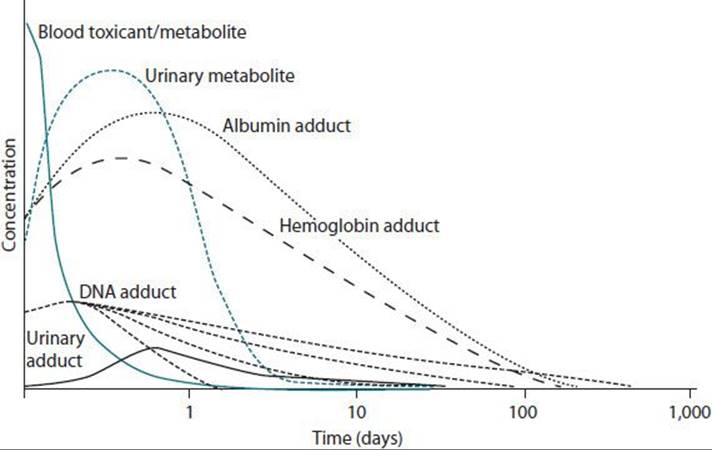
 Figure 42–1. Theoretical fate of a nonpersistent chemical and its metabolites and adducts in blood and urine.
Most individuals, whether at work or in other aspects of life, are exposed to chemicals repeatedly. Concentrations of nonpersistent chemicals may show considerable variation throughout the day due to repetitive exposure and rapid metabolism (Figure 42–2). For these chemicals, a single sample may not characterize average exposure over a period of time; instead, biomonitoring provides a snapshot in time of the levels of these chemicals in a particular tissue, rather than a stable measure of “total body burden.” This variability suggests that biomonitoring of nonpersistent substances may be particularly relevant for assessing shift-related exposure in occupational settings, where time of sample collection relative to ambient concentrations of the substance being biomonitored is known. At the same time, it may pose challenges for assessing the internal dose among other populations where environmental exposures are variable and less known.

Figure 42–2. Theoretical variation in levels of a nonpersistent chemical in blood and urine from chronic, repeated exposure.
EXPOSURE & DISEASE: INTERPRETING RESULTS
For most chemicals that are biomonitored today, measured concentrations do not correlate well with clinical illness or the likelihood of disease. Table 42–1 lists examples of substances that are biomonitored in occupational and environmental settings and the suspected or known health effects. For many of these substances, biomonitoring will help to elucidate the relationship between exposure and disease.
Table 42–1. Uses and known and suspected health effects of selected chemicals that may be biomonitored in occupational and environmental settings.


The continuum from exposure to resulting health outcome is influenced by the toxicity of the chemical, the amount absorbed into the body, individual pharmacokinetics (absorption, distribution, metabolism, and excretion), and individual susceptibility. These include demographic factors (eg, age, ethnicity), genetics, environmental and behavioral stressors, nutritional and general health status, and other exposures. As a result of these factors, persons with chronic illnesses, the elderly, infants and children, and women who are pregnant or of childbearing age are among the subpopulations considered to be at increased risk for the adverse effects of exposure to chemicals.
While biomonitoring may not allow reliable prediction of adverse health effects, results may be interpreted using one of two comparison methods: health-based values or reference ranges.
Health-Based Values
Health-based values are chemical concentrations below which an individual would not be expected to develop adverse health effects, that is, symptoms, signs, or abnormal clinical laboratory tests. These values are based on published and unpublished scientific literature; may incorporate safety factors; and are commonly applied in occupational settings. Currently available occupational exposure guidance values are summarized in Table 42–2. Exceedance of health values implies increased risk of health effects and typically triggers requirements such as medical evaluation and increased environmental and biological monitoring to evaluate the potential for adverse effects. For the general population these values are available for a limited number of substances, that is, lead and mercury; acetyl- and butyl-cholinesterase activity levels may be included in this category but are not as reliable due to intraindividual variation.
Table 42–2. Current occupational biomonitoring guidance standards.
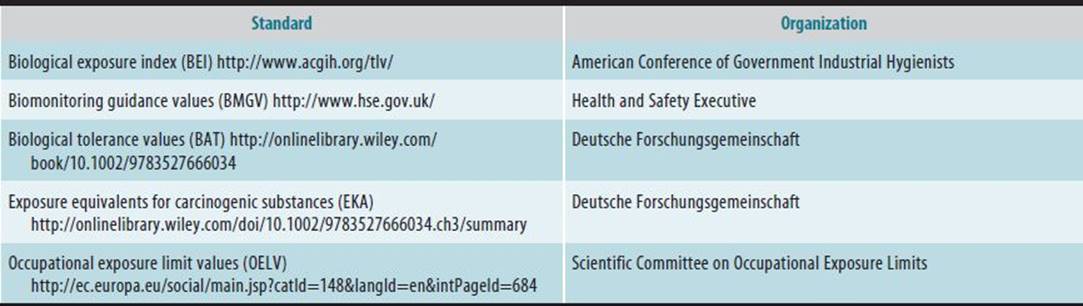
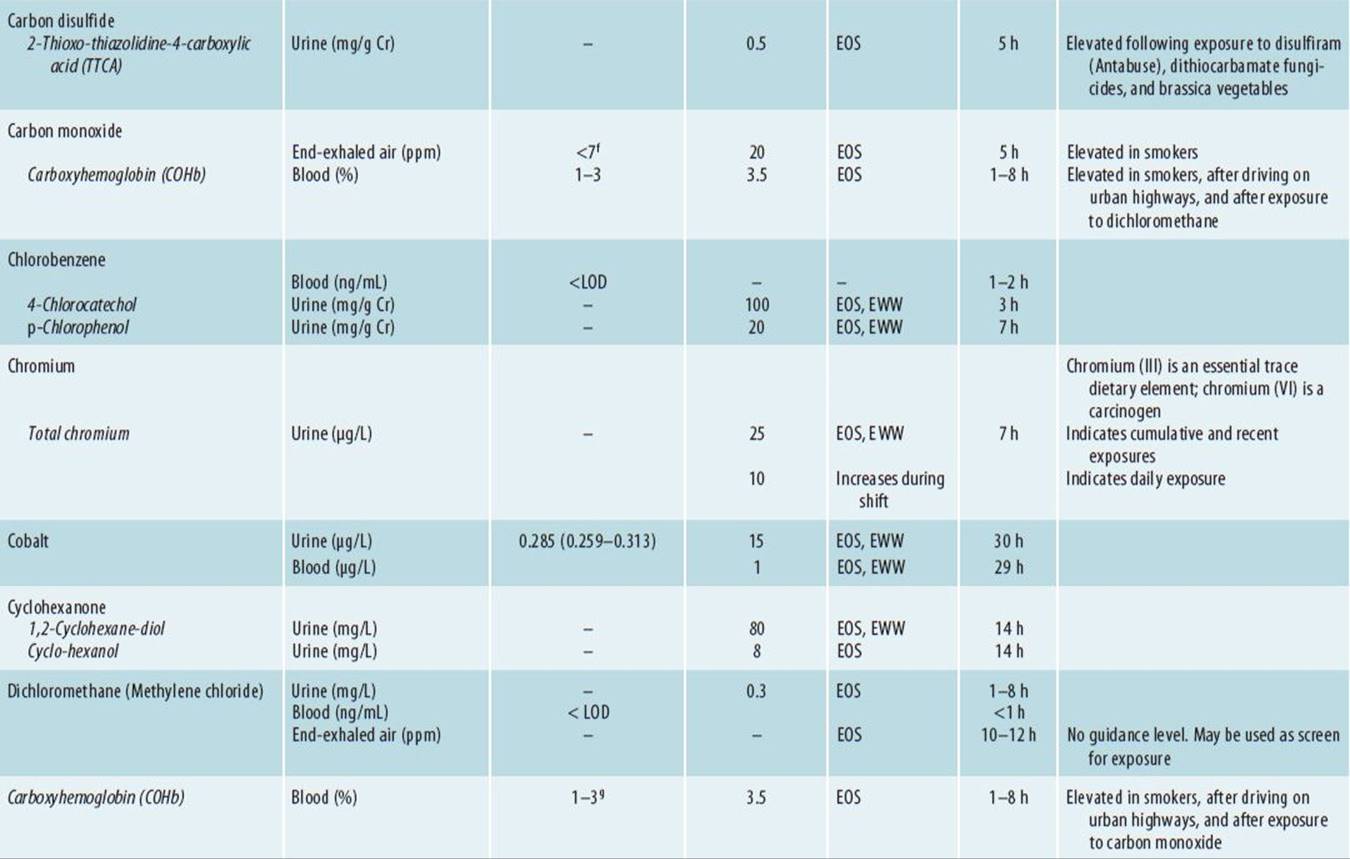
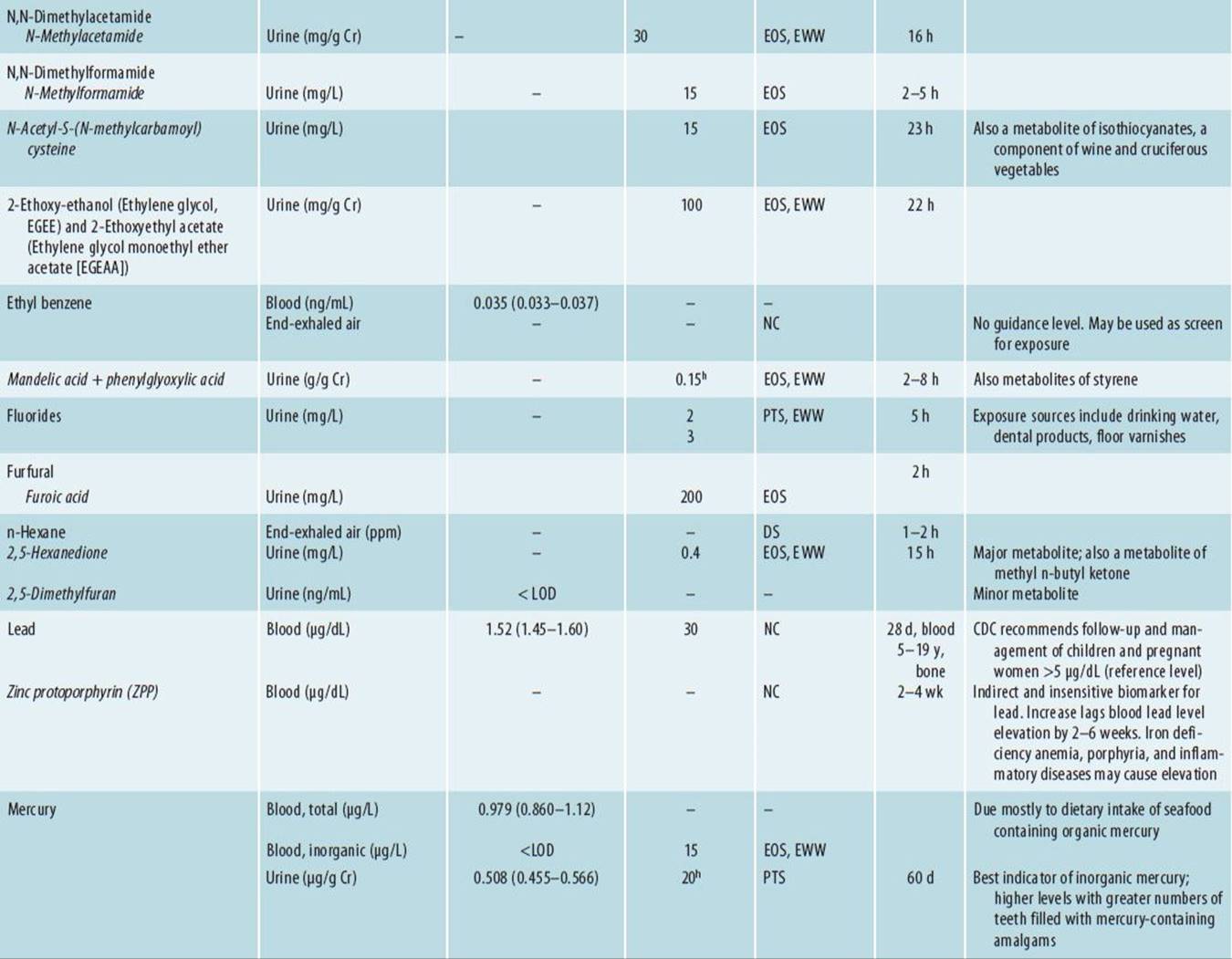
In the United States, the most commonly used health-based biomonitoring guidance values for occupational exposures are the proprietary biological exposure indices (BEIs) issued by the American Conference of Governmental Industrial Hygienists. These values are based on a critical evaluation of the literature and studies submitted for review, with an emphasis on studies that address minimal or no adverse health effect levels in exposed workers and animals. When available, human studies are given preference. BEIs exist for over 40 substances, generally represent levels in healthy workers exposed at ACGIH threshold limit values (TLVs), and indicate concentrations below which adverse health effects are not expected (Table 42–3).
Table 42–3. Selected chemicals for which there are reference ranges or health-based values to guide biologic monitoring in occupational and environmental settings.



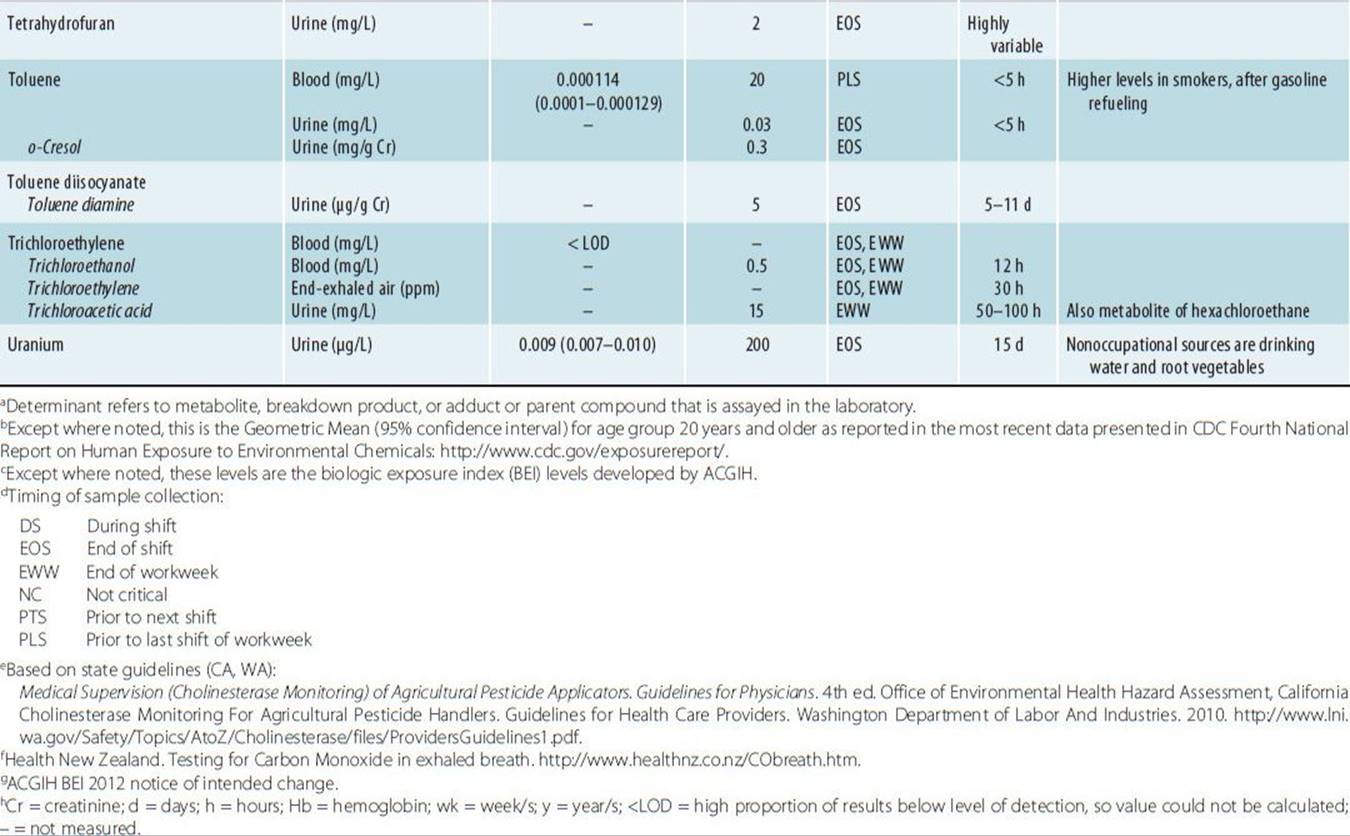
Of the other available occupational guidance values, the most rigorous are the biological tolerance values (BAT values) for occupational exposure to noncarcinogenic substances developed by the German Research Foundation (DFG). BAT values are based on quantitative data and are the rough equivalent of BEIs. There are over 100 BAT values, defined as the concentration of a chemical substance, its metabolites, or an effect indicator in biological media at which the health of an employee is usually not affected, even after repeated or long-term exposure. Substances for which there is evidence of human cancer risk have no BAT values, as there is no “safe” biological level for carcinogens. Instead, exposure equivalents for carcinogenic substances (EKA values) are developed and allow the calculation of body burdens based on air levels.
Reference Ranges
Reference ranges are observed measurements for a particular population and are often expressed as the 95th percentile, that is, 95% of the observed values fall below this level. Exceedance of these values suggests that the measured concentration in an individual is statistically higher than the population range but does not indicate the likelihood of health effects occurring as a result of exposure. As biomonitoring results vary by demographic, occupational, and other variables, it is imperative that reference values be obtained from a comparison population in which these factors resemble those of the participants.
The National Biomonitoring Study, also known as the Chemical Supplement of the Center for Disease Control and Prevention’s (CDC’s) National Health and Nutrition Examination Survey (NHANES), generates biomonitoring reference ranges for the general US population. Similar comparisons for worker cohorts may be generated by individual employers for their own employees but are typically not publicly available. In Germany, the Commission on Human Biomonitoring establishes reference values based on studies of the German population.
Regardless of the population biomonitored and the comparison method used, sorting out occupational from nonoccupational exposures is a challenge because biomonitoring reflects exposure from all sources. The use of exposure questionnaires, environmental monitoring, and consultation with an industrial hygienist can assist the interpretation of biomonitoring results. Common “lifestyle” factors that may impact occupational biomonitoring include:
• Cigarette smoking. Cadmium concentrations in blood and exhaled breath may be higher in smokers.
• Seafood consumption. Levels of organic mercury may be elevated in individuals who regularly consume seafood; shellfish may contain an inorganic arsenic metabolite and consumption may cause spurious elevation of urinary arsenic.
• Drinking water. Certain ground water sources in the United States, and to a greater extent in other countries (eg, Bangladesh, Chile, India), have elevated arsenic concentrations.
LABORATORY CONSIDERATIONS
Laboratory factors are critical to obtaining accurate, meaningful results since biomonitoring measures minute amounts of substances that may be present in the environment, using complex and sensitive instruments. Involving laboratory professionals in the design of biomonitoring studies will minimize potential errors when interpreting results. Issues that should be considered prior to initiating a biomonitoring program in partnership with a laboratory include contamination, specimen management, and quality assurance (QA) and quality control (QC).
Contamination
Sample contamination is a much greater concern for biomonitoring studies compared to other clinical laboratory tests. Sources of contamination include:
• Specimen collection instruments (eg, lead in needles or glass tubes and phthalates in urine containers)
• Materials used in the laboratory (eg, triclosan in hand soaps)
• Environmental pollutants, including ambient air in the collection facility or laboratory (eg, dust contaminated with polybrominateddibrominated ethers [PBDEs]); and external air (eg, degradates of pesticides entrained through inadequate ventilation)
For example, both environmental degradation of the insecticides chlorpyrifos and chlorpyrifos-methyl as well as human metabolism result in the formation of the metabolite 3,5,6-trichloro-2-pyridinol (TCPy). By merely measuring TCPy in urine, exposures to chlorpyrifos, chlorpyrifosmethyl, or TCPy itself cannot be distinguished from sample contamination.
Methods to minimize and control for contamination include using the appropriate type of containers, prescreening specimen collection materials, obtaining field blanks to control for background contamination, and conducting analyses in clean rooms. Additionally, developing detailed collection and processing protocols and training clinical and laboratory personnel on proper implementation will minimize contamination. Finally, documenting specimen collection details, such as time and location of collection, is essential to aid in assessing potential contamination sources if suspect results are obtained.
Specimen Management
Proper specimen management is necessary to ensure that chemicals of interest do not deteriorate. Examples of common errors include:
• Improper mixing of blood collection tubes containing the anticoagulant EDTA resulting in blood clots which can trap heavy metals and result in erroneously low levels
• Storage or shipping temperatures that are too high resulting in degradation of acetyl cholinesterase or too low resulting in hemolysis of whole blood
• Waiting too long to centrifuge blood and process serum; the resulting blood clot impacts analysis by trapping both lipids and chemicals
Adherence to detailed and strict processing, storage, and shipping protocols will minimize errors during this phase. Both the clinic where specimen collection occurs and the analyzing laboratory must maintain and share specimen collections, storage, and shipping protocols and records.
Quality Assurance (QA) & Quality Control (QC)
Prior to initiating a biomonitoring program, it is essential to verify that the partner laboratory has a quality management system, which ensures the integrity of the samples, the analytic technique, and the data generated. Laboratories must adhere to strict QA and QC standards for consistent and meaningful results.
QA refers to the overall laboratory operation, which should include proficiency testing programs that compare measured results with those of an external laboratory or standard. For example, certification of laboratories meeting minimum standards for analysis of blood lead requires that blind samples be submitted to other laboratories and the results compared with those of a reference laboratory. Analysis of a random sample of “split” specimens by another—preferably a reference—laboratory is an alternative to an internal quality assurance program.
QC involves internal assessment of accuracy and precision, including daily instrument calibration and analysis of control specimens concurrently with study samples. Written standard operating procedures (SOPs) are expected to specify specimen collection, handling, and transport and sample processing, analysis, quality control, and proper training of chemists. Laboratories certified under the Clinical Laboratory Improvement Act of 1988 (CLIA) must meet specific requirements in order to report results that may be used for diagnostic purposes (as opposed to research only).
Selecting a Laboratory
Few laboratories have demonstrated QA/QC and the ability to analyze a wide range of substances. Even the most experienced laboratories can fail to meet minimum standards and without a regular quality management program, analytic quality cannot be ensured. Laboratories should be considered based on their ability to provide documentation of validation procedures, including sensitivity, the minimum level of an analyte that can reliably be detected by a particular assay (limits of detection, LOD) and specificity, the ability to differentiate a unique analyte from other closely related structures. The analytic method must be described clearly and in sufficient detail to allow other laboratories to repeat measurements. The laboratory should have documented the analytical range, LOD, and other performance parameters, in addition to the SOPs. The laboratory and clinician should collaborate to establish the appropriateness of biomonitoring the substances of interest; sample collection, management, and shipping protocols; and details of reporting results. Protocols for managing abnormal results should be established in advance. This may include repeating the assay on the same sample, obtaining a new sample for analysis, and evaluating contamination and QA/QC methods.
IMPLEMENTING BIOLOGIC MONITORING PROGRAMS
Regardless of the setting, multidisciplinary collaboration is essential for biomonitoring programs. Clinicians, laboratorians, toxicologists, epidemiologists, industrial hygienists, and ethicists are among the critical partners to include during the planning phases of any biomonitoring project or program. Unless they are clearly associated with an urgent public health response, projects or programs that involve biomonitoring must be reviewed and approved by Institutional Review Boards (IRBs) for the protection of the participants. Protocols should ensure that participants are ethically treated and fully informed of the risks and benefits, including the potential inability to assess the clinical impacts of the results and intent to store samples for future analyses, if relevant.
Biomonitoring of Workers
Biologic monitoring in the occupational setting may be a voluntary or required component of routine medical surveillance as well as worker monitoring during and after emergency response (see Chapter 41). In the United States, biomonitoring for lead and cadmium is required by OSHA standards; other requirements vary by state and exist for an extremely limited number of chemicals (eg, limited monitoring of cholinesterase activity for certain workers, required in California and Washington). Similarly, considerable variation in biomonitoring requirements exists internationally. During routine surveillance, environmental monitoring that identifies exceedance of a specified standard (ie, cadmium, lead) may trigger individual clinical worker evaluations, including obtaining a thorough occupational and environmental history to verify all potential sources of exposure and biomonitoring. The decision to conduct biomontioring of workers as part of emergency or disaster response depends in large part on logistics and feasibility.
Regardless of the setting in which it is conducted, abnormal biomonitoring results should be verified by repeating the measurement on the sample and by obtaining additional samples. Conducting environmental monitoring simultaneously with biomonitoring and comparison to relevant standards is critical to help identify potential exposure sources and assess necessary control measures, such as engineering controls, modified work practices, appropriate respiratory protection, or removal from work (see Table 42–2).
Ethical and social considerations require that clinical protocols be established to ensure confidentiality of results; voluntary, not mandatory, participation; and responsible results communication. Clinicians should be available to provide consultation on test results and their clinical implications. Biomonitoring results, like other medical records, should be maintained for at least 30 years; some jurisdictions may require longer retention periods.
Biomonitoring in Public Health & Research
Research institutions have incorporated biomonitoring into their work, and increasingly governmental agencies are beginning to apply it to address public health investigations and disease prevention efforts. As stand-alone biomonitoring programs are resource-intensive, partnering with other public programs that collect biological samples may be considered. For example, state-based mandatory disease reporting requirements may include conditions that result in the measurement of chemical biomarkers (eg, lead, pesticide, and carbon monoxide poisoning). For many such diseases, however, only the clinical diagnoses, and not the biomonitoring results, are reportable. Public health biomonitoring may also utilize “remainder samples,” for example, dried blood spots from newborn screening tests or maternal screening during pregnancy. It is imperative to consider the local ethical and social concerns and legal and scientific restrictions associated with using remainder specimens. Several established public health biomonitoring programs are described in Table 42–4.
Table 42–4. Selected public health biomonitoring programs.


Public health biomonitoring programs are constrained by specific legislative directives. Their scope is determined by statutory authority and by restrictions imposed by funding agencies. The public health goals of biomonitoring may be broad or specific and include the following.
A. Targeted Investigations
Biomonitoring is an important adjunct to epidemiological investigations and can help determine the extent of exposure to an individual or entire community and actions that may be warranted to reduce exposure and protect health. Examples include the following:
• Use of illegally imported mercury-containing face creams resulted in inorganic mercury toxicity in several members of a family and led to a state-wide educational campaign to raise awareness of exposure sources and health hazards of mercury.
• Levels of perfluorochemicals (PFCs) in adults living in a community with contaminated ground water were reduced after a campaign to reduce exposure to the source of drinking water.
B. Population Surveillance
Important uses of biomonitoring are to measure population exposures over time and space, identify individuals and populations at risk, and evaluate the impact of public policies. For example, CDC’s National Biomonitoring Program documented the dramatic decline in the US population’s blood lead levels that corresponded with the removal of lead from gasoline. Biomonitoring studies have also demonstrated that Californians have some of the highest levels of PBDE flame retardants in the world, most likely due to unique fire regulations in this state that have required the use of these substances in foam and furnishings.
C. Rapid Response
Biomonitoring can be part of response to acute chemical exposures after an uncontrolled chemical release or other type of incident. Chemical exposures resulting from ingestion of contaminated food, uncontrolled releases to air and water, or chemical spills may incorporate biomonitoring to quantify exposure and as part of clinical evaluation for medical diagnosis and treatment. For example, biomonitoring conducted in response to a mercury spill in a school can provide assurance that children were not exposed at a level of health concern.
D. Resource for Research
Biomonitoring programs may begin as research; those that do not begin as research may lead to questions that result in a shift in direction. Review and approval by IRBs is imperative for research programs. If research projects are anticipated in advance, the consent form approved by IRBs must address activities, such as community preferences and standards and practices of academic institutions, public health agencies, and appropriate IRB. Federal, state, and local laws will influence decisions on whether to include in the project such research components as returning clinically indeterminate results to participants, archiving of residual specimens for future projects, use of specimens to support the development of analytical methods in the laboratory, and sharing data and specimens with external investigators.
COMMUNICATING RESULTS
Appropriately communicating results is one of the greatest challenges when conducting biomonitoring, as current laboratory capability for assaying chemicals in biological media is far ahead of the ability to determine health effects associated with measured levels. The audiences, contents of the message, and communication methods are determined by various factors, including purpose of biomonitoring, legislative mandates, informed consent agreements, and IRB determinations. Reporting results can be resource-intensive if it includes individualized reports and in-person meetings with biomonitoring participants. In spite of its challenges, results communication is an essential component of both occupational and community biomonitoring, and must be considered during program design.
A common dilemma when biomonitoring is whether results should be reported when clinical significance cannot be interpreted. In traditional clinical practice, individual test results are typically reported to participants by medical practitioners when the results are considered clinically relevant based on expert judgment that the results are associated with adverse health outcomes or when the results trigger intervention based on medical guidelines or legal mandates. This clinical model is still the norm for many occupational settings. In contrast, biomonitoring in communities and for research is more likely to consider participants as “owning” their biomonitoring data and having a right to know about it and the potential to inform individual action even when health effects are uncertain. Elements considered as part of results returned during the planning stages of a biomonitoring program are listed in Table 42–5.
Table 42–5. Elements to include when returning results to biomonitoring participants.
Description of uses of chemical and how exposure may occur
Reasons why biomonitoring was conducted
Individual chemical concentrations measured
Range of chemical concentrations values for cohort
Relevant reference ranges or known health standards
Potential health implications of findings
Potential sources of exposures
Recommended actions for employer, community, and individual
For the few substances with known health alert values, clinical relevance of biomonitored levels, and sources of exposure (eg, arsenic, cadmium, lead, mercury), results communication will likely follow the clinical model. In contrast, for the majority of biomonitored substances, for which health effect and exposure information is ill-defined, the content of results communication materials may be determined by a multidisciplinary team, including health communication professionals. Representatives of the population being biomonitored should also be consulted, either as members of the results communication team or as focus groups to test the material and determine if they effectively communicate the intended message.
Results Communication in the Occupational Setting
When biomonitoring is conducted in workplaces, both workers and employers need to be notified if levels exceed occupational standards or if health effects related to exposure are suspected. Federal and state standards may specify the triggers for communicating results, the audiences, and who is responsible. Historically, workers may not have been notified about individual biomonitoring findings except where required by law. Even where mandates for reporting results do not exist, it is prudent and ethical to plan for communicating results prior to implementing a biomonitoring program.
This information may serve as a basis for efforts to reduce exposures or conduct health screenings to potentially reduce morbidity and mortality risks. Results communication materials should address the fact that biomonitoring results might be impacted by nonoccupational exposures. Industrial hygiene monitoring and additional information about exposure sources should be used to differentiate between different sources of exposures if possible.
Biomonitoring in the workplace entails specific privacy and liability considerations. Workers may be concerned that biomonitoring is an invasion of privacy and that employers might discriminate on the basis of results. Employers may be concerned that biomonitoring findings could trigger workers’ compensation claims even when health implications are uncertain and consequently may be reluctant to agree to biomonitoring unless it is mandated. Biomonitoring results should be considered equivalent to other confidential health information; employers should not be notified of individual results. Instead, employer notifications should describe observed exceedances over regulatory limits or other health standards, not individual data, as well as recommended work modifications to reduce exposure. Mandated workplace biomonitoring should be differentiated from research. Research study protocols and informed consent documents should specify that identified results from biomonitoring conducted for research purposes in work settings will be confidential, maintained separately from employee health and other medical records, and communicated to nobody but the employee without their express consent.
Results Communication in the Community Setting
There are few legislative requirements and no uniformly accepted standards for reporting results in community or research settings. Although the community-based participatory model is generally used to guide results reporting in nonoccupational settings, the approach varies greatly.
When considering whether to report results to participants, individual right to know and to take appropriate action to reduce exposures must be weighed against the following factors:
• Potential fear, worry, or stigma caused by levels perceived to be high but with unknown health implications
• Possible legal and economic consequences, such as effects on health insurance or property values from knowledge about levels of a chemical
• Potential unintended promotion of unnecessary or counter-productive interventions (eg, unwarranted chelation).
Biomonitoring results should be confidential and managed in the same manner as other individually protected health information. Public health and research biomonitoring information should be maintained separately from medical records.
REFERENCES
Bevan R: Reference ranges for key biomarkers of chemical exposure within the UK population. Int J Hyg Environ Health 2013;216:170 [PMID: 22494935].
Biomonitoring in Public Health. Washington DC: Council of State and Territorial Epidemiologists; 2012. http://www.cste2.org/webpdfs/BioMonISFINAL.pdf.
Brief guide to analytical methods for measuring lead in blood. Geneva, Switzerland: World Health Organization; 2011. http://www.who.int/ipcs/assessment/public_health/lead_blood.pdf.
Clinical and Laboratory Standards Institute: http://www.clsi.org/.
Guidance for laboratory biomonitoring programs. Silver Spring, MD: Association of Public Health Laboratories. 2012. http://www.aphl.org/AboutAPHL/publications/Documents/EH_2012_Guidance-for-Laboratory-Biomonitoring-Programs.pdf.
Haines DA: Reporting results of human biomonitoring of environmental chemicals to study participants: a comparison of approaches followed in two Canadian studies. J Epidemiol Community Health 2011;65:191 [PMID: 20628082].
McClean MD: Using urinary biomarkers of polycyclic aromatic compound exposure to guide exposure-reduction strategies among asphalt paving workers. Ann Occup Hyg 2012;56:1013 [PMID: 23002274].
National Report on Human Exposure to Environmental Chemicals. Washington DC: Department of Health and Human Services, Centers for Disease Control and Prevention; 2012. http://www.cdc.gov/exposurereport/.
OSHA List of Laboratories Approved for Blood Lead Analysis. US Department of Labor. http://www.osha.gov/SLTC/bloodlead/index.html.
Roman HA: Evaluation of the cardiovascular effects of methyl mercury exposures: current evidence supports development of a dose–response function for regulatory benefits analysis. Environ Health Perspect 2011;119:607 [PMID: 21220222].
 SELF-ASSESSMENT QUESTIONS
Select the one correct answer to each question.
Question 1: Biologic markers are
a. distinct from biomarkers
b. indicators of biochemical, genetic, molecular, immunologic, or physiologic signals of events in biologic systems
c. reliably sensitive, specific, biologically relevant, practical, and inexpensive
d. of primary use in research
Question 2: Measurements of chemicals in blood
a. are of marginal value with chemical metabolites
b. reflect chronic more than acute exposures
c. have unlimited applications for biomonitoring
d. can be a valuable matrix for measuring adducts of hemoglobin, albumin, or DNA
Question 3: Measurements of chemicals in exhaled air
a. are of no value for volatile organic compounds
b. entail an invasive procedure
c. may be used to assess airway inflammation
d. do not offer a direct comparison to measurements from air monitoring
Question 4: Health-based values
a. are chemical concentrations below which an individual does not develop adverse health effects
b. may not include proprietary industry studies
c. may incorporate safety factors
d. are inappropriate in occupational settings
Question 5: Biological exposure indices (BEIs) are
a. available for over 100 substances
b. based on studies that address minimal or no adverse health effect levels in exposed workers and animals
c. levels that ensure healthy workers
d. indicative of concentrations below which adverse health effects do not occur
Question 6: Biologic monitoring in the occupational setting
a. may be a voluntary or required component of routine medical surveillance
b. is required by OSHA standards for lead and chromium
c. makes it unnecessary to verify potential sources of exposure
d. ignores logistics and feasibility