
Sachin Kapoor, DO, MBA, MPH
Electronic health records (EHRs) hold the promise of transforming the health care industry. Over the past few decades they have gained significant momentum with advances in computer technology, evidence of improved quality and efficiency of care, and incentive programs that lower the barriers to adoption and standardization. The health care sector, along with other industries, now accepts that computer technology is an essential part of its future.
The terms electronic medical records (EMRs) and electronic health records (EHRs) are often used interchangeably, but they are quite different.
The electronic medical record (EMR) is a digital version of a patient’s paper chart in a provider’s office. The EMR contains the patient’s medical history, diagnoses, provider notes, medications, lab results, and preventive screening. It has distinct advantages over a paper-based chart in that it allows for easier trending of data (labs, vital signs, etc), provides preventative health prompts, and it encourages overall practice management review. However, these data are not easily transportable to the patient’s care team outside of the primary practice (emergency room, hospital, specialists, etc). The electronic health record (EHR) can be conceptualized as an EMR with significantly more functionality. One of the critical differences is that the EHR is designed to be shared by all providers that are involved in the patient’s care, including those outside of the provider that collected the information. This secure sharing of patient information has the added benefit of improved communication between all members of the patient’s health care team, from the ambulatory to the inpatient setting. Parts of the record can also be accessed by the patient, so that the patient may serve as an active member of the health care team.
Other important terms are
Health information technology (Health IT) is the overarching construct that includes both EMR and EHR, and is a term used to represent the use of computer hardware and software to store, retrieve, and share patient health and medical information.
Personal health record (PHR) is an electronic record of a patient’s health-related information that is managed, shared, and controlled by or for the individual. The data in these records can be drawn from multiple sources. However, the key difference is that the patients themselves control access to the records. PHRs can be connected to the patient’s EHR, or can be a stand-alone record stored online or on a computer. It is important to note that some PHRs, specifically those that are not offered by HIPAA (Health Insurance Portability and Accountability Act)-covered entities, may fall outside the scope of HIPAA protection.
RECENT ACCEPTANCE OF THE ELECTRONIC HEALTH RECORDS
In the 1990s, as personal computers became ubiquitous, health care systems invested heavily in core systems that moved their processes into the digital world. These included laboratory, radiology, and pharmacy systems. However, the investment in a clinical technology platform was not widespread. The Institute of Medicine (IOM) recognized the importance of aggregating, organizing, and presenting complex patient data to support activities along all portions of the health care spectrum, and undertook a study to improve the management of patient data. In their landmark 1991 report The Computer-Based Patient Record: An Essential Technology for Health Care, they called for the adoption of a computer-based patient record (CPR). They defined this CPR as an “electronic patient record that resides in a system designed to support users through availability of complete and accurate data, practitioner reminders and alerts, clinical decision support systems, links to bodies of medical knowledge, and other aids.” They called for the elimination of paper-based medical records within 10 years. However, physicians did not flock to this new technology, as there was no clear financial incentive for them to adopt these systems, and smaller hospitals and health care systems were hesitant due to the uncertain costs of implementation and maintenance. The effort was led primarily by academic institutions for research purposes and large integrated systems that stood to financially benefit from the anticipated cost savings of improved quality and efficiency of care.
In the new millennia, EHR systems have continued to evolve, and there are two predominant areas that hold the key to further the promise of EHRs in improving the nation’s health care. The first, EHR interoperability allows for the seamless flow of data among EHR systems and health care stakeholders. This allows for relevant health information to follow the patient through the continuum of their care. It also can improve clinical trial and comparative effectiveness research by facilitating collaboration between researchers, providers, and patients and by providing huge data sets on large populations with millions of characterizations of each person.
To help move toward a nationwide health IT information exchange, the Office of Standards and Interoperability (OSI) at the U.S. Department of Health and Human Services has been charged with the task of advancing the development of health IT standards that would allow for this flow of information. One of their initiatives is the nationwide health information network (NwHIN), which is a set of standards, services, and policies that enable secure health information exchange over the Internet. Participants are assigned an organizational identifier which allows them to exchange health information, via a secure email-based approach, with other entities within the network.
The second promising development is the proliferation of applications that are designed to be used by patients themselves. These focus on efficiency (scheduling appointments online), improved access to care (interactive online classes), and quality of care (diabetes management). The personal health record (PHR) also falls into this category. These tools encourage involvement of individuals and their families in improving their care.
FUNCTIONALITY OF THE ELECTRONIC HEALTH RECORDS
In their 2003 report, the IOM detailed the following eight core functionalities for an electronic health record system, citing the rationale for their inclusion.
1. Health information and data. Access to patient’s demographic and medical information, such as problem lists, medications, allergies, laboratory results, and clinical documentation, by the care team is critical for decision making and the delivery of optimal medical care.
2. Results management. Electronic access to patient test results from ancillary departments, such as laboratory and radiology, by all members of the care team has the ability to decrease redundant orders and improve the coordination of care.
3. Order entry/management. Computerized physician order entry (CPOE) has well-documented advantages in reducing medication errors and, when paired with decision support tools, can improve adherence to established medical guidelines.
4. Decision support. Providing clinicians with point-of-care guidance on clinical decisions has been proven to enhance performance in disease prevention, diagnosis and management, prescribing, and the detection of adverse events and outbreaks.
5. Electronic communications and connectivity. Including electronic communications among providers in the patient care team, between providers and ancillary departments, and between providers and their patients ensures better continuity of care.
6. Patient support. Tools for patient education and active management of their chronic conditions provide for better adherence and management.
7. Administrative processes. Registration, admission, discharge, and transfer (RADT) allow up-to-date patient census and have been shown to provide more timely service to patients.
8. Reporting and population health management. As institutions have a variety of external reporting requirements, as well as internal quality improvement programs, having these data in a standardized format allows for ease of data extraction and has the potential to increase the accuracy of reported data.
BENEFITS OF THE ELECTRONIC HEALTH RECORDS
In comparison to paper-based records, digital patient information can be aggregated, analyzed, and presented to all members of a care team in real time to support and guide decision making so that it is timely, appropriate, and shared instantaneously. The following are among the most common cited benefits to the adoption of electronic health records.
Improvements in quality of care: These are realized through improved adherence to best practice guidelines, especially in primary prevention (eg, vaccinations, colon cancer screening) and secondary prevention (eg, improved DVT/PE (deep venous thrombosis/pulmonary embolism) prophylaxis during hospitalization, reduction in postoperative wound infections, adherence to hypertension treatment guidelines), clinical monitoring through surveillance and data aggregation (eg, identifying cases during a Shigella outbreak), the reduction of adverse drug reaction (eg, reduction of dosing errors, reduction in drug-drug interactions), and improved medication selection (eg, improved use of appropriate antibiotics).
Improvements in efficiency of care: These are made possible by reduced utilization of lab and radiology services by a reduction in redundant tests and improved adherence to guidelines. Studies have also demonstrated decreased lengths of stay for hospitalizations and reduced time until a treatment is ordered and delivered.
All research studies, however, do not reach positive conclusions; some document negative consequences from the implementation of health IT. Most of the negative findings are regarding workflow implications during implementation of health IT systems and from clumsy CPOE user-interfaces. These studies highlight the fact that the technology itself is only a piece of the picture; the human aspect of training and leadership support play a significant role in the successful implementation of electronic health records.
BARRIERS TO ADOPTION
The IOM, in 1991, issued a report calling for the elimination of paper-based patient records by the year 2001. Since then a number of studies have demonstrated the benefits in quality of care that electronic health records afford; however, adoption has been slow. As of 2008, only 17% of physicians in the United States had access to EHRs, with a mere 4% that met the definition of a fully functional electronic records system. This discordance is due to the existence of multiple barriers to the adoption of EHRs. The most common can be grouped into four broad categories.
1. Financial. Implementing an EHR system carries with it a significant cost in terms of dollars and time. The present fee-for-service payment system in the United States does not financially reward the provider for the added efficiency that EHR implementation brings about (eg, reduction in duplicate tests, decreased hospital stays). These added savings are more likely to financially reward payers and patients, yet the cost of implementation falls on providers. As such, many providers have been uncertain if they will realize a return on their often substantial investment.
2. Technological. The market has fostered development of a wide variety of products with differing levels of functionality. These are difficult to compare and contrast to determine the best product for an individual practice. The products also vary in their installation, hardware requirements, maintenance needs, and upgrading schedules. The lack of interoperability among different products has also been a significant concern, as many may want to wait to see if a standard platform that allows for sharing of patient information is established for the nation.
3. Resistance to change established workflows. Over the years providers have created workflows which allow them to efficiently manage the days’ work from the front-end (patient registration), to the patient interaction (documentation, ordering of tests, prescribing medications), to the back-end (coding and billing). Implementation of an EHR system impacts all of these aspects of practice management, and carries with it a significant time investment in reformulating and reestablishing workflows, and training staff.
4. Concerns for privacy and security. Although paper records are not fully secure, the advent of digitized patient data brings with it new concerns for security. These concerns include unauthorized access and modification of the records; compromised access with potential system crashes, viruses, or power outages; and security of electronic communication with parties outside of the clinical practice (eg, pharmacy, labs, other providers).
HEALTH IT & NATIONAL POLICIES
In 2009, the US government introduced legislation to help move the country out of an economic recession, with the American Recovery and Reinvestment Act (ARRA). Embedded in this was a key piece of legislation, the Health Information Technology for Economic and Clinical Health (HITECH) Act, which aimed to change the landscape of technology use in the health care sector. The justifications behind this legislation were twofold: first, the broad use of electronic health records should improve the health of the US population and help stem the rising cost of care; second, significant barriers existed in the open market to the adoption of EHRs, which made governmental action necessary.
The HITECH Act set aside $29 billion over 10 years to support the adoption and use of EHRs. These funds are to be distributed to eligible providers as they adopt electronic medical record systems that meet “meaningful use” criteria. “Meaningful use” refers to the utilization of an EHR to improve health care quality, safety, and efficiency, and to reduce health disparities. A framework was established that specified “meaningful use” criteria of an EHR, and is set to evolve in three stages over 5 years. Stage 1 focuses on what basic data should be captured electronically in an EHR. Stages 2 and 3 are generally more demanding and focus on using the EHR to improve care (Figure 5–1).
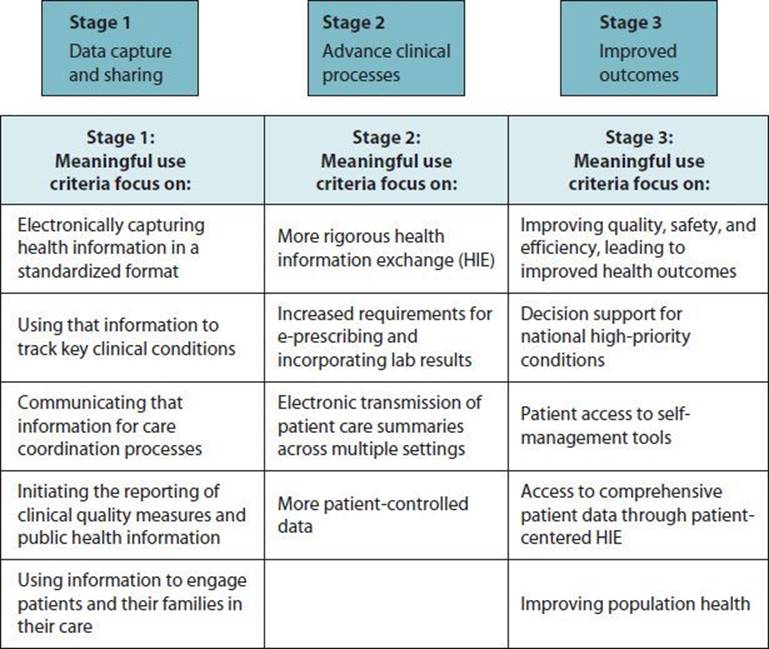
 Figure 5–1. Five-year plan for adoption of electronic health records.
1. Stage 1. The data capturing and sharing stage broadly focuses on electronically capturing health information in a standardized format, using it to track key clinical conditions, communicating this information for care coordination, reporting of clinical quality measures and public health information, and using the information to engage patients and their families.
2. Stage 2. The advanced clinical processes stage entails more rigorous health information exchange (HIE), increased e-prescribing, incorporation of lab results, electronic transfer of patient care summaries across multiple setting, and more patient-controlled data.
3. Stage 3. The improved outcome stage is to include decision support for national high-priority conditions, patient access to self-management tools, patient-directed HIE for access to more comprehensive data, and improving public health.
Recognizing that there are many electronic medical record platforms and that to improve patient care certain core standards need to be met, the HITECH legislation calls for the Office of the National Coordinator (ONC) for health IT to establish a procedure for and maintain a list of Certified Electronic Health Record Technology (CEHRT). This ensures that there are CEHRTs available for adoption by health care providers which meet meaningful use criteria, so that they can qualify for the incentive payments from the Centers for Medicare and Medicaid Services (CMS). A list of certified health IT product list (CHITPL) can be found at http://www.healthit.gov/policy-researchers-implementers/certified-health-it-product-list-chpl.
Data from the 2011 physician workflow study revealed an increase in adoption of EHR across the nation, with 54% of physicians reporting that they had adopted an EHR system. It further revealed that 76% of those who adopted an EHR system reported that it met meaningful use criteria. Amongst family physicians, the adoption rate now exceeds 80%.
The full impact of the HITECH Act is yet to be realized; however, it is clear that this large investment will move the United States significantly further ahead in its adoption and standardization of electronic health records.
OCCUPATIONAL MEDICINE & THE ELECTRONIC HEALTH RECORD
The practice of occupational medicine has unique requirements of an EHR platform, as it is diverse in its scope and settings and has distinct categories, all of which have their own demands. It entails intensive practice of managing industrial injuries and illnesses, including the coordination of care among a number of specialists. In the practice of occupational medicine, there is a protocol-specific nature and longitudinal monitoring of occupational surveillance services that often involves more than one government agency. There are also the reporting/tracking and legal requirements of employee health services. An occupational medicine EHR has many unique needs (Table 5–1).
Table 5–1. Unique features of an occupational medicine EHR.
Administrative support
• Creates detailed, company-specific protocols
• Bills insurers and companies differently
• Includes supporting documentation with workers’ compensation invoices
• Ensures regulatory compliance
Health information and data
• Captures job code, date of injury, body part, examination type, employer, insurer
• Supplies forms (eg, DOT physical & OSHA respiratory questionnaire)
• Incorporates exposure/environmental history for evaluation of toxic exposures (eg, lead exposure history)
• Records and trend audiometry and spirometry test results
• Incorporates employer job analysis
Patient support
• Flags potential problem cases to initiate early intervention
• Generates reminders for patients/employers regarding employment exams
Clinician decision support
• Reinforces evidence-based guidelines (eg, ACOEM practice guidelines, ODG, DOT guidelines)
Electronic communication
• Secures emailing to insurers (eg, injury care reports) and employers (eg, work status)
• Provides online portal for limited third-party access to EHR
Population management
• Tracks lost time, claim duration, utilization, case costs, and patient satisfaction
• Generates case summaries for insurers and employers
• Generates patient lists by job code, date of injury, body part, examination type, employer, insurer
To address these needs, commercial products specific to occupational medicine practice are available. Large vendors have not sought to merge the needs of an occupational medicine practice with that of a general medical practice. As such, occupational health practices that function within larger group settings are often left to carve out workarounds to support their operations. An occupational medicine practice is not typically eligible for federal financial incentives as its practice does not entail billing through Medicare/Medicaid.
Another challenge facing occupational medicine providers is managing the access to employee health records in the digital age. This is especially important when the organization has multiple roles, which could include (1) employer, (2) health care provider, and/or (3) health plan.
Although the HIPAA privacy rule excludes employment records maintained by a health care organization in its capacity as an employer, there are federal acts and regulations that do guide the management of employee health records (Americans With Disabilities Act [ADA], Family Medical Leave Act [FMLA], and Occupational Safety and Health Act [OSHA]). The general standard is that employee health records must be maintained separately from the employee’s general health records by the organization in its capacity as an employer. Individuals who have dual roles within the organization, such as an occupational physician or an occupational health nurse who also functions as part of the health care team in providing patient care, must be aware of the role in which they are accessing the electronic record and accordingly must limit their access.
For example, when acting as an agent of the employer (eg, post-offer placement examination), the occupational health professional must maintain a firewall to keep from accessing the employee’s general health records, as state and federal regulations limit the history and examination to elements that are essential to the job function only. If the employee is seen for industrial care, access to the general health record is permitted. These adjustable firewalls for dual use are typically not available as part of an EHR platform and need to be created by the end-user. In regards to retention of employee health records, the most restrictive guidance is from OSHA (29 CFR 1910.1020), which requires retention of employee exposure records for 30 years. As the majority of organizations do not maintain OSHA records separately from employee health records, the OSHA guidance has become the standard for employee health (employment + 30 years).
As occupational medicine and general medicine EHR platforms have developed in silos, they typically do not share information that is relevant to each other’s practice. In 2011, at the request of National Institute for Occupational Safety and Health (NIOSH), the Institute of Medicine appointed a committee on Occupational Information and Electronic Health Records to explore the need and feasibility for incorporating occupational information into an EHR. The committee’s recommendation was that capturing occupational information supports the “meaningful use” of EHRs, as this information may be used to arrive at an accurate diagnosis, improve the management and treatment of conditions, facilitate return to work, enable more complete public health surveillance, and focus on preventative health efforts.
The committee made 10 recommendations to NIOSH, including but not limited to the following: information models for storing and communication occupational information should be established, the Standard Occupational Classification (SOC) and North American Industry Classification System (NAICS) coding standards should be adopted for use in EHRs, meaningful use and performance metrics for capturing and sharing occupational information should be created, clinician decision support and educational tools regarding return-to-work should be developed, and further study should be done on the ethical and privacy concerns of including occupational information in EHRs. As the specific measures and metrics for achieving stage 3 of meaningful use is yet to be finalized, there is an opportunity to have occupational information included. In 2012, The American College of Occupational and Environmental Medicine (ACOEM) issued an opinion paper calling for the inclusion of occupational health data in EHRs.
GLOBAL PERSPECTIVE
All industrialized nations are facing health care challenges associated with an aging population, such as increasing chronic disease prevalence, increased cost of delivering care, and need for better coordination between treatment teams. Over the years, countries have implemented national health care reform policies to help achieve improved quality and efficiency of care, and many view health IT as an integral part of this effort. A survey in 2009 by the Commonwealth Fund found that the United States was behind many countries in the adoption of EMR by primary care physicians, with only 46% of US doctors reporting they used electronic medical records, compared with over 90% of doctors in Australia, Italy, the Netherlands, New Zealand, Norway, Sweden, and the United Kingdom (Figure 5–2). Those countries that had widespread EMR adoption used a combination of national financial incentives, standards, and technical support. These include incentive payments for improved quality of care and for implementing electronic patient records, which are typically targeted at General practitioners, as they often are the gatekeepers to care.

Figure 5–2. Practices with electronic medical records vs advanced electronic health information capacity, 2011.
In New Zealand, which has had electronic records in primary care offices for over 20 years, health IT development took place separately in hospitals and provider offices. Hospitals took the lead in the early 1980s with the development of electronic administration systems. General practitioners soon followed and now have 100% adoption of multifunctional EHRs in their practice. Information exchange between provider offices, hospitals, labs, and other health care entities is facilitated through a system integrator called HealthLink. There is now a migration from an office-based EHR to remotely hosted systems.
The New Zealand government played a significant role in moving the country forward in its broad adoption of health IT, with the creation of standards to allow interoperability, the implementation of a national patient identifier system, the development of health information privacy code and security framework, providing investment funds, and encouraging private investment. This theme of national policies fostering health IT investment and adoption is one that can be seen in many of the nations that have been identified as high adopters of health IT. In Denmark, policies that included national standards, quicker payments for physicians using an EHR, and pay-for-performance incentives that promoted email communication helped advance adoption. Denmark’s national network for interoperability is operated by a not-for-profit organization called MedCom, which developed national infrastructures, set standards, and also provides technical expertise and assistance.
The international EHR market is evolving. A recent study of leading health care software, hardware, and services companies in 2010 noted that EMR market growth would be greatest in North America, followed by Asia Pacific, Europe, Africa, and Latin America. It identified four major factors that would shape the international health IT marketplace: (1) government incentives are the greatest factor that will spur health IT adoption, (2) a shortage of health IT specialists will shift EMR support and maintenance to outsourcing and cloud-based solutions, (3) the most challenging opportunities will be in networking the health system across geographic regions, and (4) the pace of adoption will be metered by global economic recovery.
THE FUTURE OF EHR
Through the years, health information technology has been influenced, and to a large degree guided, by the technology available at the time. In the new millennia, the technology trends that will have the greatest influence in health IT are cloud computing and mobile applications.
Cloud computing refers to delivering hosted services over the Internet. It takes advantage of economies of scale and resource pooling to provide an enormous amount of computing power and storage to those who sign up for the service. Its goal is to provide easy access to computing resources and IT services at a level that is determined by the user (on demand) and is scalable. The term “cloud” comes from the conceptualization of the Internet that is commonly used in illustrations. Cloud computing offers distinct advantages to the health care sector: (1) it provides large virtual storage of data that is securely accessible and has redundant backups; (2) it shifts the responsibility of system upgrades, maintenance, and IT support to the vendor, lowering a significant barrier to adoption; and (3) it allows for sharing of information with other entities on a common platform without geographical restrictions, allowing for information to follow the patient through their care, and broadens the possibilities for public health surveillance. The global cloud computing market revenue is expected to increase over $5 billion by 2017, with North America serving as the largest contributor.
Mobile applications have penetrated into almost all aspects of everyday life. Consumers of goods and services are looking for convenience and speed, without sacrificing personalization. These applications are linking patients with their medical care teams across that nation. They allow for access to personal health records that are tethered to an EHR used by their provider, monitoring of chronic conditions, and a level of engagement with their care team that was not possible with office visits alone. Medical providers are using social media platforms to reach a broader audience and educate their patients. This is in an environment in which smartphone unit sales will grow at nearly a 30% compound annual growth rate, significantly outpacing personal computer sales. The social media platform holds the promise of making patients and their families active members of their care team and improving the quality of their health. As with any new technology, this advance has raised concerns for medicolegal implications and the need to establish professional codes of conduct for engaging patients online. Many companies now have policies that guide the professional engagement of patients in the virtual environment.
The pairing of cloud computing with mobile applications and technology offers enormous possibilities for public health. As these technologies do not require large investments in infrastructure, they can be adopted in resource-poor areas, with low start-up costs. By using these technologies, surveillance, education, and care can now reach remote areas of developing nations. Projects such as TRACnet in Rwanda (a web-based reporting system that allows for collecting site-level data on HIV antiretroviral treatment via Internet- or mobile phone–based data entry) leverage existing infrastructure (mobile phone networks) to communicate and capture data. As Internet access in Rwanda is limited and unreliable, the program has seen greater than 90% of its data entered through mobile phones. This allows for rapid analysis of program metrics and response to drug shortages, which help efficiently allocate resources to the areas of need. Another innovative use of this technology is RapidSMS, an open-source framework developed by UNICEF. RapidSMS is a short message service (SMS, ie, text message)–based platform that manages data collection, complex workflows, and group coordination with the use of mobile phones. It was designed to be customized by users, such as governments and nongovernmental organizations, to reach their constituents despite geographical remoteness and limited infrastructure. RapidSMS has been customized for numerous projects in Africa, including nutritional surveillance of children in Malawi, monitoring the distribution of commodities such as insecticide-treated nets in Nigeria, and the management of food distribution during famine in Ethiopia.
From its initial development, now more than 50 years ago, health IT has advanced the practice of medicine and holds the promise of improving health care quality and efficiency and reducing health disparities globally. In the decades that follow, it will transform how we engage with patients, communicate with one another, deliver care, conduct research, and monitor the health of populations.
REFERENCES
Blumenthal D: Wiring the health system—origins and provisions of a new federal program. New Eng J Med 2011;365:2323 [PMID: 22168647].
Buntin M: The benefits of health information technology. Health Affairs 2011;30,464 [PMID: 21383365].
Health and Human Services Department. Personal Health Records and the HIPAA Privacy Rule. http:/ww.hhs.gov/ocr/privacy/hipaa/understanding/special/healthit/phrs.pdf.
Kellermann AL: What it will take to achieve the as-yet-unfulfilled promises of health information technology. Health Aff (Millwood). 2013;32:63 [PMID: 23297272].
Patel V: Variation in electronic health record adoption and readiness for meaningful use: 2008-2011. J Gen Intern Med 2013;28(7):957 [PMID: 23371416].
Weng C: Using EHRs to integrate research with patient care: promises and challenges. J Am Med Inform Assoc 2012;19:684 [PMID: 22542813].
Xierali I: The rise of electronic health record adoption among family physicians. Ann Fam Med 2013;11:14 [PMID: 23319501].
 SELF-ASSESSMENT QUESTIONS
Select the one correct answer to each question.
Question 1: The electronic health record
a. is designed to be shared by providers approved by insurers
b. improves understanding between the health care team and the patient
c. is an electronic medical record but with less functionality
d. allows access to parts of the record by the patient
Question 2: The personal health record
a. is an electronic record of health-related information of a worker group
b. can be drawn only from electronic medical records
c. cannot be stored online without insurer’s approval
d. may fall outside the scope of HIPAA protection
Question 3: The HIPAA privacy rule
a. excludes employment records maintained by a health care organization in its capacity as an employer
b. has priority over federal acts and regulations that guide the management of employee health records (ADA, FMLA, and OSHA)
c. specifies that employee health records must be merged with general health records
d. prevents individuals from having dual roles within the organization, such as an employee health nurse/physician who also functions as part of the health care team in providing patient care
Question 4: In regards to global EHR use
a. the United States is leading the world in its adoption and use of EHR
b. countries with high adoption rates of EHR have used a combination of national incentives, standards, and technical support
c. the application of cloud computing has limitations due to the lack of infrastructure in developing nations
d. governmental incentives are unlikely to play a significant role in the adoption of EHRs