Etiology
• By-product of nitroprusside, acrylonitrile (nail polish, plastics, some tattoo ink), cyanogenic glycosides (apricot pits, cassava), cyanide gas (house fires)
• Mechanism: Binds to cytochrome oxidase, blocks aerobic utilization of O2, leading to cellular asphyxia
History
• Difficulty breathing, confusion, HA, n/v, AMS, syncope, sz, cardiovascular collapse
• Sxs develop immediately after inhalational exposure, delayed sxs after exposure to nitroprusside, cyanide salts, acrylonitrile, cyanogenic glycosides
Physical Exam
• O2 saturation nl; dyspnea/tachypnea, confusion, tachycardia; agonal respirations & cardiovascular collapse a/w severe poisoning
• “Bitter almond” smell (unreliable)
Evaluation
• Labs: Chemistries, ↑↑ lactate, ABG (metabolic acidosis), VBG (elevated O2 sat), cyanide level, carboxyhemoglobin (if smoke inhalation)
Treatment
• Supportive: Maintain airway, O2 therapy, IV fluids
• Activated charcoal (presenting <2 h)
• Cyanide antidote:
• Cyanocobalamin adult: 5 g (child: 70 mg/kg) IV over 15 min
• Cyanide kit (amyl nitrite, sodium nitrite, sodium thiosulfate) – causes methemoglobinemia
Disposition
• Admit: All pts; consider ICU for pts w/ szs, coma, acidosis, hypotension
CARBON MONOXIDE POISONING AND METHEMOGLOBINEMIA
Etiology
Carbon Monoxide
• Smoke inhalation, methylene chloride exposure
• Mechanism: Reduces O2 carrying capacity, shifts O2 dissociation curve to L
Methemoglobinemia
• Nitrites, dapsone, sulfa drugs, lidocaine/benzocaine, antimalarials, water contamination
• Mechanism: Disequilibrium of methemoglobin to hemoglobin; overwhelmed methemoglobin reductase
History
Carbon Monoxide
• Mild: Mild HA, DOE; mod: HA, n/v, dizziness, poor concentration; severe: CP, syncope, coma, LOC & persistent AMS
Methemoglobinemia
• SOB, HA, light-headedness, fatigue, nausea, tachycardia, CP, syncope
Physical Exam
Carbon Monoxide
• Lethargy, szs, tachycardia, tachypnea, rales, confusion, red skin, or cyanosis
Methemoglobinemia
• “Chocolate” cyanosis, tachycardia; coma, sz, death a/w severe exposure
Evaluation
• Routine ABG & Pulse ox: May be falsely reassuring
Labs
• CO
• CO oximeter, CO level (mild: 10–20%, mod: 20–40%, severe: >40%), urine hCG; mod/severe: ABG (metabolic acidosis), Chem 7, CBC, cardiac enzymes, UA, CPK, lactate, consider cyanide level
• ECG: Arrhythmias, signs of MI
• Methemoglobinemia
• CO oximeter, methemoglobin level; severe exposure: ABG, hemolysis labs (LDH, peripheral smear, haptoglobin, reticulocyte count), type & crossmatch
• Bedside test: Drop of blood on white filter paper will turn chocolate brown (compared to regular venous blood)
Treatment
Carbon Monoxide
• O2: 100% NRB until sxs improved
• Hyperbaric O2: Sz, respiratory failure, LOC, CO level >25% (if pregnant, >15 %), infants, severe acidosis, neuro deficits, CV dysfxn, exposure >24 h, age >36 yrs
Methemoglobinemia (symptomatic exposures, level >20%)
• Methylene blue (reducing agent): 1–2 mg/kg of 1% solution IV qh × 2 doses
• Exchange transfusion/hyperbaric O2: Severe sxs not responsive to methylene blue or if methylene blue is contraindicated (eg, G6PD deficiency)
Disposition
• Admit if CO level >25%, methemoglobin level >20%, dapsone tox, LOC, pts w/ underlying cardiac/neurologic/respiratory dz
Pearls
• Do NOT use methylene blue in pts w/ G6PD deficiency (hemolytic anemia)
• Large amounts of methylene blue may paradoxically elevate methemoglobin levels
HYPOGLYCEMICS
History
• Oral ingestion of sulfonylureas, meglitinides (eg, repaglinide), or SC/IV insulin (oral insulin is not toxic)
• Agitation, coma, convulsions, confusion, blurry vision, n/v, rapid heartbeat, sweating, tingling of tongue & lips, tremor, dizziness, poor feeding; children may show sxs w/i 5 min of ingestion
• RF: Extremes of age, polypharmacy, renal or hepatic dz
Physical Exam
• AMS, generalized weakness, diaphoresis, tachycardia, tachypnea, transient neurologic deficit, pallor, sz, cyanosis, coma, hypothermia
Evaluation
• Labs: FSG q1h, Chem 7, urine hCG; tox screen (if intentional overdose or ingestion unknown), C-peptide (present w/ endogenous insulin secretion)
Treatment
• Supportive: ABCs, activated charcoal if recent ingestion
• Dextrose:
• Oral: Glucose paste, juice
• IV: 0.5–1 g/kg IV D50W (adults), D25W (children), D10W (neonates) × 1 dose; persistent hypoglycemia: 0.5 g/kg/h D10W (titrate to glucose >100)
• Glucagon: 1 mg/dose IV/IM/SC (if <20 kg, 0.5 mg/dose)
• Octreotide for sulfonylurea or meglitinide overdose
Disposition
• Home: Pts w/ unintentional isolated insulin overdose may be treated & released after effect of insulin wears off
• Admit: Pts w/ sulfonylurea overdose must be monitored for at least 8 h
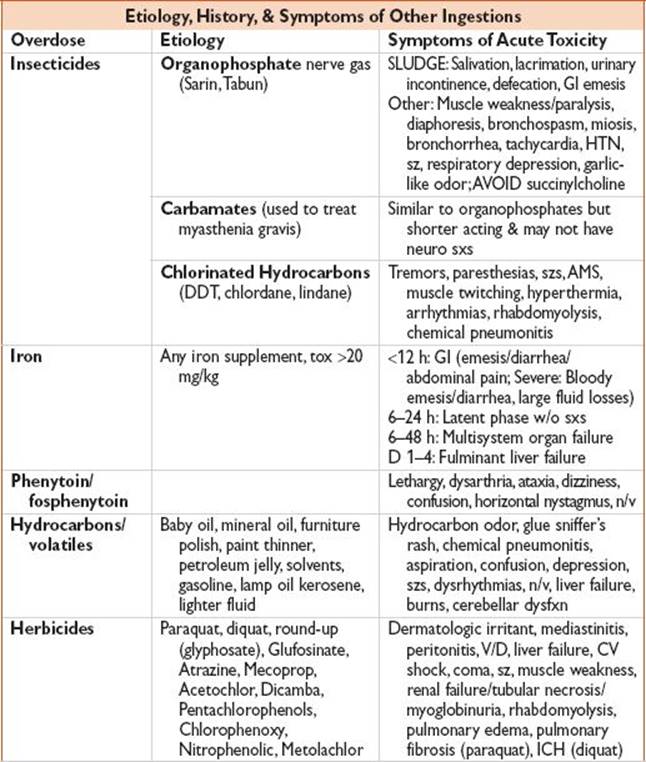
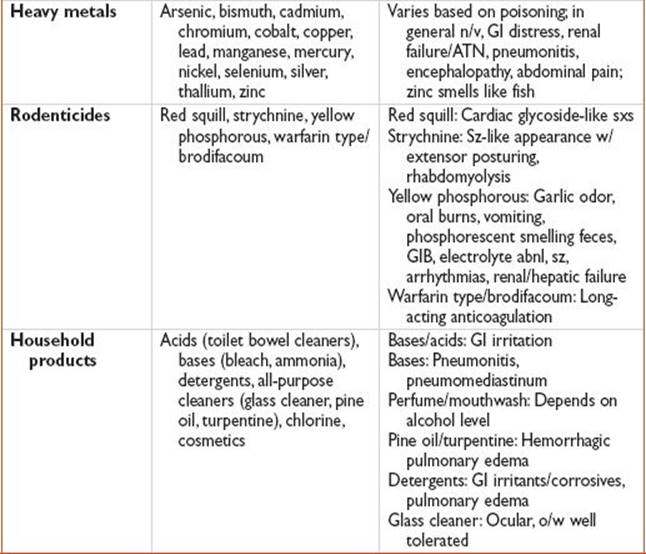
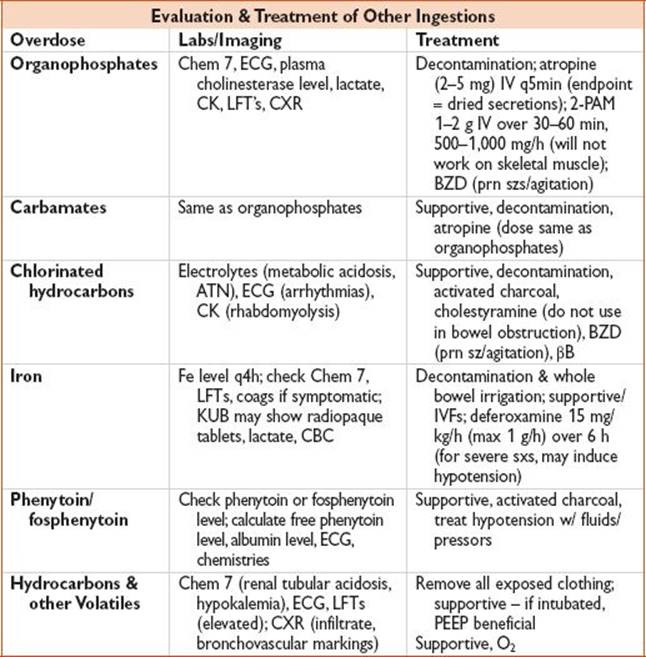
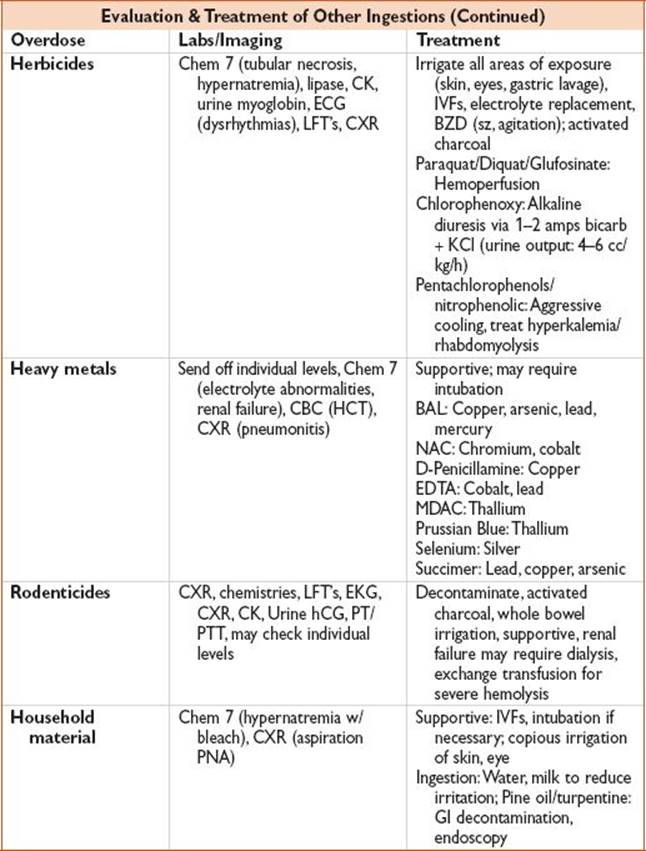
OTHER INGESTIONS