

• Preparation
• Monitor O2 sat, BP, rhythm, ≥1 IV
• BVM, suction, ET CO2 detector, oral airway, Bougie
• Intubation equipment (eg, laryngoscope): Blade, backup blade, check video monitor/light
• ETT: 8 (male), 7 (female); check cuff, load stylet/10 cc syringe; pediatrics tube size: = 4 + (age in y/4) → or use Broselow tape
• RSI medications/doses
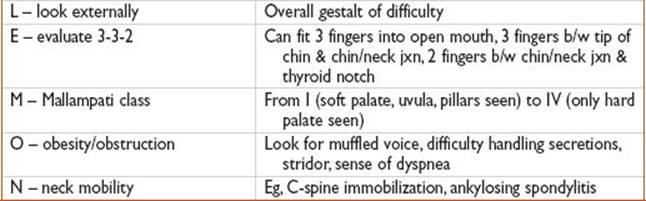
• Assess for difficult BVM, difficult intubation, & difficult cricothyrotomy → prepare appropriately


• Preoxygenation: BVM (provides ∼100% FiO2) × 3 min or 8 vital capacity breaths
• Consider passive oxygenation: Place NC on high flow throughout intubation, prolongs time to desaturation
• Pretreatment: Give 3 min prior to intubation—lidocaine 1.5 mg/kg IV (↓ ICP, in pts w/ ↑ ICP, ↓ bronchospasm in pts w/ reactive airway dz); fentanyl 3 μg/kg IV (↓ ICP in pts w/ ↑ ICP, ↓ HTN response in pts w/ cardiac ischemia, aortic dissection, head bleed)
• Paralysis w/ induction: Always induce prior to paralysis
• Induction: Etomidate (0.3 mg/kg IV), midazolam (0.3 mg/kg IV), ketamine (1.5 mg/kg IV), thiopental (3 mg/kg IV)
• Paralysis: Succinylcholine (1.5 mg/kg IV, if no CI), rocuronium (1 mg/kg IV)
• Succinylcholine CIs: Large burns, paralysis, crush injury (w/in 3 d–6 mo), abdominal sepsis (>3 d), elevated ICP or intraocular pressure, H/O MH, neurologic d/o (muscular dystrophy, MS, Amyotrophic Lateral Sclerosis)
• Positioning: ± Cricoid pressure (prevents gastric regurgitation but may worsen DL view) before/during intubation until tube placement confirmed
• Placement w/ proof: Insert ETT via direct visualization of vocal cords, inflate cuff
• Confirm placement: ET CO2 detector, auscultate lungs (assess for R-side intubation)
• Secure ETT, release cricoid pressure
• Postintubation management: Oral gastric tube, CXR, long-acting sedatives (lorazepam 0.05 mg/kg IV, propofol) ± paralytics (vecuronium 0.1 mg/kg IV), initiate mechanical intubation