
Aryeh Shander1 & Lawrence Tim Goodnough2
1Department of Anesthesiology, Critical Care and Hyperbaric Medicine, Englewood Hospital and Medical Center, Englewood, New Jersey, USA and Mount Sinai School of Medicine, New York, USA
2Departments of Pathology and Medicine, Stanford University, Stanford, California, USA
Introduction
The paradigm shift in transfusion medicine towards the restrictive use of allogeneic blood components and the avoidance of unnecessary transfusions has arisen for several reasons. Transfusion can be a life-saving therapy when indicated and appropriately administered. On the other hand, unnecessary transfusions result in potential risks without clear benefits. Although some of the better-known risks and complications of allogeneic transfusions (discussed in detail later in this chapter) have been mitigated through advances in blood screening, processing and banking (notwithstanding the occasional newly emerging infectious risks such as prions), other mainly noninfectious risks remain. Moreover, several studies have demonstrated that clinical outcomes of patients who receive allogeneic blood components are often worse (or not any better) compared with their nontransfused peers. It remains subject to debate whether worse outcomes are due to the transfusions or the underlying conditions leading to transfusion (e.g. anaemia and comorbidities).
The changing landscape of balance between supply and demand for donated banked blood is another important factor. Increasing life expectancy in the developed nations is a triumph for health care systems, but has the consequence of increasing the number of transfusion recipients (e.g. elderly patients with chronic comorbidities) relative to potential donors (e.g. healthy young adults). It is reasonable to assume that the prospect of the potential demand for allogeneic blood outpacing its potential supply is a matter of ‘when’ not ‘if’ [1]. Additionally, the ongoing scrutiny on the reported harmful effects of ex vivo storage of banked blood (i.e. the storage lesion) is likely to redefine the acceptable shelf life of banked blood, exerting further pressure on inventory management and supply. Finally, the perplexing direct and indirect costs associated with allogeneic blood transfusions (incurred by the donors, recipients, health care centres and the society as a whole) are being increasingly acknowledged.
Despite all this, thousands of patients continue to receive transfusions every day and many are inappropriately transfused [2], as indicated by the vastly variable transfusion rates across clinicians and hospitals not explainable by patients' characteristics or procedures alone [3]. All these and other factors call for more judicious use of allogeneic blood components and employing effective alternative modalities as well as a shift from a ‘product-centred’ to ‘patient-centred’ transfusion practice as advocated by Patient Blood Management (PBM) [4].
What is patient blood management?
The concept of PBM is relatively new, but it can be viewed as logical evolution of strategies proposed and utilized initially to care for patients who were not willing (or able) to receive transfusions (i.e. ‘bloodless’ medicine and surgery), followed by wider application of these strategies for a broader spectrum of patients with the goal of restricting or eliminating the use of allogeneic blood components (i.e. blood conservation). PBM is defined as ‘the timely application of evidence-based medical and surgical concepts designed to maintain haemoglobin concentration (Hb), optimise haemostasis and minimise blood loss in an effort to improve patient outcome’.1 What makes PBM distinct is its emphasis on improving the clinical outcomes of the patients through the use of preventive measures. The term PBM begins with ‘patient’ and the word ‘transfusion’ is missing from the definition, implying that the patients and their health outcomes are given priority over other processes, including reducing blood utilization, although the latter is most often also achieved during implementing PBM.
Although PBM strategies are often envisioned during care of elective surgical patients, they can be adjusted and applied during the care of all patients who may be candidates for transfusion at some stages of their medical treatment. For instance, patients undergoing nonelective surgeries, trauma patients, patients undergoing chemoradiotherapy and patients suffering from nonsurgical bleeding can all be treated using PBM strategies and benefit from them. PBM strategies include a combination of medications and devices as well as medical and/or surgical techniques applied via an interdisciplinary team approach. To be most effective, the interdisciplinary approach relies on a plan of care tailored to the specific needs and conditions of the patients. The treating physician must assume a proactive role in PBM, anticipating the complications and adjusting the treatment plan as necessary.
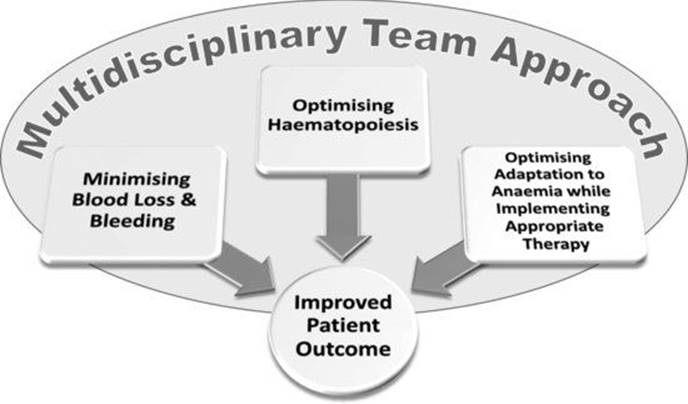
Given the link between allogeneic transfusion and unfavourable outcomes, identification and management of the risk factors of predisposing patients to being transfused is a centrepiece of PBM. It has been shown that the majority of transfusions in elective, urgent and emergent surgical patients can be attributed to the presence of anaemia, amount of blood loss and the failure to implement evidence-based recommendations to make transfusion decisions [5]. Accordingly, PBM relies on three main strategies, known as ‘pillars of PBM’ to manage these risks (Figure 34.1) [6]:
· optimizing haemopoiesis;
· minimizing blood loss and bleeding;
· harnessing and optimizing physiological adaptation to anaemia while implementing appropriate therapy.
Fig 34.1 Pillars of patient blood management, addressing the common risk factors of transfusion in a coordinated, multidisciplinary effort to improve patient outcomes.
Several therapeutic options and approaches are available under each strategy, and given the rapid pace of advancements in medical research, readers should refer to current references for the most updated information on each modality. Combined use of these strategies is expected to reduce the risk of patients being exposed to allogeneic blood transfusions. However, close attention must be paid to the independent impact of each approach on the clinical outcomes of the patients. The case of aprotinin represents a cautionary example: although the antifibrinolytic agent was found to be highly effective in reducing surgical blood loss and transfusions, its independent association with increased risk of death and other serious complications resulted in its withdrawal from the market [7]. More recently, aprotinin has re-emerged in Canada to prevent life-threatening bleeding in patients undergoing cardiac bypass surgery, in the light of some issues raised on the interpretation of data that had previously resulted in its withdrawal. All in all, this example can clearly demonstrate the dynamic and ever-changing nature of PBM modalities and the need for their continuous study and assessment. It is rarely adequate to merely focus on the transfusion-sparing effect of modalities, and meaningful clinical endpoints should also be included in the studies – a concept that is fundamental to PBM.
Optimizing haemopoiesis
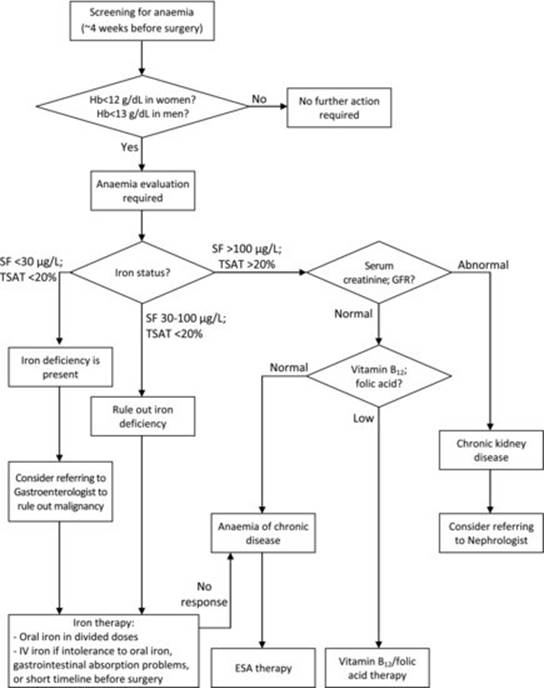
The importance of preventive measures in PBM can be best viewed in its first pillar. Anaemia is a leading risk factor of allogeneic red cell transfusion, a valuable warning sign of serious underlying diseases and an independent predictor of morbidity and mortality. The negative impact of anaemia has even been reported in mildly anaemic patients. Based on recent reports and depending on studied populations, preoperative anaemia can be present in as many as 75% of patients undergoing elective surgeries. Similarly high frequencies have been reported in critically ill patients and those admitted with ischemic or chronic heart disease – all patients who are likely to be more susceptible to the detrimental effect of anaemia and who are commonly transfused. Hence, proper screening for and management of anaemia provides an excellent opportunity to improve the clinical outcomes of these patients. Recent guidelines developed by a multidisciplinary panel for the Network for Advancement of Transfusion Alternatives (NATA) call for determination of Hb as early as 28 days before any scheduled orthopaedic surgeries to allow adequate time for diagnosis and treatment, with the ultimate goal of diagnosing the underlying cause of anaemia and normalizing the Hb by the day of surgery (see Goodnough et al. [8]). Such an approach is reasonable for all patients scheduled for any high-blood-loss procedures, not only orthopaedic surgeries. There is often no justification to subject an anaemic patient to increased risk of transfusion by proceeding with an elective procedure; proper management of anaemia and rescheduling the procedure is the more sensible approach.
The proposed algorithm (Figure 34.2) for evaluation of anaemia includes assessment of the iron status followed by renal function, other nutritional deficiencies and the presence of other chronic diseases. The management strategies should be adjusted based on the underlying cause and may include iron therapy (oral or intravenous, IV), folic acid/vitamin B12 supplements, erythropoiesis stimulating agents (ESAs) and referral to specialists for further investigation. ESAs are particularly effective in promoting erythropoiesis and increasing Hb in a relatively short period of time in various surgical and nonsurgical patient populations, producing an equivalent of 1 unit of RBC per week of treatment [9]. However, the associated risk of thrombotic and other serious complications reported for these agents requires that their use be closely monitored and adjusted according to individual patient's needs. Particularly, studies indicate that the associated risks increasingly outweigh the benefits of the ESA therapy as Hb approaches the normal range in patients with chronic kidney disease or cancer. Studies have showed that IV iron is capable of enhancing the therapeutic effect of ESAs, reducing their needed dose, in addition to being an effective haematinic agent on its own (with or without iron pre-existing iron deficiency). Hence, IV iron has been proposed as a relatively safe and effective complement and even an alternative to ESA therapy to improve Hb and patient outcomes while reducing allogeneic blood transfusions. IV iron is often superior to oral iron supplements, given its faster and more effective action, better tolerability and the possibility to provide a total dose in a single infusion using some iron formulations. Serious complications are rare and less frequent in newer IV iron preparations. Other agents such as androgens may also be considered to stimulate haemopoiesis. Despite promising initial results from phase I trials, emergence of neutralizing antibodies hindered the clinical studies on recombinant thrombopoietin as a therapy to increase platelet counts. Newer thrombopoiesis stimulating agents (TSAs) have been developed and are undergoing clinical trials; more data are needed to assess whether these can provide additional tools to optimize haemopoiesis as a potential PBM strategy.
Fig 34.2 Algorithm for detection, evaluation and management of anaemia in patients scheduled for elective surgeries (modified from Goodnough et al. [8]). ESA, erythropoiesis stimulating agent; GFR, glomerular filtration rate; Hb, haemoglobin; SF, serum ferritin; TSAT, transferrin saturation.
Attention towards anaemia and haemopoiesis should not be limited to the preoperative period. Anaemia is a common finding in the postoperative period, critically ill patients and patients undergoing various medical treatments such as chemoradiotherapy. In all these and other cases, careful screening and management of anaemia will reduce the risk of transfusion while ensuring that the patients are spared from the detrimental impact of anaemia on their clinical outcomes.
Minimizing blood loss
A key perspective in PBM is that the patient's own blood should be viewed as a unique and valuable resource that must be protected against unwarranted loss. Patients can lose blood due to various pathologies (e.g. gastrointestinal bleeding) as well as iatrogenic causes (e.g. excessive phlebotomy for laboratory testing). Surgical bleeding is an obvious source, but other more cryptic sources of blood loss should also be considered. During hospital stay, patients are often subjected to frequent diagnostic blood draws, which can quickly amount to clinically significant blood loss (possibly exceeding 500 mL). In a recent multicentre study (see Salisbury et al. [10]), 20% of nonanaemic patients admitted with acute myocardial infarction developed anaemia during their stay and the risk of developing anaemia increased by 18% (15% after multivariate adjustment) for every 50 mL of blood drawn. Mean total phlebotomy volume varied significantly among the studied hospitals [10]. Use of paediatric-sized tubes to collect the blood sample and avoiding ‘standing’ orders with no or little potential to affect treatment are ways to reduce this source of blood loss.
Detailed history taking and physical examination with attention to potential bleeding disorders is of the utmost importance. The presence of bleeding disorders in the past medical history or family history should be considered as red flags and further investigated. Current medications should be scrutinized for agents that could cause anaemia or interfere with coagulation. Oral anticoagulant therapy and the associated prolonged international normalized ratio (INR) are commonly encountered in patients scheduled for surgery. If not properly managed, these patients may be faced with an increased risk of surgical blood loss (if coagulopathy is significant) or an increased risk of receiving unnecessary and avoidable plasma transfusions – both undesirable outcomes. It should be noted that the often-assumed association between mildly prolonged INR and increased risk of bleeding is not supported by clinical studies. Moreover, allogeneic plasma units may not contain sufficient levels of various coagulation factors, rendering them essentially incapable of correcting mildly prolonged INR. When stable, these patients can be more appropriately managed by discontinuing or adjusting the dose of the anticoagulant and rescheduling the elective procedure. The same approach can be used for patients on antiplatelet therapy ahead of elective high blood-loss procedures. In all cases, potential risks and benefits of anticoagulants in the few days leading to the surgery should be carefully considered [11].
Control of surgical blood loss is another important approach in PBM. Surgical planning and rehearsal, use of less or minimally invasive approaches, use of tourniquets and optimized patient placing and positioning to reduce local blood flow to the site of surgery, avoidance of unnecessary hypothermia, appropriate use of other fluids to maintain normovolaemia, meticulous haemostasis and use of electrocautery and other haemostatic surgical tools instead of traditional scalpels are among the options to reduce surgical blood loss and improve patient outcomes. A growing list of haemostatic agents are available for use in surgical wounds. Topical dressings, sealants and adhesives can reduce bleeding through mechanical blockage and/or active promotion of clot formation or inhibition of fibrinolysis. Among systemic haemostatic agents, lysine analogues (tranexamic acid (TXA) and ɛ-aminocaproic acid (EACA)) – small molecules with antifibrinolytic activity via inhibiting the conversion of plasminogen to plasmin – have been shown to be relatively safe and highly effective in reducing blood loss and transfusion [7] and in improving patient outcomes. More evidence is needed to support systemic administration of clotting factors such as recombinant activated factor VII (rFVIIa), factor XIII and fibrinogen as safe and effective PBM strategies [12]. Some of these and other pharmacological agents are discussed in more details in Chapter 37.
Autotransfusion techniques are the other available approaches to reduce blood loss or mitigate its effect without use of allogeneic blood. Table 34.1 provides a head-to-head comparison of the key features and characteristics of the three more common autotransfusion techniques (also see Chapter 35). Preoperative autologous donation (PAD) is occasionally considered as an alternative to allogeneic blood transfusion in patients undergoing elective surgery. In this procedure, patients donate about a unit of their blood per week during the weeks leading to the surgery to be stored and reinfused back to them if required during the surgery or immediate postoperative period. PAD use has been declining due to several limitations including significant costs and inconvenience to the patients, risk of becoming anaemic due to the required aggressive phlebotomies and the associated increased risk of needing allogeneic blood in the perioperative period, the need for ESA and iron, folate and vitamin B12 supplementation to compensate for the blood draws, potential risk of clerical error, potential harmful effects of storage and the relatively high possibility that many units of PAD blood are not eventually used and are discarded, further shadowing the cost effectiveness of this procedure [13].
Table 34.1 Comparison of key features of most common autotransfusion techniques for use in patient blood management

Acute normovolaemic haemodilution (ANH) is a simple, low cost autotransfusion technique, especially effective in surgeries with high expected blood loss. In this procedure, a precalculated volume of patient's blood is removed and replaced by crystalloid or colloid solutions before or after the induction of anaesthesia to achieve a predetermined target haematocrit while maintaining the patient normovolaemic. During surgery, patients bleed ‘diluted’ blood and therefore the lost blood contains fewer cells and factors, effectively reducing the actual amount of blood loss. Collected blood is kept in the operating room and is transfused to patients at wound closure, or whenever blood transfusion is indicated. ANH does not involve any extensive preoperative arrangements and it can be done in both elective and urgent procedures. Moreover, since ANH blood is stored at the patient's bedside, there is no storage and processing cost and risk of clerical errors or harmful effects of storage. Despite theoretical benefits, studies have shown conflicting results on the efficacy of ANH in reducing allogeneic transfusions [14]. Nonetheless, ANH appears to be effective, particularly in procedures characterized by significant blood loss. Platelet-rich plasmapheresis (PRP) is an autotransfusion technique resembling ANH that involves removing a part of the patient's platelets from the circulation ahead of the surgery. The autologous platelets can be reinfused to the patient at the end of surgery to optimize haemostasis [15].
Cell salvage involves recovery of the patient's shed blood from the surgical field, sponges and drains. The procedure can be done during or after the surgery. This blood is then washed, filtered and reinfused back to the patient. Cell salvage has the clear advantage that it relies on a resource that is otherwise wasted and lost. Several studies have supported the efficacy of cell salvage in reducing blood loss and transfusions [16]. However, given the nature of the procedure and the collected blood, controversy exists on the potential link between cell salvage and loss of coagulation factors (because of washing), haemolysis and increased risk of introducing unwanted materials and contaminations (e.g. bacteria, debris, amniotic fluid or tumour cells) into the blood circulation. Use of leucocyte reduction filters in cell salvage devices appears to be an effective measure to remove the unwanted materials, and available evidence supports the use of cell salvage in most patients undergoing procedures with significant blood loss [17]. Autologous transfusion techniques are discussed in more detail in Chapter 35.
Throughout the care, particularly during the postoperative period, patients should be closely monitored for abnormal bleeding. Postoperative bleeding in excess of what is normally expected should be immediately investigated and controlled, and the patient should be readily transferred back to the operating room for re-exploration if bleeding persists.
Harnessing and optimizing physiological adaptation to anaemia while implementing appropriate therapy
The first pillar of PBM calls for ‘anaemia vigilance’ among clinicians to actively look for anaemia and manage it in patients. What is meant by the third pillar here is that when an anaemic patient is undergoing proper management and waiting for the treatments (e.g. haematinics) to exert their effects, additional faster-acting appropriate management strategies (other than transfusions) should also be pursued to reduce the immediate negative impact of anaemia, and allogeneic blood transfusions must be used properly and appropriately only when clear indications exist and potential benefits are expected to outweigh the risks (i.e. evidence-based transfusion practice).
As anaemia develops, the body responds by a number of physiological adaptations that may occur anywhere from the cellular and subcellular level to the whole system level. Examples include increased ventilation and Hb oxygen saturation, increased cardiac output, reduced systemic vascular resistance, active control of local blood flow, increased tissue oxygen extraction and cellular metabolic adaptations, all with the goal of maintaining the balance between oxygen supply and demand. Interventions can be done to support and optimize these physiological adaptations to anaemia. Examples include supplemental oxygen therapy, maintaining adequate perfusion and normovolaemia, and avoiding tachycardia and other conditions associated with increased unnecessary demand.
As untreated anaemia becomes more severe, adaptive mechanisms begin to fail and the oxygen delivery and supply becomes inadequate to meet the demand at some point depending on the individual tissue and organ. When this occurs, the risk of tissue hypoxia and ischaemia quickly increases and, if left untreated, the patient condition and clinical outcomes deteriorate. When a patient is moving in this direction and is likely to experience tissue hypoxia and ischaemia, measures must be employed to improve the oxygen delivery capacity of the blood quickly and this is when allogeneic blood transfusions are indicated and necessary. Similarly, it may be required to raise a patient's platelet count or increase coagulation factors quickly. Timely and appropriate transfusion of blood components is the other important aspect of the third pillar of PBM.
Numerous studies, including controlled trials, have shown that ‘restrictive’ transfusion strategies (usually based on Hb levels of 7–8 g/dL as triggers) are safe and effective in the management of patients who are commonly considered for transfusion, and often achieve better outcomes. Although the term ‘restrictive’ may imply that the patients are deprived of a beneficial treatment, it is used in this context in contrast to traditional ‘liberal’ transfusion triggers (namely the outdated and discredited Hb/haematocrit 10/30 rule), which are now widely believed to be excessive and harmful to the patients. Transfusion guidelines for various patient populations are available, and they all emphasize that blood and blood components should be transfused when ‘clear’ physiological need exists, rather than blindly based on arbitrary Hb or haematocrit ‘triggers’. The goal should be treating the patient, rather than attaining a certain Hb level [18,19]. Nonetheless and despite certain limitations, Hb or haematocrit levels remain the most commonly used criteria for making transfusion decisions. Most current guidelines agree that transfusions are usually indicated in patients with Hb levels below 6 g/dL, and they are almost never indicated in patients with Hb levels above 10 g/dL; Hb levels between these two ends constitute a grey zone in which the benefits of transfusion are unclear, with factors such as advanced age and comorbidities (e.g. heart disease) often considered in making the decision [19]. Yet, the lowest permissible Hb level varies among individual patients, depending on their physiopathological status and rate and trend of blood loss. Therefore, signs of inadequate oxygen delivery and ischaemia (e.g. relative hypotension or tachycardia, new ischaemic ST-segment changes, increased oxygen extraction rate and decreased oxygen consumption) in the context of anaemia and normovolaemia and the absence of other probable causes are usually indications for transfusion regardless of Hb [20].
Conclusions
A feedback cycle exists between anaemia, allogeneic blood transfusions and unfavourable patient outcomes. In addition to anaemia increasing the risk of transfusions, anaemia and transfusion are both independent risk factors for adverse outcomes. New or aggravated pre-existing comorbidities can in turn exacerbate anaemia (e.g. via inflammation) and/or increase the risk of a patient being transfused (e.g. a new or worsened ischaemic heart disease resulting in the patient being more liberally transfused in fear of ischaemia). PBM provides strategies to break these vicious cycles and improve patient outcomes [5].
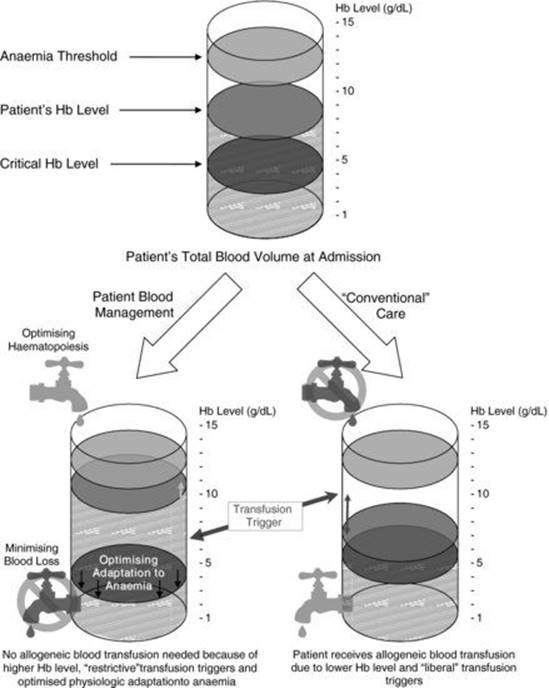
Figure 34.3 depicts the schematic effects of PBM strategies on a hypothetical patient's Hb, the Hb threshold at which oxygen demand overtakes the supply (the so-called critical Hb) and the likelihood of receiving allogeneic blood transfusions, compared with a hypothetical patient treated according to more ‘conventional’ strategies. Individual strategies used in PBM show various levels of effectiveness in reducing transfusions and improving patient outcomes as supported by numerous studies. However, PBM is more effective when appropriate strategies are implemented in combination and as part of multimodality, multidisciplinary programmes. Data on effectiveness of implementation of PBM strategies in concert to achieve its goal are beginning to emerge, but more data are needed to establish and quantify better the impact of PBM on patient outcomes [21]. PBM strategies are rapidly evolving to reflect the latest findings in the field. Newer technologies such as point-of-care coagulation testing and continuous Hb monitoring are promising tools to assess better the patients' needs and adjust their management, but more clinical evidence is needed to support their widespread use. Advances in our understanding of the circulation system in physiological and pathological conditions, oxygen demand of organs, tolerance of anaemia and adaptive measures and coagulation, as well as more refined surgical techniques and more specific pharmacologic agents, have revolutionized our approach to transfusion. The trend is only expected to escalate in the years to come, with many more blood management modalities expected to become available. With all these exciting developments in mind, one should not forget that, in all cases, improving the patients' clinical outcomes is the first and foremost goal of PBM.
Fig 34.3 Schematic comparison of patient blood management (PBM) versus more ‘conventional’ care and the impact on allogeneic blood transfusions. A hypothetical patient is admitted with pre-existing anaemia. Proper management according to PBM strategies would result in increased haemoglobin concentration (Hb; represented by the upper tap), reduced blood loss (represented by the lower tap), potentially lower critical Hb level and more judicious use of blood components, altogether reducing allogeneic blood transfusions and improving patient outcomes. Conversely, undetected and unmanaged anaemia, uncontrolled blood loss and liberal transfusion strategies would result in the patient receiving (potentially unnecessary and harmful) allogeneic blood transfusions without remarkable benefits.
Key points
1. A vicious cycle often exists between anaemia, allogeneic blood transfusions and unfavourable patient outcomes, with anaemia and transfusion being independent risk factors of worse outcomes.
2. Many patients are inappropriately transfused, as indicated by the vastly variable transfusion rates not explainable by patients' characteristics or procedures alone.
3. There is urgent need for adopting more judicious use of allogeneic blood and a shift from a ‘product-centred’ to ‘patient-centred’ transfusion practice.
4. Patient blood management (PBM) is ‘the timely application of evidence-based medical and surgical concepts designed to maintain Hb, optimise haemostasis and minimise blood loss in an effort to improve patient outcome’.
5. What makes PBM distinct is its emphasis on improving the clinical outcomes of the patients through the use of preventive measures.
6. PBM strategies can be adjusted and applied during the care of all patients who may be candidates for transfusion at some stages of their treatment.
7. PBM achieves its goals through relying on three main strategies: optimizing haemopoiesis, minimizing bleeding and harnessing and optimizing physiological adaptation to anaemia while implementing appropriate therapy.
8. PBM is more effective when appropriate strategies are implemented in combination and as part of multimodality, multidisciplinary programmes.
References
1. Drackley A, Newbold KB, Paez A & Heddle N. Forecasting Ontario's blood supply and demand. Transfusion 2011; 52(2): 366–74.
2. Shander A, Fink A, Javidroozi M, Erhard J, Farmer SL, Corwin H et al. Appropriateness of allogeneic red blood cell transfusion: The International Consensus Conference on Transfusion Outcomes. Transfus Med Rev 2011; 25(3): 232–246.
3. Bennett-Guerrero E, Zhao Y, O'Brien SM, Ferguson Jr TB, Peterson ED, Gammie JS et al. Variation in use of blood transfusion in coronary artery bypass graft surgery. J Am Med Assoc 2010; 304(14): 1568–1575.
4. Goodnough LT & Shander A. Patient blood management. Anesthesiology 2012; 116(6): 1367–1376.
5. Gombotz H, Rehak PH, Shander A & Hofmann A. Blood use in elective surgery: the Austrian benchmark study. Transfusion 2007; 47(8): 1468–1480.
6. Thomson A, Farmer S, Hofmann A, Isbister J & Shander A. Patient blood management – a new paradigm for transfusion medicine? ISBT Sci Ser 2009; 4: 423– 435.
7. Henry DA, Carless PA, Moxey AJ, O'Connell D, Stokes BJ, Fergusson DA et al. Anti-fibrinolytic use for minimising perioperative allogeneic blood transfusion. Cochrane Database Syst Rev 2011; (3): CD001886.
8. Goodnough LT, Maniatis A, Earnshaw P, Benoni G, Beris P, Bisbe E et al. Detection, evaluation, and management of preoperative anaemia in the elective orthopaedic surgical patient: NATA guidelines. Br J Anaesth 2011, January; 106(1): 13–22.
9. Bohlius J, Tonia T & Schwarzer G. Twist and shout: one decade of meta-analyses of erythropoiesis-stimulating agents in cancer patients. Acta Haematol 2011; 125(1–2): 55–67.
10. Salisbury AC, Reid KJ, Alexander KP, Masoudi FA, Lai SM, Chan PS et al. Diagnostic blood loss from phlebotomy and hospital-acquired anemia during acute myocardial infarction. Arch Int Med 2011; 171(18): 1646–1653.
11. Jacob M, Smedira N, Blackstone E, Williams S & Cho L. Effect of timing of chronic preoperative aspirin discontinuation on morbidity and mortality in coronary artery bypass surgery. Circulation 2011; 123(6): 577–583.
12. Lin Y, Stanworth S, Birchall J, Doree C & Hyde C. Use of recombinant factor VIIa for the prevention and treatment of bleeding in patients without hemophilia: a systematic review and meta-analysis. CMAJ 2011; 183(1): E9–19.
13. Goodnough LT. Autologous blood donation. Anesthesiol Clin North America 2005; 23(2): 263–270, vi.
14. Segal JB, Blasco-Colmenares E, Norris EJ & Guallar E. Preoperative acute normovolemic hemodilution: a meta-analysis. Transfusion 2004; 44(5): 632–644.
15. Carless PA, Rubens FD, Anthony DM, O'Connell D & Henry DA. Platelet-rich-plasmapheresis for minimising peri-operative allogeneic blood transfusion. Cochrane Database Syst Rev 2011; (3): CD004172.
16. Carless PA, Henry DA, Moxey AJ, O'Connell D, Brown T & Fergusson DA. Cell salvage for minimising perioperative allogeneic blood transfusion. Cochrane Database Syst Rev 2010; (4): CD001888.
17. Esper SA & Waters JH. Intra-operative cell salvage: a fresh look at the indications and contraindications. Blood Transfus 2011; 9(2):139–147.
18. Napolitano LM, Kurek S, Luchette FA, Corwin HL, Barie PS, Tisherman SA et al. Clinical practice guideline: red blood cell transfusion in adult trauma and critical care. Crit Care Med 2009; 37(12): 3124–3157.
19. Practice guidelines for perioperative blood transfusion and adjuvant therapies: an updated report by the American Society of Anesthesiologists Task Force on Perioperative Blood Transfusion and Adjuvant Therapies. Anesthesiology 2006; 105(1): 198–208.
20. Madjdpour C & Spahn DR. Allogeneic red blood cell transfusion: physiology of oxygen transport. Best Pract Res Clin Anaesthesiol 2007; 21(2): 163–171.
21. Spahn DR. Anemia and patient blood management in hip and knee surgery: a systematic review of the literature. Anesthesiology 2010; 113(2): 482–495.
Further reading
Achneck HE, Sileshi B, Jamiolkowski RM, Albala DM, Shapiro ML & Lawson JH. A comprehensive review of topical hemostatic agents: efficacy and recommendations for use. Ann Surg 2010, February; 251(2):217–228.
Carless PA, Henry DA, Carson JL, Hebert PP, McClelland B & Ker K. Transfusion thresholds and other strategies for guiding allogeneic red blood cell transfusion. Cochrane Database Syst Rev 2010; (10): CD002042.
Goodnough LT & Shander A. Blood management. Arch Pathol Lab Med 2007, May; 131(5): 695–701.
Isbister JP, Shander A, Spahn DR, Erhard J, Farmer SL & Hofmann A. Adverse blood transfusion outcomes: establishing causation. Transfus Med Rev 2011, April; 25(2):89–101.
Munoz M, Garcia-Erce JA, Villar I & Thomas D. Blood conservation strategies in major orthopaedic surgery: efficacy, safety and European regulations. Vox Sanguinis 2009, January; 96(1):1–13.
Shander A, Javidroozi M, Ozawa S & Hare GM. What is really dangeous – anaemia or transfusion? Br J Anaesth 2011; 107(S1): i41–i59.
Shander A, Moskowitz DM & Javidroozi M. Blood conservation in practice: an overview. Br J Hosp Med (Lond) 2009, January; 70(1): 16–21.
Shander A, Spence RK & Auerbach M. Can intravenous iron therapy meet the unmet needs created by the new restrictions on erythropoietic stimulating agents? Transfusion 2010, March; 50(3): 719–732.
Society of Thoracic Surgeons Blood Conservation Guideline Task Force; Ferraris VA, Brown JR, Despotis GJ, Hammon JW, Reece TB et al. 2011 update to the Society of Thoracic Surgeons and the Society of Cardiovascular Anesthesiologists blood conservation clinical practice guidelines. Ann Thorac Surg 2011, March; 91(3): 944–982.
1. From the Society for the Advancement of Blood Management (SABM) at: http://www.sabm.org/public/.