
Frederic C. Blow, PhD and Kristen L. Barry, PhD
CHAPTER OUTLINE
■ SCOPE OF THE PROBLEM IN OLDER ADULTHOOD
■ BROAD-BASED ASSESSMENT OF SUBSTANCE USE PROBLEMS
■ BRIEF ALCOHOL INTERVENTIONS
■ BRIEF INTERVENTION CONTENT AND STEPS
■ FORMAL SUBSTANCE ABUSE TREATMENT IN OLDER ADULTHOOD
■ CONCLUSION
The increase in illnesses in later life can lead to higher utilization of health care among older adults (1–4). Many of the medical and psychiatric disorders experienced in aging are influenced by lifestyle choices such as drinking alcohol and use or misuse of medications/drugs. Older adults are more vulnerable to the effects of alcohol and medications and, combined with their increased risk for comorbid diseases, may seek health care for a variety of conditions that are not immediately associated with alcohol or medication use/misuse. These include greater risk for harmful drug interactions, injury, depression, memory problems, liver disease, cardiovascular disease, cognitive changes, and sleep problems (5–7).
Older adults with alcohol problems are a special and vulnerable population who require elder-specific screening and intervention procedures. At-risk drinking and problem drinking are the largest classes of substance use problems seen in older adults.
Illicit drug use and dependence are more common in cohorts born after World War II (8,9). These findings indicate that the “baby boom” cohort, with the leading edge at age 66, may need more intervention and treatment options than those have been available for the current elderly population. With the aging of the baby boom generation, clinicians are likely to see a greater use of alcohol, psychoactive prescription medication misuse, and illicit drug use (10,11).
Recent results from the National Epidemiologic Survey on Alcohol and Related Conditions (12) showed that lifetime rates of nonmedical prescription drug use disorders for the oldest age group (65+) were relatively low (<1% with odds ratios of 1) and that younger age groups were most likely to abuse sedatives, tranquilizers, opioids, or amphetamines. Of note is the 45- to 64-year age group who had somewhat higher rates of nonmedical prescription drug abuse than today’s elderly (sedatives: 1.3%, OR = 19.4; tranquilizers: 1.0%, OR = 7.9; opioids: 1.3%, OR = 8.6; amphetamines: 2.1%, OR = 19.0). Illicit drug use and dependence are more common in cohorts born after World War II (8,9).
SCOPE OF THE PROBLEM IN OLDER ADULTHOOD
Alcohol
Despite significant advances over the last two decades in the understanding of the aging process, little attention has been paid to the intersection of the fields of gerontology/ geriatrics and alcohol studies. Although studies in this area remain limited, prevalence estimates and typical characteristics of older problem drinkers now are being reported (13–15). Specific treatment and intervention strategies for older adults who are alcohol-dependent or hazardous drinkers are beginning to be disseminated. It can be important to distinguish older adults who have had a history of problems with alcohol (early-onset problems) compared to those who do not develop problems related to alcohol until later in life (late-onset problems) due to stressors that develop with aging (e.g., retirement, loss of income, loss of partner). The majority of older adults experiencing alcohol abuse and/or dependence in later life have had problems with alcohol at various periods earlier in life. However, it is important for clinicians to ask their older patients about alcohol use even if they have no history of problems because problems can arise with stressors in older adulthood (6).
Over a number of years, community surveys have estimated the prevalence of at-risk or problem drinking among older adults to range from 1% to 16% (5,16–18). These rates vary widely depending on the definitions of older adults, at-risk and problem drinking, alcohol abuse/dependence, and the methodology used in obtaining samples. At-risk drinking increases the potential for developing problems and complications. Generally, problem drinking is defined as drinking that has caused some social, emotional, or physical health consequences (see chapter section titled, Alcohol Use Guidelines for Older Adults for specifics). The National Survey on Drug Use and Health (NSDUH, 2002–2003) found that, for individuals aged 50+, 12.2% were heavy drinkers, 3.2% were binge drinkers (more than four drinks on a drinking occasion), and 1.8% used illicit drugs (12,19). The 2005–2006 NSDUH showed a significant level of binge drinking among those aged 50 to 64 (20). They also found that 19% of men and 13% of women had two or more drinks a day, considered at-risk drinking. The survey also found binge drinking in those over 65, with 14% of men and 3% of women engaging in binge drinking.
Estimates of alcohol problems are even higher among health care–seeking populations, because problem drinkers are more likely to seek medical care (21). Early studies in primary care settings found 10% to 15% of older patients met the criteria for at-risk or problem drinking (22,23). In a large primary care study of 5,065 patients over age 60, Adams et al. (13) found that 15% of the men and 12% of the women sampled regularly drank in excess of the National Institute of Alcoholism and Alcohol Abuse (NIAAA) guidelines (see Alcohol Use Guidelines for Older Adults later in text).
Because patients with a previous history of problems with alcohol or other drugs are at risk for an exacerbation of problems with additional stressors, establishing a history of use can provide important clues for future problems and can provide the opportunity to provide prevention messages and encouragement to individuals who are maintaining abstinence or very low use. Although it is generally assumed that life events such as bereavement and serious illnesses can put the most stress on individuals, any changes in life events (e.g., retirement, change in income) can produce stress that can, in turn, affect alcohol use patterns.
Two studies in nursing homes reported that 29% to 49% of residents had a lifetime diagnosis of alcohol abuse or dependence, with 10% to 18% reporting active dependence symptoms in the past year (24,25). In 2002, over 616,000 adults aged 55 and older reported alcohol dependence in the past year: 1.8% of those aged 55 to 59, 1.5% of those aged 60 to 64, and 0.5% of those aged 65 or older (26).
Despite the high prevalence of alcohol problems, most elderly patients with alcohol problems go unidentified by health care personnel. Signs and symptoms of problems related to alcohol use in older adults are shown in Table 36-1. Few elderly patients with alcohol problems seek help in specialized addiction treatment settings. Given the high utilization of general medical services by the elderly, primary care physicians and other health care professionals are essential for identifying those in need of treatment (27).
TABLE 36-1 SIGNS AND SYMPTOMS OF POTENTIAL ALCOHOL PROBLEMS IN OLDER ADULTS: TIME TO ASK QUESTIONS

Adapted from Barry KL, Oslin D, Blow FC. Alcohol problems in older adults: prevention and management. New York: Springer Publishing, 2001.
Psychoactive Prescription Medication Misuse
Adults aged 65 years and older comprise 13% of the population but account for 36% of all prescription medications used in the United States (28–30). A 2006 study found that 25% of older adults use prescription psychoactive medications that have abuse potential (31). There are over 2 million aggregate serious adverse drug reactions yearly with 100,000 deaths per year. Adverse drug reactions can affect individuals regardless of age, because older adults generally use more prescription drugs that have interaction potential with other drugs and with alcohol, making them a particularly vulnerable group susceptible to adverse drug reactions.
The medications of most concern with older adults are psychoactive prescription medications. A psychoactive medication, psychopharmaceutical, or psychotropic is a chemical substance that crosses the blood–brain barrier and acts primarily upon the central nervous system, where it affects brain function, resulting in changes in perception, pain, mood, consciousness, cognition, and behavior. This includes legal drugs—prescription and over-the-counter (OTC) medications—as well as illicit drugs such as marijuana, cocaine, and methamphetamine.
Of greatest concern are the opioid analgesics and benzodiazepines used to treat anxiety and insomnia. These two classes of medications are an important focus because they are frequently prescribed to older adults, have a high dependence and abuse potential, and interact with alcohol, leading to many negative outcomes.
The existing literature on this topic, while scant, indicates that psychoactive medication misuse affects a small but significant minority of the elderly population (32). A survey of social services agencies indicated that medication misuse affects 18% to 41% of the older clients served, depending on the agency (33) and on how “misuse” is defined. Misuse and abuse of prescription drugs by older adults is not typically done to “get high” (34). Although there are individuals who use prescription drugs to get high, many become problematic users unintentionally due to pain, increased anxiety, and inability to sleep (31), and the most abused medications are obtained by prescription.
Most research conducted on substance use and misuse in older adults has focused on drinking and alcohol abuse. The rates of illegal drug abuse in the current elderly cohort are poorly documented but are thought to be very low (6). Simoni-Wastila et al. (31) found that an estimated 11% of older women (age 50+ in their review) misuse prescription drugs and they estimated that nonmedical use of prescription drugs will increase for this age group to 2.7 million by 2020. Being female, social isolation, a history of substance abuse or mental health disorders, and medical exposure to prescription drugs with abuse potential were associated with psychoactive drug misuse/abuse.
Nicotine
Nicotine dependence remains prevalent across age groups. In an analysis of the 2006 National Health Survey, the Centers for Disease Control and Prevention estimated the percentages of current smokers by age group (35). Approximately 24% of adults aged 18 to 44 smoke, whereas 10.2% of those aged 65+ are current smokers. Although nicotine dependence is common among older adults and interventions to reduce smoking have tremendous benefits, smoking cessation is reviewed in Chapter 59.
Substance Abuse/Dependence Diagnostic Classification for Older Adults
Clinicians often rely on the criteria published in the American Psychiatric Association’s Diagnostic and Statistical Manual of Mental Disorders, Fourth Edition, Revised (DSM-IV-R), for classifying alcohol-related problems (36). Problems in classifying older adults remain a concern in DSM-5. The criteria may not apply to older adults with substance use problems because older adults may not experience some of the legal, social, or psychological consequences specified in the criteria and often seen in younger adults. “A failure to fulfill major role obligations at work, home, or school” may no longer be as applicable to individuals who are retired and have fewer familial and work obligations (6) (see Table 36-2 for the relationship between DSMcriteria for substance abuse/dependence and issues of older adulthood). The criteria related to physical and emotional consequences of alcohol use, however, remain important.
TABLE 36-2 SUBSTANCE ABUSE/DEPENDENCE CRITERIA CONSIDERATIONS IN DIAGNOSING OLDER ADULTS
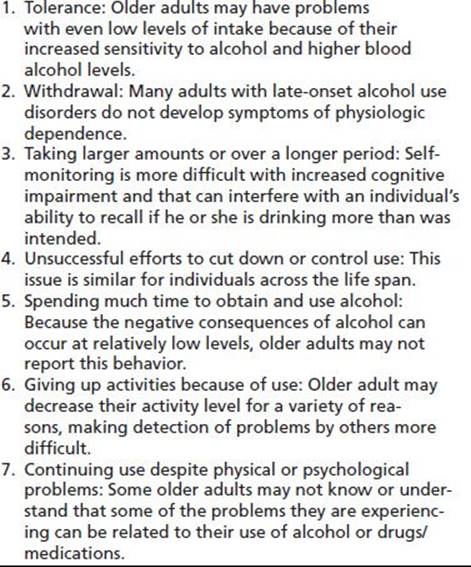
Modified from Barry KL, Oslin D, Blow FC. Alcohol problems in older adults: prevention and management. New York: Springer Publishing, 2001; Blow FC. Substance abuse among older adults. Rockville, MD: U.S. Department of Health and Human Services, Public Health Service, Substance Abuse and Mental Health Services Administration, Center for Substance Abuse Treatment; Treatment Improvement Protocol (TIP) Series, 1998.
Issues Unique to Older Adults
Older individuals may have unique drinking and medication misuse patterns, substance-related consequences, social issues, and treatment needs (37). Most older adults who are experiencing problems related to their alcohol consumption technically do not meet the DSM criteria for alcohol abuse or dependence (6,38). However, drinking even small amounts of alcohol can increase risks for problems, particularly when combined with the use of some OTC or prescription medications (23,39).
The use of nonjudgmental, motivational approaches can be a key to successfully engage these patients in care. Older adults also present challenges in applying brief intervention strategies for reducing use. Because of stigma, older adults who drink at at-risk levels often find it particularly difficult to acknowledge their own risky drinking. In addition, chronic medical conditions may make it more difficult for clinicians to recognize the role of alcohol, in particular, in decreased functioning and quality of life. These issues present recognition barriers for both clinicians and older adult adults in identifying the need for change. In working with resistant patients who do not recognize a problematic level of alcohol or drug use, clinicians can begin by teaching about changes in metabolism with aging, the interactions between alcohol and specific medications (especially sedatives), the potential for falls, and the relationship between alcohol and some medical problems (e.g., hypertension).
Co-occurring Disorders in Older Adulthood
Psychiatric comorbidities complicate interventions, treatments, and relapse prevention. It is important to note that alcohol and other drugs can affect emotional health long before psychiatric diagnoses are made and early interventions can be the key to maintain emotional and physical health functioning. Studies of older adults with substance use disorders indicate the high rates of co-occurring psychiatric illnesses, ranging from 21% to 66% (40–43). Illnesses, bereavement, job loss, and retirement can all be issues that can worsen depressive responses and alcohol use. Chronic pain, difficulty sleeping, and anxiety are other factors that can increase misuse of psychoactive medications.
Depression and alcohol use are the most commonly cited co-occurring disorders in older adults. For example, nearly half of community-dwelling older adults with a history of alcohol abuse have co-occurring depressive symptoms (42). Approximately 29% of older veterans receiving treatment for alcohol use disorders have a co-occurring psychiatric disorder (44), most commonly an affective disorder (45). Among a population of older adults receiving in-home services, 9.6% had an alcohol abuse problem, and two-thirds of those individuals (6% of the overall sample) had a comorbid psychiatric illness such as depression or dementia (46). Depression and co-occurring risk drinking in older adults are associated with increased suicidality (both suicide ideation and completed suicides) and greater inpatient and outpatient service utilization (47–51). It is important to note that not all suicide attempts require an intervening state of depression—when alcohol is involved, carelessness, despair, disinhibition, and unexpected drug interactions (e.g., alcohol and potent opioid analgesics or sleep medications) can be factors.
Among older adults with a recognized substance abuse disorder attending a substance abuse rehabilitation treatment program, 23% had dementia, and 12% had affective disorders (43). Finally, psychiatric comorbidity was prevalent among older persons (age 65+) hospitalized for prescription drug dependence, with indications that 32% had a mood disorder and 12% had an anxiety disorder (52).
Research has indicated that at-risk and problem drinking can aggravate affective disorders, such as depression, among elders (44,53–55). Even low and moderate levels of drinking among older adults with psychiatric problems can influence treatment outcomes for a variety of psychiatric diagnoses. There is a small body of literature addressing comorbid alcohol abuse/dependence and affective disorders in older adults. Research has shown a strong association between depression and alcohol use disorders across age cohorts; this linkage continues in later life. In a national study of persons aged 65 and older, 13.3% of those with major lifetime depression also met criteria for a lifetime alcohol use disorder, whereas only 4.5% had a lifetime alcohol use disorder without a history of depression (55).
Studies of treatment populations have demonstrated the prevalence of comorbid affective disorders and alcohol abuse among older adults. Blixen et al. (56) found 38% of older adults admitted to a psychiatric hospital had both a substance abuse disorder and another psychiatric disorder, most often depressive symptoms or major depressive disorder. Blow et al. (40) found major depression among 8% to 12% of older alcohol-dependent patients in treatment and dysthymic disorder among 5% to 8% of the same population.
At-risk drinking and problem drinking among the elderly are likely to exacerbate existing depressive disorders (53,57). Associations have been shown between current alcohol consumption and depression scores on the Center for Epidemiological Studies Depression Scale in persons aged 65 and older (55) and past alcohol consumption and current depressive disorders in older men.
Subsyndromal depression may be aggravated by drinking leading to a major depressive disorder. This is exemplified in grief-associated depressive symptoms or late-life adjustment disorders with depressed mood (53) that may increase to levels indicative of a major depressive disorder. For example, a recently widowed person may be depressed and use alcohol in an attempt to mitigate these feelings.
Comorbid depressive symptoms are not only common in late life but are also an important factor in the course and prognosis of psychiatric disorders. Depressed alcohol-dependent patients have been shown to have a more complicated clinical course of depression with an increased risk of suicide and more social dysfunction than nondepressed alcohol-dependent patients (37,38). Moreover, they have been shown to seek treatment more often. Relapse rates for those who were alcohol dependent, however, did not appear to be influenced by the presence of depression. Alcohol use before late life has also been shown to influence treatment of late-life depression. Studies have found that a prior history of alcohol abuse predicted a more severe and chronic course for depression (58,59).
Alcohol Use Guidelines for Older Adults
The National Institute on Alcohol Abuse and Alcoholism (NIAAA) and the Center for Substance Abuse Treatment (CSAT) Treatment Improvement Protocol (TIP) on older adults recommend that persons, male or female, aged 65 and older consume no more than 1 standard drink/day or 7 standard drinks/week (20,53). In addition, older males should consume no more than four standard drinks on any drinking day. These drinking limit recommendations are consistent with data regarding the relationship between the level of consumption and alcohol-related problems (6,60,61). Drinking guidelines also highlight an important distinction between problem drinking or at-risk drinking and alcohol dependence. A clarification of alcohol problem levels includes the following:
■ At-risk drinking: Use that increases the chances that an individual will develop problems and complications. Persons older than age 65 who drink more than 7 drinks/ week—one per day—are in this category.
■ Problem drinking: Older adults engaging in problem use are drinking at a level that has already resulted in adverse medical, psychological, or social consequences. Potential consequences can include injuries, medication interaction problems, and family problems, among others. Because of aging-related physiologic changes, some older adults who drink even small amounts of alcohol can experience alcohol-related problems.
■ Abuse/dependence: The terms alcohol abuse and dependence are defined in the Diagnostic Statistical Manual of Mental Disorders (DSM) criteria.
Screening and Detection of Alcohol and Psychoactive Medication Misuse in Older Adults
The overall model and approach to the process of screening and intervening with individuals who may have at-risk or problem use of alcohol is called SBIRT—Screening, Brief Interventions, and Referral to Treatment. Clinicians should screen for alcohol use (frequency and quantity), drinking consequences, use of psychoactive prescription medications, levels of use, and alcohol/medication interactions. Screening can be done as part of routine mental and physical health care and updated annually, before the older adult begins taking any new medications or in response to problems that may be alcohol or medication related. The SAMHSA CSAT TIP #26 expert panel (23) recommended screening all adults aged 60+ on a yearly basis and when there are changes that warrant additional screening (e.g., major life events—retirement, loss of partner/spouse, chances in health). Clinicians can obtain more accurate histories by asking questions about the recent past, embedding the alcohol use questions in the context of other health behaviors (i.e., exercise, weight, smoking, alcohol use) and asking straightforward questions in a nonjudgmental manner.
The “brown bag approach”—where the clinician asks the patient to bring in all medications, OTC preparations, and herbs in a brown paper bag to the next clinical visit—is one potential means of getting more reliable information. Many states allow physicians or pharmacists to query a state database of controlled substance prescriptions without a patient’s consent. This can reveal multiple prescribers for controlled substances, such as opioid analgesics. Used together, these two strategies allow the provider to determine what the patient is taking and what, if any, interaction effect these medications, OTCs, and herbs may have with each other and with alcohol. OTC use often remains unevaluated in clinical settings, and the use of some OTC preparations (particularly anticholinergic agents) can be problematic in combinations with alcohol or prescriptions.
Screening questions can be asked by verbal interview, by paper-and-pencil questionnaire, or by computerized questionnaire. All three methods are reliable and valid (62). Any positive responses can lead to further questions. To successfully incorporate alcohol, psychoactive prescription medication, and other drug screening into clinical practice with older adults, one needs simple and consistent routines used along with other screening procedures already in place (63).
Before asking any screening questions, the following conditions are helpful: The interviewer needs to be empathetic and nonthreatening; the purpose of the questions should be clearly related to health status, the information must be confidential; and the questions need to be easy to understand. In some settings (such as waiting rooms), screening instruments are administered as self-report questionnaires with instructions for patients to discuss the meaning of the results with their health care providers. However, paper instruments need larger typefaces to accommodate patients with visual problems.
The following interview guidelines can be used. For patients requiring emergency treatment or for those who are temporarily impaired, it is best to wait until their condition has stabilized. However, assessing the current condition of the patient can be done at any point; signs of alcohol or drug intoxication should be noted. Patients who have alcohol on their breath or appear intoxicated may give incomplete responses, so consideration should be given to following up the initial interview when the level of intoxication is not a factor. If the alcohol questions are embedded in a longer health interview, a transitional statement is needed to move into the alcohol-related questions. The best way to introduce alcohol questions is to give the patient a general idea of the content of the questions, their purpose, and the need for accurate answers (62). This statement should be followed by a description of the types of alcoholic beverages typically consumed. If necessary, clinicians may include a description of beverages that may not be considered (e.g., cider, low alcohol beer). Determinations of consumption are based on “standard drinks.” A standard drink is a 12-ounce bottle of beer, a 5-ounce glass of wine, or 1.5 ounces (a shot) of liquor (e.g., vodka, gin, whiskey).
Screening Process
The first step in screening can be called prescreening. This is simply asking a few questions to rule out the majority of individuals who do not need more systematic screening to determine the extent of the problem (64). Prescreening generally identifies at-risk and harmful substance use, while more extensive screening measures the severity of the substance use, problems and consequences associated with use, factors that may be contributing to substance abuse, and other characteristics of the problem. The prescreening and screening process should help determine if a patient’s substance use is appropriate for brief intervention or warrants a different approach. Because prescreening questionnaires can be quickly and easily administered as part of standard health screening in many clinical settings, they are an efficient method to determine who needs additional screening questions and who does not. For example, the questions in Tables 36-3 and 36-4 make an easy-to-use prescreening instrument. The prescreening questions for psychoactive prescription medications simply ascertain if the older adult is using any of the targeted medications.
TABLE 36-3 PRESCREENING QUESTIONS ADAPTED FROM THE AUDIT
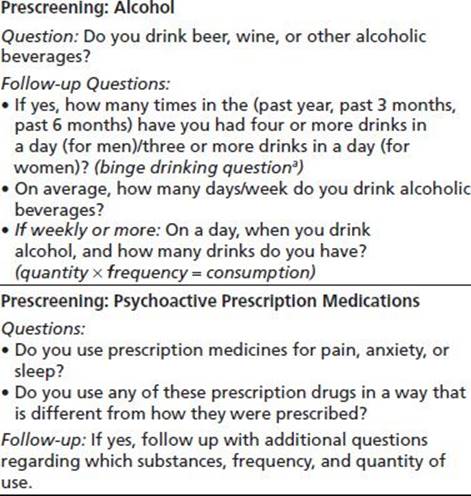
aAn older adult who reports either binge drinking or drinking above NIAAA guidelines can complete follow-up screening questionnaires.
TABLE 36-4 AUDIT-C ALCOHOL SCREENING
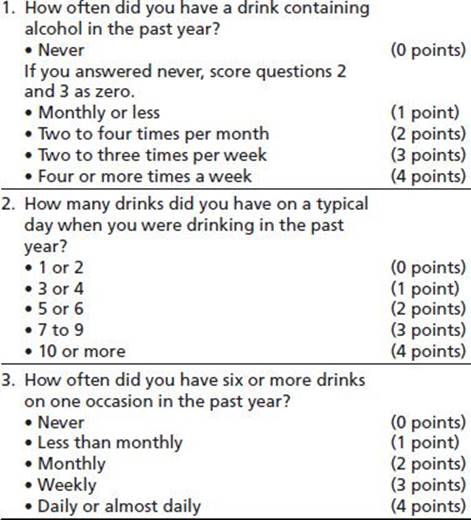
The AUDIT-C is scored on a scale of 0 to 12 (scores of 0 reflect no alcohol use). A score of 3 or more in older adults is considered positive and suggests the need for further evaluation. Generally, the higher the AUDIT-C score, the more likely it is that the patient’s drinking is affecting his/her health and safety.
(From Dawson DA, Grant BF, Stinson S, et al. Effectiveness of the derived Alcohol Use Disorders Identification Test (AUDIT-C) in screening for alcohol use disorders and risk drinking in the U.S. general population. Alcohol Clin Exp Res2005;29(5):844–854.)
Screening
Screening for alcohol use is not always standardized; and not all standardized instruments show good reliability and validity with older adults. In addition to quantity/ frequency questions, the Michigan Alcoholism Screening Test—Geriatric Version (MAST-G) and the shortened version, the SMAST-G, and the Alcohol Use Disorders Identification Test (AUDIT) are often used with older adults. The MAST-G and SMAST-G were developed specifically for older adults.
MAST
The Michigan Alcoholism Screening Instrument—Geriatric Version (MAST-G) (Table 36-5) was developed at the University of Michigan (64) as an elderly alcoholism screening instrument for use in a variety of settings. Psychometric properties of this instrument are superior to other screening tests. The MAST-G was the first major elderly-specific alcoholism screening measure to be developed with items unique to older problem drinkers. It relies on a 24-item scale with good sensitivity and specificity in older adults (Table 36-6). Similar values were found after excluding those subjects who did not currently drink. The SMAST-G is a validated shortened form of the MAST-G containing only 10 items.
TABLE 36-5 SHORT MICHIGAN ALCOHOLISM SCREENING TEST—GERIATRIC VERSION

Scoring: two or more “yes” responses indicative of alcohol problem.
For further information, contact Frederic C. Blow, PhD, at the University of Michigan Department of Psychiatry, 4250 Plymouth Road, Box 5765, Ann Arbor, MI 48109; (734) 761–2210.
© The Regents of the University of Michigan, 1991
TABLE 36-6 SCREENING INSTRUMENTS: SENSITIVITY AND SPECIFICITY WITH OLDER ADULTS

AUDIT
The AUDIT is well validated in adults under 65 in primary care settings (65–67) and has had initial validation in a study of older adults (23). The AUDIT comprises two sections: a 10-item scale with alcohol-related information for the previous year only and a “clinical screening procedure” that includes a trauma history and a clinical examination. The questionnaire is introduced by a section explaining to the respondent that questions about alcohol use in the previous year only are included. The questionnaire is often used as a screener without the clinical examination. The recommended cutoff score for the AUDIT has been 8, but Blow et al. (23) found reliability with good sensitivity and specificity in a sample of older adults with a cutoff score of 7 (see Table 36-6). A copy of this tool can be found at http://www.niaaa.nih.gov/NR/rdonlyres/287137A9–62BF-4EDE-A752–4A351C57A0B8/0/Audit.pdf. The AUDIT-C (the first three questions: quantity, frequency, binge) had psychometric properties similar to the full AUDIT (see Table 36-4). Additionally, recent consideration has been given to using the binge drinking question alone. Because of the consequences associated with binge drinking, it may prove to be a useful and important question that can stand alone.
BROAD-BASED ASSESSMENT OF SUBSTANCE USE PROBLEMS
Clinicians can follow up the brief questions about consumption and consequences such as those in the MAST-G and AUDIT, with a few more in-depth questions about consequences, health risks, and social/family issues.
To assess dependence, questions should be asked about alcohol-or drug-related problems, a history of failed attempts to stop or cut back, or withdrawal symptoms such as tremors. Clinicians should refer patients thought to be dependent for a diagnostic evaluation and possible brief or formal specialized treatment. Medication assessments include questions about prescriptions, particularly antidepressants, benzodiazepines, opioid pain medications, OTC medications, and herbal remedies. If there is evidence of prescription drug dependence, the patient should also be referred to a specialist to obtain further help.
For older adults with abuse and/or dependence symptoms, assessments are needed to confirm the problem, to characterize the dimensions of the problem, and to develop individualized treatment plans. For insurance reimbursement purposes, the assessment should follow criteria in the DSM or other relevant criteria, keeping in mind that these criteria may not apply directly to planning older adults’ treatment.
Substance Abuse Assessment Instruments
The use of validated substance abuse assessment instruments can be of great help to clinicians by providing a structured approach to the assessment process as well as a checklist of items that should be evaluated with each older adult. Specialized assessments are generally conducted by substance abuse treatment program personnel or trained mental and physical health care providers. Structured assessment interviews “possess (at least potentially) the desired qualities of quantifiability, reliability, validity, standardization, and recordability” (68).
Despite limitations with criteria used to assess older adults, two general psychiatry structured assessment instruments are widely used: the Structured Clinical Interview for DSM-III-R (SCID) (69) and the Diagnostic Interview Schedule (DIS) for DSM-IV (70). The SCID is a multi-module assessment that covers disorders of substance use, psychosis, mood, anxiety, somatoform, eating, adjustment, and personality. It takes a trained clinician approximately 30 minutes to administer the 35 SCID questions that probe for alcohol abuse or dependence. The DIS was originally developed by Robins et al. (70) to allow trained lay persons to administer the DSM-based interview. The DIS is a highly structured interview that does not require clinical judgment and can be used by nonclinicians. The DIS assesses both current and past symptoms and is available in a computerized version. It has been translated into a number of languages.
BRIEF ALCOHOL INTERVENTIONS
There is a large body of evidence that motivational brief interventions, delivered in a variety of health care and social service settings, can effectively reduce drinking, particularly for at-risk and problem users. Over the last 30 years, preventive interventions in a variety of medical and social service care settings have proven to be efficacious in reducing alcohol misuse among younger and older adults (16,34,71–74). Whitlock et al. (75) (the U.S. Preventive Services Task Force) conducted a meta-analysis and examined 39 studies, 12 met criteria for inclusive review, and Havard et al. (76) examined randomized clinical trials in the emergency care settings.
The general form of the interventions in these studies has included personalized feedback based on the patients’ responses to screening questions and untailored (generic) messages to cut down or stop drinking. Meta-analyses of randomized controlled studies have found that these techniques generally reduce drinking in the intervention versus control conditions. Results indicate that, across studies, participants reduced their average number of drinks/week by 13% to 34% compared to controls. The proportion of participants in intervention condition drinking at moderate or safe levels was 10% to 19% greater than controls over 12 months. The brief intervention trials with older adults have exhibited similar positive results.
Brief Interventions with Older Adults
Brief interventions are also attractive as a cost-effective, efficient way to begin to assist older adults who are at-risk users or beginning to experience problems related to use (77,78). But, to date, there have been a few brief alcohol intervention trials with older adults. Fleming et al. (16) and Blow and Barry (79) have conducted randomized clinical brief intervention trials to reduce hazardous drinking in older adults using advice protocols in primary care settings. These studies have shown that older adults can be engaged in brief intervention protocols, the protocols are acceptable in this population, and there is a substantial reduction in drinking among the at-risk drinkers receiving the interventions compared with a control group.
The first Project GOAL (Guiding Older Adult Lifestyles) was a randomized, controlled clinical trial conducted in Wisconsin with 24 community-based primary care practices (43 practitioners) located in 10 counties. Of the 6,073 patients screened for problem drinking, 105 males and 53 females met study inclusion criteria (N = 158) and were randomized into a control (n = 71) or intervention group (n = 87). One hundred forty-six subjects participated in the 12-month follow-up procedures. The intervention consisted of two 10- to 15-minute, physician-delivered counseling visits that included advice, education, and contracting using a scripted workbook. At baseline, both groups consumed an average of 15 to 16 drinks/week. At the time of the 12-month follow-up, the intervention group demonstrated a significant reduction in 7-day alcohol use (t = 3.77; p < 0.001), episodes of binge drinking (t = 2.68; p < 0.005), and frequency of excessive drinking (t = 2.65; p < 0.005) compared to the control group. At the time of the 3-month follow-up, average weekly alcohol use decreased 40% in the intervention group but only 6% in the control group. Participants in the intervention group maintained lower levels of alcohol consumption throughout the observation period. At the 12-month follow-up, the intervention group reduced its initial or baseline weekly alcohol consumption by 36% or roughly five fewer drinks per week. Weekly alcohol use among subjects in the control group had dropped, on average, less than 1 drink/week between baseline and 12-month follow-up. These differences are statistically significant (p < 0.001).
The second elder-specific intervention study, the Health Profile Project (79), contained both brief advice/discussion by either a psychologist or a social worker and used motivational interviewing techniques including feedback. A total of 452 subjects were randomized in this trial, with more than 26% being African American. Follow-up rates of 92% were obtained at the 12-month follow-up. They found results similar to those of the first brief intervention trial in the United States with older adults (16). These randomized controlled clinical trials extend the demonstrated benefits of brief interventions from younger at-risk drinkers to even more vulnerable populations of older adults.
Moore et al. (80) conducted a trial to examine whether an intervention among older at-risk drinking primary care patients reduces alcohol consumption and at-risk drinking at 3 and 12 months. They randomized 631 participants over 55 years of age who were at-risk drinkers. Participants were enrolled at three sites from October 2004 to April 2007. Participants were randomly assigned to the intervention (n = 310) or to control (n = 321) groups. The intervention included a personalized report, booklet on alcohol and aging, drinking diary, advice from the primary care provider during the baseline office visit, and telephone counseling from a health educator at 2, 4, and 8 weeks. The control group received a booklet on healthy behaviors. At 12 months, alcohol consumption was less in the intervention compared to the control group (9.27 vs. 10.71 drinks/week). At 3 months, 46% of intervention versus 61.21% control participants were at-risk drinkers; at 12 months, 53.87% of intervention versus 60.38% of controls were at-risk drinkers.
In addition to the randomized controlled trials, two notable large-scale effectiveness studies have been conducted to study the implementation of these models in “real-world” settings. Effectiveness research is important because, although intervention techniques have been proven to be efficacious in randomized clinical trials, there is a “science-to-service” gap that can be best bridged by testing the best methods to implement the evidence-based practice in a variety of clinical settings. These studies were the Primary Care Research in Substance Abuse and Mental Health for the Elderly study (81) and the Florida BRITE (Brief Intervention and Treatment for Elders) project (33).
Community-based Effectiveness Studies with Older Adults
Although the efficacy and effectiveness of screening and brief interventions (SBI), particularly for alcohol misuse/ abuse, is well documented, there is a science-to-service gap in providing these evidence-based practices for the growing population of older Americans. Translating science to practice remains a key challenge. Barriers to implementation have included stigma from the perspective of screened adults, difficulty in outreach, lack of health care and other professionals trained in SBI, chronic medical conditions that may make it more difficult for providers to recognize the role of alcohol and psychoactive medication misuse, and few or low reimbursement sources for SBI.
Putting It All Together: the SBIRT Model
Screening, brief interventions, and referral to treatment have all been used and tested in a variety of settings for many years. The SBIRT model was more recently developed to represent a comprehensive program to address alcohol and psychoactive prescription misuse in a variety of health-related settings. SBIRT stands for Screening, Brief Intervention, and Referral to Treatment (82). This model was originally developed by the SAMHSA Committee on Trauma Quick Guide: Alcohol SBI for Trauma Patients.
Screening quickly assesses the severity of substance use and identifies the appropriate level of intervention (83). Brief Intervention focuses on increasing insight and awareness regarding substance use and motivation for behavioral change. Referral to Treatment provides access to specialty substance abuse assessment and care, if needed (84). The SBI part of the model has been the most well tested with less research on the RT portion of the model.
BRIEF INTERVENTION CONTENT AND STEPS
Following identification of older adults who are at-risk or problem drinkers (and/or misuse psychoactive prescription medications), thorough screening techniques and a semistructured brief intervention can be conducted. Workbooks can be used for guiding the intervention. With or without the use of workbooks, the most important aspects of brief interventions include screening, feedback on behavior, supporting motivation to change, offering strategies for change, a behavioral agreement, and follow-up.
The following steps are often included in a brief intervention for older adults:
1. Identifying future goals is important for many older adults. Discuss how the older person would like his or her life to improve and be different in the future (e.g., “What are some of your goals for the next 3 months to a year regarding your physical and emotional health, activities and hobbies, relationships and social life, and your financial situation and other parts of your life?”). This helps to set the context for the brief intervention and generally provides increased motivation for the individual to change.
2. Customized feedback in the form of a health profile on screening questions relating to drinking patterns, psychoactive medication use, and other health habits (may also include smoking, nutrition, tobacco use) (e.g., “You indicated that, on average, you drink alcohol almost every day and drink two to three drinks at a time”).
3. Introduce the concept of standard drinks that the alcohol content of various beverages is roughly equivalent for a 12-ounce beer, 1.5 ounces of distilled spirits, 5 ounces of wine, or 4 ounces of sherry or liqueur. This concept provides the context for a discussion of sensible drinking limits.
4. Discuss the types of drinkers in the United States and where the patient’s drinking pattern fits into the population norms for their age group (e.g., “National guidelines recommend that men your age drink no more than 7 drinks/week or no more than 1/day. Your pattern of alcohol use seems to fit in at-risk drinking category. How do you see this?”).
5. Reasons for drinking, weighing the pros and cons of drinking, and reasons to cut down or quit drinking. The intervener needs to understand both the positive and negative roles of alcohol in the context of the older patient’s life, including coping with loss and loneliness (e.g., “We’ve spent some time talking before about your sleep problems, your blood pressure problems, the fall you took in the bathroom, and your loneliness since your wife died”). Some older patients may experience problems in physical, psychological, or social functioning even though they are drinking below cutoff levels (e.g., “Even though your drinking is close to the limit for people your age and you drank at this level for years, I am concerned about some of the health problems you’ve had and your loneliness”). Maintaining independence, physical health, and mental capacity can be key motivators in this age group (e.g., “I am concerned that the amount you are drinking could be making some of these problems worse. Our goal is for you to remain as independent as possible and have a good quality of life”).
6. Considering changing quitting or cutting down on drinking. Discussion of how changing drinking levels could have important benefits for the individual. It can be important to acknowledge that change can be difficult, but this section is designed to help the individual to see that the positive outcomes can make it worth making changes.
7. Sensible drinking limits and strategies for cutting down or quitting. Note: Strategies that are useful in this age group include developing social opportunities that do not involve alcohol, getting reacquainted with hobbies and interests from earlier in life, and pursuing volunteer activities, if possible.
8. Negotiated agreement. Negotiated drinking limits that are signed by the patient and the intervener are particularly effective in changing drinking patterns. If an older adults drinks alcohol and uses psychoactive medications, a discussion of the risks of using both in the same time period is extremely important.
9. Coping with risky situations. Social isolation, boredom, and negative family interactions can present special problems in this age group. Note: Work with the patient to develop strategies to deal with such issues as social isolation and negative family interactions.
10. Summary of the session. The summary should include the drinking limits, changes regarding psychoactive medications, encouragement, discussion of diary cards (a calendar for alcohol and psychoactive medication use) to be completed for the next month, and the recommendation to refer back to the workbook materials given to the individual during the intervention session.
Brief interventions generally include some educational information on the adverse effects of alcohol (and the use of psychoactive medications and alcohol) in older adults and the warning signs of potential problems. Clear limits can be established to minimize the adverse effects of use.
There is a large body of research indicating that brief interventions and brief advice are effective across a variety of clinical settings. To summarize the results of brief intervention research, the 12 studies that met review criteria for U.S. Preventive Services Task Force (English language, multicontact behavioral intervention, primary care–based, 6- to 12-month follow-up, nondependent drinkers) (75), participants reduced average number of drinks/week by 13% to 34% compared with controls. The proportion of participants in intervention condition drinking at moderate or safe levels was 10% to 19% greater than controls after 12 months.
FORMAL SUBSTANCE ABUSE TREATMENT IN OLDER ADULTHOOD
Medication Interventions for Older Adults with Alcohol Use Disorders
Although misuse/abuse of alcohol is a significant and growing health problem in the United States, there have been few systematic studies of formal treatment outcomes for older adults (37). Because traditional residential substance abuse treatment programs provide services to very few older individuals, sample sizes for treatment outcome studies have often been inadequate. Pharmacologic treatments are seldom used in the long-term treatment of older alcohol-dependent adults, and therefore, they have not been adequately studied in this population.
Naltrexone, an opioid antagonist, has demonstrated efficacy in large samples that have included older adults and in studies of older adults exclusively (85–89). Krystal et al. (90), however, in a multicenter, double-blind, placebo-controlled evaluation of veterans (mean age 49), found no significant differences in percentage of days drinking and drinks/day at 52-week follow-up. One of the few studies testing naltrexone (50 mg/d) in older adults was conducted by Oslin et al. (88), who enrolled 44 veterans older than age 50 in a 12-week double-blind placebo-controlled efficacy trial. There were no significant differences between the groups in abstinence, but half as many subjects in the treatment group lapsed into significant drinking compared to the control group. Naltrexone was well tolerated by older adults and had efficacy in preventing relapse. However, naltrexone, because it is an opioid blocker, cannot be used in patients who require opioid analgesics; adding naltrexone to the regimen of a patient on opioid analgesics may provoke significant opioid withdrawal symptoms.
Acamprosate has also been studied as a promising agent in the treatment of alcohol dependence (91,92). There is mixed clinical evidence for the use of acamprosate (93). The COMBINE study was a large trial in which eight groups of patients received medical management with 16 weeks of naltrexone (100 mg/d) or acamprosate (3 g/d), both, and/ or both placebos, with or without a combined behavioral intervention (CBI). A ninth group received CBI only (no medication). Patients were also evaluated for up to 1 year after treatment. In this trial, acamprosate showed no significant effect on drinking when compared to placebo, either by itself or with any combination of naltrexone, a CBI, or both. To date, there are no studies of the efficacy or safety of acamprosate with older patients.
Psychosocial Interventions with Older Adults
Because traditional residential substance abuse treatment programs generally provide services to few older adults, there have been few studies with large enough populations of older adults to determine the efficacy of residential programming in this age group. There are a few naturalistic studies suggesting that older adults who do engage in treatment have better outcomes compared with younger adults (85,94–96). Older adults also seem to do best in programs that offer age-appropriate care with providers who are knowledgeable about aging issues (95).
One of the few randomized controlled trials of treatment outcomes for older adults is a study of 137 male veterans (age 45 to 59 years, n = 64; age 60 to 69 years, n = 62; age 70 years and older, n = 11) with alcohol dependence who were randomly assigned after detoxification to age-specific treatment or standard mixed-age treatment (97). Outcome data showed that those in the age-specific treatment programs were 2.1 times more likely at 1 year to report abstinence compared with patients in mixed-age groups. Because baseline alcohol consumption and alcohol severity data were not collected as part of the study, baseline data could not be compared for those variables.
Most of the treatment outcome research on older adults with substance use disorders has focused on compliance with treatment program expectations, in particular the patient’s fulfillment of prescribed treatment activities and goals, including drinking behavior. Results from compliance studies have shown that age-specific programming improved treatment completion and resulted in higher rates of attendance at group meetings compared to mixed-age treatment (98). In addition, older adults with substance use disorders were significantly more likely to complete treatment than younger patients. Atkinson et al. (99) also found that the proportion of older male alcohol-dependent patients completing treatment was twice that of younger men.
The age of onset of alcohol problems has been a major focus of research for elderly treatment compliance studies in the elderly. In one of the few early studies in this area (99) using a matched pairs, post hoc design, rates of completion of 6-month day treatment for 23 older alcohol-dependent males and females (age 55 and older) whose problem drinking began before age 50 (early onset) were compared with 23 who began problem drinking after age 50 (late onset). Those classified as late-onset problem drinkers were significantly more likely to complete treatment.
In another study of 132 male alcohol-dependent veterans 60 years of age and older, the sample was divided into the following subgroups: early onset (age 40 and younger, n = 50), midlife onset (41 to 59, n = 62), and late onset (age 60 and older, n = 20) (95). The age of onset was related to program completion and to weekly meeting attendance, with the late-onset subgroup showing the best compliance. However, a subsequent analysis of 128 men, aged 55 and older, in alcoholism treatment found that drinking relapses during treatment were unrelated to the age of onset (100). Furthermore, the onset age did not contribute significantly to variance in program completion, but was related to meeting attendance rate.
In a study of treatment matching, Rice et al. (101) compared drinking outcomes for randomly assigned male and female alcohol-dependent patients 3 months after beginning one of three mixed-age outpatient treatment protocols scheduled to last for 4 months. The sample included 42 individuals, aged 50 years and older; 134 patients, 30 to 49 years old; and 53 patients, 18 to 29 years old. There were no main effects of age or treatment condition on treatment compliance. There were, however, significant ages by group effects by treatment protocol effects. For older patients, the number of days abstinent was greatest and the number of heavy drinking days fewest among those treated in an individual-focused rather than in a group condition. This study suggested that elderly alcohol-dependent individuals may respond better to individual-focused interventions, rather than traditional mixed-age, group-oriented treatment.
Studies on the effect of age of onset on treatment compliance have yielded mixed results. Major limitations remain in the treatment compliance literature, including a lack of drinking outcome data, failure to report on treatment dropouts, and variations in definitions of treatment completion. In addition, there have been fewer recent studies that have focused on older adults in treatment settings than were conducted in the 1990s. Few carefully controlled, prospective treatment outcome studies including sufficiently large numbers of older subjects who meet criteria for alcohol dependence have been conducted to address the methodologic limitations of prior work.
Limitations of Treatment Outcome Research
Although the examination of factors related to completion of programming is important for the identification of patient characteristics for those who will remain in treatment, existing studies have an inherent selectivity bias and provide no information on treatment dropouts or on short- or long-term treatment outcomes. Other issues with sampling may also limit the generalizability of previous studies. For example, the majority of reports on alcoholism treatment outcome for older adults have included only male subjects. Furthermore, age cutoffs for inclusion in studies have varied widely and have included nonelderly individuals in the “older” category. In addition to these issues, the majority of studies have used relatively unstructured techniques for assessing alcohol-related symptoms and consequences of drinking behavior. Finally, the manner in which outcomes have been assessed has been narrow in focus. Most studies have dichotomized treatment outcome (abstention vs. relapse) based solely on drinking behavior.
Given evidence that heavy or binge drinking is more strongly related to alcohol consequences than is average alcohol consumption (e.g., 111), it is possible that there are important differences in outcome for nonabstinent individuals, depending on whether their reuse of alcohol after treatment involves binge drinking. Furthermore, most studies have not addressed other relevant domains that may be positively affected by treatment, such as physical and mental health status and psychological distress.
Relapse Prevention
Older adults have age-related risks with relapse that need to be considered. Barrick and Connors reviewed the literature regarding relapse prevention among older adults with alcohol use disorders (79) and highlighted how psychosocial factors such as social isolation, loneliness, loss and grief, and depression can become antecedents to alcohol use for older adults and how older drinkers tend to report using alcohol to alleviate negative emotional states (85,98).
Comorbid medical conditions also put older adults at higher risk for relapse. For example, Brennan et al. (41) studied the relationship of alcohol use and pain among older adults. They found that more pain was related to increased use of alcohol to manage pain and that this relationship was stronger for older adults with drinking problems than for those who did not have problems with alcohol use.
Relapse prevention with older adults requires planning for the potential psychosocial and physical health factors that place them at risk for relapse. Barrick and Connors (85) provide a summary of the types of relapse prevention treatment approaches such as cognitive–behavioral therapy, group and family therapies, self-help groups, and pharmacologic adjuncts that provides useful information for the development of appropriate clinical relapse prevention models.
A Group Treatment Approach to Substance Abuse Relapse Prevention
SAMHSA published a manual entitled Substance Abuse Relapse Prevention for Older Adults: A Group Treatment Approach (99) developed by Schonfeld and Dupree. This manual details a relapse prevention method using cognitive–behavioral and self-management treatment techniques adapted specifically for use with older adults in a counselorled group treatment setting. The approach, which was designed for use in outpatient group settings, can be adapted for use in other treatment settings such as inpatient, outpatient, or intensive outpatient settings. The goals of this cognitive–behavioral/ self-management relapse prevention approach with older adults are to engage and support clients as they receive skill training and to analyze, understand, and control the day-today factors that have led clients to abuse substances.
This innovative model of care for older adults uses nonjudgmental, classroom-oriented approaches that are empowering to participants and report positive outcomes. It fits well in the continuum of prevention, intervention, and treatment.
CONCLUSION
Because of the complexity of medical and psychosocial intervention and treatment issues, older adults who are experiencing problems related to the use of alcohol, psychoactive medications, and/or other drugs present unique challenges to the health care system. Fortunately, there are a number of venues where substance-related problems in older adults are detected, including primary care clinics, specialty care settings, home health care, elder housing, and senior center programs. Strategies for working with older adults who are using alcohol and/or psychoactive medications/drugs at at-risk levels—minimal advice, structured brief intervention protocols, formalized treatment for older persons with alcohol abuse/dependence, and specialized relapse prevention programs—provide useful tools to begin to address this growing issue. Both from a public health standpoint and from a clinical perspective, with the aging of the baby boom cohort, there is a critical need to implement effective screening and intervention strategies with older drinkers who are at risk for more serious health, social, and emotional problems.
In the era of health care reform, one of the emerging issues will be addressing the needs of members of this aging population who are misusing alcohol and/or medications and other drugs. This will often need to be done in the context of a managed care environment where providers are expected to deliver quality medical care for a wide variety of health problems within greater time constraints. Therefore, the development of short, effective techniques to address substance use issues in the growing population of older adults continues to be an important focus for the alcohol and drug field (74). Evidence-based innovative screening, intervention, and treatment methods for alcohol and drug misuse among older adults have been developed and tested in a number of settings that serve this population. If successfully implemented, the evidence-based screening techniques, brief interventions, and brief treatments will be key steps in the process of assuring that current and future generations have the opportunity for improved physical and emotional health. The challenge to the system will be moving from the development of these evidence-based programs to actually implementing them in the real world—the “bench-to-bedside” dilemma.
REFERENCES
1.Waldo DR, Sonnefeld ST, McKusick DR, et al. Health expenditures by age group: 1977 and 1987. Health Care Financ Rev 1989;10(4): 111–120.
2.Schneider EL, Guralnik J. The aging of America: impact on health care costs. JAMA 1990;263(17):2335–2340.
3.Fuchs V. Health care for the elderly: how much? Who will pay for it? Health Aff (Millwood) 1999;18:11–21.
4.Krop JS, Powe NR, Weller WE, et al. Patterns of expenditures and use of services among older adults with diabetes: implications for the transition to capitated managed care. Diabetes Care1998;21(5):747–752.
5.Barry KL. Alcohol and drug abuse. Fundamentals of clinical practice: a textbook on the patient, doctor, and society. New York: Plenum Medical Book Company, 1997.
6.Blow FC, Gillespie BW, Barry KL, et al. Brief screening for alcohol problems in an elderly population using the Short Michigan Alcoholism Screening Test-Geriatric version (SMAST-G). Peer-Reviewed Presentation. Res Soc Alcohol 1998.
7.Gambert SR, Katsoyannis KK. Alcohol-related medical disorders of older heavy drinkers. In: Beresford T, Gomberg E, eds. Alcohol and aging. New York: Oxford University Press, 1995:70–81.
8.Grant BF. Prevalence and correlates of drug use and DSM-IV drug dependence in the United States; results of the national longitudinal alcohol epidemiologic survey. J Subst Abuse1996;8(2):195–210.
9.Compton WM, Thomas YF, Stinson FS, et al. Prevalence, correlates, disability and comorbidity of DSM-IV drug abuse and dependence in the United States. Arch Gen Psychiatry2007;64:566–576.
10.Blow FC, Barry KL, Fuller B, et al. Analysis of the National Health and Nutrition Examination Survey (NHANES): longitudinal analysis of drinking over the lifespan. In: Korper SP, Council CL, eds. Substance use by older adults: estimates of future impact on the treatment system. Rockville, MD: Substance Abuse and Mental Health Services Administration, Office of Applied Studies. (DHHS Publication No. SMA 03–3763, Analytic Series A-21), 2002:125–141.
11.Blow FC, Barry KL, Welsh D, et al. National Longitudinal Alcohol Epidemiologic Survey (NLAES): alcohol and drug use across age groups. In: Korper SP, Council CL, eds. Substance use by older adults: estimates of future impact on the treatment system. Rockville, MD: Substance Abuse and Mental Health Services Administration, Office of Applied Studies. (DHHS Publication No. SMA 03–3763, Analytic Series A-21), 2002:105–122.
12.Huang B, Dawson DA, Stinson FS, et al. Prevalence, correlates, and comorbidity of nonmedical prescription drug use and drug use disorders in the United States: results of the national epidemiologic survey on alcohol and related conditions. J Clin Psychiatry 2006;67:1062–1073.
13.Adams WL, Barry KL, Fleming MF. Screening for problem drinking in older primary care patients. JAMA 1996;276(24):1964–1967.
14.Robins LN, Helzer JE, Weissman MM, et al. Lifetime prevalence of specific psychiatric disorders in three sites. Arch Gen Psychiatry 1984;41(10):949–958.
15.Gurland BJ, Cross PS. Epidemiology of psychopathology in old age: some implications for clinical services. Psychiatr Clin North Am 1982;5(1):11–26.
16.Fleming MF, Manwell LB, Barry KL, et al. Brief physician advice for alcohol problems in older adults: a randomized community-based trial. J Fam Pract 1999;48(5):378–384.
17.Menninger JA. Assessment and treatment of alcoholism and substance-related disorders in the elderly. Bull Menninger Clin 2002;66(2):166–183.
18.Moore A, et al. A new paradigm for alcohol use in older persons. Med Care 1999;37(2):165–179.
19.Office of Applied Studies, US Department of Health and Human Services. The DASIS Report. Older adults in substance abuse treatment: update. Available at http://oas.samhsa.gov/2k5/olderAdultsTX/olderAdults.TX. Accessed October 30, 2007.
20.Blazer DG, Wu L. The epidemiology of at-risk and binge drinking among middle-aged and elderly community adults: National Survey on Drug Use and Health. Am J Psychiatry2009;166:1162–1169., doi: 10.1176/appi.ajp.2009.09010016.
21.Oslin DW. Late-life alcoholism: issues relevant to the geriatric psychiatrist. Am J Geriatr Psychiatry 2004;12(6):571–583.
22.Callahan CM, Tierney WM. Health services use and mortality among older primary care patients with alcoholism. J Am Geriatr Soc 1995;43(12):1378–1383.
23.Blow FC (chair), Center for Substance Abuse Treatment. Substance Abuse Among Older Adults. Treatment Improvement Protocol (TIP) Series 26. DHHS Publication No. (SMA) Rockville, MD: Substance Abuse and Mental Health Services Administration, 1998:98–3179.
24.Joseph CL, Atkinson RM, Ganzini L. Problem drinking among residents of a VA nursing home. Int J Geriatr Psychiatry 1995;10:243–248.
25.Oslin DW, Streim JE, Parmelee P, et al. Alcohol abuse: A source of reversible functional disability among residents. Int J Geriatr Psychiatry 1997;12(8):825–832.
26.Office of Applied Studies. Summary of findings from the 2002 National Survey on Drug Use and Health. Rockville, MD: Substance Abuse and Mental Health Services Administration, Department of Health & Human Services. 2002.
27.Barry KL, Brockmann L, Blow FC. Brief interventions for alcohol and drug problems. In: Miller NS, Gold MS, eds. Addictive disorders in medical populations. John Wiley & Sons Hoboken, New Jersey, 2010.
28.Finlayson RE, Davis LJ. Prescription drug dependence in the elderly population: demographic and clinical features of 100 inpatients. Mayo Clin Proc 1994;69(12):1137–1145.
29.Finlayson RE. Prescription drug dependence in the elderly: the clinical pathway to recovery. J Mental Health Aging 1998;4:233–249.
30.Cook AE. Strategies for containing drug costs: implications for a Medicare benefit. Health Care Financ Rev 1999;20(3):29–37.
31.Simoni-Wastila L, Yang HK. Psychoactive drug abuse in older adults. Am J Geriatr Pharmacother 2006;4:380–394.
32.Simoni-Wastila L, Zuckerman I, Singhal PK, et al. National estimates of exposure to prescription drugs with addiction potential in community-dwelling elders. Subst Abus 2005;26(1):33–42.
33.Schonfeld L, King-Kallimanis B, Duchene D, et al. Screening and brief intervention for substance misuse among older adults: the Florida BRITE project. Am J Public Health2010;100(1):108–114.
34.Blow FC, Barry KL, Walton MA, et al. The efficacy of two brief intervention strategies among injured, at-risk drinkers in the emergency department: impact of tailored messaging and brief advice. J Stud Alcohol 2006;67(4):568–578.
35.Centers for Disease Control and Prevention. Cigarette smoking among adults—United States, 2006. MMWR Morb Mortal Wkly Rep 2007;56(44):1157–1161.
36.American Psychiatric Association (Ed.). Diagnostic and statistical manual of mental disorders-revised, 4th ed. Arlington, TX: American Psychiatric Association, 2000.
37.Conwell Y. Suicide in elderly patients. Diagnosis and treatment of depression in late life. Washington, DC: American Psychiatric Press, 1991:397–418.
38.Gilman SE, Abraham HD. A longitudinal study of the order of onset of alcohol dependence and major depression. Drug Alcohol Depend 2001;63:277–286.
39.Korrapati VR. Alcohol and medications in the elderly: complex interactions. In: Gomberg E, ed. Alcohol and aging. New York: Oxford, 1995:42–55.
40.Blow FC, Cook CA, Booth BM, et al. Age-related psychiatric comorbidities and level of functioning in alcoholic veterans seeking outpatient treatment. Hosp Community Psychiatry1992;43:990–995.
41.Brennan PL, Schutte KK, Moos RH. Pain and use of alcohol to manage pain: prevalence and 3-year outcomes among older problem and non-problem drinkers. Addiction2005;100(6):777–786.
42.Blazer D, Williams CD. Epidemiology of dysphoria and depression in an elderly population. Am J Psychiatry 1980;137:439–444.
43.Jinks MJ, Raschko RR. A profile of alcohol and prescription drug abuse in a high-risk community-based elderly population. Ann Pharmacother 1990;24(10):971–975.
44.Saunders PA, Copeland JR, Dewey ME, et al. Heavy drinking as a risk factor for depression and dementia in elderly men. Br J Psychiatry 1991;159:213–216.
45.Blow FC, Brower KJ, Schulenberg JE, et al. The Michigan Alcoholism Screening Test—geriatric version (MAST-G): a new elderly-specific screening instrument. Alcohol Clin Exp Res1992;16:372.
46.Finlayson RE. Misuse of prescription drugs. Int J Addict 1995; 30(13–14):1871–1901.
47.Finlayson RE, Hurt RD, Davis LJ Jr, et al. Alcoholism in elderly persons: a study of the psychiatric and psychosocial features of 216 inpatients. Mayo Clin Proc 1988;63:761–768.
48.Cook BL, Winokur G, Garvey MJ, et al. Depression and previous alcoholism in the elderly. Br J Psychiatry 1991;158:72–75.
49.Bartels SJ, Oxman TE, Constantino G, et al. Suicidal and death ideation in older primary care patients with depression, anxiety, and at-risk alcohol use. Am J Geriatr Psychiatry2002;10(4):417–427.
50.Brennan PL, Kagay C, Geppert JJ, et al. Predictors and outcomes of outpatient mental health care: a 4-Year Prospective Study of Elderly Medicare Patients with Substance Use Disorders. Med Care2001;39(1):39–49.
51.Wu LT, Ringwalt CL, Williams CE. Use of substance abuse treatment services by persons with mental health and substance use problems. Psychiatr Serv 2003;54(3):363–369.
52.Barry KL, Oslin D, Blow FC. Alcohol problems in older adults: prevention and management. New York: Springer Publishing, 2001.
53.Atkinson RL. Depression, alcoholism and ageing: a brief review. Int J Geriatr Psychiatry 1999;14:905–910.
54.Coyne J, Katz IR. Improving the primary care treatment of late life depression: progress and opportunities. Med Care 2001;39(8):756–759.
55.Graham K, Schmidt G. Alcohol use and psychosocial well-being among older adults. J Stud Alcohol 1999;60:345–351.
56.Blixen CE, McDougall GJ, Suen L. Dual diagnosis in elders discharged from a psychiatric hospital. Int J Geriatr Psychiatry 1997;12:307–313.
57.Coyne JC, Schwenk TL. The relationship of distress to mood disturbance in primary care and psychiatric populations. J Consult Clin Psychol 1997;65:161–168.
58.Devanand DP. Comorbid psychiatric disorders in late life depression. Biol Psychiatry 2002;52(3):236–242.
59.Blow FC, Brockmann LM, Barry KL. Role of alcohol in late-life suicide. Alcohol Clin Exp Res 2004;28(5 Suppl):48S–56S.
60.NIAAA Helping patients who drink too much: a clinician’s guide, updated edition. Accessed http://pubs.niaaa.nih.gov/publications/Practitioner/CliniciansGuide2005/cliniciansguide.htm, 2005.
61.U.S. Department of Health and Human Services; U.S. Department of Agriculture. Dietary Guidelines for American: Finding Your Way to a Healthier You. http://www.health.gov/dietaryguidelines/dga2005/document/html/brochure.htm, 1995.
62.Barry KL, Fleming MF. Computerized administration of alcoholism screening tests in a primary care setting. J Am Board Fam Pract 1990;3:93–98.
63.Barry KL, Blow FC. Screening and assessment of alcohol problems in older adults. In: Lichtenberg P, ed. Handbook of assessment in clinical gerontology. New York: Wiley, 2000.
64.Barry KL, Fleming MF. The Alcohol Use Disorders Identification Test (AUDIT) and the SMAST-13: predictive validity in a rural primary care sample. Alcohol Alcohol 1993;2(1):33–42.
65.Babor TF, Kranzler HR, Lauerman RJ. Early detection of harmful alcohol consumption: comparison of clinical, laboratory, and self-report screening procedures. Addict Behav1989;14(2):139–157.
66.Fleming MF, Barry KL. A three-sample test of a masked alcohol screening questionnaire. Alcohol Alcohol 1991;26:81–91.
67.Schmidt A, Barry KL, Fleming MF. Detection of problem drinkers: the Alcohol Use Disorders Identification Test (AUDIT). South Med J 1995;88(1):52–59.
68.Oslin DW, Cary MS. Alcohol-related dementia: validation of diagnostic criteria. Am J Geriatr Psychiatry 2003;11(4):441–447.
69.Spitzer RL, Williams JBW, Skodol AE. DSM III: the major achievements and an overview. Am J Psychiatry 1980;137(2):151–164.
70.Robins LN, Helzer JE, Croughan J, et al. National Institute of Mental Health Diagnostic Interview Schedule. Its history, characteristics, and validity. Arch Gen Psychiatry 1981;38(4):381–389.
71.Chick J, Lloyd G, Crombie E. Counseling problem drinkers in medical wards: a controlled study. Br Med J 1985;290:965–967.
72.Wallace P, Cutler S, Haines A. Randomised controlled trial of general practitioner intervention in patients with excessive alcohol consumption. Br Med J 1988;297(6649):663–668.
73.Fleming MF, Barry KL, Manwell LB, et al. Brief physician advice for problem drinkers: A randomized controlled trial in community-based primary care practices. Alcohol Alcohol 1997;277: 1039–1045.
74.Barry KL (chair). Center for Substance Abuse Treatment. Brief interventions and brief therapies for substance abuse. Treatment Improvement Protocol (TIP) Series 34. DHHS Publication No. (SMA). Rockville, MD: Substance Abuse and Mental Health Services Administration, 1999:99–3353.
75.Whitlock EP, Polen MR, Green CA, et al.; U.S. Preventive Services Task Force. Behavioral counseling interventions in primary care to reduce risky/harmful alcohol use by adults: a summary of the evidence for the U.S. Preventive Services Task Force. Am Coll Phys Clin Guidelines 2004;140:554–556.
76.Havard A, Shakeshaft A, Sanson-Fisher R. Systematic review and meta-analyses of strategies targeting alcohol problems in emergency departments: interventions reduce alcohol-related injuries. Addiction2008;103(3):368–376; discussion 377–8.
77.Fleming MF, Mundt MP, French MT, et al. Benefit-cost analysis of brief physician advice with problem drinkers in primary care settings. Med Care 2000;38(1):7–18.
78.Mundt MP, French MT, Roebuck MC, et al. Brief Physician advice for problem drinking among older adults: an economic analysis of costs and benefits. J Stud Alcohol 2005;66(3):389–394.
79.Blow FC, Barry KL. Older patients with at-risk and problem drinking patterns: new developments in brief interventions. J Geriatr Psychiatry Neurol 2000;13(3):115–123.
80.Moore AA, Blow FC, Hoffing M, et al. Primary care-based intervention to reduce at-risk drinking in older adults: a randomized controlled trial. Addiction 2011;106(1):111–120.
81.Oslin DW, Grantham S, Coakley E, et al. PRISM-E: comparison of integrated care and enhanced specialty referral in managing at-risk alcohol use. Psychiatr Serv 2006;57:954–958.
82.Satre DD, Mertens J R, Arean PA, et al. Five-year alcohol and drug treatment outcomes of older adults versus middle-aged and younger adults in a managed care program. Addiction2004;99(10):1286–1297.
83.Barry, KL, Blow FC, Cameron KA, et al. Substance Abuse and Mental Health Services Administration. Substance Abuse Prevention Older Adults Technical Assistance Center. A Guide to Preventing Older Adult Alcohol and Psychoactive Medication Misuse/Abuse: Screening and Brief Interventions SAMHSA, 2013.
84.Substance Abuse and Mental Health Services Administration Center for Substance Abuse Treatment (CSAT). Screening, Brief Intervention, and Referral to Treatment: What is SBIRT? http://sbirt.samhsa.gov/, 2008.
85.Barrick C, Connors GJ. Relapse prevention and maintaining abstinence in older adults with alcohol-use disorders. Drugs Aging 2002;19(8):583–594.
86.O’Malley S. Naltrexone and alcoholism treatment. Rockville, MD: U.S. Department of Health and Human Services, Public Health Service, Substance Abuse and Mental Health Services Administration, Center for Substance Abuse Treatment, 1998. Treatment Improvement Protocol (TIP) Series #28.
87.AMA Council on Scientific Affairs. Alcoholism in the elderly. JAMA 1996;275:797–801.
88.Oslin D, Liberto JG, O’Brien J, et al. Naltrexone as an adjunctive treatment for older patients with alcohol dependence. Am J Geriatr Psychiatry 1997;5(4):324–332.
89.Volpicelli JR, Alterman AI, Hayashida M, et al. Naltrexone in the treatment of alcohol dependence. Arch Gen Psychiatry 1992;49(11):876–880.
90.Krystal JH, Cramer JA, Krol WF, et al.; for the Veterans Affairs Naltrexone Cooperative Study 425 Group. Naltrexone in the treatment of alcohol dependence. N Engl J Med2001;345(24):1734–1739.
91.Sass H, Soyka M, Mann K, et al. Relapse prevention by acamprosate. Results from a placebo controlled study in alcohol dependence. Arch Gen Psychiatry 1996;53(8):673–680. [erratum: Arch Gen Psychiatry 1996;53(12):1097).
92.Pelc I, Verbanck P, Le Bon O, et al. Efficacy and safety of acamprosate in the treatment of detoxified alcohol-dependent patients. A 90-day placebo-controlled dose-finding study. Br J Psychiatry1997;171:73–77.
93.Anton RF, O’Malley SS, Ciraulo DA, et al.; COMBINE Study Research Group. Effect of combined pharmacotherapies and behavioral interventions for alcohol dependence. JAMA 2006, 295(17):2003–2017.
94.Atkinson RM, Tolson RL, Turner JA. Factors affecting outpatient treatment compliance of older male problem drinkers. J Stud Alcohol 1993;54(1):102–106.
95.Lemke S, Moos RH. Treatment and outcomes of older patients with alcohol use disorders in community residential programs. J Stud Alcohol 2003;64(2):219–226.
96.Oslin DW, Pettinati H, Volpicelli JR. Alcoholism treatment adherence: older age predicts better adherence and drinking outcomes. Am J Geriatr Psychiatry 2002;10(6):740–747.
97.Kashner TM, Rodell DE, Ogden SR, et al. Outcomes and costs of two VA inpatient treatment programs for older alcoholic patients. Hosp Community Psychiatry 1992;43(10):985–989.
98.Wiens AN, Menustik CE, Miller SI, et al. Medical-behavioral treatment of the older alcoholic patient. Am J Drug Alcohol Abuse 1982;9(4):461–475.
99.Schonfeld L, Dupree LW. Antecedents of drinking for early- and late-onset elderly alcohol abusers. J Stud Alcohol 1991;52(6):587–592.
100.Rice C, Longabaugh R, Beattie M, et al. Age group differences in response to treatment for problematic alcohol use. Addiction 1993;88:1369–1375.
101.Chermack ST, Blow FC, Hill EM, et al. The relationship between alcohol symptoms and consumption among older drinkers. Alcohol Clin Exp Res 1996;20:1153–1158.