
William E. Dickinson, DO, FASAM, FAAFP, ABAM and Steven J. Eickelberg, MD, FASAM
CHAPTER OUTLINE
■ SEDATIVE–HYPNOTIC INTOXICATION AND OVERDOSE
■ SEDATIVE–HYPNOTIC WITHDRAWAL
■ PATIENT EVALUATION AND MANAGEMENT
■ COMMON TREATMENT ISSUES
Sedative–hypnotic medications decrease activity, moderate excitement, exert a calming effect, produce drowsiness, and facilitate sleep. They are among the most widely used prescription drugs in the United States. Misuse of and dependence on these drugs have occurred since their introduction. Sedative–hypnotics stimulate the inhibitory neurotransmitters in the gamma-aminobutyric acid (GABA) receptors. Although all sedatives and hypnotics have mild stimulant properties at low doses, their primary effect is to inhibit central nervous system function. Drugs in this class that are commonly associated with severe withdrawal states include methaqualone, phenobarbital, and benzodiazepines such as diazepam, lorazepam, alprazolam, and clonazepam. Sedative drugs associated with less severe clinical withdrawal states include meprobamate and chlordiazepoxide.
SEDATIVE–HYPNOTIC INTOXICATION AND OVERDOSE
Clinical Picture
The signs and symptoms of sedative–hypnotic intoxication and overdose are similar for the various drugs in the class (Table 44-1). The patient with mild to moderate toxicity presents with slurred speech, ataxia, and incoordination similar to that seen with alcohol intoxication. On occasion, particularly in the older adults, a paradoxical agitated confusion and delirium may be produced. At more severe stages of intoxication, stupor and coma develop. With the older nonbenzodiazepine agents, toxicity may progress, ultimately leading to fatal respiratory arrest or cardiovascular collapse. Overdose with these older agents also may be associated with a variety of agent-specific clinical manifestations, such as bullous skin lesions with barbiturates (“barb blisters”), details of which can be found in textbooks on toxicologic emergencies (1).
TABLE 44-1 DIAGNOSIS OF SEDATIVE–HYPNOTIC OVERDOSE

An additional problem with several of the older sedative– hypnotics is that, with regular use, tolerance may develop to the drugs’ therapeutic effects, but not to their lethal effects. The maintenance dose then may approach the lethal dose, and the therapeutic index decreases. This means that toxicity and overdose can occur with only small increases over the individual’s regular intake.
On the other hand, benzodiazepines rarely lead to death when ingested by themselves. A lethal dose has not been established for any of the benzodiazepines, and there are very few well-documented cases of death from ingestion of benzodiazepines alone. The few deaths that have occurred all involved short-acting, high-potency benzodiazepines such as alprazolam and triazolam (2) or administration of benzodiazepines by an intravenous route. However, inappropriate intramuscular use of chlordiazepoxide can lead to erratic absorption, producing respiratory compromise. The benzodiazepines are free of toxic effects on peripheral (non–central nervous system) organ systems in either long-term use or acute overdose.
Benzodiazepines continue to be a major cause of overdose and continue to pose a significant problem because, although safe by themselves, they act synergistically with other agents when ingested in combination. Mixed overdoses—such as those involving benzodiazepines in combination with alcohol, major tranquilizers, antidepressants, or opioids—can be fatal. This result is true for the nonbenzodiazepine agents as well.
Management
Assessment and maintenance of the airway and, when necessary, ventilatory support form the cornerstone in managing sedative–hypnotic overdose. Many of the benzodiazepine agents slow gut motility, and some—such as phenobarbital, meprobamate, glutethimide, and ethchlorvynol—can form concretions in the stomach. Therefore, evacuation of the gastrointestinal tract with a large-bore oro-gastric tube is appropriate, provided an active gag reflex is elicited or the airway is protected by intubation. A slurry of 1.0 g/kg activated charcoal, together with a dose of cathartic, should be given. Repeated doses of activated charcoal, at 0.5 to 1.0 g/kg every 2 to 4 hours (or a similar amount delivered by slow continuous nasogastric infusion), may be helpful, particularly for barbiturate or other nonbenzodiazepine ingestions. Some of these agents have an extensive enterohepatic circulation, and repeated doses of charcoal have been shown to speed their elimination.
Alkalization of the urine also may be helpful in eliminating phenobarbital, but forced diuresis has not been shown to be helpful for any drugs in the class. In extreme cases, hemoperfusion may have a role. Measurement of serum levels can be helpful in documenting the identity and amounts of agents ingested, as well as in tracking levels over time. However, immediate clinical management is based on the patient’s condition rather than serum levels.
Flumazenil is a competitive benzodiazepine receptor antagonist with very weak agonist properties at the benzodiazepine receptor (3). It can reverse the sedative effects of benzodiazepines, but not of the other agents or alcohol. It has found a role in reversing the effects of short-acting benzodiazepines, such as midazolam, after medical procedures and may be used when benzodiazepines have been ingested alone as an overdose. In such settings, slow intravenous titration in amounts not exceeding 1 mg is recommended, with monitoring for the recurrence of sedation. The effects of flumazenil are short-lived, and symptoms may return in 30 to 60 minutes. Moreover, its use has been associated with seizures and cardiac arrhythmias. These adverse effects are more likely to occur when it is administered rapidly in large amounts and in patients who have ingested a sedative–hypnotic in combination with a substance capable of causing seizures, such as a tricyclic antidepressant (4). Persons who are physiologically dependent on benzodiazepines are at high risk of seizures when they are given flumazenil. Flumazenil thus has not found a role as part of the standard “coma cocktail” (containing thiamine, glucose, and naloxone) because it produces a rapid benzodiazepine withdrawal. Its use in mixed overdoses or in patients who have used benzodiazepines chronically is limited because of the risk of adverse effects.
SEDATIVE–HYPNOTIC WITHDRAWAL
Overview
The use of most sedative, hypnotic, or anxiolytic agents can result in the development of psychological dependence, physical dependence, or addiction. In this chapter, “dependence” is used to refer to the host’s neurophysiologic adaptation to regular or chronic sedative–hypnotic use. The definition of dependence includes adaptation to substance use that leads to an abstinence syndrome with the abrupt and, at times, tapered cessation of use. Withdrawal is tantamount to, and is defined by, the signs and symptoms contained within the abstinence syndrome. This syndrome can occur with both high- and low-dose use—even use at therapeutic levels monitored by a physician. The development of dependence to sedative–hypnotic compounds is similar across the classes of the benzodiazepines, the barbiturates, and the nonbarbiturate/nonbenzodiazepine agents.
All of the sedative–hypnotic agents covered in this chapter are substances that currently, or in the recent past, have enjoyed widespread use. All possess well-documented, clinically important dependence and withdrawal characteristics. Marked similarities exist between the withdrawal syndromes seen with the benzodiazepines, the barbiturates, and the nonbarbiturate/nonbenzodiazepine agents, all of which can resemble acute alcohol withdrawal syndrome. This resemblance is related to the properties of the binding site in the brain (the GABA receptor). Differences in withdrawal syndrome characteristics among sedative–hypnotic compounds primarily reflect differences in the rate at which dependence is induced, the rapidity with which symptoms occur on discontinuation of the drug, and the severity of those symptoms.
A clinically significant withdrawal syndrome is most likely to occur after discontinuation of daily therapeutic dose (low dose) use of a sedative–hypnotic for at least 4 to 6 months or, at doses that exceed two to three times the upper limit of recommended therapeutic use (high dose), for more than 2 to 3 months. However, any withdrawal symptoms can occur sooner, as physical dependence occurs. The time course and severity of the sedative– hypnotic withdrawal syndrome reflect the influences of three pharmacologic factors, (i) dose, (ii) duration of use, and (iii) duration of drug action (Fig. 44-1), where the duration of drug action is directly related to the elimination half-life at steady-state conditions. Withdrawal severity has been related to dose and duration of treatment. Latency to onset of withdrawal is related to the elimination half-life (5).

FIGURE 44-1 Time course of sedative–hypnotic withdrawal. Time course and potential withdrawal intensity as influenced by dose and duration of drug action. HD, high dose; LD, low or therapeutic dose; SA, short acting; LA, long acting; PW, prolonged withdrawal.
Clinical research with benzodiazepines has identified additional drug and host factors that influence the onset and severity of the withdrawal syndrome; these factors are elaborated on in the following sections.
Signs and Symptoms of Discontinuation
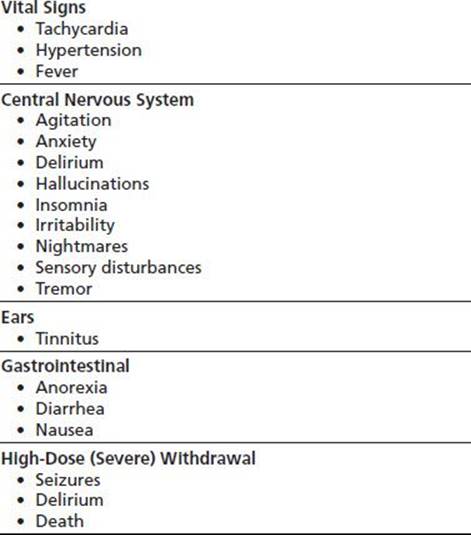
The spectrum of signs and symptoms that are experienced most often during the course of withdrawal are summarized in Table 44-2. Considerable variation exists among patients in terms of the signs and symptoms of the abstinence syndrome. Although Figure 44-1 appears to indicate that withdrawal follows a smooth and predictable course, most patients experience significant moment-to-moment quantitative and qualitative variations in their signs and symptoms. Petursson (6) and Salzman (7) reviewed the frequency of various symptoms of benzodiazepine withdrawal. Anxiety, insomnia, restlessness, agitation, irritability, and muscle tension were very frequent. Less frequent were nausea, diaphoresis, lethargy, aches and pains, coryza, hyperacusis, blurred vision, nightmares, depression, hyperreflexia, and ataxia. Psychosis, seizures, confusion, paranoid delusions, hallucinations, and persistent tinnitus were uncommon. The areas under the curves in Figure 44-1 outline the potential time course and withdrawal severity characteristics. The multitude of signs and symptoms outlined in Table 44-2illustrates that, in the absence of the knowledge that a patient is withdrawing from a sedative–hypnotic, a number of medical or psychiatric differential diagnoses would be entertained to explain the patient’s condition.
TABLE 44-2 CLINICAL MANIFESTATIONS OF SEDATIVE–HYPNOTIC WITHDRAWAL
Benzodiazepines
Benzodiazepine use, dependence, and withdrawal are much more thoroughly researched than other classes of sedative–hypnotic compounds. Soon after chlordiazepoxide (Librium, 1960) and diazepam (Valium, 1961) became available commercially, clinical reports were published documenting a high-dose discontinuation withdrawal syndrome with severe characteristics (seizures, depression, delirium, psychosis) (8,9). Reports of a withdrawal syndrome after discontinuation of long-term use of benzodiazepines at therapeutic doses were published within the following decade (10,11). It now is well established that benzodiazepine dependence, withdrawal, and difficulties in discontinuing chronic benzodiazepine use are influenced by multiple pharmacologic and host factors (as discussed later).
Barbiturates
Reports in the medical literature evidenced an emerging awareness of barbiturate dependence and an abstinence syndrome as early as the 1940s. The first American article (12) directly addressing the barbiturate withdrawal syndrome was followed by a clinical study that chronicled the signs and symptoms of the barbiturate abstinence syndrome (13). Further studies quantified, with high-dose use, the duration of barbiturate ingestion necessary for the appearance of mild, moderate, and severe withdrawal symptoms (14,15). The first evidence that an abstinence syndrome could occur after long-term therapeutic (low-dose) barbiturate use was published nearly two decades later (16,17).
Treatment of barbiturate withdrawal with barbiturate substitution was reported as early as 1953 (15). In 1970 and 1971, Smith and Wesson reported on a protocol that employs phenobarbital substitution, stabilization, and tapering to treat barbiturate dependence. Their technique is discussed later under “Sedative–Hypnotic Tolerance Testing.”
Nonbarbiturate/Nonbenzodiazepine Agents
The medical literature contains case reports documenting the full spectrum of sedative–hypnotic withdrawal signs and symptoms from this group of compounds. Of greatest concern is the multitude of reports documenting severe withdrawal syndromes, marked by delirium, psychosis, hallucinations, hyperthermia, cardiac arrests, and death (18–25).
Benzodiazepine Discontinuation
The signs and symptoms experienced after the discontinuation of benzodiazepine use have been described as falling into four categories: (i) symptom recurrence or relapse, (ii) rebound, (iii) pseudowithdrawal, and (iv) true withdrawal.
Symptom recurrence or relapse is characterized by the recurrence of symptoms (such as insomnia or anxiety) for which the benzodiazepine initially was taken. The symptoms may be similar in character to the condition that existed before drug treatment. Relapse may occur after discontinuation, with or without the prior existence of benzodiazepine dependence. Reemergence of symptoms is quite common, exceeding 60% to 80% for anxiety and insomnia disorders (26,27). Symptom recurrence can present rapidly or slowly over days to months after drug discontinuation.
This pattern can have important implications for routine reassessment of the need for continued benzodiazepine use. The need for the benzodiazepine should be reevaluated, with particular attention given to dose and duration. Because of the concern of toxicity, when the need is diminished or eliminated, so should be the benzodiazepine.
Rebound is marked by the development of symptoms, within hours to days of drug discontinuation, which are qualitatively similar to the disorder for which the benzodiazepine initially was prescribed. However, the symptoms are transiently more intense than they were before drug treatment. Insomnia and anxiety disorders are the best-studied examples (28). Rebound symptoms are of short duration and are self-limited (27), which distinguishes this syndrome from recurrence.
Pseudowithdrawal and overinterpretation of symptoms may occur when expectations of withdrawal lead to the experiencing of abstinence symptoms. This effect has been observed in study patients who discontinued placebo medication or continued benzodiazepine use but believed that the benzodiazepine had been discontinued (29). In addition, expectations of symptoms often are negatively influenced by concerns registered in the media or by friends or physicians.
True withdrawal is marked by the emergence of psychological and somatic signs and symptoms after the discontinuation of benzodiazepines in an individual who is physically dependent on the drug. The withdrawal syndrome can be suppressed by the reinstitution of the discontinued benzodiazepine or another cross-tolerant sedative–hypnotic. Withdrawal from benzodiazepines results from a reversal of the neuroadaptive changes in the central nervous system that were induced by chronic benzodiazepine use. Withdrawal reflects a relative temporal and temporary diminution of central nervous system GABAergic neuronal inhibition coupled with an increased glutamate response to balance the benzodiazepine-induced GABA release.
There is considerable individual variation over time among patients who discontinue benzodiazepines. The benzodiazepine withdrawal syndrome includes any of the spectrum of signs and symptoms listed in Table 44-2. Any combination of signs and symptoms may be experienced with varying severity throughout the initial 1 to 4 weeks of abstinence. None of the signs or symptoms of the abstinence syndrome are pathognomonic of benzodiazepine withdrawal. Many signs and symptoms are identical to those of anxiety or depressive disorder. Common symptoms include tremor, muscle twitching, nausea and vomiting, impaired concentration, restlessness, anxiety, anorexia, blurred vision, irritability, insomnia, sweating, and weakness. Common clinical signs include tachycardia, hypertension, hyperreflexia, mydriasis, and diaphoresis. Neuropsychiatric symptoms— including perceptual distortions and hypersensitivity to light, sound, and touch—are common. Many believe these “sensory– perceptual symptoms” are most indicative of neurophysiologic withdrawal, but they rarely occur in the absence of some of the aforementioned adrenergic or anxiety symptoms. Lack of clinical signs should not be considered tantamount to the absence of a withdrawal syndrome.
The clinical withdrawal picture can consist primarily of subjective symptoms, accompanied by few or no concurrently observable hyperadrenergic signs or vital sign fluctuations as often occurs with acute alcohol withdrawal.
These discontinuation syndromes often occur in combination. For example, considerable overlap exists between the symptoms of recurrence in anxiety and insomnia disorders and the signs and symptoms of rebound and withdrawal. Clinical techniques that treat, minimize, and attenuate benzodiazepine abstinence symptoms also effectively alleviate rebound. As a result, attention to sorting out rebound from withdrawal is unnecessary (if not impossible). However, symptom recurrence or relapse is common. Clinicians must be attuned to the emergence or persistence of clinically important symptoms of relapse during and after the period of acute withdrawal.
Prolonged Withdrawal
Some physicians report (30–32), and clinical experience confirms, that a small proportion of patients, after long-term benzodiazepine use, experience a prolonged syndrome of withdrawal. The signs and symptoms may persist for weeks to months after discontinuation. The syndrome is notable for its irregular and unpredictable day-to-day course and qualitative and quantitative differences in symptoms from both the prebenzodiazepine use state and the acute withdrawal period. Patients with prolonged withdrawal often experience slowly abating—albeit characteristic waxing and waning—symptoms of insomnia, perceptual disturbances, tremor, sensory hypersensitivities, and anxiety.
Role of the GABA–Benzodiazepine Receptor Complex
Benzodiazepine action in the central nervous system is mediated by the gamma-aminobutyric acid–benzodiazepine receptor complex (GABA-BDZ-R-complex) (33,34), primarily the GABAAreceptor (35). Work by numerous investigators has shown that GABA is the primary central nervous system inhibitory neurotransmitter. Activation of the GABA receptor induces the opening of a neuronal, membrane-bound chloride ion channel, located within the GABA-BDZ-R-complex. Neuronal inhibition results from neuronal membrane hyperpolarization secondary to the flow of chloride ions down the electrochemical gradient into the neuron. Benzodiazepines bind allosterically to a “benzodiazepine receptor” the GABAA receptor composed primarily of subunits gamma 2 and alpha 1, 2, 3, and 5 (35) located on the GABA-BDZ-R-complex. GABAA receptors with alpha 4 and 6 subtypes were found to be diazepam insensitive. The GABAA receptor with alpha 1, beta 2, and gamma 2 subunits is the most common type (43%) found in the rat brain (35). Benzodiazepines positively modulate and influence the GABA–chloride channel relationship.
A series of studies by Miller et al. (36–39) illustrated that, in mice, behavioral tolerance and discontinuation syndromes are temporally associated with molecular/receptor level adaptations. The investigators reported that, as tolerance to the ataxia-inducing effects of lorazepam developed behaviorally, benzodiazepine and GABA receptors were down-regulated (through decreased receptor number, decreased GABA receptor function, and diminished protein synthesis for GABA receptors). After lorazepam was administered for 4 weeks, it was abruptly discontinued. Concurrent with signs of withdrawal, GABA receptors were up-regulated, and GABA receptor complex function was enhanced (as evidenced by greater affinity for GABA, increased affinity of the benzodiazepine receptor for benzodiazepines, increased benzodiazepine receptor number).
The rate of onset of behavioral tolerance to alprazolam and clonazepam followed by an abstinence syndrome after abrupt discontinuation was similarly computed and then compared with that of lorazepam in a subsequent report (39). Tolerance and withdrawal developed more rapidly with alprazolam (4 days for tolerance; 2 days for withdrawal) than with lorazepam and clonazepam, which were similar (7 days for tolerance; 4 days for withdrawal) (36,37,39). These studies also demonstrated that tolerance is primarily a pharmacodynamic, neuroadaptive phenomenon (brain and plasma levels remained constant throughout the period of chronic administration).
Dr. Christian Lüscher and colleagues at the University of Geneva, Switzerland, have discovered that benzodiazepines act on the GABAA receptors in the ventral tegmental area to release a surge of dopamine. Dopamine surges have been linked to addiction (40). The initial change with abrupt withdrawal of a benzodiazepine is the diminished activity of the GABAA–benzodiazepine receptor complex. This is paired with an excitatory system heightened by the chronic use of the benzodiazepine.
The amino acid L-glutamate is the major excitatory neurotransmitter in the central nervous system. Glutamate receptors have been classified into two groups: the N-methyl-D-aspartate (NMDA) receptors and non-NMDA receptors AMPA (alpha-amino-3-hydoxy-5-methyl-4-isoxazole propionic acid) and kainate. Neuronal plasticity between excitation and inhibition is a balance of GABAergic inhibition and glutamatergic excitation. Benzodiazepine administration increases the inhibition effect of the GABA system while also beginning a compensatory excitation effect of the glutamate system as a counterbalancing response. The continued or increased use of benzodiazepines results in a new balance of these neuronal systems. When the benzodiazepine is lessened or stopped, the increased activity of the glutamate system is seen. Thus, rebound anxiety, increased muscle tone, sensory disturbances, tremors, and seizures can be related to the increased glutamate activity. Interestingly, NMDA receptors are known to influence excitotoxicity and neuronal damage and are associated with epilepsy and Alzheimer disease (35).
File (41) comments that it is premature to link our current observations of neurochemical changes to behavior etiologically, because multiple potential explanations exist. Events may be independent yet occur simultaneously, reflect neuroadaptive changes resulting from compensatory mechanisms, or be causally linked. Despite numerous unanswered questions, it is apparent that the primary neuroadaptive response occurs at the GABA-BDZ-R-complex. This system then influences changes in other neurotransmitter systems especially the glutamate system depending on the neuroanatomic location of the GABA-BDZ-R-complex. The benzodiazepine discontinuation syndrome subsequently is influenced, if not mediated, by both the GABA and glutamate systems and potentially numerous other neurotransmitter systems.
In addition, there is evidence that benzodiazepines interfere with the hypothalamic–pituitary–adrenocortical axis. Changes have been noted in neuropeptide Y, cholecystokinin, adrenocorticotropic hormone, and corticosterone plasma levels (42–45).
Pharmacologic Characteristics Affecting Withdrawal
Pharmacologic factors are primarily responsible for the relationship between various benzodiazepines and the differing clinical manifestations of benzodiazepine withdrawal syndrome.
Pharmacokinetics
Benzodiazepine pharmacokinetics determine the onset of discontinuation symptoms following chronic use. Cessation of use is followed by declining blood levels of drug at receptor sites, brain, blood, and peripheral tissues, with the rate of decline determined primarily by the elimination half-life. The onset, duration, and severity of the withdrawal syndrome correlate with declining serum levels of drug (8,36–38,46,47).
Onset of withdrawal from short-acting benzodiazepines (such as lorazepam, oxazepam, triazolam, alprazolam, and temazepam) occurs within 24 hours of cessation (48), with peak severity of withdrawal occurring within 1 to 5 days after cessation (48,49). With long-acting benzodiazepines (such as diazepam, chlordiazepoxide, and clonazepam), onset of withdrawal occurs within 5 days of cessation (26,48) and withdrawal severity peaks at 1 to 9 days (49).
Duration of acute withdrawal, from the temporal onset to the resolution of symptoms, can be as long as 7 to 21 days for short-acting and 10 to 28 days for long-acting benzodiazepines. While there is a difference in the type or number of withdrawal symptoms after discontinuation of short- or long-acting benzodiazepines (48,49), withdrawal symptoms from short-acting benzodiazepines are experienced as being more intense than those associated with long-acting drugs and are of more rapid onset after abrupt discontinuation (46,48,49).
Dose and Duration of Use
Higher doses and longer use place patients at greater risk for increased withdrawal severity. Daily benzodiazepine use for 10 days or less can lead to transient insomnia when the medications are stopped. A withdrawal syndrome can follow discontinuation of short-term (<2 to 3 months’) low-dose therapeutic use, but most symptoms, if present at all, are rated as mild (such as insomnia) and are easily managed. Vorma et al. (50) found that subjects with lower benzodiazepine doses and no previous withdrawal attempts were more successful with discontinuation. On discontinuation of long-term (>1 year) therapeutic (low-dose) use, withdrawal is common and is accompanied by moderate to severe symptoms in 20% to 100% of patients (48,49). Discontinuation of high-dose (more than four or five times the high end of the therapeutic range for longer than 6 to 12 weeks) benzodiazepine use leads to moderate withdrawal in all patients and severe withdrawal signs and symptoms in most patients (51).
Beyond 1 year of continuous benzodiazepine therapy, the duration of use becomes a less important factor in the severity of withdrawal (52). Use beyond 1 year may, however, predispose patients to prolonged withdrawal sequelae.
Potency
Tolerance to the sedative and hypnotic effects develops most rapidly to shorter-acting, higher potency benzodiazepines (such as triazolam and alprazolam). Withdrawal from these agents may be more intense and require more aggressive attention and longer periods of medical monitoring than is the case with other benzodiazepines (53,54).
Host Factors Affecting Withdrawal
In addition to the aforementioned pharmacologic influences, host factors are implicated in patients’ susceptibility to dependence and in the difficulty they encounter in discontinuing benzodiazepines after they become dependent. Clinically important patient factors include the following.
Psychiatric Comorbidity
The primary clinical indication for benzodiazepine use involves treatment of the highly prevalent conditions of insomnia, anxiety, thought, and mood disorders. It follows that patients with chronic psychiatric disorders who are maintained on benzodiazepines for more than 3 to 6 months will, in addition to their psychiatric condition (adequately treated or not), also be physically dependent on the benzodiazepine. Numerous benzodiazepine discontinuation studies highlight the high (40% to 100%) prevalence of active concurrent psychiatric disorders seen at intake of study participants (48,49,52,54,55). Most of these studies demonstrate a correlation between the patient’s degree of psychopathology and his or her withdrawal symptom severity and difficulty in discontinuing use.
Rickels et al. (48) reported on 119 patients discontinuing long-term, therapeutic dose use. They noted a 90% prevalence of initial, active psychopathology with diagnoses that included generalized anxiety disorder (44%), panic disorder (27%), depression (14%), and others (7%). Patients with greater psychopathology required more support and assurance. The intensity of the withdrawal syndrome was seen as partially a function of the degree of psychopathology and other premorbid personality variables.
Rickels et al. (52) also studied abrupt and tapered discontinuation of long-term, therapeutic dose benzodiazepine use. They found that 79% to 84% of patients had clinically significant, active symptoms of anxiety and or depression at intake (primary psychiatric diagnoses included generalized anxiety disorder, panic disorder, and major depression). They reported significantly greater withdrawal severity in patients diagnosed with more initial psychopathology, dependent personality disorder, or neuroticism. Patients with panic disorder were more vulnerable to withdrawal than patients with generalized anxiety disorder (56).
Increased withdrawal symptoms also have been associated with high initial anxiety or depression and decreased educational level (57). Clinicians conducting benzodiazepine discontinuation thus must obtain psychiatric histories while remaining vigilantly watchful for, and prepared to manage, the emergence or reemergence of psychiatric disorders. Clinicians also must be aware that patients with psychiatric symptoms or disorders often experience more severe withdrawal symptoms and have greater difficulty discontinuing use. The reduction of fear and anxiety symptoms during withdrawal was the best predictor of a patient’s success for achieving and maintaining abstinence (58).
Concurrent Use of Other Substances
Concurrent regular use of other dependence-producing substances increases the complexity of the benzodiazepine abstinence syndrome and the clinical situation as a whole. Additional sedative–hypnotic substance use contributes to a withdrawal syndrome of increased severity and less predictable course. For example, opioid substance withdrawal contributes an additional cluster of signs and symptoms. Anxiety, agitation, irritation, hyperarousal, and the adrenergic components of opioid and benzodiazepine withdrawal are additive, often overlap, and lead to an exacerbation of symptoms. Psychomotor stimulant withdrawal symptoms contribute factors from the opposite end of the withdrawal spectrum (e.g., apathy, hypersomnia, and lethargy). When stimulant withdrawal is combined with sedative–hypnotic withdrawal, the clinical picture is variable, with hyper-somnolence and lethargy mixed with symptoms of severe agitation, depression, irritability, and somatosensory hypersensitivity. Initial hypersomnolence and lethargy can mask symptoms of benzodiazepine withdrawal, particularly involving benzodiazepines with a longer half-life.
Several factors underscore the need for clinicians to be aware of the high co-occurrence of alcohol use disorders, anxiety disorders, or benzodiazepine dependence and their potential influence on the benzodiazepine withdrawal syndrome:
■ A high percentage of alcohol-dependent patients use benzodiazepines regularly, ranging from 29% (59) to 33% (60) to 76% (61).
■ The rate of comorbid alcohol use disorders and anxiety disorders is reported to be 18% to 19% (62).
■ Alcohol-dependent patients have a high propensity for dependence on benzodiazepines (61,63).
Exceeding one standard drink per day is a more significant predictor of benzodiazepine withdrawal severity than dose or half-life of the drug (52). Patients with high-dose benzodiazepine use who present for inpatient addiction treatment exhibit a high rate (70% to 96%) of concurrent dependence on other substances (54,60). Almost all of these patients reported histories of dependence on other substances. DuPont (64) reported that greater than 20% of patients newly admitted to inpatient addiction treatment reported using benzodiazepines at least weekly, 73% of heroin users reported greater than weekly use, and greater than 15% of heroin users used benzodiazepines daily (65).
It is uncommon for patient with drug addictions to use a benzodiazepine as an initial or primary drug of use (66). Instead, benzodiazepines are used in combination with other psychoactive drugs. In addition, a high rate of benzodiazepine use in methadone maintenance clinics is supported by numerous clinical surveys.
Consequently, clinicians must be aware of, and suspect, benzodiazepine use in patients with any substance use disorders. Conversely, in high-dose benzodiazepine users, other substance use must be assumed until ruled out.
Family History of Alcohol Dependence
Mood changes associated with lability or benzodiazepine abuse (and increased propensity to develop dependence) have been reported after controlled clinical administration of diazepam and alprazolam in adult sons of patients with severe alcohol dependence (61,67,68). Similar findings with alprazolam were reported recently in adult daughters of patients with alcohol dependence (69). This predisposition to abuse benzodiazepines is important, because at least one study implicates a linkage of paternal history of alcoholism with increased withdrawal severity in patients discontinuing alprazolam use (53).
Concurrent Medical Conditions
Benzodiazepine withdrawal should be avoided during acute medical or surgical conditions because the physiologic stress of withdrawal can adversely and unnecessarily affect the course of the medical condition. On the other hand, continued benzodiazepine use rarely has a negative effect on acute medical conditions. In an acute medical situation, the goal of therapy for a patient dependent on benzodiazepines is to provide adequate stabilization of the benzodiazepine dose so as to prevent withdrawal.
Clinicians need to be secure in their understanding of the indications for discontinuing long-term benzodiazepine use in patients with chronic medical, including mental health, conditions. This understanding is particularly critical when evaluating the discontinuation of sedative–hypnotics in patients with conditions that are significantly influenced by adrenergic and psychological stress factors (such as cardiac arrhythmia, asthma, systemic lupus erythematosus, and inflammatory bowel disease). The risks of exacerbating the medical condition through acute withdrawal or a protracted withdrawal course may outweigh the longer-term benefits of benzodiazepine discontinuation.
Patients with chronic medical conditions may experience benzodiazepine withdrawal more severely than others. Clinicians and patients must be aware that, during withdrawal, difficulties in managing the medical condition (diabetes, cardiovascular disease, thyroid disease, and arthritis) may emerge. The rate of discontinuation is an important factor. Slower rates can improve the success of detoxification. Achieving lower doses of benzodiazepine use is an acceptable intermediate (and, in some patients, final) goal. It is important to stabilize both the patient’s physical and psychological health at reduced benzodiazepine levels before proceeding with further reductions.
Age
The use of anxiolytics peaks between the ages of 50 and 65, whereas the use of hypnotics is most frequent in the oldest age range (5). Hepatic microsomal enzyme oxidase system efficiency decreases with age. Elderly patients may have elimination half-lives that are two to five times slower than the rate in younger adults for benzodiazepines eliminated through the microsomal enzyme oxidase system (all benzodiazepines except for lorazepam, temazepam, and oxazepam). The withdrawal syndrome for elderly persons who are discontinuing oxidatively metabolized benzodiazepines may be quite prolonged or approach the severity of high-dose withdrawal secondary to the pharmacokinetic factors of aging. The withdrawal course can become especially pernicious after discontinuation of long-acting benzodiazepines that are metabolized to sedative–hypnotic compounds with longer elimination half-lives (such as diazepam, chlordiazepoxide, and flurazepam). In general, younger age is associated with favorable withdrawal outcomes (70).
Gender
Worldwide, women are prescribed benzodiazepines twice as often as men; hence, twice as many women as men are likely to become dependent (71). Possibly compounding this trend are reports that female gender is a significant predictor of increased withdrawal severity in patients undergoing tapered cessation of long-term, therapeutic benzodiazepine use (52). However, gender has not been implicated as an influential factor in abrupt cessation of long-term, therapeutic dose use (49).
PATIENT EVALUATION AND MANAGEMENT
Evaluation and Assessment
Evaluating patients for benzodiazepine cessation and detoxification requires a combination of clinical, diagnostic, consultation and liaison, counseling, and pharmacologic management skills. To be effective, the clinician must be flexible and able to tolerate ambiguities and variations in the course of withdrawal, while supporting the patient (who generally experiences significant apprehension and anxiety). Clinical evaluation and assessment of the patient typically include the following steps:
Step 1
Determine the reasons the patient or referral source is seeking evaluation of sedative–hypnotic use and/or discontinuation. Determine the medical indications for the sedative–hypnotic. If needed, a discussion with the referring physician should occur to comanage his or her sedative– hypnotic treatment. Discussion with any other referring person or close family members often is helpful. Seek evidence to answer the question as to whether the patient’s use is improving his or her quality of life or is causing a significant disability or exacerbating the original condition. Discuss the patient’s expectations.
Step 2
Take a sedative–hypnotic use history, including, at a minimum, the dose, duration of use, substances used, and the patient’s clinical response to sedative–hypnotic use at present and over time. The history should include attempts at abstinence, including previous detoxifications, symptoms experienced with changing the dose, and reasons for increasing or decreasing the dose. The history should include behavioral responses to sedative–hypnotic use and adverse or toxic side effects. For long-term users, a determination of the current pharmacologic efficacy and clinical efficacy should be sought.
Step 3
Elicit a detailed accounting of other alcohol or psychoactive drug use, including medical and nonmedical use, prescribed and over-the-counter drug use, current and past use, as well as the sequelae of such use. In addition to prior withdrawal experiences, the history also should include prior periods of abstinence and abstinence attempts.
Step 4
Take a psychiatric history, including current and past psychiatric diagnoses, hospitalizations, suicide attempts, treatment, psychotherapy, and therapists (names and locations). Ask if alcohol or other drugs were used during or near the time any psychiatric diagnoses were made. Ask if the referring clinician was aware of any patient alcohol or drug use. The Minnesota Multiphasic Personality Inventory may be helpful for the dependence subscale scores. Early taper dropouts had higher Minnesota Multiphasic Personality Inventory dependence subscale scores than did late taper dropouts and completers of a taper (72). Personality assessments may help identify patients who may be more suitable to attempt withdrawal. High levels of dependency, passivity, neuroticism, and harm avoidance on the Minnesota Multiphasic Personality Inventory contributed to increased withdrawal severity (73).
Step 5
Take a family history of substance use, psychiatric, and medical disorders.
Step 6
Take a medical history of the patient, including illnesses, trauma, surgery, medications, allergies, and history of loss of consciousness, seizures, or seizure disorder.
Step 7
Take a psychosocial history, including current social status and support system.
Step 8
Perform a physical and mental status examination.
Step 9
Conduct a laboratory urine drug screen for substances of abuse. An alcohol breath test (if available) often is helpful in providing immediate evidence of alcohol use that was not disclosed in the history. Remember that these are therapeutic tools. Trust the patient, but check the urine. Depending on the patient’s profile, a complete blood count, blood chemistry panel, liver enzymes, viral hepatitis panel, HIV test, tuberculosis test, pregnancy test, or electrocardiogram test may be indicated.
Step 10
Complete an individualized assessment, taking into account all aspects of the patient’s presentation and history and, in particular, focusing on factors that would significantly influence the presence, severity, and time course of withdrawal.
Step 11
Arrive at a differential diagnosis, including a comprehensive list of diagnoses that have been considered. This greatly aids clinical management decisions as the patient’s symptoms diminish, emerge, or change in character during and after drug cessation.
Step 12
Determine the appropriate setting for detoxification.
Step 13
Determine the most efficacious detoxification method. In addition to proven clinical and pharmacologic efficacy, the method selected should be one that the physician and clinical staff in the detoxification setting are comfortable with and experienced in administering.
Step 14
Obtain the patient’s informed consent.
Step 15
Initiate detoxification. Ongoing physician involvement is central to appropriate management of detoxification. Subsequent to the patient assessment, development of the treatment plan, and obtaining patient consent, the individualized discontinuation program should be initiated. The physician closely monitors and flexibly manages, adjusting as necessary, the dosing or detoxification strategy to provide the safest, most comfortable, and efficacious course of detoxification. To achieve optimal results, the physician and patient should establish a close working relationship. A withdrawal agreement or contract is a useful tool.
Management
Strategies for discontinuation fall into two categories: minimal intervention and systematic discontinuation. Minimal intervention delivers simple advice to discontinue the benzodiazepine. This can be done as part of an office visit, in a letter to the patient, or in a group setting. Several studies have investigated this tool and have found it effective in fostering benzodiazepine discontinuation. Oude Voshaar et al. (74) surveyed 29 articles and reported an improved odds ratio for discontinuation of 2.8 to 1 by using a simple letter or group information session. After receiving a letter with advice to quit gradually, 49% (53/109) of patients using benzodiazepines in 30 general practice clinics maintained abstinence for more than 2 years (819 days ± 100 days) (75). Cormack et al. (76) showed a two-third reduction in the benzodiazepine dose used by using a letter advising the gradual reduction of the benzodiazepine. Minimal interventions are more effective in low-dose users of sedative–hypnotic medications.
Systematic Discontinuation
For patients who are dependent on sedative–hypnotics, there are two primary options for the detoxification process: tapering or substitution and tapering. Gradual dose reduction (tapering) is the most widely used and most logical method of benzodiazepine discontinuation. The taper method is indicated for use in an outpatient ambulatory setting, patients with therapeutic dose benzodiazepine dependence, patients who are dependent only on benzodiazepines, and patients who can reliably present for regular clinical follow-up during and after detoxification (47,59,66,72,77–80).
Tapering
With the taper method, the patient is slowly and gradually weaned from the benzodiazepine on which he or she is dependent, using a fixed-dose taper schedule. The dose is decreased on a weekly to every-other-week basis. The rate of discontinuation for long-term users (>1 year) should not exceed 5 mg diazepam equivalents per week (12.5 mg chlordiazepoxide or 15 mg phenobarbital equivalents) or 10% of the current (starting) dose per week, whichever is smaller. The first 50% of the taper is usually smoother, quicker, and less symptomatic than the last 50% (49,72). For the final 25% to 35% of the taper, the rate or dose reduction schedule should be slowed to half the previous dose reduction per week and the reduction accomplished at twice the original tapering interval. If symptoms of withdrawal occur, the dose could be increased slightly until the symptoms resolve and the subsequent taper schedule commenced at a slower rate.
Some patients may want to accelerate the reduction. This acceleration is better tolerated and can be encouraged early in the reduction (72). In general, patients tolerate more dose reduction and with shorter intervals early in the tapering process and then require decreased dose reduction over longer intervals as the taper progresses and the dose is reduced. A common error is trying to push the taper process too quickly (80,81).
Brief office visits should be conducted at least weekly to facilitate regular assessment of the patient for withdrawal symptoms, general health, taper compliance, and use of supportive therapy. Standardized advice from the physician doing the taper is an essential component (82). Taper medications should be closely controlled by prescribing an amount sufficient only for the time until the next visit. The prescriber should give a clear message to the patient that lost, misplaced, or stolen medication will not be replaced. A withdrawal agreement or contract between the clinician and the patient is advisable. A copy of the written schedule of daily doses, covering multiple weeks to months, may help the patient adhere to the reduction plan. A reliable support person who is in daily contact with the patient is very helpful. The patient will need to give written consent for contacting the support person.
Patients who are unable to complete a simple taper program should be reevaluated and, if indicated, an alternative detoxification method chosen. Some patients may require a substitution and taper program or a period of hospitalization to receive more intensive monitoring and support to complete drug discontinuation.
Substitution and Taper
Substitution and taper methods employ cross-tolerant long-acting benzodiazepines (such as chlordiazepoxide or clonazepam) or phenobarbital to substitute, at equipotent doses, for the sedative–hypnotics on which the patient is dependent (Table 44-3). Chlordiazepoxide, clonazepam, and phenobarbital are the most widely used substitution agents for a number of important reasons:
TABLE 44-3 SEDATIVE–HYPNOTIC WITHDRAWAL SUBSTITUTION DOSE CONVERSIONS

■ At steady state, there is negligible interdose serum level variation with these drugs; with tapering, there is a more gradual reduction in serum levels, reducing the risk of that withdrawal symptoms will emerge; and
■ Each of the drugs has a low abuse potential (phenobarbital and chlordiazepoxide are lowest followed by clonazepam).
Phenobarbital offers the added advantage of rarely inducing behavioral disinhibition and possesses broad clinical efficacy in the management of withdrawal from all classes of sedative–hypnotic agents. Clinical experience shows that phenobarbital is most useful and effective in patients with dependence on more than one drug, in patients with high-dose dependence, and in patients with unknown dose or erratic “polypharmacy” drug use.
If impaired hepatic function or elevated liver tests are present, then oxazepam may be a good substitute (66). Lorazepam could be considered, but its abuse liability is higher than that of oxazepam (65).
Uncomplicated Substitution and Taper
This method is used in outpatient settings for patients who are discontinuing use of short half-life benzodiazepines or for those who are unable to tolerate gradual tapering:
1. Calculate the equivalent dose of chlordiazepoxide, clonazepam, or phenobarbital using the Substitution Dose Conversion Table (Table 44-3). Individual variation in clinical responses to “equivalent” doses can vary, so close clinical monitoring of patient response to substitution is necessary. Adjustments to the initially calculated dose schedule are to be expected.
2. Provide the substituted drug in a divided dose. For chlordiazepoxide, oxazepam, or phenobarbital, give three to four doses per day. For clonazepam, two to three doses per day usually are sufficient.
3. While the substituted agent is achieving steady-state levels on a fixed-dose schedule, provide the patient with as-needed (PRN) doses of the benzodiazepine he or she has been using. This will help to suppress breakthrough symptoms of withdrawal. Do this for the first week only, and then discontinue PRN drug dosing. Be cautious and conservative on the amount of benzodiazepine given.
4. Stabilize the patient on an adequate substitution dose (same dose on consecutive days without the need for regular PRN doses). This usually is accomplished within 1 week.
5. Gradually reduce the dose. The dose is decreased on a weekly to every-other-week basis, as in the simple taper model. The rate of discontinuation is 5 mg diazepam equivalents per week (or 12.5 mg chlordiazepoxide equivalents or 15 mg phenobarbital equivalents), as shown in Table 44-3, or 10% of the current (starting) dose per week. The first half of the taper usually is smoother, quicker, and less symptomatic than the latter half.
6. For the final 25% to 35% of the taper, the rate, or dose reduction, should be slowed. If symptoms of withdrawal occur, hold the taper for 3 to 4 days to stabilize the patient, and then resume the process. Some patients may wish to accelerate the reduction. This is better tolerated early in the taper. Care should be taken not to push the taper too quickly.
7. Support the patient with short but frequent visits, as described above. Taper medication should be closely controlled by prescribing only enough medication for the time period until the next visit.
Sedative–Hypnotic Tolerance Testing
This is an older method developed by Drs. Smith and Wesson (30–32). It is included here for reference as it is not commonly used. This method is employed when the degree of dependence is difficult to determine. Such a situation is common in high-dose, erratic-dose, illicit source, poly-substance, or alcohol plus sedative–hypnotic use. Testing is best done in a setting that offers 24-hour medical monitoring. Pentobarbital is used because of its rapid onset of action, short half-life, ease with which signs of toxicity can be monitored, and ease with which it can be replaced by phenobarbital after the patient has been stabilized:
1. A 200-mg pentobarbital dose is given orally every 2 hours for up to 24 to 48 hours.
2. Doses are held for signs of toxicity (intoxication), which develop in the following progression at increasing serum levels: fine lateral sustained nystagmus, coarse nystagmus, slurred speech, ataxia, and somnolence. Doses are held with the development of coarse nystagmus and slurred speech and subsequently resumed with the resolution of the signs of toxicity.
3. After 24 to 48 hours, the total amount of administered pentobarbital is divided by the number of days it was administered. This amount is the 24-hour stabilizing dose.
4. The stabilizing dose is administered in divided doses over the next 24 hours to ensure adequate substitution. The patient’s response determines the indications for upward or downward adjustments in the dose.
5. After the patient is stable on a consistent dose for 24 hours, phenobarbital is substituted for pentobarbital with 30 mg of phenobarbital substituting for 100 mg of pentobarbital (Table 44-3).
6. A gradual dose reduction of phenobarbital is conducted, as described under the section Substitution and Taper above.
Withdrawal Emergence PRN Phenobarbital Substitution
This procedure is best used in a 24-hour medically monitored setting. It provides the smoothest and most effective treatment for sedative–hypnotic withdrawal for patients who are unable to complete outpatient tapering regimens or who are high-dose users, polysubstance-dependent, and experiencing considerable comorbid psychopathology. Intensity of withdrawal can be measured using the Clinical Institute Withdrawal Assessment—Benzodiazepine (CIWA-B) scale (see ref. (83)):
1. Signs and symptoms of withdrawal are treated PRN with 30 to 60 mg of phenobarbital every 2 to 4 hours. Most patients tolerate every 4-hour dosing for the first 24 hours. The period of PRN dosing is determined by the elimination of most withdrawal signs and symptoms and is influenced by the duration of action of the substances the patient is discontinuing.
2. The patient is monitored hourly to ensure adequate dosing and to prevent oversedation. Ideally, a balance is achieved between the signs and symptoms of withdrawal and those of phenobarbital intoxication.
3. When the patient has achieved markedly diminished signs and symptoms of withdrawal, reflected in low CIWA-B scores, a gradual taper can be initiated.
Patients often can be transferred from an inpatient setting to an intensive (medically monitored) outpatient program after they are stabilized and well established on the tapering portion of the protocol.
Combination Therapy Using Anticonvulsants and Phenobarbital
Acute benzodiazepine withdrawal is increasingly being managed with a combination of anticonvulsants and phenobarbital in an inpatient setting:
1. Phenobarbital is begun with a loading dose of 60 mg orally every 4 hours for 4 or 5 doses. This is followed by a maintenance dose of 60 mg four times per day for 2 days and then 30 mg four times per day for 1 or 2 days. For elderly (over 60 years of age) or in compromised health, start with a loading dose of 30 mg every 4 hours for 4 to 5 doses, followed by 30 mg four times per day for 3 to 4 days.
2. An anticonvulsant is started at the same time as the phenobarbital. Commonly used anticonvulsants are carbamazepine, sodium valproate/valproic acid, and gabapentin. Carbamazepine is started at 200 mg three times per day, sodium valproate/valproic acid is started at 250 mg three times per day, and gabapentin is started at 300 mg three times per day. All have similar efficacy. Gabapentin seems to have the lowest side effect profile. Anticonvulsants can be continued for 2 to 4 weeks after acute detoxification, and longer use of these agents could be considered on a case-by-case basis. Physical observation (sedation, rash) and laboratory monitoring (complete blood count [CBC], liver function tests [LFTs]) are indicated with use of these medications past several weeks.
3. Breakthrough withdrawal occurring in the first few days to 1 week can be effectively treated with a short course (2 to 3 days) of a long half-life benzodiazepine such as chlordiazepoxide (25 mg three times per day for 1 day, followed by 25 mg two times per day for 1 day, and then 25 mg one time on the 3rd day). Breakthrough withdrawal occurring after the first week and usually when phenobarbital has stopped can be treated with a short course of low-dose phenobarbital (30 to 60 mg/d divided into 2 to 3 doses), which is then tapered over 5 to 7 days.
Appropriate Clinical Setting
Patients who have polysubstance dependence ( including sedatives and hypnotics), mixed alcohol with other sedative–hypnotic use, high-dose hypnotic sedative use, erratic behavior, incompatible use histories, involvement with illicit sources, and extensive mental health issues are best served in an inpatient facility that offers 24-hour medical monitoring.
Adjunctive Withdrawal Management Measures
Anticonvulsants
Since the 1980s, anticonvulsants have been studied and used to treat hypnotic sedative withdrawal, especially benzodiazepine withdrawal. The use of anticonvulsants grew from the success of treating certain psychiatric disorders and the improved understanding of kindling mechanisms for withdrawal. Some anticonvulsants were also beneficial in treating alcohol withdrawal and cocaine intoxication. There appears to be no addiction potential with anticonvulsants, and this is a great advantage (84).
Carbamazepine
Carbamazepine’s actions have been associated with the neurotransmitters serotonin, GABA, excitatory amino acids, and glutamate (84–87). Adjunctive carbamazepine therapy is not widely used, although clinical protocols and patient selection for this method have been studied. Initial reports on small clinical trials using carbamazepine showed encouraging but mixed effectiveness and utility (56,88–92). Pages and Ries (93) reviewed further use of carbamazepine and found it to be an effective adjunct. Schweizer et al. (91) studied 40 patients with a history of difficulty discontinuing long-term therapeutic benzodiazepines. Significantly, more patients treated with carbamazepine were benzodiazepine free at 5 weeks. Patients receiving carbamazepine (but not the clinicians evaluating them) reported a larger reduction in withdrawal severity compared with patients taking placebo.
Ries et al. (89) and Pages and Ries (93) reported protocols for the use of carbamazepine: 600 mg/d (usually 200 mg three times per day) is used alone or in combination with a 3-day benzodiazepine taper. Chlordiazepoxide is useful because of its longer half-life and low abuse potential. Phenobarbital can be added PRN to this protocol for breakthrough withdrawal symptoms.
Carbamazepine is continued for a minimum of 2 to 3 weeks after the 3-day benzodiazepine taper is completed and can be tapered to monitor for return of withdrawal symptoms. Elderly patients who are discontinuing benzodiazepines have been treated successfully with carbamazepine at doses of 400 to 500 mg/d.
Adverse consequences of carbamazepine use can include gastrointestinal upset, neutropenia, thrombocytopenia, and hyponatremia, necessitating initial and ongoing laboratory evaluation and monitoring.
Sodium Valproate
Reports indicate that sodium valproate is effective in attenuating the benzodiazepine withdrawal syndrome. Valproate possesses GABAergic actions and anticonvulsant effects (94,95). Valproate also may suppress NMDA and reduce L-glutamate responses (87,94,96). Rickels et al. (97) found that although valproate did not reduce acute withdrawal severity, valproate-treated patients were 2.5 times more likely to be benzodiazepine free at 5 weeks after taper, compared with a placebo group.
Valproate doses of 250 mg three times per day (250 mg two times per day if older than age 60) can be used in combination with a 3-day benzodiazepine taper. Chlordiazepoxide is a useful choice because of its long half-life and low abuse potential. Calculate the equivalent chlordiazepoxide dose for the amount of current benzodiazepine being discontinued. Give one-half to two-thirds of this dose spaced equally over the 1st day (24 hours), one-third spaced equally over the 2nd day (second 24 hours), and 10% to 20% spaced equally over the 3rd day (third 24 hours). Phenobarbital can be used for breakthrough withdrawal symptoms. Valproate is continued for a minimum of 2 to 3 weeks after the 3-day benzodiazepine taper is completed. Longer treatment may improve the proportion of patients who remain benzodiazepine free. Valproate can be tapered to monitor for return of withdrawal symptoms.
Valproate has been used to treat anxiety. It has fewer side effects than carbamazepine. It can be used both inpatient and outpatient. For these reasons, further studies may strengthen the role of valproate in the treatment of benzodiazepine withdrawal. Side effects (including elevated liver function tests, thrombocytopenia, bone marrow suppression, and pancreatitis), drug reactions (including rash and erythema multiforme), gastric upset, and behavioral changes require close monitoring.
Gabapentin, topiramate, and lamotrigine have been tried in several small studies. Gabapentin seems to be interchangeable with carbamazepine and with sodium valproate/ valproic acid. Lamotrigine is limited by its need of slow buildup in dose. Most of the studies using these anticonvulsants involved alcohol-dependent patients. More studies are needed (84,98–100).
Flumazenil is useful for complications of acute intoxication with benzodiazepines as discussed earlier in this chapter. Caution must be used as it is capable of causing marked withdrawal symptoms and seizures. Flumazenil is not useful as an adjunct to tapering. Because of its weak agonist properties, it may be useful to reduce cravings after the tapering is complete (101). Flumazenil’s antagonist properties may help prevent relapse, but no studies support this indication.
Propranolol
Tyrer et al. (46) clearly demonstrated that propranolol alone does not affect the rate of successful benzodiazepine discontinuation or the incidence of withdrawal symptoms for discontinuation of chronic benzodiazepine use. However, propranolol treatment did diminish the severity of adrenergic signs and symptoms of withdrawal. Propranolol is not cross-tolerant with sedative–hypnotic drugs and should not be used as the sole therapeutic agent in managing sedative–hypnotic withdrawal. Propranolol can be used, in doses of 60 to 120 mg/d, divided three or four times per day, as an adjunct to one of the aforementioned withdrawal methods. However, clinicians need to be mindful that propranolol treatment will diminish some of the very symptoms and signs that are monitored to determine substitution doses.
Clonidine
Clonidine has been shown to be ineffective in treating ben-zodiazepine withdrawal. Doses sufficient to decrease serum levels of norepinephrine metabolites had minimal attenuating effect on the benzodiazepine withdrawal syndrome. One significant result of this study was the demonstration that increased norepinephrine activity plays a small role in the overall benzodiazepine withdrawal syndrome.
Buspirone
Buspirone is a nonbenzodiazepine anxiolytic drug that is not cross-tolerant with benzodiazepines or other sedative–hypnotic drugs. Schweizer and Rickels (102) and Ashton et al. (103) demonstrated that buspirone substitution in patients undergoing abrupt or gradual benzodiazepine discontinuation failed to protect against the symptoms of withdrawal.
Trazodone
Trazodone is useful in the management of benzodiazepine withdrawal. Trazodone decreased anxiety in benzodiazepine-tapered patients (104). Trazodone improved patients’ ability to remain benzodiazepine free after a 4-week taper of the benzodiazepine. In one study, two-thirds of the patients treated with trazodone, compared with 31% of patients treated with placebo, were benzodiazepine free at 5 weeks after taper (97). Trazodone can be used to improve sleep during benzodiazepine tapering and when benzodiazepine free. Side effects may include dry mouth, morning hangover, drowsiness, dizziness, and priapism.
Mirtazapine
Mirtazapine has been used in a similar way as trazodone and found to be useful (105).
Cognitive–Behavioral Therapy
Two studies (106,107) demonstrate that, in patients with panic disorder, adding cognitive–behavioral therapy to alprazolam discontinuation improved the rate of successful alprazolam discontinuation. Spiegel et al. (106) reported that patients in the combined taper and cognitive–behavioral therapy groups had greater rates of abstinence from alprazolam at 6 months than did those who underwent taper alone. A cognitive group approach improved attrition rates and long-term outcomes for benzodiazepine withdrawal (108). Oude Voshaar et al. (109) reported that adding cognitive–behavioral group therapy did not improve benzodiazepine discontinuation success.
Patients must maintain abstinence from benzodiazepines in spite of recurrences of the symptoms of the disorder that led to benzodiazepine use. Benzodiazepine tapering must be completed before psychological treatment concludes. Cognitive–behavioral treatment can support the withdrawal taper and help with exacerbations of the initial disorder (110).
Prolonged Benzodiazepine Withdrawal
Some physicians report (30–32), and clinical experience confirms, that a small proportion of patients, after long-term benzodiazepine use, experience a prolonged syndrome in which withdrawal signs and symptoms persist for weeks to months after discontinuation. This prolonged withdrawal syndrome is noted for its irregular and unpredictable day-to-day course and qualitative and quantitative differences in symptoms from both the prebenzodiazepine use state and the acute withdrawal period. Patients with prolonged withdrawal often experience slowly abating, albeit characteristic, waxing and waning symptoms of insomnia, perceptual disturbances, tremor, sensory hypersensitivities, and anxiety.
Smith and Wesson (30) propose that protracted symptoms reflect long-term receptor site adaptations. Higgitt and Fonagy (111) propose that a comprehensive etiologic model of the prolonged syndrome must include a psychological component that can be explained through cognitive and behavioral models. They observe that many patients with persistent withdrawal symptoms resemble patients with somatization disorders. The patients often experience acute withdrawal more severely and may be “sensitized to anxiety.” In addition to a potential lack of effective coping mechanisms away from benzodiazepines, such patients often possess a perceptual or cognitive style that leads to apprehensiveness, body sensation amplification and mislabeling, and misinterpretation.
Management
Before entertaining the existence of a prolonged withdrawal syndrome, physicians must rule out psychiatric conditions. A distinguishing characteristic of protracted withdrawal from anxiety disorders is the gradual diminution and eventual resolution of symptoms with benzodiazepine withdrawal.
Propranolol in doses of 10 to 20 mg four times per day often is helpful in attenuating anxiety or tremors. Extended use of anticonvulsants with eventual slow tapering should be considered. Lower doses of sedating antidepressant medications—such as trazodone, amitriptyline, imipramine, or doxepin—are helpful in treating insomnia. Frequent clinical follow-up for education, supportive psychotherapy, and regular reassurance are strongly advised. Frequent reassessment of the working diagnosis is recommended.
COMMON TREATMENT ISSUES
Formal treatment is indicated for nearly all patients with substance use and addictive disorders. Among sedative– hypnotic users, treatment most often is indicated for poly-substance users, high-dose users, or patients in whom addiction is diagnosed. The support, education, and recovery training available in most treatment programs are valuable to many patients who are dependent on sedative–hypnotics. On the other hand, patients with long-term, therapeutic use problems should not be coerced to participate in programs designed to treat addictive disorders, as they often feel out of place and unable to relate to their peers.
Participation in specific components of treatment, tailored to each patient’s individual needs, can be helpful and nonthreatening. Patients who choose to participate in treatment often discover an immense source of support and encouragement, in addition to learning and practicing coping skills that facilitate drug discontinuation and abstinence.
Prevention
The best prevention for licit (prescribed) benzodiazepine dependence is careful prescribing (79,80). In England, the Committee on the Review of Medicines reported in 1980 that the hypnotic effect of benzodiazepines diminishes after 3 to 14 days and the anxiolytic effect diminishes after 4 months (11). A good understanding of the mental health disorders with anxiety symptoms and their psychological and pharmacologic therapies is important. Knowledge of a patient’s and his or her family’s substance use disorder history is also important. Benzodiazepines are rarely the first-line treatment for any of the anxiety disorders. Cognitive–behavioral therapy, group therapy, relaxation therapy, stress management, structured problem solving, selective serotonin reuptake inhibitors, tricyclic antidepressants, and buspirone are all potential options that should be employed as appropriate based on the level of severity. If used, benzodiazepines should be closely monitored for effectiveness and duration. A plan to reassess or taper the benzodiazepine when it is first given is wise. Reevaluate the need for the benzodiazepine when the initial indication has changed or the patient shows improvement (80,112). A benzodiazepine taper should be strongly considered in the long-term management of chronic anxiety with benzodiazepines even if it is only useful to determine whether continued treatment is required or not (72).
REFERENCES
1.Osborn H, Goldfrank LR. Sedative-hypnotic agents. In: LR Goldfrank, NE Flemenbaum, Lewin NA, et al., eds. Toxicologic emergencies. Norfolk, CT: Appleton & Lange, 1994:787–804.
2.Litovitz T. Fatal benzodiazepine toxicity. Am J Emerg Med 1987;5:472–473.
3.Howland MA, Flumazenil. In: LR Goldfrank, NE Flemenbaum, Lewin NA, et al., eds. Toxicologic emergencies. Norfolk, CT: Appleton & Lange, 1994:805–810.
4.Spivey WH. Flumazenil and seizures: analysis of 43 cases. Clin Ther 1992;14:292–305.
5.Woods J, Katz J, Winger G. Benzodiazepines: use, abuse and consequences. Pharmacol Rev 1992;44(2):151.
6.Petursson H. The benzodiazepine withdrawal syndrome. Addiction 1994;89:1455–1459.
7.Salzman C. The benzodiazepine controversy: therapeutic effects versus dependence, withdrawal and toxicity. Psychopharmacology (Berl) 1997;4:279–282.
8.Hollister LE, Motzenbecker FP, Degan RO. Withdrawal reactions for chlordiazepoxide (Librium). Psychopharmacologia 1961;2:63–68.
9.Essig CF. Newer sedative drugs that can cause states of intoxication and dependence of barbiturate type. JAMA 1966;196(8):126–129.
10.Covi L, Park LC, Lipman RS. Factors affecting withdrawal response to certain minor tranquilizers. In: Cole JO, Wittenborn JR, eds. Drug abuse: social and pharmacological aspects. Springfield, IL: Charles C Thomas, 1973:93–108.
11.Lader M. History of benzodiazepine dependence. J Subst Abuse Treat 1991;8:53–59.
12.Isbell H. Addiction to barbiturates and the barbiturate abstinence syndrome. Ann Intern Med 1950;33:108–121.
13.Isbell H, Altschul S, Kornetsky CH, et al. Chronic barbiturate intoxication: an experimental study. Arch Neurol Psychiatry 1950;64:1–28.
14.Fraser HF, Wikler A, Essig CF, et al. Degree of physical dependence induced by secobarbital or phenobarbital. JAMA 1958;166:126–129.
15.Isbell H, White WM. Clinical characteristics of addictions. Am J Med 1953;14:558–565.
16.Covi L, Lipman RS, Pattison JH, et al. Length of treatment with anxiolytic sedatives and response to their sudden withdrawal. Acta Psychiatr Scand 1973;49:51–64.
17.Epstein RS. Withdrawal symptoms from chronic use of low-dose barbiturates. Am J Psychiatry 1980;137(1):107–108.
18.Essig CF. Addiction to nonbarbiturate sedative and tranquilizing drugs. Clin Pharmacol Ther 1964;5(3):334–343.
19.Sadwin A, Glen RS. Addiction to glutethimide (Doriden). Am J Psychiatry 1958;115:469–470.
20.Lloyd EA, Clark LD. Convulsions and delirium incident to glutethimide (Doriden). Dis Nerv Syst 1959;20:1–3.
21.Phillips RM, Judy FR, Judy HE. Meprobamate addiction. Northwest Med 1957;56:453–454.
22.Swanson LA, Okada T. Death after withdrawal of meprobamate. JAMA 1963;184:780–781.
23.Flemenbaum A, Gumby B. Ethchlorvynol (Placidyl) abuse and withdrawal. Dis Nerv Syst 1971;32:188–191.
24.Swartzburg M, Lieb J, Schwartz AH, et al. Methaqualone withdrawal. Arch Gen Psychiatry 1973;29:46–47.
25.Vestal R, Rumack B. Glutethimide dependence: phenobarbital treatment. Ann Intern Med 1974;80:670–673.
26.Rickels K, Case WG, Downing RW, et al. One-year follow-up of anxious patients treated with diazepam. J Clin Psychopharmacol 1986;6:32–36.
27.Greenblatt DJ, Miller LG, Shader RI. Benzodiazepine discontinuation syndromes. J Psychiatr Res 1990;24(Suppl):73–79.
28.Rickels K, Fox IL, Greenblatt DJ. Clorazepate and lorazepam: clinical improvement and rebound anxiety. Am J Psychiatry 1988;145:312–317.
29.Winokur A, Rickels K. Withdrawal and pseudowithdrawal reactions from diazepam therapy. J Clin Psychiatry 1981;42:442–444.
30.Smith DE, Wesson DR. Benzodiazepine dependency syndromes. J Psychoactive Drugs 1983;15:85–95.
31.Smith DE, Seymour RB. Benzodiazepines. In: Miller NS, ed. Comprehensive handbook of drug and alcohol addiction. New York: Marcel Dekker, 1991:405–426.
32.Landry MJ, Smith DE, McDuff DR, et al. Benzodiazepine dependence and withdrawal: identification and medical management. J Am Board Fam Pract 1992;5:167–176.
33.Haefly W. Possible involvement of GABA in the central actions of benzodiazepines. In: Costa E, Greengard P, eds. Mechanisms of action of benzodiazepines. New York: Raven Press, 1975:162–202.
34.Costa E, Guidotti A, Mao C. Evidence for the involvement of GABA in the actions of benzodiazepines: studies on rat cerebellum. In: Costa E, Greengard P, eds. Mechanisms of action of benzodiazepines. New York: Raven Press, 1975:141–161.
35.Allison C, Pratt JA. Neuroadaptive processes in GABAergic and glutamatergic systems in benzodiazepine dependence. Pharmacol Ther 2003;98:171–195.
36.Miller L, Greenblatt DJ, Barnhill JG, et al. Chronic benzodiazepine administration I: tolerance is associated with benzodiazepine receptor down regulation and decreased GABAA receptor function. J Pharmacol Exp Ther 1988;246:170–176.
37.Miller L, Greenblatt DJ, Roy RB, et al. Chronic benzodiazepine administration II: Discontinuation syndrome is associated with up regulation of GABAA receptor complex binding and function. J Pharmacol Exp Ther 1988;146:177–281.
38.Miller L, Greenblatt DJ, Roy RB, et al. Chronic benzodiazepine administration III: up regulation of GABAA receptor complex binding and function associated with chronic benzodiazepine agonist administration. J Pharmacol Exp Ther 1989;248:1096–1101.
39.Miller L. Chronic benzodiazepine administration: from patient to gene. J Clin Pharmacol 1991;31:492–495.
40.NIDA Notes Staff. Well-known mechanism underlies benzodiazepines’ addictive properties. NIDA Notes April 19, 2012. http://www.drugabuse.gov/news-events/nida-notes/2012/04/well-known-mechanism-underlies-benzodiazepines-addictive-properties accessed January 26, 2014.
41.File SE. The biology of benzodiazepine dependence. In: Hallstrom C, ed. Benzodiazepine dependence. New York: Oxford University Press, 1993:95–118.
42.Authier N, Balayssac D, Sautereau M, et al. Benzodiazepine dependence: focus on withdrawal. Ann Pharm Fr 2009;67:408–413.
43.Heberlein A, Bleich S, Kornhuber J, et al. Neuroendocrine pathways in benzodiazepine dependence: new targets for research and therapy. Hum Psychopharmacol 2008;23:171–181.
44.Wafford K. GABAA receptor subtypes: any clues to the mechanism of benzodiazepine dependence? Curr Opin Pharmacol 2005;5:47–52.
45.Wichniak A, Brunner H, Ising M, et al. Impaired hypothalamic-pituitary-adrenocortical (HPA) system is related to severity of benzodiazepine withdrawal in patients with depression. Psychoneuroendocrinology 2004;29:1101–1108.
46.Tyrer P, Rutherford D, Huggett T. Benzodiazepine withdrawal symptoms and propanolol. Lancet 1981;1:520–522.
47.Schweizer E, Rickels K. Benzodiazepine dependence and withdrawal: a review of the syndrome and its clinical management. Acta Psychiatr Scand 1998;393(Suppl):95–101.
48.Rickels K, Case WG, Schweizer E, et al. Low-dose dependence on chronic benzodiazepine users: a preliminary report. Psychopharmacol Bull 1986;22:407–415.
49.Schweizer E, Rickels K, Case G, et al. Long-term therapeutic use of benzodiazepines: effects of gradual taper. Arch Gen Psychiatry 1990;47:908.
50.Vorma H, Naukkarinen HH, Sarna SJ, et al. Predictors of benzodiazepine discontinuation in subjects manifesting complicated dependence. Subst Use Misuse 2005;40:449–510.
51.Hollister LE, Bennett LL, Kimbell I, et al. Diazepam in newly admitted schizophrenics. Dis Nerv Syst 1961;24:746–750.
52.Rickels K, Schweizer E, Case WG, et al. Long-term therapeutic use of benzodiazepines. I. Effects of abrupt discontinuation. Arch Gen Psychiatry 1990;47:899–907.
53.Dickinson W, Rush PA, Radcliffe AB. Alprazolam use and dependence: a retrospective analysis of 30 cases of withdrawal. West J Med 1990;152(5):604–608.
54.Malcolm R, Brady TK, Johnston AL, et al. Types of benzodiazepines abused by chemically dependent inpatients. J Psychoactive Drugs 1993;25(4):315–319.
55.Romach M, Busto U, Somer GR, et al. Clinical aspects of chronic use of alprazolam and lorazepam. Am J Psychiatry 1995;152:1161–1167.
56.Klein RL, Colin V, Stolk J, et al. Alprazolam withdrawal in patients with panic disorder and generalized anxiety disorder: vulnerability and effect of carbamazepine. Am J Psychiatry1994;151:1760–1766.
57.Woods J, Winger G. Current benzodiazepine issues. Psychopharmacology (Berl) 1995;118:107–115.
58.Bruce TJ, Spiegel DA, Gregg SF, et al. Predictors of alprazolam discontinuation with and without cognitive behavioral therapy in panic disorder. Am J Psychiatry 1995;152:8:1156–1160.
59.Busto U, Sellers E. Anxiolytics and sedative/hypnotics dependence. Br J Addict 1991;86:1647–1652.
60.Busto U, Simpkins J, Sellers EM. Objective determination of benzodiazepine use and abuse in alcoholics. Br J Addict 1983;78:429–435.
61.Ciraulo DA, Barnhill JG, Greenblatt DJ, et al. Abuse liability and clinical pharmacokinetics of alprazolam in alcoholic men. J Clin Psychiatry 1988;49:333–337.
62.Regier DA, Farmer ME, Raes DS, et al. Comorbidity of mental disorders with alcohol and other drug abuse. Results from the epidemiologic catchment area (ECA) study. JAMA1990;264(19):2511–2518.
63.Sellers E, Ciraulo DA, DuPont RL, et al. Alprazolam and benzodiazepine dependence. J Clin Psychiatry 1993;54(Suppl 10):64–75.
64.DuPont RL. Abuse of benzodiazepines: the problems and solutions. Am J Drug Alcohol Abuse 1988;14S:1–69.
65.Griffiths R, Wolf B. Relative abuse liability of different benzodiazepines in drug abusers. J Clin Psychopharmacol 1990;10(4):237.
66.Smith DE, Landry M. Benzodiazepine dependency discontinuation: focus on the chemical dependency detoxification setting and benzodiazepine-polydrug abuse. J Psychiatr Res1990;24(Suppl 2): 145–156.
67.Cowley DS, Roy-Byrne PP, Hommer DW, et al. Sensitivity to benzodiazepines in sons of alcoholics. Biol Psychiatry 1991;29:104–112.
68.Cowley DS, Roy-Byrne PP, Gordon C, et al. Response to diazepam in sons of alcoholics. Alcohol Clin Exp Res 1992;16:1057–1063.
69.Ciraulo DA, Sarid-Segal O, Knapp C, et al. Liability to alprazolam abuse in daughters of alcoholics. Am J Psychiatry 1996;153:956–958.
70.Ashton H. Benzodiazepine withdrawal: outcome in 50 patients. Br J Addict 1987;665–671.
71.Gabe J. Women and tranquilizer use: a case study in the social politics of health and health care. In: Hallstrom C, ed. Benzodiazepine dependence. New York: Oxford University Press, 1993:350–363.
72.Rickels K, DeMartinis N, Rynn M, et al. Pharmacologic strategies for discontinuing benzodiazepine treatment. J Clin Psychopharmacol 1999;19(6 Suppl 2):12S–16S.
73.Schweizer E, Rickels K, DeMartinis N, et al. The effect of personality on withdrawal severity and taper outcome in benzodiazepine dependent patients. Psychol Med 1998;28:713–720.
74.Oude Voshaar RC, Couvee JE, van Balkom AJ, et al. Strategies for discontinuing long-term benzodiazepine use. Br J Psychiatry 2006;189:213–220.
75.Oude Voshaar RC, Gorgels W, Mol A, et al. Predictors of relapse after discontinuation of long-term benzodiazepine use by minimal intervention: a 2-year follow-up study. Fam Pract2003a;20:370–372.
76.Cormack MA, Sweeney KG, Hughes-Jones H, et al. Evaluation of a easy, cost effective strategy for cutting benzodiazepine use in general practice. Br J Gen Pract 1994;44:5–8.
77.Ashton H. Protracted withdrawal syndromes from benzodiazepines. J Subst Abuse Treat 1991;8:19–28.
78.Alexander B, Perry P. Detoxification from benzodiazepines: schedules and strategies. J Subst Abuse Treat 1991;8:9–17.
79.Higgitt AC, Lader MH, Fonagy P. Clinical management of benzodiazepine dependence. Br Med J 1985;291:688–690.
80.Edwards JG, Cantopher T, Olivieri S. Benzodiazepine dependence and the problems of withdrawal. Postgrad Med J 1990;66(Suppl 2): S27–S35.
81.Cantopher T, Olivieri S, Cleave N, et al. Chronic benzodiazepine dependence: a comparative study of abrupt withdrawal under propranolol cover versus gradual withdrawal. Br J Psychiatry 1990;156:406–411.
82.Vicens C, Fiol F, Llobera J, et al. Withdrawal from long term benzodiazepine use: randomized trial in family practice. Br J Gen Pract 2006;56:958–963.
83.Butso UE, et al. A clinical scale to assess benzodiazepine withdrawal. J Clin Psychopharmacol 1989;9(6):412–416.
84.Zullino DF, Khazaal Y, Hättenschwiler J, et al. Anticonvulsant drugs in the treatment of substance withdrawal. Drugs Today (Barc) 2004;40(7):603–619.
85.Granger P, Biton B, Faure C, et al. Modulation of the gamma-aminobutyric acid type A receptor by the antiepileptic drugs carbamazepine and phenytoin. Mol Pharmacol 1995;47:1189–1196.
86.Elphick M, Yang D, Cowen PJ. Effects of carbamazepine on dopamine-and serotonin-mediated neuroendocrine responses. Arch Gen Psychiatry 1990;47:135–140.
87.Lampe H, Bigalke H. Carbamazepine blocks NMDA-activated currents in cultured spinal cord neurons. Neuroreport 1990;1:26–28.
88.Klein E, Uhde TW, Post RM. Preliminary evidence for the utility of carbamazepine in alprazolam withdrawal. Am J Psychiatry 1986;143:235–236.
89.Ries RK, Roy-Byrne PP, Ward NG, et al. Carbamazepine treatment for benzodiazepine withdrawal. Am J Psychiatry 1989;146(4):536–537.
90.Garcia-Borresuerro D. Treatment of benzodiazepine withdrawal symptoms with carbamazepine. Psychiatry Clin Neurosci 1990;241:145–150.
91.Schweizer E, Rickels K, Case G, et al. Carbamazepine treatment in patients discontinuing long-term benzodiazepine therapy. Arch Gen Psychiatry 1991;48:448.
92.Galpern W, Miller LG, Greenblatt DJ, et al Chronic benzodiazepine administration IX. Attenuation of alprazolam discontinuation effects by carbamazepine. Biochem Pharmacol1991;42:S99–S104.
93.Pages K, Ries R. Use of anticonvulsants in benzodiazepine withdrawal. Am J Addict 1998;7(3):198–204.
94.Harris J, Roache J, Thornton J. A role for valproate in the treatment of sedative-hypnotic withdrawal and for relapse prevention. Alcohol Alcohol 2000;35(4):319–323.
95.Apelt S, Emrich H. Letter. Am J Psychiatry 1990;147(7):950–951.
96.Zeise M, Kasparow S, Zieglgansberger W. Valproate suppresses N-methyl-D-aspartate-evoked, transient depolarizations in the rat neocortex in vitro. Brain Res 1991;544:345–348.
97.Rickels K, Schweizer E, Garcia-Espana F, et al. Trazodone and valproate in patients discontinuing long-term benzodiazepine therapy; effects on withdrawal symptoms and taper outcome. Psychopharmacology (Berl) 1999;141:1–5.
98.Cheseaux M, Monnat M, Zullino DF. Topiramate in benzodiazepine withdrawal. Hum Psychopharmacol 2003;18:375–377.
99.White HS, Brown SD, Woodhead JH, et al. Topiramate modulates GABA-evoked currents in murine cortical neurons by a nonbenzodiazepine mechanism. Epilepsia 2000;41(Suppl 1):S17–S20.
100.Michopoulos I, Douzenis A, Christodoulou C, et al. Topiramate use in alprazolam addiction. World J Biol Psychiatry 2006;7(4):265–267.
101.Gerra G, Zaimovic A, Giusti F, et al. Intravenous flumazenil versus oxazepam tapering in the treatment of benzodiazepine withdrawal: a randomized, placebo-controlled study. Addict Biol 2002;7:385–395.
102.Schweizer E, Rickels K. Failure of buspirone to manage benzodiazepine withdrawal. Am J Psychiatry 1986;143(12):1590–1592.
103.Ashton CH, Rawlins MD, Tyrer SP. A double-blind placebo-controlled study of Buspirone in diazepam withdrawal in chronic benzodiazepine users. Br J Psychiatry 1990;157:232–238.
104.Annsseau M, DeRoeck J. Trazodone in benzodiazepine dependence. J Clin Psychiatry 1993;May:189–191.
105.Chandrasekaran PK. Employing mirtazapine to aid benzodiazepine withdrawal. Singapore Med J 2008;49(6):166–167.
106.Spiegel DA, Bruce TJ, Gregg SF, et al. Does cognitive behavioral therapy assist slow-taper alprazolam discontinuation in panic disorder? Am J Psychiatry 1994;151:876–881.
107.Otto MN, Pollack MH, Sachs GS, et al. Discontinuation of benzodiazepine treatment: efficacy of cognitive behavioral therapy for patients with panic disorder. Am J Psychiatry1993;150:1485–1490.
108.Higgitt AC, Golombok S, Fonagy R. Group treatment of benzodiazepine dependence. Br J Addict 1987;82:517–532.
109.Oude Voshaar RC, Gorgels WJMJ, Mol AJ, et al. Tapering off long-term benzodiazepine use with or without group cognitive-behavioral therapy: three-condition, randomized controlled trial. Br J Psychiatry2003b;182:498–504.
110.Spiegel DA. Psychological strategies for discontinuing benzodiazepine treatment. J Clin Psychopharmacol 1999;19(6 Suppl 2):17S–22S.
111.Higgitt A, Fonagy P. Benzodiazepine dependence syndromes and syndromes of withdrawal. In: Hallstrom C, ed. Benzodiazepine dependence. New York: Oxford University Press, 1983:58–70.
112.Norman TR, Ellen SR, Burrows GD. Benzodiazepines in anxiety disorders: managing therapeutics and dependence. Med J Aust 1997;167(9):490–495.