
Richard D. Hurt, MD, FASAM, Jon O. Ebbert, MD, J. Taylor Hays, MD, and David D. McFadden, MD
CHAPTER OUTLINE
■ PATHOPHYSIOLOGY OF TOBACCO DEPENDENCE
■ MEASURING NICOTINE EXPOSURE
■ NICOTINE REPLACEMENT THERAPY
■ NONNICOTINE MEDICATIONS
■ COMBINATION PHARMACOTHERAPY
■ UNPROVEN PHARMACOTHERAPIES
■ CLINICAL DECISIONS ABOUT PHARMACOTHERAPY
■ CONCLUSIONS
Tobacco dependence, like other addictive disorders, is a chronic relapsing and remitting medical condition. Pharmacotherapy is an essential ingredient for its successful treatment, but unlike other addictive disorders, tobacco dependence has a powerful vector, the tobacco industry, whose products are among the most sophisticated drug delivery devices ever produced. The cigarette in particular delivers nicotine so efficiently to the arterial circulation that its addictive capability dwarfs its medicinal counterpart’s ability to help smokers to quit. In this chapter, we detail the neurobiologic basis for tobacco dependence, the available effective pharmacotherapy, and the use of pharmacotherapy in a clinical setting. But first, it is important to understand the historical context of the global cigarette pandemic.
Tobacco has been used since the earliest recorded history of the Western Hemisphere, but cigarettes were not mass produced and marketed until the early part of the 20th century. The resulting annual consumption increased from less than 4 billion cigarettes in 1905 to more than 100 billion 20 years later (1), peaking in the mid-1980s when Americans consumed more than 600 billion cigarettes annually. The epidemic of tobacco-caused diseases emerged in the mid-20th century and has spread throughout the world. In 2010, about 5 million people died of tobacco-related diseases, and an estimated 8 million annual tobacco-related deaths are expected to occur by 2030 (2,3). The tobacco industry responded to these staggering figures by denying for decades the relationship of cigarettes to disease and mounting a public relations campaign to deceive the public (4). The common thread woven through the history of the major tobacco companies is their pursuit of a highly sophisticated and efficient nicotine delivery device, which they perfected in the modern cigarette.
Smoking one cigarette results in a high level of occupancy of the α4β2 nicotinic acetylcholine receptors in the central nervous system, and three cigarettes completely saturate these receptors for as long as 3 hours (5). Craving results when receptor occupancy declines over time. Craving reduction requires virtually complete receptor saturation. Even 1 hour of secondhand smoke (SHS) exposure saturates 19% of the receptors. Among abstaining smokers, SHS exposure provokes a 23% increase in cigarette cravings, which are subsequently relieved by cigarette smoking (6). Clinicians need to understand the neurobiologic basis for tobacco dependence so that this concept can be conveyed respectfully to the smoking patient and family members. Understanding the neurobiology will help relieve the guilt and low self-esteem experienced by smokers who have tried to stop smoking previously but have not been successful and will produce more compassionate and supportive family members. This important background information places into context two important facts regarding treatment for tobacco use and dependence: The efficient and rapid delivery of nicotine by cigarettes is a key factor in the development of tobacco dependence, and nicotine replacement products commonly used to treat tobacco dependence are relatively inefficient in delivering nicotine and deliver much lower concentrations much more slowly compared with cigarettes. Nicotine replacement products as well as other nonnicotine medications are indicated to treat tobacco dependence but have important limitations; thus, the clinician will need to use considerable skills to maximize their efficacy.
The U.S. Food and Drug Administration (FDA) has now approved seven products for the treatment of tobacco dependence in the United States, all of which are considered first-line medications in the U.S. Public Health Service (USPHS) Guideline “Treating Tobacco Use and Dependence: 2008” (7). Seven of ten deaths in the United States are from chronic diseases, and tobacco use predominates as the major source of the four common causes of chronic disease (8). The Affordable Care Act of 2010 placed greater emphasis on prevention, including helping smokers stop smoking. In addition, the Centers for Medicare and Medicaid Services expanded coverage for tobacco dependence treatment, and Medicaid issued new guidelines for full treatment coverage for pregnant smokers (9). In 2011, robust evidence-based treatment options were ensured for all federal employees, dependents, and retirees. The Joint Commission requires interventions for hospitalized smokers with the diagnosis of acute myocardial infarction, congestive heart failure, or pneumonia (www.coreoptions.com/new_site/jcahocore.html). Telephone quitlines have been particularly effective in providing wide access to counseling, and many quitlines provide nicotine replacement at no cost to the smoker (10). Finally, the guideline states that unless there are contraindications, medications should be considered for all smokers who want to quit and that counseling adds significantly to the effectiveness of medications. Because pharmacotherapy is an established cornerstone of treating tobacco dependence, research and development of new medications should continue given the limitations of existing pharmacotherapies.
PATHOPHYSIOLOGY OF TOBACCO DEPENDENCE
Nicotine has complex and wide-ranging effects on the central nervous system. Nicotine binds to and causes conformational changes in nicotinic acetylcholine receptors. Nicotinic acetylcholine receptors are located in all areas of the human brain and, when stimulated, cause the release of dopamine, norepinephrine, glutamate, vasopressin, serotonin, gamma-aminobutyric acid (GABA), beta-endorphins, and other neurotransmitters. High concentrations of nicotinic acetylcholine receptors exist in the mesolimbic dopamine system and locus coeruleus (11). The former is important in pleasure and reward, and the latter is important for cognitive function. Although not completely understood, up-regulation of the high-affinity α4β2nicotinic acetylcholine receptor is critical for the development of tolerance to and dependence on nicotine (12). Repeated exposure to high concentrations of nicotine causes up-regulation of the α4β2 nicotinic acetylcholine receptors, leading to an absolute increase in their numbers (12,13). Neuroadaptation of the mesolimbic system in smokers and its target neurons in the nucleus accumbens may be longer lasting than previously thought, which could explain the observation that cravings to smoke last for months after a smoker stops smoking (14). Functional normalization of the up-regulated β2-nAChR in smokers is prolonged (6 to 12 weeks), and there is inter-individual variation in the magnitude of up-regulation and rates of normalization (15).
In the mesolimbic system, or “reward center,” nicotine causes the release of dopamine believed to be associated with nicotine’s positive reinforcing effects and a critical mediator of addiction (11,16). The mesolimbic system area is also involved with the positive reinforcing effects of amphetamines, cocaine, and opiates (17–19). Nicotine-induced dose-dependent increases in feelings of pleasure have been observed to occur simultaneously with increases in the functional magnetic resonance imaging of neuronal activity in the nucleus accumbens, amygdala, cingulate, and frontal lobes (20). Because dopaminergic transmission within the nucleus accumbens is modulated by GABA, it has been postulated that GABA transaminase inhibitors such as gamma vinyl GABA (vigabatrin) might inhibit nicotine-induced increases in dopamine by increasing levels of GABA in the nucleus accumbens (21). In laboratory animals, self-administered intravenous nicotine increases the sensitivity of brain reward systems and imprints an indelible memory of its effects in reward systems, an action that appears unique to nicotine among drugs of abuse (22). This may partially explain the rapid relapse to former levels of smoking that frequently follows a lapse after a prolonged period of smoking abstinence.
Tobacco dependence in smokers has been hypothesized to have a genetic component as well (23). Accumulating data support the role of genetic factors in smoking initiation, progression to tobacco dependence, and continued smoking (24). Twin studies have confirmed an inherited component for tobacco use and dependence, and familial transmission of smoking behavior has been observed across three generations of families (25). Multiple genetic polymorphisms have been hypothesized to exist relating to dopamine release, dopamine transmission, dopamine receptors, and nicotine metabolism that are important inherited factors influencing the initiation and perpetuation of tobacco use (26,27). Evidence suggests that two single nucleotide polymorphisms in CHRNA4 (gene coding for the α4 subunit of nicotinic acetylcholine receptors) are biologically functional and associated with tobacco dependence phenotypes (28). However, substance dependence is complex and involves multiple genetic and environmental risk factors (29). Indeed, the evidence for a contribution of specific genes to smoking behavior remains modest (30). Further work is needed to study the spectrum of heritable traits that influence genetic susceptibility to tobacco dependence.
Genetic factors may also have implications for treatment. Studies of the dopamine D4 receptor gene demonstrate that genetic variants related to relatively decreased dopaminergic tone in the mesocorticolimbic system are associated with relapse to smoking after a quit attempt (31). As this research advances, it will be important to address the practical, economic, ethical, and social barriers to the translation of genetics research on tobacco dependence treatment into clinical practice (24).
MEASURING NICOTINE EXPOSURE
One approach to the therapeutic use of nicotine replacement therapy (NRT) for the treatment of tobacco dependence is to determine the patient’s level of nicotine exposure. Once the degree of exposure is determined, a nicotine replacement dose approximating the dose the individual receives from smoking can be prescribed. However, several factors make this task difficult. Smokers exposed to the same amount of nicotine through inhaled tobacco smoke have marked interindividual differences in venous nicotine concentrations (32,33). Further, there are significant genetically determined variations in nicotine metabolism, that is, slow versus fast metabolizers (34). Cigarette smoking produces initial arterial nicotine concentrations that are severalfold higher than concomitant venous nicotine levels (35). In addition, nicotine has a short half-life (i.e., 120 minutes) and tends to have peaks and troughs in both the venous and the arterial circulation with smoking. For these reasons, cotinine, the major metabolite of nicotine, provides a better estimate of nicotine exposure.
Cotinine has a half-life of 18 to 20 hours and can be used to quantify an individual’s exposure to nicotine. Venous nicotine concentrations (albeit less than arterial levels) reflect acute nicotine exposure, whereas cotinine reflects nicotine exposure over 2 to 3 days. Minor tobacco alkaloids such as nornicotine, anatabine, and anabasine can be measured in the urine of tobacco users (36–38). Anabasine is a tobacco alkaloid that is not a metabolic product of nicotine. Anabasine is present in the urine of tobacco users but not in the urine of patients using NRT. Anabasine thus can be especially useful in distinguishing abstinent tobacco users who are using NRT from those who are continuing to use tobacco. This has become especially important for adjudicating self-reported tobacco abstinence in situations that require abstinence from tobacco use to pursue advanced medical or surgical therapy such as lung and/or heart transplantation.
NICOTINE REPLACEMENT THERAPY
To date, the FDA has approved five nicotine replacement products: nicotine gum, nicotine patches, nicotine nasal spray, a nicotine vapor inhaler, and nicotine lozenges. Nicotine gum, patches, and lozenges are available over the counter, while in the United States, the nasal spray and inhaler are available by prescription only. Physicians who prescribe NRT for tobacco dependence should individualize the dose and duration of treatment and schedule follow-up office visits or telephone calls to monitor patient response. The dose and duration of therapy should be based on the patient’s subjective need for relief of withdrawal symptoms and support of smoking abstinence.
NRT can be divided into two groups: short-acting NRT (gum, lozenge, nasal spray, and inhaler) and longer-acting NRT (nicotine patch). If NRT is selected for treatment, combination therapy of nicotine patch and short-acting NRT are usually preferred over monotherapy with a short-acting NRT product. For example, combining ad lib nicotine lozenge therapy with standard-dose nicotine patch therapy is associated with an odds ratio of 2.3 compared to placebo for smoking abstinence at 6 months (39). Short-acting NRT is best used for acute management of nicotine withdrawal symptoms and craving in combination with longer-acting medications such as nicotine patch, bupropion, and/or varenicline (40).
Nicotine Gum
Nicotine gum is available as an over-the-counter product, in both the 2- and 4-mg doses and has been shown to be effective as monotherapy or in combination with other NRT. Venous nicotine concentrations achieved through the proper use of nicotine gum are relatively low compared with those produced by smoking cigarettes (41). The 4-mg dose is indicated for use in smokers who are more dependent, such as those who smoke more than 20 cigarettes daily and smoke their first cigarette within 30 minutes of arising (42,43). Patients should be instructed in its proper use to “chew and park” and to avoid acidic beverages that lower the intraoral pH, bind nicotine, and reduce its absorption. Nicotine gum is most often used in combination with other NRT, bupropion, or varenicline. The use of NRT with varenicline is well tolerated given the lack of complete saturation of the nicotine acetycholine receptors by standard doses of varenicline as manifest by incomplete relief of withdrawal symptoms and urges to smoke especially in heavier smokers. The most common adverse effects of nicotine gum are nausea and indigestion, which can be minimized with the proper “chew-and-park” technique and avoiding the swallowing of saliva containing nicotine as it is released from the gum. Other adverse effects reported include gingival soreness and mouth ulcerations.
Nicotine Lozenge
Nicotine lozenges are available in the United States as over-the-counter products. The nicotine lozenge is available in 2-mg and 4-mg doses, with the latter for use in “high” dependence smokers (i.e., time to first cigarette of the day <30 minutes after arising) (44). Although the method of delivery (transbuccal) is similar to that of nicotine gum, the lozenge is simpler to use and likely will demonstrate improved patient compliance. The newer “mini lozenge,” also available in 2-mg and 4-mg doses, is smaller in size and has better dissolving characteristics. As with the other short-acting NRT products, it is most often used in combination with other NRT, bupropion, or varenicline
Nicotine Nasal Spray
Nicotine nasal spray, a prescription product in the United States, delivers nicotine directly to the nasal mucosa and has been observed to be effective for achieving smoking abstinence as monotherapy (45). This device delivers nicotine more rapidly than other therapeutic nicotine replacement delivery systems and reduces withdrawal symptoms more quickly than nicotine gum (46). The reduction in withdrawal symptoms may be partially attributable to the rapidity with which nicotine is absorbed from the nasal mucosa and the resulting arterial–venous differences in the plasma nicotine concentration (33). The most common adverse side effects are rhinorrhea, nasal and throat irritation, watery eyes, and sneezing. These irritant side effects decrease significantly within the first week of use independent of dose, but many smokers prefer less aversive forms of short-acting NRT (47).
Nicotine Inhaler
The nicotine vapor inhaler, also a prescription product in the United States, has also been shown to be effective for increasing smoking abstinence as monotherapy but only with extensive use (<6 cartridges per day) (48). Each cartridge yields about 80 puffs, delivering about 4 mg of nicotine and lasts for approximately 20 minutes of active use. The device delivers nicotine in vapor form that is absorbed across the oral mucosa. Although the device is called an inhaler, this is a misnomer because little of the nicotine vapor reaches the pulmonary alveoli even with deep inhalations (49). Adverse effects are generally mild and include mouth or throat irritations.
Nicotine Patch
Nicotine patch therapy delivers a steady dose of nicotine for 24 hours after a single application. The once-daily dosing requires little effort on the part of the patient, which enhances adherence. Nicotine patches are available without a prescription in doses of 7 mg, 14 mg, and 21 mg. In almost every randomized clinical trial performed to date, nicotine patch therapy has been shown to be effective compared with placebo usually with a doubling of the smoking abstinence rate.
Standard-dose nicotine patch therapy (21 mg/24 hours) achieves a median serum cotinine level of only 54% of the cotinine concentrations achieved through smoking (50,51). There is a dose–response for nicotine patch therapy particularly among lighter smokers with lower baseline cotinine concentrations, suggesting that their nicotine replacement needs are more adequately met than are those of heavier smokers (51).
Because of the observation that many patients are under-dosed with standard nicotine patch doses, studies have been conducted assessing the efficacy of higher doses. Use of high doses of nicotine patch therapy (i.e., doses >21 mg/d) is appropriate for smokers who previously failed single-dose patch therapy or for those whose nicotine withdrawal symptoms are not relieved sufficiently with standard therapy (52). This approach can be especially important for heavy smokers because they will be significantly under-dosed with single-dose patch therapy (32). High-dose nicotine patch therapy has been shown to be safe and well tolerated in patients who smoke more than 20 cigarettes per day (32,53). While the 2008 USPHS Guideline Panel concluded that high-dose nicotine patch therapy did not appear to produce benefit above and beyond that of standard-dose nicotine patch therapy, the panel observed that if the patient is severely addicted, the clinician may consider higher than the FDA-recommended dose and that higher doses have been shown to be effective in highly dependent smokers. Subsequent to the guideline publication, a Cochrane Review showed a small improvement in smoking abstinence outcomes with higher nicotine patch doses (54).
By employing the concept of therapeutic drug monitoring, clinicians can use serum cotinine concentrations to tailor the nicotine replacement dose so that it approaches 100% replacement. A baseline cotinine concentration is obtained while the smoker is smoking his or her usual number of cigarettes. An initial nicotine patch dose based on the baseline cotinine concentration (or cigarettes per day) is prescribed. After the patient reaches steady state (>3 days of nicotine patch therapy and not smoking), the serum cotinine concentration is rechecked, and the replacement dose can be adjusted to achieve a steady-state cotinine level that approaches the baseline level. Percentage replacement for a given dose of nicotine patch therapy can be expressed as follows:
Percentage replacement = (steady-state serum cotinine ÷ baseline serum cotinine) × 100%. Table 53-1 shows the recommended initial dosing of nicotine patch therapy based on serum cotinine concentrations. Higher percentage replacement has been shown to reduce nicotine withdrawal symptoms (32), but the efficacy for long-term smoking abstinence of such an approach has not been completely established (32,55–57). Nevertheless, this concept can be used to titrate more precisely the dose to achieve a higher percentage of nicotine replacement.
TABLE 53-1 NICOTINE PATCH DOSE BASED ON BASELINE (WHILE SMOKING) BLOODCOTININE CONCENTRATION

Individualizing the nicotine patch dose is warranted because of interindividual variability of baseline nicotine and cotinine concentrations among smokers who smoke a similar number of cigarettes per day. Interindividual variability also exists in steady-state serum cotinine concentrations achieved while receiving nicotine patch therapy during smoking abstinence (32,50). Serum cotinine is the test of choice for calculating the percentage replacement, even though urine nicotine or cotinine can be used (58,59). Blood can be drawn at any time of the day for this assessment (58). If serum cotinine testing is not available, the replacement dose can be estimated based on the number of cigarettes smoked per day. For other populations of tobacco users (pipe, cigar, and hooka), serum cotinine could be used to give an accurate assessment of nicotine intake. For smokers, using cigarettes smoked per day may be a more practical approach as cotinine testing is not widely available.
Table 53-2 shows the recommended initial dosing of nicotine patch therapy based on the number of cigarettes smoked per day, which has been shown to roughly correlate with the cotinine concentrations shown in Table 53-1.
TABLE 53-2 RECOMMENDED INITIAL DOSING OF NICOTINE PATCH THERAPY BASED ON NUMBER OF CIGARETTES SMOKED DAILY
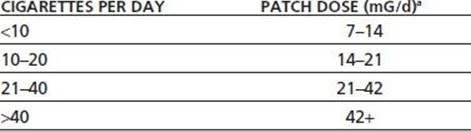
a Nicotine patches are available in the following doses: 7 mg, 14 mg, and 21 mg
After initiation of nicotine patch therapy on the stop date, the patient should have a follow-up visit or a telephone counseling session within the first 2 weeks and periodically thereafter. Abstinence from smoking during the first 2 weeks of patch therapy has been shown to be highly predictive of long-term abstinence (51,60). Thus, the first 2 weeks of nicotine patch therapy are critical. Alterations in therapy at follow-up depend on relief of withdrawal symptoms and how well the patient is maintaining smoking abstinence. If the patient continues to smoke at all during the first 2 weeks, the treatment must be changed either by changing the nicotine patch dose, adding additional pharmacotherapy, or intensifying behavioral counseling. Nicotine patch doses should be increased for patients experiencing pronounced withdrawal symptoms such as irritability, anxiety, loss of concentration, or craving or for patients who do not achieve 100% replacement based on the second serum cotinine concentration. Although various nicotine patches have comparable pharmacokinetic profiles, differences between brands exist, such as differing times to peak concentration or providing a higher percentage replacement (61). Thus, measuring cotinine is a more accurate method of assessing the adequacy of nicotine replacement and avoiding under-replacement. A “standard” course of nicotine patch therapy is 8 weeks, but a course of 24 weeks of therapy not only is safe but increases long-term smoking abstinence and reduced relapse rates compared to 8 weeks of therapy (62).
Side effects of nicotine patch therapy are relatively mild and include localized skin reactions at the patch site. Such reactions generally begin to occur about 4 weeks after initiation of patch therapy. Topical corticosteroid therapy sometimes is helpful in controlling these local symptoms. Rotation of the patches to different sites of the skin helps to reduce the frequency of this side effect. In rare instances, a generalized skin eruption can occur requiring that nicotine patch therapy be discontinued. Although sleep disturbance is another side effect that has been attributed to nicotine patch therapy, it often is difficult to ascertain whether this is attributable to nicotine withdrawal or to the administration of nicotine during the evening hours. In a sleep study of smokers who were trying to stop, the best quality of sleep was observed in those who stopped smoking while receiving a 22 mg/24 hours nicotine patch dose compared with smokers who stopped smoking with placebo (63). Vivid dreams occur with nicotine patch therapy as well as with the partial nicotine agonist, varenicline. Shortly after nicotine patches reached the market, some concern was expressed in the lay press that smokers might be at increased risk of myocardial infarction if they continued to smoke while using the patch. This exposure in the press led to hearings at the FDA, which concluded that there is no cause for concern. Subsequent studies have shown no adverse effects in smokers with a history of coronary artery disease receiving the 14- or 21-mg patch doses (64,65) nor were there adverse effects on lipids or markers of homeostasis in nonsmokers who received nicotine patch therapy (66). Nicotine patch doses up to 63 mg/d were not associated with short-term adverse cardiovascular effects in smokers (67). Standard nicotine patch doses have been shown to reduce exercise-induced myocardial ischemia in smokers who were trying to stop smoking (68). Experimentally, nicotine patch doses of up to 44 mg/d for 4 weeks have not adversely affected the early patency of coronary artery bypass grafts in dogs (69). Despite the fact that NRT product labeling continues to carry a caution for their use in smokers with coronary heart disease, the 2008 Guideline Panel asserts that separate analyses have now documented the lack of association between nicotine patch therapy and acute cardiovascular events (70–73).
NONNICOTINE MEDICATIONS
Bupropion Sustained Release
Bupropion is a monocyclic antidepressant that inhibits the reuptake of both norepinephrine and dopamine (74). Dopamine release in the mesolimbic system and the nucleus accumbens is thought to be the basis for the reinforcing properties of nicotine and other drugs of addiction (17–19). Bupropion does not appear to work through its antidepressant activity. Rather, the efficacy of bupropion for smokers is hypothesized to stem from its dopaminergic activity on the pleasure and reward pathways in the mesolimbic system and nucleus accumbens. Bupropion also has been shown to have an antagonist effect on nicotinic acetylcholine receptors (75,76).
Bupropion SR has been shown to be effective and exhibits a significant dose–response effect (77). Bupropion attenuates weight gain during treatment among smokers continuously abstinent from smoking while receiving the 300 mg/d dose. However, the attenuation of weight gain does not persist at 1-year follow-up for smokers who received short-term (7 weeks) treatment but does persist in smokers who take bupropion for 52 weeks (78). Bupropion SR has also been shown to be effective in subpopulations of smokers including those with coronary disease, with chronic obstructive pulmonary disease (COPD), or who have previously failed to achieve long-term smoking abstinence after an initial course of bupropion SR (79–81). Further, bupropion SR appears to be equally effective in smokers with or without a history of depression or in recovering alcohol-dependent and non–alcohol-dependent individuals (82). Treatment with bupropion SR alone or in combination with the nicotine patch resulted in a significantly higher long-term rate of abstinence from smoking than did use of either the nicotine patch alone or placebo (83), and the 2008 USPHS Guideline supports the efficacy for the combined used of bupropion SR and nicotine patch therapy (7).
Treatment with bupropion SR should be initiated about 1 week before the patient’s stop date at an initial dose of 150 mg/d for 3 days and then 150 mg twice daily. The usual length of treatment is 6 to 12 weeks, but bupropion SR can be used safely for much longer. As with other antidepressants, a small risk (0.1%) of seizures is associated with this medication. Therefore, bupropion SR is contraindicated in patients who have a history of seizures, serious head trauma with skull fracture or a prolonged loss of consciousness, an eating disorder (i.e., anorexia nervosa or bulimia), or concomitant use of medications that lower the seizure threshold.
The most common adverse side effects are insomnia and dry mouth. Cardiovascular and sexual adverse effects are uncommon. Treatment-emergent hypertension can occur rarely during treatment with bupropion SR, especially when it is used in combination with nicotine patch therapy.
Because of the high prevalence of a history of depression in smokers, clinicians often encounter smokers who want to stop smoking but already are being treated with an antidepressant. The question arises whether to discontinue the current antidepressant before starting bupropion SR or to simply add bupropion SR to the regimen. No drug– drug interactions exist to preclude the use of bupropion SR with either selective serotonin reuptake inhibitors (SSRIs) or tricyclic antidepressants. Thus, adding bupropion SR to an SSRI is preferable to discontinuing that medication and using bupropion SR only. Although one small study showed no serious adverse effects of using bupropion in smokers who were chronically taking an SSRI (84), patients receiving two antidepressants should be monitored for side effects. The use of monoamine oxidase inhibitors (MAOIs) is a contraindication for use of bupropion SR.
Varenicline
Varenicline is a partial nicotine agonist/antagonist that selectively binds to the α4β2 nicotinic acetylcholine receptor. Varenicline both blocks nicotine from binding to the receptor (antagonist effect) (85) and stimulates (agonist effect) receptor-mediated activity leading to the release of dopamine, which reduces craving and nicotine withdrawal symptoms. Varenicline is not metabolized and is excreted virtually unchanged in the urine with a half-life of approximately 17 hours.
Pivotal trials comparing varenicline 1 mg twice daily to placebo or bupropion SR show varenicline to be more effective for achieving smoking abstinence compared to placebo or bupropion SR with end-of-treatment continuous smoking abstinence rates of 44% versus 30% for bupropion SR and 18% for placebo (86,87). The end-of-treatment 7-day point prevalence smoking abstinence rates were approximately 50% for varenicline versus 35% for bupropion SR and 20% for placebo. An additional 12 weeks of varenicline was effective in maintaining smoking abstinence in smokers who had stopped smoking after 12 weeks of open-label varenicline treatment with 70% receiving varenicline being continuously abstinent from smoking from week 13 to 24 compared with 50% assigned to placebo (p < 0.001) (88). Finally, the long-term safety of varenicline has been evaluated in a 52-week placebo-controlled trial (89), and at 52 weeks, 37% of smokers treated with varenicline were abstinent from smoking compared with 8% in the placebo group. Varenicline has now been studied in smokers with COPD and smokers with stable coronary heart disease with impressive end-of-treatment smoking abstinence rates (odds ratios of 8 and 6, respectively) compared to placebo (90,91). In a randomized placebo-controlled trial of smokers with schizophrenia or schizoaffective disorder, varenicline was effective (end-of-treatment smoking abstinence 19% vs. 5% for placebo) with no evidence of exacerbation of psychiatric symptoms (92).
Treatment with varenicline should be initiated 1 to 5 weeks prior to the patient’s stop date at a dose of 0.5 mg/d for 3 days, with an increase to 0.5 mg bid for the subsequent 4 days and, finally, an increase to 1 mg bid for the duration of therapy. The initial course of treatment is 12 weeks, but, as noted above, clinical trial data strongly support continuation of treatment for an additional 12 weeks (total of 24 weeks) if indicated.
A dose of 2 mg/d varenicline may not completely saturate the up-regulated nicotinic acetylcholine receptors of addicted smokers; thus, some patients may need NRT for nicotine withdrawal symptom control, especially in the first few days/weeks of varenicline therapy. In smokers who have a partial response (reduction, but not abstinence in smoking), increasing the dose to 2.5 or 3.0 mg/d may be necessary to maximize varenicline’s therapeutic effect especially in more dependent smokers who do not completely respond to the standard dose [Jimenez-Ruiz CA, Barrios M, Pena S, et al. Increasing the Dose of Varenicline in Patients Who Do Not Respond to the Standard Dose. Mayo Clin Proc Dec 2013;88(12):1443-1445]. These suggestions to combine varenicline with NRT or to use varenicline in doses above 2 mg/d are based upon clinical experience only with limited clinical trial data to support them at present.
The most frequent adverse effect of varenicline is nausea, reported by approximately 30% of the participants. However, the nausea is most often mild to moderate, and participant dropouts related to nausea are infrequent (<3%). Vivid dreams are also a frequent adverse event in smokers taking varenicline. In a comparison study of varenicline versus NRT in smokers with or without mental illness, varenicline showed better smoking abstinence outcomes compared with NRT and was equally effective and safe in smokers with or without a mental illness (93). In February 2008, the U.S. FDA issued a public health advisory because of postmarketing surveillance reports of suicidal thoughts and aggressive or erratic behavior in people who had taken varenicline. Subsequently, the FDA conducted two large retrospective studies to determine if there were increased admissions for psychiatric diagnoses in over 14,000 Veteran Affairs smokers and over 11,000 Department of Defense smokers who were treated with varenicline matched with those receiving NRT (94). Rates of hospitalization for psychiatric diagnoses were essentially the same in all four groups studied. Both varenicline and bupropion now carry boxed warnings on their labels about the potential for serious neuropsychiatric events in smokers taking the medication.
In 2011, a meta-analysis of 14 randomized clinical trials was published suggesting a small percentage point increase (0.24%) in serious cardiovascular events in smokers receiving varenicline versus placebo, but a subsequent larger meta-analysis of 23 randomized clinical trials showed no such finding (95,96). The only trial where the cardiovascular status was adjudicated showed a high rate of efficacy and no significant difference in serious cardiovascular events in the varenicline versus placebo group (91). A nationwide historical cohort in Denmark with 17,926 patients receiving varenicline and 17,926 patients receiving bupropion observed no increased risk of cardiovascular events compared to bupropion (97). The FDA issued a warning of the potential association with cardiovascular events along with the caveat that the risk of using varenicline must be weighed against the risks of smoking. Thus, the only absolute contraindication to the use of varenicline is an allergy. All patients should be made aware of the potential for mood and behavior changes along with instructions to discontinue the medication and call the health care professional should such symptoms emerge.
Nortriptyline
Nortriptyline is a tricyclic antidepressant recommended as a second-line drug for treating tobacco dependence (7). Multiple studies have demonstrated that nortriptyline significantly increases smoking abstinence rates compared with placebo (98–101). Nortriptyline seems to be as efficacious as bupropion in treating smokers with COPD (102). Treatment is initiated at a dose of 25 mg/day, increasing gradually to a target dose of 75–100 mg/day for 12–24 weeks.
The most common adverse effects with nortriptyline are sedation and dry mouth. As with bupropion, nortriptyline produces higher smoking abstinence rates than placebo independent of a history of depression. However, increases in negative affect after stopping smoking have been observed to be attenuated by nortriptyline (98). In addition, it appears that nortriptyline is effective at plasma concentrations lower than those used for the treatment of depression (100) and prolonged treatment with more intensive psy chologic treatment can produce higher smoking abstinence rates (103). Nortriptyline is contraindicated in combination with an MAOI (monoamine oxidase inhibitor) or within 14 days of discontinuing one, nortriptyline allergy, or in the acute recovery phase after a myocardial infarction.
Clonidine
Clonidine is a centrally acting alpha-2 adrenergic agonist that can be but is rarely used as a second-line medication (7).
COMBINATION PHARMACOTHERAPY
Combinations of first-line medications have been shown to be effective, and combination therapy has become the clinical rule rather than the exception. Nicotine lozenge in combination with standard-dose nicotine patch has been shown to be more effective that other combinations (39). Triple therapy using the nicotine patch, bupropion, and nicotine inhaler doubles the smoking abstinence rate compared to monotherapy with the nicotine patch (104). Combining bupropion with the nicotine inhaler provides a better treatment effect than either alone (105). Varenicline has been used in combination with NRT with no serious adverse events though it was anticipated that there might be an increased risk of nausea. In one report, the average nicotine patch dose concurrently administered with varenicline in severely dependent smokers was 33 mg/d (106). Bupropion SR and varenicline have different mechanisms of action, and no drug interactions between these drugs are likely suggesting that the combination of these drugs may prove beneficial. In a pilot study of 12 weeks of varenicline and bupropion at standard doses, the end-of-treatment smoking abstinence rate was over 70% (107). Data from one large randomized placebo-controlled clinical trial suggests that in heavier or more dependent smokers, the combination of varenicline and bupropion increases smoking abstinence outcomes compared to monotherapy with varenicline. Ebbert JO, Hatsukami DK, Croghan IT, et al. Combination Varenicline and Bupropion SR for Tobacco Dependence Treatment in Cigarette Smokers: A Randomized Trial. JAMA. In press. From a practical standpoint, we review the available medications with each patient, their previous experience with medications, and the patient’s preference. We then recommend combining a long-acting medication (patch, bupropion, and/or varenicline) with one or more short-acting NRT (gum, lozenge, inhaler, or nasal spray) for withdrawal symptom control (Table 53-3). We base these decisions on best evidence, our considerable clinical experience, and the past experience of the patient, realizing that some of these combinations do not as yet achieve the threshold of a level A evidence base.
TABLE 53-3 COMBINING LONG-ACTING AND SHORT-ACTING PHARMACOTHERAPY

UNPROVEN PHARMACOTHERAPIES
Anxiolytics such as buspirone have not been shown to be effective in helping patients stop smoking (108,109). The selective serotonin reuptake inhibitors fluoxetine, sertraline, and paroxetine have been tested and show no long-term benefit nor did the MAOI moclobemide or the atypical antidepressant venlafaxine (100,110). Neither, fluoxetine nor paroxetine, in combination with NRT, showed added value in improving abstinence rates (111,112). The antihypertensive mecamylamine, a nicotinic receptor antagonist, was shown to have efficacy in a small trial of smokers (113). Despite the theoretical role that dopamine plays as a critical mediator of the reinforcing effects of nicotine, administration of carbidopa/levodopa in doses used to treat Parkinson disease showed no efficacy compared with placebo (114). Finally, naltrexone did not demonstrate efficacy compared with placebo in clinical trial using naltrexone and the nicotine patch (115); however, other studies suggest that it may have some short-term effects (116,117). The 2008 USPHS Guideline analysis concluded that naltrexone treatment does not increase the likelihood of producing smoking abstinence compared with placebo. More recently, clinical trials using a nicotine antibody producing “vaccine” have not shown efficacy (118).
Electronic nicotine delivery devices (ENDDs), commonly referred to as “e-cigarettes,” are a new form of nicotine delivery patented by companies based in China. (119). ENDDs consist of a battery-powered atomizer producing a vapor for inhalation from cartridges containing humectants (e.g., propylene glycol), flavoring agents, and nicotine. A small amount of nicotine–propylene glycol solution contained in replaceable cartridges is heated and vaporized to create a visible mist without smoke or flame, commonly referred to as “vaping” as opposed to “smoking.” Substantial venous concentrations of nicotine can be obtained from these products if used frequently throughout the day (120). But there is no arterial spike, and the venous concentrations achieved are similar to those using the nicotine vapor inhaler (119). In an analysis conducted by the FDA, ENDDs were shown to contain carcinogens (i.e., nitrosamines), toxic chemicals (i.e., diethylene glycol), and tobacco-specific components suspected of being harmful to humans (e.g., anabasine and myosmine) (121). The long-term health consequences of the use of ENDDs are unknown. Like other tobacco products not currently subject to FDA regulation, manufacturers are not required to disclose ingredients nor required to meet the high FDA-mandated regulatory standards for pharmaceutical products. At the present, ENDDs have not been shown to be safe or effective in helping smokers to stop smoking.
Rimonabant, a cannabinoid type 1 receptor antagonist, showed efficacy in helping smokers to stop smoking and attenuating the associated weight gain (122). The U.S. FDA did not approve rimonabant for either treating tobacco dependence or weight control citing safety because of adverse psychiatric symptoms associated with the active drug compared to placebo (123), and it was subsequently withdrawn from the European market.
CLINICAL DECISIONS ABOUT PHARMACOTHERAPY
Clinical trials have shown that adding pharmacotherapy to a behavioral intervention generally doubles smoking abstinence rates and that the combination of medication and counseling is more effective than either alone. Thus, counseling and medication should be routinely provided to patients who are prepared to make a quit attempt. Clinical decision-making for medication selection and dosing is based on the published literature but also upon the clinician’s experience. It has long been recognized by clinicians that there are limitations to standard or fixed-dose regimens with most drugs used in clinical practice today. As a result, clinicians use their clinical skills and knowledge of pharmacotherapy to individualize drug dosing for patients. These same skills and knowledge should be applied to medications used to treat tobacco dependence. Unlike many other medical conditions, smokers have often tried to stop smoking using pharmacotherapy. Thus, the patient can provide valuable input into the selection of pharmacotherapy. Patient past experience and preference must be an integral part of the clinical decision-making process.
Although each of the FDA-approved medications has been shown to be effective compared to placebo in randomized clinical trials, we rarely use short-acting NRT (nicotine gum, nicotine inhaler, nicotine lozenge, or nicotine nasal spray) alone. The exception is for the patient who previously stopped smoking using a short-acting NRT as monotherapy and in certain special situations, such as pregnancy. The same is true for monotherapy with nicotine patches, bupropion, or varenicline. From a practical standpoint, we view nicotine patch therapy, bupropion SR, and/ or varenicline as the foundation on which to begin building a patient’s pharmacotherapeutic regimen and use short-acting NRT products for withdrawal symptoms and control of smoking urges. Since varenicline and bupropion have different mechanisms of action, we sometimes use them in combination particularly in smokers who have previously stopped smoking using bupropion monotherapy but struggled during the process. A pilot study of this combination demonstrated excellent efficacy and suggests that the combination of bupropion and varenicline was well tolerated (107). Thus, as shown in Table 53-3, we present a menu to the patient and discuss each medication, its side effects, and the rational for using combination pharmacotherapy while bearing in mind that controlled clinical trial data have not yet been generated to support the use of some of these combinations.
For patients with more severe tobacco dependence, such as those treated in our Residential Treatment Program, we commonly use combination therapy and often use three or more products simultaneously (124). For patients with a partial response to initial medication therapy (i.e., decreased smoking rate but not abstinent from smoking), further tailoring of the medication regimen may be necessary in order to reach the desired therapeutic goal of smoking abstinence. For example, if a patient has reduced smoking using varenicline 1 mg twice daily and tolerated the medication without substantial nausea, we may increase the dose to 1 mg three times daily. Another situation requiring clinical ingenuity (i.e., the art of medicine) is a smoker who has stopped smoking using nicotine patch therapy and a short-acting NRT but notices increased withdrawal symptoms in the early evening. Adding a 14-mg patch in late afternoon may decrease evening withdrawal. We have used nicotine patch therapy in our Residential Treatment Program for smokers who want to start varenicline at admission but needed withdrawal symptom relief during the varenicline up titration (106). Many smokers continue to have nicotine withdrawal symptoms after stopping smoking using varenicline; thus, we frequently utilize short-acting NRT to treat these symptoms.
Duration of Pharmacotherapy
Longer use of pharmacotherapy is useful in some patients to maintain smoking abstinence long enough to stabilize the initial treatment effect. The optimal length of pharma cotherapy has not been established for any of the available medications. Bupropion administered for approximately 12 months to smokers abstinent from smoking at the end of a short course of pharmacotherapy showed mixed results (78,125). Prolonged nicotine patch therapy (5 months) combined with nicotine nasal spray for 1 year also seems to prevent smoking relapse (126). Long-term smoking abstinence outcomes are better after 24 weeks of treatment compared to 12 weeks for both nicotine patch therapy and varenicline (62,88). Thus, when a patient asks the question, “How long do I need to stay on these medications after I stop smoking?” the best answer is, “As long as it takes.”
CONCLUSIONS
Untreated tobacco dependence results in the deaths of over 60% of current smokers from tobacco-caused illnesses [Jha P, Ramasundarahettige C, Landsman V, et al. 21st-Century Hazards of Smoking and Benefits of Cessation in the United States. N Engl J Med Jan 24, 2013;368:4]. Pharmacotherapy plays an essential role in treating tobacco dependence, and combinations of long-acting with short-acting medications are the rule rather than the exception (127). Despite improved treatment using combination pharmacotherapy and more intensive behavioral interventions, many more severely dependent smokers will need residential treatment in order to initiate and sustain abstinence from smoking (124). Even with this level of residential treatment, which provides intensive behavioral counselors and education plus tailored pharmacotherapy, the long-term smoking abstinence rates are over 50%. Future research to identify more effective treatments must continue.
REFERENCES
1.McNally W. The tar in cigarette smoke and its possible effects. Am J Cancer 1932;162(6):1502–1514.
2.Centers for Disease Control and Prevention. Fast Facts, Morbidity and Mortality. Tobacco use is the leading preventable cause of death. http://www.cdc.gov/tobacco/data_statistics/fact_sheets/fast_facts/index.htm. Accessed January 21, 2013.
3.World Health Organization. WHO Report on the Global Tobacco Epidemic, 2009; Implementing smoke-free environments. http://www.who.int/tobacco/mpower/2009/en/index.html. Accessed January 21, 2013.
4.Hurt RD, Robertson CR. Prying open the door to the tobacco industry’s secrets about nicotine: the Minnesota Tobacco Trial. JAMA 1998;280(13):1173–1181.
5.Brody AL, Mandelkern MA, London ED, et al. Cigarette smoking saturates brain alpha 4 beta 2 nicotinic acetylcholine receptors. Arch Gen Psychiatry 2006;63(8):907–915.
6.Brody AL, Mandelkern MA, London ED, et al. Effect of secondhand smoke on occupancy of nicotinic acetylcholine receptors in brain. Arch Gen Psychiatry 2011;68(9):953–960.
7.Fiore M, Jaén C, Baker T, et al. Treating tobacco use and dependence: 2008 update. Quick reference guide for clinicians. Rockville, MD: U.S. Department of Health and Human Services. Public Health Service, 2009.
8.Centers for Disease Control and Prevention. Chronic Diseases are the Leading Cause of Death and Disability in the U.S. Chronic Diseases and Health Promotion 2012; http://www.cdc.gov/chronicdisease/overview/index.htm. Accessed October 30, 2012.
9.Koh HK, Sebelius KG. Ending the tobacco epidemic. JAMA 2012; 308(8):767–768.
10.Swartz SH, Cowan TM, Klayman JE, et al. Use and effectiveness of tobacco telephone counseling and nicotine therapy in Maine. Am J Prev Med 2005;29(4):288–294.
11.Watkins SS, Koob GF, Markou A. Neural mechanisms underlying nicotine addiction: acute positive reinforcement and withdrawal. Nicotine Tob Res 2000;2(1):19–37.
12.Balfour D. The neurochemical mechanisms underlying nicotine tolerance and dependence. In: Pratt J, ed. The biological basis of drug tolerance and dependence. London, UK: Academic Press, 1991:121–151.
13.Perry D, Davila-Garcia M, Stockmeier C. Increased nicotine receptors in brains from smokers: membrane binding and autoradiography studies. J Pharmacol Exp Ther 1999;289(3):1545–1552.
14.Hope BT, Nagarkar D, Leonard S, et al. Long-term upregulation of protein kinase A and adenylate cyclase levels in human smokers. J Neurosci 2007;27(8):1964–1972.
15.Cosgrove KP, Batis J, Bois F, et al. Beta2-Nicotinic acetylcholine receptor availability during acute and prolonged abstinence from tobacco smoking. Arch Gen Psychiatry2009;66(6):666–676.
16.Di Chiara G. Role of dopamine in the behavioural actions of nicotine related to addiction. Eur J Pharmacol 2000;393(1–3): 295–314.
17.Clarke PB. Nicotine dependence—mechanisms and therapeutic strategies. Biochem Soc Symp 1993;59:83–95.
18.Di Chiara G, Imperato A. Drugs abused by humans preferentially increase synaptic dopamine concentrations in the mesolimbic system of freely moving rats. Proc Natl Acad Sci U S A1988;85(14):5274–5278.
19.Pontieri FE, Tanda G, Orzi F, et al. Effects of nicotine on the nucleus accumbens and similarity to those of addictive drugs. Nature 1996;382(6588):255–257.
20.Stein EA, Pankiewicz J, Harsch HH, et al. Nicotine-induced limbic cortical activation in the human brain: a functional MRI study. Am J Psychiatry 1998;155(8):1009–1015.
21.Dewey SL, Brodie JD, Gerasimov M, et al. A pharmacologic strategy for the treatment of nicotine addiction. Synapse 1999;31(1):76–86.
22.Kenny PJ, Markou A. Conditioned nicotine withdrawal profoundly decreases the activity of brain reward systems. J Neurosci 2005; 25(26):6208–6212.
23.Carmelli D, Swan GE, Robinette D, et al. Genetic influence on smoking—a study of male twins. N Engl J Med 1992;327(12): 829–833.
24.Schnoll RA, Johnson TA, Lerman C. Genetics and smoking behavior. Curr Psychiatry Rep 2007;9(5):349–357.
25.Cheng LS, Swan GE, Carmelli D. A genetic analysis of smoking behavior in family members of older adult males. Addiction 2000; 95(3):427–435.
26.Lerman C, Caporaso NE, Audrain J, et al. Evidence suggesting the role of specific genetic factors in cigarette smoking. Health Psychol 1999;18(1):14–20.
27.Sabol SZ, Nelson ML, Fisher C, et al. A genetic association for cigarette smoking behavior. Health Psychol 1999;18(1):7–13.
28.Hutchison KE, Allen DL, Filbey FM, et al. CHRNA4 and tobacco dependence: from gene regulation to treatment outcome. Arch Gen Psychiatry 2007;64(9):1078–1086.
29.Kendler KS, Neale MC, Sullivan P, et al. A population-based twin study in women of smoking initiation and nicotine dependence. Psychol Med 1999;29(2):299–308.
30.Munafo M, Clark T, Johnstone E, et al. The genetic basis for smoking 6(4):583–597.
31.David SP, Munafo MR, Murphy MF, et al. Genetic variation in the dopamine D4 receptor (DRD4) gene and smoking cessation: follow-up of a randomised clinical trial of transdermal nicotine patch. Pharmacogenomics J 2008;8(2):122–128.
32.Dale LC, Hurt RD, Offord KP, et al. High-dose nicotine patch therapy. Percentage of replacement and smoking cessation. JAMA 1995;274(17):1353–1358.
33.Gourlay SG, Benowitz NL. Arteriovenous differences in plasma concentration of nicotine and catecholamines and related cardiovascular effects after smoking, nicotine nasal spray, and intravenous nicotine. Clin Pharmacol Ther 1997;62(4):453–463.
34.Ho MK, Mwenifumbo JC, Al Koudsi N, et al. Association of nicotine metabolite ratio and CYP2A6 genotype with smoking cessation treatment in African-American light smokers. Clin Pharmacol Ther2009;85(6):635–643.
35.Henningfield JE, Stapleton JM, Benowitz NL, et al. Higher levels of nicotine in arterial than in venous blood after cigarette smoking. Drug Alcohol Depend 1993;33(1):23–29.
36.Jacob P III, Yu L, Shulgin AT, et al. Minor tobacco alkaloids as biomarkers for tobacco use: comparison of users of cigarettes, smokeless tobacco, cigars, and pipes. Am J Public Health1999;89(5): 731–736.
37.Moyer TP, Charlson JR, Enger RJ, et al. Simultaneous analysis of nicotine, nicotine metabolites, and tobacco alkaloids in serum or urine by tandem mass spectrometry, with clinically relevant metabolic profiles. Clin Chem 2002;48(9):1460–1471.
38.Jacob P IIIrd, Hatsukami D, Severson H, et al. Anabasine and anatabine as biomarkers for tobacco use during nicotine replacement therapy. Cancer Epidemiol Biomarkers Prev2002;11(12):1668–1673.
39.Piper ME, Smith SS, Schlam TR, et al. A randomized placebo-controlled clinical trial of 5 smoking cessation pharmacotherapies. Arch Gen Psychiatry 2009;66(11):1253–1262.
40.Ebbert JO, Hays JT, Hurt RD. Combination pharmacotherapy for stopping smoking: what advantages does it offer? Drugs 2010; 70(6):643–650.
41.Russell MA, Raw M, Jarvis MJ. Clinical use of nicotine chewing-gum. Br Med J 1980;280(6231):1599–1602.
42.Glover E, Sachs D, Stitzer M, et al. Smoking cessation in highly dependent smokers with 4 mg nicotine polacrilex. Am J Health Behav 1996;20(5):319–332.
43.Sachs DP. Effectiveness of the 4-mg dose of nicotine polacrilex for the initial treatment of high-dependent smokers. Arch Intern Med 1995;155(18):1973–1980.
44.Shiffman S, Dresler CM, Hajek P, et al. Efficacy of a nicotine lozenge for smoking cessation. Arch Intern Med 2002;162(11):1267–1276.
45.Schneider NG, Olmstead R, Mody FV, et al. Efficacy of a nicotine nasal spray in smoking cessation: a placebo-controlled, double-blind trial. Addiction 1995;90(12):1671–1682.
46.Hurt RD, Offord KP, Croghan IT, et al. Temporal effects of nicotine nasal spray and gum on nicotine withdrawal symptoms. Psychopharmacology (Berl) 1998;140(1):98–104.
47.Hurt RD, Dale LC, Croghan GA, et al. Nicotine nasal spray for smoking cessation: pattern of use, side effects, relief of withdrawal symptoms, and cotinine levels. Mayo Clin Proc1998;73(2): 118–125.
48.Leischow S, Nilsson F, Franzon M, et al. Efficacy of the nicotine inhaler as an adjunct to smoking cessation. Am J Health Behav 1996;20(5):364–371.
49.Bergstrom M, Nordberg A, Lunell E, et al. Regional deposition of inhaled 11C-nicotine vapor in the human airway as visualized by positron emission tomography. Clin Pharmacol Ther1995;57(3):309–317.
50.Hurt RD, Dale LC, Offord KP, et al. Serum nicotine and cotinine levels during nicotine-patch therapy. Clin Pharmacol Ther 1993;54(1):98–106.
51.Hurt RD, Dale LC, Fredrickson PA, et al. Nicotine patch therapy for smoking cessation combined with physician advice and nurse follow-up. One-year outcome and percentage of nicotine replacement. JAMA 1994;271(8):595–600.
52.Hughes JR. Treatment of nicotine dependence. Is more better? [Erratum in JAMA 1996 Feb 21;275(7):520] JAMA 1995;274(17):1390–1391.
53.Fredrickson PA, Hurt RD, Lee GM, et al. High dose transdermal nicotine therapy for heavy smokers: safety, tolerability and measurement of nicotine and cotinine levels. Psychopharmacology (Berl)1995;122(3):215–222.
54.Stead LF, Perera R, Bullen C, et al. Nicotine replacement therapy for smoking cessation. Cochrane Database Syst Rev 2008;1:CD000146.
55.Hughes JR, Lesmes GR, Hatsukami DK, et al. Are higher doses of nicotine replacement more effective for smoking cessation? Nicotine Tob Res 1999;1(2):169–174.
56.Jorenby DE, Smith SS, Fiore MC, et al. Varying nicotine patch dose and type of smoking cessation counseling. JAMA 1995;274(17):1347–1352.
57.Tonnesen P, Paoletti P, Gustavsson G, et al. Higher dosage nicotine patches increase one-year smoking cessation rates: results from the European CEASE trial. Collaborative European Anti-Smoking Evaluation. European Respiratory Society. Eur Respir J 1999;13(2):238–246.
58.Lawson GM, Hurt RD, Dale LC, et al. Application of serum nicotine and plasma cotinine concentrations to assessment of nicotine replacement in light, moderate, and heavy smokers undergoing transdermal therapy. J Clin Pharmacol 1998;38(6):502–509.
59.Lawson GM, Hurt RD, Dale LC, et al. Application of urine nicotine and cotinine excretion rates to assessment of nicotine replacement in light, moderate, and heavy smokers undergoing transdermal therapy. J Clin Pharmacol 1998;38(6):510–516.
60.Kenford SL, Fiore MC, Jorenby DE, et al. Predicting smoking cessation. Who will quit with and without the nicotine patch. JAMA 1994;271(8):589–594.
61.Gariti P, Alterman AI, Barber W, et al. Cotinine replacement levels for a 21 mg/day transdermal nicotine patch in an outpatient treatment setting. Drug Alcohol Depend 1999;54(2):111–116.
62.Schnoll RA, Patterson F, Wileyto EP, et al. Effectiveness of extended-duration transdermal nicotine therapy: a randomized trial. Ann Intern Med 2010;152(3):144–151.
63.Wetter DW, Fiore MC, Baker TB, et al. Tobacco withdrawal and nicotine replacement influence objective measures of sleep. J Consult Clin Psychol 1995;63(4):658–667.
64.Joseph AM, Norman SM, Ferry LH, et al. The safety of transdermal nicotine as an aid to smoking cessation in patients with cardiac disease. N Engl J Med 1996;335(24):1792–1798.
65.Nicotine replacement therapy for patients with coronary artery disease. Working group for the study of transdermal nicotine in patients with coronary artery disease. Arch Intern Med1994;154(9): 989–995.
66.Thomas GA, Davies SV, Rhodes J, et al. Is transdermal nicotine associated with cardiovascular risk? J R Coll Physicians Lond 1995; 29(5):392–396.
67.Zevin S, Jacob P IIIrd, Benowitz NL. Dose-related cardiovascular and endocrine effects of transdermal nicotine. Clin Pharmacol Ther 1998;64(1):87–95.
68.Mahmarian JJ, Moye LA, Nasser GA, et al. Nicotine patch therapy in smoking cessation reduces the extent of exercise-induced myocardial ischemia. J Am Coll Cardiol 1997;30(1):125–130.
69.Clouse WD, Yamaguchi H, Phillips MR, et al. Effects of transdermal nicotine treatment on structure and function of coronary artery bypass grafts. J Appl Physiol 2000;89(3):1213–1223.
70.Frishman WH, Ky T, Ismail A. Tobacco smoking, nicotine, and nicotine and non-nicotine replacement therapies. Heart Dis 2001; 3(6):365–377.
71.Haustein KO, Krause J, Haustein H, et al. Effects of cigarette smoking or nicotine replacement on cardiovascular risk factors and parameters of haemorheology. J Intern Med2002;252(2):130–139.
72.McRobbie H, Hajek P. Nicotine replacement therapy in patients with cardiovascular disease: guidelines for health professionals. Addiction 2001;96(11):1547–1551.
73.Mohiuddin SM, Mooss AN, Hunter CB, et al. Intensive smoking cessation intervention reduces mortality in high-risk smokers with cardiovascular disease. Chest 2007;131(2):446–452.
74.Ascher JA, Cole JO, Colin JN, et al. Bupropion: a review of its mechanism of antidepressant activity. J Clin Psychiatry 1995;56(9): 395–401.
75.Fryer JD, Lukas RJ. Noncompetitive functional inhibition at diverse, human nicotinic acetylcholine receptor subtypes by bupropion, phencyclidine, and ibogaine. J Pharmacol Exp Ther1999;288(1):88–92.
76.Slemmer JE, Martin BR, Damaj MI. Bupropion is a nicotinic antagonist. J Pharmacol Exp Ther 2000;295(1):321–327.
77.Hurt RD, Sachs DP, Glover ED, et al. A comparison of sustained-release bupropion and placebo for smoking cessation. N Engl J Med 1997;337(17):1195–1202.
78.Hays JT, Hurt RD, Rigotti NA, et al. Sustained-release bupropion for pharmacologic relapse prevention after smoking cessation. a randomized, controlled trial. Ann Intern Med2001;135(6):423–433.
79.Gonzales DH, Nides MA, Ferry LH, et al. Bupropion SR as an aid to smoking cessation in smokers treated previously with bupropion: a randomized placebo-controlled study. Clin Pharmacol Ther 2001; 69(6):438–444.
80.Tashkin D, Kanner R, Bailey W, et al. Smoking cessation in patients with chronic obstructive pulmonary disease: a double-blind, placebo-controlled, randomised trial. Lancet2001;357(9268):1571–1575.
81.Tonstad S, Farsang C, Klaene G, et al. Bupropion SR for smoking cessation in smokers with cardiovascular disease: a multicentre, randomised study. Eur Heart J 2003;24(10):946–955.
82.Hayford KE, Patten CA, Rummans TA, et al. Efficacy of bupropion for smoking cessation in smokers with a former history of major depression or alcoholism. Br J Psychiatry1999;174:173–178.
83.Jorenby DE, Leischow SJ, Nides MA, et al. A controlled trial of sustained-release bupropion, a nicotine patch, or both for smoking cessation. N Engl J Med 1999;340(9):685–691.
84.Chengappa KN, Kambhampati RK, Perkins K, et al. Bupropion sustained release as a smoking cessation treatment in remitted depressed patients maintained on treatment with selective serotonin reuptake inhibitor antidepressants. J Clin Psychiatry 2001;62(7): 503–508.
85.Rollema H, Chambers LK, Coe JW, et al. Pharmacological profile of the alpha4beta2 nicotinic acetylcholine receptor partial agonist varenicline, an effective smoking cessation aid. Neuropharmacology2007;52(3):985–994.
86.Jorenby DE, Hays JT, Rigotti NA, et al. Efficacy of varenicline, an alpha4beta2 nicotinic acetylcholine receptor partial agonist, vs placebo or sustained-release bupropion for smoking cessation: a randomized controlled trial. JAMA 2006;296(1):56–63.
87.Gonzales D, Rennard SI, Nides M, et al. Varenicline, an alpha4beta2 nicotinic acetylcholine receptor partial agonist, vs sustained-release bupropion and placebo for smoking cessation: a randomized controlled trial. JAMA 2006;296(1):47–55.
88.Tonstad S, Tonnesen P, Hajek P, et al. Effect of maintenance therapy with varenicline on smoking cessation: a randomized controlled trial. JAMA 2006;296(1):64–71.
89.Williams K, Reeves K, Billing CJ, et al. A double-blind study evaluating the long-term safety of varenicline for smoking cessation. Curr Med Res Opin 2007;23(4):793–801.
90.Tashkin DP, Rennard S, Hays JT, et al. Effects of varenicline on smoking cessation in patients with mild to moderate COPD: a randomized controlled trial. Chest 2011;139(3):591–599.
91.Rigotti NA, Pipe AL, Benowitz NL, et al. Efficacy and safety of varenicline for smoking cessation in patients with cardiovascular disease: a randomized trial. Circulation 2010;121(2):221–229.
92.Williams JM, Anthenelli RM, Morris CD, et al. A randomized, double-blind, placebo-controlled study evaluating the safety and efficacy of varenicline for smoking cessation in patients with schizophrenia or schizoaffective disorder [Erratum in J Clin Psychiatry 2012;73(7):1035]. J Clin Psychiatry 2012;73(5):654–660.
93.Stapleton JA, Watson L, Spirling LI, et al. Varenicline in the routine treatment of tobacco dependence: a pre-post comparison with nicotine replacement therapy and an evaluation in those with mental illness. Addiction 2008;103(1):146–154.
94.U.S. Food and Drug Administration (FDA). FDA Drug Safety Communication: Safety review update of Chantix (varenicline) and risk of neuropsychiatric adverse events. October 24, 2011; http://www.fda.gov/Drugs/DrugSafety/ucm276737.htm. Accessed November 12, 2012.
95.Singh S, Loke YK, Spangler JG, et al. Risk of serious adverse cardiovascular events associated with varenicline: a systematic review and meta-analysis. CMAJ 2011;183(12):1359–1366.
96.Prochaska JJ, Hilton JF. Risk of cardiovascular serious adverse events associated with varenicline use for tobacco cessation: systematic review and meta-analysis. BMJ2012;344:e2856.
97.Svanstrom H, Pasternak B, Hviid A. Use of varenicline for smoking cessation and risk of serious cardiovascular events: nationwide cohort study. BMJ 2012;345:e7176.
98.Hall SM, Reus VI, Munoz RF, et al. Nortriptyline and cognitive-behavioral therapy in the treatment of cigarette smoking. Arch Gen Psychiatry 1998;55(8):683–690.
99.Prochazka AV, Weaver MJ, Keller RT, et al. A randomized trial of nortriptyline for smoking cessation. Arch Intern Med 1998;158(18): 2035–2039.
100.Hughes JR, Stead LF, Lancaster T. Antidepressants for smoking cessation. Cochrane Database Syst Rev 2007(1):CD000031.
101.Mooney ME, Reus VI, Gorecki J, et al. Therapeutic drug monitoring of nortriptyline in smoking cessation: a multistudy analysis. Clin Pharmacol Ther 2008;83(3):436–442.
102.Wagena EJ, Knipschild PG, Huibers MJ, et al. Efficacy of bupropion and nortriptyline for smoking cessation among people at risk for or with chronic obstructive pulmonary disease. Arch Intern Med 2005; 165(19):2286–2292.
103.Hall SM, Humfleet GL, Reus VI, et al. Extended nortriptyline and psychological treatment for cigarette smoking. Am J Psychiatry 2004;161(11):2100–2107.
104.Steinberg MB, Greenhaus S, Schmelzer AC, et al. Triple-combination pharmacotherapy for medically ill smokers: a randomized trial. Ann Intern Med 2009;150(7):447–454.
105.Croghan IT, Hurt RD, Dakhil SR, et al. Randomized comparison of a nicotine inhaler and bupropion for smoking cessation and relapse prevention. Mayo Clin Proc 2007;82(2):186–195.
106.Ebbert JO, Burke MV, Hays JT, et al. Combination treatment with varenicline and nicotine replacement therapy. Nicotine Tob Res 2009;11(5):572–576.
107.Ebbert JO, Croghan IT, Sood A, et al. Varenicline and bupropion sustained-release combination therapy for smoking cessation. Nicotine Tob Res 2009;11(3):234–239.
108.Hughes JR, Stead LF, Lancaster T. Anxiolytics and antidepressants for smoking cessation [Update in Cochrane Database Syst Rev 2000;(4): CD000031]. Cochrane Database Syst Rev2000(2):CD000031.
109.Schneider NG, Olmstead RE, Steinberg C, et al. Efficacy of buspirone in smoking cessation: a placebo-controlled trial. Clin Pharmacol Ther 1996;60(5):568–575.
110.Edwards NB, Murphy JK, Downs AD, et al. Doxepin as an adjunct to smoking cessation: a double-blind pilot study. Am J Psychiatry 1989;146(3):373–376.
111.Blondal T, Gudmundsson LJ, Tomasson K, et al. The effects of fluoxetine combined with nicotine inhalers in smoking cessation—a randomized trial. Addiction 1999;94(7):1007–1015.
112.Killen JD, Fortmann SP, Schatzberg AF, et al. Nicotine patch and paroxetine for smoking cessation. J Consult Clin Psychol 2000;68(5): 883–889.
113.Rose JE, Behm FM, Westman EC, et al. Mecamylamine combined with nicotine skin patch facilitates smoking cessation beyond nicotine patch treatment alone. Clin Pharmacol Ther1994;56(1):86–99.
114.Hurt RD, Ahlskog JE, Croghan GA, et al. Carbidopa/levodopa for smoking cessation: a pilot study with negative results. Nicotine Tob Res 2000;2(1):71–78.
115.Wong GY, Wolter TD, Croghan GA, et al. A randomized trial of naltrexone for smoking cessation. Addiction 1999;94(8): 1227–1237.
116.Brauer LH, Behm FM, Westman EC, et al. Naltrexone blockade of nicotine effects in cigarette smokers. Psychopharmacology (Berl) 1999;143(4):339–346.
117.Covey LS, Glassman AH, Stetner F. Naltrexone effects on short-term and long-term smoking cessation. J Addict Dis 1999;18(1):31–40.
118.Cornuz J, Zwahlen S, Jungi WF, et al. A vaccine against nicotine for smoking cessation: a randomized controlled trial. PLoS One 2008;3(6):e2547.
119.Bullen C, McRobbie H, Thornley S, et al. Effect of an electronic nicotine delivery device (e cigarette) on desire to smoke and withdrawal, user preferences and nicotine delivery: randomised cross-over trial. Tob Control 2010;19(2):98–103.
120.Etter JF, Bullen C. Saliva cotinine levels in users of electronic cigarettes. Eur Respir J 2011;38(5):1219–1220.
121.U.S. Food and Drug Administration (FDA). Summary of results: laboratory analysis of electronic cigarettes conducted by FDA. 2009; http://www.fda.gov/newsevents/publichealthfocus/ucm173146.htm. Accessed November 5, 2012.
122.Rigotti NA, Gonzales D, Dale LC, et al. CIRRUS Study Group. A randomized controlled trial of adding the nicotine patch to rimonabant for smoking cessation: efficacy, safety and weight gain. Addiction2009;104(2):266–276.
123.Rumsfeld JS, Nallamothu BK. The hope and fear of rimonabant. JAMA 2008;299(13):1601–1602.
124.Hays JT, Croghan IT, Schroeder DR, et al. Residential treatment compared with outpatient treatment for tobacco use and dependence. Mayo Clin Proc 2011;86(3):203–209.
125.Hurt RD, Krook JE, Croghan IT, et al. Nicotine patch therapy based on smoking rate followed by bupropion for prevention of relapse to smoking. J Clin Oncol 2003;21(5):914–920.
126.Blondal T, Gudmundsson LJ, Olafsdottir I, et al. Nicotine nasal spray with nicotine patch for smoking cessation: randomised trial with six year follow up. BMJ 1999;318(7179):285–288.
127.Hurt RD, Ebbert JO, Hays JT, et al. Treating tobacco dependence in a medical setting. CA Cancer J Clin 2009;59(5):314–326.